




Abstract
Lower Palaeozoic organic-rich shales are widely distributed in southern China. In this study, the organic matter contents of Lower Cambrian, Upper Ordovician, and Lower Silurian shales were analysed, and a high degree of vertical heterogeneity was found. In the studied sections, the total organic carbon concentrations are high at the bottom and gradually decrease upward. The total sulphur contents of the studied shales display a similar trend in the vertical direction, and they are high in the lower part of the section. The carbon isotopes of organic matter (δ13Corg) present a distinct trend that is indicative of 13C enrichment, which indicates that the total organic carbon variations between the different shale units in the Sichuan Basin may be related to changes in ocean biomass and the sedimentary environment. The mineral composition (specifically, the pyrite, quartz, and clay abundances) of these shales suggests that the deep-water sedimentary environment was conducive to the preservation of organic matter. Total organic carbon is positively correlated with quartz contents but negatively correlated with clay contents, suggesting an input of biogenic silica. The majority of the quartz was deposited via the slow settling and accumulation of recrystallised biogenic opal and silica-rich plankton. This study of the trace element geochemistry of the Lower Palaeozoic shales indicates that productivity, burial efficiency, redox environment, and hydrothermal activity all affected the accumulation of organic matter. The Cambrian Niutitang shale is rich in nutrient elements. The Longmaxi and Wufeng shales feature high Mo contents and total organic carbon correlation coefficients of 0.93 and 0.89, respectively. Efficient burial was essential for the enrichment of organic matter in the Wufeng and Longmaxi shales. The redox parameters suggest that the organic-rich shales (total organic carbon > 2.0%) were deposited in a strongly reducing environment. The U/Th ratios and Ni–Zn–Co correlations indicate that organic material was carried by deep hydrothermal fluids and enhanced the accumulation of organic matter.
Introduction
Organic-rich shales are considered to be a source rock for hydrocarbons in sedimentary basins. Because many shales and mudstones store economic accumulations of gas and oil, identifying organic-rich shales and understanding the factors that control the amount and type of organic matter has taken on new importance (Ross and Bustin, 2006). The input of organic matter, as well as its biological alteration and preservation in marine sediments, are fundamental biogeochemical processes and controlled by many factors (Algeo et al., 2016; Davies et al., 2016). The most commonly suggested factors that control organic matter accumulation include reducing conditions during deposition, which influence organic matter preservation (e.g. Demaison and Moore, 1980); high primary productivity (Caplan and Bustin, 1999; Pedersen and Calvertse, 1990); and clastic input, which controls the dilution of the organic-rich sediment (Murphy et al., 2000; Sageman et al., 2003). In fact, a combination of all three of these processes determines the abundance and type of organic matter that is present in sedimentary basins (Arthur and Sageman, 1994; Ingall et al., 1993; Ingall and Jahnke, 1994; Murphy et al., 2000; Tyson and Pearson, 1991).
Organic-rich marine shale is widely distributed in the Lower Palaeozoic strata of the Upper Yangtze region in southern China (Dong et al., 2010; Jiang et al., 2016; Liang et al., 2008; Nie and Zhang, 2012; Tuo et al., 2016; Wang et al., 2009; Zhang et al., 2008; Zou et al., 2010). The Lower Palaeozoic shales in the Sichuan Basin have significant gas-bearing thicknesses, high thermal maturity, strong hydrocarbon generation capacity, and abundant oil and gas shows, and they are favourable for shale gas exploration.
In this study, we present organic geochemical, mineralogical, and trace element characteristics for shale samples from two sections, specifically the Changning section, which exposes rocks from the Upper Ordovician Wufeng Formation through the Lower Silurian Longmaxi Formation in the southern Sichuan Basin, and the Youyang section, which exposes rocks of the Lower Cambrian Niutitang Formation in southeastern Chongqing. The factors that led to the high organic matter contents of these Lower Palaeozoic organic-rich shales, including palaeoproductivity, organic matter burial efficiency, redox depositional environment, and hydrothermal activity, are discussed. The purpose of this study is to comparatively analyse the Lower Palaeozoic organic-rich shales and distinguish the primary factors responsible for deposition of organic-rich strata (specifically, the Niutitang, Wufeng, and Longmaxi Formations) during different geologic periods.
Geological setting
Stratigraphy
Large amounts of Lower Palaeozoic marine black shales are widely distributed in Southern China. The Sichuan Basin is an important tectonic unit of the Yangtze Platform, and it covers a vast area of eastern Sichuan province and most of the Chongqing metropolitan region (Figure 1(a)). From the early Cambrian Period to the early Silurian Period, three formations containing organic-rich shales developed. These formations are the Lower Cambrian Niutitang Formation, the Upper Ordovician Wufeng Formation, and the Lower Silurian Longmaxi Formation, as shown in Figure 1(b).
(a) Location map of the studied sections. (b) The stratigraphy of the Changning and Youyang sections (modified after Zou et al., 2010). This study examines the Lower Cambrian Niutitang Formation, the Upper Ordovician Wufeng Formation, and the Lower Silurian Longmaxi Formation. (c) Total organic carbon (TOC) contents in the studied sections. Black shading represents organic-rich black shales; grey shading represents silty black shales.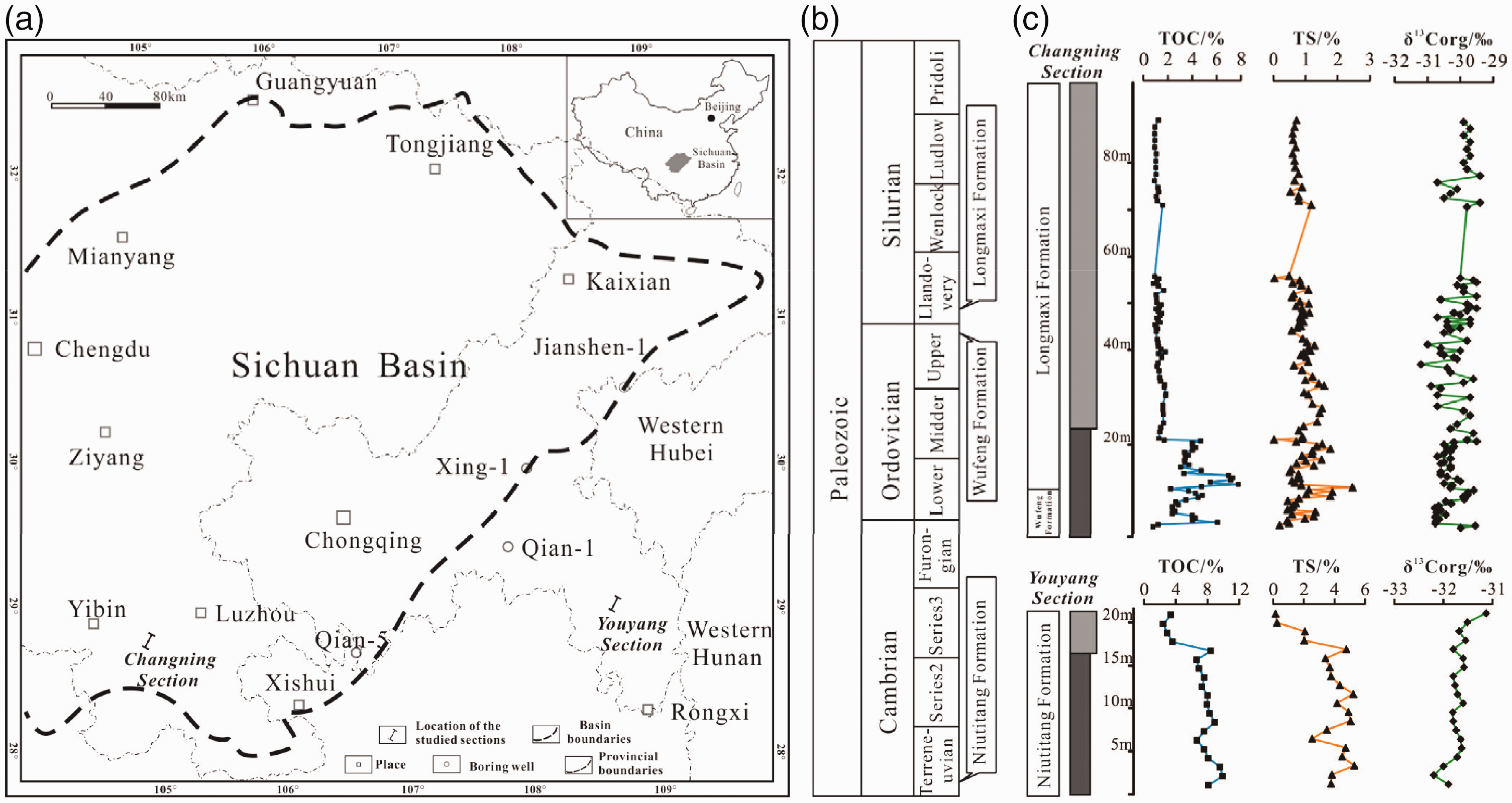
The lower member of the Niutitang Formation is dominated by black siliceous shales, whereas the upper part is mainly composed of silty mudstone. The Wufeng black shale is rich in graptolites and trilobite fossils but is generally less than 20 m thick. The Wufeng Formation and the Longmaxi Formation are in conformable contact in most parts of the basin. The Longmaxi Formation is widespread throughout the basin, and its total thickness ranges from 500 to 1250 m in most areas.
Cambrian–Silurian geotectonic background
The Upper Yangtze Craton and craton margin disintegrated during the late Sinian into the early Cambrian. The tectonic setting of the basin was a horst and graben type of structure, which contributed to the formation of this hydrocarbon-rich basin (Gan, 2000). The global ice sheet of the Late Sinian melted over vast areas, producing rapid sea level rise. Until the deposition of the Niutitang Formation, the Sichuan Basin experienced the largest marine transgression period worldwide (Nie and Zhang, 2010). During this marine transgression period, an explosion of marine life provided sufficient organic matter for hydrocarbon source rock development. Organic-rich carbonaceous mudstone and shales were deposited to make up the Niutitang Formation, which has a thickness of hundreds of metres. During the middle-late Cambrian, the carbonates of the Xixiangchi Group were mainly deposited, reflecting continuous deposition with the Ordovician in the Sichuan Basin.
The Wufeng Formation and the Longmaxi Formation represent continuous deposition (Figure 1(b)). They have some similarities in terms of their palaeogeographic characteristics. From the late Ordovician to the early Silurian, post-glacial climate warming and the melting of the Saharan ice cap in Africa caused global sea level rise (Zhang et al., 2005). Moreover, due to the effect of plate convergence, collision extrusion, and tectonic movements, sea level in the Sichuan Basin rose rapidly. The whole Sichuan Basin was a retentive, low energy, and limited marine basin. The depth of the seawater increased gradually from the southeast to the north. Compared with the early Cambrian, the area of the sea became smaller.
Sampling and analytical methods
The Niutitang Formation was investigated where it crops out in the Youyang section in southeast Chongqing. The Youyang section is approximately 20 m thick and exposes the lower part of the Niutitang Formation. Twenty black shale samples were collected with a spacing of 1 m. Samples of the Wufeng and Longmaxi shales were systematically collected from the Changning section in southern Sichuan. In total, 103 m of the Wufeng and Longmaxi Formations are exposed in the whole area of the Changning section. The 103 m thick outcrop section was sampled at a spacing of 80 cm to 1 m.
All samples were analysed at Analytical Service Center, Research Center for Oil and Gas Resources, Northwest Institute of Eco-Environment and Resources, Chinese Academy of Sciences.
The total organic carbon (TOC) and total sulphur (TS) contents were measured with a CS344 analyser after the samples were treated with 10% hydrochloric acid to remove carbonates, and the precision of the analyses is ± 0.5%. The carbon isotopic ratios of the organic matter (δ13Corg) within the shales were determined after removing the carbonates using a Thermo-Fisher MAT-253-FLASH 2000 instrument and reported in per mil (‰) relative to the Peedee belemnite standard with an analytical precision of ±0.3‰, using IAEA-600 caffeine as the certified reference material (Coplen et al., 2006). X-ray diffraction (XRD) analysis of shale powders was carried out on Rigaku D/max-rA12 kW rotating anode X-ray diffractometer at 40 kV and 100 mA with Cu Kα radiation. Stepwise scanning measurements were performed at a rate of 4°/min in the range of 3–85° (2θ). The relative mineral percentages were estimated semi-quantitatively using the area under the curve for the major peaks of each mineral, with correction for Lorentz polarisation (Chalmers and Bustin, 2008). Trace element analyses were carried out using inductively coupled plasma-mass spectrometry (ICP-MS). The analytical uncertainties are estimated to be 5%. Standard rock reference materials were used to monitor the analytical accuracy and precision.
Results and discussion
Organic geochemical characteristics
(1) TOC
The organic carbon content of marine hydrocarbon source rocks is an objective reflection of ancient productivity and preservation conditions. Many types of marine sedimentary environments can generate high concentrations of organic matter. However, before being deposited on the seafloor, the vast majority of marine organic matter is damaged by other creatures (via consumption), oxidative degradation, and/or bacterial erosion. Consequently, high-quality hydrocarbon source rocks that formed under favourable preservation conditions are relatively rare. High organic carbon content is an indicator of high productivity and a high rate of organic carbon burial.
The analysed Palaeozoic shale samples obtained from the Sichuan Basin displayed excellent, high-quality, rich organic matter concentrations. The measured TOC contents for all 30 Lower Cambrian Niutitang shale samples range from 2.42 to 12.9%, with an average of 7.85% (Figure 1(c)). Vertically, more than 26 m of the 30 m thick Cambrian Youyang outcrop profile features highly organic-rich hydrocarbon source rocks, i.e. black shales, with TOC > 6.0% (Figure 1(c)). These marine black shales are locally called ‘stone coal’ because they are mined as an energy source due to their high concentration of organic matter (Kříbek et al., 2007), suggesting that the organic matter was well preserved after subsidence.
In the Upper Ordovician–Lower Silurian Changning outcrop profile, the TOC contents tend to decrease irregularly with height (Figure 1(c)). The abundance of organic matter is highest at the bottom of the profile. This distribution is common in southern and eastern Sichuan depocentres. The TOC contents measured in 20 samples collected from the Upper Ordovician Wufeng black shales range from 0.77 to 7.76%, with an average of 3.53%, and a majority of the analysed Wufeng black shales exhibit TOC values larger than 2% (Figure 1(c)). The TOC contents of 76 samples of the Longmaxi shale range from 0.81 to 7.28%, with an average of 1.97%.
(2) TS
TS content is susceptible to destruction in oxidising environments. A high abundance of sulphur suggests good preservation of organic matter, with little destructive effect. The carbon–sulphur relationship has proven useful for determining redox conditions at the time of sediment deposition (Arthur and Sageman, 1994; Dean and Arthur, 1989). The TS content of the Lower Cambrian Niutitang shale ranges from 2.54 to 5.3% and displays a similar trend in the longitudinal direction; it is high in the lower part of the section. The TS contents of all 20 Wufeng black shale samples range from 0.2 to 2.46%, with an average of 0.93%. The TS content of the Longmaxi black shale ranges from 0.02 to 1.77%, with an average of 0.91% (Figure 1(c)).
(3) Organic carbon isotopes (δ13Corg)
The carbon isotopic composition of sedimentary organic matter is considered to be inherited from the organisms. For sediments from the same strata with a similar level of thermal evolution, organic carbon isotopes can reflect differences in the organic matter source (Maslen et al., 2011). Organic carbon isotopic ratios in marine hydrocarbon source rocks are mainly related to the original organic matter source, the characteristics of the parent material, the biomass of the ocean, and the sedimentary environment (Tenger et al., 2007). Their positive or negative fluctuations are mainly affected by factors including global oceanic anoxic events, sea level changes, and biological mass extinctions.
The sedimentary organic matter in the Lower Cambrian Niutitang shale exhibits the lightest carbon isotopic composition; its δ13Corg values range from −32.4 to −31.1‰, and the average δ13Corg value is −31.8‰. The δ13Corg value is distributed stably in the entire Niutitang shale exposed in the Youyang section, with homogenous variations of 1.4‰ (Figure 1(c)). There is a negative correlation between δ13Corg and TOC.
The TOC in the Upper Ordovician Wufeng shale and the Lower Silurian Longmaxi shale have carbon isotopic compositions that range from −31.2 and −29.4‰, with average δ13Corg values of −30.3‰ (range = 3.1‰) and −29.9‰ (range = 4.6‰), respectively. The δ13Corg values are light in the bottom of the Changning section and become heavier upward (Figure 1(c)). This positive drift in the organic carbon isotopes reflects sea level fall and decreasing water depths. The increase in detrital material and oxygen levels in the seawater caused the organic matter to suffer dilution and poor preservation in the upper part of the section.
Constraints from mineral composition
(1) Correlation between pyrite and TOC
TOC, mineralogical compositions, and trace elements distribution.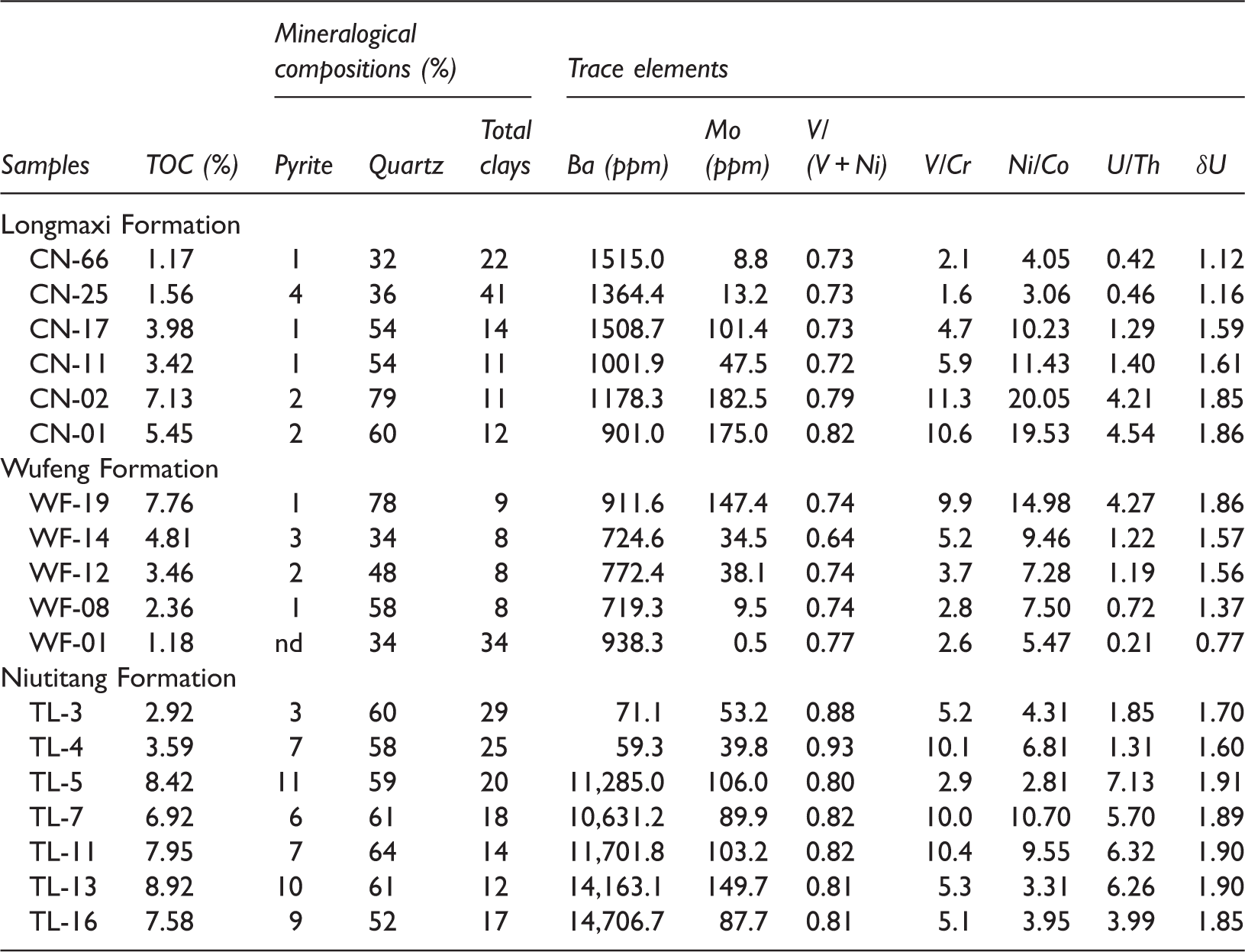
nd: no data; TOC: total organic carbon; total clays = illite + montmorillonite + chlorite.
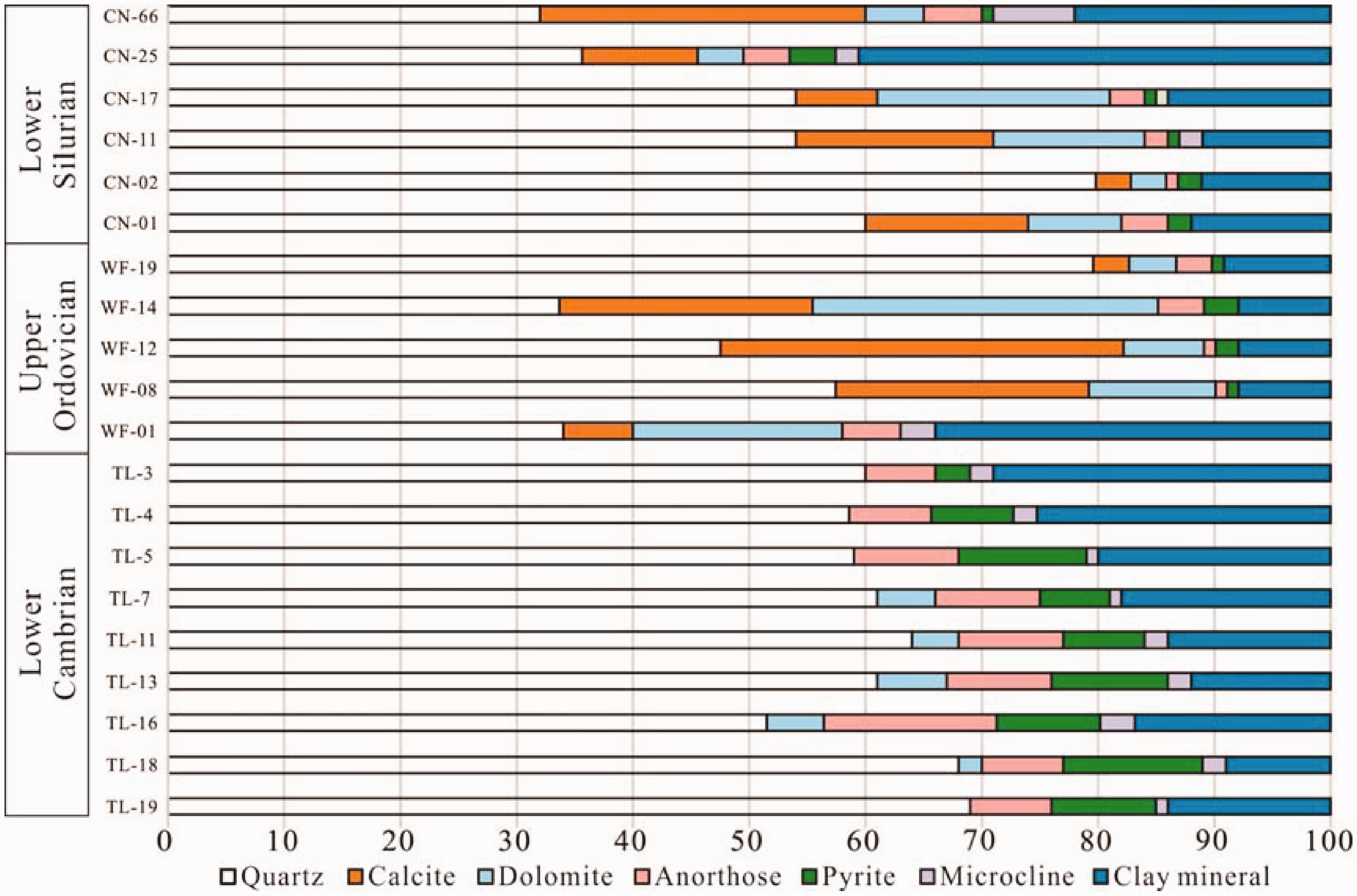
Mineral composition of studied samples from the Changning and Youyang sections. Based on the results of organic geochemical analyses, 20 samples with different organic geochemical characteristics were selected for mineral composition analyses.
Pyrite is an important characteristic mineral in marine organic-rich sediments. The pyrite content and speciation in a source rock can be used to estimate the redox state of the bottom water and to assess the palaeosedimentary environment. The formation of pyrite is generally associated with bacterial sulphate reduction. Under hypoxic conditions in aquifers, sulphate is reduced to H2S and reduced sulphur by microbes that use organic matter as a reducer and energy resource. The reaction products further react with active iron to form a series of iron sulphides, eventually forming pyrite, which is preserved in the sediments (Leventhal, 1983). High pyrite contents reflect stable sedimentary water and high salinity conditions relative to normal seawater. Water below the oxidation–reduction interface is commonly saline and strongly reducing, forming a sedimentary environment that favours the preservation of planktonic organic matter (Qin et al., 2010).
Pyrite is prevalent in the Palaeozoic marine black shales. The Niutitang Formation in the Youyang section is rich in pyrite, with an average pyrite content of 8% and a range of 3–12% (Figure 2). Pyrite averages 2% and ranges from 1 to 4% in the samples from the Wufeng and Longmaxi shales. During sample collection in the field, framboidal pyrite particles were clearly observed in patches or bands. Therefore, these shales were deposited in a closed, hypoxic, and strongly reducing environment. The contents of pyrite and organic carbon are positively and significantly correlated, confirming that a reducing environment is advantageous for the preservation and enrichment of organic matter. The pyrite content and the pyrite–TOC correlation coefficient in the Lower Cambrian Niutitang Formation was significantly higher than those of the Wufeng and Longmaxi Formations (Figure 3(a)).
(2) Correlation between clay and TOC
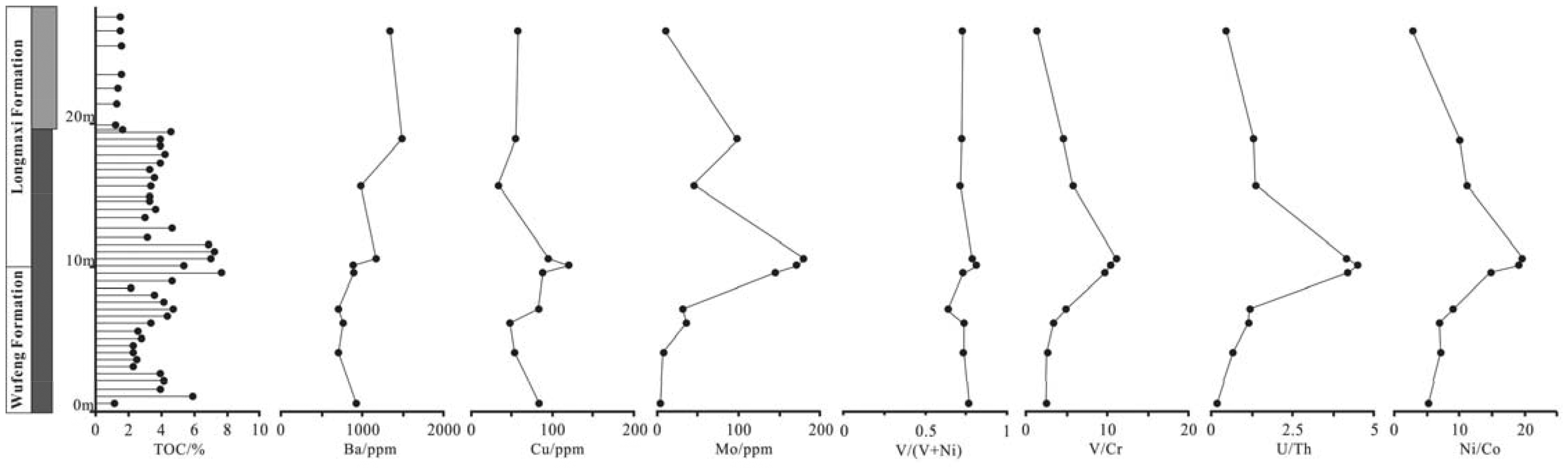
Crossplots of primary mineral composition versus total organic carbon (TOC). (a) Pyrite versus TOC, (b) clay versus TOC, (c) quartz versus TOC. TOC is positively correlated with the contents of pyrite and quartz but negatively correlated with clay content. Vertical variations in TOC, the concentrations of trace elements, and trace element ratios in the Wufeng and Longmaxi black shales from the Changning section.
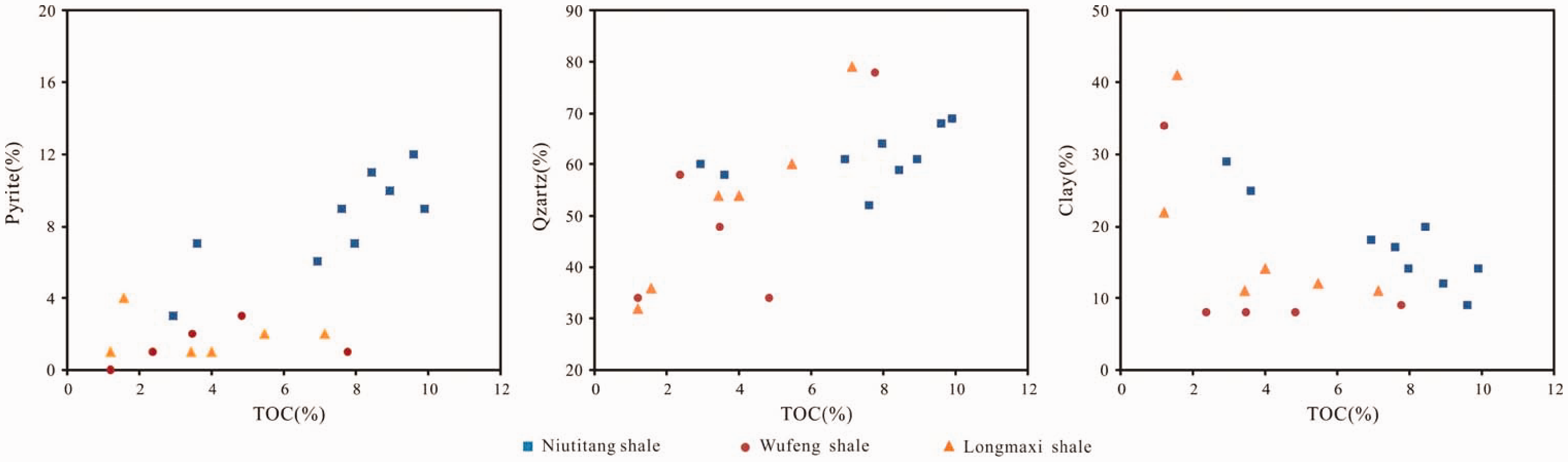
The clay content in the Niutitang Formation ranges from 9 to 29%, with an average of 18%. An obvious inverse linear correlation between clay content and TOC exists, confirming that terrigenous mineral input can significantly dilute organic matter concentrations. The clay contents in the Wufeng and Longmaxi Formations range between 8 and 41%, with an average of 16% (Figure 2), and these clay contents are also negatively correlated with TOC (Figure 3(b)). This pattern differs from the mineral distribution of conventional organic-rich shales, which are commonly rich in clay minerals. At the time of the deposition of the Niutitang, Wufeng, and Longmaxi shales in the early Palaeozoic, the study area featured a deep-water sedimentary environment. Stable water conditions and the great distance to sources of terrigenous material limited the deposition of large quantities of terrigenous clay carried by water. To a certain extent, the clay content may reflect the scale of the terrigenous mineral input. Terrigenous inputs and clay contents decrease towards the deep sea, and strongly reducing deep-sea environments are conducive to the preservation and enrichment of organic matter.
(3) Correlation between quartz and TOC
Previous studies have shown that North American marine shales contain large amounts of quartz. The average quartz content in the portion of the Barnett shale that produces the most gas is 45% (Bowker, 2007). The Palaeozoic marine black shales have abundant quartz. The bulk mineralogy of Devonian–Mississippian black mudrocks in the Western Canada sedimentary basin is dominated by quartz, which accounts for 58–93% of the bulk rock (Ross and Bustin, 2008). The quartz content of Devonian gas shales in the Horn River Basin averages 41% and ranges between 2 and 73% (Chalmers et al., 2012). The quartz content of the Niutitang Formation ranges from 52 to 69%, with an average of 61%. The quartz content of the Wufeng and Longmaxi Formations ranges from 32 to 78%, with an average of 52% (Figure 2). Other portions of the Sichuan Basin feature similar quartz mineral distributions (Nie and Zhang, 2012; Yang et al., 2016).
Terrigenous clastic and carbonate platform inputs are very limited in deep-water environments. Therefore, the contributions of terrigenous clastic quartz were relatively small. The majority of the quartz was of biogenic origin and was deposited via the slow settling and accumulation of SiO2-rich plankton (Qin et al., 2010). In relatively deep water, the sediments contain higher concentrations of silica and quartz and lower concentrations of mud and clay minerals. With increasing quartz content, the biological accumulation amount and organic matter abundance in the sediments increase, leading to a positive correlation between quartz content and TOC (Figure 3(c)). It was long thought that the quartz silt content of mudstones diminishes in the offshore direction, and that the distribution of quartz silt in the mudstones of a sedimentary basin can be used to determine palaeocurrents and distance to the shoreline (Blatt and Totten, 1981). Schieber et al. (2000) indicate that up to 100% of the quartz silt in Late Devonian black shales of New Albany basin in the eastern USA does not originate from the continental crust. Instead, it appears to have precipitated early during diagenesis in algal cysts and other pore spaces, and it was derived from silica derived from the dissolution of opaline skeletons of planktonic organisms, such as radiolaria and diatoms. Therefore, the use of quartz as a proxy for detrital inputs must be interpreted with caution.
Compared with the Wufeng and Longmaxi shales, the Lower Cambrian Niutitang shale possesses a higher quartz content and a higher correlation coefficient between organic matter and quartz content. The water depth was greater during the deposition of the Niutitang shale. Given the reduced terrigenous clastic inputs and the greater input of silica-rich organic material that predominated during this period, the Niutitang shale has higher proportions of organic matter and biogenic quartz.
Constraints from trace element enrichment
ICP-MS techniques are commonly used to determine trace element distributions in geological samples. The types and contents of trace elements vary among different palaeoclimatic, palaeogeographic, and palaeosedimentary environments. Trace metals vary widely in their behaviour in both sediments and the water column under varying environmental conditions. Sediment trace element geochemical characteristics can be used to effectively evaluate source rock genesis, metallogenic material sources, sedimentary environments, deposition rates, salinity, sea floor hydrothermal activity, and other aspects of the geological environment. Geochemical studies provide an accurate means to further reveal the enrichment mode of organic-rich marine shales. Trace element distributions are relatively stable, even under many types of geologic activity. In particular, the ratios of different trace element parameters are only weakly affected by maturity. The study of trace elements plays an important role in the assessment of high-mature to over-mature Palaeozoic marine shales in southern China.
The Palaeozoic marine black shales in the study area showed extreme enrichment in a number of trace metals. A total of 31 elements, including Ba, Mo, Ni, U, and V, were detected. The following discussion focuses on the elemental concentrations and their relationships with organic matter.
(1) Palaeoproductivity
Palaeoproductivity is one of the most important factors controlling the abundance of organic matter in marine hydrocarbon source rocks (Calvert et al., 1995; Pederson and Calvertse, 1990). The abundance of nutrient elements associated with biological growth and development can be an effective representation of ancient biological productivity conditions. These nutrient elements include P, Ba, Zn, and Cu. In particular, Ba is an inert element that can be preserved for long periods in marine sediments and is more stable than other productivity indices. The abundance of Ba and its correlation with TOC are widely used in estimates of palaeoproductivity (Dymond et al., 1992; Li et al., 2017; Roger et al., 1995). High concentrations of Zn and Cu also indicate high palaeoproductivity.
The two measured sections both showed enrichment in nutrient elements. The Ba contents in the Lower Cambrian Niutitang shale in the Youyang section average 10,900.9 ppm, suggesting a high degree of palaeoproductivity. The Ba concentrations in the Upper Ordovician Wufeng Formation and the Lower Silurian Longmaxi Formation in the Changning section average 813.3 and 1244.9 ppm, respectively, and range between 719.3 and 1515.0 ppm. The Cu contents of the Niutitang, Wufeng, and Longmaxi shales average 138.8, 73.3, and 68.4 ppm, respectively. The abundance of nutrient elements in the Lower Cambrian Niutitang shale is significantly higher than the concentrations in the other two units considered here (Figures 5 and 6). The abundance and scale of biological species during the Cambrian explosion was unprecedented; this palaeoproductivity provided an extremely high abundance of organic matter for the sediments. Accordingly, the TOC content of the Niutitang shale is higher.
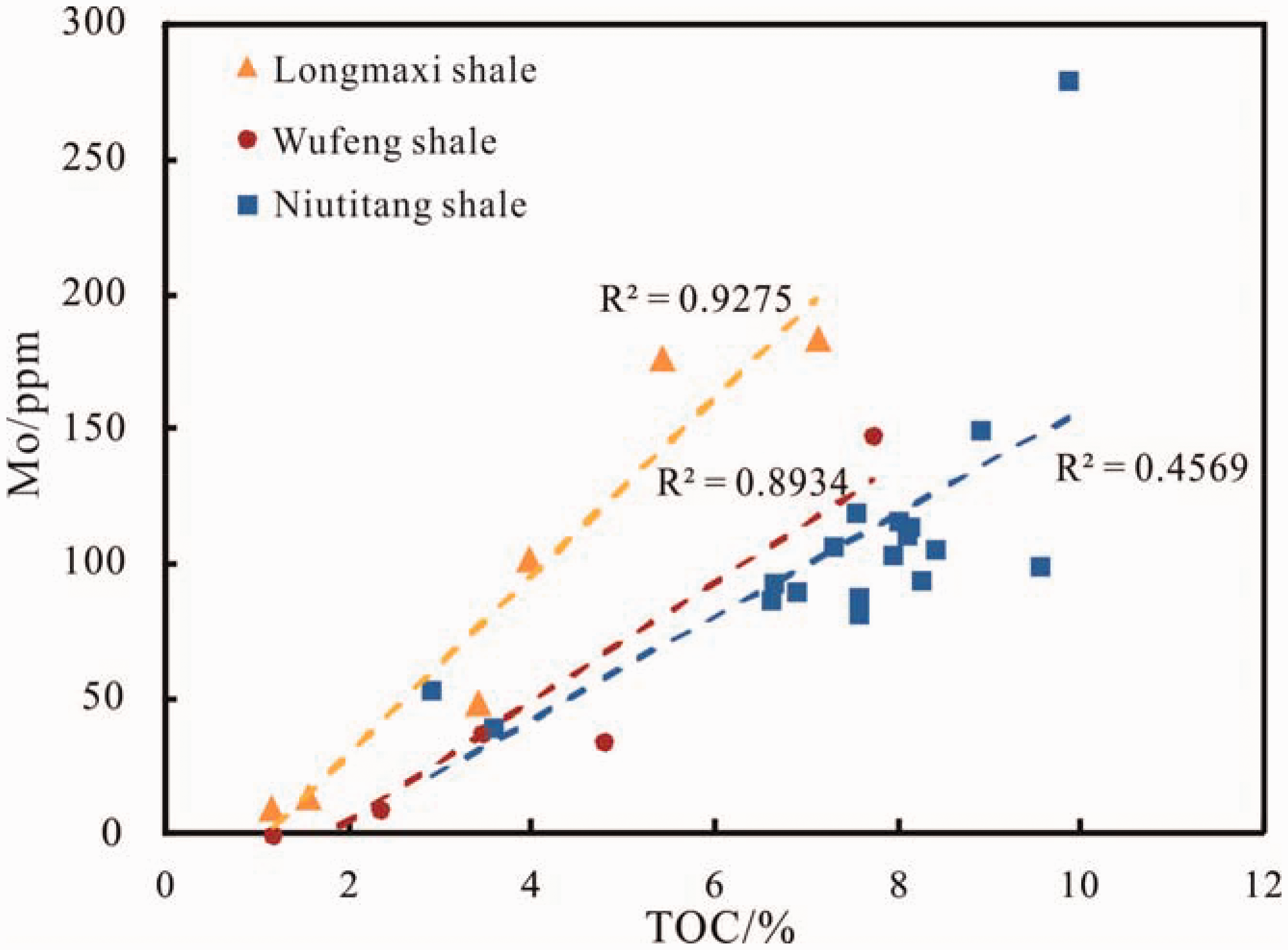
Vertical variations of TOC, concentrations of trace elements, and trace element ratios in the Niutitang black shale from the Youyang section. Crossplot of Mo concentration versus total organic carbon (TOC). The slope and correlation coefficient displayed in the Mo–TOC crossplot for the Wufeng and Longmaxi shales are higher than those of the Niutitang formation.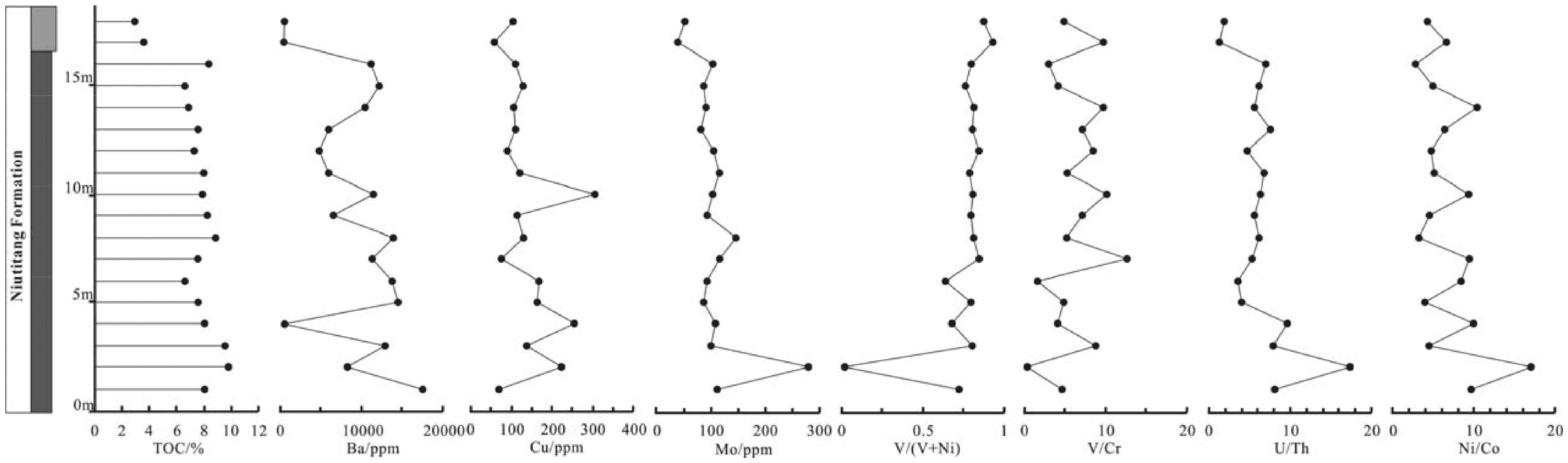
The Lower Palaeozoic shales possess abundant nutrient elements and organic matter, thus representing the material basis for the accumulation of organic matter in the sediments.
(2) Organic matter burial efficiency
Although more than 95% of organic carbon preserved at the surface of the Earth is buried in continental margin sediments, the final proportion of the organic carbon in sediments constitutes only a small fraction (<0.5%) of marine primary productivity (Burdige, 2007; Hedges and Keil, 1995). The efficiency of carbon burial affects the accumulation of organic matter. The burial efficiency determines the amount of the original organic matter that is buried. In a reducing environment, dissolved Mo rapidly precipitates into a particulate form and combines with the organic matter. Black shales deposited under anoxic conditions are normally rich in Mo, which is highly correlated with the organic carbon content. Variations in Mo contents reflect changes in organic carbon burial (Meyers et al., 2005).
The Mo concentrations of the Lower Palaeozoic shales differ between the organic-rich shales (TOC > 2.0%) and the organic-poor shales (TOC < 2.0%), with averages of 102.7 and 7.5 ppm, respectively. The Mo concentrations of the Lower Cambrian Niutitang shale average 107.4 ppm and range between 39.8 and 280.1 ppm. The Mo concentrations of the Upper Ordovician Wufeng shale are 46.0 ppm, on average, and range between 0.5 and 147.4 ppm. The Mo concentrations of the Lower Silurian Longmaxi shale average 88.1 ppm and range between 8.8 and 182.5 ppm. The Longmaxi shale has higher concentrations of Mo by wt% TOC. Organic matter is the primary host phase for Mo in these Lower Palaeozoic shales, a finding that is supported by the strong correlation between the Mo and TOC concentrations. The strong correlation between Mo and TOC indicates the influence of burial efficiency on organic matter enrichment. The correlation coefficients (R2) for the Longmaxi, Wufeng, and Niutitang shales are 0.93, 0.89, and 0.46, respectively. Such strong and nearly ubiquitous correlations would not exist unless the Mo was hosted predominantly by organic matter (Algeo and Maynard, 2004).
Although the palaeoproductivity index estimates for the Upper Ordovician Wufeng shale and the Lower Silurian Longmaxi shale are far lower than that of the Lower Cambrian Niutitang shale, their higher burial efficiencies make the former two shale units excellent hydrocarbon source rocks with high abundances of organic matter. For different shale samples from strata with the same TOC values, the burial efficiency values (Mo–TOC crossplot slope) of the Wufeng and Longmaxi shale are higher than that of the Niutitang shale, as shown in Figure 6. The Mo–TOC correlation study shows that, in a sedimentary system with sufficient organic matter sources, the organic matter burial efficiency is an important controlling factor for the deposition of high-quality source rocks.
(3) Oxidation–reduction sedimentary environment
Oxidation–reduction sedimentary environment evaluation standards and information on the samples studied.
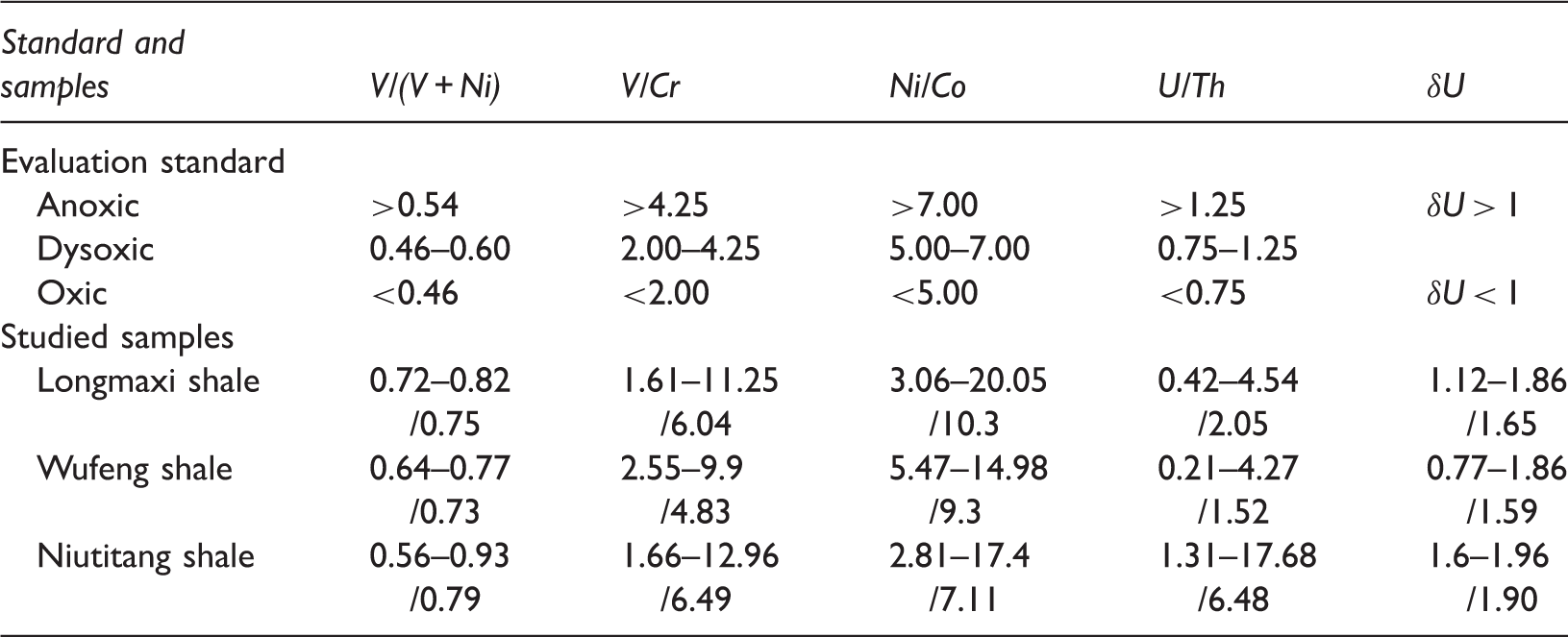
The elements U and Th have similar chemical properties. Their speciation diversity is limited in the reduced state, but it can vary greatly in the oxidised state. Based on these distribution characteristics, U/Th is often used as an index for assessing redox environments. A U/Th value larger than 1.25 indicates a strongly reducing environment, and U/Th < 0.75 indicates an oxidising environment (Jones and Manning, 1994). Wignall (1994) described a δU-based oxidation–reduction environment identification model based on the relationship between U and Th, where δU = U/0.5(U + Th/3). A value of δU > 1 represents an anoxic environment, whereas a value of δU < 1 represents a sedimentary environment like that of normal seawater. The term (U + Th/3) represents the relative content of authigenic uranium.
Element-based geochemical distributions were used to estimate the oxidation–reduction conditions of the sedimentary environments associated with the Lower Palaeozoic organic-rich shales. In the Lower Cambrian Niutitang shale, the V/(V + Ni) and V/Cr ratios average 0.79 and 6.49, respectively. All of the samples featured V/(V + Ni) ratios greater than 0.54, and several samples featured Ni/Co values ranging from 1.7 to 4.2. The Niutitang shale is rich in U, with high U/Th and δU values. All of the samples fall in the anaerobic sedimentary environment region. The V/(V + Ni), V/Cr, and Ni/Co ratios of the Upper Ordovician Wufeng shale average 0.75, 6.0, and 10.3, respectively (Figure 7(a) to (c)). The U/Th and δU ratios average 20.05 and 1.65, respectively (Figure 7(d)). These environmental parameters of the Lower Silurian Longmaxi shale are close to those of the Wufeng shale and indicate a low-oxygen to anaerobic sedimentary environment.
Distribution of trace elements ratios used as palaeoredox proxies and crossplots of trace elements ratios versus total organic carbon (TOC).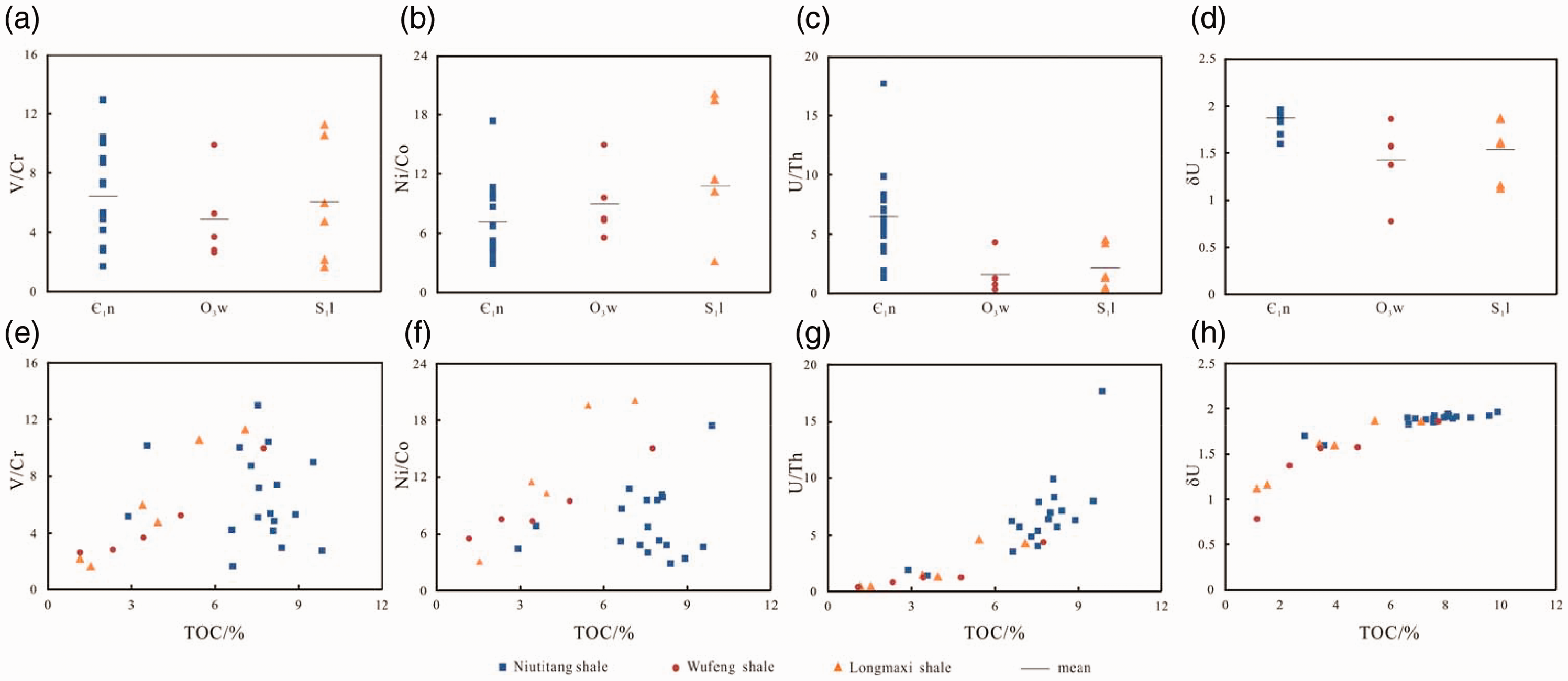
The redox parameters U/Th, δU, V/Cr, and Ni/Co correlate strongly with TOC content in the Wufeng and Longmaxi shales, demonstrating that the redox conditions of the sedimentary environment during deposition strongly control the organic carbon abundance. In the Niutitang shale, which was deposited under a more strongly reducing bottom water environment, the U/Th and δU values are positively correlated with TOC, whereas the other redox parameters do not exhibit good correlations with organic carbon content (Figure 7(e) to (h)). The relationship between the redox parameter ratios and TOC suggests that reducing anoxic environments controlled the distribution of the organic-rich shales. More reducing sedimentary environments resulted in greater abundances of organic matter. The redox ratios indicate that organic-rich shales (TOC > 2.0%) were deposited under strongly reducing conditions. Compared with the organic-rich shales, the redox parameter ratios of the organic-poor shales (TOC < 2.0%) were distributed along the trend between oxygen-enriched and low-oxygen conditions. Therefore, the sedimentary water clearly featured enhanced oxidation.
(4) Hydrothermal activity
Large amounts of organic material and various types of metals were transported from the deep oceanic basin and accumulated in the sedimentary environments along the continental shelf, resulting in enrichment of these metals in the black shales. Trace elements and rare earth elements are important in the study of ancient hydrothermal systems (Choi and Hariya., 1992; Hatch and Leventhal et al., 1992). The U/Th correlation of hydrocarbon source rocks can be used to estimate the influence of hydrothermal fluids. Uranium–thorium ratios larger than 1 indicate that hydrothermal activity was present during the depositional period, whereas U/Th < 1 indicate normal seawater depositional conditions. All of the samples from the Lower Cambrian Niutitang shale have U/Th values greater than 1. The U/Th values average 6.48 and range between 1.85 and 17.68, reflecting input from deep sources. The U/Th ratios of the Upper Ordovician Wufeng shale average 1.52 and range from 0.21 to 4.27. The U/Th ratios of the Lower Silurian Longmaxi shale average 2.05 and range between 0.42 and 4.54. The samples from the Wufeng and Longmaxi shales with low organic matter abundances (TOC < 2.0%) in the Changning section represent normal sea sediment, with U/Th values less than 1. With increasing U/Th values, organic matter abundances also increase, confirming that abundant organic materials were carried by deep hydrothermal fluids.
The elements Zn, Cu, Ni, and Co are indicative of the background and source of metals in the sediment. Due to adsorption by seawater, the Co present in marine sediments is considered to be associated with a common seawater source. Zinc, Cu, and Ni are primarily of hydrothermal origin (Cronan, 1980). A Ni–Zn–Co ternary diagram can determine whether hydrocarbon source rocks have experienced seafloor hydrothermal activity during the initial stages of deposition. The Co contents of the Lower Palaeozoic organic-rich shales are generally low. According to the Ni–Zn–Co ternary diagram, most of the samples fall in the Ni–Zn region, and none of the samples fall in the aqueous sediment area (Figure 8). Therefore, the shales feature hydrothermal sedimentary characteristics.
Ternary diagram showing a comparison of Ni–Zn–Cu constituents of the Longmaxi, Wufeng, and Niutitang shales from the Changning and Youyang sections.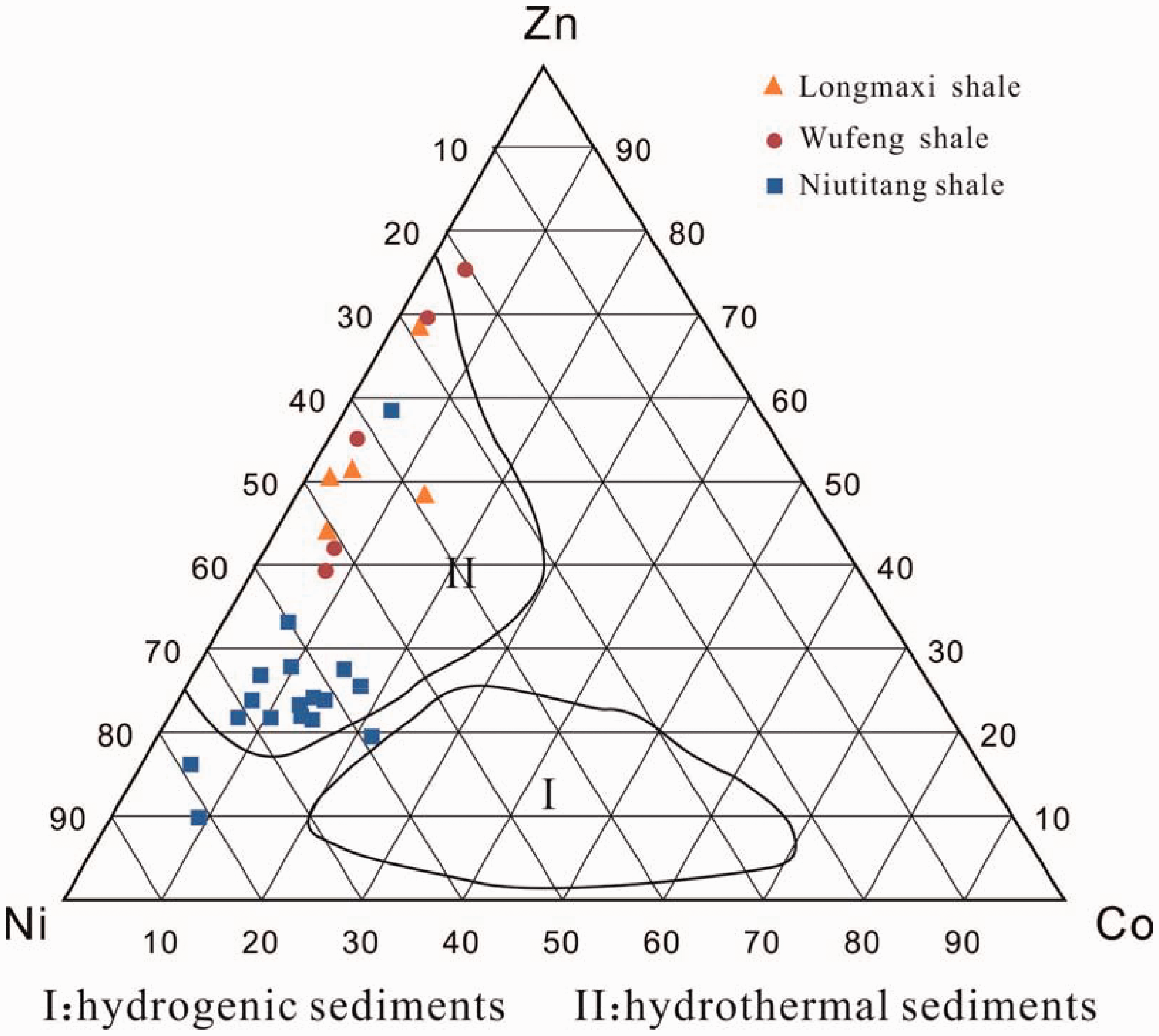
Conclusion
Based on a study of organic geochemistry, mineralogy, and trace element geochemistry, the main controlling factors (sedimentary environment, productivity, burial efficiency, and hydrothermal activity) of marine organic-rich shales were discussed in this paper. The vertical distribution of organic matter in the Lower Palaeozoic marine organic-rich shales examined in this study was controlled by multiple factors. Organic geochemistry parameters and the correlation between inorganic mineral composition and organic matter abundance suggest that these Lower Palaeozoic marine organic-rich shales (TOC > 2.0%) were deposited in a strongly reducing deep-water environment. Deep-water sedimentary environments are conducive to the preservation of organic matter. As deposition depth increased, the contents of clay minerals gradually decreased. However, the contents of quartz and organic matter increased with increasing deposition depth.
The study of trace elements suggests that the Lower Palaeozoic marine shales have a high abundance of nutrient elements, and the contents of these elements are highest in the Niutitang shale. The contents of the element Mo and organic carbon showed a positive correlation, indicating that burial efficiency has a considerable influence on the organic matter enrichment of the Wufeng and Longmaxi shales. The burial and preservation of organic matter in all three sets of marine shales were influenced by the redox conditions of the sedimentary environment.
Footnotes
Acknowledgements
We thank Prof. Yuzhuang Sun for his handling this manuscript, and two anonymous referees for their careful review and constructive comments. We also thank Analytical Service Center, Research Center for Oil and Gas Resources, Northwest Institute of Eco-Environment and Resources, CAS for supporting this study.
Declaration of conflicting interests
The author(s) declared no potential conflicts of interest with respect to the research, authorship, and/or publication of this article.
Funding
The author(s) disclosed receipt of the following financial support for the research, authorship, and/or publication of this article: This work is supported by the National Programmes for Fundamental Research and Development of China (973 Programme) (Grant Nos. 2014CB239004 and 2012CB214701), the National Natural Science Foundation of China (Grant Nos. 41602151 and 41672127), and the CAS ‘Light of West China’ Programme.