




Abstract
The fine-grained rocks in the Paleogene Shahejie Formation in Nanpu Sag, Huanghua Depression, Bohai Bay Basin, are extremely important source rocks. These Paleogene rocks are mainly subdivided into organic-rich black shale and gray mudstone. The average total organic carbon contents of the shale and mudstone are 11.5 wt.% and 8.4 wt.%, respectively. The average hydrocarbon (HC)-generating potentials (which is equal to the sum of free hydrocarbons (S1) and potential hydrocarbons (S2)) of the shale and mudstone are 39.3 mg HC/g rock and 28.5 mg HC/g rock, respectively, with mean vitrinite reflectance values of 0.82% and 0.81%, respectively. The higher abundance of organic matter in the shale than in the mudstone is due mainly to paleoenvironmental differences. The chemical index of alteration values and Na/Al ratios reveal a warm and humid climate during shale deposition and a cold and dry climate during mudstone deposition. The biologically derived Ba and Ba/Al ratios indicate high productivity in both the shale and mudstone, with relatively low productivity in the shale. The shale formed in fresh to brackish water, whereas the mudstone was deposited in fresh water, with the former having a higher salinity. Compared with the shale, the mudstone underwent higher detrital input, exhibiting higher Si/Al and Ti/Al ratios. Shale deposition was more dysoxic than mudstone deposition. The organic matter enrichment of the shale sediments was controlled mainly by reducing conditions followed by moderate-to-high productivity, which was promoted by a warm and humid climate and salinity stratification. The organic matter enrichment of the mudstone was less than that of the shale and was controlled by relatively oxic conditions.
Keywords
Introduction
With the replacement of conventional oil and gas resources, shale oil and gas have become the focus of world oil and gas exploration (Hu et al., 2021). Shale oil and gas mainly occur in organic-rich fine-grained sedimentary rocks, and the abundance of shale oil and gas is closely related to the enrichment degree of organic matter (OM). OM enrichment is largely controlled by the depositional environments and benefits from high primary production and strong preservation conditions (Demaison and Moore, 1980; Doner et al., 2019; Pedersen and Calvert, 1991; Quan et al., 2019). Previous studies have focused on the controlling effects of environmental changes on OM enrichment at different scales. For example, Chen et al. (2019) and Jin et al. (2020) investigated the influences of environmental fluctuations on OM accumulation on an astronomical timescale. Li et al. (2019) revealed the relationships between OM enrichment and lake evolution on the third-order sequence scale. However, the differences in OM enrichment among different types of fine sedimentary rocks, such as shale and mudstone, have rarely been studied. Influenced by high-frequency environmental vibration, lacustrine fine-grained sediments display strong heterogeneity in rock type and OM enrichment degree (Hu et al., 2018; Liang et al., 2018; Quan et al., 2017). How the sedimentary environments control the enrichment of OM in different rock types needs further study.
The depositional environments of organic-rich fine-grained sediments can be reconstructed by the analyses of inorganic elements, organic geochemical parameters and sporopollen and algal fossils. Inorganic elements can provide comprehensive information on the paleoclimate, primary productivity, salinity, detrital input and redox conditions (Gastaldo et al., 2020; Liang et al., 2020; Liu et al., 2017; Scheffler et al., 2003; Singh and Kumar, 2020; Spiro et al., 2019; Tao et al., 2013; Wang et al., 2021; Xu et al., 2016). Organic geochemical parameters such as biomarkers are used mainly to decipher OM sources and water column properties such as salinity and redox conditions (Philip, 1985; Quan et al., 2017), whereas sporopollen and algal fossils are applied mainly to indicate paleoclimate and water column salinity. The combination of these types of data is useful for reliable depositional environment reconstruction.
The third member of the Paleogene Shahejie Formation (Es3) of Nanpu Sag, Bohai Bay Basin, developed typical lacustrine fine-grained sedimentary rocks composed mainly of black shale and gray mudstone. In the present study, systematic geochemical, mineralogical, and paleontological investigations of shale and mudstone samples were conducted to (a) reveal the difference in OM enrichment between shale and mudstone, (b) reconstruct the paleoenvironments of black shale and gray mudstone and analyze the environmental differences between the shale and mudstone, and (c) analyze the major environmental factors controlling the OM enrichment of the shale and mudstone and reveal the mechanisms of differential OM enrichment between these two kinds of fine-grained sedimentary rocks. This study improves our understanding of the mechanisms of differential OM enrichment in fine-grained rocks, and provides theoretical guidance for the distribution prediction of high-quality source rocks.
Geological setting
The Bohai Bay Basin, a large Meso-Cenozoic petroliferous rift basin, is located in the eastern part of the North China Craton and covers an area of 200,000 km2 (Wang et al., 2019b; Zhang et al., 2019b) (Figure 1(a)). The basin is divided into a series of depressions (Huanghua, Jiyang, Liaohe, Bozhong, Jizhong, and Linqing depressions) and uplifted blocks (Chengning, Cangxian, Shaleitian, Neihuang, and Xingheng) by dominant basin-controlling faults (Allen et al., 1997; Wang et al., 2019b). The Nanpu Sag is situated in the northeastern part of the Huanghua Depression and covers an area of nearly 1932 km2 (Chen et al., 2016, 2017; Guo et al., 2016). The Nanpu Sag is bounded by the Xinanzhuang and Bogezhuang faults to the north and the Shaleitian block to the south (Zhang et al., 2017) (Figure 1(b)). Due to the Himalayan orogeny (45.5 Ma to present), the Nanpu Sag has undergone two important tectonic stages: a synrift stage and a postrift stage (Wang et al., 2019a). The synrift stage lasted from the late Cretaceous to the late Eocene and was characterized by intense and rapid extension, which was beneficial for the development of lacustrine mudstone and shale deposition. Since the late Eocene, the Nanpu Sag has experienced a postrift stage characterized by slow subsidence. During this period, deltaic and fluvial sedimentary systems were dominant. The Cenozoic strata revealed by drilling cores within the Nanpu Sag are listed as follows (from bottom to top): the Paleogene Shahejie Formation (Es) and Dongying Formation (Ed), the Neogene Guantao Formation (Ng) and Minghuazhen Formation (Nm), and the Quaternary deposits (Q) (Figure 1(c)). From base to top, the Es consists of the Es3, Es2, and Es1 members. The Es developed during the synrift stage and includes mainly lacustrine mudstone and shale sequences (Chen et al., 2017), which are considered important source rocks.
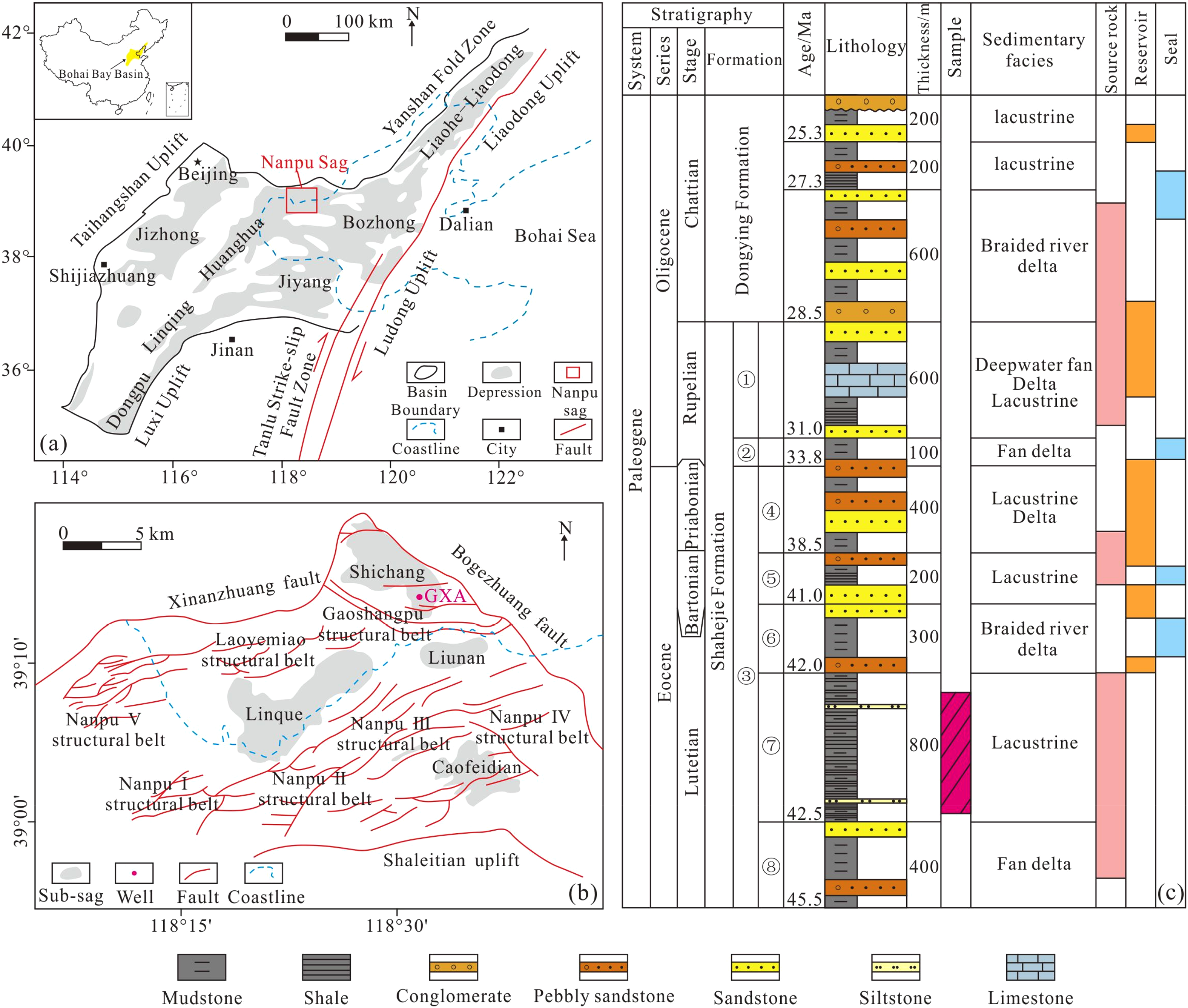
Maps showing the location (a), structural features (b), and stratigraphic column (c) of the Nanpu Sag, Bohai Bay Basin, China (modified after Guo et al., 2016; He et al., 2017, and Li et al., 2019). ① represents the first member of the Shahejie Formation (Es1), ② represents the second member of the Shahejie Formation (Es2), ③ represents the third member of the Shahejie Formation (Es3), ④ represents the first submember of Es3 (Es31), ⑤ represents the second submember of Es3 (Es32), ⑥ represents the third submember of Es3 (Es33), ⑦ represents the fourth submember of Es3 (Es34), and ⑧ represents the fifth submember of Es3 (Es35).
Materials and methods
In this study, a total of 67 core samples of the Es3 member, comprising 21 shale samples and 46 mudstone samples, were collected from the well G66X9 (GXA) (Figure 1(b)). The depths of the core samples are 4535–4950 m. The shale samples are mostly brown black and exhibit laminated beddings, while the mudstone is gray and generally exhibits a dense massive structure (Figure 1(c)).
The total organic carbon (TOC) content was measured using a LECO CS-600 carbon sulfur analyzer. Samples were first ground into powders with particle sizes of less than 0.2 mm. Then, 100 mg of powder from each sample was treated with diluted hydrochloric acid at 60–80 °C to remove inorganic carbon. After washing and oven-drying, the acidified powder was burned in a high-temperature oxygen flow, allowing the organic carbon to transform to CO2 and be calculated. Rock pyrolysis experiments on all samples were performed on a Rock-Eval VI instrument. The samples were crushed and ground to less than 100 mesh. Samples with masses of 30–50 mg were heated gradually to 600 °C in a helium atmosphere, and source rock parameters were measured during this process. The parameters, including free hydrocarbons (S1), potential hydrocarbons (S2), temperature of the maximum hydrocarbon generation rate (Tmax), hydrocarbon-generating potential (GP; GP = S1 + S2), hydrogen index (HI; HI = S2/TOC × 100) and vitrinite reflectance (Ro; Ro = 0.0180 × Tmax − 7.16, Jarvie et al., 2007), were obtained via Rock-Eval pyrolysis.
Thirty-seven samples, comprising 16 shale and 21 mudstone samples, were subjected to mineral composition determination by X-ray diffraction (XRD). All samples were ground to less than 0.04 mm. XRD analysis was performed on a D/max-2500 diffractometer with Cu Kα radiation (40 kV and 35 mA), a 5°–85° (2θ) scanning range, a 2° (2θ)/min scanning speed, and a 0.02° (2θ) step width. Eight samples, comprising two shale and six mudstone samples, were subjected to fossil identification of sporopollen and algae with a binocular biological microscope. Samples were crushed to 0.45–0.60 cm and successively treated with hydrochloric acid, washed, treated with sodium hydroxide and washed. Then, the fossils were floated and selected with zinc iodide, a heavy liquid.
The element compositions of 37 samples, comprising 16 shale and 21 mudstone samples, were determined using inductively coupled plasma atomic emission spectrometry (ICP-AES). Powder samples less than 0.1 mm (500 mg) were dried in an oven at 105 °C for 2–3 h and then treated successively with 5 ml of nitric acid, 10 ml of hydrofluoric acid, 5 ml of perchloric acid and 5 ml of dilute nitric acid by electrothermal heating. Then, the mixture solution was diluted with deionized water for element measurements. The analytical precision was better than 5%, and the accuracy was within 10%. Element enrichment factors (EFs) can be used as objective evaluation parameters to determine element concentrations by comparing samples with average shale (Wedepohl, 1971). EF values are determined as follows:

Results
Mineralogical and paleontological characteristics
All of the shale and mudstone samples are composed primarily of clay, quartz, feldspar, and carbonate; other minerals, such as pyrite, account for only a small proportion of each sample. However, differences in the proportions of various minerals between the shale and mudstone samples can be found (Figure 2). In the black shale, clay (avg. 41.5%) accounts for the highest proportion of the mineral components, followed by carbonate (avg. 22.3%), quartz (avg. 19.8%), and feldspar (avg. 14.3%), while mudstone is composed mainly of clay (avg. 42.6%) and quartz (avg. 22.1%), followed by carbonate (avg. 17.8%) and feldspar (avg. 16.0%). Overall, the shale has a higher content of carbonates and lower percentages of clay, quartz, and feldspar than mudstone.
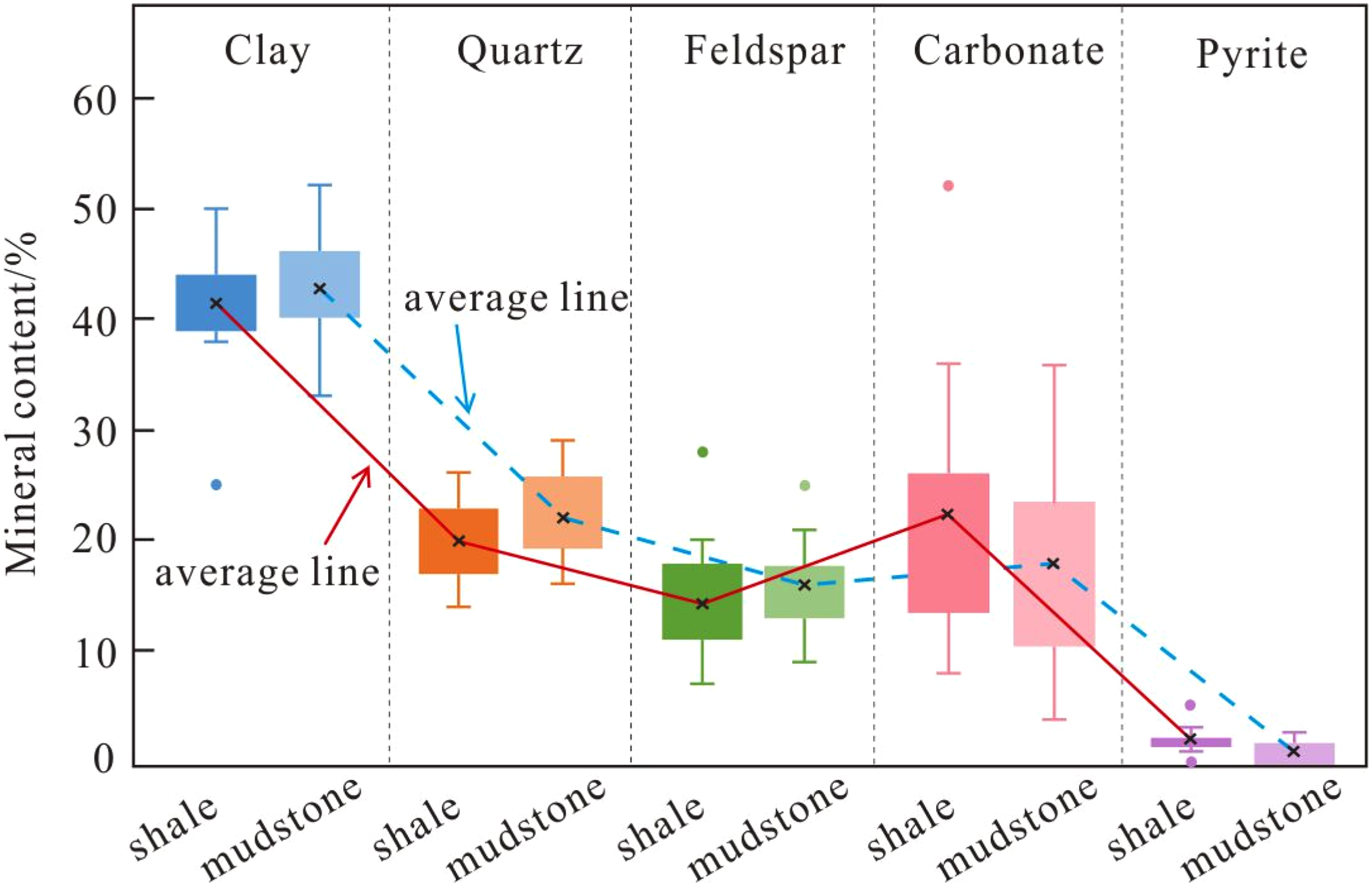
Box plot showing the mineral composition distributions of the shale and mudstone samples from the Es3 member in the Nanpu Sag, Bohai Bay Basin, China. The red solid line shows the average contents of major minerals in shale. The blue dashed line shows the average contents of major minerals in mudstone.
The analysis of the sporopollenin and algae fossils of the shale and mudstone samples shows that these samples are characterized by high contents of angiosperm pollen (avg. 56.68%), followed by gymnosperm pollen (avg. 38.84%) and fern spores (avg. 4.48%) (Figure 3). The major genera of angiosperm pollen are Quercoidites (avg. 21.0%), Ulmipollenites (avg. 13.60%), and Juglanspollenites (avg. 8.78%); low percentages are observed for other genera, which include Betulaceoipollenites, Caryapollenites, Rutaceoipollenites, and Fupingopollenites. The gymnosperm pollens represent mainly Abietineaepollenites (avg. 8.64%), Ephedripites (avg. 7.94%), Pinuspollenites (avg. 6.23%), Tsugaepollenites (avg. 6.08%), and Piceaepollenites (avg. 5.64%), followed by Taxodiaceaepollenites and Cedripites. A few fern spores are found, including those of Deltoidospora and Polypodiaceaesporites. In addition, the dominant algae are Bohaidina, Parabohaidina, Granodiscus, Dictyotidium, Leiosphaeridia, and Psiloschizosporis. The proportion of angiosperm pollen is higher in the shale samples than in the mudstone samples, while gymnosperm pollen shows the opposite trend. Fupingopollenites, representing humid climates (Miao et al., 2016a), only appears in the shale samples, while Ephedripites, indicating dry climates (Miao et al., 2016b), consistently appears in the mudstone samples. In addition, algae are abundant in the shale and mudstone samples. Conicoidium, a typical salt-brackish alga, only occurs in the shale samples.
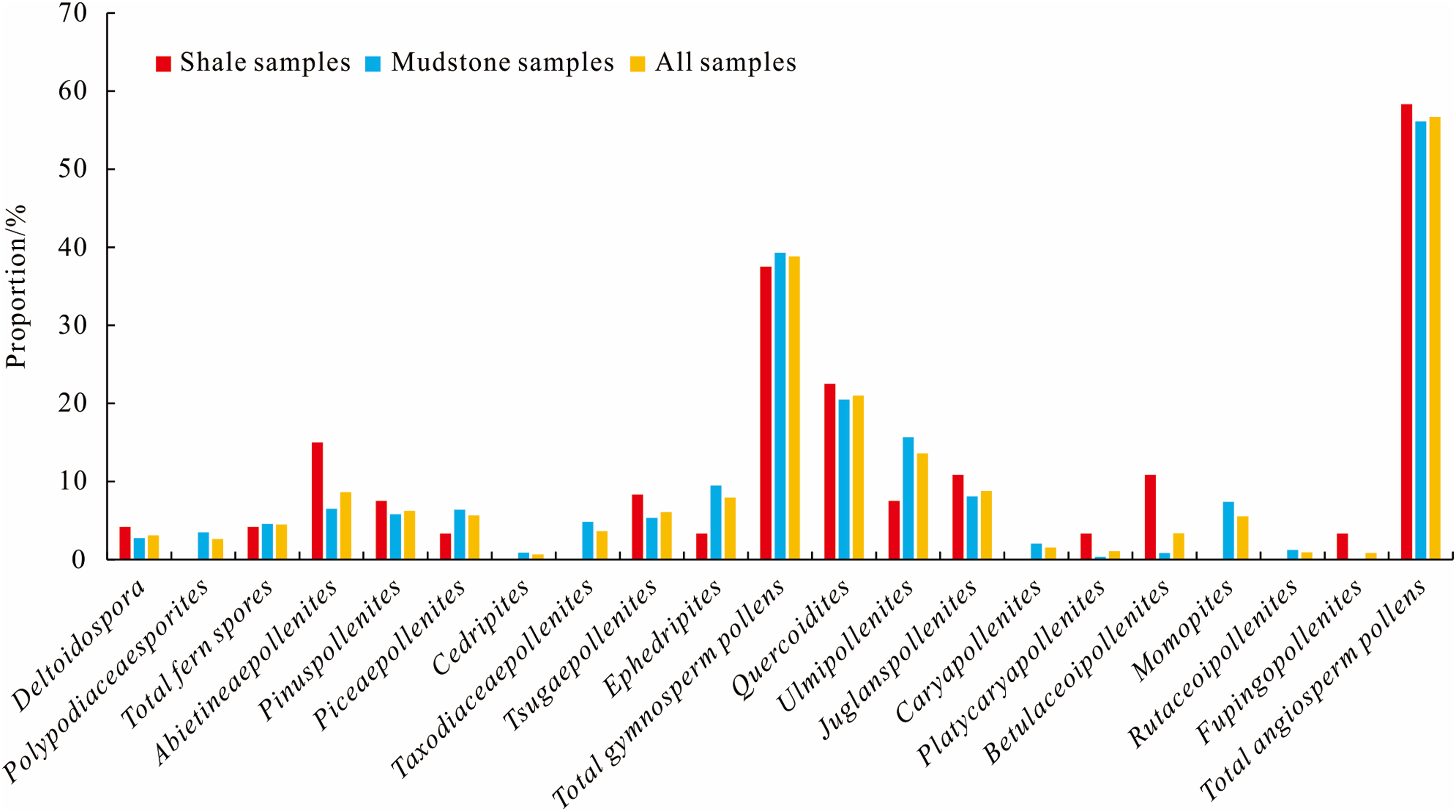
Bar chart showing the percentages of various sporopollenins in the shale and mudstone samples from the Es3 member in the Nanpu Sag, Bohai Bay Basin, China.
Organic geochemical characteristics
The TOC content of shale varies from 1.6 wt.% to 35.2 wt.%, with an average of 11.5 wt.%. It is obviously higher than the TOC content of mudstone, the average of which is 8.4 wt.% (Figure 4). This result reveals that the OM is more enriched in the shale than in the mudstone. Rock-Eval pyrolysis reveals a higher GP in shale sediments than in mudstone sediments, with an average of 39.3 mg HC/g rock in the former (Figure 4). In addition, the S2 values of the mudstone range from 0.6 to 79.4 mg HC/g rock (avg. 25.7 mg HC/g rock) and are lower than those in the shale, with a mean value of 35.7 mg HC/g rock (Figure 4). The higher S2 and GP values in shale suggest better hydrocarbon potential of shale than of mudstone. Moreover, the TOC versus GP diagram indicates that the shale and mudstone are good or excellent source rocks (Figure 5).
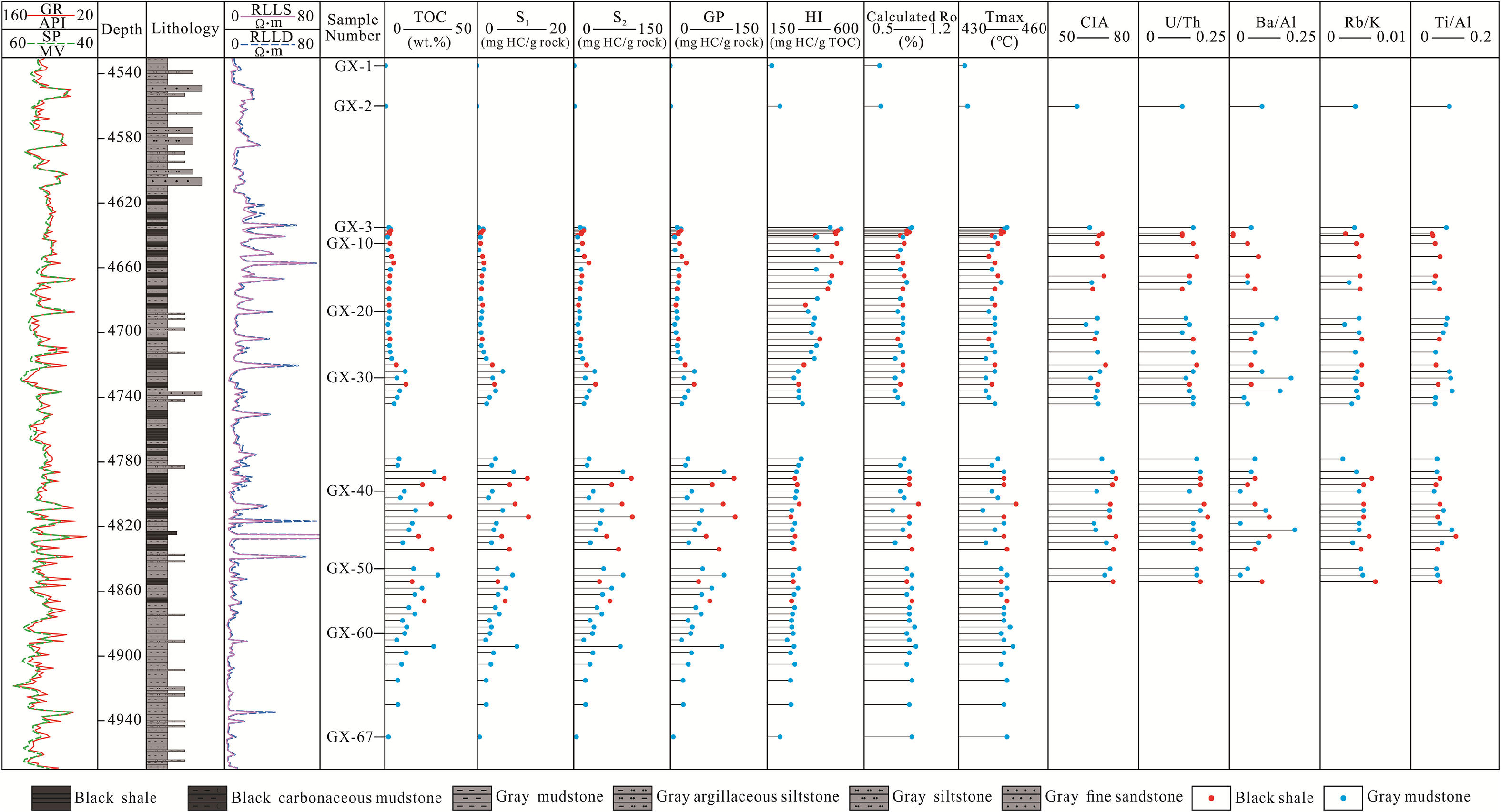
Profiles of lithology, TOC, pyrolysis parameters, and environmental proxies of the shale and mudstone samples from well GXA. Pyrolysis parameters include S1, S2, GP, and HI, to calculate Ro and Tmax. Environmental proxies include CIA, U/Th, Ba/Al, Rb/K and Ti/Al. Ro is calculated according to the following equation: Ro = 0.0180 × Tmax − 7.16 (Jarvie et al., 2007). The TOC, GP, CIA, U/Th and Rb/K show similar trends.
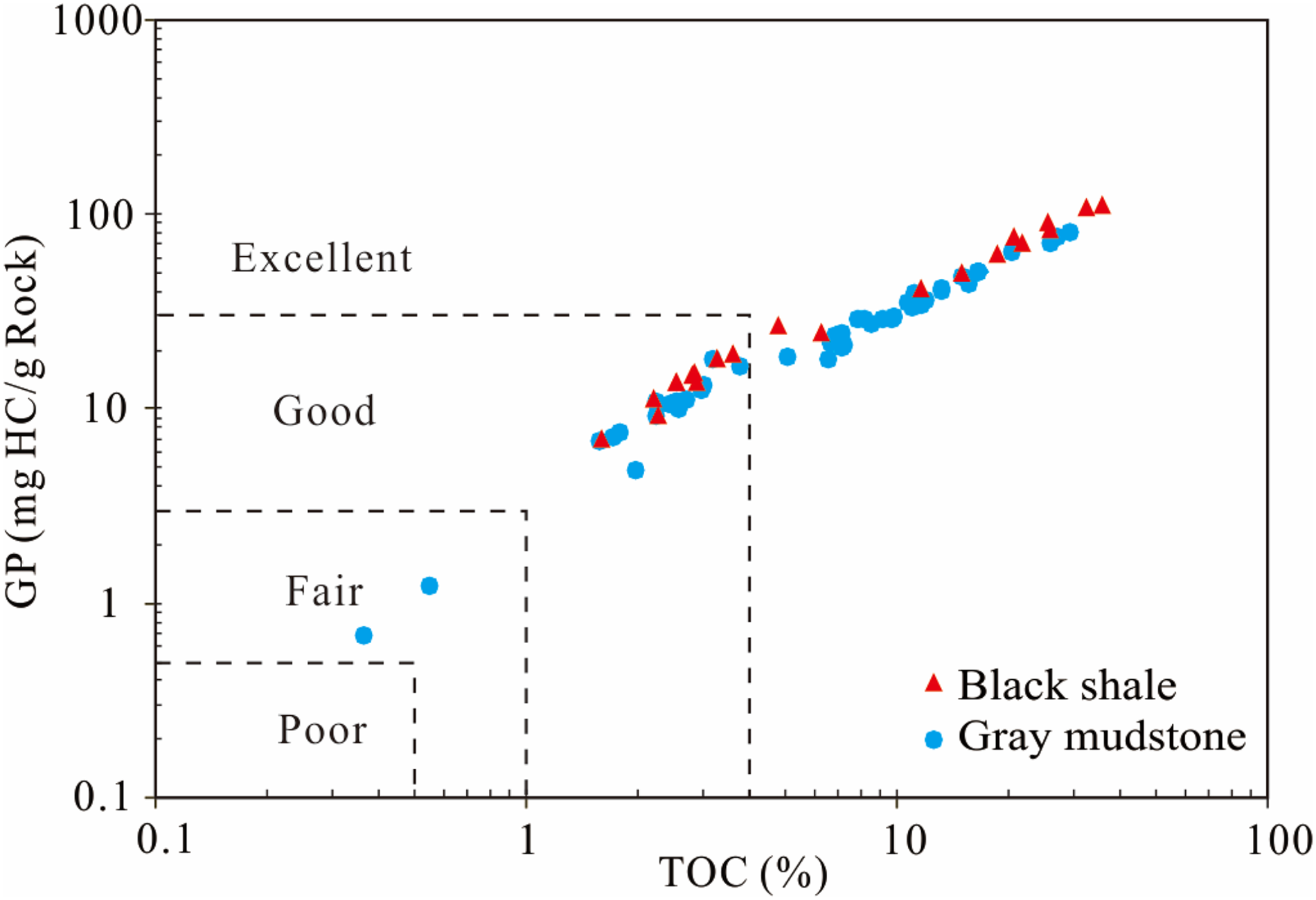
Plot of TOC vs. GP of the studied samples from the Es3 member in the Nanpu Sag, Bohai Bay Basin, China (modified after Makeen et al., 2019).
Tmax and Ro are indicators of thermal maturity. The Tmax values of the shale and mudstone samples are in the ranges of 440–449 °C and 432–448 °C, respectively. The calculated Ro values of the shale and mudstone samples vary from 0.76% to 0.92% and 0.62% to 0.90%, respectively. This result indicates that the shale and mudstone are mature and in the early oil window, and they still have excellent hydrocarbon-generating potential. Furthermore, the shale has higher thermal maturity than the mudstone, which may be related to the kerogen type. The kerogen in shale is more oil prone than that in mudstone, as indicated by the plot of HI versus Tmax, which shows that most of the kerogens of the shale belong to type I, while most of those of the mudstone are of type II1 (Figure 6).
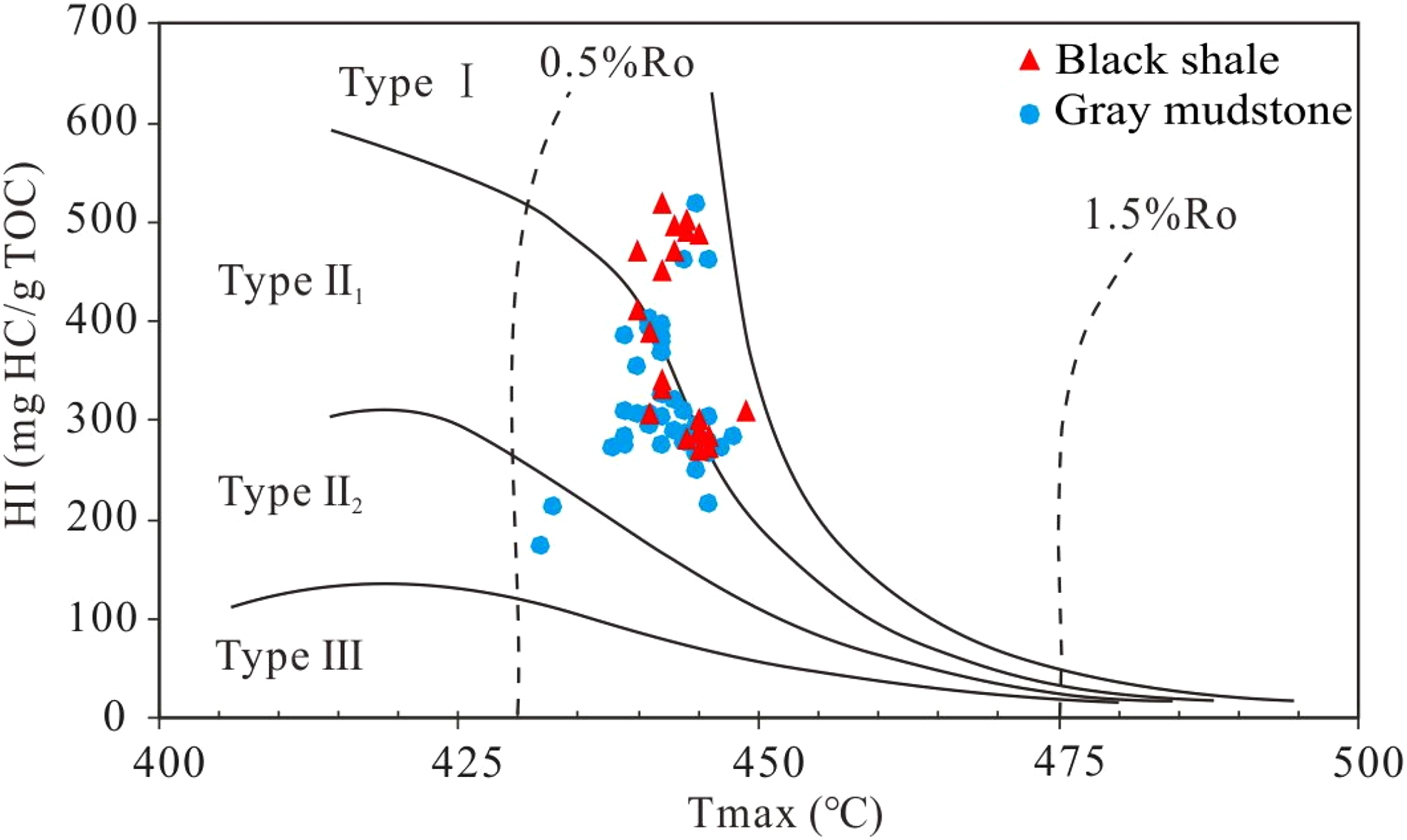
Plot of Tmax versus hydrogen index (HI) of the studied samples from the Es3 member in the Nanpu Sag, Bohai Bay Basin, China (modified after He et al., 2019).
Elementary geochemistry characteristics
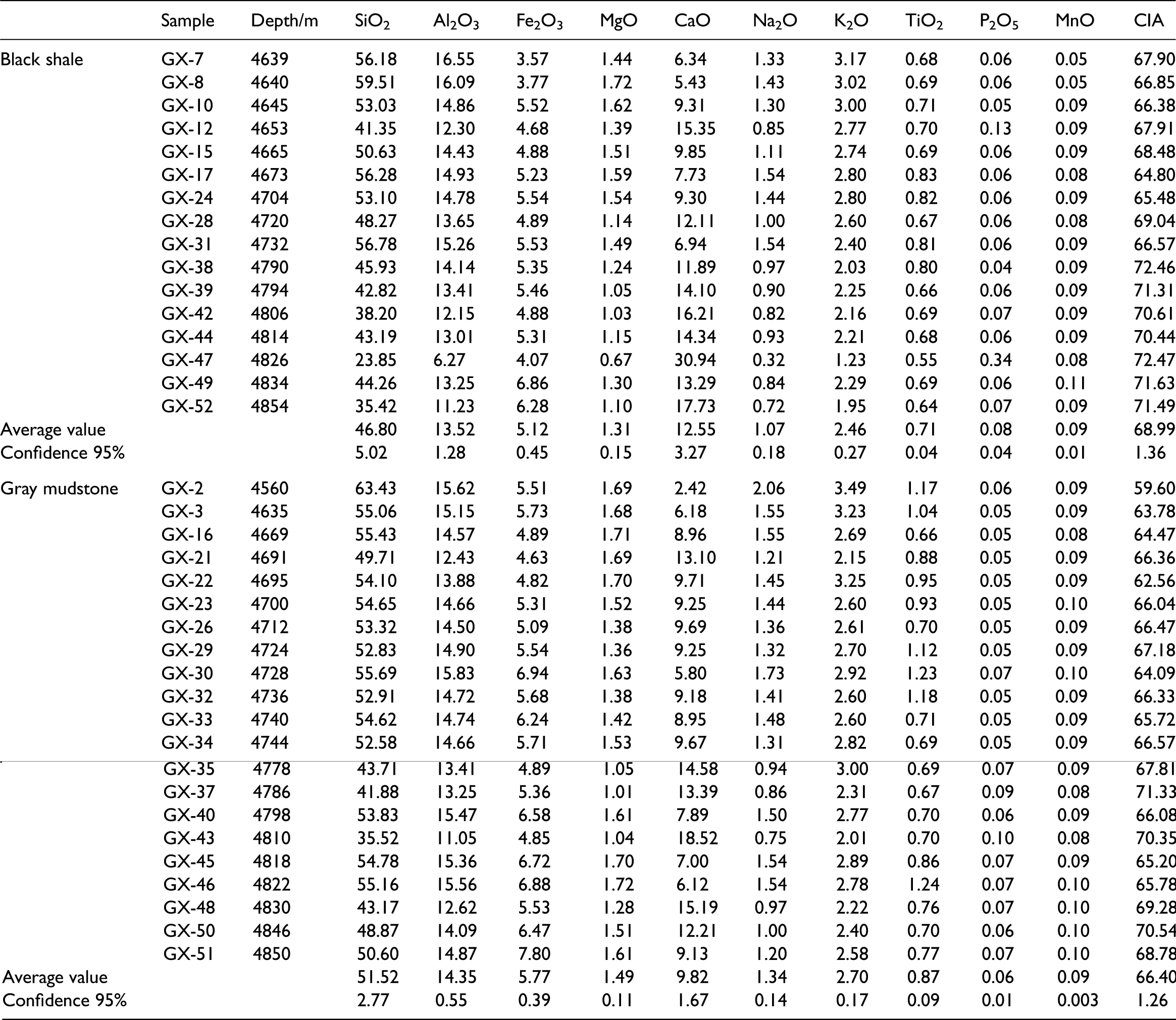
The major element compositions of the shale and mudstone samples are listed in Table 1. All samples are most abundant in Si, Al, Ca, and Fe, with average oxide concentrations of 49.5%, 14.0%, 11.0%, and 5.5%, respectively, and poor in K, Mg, Na, Ti, and Mn, with average oxide concentrations of 2.6%, 1.4%, 1.2%, 0.8%, and 0.1%, respectively. Si is more abundant in mudstone than in shale, with a mean oxide content of 51.52% for mudstone and 46.82% for shale. In addition, Al is more enriched in mudstone than in shale, with an average oxide content of 14.35% for mudstone and 13.52% for shale. In contrast, the oxide content of Ca (avg. 12.55%) is higher in shale than in mudstone (avg. 9.82%).
Contents of major element oxides (%) and chemical index of alteration (CIA) values for the samples from the Es3 member in the Nanpu Sag, China.
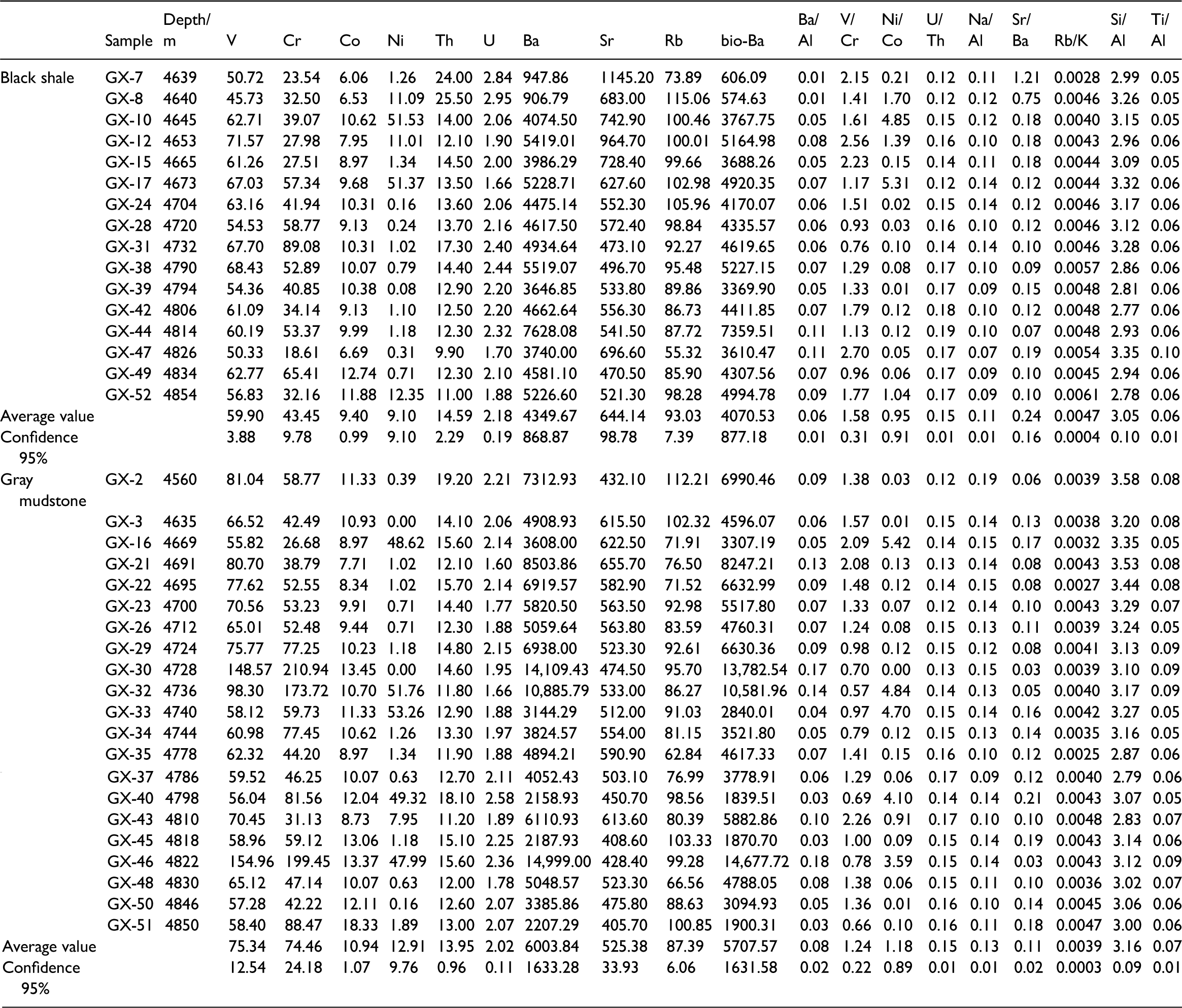
The concentrations of common trace elements in the shale and mudstone samples are listed in Table 2, and the enrichment factors (EFs) of trace elements are shown in Figure 7. Compared to those in average shale (Wedepohl, 1971), the trace elements Pb (EF = 1.81 for shale, EF = 1.86 for mudstone), Th (EF = 1.50 for shale, EF = 1.35 for mudstone), Zr (EF = 1.48 for shale, EF = 1.36 for mudstone), Ba (EF = 8.29 for shale, EF = 12.05 for mudstone), and Sr (EF = 2.65 for shale, EF = 2.04 for mudstone) are enriched, while V (EF = 0.57 for shale, EF = 0.67 for mudstone), Cr (EF = 0.60 for shale, EF = 0.96 for mudstone), Co (EF = 0.61 for shale, EF = 0.67 for mudstone), Ni (EF = 0.17 for shale,EF = 0.22 for mudstone) and U (EF = 0.73 for shale, EF = 0.64 for mudstone) are depleted in both the shale and mudstone. Compared to the mudstone, the shale shows higher levels of enrichment of Sr, Mo, Zn, and U and lower levels of enrichment of Ba, V, and Ni (Figure 7).
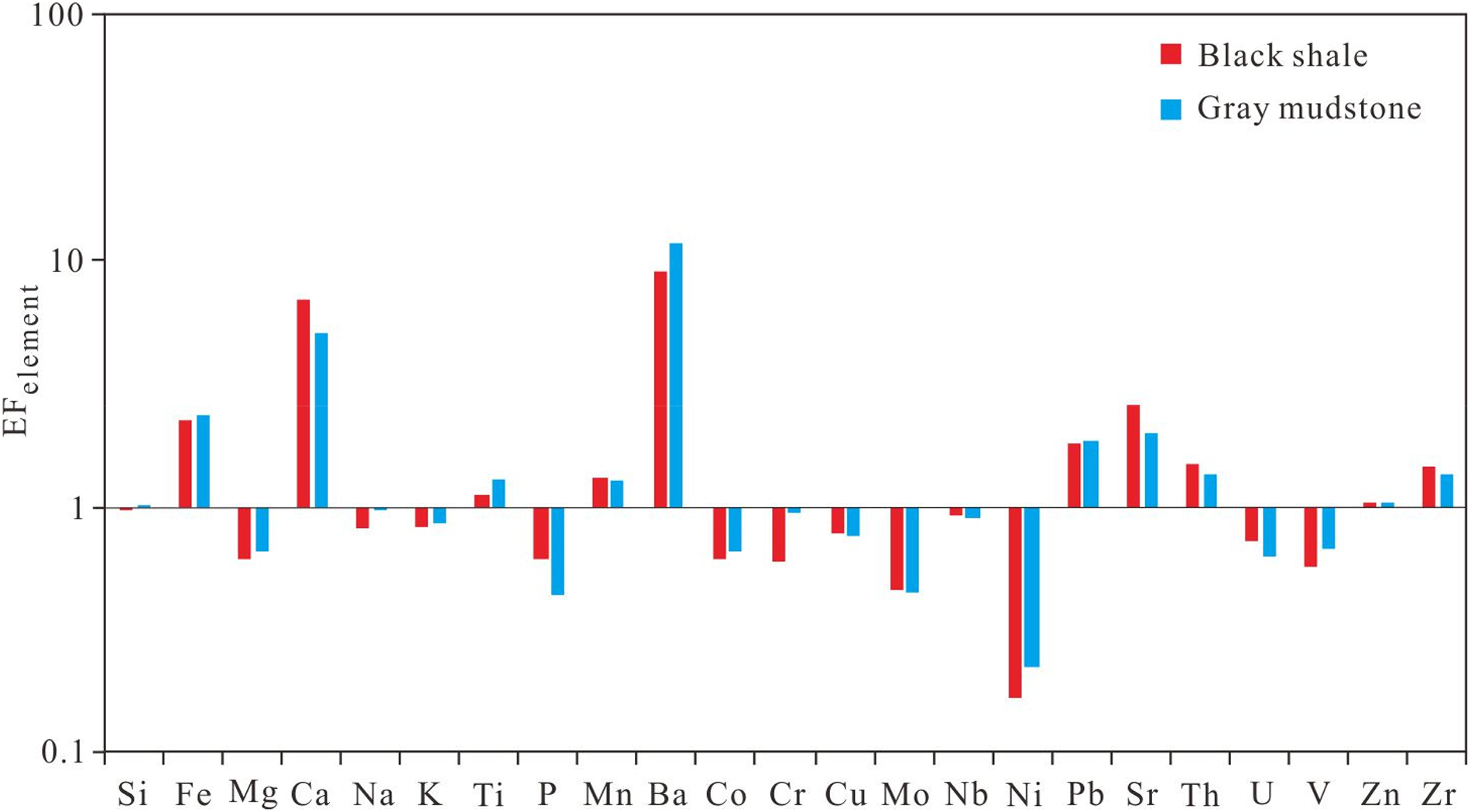
Enrichment factors (EFs) of major and trace elements of the samples from the Es3 member in comparison to average shale (Wedepohl, 1971). EFelement > 1 represents element enrichment, and EFelement < 1 represents element depletion.
Concentrations of trace elements (ppm) and element ratios of the samples from the Es3 member in the Nanpu Sag, Bohai Bay Basin, China.
Discussion
Depositional environments
Paleoclimate
Sporopollenin data can be indicative of paleoclimate since sporopollenin is sensitive to temperature and humidity (Hui et al., 2011). The shale has a higher abundance of Quercoidites sporopollenin and a lower abundance of Ulmipollenites sporopollenin than the mudstone (Figure 3). Since Quercoidites and Ulmipollenites represent subtropical climates and subtropical–temperate transition climates, respectively (Zhang et al., 2021), these findings indicate that the shale was deposited in a warmer climate than was the mudstone. Furthermore, Ephedripites, a typical xerophyte pollen, regularly occurs in the mudstone samples, while Fupingopollenites, representing humid climates, only occurs in the shale samples. Thus, the climate was relatively damp for the shale and relatively dry for the mudstone.
Since Ca and Na, which are associated with feldspars, are easily lost while K and Al are preserved in clay minerals (Sawyer, 1986) during the weathering process, which indicates a paleoclimate, the chemical index of alteration (CIA) and Na/Al ratio are commonly used as paleoclimate indicators. CIA is defined as follows: CIA = [(Al2O3)/(Al2O3 + CaO* + Na2O + K2O)] × 100, where CaO* is the CaO from silicate minerals (Nesbitt and Young, 1982). CIA values in the ranges of 50–65, 65–85 and 85–100 generally indicate a cold and dry climate and low degree of chemical weathering, a warm and humid climate and moderate degree of chemical weathering, and a hot–humid climate and strong degree of chemical weathering, respectively (Nesbitt and Young, 1982). The CIA values are variable for both the black shale and gray mudstone samples and range from 64.80 to 72.47 (avg. 68.99) and 59.60 to 71.33 (avg. of 66.40), respectively (Table 2). This finding implies that the climate was warm and humid during the deposition of the shale. In contrast, the mudstone was deposited in a cold and dry climate. In addition, the Na/Al ratios of the black shale vary from 0.07 to 0.14 (avg. 0.11), while those of the gray mudstone range between 0.09 and 0.19 (avg. 0.13), further suggesting that the paleoclimate during shale deposition was warmer and more humid than that during mudstone deposition (Figure 8(a)).
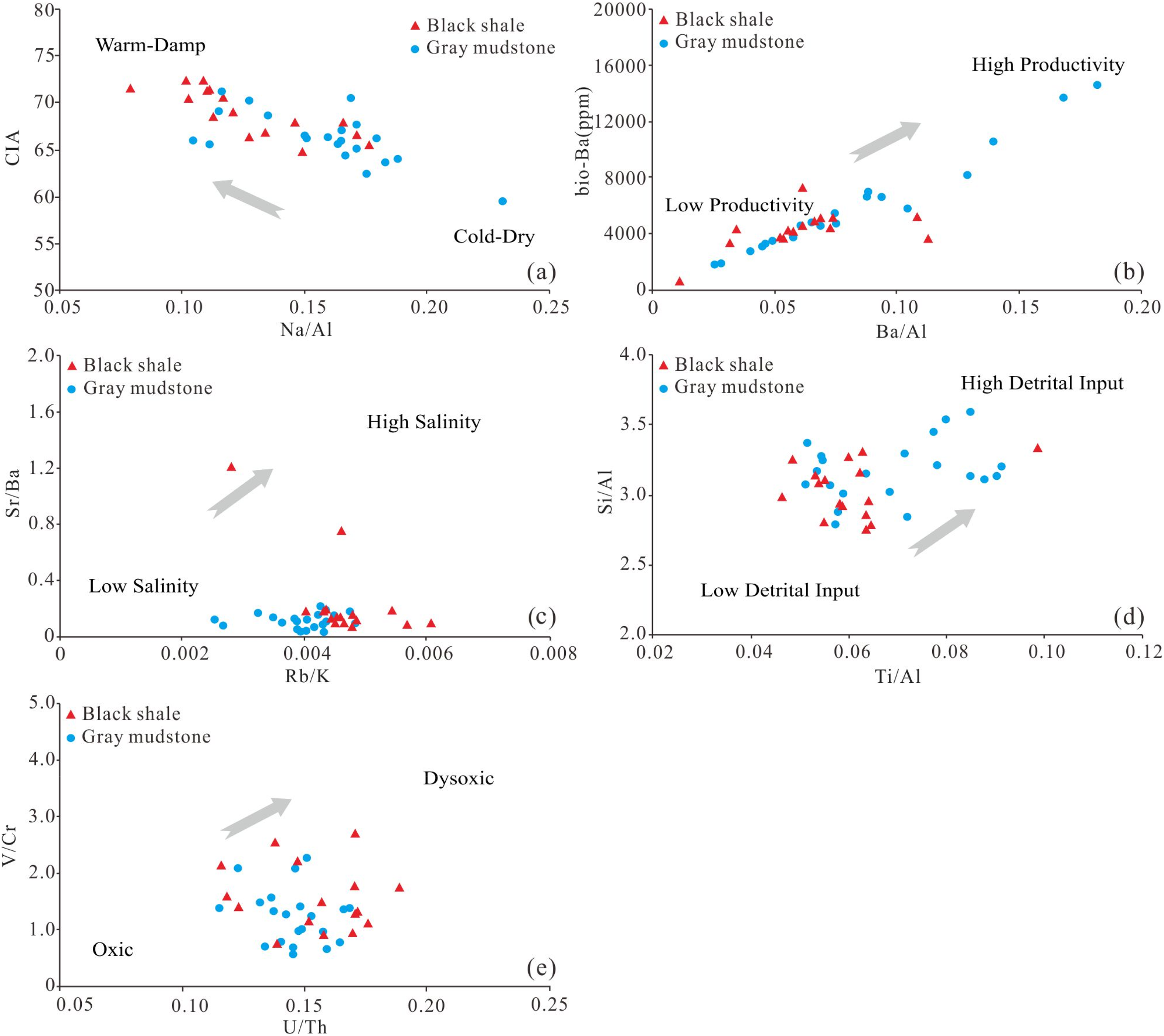
Crossplots of chemical index of alteration (CIA) vs. Na/Al, showing the paleoclimate conditions (a); bio-Ba versus Ba/Al, showing the paleoproductivity conditions (b); Sr/Ba versus Rb/K, showing the paleosalinity conditions (c); Si/Al versus Ti/Al, showing the paleodetrital influx conditions (d); and V/Cr versus U/Th, showing the paleoredox conditions (e) for the shale and mudstone of the Es3 member in the Nanpu Sag, Bohai Bay Basin, China.
Paleoproductivity
Barium (Ba) mainly originates from detrital plagioclase and suspended phytoplankton, with the latter being related to water column productivity (Ganeshram et al., 2000). Barium can be used as an effective indicator of productivity by excluding the influence of detrital input (Zhang et al., 2019a). Therefore, biologically derived Ba (bio-Ba) and Ba/Al ratios are commonly used to evaluate paleoproductivity. The bio-Ba content is calculated as follows (Algeo et al., 2011; Dymond et al., 1992): bio-Ba = total-Ba-[Al × (Ba/Al)detrital], where total-Ba is the total amount of Ba, (Ba/Al)detrital represents the content of detrital Ba, and (Ba/Al)detrital is a fixed value of 0.0039 (Dong et al., 2018). According to Murray and Leinen (1993), bio-Ba values in the range of 1000 ppm and 5000 ppm indicate high productivity. The black shale samples are characterized by bio-Ba values ranging between 574.63 ppm and 7359.51 ppm (avg. 4070.53 ppm), while the gray mudstone samples are characterized by bio-Ba values from 1618.53 ppm to 14,179.72 ppm (avg. 5426.77 ppm). These results show that most of these samples were deposited under high levels of paleoproductivity (Table 2). The bio-Ba values indicate moderate–high primary productivity for the shale and high primary productivity for the mudstone. In the shale and mudstone samples, the Ba/Al ratios range from 0.01 to 0.11 and from 0.03 to 0.18, respectively, and have averages of 0.06 and 0.08, respectively (Table 2). The values of the Ba/Al ratio suggest similar paleoproductivity as the bio-Ba values (Figure 8(b)).
Paleosalinity
The paleosalinity analysis is based on algae fossils and trace element ratios. The microscopic identification and statistical analysis results show that the shale and mudstone samples are rich in algae, mainly Bohaidina, Parabohaidina, Granodiscus, Leiosphaeridia, Dictyotidium, and Psiloschizosporis. These algae usually live in fresh–brackish water. Notably, Conicoidium, a genus of salt–brackish algae, appears at a higher percentage in the shale than in the mudstone, which indicates that paleosalinity was higher for the shale.
Generally, values of Sr/Ba>1.0 indicate saline water, values between 1.0 and 0.6 represent brackish water, and values <0.6 represent fresh water (Deng et al., 2019; Li et al., 2020). Furthermore, values of Rb/K < 0.004 indicate fresh water, values between 0.004 and 0.006 indicate brackish water, and values >0.006 indicate a saline environment (Campbell and Williams, 1965). For the black shale, the Sr/Ba ratios fluctuate in the range of 0.07–1.21 (avg. 0.24), and the Rb/K ratios range from 0.0028 to 0.0061 (avg. 0.0047), indicating fresh water to brackish water environments. For the gray mudstone, the Sr/Ba ratios range from 0.03 to 0.21 (avg. 0.11), and the Rb/K ratios range from 0.0025 to 0.0048 (avg. 0.0039), implying a freshwater environment. Both the Sr/Ba and Rb/K ratios show that the black shale was deposited in a more saline environment than was the gray mudstone (Figure 8(c)).
Paleodetrital influx
The elements Al, Si, Zr, and Ti are useful for analyzing detrital influx, with Al being the most robust index (Zhang et al., 2019a). Considering that the Zr results are not of high quality, they are not used in this study. Overall, Si and Ti are enriched in the shale and mudstone; for the element Si, the EFs are 0.98 and 1.02 for shale and mudstone, respectively, and for element Ti, the EFs are 1.12 and 1.30 for shale and mudstone, respectively (Figure 7). The Al-normalized average concentrations of Si and Ti show similar differences between the shale and mudstone. The average values of Si/Al are 3.05 and 3.16 for the shale and the mudstone, respectively (Table 2). The average values of Ti/Al are 0.06 and 0.07 for the shale and the mudstone, respectively (Table 2). These results show that the detrital input was higher during the deposition of the mudstone than during the deposition of the shale (Figure 8(d)). It is generally accepted that there is much detrital debris into the lake in warm and humid climate. However, for the shale deposited in relatively warm and humid climate, the detrital input reflected by Si/Al and Ti/Al was less than that for the mudstone deposited in relatively cold and dry climate. This phenomenon may be explained by the transportation distance of terrigenous detritus influenced by water depth. During the deposition of shale, most of the terrigenous detritus was deposited near the shore rather than in the center of the deep lake. By contrast, the terrigenous detritus was almost transported to the center of the lake basin during the deposition of the mudstone. Therefore, shale was less influenced by detrital input than mudstone.
Paleoredox conditions
The ratios of U/Th and V/Cr have been proposed as redox indicators since the elements U and V are redox sensitive and concentrated in reducing conditions (Jones and Manning, 1994; Rimmer et al., 2004; Zhao et al., 2016). In general, values of U/Th<1.25 indicate oxic and suboxic conditions, while those ≥1.25 suggest anoxic conditions (Nath et al., 1997). The values of U/Th vary from 0.12 to 0.19 and 0.12 to 0.17 for black shale and gray mudstone, respectively, indicating a weakly oxic environment for all samples. As with the U/Th ratio, standards have been established for the values of V/Cr. Values of V/Cr<2.0 suggest oxic conditions, values ranging from 2.0 to 4.25 suggest dysoxic conditions, and values >4.25 suggest suboxic to anoxic conditions (He et al., 2019; Jones and Manning, 1994). The V/Cr ratios of the black shale show a wide range of 0.76–2.70, while those of the gray mudstone are in the range of 0.57–2.26. All of the U/Th and V/Cr ratios suggest oxic to dysoxic environments for the shale and mudstone and indicate that the shale tended to be deposited in more reducing conditions than the mudstone (Figure 8(e)).
Relationship between total organic carbon and the environmental index
The accumulation of OM in fine-grained sedimentary rocks is controlled by primary productivity and preservation conditions, which are influenced by paleoclimate, salinity, detrital input, and redox conditions (Xu et al., 2017). High primary production, low detrital input, and anoxic preservation conditions are beneficial for OM enrichment. The above analyses show that OM is more abundant in shale than in mudstone, which is the result of the difference in sedimentary environments between these two types of fine-grained rock. In general, one or several of these sedimentary environmental factors can play a leading role in OM enrichment. The main environmental factors controlling OM enrichment in the black oil shale and gray mudstone are not the same. The TOC of the black shale has a strong positive relationship with U/Th (R2 = 0.66) (Figure 9(a)) and a weak correlation with Ba/Al (R2 = 0.33) (Figure 9(b)). The OM accumulation in the shale was mainly controlled by redox conditions and primary productivity. The TOC of the gray mudstone presents a strong correlation with U/Th (R2 = 0.53) (Figure 9(a)) and no obvious relationships with Ba/Al (R2 = 0.05) or other proxies. These findings indicate that the OM enrichment of the gray mudstone was mainly controlled by redox conditions.
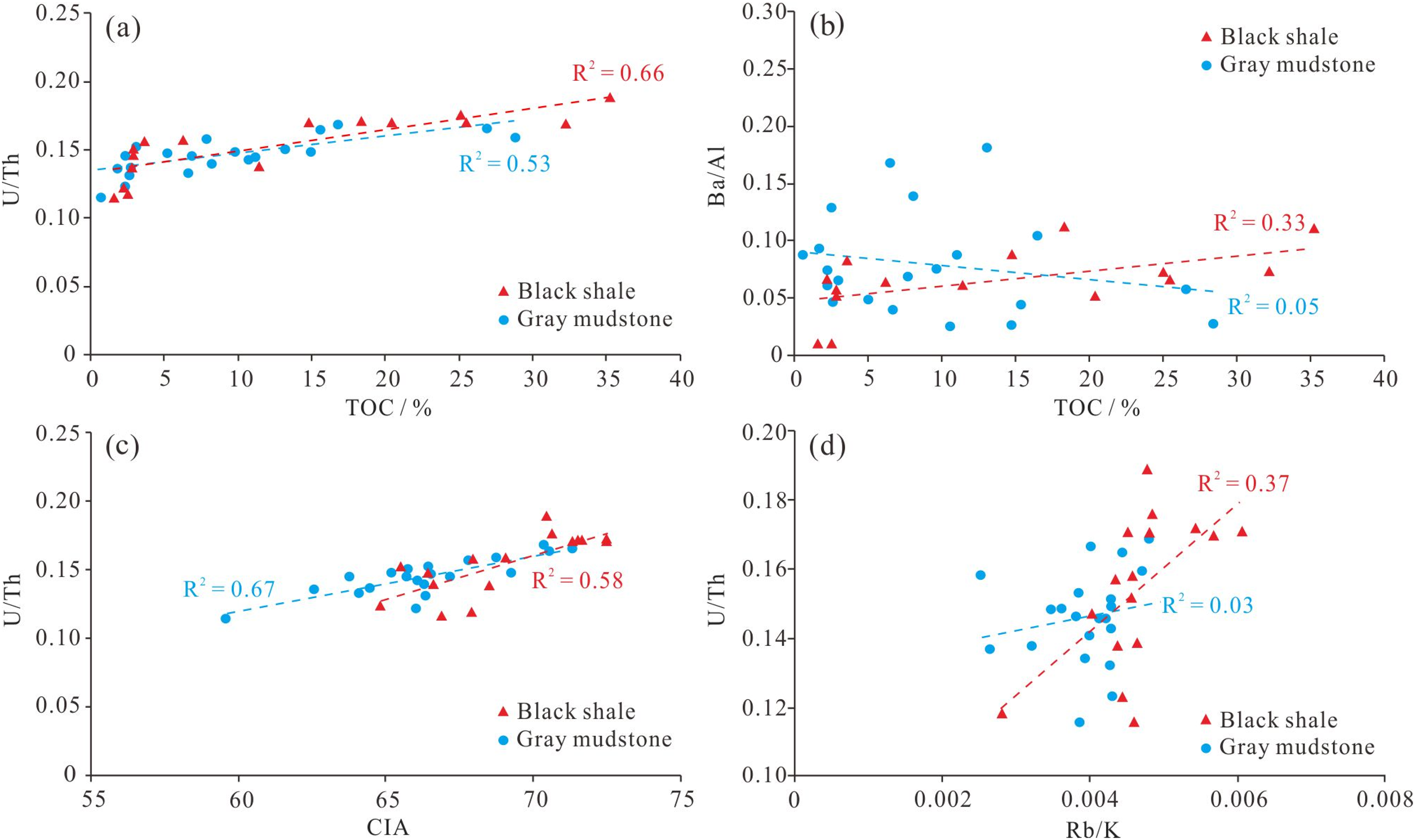
Correlations between U/Th and TOC, showing the relationship of paleoredox and organic matter enrichment (a); Ba/Al and TOC, showing the relationship of paleoproductivity and organic matter enrichment (b); U/Th and CIA, showing the relationship of paleoredox and paleoclimate (c); and Rb/K and U/Th, showing the relationship of paleosalinity and paleoredox (d) for the shale and mudstone of the Es3 member in the Nanpu Sag, Bohai Bay Basin, China.
Paleoclimate affects OM enrichment (Ayinla et al., 2017; Beckmann et al., 2005; Hieronymus et al., 2001; Makeen et al., 2015) by controlling the primary production, detrital input, productivity, and redox conditions of paleolakes (Liang et al., 2018; Makeen et al., 2019). For the black shale, according to the CIA versus U/Th diagram (Figure 9(c)), the paleoclimate had a positive relationship with the redox conditions. Furthermore, the redox conditions for the shale were also positively correlated with salinity, as indicated by the crossplot of U/Th versus Rb/K (Figure 9(d)). These findings indicate that a warm and damp climate and brackish water contributed to the formation of dysoxic conditions at the bottom of the lake. For the gray mudstone, according to the CIA versus U/Th diagram (Figure 9(d)), the paleoclimate was positively correlated with the redox conditions, indicating that the cold and dry climate caused the oxic conditions to weak oxidation conditions for the gray mudstone.
Enrichment models of sedimentary organic matter
Based on the above discussion, OM enrichment models for the black shale and gray mudstone of the Es3 member in the Bohai Bay Basin were constructed (Figure 10). During the deposition of the black shale, the paleoclimate was warm and humid, which promoted precipitation and caused the lake to become deep and large. The expanding lake played important roles in the preservation and enrichment of OM. Firstly, it effectively reduced the dilution effect of detrital input on OM and the disturbance effect on the bottom water. Secondly, the vertical water convection was weakened due to deep water, resulting in the formation of the relatively reduced conditions at the bottom of deep lake. Besides, with the stratification of the water body, the salinity of the surface water decreased under the influence of precipitation while the salinity of the deep water remained almost unaffected, resulting in salinity stratification, which further promoted the formation of dysoxic conditions at the lake bottom. The warm and humid climate promoted the growth of planktonic algae and zooplankton, which provided abundant primary OM. In conclusion, dysoxic conditions and moderate to high productivity are the key factors that drove the OM enrichment of the black shale (Figure 9(a) and (b)).
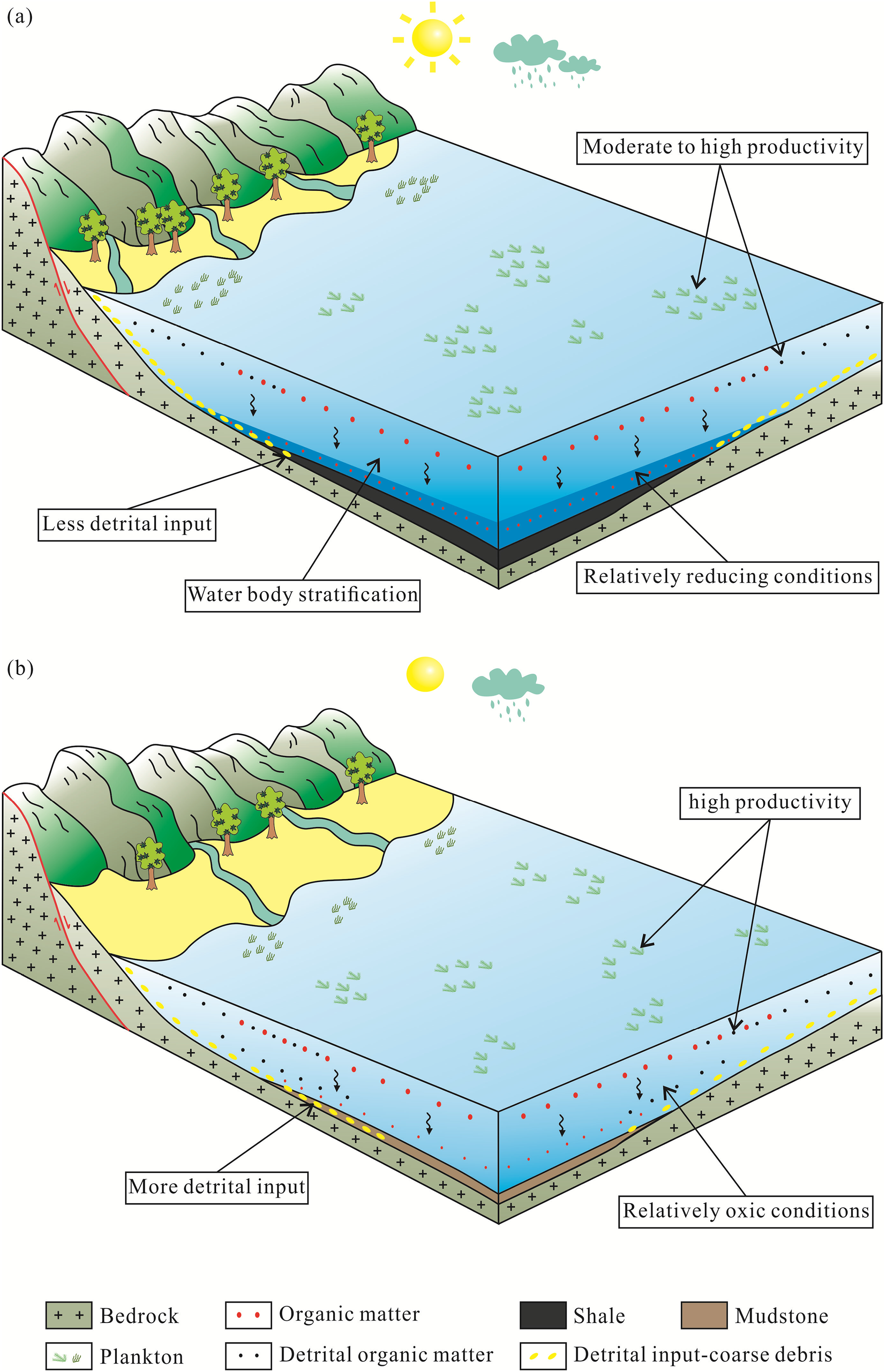
Different organic matter (OM) enrichment models for the black shale (a) and gray mudstone (b) of the Es3 member in the Nanpu Sag, Bohai Bay Basin, China. The greater OM enrichment of shale was mainly controlled by the reducing conditions, with the high productivity, salinity stratification and low detrital input having some effect. The lower OM enrichment of the mudstone was caused by the oxic conditions, which may have been affected by the low salinity, high detrital input and so on.
During the deposition of the gray mudstone, the paleoclimate was cold and dry with low precipitation. Under the shallow water background, the bottom water of the lake was easily disturbed by detrital input, which was not beneficial for the formation of a stratified water column, and oxic conditions formed. Under the cold and dry climate conditions, the primary productivity of mudstone was higher than that of shale, which might have been caused by the extensive detrital input and its transport of abundant elements into the lake, promoting primary productivity. Fortunately, the primary productivity provided a lot of OM, so that the OM was not completely consumed by the oxic conditions and some of it was preserved. By contrast, the OM is less enriched in the mudstone than in the shale.
Conclusions
The black shale, having higher TOC and GP values than the gray mudstone is richer in OM and displays better quality source rock than the gray mudstone. In addition, the paleosedimentary environments of the black shale and gray mudstone differ. The black shale was deposited in a warm and humid climate under moderate-high productivity and with higher salinity, more dysoxic conditions and lower detrital input than present during the deposition of the gray mudstone. In contrast, the gray mudstone was deposited in a cold and dry climate under high productivity and with lower salinity, more oxic conditions and more detrital input than present during the deposition of the shale.
The OM enrichment mechanisms of the black shale and gray mudstone are dissimilar. The greater OM enrichment of the shale was controlled mainly by reducing conditions and moderate-to-high productivity, which were promoted by a warm and humid climate and salinity stratification. The lower OM accumulation in the mudstone was caused mainly by the oxic conditions, which were due to multiple environmental conditions.
Since the OM enrichment differences among different fine-grained sedimentary rocks are mainly controlled by the paleoenvironments, organic-rich fine-grained sedimentary rocks, namely, excellent source rocks, can be identified based on the paleoenvironment background. Then, shale oil or gas targets can be predicted based on the distribution of high-quality source rocks.
Footnotes
Acknowledgements
We thank PetroChina Jidong Oilfield Company for providing basic data, and we appreciate Xiayue Dong and Xiao Liu for their expertise and support. The authors thank for the editors and reviewers who provided constructive comments and assisted in the process of writing this manuscript.
Authors' contributions
ML and DC are responsible for the design and guidance of the project. GYL and LJM performed the measurement of core sampling. BP, FXG, and ZX conducted experimental analysis. ML was responsible for organizing and writing the manuscript. XQP and HP reviewed and revised the manuscript. All authors read and approved the final manuscript.
Declaration of conflicting interests
The authors declared no potential conflicts of interest with respect to the research, authorship, and/or publication of this article.
Funding
The authors disclosed receipt of the following financial support for the research, authorship, and/or publication of this article: This work was supported by the National Science and Technology Major Project of the Ministry of Science and Technology of China (2016ZX05006-006-001) and the National Natural Science Foundation of China (41872148).
