




Abstract
This paper focuses on Longmaxi shale gas geochemistry and carbon isotopic reversal in Changning and Fuling gas fields through comparative study of shale gas composition and carbon and hydrogen isotopes in North America and Changning and Fuling gas fields. Longmaxi shale gas in Changning and Fuling gas fields exhibits the features of dry gas. Specifically, the average methane (CH4) content is 98.72 and 98.17%, respectively. The humidity is less than 0.5%. Nonhydrocarbon gases include a small amount of CO2 and N2. Extremely heavy δ13C1 value, average δ13C2 value of −33.3 and −34.6‰ for Changning and Fuling, and sapropelic organic matter indicate the properties of petroliferous dry gas. Carbon isotopic reversal, i.e. δ13C1>δ13C2>δ13C3, may be caused by combined secondary effects at high maturity and high geotemperature. The reversal may also be related to ethane Rayleigh fractionation and late methane generation by water and transition metals reaction. Geologic setting in these two gas fields may have an impact on carbon isotopes distribution.
Introduction
Shale gas exploration and development in China concentrate in the Sichuan Basin, where some shale gas fields including Changning and Fuling have been discovered (Dai et al., 2014a; Dong et al., 2014; Wang et al., 2012). The Fuling gas field, which was discovered in December 2012 and put into development in 2013, is the first shale gas field with reserves of a hundred billion cubic meters in China. Its proved reserves by 2015 were 3806 × 108 m3 (Guo, 2016). The Changning gas field started to produce gas in November 2011. Shale gas deliverability in Changning, Weiyuan, and Zhaotong reached 26 × 108 m3/a by April 2015 (Dong et al., 2014; Zhou and Jiang, 2015). Shale gas in both gas fields is produced from high-quality marine shales in the Upper Ordovician Wufeng Formation–Lower Silurian Longmaxi Formation, which are promising shale beds with large area, constant thickness, and high content of organic matter and brittle minerals (Dai et al., 2014a; Dong et al., 2014; Wang et al., 2012).
The prospects in North America have been found with various genetic types of shale gas, e.g. low-mature biological mixture gas (in the New Albany shale in eastern Illinois Basin) (Martini et al., 2008; Strąpoć et al., 2010), mature thermogenic gas (in the Barnett shale in the Fort Worth Basin and Conasauga shale in northern Appalachian Basin) (Hill et al., 2007; Rodriguez and Philp, 2010; Zumberge et al., 2012), and high- to postmature cracked dry gas (in the Fayetteville shale in eastern Arkoma Basin and the Horn River shale in the Western Canada Sedimentary Basin (WCSB)) (Daniel and Bustin, 2008; Tilley et al., 2011; Tilley and Muehlenbachs, 2013; Zumberge et al., 2012). The phenomenon of carbon isotope composition reversal is prevalent in shale gas (Burruss and Laughrey, 2010; Dai et al., 2014a, 2016a, 2016b, 2016c; Hao et al., 2013a, 2013b; Xia et al., 2012, 2013), with the decreasing of wetness (wetness = ∑C2–5/∑C1–5, %) from low mature to high mature stage; carbon isotopic composition and isotopic differences exhibit S-shaped rollover and reversal. There are no systematic studies about postmature shale gas with extremely high thermal maturity except for some discussions of the Horn River shale in the WCSB and the Fayetteville shale in eastern Arkoma Basin (Daniel and Bustin, 2008; Tilley et al., 2011; Tilley and Muehlenbachs, 2013).
Shale gas in Changning and Fuling has already been postmature, with thermal maturity of 2.8–3.3 and 2.2–3.06%, respectively (Gao, 2015; Zou et al., 2015). As two high-yield shale gas fields in the Sichuan Basin, stable shale gas production and production increase in China are dependent on gas production in Changning and Fuling to a great extent. The study of shale gas geometry and carbon isotopic reversal in Changning and Fuling is of significance to both Longmaxi shale gas exploration in the Sichuan Basin and shale gas exploration in China.
Geologic setting
The Changning gas field geographically occupies an area of 4000 km2 in Yibin City and covers southern Changning County, northern Junlian County, Gaoxian County, and Shangluo Town in Gongxian County (Zhou and Jiang, 2015) (Figure 1(a)). Due to the impacts of tectonic stress, a number of complicated anticlinal structures exist in the field; the Changning anticline is a marker structure (Dong et al., 2014; Zou et al., 2015). Shale gas wells/platforms are generally located within the gentle synclinal zone at southwestern Changning anticlinal flank (Figure 1(a)). High-quality shale at the bottom of the Longmaxi Formation is 33–46 m thick and has good accumulation and preservation conditions. Organic matter is of type I–II1 and TOC content is high (4.0% on the average) (Dong et al., 2014; Gao, 2015). The content of brittle minerals is high and pore space is composed of matrix pores and some fractures; the permeability is 0.3 × 10⁻³ μm2 (Cao et al., 2015; Zou et al., 2015).
General maps of Changning (a) and (b) the map of Fuling gas field (modified after Guo and Zhang 2014; Guo, 2016) in the Sichuan Basin and locations of sampling wells.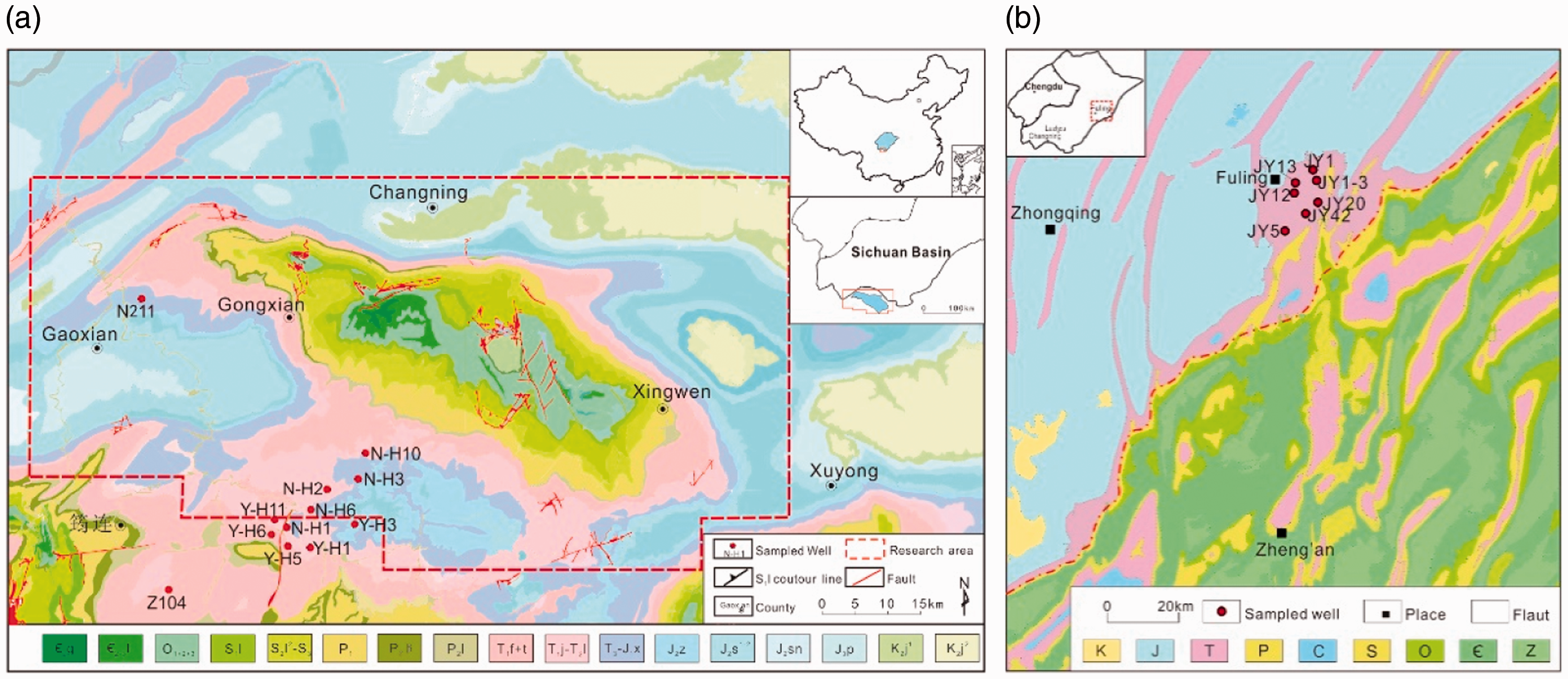
The Fuling gas field structurally lies in the Baoluan-Jiaoshiba anticlinal tectonic province in the steeply dipping fold belt in the Sichuan Basin (Figure 1(b)). The Jiaoshiba structure is a gentle faulted anticline surrounded by faults (Guo, 2016). The Longmaxi Formation in this gas field is rich in graptolite fossils. High-quality shale in the Long1 Member at the bottom is 35–60 m thick and has good shale gas exploration potential. The kerogen is of type I and average TOC content is 3.5%. Average porosity is 4.8% and average content of brittle minerals is 62.4% (Gao, 2015; Liu, 2015).
Sampling and experiments
Sampling
Gas samples were taken from the shale gas wells of the Changning gas field (Figure 1). These were collected by filling pipelines and high-pressure cylinders (pressure resistant up to 15 MPa) with gas samples of ∼5 MPa, after the vessels had been flushed and replaced repeatedly.
Geochemical, and stable carbon and hydrogen isotopic analyses
Gas composition, and carbon and hydrogen isotopes were analyzed at the PetroChina Research Institute of Petroleum Exploration & Development in Beijing, China. An HP7890A gas chromatograph was used to analyze the gas composition, and a capillary column was used to separate single gas hydrocarbon compositions (PIOT Al2O3, 50 m × 0.53 mm). The gas chromatograph temperature was first set at 30℃, where it was held for 10 min, and then raised to 180℃ at a rate of ∼10℃/min.
A mass spectrometer (MS; Thermo Delta V Advantage) was used to analyze carbon isotopes. The initial temperature was set at 33℃ using a GCC-irm MS, then raised from 35 to 80℃ at a rate of 8℃/min, and to 250℃ at a rate of 5℃/min, where it was held for 10 min. Each sample was analyzed three times, yielding an analytical precision of ±0.3‰. Results were calibrated to Vienna Pee Dee Belemnite. Hydrogen isotopes were analyzed using a MS (Finnigan MAT 253) and the GC/TC/IRMS method. The gas was separated through a chromatographic column (HP-PLOTQ column, 30 m × 0.32 mm × 20 mm). Analytical precision was ±3‰, and H-isotope results were calibrated to Vienna Standard Mean Ocean Water.
Shale gas in North America and data sources (modified from Hao and Zou, 2013).
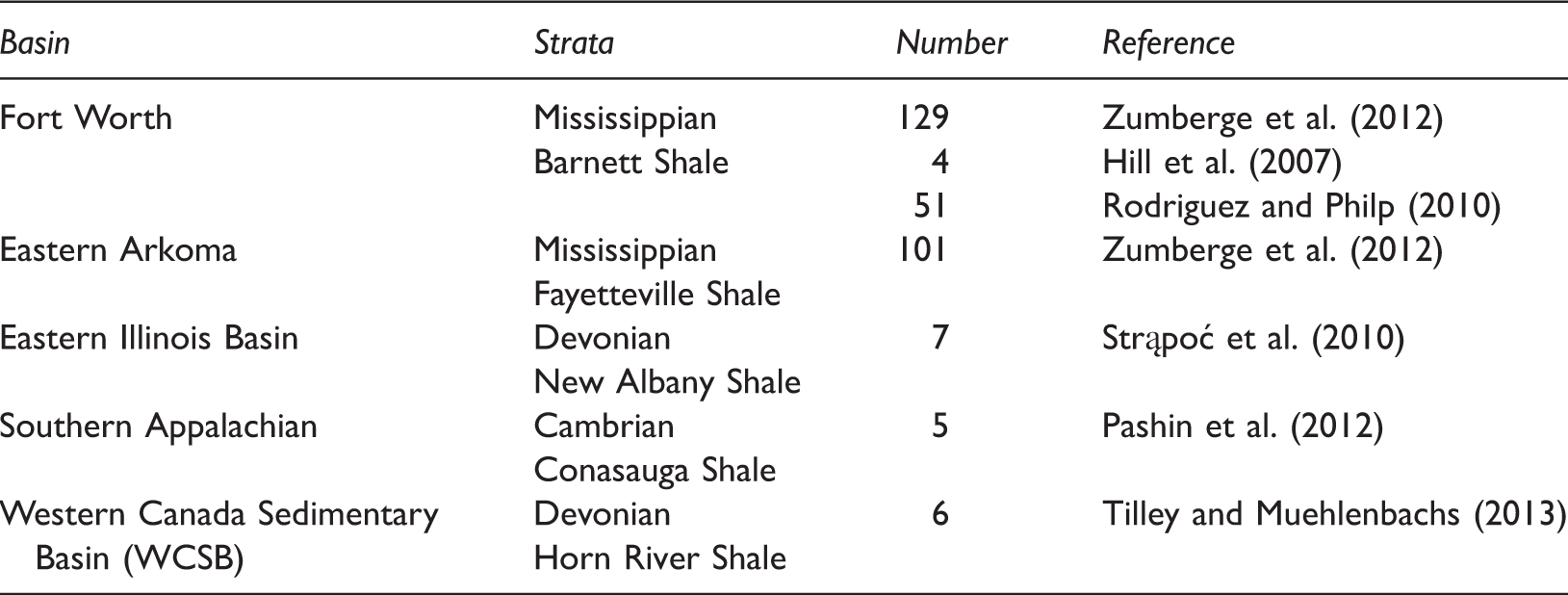
WCSB: Western Canada Sedimentary Basin.
Component and isotope properties of shale gas in the Changning and Fuling shale gas fields, Sichuan Basin.

*Indicates the samples collected in October 2012 and others collected after April 2013.
Shale gas geochemistry
Gas composition
The Longmaxi shale gas in the Changning and Fuling gas fields exhibits the features of dry gas. In the Changning gas field, methane (CH4) dominates hydrocarbon gases and its content ranges 97.11–99.45%; ethane and propane account for a minimal proportion; heavy hydrocarbon content is only 0.48% on the average; wetness (wetness = ∑C2–5/∑C1–5, %) is 0.48% on the average; nonhydrocarbon gases include a small amount of CO2 and N2, and their contents are 0.40 and 0.34%, respectively, on the average. In the Fuling gas field, methane content is 98.17% on the average, heavy hydrocarbon content ranges 0.44–0.98% and wetness ranges 0.45–1.00%, and nonhydrocarbon gases also include some CO2 (0.19% on the average) and N2 (0.76% on the average).
Shale gas composition, humidity, and maturity in the Sichuan Basin and North America.
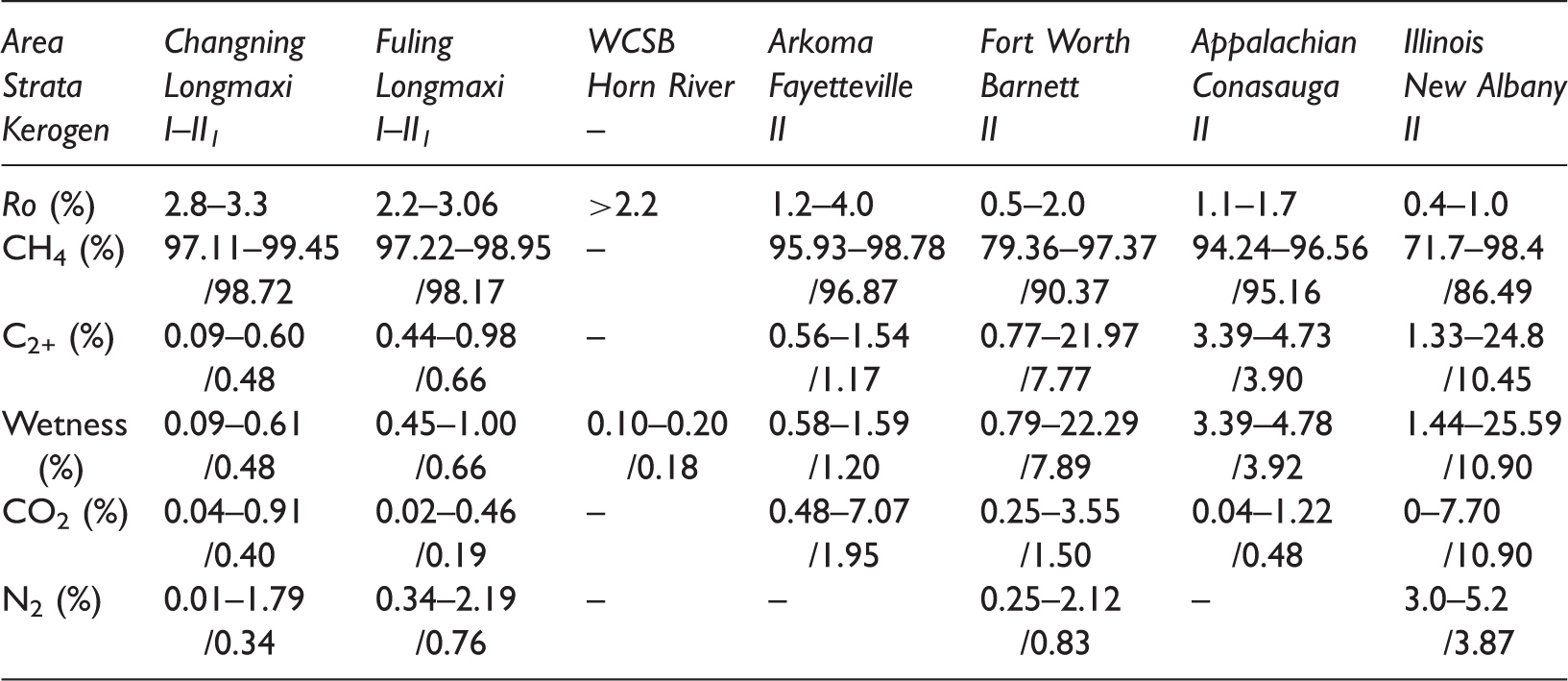
WCSB: Western Canada Sedimentary Basin.
Note: Shale gas composition, organic matter type, and maturity are cited from references (Dai et al., 2014a; Daniel and Bustin, 2008; Gao, 2015; Hill et al., 2007; Pashin et al., 2012; Rodriguez and Philp, 2010; Strąpoć et al., 2010; Tilley and Muehlenbachs, 2013; Wei et al., 2016; Wu et al., 2015; Zumberge et al., 2012). Shale gas composition is expressed as minimum–maximum/average. There is no final conclusion about organic matter type for the Horn River shale due to its excessively low hydrogen index and oxygen index (Martini et al., 2008). The New Albany shale is generally considered to have organic matter of type II; some organic matter of type III has also been found to exist (Strąpoć et al., 2010).
Carbon isotopic composition
There is a positive correlation between δ13C1 value of alkane gas and thermal maturity (Dai et al., 2014b). The δ13C1 value of postmature Longmaxi shale gas in Changning ranges between −26.7 and −31.3‰, with an average of −28.4‰. The δ13C1 value of Fuling shale gas ranges between −28.4 and −32.3‰, with an average of −30.3‰, which is close to that (−31.2‰) of the Horn River shale (Tilley and Muehlenbachs, 2013), heavier than that (−38.2‰) of the high- to postmature Fayetteville shale (Zumberge et al., 2012), and remarkably heavier than that (−41.6‰) of the mature Barnett shale (Hill et al., 2007; Rodriguez and Philp, 2010; Zumberge et al., 2012) and that (−52.6‰) of the low-mature New Albany shale (Strąpoć et al., 2010).
Primary ethane carbon isotopes are generally considered to have some inherited features of parent substance. The δ13C2 value is usually smaller than −28 or −29‰ for petroliferous gas and larger than −28‰ for coal-derived gas (Gang et al., 1997; Qin et al., 2007). The δ13C2 value ranges between −31.6 and −34.5‰, with an average of −33.3‰, for Changning shale gas, and between −34.0 and −36.1‰, with an average of −34.9‰, for Fuling shale gas. The Longmaxi source rocks in two gas fields all contain kerogen of type I–II1, which indicates the feature of petroliferous gas (Wu et al., 2015; Zou et al., 2015). Propane content is very small − 0.03 and 0.02%, respectively, on the average. In view of the accuracy of measurement, propane carbon isotopic values were only used as reference. As shown in Figure 2, postmature Changning and Fuling shale gas exhibits entirely reversed carbon isotopic trend (δ13C1 > δ13C2 > δ13C3).
Relationship between carbon number 1/n and δ13Cn of natural gas in the Changning and Fuling shale gas fields, for the (a) Changning gas field and (b) Fuling gas field (data sources: Dai et al., 2014a, 2016a, 2016c; Liu, 2015; Wei et al., 2016).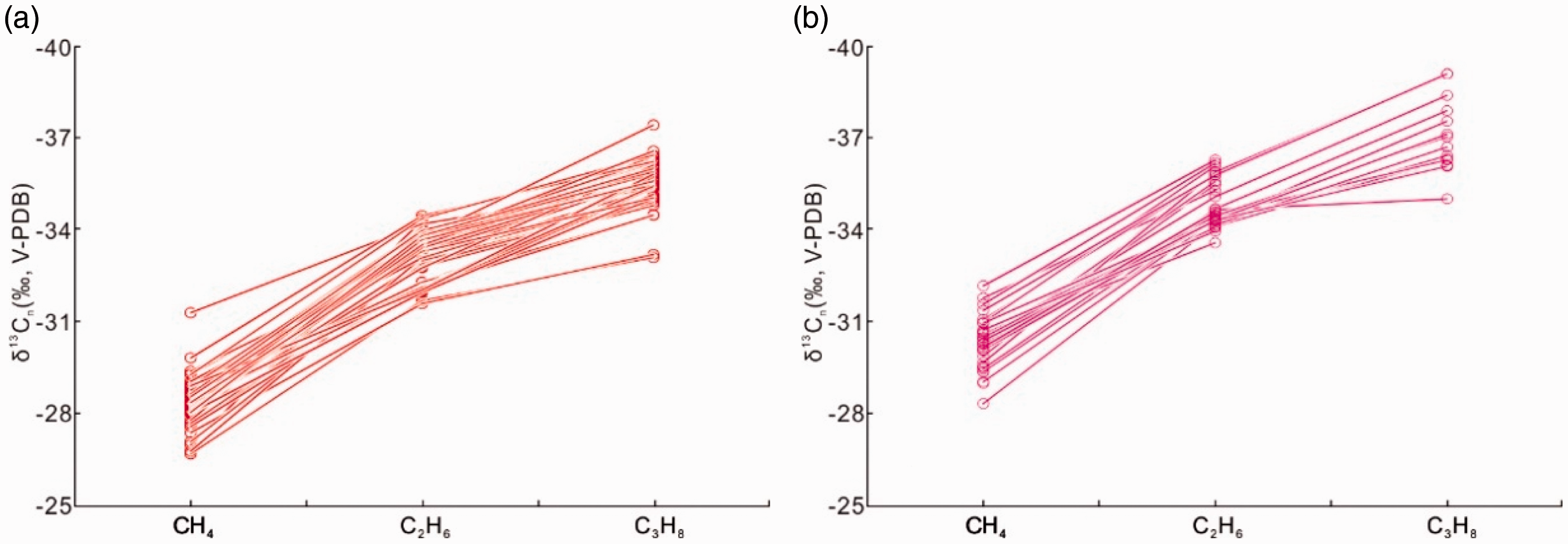
Rollover of ethane and propane carbon isotopic composition, i.e. the change in carbon isotopic trend, in shale gas during thermal evolution is caused by kerogen and liquid hydrocarbon cracking when source rocks become mature enough. In this process, ethane and propane in pyrolysis gas are rich in 12C and become light; shale gas here is composed of pyrolysis gases from primary kerogen cracking and secondary liquid hydrocarbon cracking (Martini et al., 2008; Wu et al., 2015; Zou et al., 2015). Tilley and Muehlenbachs discussed the thermal evolution of carbon and hydrogen isotopic constituents in the Horn River shale gas in the WCSB, the Fayetteville shale gas in eastern Arkoma Basin, the Barnett shale gas in the Fort Worth Basin, and the deep basin gas (in fractured Ordovician shale and tight Silurian sandstone) in northern Appalachian Basin (Figure 3); they classified thermal evolution into a prerollover zone and a postrollover zone (Rodriguez and Philp, 2010). Similar to the Horn River shale gas, carbon isotopic composition with similar thermal maturity in Changning and Fuling shale gas falls into the postrollover zone, as shown in Figure 3, which indicates extremely high thermal maturity of shale gas.
Generalized summary plots of δ13C1 versus δ13C3, and δ13C2 versus δ13C3 showing a comparison of data from shale gas of Longmaxi Formation in Sichuan Basin (modified from Tilley and Muehlenbachs, 2013; data sources: Dai et al., 2014a, 2016a, 2016c; Liu, 2015; Wei et al., 2016).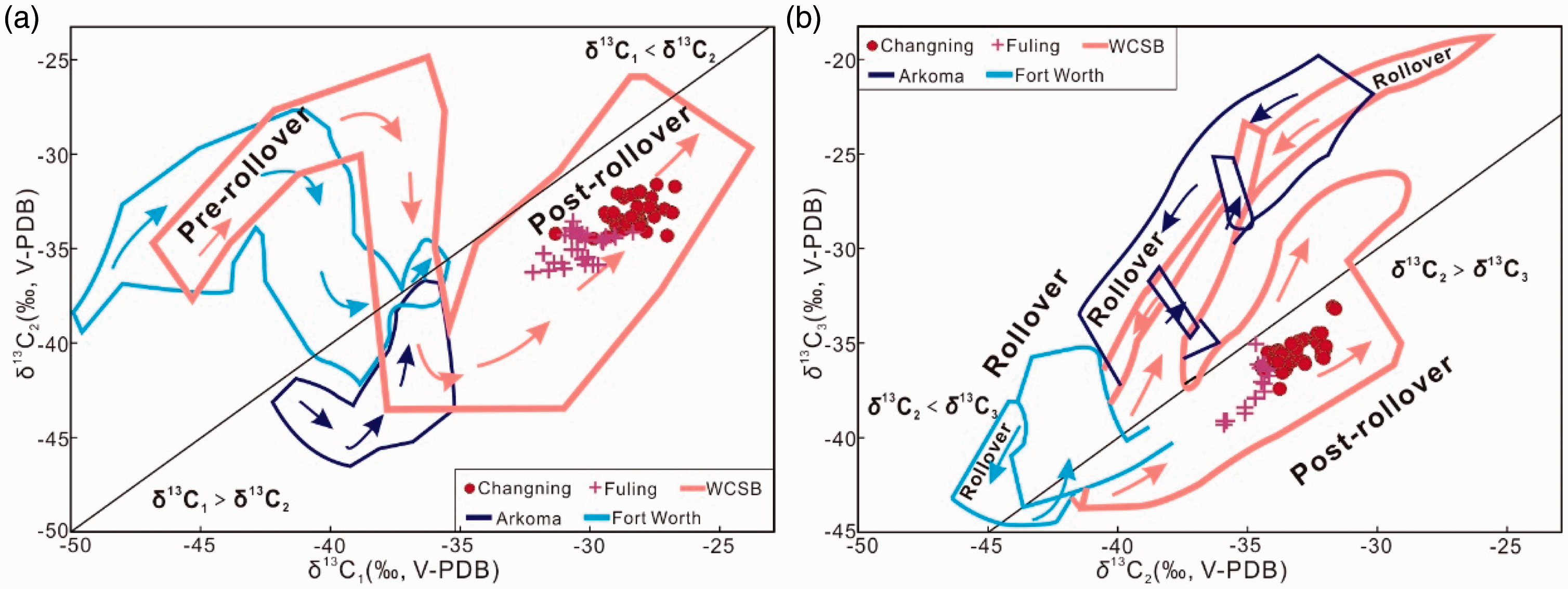
Hydrogen isotopic composition
For postmature Longmaxi shale gas, the δD value ranges between −129 and −149‰ with an average of −134.4‰ in Changning gas field and between −143 and −152‰ with an average of −148‰ in Fuling gas field. The δD value (−133‰ on the average) for high- to postmature Fayetteville shale gas is obviously heavier than that (−147‰ on the average) of the mature Barnett shale gas (Hill et al., 2007; Rodriguez and Philp, 2010; Zumberge et al., 2012). As shown in Figure 4, postmature Changning and Fuling shale gas exhibits hydrogen isotopic reversal (δD1 > δD2).
Relationship between carbon number 1/n and δDn of natural gas in the Changning and Fuling shale gas fields, for the (a) Changning gas field and (b) Fuling gas field (data sources: Dai et al., 2014a, 2016a, 2016c; Liu, 2015; Wei et al., 2016).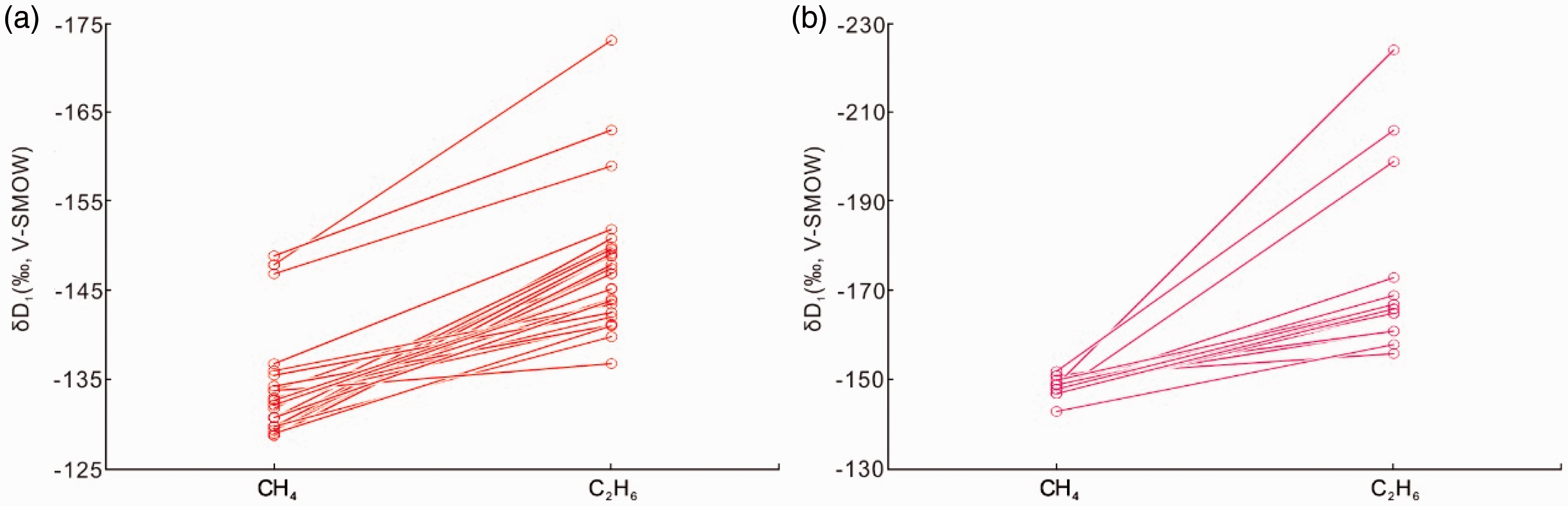
Similar to deep basin gas (in shale and tight sandstone) in northern Appalachian Basin, hydrogen isotopic composition in Changning and Fuling shale gas falls into the postrollover zone, as shown in Figure 5 which demonstrates the relationship between carbon and hydrogen isotopic compositions. Methane carbon isotopic composition in deep basin gas is extremely heavy (Rodriguez and Philp, 2010) and partial reversal, δ13C1>δ13C2, occurs, which indicates deep basin gas and Longmaxi shale gas in the Sichuan Basin may have similar geneses.
Generalized summary plots of δD1 and δ13C1 showing a comparison of data from shale gas of Longmaxi Formation in Sichuan Basin (modified from Tilley and Muehlenbachs, 2013; data sources: Dai et al., 2014a, 2016a, 2016c; Liu, 2015; Wei et al., 2016).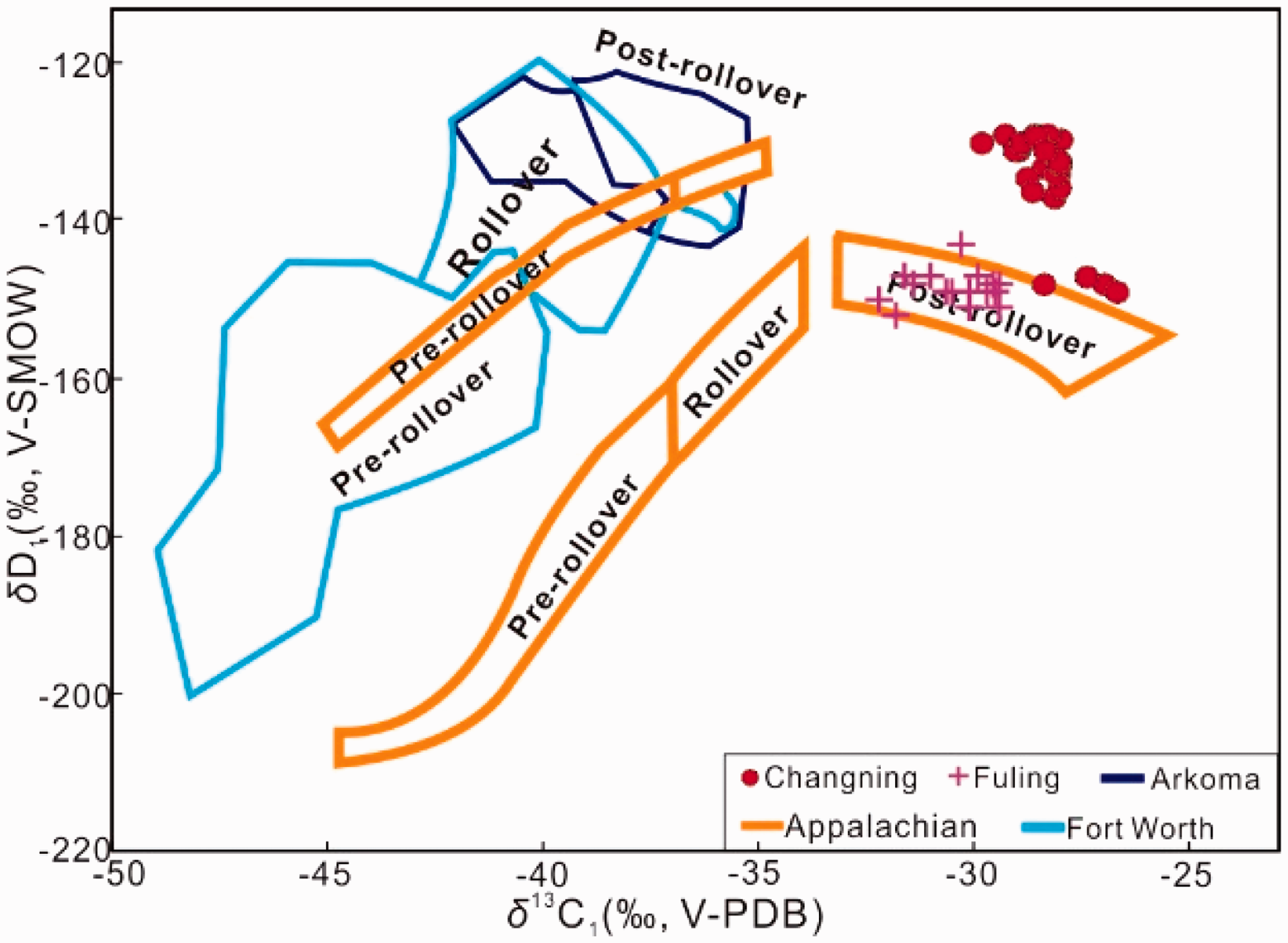
Abnormal carbon and hydrogen isotopic compositions
The Longmaxi shale gas in the Changning and Fuling gas fields exhibits some abnormal carbon and hydrogen isotopic compositions. As per the template of δ13C1–δ13C2–δ13C3 formulated by Dai et al. (2014b) (Figure 6(a)), Changning and Fuling carbon isotopic values (Table 2) fall into and around zone III with mixed reversed gas (Figure 3) and are close to zone II with petroliferous gas. But on Bernard's template, Changning and Fuling carbon isotopic composition tends to exhibit the feature of type-III kerogen (Figure 6(b)), which is greatly different from the feature of type I–II1.
Relationship between δ13C1–δ13C2–δ13C3 (a), C1/C2 + 3 and δ13C1 (b) of natural gas in the Changning and Fuling shale gas fields (modified after Dai et al., 2014b; Whiticar, 1999; data sources: Dai et al., 2014a, 2016a, 2016c; Hill et al., 2007; Liu, 2015; Pashin et al., 2012; Strąpoć et al., 2010; Tilley and Muehlenbachs, 2013; Wei et al., 2016; Wu et al., 2015; Zumberge et al., 2012).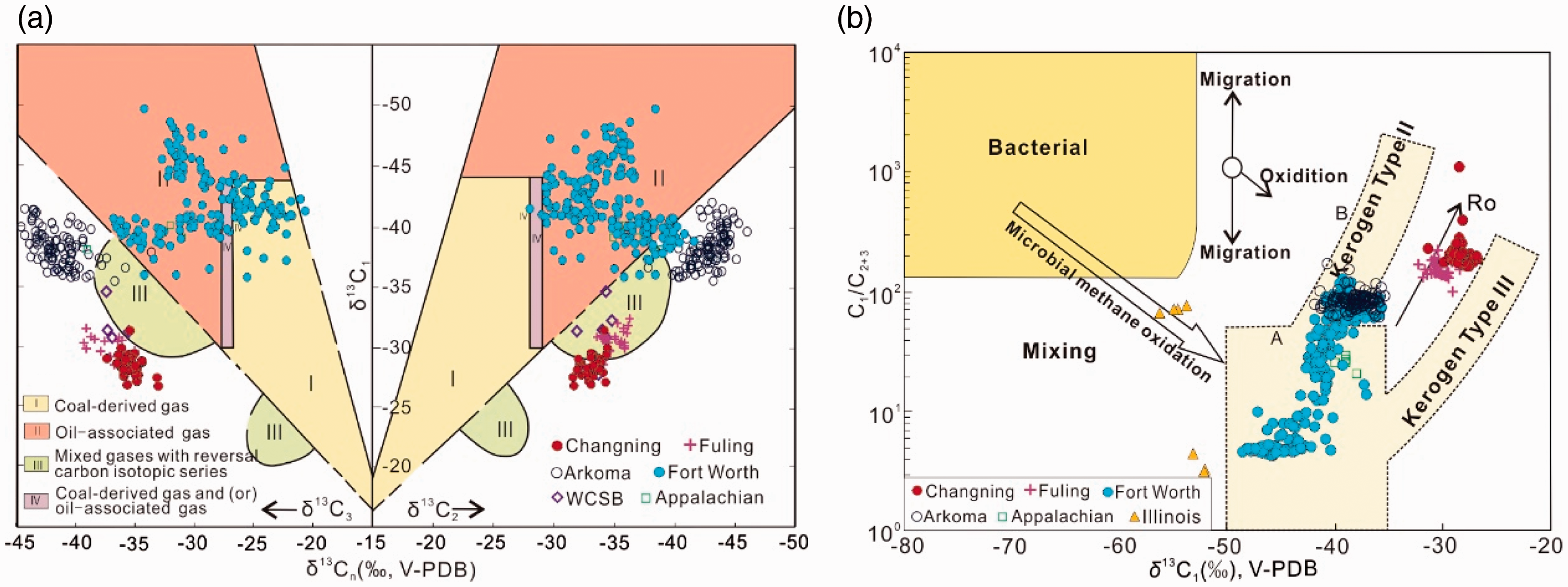
Figure 7 shows the carbon and hydrogen isotopic distribution on Schoell's template for shale gases in North America and the Longmaxi Formation in the Sichuan Basin. In North America, carbon and hydrogen isotopic compositions in low- to high-mature shale gases exhibit the features of thermogenic gas. Isotopic variations with thermal maturity from To zone (with typical oil-asscociated gas) and Ms zone (with composition variations caused by shallow migration) to TT (m) zone (with dry oil-asscociated gas originating in marine sapropelic organic matter) are in agreement with kerogen types and thermal evolution. But in Changning and Fuling gas fields, carbon and hydrogen isotopic compositions are close to TT (h) zone (with dry coal-derived gas from humic organic matter) and concentrate in the zone with gases from mixed sources. The inconsistencies between carbon and hydrogen isotopic compositions in primary gas and geochemical properties indicate that Longmaxi shale in the Sichuan Basin had ever been affected by other secondary geochemical processes during thermal evolution with extremely high maturity (Hao and Zou, 2013a).
Relationship between δ13C1 and C2H6 (a), δ13C1 and δD1 (b) of shale gases in the Changning and Fuling gas fields, for the (a) Changning gas field and (b) Fuling gas field (modified from Schoell, 1983; data sources: Dai et al., 2014a, 2016a, 2016c; Hill et al., 2007; Liu, 2015; Pashin et al., 2012; Strąpoć et al., 2010; Tilley and Muehlenbachs, 2013; Wei et al., 2016; Wu et al., 2015; Zumberge et al., 2012).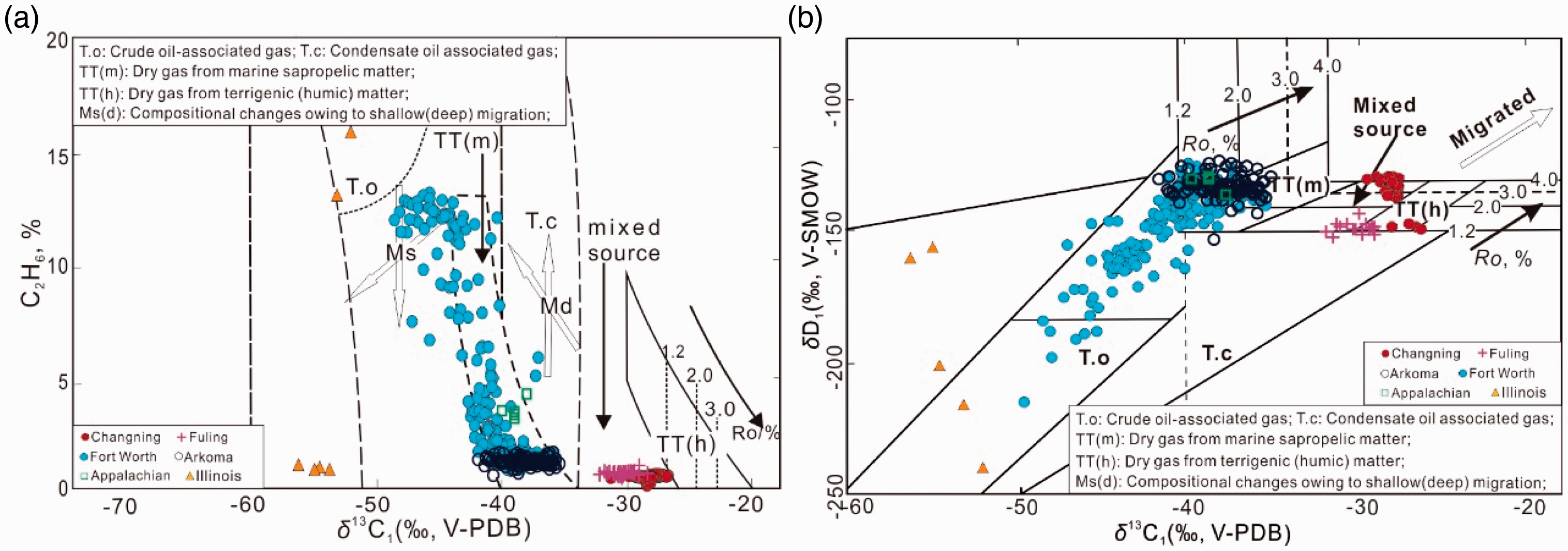
Discussions
Normal carbon isotopes, partial isotopic reversal, and entire isotopic reversal (δ13C1>δ13C2>δ13C3) occur in turn in the process of thermal evolution (Burruss and Laughrey, 2010; Dai et al., 2016c; Hao et al., 2013a, 2013b; Xia et al., 2012, 2013). As shown in Figures 2, 4, and 6 to 8, postmature Longmaxi shale gas in Changning and Fuling gas fields and Horn River shale gas in the WCSB Basin have similar geochemical properties, i.e. similar carbon and hydrogen isotopes and entire carbon isotopic reversal (δ13C1>δ13C2>δ13C3). High- to postmature Fayetteville shale gas with slightly lower maturity mainly exhibits partial isotopic reversal (δ13C1>δ13C2>δ13C3). Most of mature Barnett shale gas has normal carbon isotopes; partial reversal takes place occasionally due to low δ13C2 value. Low-mature Conasauga shale gas in the Appalachian Basin and New Albany gas in the Illinois Basin mainly have normal carbon isotopes, i.e. δ13C1<δ13C2<δ13C3 (Figure 8).
Carbon isotopes in typical shale gases from the Sichuan Basin and North America (data sources: Dai et al., 2014a, 2016a, 2016c; Hill et al., 2007; Liu, 2015; Pashin et al., 2012; Strąpoć et al., 2010; Tilley and Muehlenbachs, 2013; Wei et al., 2016; Wu et al., 2015; Zumberge et al., 2012).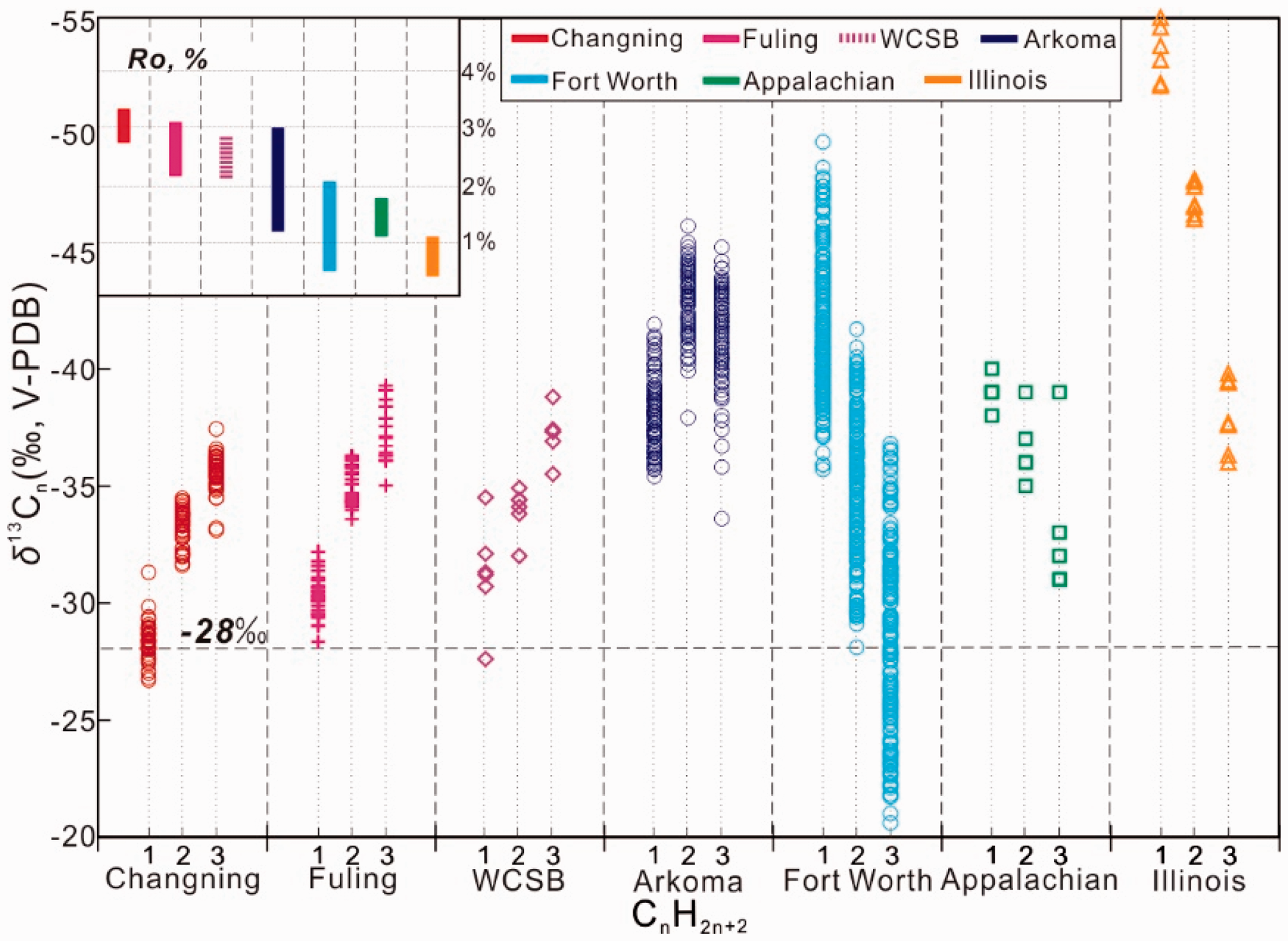
Causes of carbon isotopic reversal in shale gas
Negative carbon isotope series generally present in (δ13C1>δ13C2>δ13C3) inorganic gas (Yuen et al., 1984). In the process of low-molecular-weight compounds polymerizing into high-molecular-weight homologs, the chemical bond of 12C is broken first and enters into polymerized long chains, which causes isotopic reversal (Yuen et al., 1984). In recent years, partial and even entire carbon isotopic reversal has been observed to occur on a large scale in organic genetic gas discovered in North America (e.g. Fayetteville shale gas in eastern Arkoma Basin and Horn River shale gas in the WCSB Basin) (Tilley and Muehlenbachs, 2013; Zumberge et al., 2012) and in the Lower Paleozoic Erathem in the Ordos Basin and the Longmaxi Formation in the Sichuan Basin (Dai et al., 2014a, 2016c; Gao, 2015; Liu, 2015; Wei et al., 2016; Wu et al., 2015). Dai et al. (2016a, 2016b) proposed an idea of secondary geneses and attributed carbon isotopic reversal in organic genetic gas to various secondary effects (Dai et al., 2016a) occurring at extremely high maturity. These effects include: (1) mixture of gases generated by the same source in different periods (Hao and Zou, 2013a; Zumberge et al., 2012); (2) secondary pyrolysis (Rodriguez and Philp, 2010; Tilley et al., 2011; Tilley and Muehlenbachs, 2013; Xia et al., 2013). Gas trapped in a shale system during the high evolution stage came from different sources, such as the cracking of kerogen, retained oil, wet gas, in which the cracking gas of retained oil or bitumen has (12C-rich) lighter ethane, which can result in reversal; (3) inclusion of some substances, e.g. water, in redox reactions (Burruss and Laughrey, 2010); and (4) hydrocarbon expulsion and diffusion-induced fractionation (Pernaton et al., 1996; Xia and Tang, 2012).
Partial reversal of δ13C1>δ13C2
As per the studies on the origin of heavy methane carbon isotopes which may cause partial reversal of δ13C1>δ13C2 in a shale system at high maturity (Cao et al., 2015; Dai et al., 2016b; Liu, 2015; Wei et al., 2016; Wu et al., 2015), some conclusions were reached. First, diffusion may cause 13C enrichment in methane gas and consequently heavy carbon isotopes. In spite of remarkable fractionation observed in the lab, actual in situ fractionation is generally less than 3‰ (Xia and Tang, 2012; Xia et al., 2013). Second, the possibility of mixing gases with heavy methane carbon isotopes could be excluded. A shale system is a self-sourced reservoir with in situ hydrocarbon accumulation. The mixture of gases from other formations should not happen. In addition, the δ13C1 value of Longmaxi shale gas in the Changning and Fuling gas fields is −28.4 and −30.3‰, respectively, on the average, which are obviously higher than that of the gas in the overlying Huanglong Formation. No gases have ever been detected in the fields to have heavy methane carbon isotope (Gao, 2015).
Burruss and Laughrey (2010) proposed that ethane and propane would be consumed instead of being generated in Rayleigh fractionation at high maturity and geotemperature of 250–300℃. If there are transition metals, reduction reaction occurs between ethane and water as well as transition metals; some ethane is consumed to generate methane. If there are no transition metals, ethane is exhausted by pyrolytic reaction. When ethane content is extremely low, the inclusion of minimal light ethane may lead to isotopic reversal (Burruss and Laughrey, 2010). At the same time, we must admit that the source of depleted ethane at the postrollover stage (Ro greater than 2%) has not yet been finalized. Zumberge et al. (2012) argue that in the research of Barnett and Fayetteville shale gas with high maturity (Ro > 1.5%), water and methane can produce hydrogen and depleted carbon isotopes carbon dioxide at first, and then carbon dioxide and hydrogen react to produce depleted carbon isotope ethane, but this argument cannot explain the extremely heavy methane. The methane generated at the late stage may be produced by reduction reaction instead of liquid hydrocarbon pyrolysis or secondary cracking of wet gas. Methane generated at the so-called late stage contains oxidation reactions in which water and transition metals are involved when the maturity Ro is greater than 2% (Burruss and Laughrey, 2010). This may explain the cause of abnormal geochemical properties of methane.
As shown in Figure 9, there is a positively linear relationship between shale gas ethane and its content (concentration) at high maturity. Rayleigh fractionation of ethane also occurs at high maturity (Burruss and Laughrey, 2010). The Longmaxi shale gas in Changning and Fuling is completely within the zone of Rayleigh fractionation. Ethane carbon isotopes become heavy with decreased ethane content. This phenomenon is also observed for Lower Paleozoic Majiagou gas in western Jingbian in the Ordos Basin (Kong et al., 2016).
Relationship between δ13C2 and C2H6 showing mixing and Rayleigh fractionation (modified after Thomson, 1987; data sources: Dai et al., 2014a, 2016a, 2016c; Hill et al., 2007; Liu, 2015; Pashin et al., 2012; Strąpoć et al., 2010; Tilley and Muehlenbachs, 2013; Wei et al., 2016; Wu et al., 2015; Zumberge et al., 2012).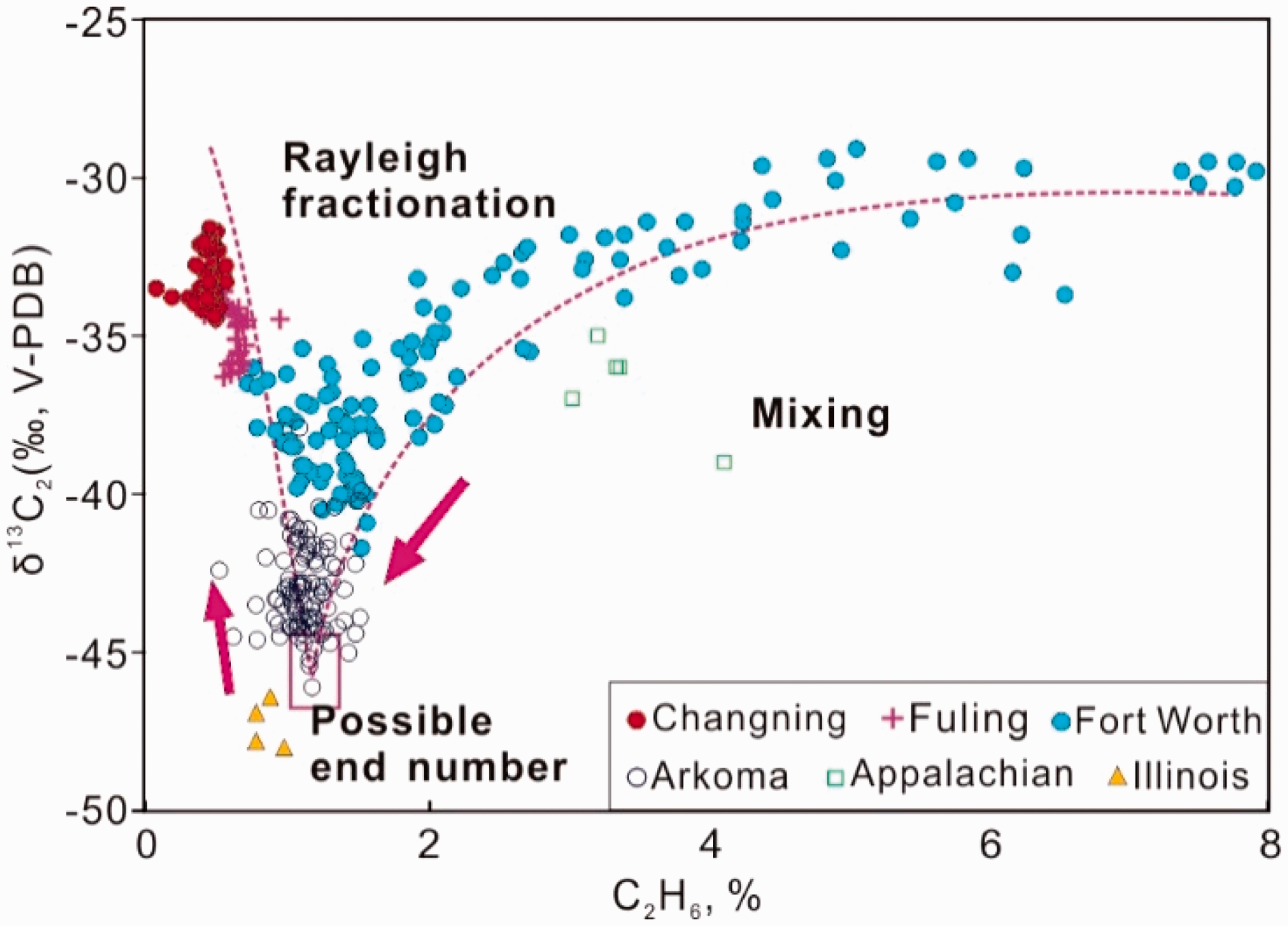
Figure 10 shows that data points of North American shale gas with relatively low maturity coincide with Schoell's maturity trend; carbon and hydrogen isotopes become heavy with maturity. The Longmaxi shale gas in Changning and Fuling and late methane have similar trend; extremely heavy methane carbon isotopes may be related to methane generation at the late stage (Burruss and Laughrey, 2010). Natural gas in a shale system at high maturity is produced by simultaneous pyrolysis of kerogen, wet gas, retained oil, and bitumen (Cao et al., 2015; Dong et al., 2014; Hao and Zou, 2013). The products of oil or condensate pyrolysis have high C2+ content; ethane quickly contains abundant 12C and becomes light first. Due to extremely low content of heavy hydrocarbon in Longmaxi shale gas in Changning and Fuling after Rayleigh fractionation, the inclusion of a small amount of ethane with light carbon isotopes (generated by wet gas pyrolysis) may lead to the reversal of δ13C1>δ13C2 (Figure 7) (Burruss and Laughrey, 2010; Hao and Zou, 2013). Owing to the impacts of hydrothermal fluids, light δ13CCO2 coexists with δ13C2. CO2 and H2 with light carbon isotopes, which may be generated by water–methane reaction at an early stage, may react with each other to yield ethane with light carbon isotopes at high maturity, and may cause the reversal of δ13C1>δ13C2 (Zumberge et al., 2012).
Schoell plot of δ13C2 versus C2H6(a), δ13C1 versus CH4 (b) of shale gases from North America and the Longmaxi shale gas of Sichuan Basin (modified after Burruss and Laughrey, 2010; Thomson, 1987; data sources: Dai et al., 2014a, 2016a, 2016c; Hill et al., 2007; Liu, 2015; Pashin et al., 2012; Strąpoć et al., 2010; Tilley and Muehlenbachs, 2013; Wei et al., 2016; Wu et al., 2015; Zumberge et al., 2012).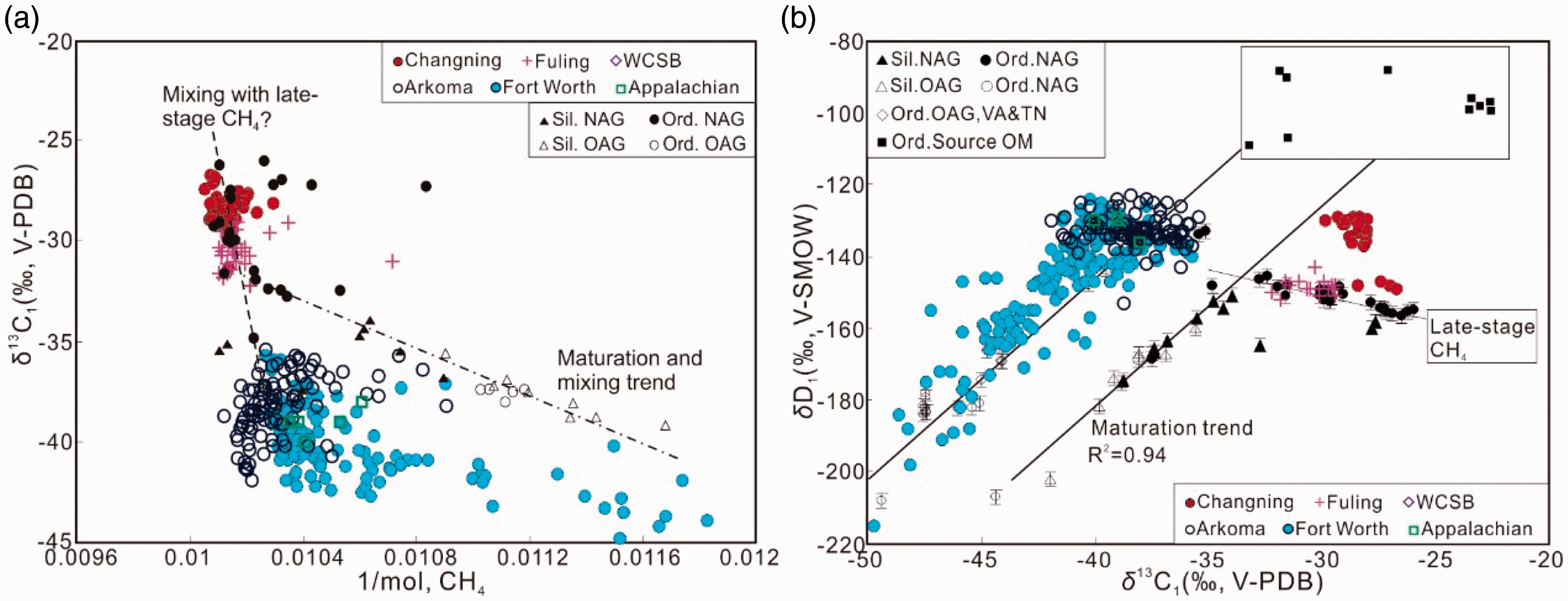
Carbon isotopic reversal caused by high geotemperature
As per above discussions of secondary effects, e.g. secondary pyrolysis of wet gas and water inclusion in redox reaction after ethane Rayleigh fractionation, high temperatures may also cause reversal of carbon isotopic composition. Vinogradov and Galimov (1970) detected different exchange equilibrium effects of carbon isotopes at different temperatures and found that the reversal of δ13C1>δ13C2 occurs at the geotemperature higher than 150℃; entire isotopic reversal of δ13C1>δ13C2>δ13C3 occurs at the geotemperature higher than 200℃ (Vinogradov and Galimov, 1970).
After more than three periods of hydrocarbon generation and migration in the Longmaxi Formation in the Sichuan Basin, the δ13C1 value (−29.2‰ on the average) for Silurian gas reaches its maximum at the well sites of JY1 and N201, where homogenization temperature of fluid inclusions mostly ranges 172–205℃ and is up to 215.4–223.1℃ at the well site of JY1 (Guo and Zhang, 2014). Quartz in the Lower Silurian black shale is enriched with methane inclusions with high density; Raman shift mainly ranges 2910–2911.4 cm−1 and CH4 exhibits high degree of purity on Raman spectrogram. The content of other components is very small. This indicates high-density dry gas inclusions with high maturity (Liu et al., 2013); thus, it is inferred that Changning and Fuling shale gas may have experienced high geotemperature. In view of average humidity of 0.5% in these two gas fields, it is possible that postmature shale gas has experienced carbon isotopic equilibrium, which gives rise to carbon isotopic reversal and entire reversal.
Carbon isotopic distribution in Changning and Fuling
Postmature Longmaxi shale gas in the Changning and Fuling gas fields have other geochemical features in addition to extremely heavy methane carbon isotopic composition and entire isotopic reversal of δ13C1>δ13C2>δ13C3.
Methane carbon isotopic composition becomes heavy toward the southwest in the Changning gas field (Figure 11(a)). The δ13C1 value is −28.4 and −29.4‰ (the average of all single-well parameters), respectively, at Well N211 and Platform NH10 in the northernmost and is −27.4 and −26.7‰, respectively, at the Platform YH-1 and Well Z104 in the southwest. Methane carbon isotopic fractionation value is up to 2.7‰. Ethane carbon isotopic composition becomes heavy toward the south (Figure 11(b)). In the Fuling gas field, methane carbon isotopic composition becomes heavy toward the northeast (Figure 11(c)). The δ13C1 value is −32.2‰ at Well J4-2 in the southwesternmost and −29.9‰ at Well JY1-2 in the northeast. Ethane carbon isotopic composition ranges from −35.5 to −36.3‰ in the east and southwest and from −34.6 to −35.9‰ in the northeast (Figure 11(d)).
Diagram distribution of δ13C1 and δ13C2 values of shale gases from Changning gas field (a, b), and Fuling gas field (c, d), Sichuan Basin (data sources: Dai et al., 2014a, 2016a, 2016c; Liu, 2015; Wei et al., 2016).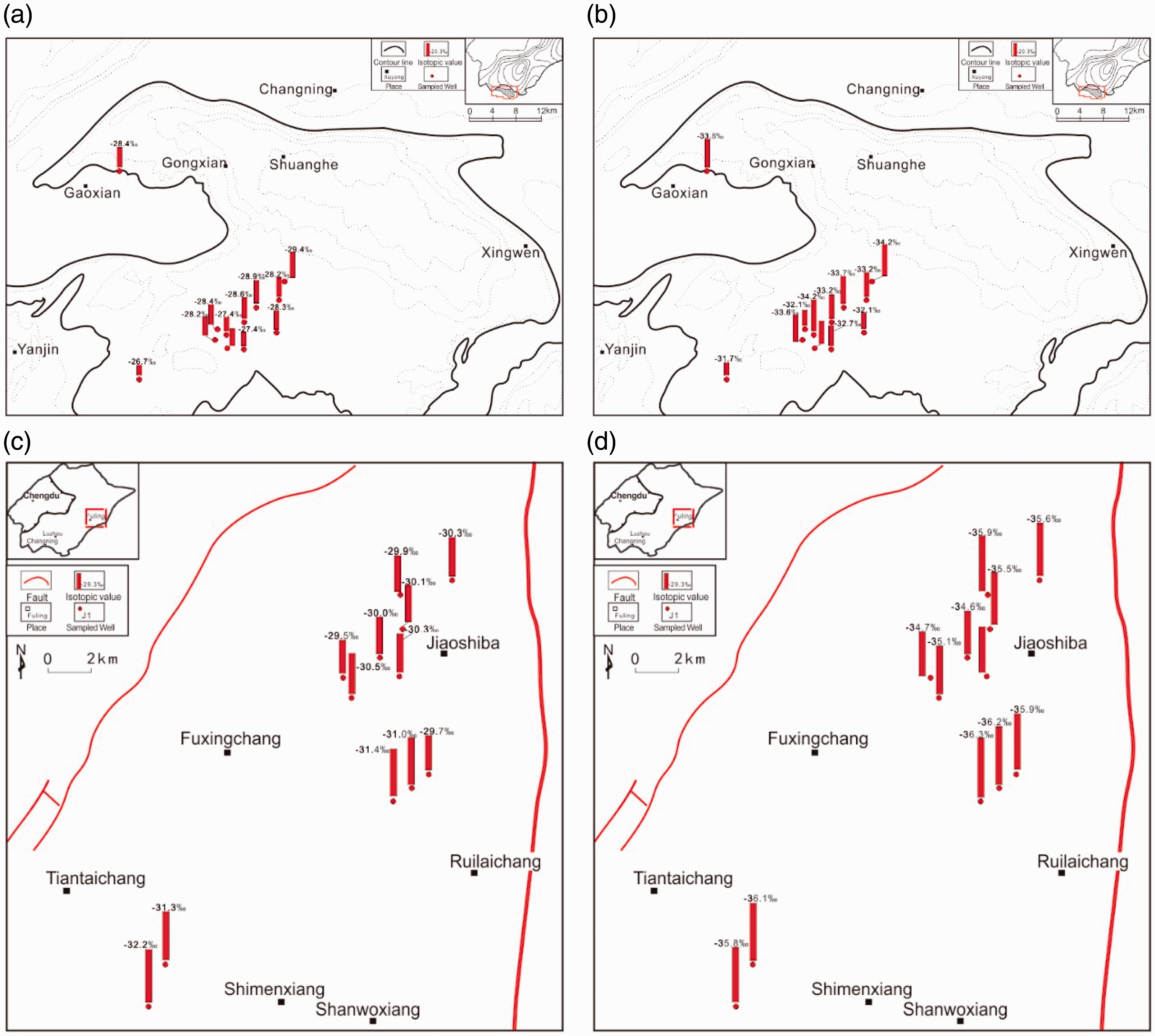
The Longmaxi shale gas in the Changning and Fuling gas fields has already been postmature. Due to the limitation of original kerogen carbon isotopic composition in source rocks and the effects of secondary geochemical processes, carbon isotopic composition in shale gas would not vary consistently with maturity (Figure 10). Thus, lateral distribution of geochemical properties is more dependent on geologic setting of the field. In the Changning gas field where shale gas wells were mainly drilled inside the synclinal zone at southwestern Changning anticlinal flank, wells such as N211 with light carbon isotopic composition are close to anticlinal center, while wells such as Z104 with heavy carbon isotopic composition are close to Weixin fault zone in southern field. In the Fuling gas field, Well JY4-2 with light carbon isotopes is located in the center of the box-shaped Jiaoshiba anticline, whereas Well JY1-2 with heavy carbon isotopes in the north is close to a north–south fault zone on the east.
Such phenomenon that carbon isotopic composition of shale gas affected by the geological structure features is similar to the case with Horn River shale gas in WCSB, some shale gas wells with negative carbon isotopic composition are close to the developed faults. The closure of the shale system, such as whether the geological conditions are stable, and the accompanying diffusion and migration effects may also have an important impact on the carbon isotopic composition of shale gas. Theoretical calculations and experiments on kerogen and pyrolysis of crude oil confirm that the closure of the system can affect the carbon isotopic composition of hydrocarbon gases at different maturity levels. In this regard, we still need further study.
Conclusions
The Longmaxi shale gas in the Changning and Fuling gas fields exhibits the features of dry gas. CH4 dominates hydrocarbon gases and its content reaches 98.72 and 98.17%, respectively, on the average; the humidity is less than 0.5%. Nonhydrocarbon gases include a small amount of CO2 and N2. No butane and H2S have been detected. The δ13C1 value is extremely heavy in two gas fields. The δ13C2 value is −33.3 and −34.6‰, respectively, on the average. As per the geochemical properties and the origin of sapropelic organic matter, the Longmaxi shale gas in two gas fields is diagnosed to be petroliferous dry gas.
Due to the effects of various secondary processes at high geotemperature and high maturity, Changning and Fuling shale gas exhibits extremely heavy methane carbon isotopes, postrollover carbon and hydrogen isotopic compositions, and entire reversal of δ13C1 > δ13C2 > δ13C3. Two gas fields may experience high geotemperature during multistage hydrocarbon generation. Carbon isotopic composition is also related to ethane Rayleigh fractionation and late methane generation by water and transition metals reaction at the geotemperature of 250–300℃.
Methane and ethane carbon isotopes become heavy toward the southwest in the Changning gas field and toward the northeast in the Fuling gas field. Postmature shale gas with heavy carbon isotopes tends to occur in fault zones. Lateral carbon isotopic distribution may be related to geologic setting.
Footnotes
Acknowledgements
We would like to acknowledge Professor Jinxing Dai from RIPED, PetroChina, for his critical and constructive comments, which significantly improved the quality of the manuscript.
Declaration of conflicting interests
The author(s) declared no potential conflicts of interest with respect to the research, authorship, and/or publication of this article.
Funding
The author(s) disclosed receipt of the following financial support for the research, authorship, and/or publication of this article: The work was financially supported by the National Science Foundation Project for Young Scholars of China (No. 41303037), the National oil and gas Project of China(No. 2016ZX05007-01), and the Natural Science Foundation of China (No. 41473020).