




Abstract
Pores and fractures constitute connected networks for fluid migration and production in or from coal reservoirs. The existence of minerals in coal not only increases the heterogeneity of the reservoir but also influences the development and connectivity of pores and fractures in the coal. By applying X-ray diffraction environmental scanning electron microscopy and field emission scanning electron microscopy with an energy dispersive X-ray spectrometer type, the occurrence modes and geneses of minerals were investigated in representative high-rank coals from the Qinshui basin, North China. Additionally, their impact on the development and connectivity of pores and fractures was explored in the high-rank coal. The results show that illite and kaolinite are the dominant minerals, comprising 57.74% of the mineral volume on average. The minerals fall into three genetic types, including detrital, syngenetic, and epigenetic, of which syngenetic minerals are the most common. The occurrence modes of the minerals depend on their geneses. The detrital minerals are mostly granular; the syngenetic minerals are agglomerates, stripped aggregates, and disseminated fine particles, and the epigenetic minerals are fracture fillings. At the micro-scale, the influences of the minerals on pores and fractures in the high-rank coals are mainly denoted by micro-fracture fillings, development of mineral pores, and generation of differential deformation pores and fractures. Differential deformation pores and fractures appear at the boundaries between clay and brittle minerals or clay and organic matter due to their physical and chemical property differences related to the regional thermal metamorphism of the coal. The coal samples are always connected by thermogenic pores and mineral pores, favoring connectivity of the pores and fractures in the coal. Moreover, the dissolved pores and intercrystalline pores are largely interconnected. This study focused on the effects of minerals on the pore and fracture structure of the high-rank coal reservoir. The results provide a better understanding of the migration networks and fluid mechanisms related to complex pores and fractures, particularly in high-rank coal reservoirs.
Introduction
The inorganic components in coal encompass three fundamentally different types of constituents: dissolved salts and other inorganic substances in the coal’s pore water, inorganic elements incorporated within the organic compounds of the coal macerals, and discrete crystalline and non-crystalline mineral particles. The first two types of inorganic components are non-mineral inorganics. Their contents decrease with the expulsion of moisture, and changes in the chemical structure of the organic matter occur during rank advance. Discrete inorganic particles are typically present in high-rank bituminous coal and anthracite (Wang et al., 2011; Ward, 2002). The mineral matter in coal is a product of the processes associated with peat accumulation, sediment diagenesis, coal metamorphism, and activities in subsurface fluids (Cai et al., 2015; Ward, 2002; Zhao et al., 2014). The mineral matter in coal comprises 44 species (Yossifova, 2007) that mainly include clay minerals (mostly illite and kaolinite), quartz, feldspars, carbonates (calcite and dolomite), and sulfides (pyrite and chalcopyrite). Coals from different regions have different types and contents of minerals due to various coal-forming environments, tectonic thermal evolutions, coal ranks, and petrology.
The minerals in coal directly affect the quality and may change the mechanical and petrophysical features of the coal, increasing the heterogeneity and structural complexity of the coal reservoir (Cai et al., 2015). The mineral matter has a fundamental effect on the behavior of coal when used for various purposes, including coal utilization, gas production, and coal-based CO2 capture and geological storage. In terms of enhanced coal bed methane (CBM) recovery and coal-based CO2 capture and geological storage, the minerals in coal usually fill in the pores and fractures, reducing the connectivity of pores and fractures and resulting in a water sensitivity effect during drilling and fracturing processes (Liu et al., 2014). However, after CO2 is injected into the coal, it undergoes a dissolution/precipitation reaction with water, which can increase the flow conductivity of coal. Moreover, during hydro-fracturing, because the density difference between the matrix and mineral matter may cause fractures to propagate along the junctions of minerals and the organic matrix, potentially increasing the permeability of the coal reservoir (Cai et al., 2015). Research regarding the minerals in coal not only improves the scientific connotation of coal petrology and coal quality but also deepens the understanding of the physical properties of coal reservoirs, the structure of CBM development and coal-based CO2 capture along with geological storage. These can guide the innovation and optimization of CBM development and coal-based CO2 capture along with geological storage technology. The Qinshui basin is a high-rank coal reservoir that has been recently used for CBM development in China. China’s high-rank coal includes complex metamorphism types, and most experienced multi-stage metamorphic evolution processes and multiple heat source superimposed metamorphism. These processes cause the composition, occurrence modes, and geneses of minerals within the coals to be more complex and significantly impact the structural and physical properties of coal reservoirs. Thus, research regarding mineral occurrence modes in the high-rank coals and their influence on coal reservoir structure are more meaningful.
In recent years, the mineral characteristics of coals, such as types, contents, occurrence modes, distributions, and origins, and their influences on the enrichment of trace elements, coal reservoir permeability, adsorption, and fracture propagation have been studied by scholars using various methods, including low-temperature ashing, quantitative X-ray diffraction (XRD), X-ray fluorescence spectrometry, chemical analysis, optical microscopy, scanning electron microscopy (SEM), and X-ray computed tomography (X-CT) scanning techniques (Cai et al., 2015; Deng et al., 2015; Laubach et al., 1998; Liu et al., 2014; López and Ward, 2008; Permana et al., 2013; Qin et al., 2015). However, little research has been conducted regarding the occurrence characteristics of minerals in high-rank coal and their influence on the development and connectivity of micro-pores and -fractures. Previous studies about the effects of minerals on pores and fractures in high-rank coal simply discussed the filling effects of epigenetic minerals in the pores and fractures (Liu et al., 2014; Yao et al., 2009). They suggest that some pores and fractures are filled by epigenetic mineralization. Infilled pores and fractures reduce the density of fractures to a certain extent, affecting the connectivity of pores and fractures and reducing the reservoir permeability. We partially ignored the positive impacts of minerals on the development and connectivity of micro-pores and -fractures.
In this paper, typical high-rank coal samples from different Southern Qinshui basin coal mines were selected as examples. Laboratory experiments such as XRD, environmental SEM (ESEM), and field emission SEM (FESEM) were combined with energy dispersive X-ray spectrometer (EDS) measurements to study the types, occurrences, and geneses of minerals within coals, emphasizing the occurrence characteristics and their influence on the development and connectivity of micro-pores and -fractures in high-rank coal. The study provides new information regarding the occurrence and migration mechanisms of fluid within pores and fractures in high-rank coal.
Geological settings
The Qinshui basin is located in southeastern Shanxi, China, with a coal area of 29,500 km2, 5.1 × 10¹¹ t of coal reserves, and 3.28 × 10¹² m3 of CBM resources (Liu et al., 2015). It is the most successful commercial CBM area in China, with one of the highest degrees of exploration and development within high-rank Chinese coal. The Taiyuan and Shanxi formations are the main coal-bearing strata in the Southern Qinshui basin, and they belong to the Permo-Carboniferous system (Zhou et al., 2014). The lithofacies of the Shanxi formation are composed largely of sandstones, mudstones, siltstones, and coal (Figure 1). The ancient sedimentary environment of the Shanxi formation is believed to be an epicontinental sea setting with a deltaic depositional influence. The research area is located in the Southern Qinshui basin. In this area, the geological structure is simple. It has a smooth monoclinal structure, with wide flat secondary folds in the NNE and SN directions and few faults (Figure 1). The Shanxi formation is a weak sandstone aquifer, and it lacks hydraulic connection with the Taiyuan formation and Ordovician system, which are larger aquifers (Cai et al., 2015; Liu et al., 2014, 2015).
Location and geology of the study area and a stratigraphic column of the Shanxi formation.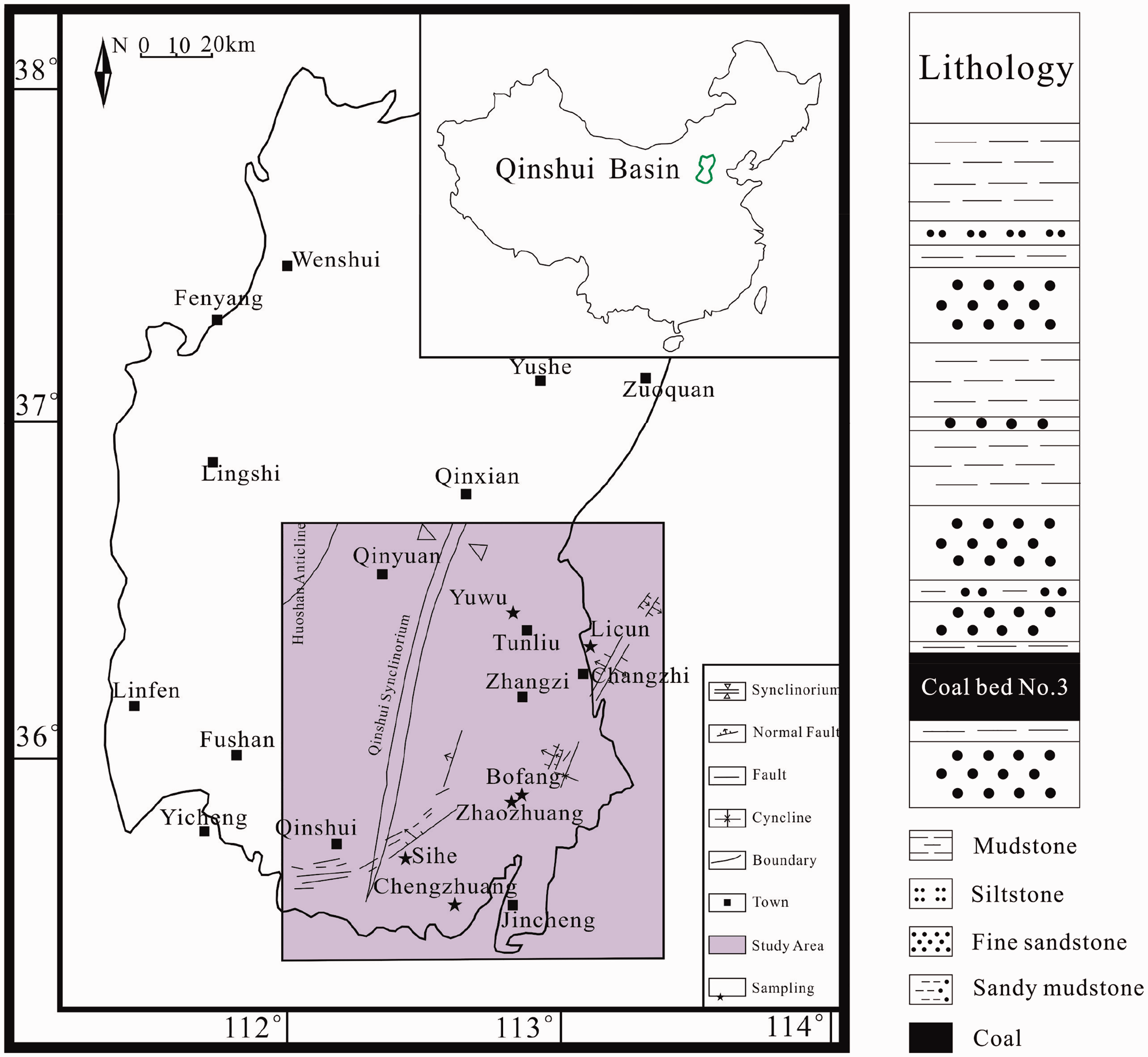
Coal bed #3 in the Shanxi formation is a single-layer coal bed between 5.3 and 8.6 m thick. The depth of the coal bed #3 in the Shanxi formation is 270 m to 700 m in most areas. It is a stable coal seam and is the main target for CBM exploration and development. The Yanshanian tectonic thermal movement produced a highly abnormal old thermal field, which induced a high metamorphic coal grade, favoring highly metamorphic bituminous coal and anthracite. Coal bed #3 mainly comprises semibright coal, followed by bright coal, and there is a dull coal layer in local regions. Coal prioritizes the primary structure.
Methodology
Sample collection and preparation
Basic properties of six coal samples.
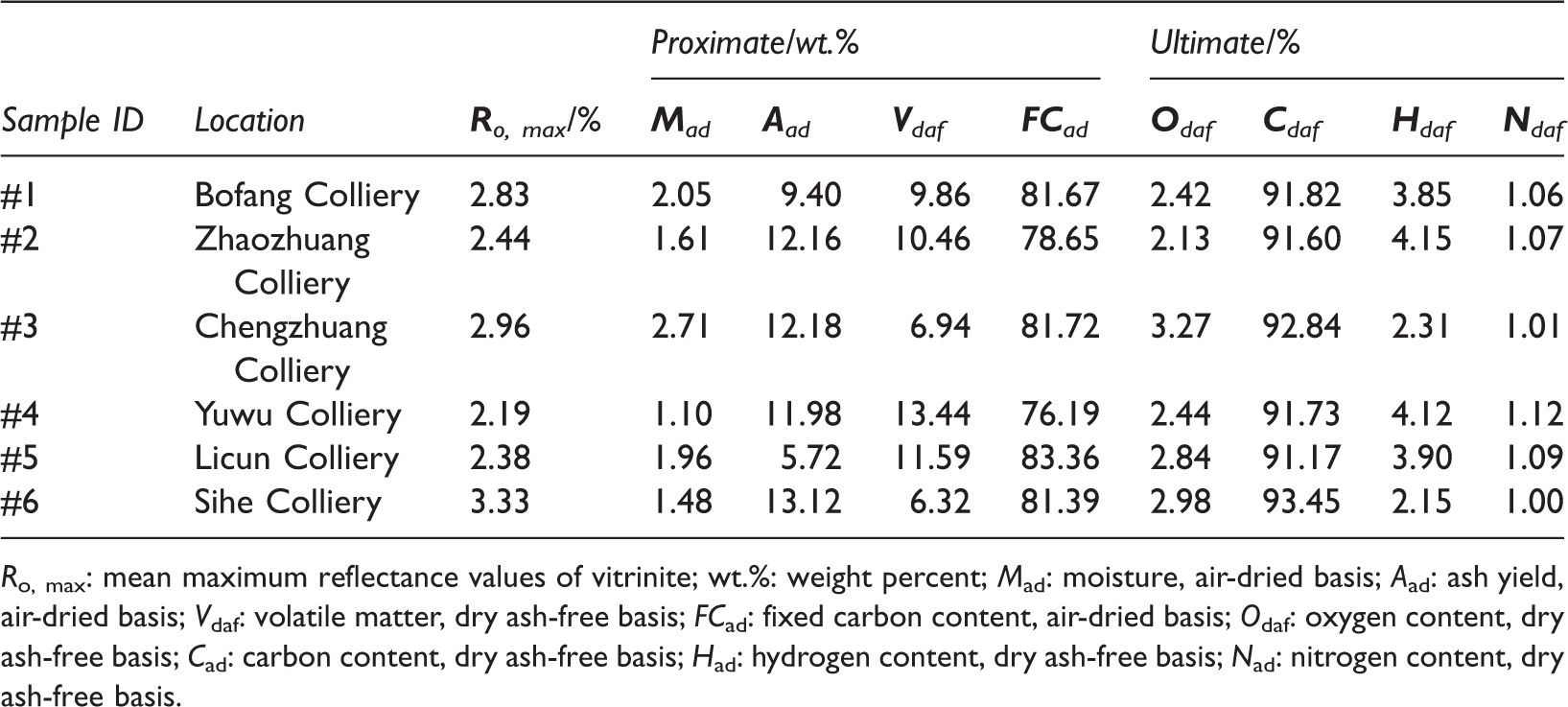
Ro, max: mean maximum reflectance values of vitrinite; wt.%: weight percent; Mad: moisture, air-dried basis; Aad: ash yield, air-dried basis; Vdaf: volatile matter, dry ash-free basis; FCad: fixed carbon content, air-dried basis; Odaf: oxygen content, dry ash-free basis; Cad: carbon content, dry ash-free basis; Had: hydrogen content, dry ash-free basis; Nad: nitrogen content, dry ash-free basis.
Experimental methods
Samples used in the XRD analysis were crushed and ground to a mesh size of less than 325 (0.045 mm). The XRD measurements were carried out using a D8 ADVANCE diffractometer produced by the Bruker Company, Germany, with Cu-Kα radiation. Samples were step-scanned from 3° to 65° with a step interval of 0.019450° and a counting time of 2 s per step. Samples underwent a semi-quantitative mineralogical analysis using Total Pattern Solution 4.2 software, which is also produced by Bruker Company, and mineral types and their relative contents in coal were obtained.
To facilitate the microscopic observations of pore characteristics and mineral occurrence modes in coal, a Quanta 250 ESEM was used, with an associated EDX detector for particle identification and qualitative analysis of minerals. It is produced by the FEI Company, USA. The accelerating voltage was 30 KV, and the largest amplification was 12,000.
Minerals and pores in coal were also observed using a JSM-6490 FESEM with an energy dispersive spectrometer. Sub-ion polishing was performed on the coal surfaces. The experiment was first conducted in backscattered electron mode to test the surface energy spectrum of each polished coal surface based on the gray value differences between the coal matrix and minerals to identify minerals. Then, the mineral occurrence modes and their relationships with pore and fracture development were observed using the secondary electron model. The amplification effect can reach the nanometer level.
The coal samples observed via SEM were approximately 10 mm × 10 mm × 2–3 mm. Coal is a non-conducting substance; therefore, to achieve better experimental results, coal surfaces were wrapped in conductive tape for pretreatment during the experiments.
Results and discussion
Mineral content
Abundance (wt.%) of minerals based on XRD.
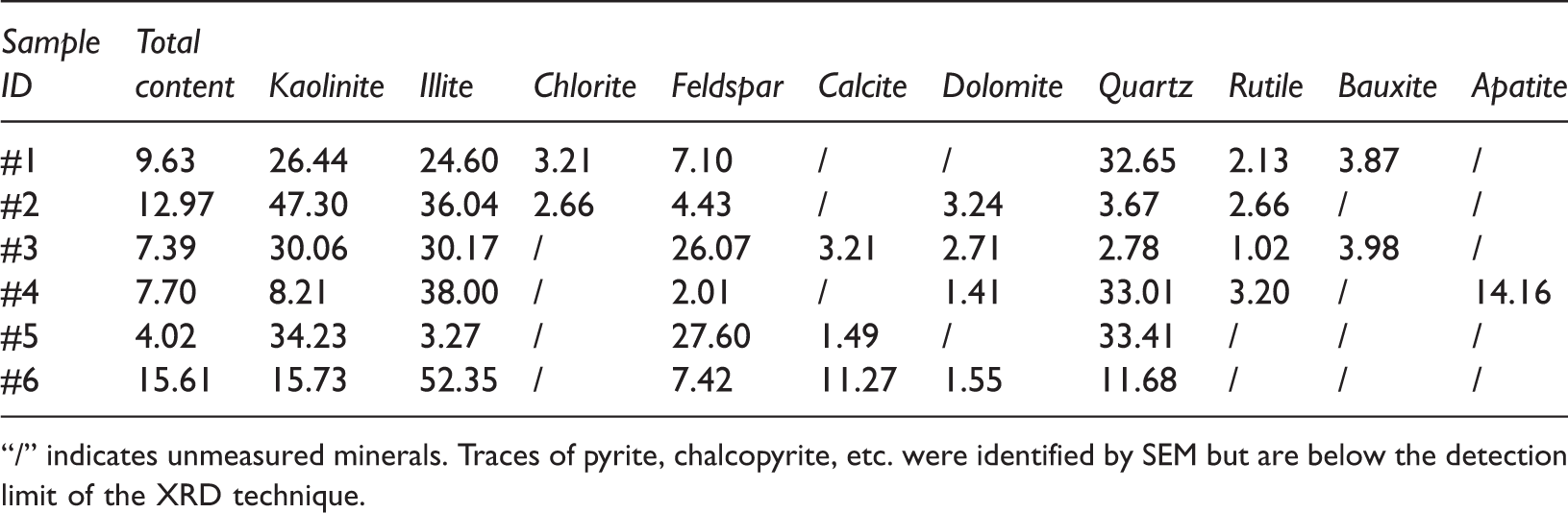
/” indicates unmeasured minerals. Traces of pyrite, chalcopyrite, etc. were identified by SEM but are below the detection limit of the XRD technique.
Modes of mineral occurrence
Most mineral particles in high-rank coal are too small to be directly observed by the naked eye. Numerous well-crystallized or particularly shaped mineral particles and aggregates were observed by ESEM and FESEM with EDS in this paper.
Clay minerals
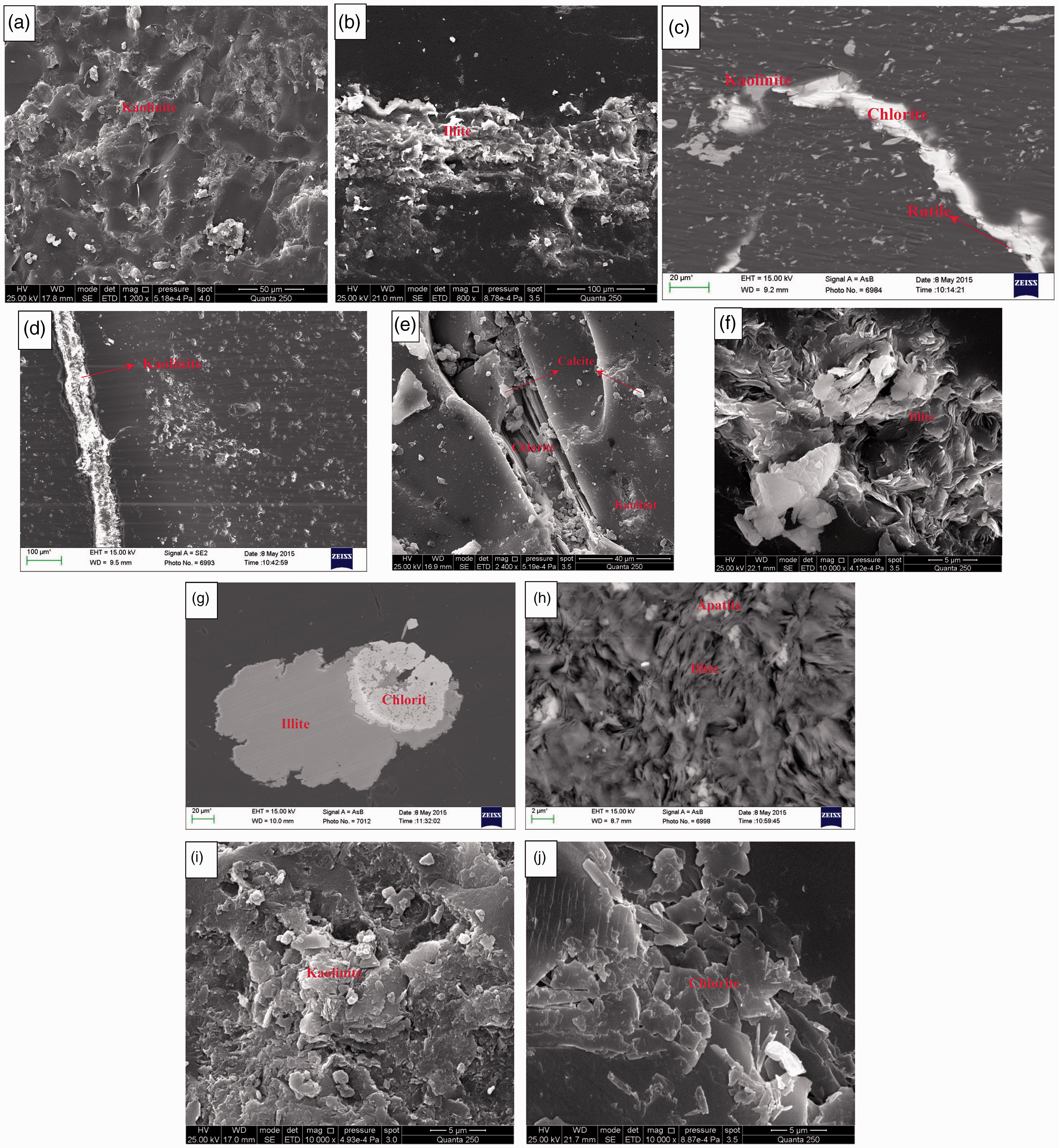
Clay minerals are the most common minerals in the coal samples from the study area. Their volume proportion comprises from 37.5% to 86.0% of the total mineral content, which mainly includes illite and kaolinite, although traces of chlorite can be detected in some samples. Different geneses cause different occurrence modes. The modes of mineral occurrence within the coal have been studied mainly based on the morphological features observed by SEM–EDS. Syngenetic clay minerals occur in disseminated fine particles (Figure 2(a)), thin bands, and massive aggregates (Figure 2(b) and (c)), whereas epigenetic clay minerals mainly occur as fracture fillings (Figure 2(d) and (e)). Epigenetic micro-fracture-filling clay minerals can be attributed to the hydrothermal fluid activities in the Yanshanian period. The aggregates of clay minerals are flaky, and the edges of the thin sheets are irregular or incomplete (Figure 2(f)).
Illite: It is the most abundant clay mineral in coal bed #3 because the formation temperature of illite is more than 137℃, which is similar to the formation temperatures of lean coal and anthracite (approximately 150℃–220℃); therefore, it is normal to observe intimate matrix intergrowths with illite in high-rank coal (Permana et al., 2013). Illite is the most widespread mineral, occurring mainly as stripped (Figure 2(b)) and agglomerated aggregates (211.63 × 107.57 µm) (Figure 2(g)) that mainly evolved from secondary kaolinite. Additionally, the illite in the study area was formed by the accumulation of flake particles, and its scaly crystal form produced many slit-shaped intergranular pores (Figure 2(f) and (h)). Kaolinite: Higher kaolinite contents in coal samples from the study area are associated with the acidic conditions of the coal-forming environment and mainly comprise syngenetic minerals. Disseminated fine particles intimately mixed with the matrix (Figure 2(a)), stripped aggregates, and agglomerate aggregates (Figure 2(c)) of kaolinite were the most commonly observed minerals. Individual minerals of kaolinite in coal are often scaly or transitional, with different crystallinities. Well-crystallized kaolinite was observed using an SEM, and its hexagonal structure was sometimes dimly visible (Figure 2(i)). Epigenetic kaolinite-filled fractures (Figure 2(d)) are also visible in the coal. Chlorite: It is a type of layered silicate mineral containing iron and magnesium. It has been identified in some high-rank coals from the study area and may have formed as a result of metamorphic processes (Permana et al., 2013). Chlorite displays a wide range of textures, including strips (Figure 2(c)), thick plates (Figure 2(j)), agglomerates (Figure 2(g)), and fracture fillings (Figure 2(e)). Figure 2(g) shows an agglomerate chlorite (approximately 90 µm in radius) surrounded by illite. It may be a result of iron- and magnesium-rich hydroxide carried by hydrothermal fluids that precipitated in a previously formed depotassium illite interlayer.
Modes of mineral occurrence in coal samples. (a) kaolinite intimately admixed with organic material, #6 coal sample, ESEM, 1200×; (b) banded illite aggregates, #3 coal sample, ESEM, 800×; (c) banded chlorite, #2 coal sample, FESEM, 1000×; (d) kaolinite filled in a fracture, #4 coal sample, FESEM, 300×; (e) calcite, chlorite, and kaolinite mixed minerals, #6 coal sample, ESEM, 2400×; (f) curved sheet illite with slit intercrystalline pores, #5 coal sample, ESEM, 10,000×; (g) illite and chlorite, #6 coal sample, FESEM, 1000×; (h) apatite filled in the intercrystalline pores of illite, #5 coal sample, FESEM, 10,000×; (i) kaolinite aggregates, #6 coal sample, ESEM, 10,000×; and (j) platy shaped chlorite, #3 coal sample, ESEM, 10,000×.
Oxide minerals
Quartz is the most common oxide mineral in the study area, and some coal samples contain rutile. Quartz has two different modes of occurrence within the samples, including agglomerate syngenesis quartz formed by peat swamp solution precipitation and irregular granular detrital quartz intergrowths with calcite (Figure 3(a)). Rutile is a heavy mineral that displays bulges under an SEM and appears to be randomly distributed in the coal (Permana et al., 2013). They occur in granules (approximately 0.5 µm) embedded in upper clay minerals or irregular thin plates distributed in coal matrix vitrinite (Figure 3(b)). Detrital quartz and rutile are likely of terrigenous detrital origin (Liu et al., 2005).
Modes of mineral occurrence in coal samples. (a) Bauxite plate minerals, including calcite and quartz particles, #4 coal sample, ESEM, 5000×; (b) rutile and kaolinite, #2 coal sample, ESEM, 10,000×; (c) calcite aggregates, #1 coal sample, ESEM, 7000×; (d) dolomite aggregates, #4 coal sample, ESEM, 4000×; (e) banded discharged dolomite, #2 coal sample, FESEM, 3000×; (f) illite, dolomite, and apatite particles, #4 coal sample, FESEM, 2000×; (g) bauxite embedded in a pore, #1 coal sample, FESEM, 50,000×; (h) bauxite intimately admixed with organic material, #1 coal sample, FESEM, 15,000×; (i) a well-crystallized bauxite particle associated with illite, #5 coal sample, FESEM, 15,000×; and (j) lump apatite mixed with clay minerals, #3 coal sample, FESEM, 7000×.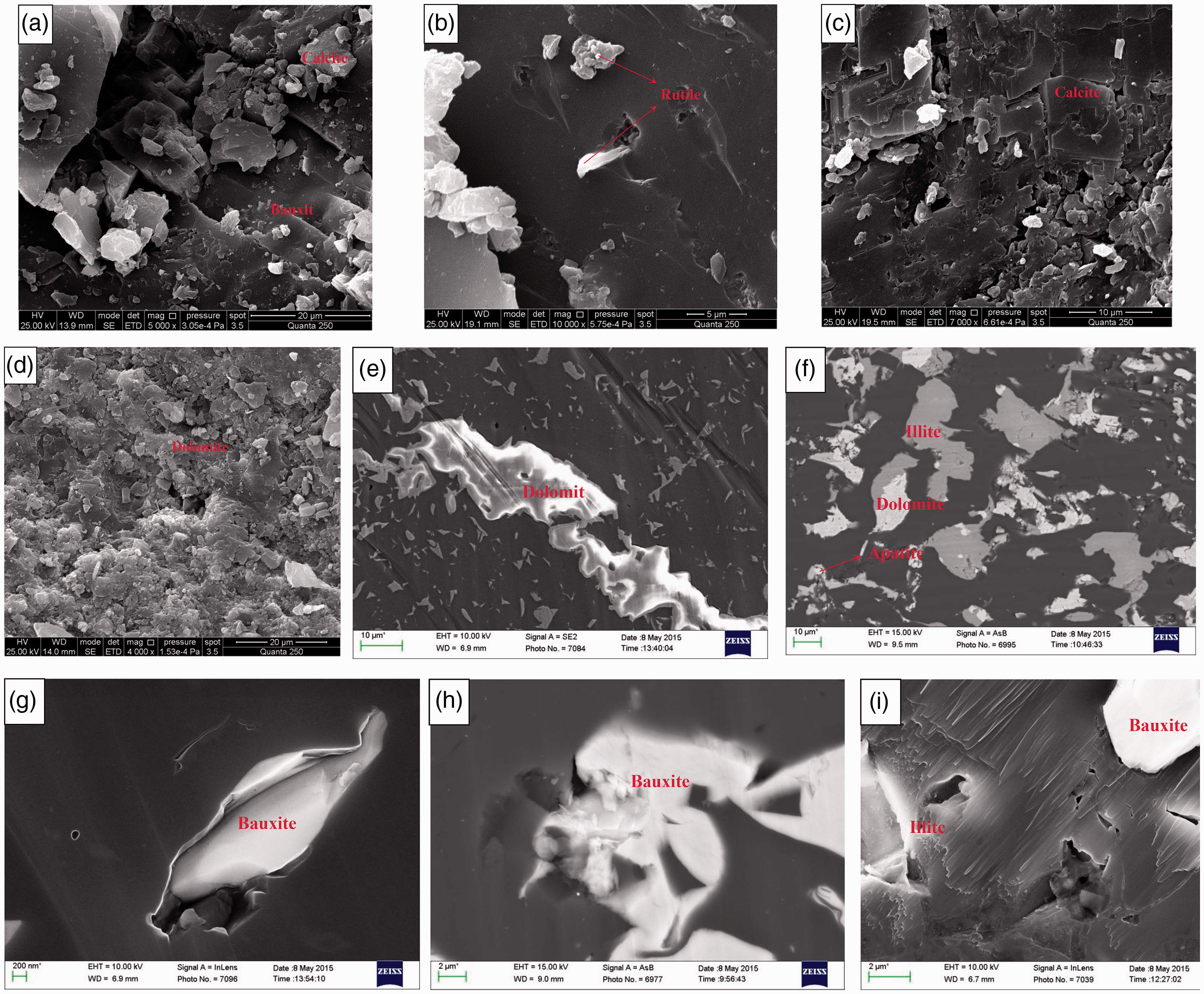
Carbonate minerals
Carbonate minerals are common, including calcite and dolomite. Calcite easily dissolves in acidic medium conditions. Therefore, it is rare to see calcite of terrigenous detrital origin. The carbonate minerals in the coals are usually syngenetic, having formed during a diagenetic stage, or fracture-filling minerals, which formed during an epigenetic stage (Cai et al., 2015). The occurrence of calcite, including syngenetic calcite aggregates (Figure 3(c)), was affected by underground fluid flow, which developed dissolution pores, irregular grains, and massive euhedral crystals of calcite (Figures 2(e) and 3(a)). Agglomerate (Figure 3(d)) and stripped aggregates (Figure 3(e)) were the most common forms of dolomite, and part of the massive dolomite shows an affinity to illite (Figure 3(f)).
Other minerals
Other minerals have also been identified in some coal samples evaluated in the study, such as feldspars, bauxite (Figure 3(a), (g) to (i)), apatite (Figures 2(h) and 3(f) and (j)), chalcopyrite, etc. Feldspar, as a primary mineral, is not alone in high-rank coal and is always associated with other minerals. Their specific forms cannot be observed by SEM. Bauxite has a wide range of occurrences, including embedment in macropores (4555.48 × 1361.61 nm) (Figure 3(g)), matrix symbiosis (Figure 3(h)), euhedral crystal particle embedment in organic matter (Figure 3(i)), and as strips filled in fractures (Figure 3(a)). Studies have shown that the genesis of bauxite can be terrigenous detrital sedimentary, authigenic from the precipitation of low-temperature hydrothermal solutions in coal (Yossifova, 2007), or caused by the decomposition of kaolinite and exposure of the material to a relatively high temperature at some stage during the coal’s post-depositional history (Permana et al., 2013). Apatite is not a common mineral in coal and was only present in the #4 coal samples based on XRD analysis. Occurring as granular (approximately 2.60 µm) (Figure 3(f)) or irregular agglomerate (10.83 × 9.23 µm) (Figure 3(j)), it is surrounded by dolomite/clay minerals. Observations also suggest that it filled some the intercrystalline pores in illite (Figure 2(g)). The occurrence indicates that apatite forms later than syngenetic dolomite and clay minerals, suggesting an epigenetic origin. Siderite and chalcopyrite occur rarely, and their contents in the six coal samples are below the XRD detection limit; however, under the ESEM, siderite can be detected in mixed calcite, dolomite, and bauxite minerals, and thin strips of chalcopyrite can be observed using the FESEM.
Origins of minerals
The Shanxi formation was formed in a delta depositional environment, and its mineral matter dominantly consists of clay minerals, quartz, and minor amounts of pyrite. Minerals in coal are characterized by multiple genesis types and multiphase generation. According to coal formation stage, the minerals within the coal in the study area can be divided into terrigenous clastic minerals, syngenetic minerals, and epigenetic minerals. The terrigenous clastic minerals formed during the peatification stage when mineral debris washed or blew into a peat swamp during coal-forming plant accumulation. The genesis of clay minerals, including widely developed feldspars, fragmental quartz, granular rutile, and apatite, is associated with terrigenous debris. They occur mainly as granulates and with considerable abrasion. Syngenetic minerals formed during the first peat accumulation stage and early diagenesis stage as the result of detrital mineral dissolution, hydrolysis, and hydration. During these processes, the pH value, temperature, pressure, and other physical and chemical conditions change within coals. The evolution of the coal gradually removes potassium, magnesium, and silicon via decomposition and conversion between minerals. Most clay minerals and some quartz and carbonate minerals within coal are syngenetic minerals, representing the main genetic type of minerals within coal. Epigenetic mineralization is a result of groundwater or hydrothermal fluid flow through fractures in coal and precipitate after coal bed formation and consolidation. These minerals occur mainly as fracture fillings.
Combined with the geological background analysis, the mineral formation in the study area can be mainly divided into three periods:
During the first period, the Late Permian to Middle Jurassic, the plutonic metamorphism of the coal seam slowed. The minerals within coal in the peatification stage were mainly terrigenous clastic minerals, whereas the diagenesis stage was a syngenetic mineral formation stage. During the coal seam compaction diagenetic evolution stage, a large amount of acidic water discharge occurred, resulting in unstable silicate minerals such as feldspars in dissolution. These minerals formed a large number of syngenetic kaolinite and quartz minerals, and the high moisture level in the coal seam produced physical and chemical reactions and precipitation of carbonate minerals such as calcite and dolomite. They occur in agglomerate, strip, and fine-grained disseminated forms and are intimately associated with organic matter. Despite the presence of filled pores and fractures, after a long coalification process, the filled minerals mixed with the matrix and did not form channels for fluid migration. With the buried depth of the coal seam increasing continuously, coalification continued. Under the influences of temperature, pressure, and pH, the minerals within coal, especially clay minerals, were removed via coal metamorphism, including the removal of magnesium, potassium, silicon, etc. Thus, syngenetic mineral transformation occurred. For example, with increasing burial depth, temperature, and pressure, kaolinite can be gradually transformed into illite or chlorite. Epigenetic minerals formed during this stage have lower contents because of temperature and pressure limitations. The second period was the Late Jurassic to Early Cretaceous period. In this period, the coal seam rose significantly, and due to magmatic intrusions, the coal bed temperature increased, organic acid formed in the coal. Thus, the water in the coal seam became acidic. In an acid medium, when silicon and aluminum accumulate to a certain degree, active fluid migration causes fracture filling by kaolinite and other minerals. Magmatic activities in the study area influenced the minerals within coal: (1) the high temperature intensified with the transformation of kaolinite to illite and chlorite, which significantly increased the contents of altered minerals; (2) the coal matrix and agglomerate syngenetic minerals with different degrees of deformation in the region due to thermal effects formed differential deformation pores and fractures; and (3) hydrotherms rich in Ca, Mg, Al, P, and other elements were transported into a large number of endogenous tensile fractures in coal that were produced by magmatic activities (Permana et al., 2013), resulting in epigenetic micro-fractures filled with various minerals. The third period, the Late Cretaceous, was an epigenetic carbonate mineral formation period. In this period, the abnormally high geothermal field returned to normal and the coal seam buried depth initially became shallow after deepening caused by tectonic uplift. The overall lifting height was faint and coalification ceased. In this stage, the groundwater in the coal seam precipitated into exogenetic fractures formed during the Yanshanian period and Himalayan period. The fractures then filled with calcite, dolomite, and other minerals. In study area, the epigenetic fracture-filling calcite is not developed in micro-fractures.
Effect of minerals on the development of pores and fractures
This study uses a pore structure classification system proposed by Hodot (Zhang et al., 2010), who divided coal pores into micro-pores (d < 10 nm), transition pores (10 nm < d < 100 nm), mesopores (100 nm < d < 1000 nm), and macropores (d > 1000 nm), where d is the diameter. The pores above mesopores and micro-fractures in high-rank reservoirs are the key voids for reservoir connectivity. CT analysis studies have indicated that the mineral content within coal is proportional to the number of micro-fractures (Heriawan and Koike, 2015). The authors found that the influences of minerals within the high-rank coal in the Qinshui basin on pores and fractures have unique characteristics.
Mineral filling in micro-fractures
Pore and fracture filling is caused by precipitation of underground fluids flowing through pre-existing pores and fractures. Pores and fractures in coal are dominantly filled by carbonate minerals (e.g., calcite), clay minerals (e.g., kaolinite), pyrite, and other epigenetic minerals (Permana et al., 2013). The pore-filling phenomenon in the study area is rare and was only observed for small proportions of apatite in the intercrystalline pores of illite (Figure 2(h)) due to late magmatic activities. Micro-fractures in high-rank coal, which are the main paths that connect exogenetic fractures and matrix pores, account for a small proportion of the void space (the volume occupied by pores and fractures). Additionally, they have incomparable connectivity to matrix pores, and they restrict the migration and output of reservoir fluids. Micro-fractures refer to fractures observed by SEM (Figure 4(a) and (b)). Their widths are on the macropore/mesopore scale, and their development mainly depends on the evolution of the coal reservoir structure, reflecting the interaction between fluid and coal at a certain temperature and pressure. Syngenetic mineral filling in micro-fractures was not observed in the study area, whereas epigenetic mineral filling in micro-fractures was common, including by kaolinite (Figure 2(d)), chlorite (Figure 2(e)), bauxite, calcite particles (Figure 3(a)), dolomite (Figure 4(b)), etc. Micro-fracture filling within the coal in the study area mainly formed in the regional magmatic thermal metamorphism stage during the Yanshanian period; however, carbonate minerals mainly filled macroscopic fractures in the Cenozoic.
Fractures and minerals in coal samples. (a) A flat fracture cut through the illite, #5 coal sample, ESEM, 3000× and (b) dolomite filled in a fracture, #6 coal sample, FESEM, 1000×.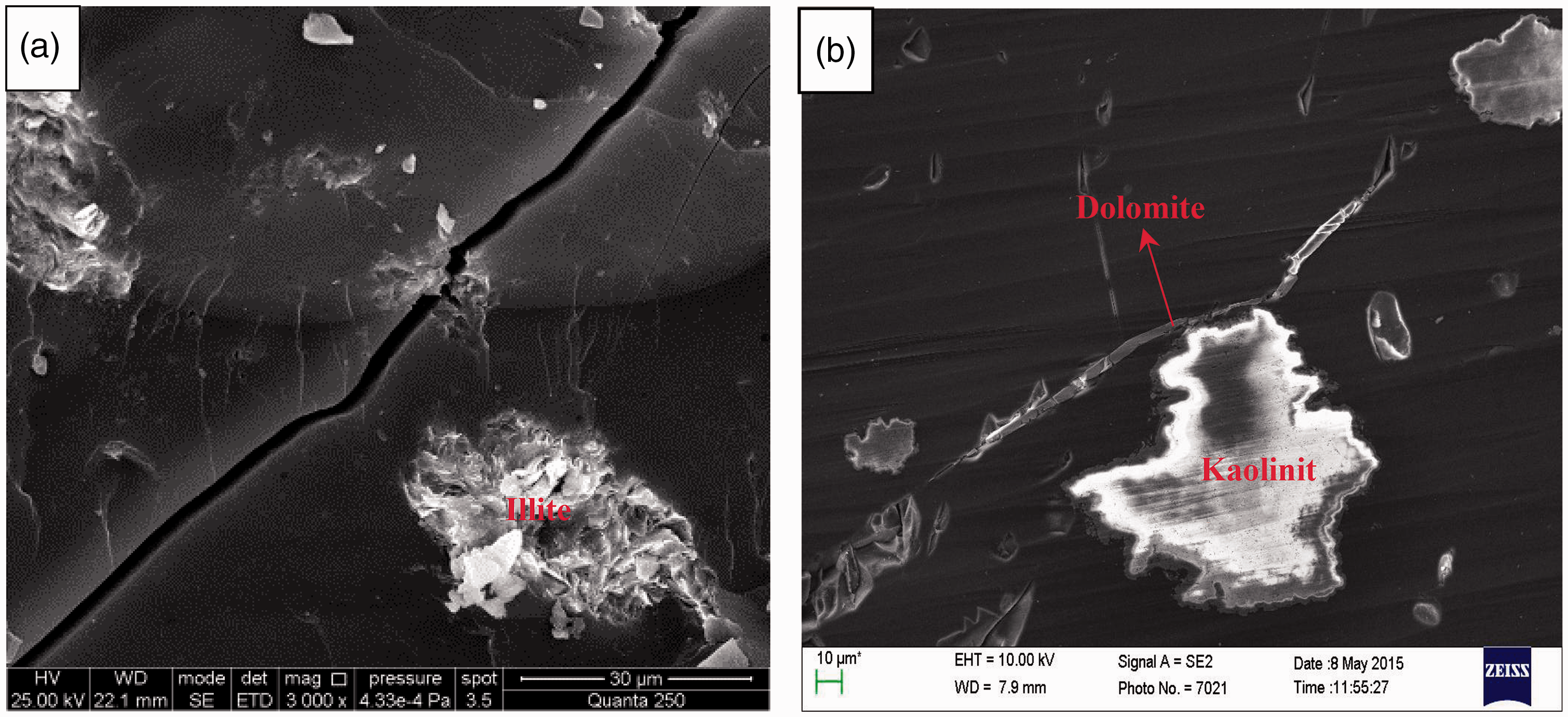
Regional magmatic metamorphism during the Yanshanian resulted in the heating temperature reaching 170℃–280℃, and secondary hydrocarbons widely appeared. The gas and liquid in the coal seam caused thermal expansion, producing abnormally high pressure and forming many fractures. These fractures increased the connectivity and were partially filled by minerals. Fracture-filled bauxite and chlorite within individual coal samples may be alteration products of filled kaolinite within fractures in the coal reservoir caused by magmatic hydrothermal fluids (Permana et al., 2013; Ward, 2002). Fracture-filling epigenetic minerals blocked the gas/water flow paths, influencing the seepage of CBM in cleats and fractures to some extent, leading to decreases in porosity and permeability and diminishing the connectivity between pores and fractures in the coal reservoir (Yao et al., 2009). Thus, filled epigenetic minerals are not conducive to pore and fracture connectivity.
Minerals affecting development of pores and fractures
This study found that at the micro-scale, there are three types of pores and fractures in high-rank coal, including metamorphic gas pores in organic matter, mineral pores in minerals, and differential deformation pores and fractures around brittle minerals and clay minerals within syngenetic minerals. Metamorphic gas pores mainly develop in vitrinite and occur as clusters of groups or isolated pores with poor connectivity (Liu et al., 2015). Well-developed mineral pores and differential deformation pores and fractures of high-rank are the key connectivity channels and are essential to connectivity in coal reservoirs.
Mineral pores
Mineral pores are formed by minerals and pervasively develop in high-rank coal, especially dissolved pores and intercrystalline pores.
Dissolved pores originate from the dissolution of soluble substances due to long-term interactions between gas and water. The dissolved pores within the coal in the study area developed in carbonate minerals (e.g., calcite) (Figure 3(c)), and their diameters are larger than those of mesopores, ranging from 0.2 to 1.0 µm. They have irregular shapes and merge to form pore clusters with gradual dissolution. These clusters connect to each other. Thus, they usually have good connectivity. However, due to the small contents of carbonate minerals in coal samples, their density and connectivity in coal reservoirs are limited.
Intercrystalline pores are pores between mineral grains. Based on SEM observations, a considerable number of intercrystalline pores within the study area developed between agglomerate and stripped minerals and have a variety of shapes. These pores usually develop in kaolinite (Figure 2(i)), illite (Figures 2(b), (f), and (h) and 5(a)), calcite (Figure 5(b)), dolomite (Figure 3(d)), and chlorite (Figure 2(j)). Intercrystalline pore diameters are between a few nanometers and hundreds of nanometers, representing transition pores and mesopores that appear as slit. Their development density is much higher than those of gas pores and dissolved pores, and they have a good connectivity with each other. Apatite filling between intercrystalline pores in illite (Figure 2(h)) illustrated the connectivity between mineral pores and indicated that intercrystalline pores are interconnected pores within coal to some extent. They increase the development of interconnected pores and make a significant contribution to the connectivity.
Fractures and pores in coal samples. (a) Intercrystalline pores in illite, #6 coal sample, FESEM, 35,000×; (b) intercrystalline pores in calcite, #1 coal sample, FESEM, 100,000×; (c) fractures and pores around illite, #2 coal sample, FESEM, 40,000×; (d) fractures and pores around kaolinite, #4 coal sample, FESEM, 40,000×; (e) fractures and pores around calcite, #1 coal sample, FESEM, 10,000×; and (f) fractures and pores around dolomite, #2 coal sample, FESEM, 15,000×. Differential deformation pores and fractures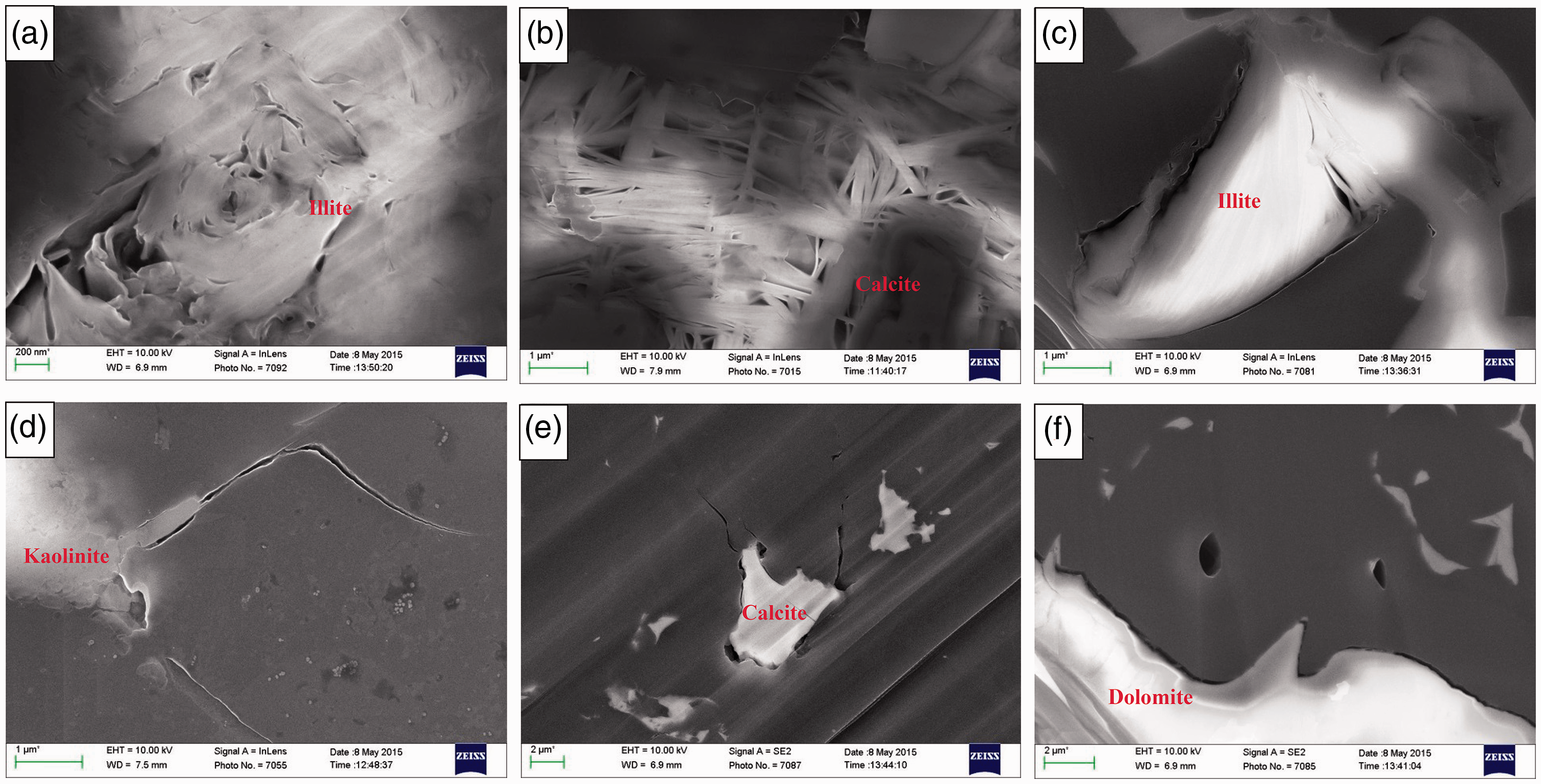
According to FESEM observations, differential deformation pores and fractures developed in the joints of agglomerate minerals and the coal matrix and extend to organic matter. They mainly developed in the joints of syngenetic clay minerals/brittle minerals, including illite (Figure 5(c)), kaolite (Figure 5(d)), calcite (Figure 5(e)), and dolomite (Figure 5(f)), and in the coal matrix. The differential deformation pores do not have a fixed shape (occurring as irregularly rounded and elliptical), and their diameters vary greatly. The pore diameters of differential deformation pores that are irregularly rounded and elliptical are between 20 and 100 nm, which are mesopores and transition pores. Differential deformation fractures form around the minerals and have no directivity. Their development is primarily controlled by the sizes of minerals. Their directions change with the edge shapes of minerals, and they appear as bent forms. The widths of differential deformation fractures are between approximately 30 and 250 nm, and their lengths range from 200 nm to 4 µm. Considering the geological situation of the research area, Yanshanian tectonic thermal motion likely caused the differential deformation pores and fractures to form. Regional thermal metamorphism produced by magmatic intrusions heated the coal and produced thermal stress. The differences between the physical and chemical properties of organic matter and minerals gave rise to differential deformation under that thermal stress, and a considerable number of differential deformation pores and fractures formed in areas of graded anisotropy, such as the joints of the matrix and minerals. Moreover, the relatively low burial depth reflects a relatively small ground stress, which is conducive to keeping differential deformation pores and fractures open. Therefore, differential deformation pores and fractures, especially fractures connected to matrix pores and the intercrystalline pores of minerals (Figure 5(c)), have good connectivity and are the most important interconnected space in the coal. Differential deformation pores and fractures propagating along the junctions of minerals and the matrix have great significance for the development of interconnected pores and fractures within high-rank coals in the research area.
Conclusions
SEM equipped with an EDS provided images that were used to evaluate the occurrence modes of minerals and contact relationships between the matrix and minerals in typical high-rank coals. The following conclusions can be drawn.
The syngenetic minerals in high-rank coals from the Qinshui basin typically occur as agglomerates, stripped forms, and partly as disseminated fine particles, whereas the epigenetic minerals occur mainly as fracture infillings. Kaolinite and illite are dominant minerals, with average contents of 57.74%, reaching a maximum of 85.00%, followed by quartz, with an average of 19.53%. The samples also contain feldspars, calcite, and dolomite.
The high-rank coal from the study area experienced regional magmatic thermal metamorphism, which increased coal metamorphism and the illite content. This produced two effects on the development of pores and fractures at the micro-scale. Influenced by formation water and magmatic hydrothermal fluids, the formation of micro-fracture-filling minerals produced by magmatic activities hindered the development of some micro-fractures and limited the secondary flow in the coal reservoir, resulting in high contents and low productivity in the high-rank coal. However, the number of filled micro-fractures is less and is improved by later reformation. Additionally, these minerals develop a large number of dissolved pores and intercrystalline pores in agglomerate and stripped syngenetic minerals, increasing the development of mesopores within coal and promoting the connectivity of pores. Moreover, for the first time on the edge of clay minerals and brittle minerals, the widespread development of differential deformation pores and fractures was observed. The superposition of regional metamorphism with a highly abnormal old thermal field and relatively low burial depth contributed to the development of mineral pores and differential deformation pores and fractures. Differential deformation pores and fractures connect with pores in the organic matter and mineral pores and have good connectivity, displaying significance for the development of interconnected pores and fractures within high-rank coals in the study area.
Footnotes
Acknowledgments
The authors thank Shanxi CBM Branch of Huabei Oilfield Company and Lu’an Group for provision of the coal samples, and for permission to conduct the investigation. The authors would also like to thank anonymous reviewers for their constructive review and detailed comments, which greatly improved the manuscript.
Declaration of conflicting interests
The author(s) declared no potential conflicts of interest with respect to the research, authorship, and/or publication of this article.
Funding
The author(s) disclosed receipt of the following financial support for the research, authorship, and/or publication of this article: This work was supported by the National Natural Science Foundation of China (41330638, 41402135, 41272154), Scientific Research Foundation of Key Laboratory of Coal-based CO2 Capture and Geological Storage, Jiangsu Province (China University of Mining and Technology) (2015A04), the Scientific Research Foundation of Key Laboratory of Coalbed Methane Resources and Reservoir Formation Process, Ministry of Education (China University of Mining and Technology) (2016-004), the Priority Academic Program Development of Jiangsu Higher Education Institutions, and the Fundamental Research Funds for the Central Universities (2014ZDPY27).