




Abstract
The coalbed methane resources in the Taiyuan Formation account for 55% of total coalbed methane reserves in the southern Qinshui Basin, China; however, the resources have yet to be utilized basically. The joint exploitation of coalbed methane in the Taiyuan Formation and the Shanxi Formation can accelerate the process of coalbed methane scale development in this region. The productivity characteristics of commingling drainage are controlled by various geological factors. Thus, to select favorable regions for multi-seam coalbed methane joint exploitation, the impacts of some geological factors such as coal thickness, burial depth, gas content, reservoir pressure gradient, and reduced water level on the gas production were analyzed and estimated based on a bivariate correlation analysis. Analysis results show that the two coal seams of the high production rate wells of commingling drainage usually have the following conditions: total coal thickness > 9.5 m; average burial depth < 640 m; average gas content > 14 m3/t; reservoir pressure gradient difference < 0.05 MPa/100 m; reduced water level difference < 55 m. Based on the correlation analysis results, the potential of multi-seam coalbed methane exploitation in the study area was evaluated by using a multi-objective fuzzy matter-element model. At last, taking the evaluation coefficient 0.75 as the critical value, unfavorable zones, relatively favorable zones, favorable zones, and extremely favorable zones for multi-seam coalbed methane joint exploitation were identified in the southern Qinshui Basin.
Keywords
Introduction
With the rapid development of coalbed methane (CBM) in China, the investment in CBM has increased significantly in recent years. By the end of 2012, 12,574 CBM wells have been drilled, of which more than 7000 are producing wells (Ye et al., 2013), and among these producing wells, more than 60% are located in the southern Qinshui Basin (Li and Hou, 2012), which is the biggest CBM industrialization base in China. The CBM exploitation in this region has always been over-dependent on No. 3 coal seam in the Shanxi Formation (Ye et al., 2009). Thus, in recent years, the impacts of some geological factors such as burial depth, coal thickness, gas content, porosity, permeability, structural setting, and hydrologic conditions on the enrichment and high yield of CBM in No. 3 coal seam have been studied by many scholars (Cai et al., 2011; Liu et al., 2012; Lv et al., 2012; Sang et al., 2009; Tao et al., 2014; Wang et al., 2015). Studies have identified favorable exploitation areas. However, the CBM resources in the Taiyuan Formation, which mainly occur in No. 15 coal seam, account for 55% of total CBM reserves in the southern Qinshui Basin (Liu et al., 1998), have yet to be utilized. Through investigation and research of the multi-seam CBM exploitation in Powder River Basin, the U.S. Department of Energy (2003) found that multi-seam CBM exploitation can not only reduce single-well investment but also increase the length of service of the well. More importantly, it can significantly enhance the CBM economic recovery of the entire basin. In addition, it was also found from the earlier well group in the Panzhuang block of the southern Qinshui Basin that some wells adopting multi-seam CBM exploitation have been working for more than 10 years, and the gas production remains around 1000 m3/d (Fu et al., 2013). Thus, exploiting the CBM in No. 15 and No. 3 coal seams jointly may economically stimulate CBM development in the southern Qinshui Basin.
However, unlike single-seam CBM drainage, during multi-seam CBM drainage mutual interference of different degrees exists between the reservoir fluids from different coal reservoirs when the fluids enter the same wellbore due to differences in geological conditions such as burial depth, gas content, permeability, and supply capability of fluid and reservoir pressure gradient between the different coal reservoirs (Li and Li, 2012; Ni et al., 2010). These factors will consequently lead to different productivity characteristics. For this reason, selecting the coal reservoirs in appropriate geological conditions to reduce the interference effect becomes the prerequisites in adopting the technology of multi-seam CBM exploitation. However, research in this field is still lacking in the southern Qinshui Basin at present.
Currently, various methods are available for the evaluation of the recoverability of CBM, including analytic hierarchy process (Cai et al., 2011, 2014; Meng et al., 2014), gray correlation analysis (Li et al., 2013), BP neural network (Lu et al., 2011; Meng et al., 2008), fuzzy matter-element (Li et al., 2015; Liu et al., 2012), numerical simulation (Vishal et al., 2013; Wei et al., 2007; Zou et al., 2015), and so on. These methods have their own advantages and disadvantages. The recoverability of CBM is controlled by many factors, and the evaluation results under each single factor index are incompatible in most cases. Fuzzy matter-elements model is an effective method for the evaluation of several factors, because it can transform contradictory issues into compatible ones through the conversion of matter-element. Therefore, based on the analysis of geologic factors affecting the high yield of the multi-seam CBM exploitation wells, the favorable areas for multi-seam CBM exploitation of No. 3 and No. 15 coal seams were identified in the southern Qinshui Basin by adopting a fuzzy matter-element model. It is expected to provide information regarding the exploitation of the abundant CBM resources in the Taiyuan Formation.
Geological setting
The Qinshui Basin is located in the southeast of Shanxi Province. It is a tectonic basin formed in the Paleozoic basement. The study area is located in the rising end of the south of Qinshui synclinorium, and the overall structural setting is a monoclinic structure that dips to the northwest. The eastern edge of the area is a NNE trending Jinhuo faults belt, whereas the western edge is a NNE trending Sitou arc-shaped fault. The southern boundary is the outcrop of coal seam (Figure 1). A series of gentle subsidiary folds with axial trends toward NNE, NE, and SN are widely distributed in the study area. The formation dip is generally 5°–15°.
Tectonic setting of the study area in southern Qinshui Basin, Shanxi Province, China.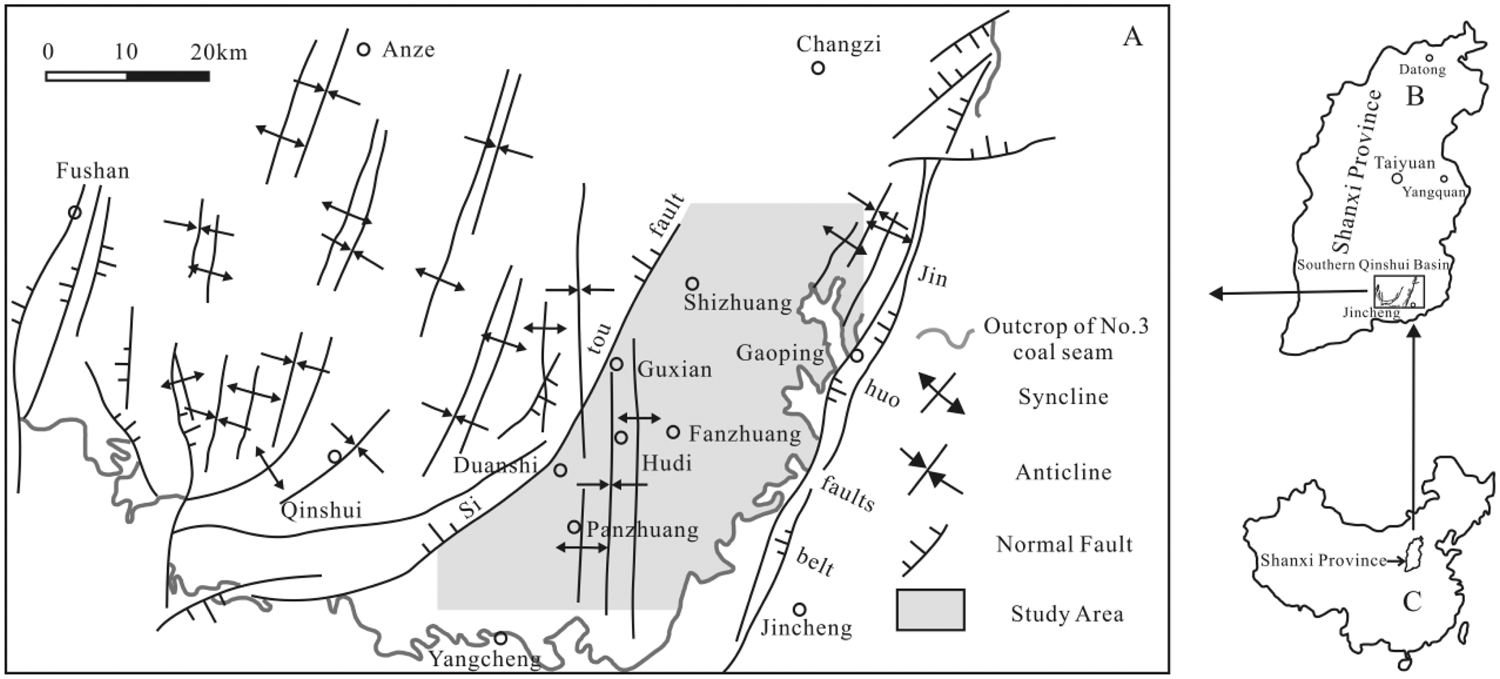
Coal-bearing strata in southern Qinshui Basin mainly include Taiyuan Formation of the Upper Carboniferous and Shanxi Formation of the Lower Permian (Figure 2). The thickness of the stratum varies from 132.44 to166.33 m, with an average of 150 m; the stratum contains more than 10 coal seams with total thickness of the coal seams ranging from 3.65 to 23.8 m. The primary target coal seams of CBM exploration and exploitation in this region are No. 3 coal seam of the Shanxi Formation and No. 15 coal seam of the Taiyuan Formation (Figure 2).
Stratigraphic column of the Permo-Carboniferous coal-bearing strata in southern Qinshui Basin (Zhang et al., 2015).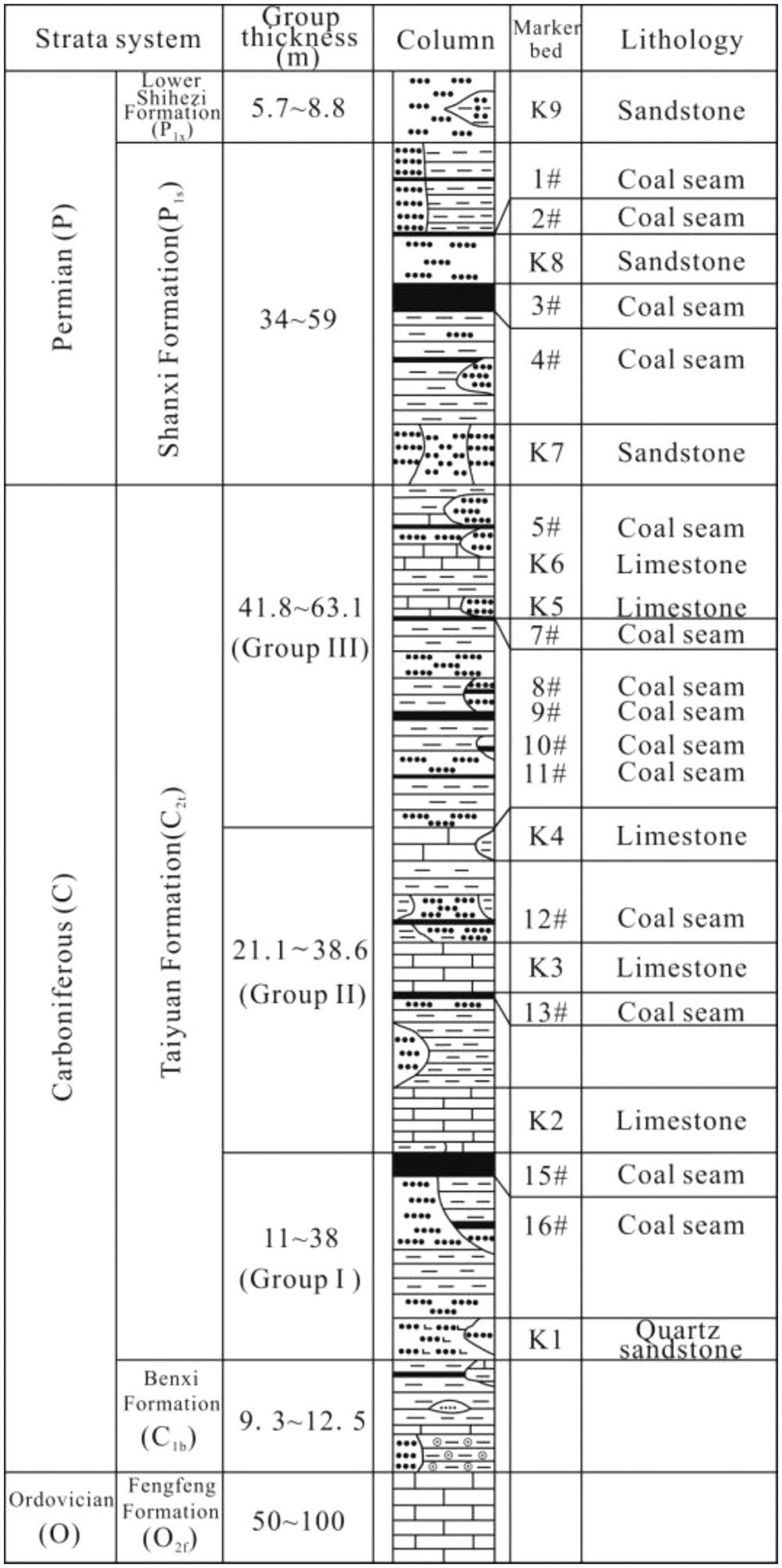
No. 3 coal seam is in the lower part of the Shanxi Formation and lies above K7 sandstone (Figure 2). The thickness of No. 3 coal seam varies from 2.15 to 8.66 m, with an average of 5.79 m. It is mainly composed of bright coal, often with 1–3 layers of mudstone or calcareous mudstone interbeds. The roof rocks mainly consist of mudstone and silty mudstone, while fine and medium-grained sandstones are found locally. The floor rocks are mostly siltstone and mudstone.
No. 15 coal seam is situated in the lower part of the Taiyuan Formation, around 90 m away from No. 3 coal seam. The thickness of No. 15 coal seam varies from 1.10 to 11.61 m, with an average of 3.44 m; this seam generally includes 3–6 mudstone or carbonaceous mudstone interbeds. The immediate roof rocks are mainly mudstone, argillaceous limestone or K2 limestone. The floor is mostly mudstone.
Productivity characteristics of multi-seam CBM wells
The gas production data of 25 producing wells of 1.5 years in the southern Qinshui Basin shows that the average gas production rate of multi-seam CBM well is 957.6 m3/d, and the rates of the different CBM wells are extremely variable. Based on the classification scheme of CBM production (Liu et al., 2013), among the 25 CBM producing wells, there are 10 high-production rate wells (average gas production rate > 1000 m3/d), with an average rate of 2105 m3/d; 2 medium-production rate wells (500 m3/d < average gas production rate < 1000 m3/d), with an average rate of 707.7 m3/d; 4 low-production rate wells (100 m3/d < average gas production rate < 500 m3/d), with an average rate of 312.7 m3/d; 9 drainage wells (average gas production rate < 100 m3/d), with an average rate of 24.8 m3/d. The gas production rates are also extremely variable in different regions. The CBM wells in the region of Shizhuang have the lowest gas production rates with an average rate of only 437.4 m3/d; the region of Fanzhuang stands second with an average rate of 1085.7 m3/d; the region of Panzhuang has the highest gas production rate with an average rate of 1611.9 m3/d.
Geologic factors affecting multi-seam CBM wells productivity
Coal thickness
The impact of the total coal thickness of commingling on gas production is significant: the thicker the total coal thickness is, the more abundant the gas that flows inside the seam becomes, the higher the gas production of the well is. According to the statistics of over 100 coalfield drillings in the study area, the thickness of No. 3 coal seam ranges from 2.15 to 8.86 m, No. 15 coal seam 1.10 to 11.61 m, the total thickness of commingling 5.05 to 16.81 m. It can be seen that the average gas production rate has an obvious trend of increasing with the increase of total thickness of commingling drainage among the producing wells (Figure 3(a)), and the high production rate wells usually have a total thickness of more than 9.5 m.
Scatter map of gas productivity and various factors for the commingling drainage of No. 3 coal seam and No. 15 coal seam in southern Qinshui Basin: (a) total thickness; (b) average burial depth; and (c) average gas content.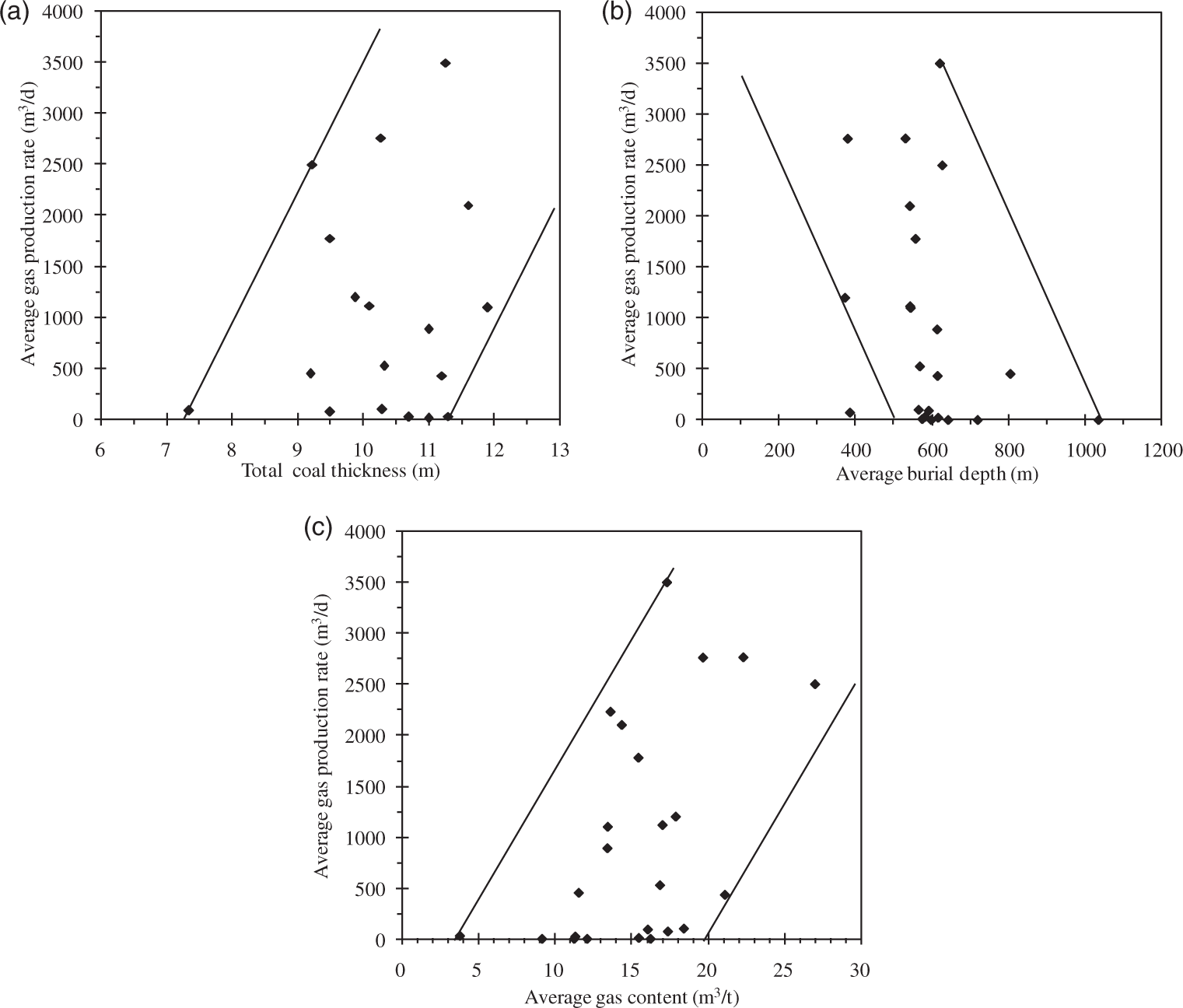
Burial depth
The burial depth of coal seam is closely related with gas productivity. As the burial depth increases, the crustal stress increases and the permeability of the coal seam gradually decreases, which consequently leads to growth difficulties in drainage and depressurization of coal seam. According to the statistics of the 25 wells, the burial depth of No. 3 coal seam varies from 338.25 to 975.99 m, while that of No. 15 coal seam ranges from 430.40 to 1093.56 m. The average burial depth of the two coal seams ranges from 384.33 to 1034.78 m. As shown in Figure 3(b), the average gas production rate presents a negative correlation with the average burial depth of commingling coal seams, and the high production rate wells usually have an average burial depth lower than 640 m.
Gas content
Gas content is one of the most important controls of the ability to produce CBM (Scott, 2002), and it affects gas production directly. High gas content is equivalent to high gas saturation in the same geologic setting, meaning a short gas breakthrough time (Lv et al., 2012; Tao et al., 2014). Among the 25 commingling wells, there are 24 wells that have obtained the coring of coal seams No. 3 and No. 15 successfully. The gas content of these samples was tested in accordance with Chinese national standard GB/T19559-2004.The results show that the gas content of No. 3 coal seam is between 0.41 and 27.67 m3/t, and that of the No. 15 coal seam is from 7.11 to 26.31 m3/t. The average gas content of the two coal seams in the same borehole ranges from 3.76 to 26.99 m3/t. As shown in Figure 3(c), the average gas content of the two commingling seams takes on a positive correlation with the average gas production rate of wells: the average gas production rate rises with the increase of average gas content, the wells with average gas production rate of more than 1000 m3/d usually have an average gas content of more than 14 m3/t. In contrast, production is very low once the content is lower than 14 m3/t.
Reservoir pressure gradient
Because of different pressure gradients, mutual interference will occur between different CBM systems when the reservoir fluids in them are drained together (Fu et al., 2013). The reservoir pressure gradient data acquired through injection/fall-off well test method (Cui and Zheng, 2009) concerning 87 layers of 47 CBM exploration wells show that the reservoir pressure gradient of No. 3 coal seam is between 0.052 and 1.08 MPa/100 m in the southern Qinshui Basin, with an average of 0.52 MPa/100 m. The reservoir pressure gradient of No. 15 coal seam is from 0.20 to 1.18 MPa/100 m, with an average of 0.655 MPa/100 m, which is a little higher than that of No. 3 coal seam. Among the 47 CBM exploration wells, there are 40 wells that have completed the well test on both No. 3 coal seam and No. 15 coal seam. The remaining seven wells have only tested one of their two coal seams.
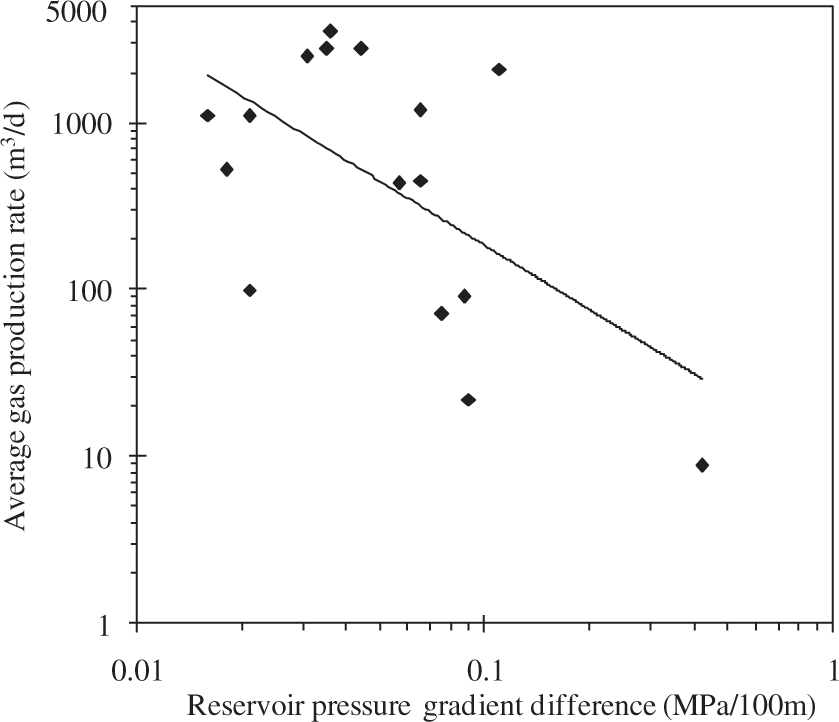
Through further analysis of the pressure gradients of the 40 wells, it is found that the pressure gradients of No. 3 and No. 15 coal seams are not equal in most wells (Figure 4).The latter is significantly higher, indicating that the two coal seams belong to different fluid pressure systems; thus, interference of different degrees will appear between them once the reservoir fluids in them are drained together. Among the 25 producing wells, there are 16 wells that have obtained the well test reservoir pressure gradient data of No. 3 and No. 15 coal seams successfully. From the relation of the average gas production rate and the difference of reservoir pressure gradient (Figure 5), it can be inferred that a negative correlation exists between them, that is, the greater the difference of the pressure gradient between No. 3 and No. 15 coal seams is, the lower the gas production is. This is due to the connection of wellbore, as well as the fact that fluids in the high-pressure reservoir with high energy will prevent the output of fluids in the low-pressure reservoir when the fluids in the two coal reservoirs are drained together. If the pressure difference is too great, the fluids in the high-pressure reservoir may even flow into the low-pressure reservoir. All discussed above will lead to two bad effects: on the one hand, the drainage and depressurization in low-pressure reservoir cannot be carried out effectively, and the desorption area will be too limited; on the other hand, it is more likely to cause the high-pressure reservoir to spit sands and pulverized coals, which will weaken the permeability and flow conductivity of the high-pressure reservoir and subsequently affect the desorption and seepage of CBM directly. Therefore, for reservoirs with greater differences in pressure gradients, layered or progressive drainage may be better development alternatives.
Comparison of reservoir pressure gradient between No. 3 and No. 15 coal seams in the same wells (Zhang et al., 2015). Scatter map of gas productivity and the reservoir pressure gradient difference (absolute value, the same below).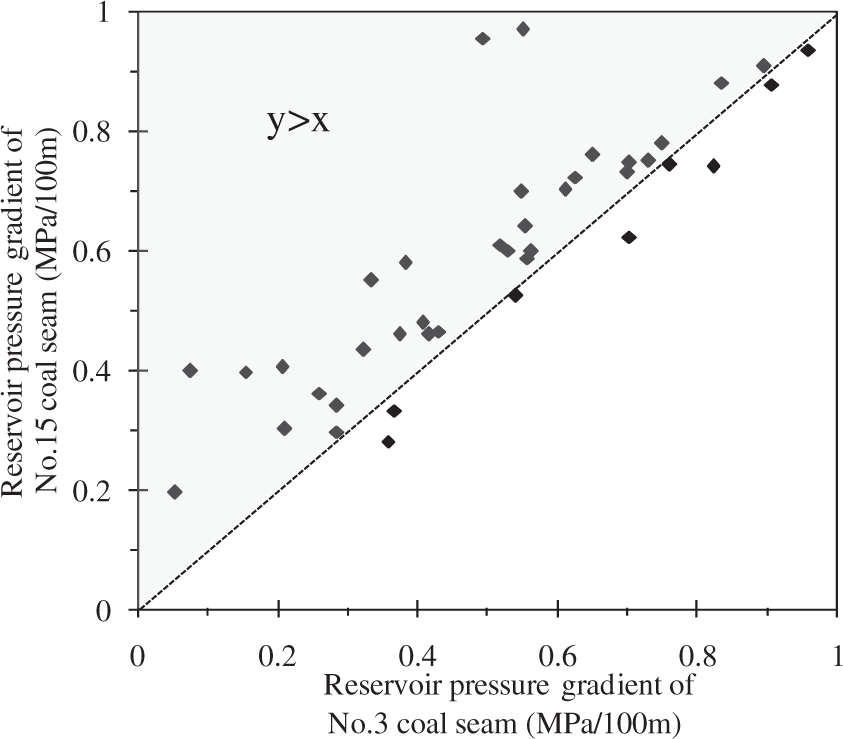
Reduced water level
Hydrodynamic conditions have an important effect on CBM enrichment and exploitation (Kaiser and Ayers, 1994; Scott, 2002; Wang et al., 2015; Yao et al., 2014). The supply intensity of underground water for the CBM well directly affects the transfer speed of fluid pressure. As for commingling drainage, when the abilities of feed liquid are greatly different between No. 3 and No. 15 coal seams, there will be a significant difference in the transfer speed of fluid pressure between the two coal seams; then the gas production rate will be significantly different between them. Moreover, this is very likely to lead to no gas or low gas production in one seam, thus losing the meaning of commingling.
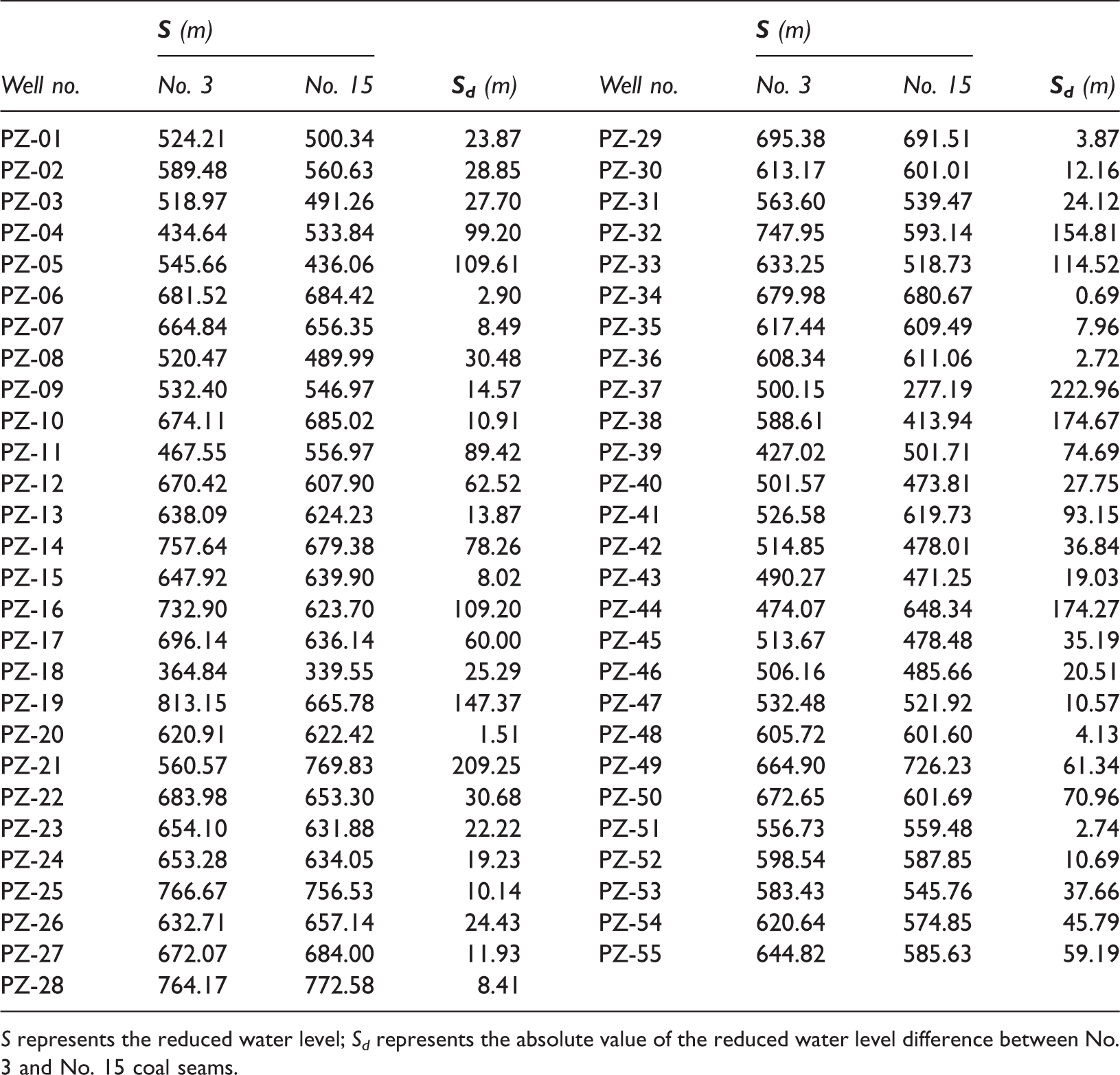
Based on the test data of formation pressure of 55 wells, including 34 CBM exploration wells and 21 producing wells in the southern Qinshui Basin, the reduced water level was calculated to estimate the formation energy of the two coal seams. The reduced water level can be obtained through the equations as follows (Liu and Yan, 1991; Wang et al., 2015):


In this article, the sea level is taken as the reduced datum level, that is, H1 = 0. Then, a simultaneous equation was constructed based on equations (1) and (2), as shown in equation (3):

The calculation results of reduced water level are shown in Table 1. The reduced water level reflects the energy of the coal reservoir, and a high reduced level means high supply intensity in the same geological setting. If the difference of the reduced water level between two coal seams is too large, the transfer speed of fluid pressure will be remarkably different, which is unfavorable for commingling. As shown in Figure 6, except for several individual points within the red dotted box, the average gas production rate presents an evident decreasing trend with the difference of reduced water level (absolute value, the same below) increasing. When the difference value is over 55 m, there is almost no gas production among the wells.
Scatter map of gas productivity and the reduced water level difference (absolute value, the same below). The reduced water level data of No. 3 and No. 15 coal seams in southern Qinshui Basin. S represents the reduced water level; Sd represents the absolute value of the reduced water level difference between No. 3 and No. 15 coal seams.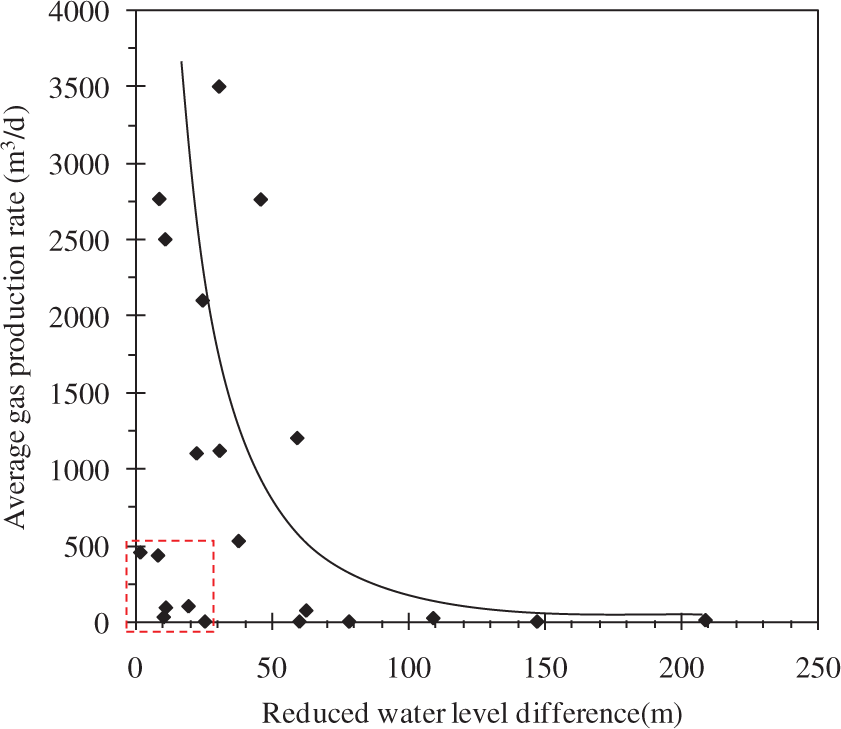
Evaluation model
According to the analysis on the controlling factors of gas productivity of multi-seam CBM drainage, five impact factors were identified, namely, total coal thickness, average burial depth, average gas content, the reservoir pressure gradient difference, and the reduced water level difference. Based on those five impact factors, the multi-objective fuzzy matter-element model was built so as to evaluate the favorable exploitation regions for commingling drainage of No. 3 and No. 15 coal seams in this article.
Fuzzy matter-element matrix
Name the CBM well as N; choose cj as the controlling factors that may determine the gas productivity of CBM wells, and the corresponding value of cj is named as Xj (j = 1, 2, … ,n). Thus, the n-dimension matter-element matrix R, R = (N, c, X) is constructed. The n-dimension matter-element of m CBM wells are combined together (m means the number of CBM wells), constituting the n-dimension compound matter-element matrix, which is named as Rmn, Rmn = (Ni, cj, Xij) (i = 1, 2, … ,m; j = 1, 2, … ,n).
In accordance with the fuzzy theory, the values of fuzzy matter-element known as vij, are obtained by the calculation of Xij in matrix Rmn, thus, constituting the n-dimension compound fuzzy matter-element matrix 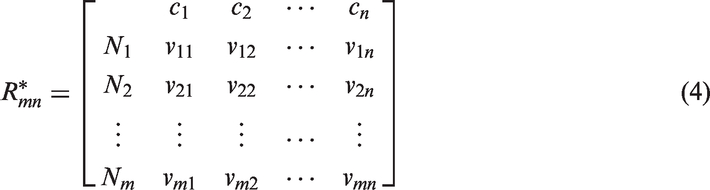
Fuzzy membership function
To establish an evaluation standard that can be used to identify the favorable regions for commingling drainage, a principle needs to be set up, which is named as the single factor membership degree principle; it takes the membership degree of single factor as criterion. The so-called membership degree calculated by fuzzy membership function is the corresponding fuzzy matter-element value of single factor.
Two types of fuzzy membership function are provided (Feng et al., 2010). In this article, how to choose the fuzzy membership function is dependent on the correlativity between each impact factor and the gas production. If the gas production becomes better when the value of a certain impact factor is larger, choose equation (5); if the gas production is better when the value of a certain impact factor is smaller, choose equation (6).


Evaluation function
Based on the evaluation functions proposed by previous researchers (Liu et al., 2012; Wang et al., 2010; Zhang et al., 2010), the weighted average fuzzy operator, as shown in equations (7)–(9), was used to calculate the fuzzy evaluation coefficients of the selected CBM wells in different areas. The greater the fuzzy evaluation coefficient is, the more favorable it is for commingling drainage.



Thus, the fuzzy evaluation coefficient matrix 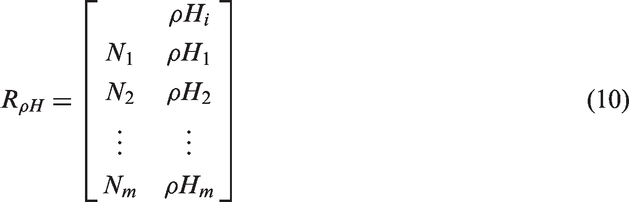
The method of entropy (Feng et al., 2010; Zhang et al., 2010) was used to calculate the weight coefficient in equation (7). The entropy value reflects the disordering degree of information: the smaller the value is, the lower the disordering degree of information is. Therefore, the weight coefficient of each impact factor can be calculated through entropy. The calculation process is as shown in equations (11)–(13).



Model application
Fifty-five CBM wells of commingling drainage in the southern Qinshui Basin were used for modeling here, and the values of impact factors including the total coal thickness, average burial depth, average gas content, the reservoir pressure gradient difference, and the reduced water level difference of coal seams No. 3 and No. 15 in these 55 CBM wells together constitute the compound matter-element matrix Rmn, as shown in equation (14).
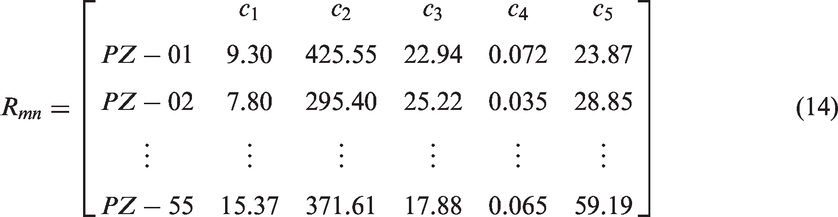
According to the preceding discussions, the membership degree of each impact factor can be calculated by equations (5) and (6). Both total coal thickness and average gas content present positive correlativity with the gas production; therefore, their membership degrees were calculated by equation (5). Average burial depth, the reservoir pressure gradient difference, and the reduced water level difference take on negative correlativity with the gas production respectively; therefore, their membership degrees were calculated by equation (6). Thus, the compound fuzzy matter-element matrix 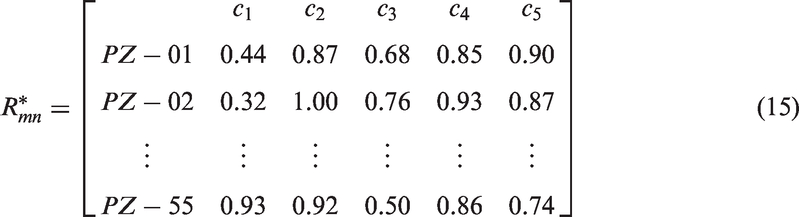
The difference square of fuzzy matter-element value and standard fuzzy matter-element value, known as 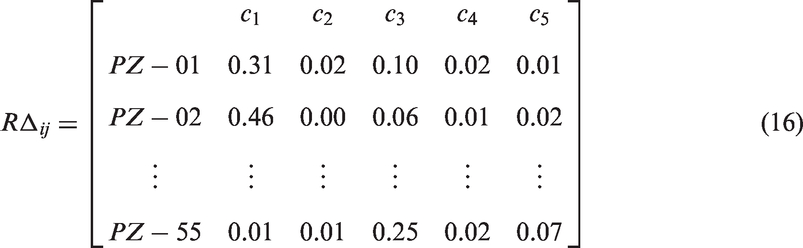
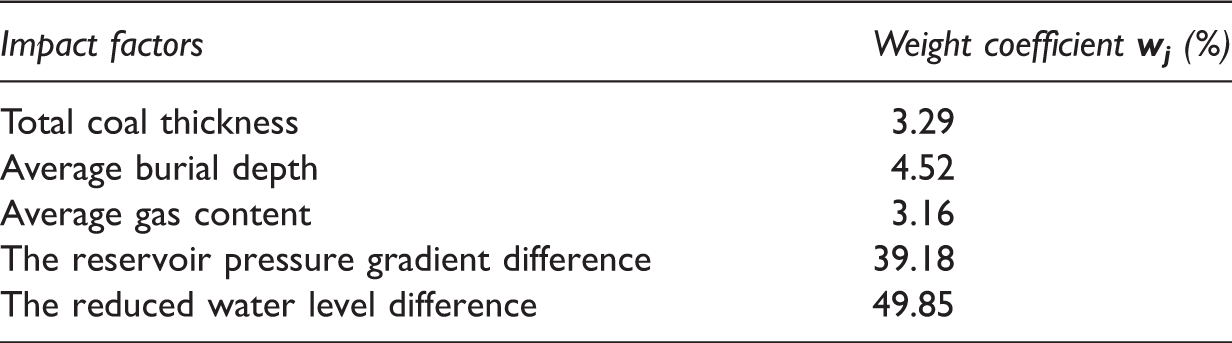
The weight coefficient of each impact factor.
Results and discussions
Analysis of weight coefficients
The weight coefficient of each impact factor is shown in Table 2. As can be observed, the weight coefficients of average gas content, total coal thickness, and average burial depth are relatively low, which are 3.16%, 3.29%, and 4.52%, respectively. The reservoir pressure gradient difference and reduced water level difference are the key impact factors of commingling drainage as they both exhibit a higher weight coefficient, which are 39.18% and 49.85%, respectively. Compared with the reservoir pressure gradient difference and reduced water level difference, whose data differences can be up to 1 to 2 orders of magnitude, the data disordering degrees of the average gas content, average burial depth, and total coal thickness are much lower in the study area; therefore, the former have higher weight coefficients. From geological viewpoint, the feasibility of commingling drainage directly depends on the interference intensity between the fluids in the two coal seams. While in the same geologic setting, that is, when the differences of average burial depth, average gas content, and total coal thickness are small, if the reservoir pressure gradient difference and the reduced water level difference is low, then the ability of feed liquid of two coal seams are similar, and the speed of water and gas producing is stable. This is enormously beneficial to commingling drainage of the two coal seams.
Distribution of favorable regions for multi-seam CBM exploitation
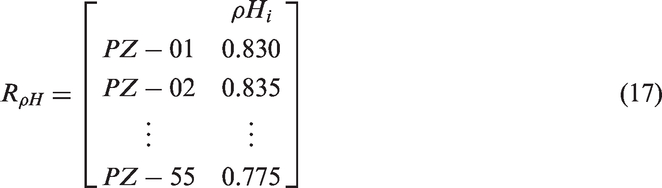
As shown in Figures 3, 5, and 6, it is observed that high production rate wells usually have the following conditions: total coal thickness > 9.5 m; average burial depth < 640 m; average gas content > 14 m3/t; the reservoir pressure gradient difference < 0.05 MPa/100 m; the reduced water level difference < 55 m. Therefore, c1 = 9.5 m, c2 = 640 m, c3 = 14 m3/t, c4 = 0.05 MPa/100 m, and c5 = 55 m were taken as critical values for judging whether it is favorable for commingling drainage. From this the critical fuzzy evaluation coefficient ρH0, was calculated, equal to 0.75. Based on the critical value, four evaluation grades were identified, and they are ρHi < 0.75, 0.75 < ρHi < 0.80, 0.80 < ρHi < 0.85 and ρHi > 0.85. The data correspond to unfavorable area, relatively favorable area, favorable area, and extremely favorable area for commingling drainage, respectively (Figure 7).
Predicted map of favorable areas for commingling drainage of No. 3 and No. 15 coal seams in southern Qinshui Basin.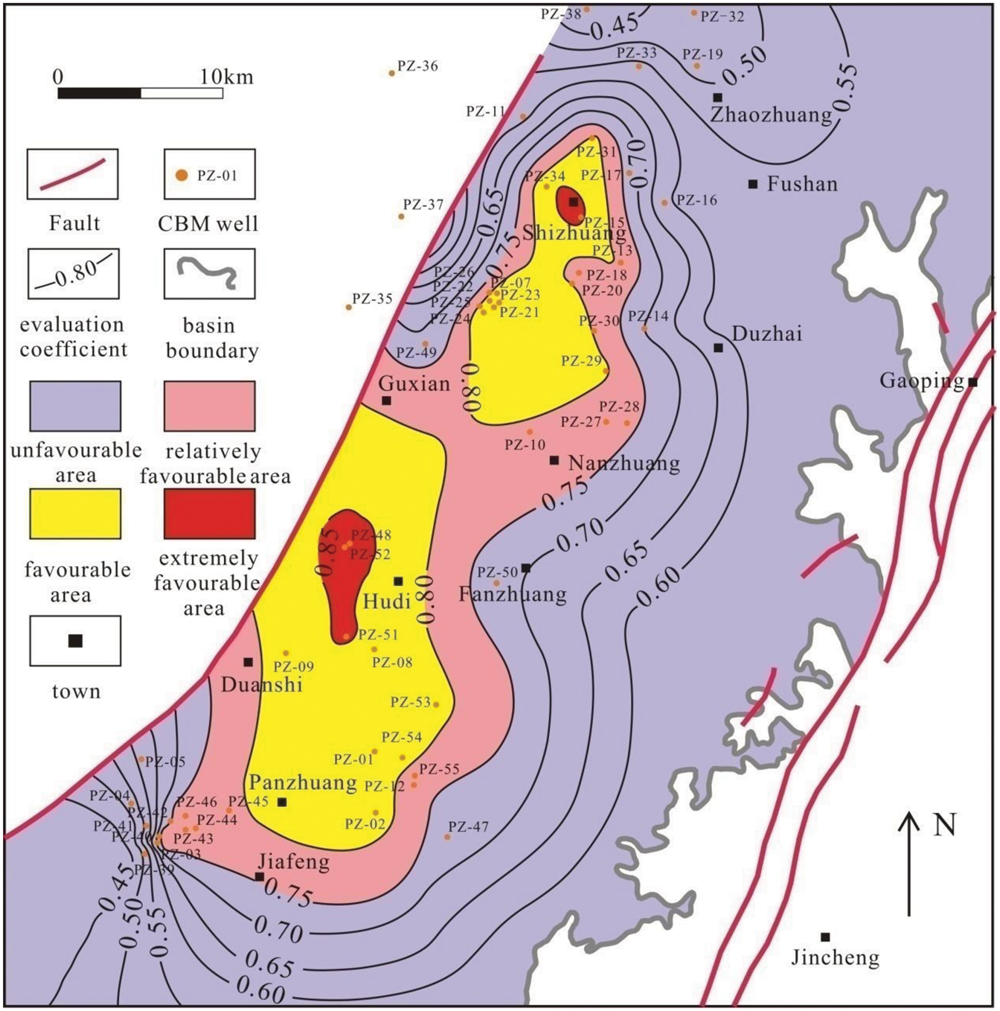
As shown in the prediction map (Figure 7), the areas with different evaluation grades can be distinguished easily. The eastern part of the study area is unfavorable for commingling drainage. Two reasons account for that: one is that the eastern part is close to the outcrop area of coal seam, and the burial depth is shallow, causing CBM to easily escape; the other is that the underground water flows from east to west as a whole in the study area (Ye et al., 2002), and the CBM in the eastern part migrates to the deep through underground water. Both of them lead to lower gas content in the eastern part, which is unfavorable for CBM exploitation. At the same time, in the north of Shizhuang, the average burial depth of No. 3 and No. 15 coal seams is deeper than 900 m, and the reduced water level difference is usually larger than 100 m, which is unfavorable for commingling drainage directly. While in the regions of Panzhuang, Hudi, southern Shizhuang, and eastern Duanshi, the burial depth of coal seam is moderate, and the gas content is the highest in the study area; meanwhile, the reservoir pressure gradient difference and reduced water level difference are low, indicating that these areas are the favorable areas for commingling drainage in southern Qinshui Basin.
Conclusions
The productivity characteristics are extremely variable among different CBM wells of commingling drainage of No. 3 and No. 15 coal seams in the southern Qinshui Basin; these characteristics are controlled by many geological factors, including coal thickness, burial depth, gas content, reservoir pressure gradient, and reduced water level. An evaluation model has been established based on fuzzy matter-element theory. The main impact factors affecting the gas productivity of commingling drainage well were taken into account in the model. The evaluation results show that the reservoir pressure gradient difference and the reduced water level difference between No. 3 and No. 15 are the key impact factors of commingling drainage. Moreover, four evaluation grades have been identified, corresponding to unfavorable area, relatively favorable area, favorable area, and extremely favorable area for commingling drainage, respectively. The regions of Panzhuang, Hudi, southern Shizhuang, and eastern Duanshi, with an evaluation coefficient larger than 0.8 are the favorable areas for commingling drainage in the southern Qinshui Basin.
Footnotes
Declaration of conflicting interests
The author(s) declared no potential conflicts of interest with respect to the research, authorship, and/or publication of this article.
Funding
This work was financially supported by the Key Project of the National Natural Science Foundation of China (No. 41530314 and No. U1361207) and Coalbed Methane United Fund of Shanxi Province (No. 2012012001).