




Abstract
Although a coal block in the Qinshui Basin is a key location for coalbed methane (CBM) exploration and development, the productivity of various vertical wells varies significantly. The productivity characteristics of 636 vertical wells were analyzed better to understand the effects of different variables on CBM productivity. Grey correlation analysis was used to identify the key determinants of CBM well productivity. The findings indicate that vertical well production is below average, with more than 50% serving as water wells. The production of the central well area is high in the west and south. Highly productive wells are significantly influenced by geological conditions, primarily located in areas with high gas content, moderate cover depth, high permeability, and elevated water head. The engineering factor that exerts the most significant influence on productivity is the rate of liquid level drop. Based on grey correlation analysis, the primary determinants of CBM vertical well production are permeability and cover depth.
Keywords
Introduction
Coalbed methane (CBM) is an unconventional natural gas that is manly made up of methane, primarily in an adsorbed condition, and is self-generated and self-stored in coal seams (Karimpouli et al., 2020; Lu et al., 2023). China is rich in CBM resources, with CBM resources of 30.05 × 10¹² m3 buried less than 2000 m, ranking third in the world (Xu et al., 2023). The usage and exploitation of CBM plays a significant role in optimizing energy structure, reducing coal gas disaster, and restraining the greenhouse effect (Li et al., 2020).
A comprehensive index to gauge CBM's development potential is its productivity. Previous researchers have extensively researched the main controlling factors of CBM wells productivity. The productivity of CBM wells is influenced by a variety of factors, which can be generally categorized as geological and engineering factors (Jin et al., 2022; Meng et al., 2020; Zhang et al., 2022). Geological factors include reservoir properties and geological conditions, subdivided into coal seam thickness, depth of cover, gas content, permeability, porosity, geological structure, hydrogeological conditions, etc. Engineering factors include drilling and completion methods, reservoir transformation techniques, well pattern deployment methods, production drainage systems, and other stimulation measures (Guo et al., 2022; Jin et al., 2022; Zhang, 2018, 2022). Different coal blocks have different geological backgrounds and engineering conditions, and the main controlling factors of CBM productivity are various. Tao et al. (2014) believe that the critical reservoir ratio, liquid column height, and gas content mainly control the CBM well productivity in the Fanzhuang coal block of Qinshui Basin. Lv et al. (2012) believe that gas content and permeability in the Fanzhuang coal block are key factors for the stable production of CBM wells. According to Liu et al. (2019a), in the southern Qinshui Basin, the reservoir structure, gas content, permeability, and coal-body structure all impact the production of CBM wells. Based on geophysical logging, experiments, and surveys of production data, Peng et al. (2017) found that hydrological conditions and roof sealing capacity were the key factors of the CBM wells productivity in Shizhuang coal block, Qinshui Basin. Yan et al. (2020) argued that the high water production of CBM wells in the Shizhuang coal block is mainly due to communication with nearby aquifers, whereas aquifer thickness, pore connectivity, porosity, and shale content have a significant impact on gas production. When the adjacent aquifers are isolated, gas productivity is governed by reservoir conditions and drainage strategies. While reservoir thickness and cover depth have a relatively small impact, permeability has the most significant impact. Zhao et al. (2015) discovered a gradual decrease in the influence of critical reservoir ratio, fracturing fluid volume, gas content, sand volume, coal thickness, permeability, and cover depth on CBM well productivity within the Hancheng coal block of the Ordos Basin. Liu et al. (2019b) believe that the production capacity of CBM wells in the Hancheng coal block is mainly affected by faults, coal seam structural curvature, gas content, fracturing effect, and the rate of dynamic liquid level decline. Meng et al. (2020) posit that reservoir pressure is the primary determinant of mid-rank CBM well productivity in the Liulin coal block of Ordos Basin.
Grey correlation analysis is an essential part of grey system theory (Deng, 1989; Kayacan et al., 2010), which is suitable for quantitative analysis of the correlation between multiple factors and variables and dynamic process analysis. It is extensively utilized in CBM geology (Meng et al., 2020; Tao et al., 2014; Zhao et al., 2015). With grey correlation analysis, Liu et al. (2023) identified the key geological parameters of CBM content prediction in a research area in the southern Qinshui Basin. Fang et al. (2023) used grey correlation analysis to evaluate the approximation degree between the simulated and field-measured pressure response of the CBM well in Hedong Coalfield. With grey correlation analysis, Liu et al. (2022) identified the main controlling factors of structural coal development in a coal block in the southern Qinshui Basin. Zhao et al. (2023) conducted a sensitivity analysis on the influencing factors of H-shaped fracture in shallow dull-type coal seams in the Hancheng block with a grey correlation analysis. Zhang et al. (2023) proposed an improved BP neural network model based on grey relational analysis and particle swarm optimization algorithm for in situ CBM content prediction. By grey relational analysis, Xu et al. (2021) identified the importance of the pore structure factors on methane adsorption.
The No. 3 coal seam, predominantly extracted from a coal block within the Qinshui Basin, boasts high gas content and vast geological resources, rendering it an area of great potential for CBM development (Chen et al., 2020; Yang et al., 2023). However, the study area is characterized by intricate fault structures, substantial variations in coal seam cover depth, low permeability, and pronounced heterogeneity. The drainage efficiency of the vertical wells is suboptimal, with a high proportion of underperforming and nonproducing wells, and significant productivity disparities between adjacent vertical wells. To enhance the overall development effect of the region, predecessors have conducted a series of research and gained a more profound understanding of coal reservoir characteristics and CBM accumulation features. However, more investigation still needs to be done on the primary controlling factors affecting CBM well productivity. Therefore, this study focuses on the exploitation practice in the central well area of the coal block, systematically analyzes the productivity characteristics of vertical wells, comprehensively analyzes the impact of geological and engineering factors on CBM well productivity, and identifies the main controlling factors of CBM well productivity through grey correlation analysis. It is expected to provide a reference and theoretical basis for efficient development in the study area.
Geological setting
The coal block is situated in the southern part of the Qinshui Basin and exhibits a monoclinal structure that tilts from southeast to northwest. The strata are broadly distributed with gentle dips, ranging between 3° and 7°, although some areas may reach up to 15°. The predominant normal faults in this region trend NE, among which the Sitou and Houchengyao faults exhibit a relatively large displacement distance and extension length, exerting significant control over the coal block structure. Due to the influence of faults, secondary folds in the area are relatively well-developed, exhibiting predominantly long-wavelength compression folds with a primary NE-NNE strike orientation. Additionally, minor folds in the southern region are also comparatively well-developed. With a small scale, local collapse columns developed in the area, mainly distributed in the northeast. The study area is intersected by the Sitou and Houchengyao faults, forming NE-trending graben located in the southeast of the coal block, with a pattern of northeast deep and southwest shallow within the graben (Figure 1). The research area is based on metamorphic rocks from the Archean and Proterozoic, with sedimentary cover layers of the Lower Paleozoic Cambrian-Ordovician, Upper Paleozoic Carboniferous-Permian, Mesozoic Triassic, and Cenozoic Quaternary. The primary coal-bearing strata in the coal block consist of the Upper Carboniferous to Lower Permian Taiyuan Formation and the Lower Permian Shanxi Formation, with particular emphasis on the No.3 coal seam of the Shanxi Formation as being the principal deposit within this area. No.3 coal seam is distributed stably throughout the region, with coal thickness ranging from 2.4 to 7.3 m and an average of 5.4 m. Cover depth of 383.0–1336.9 m, mainly distributed between 500 and 1200 m. The maximum vitrinite reflectance (Ro,max) is 3.15–3.85%, with an average of 3.48%, mainly anthracite. The macerals are mainly composed of vitrinite, with a content of 58.6–92.7% and an average of 71.6%. Inertinite is the next, the content is 7.3–41.4%, with an average of 28.4%. The gas content of the coal seams is high, ranging from 1.49 to 31.44 m3/t, with an average of 19.44 m3/t.
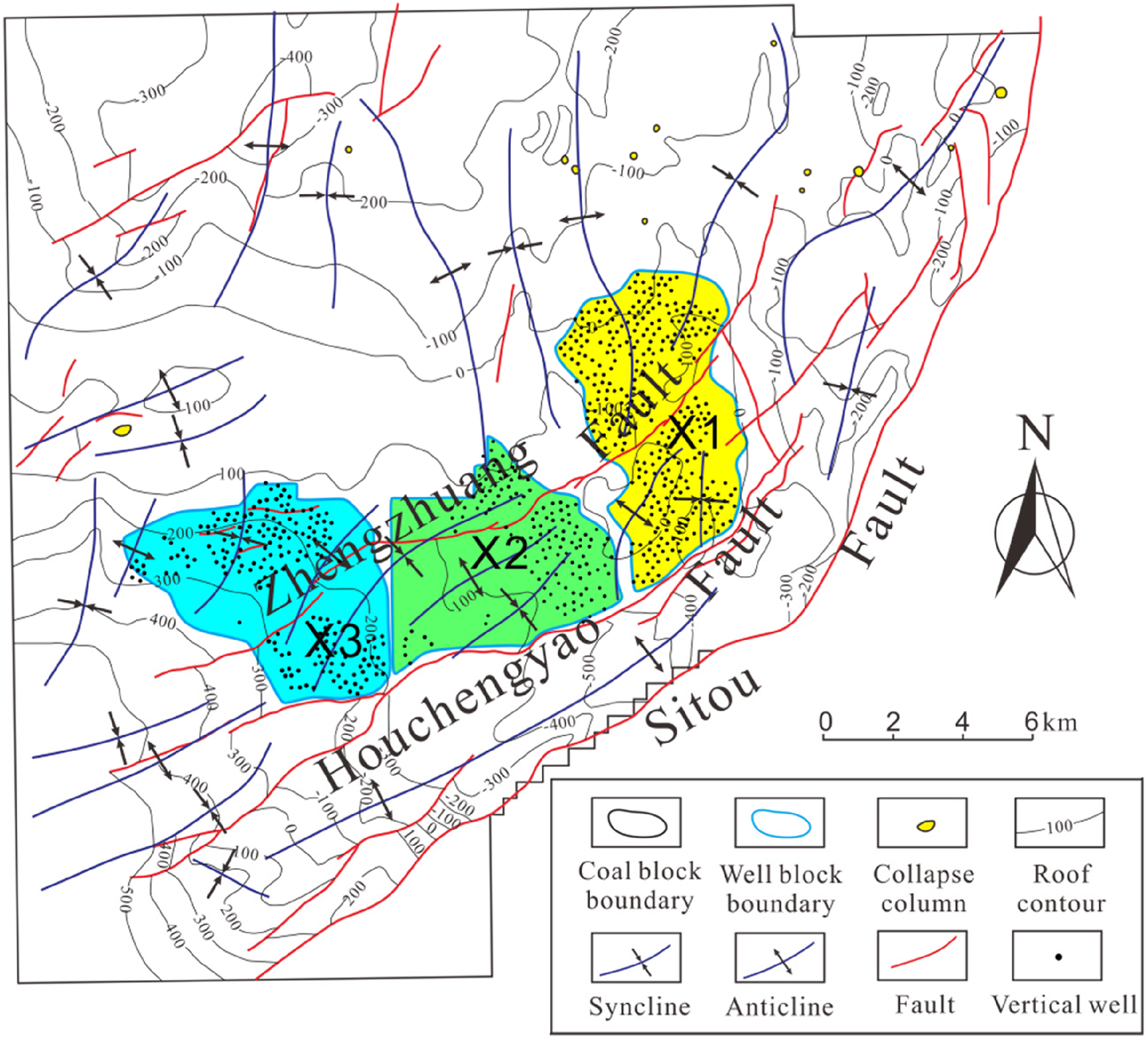
Structural outline and well location distribution.
Productivity characteristics
Based on the exploration and development results and well-pattern layout, the central area of the study area with high-density CBM wells is further divided into X1, X2, and X3 well blocks (Figure 1). The Houchengyao fault forms the southern boundary of each well block, while the Zhengzhuang fault traverses through the central part and divides each well block into northern and southern sections. According to the sequence of X1-2-3 well blocks, the fault distance of the Zhengzhuang fault and the number of associated minor faults gradually decrease, and the complexity of the structure gradually decreases.
There are 636 vertical wells in the coal block, comprising 309 wells in the X1 well block, 146 wells in the X2 well block, and 181 wells in the X3 well block. Based on the discharge data of CBM wells in the coal block, the volume of gas produced by a single well per day is measured by a flow meter at the wellhead, called the daily gas production (unit: m3/d). Stable daily gas production refers to a certain well's average daily gas production during the stable production period. According to the gas production division standard for CBM wells in the Shizhuang South coal block (Yang et al., 2016), CBM wells are divided into four types: high gas production wells, middle gas production wells, low gas production wells, and water production wells. Among them, CBM wells with a stable daily gas production rate greater than 1000 m3/d are high gas production wells, between 500 and 1000 m3/d are middle gas production wells, between 100 and 500 m3/d are low gas production wells, and below 100 m3/d are water production wells (Figure 2).
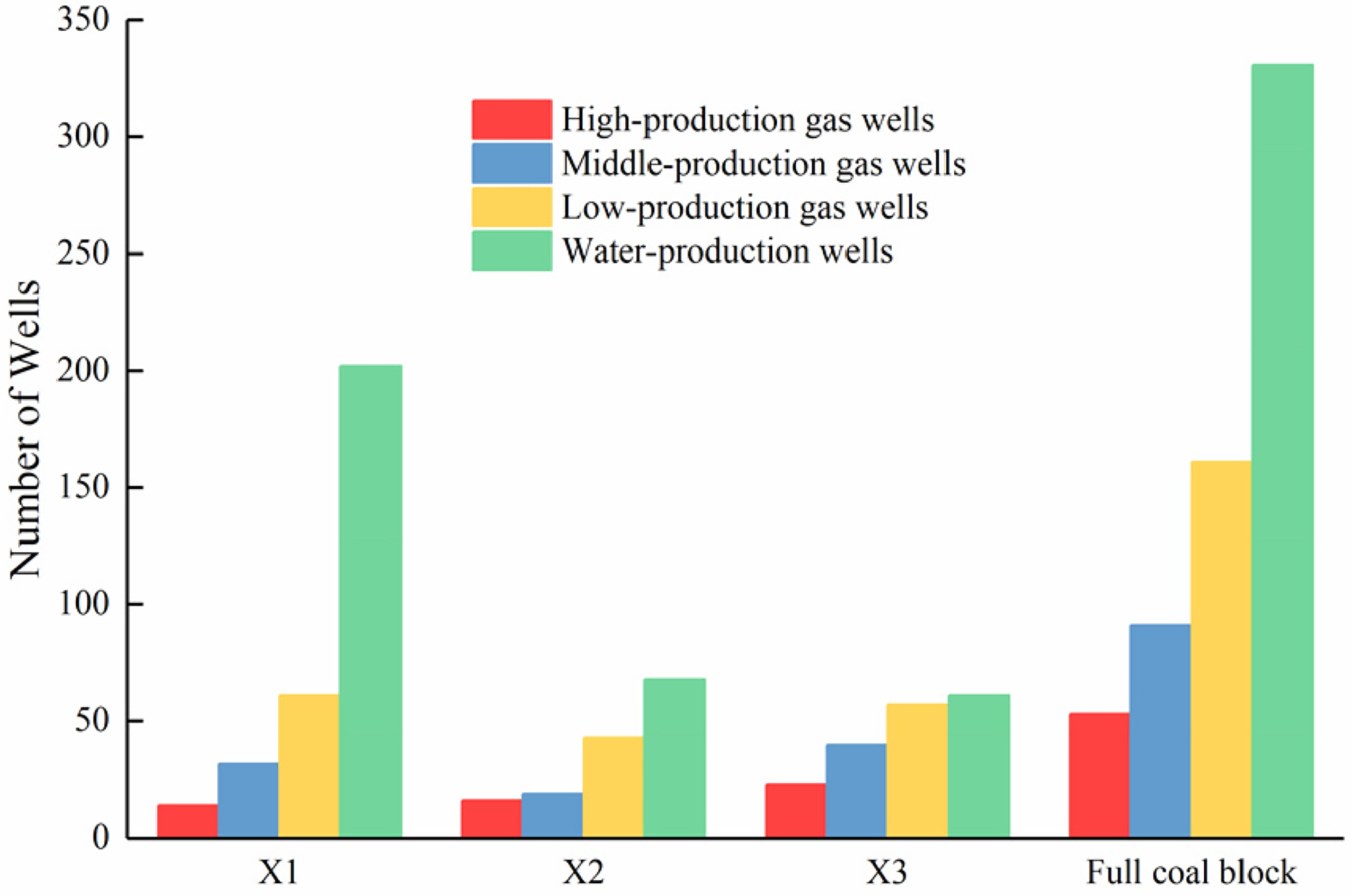
Quantities distribution of production types of coalbed methane wells.
X1 well block
The number of high-production gas wells in the X1 well block is relatively small, accounting for 4.5% of the total in the well block. The highest daily gas production of a single well is 4017 m3/d, and the highest stable daily gas production is 3325 m3/d. Middle-production gas wells account for 10.4%, with the highest number of low-production gas wells and water wells accounting for 85.1%. The stable gas production of a single well is below 100 m3/d, and some CBM wells have not produced gas even after a long period of drainage and depressurization (Figures 2 and 3).
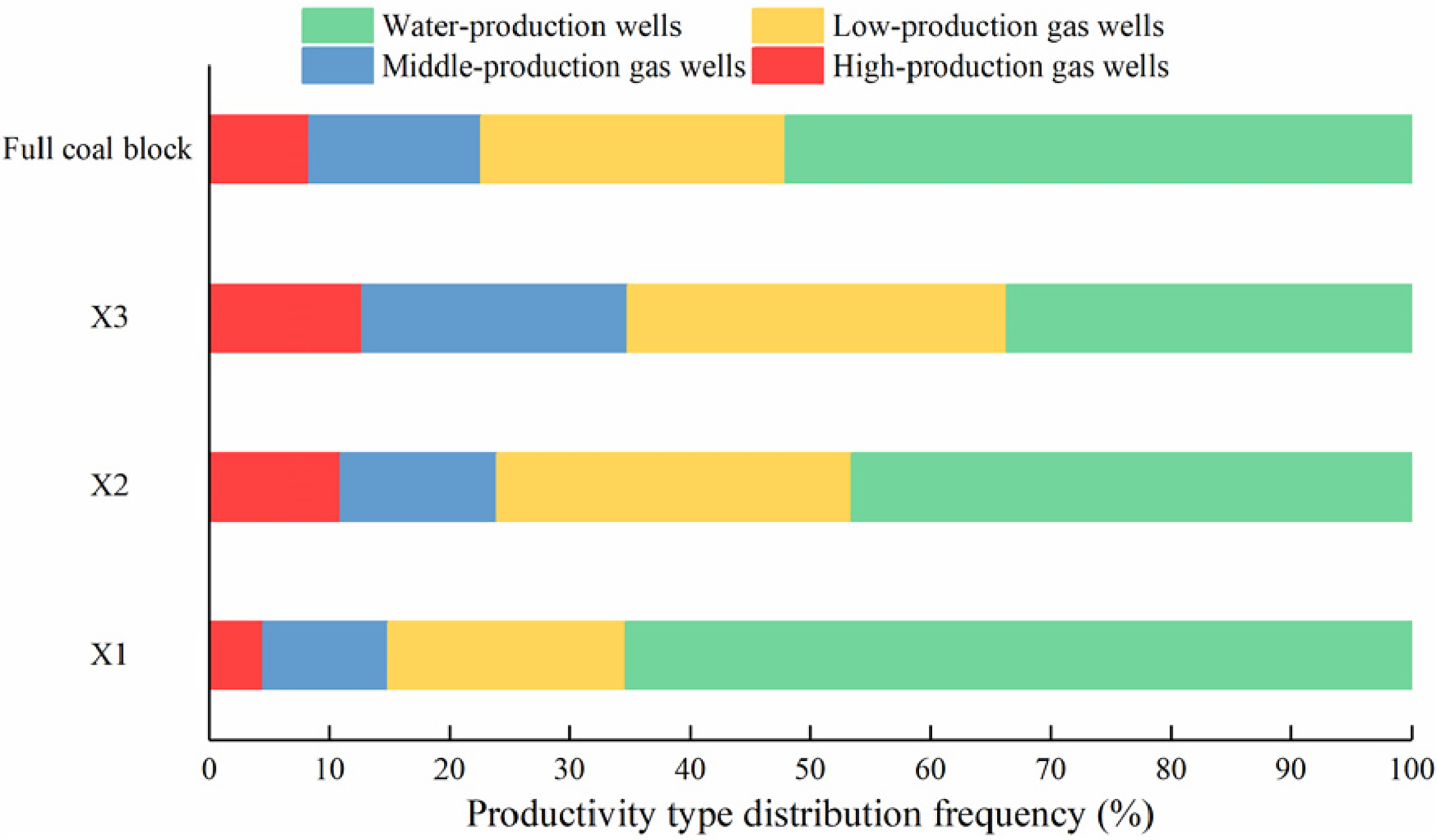
Distribution frequency of production types of coalbed methane wells.
The distribution of water and low gas-producing CBM wells in the X1 well block exhibits a relatively scattered pattern. Middle- to high-production gas wells are distributed in both the north and south of the well block. Most of the middle- and high-production gas wells are located near the axis of the fold, indicating that the axis of the fold is beneficial to the preservation of CBM and positively impacts the productivity of CBM wells. The main reason is that the well block is close to the axis of the Qinshui syncline, and the compressive stress affects the easy enrichment and preservation of CBM. There are no middle- to high-production gas wells near the faults, mainly because the faults within the coal block are mainly open normal faults, which is not conducive to preserving CBM. It is noteworthy that there exist both high- and low-production wells in the same structural location in the well block. This phenomenon implies other factors beyond structural conditions impact CBM well productivity (Figure 4(a)).
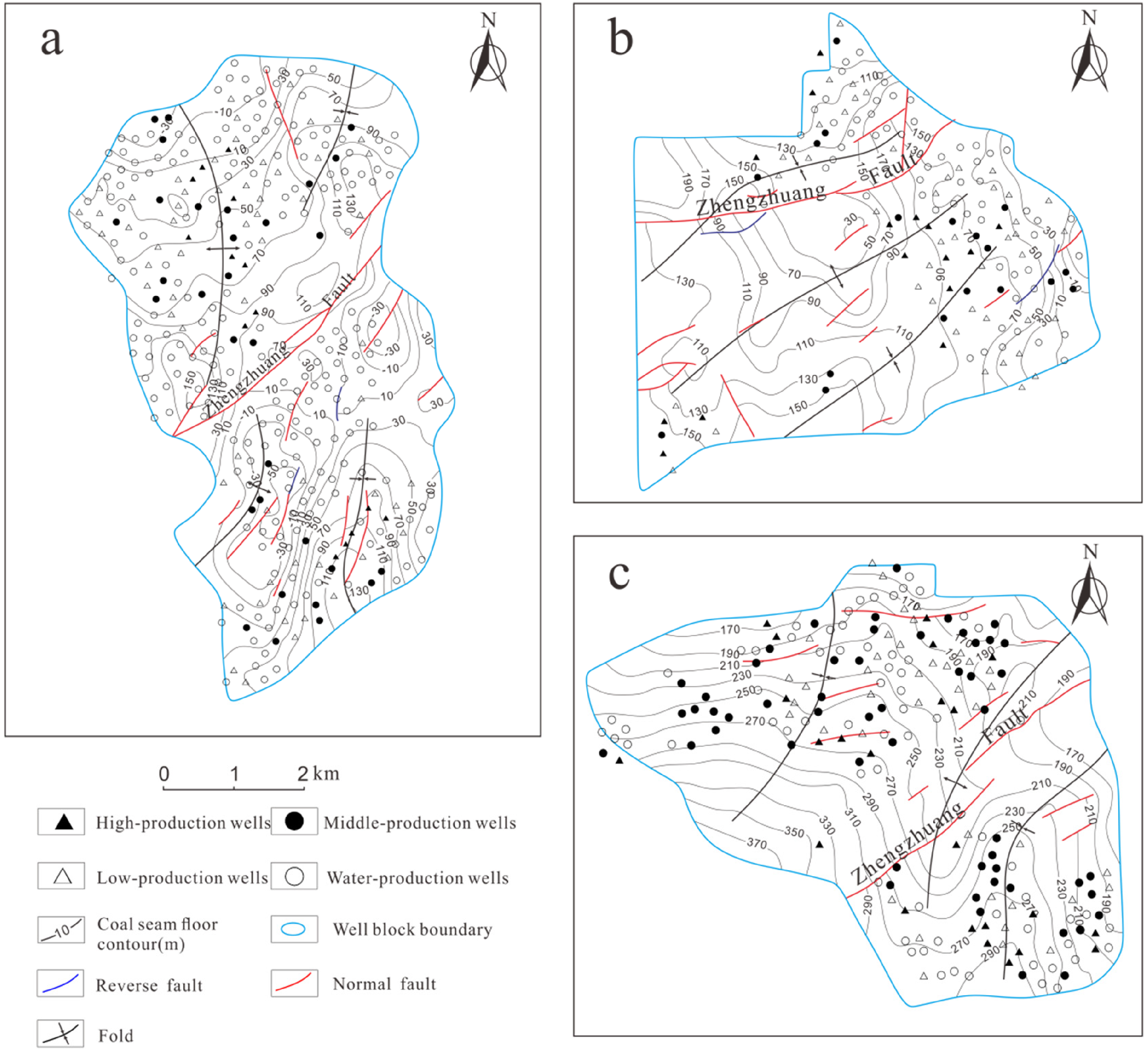
Distribution map of coalbed methane well productivity types in different well blocks. (a) X1 well block, (b) X2 well block, and (c) X3 well block.
X2 well block
The CBM wells in the X2 well block are primarily situated in the eastern portion of the well block, with high gas production wells comprising 11.0% of the total number of wells. The maximum daily gas production of a single well reaches up to 3672 m3/d, while the highest stable daily gas production is recorded at 1684 m3/d. Middle-production gas wells make up 13.0% of the total, while low-production gas wells account for 29.4%, and water-production wells comprise 46.6%. Overall, the number of gas-producing wells exceeds that of nonproducing ones, and the development effect is superior to that of the X1 well block.
Middle- and high-production gas wells are dispersed throughout the well block, primarily situated within the wide and gentle monoclinic area. Low gas and water production wells are primarily located in the lower coal seam floor at the eastern boundary of the well block, proximate to the X1 well block. To the north of the Zhengzhuang fault, there are mainly water-production wells and low-production gas wells, with only a small number of middle- to high-production gas wells that are relatively dispersed. To the south of the Zhengzhuang fault, gas-producing wells are primarily distributed in the flat areas flanking the fold. The areas near the Zhengzhuang fault and Houchengyao fault exhibit low or negligible gas production. Most middle- and high-production gas wells are concentrated along the fold axis, and the reason is similar to that in the X1 well block. The gas production of the middle- to high-production wells in this well block is comparable to that of the X1 well block, while the adjacent CBM wells exhibit significant differences in the X2 well block. This suggests that factors beyond structural conditions are at play in determining the gas production of CBM wells (Figure 4(b)).
X3 well block
The CBM wells in the X3 well block exhibit a higher production capacity compared to those in X1 and X2, with the gas production type being predominantly gas-producing wells. High-production gas wells account for 12.7% of the total production wells in the well block, with the highest daily gas production of a single well reaching 8000 m3/d. The highest stable daily gas production is 2443 m3/d; middle-production gas wells account for 22.1%, low-production gas wells account for 31.5%, and water-production wells account for 33.7%. The middle- and high-production gas wells in the southern part of the well block are primarily located along the syncline axis. In contrast, those in the northern part of the area are dispersed and even proximal to minor faults, indicating that structural conditions have a lesser impact on CBM well productivity in this region (Figure 4(c)).
Whole coal block
The average daily gas production of CBM wells in the study coal block ranges from 100 to 3325 m3/d, with an average of 604.6 m3/d. Among them, water-production wells constitute 52.0%, low-production wells account for 25.3%, middle-production wells make up 14.3%, and high-production wells represent 8.4%. The frequency of distribution gradually increases from high-production gas wells to production wells. From X1→X2→X3, the frequency distribution of high-, middle- and low-production wells gradually increases, while that of water-producing wells decreases correspondingly. As depicted in Figure 5, the CBM wells in X1→X2→X3 well block exhibit a spatial pattern of high gas production towards the west and south, while low gas production is observed towards the east and north. Among these three blocks, X3 has the highest average daily gas production, followed by X2 and then X1 with the lowest.
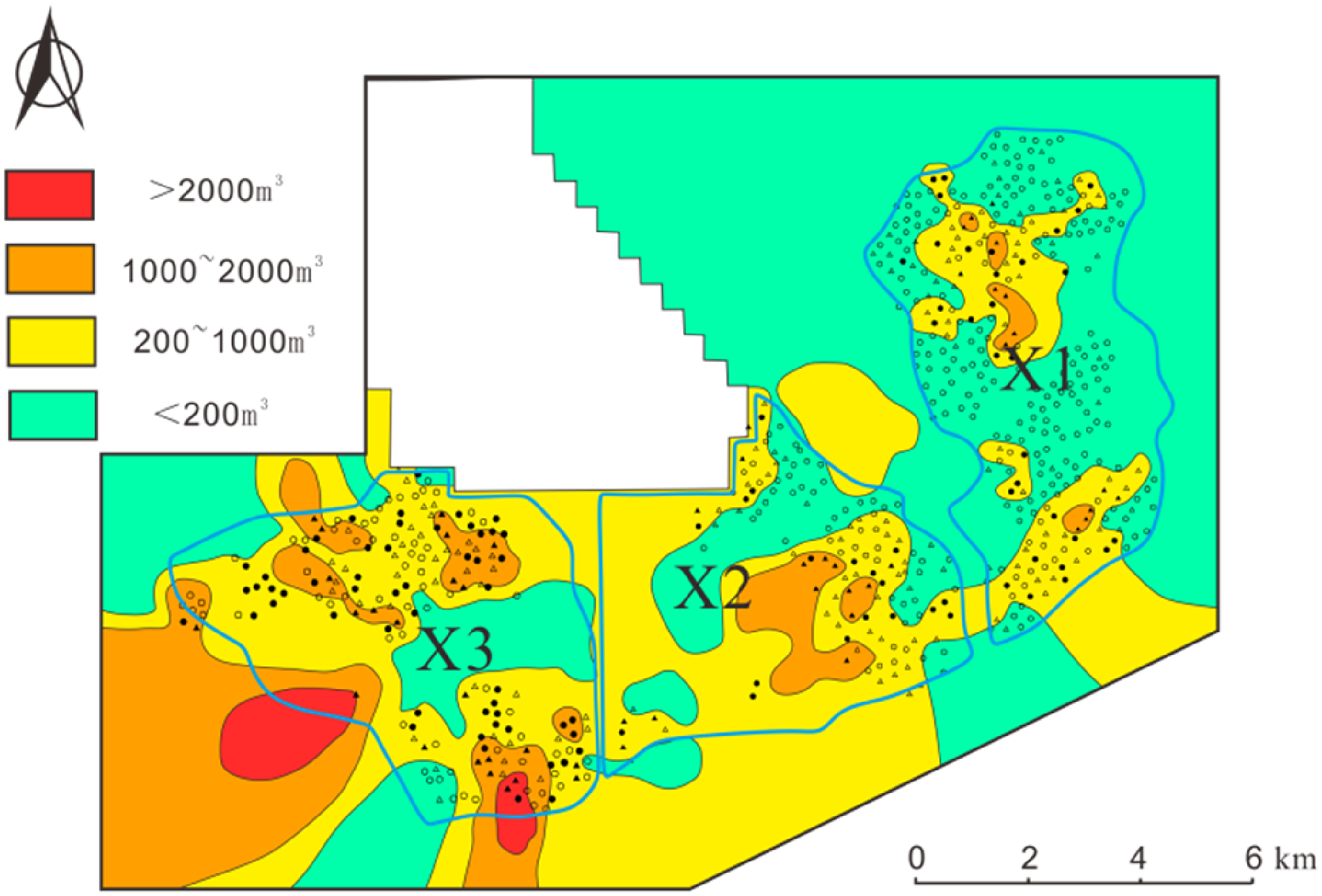
Average daily gas production contour of coalbed methane well in X1-2-3 well block.
Analysis of influencing factors
Previous studies have identified various factors that impact the productivity of CBM wells, including coal seam thickness, depth of cover, gas content, permeability, porosity, geological structure, hydrogeological conditions, drilling and completion techniques, reservoir transformation methods, well pattern deployment strategies, production drainage systems, etc (Guo et al. 2022; Jin et al. 2022; Zhang, 2018; Zhang, 2022). There are significant differences in controlling factors of CBM productivity in different coal blocks; research on controlling factors based on the block or even well group scale is of great significance for improving the production of a single well. Collecting and organizing coal reservoir conditions, geological background, and engineering data of CBM wells in the research area, while taking into account the CBM reservoirs, and analyzing factors that influence production capacity differences among these wells.
Geological factors
Cover depth and seam thickness
The cover depth of coal seams in the X1, X2, and X3 well blocks of the research area ranges from 502.3 to 987.5 m, concentrated at depths less than 800 m, with an overall feature of shallow in the west and deep in the east (Figure 6). The thickness of the coal seam is 4.2–7.0 m, with an average of 5.5 m. It is thicker in the north and south, and thinner in the middle (Figure 7).
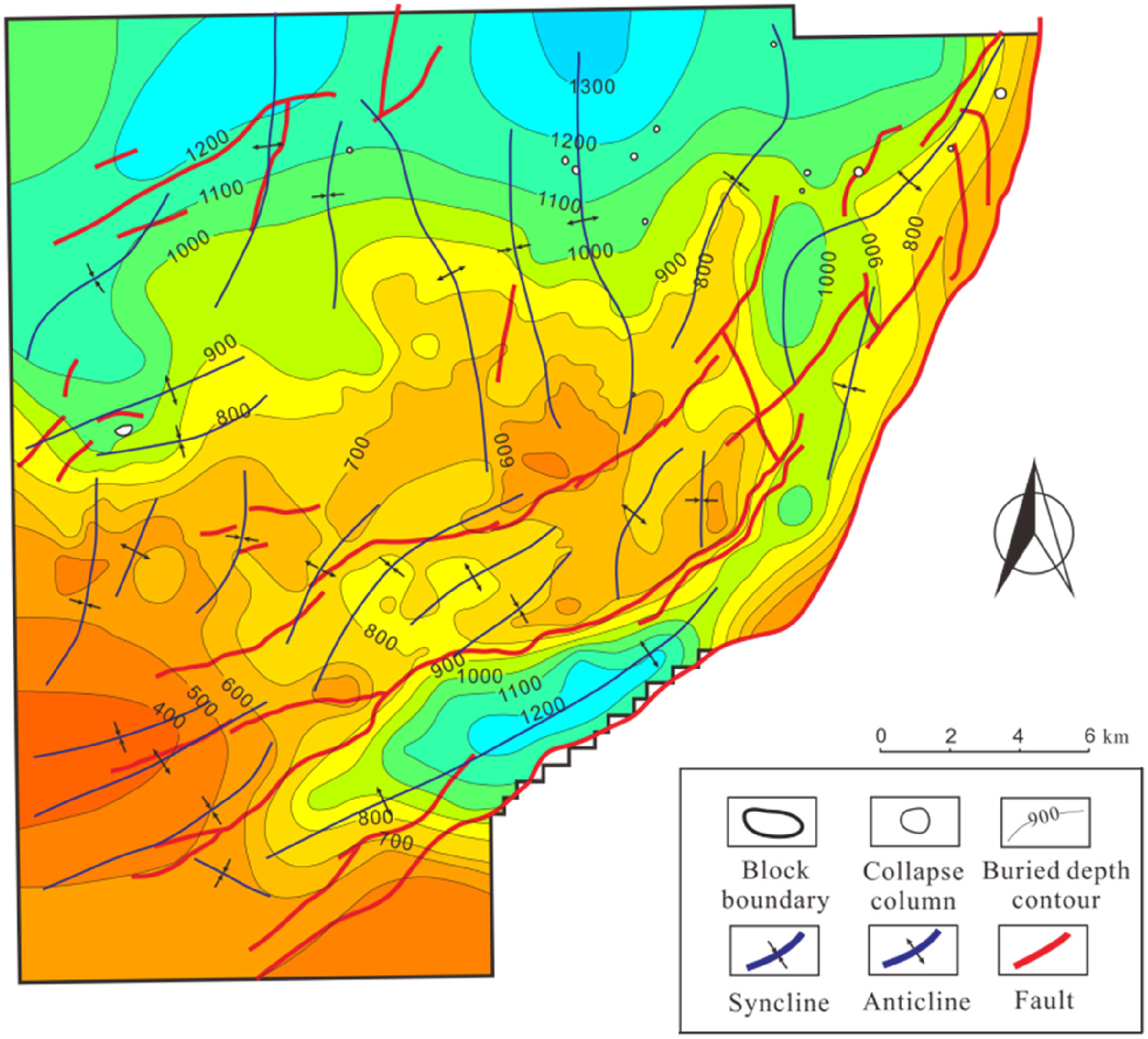
Variation in depth of coal seam 3.
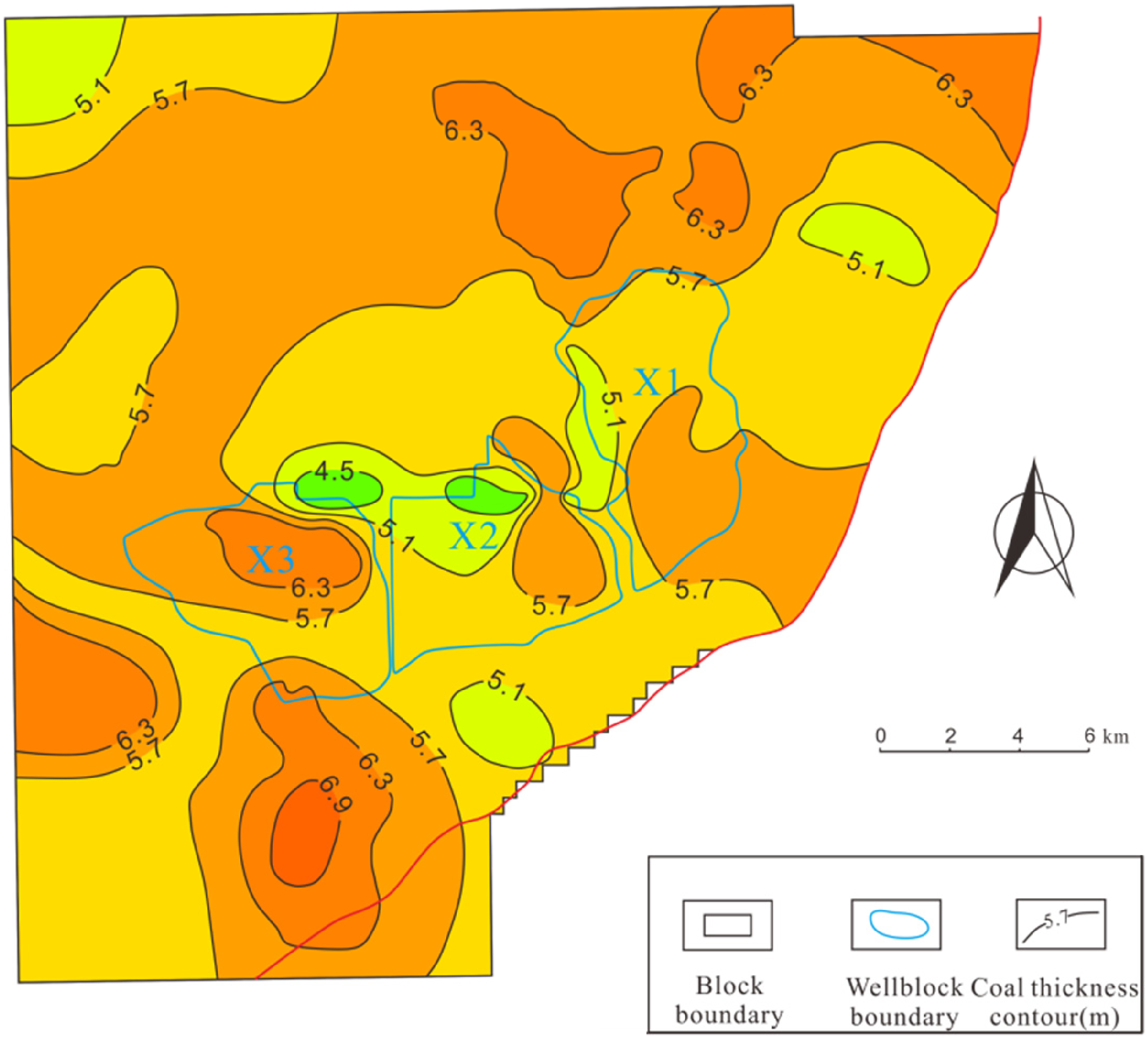
Contour lines showing variation in thickness of coal seam 3.
The maximum average daily gas production in the coal block is 3325 m3/d, with a corresponding coal seam cover depth of 634.6 m and a thickness of 5.3 m. With the increase in cover depth, the gas production of CBM wells rises first and then falls, with the cover depth of high-production wells mainly ranging from 570 to 780 m (Figure 8). The productivity turns with the increase of cover depth, primarily because the in situ stress indirectly affects the gas production of CBM wells by controlling the permeability. Previous studies have found that in situ stress usually increases with the increase in depth of cover (Feng et al., 2021), and permeability shows a nonmonotone decreasing trend with the rise (Chen et al., 2016; Feng et al., 2021). Chen et al. (2016) took the Zhengzhuang coal block as the research object and found that the permeability showed a decrease-increase-decrease characteristic with increased cover depth. The permeability of coal seams in the Liupanshui coalfield also exhibits a similar change characteristic with the increase of cover depth (Feng et al., 2021). Low permeability makes it difficult for CBM to migrate and produce from the reservoir (Xu et al., 2023). Therefore, an inappropriate cover depth, too deep or too shallow, would not be conducive to achieving high CBM well production (Zhao, 2017). Previous studies can indirectly verify the characteristics of high-production CBM wells in the study area with cover depths ranging from 600 to 800 m.
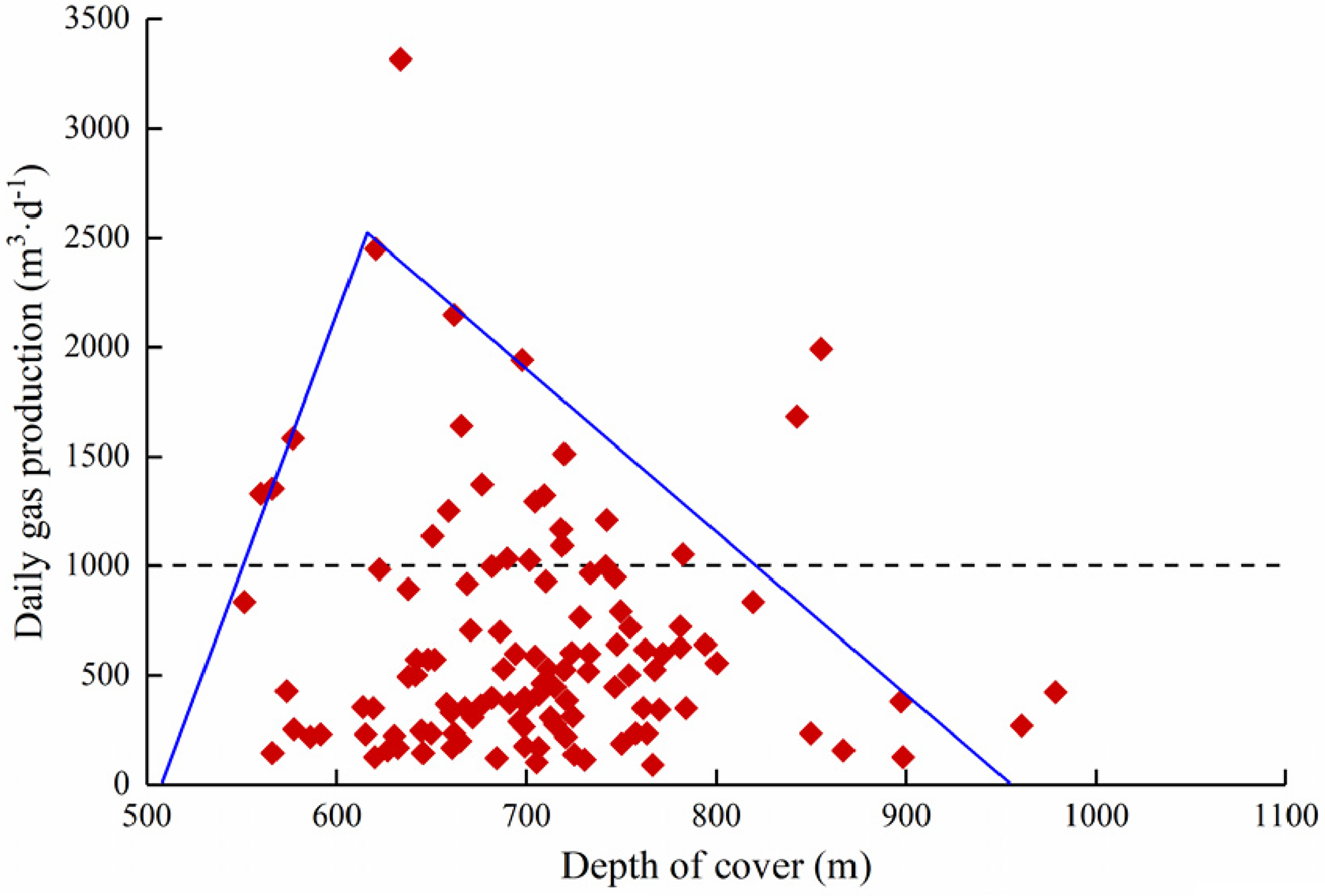
Relationship between daily gas production and depth of cover.
The thickness of the coal seam is a crucial factor affecting the productivity of CBM wells (Zhang et al., 2016). A large thickness is beneficial for storing CBM, and thick coal seams generally exhibit a strong gas supply capacity (Yan et al., 2020). Meanwhile, thicker coal seams can also provide better geological conditions for reservoir fracturing reconstruction (Zhao, 2017). The thickness of the coal seam in high-production wells mainly ranges from 5.5 to 6.2 m (Figure 9), and the correlation between gas production and coal seam thickness is discrete to a certain extent. Similar phenomena are also found in the Hancheng coal block of Ordos Basin and Fanzhuang coal block of Qinshui Basin. The potential reasons are mainly the rapid depressurization of thin coal seams in the initial depressurization stage and the strong vertical heterogeneity of thick coal seams (Jin et al., 2004; Lv et al., 2012; Zhao et al., 2015). However, a comparative analysis of gas production distribution in the well block (Figure 5) and coal seam thickness distribution (Figure 7) shows that some areas have larger coal seam thickness, with relatively more medium- and high-production wells. For example, the coal seam in the X3 well block is thicker in the north and south and thinner in the middle. The productivity also shows a higher proportion of medium- and high-production wells in the south and north, while the center is mainly low-production wells and water wells. Therefore, the thickness of the coal seam still exerts a certain influence on CBM well productivity.
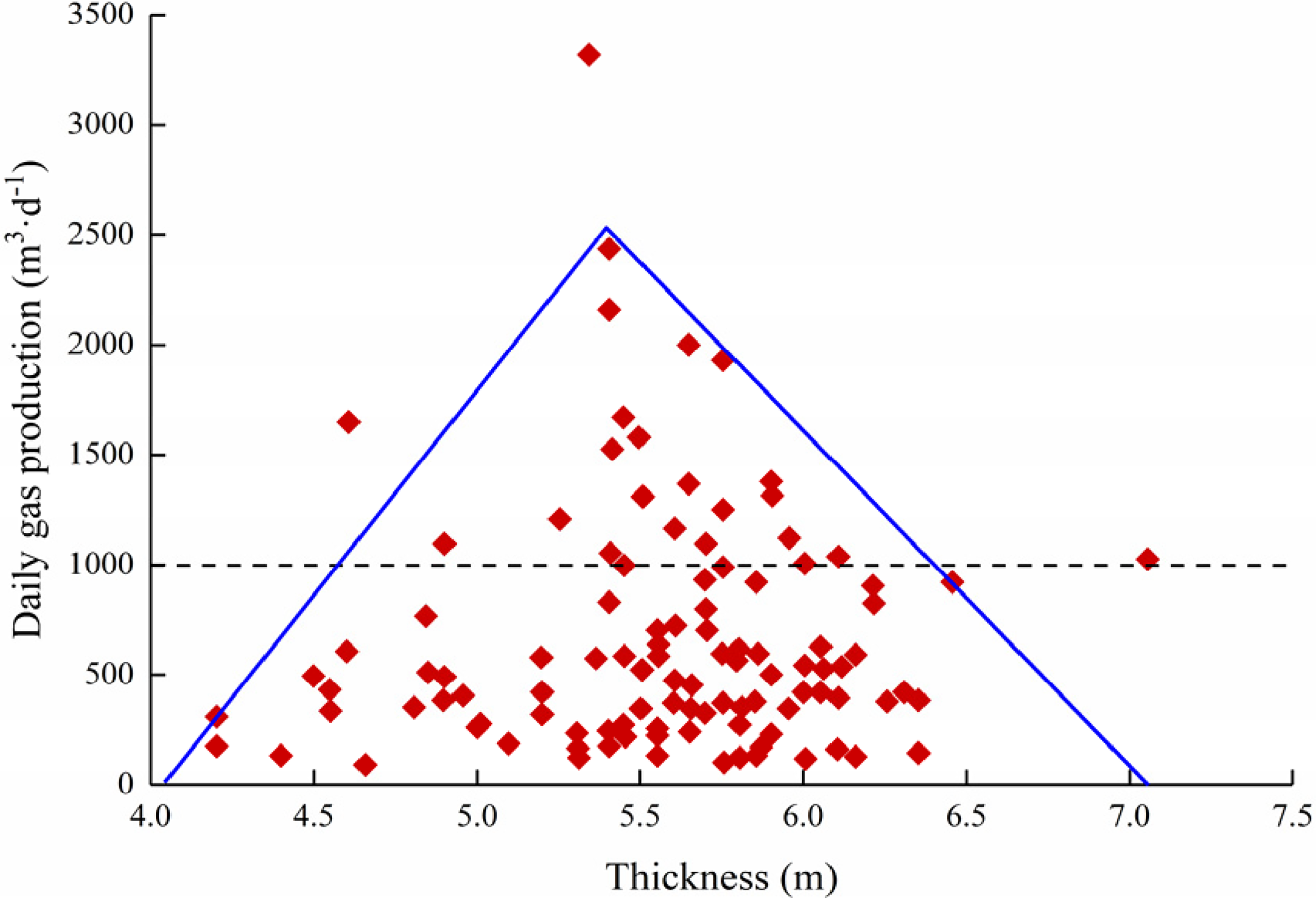
Relationship between daily gas production and thickness of coal seam.
Gas content
Gas content is the fundamental parameter of CBM development, and high gas content is a robust assurance of elevated CBM well production (Guo et al., 2022; Liu et al., 2019a, 2019b). Coalbed gas content is obtained by the desorption method, the gas content is composed of loss gas, desorption gas and residual gas, which can be obtained by calculating the sum after measuring respectively. According to Figure 10, when the gas content is less than 21 m3/t, the average daily gas production of CBM wells is less than 1000 m3, and there is no obvious correlation between the two. Gas production positively correlates with gas content, particularly in high-production wells, where the coal seam gas content exceeds 21 m3/t. Lv et al. (2012) discovered that productivity positively correlated with gas content exceeding 24 m3/t in the Fanzhuang coal block of the Qinshui Basin. The gas content is a crucial factor for the high production of CBM wells. The higher the gas content, the greater the potential for high CBM well productivity.
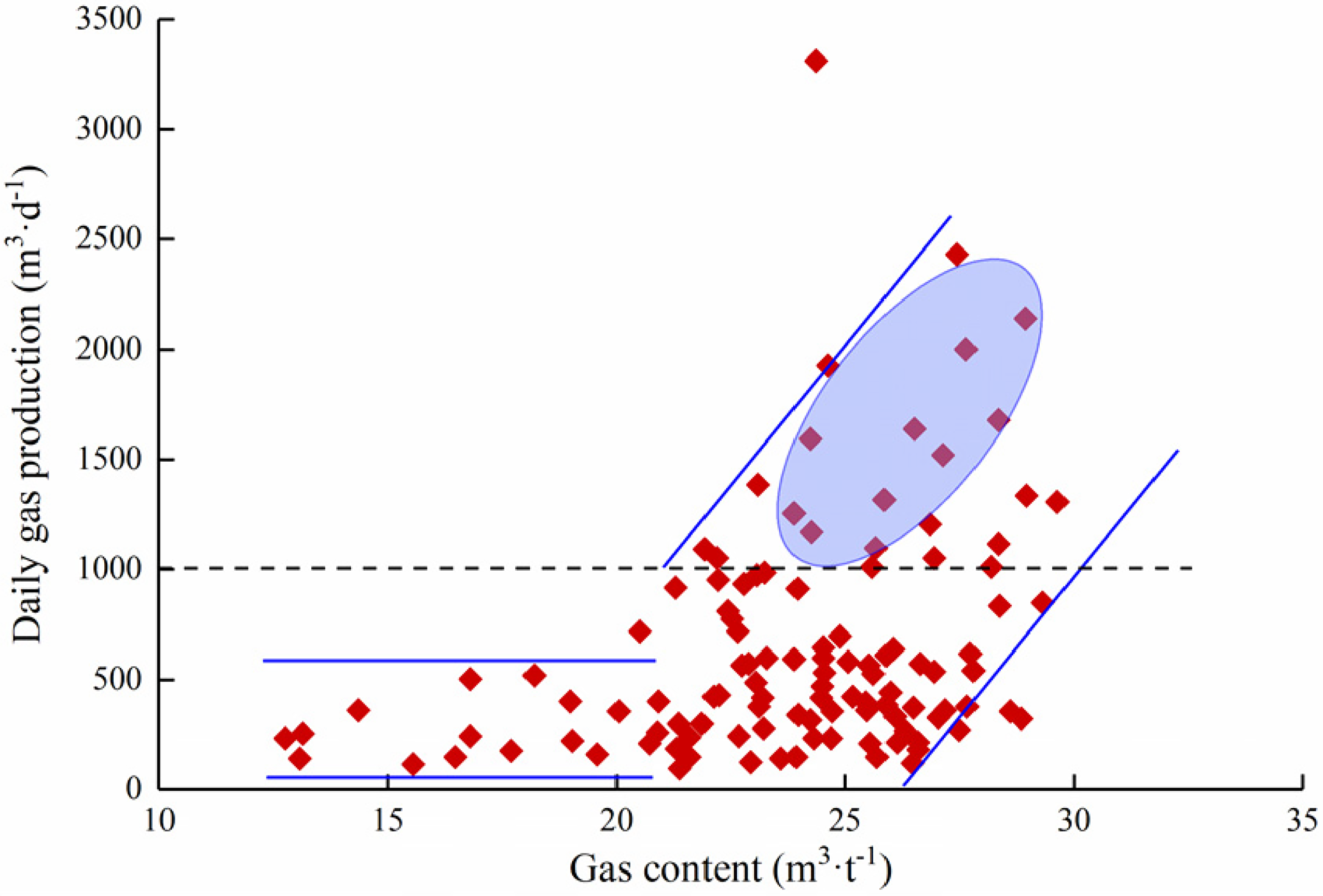
Relationship between daily gas production and gas content.
Permeability
Permeability reflects the seepage capacity of reservoirs, is an important index to evaluate the mining ability of coal seams, and determines the difficulty of CBM production (Guo et al., 2022; Liang et al., 2022). The higher the permeability, the more extensive the distribution range of pressure drop funnels formed during the drainage and depressurization processes, which is more conducive to the desorption and migration of CBM. In general, the productivity of single-seam development wells tends to increase with increasing permeability (Zhang, 2022). The logging permeability of the No.3 coal reservoir in the study area ranges from 0.30 to 3.73 mD, with an average of 1.19 mD. The correlation analysis between permeability and average daily gas production of CBM wells indicates a positive relationship, whereby an increase in coal reservoir permeability is associated with a corresponding increase in the average daily gas production of CBM wells (Figure 11).
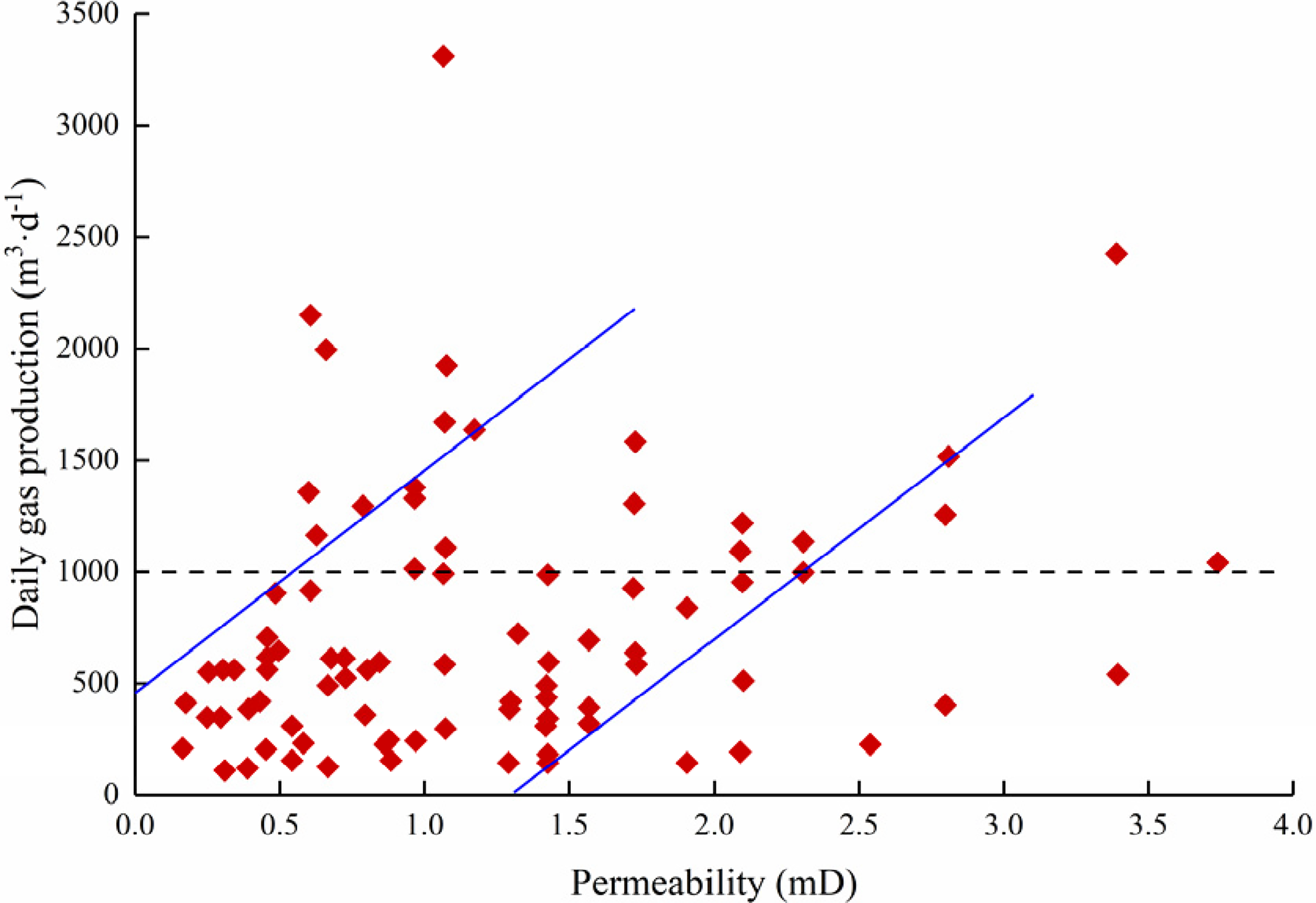
Relationship between daily gas production and permeability.
Reservoir pressure
Reservoir pressure is an essential parameter for coal reservoir exploration and development, which can provide power for the transportation and production of CBM (Zhang et al., 2021). According to the relationship between reservoir pressure and gas production in the study area of the No.3 coal seam (Figure 12), high-production gas wells exhibit a concentration of reservoir pressures ranging from 5 to 7 MPa. The scattered distribution is generally in a “box” shape, and the correlation between reservoir pressure and CBM well productivity is poor.
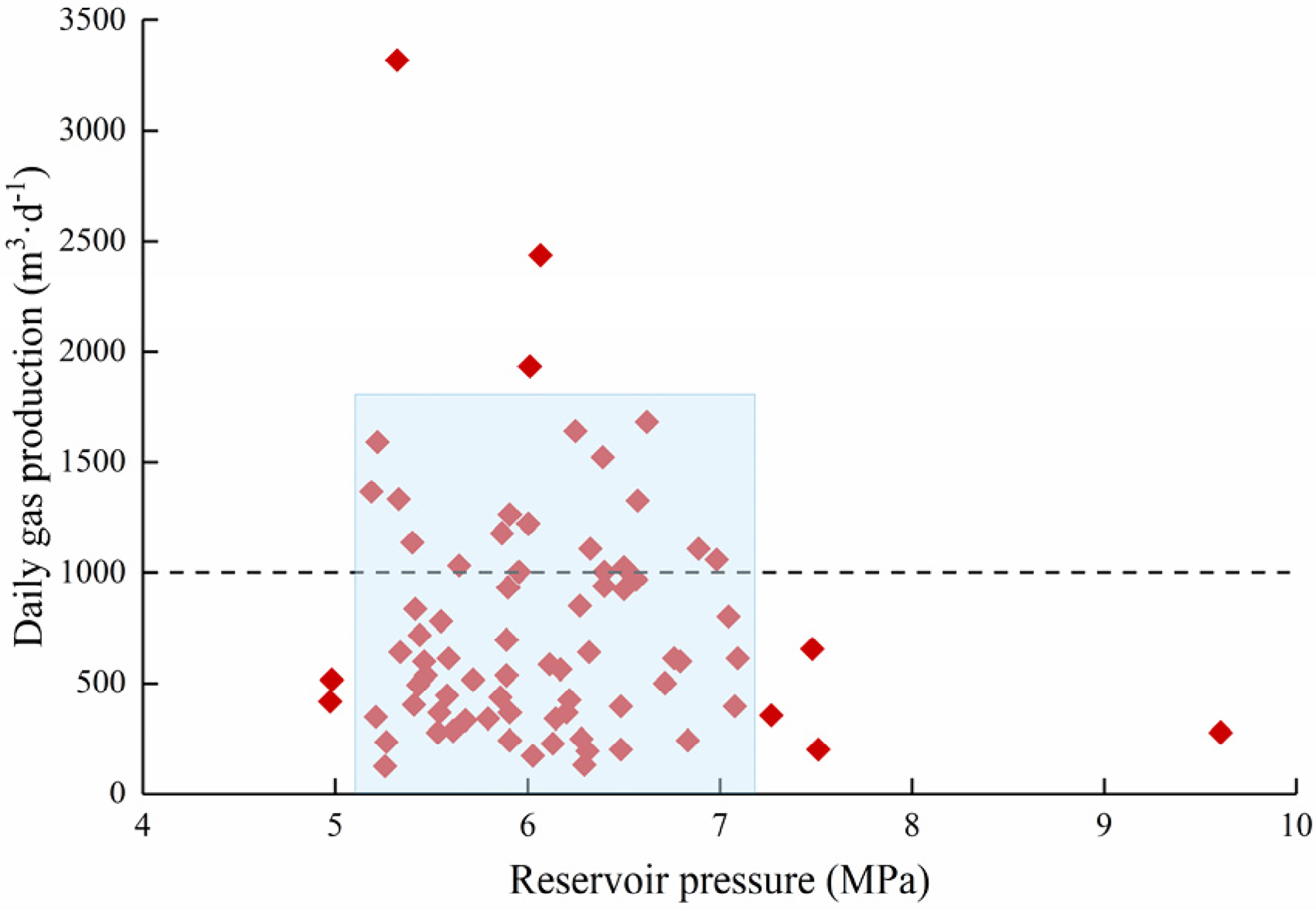
Relationship between daily gas production and reservoir pressure.
Structure conditions
Structural conditions indirectly control the productivity of CBM wells, mainly by influencing the gas content, permeability, and groundwater flow characteristics of coal reservoirs (Liang et al., 2022; Zhang et al., 2017). The gas content of the No.3 coal seam in the study area is mainly affected by folds and faults commonly developed in the coal block: In the area of the central anticlinal axis and southeast normal fault, the gas content is relatively low, generally less than 15 m3/t. The gas content is higher in the synclinal axis and the wide and gentle slope of the monoclinal structure with a relatively simple structure. As shown in Figure 13, well XS39 is close to the Houchengyao normal fault and the Sitou normal fault with large fault spacing, which connects the surface. As a result, the gas content of the coal seam near well XS39 is only 1.49 m³/t.
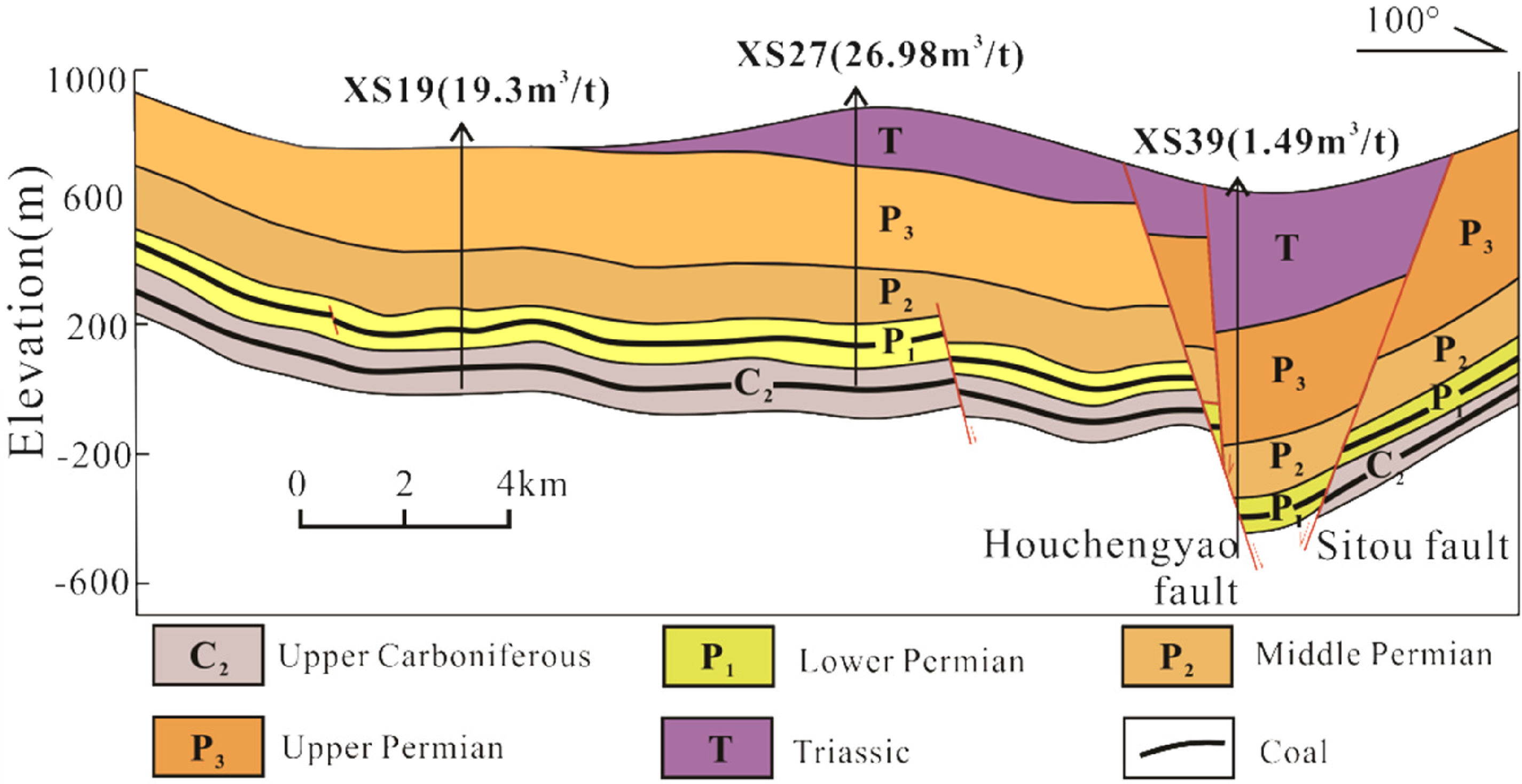
Relationship between gas content and fault of No.3 coal seam.
Based on the aforementioned research, CBM production wells in the research area are mainly located far away from large faults and collapse columns. The formation is relatively wide and slow, so the productivity of existing CBM wells is less affected by structures such as major faults and collapse columns. From the productivity characteristics of each well block mentioned earlier, the middle- and high-production gas wells are primarily distributed along the axis and wings of the syncline and in slope areas with simple structural conditions. However, the productivity of the CBM wells near the minor faults is generally low or zero. The fundamental reason is that geological structure indirectly controls the productivity of the CBM wells by affecting the gas content.
Hydrogeological conditions
Hydrogeological conditions play a crucial role in determining the occurrence of CBM and are also one of the key factors influencing CBM drainage and depressurization (Du et al., 2023; Guo et al., 2020).
The water head height of the coal reservoir can be calculated according to equation (1) (Zhang, 2018).

h the elevation of coal seam, m.
The water head height of the No.3 coal seam is 500–960 m. It is relatively high in the northern part of well X1 and X3, low in the southern part of well X1 and the eastern part of well X2. The groundwater flow direction converges here (Figure 14). Combined with Figure 5, from the X1→X2→X3 well block, the distribution frequency of high-, middle- and low-production gas wells increases gradually, while the distribution frequency of water-production wells decreases gradually. Most of the high-production gas wells are located in the X3 and northern areas of the X1 well block, where groundwater levels are high, and the daily water production is mostly between 0 and 2 m3. Low-producing gas wells and water wells are primarily located in the low-lying catchment area in the central part of the study area, with a maximum daily water production of 46 m3. The average daily water production of CBM wells is negatively correlated with the water head height. Areas with a high hydraulic head exhibit reduced water yield and increased gas production.
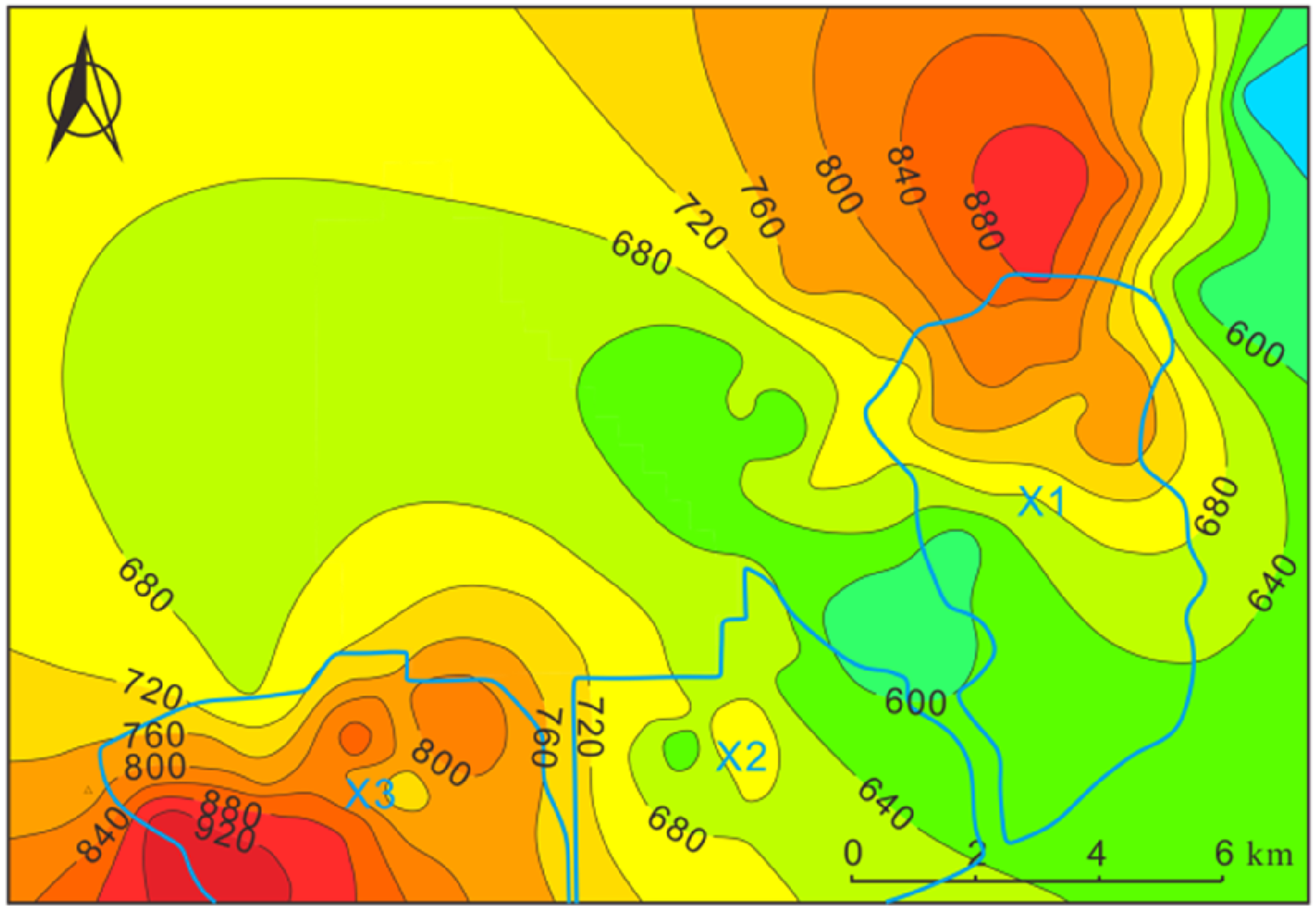
Contour of groundwater head elevation.
The fluidity of groundwater mainly causes this difference. Groundwater flows from high to low, and recharging groundwater becomes relatively difficult in areas with high water heads where overflow recharge is excluded, leading to drainage and depressurization, facilitating the smooth desorption of CBM. In addition, the “gas water difference” effect during the CBM seepage process leads to preferential enrichment of CBM desorbed from other locations towards areas with high groundwater heads (Zhao, 2017). On the contrary, the low water head receives a high water supply, while drainage and pressure reduction in the low-lying catchment area pose difficulties, resulting in significant water production from CBM wells.
Engineering factors
The engineering factors affecting the productivity of CBM wells include drilling and completion techniques, reservoir transformation methodologies, well pattern deployment strategies, discharge control measures, and others (Guo et al., 2022; Jin et al., 2022; Zhang, 2022). Among them, reservoir transformation techniques and drainage control significantly impact productivity (Zhao et al., 2015; Liu et al., 2019b). Therefore, this study reveals the impact of engineering factors on productivity by examining the correlation between reservoir reconstruction, drainage systems, and CBM well productivity.
Fracturing fluid volume and sand volume
In the process of reservoir reconstruction, the fracturing fluid and sand addition volume are two important parameters to characterize the fracture scale. A proper amount of fracturing fluid and sand can enhance the effectiveness of hydraulic fracturing, expand the scope of pressure reduction seepage, and boost CBM well productivity (Zhao et al., 2015; Ma et al., 2017). Insufficient fracturing fluid can be easily filtered out through natural fractures, whereas excessive amounts of fracturing fluid may diminish the degree of reconstruction of natural microfractures (Ma et al., 2017). The amount of sand added is insufficient, and the conductivity of the supporting fractures is inadequate. Excessive sand addition may result in sand plugging (Zhao et al., 2015). The relationship between he fracturing fluid volume observed by the flowmeter on the surface pump truck and productivity is analyzed. There is no significant correlation between the CBM production and the amount of fracturing fluid (Figure 15). The injected fracturing fluid volume ranges from 660 to 830 m3, while the injected fracturing fluid volume for high production wells generally ranges from 700 to 760 m3. Sand addition in most CBM wells is about 40 m3 (Figure 16), with no obvious pattern of data dispersion, the productivity is little affected by the sand addition amount. More diverse fracturing data should be collected during subsequent well development to analyze the relationship between fracturing fluid volume, sand addition, and productivity.
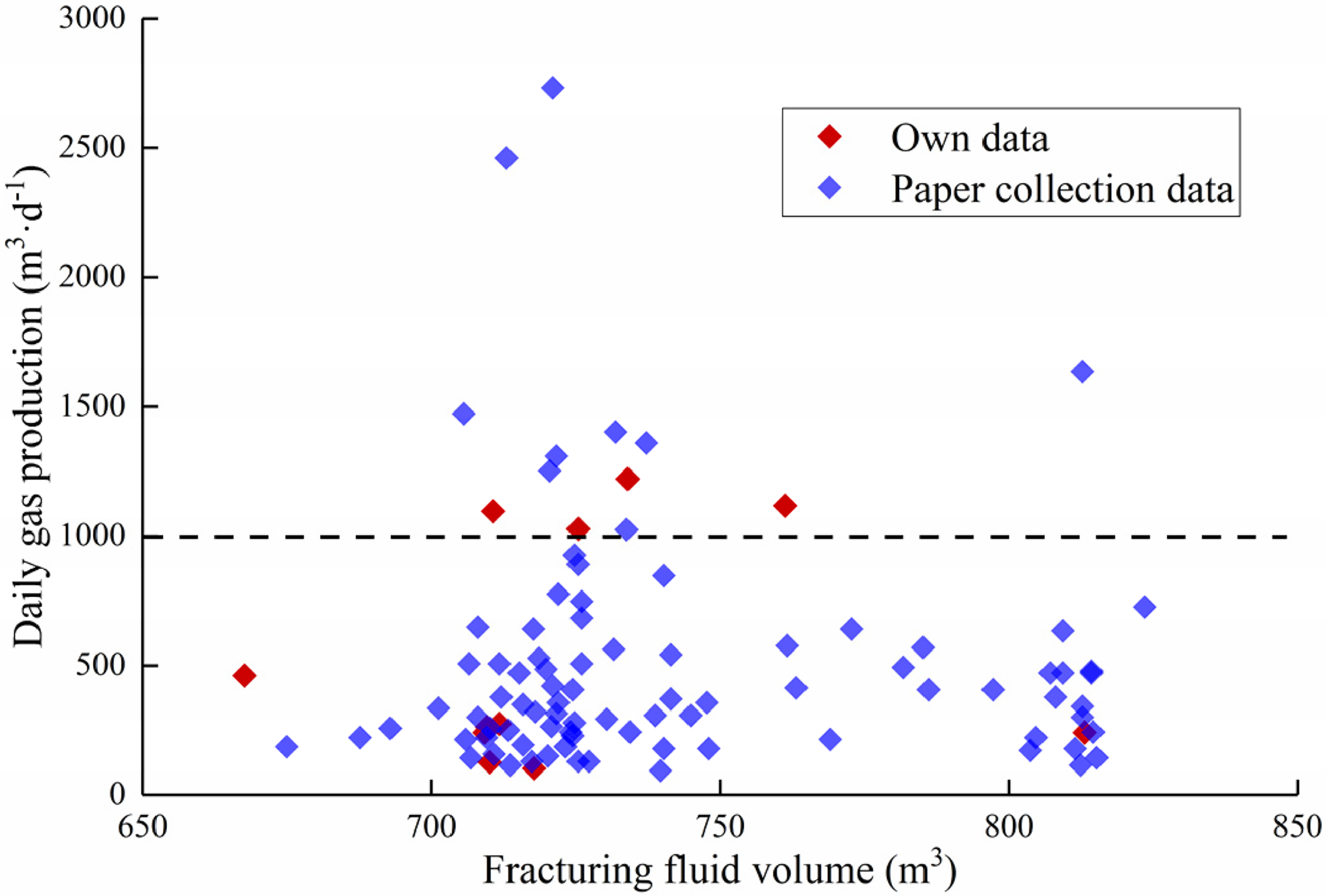
Relationship between daily gas production and fracturing fluid volume (collected data from Xu et al. (2018)).
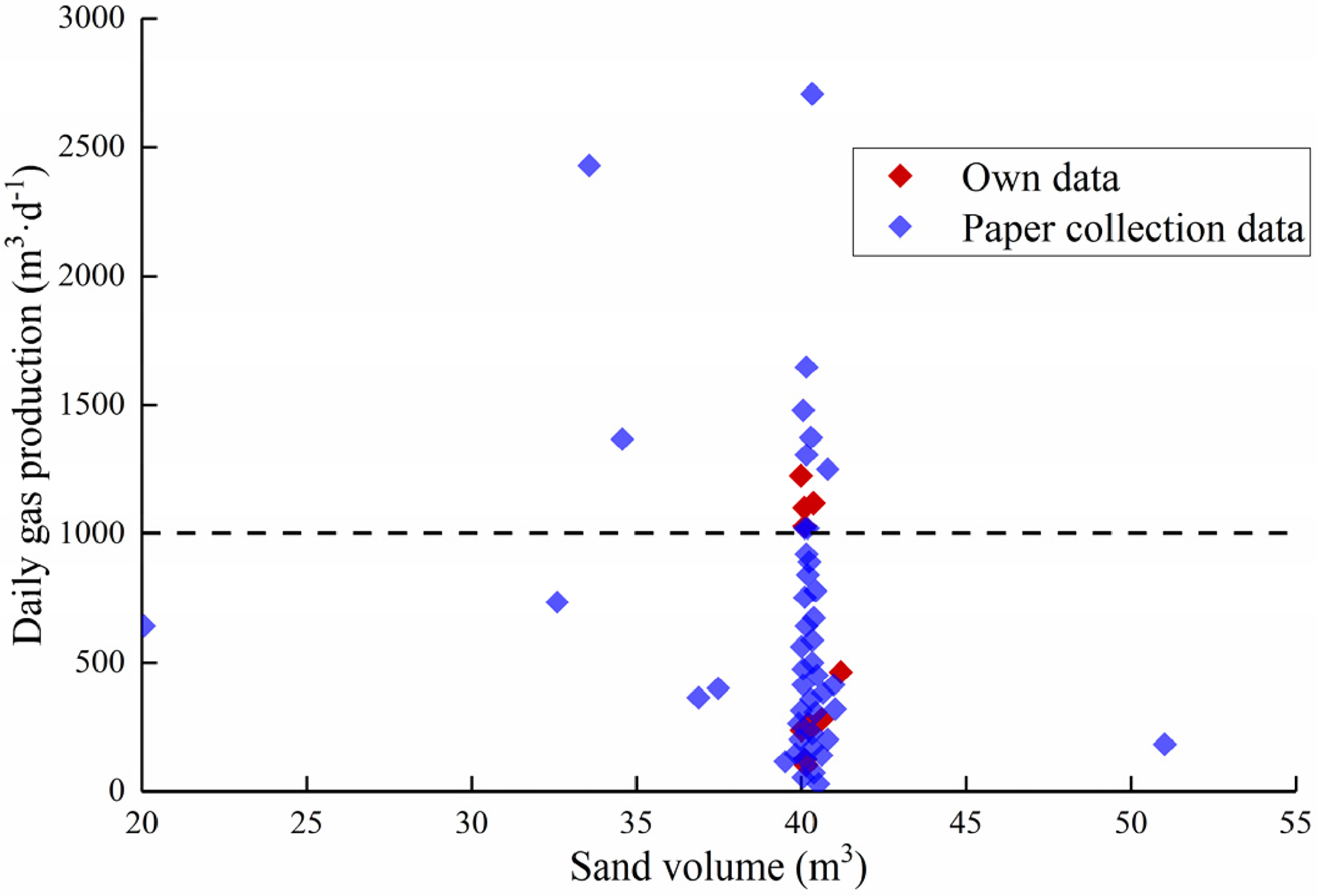
Relationship between daily gas production and sand volume (collected data from Xu et al. (2018)).
Dynamic liquid level drop rate
In CBM development, the velocity of dynamic liquid level drop affects the expansion of the pressure drop funnel and gas well productivity (Chen et al., 2020). Depressurization and drainage reduce fluid pressure within the coal seam while maintaining constant overlying strata pressure. This results in an increase of effective stress acting upon the coal skeleton (Zhao et al., 2008). Wells with a rapid drop rate of dynamic fluid level tend to exhibit early gas breakthroughs. However, excessive drainage intensity will lead to sharp changes in reservoir stress, leading to reservoir damage and ultimately reducing permeability, negatively impacting CBM production (Chen et al., 2020; Zhang, 2022). When the effective stress increases to a certain extent, it may even cause the closure of cleats and microcracks, completely preventing gas production (Shao et al., 2013).
The drop rate of dynamic liquid level in CBM wells within the study area ranges from 1 to 35.8 m/d, mostly below 15 m/d (Figure 17). There exists a negative correlation between gas production and the rate of dynamic liquid level decline. Specifically, as the dynamic liquid level drop rate increases, the average daily gas production in high-yield wells decreases. The drop rate of the dynamic liquid level of CBM wells with high gas production is mainly between 5 and 12 m/d. However, when the gas production of CBM wells is low, the correlation between the gas production and the dynamic liquid level drop rate is not obvious. It indicates that the high-production wells are more affected by the dynamic level drop rate, while the low-production wells are less affected.
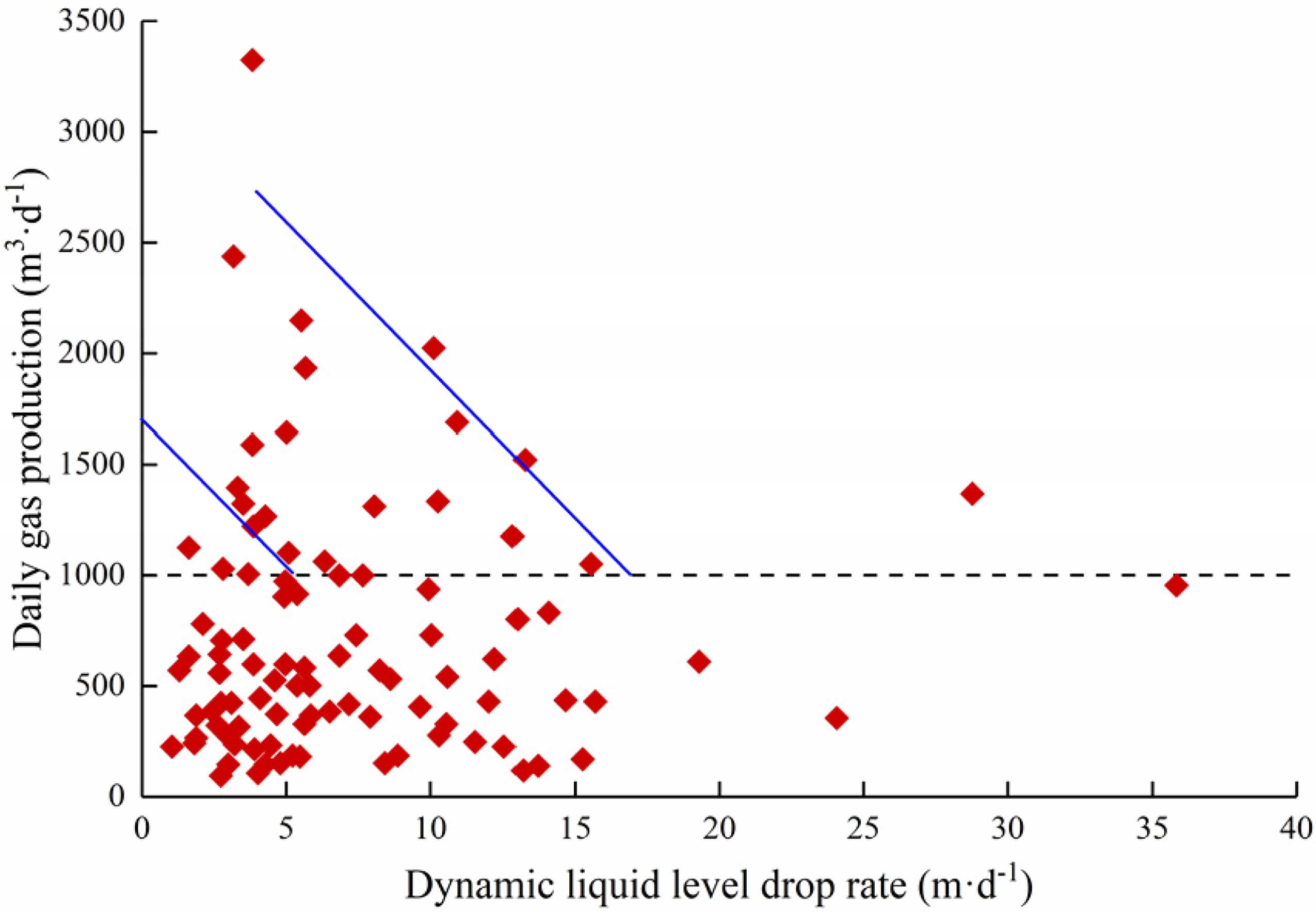
Relationship between daily gas production and dynamic liquid level drop rate.
Main controlling factors evaluation
Numerous and intricate factors impact the productivity of CBM wells, making it difficult to determine the degree of their impact on productivity based on the correlation between each factor and gas production. This study uses the grey correlation analysis method to quantitatively analyze the correlation between each influencing factor and productivity and identify the primary controlling factor of CBM well productivity.
Use the average daily gas production of 74 CBM wells in the study area as the reference sequence for data changes (Table 1). Select the factors that significantly impact the productivity in the aforementioned analysis, including the cover depth, thickness, permeability, gas content, hydrological conditions (expressed in daily water production), and the dynamic liquid level drop rate as the comparative sequence. During the evaluation process, due to the different dimensions of the raw data for each parameter, the maximum normalization method is used to standardize the data, making it comparable.
Statistics of partial CBM well parameters.
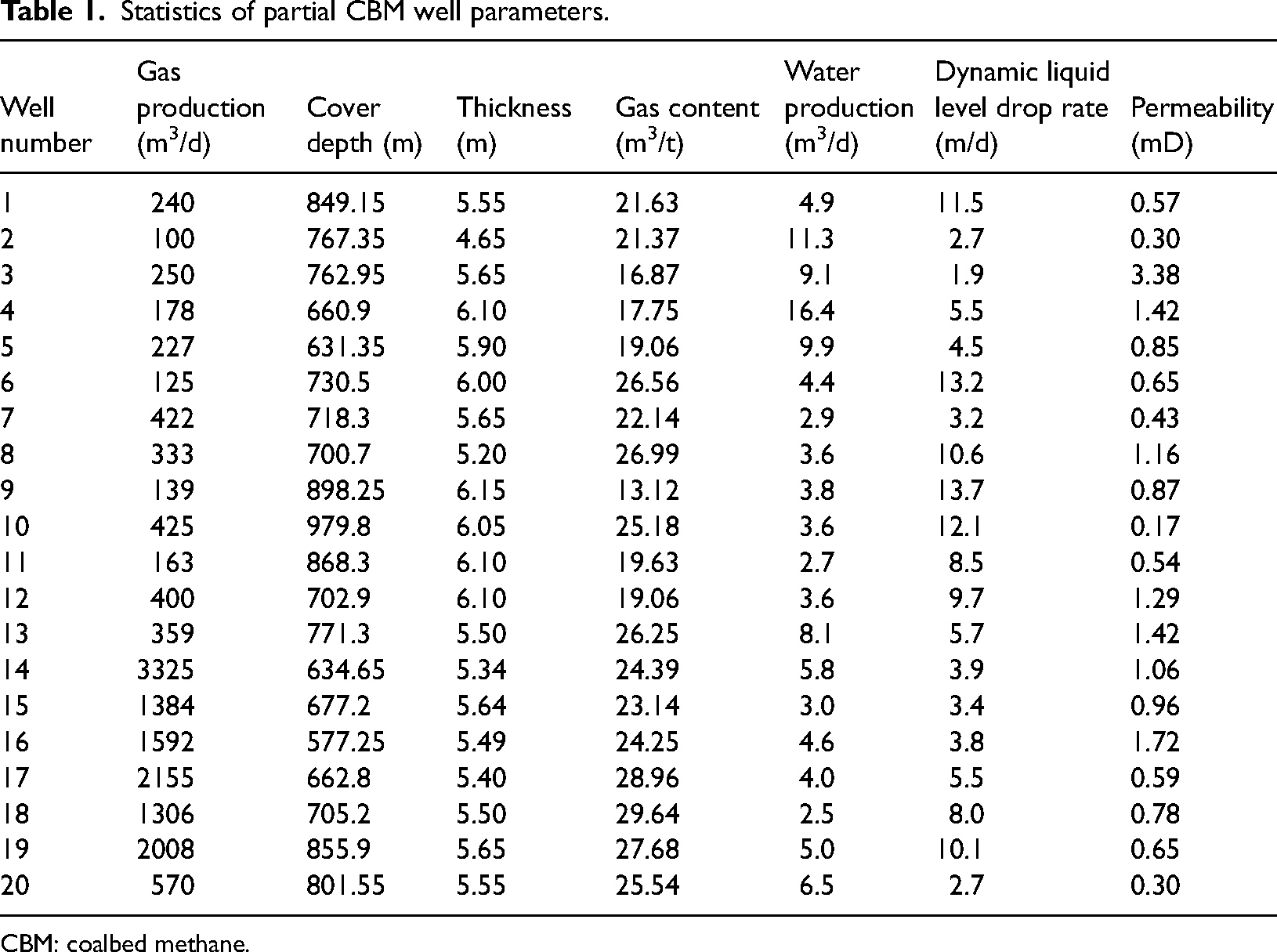
CBM: coalbed methane.
According to the theory of grey correlation analysis, the reference sequence for data changes is {X0(n)}, and the comparison sequence is {Xi(n)}. k is a data variable with a total of 74 columns. When the k-th column, equation (2) can be used to calculate the correlation coefficient 
ζ the resolution coefficient, usually taken as 0.5;
Put the calculated correlation coefficient into equation (3), and calculate the correlation degree between the comparison sequence 
According to equations (2) and (3), the grey correlation degree between each comparison sequence and the reference sequence were calculated. The calculation results are shown in Table 2. The correlation between coal seam cover depth and gas production is 0.80, and the correlation between permeability and gas production is 0.74. The correlation between the other four factors and gas production is relatively weak. The correlation degree between various influencing factors and gas production can be ranked in descending order: cover depth > permeability > water production > dynamic liquid level drop rate > coal thickness > gas content. The correlation between factors such as coal thickness, gas content, water production, dynamic liquid level drop rate, and gas production is relatively close, indicating that their impact on gas production is relatively close. It should be noted that the parameter combination characteristics of different CBM wells are entirely different, which may be the main reason for the similar cover depth of adjacent CBM wells but still significant differences in productivity.
Calculation results of grey relational analysis.

Conclusions
In the study area, the productivity of CBM vertical wells is generally low, with the main producing wells accounting for 52%, and the average daily gas production is 604.6 m3/d. The productivity of CBM wells in X1, X2, and X3 well blocks in the middle of the coal block shows a trend of high in the west and low in the east, and high in the south and low in the north. The cover depth, gas content, permeability, geological structure, and hydrological conditions are the main geological factors affecting the productivity of CBM wells in the study area. High-production gas wells are primarily located in regions with high gas content, moderate cover depth, elevated permeability, and significant water head height. The impact of thickness and reservoir pressure on productivity is negligible. The primary engineering factor that affects productivity is the dynamic drop rate of liquid level, and a negative correlation exists between the productivity of high-production gas wells and this rate. However, the impact of fracturing fluid and sand addition on CBM well productivity in this coal block is insignificant. The grey correlation analysis method is utilized to quantitatively evaluate the influence degree of the main controlling factors of CBM productivity, from high to low: cover depth, permeability, water production, dynamic liquid level drop rate, coal thickness, and gas content. The cover depth and permeability constitute the primary controlling factors of CBM vertical well productivity in the study area.
Footnotes
Acknowledgements
The authors wish to acknowledge Dr Zhang of Henan University of Technology, for her help in the improving graphic revisions and paper format during the paper revision process.
Declaration of conflicting interests
The authors declared no potential conflicts of interest with respect to the research, authorship, and/or publication of this article.
Funding
The authors disclosed receipt of the following financial support for the research, authorship, and/or publication of this article: This work was supported by the Scientific and Technological Innovation Programs of Higher Education Institutions in Shanxi, National Natural Science Foundation of China, Natural Science Research Project of Shanxi Basic Research Program (grant number 2020L0727, 41872170, 42130802, 202103021224333).
