




Abstract
The Songhe mine field located in western Guizhou Province of China is the most typical region of multiple coal seam development. However, the coalbed methane development practices of commingled drainage in recent years have been proved to be less ideal. In this work, on the basis of dividing gas system, the correlations between geological and engineering factors and gas production data were studied to determine the controlling factors of coalbed methane well productivity. The results indicated that the gas production had a positive correlation with cumulative thickness and gas content of fractured coal seams overall. However, the large cumulative thickness is generally resulted from the increase of coal seam number, and thus increases the reservoir heterogeneity and interlayer difference. The coalbed methane well productivity performance for this type region was a result of the strong interaction of cumulative thickness, burial depth, gas content, permeability, and reservoir pressure of fractured coal seam. However, the interlayer interference was the most direct factors restricting the productivity of commingle drainage by affecting the speed of dewatering and lowering of pressure and gas desorption time of gas-bearing systems. Additionally, the correlations between gas production and interlayer difference and interference were quantitatively analyzed, and the results showed that the wells with large interlayer difference and interference tend to have a poor productivity performance. As a result, the drainage method was particularly an important factor controlling the well productivity for multiple coalbed methane systems, because a proper combination of gas-bearing system and drainage and dewatering sequence are the keys to decrease the interlayer interference. Finally, the commingled drainage in this field was suggested to be conducted in steps according to the reservoir pressure, critical desorption pressure, and gas production pressure of each coalbed methane system.
Keywords
Introduction
At present, coalbed methane (CBM) development in China is mainly concentrated on the Qinshui and Ordos Basins, and most of the development targets involve superposed multiple coal seams. However, most CBM wells have a short high yield period and are faced with declining gas production because of separate fracturing of each layer or improper combinations of multiple layers for commingled drainage. Recently, the coal-bearing basins in the western Guizhou region have attracted greater attention because of the development of multiple coal seams, although the thickness of a single coal seam is small (Gao et al., 2009; Li et al., 2015; Tang et al., 2016; Tian et al., 2008; Yang et al., 2011).
It was considered that there are multiple sets of CBM systems in the vertical direction of coal-bearing strata (a “multiple superposed CBM system”), which is caused by the change of sedimentary environment. In each independent CBM system, the distances among coal seams are small and the reservoir properties are usually close enough to conduct commingled drainage (Fu et al., 2013; Sang et al., 2010; Xu et al., 2014). Multi-layer drainage is one of the main ways to improve gas production and to prolong the service life of a single CBM well and is an inevitable tendency of CBM development in the western Guizhou region. However, generally there are interlayer difference and interference problems among multiple coal seams or different gas-bearing systems, which are likely to cause fluid output difference and the phenomena of gas and water cross-flow or backwards flow (Clarkson et al., 2011; Huang et al., 2015; Li et al., 2010; Zhang et al., 2015). This will strictly restrict the transformation of coal reservoirs resulting in the efficient development of CBM.
Previous studies on the productivity influence factors have largely focused on the analysis of single coal seam from the perspective of geological factors, such as tectonic conditions, coal properties, burial depth, coal thickness and hydrological conditions, as well as engineering factors, such as fracturing parameters (Cai et al., 2014; Iii and Ehrlich, 1998; Lv et al., 2012; Mares et al., 2008; Pan et al., 2012; Pashin and Groshong, 1998; Siriwardane et al., 2006; Tao et al., 2014). Predecessors have also conducted research on the productivity influence factors for multiple coal seams. For example, hydrological conditions, reservoir pressure gradient, and coal mechanical properties have been discussed for estimating the commingled drainage of No.3 and No.15 coal seams in the Qinshui Basin, No.2 and No.10 coal seams in the Yanchuannan region, and No.3 and No.8 coal seams in the Liulin region (Meng et al., 2013; Ni et al., 2010; Zhang et al., 2014). However, these research efforts have mainly been concerned with two to three coal seams. The thin coal seam group has been extensively developed in the western Guizhou region, where combination seams are more than 10 layers that may include multiple sets of fluid systems. This development differs significantly from those of other areas in China, and the controlling factors are much more complex. The CBM development practices in the Songhe mine field in recent years prove that, neither the drainage of single coal seam nor the commingled drainage of multiple seams has ideal CBM productivity, and the controlling factors for this multiple superposed CBM system are yet to be studied.
In this work, the correlations between geological and engineering factors and production data were analyzed in an effort to determine the controlling factors of CBM well productivity of multiple superposed CBM systems, and the effect of interlayer difference was quantitatively characterized. Additionally, the suggestions about the optimal drainage method were provided to realize interlayer interference minimum, the CBM output maximization, and more efficient joint development of CBM resources.
Overview of the Songhe mine field
Geological conditions
The Songhe mine field is located in Liupanshui city of western Guizhou Province and covers an area of approximately 32 km2. The tectonic setting lies on the northeastern limb of the Tucheng syncline and shows uniclinal structure with a strike of approximately 60°NW and a dip of 20°–35°SW (Figure 1). The strata from bottom to top in this region are the Mount Emei Basalt Formation (P2β) and the Longtan Formation (P2l) of the Upper Permian, and the Feixianguan Formation (T1f) and the Yongningzhen Formation (T1yn) of the Lower Triassic, and the Quaternary (Q). The Tucheng syncline is mainly characterized by amounts of NE-NEE striking faults, but the Songhe mine field is only affected by two boundary faults (F9 and F7), which mainly cut off the lower coal groups.
Regional tectonic map of the Songhe mine field.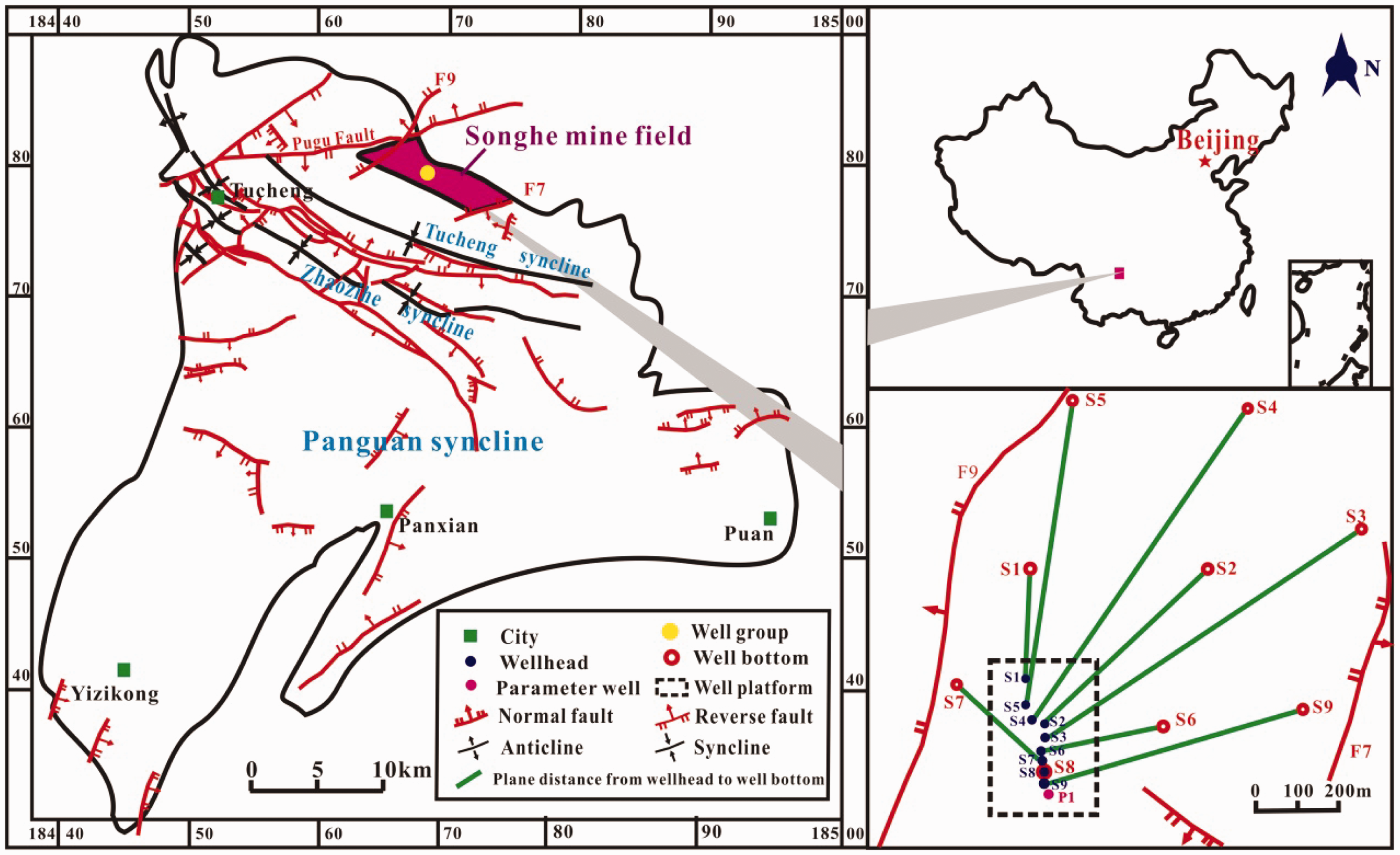
The sedimentary environment of the research region is marine-continental transitional facies. With eustatic cycles, the thin coal seam group was formed with discontinuous deposition in the Upper Permian Longtan Formation (Peng et al., 2005; Qin et al., 2008; Tang et al., 2016; Yuan, 2014), forming the upper, middle, and lower sections, which were deposited in lagoon-tidal flat, lower delta plain, and lagoon-tidal flat sedimentary environment, respectively. The Longtan Formation includes 30 to 47 coal seams, and has 18 minable coal seams, with a minable coal thickness and burial depth of approximately 14–32 m and 500–960 m, respectively (Figure 2). However, the thickness of a single coal seam is very small and ranges from 0.7 to 5.09 m. The main development targets are the coal seams with large thickness and relatively complete coal structure, including Nos.1+3, 4, 52,62, and 9 coal seams in the upper section, Nos.12, 13, 15, and 16 coal seams in the middle section, and Nos. 271, 272, 291, 292, and 293 coal seams in the lower section. The Longtan Formation coal seams have relatively stable distribution in the horizontal direction.
Synthesis column map of Upper Permian Longtan Formation strata.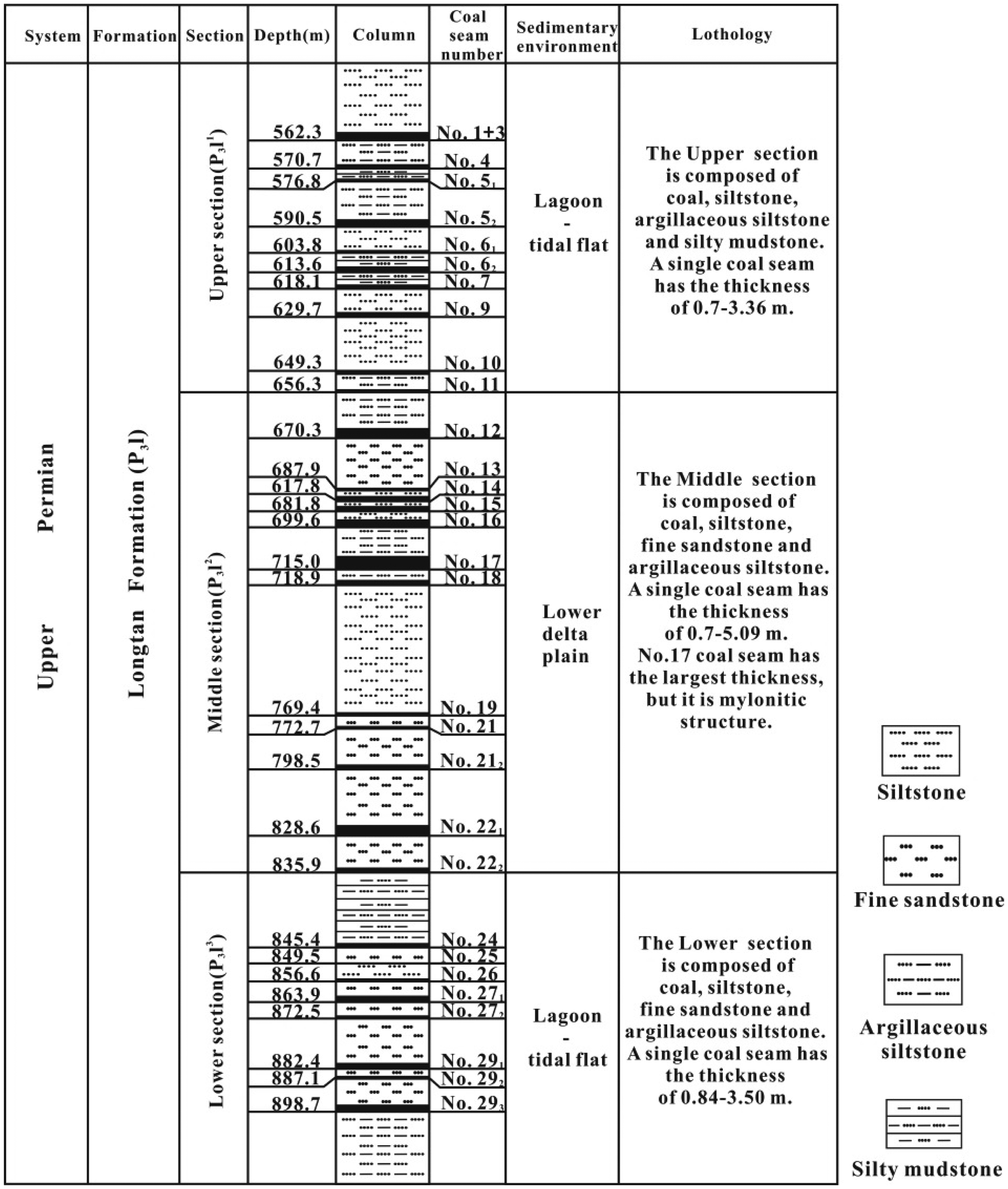
The coal-bearing strata of Longtan Formation in research region had poor aquosity. And both the overlying Feixianguan Formation with green silty mudstone and the underlie Mount Emei Basalt Formation were good water-blocking layers, which suggests that the hydraulic contacts between the coal-bearing strata and overlying and underlie strata were poor, resulting in the coal-bearing strata in a relatively closed hydraulic system.
Characteristics of coal reservoir
In the Songhe mine field, a CBM exploration and development demonstration project was carried out for several years, including one CBM parameter well (P1) and 9 development wells (S1-S9) that form a branch shape well group sharing the same well platform, as shown in Figure 3. The basic parameters obtained from CBM parameter well, in combination with the experimental tests data, such as gas content, vitrinite reflectance (Ro), porosity and permeability, and isothermal adsorption tests, revealed the physical properties of coal reservoirs. Additionally, the injection/pressure drop well test was implemented to acquire reservoir pressure. All of these provided the basic data for our research, and the results were shown in Table 1.
Plane distribution map of the well group (a) and drilling trajectory map (b) in the Songhe mine field. Basic reservoir parameters revealed by CBM parameter well and experimental tests. Per: permeability; Por: porosity; Vr: measured gas content; VL: Langmuir volume; PL: Langmuir pressure; Pr: reservoir pressure; M: reservoir pressure gradient; Pc: critical desorption pressure; Sg: gas saturation.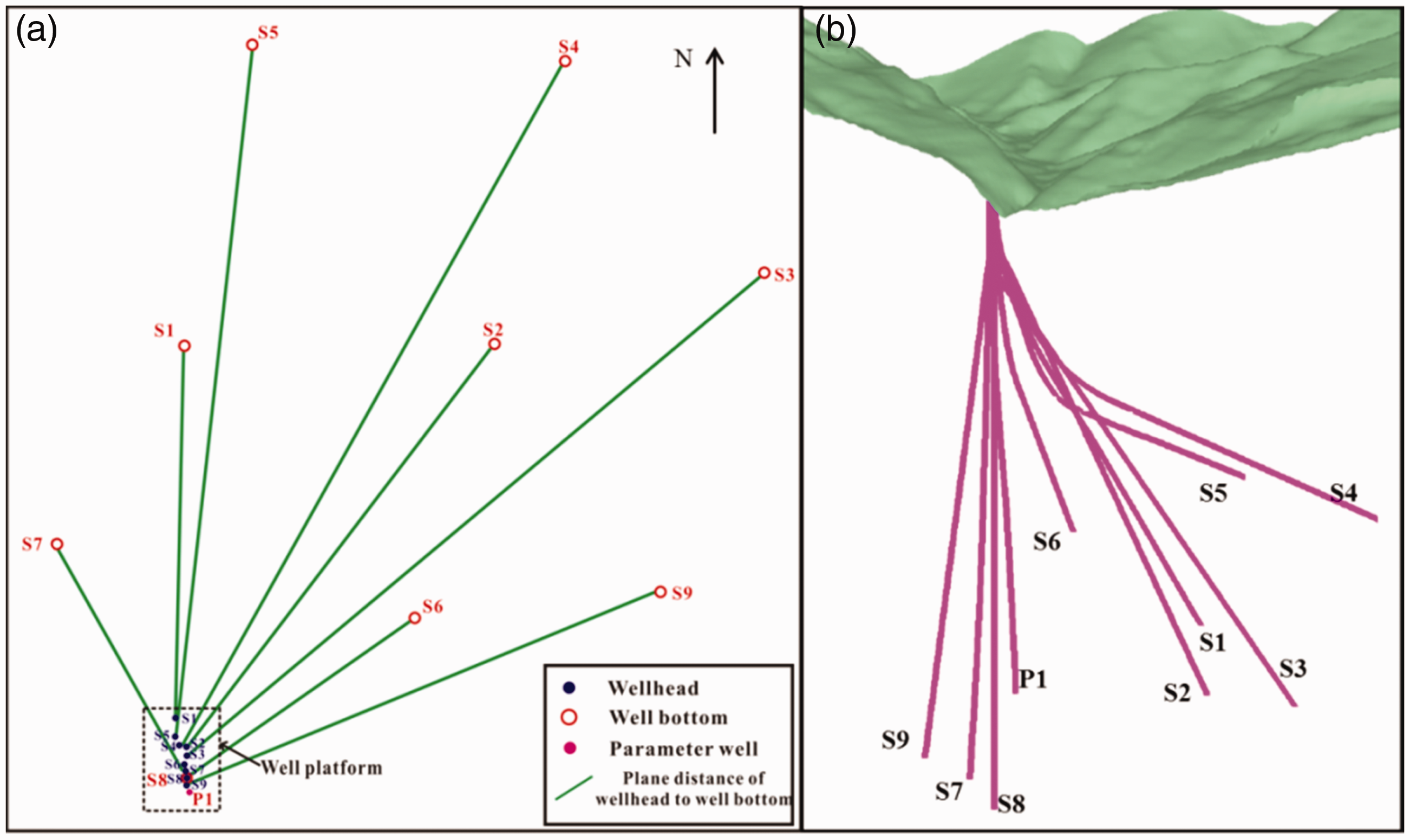
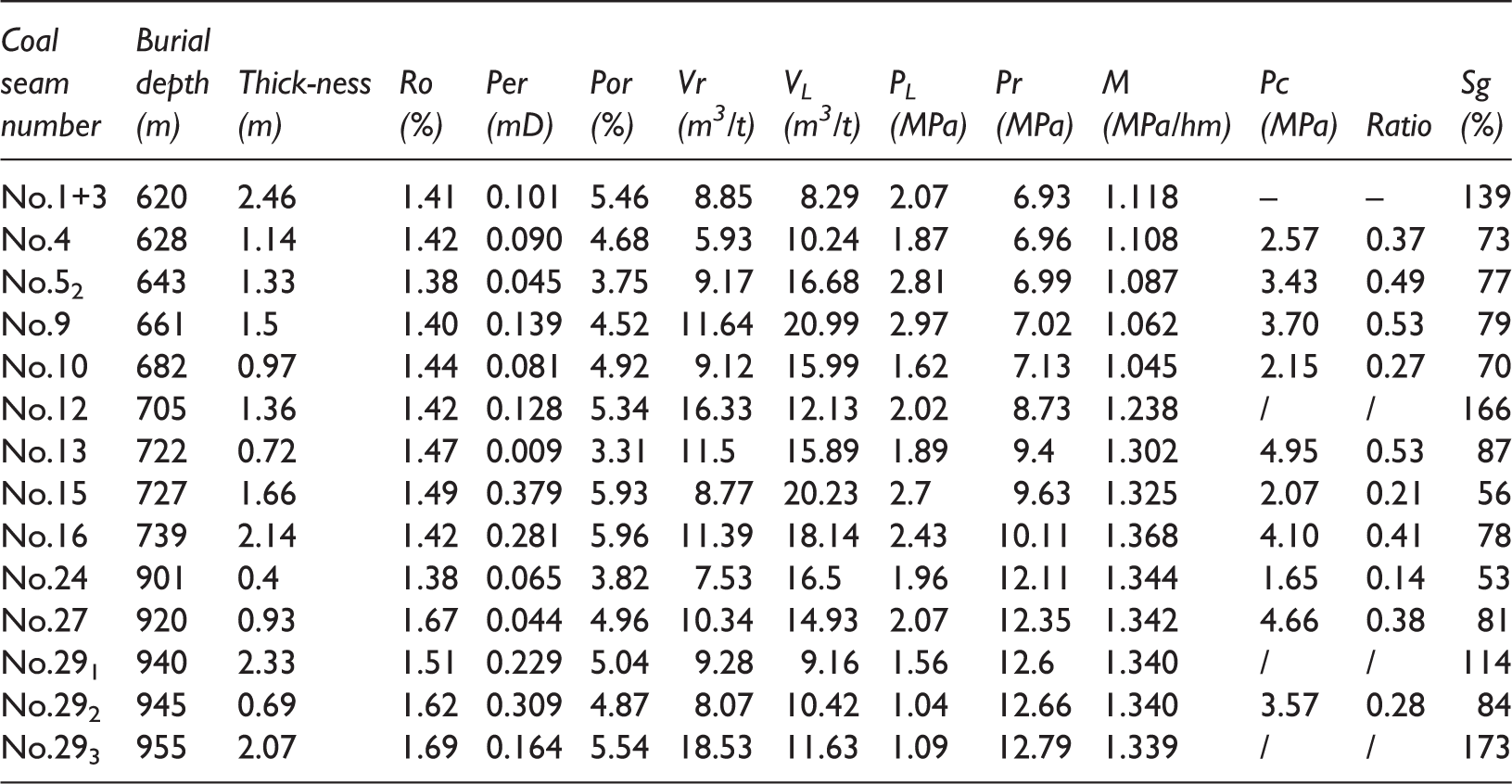
The macrolithotype of coal in this field was given priority to semidull coal with the Ro values from 1.38% to 1.69%. The coal structure was mainly primary and cataclastic structures, except for the No.17 coal seam with mylonitic structure. The coal seams had low initial porosity and permeability that differed largely between different coal seams, ranging from 3.31% to 5.96% and 0.009 to 0.379 mD, respectively. The measured gas content varied from 5.93 to 18.83 m3/t, and No. 293 coal seam had the largest value (Figure 4(a)). The Langmuir volume and pressure varied from 8.29 to 20.99 m3/t and 1.04 to 2.97 MPa, respectively. Furthermore, based on the measured gas content, reservoir pressure and isothermal adsorption tests, the gas saturation and critical desorption pressure of each coal reservoir were calculated according to the following equations (Fu et al., 2013; Guo et al., 2011; Mares et al., 2009; Ozdemir et al., 2009).
Division diagram of CBM systems. Change of gas content/saturation (a) and reservoir pressure/gradient (b) with the burial depth of coal seams.

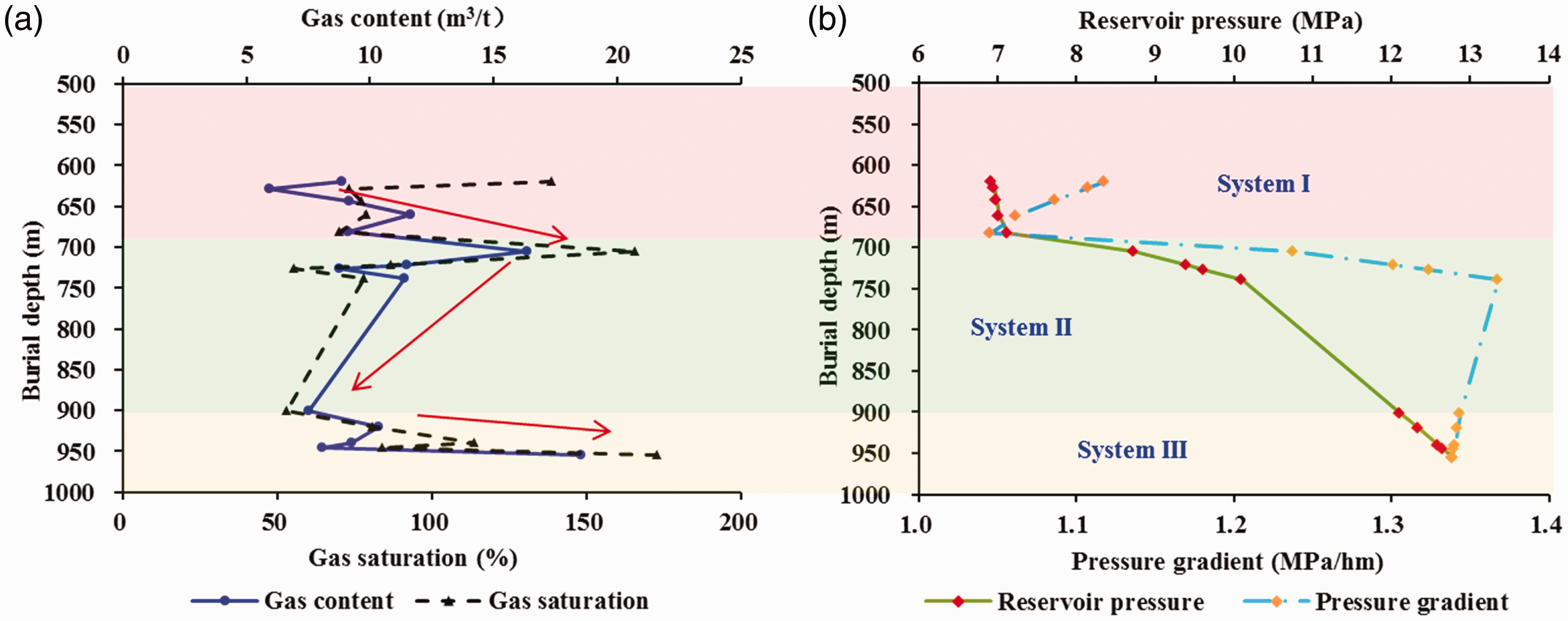
The gas saturation of the coal reservoirs in the research region was over 56%, and the gas filling in the Nos.1+3, 12, 291, and 293 coal seams reached a supersaturation state, especially in the No.293 coal seam, where the gas saturation reached up to 173% (Table 1 and Figure 4(a)). Furthermore, the gas content and saturation presented the trend of increase (500–700 m), decrease (700–900 m), and increase again (900–1000 m) with the increase of the burial depth. The critical desorption pressure varied from 1.65 to 4.95 MPa and was higher in the middle coal group but lower in the upper and lower groups. On the whole, the physical properties of the reservoirs in the Songhe mine field had strong heterogeneity in the vertical direction.
Division of CBM systems
The nonlinear increasing trend of reservoir pressure with the increase of the burial depth can be observed in Figure 4(b), and there were large diversities in the pressure gradient for different depth intervals. On the upper Longtan Formation (<700 m), as burial depth increased, reservoir pressure rose slowly, but pressure gradient decreased (it was slightly higher than the normal value of 1.00 MPa/hm). The reservoir pressure under the No.10 coal seam quickly increased with the increase of the burial depth and the pressure gradient increased up to 1.37 MPa/hm, which suggests that these coal seams have an obvious overpressure phenomenon and have enough energy and dynamics to output CBM, and fluid tends to more easily flow into wellheads (Pashin and Mcintyre, 2003; Peng et al., 2014; Sang et al., 2010; Su et al., 2003; Tian et al., 2008). Furthermore, the gas content also displayed the trend of increase, decrease, and increase again in the upper, middle, and lower Longtan Formation, respectively (Figure 4(a)).
The jump of reservoir pressure state and gas content reflect that different fluid pressure systems were existed in the coal-bearing strata of Longtan Formation. The sequence stratigraphy frame determined by the change of sedimentary environment constitutes the material basis for independent gas accumulation of each coal seam group, and low-permeability gas and water blocking layer can as the boundary between different coal seam groups (Fu et al., 2011; Qin et al., 2008; Yang et al., 2011). And because of the blocking of low-permeability layer, the hydraulic connection between different coal seam groups will be extremely weak, resulting in different reservoir pressures and energies, and thus forming multiple superposed gas-bearing systems (Xiong et al., 2006). On the basis of the above, the coal-bearing strata in this field can be divided into three independent CBM systems from top to bottom, systems I, II, and III (Figure 4), which almost correspond to the formation sequence framework and the Upper, Middle, and Lower Longtan Formation, respectively. The low-permeability argillaceous siltstone and silty mudstone layers were the boundaries between different CBM systems.
Division of CBM systems and reservoir parameters of each gas system.

Pr, M, Pc, and Sg have the same meanings with those in Table 1, but they are the average values of the fractured coal seams included in corresponding system.
Drainage and productivity characteristics of the CBM wells
In the Songhe mine field, the coal seam group from bottom to top was divided into 3 to 5 sections to successively conduct hydraulic fracturing by putting packer between adjacent sections. Every section included 4 to 6 thin coal seams, all of which will be subject to concurrently conduct fracturing. The first and second sections were included in gas system III, the fourth and fifth sections were included in system I, and the third section almost corresponded to system II. Finally, commingled drainage was conducted for all of the fracturing sections through the same wellbore. Taking well S6 as an example, the tube string design of the fifth section is shown in Figure 5. Furthermore, the fractured coal seams and production characteristics of each CBM well in this field were showed in Table 3.
Schematic diagram of the tube string of the fifth section of well S6. Fractured coal seams and gas and water productions characteristics of CBM wells in the Songhe mine field. The “No/Nos” in front of each coal seam were omitted. Time A: gas breakthrough time; Time B: time from first day to stable production period; Time C: drainage time.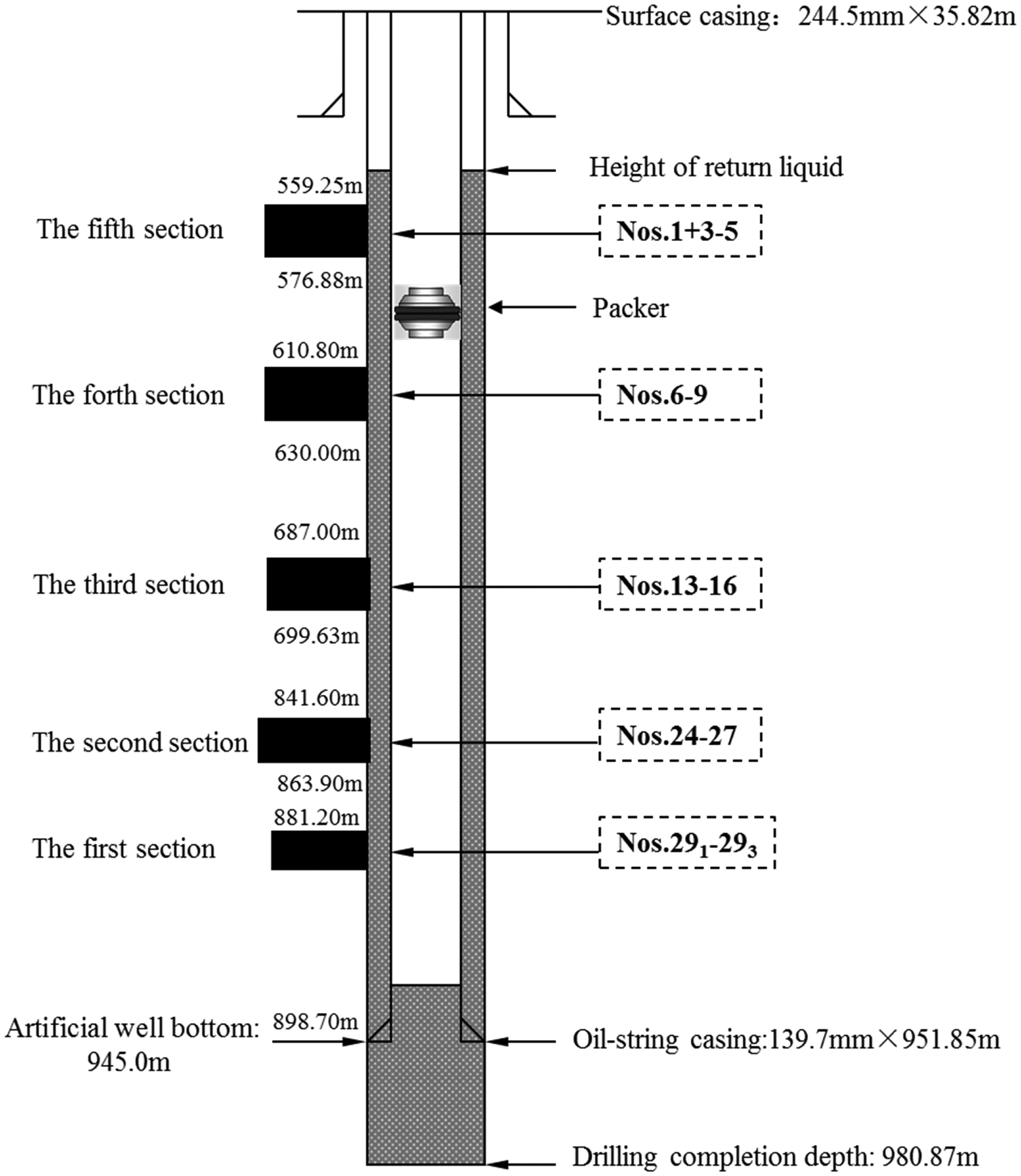
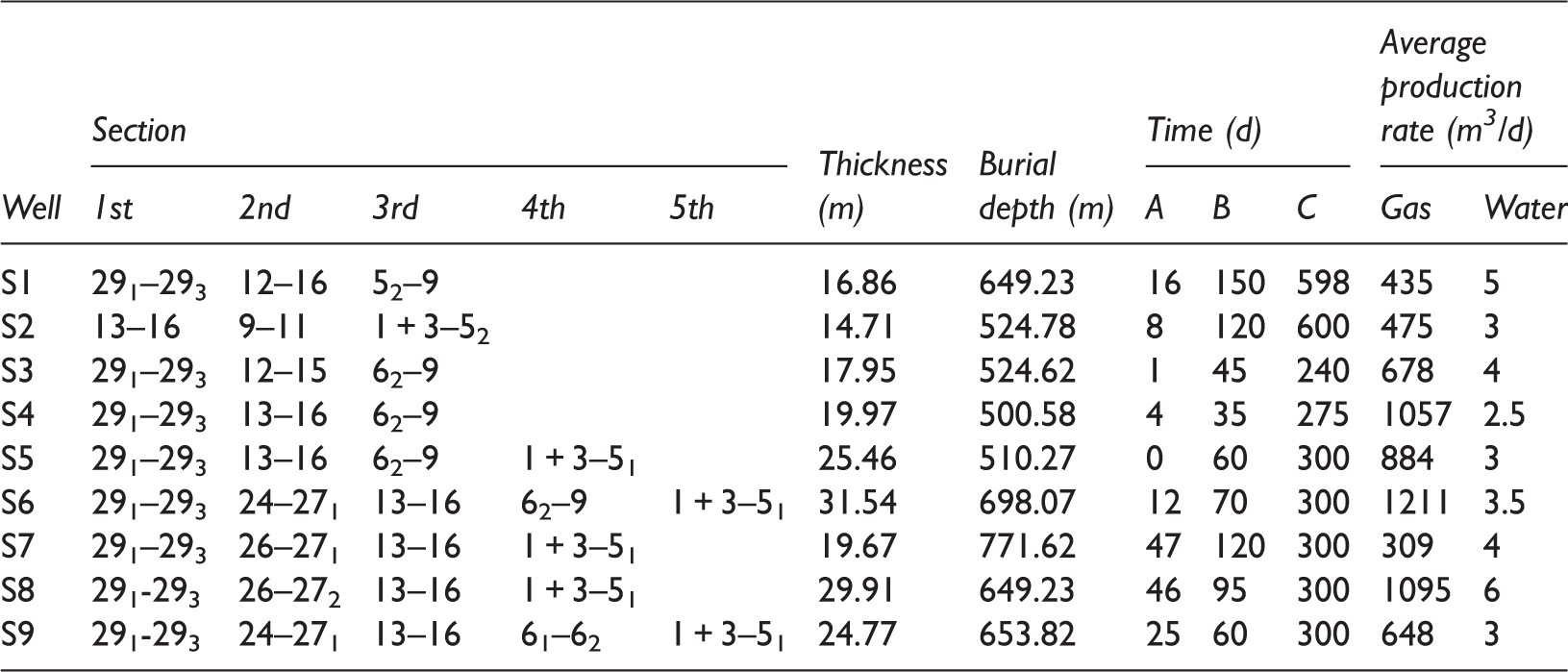
Wells S1 and S2 had a relatively longer drainage time of approx. 600 d, but other wells had the drainage time within the range of 240 to 300 d, and they were all in the decline stage of gas production. The CBM well productivity varied significantly with the average gas production rate ranging from 309 to 1,211 m3/d. Because of the poor aquosity of coal-bearing strata in the research region, all of the wells had a smaller water production rate, which varied from 2.5 to 6.0 m3/d. Gas breakthrough time of the nine production wells was very short, ranging from 0 to 47 d. The production curve in Figure 6 shows that well S5 produced gas on the first day of drainage and required a short time (approx. 60 d) to reach the stable production stage. These production wells have high maximum gas production rates from 1000 to 3000 m3/d, whereas they have lower average gas production rates; only three wells have an average gas production rate over 1000 m3 (Table 3). Additionally, the stable production time is too short to obtain high cumulative gas production, such as for wells S4, S6, and S8 that began to enter into the production decline stage after experiencing a stable production for only a few months (Figure 6). The high yield stage was also short, such as for the S7 well, whose gas production rate was over 1000 m3/d in only one week before it began to decline (Figure 6). The drainage curves show that the drainage operation was continuous for each well, suggesting that the productivity is barely affected by artificial and machine accidents.
Drainage curve of typical CBM wells in the Songhe mine field.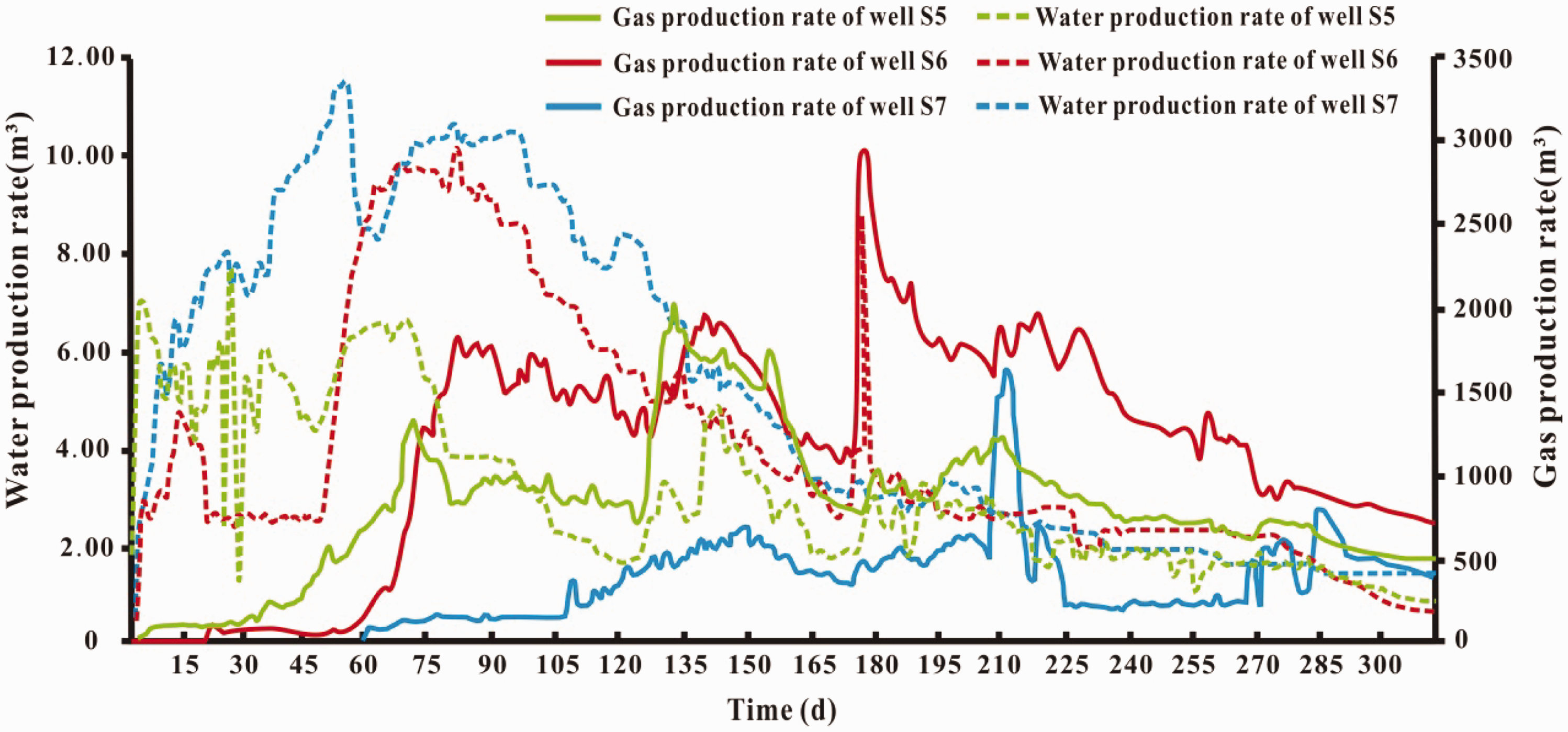
Overall, compared with other regions in China, where commingled development is conducted on two to three coal seams, such as the Hancheng and Liulin regions with an average gas production rate of approximately 1350 and 1200 m3/d, respectively (Meng et al., 2014; Peng et al., 2014), the advantages of commingled drainage in the Songhe mine field are not given full play.
Controlling factors of CBM well productivity of multiple superposed CBM systems
In general, the gas production of a single coal seam is dominated by tectonic and hydrological conditions, initial reservoir pressure and permeability, the thickness, burial depth, gas content and coal structure of coal seam, and fracturing effects (Kulikova et al., 2015; Mares et al., 2008; Shi et al., 2014; Tao et al., 2014; Wong et al., 2010). However, the coal seams develop quite peculiarly in the multiple coal seam regions; therefore, research on the controlling factors of CBM well productivity is more complex than that of other regions and it is necessary to demonstrate if these factors are still in control of the CBM well productivity in this type region.
Geological tectonic and hydrological conditions
Based on the geological data of the Songhe mine field, the geological tectonics around CBM wells is relatively simple. There were few faults in the interior of the field; the normal fault F9 and the reverse fault F7 distributed in the boundary of the field had barely effect on coal measure strata, and CBM wells did not meet the faults in drilling process (Figure 1). The water production data shows that all CBM wells had lower water production, which largely resulted from the poor aquosity and water permeability of the Longtan Formation as well as the overlying and underlie strata. This suggests that the CBM well productivity in study area was barely affected by the geological tectonic and hydrological conditions, which are the main controlling factors of CBM well productivity in other regions.
Thickness, burial depth, gas content, and permeability of coal seam
In general, the thick instead of thin coal seams (for a single coal seam) tend to produce enormous quantity of CBM because coal is a prerequisite for CBM production (Jin et al., 2004; Lv et al., 2012; Pashin, et al., 1998). Furthermore, under the condition of the same coal thickness, the coal seam with high gas content and initial permeability is likely to have higher gas production. Figure 7(a) and (b) shows that the gas production rates of most CBM wells in this field tent to be enhanced with the increase of cumulative thickness and average gas content of fractured coal seams on the whole, whereas some wells deviated from the trend lines. In Figure 7, well S9 and well S4 had similar gas content and permeability of coal seam, but well S9 with larger cumulative coal thickness had smaller gas production rate in comparison with well S4. The most possible reason is that the large cumulative coal thickness of well S9 is resulted from the increase in the number of fractured coal seam, and thus increases the possibility of vertical heterogeneity of gas content and permeability, which is counterproductive for CBM wells. Additionally, well S4 and well S7 with the similar cumulative coal thickness and average gas content (Figure 7(a) and (b)), had significantly different gas production (1057 and 309 m3/d, respectively), which also attributes to that well S7 had more fractured coal seams than that in well S4 (Table 3), and the associated increase of heterogeneity in the reservoir physical properties.
Scatter map of gas production and the cumulative thickness (a), gas content (b), and permeability (c) of fractured coal seams of each CBM well.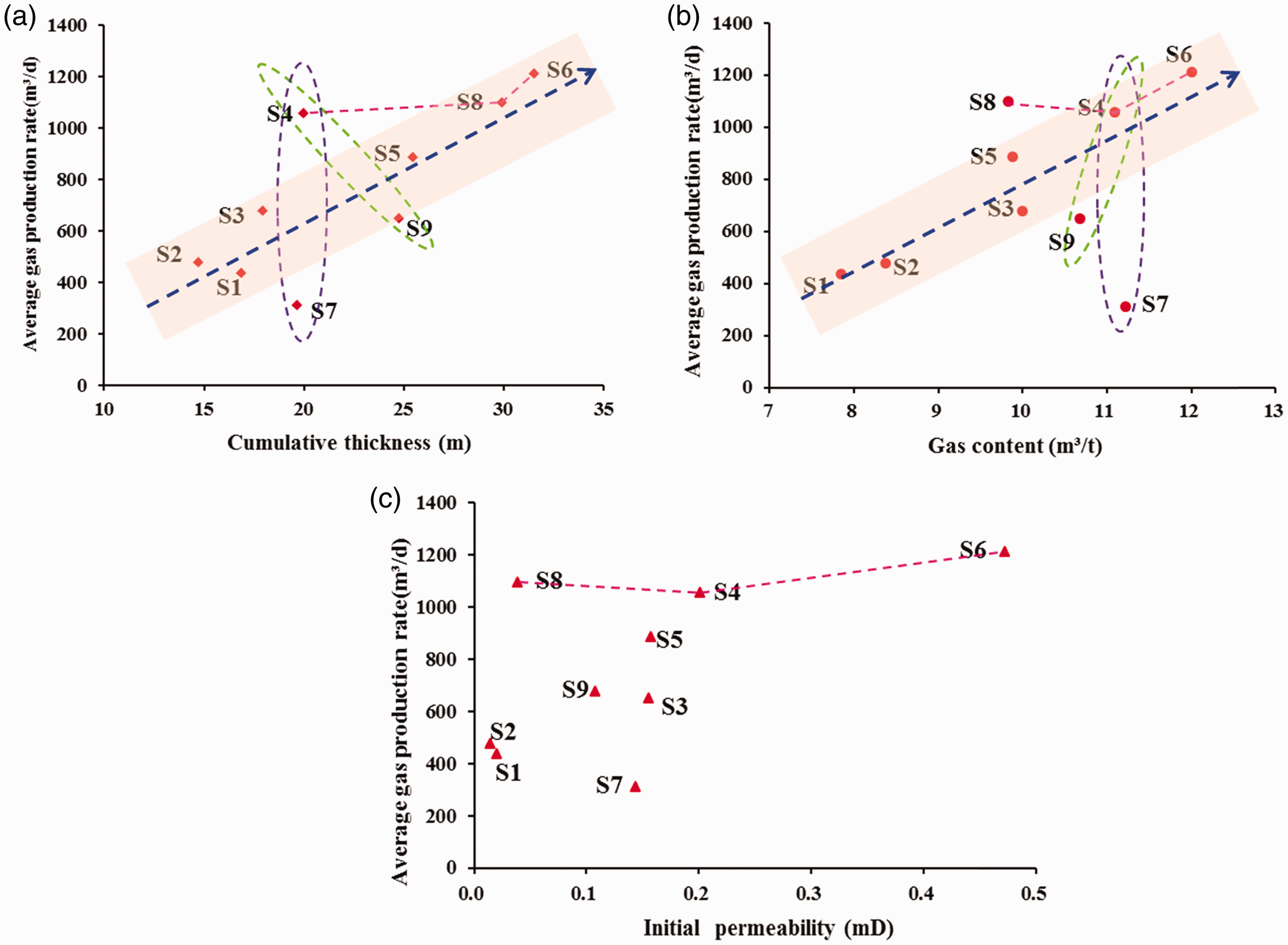
Coal seams with high initial reservoir pressure have more energy and dynamics to output CBM, which increases the possibility of fluids flowing into the wellhead (Dai et al., 2003; Jin et al., 2016; Li et al., 2015). However, a coal seam with high reservoir pressure generally has larger burial depth, and thus tends to have lower initial permeability, the essential condition of fluid flow and output, suggesting that these factors are generally interactive for gas migration and output. This also explains the result that the gas production rate in the Songhe mine field was poorly correlated with the initial reservoir permeability (Figure 7(c)).
By comparing wells S4, S8, and S6 that all obtained relatively better productivity, we found that the gas production rate only had a slightly positive correlation with cumulative thickness of fractured coal seam (Figure 7(a)), although the gas content and initial permeability of the three wells did not present ascending order (Figure 7(b) and (c)). This indicates that the effect on gas production brought by cumulative thickness of fractured coal seam was still stronger than the gas content and permeability for multiple coal seam regions. However, the increase of heterogeneity and interlayer difference in gas content, permeability, and reservoir pressure brought by the large cumulative thickness of commingled coal seam also had great negative effect on the CBM well productivity. Furthermore, the degree of the interaction of cumulative thickness, gas content, initial permeability, reservoir pressure, and burial depth of commingled coal seam, is much stronger than that of other regions.
Interlayer interference
As stated above, the vertical heterogeneity and interlayer difference in reservoir properties should be inevitably responsible for CBM well productivity, because they cause interlayer interference among different reservoirs.
Reservoir pressure, one of the concrete manifestations of reservoir energy, is the dynamic of gas output and controls flow direction, and is the most direct factor causing interlayer interference (Li et al., 2012; Pashin and Mcintyre, 2004; Su et al., 2003; Zou, et al., 2013). Under the condition of similar permeability, the fluid in high-pressure reservoir is easier to flow into wellheads than that in the low-pressure reservoirs. The pressure gradient is the comprehensive presentation of the reservoir pressure and buried depth and is used as an index for comparing the reservoir energy. Table 3 and Figure 4 (Part 3) show large differences in the reservoir pressure and gradient between different gas-bearing systems, which lead to significant fluid output differences, and may even produce the phenomena of cross-flow of gas and water or backwards flow (Li et al., 2010). The fluid in the reservoirs in system II or III with a higher reservoir pressure, may flow backwards into the reservoirs in system I that had lower pressure under the action of pressure difference, which not only stimulates the reservoirs in system II or III to produce too much coal fines but also suppresses the dewatering and lowering of pressure in the reservoirs in system I.
Gas saturation is the comprehensive manifestation of gas content and absorption capacity and to some extent decides the critical desorption pressure of coal reservoirs. Generally, a high gas content is equivalent to a high gas saturation in the same tectonic setting, and a high gas saturation will decrease the energy the coal reservoir needs when the gas leaves the coal matrix and changes to a free state from an adsorption state (Lv et al., 2012; Meng et al., 2013). In this field, CBM system III reached a state of supersaturation overall, but systems I and II were in a state of undersaturation, which indicates that the gas in system III need less energy when it leaves the coal matrix in comparison with systems I and II.
The critical desorption pressure and the ratio of critical desorption pressure for reservoir pressure (ratio) determine the desorption sequence of reservoir and how much the reservoir pressure needs to be lowered before gas desorbs (Guo and Su, 2010; Luo et al., 2016). A large difference in the critical desorption pressure and the ratio value among different CBM systems will lead to inconsistent pressure transmission speed. In the field, the gas will first desorb from system II with the largest critical desorption pressure and Ratio value, however, the gas in the casing may produce a gas-lock effect on systems I and III that have not been desorbed, and will thus restrain the gas output from the latter.
All of the above suggest that the interlayer difference and the associated interlayer interference may produce great negative effects on the CBM well productivity during commingled drainage. In order to intuitively characterize these effects, the variance coefficients of permeability and gas content and the evaluation parameter of interlayer interference were introduced and analyzed.
The variance coefficients of permeability and gas content represent the range of the permeability and gas content of the coal seam in each well and characterize the strength of reservoir heterogeneity. Figure 8 shows the decreasing trend of gas production rate of a single well with the increase of the variance coefficient of gas content and permeability, which suggests that the strong heterogeneity and interlayer difference in reservoir physical properties will lead to a poor CBM well productivity.
Scatter map of gas production rate with the variance coefficient of permeability (a) and gas content (b) of CBM well.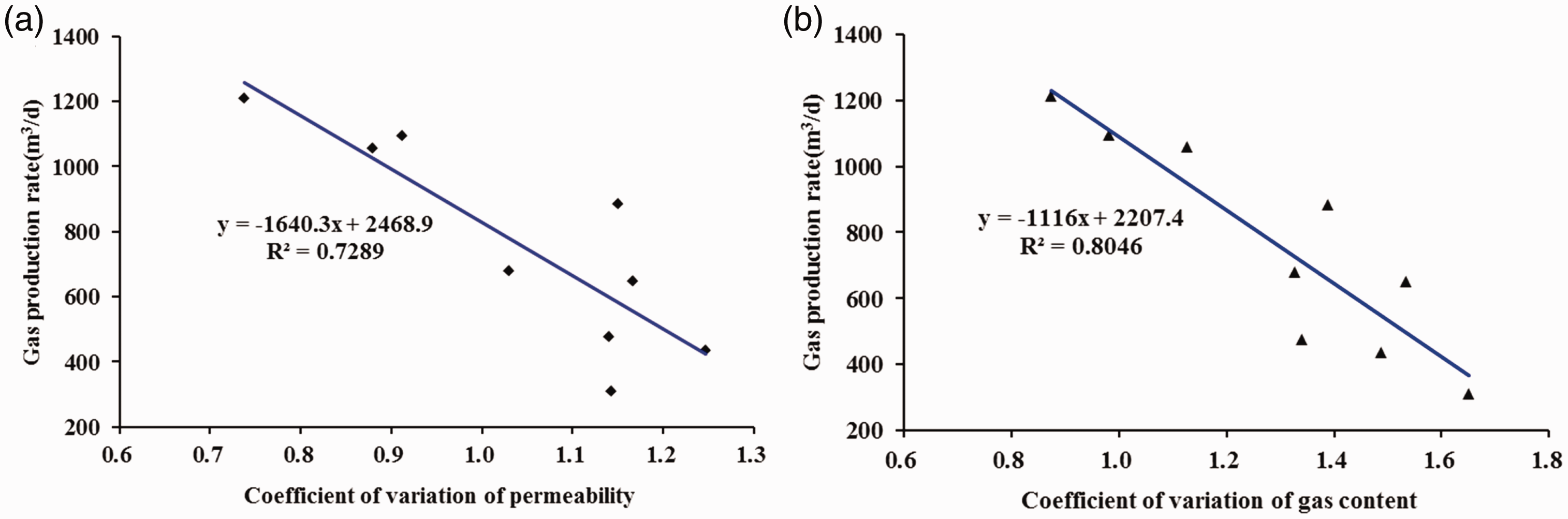
The degree of interlayer interference of two gas-bearing systems can be quantitatively characterized by the matching relationship of the two difference values (the difference value of critical desorption pressure, and the difference value of burial depth) (equation (3)) (Luo et al., 2016). The closer the change direction of the two difference values, the more synchronous the gas desorption and smaller the interlayer interference, which means that the two systems are more suitable for commingled drainage when the C value approaches 0.

The evaluation parameters of the interlayer interference among the three systems of each CBM well were calculated based on equation (3). Figure 9 shows the decreasing trend of gas production rate of CBM well with the increase of C value, and S6 and S8 wells with lower C values had the highest gas production.
Relationship of gas production rate with the evaluation parameter of interlayer interference. The two points of the same line are the two C values between three gas-bearing systems of each well.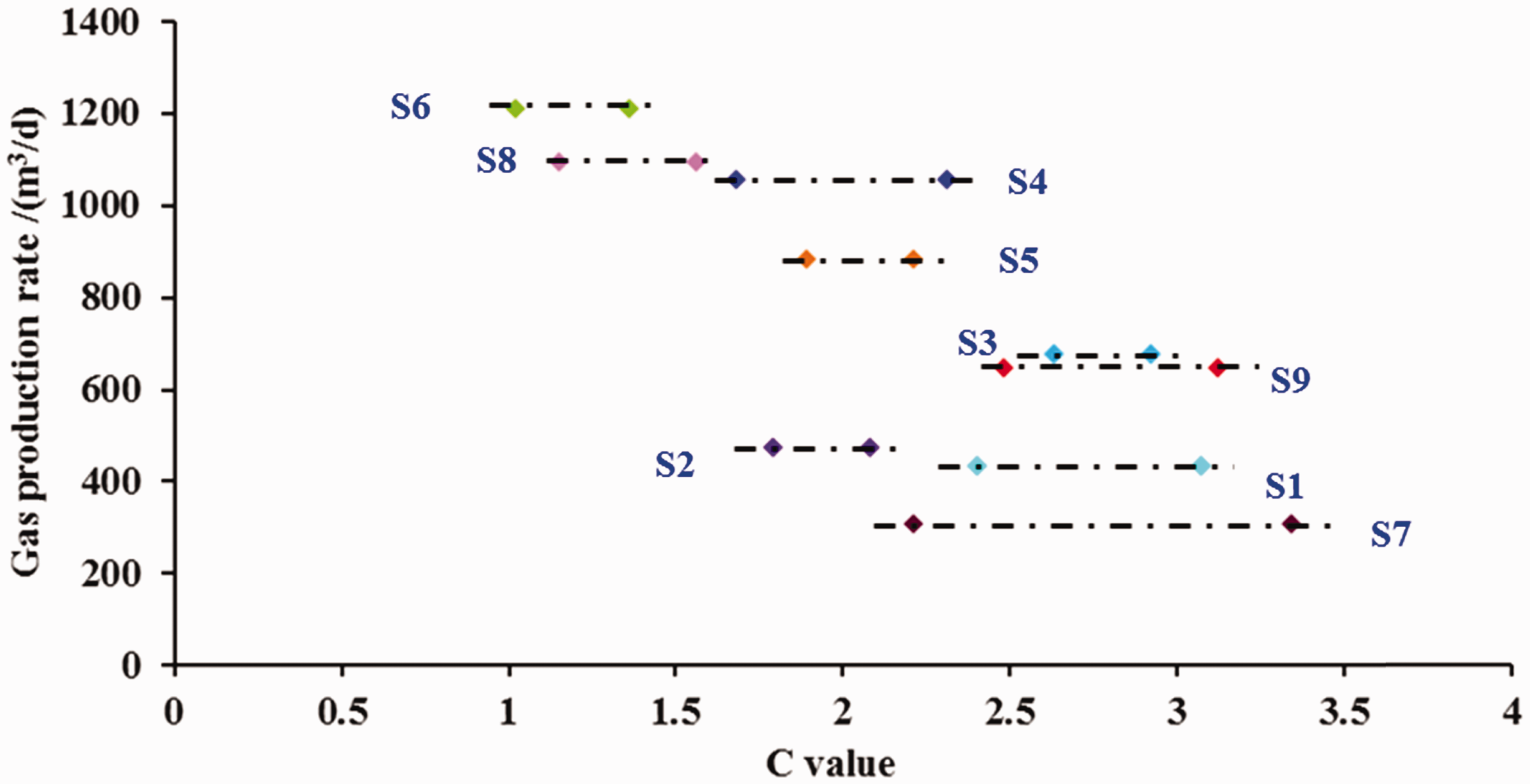
Engineering factor
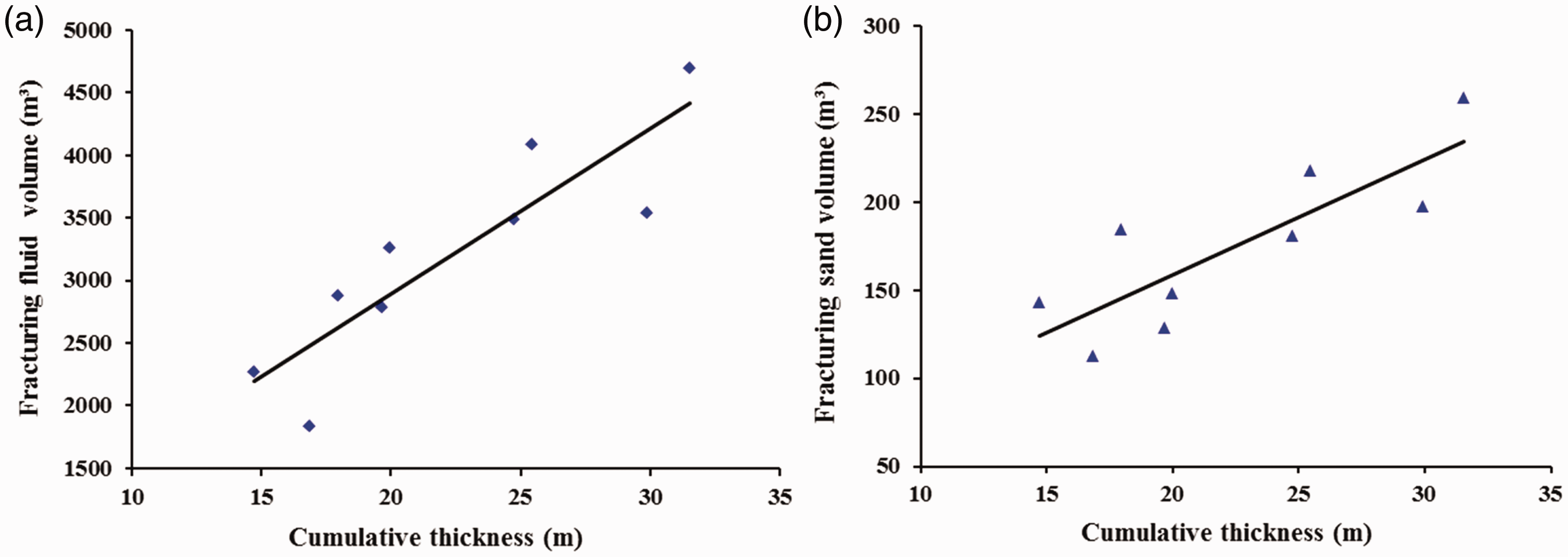
Most reservoirs of this field have low initial permeability, less than 0.1 × 10⁻³ µm2, as a result, the reservoirs need stimulation technique to enhance the permeability to effectively produce gas. Currently, the most common stimulation technique is hydraulic fracturing, and the total volumes of fracturing fluid and fracturing sand are two important parameters characterizing the fracturing scale in the fracturing process. For a single coal seam, a larger fracturing fluid and fracturing sand volumes is more beneficial to increase the fracture length, width, and flow conductivity, which contributes to high gas production (China United Coalbed Methane Co., 2003; Lv et al., 2012). Figure 10 shows that the gas production rate was enhanced with the increase of total injection of fracturing fluid and sand. However, for the commingled drainage of multiple coal seams, the fracturing fluid and sand volumes had a closely positive correlation with the cumulative thickness of fractured coal seam (Figure 11). Thus, the accepted principle that the wells injected more fluid and sand during fracturing tend to have larger fracturing scale and to be excellent gas producers does not apply to the commingled drainage of multiple coal seams due to the effect of cumulative coal thickness. However, reasonable fracturing fluid and sand volumes and injection rate are always favorable to enhance CBM well productivity no matter for single or multiple coal seam regions (Zhao et al., 2015).
Scatter map of gas production and fracturing fluid (a) and sand (b) of fractured coal seam. Scatter map of total injection of fracturing fluid (a) and sand (b) and cumulative thickness of fractured coal seam.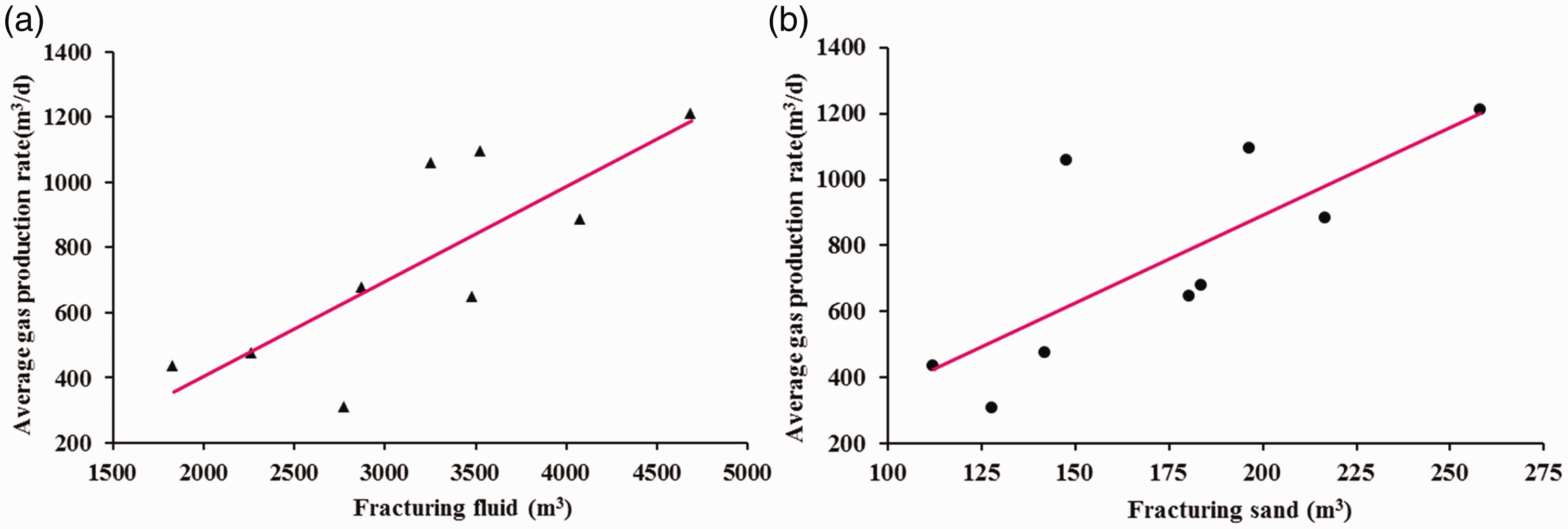
In contrast, the drainage method is more critical engineering factor controlling well productivity for multiple coal seam regions, because an improper combination of gas-bearing systems and drainage and dewatering sequence will increase the interlayer interference. In the Songhe mine field, it applied the conventional commingled drainage method where the three gas-bearing systems were put into concurrently dewatering and lowering of pressure, which ignored the inconsistent pressure systems and the interlayer difference in the reservoir properties. This will inevitably intensify the effect of the interlayer interference, wherein not all systems give their maximum in the gas output capacity.
Suggestions about commingled drainage
In an effort to diminish the effect of interlayer difference, we suggested that the drainage method in this field should be designed in steps and progressively according to reservoir pressure and critical desorption pressure. The gas-bearing system with high critical desorption pressure and gas production pressure is put into drainage first; when its pressures are lowered to the values of another gas system, the two gas-bearing systems are put into commingled drainage. The entire gas-bearing systems are put into progressive drainage by this means (Fu et al., 2013).
The critical desorption pressures of systems I, II, and III were 2.71, 3.96 and 3.29 MPa, respectively. Based on the production practice of Qinshui Basin in Shanxi province, gas production pressure was approx. 1.2 times higher than critical desorption pressure (Chen, 2009; Guo et al., 2012; Wu et al., 2011). Therefore, the gas production pressure of the three systems was approximately 3.25, 4.75, and 3.95 MPa, respectively. In the first stage, system II with the highest critical desorption and gas production pressure, should be prioritized for drainage (Figure 12). After the reservoir pressure is lowered to 3.95 MPa, which is equal to the production pressure of system III, and the drainage will enter into the second stage that systems II and III are put into commingled production. When the reservoir pressure is lowered to 3.25 MPa, the production pressure of system I, the system I will begin to produce gas, and the drainage will enter into the last stage where systems I, II, and III are put into commingled drainage.
Skematic diagram of pressure propagation and expansion of desorption area during progressive drainage.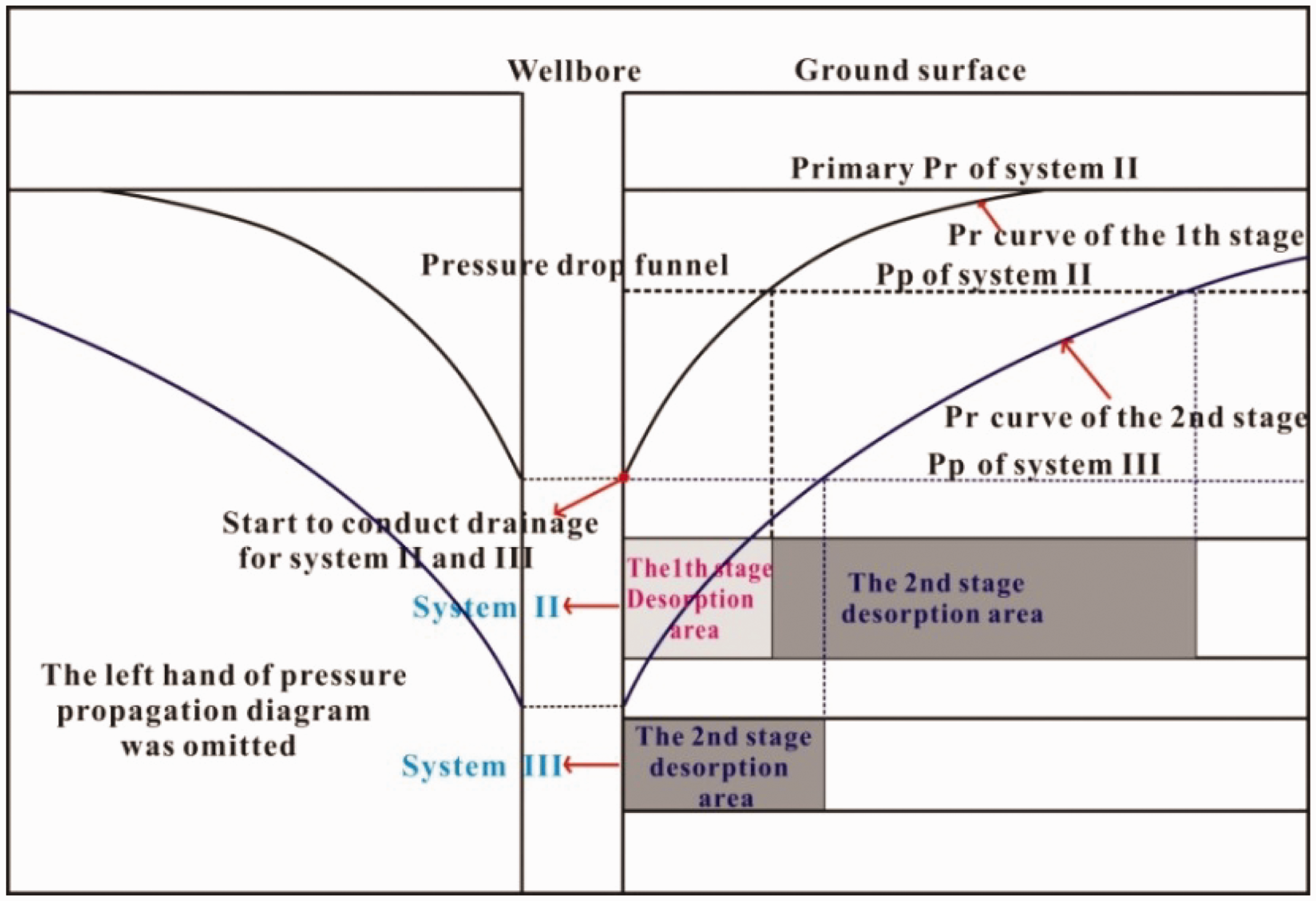
As stated above, the progressive drainage of multiple gas-bearing systems was the optimal drainage method for multiple coal seam regions. A single gas system, generally restricted by the quantity of resources, can hardly provide long-term gas source supply, resulting in a short stable production period and a low cumulative gas production. The commingled drainage of multiple CBM systems has a longer gas production period and a higher cumulative gas production; whereas, restricted by interlayer interference, not all gas-bearing systems contribute to productivity. The progressive drainage of multiple gas-bearing systems was designed according to reservoir pressure, critical desorption pressure, and gas production pressure of each system, which can minimum the interlayer interference and achieve an ideal productivity performance.
Conclusions
The coal seams had strong vertical heterogeneity in reservoir physical properties, and multiple sets of fluid pressure systems existed in the coal-bearing strata, which are caused by the change of sedimentary environment and the development of water- and gas-blocking layer. The coal-bearing strata were divided into three independent CBM systems from top to bottom (systems I, II, and III), which is consistent with the generally accepted principles in Guizhou region. Overall, the CBM wells in this field had a poor productivity performance, and the advantages of commingled drainage are not given full play. The gas production had a positive correlation with cumulative thickness and gas content of fractured coal seams overall. However, the large cumulative thickness is generally resulted from the increase of coal seam number, and thus increases the reservoir heterogeneity and interlayer difference. The well productivity performance for this type region was a result of the strong interaction of cumulative thickness, burial depth, gas content, permeability, and reservoir pressure of fractured coal seam. The associated interlayer interference problem became the most direct factor restricting productivity of commingled drainage by affecting the speed of dewatering and lowering of pressure and gas desorption time of gas-bearing systems. The analysis results of the correlations between gas production and interlayer difference and interference showed that the wells with large interlayer difference and interference tent to have a poor productivity performance. The drainage method was particularly important factor controlling well productivity for multiple CBM systems, because a proper combination of gas-bearing system and drainage and dewatering sequence are the keys to decrease the interlayer interference. The commingled drainage in this field was suggested to conduct in steps according to the reservoir pressure, critical desorption pressure, and gas production pressure of each CBM system. System II with high critical desorption pressure and gas production pressure should be put into drainage first; when its pressures are lowered to the values of system III, the two systems can be put into commingled drainage. The entire gas-bearing systems should be put into progressive drainage by this means.
Footnotes
Declaration of conflicting interests
The author(s) declared no potential conflicts of interest with respect to the research, authorship, and/or publication of this article.
Funding
The author(s) disclosed receipt of the following financial support for the research, authorship, and/or publication of this article: This research was financially supported by the China National Major Science Project (Grant No. 2016ZX05044-001), the State Key Program of the National Natural Science of China (Grant No. 41530314), the Specialized Research Fund for the Doctoral Program of Higher Education of China (Grant No. 20130022110010).