



Abstract
The Department for Business, Energy & Industrial Strategy and the Committee on Climate Change place high dependency on the electrification of heat and use of heat pump systems to achieve net zero emissions by 2050. Energy efficient buildings are essential for effective heat pump operation. However, the UK’s housing stock is amongst the least energy efficient in Europe. Household electricity demand will increase with heat pump use, meaning reinforcement to infrastructure and generation capacity. This study uses dynamic simulation modelling to determine the optimum energy efficient retrofit required to minimise energy use and electrical demand for an average semi-detached dwelling using a heat pump. Solid wall insulation is found to be critical in energy abatement, although the heat pump operates at a high demand compared with low voltage network design. A whole house retrofit in-line with current Building Regulations reduces the heating demand and emissions by 65%, and lowers the input electrical demand for the heat pump to under 1 kW. Solid wall insulation and low U-value glazing are the cost-optimal solution, achieving similar abatement. Measures that exceed building regulations are shown to lower heat demand and carbon emissions by almost 80%, highlighting scope for improvement in retrofit standards.
Keywords
Introduction
The Government’s Clean Growth Strategy recognises the decarbonisation of heat in the domestic sector as the UK’s toughest policy challenge in meeting the 2050 emissions reduction target. 1 The Committee on Climate Changes (CCC) core scenario for net zero emissions includes improvements in energy efficiency and an increased uptake of low-carbon heating. It maintains the need for large-scale deployment of low-carbon heating before 2030 for the UK to be successful in its ambitions. 2
Space heating and hot water demand make up 40% of energy use and 20% of greenhouse gas emissions in UK households. Almost all homes will need to be low-carbon by 2050, however, at present less than 2% of buildings are heated with low-carbon sources 3 and energy efficiency in the housing stock is amongst the worst when compared with other European countries.
For UK policy makers, a preferred alternative to high carbon fossil fuels is a system heavily reliant on heat pumps powered by low carbon electricity. 4 This presents a barrier to the efficient operation and uptake of heat pump systems in the existing housing stock, as system performance is significantly impacted by the heat transfer coefficient of a building.
Moreover, the housing stock is made up of an estimated 24 million dwellings and studies have revealed around 50% have an Energy Performance Certificate (EPC) rating of D, with a further 21% rated E or worse. 5
The majority of these properties are gas heated and will need to transition to heat pump systems in the future. However, much of the low voltage (LV) electrical infrastructure used to supply these properties is not designed to operate with the sustained loads brought about by heat pump use. With heat demand peaking in winter and heat pump efficiencies reduced in lower temperatures, the need for more energy efficient homes is evident.
This paper analyses a range of retrofit measures using dynamic simulation modelling (DSM) for an average dwelling to establish the primary energy use, space heating energy use and heat pump power input over a year.
Literature
Energy efficiency and the existing housing stock
It is estimated that 80% of today’s buildings will be in operation by 2050. Additionally the UK’s housing stock is amongst the least energy efficient in Europe, ranking 11 out of 15 countries. Some significant improvements have been made with the retrofitting of loft and cavity wall insulation, however, more action is needed.
Eyre and Baruah highlight that low cost, relatively easy to implement energy efficient improvements are not available to most, and effective policy framework has been reduced. 4 Gupta and Gregg note policies such as the Carbon Emission Reduction Target, the Green Deal, the Green Deal Home Improvement Fund and Zero Carbon Homes either changed or were withdrawn in 2012. As a result, fewer emission reducing technologies have been installed in buildings.6,7
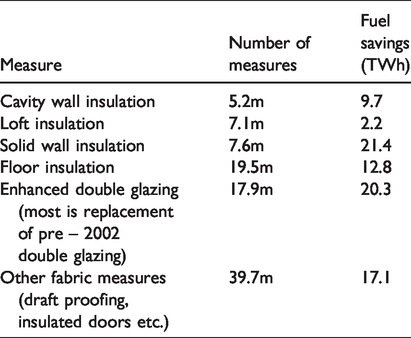
Research conducted by Rosenow et al. (see Table 1) shows that large fuel savings are possible with improvements to the thermal performance of the building fabric and enhancements to glazing and doors. 8
Estimated number of remaining energy efficient measures and fuel savings for the UK housing stock. 8
Electrification of heat
Low-carbon electricity
Emissions from the power sector fell by 46% from 2013 to 2016. The key drivers being reduced demand, milder winters and natural gas increasing its share of generation up to 60%. 9 Renewable sources such as wind, solar and biomass provided 119TWh in 2019, an increase of 8.5% on 2018, accounting for 36.9% of electricity generated. 10
The continued decarbonisation of the power sector is emphasised in the fourth and fifth carbon budgets, meaning the trend of falling emissions is likely to continue. By increasing the share of renewables, stable low-carbon power can account for up to 95% of UK electricity by 2050 (7).
The role of heat pumps
It is projected that electricity will provide at least 30% of heat for buildings, with some scenarios as high as 75% by 2050 (7) It is expected this will be delivered primarily by heat pump systems, where there is strong retrofit potential across the existing housing stock. The BEIS pathway shows heat pumps sharing 34% of space and water heating demand for residential buildings up to 2030. The CCC pathway goes further, with heat pumps accounting for 92% of building heat demand by 2050 (11).
When installed in poorly insulated buildings, heat pump size and electrical demand increases. This can lead to barriers in the uptake of heat pumps or require upgrades to electrical infrastructure, sometimes from single to three-phase supplies. This is recognised by many as costly with the potential for large scale disruption. 11 Improving a building’s envelope will decrease fabric losses and increase efficiency.
A fundamental step to maximise heat pump efficiency is the reduction in the temperature differential between the heat sink and the heat source. The type of heat emitter used and hot water generation and storage also impact efficiency and power consumption, however, these fall outside the scope of this paper.
Heat pump electrical load profile
The issues with heat pump deployment at a national scale are peak demand and ramp rate increases, although the latter is found to be marginally affected by large scale heat pump use. 12 Peak demand effects the transmission network and the generation plant, meaning increases will likely lead to investment in both. At a local scale, the connection of large numbers of heat pumps leads to excessive voltage drop and thermal constraints on cables and transformers.
Imperial College London found the installation of an 8.5kWth heat pump (suitable for a typical household), increased electrical demand by 3 kW. 13 Electrical network design for a typical 3-bedroom household with gas central heating uses an After Diversity Maximum Demand (ADMD) of 1.5 kW.
Research by the Customer Led Networks Revolution (CLNR) project found for 100 customers, ADMD per heat pump was around 1.3 kW; the ADMD of the dwelling without heat pump was 1.2 kW, and the ADMD of the combined dwelling-heat pump was around 2 kW. 12 This indicates that the daily peak in heat pump use does not coincide with the daily peak of the rest of the dwelling. With control strategies and measures to reduce demand there is scope to mitigate or limit infrastructure upgrades.
Using a larger data set, Love et al. find heat pump ADMD to be 1.8 kW for 100 systems, and around 1.7 kW for 275 systems. They note that local level substations generally have around 120 connections. Further research is required to determine the impact that ADMD will have at a local level.
Insulating the existing housing stock
In the UK, 22 million households (∼85%) are connected to the gas grid and will likely require retrofitting with a heat pump. Of that figure; 4.8 million are detached, 6 million are semi-detached and 6.8 million are terraced, with the remaining 3.4 million made up of flats. Retrofitting insulation may be difficult to achieve in a number of dwellings due to factors such as solid walls and hard to treat cavity walls and lofts.
The English Housing Survey (EHS) carried out analysis on the current housing stock regarding the type of insulation installed in different dwellings, the results are shown in Table 2.
UK dwelling insulation levels.

Considering the above figures, approximately 9.7 million dwellings will require some form of intervention regarding thermal insulation. Solid and cavity wall insulation are fundamental energy efficiency measures in the UK’s net zero target, with both representing around a third of projected energy savings from residential building envelopes to 2035 (3)
As highlighted in Table 1, solid wall insulation (SWI) has the largest fuel saving potential and highest number of measures yet to be realised when compared with cavity wall and loft insulation. The study will focus on the 1.5 million semi-detached non-cavity wall dwellings, as this type of property is well suited to heat pump retrofit, due to spatial concerns. Furthermore, the semi-detached dwelling category has a high share of average EPC band D properties.
Methodology
Typical dwelling
A single dwelling type was developed for a typical semi-detached property. This was based on data of the existing UK housing stock found in the EHS 2017 dwelling sample. The EPC register was also used to cross reference dwelling characteristics to the average EPC band (band D), allowing a fabric specification to be developed and used as a baseline.
The geometry has been taken for a semi-detached dwelling based on the average floor area found in the EHS. The dwelling consisted of lounge, dining area, kitchen, 3 bedrooms and a bathroom. The floor area was 91 m2. Figures 1 and 2 show the semi-detached digital model and floor plan used in the study.
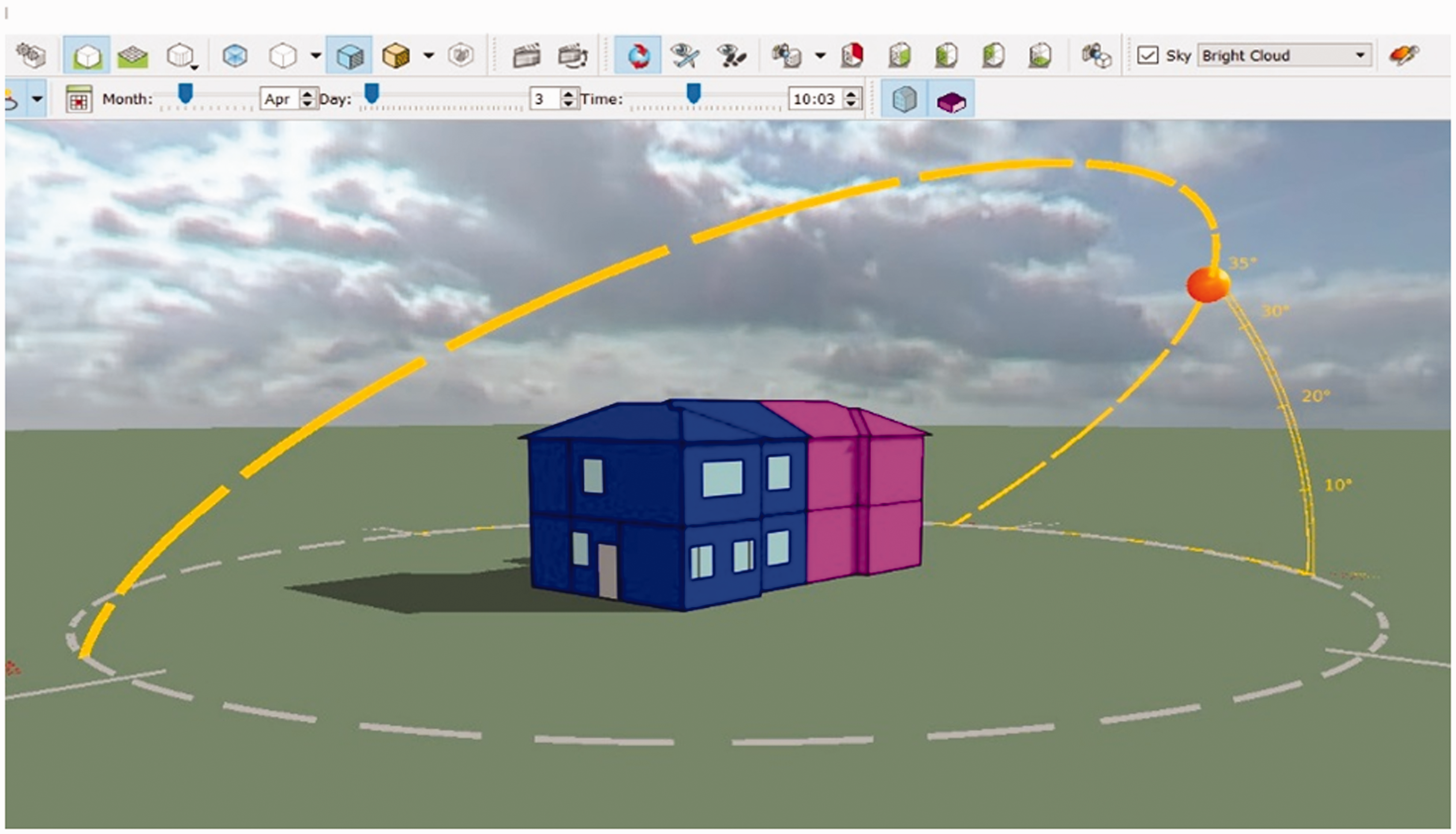
Semi-detached IES model used in simulations.
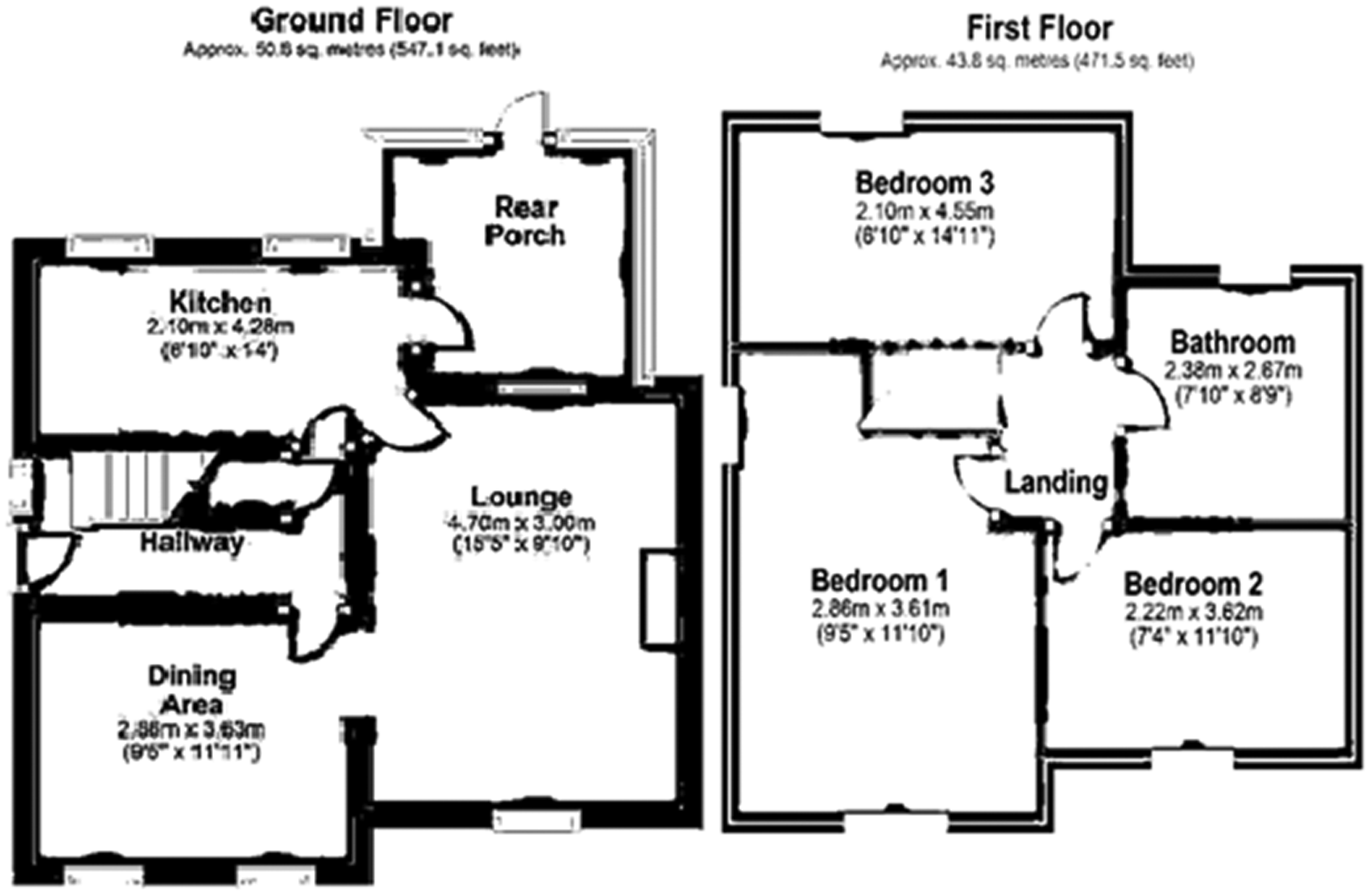
Semi-detached floor plan.
The U-values for the different building elements were calculated using approved SAP software. The ground floor U-values were based on figures taken from CIBSE Guide A, with glazing based on SAP tables. The infiltration rate was determined using RdSAP software.
Table 3 shows the fabric specification, design criteria and calculated U-values used in the study.
Fabric specification, design criteria and calculated U-values.
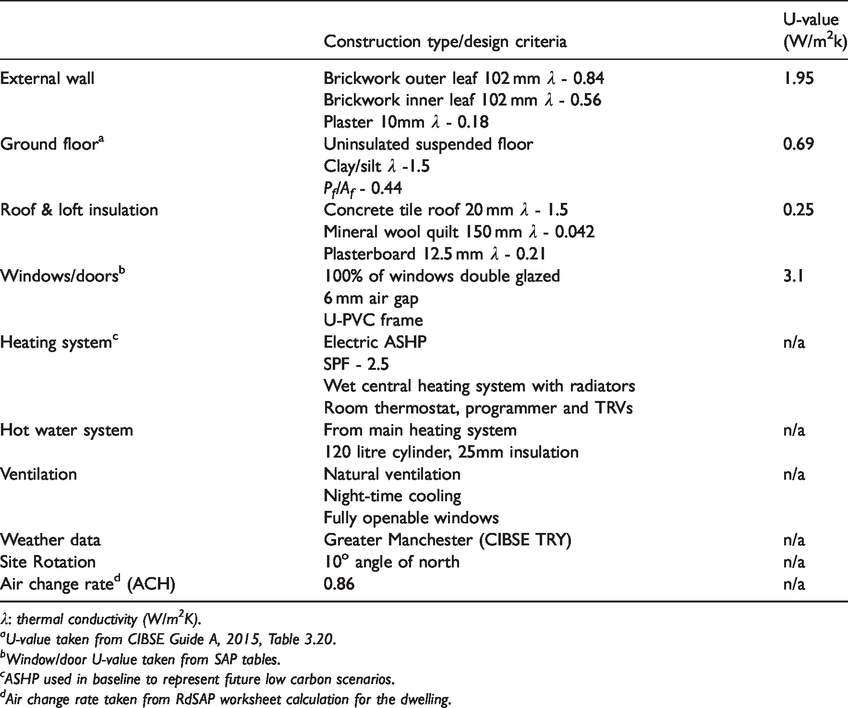
aU-value taken from CIBSE Guide A, 2015, Table 3.20.
bWindow/door U-value taken from SAP tables.
cASHP used in baseline to represent future low carbon scenarios.
dAir change rate taken from RdSAP worksheet calculation for the dwelling.
The baseline dwelling achieves an EPC rating of D based on the above geometry and fabric specification using the RdSAP methodology.
Retrofit measures
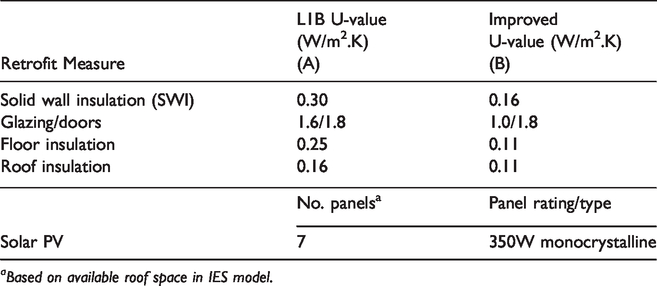
A range of retrofit measures aimed at improving the thermal performance of the building fabric were added to the baseline model. Two sets of U-values were used in the analysis:
those found in the building regulations Part L1B those that exceeded the minimum standards set by the regulations.
The retrofit measures adopted were:
Wall insulation (50 mm and 100 mm SWI) Glazing (double and triple) Floor/roof insulation (rigid insulation for floors and mineral wool for roof) Solar PV
Solar PV was included to explore the energy abatement and energy off-setting potential. Table 4 shows the U-values for option A and B, together with the solar PV criteria used in the simulations.
Retrofit measures and their resultant U-values and criteria.
aBased on available roof space in IES model.
The measures were adopted individually for the SWI category, followed by groups of measures and then as combined whole-house retrofit options. This allowed the results to be analysed to establish the optimum combination.
The measures and combinations for options A and B were:
Wall Glazing Floor/roof insulation Wall and glazing Wall and floor/roof insulation Glazing and floor/roof insulation Part L1B retrofit (wall, glazing, floor and roof insulation combined)
The infiltration rate for the whole-house scenarios were updated in-line with RdSAP worksheets. For the purpose of the study, this is assumed to be approximately 10 m3/(h.m2) at 50 Pascals (Pa), comparable with the limiting parameter set in the current building regulations Part L1A.
Dynamic Simulation modelling software
The DSM software used to carry out simulations was Integrated Environmental Solutions - Virtual Environment (IES-VE). The software allows thermal simulations and is accredited to be used for UK Building Regulations Part L compliance.
The software is recognised by CIBSE as a dynamic model and provides a detailed assessment of the buildings heating system, together with the total energy demand subject to pre-determined occupancy profiles.
Simulations were carried out for the different combinations of retrofit measures listed in Section 3.2.
Limitations of the analysis/modelling assumptions
Domestic hot water (DHW) generation is not included within the analysis. It is assumed the UK National Calculation Methodology (NCM) database and profiles are adequate for dwelling occupancy and usage patterns for all zones within the dwelling. CIBSE weather files (TRY) are deemed to be realistic and acceptable for the study. The air permeability rate has been based on RdSAP worksheets for the modelled dwelling. An Air Source Heat Pump (ASHP) with seasonal efficiency of 2.5 has been used based on SAP data/tables. Grid supplied electricity CO2 emission factors used in energy calculations = 0.2536 kg/kWh.
10
A wet central heating system with radiators is used in modelling; however, emitter sizing is not considered in the analysis. The heating system was modelled with thermostat, programmer and thermostatic radiator valves for all outputs, as this was deemed an acceptable and cost-effective efficiency measure.
Results analysis
Heating demand
The analysis considers 3 dwelling functions impacted by the retrofit measures:
Space heating energy demand Space heating electrical power input greater than 1kW, given as a percentage over the year (DHW generation is not included) Total regulated energy demand (space heating, DHW, lighting, auxiliary)
To minimise electrical consumption, a load of 1 kW was considered an acceptable maximum threshold for the heat pump system.
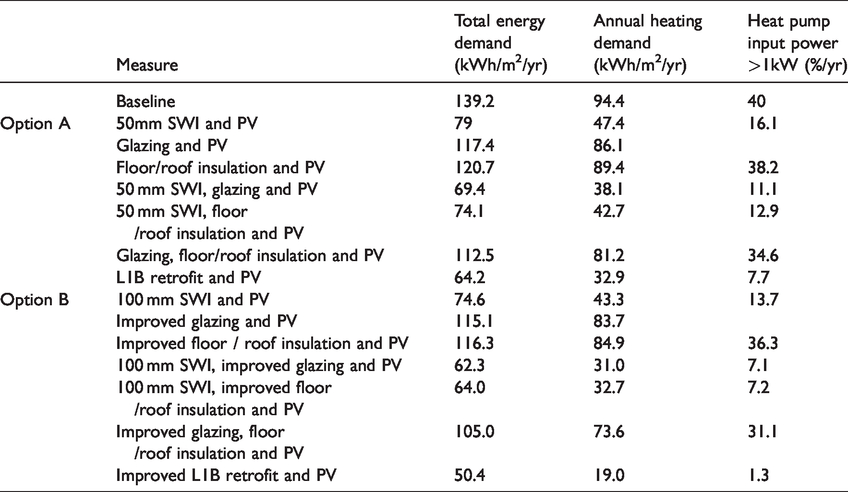
Table 5 and Figure 3 display the results of the simulations.
Modelled energy demand for all retrofit measures.
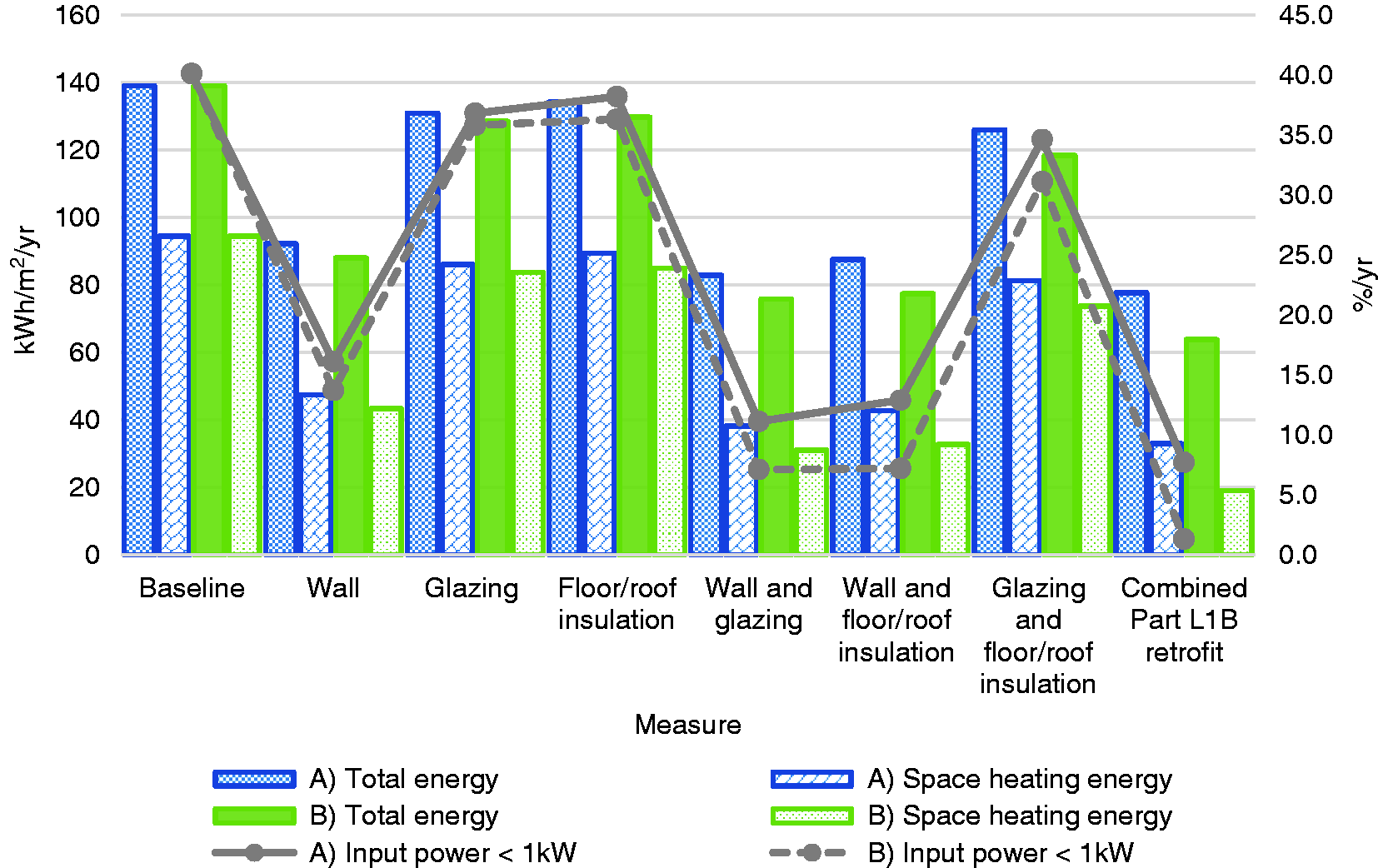
Modelled energy demand for all retrofit measures.
The baseline results highlight fabric inefficiencies and show excessive peak plant usage. This will contribute to larger system sizes, meaning installation restraints and issues with electrical supply capacity. The baseline peak system power consumption is approximately 4.5 kW.
The smallest reductions are seen with the glazing and floor/roof insulation measures, between 5%–11%. The SWI gives a heating demand reduction of between 50%–54%, with the minimum and improved Part L measures yielding 65%–80% respectively. Input power demand above 1 kW is reduced by between 60% for 50 mm SWI and 97% for the improved Part L. The solar PV abatement is approximately 10% of the total energy demand when compared with the baseline.
The results demonstrate that installing improved SWI and glazing can successfully achieve energy abatement and lower heat pump energy consumption compared with the minimum L1B whole-house retrofit.
However, the total energy demand is high when compared with low-carbon design guidance from UK Green Building Council (UKGBC) framework and the London Energy Transformation Initiative (LETI), which is around 35 kWh/m2/yr for new build properties.
Solar PV is shown to reduce energy demand and export energy to the grid. However, the synchronicity of energy generation and heat demand at a building and system scale has issues. Electricity exported to the grid is of reduced value if there is insufficient demand, unless energy can be stored for use when demand is higher. Figure 4 shows the peak heating demand and peak solar PV generation profile for a day in winter.
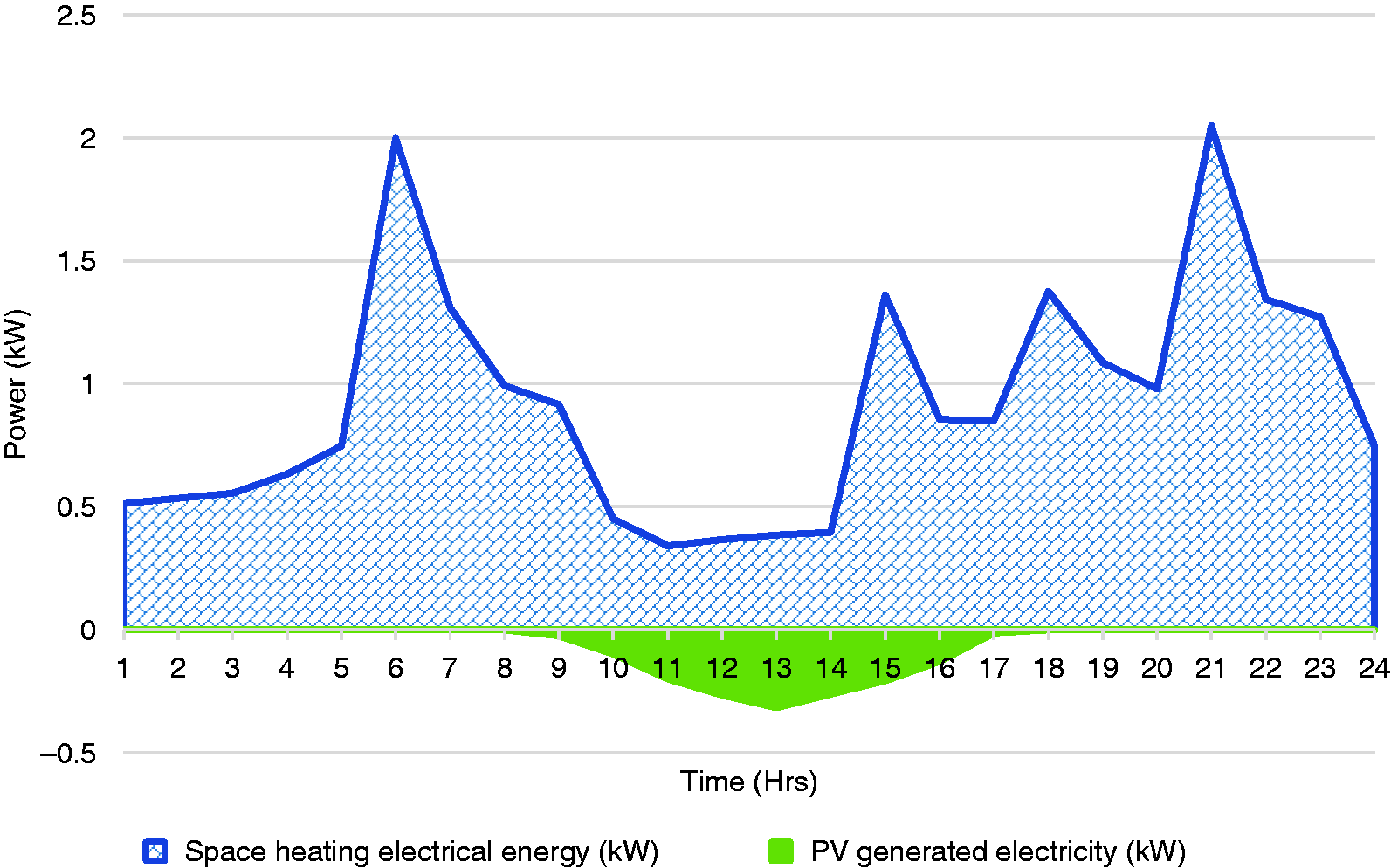
Daily peak heating demand and PV generation profile for a winter day with SWI and glazing measures adopted.
Cost-benefit and carbon analysis
The capital expenditure, payback period and energy saving per year for each measure are shown in Table 6. Costs are based on the 2017 Cambridge Architectural Research report ‘What Does it Cost to Retrofit Homes’. 14
Capital cost, payback period and energy saving per year.
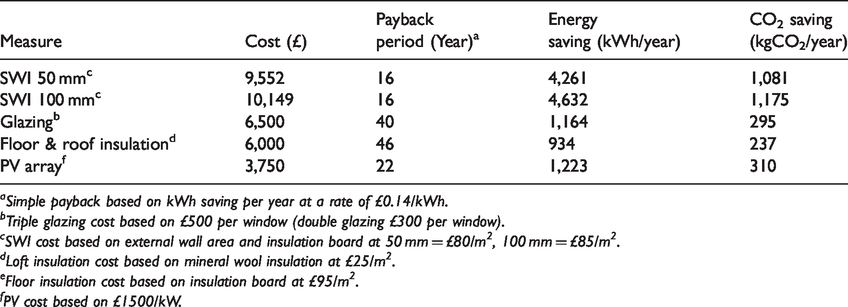
aSimple payback based on kWh saving per year at a rate of £0.14/kWh.
bTriple glazing cost based on £500 per window (double glazing £300 per window).
cSWI cost based on external wall area and insulation board at 50 mm = £80/m2, 100 mm = £85/m2.
dLoft insulation cost based on mineral wool insulation at £25/m2.
eFloor insulation cost based on insulation board at £95/m2.
fPV cost based on £1500/kW.
The payback periods are high for all measures and the glazing and roof and floor insulation can take 40 years or more to become cost neutral. This may be longer than occupants expect to stay in the property.
Figure 5 highlights the heating demand and cost comparison, with Figure 6 showing the combined heating and total energy demand and additional cost with PV included.
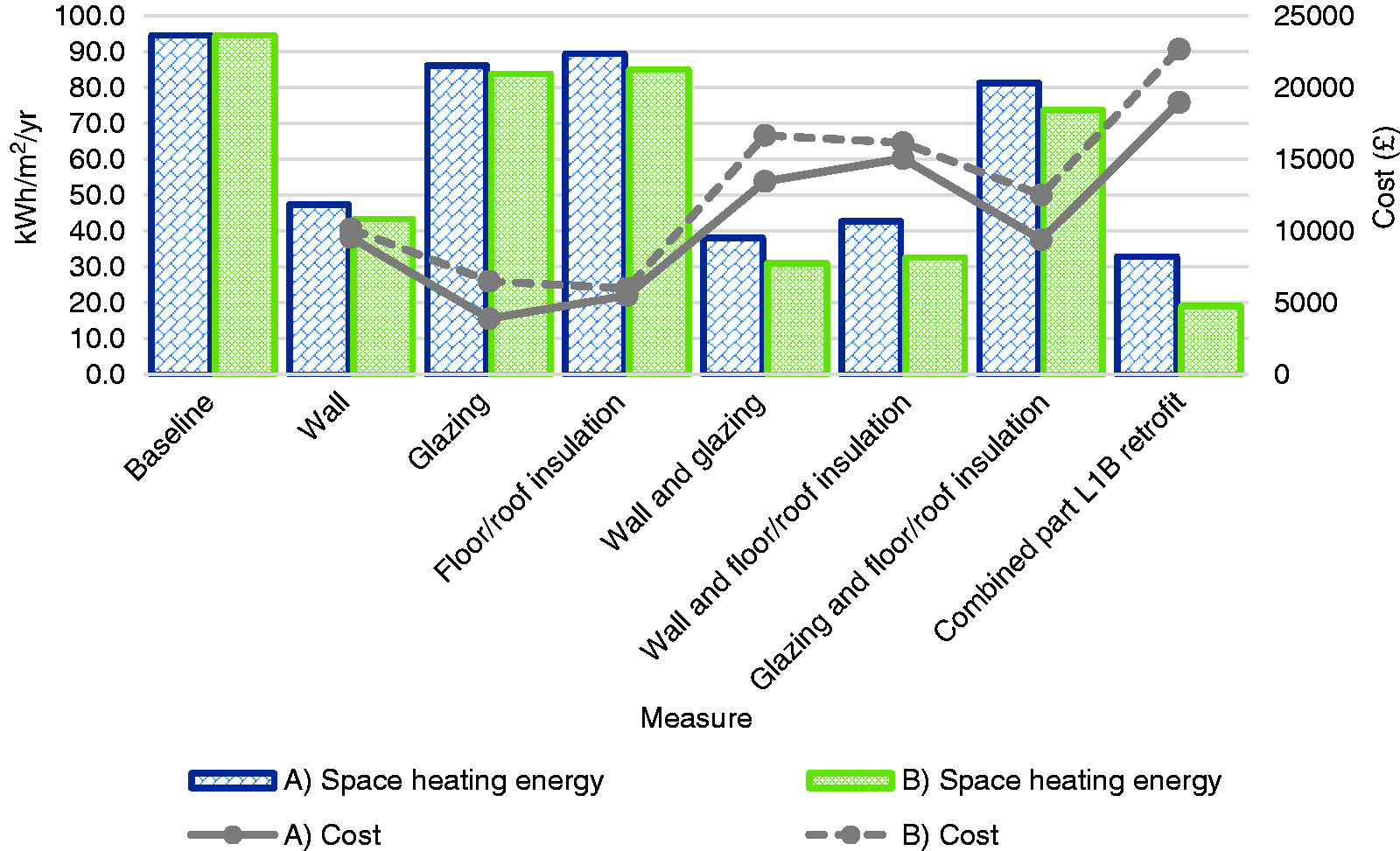
Heating demand and fabric element cost.
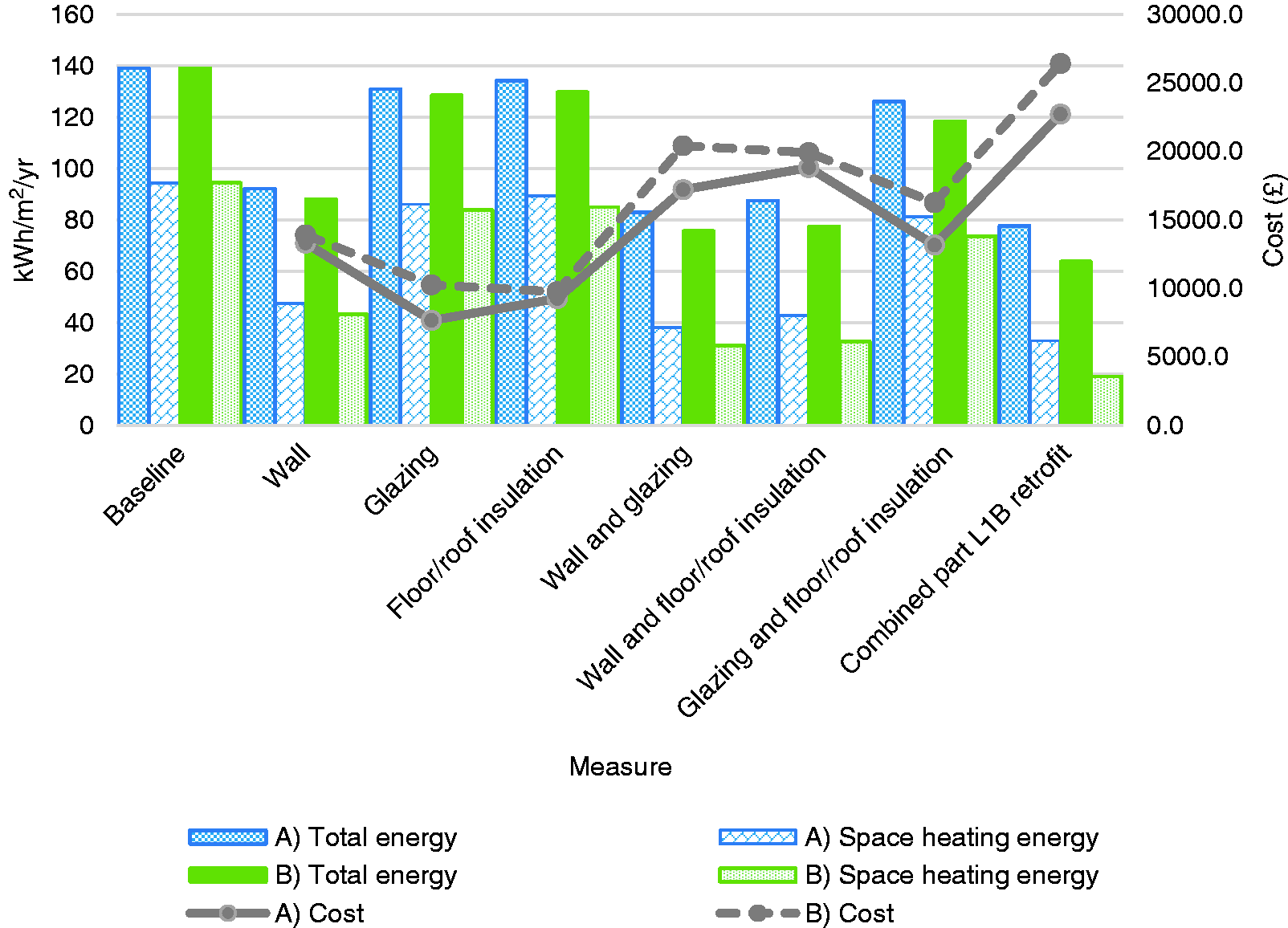
Total energy, heating demand and element cost including PV.
The figures demonstrate that investment in thicker SWI and better glazing is also more economical when compared to the whole house retrofit using the minimum Part L standards, with solar PV providing additional energy abatement. The results show the most energy efficient improvements are also the costliest, which is in consonance with the findings of other studies. 15
Discussion
The existing housing stock
The baseline result illustrates poor thermal performance and shows large system plant load and energy demand. It is common for the size of the heating system plant to be based on the peak sensible heating load. 16 This will lead to issues when retrofitting heat pumps in existing dwellings, as capital cost increases with system size and spatial restraints become prominent. If not addressed, this will lead to barriers in the uptake of heat pump systems in future and possibly stall emission abatement.
The input power of 4.5 kW assessed individually does not cause significant problems for a single dwelling. However, when taken collectively across the whole stock comparable with the ADMD figure of 1.5 kW used in LV network design, the overloading of supply cabling and transformers becomes more likely. More research is needed to determine the effects of increased heat pump ADMD at a local level.
Retrofit measures
Solid wall insulation abatement potential and uncertainty
Significant improvements are seen with the addition of SWI, with heating demand and system input power to 1 kW reduced by 50–54% and 60–66% respectively. The resultant space heating demand is approximately 45 kWh/m2/yr for Option B SWI. This is marginally higher than permitted by the nearly zero energy building (nZEB) standard (44 kWh/m2/yr), and that used in other low carbon frameworks (see Currie and Brown final report for the CCC, and LETI net zero operational carbon - each state 15–35kWh/m2/yr).17,18
The energy reductions found are higher than those of previous studies 3 and used in future modelling scenarios, 7 highlighting potential inaccuracies in modelled data. This may be due to the NCM profiles used in modelling, which may overestimate the energy used in baseline cases, meaning energy reductions appear higher. Further work is required to establish the performance gaps in design and modelling scenarios, with policy developed that seeks to reduce the uncertainty related with energy savings.
The CIBSE and LETI have recommend the mandatory disclosure of energy performance in their steps to net zero carbon buildings. It is a straightforward step for new build, however, the refurbishment sector will face challenges. The recommendation will enable better operation and allow government to track policy implementation and gradually improve energy benchmarks to inform future targets.
Optimum retrofit measures for reduced heat pump electrical profiles
Although there are some uncertainties, the research shows that SWI is a major factor in reducing heating demand and input power in the modelled dwelling. However, the systems input power is greater than 1 kW for approximately 15% of the year (1,300 hours).
The higher fabric standards can reduce peak demand, with battery or thermal storage and advanced control technologies offering potential in the future. However, the use of electric vehicles and home charging stations will further add to peak demand. It can be expected that as technologies evolve and new innovation is realised, smart systems will enable better use and control of the electricity grid.
This paper sees heat pump power consumption reduced substantially with the measures adopted, although it remains to be seen if this would reduce ADMD to an acceptable level. Further work is required to determine the upper level of power consumption allowable on local grid connections in the form of ADMD figures.
Another important factor to consider when attempting to maximise system performance is the selection of heating emitters for use with low-temperature heat pumps. Underfloor heating may cause significant hassle to homeowners. Therefore, larger radiators are required to provide adequate heat with the low flow and return temperatures of 35–40°C used in standard heat pump design. High temperature heat pumps reduce the need for radiator upgrades; however, these will increase power demand and emissions.
Alternative measures for abatement
Further abatement is possible by improving the glazing beyond current building regulations. This can be relatively straightforward with minimal disruption and remedial works. The capital costs and payback periods are similar when compared with the improved floor and roof insulation measures. However, floor insulation can require extensive remedial works and present likely disruption to households, where it is likely to only occur in a whole house retrofit. In addition, the abatement level is marginally less for these measures.
It is noted that some households will not upgrade glazing for efficiency purposes alone, and this may be due to aesthetics, security, noise or other reasons. Glazing upgrades will deliver a range of benefits beyond energy and carbon savings, including improved comfort and health benefits.
The Part L measures used in combination achieve significant reductions, however, abatement is increased by approximately 13% when a higher specification of U-value is targeted. This illustrates some opportunity for improvement in current building regulations, as greater energy savings are possible with minor improvement to specification.
It must be noted that the domestic heating reform will not be achieved with a simple one-stop-solution for all UK dwellings. There are many factors and combinations of building type, size, fabric and usage that impact the design of whole building systems.
Wider issues
Heat pump performance
The average efficiency of a heat pump over the heating season is known as the Seasonal Performance Factor (SPF). For an ASHP the SPF is affected by the external air temperature. Imperial College London show SPF to be as low as 1.6 in winter months, when demand peaks. 13 Furthermore, the type of heating emitter used and DHW generation can weaken performance due to the need for higher temperatures. These issues may be managed through control strategies or technological innovation, however, at present more research is needed to better inform policy and design practice.
Effect on the national system
The additional load on electrical generation for solid walled semi-detached properties is approximately 13TWh when the baseline results are multiplied at a national level. Upgrading all solid walled homes to the minimum Part L standards would save an additional 8.75TWh. The improved Part L measures further reduce demand, saving a total of 10TWh.
In the context of low-carbon supply, solar PV accounted for 12.7TWh of electrical generation in the UK in 2019. Moreover, to meet the additional load of heat pump systems through zero carbon generation, almost 3,000 wind turbines at an estimated cost of approximately £5.9bn would be required. If the improved Part L measures presented within are adopted across the semi-detached solid walled demographic alone, there is potential for a reduction of around 2,400 wind turbines. This could save £4.7bn for the UK economy.
Whilst writing, the UK government has recently unveiled plans to power all UK homes with wind by 2030, along with £3bn for insulating homes. Although welcomed, more could be done to ensure the UK’s climate change pledge is realised. To provide some context to the scale of the retrofitting problem faced by government and consumers; upgrading the solid walled semi-detached dwelling group in line with the costs used in this study would require around £15bn when multiplied at a national level.
Conclusion
The switch from fossil fuels to low carbon heat pump systems gives need for energy efficient dwellings. This paper found that the use of SWI is shown to be critical for a solid walled semi-detached property. However, this is not enough in isolation and other measures must be supplemented alongside to ensure electrical consumption is minimised.
The cost-optimal solution is a mix of improved SWI and high specification glazing, which achieves similar reductions to a whole-house retrofit using Part L1B standards, with approximately 20% less expenditure.
Adopting a higher specification U-value for all measures is shown to reduce energy demand by almost 80%. This highlights possible scope for improvement in current building regulations.
The use of solar PV would further benefit dwellings with heat pumps; however, smart grid technology is needed to manage the synchronicity of supply and demand. Battery storage in the form of demand side response or electric vehicles could hold the answer, but more investment in policy and study is needed to manage peak demand.
The results show it is difficult and costly to retrofit homes to the required future low energy building standard. At present, homeowners are required to improve efficiency measures at specific times, such as during the refurbishment of dated elements. It is unlikely consumers will initiate intrusive retrofit work, such as SWI or floor insulation, without policy incentives and direction from government. The recently established Green Homes Grant and the Energy Company Obligation (ECO) offer some support.
However, the ECO has been recognised to poorly predict energy savings for specific circumstances. 3 Furthermore, control and monitoring of installed measures is not always undertaken, and opportunities may be missed in future leading to a shortfall in the UK’s net carbon goal. Here, a policy based on a ‘pay for performance’ model may encourage the uptake of better energy efficient measures.
Footnotes
Declaration of conflicting interests
The author(s) declared no potential conflicts of interest with respect to the research, authorship, and/or publication of this article.
Funding
The author(s) received no financial support for the research, authorship, and/or publication of this article.
