




Abstract
Children’s first words are frequently recorded to be nouns, rather than verbs, but data from some languages (notably some Asian and African languages, including Mandarin, Korean, and Ngas) and some methodologies (especially spontaneous speech recordings) suggest that verbs can be represented as early as nouns. Variables that potentially impact early verb knowledge include the structure of the language children are learning and whether it is verb production or comprehension that is investigated. We investigated longitudinal data from Kenya of children’s (N = 500) vocabulary production and comprehension using Communicative Development Inventories. Children’s caregivers completed overlapping inventories designed for younger infants (completed at age 12 months and designed for ages 8–16 months), and for older toddlers (parallel forms completed at age 18 and 24 months and designed for ages 16–30 months). The inventories were structured to include words acquired at equivalent ages across word classes (e.g. nouns acquired at a median age of 11 months and verbs acquired at the same median age) but the interactions between word classes and children’s age and the modality in which they know the word (comprehension only or production as well) indicate that nouns and verbs do not follow the same trajectory across acquisition. Nouns emerge relatively earlier in production and comprehension, while verbs emerge earlier in comprehension, and their production increases as children grow older. We conclude that previous findings by Goldfield and Stolt et al. are also true for these Bantu languages: that the noun advantage in early words is seen in studies where production is emphasised, and early verb knowledge can be missed if comprehension is not assessed.
Introduction
The Noun Bias: A Short Introduction
In children’s early spoken vocabularies, nouns tend to dominate over verbs, adjectives, or function words, and this can be seen across many languages (Bornstein et al., 2004). The reasons proposed for this preference include an inherent word-learning bias (Waxman & Kosowski, 1990); the input provided (Goldfield, 1993); or an inherent feature of names or of objects making them easier to learn than names for actions (Landau et al., 1992; McDonough et al., 2011).
However, in some non-European languages, some data suggest that verbs are produced earlier relative to nouns or relative to the most highly-studied European languages (Casillas et al., 2024; Childers et al., 2007; Choi & Gopnik, 1995). It is likely, however, that these findings are for methodological reasons. Two of these studies use spontaneous speech recordings rather than inventories of every likely word the child might know (the best method for the latter being long Communicative Development Inventories [CDIs]). Choi and Gopnik (1995) studied Korean, but other data on Korean (Bornstein et al., 2004) do show a predominance of nouns in early speech production when parent-completed checklists are used. Childers et al. (2007) exclude an important category of early words, the onomatopoeia frequently used as animal names. In other languages, the most frequent words in older toddlers’ speech are taken to be equivalent to the first words in younger infants’ speech (Tardif et al., 1999; Xuan & Dollaghan, 2013). We cannot be sure, therefore, that these data reliably indicate that first spoken verbs can be more common than first spoken nouns when a full set of vocabulary is assessed in children at the earliest stage of speech.
However, children who know a word do not necessarily produce the word, and the same bias may not be seen in comprehension. Goldfield (2000) with children in the second half of their second year of life, and Theakston et al. (2004) with children aged 2;0 to 3;0 found that English-speaking caregivers elicit more nouns from children than they do verbs. Goldfield further observed that when parents elicit demonstration of comprehension (e.g. “can you jump?” or “show me the doggy”), we can assume verb knowledge. The same is logically true of commands – if a child is told or asked to do something, the appropriate response is action, rather than production of a verb. This suggests that the pattern of language development may differ between production and comprehension.
Data from more than one language suggests this might well be the case (Alcock, 2017; Bornstein et al., 2004). Goldfield (2000), working with English-learning children, found that verbs were under-represented in early production vocabulary compared to nouns, but in comprehension, the proportion of verbs was higher. Alcock (2017) looked cross-sectionally at early vocabulary in children (0;8 through 1;6) learning two East African Bantu languages. This study used parent report measures (CDIs) to assess comprehension and production of a representative range of vocabulary – including nouns and verbs. It compared children with smaller and larger production and comprehension vocabularies (as these vary greatly within a given age at this stage of language acquisition). The author found that there was a smaller bias towards nouns in comprehension than in production, but children with larger vocabularies had an asymmetrical increase in their noun versus verb knowledge. Children with larger vocabularies produced more verbs but did not proportionally increase verb comprehension compared to noun production.
In a longitudinal study of children learning Finnish, Stolt et al. (2008) found that verbs were represented more frequently in children’s comprehension than in production. This pattern has been repeated using methods, such as event-related potentials (Frewin, 2023) and in verb-learning studies, where comprehension is tested (Moore, 2008). Previous studies examining verb/noun differences in production and comprehension (except for Stolt et al., 2008) have been cross-sectional, so it is hard to determine whether individual children will follow the same pattern if studied longitudinally.
Here, we examine further evidence of the differential representation of nouns and verbs in production and comprehension, using a longitudinal dataset in Bantu-speaking communities, where the language structure may emphasise the learning of verbs. We will be able to compare the results for this language to those examining noun and verb knowledge in children with larger and smaller vocabularies using a similar method in related (Alcock, 2017) and unrelated (Caselli et al., 1995; Goldfield, 2000; Stolt et al., 2008) languages, following children’s longitudinal trajectories by age, word class and mode of knowledge.
Communicative Development Inventories
CDIs are a tool appropriate for studying child language at scale and in settings where children do not have experience of interacting with unfamiliar adults. Parents are asked to respond to a checklist of words, phrases, non-linguistic gestures, and use of grammar in their children’s communication. Continuing to monitor vocabulary comprehension beyond 18 months is not standard in every CDI but is supported by evidence that parents can accurately distinguish between comprehended and non-comprehended words in the latter part of the second year of life (Jahn-Samilo, 2003; Mills et al., 1993).
The CDIs can also be prepared in languages where little research exists on language acquisition, and can be administered by non-specialists (Dale & Penfold, 2011; Southwood et al., 2021). CDIs have been adapted into nearly 50 languages worldwide, from 6 continents. Much of the data collected worldwide has been collated in the online database Wordbank (Frank et al., 2016). Where parents are literate, they complete the CDI themselves, either on paper or online, but an interview method can alternatively be used. While the time taken is generally acceptable to parents (Alcock, 2017; Hamadani et al., 2010), when part of a battery of measures, a short form of approximately 100 words can be created.
The Kenyan CDIs were constructed for this region, described elsewhere (Alcock et al., 2015). After development of the longer instruments to be representative of the wide range of words known by children in these age ranges, short forms were created for 8 to 18 months (100 words) and 2 parallel, non-overlapping forms for 16 to 30 months (98 words in each – see Supplemental Appendix A). Items were selected for inclusion in groups corresponding to those comprehended by 50% of progressive months of age. The short inventory for ages 8 through 15 months, therefore, includes approximately 12 words that 50% of 8-month-olds comprehended, 12 that 50% of 9-month-olds comprehended, with word categories selected in the proportion represented in the long form CDI for this age range. In the original CDIs, there are more word categories, especially for nouns, where these are broken up by semantic category. For analysis, categories were classified as Common Nouns, Verbs, Adjectives, and Function words (Caselli et al., 1995).
The Setting and the Language
The current study was carried out in two areas of coastal Kenya. In area 1, a rural area, the majority of families speak both Kiswahili and Kidigo. These Bantu languages are very closely related with high mutual intelligibility and a high number of cognates. Area 2 is peri-urban with mixed formal and informal settlements, where Kiswahili is the lingua franca, and all families in the study reported speaking Kiswahili at home. Kiswahili and Kidigo are both prodrop languages where a sentence can consist of a single verb, with complex morphology. Most verbs have an obligatory set of prefixes, but bare verbs form imperatives. Examples can be seen in the below-mentioned table:





It is possible, therefore, that verbs may be learned early due to this morphology and feature of sentence structure (Caselli et al., 1995). There is little research on the acquisition of Kiswahili, or indeed of related Bantu languages, but ud Deen (2002) and Alcock et al. (2012) investigated early verb morphology in Kiswahili, with additional data from a related coastal Kenyan Bantu language, Kigiriama, in the latter paper. Of relevance here, both studies found that infants produced more bare verbs than adults. ud Deen interprets the production of bare verbs as a failure to use verb morphology, within an “optional verb affix” framework of language acquisition. However, in both of these languages, bare verbs are the correct construction for commands, which are often used by Bantu-speaking parents and other interlocutors of infants (Kvalsvig et al., 1991).
Goldfield (2000) hypothesised that earlier comprehension of verbs in comparison to their production stems from pragmatic elicitations of verb comprehension (i.e. demonstrating verb comprehension through actions) in child-directed speech. A very simple form of verb comprehension elicitation – commands – is found in related settings (Kvalsvig et al., 1991), and this could also be hypothesised to lead to earlier verb comprehension here.
This study builds on the findings of Alcock (2017), which looked cross-sectionally at vocabulary growth and composition in coastal Kenya, with two Bantu languages spoken interchangeably, one of which is the main language of the current study – Kiswahili. Within the Kiswahili CDI used at the age of 12 months, out of 100 words, 80 are either cognates in Kidigo, or are onomatopoeia or personal names. This method of counting cognates and code-switching as if they are spoken in the same language has been used previously (Alcock, 2017; Alcock et al., 2015), enabling highly similar languages to be analysed together, increasing sample size. However, when one word in language A can be coded by two words in language B, there may be some under-estimation of children’s vocabulary. In parallel forms, this can be avoided by only crediting one of the words for a shared meaning (rather like only crediting “shut” or “closed” in English, rather than both).
CDIs exist for a number of related languages (Southwood et al., 2021; Vogt et al., 2015) and have been used to explore questions about the acquisition of the structure of these languages (Brookes et al., 2025) and about the socioeconomic and health challenges that affect acquisition in these settings (Alcock et al., 2016; Prado et al., 2017)
Data and Hypotheses
The children in the current study were recruited through their enrolment in a wider study (Kalayjian et al., 2013; Mwangome et al., 2012) of maternal health and child developmental outcomes. The data were collected using an interview format of the Short Kiswahili CDI (Words and Gestures) for those children remaining in the study at 12, 18, and 24 months of age. At 12 months, the Short Kiswahili CDI (Words and Gestures) was used, with equivalent parallel forms (A and B) of an older schedule used at ages 18 and 24 months respectively.
The following hypotheses respond to cross-sectional data from Goldfield (2000) and Alcock (2017), but taking into account the specific structure of the Short-Form CDIs used. The CDIs were designed to have approximately the same level of difficulty for the median ages of 12 months and 23 months, for the Words and Gestures and for the Words and Sentences respectively, and to evenly represent all the word classes at each age. This implies that because nouns and verbs of equivalent age of acquisition were selected for the inventories, we will not see a raw “nouns acquired earlier than verbs” difference, as is seen in many other datasets.
Hypotheses are therefore as follows:
We will see the main effects of age and of mode of knowledge of words: children will know more at 18 months and 24 months than they do of the same words at 12 months, and they will be able to understand more words than they can produce.
We will not see a main effect of word class: children will not know more nouns than verbs, because the inventories are designed to have equally difficult words in each word class.
We will see interactions between age and mode of knowledge, with children being able to produce a higher proportion of the words they know at 18 and 24 months than at 12 months; between word class and mode, with children being able to produce a higher proportion of the nouns that they know than of the verbs that they know.
We will see an interaction between age and word class: children may increase their verb knowledge by 18 and 24 months more than their noun knowledge. How this interaction is operationalised depends partly on instrument characteristics: are the nouns and verbs that are included in the 12 and 18, and the 12 and 24 months inventories, at floor at 12 months and/or at ceiling at the older age groups.
We will see an interaction between age, word class, and mode: the gap between production and comprehension of verbs will decrease faster than the gap between production and comprehension of nouns as children get older.
Methods
Participants
A total of 561 families (570 children – 9 pairs of twins) participated in the current phase of data collection. All families were resident in either Msambweni (coastal, rural) or Port Reitz (peri-urban) on the coast of Kenya. Families were recruited at their first antenatal visit, with 1051 mothers aged 15 or older consenting to participate in a long-term observation of their pregnancy, culminating in 727 mothers, with 744 children (17 sets of twins) born alive, in hospital. Mothers were seen in the clinic when they attended with their child(ren) for the national vaccination programme, and retained if they consented to participate in a comprehensive monitoring of their child(ren)’s development, at 6, 12, 18, and 24 months of age, carried out at the respective clinic. From 12 months of age, the CDI was administered using an interview technique, and in Kiswahili (Alcock et al., 2015) to assess children’s vocabulary production and comprehension. This procedure was repeated at the ages of 18 and 24 months, with the informant also recorded at each time point.
Families were tracked through study identification cards, carrying the child’s name and study ID number, and the follow-up appointment date. Reminders were made by telephone, with no-shows tracked initially through the telephone, or by a home visit if no contact had been made. This process resulted in assessments being carried out when children were no more than 2 months older or younger than the designated time point, with only a few families interviewed at home. Many families lived in multi-generational households, and so when the mother was absent from the home, another relative acting as the primary caregiver was interviewed. The family was then followed up in the same manner at the next target time point. If a family did not participate for three consecutive time points, due to out-migration, death, or voluntary withdrawal, follow-up was discontinued. Individual differences in vocabulary characteristics between children who remained in the study past 12 months (or re-joined) and those who did not were not analysed. Every family that was interviewed at a given time point provided answers to all questions on the CDI.
Ethics Considerations
This study was approved by the KEMRI Ethics Review Committee (approval Non SCC 102) and the Case Western Reserve University IRB (approval number 05-06-07), and supported by NIMH Fogarty R01 award (Grant MH080601). Mothers gave written consent (using an X if unable to write their name) after hearing the Participant Information Sheet being read to them in Kiswahili and being given an opportunity to ask questions. The same procedure is applied to reconsenting postpartum. STROBE cohort reporting guidelines were used (Von Elm et al., 2007).
Materials and Procedure
The CDIs were administered to families as part of a comprehensive monitoring of health and development that lasted approximately 1 to 2 hr. The overall interview schedule was presented in an order that suited the mood and activity of the child at the time; while the CDI does not require child participation, some other parts of the session required child cooperation or observation. The CDI takes between 5 to 15 min to complete, partly depending on the number of words the child knows. Interviewers were trained in observation as well as interview techniques, and when they observed a child could produce or understand a word, but the caregiver did not endorse the word, they added this word to the checklist in comprehension or production accordingly. The Short Kiswahili CDIs were created for a different health-based study also in coastal Kenya, and their measurement properties – reliability as well as validity – are reported elsewhere (Alcock et al., 2015). The short-form inventories were designed to select words with equal age of acquisition, meaning that children should be just as likely to know any given noun as any given verb, in contrast to the long-form CDIs, which contain all more comprehensive list of words occurring in early vocabulary. Here, we cannot therefore directly compare nouns known to verbs known within one inventory or one subset of words.
Scoring and Analyses
For each child and each item, a score of 0 (does not know the word at all), 1 (understands but does not say the word), or 2 (understands and says the word) is given. Totals are then calculated across each category of words and across the whole short-form inventory at a given age, giving two totals: the total number of words a child understands (count of all words scoring 1 or 2) and the total number they produce (count of all words scoring 2 only).
We then have 21 words (14 Common Nouns, 5 Verbs, and 2 Adjectives) that are on both the 12 and 18 months inventories. Further, there were 19 words (15 Common Nouns, 3 Verbs, and 1 Adjective which are tested both at 12 months and at 24 months).
Because of the zero overlap between the 18 and 24 months inventories, comparisons are carried out between 12-month and 18-month inventories, and, separately, between 12- and 24-month inventories. The proportion of the overlapping words on each inventory that were known by children, progressing from 12 to 18 months, and then progressing from 12 to 24 months, was analysed. While nouns/nominals, verbs, and adjectives overlapped between each age pairing, there were no function words in common between the younger and older CDIs. We can therefore examine children’s vocabulary growth (how many more words of the categories studied do children know). Between the 12- and 24-month inventories, only one adjective was retained. Similarly, between the 12 and 18 month inventories, only two adjectives were retained. Due to the low frequency of both of these, with high variance, these (like function words) were excluded from the analysis, leaving an analysis that can answer our hypotheses regarding nouns and verbs.
Analyses
Initially, mixed-level models (Muradoglu et al., 2023) were created, with maximal models (using all possible predictor variables: precise age at 12 months; mode of presentation – comprehension versus production; word class – common nouns versus verbs versus adjectives versus function words, and the possible random effects: participant, and word). Even for the single time point of 12 months, it was not possible to get this maximal model to converge. Thus, fewer maximal models were attempted, and these also did not converge.
It is recommended (Liddell & Kruschke, 2018) that in cases like these, Bayesian models are chosen instead, for their lack of convergence issues, and indeed, using these models for the longitudinal comparisons between 12 and 18 months, and between 12 and 24 months, we found no such issues.
Hence, Bayesian models were constructed as follows:
Comparison Between 12 and 18 Month Data
A model with the predictor variables age group, mode of knowledge (comprehension vs. production) and word class (common nouns and verbs) and random intercepts of participant (child), word, and exact age at the time of administration of the inventory (since not all 12 month old inventories were administered exactly on the child’s birthday, etc.) was constructed. This compared children’s knowledge in comprehension and production of all common nouns and verbs that were present on both the 12- and 18-month inventories.
Comparison Between 12 and 24 Month Data
A parallel model with the same predictor variables (age group, mode, and word class) and the same random intercepts (participant, word, and exact age at the two time points) was again constructed. Again, this compared children’s knowledge in comprehension and production of all common nouns and verbs that were administered both at 12 and at 18 months.
The full dataset is available at https://osf.io/rey6m/overview.
Results
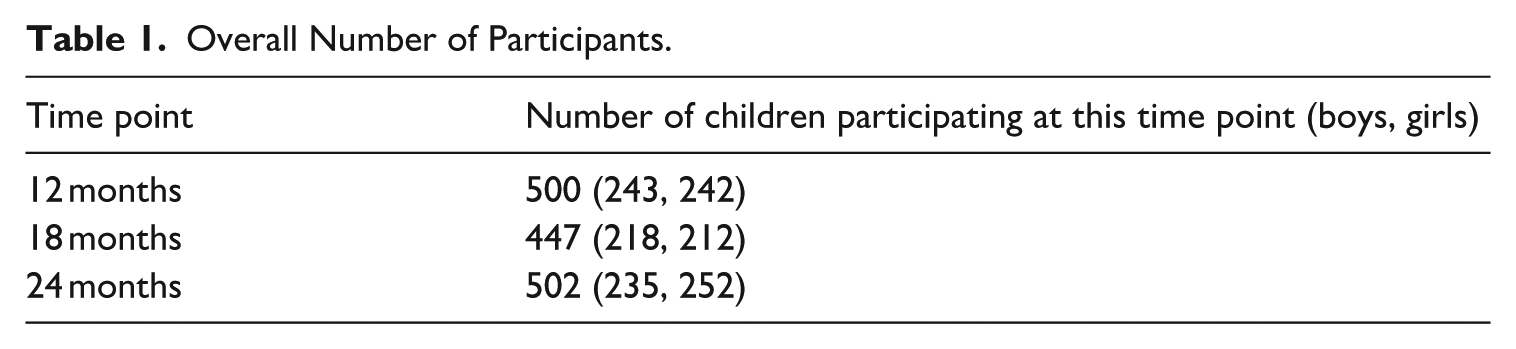
Table 1 shows the total number of children taking part at each time point.
Overall Number of Participants.
Overlapping Words Between Time Points – Results of Bayesian Analysis 12 to 18 Months
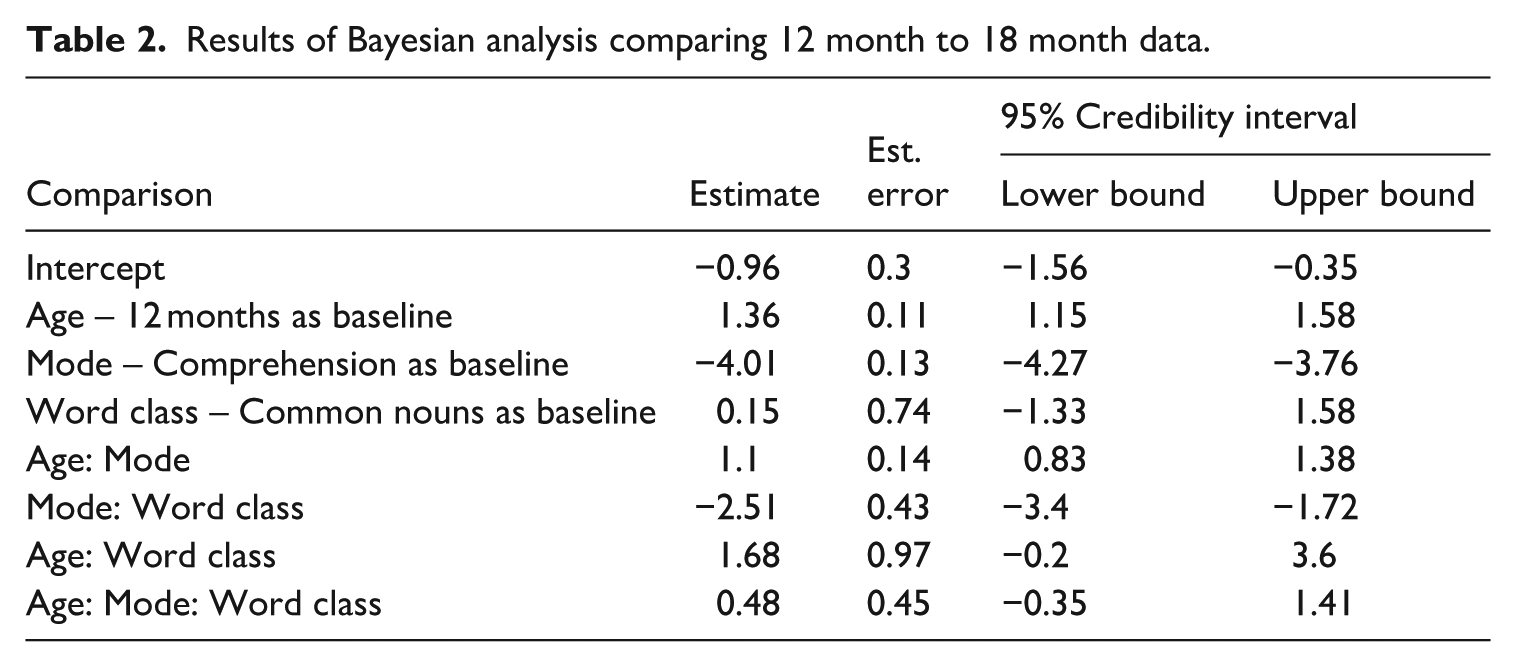
Here we see the results of the analysis of words that overlap between the inventories presented at 12 months and presented at 18 months, in each mode (comprehension vs. production). These words fall into the Common Nouns, Verbs, and Adjectives word classes. However, there were only two words in the Adjectives word class, and variance was extremely large, so since our original hypothesis concerned Nouns and Verbs, these were omitted.
The analysis was carried out with age at each time point mean-centred, age group centred on 12 months, mode centred on comprehension, and word class centred on Common Nouns.
The results of this analysis are shown in Table 2 and Figure 1.
Results of Bayesian analysis comparing 12 month to 18 month data.
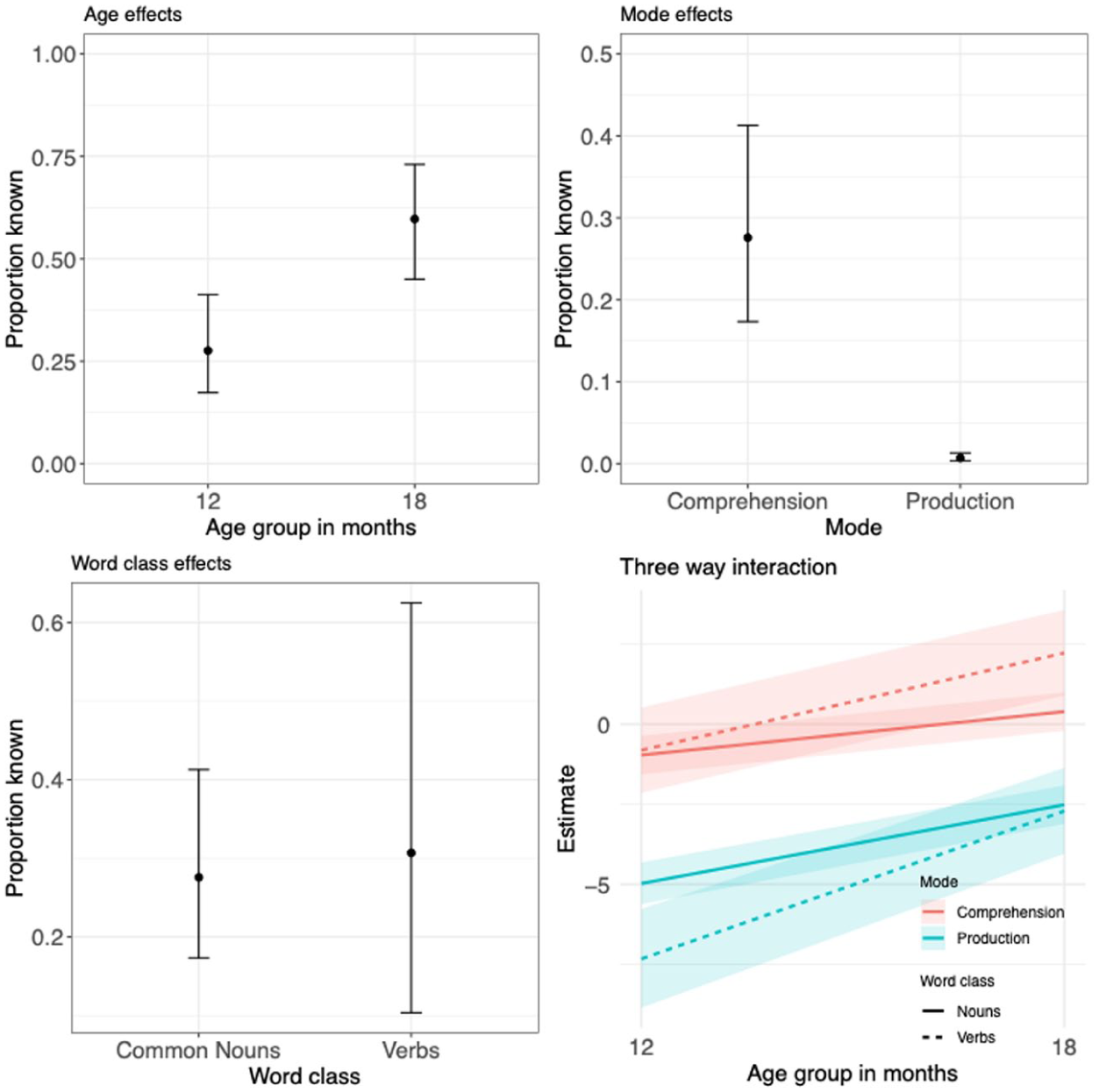
Children’s knowledge of words on the inventories that overlap between 12 and 18 months.
These results are consistent with the hypotheses:
That children will know more of the same set of words at 18 months than at 12 months, and that children will comprehend more words than they can produce.
That the instruments, as constructed, captured nouns and verbs with only a small difference in difficulty.
That production increased faster than comprehension as children get older.
There is some support for the hypothesis that verb knowledge grows faster than noun knowledge as children grow older. Likewise, there is support for the hypothesis that there is a bigger gap in comprehension versus production of verbs than the gap between comprehension and production of nouns.
However, the gap between modes of knowledge in nouns versus verbs does not appear to get larger or smaller as children get older.
Overlapping Words Between Time Points – Results of Bayesian Analysis 12 to 24 Months
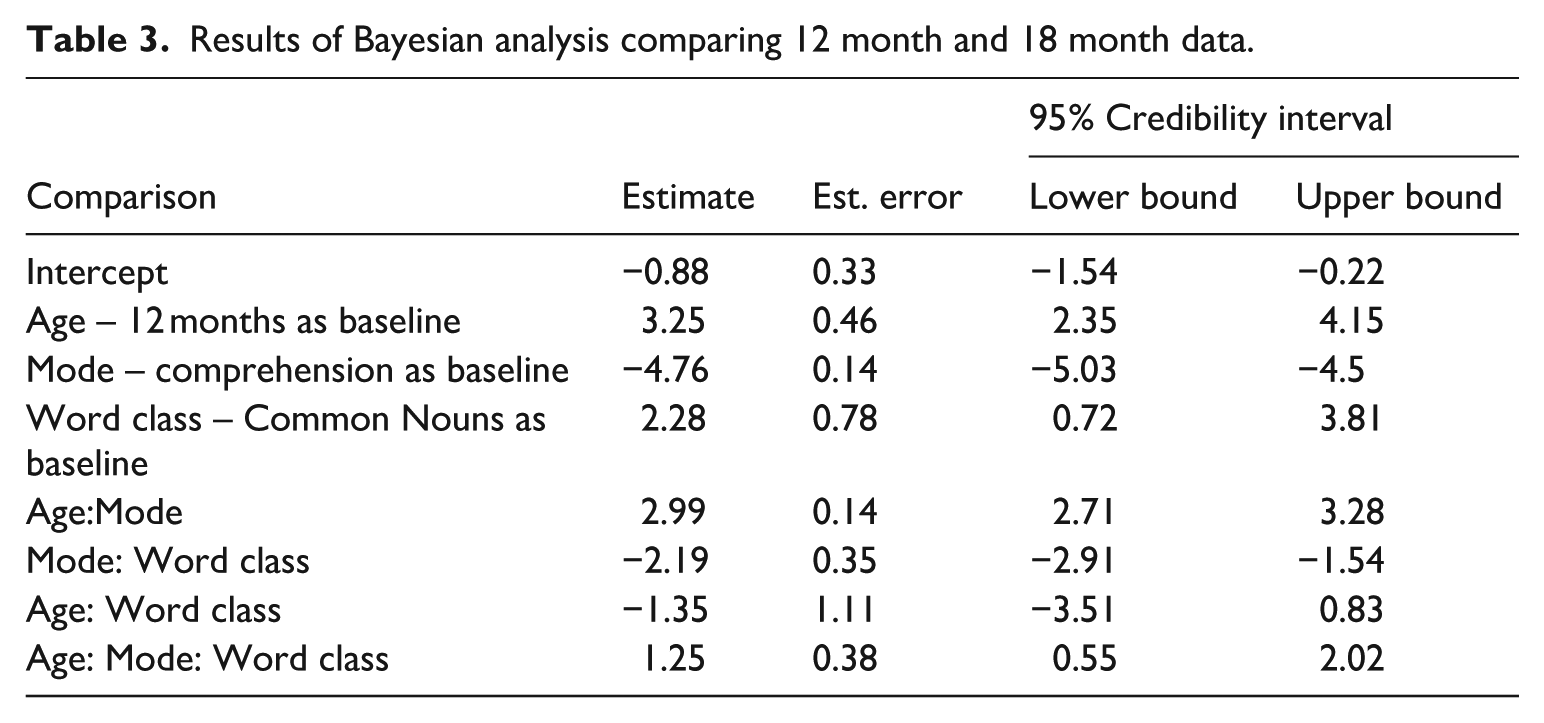
The analysis was carried out with age at each time point mean-centred, age group centred on 12 months, mode centred on comprehension, and word class centred on Common Nouns.
The results of this analysis are shown in Table 3 and Figure 2.
Results of Bayesian analysis comparing 12 month and 18 month data.
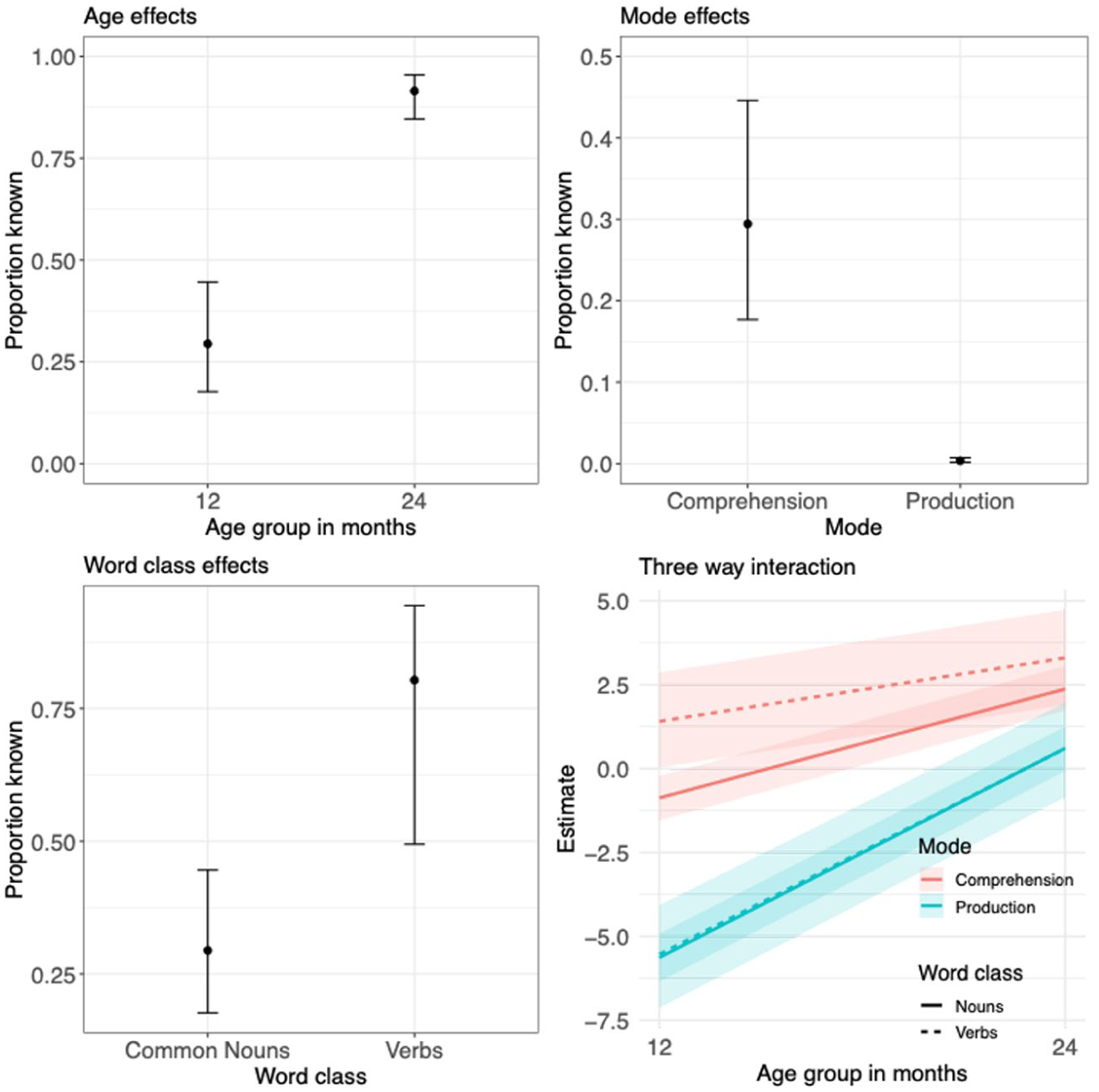
Children’s knowledge of words on the inventories that overlap between 12 and 24 months.
We see support for our hypotheses as follows
Children know more words at 24 months and can comprehend more words than they can produce.
Here, we have a higher proportion of verbs that are known than nouns; this suggests that the words in each category on the inventories do not have equal ages of acquisition, and the verbs are known earlier than the nouns on this inventory.
There is an interaction between age and mode of knowledge: comprehension is more dominant at 12 months than at 24 months, and an interaction between mode and word class: there is a bigger difference between comprehension and production for verbs than there is for nouns.
There is less support for an interaction between age and word class than for interactions between mode/word class and age/mode: even if one word class were acquired earlier overall, the gap between the two word classes could narrow as children get older, and this does not appear to be the case.
There is no support for a narrowing of the gap between word class with age.
There is support for an interaction between age, word class, and mode of knowledge. Both nouns and verbs are produced more as children get to 24 months of age, but the higher initial comprehension of verbs means this word class has less room for increase as children reach 24 months, so comprehension of nouns increases faster than that of verbs.
Discussion
Children’s Knowledge of Specific Words Over Time
Here, we used short-form CDIs created for coastal Kenyan Bantu languages, including Kiswahili and the closely related language Kidigo (Alcock et al., 2015), to assess children’s increasing word knowledge, their differential knowledge of words in comprehension or production, and their differential knowledge of nouns and verbs. We explored the potential interaction between their comprehension and production and/or their age.
The short forms used were derived from long forms previously validated, and this study provides evidence that they also show an increase in children’s vocabulary with age. We also observed the expected superiority of children’s comprehension over production vocabularies. These differences were consistent between 12 and 18 months and between 12 and 24 months.
Previous data on other languages has suggested that in languages that emphasise verbs (such as Kiswahili, where a single verb can constitute a sentence), verbs might be produced early in language acquisition. Neither Caselli et al. (1995) nor Alcock (2017) working on prodrop languages found data to support this. While Alcock (2017) found the proportion of early-produced verbs was slightly higher than in previous data, the majority of early-produced words were nouns. However, the proportion of early-comprehended words that were verbs was consistently high across children of all vocabulary sizes. This proportion is rarely reported in other languages.
Our findings suggest that in the words that are shared between 12- and 18-month inventories, the nouns and verbs present are acquired at similar ages, while in the words that are shared between 12- and 24-month inventories, the verbs are, in fact, acquired earlier.
We also hypothesised that the gap between comprehension and production would narrow as children grew older; again, this is not a novel finding. However, the fact that it was replicated between 12 and 18 months, and again between 12 and 24 months, gives us additional confidence in the validity of the instruments.
Moving on to effects that involve the mode of knowledge and word class, we have strong evidence for an interaction in both groups of words (the 12/18-month inventory words and the 12/24-month inventory words). Children have a proportionally larger gap between comprehension and production in verbs compared to their gap for nouns. In other words, children are more likely to only comprehend a verb than they are more likely to both comprehend and produce a noun.
Finally, turning to the 3-way interaction between age, word class, and mode of knowledge: this was not supported in development between 12 and 18 months, but was observed between 12 and 24 months of age. As children got older, the gap between production and comprehension of verbs got smaller, and at a faster rate than the gap between the production and comprehension of nouns.
Confounding Factors and Future Ideas
The main limitation of our study design was the use of the short-form CDI. Given the size of the sample and the intensive nature of the study, it would have proved impractical to use more time-consuming methods. Longer CDIs, or recordings of spontaneous speech, would have allowed a more detailed analysis of vocabulary expansion, but were not practical and have their own limitations, including a lack of information about comprehension in the case of recordings. While providing access to within-child changes, longitudinal and observational studies also face challenges to retention, with relocation, illness, and death, all contributing to changing numbers at each time point.
We must also consider in more detail the social structures that influence language development. In languages and settings such as this, the Kiswahili-speaking community in coastal Kenya, emphasis on commands to children is common. Other contextual features may also have an impact on the pattern of language development. For example Kvalsvig et al. (1991) found in a similar Bantu-speaking community that the time spent in conversation with older or same-age children was significantly greater than with younger children or adults. While child interlocutors balanced information-giving utterances to children with commands (activity-seeking utterances), adults (the more mature language users) and older girls (who also spent more time in the vicinity of very young children) were more likely to issue commands – a situation in which a child must comprehend a verb.
The East African Bantu language studied here – Kiswahili – expands our understanding of language development, as we increase our awareness of how other language structures may influence patterns of comprehension and production longitudinally. Our findings are generalisable beyond Bantu-speaking groups, potentially extending to non-agglutinative languages. We recommend that those with access to longitudinal databases – in any language – attempt to examine the same factors in full-length CDI datasets. However, we can also potentially foresee applicability in early education and healthcare professional settings. We know that late comprehending is a more important predictor of later language delay than late talking (Thal et al., 1991), and investigating the features of child-directed speech that promote comprehension may be able to help alleviate this.
In summary, we have found that the short CDIs for Kiswahili are valid and represent different word classes as designed, and that in early vocabularies, verbs are advantaged in comprehension, where nouns are favoured in production. While studies that examine this precise interaction are rare, especially within participants, similar trends have been reported (Stolt et al., 2008). Previously, Goldfield (2000) suggested this was due to parents’ pragmatic elicitation of nouns in production but verbs in comprehension. Analysis of child-directed speech and categorisation of utterances into those expecting comprehension and production, of nouns versus verbs, would be an extremely helpful next step, examining too the influence of setting on language acquisition patterns.
Supplemental Material
sj-docx-1-fla-10.1177_01427237251397680 – Supplemental material for Irony Comprehension: Pragmatics Meets Epistemic Vigilance
Supplemental material, sj-docx-1-fla-10.1177_01427237251397680 for Irony Comprehension: Pragmatics Meets Epistemic Vigilance by Ana Milosavljevic, Nausicaa Pouscoulous and Diana Mazzarella in First Language
Footnotes

Ethical Considerations
This study was approved by the Kenya Medical Research Institute (KEMRI) Ethics Review Committee (Non SCC 102) and the Case Western Reserve University IRB (number 05-06-07).
Author Contributions
Funding
The authors disclosed receipt of the following financial support for the research, authorship, and/or publication of this article: The study was supported by an NIMH Fogarty R01 award (Grant MH080601-03).
Declaration of Conflicting Interests
The authors declared no potential conflicts of interest with respect to the research, authorship, and/or publication of this article.
Supplemental Material
Supplemental material for this article is available online.
References
Supplementary Material
Please find the following supplemental material available below.
For Open Access articles published under a Creative Commons License, all supplemental material carries the same license as the article it is associated with.
For non-Open Access articles published, all supplemental material carries a non-exclusive license, and permission requests for re-use of supplemental material or any part of supplemental material shall be sent directly to the copyright owner as specified in the copyright notice associated with the article.
