




Abstract
The current study utilized latent class analysis (LCA) to explore the dynamic needs of 130 men nearing release from prison in Wales, UK. Participants self-assessed their re-entry needs in 12 domains, which included criminogenic and non-criminogenic needs. The analysis identified four distinct need profiles: low needs, emotional/mental health needs, survival resource needs, and high needs, highlighting the varied needs of men facing re-entry and their multidimensional challenges. The findings emphasize the importance of addressing structural barriers, including digital exclusion, housing instability, and financial insecurity. By addressing these complex needs in unison, this study provides critical insights for improving the design, implementation, and effectiveness of re-entry support to facilitate desistance and reduce recidivism. This research contributes to advancing re-entry policy and practice by promoting holistic re-entry support that prioritizes stability, well-being, and social integration.
Keywords
Background
High rates of reoffending post-release from prison are a major issue that affects several countries across the globe (see Yukhnenko et al., 2023) and highlight the need to strengthen re-entry support to prevent future offending. To date, there is no universally agreed definition or theory of re-entry from prison. Maguire and Raynor (2017) describe re-entry as a multi-stage case management process that should begin before an individual is released, paying equal attention to the practical problems they face, alongside their thoughts and attitudes. Over the past several decades, research, policy, and practice initiatives have attempted to improve re-entry by various means, with some being more effective than others (Cracknell, 2021; Maruna, 2011; Moore, 2012). Studies show that comprehensive, holistic, and multi-component re-entry interventions (e.g., combining services like employment, housing, treatment, and family support) are far more effective at reducing recidivism than surveillance-focused supervision or short-term, one-off programs (Andrews & Bonta, 2010).
A substantial body of research shows that identifying and addressing the individual needs of people is key to reducing recidivism (Andrews & Bonta, 2010; Wooditch et al., 2014). One key advancement in corrections is the Risk-Need-Responsivity (RNR) model, introduced by Andrews et al. (1990), a framework for delivering effective interventions with people in the criminal legal system (PCLS). In its simplest terms, the core principles can be described as: (a) Risk Principle: Interventions should match the individual’s risk level for reoffending, with higher-risk individuals receiving more intensive intervention. This helps focus resources where they are most needed. (b) Need Principle: Interventions should target criminogenic needs—factors that directly contribute to criminal behavior, such as substance abuse, antisocial attitudes, or lack of education or employment. Addressing these needs reduces the likelihood of reoffending. (c) Responsivity Principle: Comprises two components—general responsivity and specific responsivity. The general responsivity principle advocates that cognitive-behavioral approaches are most effective in changing behaviors to reduce reoffending, while specific responsivity posits that interventions must be tailored to the characteristics of individuals (e.g., age, gender, ethnicity, neurodiversity, religion, culture, learning style, motivation, and strengths).
The RNR model focuses on risk management and individualized, evidence-based treatment. As part of the risk and need principles of RNR, Andrews and Bonta (2010) advocate that there are eight key risk factors (the Big 8) for offending including static risk factor describing criminal history and dynamic risk factors that include, antisocial personality patterns, antisocial attitudes and behaviors, the influence of pro-criminal peers, substance abuse, negative family/marital relationships, a lack of engagement in school/work, and limited involvement in prosocial/recreational activities. However, RNR has been criticized (mainly by Good Lives Model’s [GLM] proponents) for being overly deficit-focused and overlooking broader structural issues such as poverty, health inequality, and social exclusion, which can impede desistance and re-entry efforts (Maruna, 2011; McNeill, 2012; Taxman, 2014; Ward & Maruna, 2007).
Herzog-Evans (2017, p. 99) notes that an “academic feud has sadly persisted” between proponents of the RNR model, GLM, and desistance theorists. This division, historically rooted in theoretical and ideological differences, has arguably been counterproductive and overlooks important commonalities (Herzog-Evans, 2017). All three frameworks aim to reduce recidivism by supporting change among justice-involved individuals. Rather than being mutually exclusive, they complement one another and address each other’s weaknesses. Rather than opposing RNR, the GLM can enhance it by addressing the motivational and aspirational dimensions often overlooked in risk-centric paradigms, with its strengths-based perspective, focusing on personal goals and well-being (Ward & Maruna, 2007). Desistance theories emphasize strengths-based approaches, identity transformation, social capital, and long-term reintegration (Maruna, 2001, 2011)-factors that are not antithetical to the RNR or GLM frameworks but instead deepen their practical applicability.
Furthermore, while risk assessments underpinned by RNR identify who is at higher risk of offending, they fail to specify what should be targeted and how interventions should be designed to address static and dynamic risk factors, non-criminogenic needs/(de)stabilizing factors (Taxman & Caudy, 2015). To address the deficit basis for the RNR model, desistance theorists and proponents of the GLM call for a shift toward enhancing quality of life, sense of identity, social capital, and well-being to reduce reoffending (Maruna, 2001; McNeill, 2012; Ward & Fortune, 2013). That is, GLM extends the criminogenic needs to identify and enhance strengths and stabilizing factors. Integrating these models allows for a more holistic and responsive approach to re-entry, addressing individual, social, and structural change.
As such, this study is dedicated to understanding the specific needs of individuals re-entering society after prison release in Wales, UK. Using data from 130 men, we examine the currency of the Big 8 and other structural needs in terms of understanding how to facilitate positive re-entry outcomes. Given that much of society has adopted technology to deliver services (ranging from assessments to service provision to referrals), this study also examines how access to and confidence in using digital technology may impact various criminogenic and non-criminogenic needs of individuals.
Understanding Co-occurring Re-entry Needs: The “Big 8” and Beyond
In the RNR framework, the “Big 8” refers to key criminogenic needs statistically linked to recidivism (Andrews & Bonta, 2010; Andrews et al., 1990). In Andrews and Bonta’s (2010) original work, they advocate that the “big 4” (criminal history, antisocial personality patterns, antisocial attitudes and behaviors, the pro-criminal peers association) have the strongest association with recidivism and should be prioritized. More recent work moves substance use into a major risk factor and secondary dynamic needs such as family issues, employment, education, and prosocial leisure are less robust predictors of recidivism but still important to address (Andrews and Bonta, 2010; Andrews et al., 2006). More recently, limited support has been found for some criminogenic needs such as antisocial values, antisocial peer association, employment and education, and prosocial leisure activities as independent dynamic risk factors (Wooditch et al., 2014). There is an overall question about the proposed hierarchy and its relationship with recidivism. Consequently, we chose not to impose a hierarchy of needs in our study.
A holistic approach to re-entry involves consideration of a broad range of factors that (de)stigmatize, (de)stabilize, and facilitate desistance, including those that go beyond the Big 8. People’s needs are often co-occurring, and they cannot be responded to in silos; instead, they are shaped by a complex interplay of individual, social, and structural factors that interact and compound one another (Maruna, 2011; McNeill, 2012). Understanding how people’s needs cluster and interact is key to developing responsive interventions (Breno et al., 2023; Lee & Taxman, 2020; Taxman & Caudy, 2015). This recognition was central to both the theoretical framing and methodological design of the study. To explicitly account for the multidimensional and overlapping nature of needs, we employed latent class analysis (LCA)—a statistical technique that allows for the empirical identification of unobserved subgroups (or classes) based on patterns of co-occurring indicators (Collins & Lanza, 2009). Rather than examining individual needs in isolation, LCA identifies how different needs cluster together within individuals, thus offering a typological understanding that reflects the real-world complexity of re-entry. To concur with Taxman and Caudy (2015), assessing the impact of each risk and need factor independently limits our knowledge about the possible interactions between these factors as predictors of recidivism and other outcomes.
In addition, our selection of need indicators deliberately went beyond criminogenic factors identified in the RNR research to include broader social and structural determinants such as housing, food security, emotional well-being, social capital, and digital exclusion (see Morgan et al., 2025). This expanded focus acknowledges that destabilizing factors and criminogenic needs often intersect and cannot be effectively addressed through siloed interventions-the typologies generated from our LCA reflect these overlapping needs. By incorporating this complexity into our design and analysis, the study offers a nuanced framework that can inform integrated and cross-sectoral interventions better suited to the lived realities of individuals preparing for release.
The following sections summarize the relevance of the needs our study explored in relation to re-entry and desistance, which include employment, training and education, mental health, emotional health, physical health, problem behavior (including antisocial personality patterns, antisocial attitudes and behaviors), addictions, relationships with others, sense of community, housing, financial stability, food security, and leisure opportunities.
Employment, Training, and Education
Lack of education and employment is a well-documented risk factor for reoffending (Andrews et al., 2006; Basto-Pereira & Farrington, 2022). Barriers such as stigma, unemployment, and benefit dependency disproportionately affect people leaving prison, with unemployment rates post-release reaching 60%–65% in the United Kingdom and United States (Bureau of Justice Statistics, 2021; Ministry of Justice, 2023). Work or education fosters prosocial roles, identities, and social capital, aiding long-term desistance, providing financial stability critical for protective factors like housing (Abeling-Judge, 2020).
Addiction
The link between drug misuse or abuse and criminal activity is well-established, with studies highlighting the increased likelihood of (re)offending of people who use drugs and alcohol (Andrews & Bonta, 2010; Yukhnenko et al., 2020). Addiction includes not only substance and alcohol misuse but also behavioral addictions such as problematic gambling, which is more prevalent in justice-involved populations (Smith et al., 2022). Those with gambling problems are more likely to re-offend, and further attention needs to be paid to this issue (Lloyd et al., 2014).
Leisure Opportunities
Leisure activities contribute to building social capital and prosocial self-images, supporting desistance (A. J. Link & Williams, 2017). However, justice-involved individuals often face financial constraints, stigma, and chaotic lifestyles that limit participation in leisure activities, which are already less common in this group than the general population (Farnworth, 2000).
Relationships With Others
Antisocial associations and negative family dynamics increase the likelihood of reoffending, while positive relationships with family, friends, professionals, and community members provide emotional support, social capital, and a sense of belonging that supports desistance (McNeill, 2012; Weaver & McNeill, 2015).
Problem Behaviors
Antisocial attitudes and behaviors increase the likelihood of offending (Andrews & Bonta, 2010). They also undermine social relationships, employment, and integration into prosocial communities. Addressing these behaviors and attitudes requires building human capital and social capital (McNeill, 2012).
Housing
Housing is a destabilizing factor that can impede people’s resources, quality of life, and ability to desist from crime (Jacobs & Gottlieb, 2020; Morrison & Bowman, 2017). Less than half (48%) of people released from prison in England and Wales between 2022 and 2023 had stable accommodation on release, and more than one in ten (11%) were homeless or sleeping rough (Ministry of Justice, 2023). Formerly incarcerated people in the United States are almost 10 times more likely than the general public to experience homelessness (Couloute, 2018). Stable housing is often dependent on financial stability, which can be challenging to secure upon release (Morrison & Bowman, 2017).
Money/Benefits
Poverty is a common factor associated with PCLS (Dunn, 2023) and is a key predictor of future offending (Jahanshahi et al., 2022). Many people in prison are released with debts (e.g., credit cards, personal loans, utility bills) which have built up during their sentence and with limited employment prospects and lengthy waits to receive state benefits, this adds to the financial insecurity of PCLS (Prison Reform Trust, 2024). van Beek et al.’s (2023) meta-analysis highlights that debt is a predictive factor of offending, and financial instability negatively impacts mental health (Murali & Oyebode, 2004).
Food Security
Food insecurity, defined as inadequate access to sufficient food, is a critical but under-researched issue for PCLS experience. In 2022/23, it affected 7.2 million people in the United Kingdom and 47.4 million in the United States, with an increased likelihood of food poverty being linked to financial insecurity (Francis-Devine et al., 2024; US Department of Agriculture, 2023). Food insecurity is associated with negative physical and mental health outcomes, as well as housing, employment, and financial insecurity (Ford, 2013; Prison Reform Trust, 2024; Testa & Jackson, 2020).
Mental Health
Health needs among PCLS are well-documented (Skinner & Farrington, 2023). Over 70% of incarcerated individuals in the United States have a mental illness or substance use disorder, with 59% of men in prison in England and Wales reporting mental health issues (His Majesty’s Inspectorate of Prisons, 2023; National Judicial Task Force, 2022). Mental illness can hinder engagement with work and education, affecting financial, housing, and food security. Addressing mental health reduces suffering from untreated conditions, compounded by stigma and the prison environment (Edgemon & Clay-Warner, 2019).
Emotional Health
Emotional health forms a broader conceptualization of someone’s overall health, beyond the absence of mental illnesses, and coincides with the World Health Organization (WHO, 2024) definition of health as “a state of complete mental, physical and social well-being and not merely the absence of disease or infirmity” (WHO, 2024). Emotional health, as Peterson (2019) describes, reflects optimal psychological functioning and the ability to navigate life’s challenges. It involves emotional regulation, developmental relationships, and individual strengths and vulnerabilities (Charles, 2010). Focusing on emotional health aligns with improving overall well-being and quality of life, rather than solely reducing recidivism.
Physical Health
PCLS tend to have high levels of behaviors that negatively impact their physical health, such as smoking, street drug use, and excessive alcohol use (Williams et al., 2024). PCLS are more likely to experience comorbid physical and mental health problems, particularly those in middle or older age (Han et al., 2021). N. W. Link et al. (2019) assert that both physical and mental health affect life chances and pathways into criminal activity and impede employment, positive social relationships and social capital. N. W. Link et al. (2019) argue for a model of desistance that is health-based and considers the impact of poor health on an individual’s ability to fully engage in society.
Sense of Belonging
A sense of belonging is often linked to people building social capital and prosocial social networks that can also help people develop prosocial self-identities, all of which support desistance (Maruna, 2001). PCLS experience stigma and discrimination in various aspects of society, including employment, housing, and health care, and this may be a significant cause of ongoing social inequality and difficulty in community readjustment (Tharshini et al., 2018).
Digital Exclusion
In today’s increasingly digitalized society, accessing services will inevitably involve using the internet and digital technology. An individual’s lack of access to digital technology in prisons often continues upon re-entry and acts as a barrier to desistance (Reisdorf & DeCook, 2022). People who do not/cannot use the internet and digital technologies face additional difficulties in finding employment and higher-paying jobs, managing their finances, accessing health care and online education opportunities that can facilitate desistance (Holmes & Burgess, 2022; Morgan et al., 2025; Reisdorf & DeCook, 2022).
The Challenges of Re-entry
Collectively, PCLS encounter a range of overlapping structural, personal traits, and practical barriers when attempting to re-enter society (Tharshini et al., 2018). The needs of PCLS are multiple, complex, and interconnected; this requires services that understand these interrelated needs and provide support and strategies to address them in unison to facilitate desistance. By examining cluster patterns, it is possible to identify interventions for re-entry that are more holistic and less piecemeal (one program after another) (Taxman & Caudy, 2015).
The Current Study
We classified 130 men nearing release from prison into typologies according to the needs they anticipate facing post-release. Understanding the complexity of people’s needs is vital for improving the design, implementation and effectiveness of re-entry services and/or interventions for PCLS. The classification strategy used a statistical technique of LCA to move beyond identifying individual risk factors or assessing isolated risk factors (as done in RNR) to explore how needs cluster and interact (Taxman & Caudy, 2015). While prior research has advanced the use of LCA to identify need profiles, particularly within youth or adult treatment-based populations (e.g., Breno et al., 2023; Lee & Taxman, 2020; Taxman & Caudy, 2015), there remains a gap in understanding the pre-release needs of adult populations, particularly in non-US contexts. To date, no study has used LCA to examine the needs of PCLS during the early re-entry phase. This study addresses that gap by being the first to apply LCA to assess the pre-release needs of adult men in Welsh prisons and offers a novel lens on re-entry challenges. Our approach goes beyond simply identifying criminogenic factors as emphasized by the RNR model. By incorporating structural and non-criminogenic dimensions (e.g., digital exclusion, emotional well-being, and food insecurity), we offer a more comprehensive typology of need that can inform services and interventions. While the Big 8 provided the empirical basis for indicator variables, drawing on desistance and GLM literature broadens the focus beyond RNR’s criminogenic risks. Desistance and GLM perspectives emphasize well-being and holistic reintegration, aligning with our use of LCA to identify need profiles that span criminogenic, emotional, social, and structural dimensions. This broader lens can enhance the development of responsive, person-centered interventions that better reflect the realities of re-entry.
Specifically, we explored data from a survey and self-assessments of the men’s needs to answer the following research questions:
What are the varied need factors that men face upon re-entry? Using these factors, what typologies exist to explain the needs men face?
What characteristics predict which typology individuals are assigned to?
How does internet access and confidence with technology affect membership in the different need typologies?
Method
The study took place in Wales, UK and involved 130 incarcerated men. The participants were part of a study that piloted app technology to facilitate one-to-one support upon release from prison. The inclusion criteria for our study were males aged 18 and above who were being released from two (of six) prisons in Wales between January 2022 and October 2022 (this corresponds to the length of the project as prescribed by our funder). The exclusion criteria were individuals not in these two facilities or not scheduled for release during our study period. A total of 5034 males were incarcerated in Wales in 2023 (Jones, 2024). Women were not included in this study because there are no female prisons in Wales. The men were recruited from two prisons, where team members went into one prison weekly and the other monthly to onboard people onto the project based on inclusion/exclusion criteria, and participation was voluntary. As part of the study, the men completed a survey of demographics, needs, and six questions on their access to and confidence in using digital technology.
Sample Characteristics
A set of variables describes the sample and serves as an independent variable to explore potential predictors. As highlighted in Table 1, these variables included age, ethnicity, sentence length, and offense type.
Characteristics of the Sample
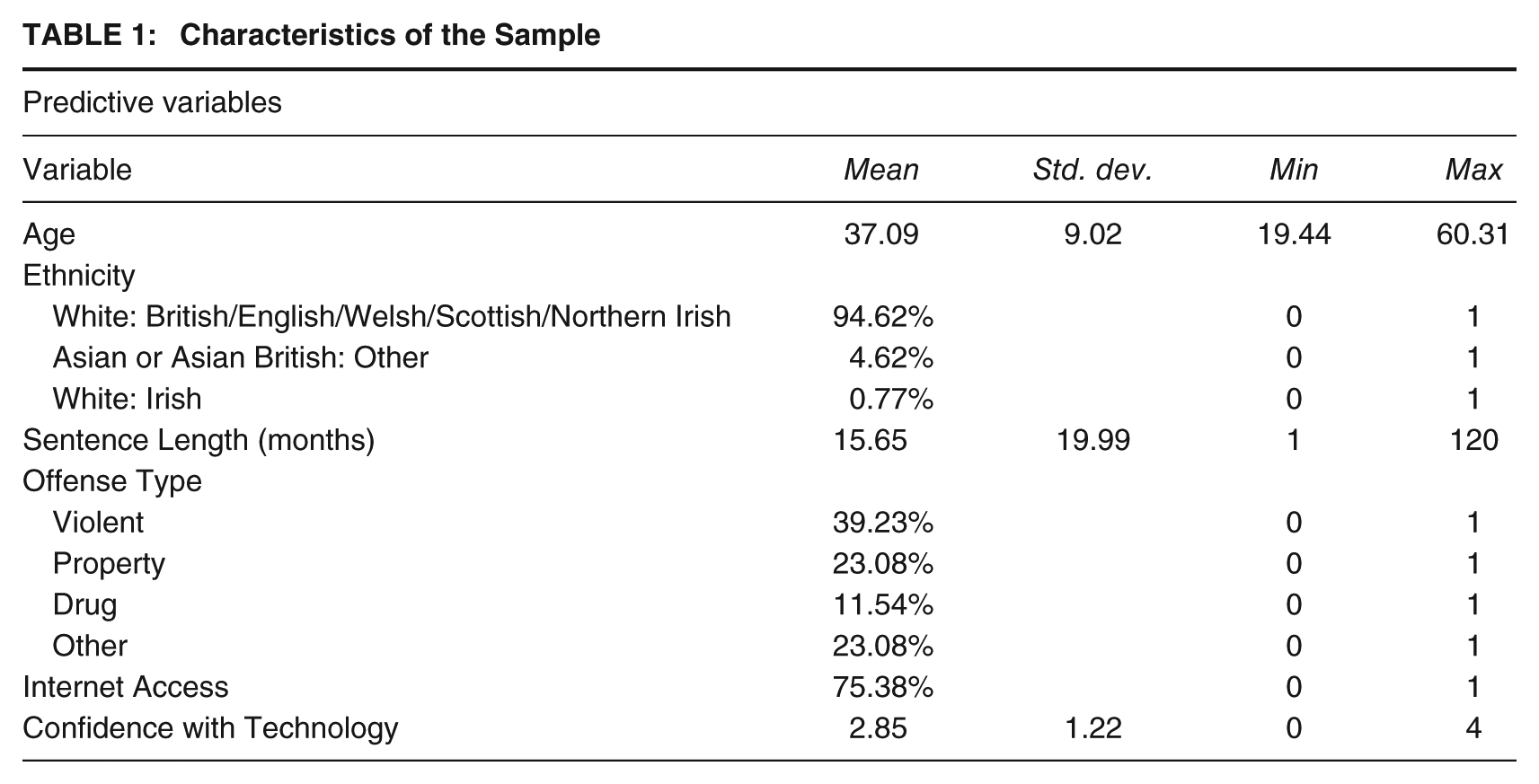
Among this population, age of respondents ranged from 19 to 60 years old, 95% of them were White (British/English/Welsh/Scottish/Northern Irish), and they were sentenced to an average of 16 months. Roughly 40% of participants had violent offenses, 23% had property offenses, 12% had drug offenses, and 23% had other types of offenses.
Two variables measuring internet access and confidence with technology were included to describe how the sample is prepared to function in a digital world. internet access was coded as a dichotomous variable where “1” indicated respondents would have some way to access the internet. Confidence with technology was measured using a 5-point Likert-type scale where 1 indicated “no confidence,” 2 = “not very confident,” 3 = “neutral confidence,” 4 = “fairly confident,” 5 = “very confident.” Just over 75% of the sample reported anticipating they would have access to the internet post-release. In terms of confidence in using digital technology, respondents reported an average of 2.85 on the 5-point Likert-type scale.
Measures of Need
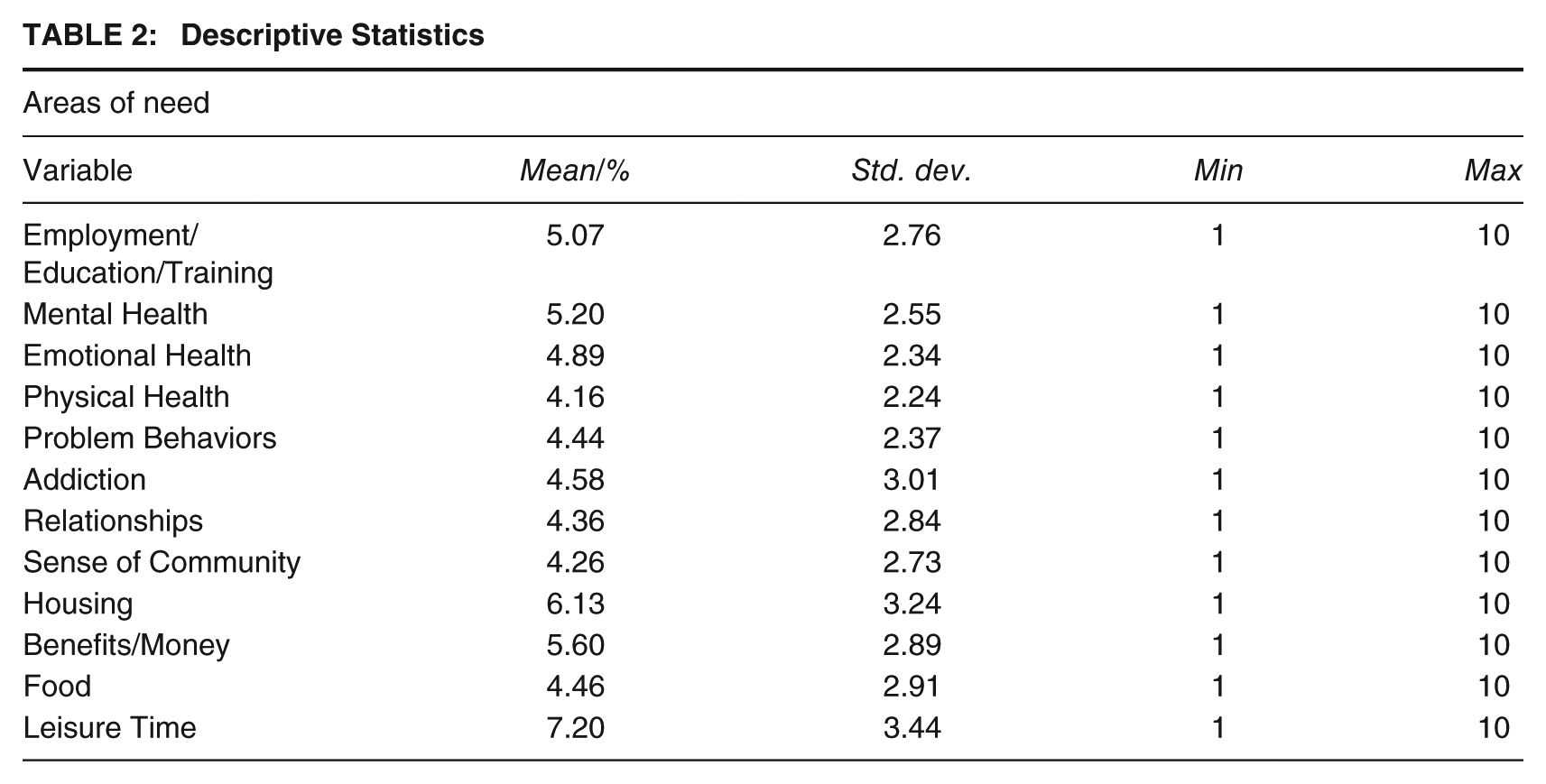
Approximately 2 weeks before their release from prison, the men were asked to rate how prepared they felt in dealing with 12 areas following their release: employment/education/training, mental health, emotional health, physical health, problem behaviors, addiction, relationships, sense of community, housing, benefits/money, food, and leisure time. Each area was rated on a 10-point Likert-type scale—terrible (1), awful (2), very bad (3), bad (4), ok (5), fine (6), good (7), very good (8), great (9), and amazing (10). The scores were reverse-coded for this study so that they could be conceptualized as “level of need” in each of the 12 categories, ranging from a “1” indicating no needs to a “10” indicating high need. Table 2 provides the distribution of each of these variables. On average, housing and leisure time are the highest areas of need.
Descriptive Statistics
Analytic Strategy
LCA was used to create typologies of self-reported needs of men re-entering society post-release from prison. LCA was used to identify need profiles because it allows for the empirical identification of individuals who are similar on a categorical latent variable when class membership cannot be directly observed. LCA is a form of structural equation modeling (SEM) to explore patterns or groupings based on a specified set of indicators—such as areas of need. The patterns that are revealed from the analysis are used to operationalize a latent categorical variable of various “classes” of respondents, and each class is represented by the specific patterns identified among the observed variables (i.e., areas of need from Collins & Lanza, 2009). The latent variable in this study is conceptualized as “needs profiles” at the individual level. LCA can fit as many classes as specified by the researcher using fit statistics to determine the best number of classes that describes the data (Bergman & Magnusson, 1997). In other words, LCA uses observed variables—in this case, areas of needs—to identify and group participants into classes that are then referred to as the latent (i.e., unobserved) construct or what we call a “needs profile.”
The Bayesian information criterion (BIC) and bootstrapped maximum log likelihood are two fit statistics commonly used for model comparison (Nylund et al., 2007). The current study utilized those two and the percentage of individuals reclassified upon the addition of a new class to determine the best-fitting model. Once the classes were formed, we examined the variation of individual-level characteristics across the classes using analysis of variance (ANOVA). The last stage of analysis was to enter a subset of demographic characteristics into the SEM equation as covariates to be simultaneously estimated as predictors for class membership. Modeling class enumeration (i.e., class formation and assignment) before predicting class membership with covariates is the most recent recommendation to avoid misspecification of classes (Nylund-Gibson & Masyn, 2016). Once entered into the SEM equation, we could examine how the group of covariates were related to class membership.
Ethics
Swansea University’s Faculty of Humanities and Social Sciences Ethics and Research Committee granted ethical approval. Participation was voluntary, and people were free to withdraw at any point. All participants gave informed consent to participate in all aspects of the research and for the findings to be disseminated anonymously.
Results
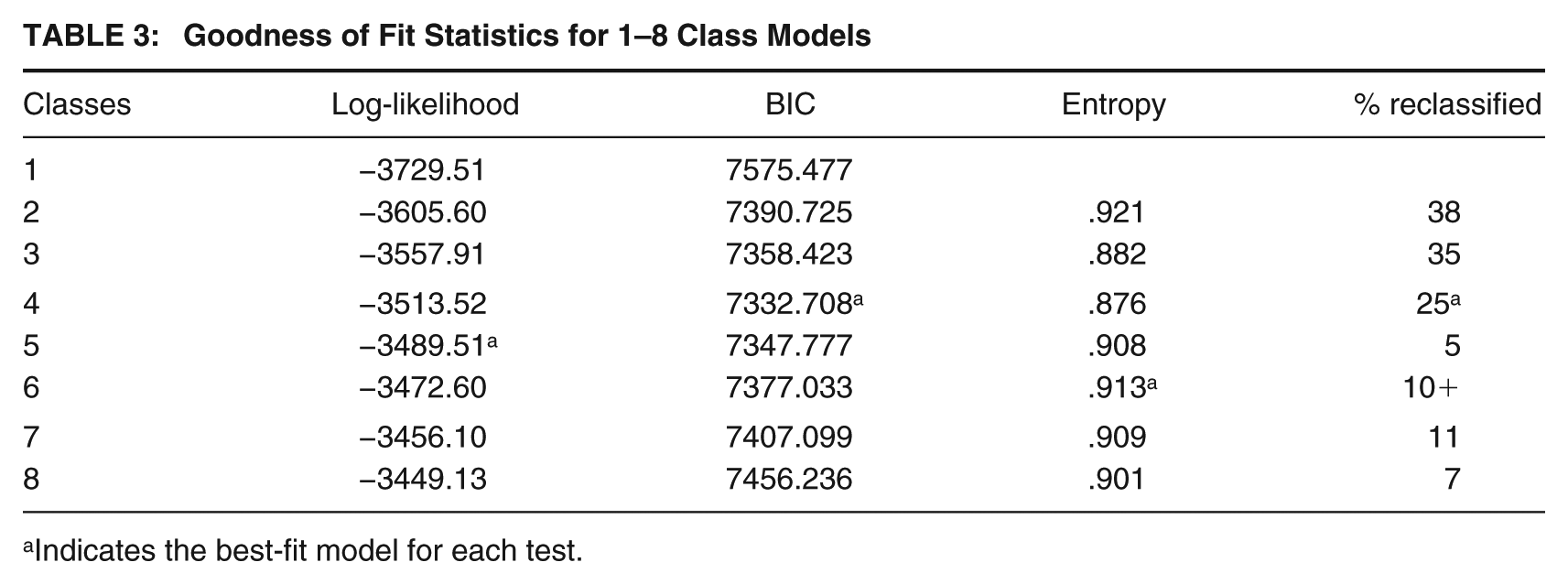
Eight models were generated to test various numbers of classes. After running a series of model fit statistics, we determined a four-class model that best fits the data (see Table 3).
Goodness of Fit Statistics for 1–8 Class Models
Indicates the best-fit model for each test.
The first fit statistic used was the bootstrapped log-likelihood ratio test (BLRT), which shows the relative adequacy of a model with fewer classes than a model with more classes. A larger log-likelihood is better, and the BLRT test determined that a five-class model was the best fit when compared to the four- and six-class models. The entropy test measures class separation. The closer the value is to one, the more distinguishable one class is from the other, and the generally accepted cutoff for acceptable separation is an entropy value of 0.8 or higher (Weller et al., 2020). With that threshold in mind, all eight models we ran would have acceptable class separation. The BIC tests model performance while taking into account model complexity, and a lower value is desirable. The percent reclassified fit statistic indicates the percentage of individuals who were reclassified, or moved from one class to another, as additional classes were added to the models. If the percentage of reclassified individuals is relatively small, this would justify selecting the more parsimonious model because the results are not very sensitive to adding additional classes. BIC and percentage reclassified fit tests both indicated that the 4-class model best fit the data.
Although the BLRT test identified the five-class model as best-fitting, we ultimately decided to move forward with the four-class model because the other fit tests identified the four-class as the best fit. The four-class model allowed each class to have a substantial enough portion of the sample to allow for sub-analyses by class. Each of the four classes has distinct characteristics that distinguish it from the others and determine which participants belong to each class.
Description of the Classes
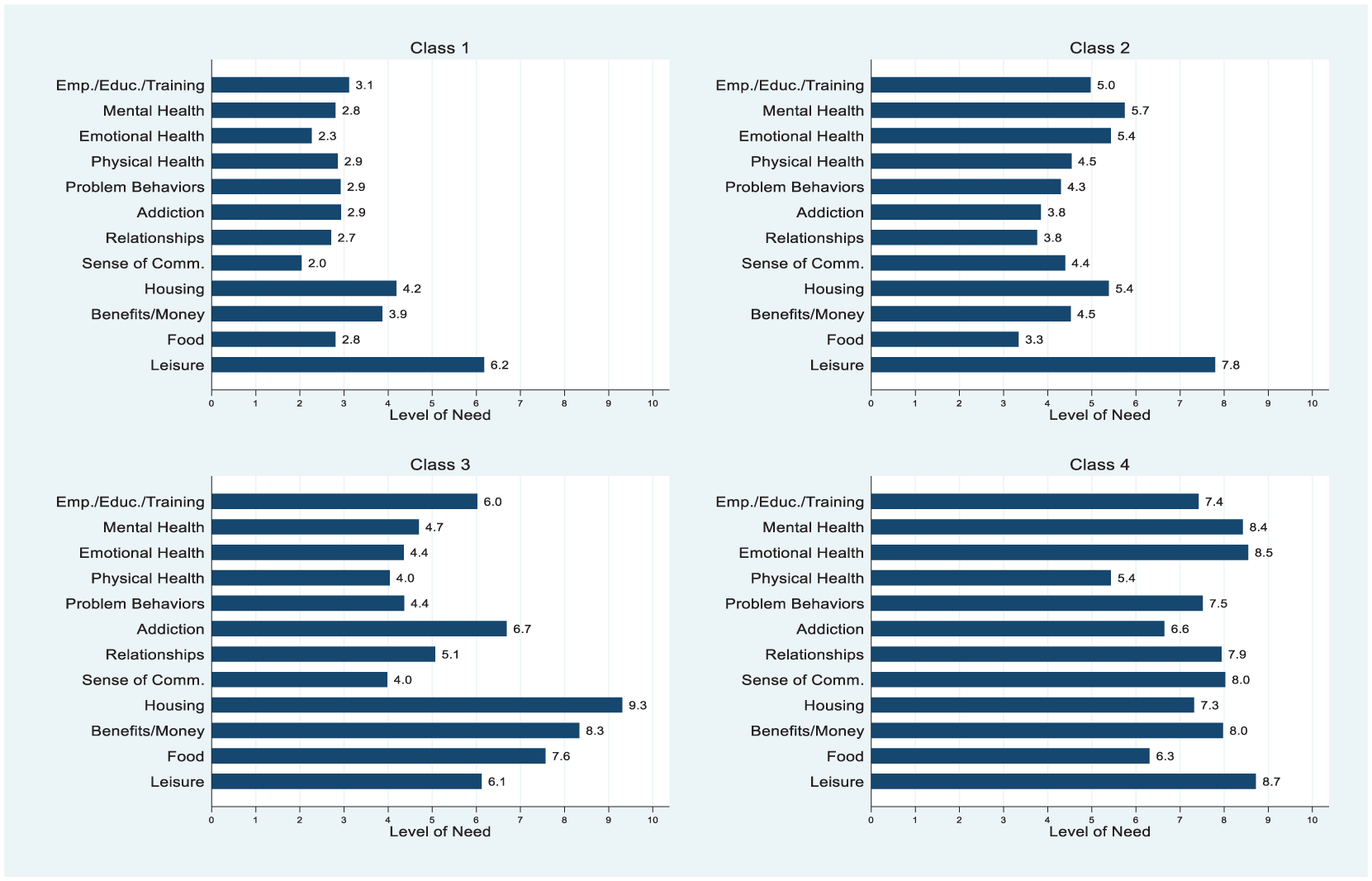
Figure 1 shows the marginal means of each of the 12 areas of need conditional on the four “needs profiles”—or latent classes generated by the LCA.
Marginal Means of Each of the 12 Areas of Need
The first class comprises 31 participants (23.8%) and is a “Low Needs” class, reporting, on average, low concerns across nearly all areas of need, except for leisure time activities. Leisure time activities were of moderate/high concern among the members of this class.
Class 2 indicates that mental and emotional health weighs heavily for this group; it is the largest class with 55 participants (42.3%). It closely resembles the Low Needs class in terms of the patterns, but the magnitude is substantially higher in this class than in the Low Needs class. Class 2—which we will refer to as the “Emotional/MH Needs” class—diverges from the relative patterns of the Low Needs class in that members reported higher needs for a sense of community, emotional health, and mental health. The stated needs of the community, emotion, and mental health are very predominant among this group, and the other needs seem to depend on these issues. The high rating for leisure time activity needs coincides with individuals who are weighed down by the burden of coping with daily life and trying to find activities in which to engage.
Class 3 includes 24 participants (18.4%) and is characterized by their reported lack of “survival resources” (i.e., housing, benefits/money, and food) with moderate/high needs for employment/education/training, addiction treatment, and leisure time activities. This high-resource-need group illustrates that they anticipate problems with daily survival. We refer to this class as the Survival Resources class.
The fourth and final class includes the fewest participants, with 20 members (15.3%), and is conceptualized as the High Needs class. Members of this class generally have high needs in nearly all need categories, indicating concerns about their ability to function once released from prison.
Characteristics of Individuals in Each Class
Each of the four classes was created based on observable differences in participants’ reported needs post-release. However, we wanted to explore further whether differences existed between the classes in other observed individual characteristics. Table 4 shows a breakdown of the demographic characteristics conditional on class and indicates which of the characteristics has significant variation across classes.
Individual Characteristics by Latent Class (% of Class)
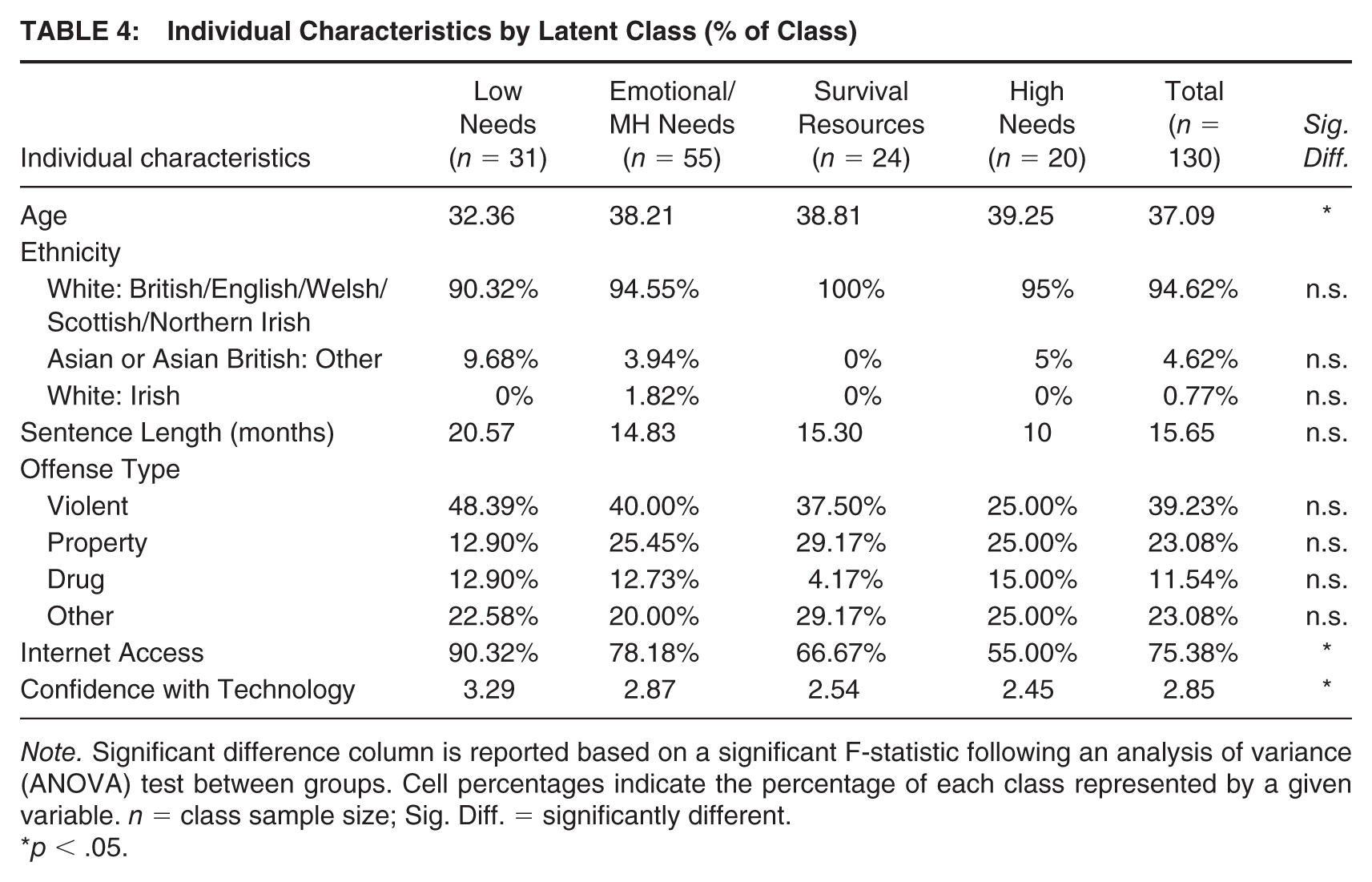
Note. Significant difference column is reported based on a significant F-statistic following an analysis of variance (ANOVA) test between groups. Cell percentages indicate the percentage of each class represented by a given variable. n = class sample size; Sig. Diff. = significantly different.
*p < .05.
The classes were different from one another in age, internet access, and confidence in using technology. The average age ranged from 32.4 years old in the Low Needs class up to 39.3 in the High Needs class. Across reports of internet access and confidence with technology, the Low Needs class reported the highest access to the internet, with over 90% anticipating access and the highest level of confidence using technology, reporting a 3.29 out of 4. This is contrary to the High Needs class, which reported the lowest anticipated internet access (55%) and the lowest confidence with technology (2.45 out of 4). Emotional/MH Needs class and Survival Resources class fall between the Low Needs and High Needs classes on all three of these variables; however, they fall closer to the High Needs class.
The classes did not differ statistically across the other variables we examined. However, it is noteworthy that the Low Needs and High Needs classes remain on opposite ends of the distribution, with the Low Needs class having the longest sentences (20.57 months) and the most violent offenses (48.39%) on average. Whereas the High Needs class had the shortest sentences (10 months) and the fewest violent offenses (25%) on average.
Predictors of Needs Profile Class Membership
To gain a better understanding of which individual-level characteristics might determine the challenges an individual will face after being released from prison, we examine predictors of class membership. Table 5 presents the covariates included in the model and how each of them was related to membership in each of the classes.
Predictors of Class Membership (n = 121)
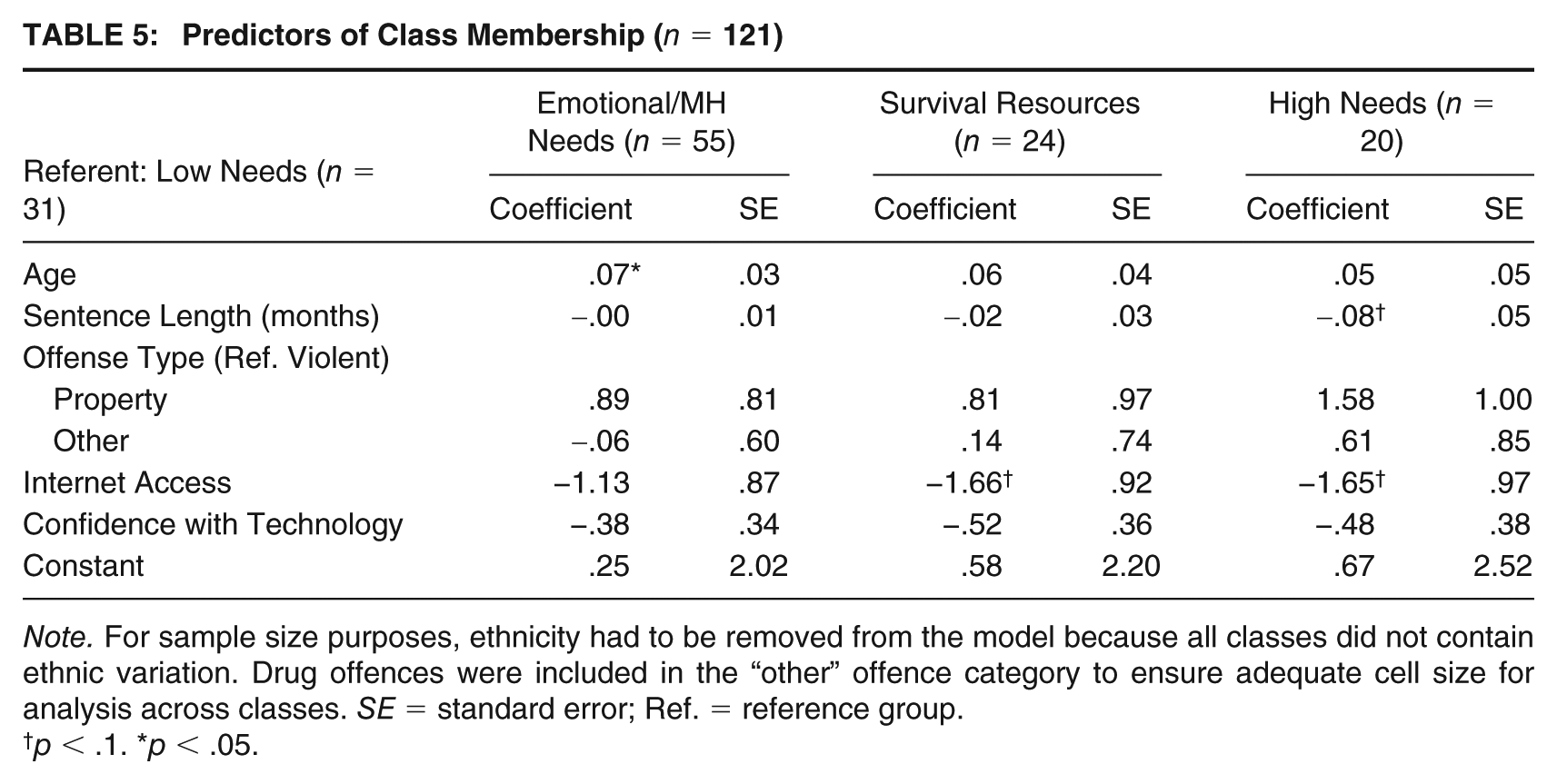
Note. For sample size purposes, ethnicity had to be removed from the model because all classes did not contain ethnic variation. Drug offences were included in the “other” offence category to ensure adequate cell size for analysis across classes. SE = standard error; Ref. = reference group.
p < .1. *p < .05.
The Low Needs class served as the reference group, so each coefficient indicates the relationship between that variable and the corresponding class relative to the Low Needs class. For example, age is a significant, positive predictor of emotional/MH needs relative to class 1 (p = .033). This means that as age increases, so does the probability of membership in the Emotional/MH class over the Low Needs class. Age was not a significant predictor of class membership in Survival Resources or the High Needs classes, despite the higher average age in these classes observed in Table 5. This may be an artifact of the smaller sample size in these categories. No other covariates were predictive of membership in the Emotional/MH Needs class.
The Survival Resources class did not have any strong predictive covariates. However, having internet access was a marginally significant negative predictor of membership in this class relative to the Low Needs class (p = .071), meaning that failure to have internet access increased the presence in the survival resources class. Two covariates were marginally predictive of membership in the High Needs class. A negative relationship between internet access and membership in the High Needs class, relative to the Low Needs class (p = .089). In other words, as access to the internet decreased among participants, the probability of membership in the High Needs class increased. Sentence length also had a negative marginal relationship with High Needs class membership (p = .077).
Discussion: Implications for Re-entry
The process of re-entry into society for men leaving prison is fraught with challenges, and their successful reintegration depends on addressing destabilizing factors, which include criminogenic and non-criminogenic needs (McNeill, 2012; Ward & Maruna, 2007). The primary goal of this study was to explore the clustering of dynamic needs among men pre-release from prison, to determine whether distinct need profiles could be identified. Identifying common need profiles has important implications for informing re-entry priorities and services. Our LCA statistical technique used on 130 men provides key insights into the complex and heterogeneous needs of men at a critical juncture of re-entry. The four distinct classes identified reflect varying levels of need but illustrate that the traditional needs in the RNR framework do not respond to the full range of needs for individuals. Understanding these nuanced profiles enhances our knowledge of re-entry challenges and can help to inform tailored interventions to improve outcomes for individuals leaving prison.
The findings from the LCA have highlighted the importance of (de)stabilizing factors, such as housing instability, poor mental health, and limited access to benefits or food, which can impede desistance (Morrison & Bowman, 2017; Testa & Jackson, 2020). These destabilizing factors are structural issues that disproportionately affect those leaving prison (Reisdorf & Rikard, 2018); factors that individuals typically do not have control over. Stability in both social relationships and material conditions are key foundations that need to be in place for men when they leave prison (McNeill, 2012; McNeill et al., 2012).
A lack of internet access was a marginal predictor of the survival resources and High Needs classes. Given the complexity of needs in survival resources and high needs groups, digital exclusion could present a serious challenge for re-entry and desistance (see also Reisdorf & DeCook, 2022; Reisdorf & Rikard, 2018). The needs of these two groups cannot be adequately addressed without considering their inability to obtain or use digital technology to access services that could facilitate desistance (Reisdorf & DeCook, 2022; Reisdorf & Rikard, 2018). Addressing both socioeconomic adversity and digital exclusion is critical for supporting desistance and other positive outcomes for re-entry (Jahanshahi et al., 2022; Reisdorf & DeCook, 2022).
The burden of being a returning citizen weighs heavily on this sample of men. Instead of solely focusing on changing individual behaviors or providing cognitive-behavioral interventions, correctional agencies and re-entry programs should work to create pathways to stable housing, employment, and access to essential resources like food and health care (see Taxman, 2014). A focus on structural support means addressing the broader social and economic inequalities that people leaving prison face. This would involve a more systemic approach to re-entry, working with community organizations, housing providers, and employers to create opportunities for individuals leaving prison. Secure employment and stable housing are not only essential for meeting basic survival needs (i.e., money, food, shelter, warmth) but also provide individuals with a sense of purpose, belonging, and structure that can support desistance (McNeill et al., 2012). Addressing the structural inequality would mean major reforms to funding and policies related to health care, housing, state benefits, employment, and education.
Consideration should be given to how digital exclusion compounds these socioeconomic challenges. In today’s increasingly digital society, access to the internet, digital technology (smartphones, computers and tablets), and digital competency (having the skills and confidence to use digital technology) are essential for navigating basic life processes such as job applications, housing searches, and managing benefits or money (Reisdorf & Rikard, 2018). Without internet access and digital skills, individuals may encounter additional challenges accessing resources and support that facilitate desistance. Our findings align with broader research on digital exclusion in the CLS populations, where barriers to digital technology, including lack of access and low digital competency, create challenges for successful reintegration (Morgan et al., 2025).
Beyond the Big 8
Our study has clear implications for advancing the RNR framework and improving the effectiveness of correctional interventions. This study has developed our understanding of dynamic need profiles and emphasizes the importance of moving beyond static risk assessments to better inform correctional interventions. Andrews and Bonta’s (2010) “Big 8” risk factors do not fully account for the holistic needs of individuals re-entering society, nor do they recognize the broader social, emotional, and practical challenges that affect successful reintegration (see also McNeill, 2012; Taxman, 2014; Ward & Maruna, 2007). While the RNR framework has played a pivotal role in identifying who requires more intensive treatment programs, its reliance on static risk factors (e.g., criminal history) has limitations. Although static risk is a predictor of recidivism (Caudy et al., 2013; Lowenkamp et al., 2006), it fails to address the specific behavioral or structural challenges that should be targeted in treatment programs. As Taxman and Caudy (2015) point out, the “what works for whom” dilemma has been restricted by an overemphasis on static risk and generic treatment approaches, leaving out a comprehensive understanding of dynamic criminogenic and non-criminogenic needs. We contend that a more nuanced understanding and approach to risk/need assessments that incorporate non-criminogenic needs and (de)stabilizing factors, especially those rooted in structural inequality rather than individual deficits, is required. By broadening the scope of RNR to include a wider range of needs (e.g., housing, community, food security, and health), we can develop more holistic interventions that not only reduce recidivism but also improve individuals’ overall quality of life (Maruna, 2011; Ward & Fortune, 2013).
Re-entry Policy and Practice Implications
The findings from the LCA highlight that a shift is needed in how we conceptualize re-entry support. Tailored interventions based on our identified classes can help improve service delivery, reduce resource waste, and potentially lower recidivism by addressing the most pressing needs of each group. By understanding how these needs cluster, correctional agencies can allocate resources more effectively, ensuring that interventions address the interconnectedness of needs rather than responding to them in silos. Recommendations for re-entry policy and practice include:
(1) Policy Reforms to Address Structural Inequality: Policy reforms should aim to reduce structural inequalities by improving access to public services, affordable housing, and employment opportunities. This requires a systemic approach to reducing poverty and promoting social inclusion for formerly incarcerated individuals, especially those in high-need groups.
(2) Integrated Approaches to Address Criminogenic and Non-Criminogenic Needs: Re-entry support must focus on addressing destabilizing factors linked to structural inequality. Correctional interventions should integrate support for both criminogenic and non-criminogenic needs. This could include programs that not only address criminal thinking but also offer practical support. Interventions must be designed to stabilize individuals post-release by addressing key destabilizing factors like housing, employment, food insecurity, and so on. Without stabilization in these areas, even individuals with lower criminogenic needs (as shown in Class 1 and 2) may struggle to reintegrate.
(3) Developing holistic needs assessments: For correctional agencies to better respond to destabilizing factors, more holistic needs assessments must be developed to include key dynamic (de)stabilizing factors that go beyond Andrews and Bonta’s (2010) Big 8 (see also Maruna, 2011; McNeill, 2012; Ward & Fortune, 2013). Greater consideration needs to be paid to identifying and responding to the structural, emotional and practical barriers people face when leaving prison to provide tailored support.
(4) Addressing Digital Exclusion: Greater attention needs to be placed on the implications of digital exclusion and desistance (Morgan et al., 2025). Prison is a barrier to improving digital inclusion, with access to the internet and digital technology being restricted (Reisdorf & DeCook, 2022). Upon release, digital exclusion may continue and be compounded by socioeconomic adversity (Reisdorf & DeCook, 2022). Further policy work is needed to facilitate computer and smartphone access and affordable data plans. This would require greater partnerships between telecommunications companies, governments, and non-governmental organizations to provide subsidized smartphones and data plans. Policymakers should advocate for inclusive digital policies that address the specific needs of marginalized groups, such as subsidized data plans that exist in the United States and United Kingdom (see Federal Communications Commission, 2024; HM Government, 2022).
Limitations
While our study has provided new insights into the needs of men in the CLS and its implications for re-entry policy and practice, it is not without limitations. First, the study only included a male sample and did not include women. Welsh women with custodial sentences are incarcerated in England, making access and logistical coordination for inclusion in this study unfeasible. In 2023, 245 Welsh women were incarcerated in English prisons (Jones, 2024). In addition, there is a growing body of research highlighting that women in the CLS often present with distinct and complex needs compared to men. For example, research has found that incarcerated women are more likely to report extensive histories of trauma, caregiving responsibilities, mental health issues, and substance use, often intertwined with experiences of poverty, abuse, and social marginalization (Salisbury & Van Voorhis, 2009). These gendered pathways into and out of the CLS underscore the importance of developing gender-responsive re-entry interventions that are attuned to the specific needs, risks, and strengths of women (Wattanaporn & Holtfreter, 2014). Indeed, there is increasing recognition of the inadequacy of applying male-centered models, such as the RNR framework, to women without adaptation (Hannah-Moffat, 2009). Future research should prioritize women-specific LCA and compare these with male samples, to explore whether distinct latent classes of need emerge for women and to inform broader re-entry support and the development of tailored support that reflects the needs of women.
Second, the participants self-assessed their needs, and they were not trained in RNR and risk/need assessment. As such, their understanding of their level of needs is subjective. In other words, an assessment conducted by a trained professional may yield different scores of needs in comparison to the men’s self-reported needs. However, subjectivity still exists in professional assessments (Singh et al., 2014), and the study has provided the men with an opportunity to center their needs and priorities for support, which is missing in current practices. There is a growing recognition of the importance of co-producing services and interventions with PCLS to promote agency, engagement and collaborative working (Morgan et al., 2024).
Third, the sample is relatively small and confined to Wales, and the result cannot be generalized to the wider population. Fourth, our sample also lacks diversity in terms of ethnicity, and further research is warranted to understand how needs might cluster for a range of ethnic minority people in the CLS. Black and ethnic minority people often face further discrimination and socioeconomic adversity in comparison to White people (Lammy, 2017).
Concluding Thoughts
The LCA models highlight the diverse and complex needs of individuals leaving prison, with many facing major challenges in areas like housing, employment, and access to basic resources like food and money. Addressing these needs through stabilizing resources is essential for supporting successful re-entry and desistance. Moreover, there is a need for a shift in the way correctional and treatment programs approach re-entry, moving away from a focus on individual deficits and toward a greater emphasis on structural supports that can help individuals reintegrate successfully. By addressing criminogenic, non-criminogenic, and structural needs and focusing on the broader social and economic conditions that people face, we can create more effective re-entry programs that support desistance and improve people’s quality of life.
Footnotes
Authors’ Note:
The research reported in the publication was part of a project funded by the Ministry of Justice (England and Wales). The content is solely the responsibility of the authors and does not necessarily represent the official views of the Ministry of Justice. The authors would like to thank the prison staff who facilitated the research and the men who participated in the study for their time and valuable insights.
