




Abstract
This study evaluated the predictive properties of the Youth Level of Service/Case Management Inventory (YLS/CMI) in 646 Norwegian adolescents (63% males) placed in non-secure, community-based residential care. Using receiver operating characteristics and logistic regression, the study explored the YLS/CMI’s efficacy in predicting various recidivism outcomes across subgroups. The inventory demonstrated to be a significant predictor for all categories of offending behavior (area under the curve ranged from .62 to .77). Although the YLS/CMI total risk score showed a robust association with offending across subgroups, there were discernible variations in predictive ability between males and females. This pattern extended to analyses of subdomains and have implications for clinical use. Overall, the findings support the YLS/CMI as a useful tool for predicting delinquency in a Norwegian residential setting and contribute to the expanding body of literature supporting the instrument’s utility across various cultures and contexts.
Keywords
Introduction
Predicting and preventing criminal conduct among adolescents is vital to reduce the detrimental consequences this behavior has for themselves, their families, and society at large. Moreover, persistent antisocial behavior during adolescence is closely linked to various mental, physical, and social problems in adulthood (Bevilacqua et al., 2018; Moffitt, 2018) and high societal costs (Rivenbark et al., 2018). Therefore, it is paramount to identify which individuals are at risk for continued delinquent behavior and provide them with effective interventions. In this pursuit, actuarial risk instruments have been developed within the realm of offender rehabilitation. These tools serve to classify the likelihood of criminal recidivism and subsequent treatment needs (Bonta & Andrews, 2017). Reliable risk instruments allow service providers to apply treatment principles that constitute effective practice using the Risk–Need–Responsivity (RNR) framework. In essence, the RNR approach mandates a precise evaluation of risk for future criminal behavior to match the intensity of intervention to individual’s risk level, addressing the specific factors (“criminogenic needs”) which is contributing to the maintenance or increase in risk level, and tailoring interventions to individual characteristics to enhance response to treatment (Wormith & Zidenberg, 2018).
Although the use of structural risk assessment is a well-established approach, these measures come with its impediments. Meta-analyses have revealed variations in the efficacy of risk instruments in predicting recidivism across populations (Olver et al., 2009, 2014). As indicated by these studies, characteristics like age, sex, ethnicity, and cultural context may potentially affect the predictive accuracy of risk assessment tools. In addition, sample size and composition (e.g. judicial situation of the sample), comorbidity of problems (e.g., substance abuse disorder), follow-up time, outcome measures, administration routines, and assessors training could contribute to variability. Notably, concerns have been raised as many instruments have been largely developed on males or mixed-sex samples resulting in less accuracy in predicting offending in females (Shepherd et al., 2013). Similarly, there have been concerns that tools are predominantly developed in North America and, thus, show lower precision in other locations (Olver et al., 2009, 2014). Consequently, risk instruments must be validated on the population for which they are to be used.
Among the array of juvenile risk assessment instruments, a prominent choice is the Youth Level of Service/Case Management Inventory (YLS/CMI). This is a Canadian tool specifically developed to assess risk of criminal recidivism and identify criminogenic needs and provide guidance for case management throughout the intervention period (Hoge & Andrews, 1994, 2011). The inventory has endured rigorous empirical scrutiny, yielding evidence of its efficacy in predicting general and violent recidivism (Olver et al., 2009; Pusch & Holtfreter, 2018). Several studies have cemented the YLS/CMI standing as a valid predictor of future offending in various countries, such as Canada (Scott et al., 2019; Valerie et al., 2016), Portugal (Basto-Pereira et al., 2021), Spain (Ortega-Campos et al., 2020), Australia (McGrath et al., 2018; Thompson & McGrath, 2012), England (Rennie & Dolan, 2010), Scotland (Vaswani & Merone, 2014), Japan (Takahashi et al., 2013) and Singapore (Chu et al., 2015). However, classification rates reported in this studies exhibit noteworthy disparities across countries (area under the curves [AUCs] ranging from .57 to .76), and in specific subsets of small samples of females, the YLS/CMI have even encountered challenges in demonstrating statistically significant discriminatory power (Basto-Pereira et al., 2021; Shepherd et al., 2014). Further complexity emerges from findings that highlight subgroup variances concerning ethnic minorities (Gomis-Pomares et al., 2022; Perrault et al., 2017; Shepherd et al., 2015; Thompson & McGrath, 2012; Villanueva et al., 2019). These observations collectively underscore that while the YLS/CMI maintains its reputation as a commendable risk assessment instrument, its precise efficacy in predicting criminal behavior within specific contexts and subpopulations warrants meticulous investigation.
Although the YLS/CMI is commonly used in Scandinavia, empirical knowledge on the instruments’ utility within a North European context remains limited (Jakobsen & Kornør, 2017). This raise concerns as Scandinavian countries, including Norway, do not have specific juvenile justice systems akin to those in North America and other regions. A common feature in the Nordic countries includes diverting young people who offend into child welfare systems and employing a high minimum age of for criminal responsibility (Enell et al., 2022; Storgaard, 2004). Consequently, a main management platform for adolescents involved in the justice system due to delinquency is based on social service provisions. Particularly, in Norway, the YLS/CMI has been integrated into the child welfare systems since 2013 to differentiate service level and guide case management for juveniles with serious delinquency (Deloitte, 2019). This dispersion from the cultural and contextual landscape in which the instrument was developed underscores the imperative of assessing its applicability in the distinctive Nordic context. Adolescents with delinquent behaviors engaged in social service systems might exhibit risk factors and criminal propensity that differ from their counterparts in conventional juvenile offender populations (Lee & Villagrana, 2015) and emerging literature on “crossover youth”—those intersecting both systems—propose that these individuals might constitute a subset of offending youths (Herz et al., 2010; Modrowski et al., 2021). Consequently, this could affect how well risk assessment tools predict offending behavior in these subpopulations. To illustrate, studies from the United States and Australia have found poor predictive validity when applying the YLS/CMI to adolescents embroiled in both child welfare and juvenile justice (Onifade et al., 2014; Sheed et al., 2022). Although findings from these countries cannot be directly applied to Norway, these issues give good reasons for examining the YLS/CMI’s ability to predict criminal behavior in a social service-based residential setting within the unique North European context. Moreover, as the YLS/CMI is utilized throughout the national intervention systems to guide professional decision-making about service provisions and treatment plans, it is pivotal to gain knowledge about how the instrument works within this setting. Such efforts could give more precise judgment pertaining to differentiated services and improve the tailoring of interventions to the needs and risk levels of the adolescents.
The main aim of this study was to examine the predictive properties of YLS/CMI as it is used in Norwegian community-based residential care for adolescents with serious behavioral problems. Central research questions were related to whether YLS/CMI assessment before institutional placement can predict delinquent behavior during the supervised residential period in the total sample, across sex and additional subgroups.
Method
Sample
The national sample consisted of adolescents who were placed in open community-based residential care institutions under the supervision of The Office for Children, Youth and Family Affairs (Bufetat) from January 2017 to August 2022. Because of the extraordinary circumstances of unaccompanied minors without asylum in Norway, these cases were excluded before obtaining the sample. Also, the sample did not include adolescents from the capital city (Oslo) as this is the only municipality in Norway where the functions of the central government child welfare authorities are exercised by the municipality itself. The obtained total sample comprised 698 individuals who had assessments before and after placement. After duplicates and cases with non-completed ratings were identified and excluded, the remaining sample consisted of 646 cases representative for all five regions in Norway.
Setting
In every case, residential placement was in concordance with the Norwegian Child Welfare Act which is retention in an institution due to serious behavioral problems, defined as serious or repeated offending and/or serious substance abuse (“The Child Welfare Act,” 1992). Under this legislation, the requirement for placement and supervision is formally mandated by decisions made within the county council. The facilities, typically small and gender-integrated, consist of milieu therapy-oriented youth homes situated in residential areas. These institutions focus on reducing behavioral problems using a multisystemic approach to improve outcomes. Although restrictive measures are possible, the institutions are unlocked and the staff are obligated to work systematically to prevent the use of coercive actions (e.g., restricting freedom of movement or access to electronic means of communication). In most instances, the adolescents attend ordinary schools and engage in leisure activities in the local area of the facility.
Measures
Youth Level of Service/Case Management Inventory
The YLS/CMI was developed in Canada and designed to assist professionals in assessing the risk of offending among individuals aged 12 to 18 (Hoge & Andrews, 1994, 2011). This study utilized the YLS/CMI 2.0, which has a Norwegian translation approved by the publisher Multi Health Systems Inc. The inventory consists of 42 items of risk/need factors (coded 0 = absent, 1 = present) organized into eight domains; Prior and Current Offenses/Dispositions (5 items), Family Circumstances/Parenting (6 items), Education/Employment (7 items), Peer Relations (4 items), Substance Abuse (5 items), Leisure/Recreation (3 items), Personality/Behavior (7 items), and Attitudes/Orientation (5 items). Total scores range from 0 to 42, which is obtained by summing the scores of the eight subdomains. Based on this cumulative score, the YLS/CMI classifies adolescents into one of four risk categories for reoffending: low (0-8), moderate (9-22), high (23-34), or very high (35–42).
Recidivistic Outcomes
Data on offending behavior were obtained through standardized reporting from the institutions as part of national standardized procedures upon completion of the placement. These exit reports serve as a comprehensive and detailed evaluation of the residential period. All recorded penal sanctions from criminal courts pertaining to offenses committed during the placement period were coded as “Convictions.” This included probation sentencing, court-ordered “youth punishment”, “youth follow-up,” youth sentence, community sentence and other restorative processes due to penal case, such as action plans supervised by the National Mediation Service. Recognizing that official records often underestimate criminal offenses and recidivism (Farrington et al., 2007), coupled with factors like restricted follow-up periods and local variations in processing and attaining minors in Norway (Riksrevisjonen, 2022) the study aimed for a less conservative and more realistic estimate of overall delinquent behavior. As such, any reported offenses (minor and serious offenses) committed during the placement period were coded as “Any offenses” independent of official charges or penal sanctions. This was considered the main outcome variable for general recidivism. Notably, this variable excluded institutional misconduct such as minor property damage to the facility, insobriety, verbal aggression, defamation, or impudence toward personnel. Reported offenses were further categorized to identify the most severe offenses. Incidents like robbery, burglary, serious assault (including assaulting, resisting, or willfully obstructing police), arson, car theft, felony drug charges were classified as “Serious Offending,” thus excluding minor offenses, such as petty thefts, fraud, vandalism, or minor drug crimes. Furthermore, offenses involving violent physical assaults against others were specifically identified and coded as “Violent Offending.”
Classification Measures
Receiver operating characteristics (ROC) method has been a favored test of predictive accuracy in the risk assessment literature since it is robust against variation in reoffending base rates and provides clear numerical comparisons between studies (Rice & Harris, 2005). As such, this study applied ROC and utilized the common summary statistic AUC derived from these analyses as effect measure. AUC is a global measure of test accuracy with values range between 1.0 (perfect discrimination) and 0.5 (no discrimination) and to characterize the AUC values we applied effect size descriptions suggested by Rice and Harris (2005). They consider the cut-points for small, medium, and large effects to be .56, .64, .71, respectively.
Procedure
A national team of clinical psychologists experienced in risk assessment conducted the YLS/CMI ratings prior to residential placement. In completing the inventory, all relevant information was obtained from the child welfare service in the referring municipality. This included case worker interviews and structural schemes targeting both risk/protective factors pertaining to the YLS/CMI, and special needs of the individual. In addition, all available information such as criminal records, psychiatric evaluations, institutional records, school reports, psychological and behavioral ratings/checklist, aptitude scales, personality, and achievement tests were routinely reviewed. If the adolescent was already placed in care, information was also retrieved from staff and periodical reports. Notably, adolescents themselves and their family were not directly interviewed for the risk assessment. To check the agreement between assessors, 11 randomly drawn cases were re-scored by 7 raters to check the interrater reliability. The two-way random effect intraclass correlation coefficient (ICC) for the total YLS/CMI score was .96 and the ICC for subdomains ranged from .76 (Leisure/Recreation) to .99 (Substance Abuse). Data on recidivistic outcomes reported from institutions were retrieved via a national case work system and double-checked with the reassessment performed at the end of the placement.
Statistical Analyses
Descriptive statistics are reported as means and standard deviations (SD) or counts and proportions. Differences in subgroup means were analyzed with independent samples t-tests. Evaluation of the overall classification performance of YLS/CMI total score on the recidivistic outcome variables was achieved using the area (AUC) under the receiver operating characteristic curve (ROC). This was also done for subgroups: sex (main interest), ethnicity, and adolescents classified with substance abuse problems. For the main outcome “Any offenses,” sensitivity and specificity values were calculated for males and females based on the coordinates of the ROC curve plot. AUC coefficients were also obtained for the eight YLS/CMI subdomains in the sex subgroups. To further explore the association between total risk score and offending behavior, logistic regression was utilized with the outcome variables, one at a time, as dependent variable, and YLS/CMI total score as covariate. Analyses were performed unadjusted, as well as adjusted for the potential confounders’ follow-up time (days in care) and age. We report 95 % confidence intervals (CI) where relevant, and the level of statistical significance was set at .05. All analyses were conducted using SPSS 27.
Ethics
The study was approved by the Norwegian Regional Committee for Medical and Health Research Ethics, with reference number 347377. Archival data were retrieved from a national electronic journal system utilized by The Office for Children, Youth and Family Affairs. Given that obtaining individual consent was not feasible and any potential infringements were minimal compared with the anticipated societal benefits, the project was granted special authorization to deviate from standard protocols regarding informed consent and information disclosure requirements. All data were securely managed on a protected platform and anonymized prior to analysis.
Results
Descriptive Statistics
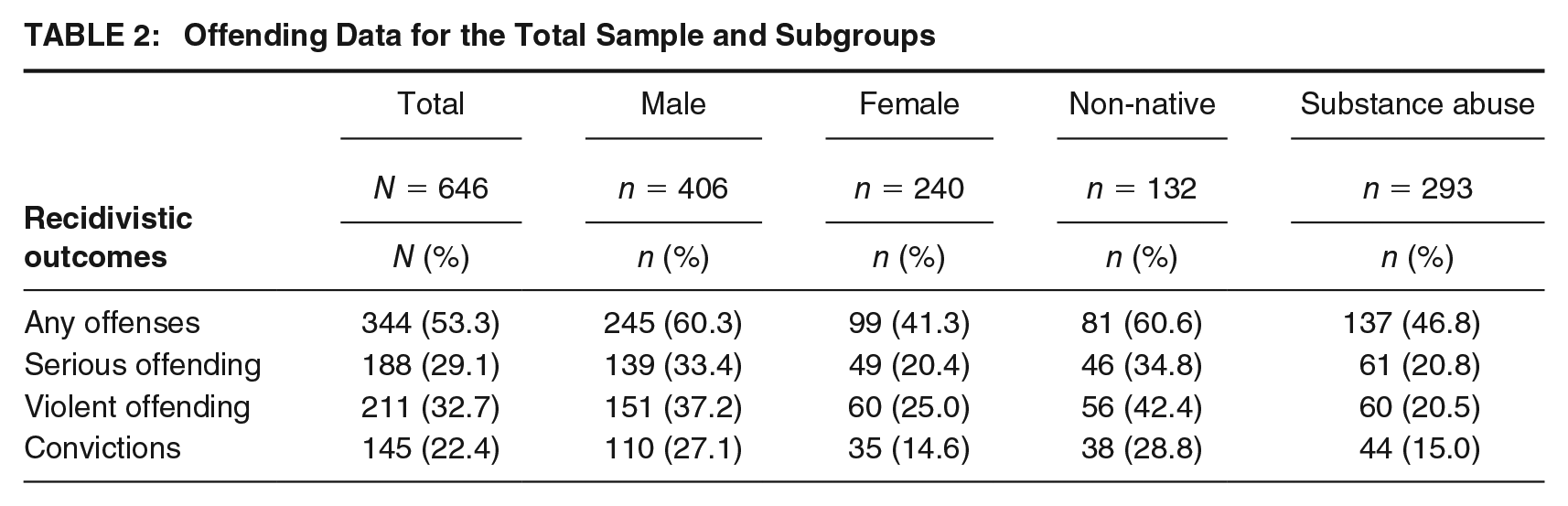
The total sample consisted of 646 adolescents (63% males) with a mean age of 16.3 (SD 1.1.) and age range 12 to 18. Mean follow-up time was 300 days (SD 148, range 27-1,084). A total of 132 (20%) adolescents were registered as having a non-native status, and 293 (45%) adolescents were classified as having substance abuse problems at intake. The YLS/CMI total and subdomain scores in the sample and the subgroups are presented in Table 1. The sample and subgroups had mean total scores between 19 and 22, which corresponds to the YLS/CMI “Moderate risk” category. The total score range was 25 (minimum 8, maximum 33). Only one participant (0.2%) had score in the YLS/CMI “low risk” category (0-8), and no one had scores in the “very high risk” category (35-42). Mean YLS/CMI total score for males (M = 22.1, SD = 4.5) was significantly higher than for females (M = 19.5, SD = 4.3), and differences between the sexes were also seen in several subdomains. Total score for those with non-native ethnicity and substance abuse did not differ in total scores from those without these characteristics, but there were variations in subdomains. Table 2 shows the rates of offending outcomes in the sample and across subgroups. The overall rate for any offenses was 53.3%, which is comparable to rates in several other international studies (Olver et al., 2009). The two subcategories containing serious and violent subtypes of offenses had relatively consistent frequency across subgroups. As expected, there were the lowest rates of convictions versus actual reported offending from the institutions across all subgroups.
YLS/CMI Total and Subdomain Scores for the Total Sample and Subgroups
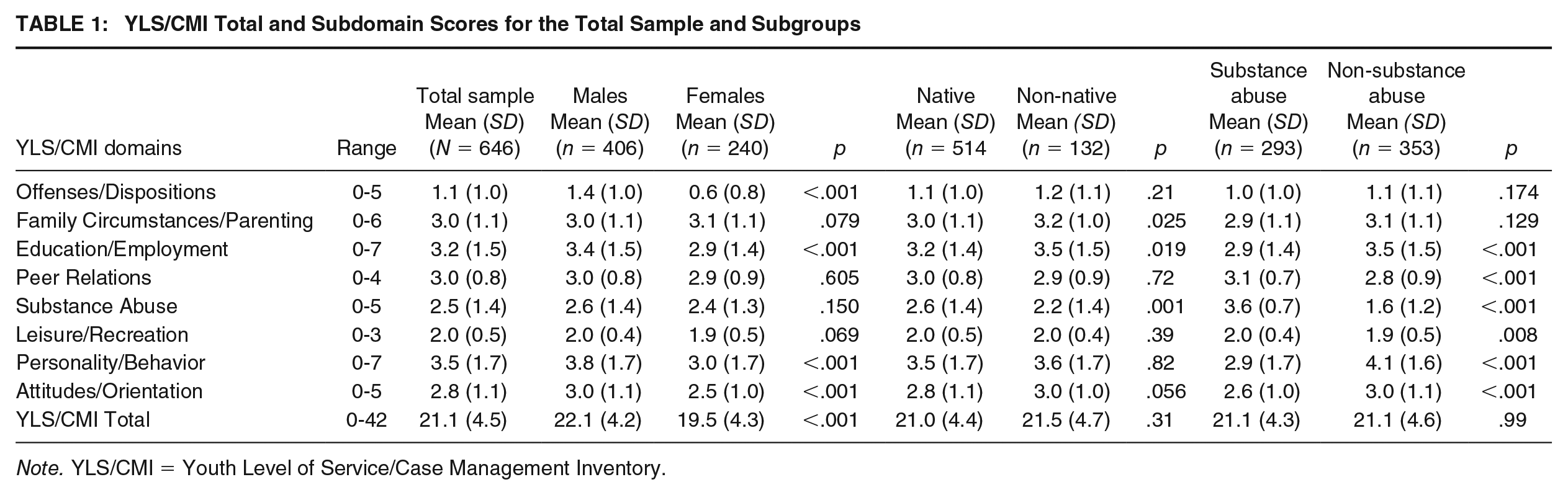
Note. YLS/CMI = Youth Level of Service/Case Management Inventory.
Offending Data for the Total Sample and Subgroups
Discrimination Properties of the YLS/CMI
AUC values for YLS/CMI total score across recidivistic outcomes are presented Table 3. The total risk score was a significant predictor in the overall sample and in all subgroups. In the total sample, there were large effect pertaining to Any offenses and Serious offending, while moderate effects were obtained for Violent offending and Convictions. Similar trends were observed across subgroups, with exception of the female subgroup, where AUC values had moderate effect sizes for Any offenses, Serious and Violent offending, and small effect on Convictions. To further confirm the results of the ROC analyses, logistic regression was performed unadjusted and adjusted for follow-up time and age. As shown in Table 4, all odds ratio (OR) estimates for the YLS/CMI total score were significant and approximately the same after controlling for the covariates. As such, higher YLS/CMI total score was associated with higher odds for offending behavior after controlling for individual age and length of the follow-up period. Overall, the highest OR values were observed in Any offenses and Serious offending outcome variables. Commensurate with the effect sizes in the ROC analyses, there were consistently lower ORs obtained in the female subgroup.
Predictive Accuracy of YLS/CMI in the Total Sample and Across Subgroups
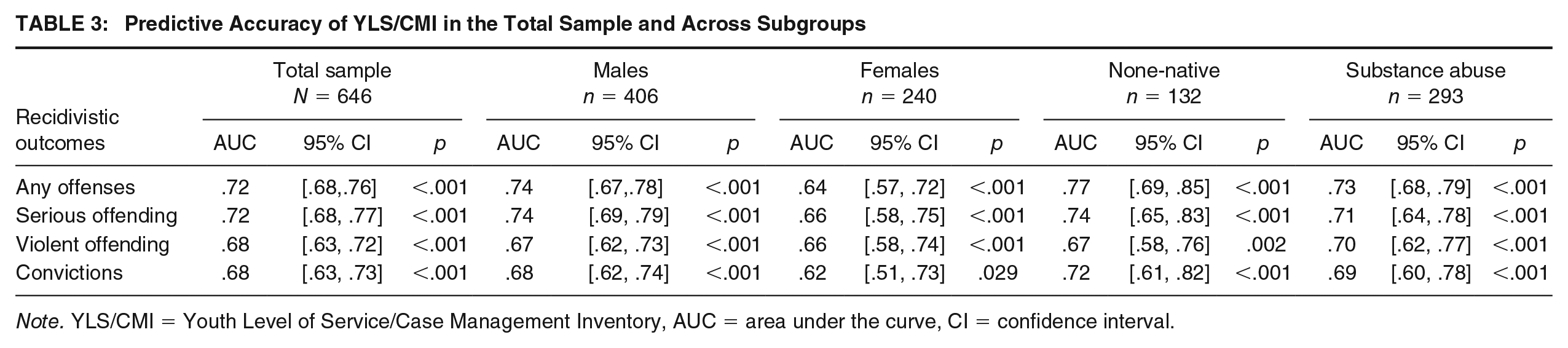
Note. YLS/CMI = Youth Level of Service/Case Management Inventory, AUC = area under the curve, CI = confidence interval.
Logistic Regression Analyses With Recidivistic Outcome as Dependent Variable, and YLS/CMI Total Score as Covariate. ORs Are Presented Unadjusted and Adjusted for the Covariate’s Days in Care and Age
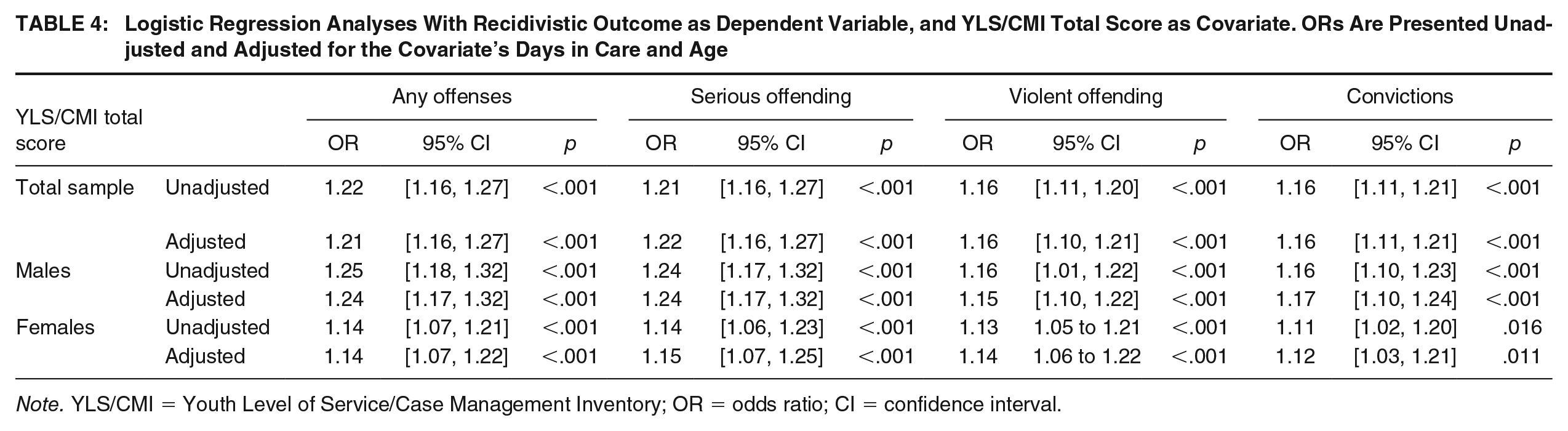
Note. YLS/CMI = Youth Level of Service/Case Management Inventory; OR = odds ratio; CI = confidence interval.
Table 5 shows AUC values across YLS/CMI subdomains for males and females. Although nearly all domains were statistically significant for the recidivistic outcomes in males, only a few reached p-values under .05 for females. Personality/Behavior and Attitudes/Orientation domains were stable predictors, while the Education/Employment domain was marginally significant for Any offenses and Violent offending. In both sexes, Leisure/Recreation and Substance Abuse domains did not predict recidivistic outcomes.
Predictive Accuracy of YLS/CMI Sub-Domains for Males and Females
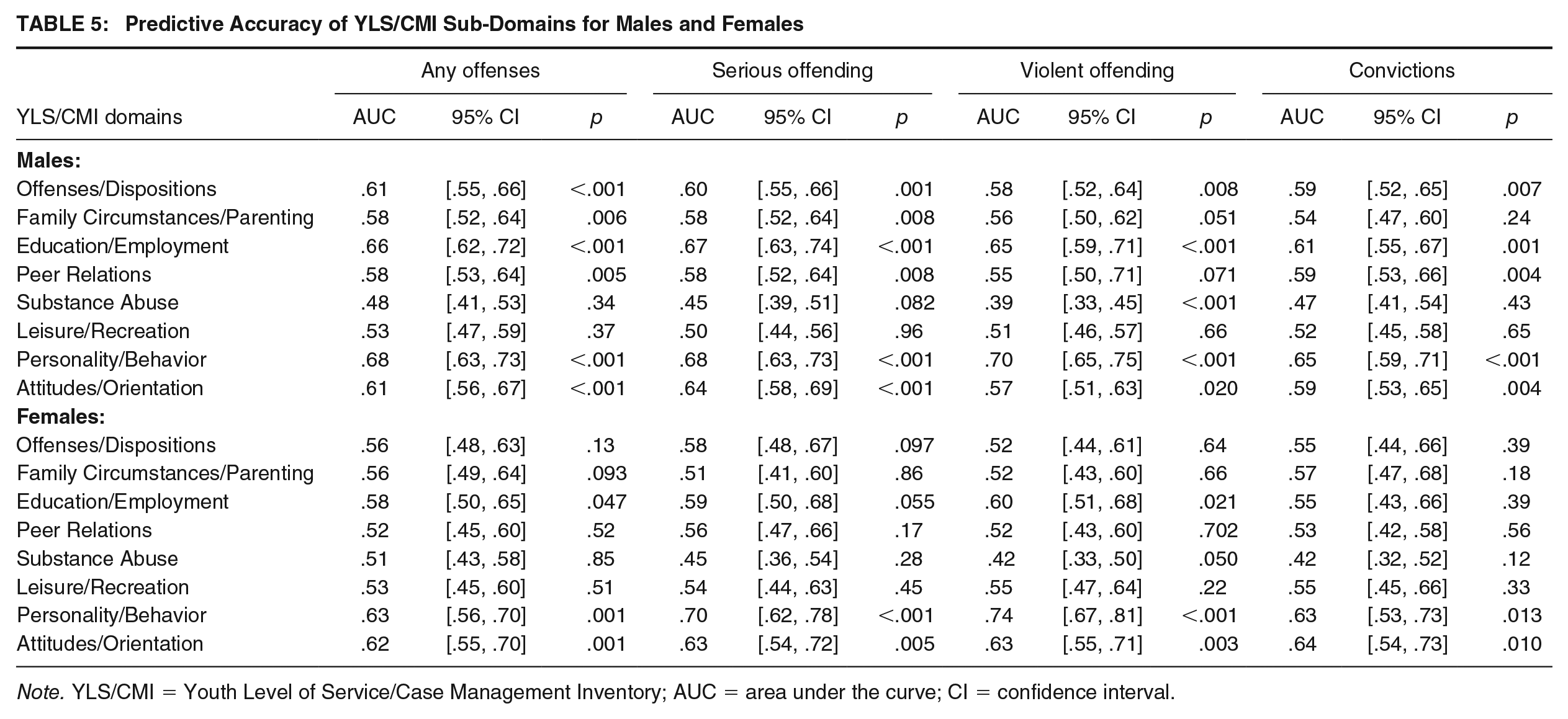
Note. YLS/CMI = Youth Level of Service/Case Management Inventory; AUC = area under the curve; CI = confidence interval.
Figure 1 illustrates the overall discriminatory values for the YLS/CMI total score on Any offenses for males and females. Table 6 provides the values for sensitivity and specificity across the scale for the outcome Any offenses. This shows the percent of accuracy in correctly identifying those who offend (sensitivity) and eliminating those who do not offend (specificity) for each score of the YLS/CMI in males and females. Since the optimal cut-off balancing the trade-off between sensitivity and specificity for the inventory may vary depending in the aims in the specific clinical and research setting, values for all scores are provided.
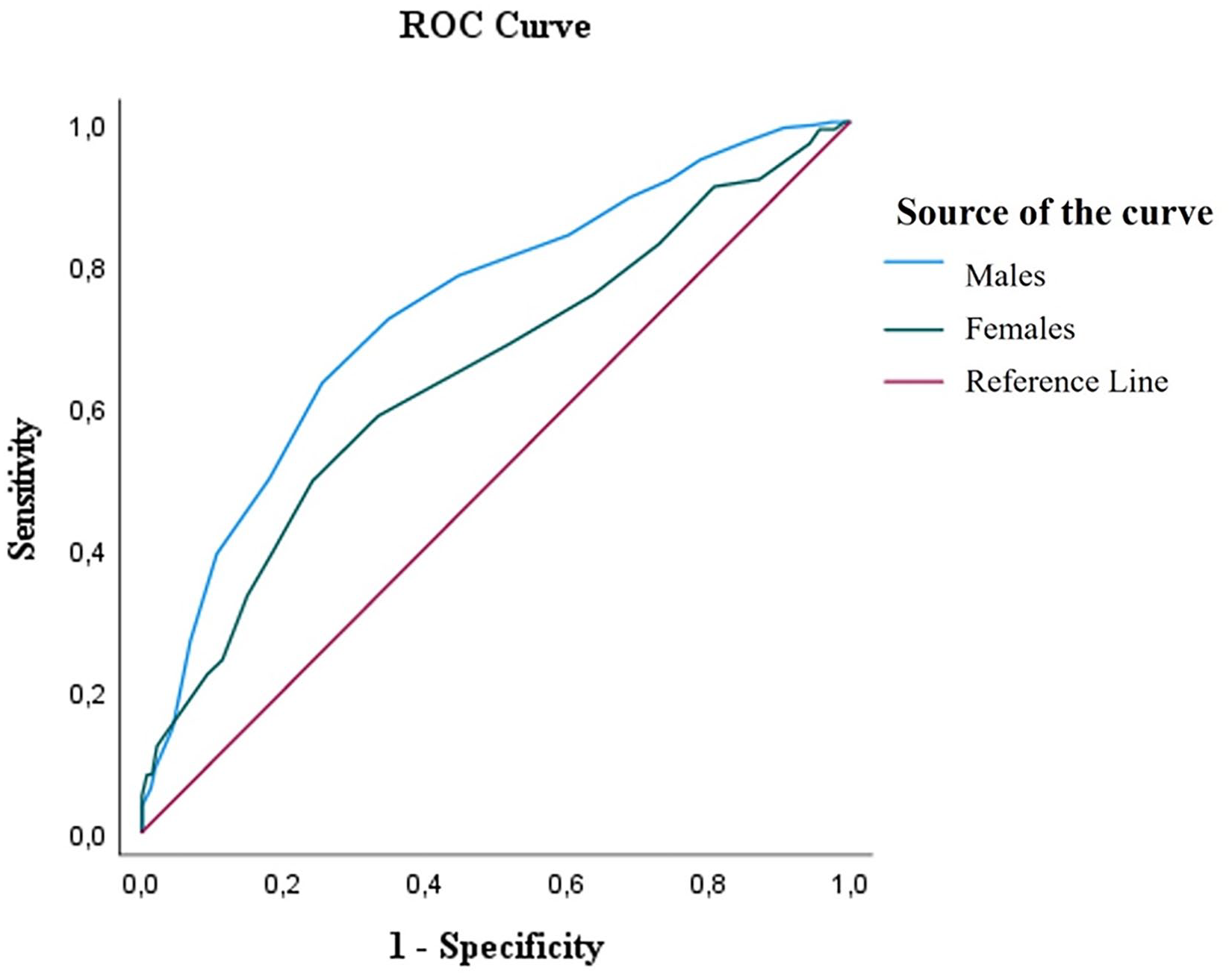
ROC Curve for the YLS/CMI Total Score With the Outcome Any Offenses
Sensitivity and Specificity for All Possible Cut Points for Classifying Adolescents Who Offend
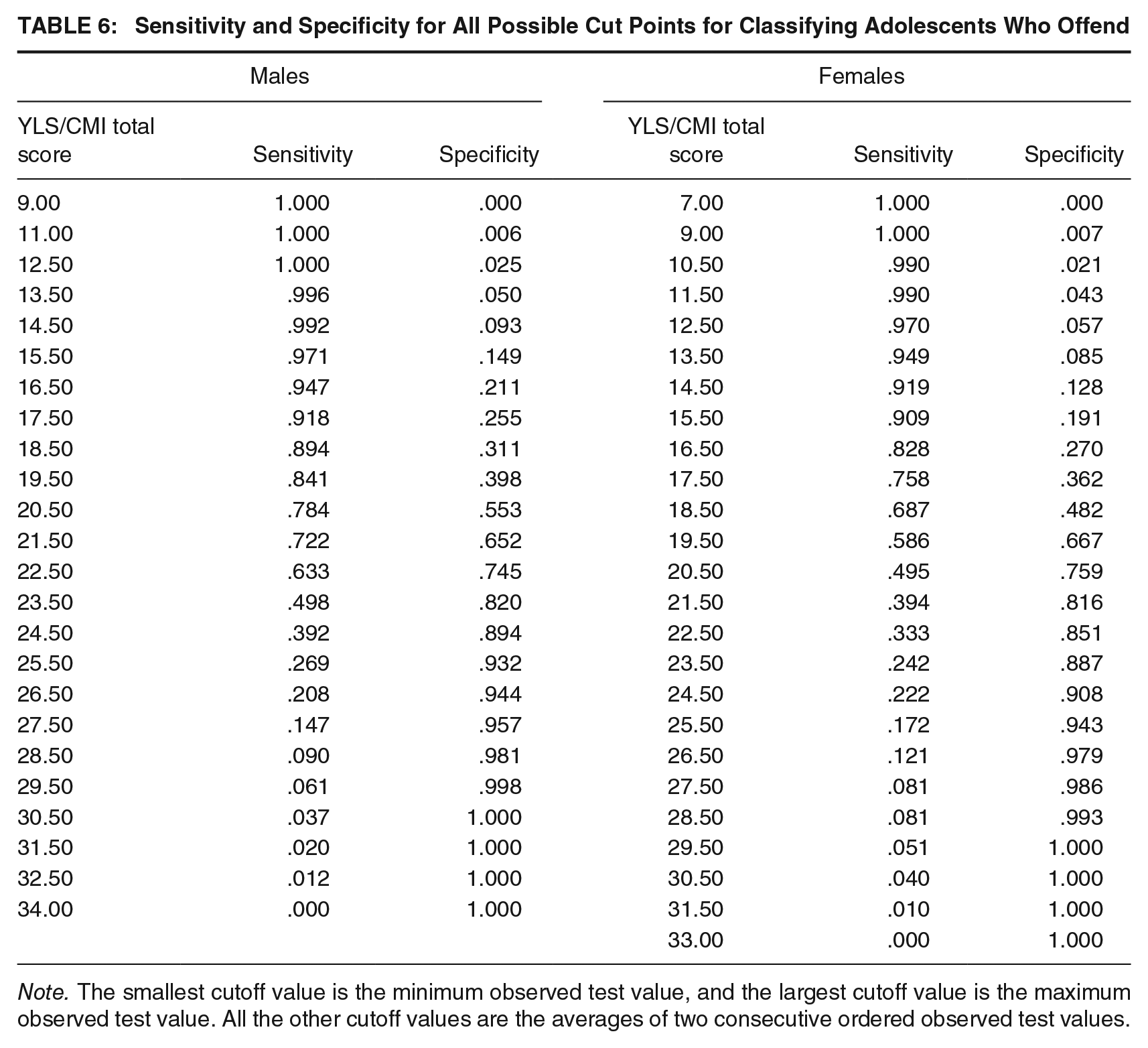
Note. The smallest cutoff value is the minimum observed test value, and the largest cutoff value is the maximum observed test value. All the other cutoff values are the averages of two consecutive ordered observed test values.
Discussion
The aim of this study was to explore the predictive properties of YLS/CMI among Norwegian adolescents during community-based residential care. To the best of the authors’ knowledge, this research marks the pioneering effort in studying the predictive ability of YLS/CMI in a Nordic residential setting. Through analyses of various recidivistic outcomes across subgroups, the study found that the overall predictive efficacy of the YLS/CMI is sound in this setting. All ROC analyses with the total score yielded significant AUC values ranging from .62 to .77. Importantly, effect sizes were moderate to large in predicting general offending behavior which is the main goal of the inventory. This suggests that the instrument performed equally well to comparable studies from juvenile justice populations in Europe (Basto-Pereira et al., 2021; Ortega-Campos et al., 2020; Rennie & Dolan, 2010) and similar studies conducted in social work settings (Chu et al., 2015; Vaswani & Merone, 2014). The inventory also demonstrated predictive capacity for violent behavior, although with lower effect sizes as observed in prior meta-analyses (Olver et al., 2009, 2014). This variation is expected as the inventory was primarily designed for estimating the risk of general recidivism. Moreover, the study found the YLS/CMI total score to be a robust predictor of offending behavior after accounting for the influences of adolescents’ age and the individual follow-up time. This conforms to previous studies that have found the YLS/CMI to aptly predict short-term as well as long-term offending at comparable rates (Olver et al., 2012; Takahashi et al., 2013). Taken collectively, the results align with the RNR model that states that accumulated risk factors increase the probability of continued delinquency. Consequently, the inventory duly serves its primary purpose to differentiate service provisions to match adolescents’ risk and needs in line with the RNR model (Wormith & Zidenberg, 2018). These findings underscore the tool’s relevance as a valuable resource for structuring and planning interventions in social service contexts.
Although the predictive ability of the YLS/CMI total risk score remained significant across various outcomes for males and females, non-native individuals, and adolescents with substance abuse problems, some variability between subgroups emerged. Especially, there were notable gender differences in both YLS/CMI scores and discriminatory ability. As mirrored by prior research (Anderson et al., 2016; Olver et al., 2012; Onifade et al., 2009) the inventory showed superior capacity in predicting offending behavior in males versus females. For females, there were small to moderate effects (AUC from .62 to .66) spanning all outcome variables, while for males, there were moderate to high effects (AUC from .67 to .74). Notably, although there were higher effect sizes for the outcomes Convictions, Any and Serious offenses in males versus females, there were moderate effects in both sexes for Violent offending. The varying effectiveness of the total score in distinguishing between those who did and did not offend among males and females, along with the sensitivity and specificity analyses, underline the necessity for gender-specific cut-points when estimating the risk of general offending in this population.
Exploration of the YLS/CMI subdomains also elaborated sex-based variations and the inferior classification efficacy observed in females. Although most of the subdomains in the male group were significant predictors for offending behavior, only the Education/Employment, Personality/Behavior and Attitudes/Orientation domains were significant predictors for females. This suggests that many risk factors in the YLS/CMI do not apply equally well to females, thus challenging the notion that the inventory is gender-neutral (Pusch & Holtfreter, 2018; Schwalbe, 2008). Some domains showed less consistent predictive utility across outcomes, such as Education/Employment in females and the Family Circumstances/Parenting in males. Notably, Leisure/Recreation and Substance Abuse were not predictors for offending outcomes in males and females. The Leisure/Recreation domain has been criticized for having items that have questionable relationship with criminal recidivism, and moreover, subjective scoring criteria that make it difficult to score reliably (Baird et al., 2013). Likewise, substance abuse has been reported to have inconsistent association with criminal recidivism, particularly for females, spanning from a very salient criminogenic domain (Olver et al., 2014) to having no predictive utility (Dellar et al., 2023). In the current study, findings suggest that risk factors affiliated with substance abuse may not be clear-cut “criminogenic needs” that drives criminal behavior within this population, but instead feature distinct clinical needs. Remarkably, even though the Substance Abuse domain exhibited no discernible connection to recidivistic outcomes in both sexes, the findings intriguingly point to the YLS/CMI total score’s proficiency in predicting offenses among those with substance abuse problems. This resonates with the fundamental assumptions posited by the inventory’s developers, asserting that a young person’s criminal behavior arises from a complex interplay of individual characteristics and environmental circumstances (Hoge & Andrews, 2011). As such, the cumulative assessment of risk factors emerges as the focal point of prediction and not criminogenic needs areas in isolation.
Finally, the inventory showcased capability in predicting offending outcomes in the non-native group. This suggests the inventory is also suited for assessing individuals from ethnic minorities within the Norwegian residential system. Nevertheless, considering the heterogeneity of this group in terms of ethnicity, additional exploration is warranted to investigate whether the inventory remains devoid of cultural bias in this setting.
Implications for Practice
The findings from the study advocate for the ongoing utilization of YLS/CMI in guiding decision-making and practices within residential care systems in Norway. There are also several recommendations for clinical use that could be drawn from this study. When using the tool for clinical judgment, practitioners should consider subgroup variations, particularly noting the diminished predictive capacity observed in females and the need for gender-informed cut-points. Clinicians are advised to utilize Table 6 as a guide in decision-making and choose cutoffs based on the aims of the assessment. The study also highlights the significance of specific YLS/CMI domains, particularly those assessing dynamic risk factors (i.e., “criminogenic needs”). This recognition should inform and guide clinicians, ensuring a nuanced approach. For females, focusing on the Personality/Behavior, Attitudes/Orientation, and Education/Employment domains emerges as especially vital in effectively addressing offending behavior. Meanwhile, for males, the pivotal criminogenic needs and intervention focal points encompass risk factors related to Education/Employment, Personality/Behavior, Attitudes/Orientation, Peer Relations, and Family circumstances/Parenting. Targeting risk factors in these domains has the potential to enhance treatment outcomes and reduce the likelihood of future recidivism. In cases where adolescents exhibit substance abuse, the study recommends a comprehensive approach. Specific substance abuse treatment provisions should be integrated with interventions targeting other criminogenic needs areas. Such dual-focus strategy addresses the complex interplay of needs and could enhance the effectiveness of the overall intervention.
A prerequisite for reliable use of the YLS/CMI and recommendations in this study is to have qualified and highly trained professionals to ensure consistency of ratings and cautious clinical use. As suggested by Olver et al. (2014), one possible reason for the superior predictive capacity observed in Canadian samples could be rigorous training and subsequently adherence to rating rules. In the present study, raters were clinical psychologists who had frequent training to calibrate scoring and prevent rater drift.
Strengths and Limitations
A significant asset of this study lay in the expansive national sample. The wide-ranging dataset rendered the results representative and generalizable and facilitated a comprehensive exploration of the instrument’s discriminative power in subgroups. The incorporation of multiple recidivistic outcomes also serves as a robust feature, as this encompasses a broad spectrum of delinquent behaviors and includes both conservative and less restricted measures. Importantly, the direct reporting of recidivistic outcomes from institutions circumvents potential limitations and inconsistencies within criminal statistics and variations in national police data or rates of charges. By bypassing the need for intermediary reporting, this approach provides a direct coding of incidents which offers a reliable source for assessing offending behavior.
There are also several limitations in this study that should be noted. Offending data extracted from exit reports were not routinely dated and survival analyses were not viable. In addition, as follow-up period depended upon variable time in residential care, analyses could not be based on specific time frames. Although days in care did not affect the predictive ability of the inventory, a conventional fixed time frame (e.g., 1-year recidivism) could have strengthened the association between risk scores and offending. Similarly, several other factors could also have affected the obtained rate of offending outcomes. First, the relatively brief follow-up time may have played a role in lowering the rates of convictions observed within the dataset as it often takes time to get conviction finalized and registered. Second, the variations in diligence and recording practices across different facilities could have influenced the thoroughness with which offenses were documented. Thus, our reliance on secondary information from institutions for conviction data, as opposed to official police or court records, could result in instances where certain offenses were not accurately reported. Third, treatment effectiveness could also have affected the actual rate of offenses. Adolescents who received thorough supervision and intervention targeting their risk factors might have demonstrated lower criminal rates. Likewise, ineffective interventions could also have increased the criminal propensity of some individuals. Fourth, some of the adolescents in the study were already subjected to probationary sentences at the time of placement in residential care which could influence their inclination for engaging in criminal activities during the placement period. The study also faces limitations regarding ethnic groups. In the available data set, it was not possible to make meaningful comparisons between specific minority affiliations. In addition to the limitation above, it’s worth noting that the study did not incorporate the specific strengths and protective factors inherent within YLS/CMI domains. Such variables could potentially moderate the influence of risk and need factors on offending outcomes.
Future Research
Although the study supports the applicability of the YLS/CMI for criminogenic risk assessment in Norwegian adolescents, the results also underscore the need for customization and calibration, especially regarding sex differences. A deeper dive into how particular YLS/CMI risk factors (items) exert influence on delinquency within this population could yield valuable insights. A comprehensive exploration of discriminant validity indices and item analysis could tailor the inventory to the unique Norwegian setting, potentially improving and streamlining its practical utility.
Conclusion
The YLS/CMI appears to be a suitable instrument for predicting the likelihood of criminal behavior in Norwegian adolescents within community-based residential care. The findings add to the evolving literature indicating that the YLS/CMI is effective in predicting future criminal behavior across cultures and settings. The study also contributes to the risk assessment literature by showing the relevance of assessing criminogenic risk factors beyond juvenile justice.
Footnotes
Authors’ note:
The project was funded by The Office for Children, Youth and Family Affairs (Bufetat) with financial support from The Research Council of Norway through the Public sector Ph.D. scheme.
Data Sharing Statement
Due to the sensitivity of the data, they are not publicly available.
Ethics Approval Statement
Participants were recruited in accordance with procedures approved by the Norwegian Regional Committee for Medical and Health Research Ethics (reference number 347377). Because obtaining consent was impracticable and infringements were minor and outweighed by the expected societal value, the project got permission to bypass common protocols of informed consent and information disclosure requirements.
