




Abstract
Rates of gang-related violence are high across Canada, with one quarter of homicides in 2022 connected to gangs. Individuals face numerous risk and protective factors which influence the gang disengagement process; addressing these factors is key for successful interventions. The Gang Intervention and Exiting Program (GIEP) is a holistic case management program operating in British Columbia, Canada, which targets entrenched gang members and high-risk individuals. Using a retrospective, longitudinal, single group design, the current study used generalized estimating equations to examine changes in client risk and protective factors over time. Results indicate several short-term improvements in the areas of employment, substance use behaviors, engagement with prosocial peers and family, decreased association with criminally involved family and peers, and time spent in non-gang-related activities. These findings support the use of a multipronged case management approach using a combination of civilian and law enforcement service providers to encourage gang avoidance and exit.
Keywords
Introduction and Context
Gang-related violence is an enduring issue in communities across Canada, including high rates of gang-related homicides in some metropolitan regions. In 2022 Statistics Canada reported 202 gang homicides, representing approximately one-fourth of all homicides in the country and the highest rate ever registered (Statistics Canada, 2023). 1 Similarly, high rates are reflected at the provincial level in British Columbia (BC). Fifty-three gang-related homicides were reported in 2022–a noticeable increase from the 39 reported in 2021 (Statistics Canada, 2023). Gang violence increases risks to public safety and community well-being; efforts to reduce or prevent these incidents are critical.
The gang engagement and disengagement processes are complex and influenced by a variety of risk and protective elements. Factors related to family structure, socio-economic status, peer relations, geographic location, criminality, mental health, and adverse childhood experiences, among others, are instrumental to an individual’s likelihood of engaging in gang life (Decker et al., 2013; Merrin et al., 2020; Wolff et al., 2020). These components are also closely linked to “push” and “pull” factors, which are influential in an individual’s decisions to join and exit a gang. These may be factors within the gang structure (e.g., increased risk of violence) that push gang members to pursue desistance, or external factors (e.g., prosocial relationships) that pull them away from gang connections (Pyrooz & Decker, 2011; Pyrooz et al., 2013; Roman et al., 2017). To address gang-related violence in BC, the Combined Forces Special Enforcement Unit of British Columbia (CFSEU-BC) developed the Gang Intervention and Exiting Program (GIEP) in 2016. The GIEP is a holistic case management program targeting entrenched gang members and highly at-risk individuals with a goal to help them desist from gang life. The current study presents an evaluation of GIEP impacts on criminogenic risk and protective factors.
Risk Factors for Gang Entry and Entrenchment
Risk factors related to gang entry and entrenchment vary across individual, peer, school, family, and community domains. The wide range of risk factors and the fluidity of the entry process lead to complex interactions between risk factors and individual experiences, making gang involvement difficult to predict (Decker et al., 2013).
Individual Risk Factors
Examples of individual characteristics that predict gang entry and entrenchment include delinquent beliefs, adherence to the “code of the street,” negative attitudes toward the future, delinquency, and aggression (Chu et al., 2015; O’Brien et al., 2013; Pyrooz et al., 2019). Those who hold more favorable attitudes toward gangs and related activities are more likely to join, as are those more accepting of delinquent or criminal behaviors. Relatedly, individuals involved in gangs are also more likely to engage in substance use, often due to their participation in the drug trade and proximity to drug use (Bishop et al., 2020; Wolff et al., 2020).
While support is somewhat inconsistent, there is some evidence that psychological factors can increase the risk of gang involvement. More specifically, depression, suicidal ideation, and other symptoms of psychological distress such as intrusive thoughts, emotional numbness, and post-traumatic stress disorder have been found to increase vulnerability for gang membership (Chalas & Grekul, 2017; Li et al., 2002; Merrin et al., 2015; Wojciechowski, 2021).
Family Risk Factors
Individuals who lack pro-social familial relationships and influences are also at heightened risk for gang activities. Family gang involvement is a key consideration, as family members can serve as role models and generate interest or act as an entry point to the gang lifestyle (Decker & Curry, 2000; De Vito, 2020; Merrin et al., 2015). As well, a lack of parental support, poor parental supervision, ineffective parenting styles or family environments, family conflict, and family socioeconomic status are concerning factors with respect to gang engagement (Chu et al., 2015; Lenzi et al., 2015; Merrin et al., 2015; O’Brien et al., 2013).
Peer Risk Factors
Deviant peer relationships are well-documented as a prominent risk factor for criminality, particularly among adolescents (Lenzi et al., 2015; O’Brien et al., 2013). Gang members have noted peer-related factors as motivators for joining a gang, such as joining because their friends were involved, to make new friends, or to impress girls (Chalas & Grekul, 2017; Chu et al., 2015; Decker & Curry, 2000). The gang structure and organization often resemble friendship cliques and can function as a family for those involved, particularly for individuals who lack strong peer or familial relationships outside of the gang (Decker & Curry, 2000; De Vito, 2020). Deviant peers not only encourage gang participation, but can also reinforce gang or crime-supportive beliefs and attitudes and limit opportunities to interact with prosocial peers (Pyrooz et al., 2013).
Community and School Risk Factors
Social disorganization broadly refers to the “inability of a community structure to realize the common values of its residents and maintain effective social controls” (Sampson & Groves, 1989, p. 777). Socially disorganized areas are more likely to lack resources and have high poverty rates, thus increasing the risk for crime, deviancy, and gang involvement (Merrin et al., 2015, 2020). Smith et al. (2019) assessed the relationship between social disorganization (based on a 14-item neighborhood characteristic scale) and gang involvement among adolescents, finding that disorganized neighborhoods are a significant correlate with gangs. Socially disorganized neighborhoods are more likely to foster a subculture supportive of gang involvement, and increase the risk for related influences such as delinquent peers, trauma, victimization, and negative family dynamics (Merrin et al., 2015; Smith et al., 2019). Relatedly, several school factors are related to gang membership, including low school commitment, weak teacher attachments, and low expectations of college acceptance (Alleyne & Wood, 2014).
Gang Disengagement
Much like the gang entry and entrenchment process, desistance from gang life is a complex and flexible process which is impacted by numerous factors both internal and external to the gang. The process involves a gradual weakening of connectedness to those inside the gang, allowing for greater connectedness to pro-social influences outside of the gang (Decker et al., 2013). Given the intricate interactions between crime, gang membership, gang embeddedness, and external risk factors, desistance does not occur quickly but requires a process of disengagement over time (Pyrooz & Decker, 2011).
The process of disengagement can involve an interaction of push and pull factors which influence an individual’s motivations and methods for leaving. Factors internal to the gang structure and gang life such as maturation, becoming weary of the lifestyle, growing tired of police contact, and not wanting to be targeted or victimized by gang members work to “push” individuals out of the lifestyle and toward more prosocial experiences (e.g., Pyrooz & Decker, 2011; Pyrooz et al., 2013; Roman et al., 2017). As well, factors external to gangs such as those related to common life-course turning points (familial responsibilities, romantic relationships, family or friends who have left the gang, increased employment responsibilities, or moving to a new home) work to “pull” individuals out of the lifestyle (Pyrooz & Decker, 2011; Pyrooz et al., 2013). Roman et al. (2017) report that factors related to a person’s decision to exit gang life are often highly connected to the factors that pushed or pulled them into the lifestyle to begin with. As such, an important component of intervention programs is to reduce relevant risk factors.
Gang Intervention and Exit Programming
A common strategy for gang reduction programming involves incorporating multiple components to account for the multifaceted processes associated with entering and exiting gang life. Examples of such approaches include the Wraparound model and the Comprehensive Gang Model (previously known as the Spergel model; see also the Gang Reduction Initiative of Denver [GRID]) (Fast & Snider, 2014; Osterberg, 2020; Pyrooz et al., 2019). The Wraparound model uses a holistic and youth-centered approach to team-based case management through services targeting various risks and needs of youths and families (Bruns & Walker, 2004). For example, the Surrey Wraparound program (Lee & Wong, 2025) pairs at-risk youth with a case manager who coordinates a team involving police and other service providers relevant to their identified needs (e.g., family members, teachers, probation officers, counselors). The team works to facilitate appropriate activities to reduce risk factors and strengthen prosocial supports; these might include activities in education, health/mental health, employment, and/or recreation.
The Comprehensive Gang/Spergel model is broader than the Wraparound approach and includes multiple levels of prevention, intervention, suppression, and exit through the coordination of community partners, emphasizing the role of community (Fast & Snider, 2014; Pyrooz et al., 2019; Spergel et al., 2006). For example, GRID uses multi-agency collaboration and a case management approach including “engagement” (initial review and assessment), “stabilization” (several months of regular contact between clients and case managers), “maintenance” (several months of contact between clients and case managers), and “transitioning” (3 months during which clients begin to reach goals and contact is reduced).
The Gang Intervention and Exiting Program, examined in the current study, is a novel approach that pairs members of law enforcement with civilian case managers to target gang intervention and exiting. Although several gang intervention programs include the participation of law enforcement and community-based partners, such as the Los Angeles Gang Reduction and Youth Development Program (GRYD; Cahill et al., 2015), and several based on the Comprehensive Gang Model (e.g., the Mesa Gang Intervention Project [Spergel et al., 2005a]); the Riverside Comprehensive Community-Wide Approach to Gang Prevention, Intervention and Suppression [Spergel et al., 2005b]), the role of police typically focuses on suppression. In the GIEP, police members provide direct mentorship to clients, with little focus on enforcement beyond that needed to ensure safety. Other programs in which police go beyond suppression, such as the Surrey Wraparound program (Lee & Wong, 2025) often have greater eligibility restrictions; the Surrey Wraparound program targets youth who are registered in the local school district. Furthermore, many programs involving the participation of police and civilian partners are often preventive in nature rather than intervention focused, such as the Gang Resistance Education and Training (GREAT) program (Esbensen et al., 2013) and the Growing Against Gangs and Violence (GAGV) program (Densley et al., 2017). These programs use police officers to deliver program content, but the target audiences are youth not yet involved in gang activity. To our knowledge no directly comparable intervention program to the GIEP has been evaluated.
Across individualized gang reduction approaches, a key goal is to minimize or eliminate the relevant risk factors determined to impact an individual’s personal risk of gang involvement. For example, an evaluation of the Los Angeles GRYD Program (Cahill et al., 2015) examined gang specific risk factors for gang involvement using the Youth Services Eligibility Tool; these scales focus on areas such as family gang involvement, peer delinquency, parental supervision, and anti-social/pro-social tendencies. Those who were referred to and graduated from prevention programming experienced reductions in risk across all scales. Scores related to parental supervision and negative life events showed the greatest reductions, which may be linked to the family-focused services provided. In addition, a pilot evaluation of GRID assessed several outcomes including antisocial and prosocial attitudes, and educational and employment factors (Pyrooz et al., 2019). Following program participation, participants’ perceptions of law enforcement significantly improved, as did their employment rates. No changes were found with respect to adherence to the code of the street or school attendance. As such, existing programs show some promising results for reducing risk factors, but greater evaluative support is needed.
The Gang Intervention and Exiting Program
CFSEU-BC is the third largest police force in BC and the largest integrated police unit in Canada. Its mandate is “to target, investigate, prosecute, disrupt, and dismantle organized crime groups and individuals that pose the highest risk to public safety due to their involvement in gang violence to protect British Columbians from organized crime” (CFSEU-BC, 2021a). The GIEP was developed by Staff Sergeant Lindsey Houghton to fill a noted gap in the landscape of gang prevention and intervention programs. While several community-based and law enforcement-led gang prevention and intervention programs exist within the province, the GIEP is the only known program that includes a major focus on entrenched gang members.
Program objectives include decreasing client criminogenic risk factors, increasing prosocial associations and activities, and decreasing their involvement in gang-related activities. To achieve these objectives, the GIEP engages in a variety of outreach activities and employs civilian case managers and gang intervention police officers who implement individualized service provision plans for clients. 2 Eligible clients are individuals aged 12+ residing in the Lower Mainland area of BC, who are at risk of or actively engaged in the gang lifestyle.
The intake process for individuals who are referred to the program involves an eligibility assessment to determine appropriateness of fit, background and criminal history checks, a safety assessment, and any necessary deconfliction with other law enforcement agencies. Admitted clients are assigned to a case manager and a gang intervention police officer; they are informed that participation is voluntary and that privilege will not be extended if criminal offenses are revealed (clients are referred to other resources if they wish to provide intelligence). Clients complete a baseline Risk Assessment Tool which is used to determine static and dynamic risk factors, as well as the most urgent and appropriate services to assist them in their efforts to leave the gang lifestyle. Examples include counseling, life coaching, employment, education or training, fitness activities, housing support, substance abuse treatment, and tattoo removal.
Following their initial assessment, GIEP clients receive mentoring, advising, and emotional support services from their case manager and gang intervention officer, and are provided with referrals to external resources as necessary. Contact with staff typically ranges from multiple times per week to once every 2 weeks, depending on client needs and motivation to engage. Staff contact includes one-on-one in-person meetings, text messaging, phone calls, and e-mail, and often involves providing support for family members (typically parents). Given the high-risk nature of the target population, GIEP protocol requires that all in-person meetings are attended by both a case manager and a police officer. Overwatch of up to three additional police officers is used for meetings with particularly high-risk clients.
As clients continue in the program, police records and CFSEU-BC information bulletins are regularly monitored for negative police contacts and evidence of gang activities. In addition, the Risk Assessment Tool is re-administered every 6 months. Client success in the program is defined as 2 years of desistance from the gang lifestyle, a significant reduction in the overall risk assessment score, and demonstrated engagement in prosocial activities.
GIEP Clients
The current study is part of a larger evaluation of the GIEP undertaken in 2022–2023. The sample for the full study included all clients referred to the program following its inception on November 1 2016, until the evaluation cut-off date of December 31, 2021. In total 565 individuals were referred during this time; 365 were never admitted (due to not meeting program mandate, refusing services, etc.), One hundred and eighty were admitted, and 155 made up the analytic sample. Of the 119 clients who had been admitted by December 2021 and who were not currently active in the program, the average length of stay was 404.3 days (SD = 337) and ranged from 28 to 1,533 days. Thirty-two of these clients were considered “successful” by program staff, whereas 87 had their files closed for one of several reasons (e.g., they moved out of the area, they were referred for enforcement, they were deemed too high risk, they became incarcerated).
Method
Overall Design
The current study employs a retrospective single group repeated measures design to examine the impacts of the GIEP on client criminogenic risk and protective factors. No comparison group was available as the Risk Assessment Tool was not administered to individuals who were deemed ineligible/not admitted to the program. The analytic sample consists of clients who completed a baseline risk assessment and were admitted to the GIEP after program inception on November 1, 2016 and prior to December 31, 2021 (n = 93).
Data
Description of the GIEP Risk Assessment Tool
The Risk Assessment Tool is administered at client intake 3 and again every 6 months. The questionnaire includes sections on demographic characteristics (e.g., age at program entry and sex), motivations to enter, remain in, and exit the gang lifestyle, initiation and methods for leaving gang life, and level of gang embeddedness. The instrument also contains eight domains with respect to client risk: (a) Experiences of trauma and victimization, (b) Living arrangements, (c) Lifestyle and friends, (d) Family relationships, (e) Education and employment, (f) Substance use, (g) Physical and mental health, and (h) Attitudes toward the gang lifestyle.
In addition, case managers assign clients a “priority score” for each of the eight domains. Priority scores are rated on a 3-point scale from 0 to 2, with 0 = low priority (not present or not relevant to client’s gang exit), 1 = moderate priority (possibly present but does not require immediate attention), and 2 = high priority (requires immediate attention). The priority scores are assigned based on holistic assessments of the importance of the domain with respect to supports and services to help their client disengage from gang life. For example, a score of “2” on the employment/education priority factor suggests that the case manager prioritizes service delivery on this domain versus another domain scored as a “0” or “1.”
In-person versus “file review” assessments
Risk assessments were either administered to clients in person or were completed by case managers based on known information (“file review”). While in-person assessments are the preferred standard, file review was used for a variety of reasons. For example, a client may have refused to answer the assessment; in this situation, case managers used information derived from conversations with the client and/or information from other sources (relatives, other service providers, etc.). In other cases, clients may have answered a portion of the assessment in person, but case managers were unable to complete the assessment due to safety concerns, lack of opportunity for a lengthy meeting, client mental health/attention deficit issues, or Covid-19-related restrictions on in-person meetings (GIEP Program Supervisor [Acting], personal communication, October 22, 2022). Coding notes by staff indicate that file review or partial file review was used for a substantial portion of clients. For the baseline survey, 13 were completed using file review, 66 were administered in person, and 14 used a mix of both methods. File review was also used in subsequent survey waves, for example, at the 6-month assessment, 19 risk assessments were completing using file review, 22 were administered in person, and seven involved a mix of the two methods.
Timing of the risk assessment administration
Upon examining the data, it was evident that some of the survey assessment dates fell well outside the planned time frames for administration (e.g., “baseline” surveys conducted 1 year after a client was admitted, “12-month” surveys administered 20-months after admission). While it is impractical to expect all risk assessments to be administered to clients on their exact date of entry, the exact date 6 months post-entry, and at 12-months, 18-months, and so forth, some decision rules were implemented. For baseline assessments, we dropped any survey that did not take place within 6 months of the clients’ admission to the program. In addition, we re-labeled any follow-up assessment that was not completed within 3 months of its designated time frame. Specifically, we required that “6-month” assessments be completed within 9 months of the baseline survey; 12-month assessments be completed within 15 months, and so forth. Any survey that fell outside the prescribed time frame was adjusted to the more accurate time label. 4
Dependent Variables
We operationalized selected survey items from the Risk Assessment Tool into a series of elements focused on several of the GIEP’s targeted outcomes, 5 based on relevance of the survey items and completeness of the available data. As shown in Table 1, the dependent variables include: (a) Employment, (b) Substance use behaviors, (c) Family and friends, and (d) Attitudes toward the gang lifestyle.
Operationalization of Risk and Protective Factors
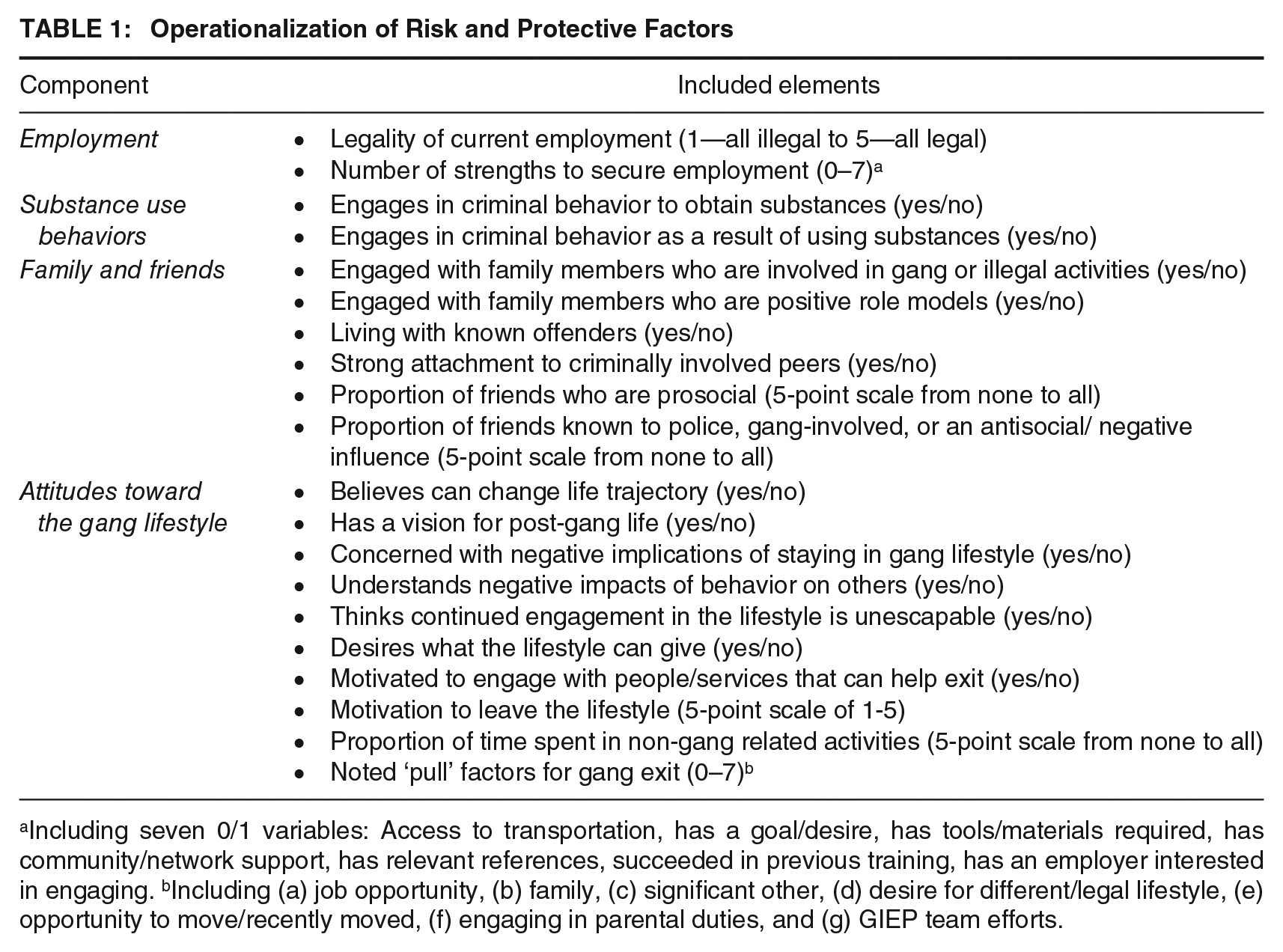
Including seven 0/1 variables: Access to transportation, has a goal/desire, has tools/materials required, has community/network support, has relevant references, succeeded in previous training, has an employer interested in engaging. bIncluding (a) job opportunity, (b) family, (c) significant other, (d) desire for different/legal lifestyle, (e) opportunity to move/recently moved, (f) engaging in parental duties, and (g) GIEP team efforts.
Analytic Approach
We assessed changes in GIEP client outcomes by examining (a) differences in baseline scores to 6-month scores, and (b) trends across all available follow-up waves. The separate analyses allow for extra focus on the larger sample which provided data at two time points, versus longitudinal analyses incorporating all available waves of follow-up data but using a smaller sample of participants. A minimum sample size of 15 was imposed for all models. For (a), we report frequency data and proportions or mean scores for clients who had complete data for a given variable at both baseline and 6-month surveys. For (b), we report frequency data, proportions, and means for all five waves of available risk assessment data. 6
For both (a) and (b), we fit population-averaged panel-data models by implementing generalized estimating equations (GEEs) in Stata 17.0. GEEs use a nonparametric approach and are an appropriate choice for the risk assessment data as they model correlation across repeated measurements from the same subjects (Liang & Zeger, 1986; McLauchlan & Schonlau, 2016). For all models in (a) we assumed an exchangeable working correlation structure. For all models in (b) we assumed an autoregressive within-group correlation structure and included wave indicators to assess trends in outcomes over time. For all models with a sample size >= 50, Huber White robust (sandwich) estimators were used to compute standard errors; 7 for all models (except where convergence was a problem) age at program entry and sex (male/female) were used as controls. Distributional family and link function were selected based on dependent variable distribution; for example, we used binomial logit models for dichotomous outcomes, and Gaussian identity models for continuous outcomes. Post-estimation marginal effects were produced to examine expected values and predicted probabilities of outcomes at each wave.
Results
Sample
Of the 155 individuals who were ever admitted to the GIEP by the evaluation cut-off date of December 31, 2021, 123 had a baseline risk assessment survey administered (79%). Of the 123 baseline surveys, 30 were excluded due to being completed retroactively 8 (n = 23), or having been administered after the client had been receiving services for at least 6 months (n = 7). A total of 93 GIEP clients formed the (maximum) analytic sample at baseline. Given staggered program admission dates, the number of respondents was lower at each subsequent survey (Table 2). Specifically, the total number of baseline assessments sample was 93, and 52% of these clients (n = 48) had 6-month assessments. Longer term assessments were less frequent, with 30% of the baseline sample reporting a 12-month assessment (n = 28), 13% with 18-months (n = 12), 9% with 24-months (n = 8), and one client with an assessment at 30-months (1%).
Response Rates and Risk Assessment Waves
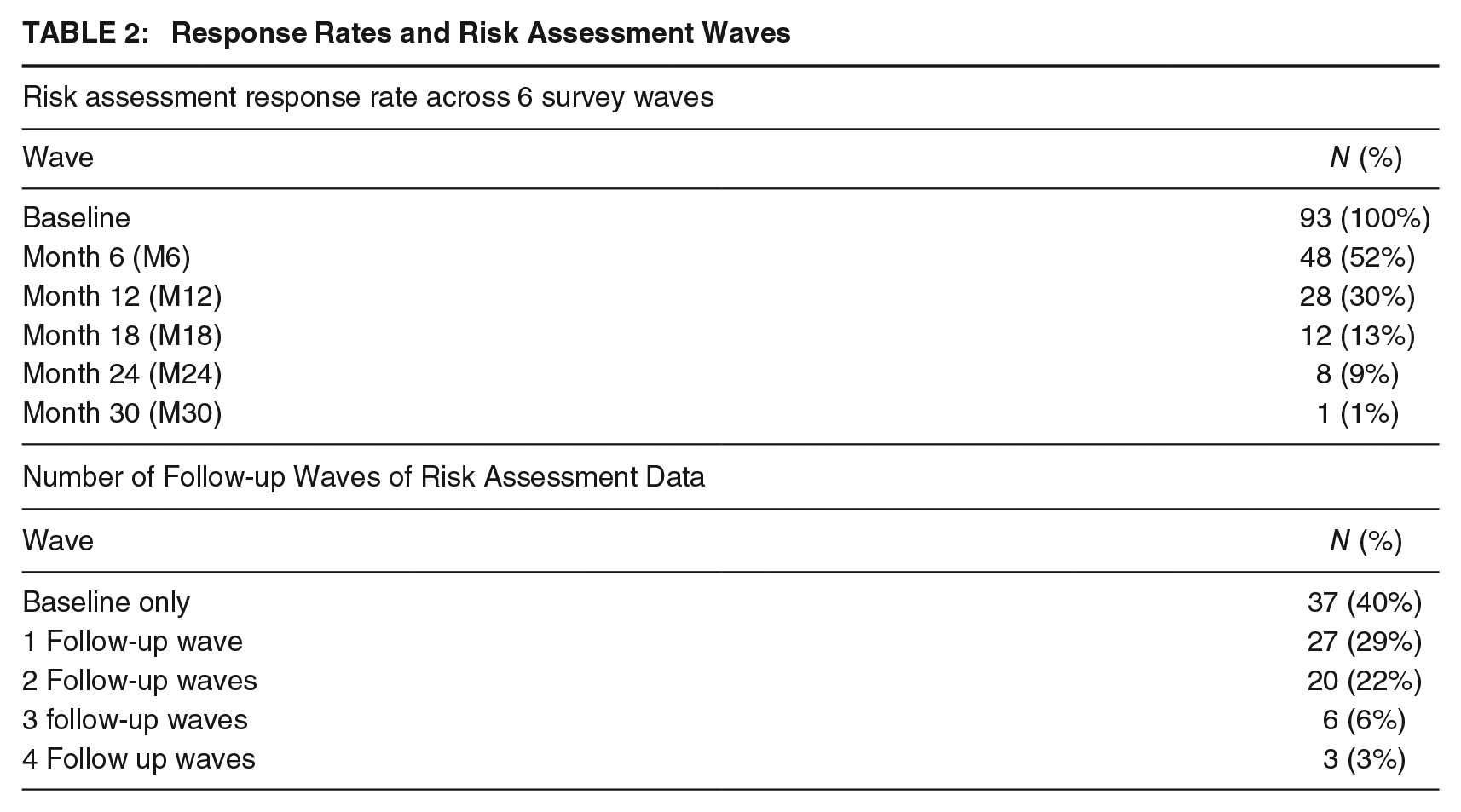
Importantly, the percentages in the top half of Table 2 are calculated using the baseline denominator of 93; missing survey waves were common for clients who were in the program for longer than 6 months. More specifically, as shown in the bottom of Table 2, 37 clients had only baseline data; 27 had a single wave of follow-up data (typically Month 6 data, but not always), 20 clients had two waves, six had three waves, and three had four waves of follow-up data.
Response rates also varied across survey items, in part due to changes in the survey instrument over time (the Tool was revised several times between 2018 and 2021). Furthermore, respondents were often missing data for follow-up survey waves; for example, a client may have provided data at Baseline and Month 12, with the Month 6 survey skipped, and did not have Month 18 or 24 surveys because they had only been enrolled in the program for 14 months.
Sample Characteristics
The 93 clients in the analytic sample had a median age of 19, with a range from 13 to 42 years (M = 21.81). The large majority were male (79%). Just over one-third were White (34%), with 24% South Asian, 15% Middle Eastern, 12% Indigenous, 7.5% Afro-Canadian/ Black, 4.3% Asian/Pacific Islander, and 3.2% Hispanic. In total, 27% of the sample had ever been on the Provincial Tactical Enforcement Priority (PTEP) roster. 9 The average age of initial gang involvement was 15.76 years, with a range from 10 to 34 years. Over three-quarters of GIEP clients were below age 18 at the time of their initial involvement in gangs (78%). In terms of negative police contacts, 89% of clients had at least one PRIME file. 10 As shown in Table 3, the mean number of police contacts per client was 13.9, with a median of eight contacts per client.
Sample Descriptives (n = 93)
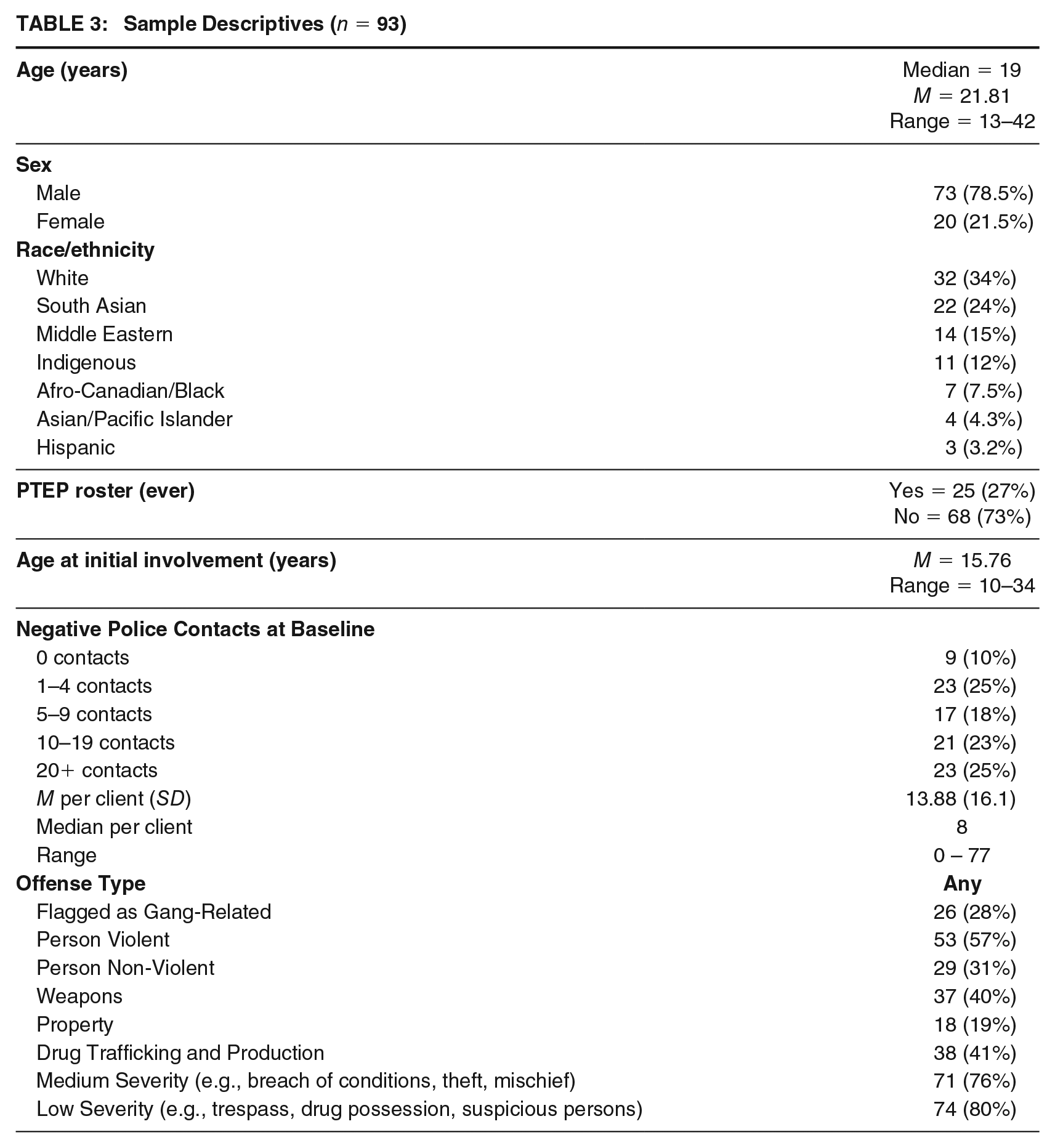
Just over one-quarter of the 93 GIEP clients had at least one file with an offense flagged as potentially gang-related (28%); the average number of gang-flagged files per client was 0.81. 11 More than half of the sample had a violent person offense such as assault, robbery, or hostage taking (57%), with a mean of 2.47 violent offenses per client. Nearly two-thirds of GIEP clients had at least one file with a person non-violent offense such as uttering threats, intimidation, or harassment (31%). Thirty-seven clients had a PRIME file with at least one weapons offense (40%, e.g., trafficking, possession); the average number of files per client was 1.14. Similarly, 41% had a file containing a drug offense (excluding possession) such as trafficking fentanyl, production, or import/export; the mean number of files per client was 1.40.
GIEP Impacts on Criminogenic Risk and Protective Factors
Supplemental Appendix Table S1 (available in the online version of this article) presents descriptive results for the 22 variables across the four program outcome categories for Baseline, Month 6, Month 12, Month 18, and Month 24 risk assessment data, including the number of respondents per survey item at each survey wave. Importantly, these data do not consider the within-subjects correlation for repeated measures over time, or control for the influence of any static variables. Unadjusted percentages suggest that virtually all risk factors decreased following the baseline survey (e.g., desiring what the gang lifestyle can give; 49% at baseline vs. 38% at Month 6), whereas all protective factors increased (e.g., number of strengths to secure employment increased from a mean of 3.0–3.8 out of a total possible 7.0).
Short Term Results
Employment and substance use behaviors
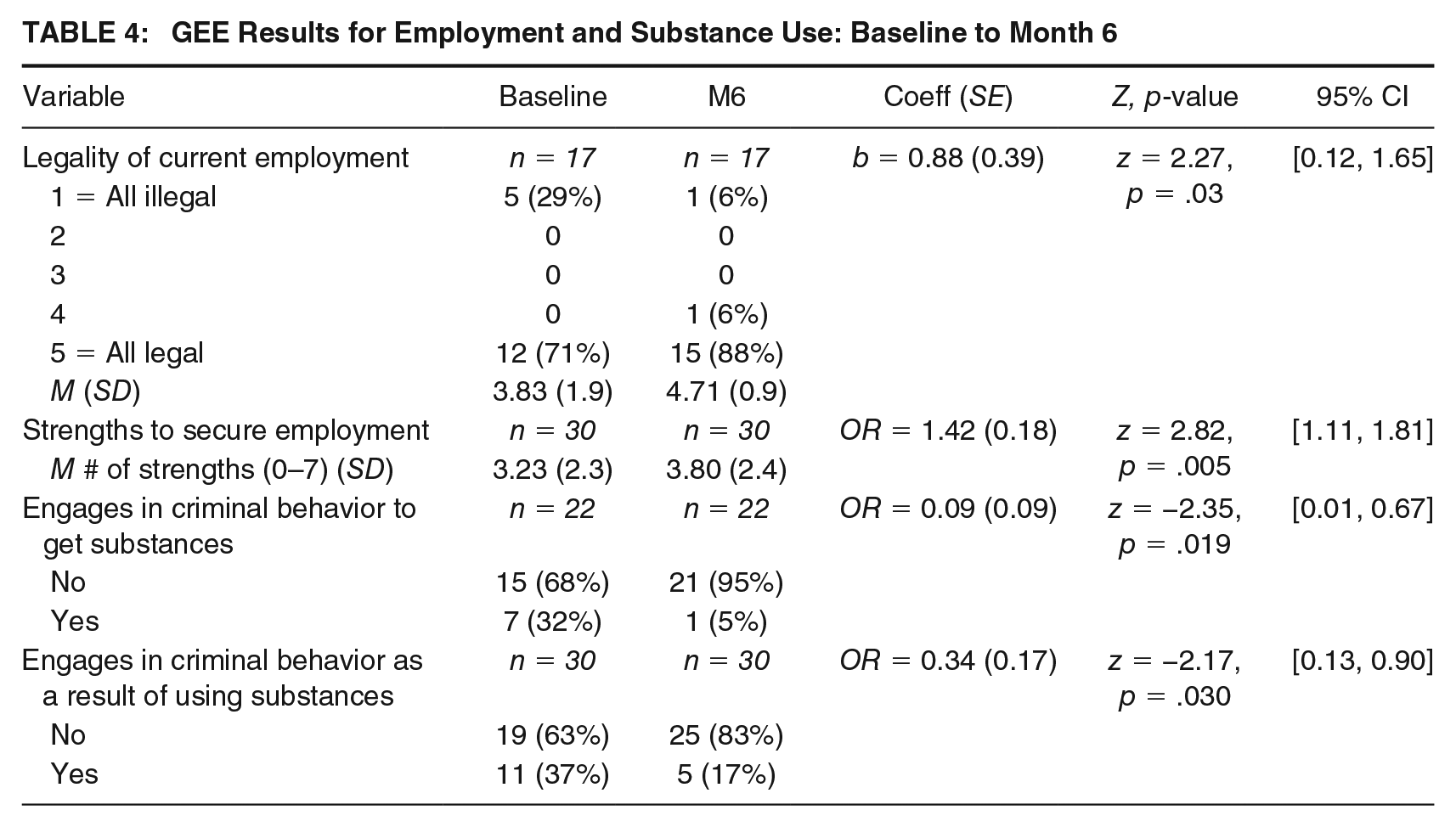
GEE models were implemented to examine Baseline to Month 6 employment and substance use behaviors for GIEP clients in the first two waves of survey data (see Table 4). Clients showed a significant increase in the legality of their current employment (z = 2.27, p = .023; mean of 3.8 out of 5 at Baseline and 4.7 at Month 6), and employment-related strengths (z = 2.82, p = .005; average of 3.2 out of 7 at Baseline vs. 3.8 at Month 6). Clients also reported a decrease in criminal behavior used to obtain illicit substances (z = −2.35, p = .019), with an expected mean of 32% at Baseline and 5% at Month 6. Last, there was a significant decrease in reports of engaging in criminal behavior due to substance use (z = −2.17, p = .030), with a predicted probability of 37% at Baseline and 17% at Month 6.
GEE Results for Employment and Substance Use: Baseline to Month 6
Family and friends
Client engagement with family members involved in gang or illegal activities decreased from Baseline to Month 6 (z = −2.25, p = .025), with an adjusted prediction of 14.5% engagement at baseline and 2.5% at Month 6. In addition, clients were more likely to engage with family members who are positive role models (z = 1.98, p = .048), with a predicted probability of 89% at baseline versus 95% at Month 6. No significant changes were found regarding whether clients were living with known offenders. See Table 5.
GEE Results for Family Relationships and Antisocial Peers: Baseline to Month 6
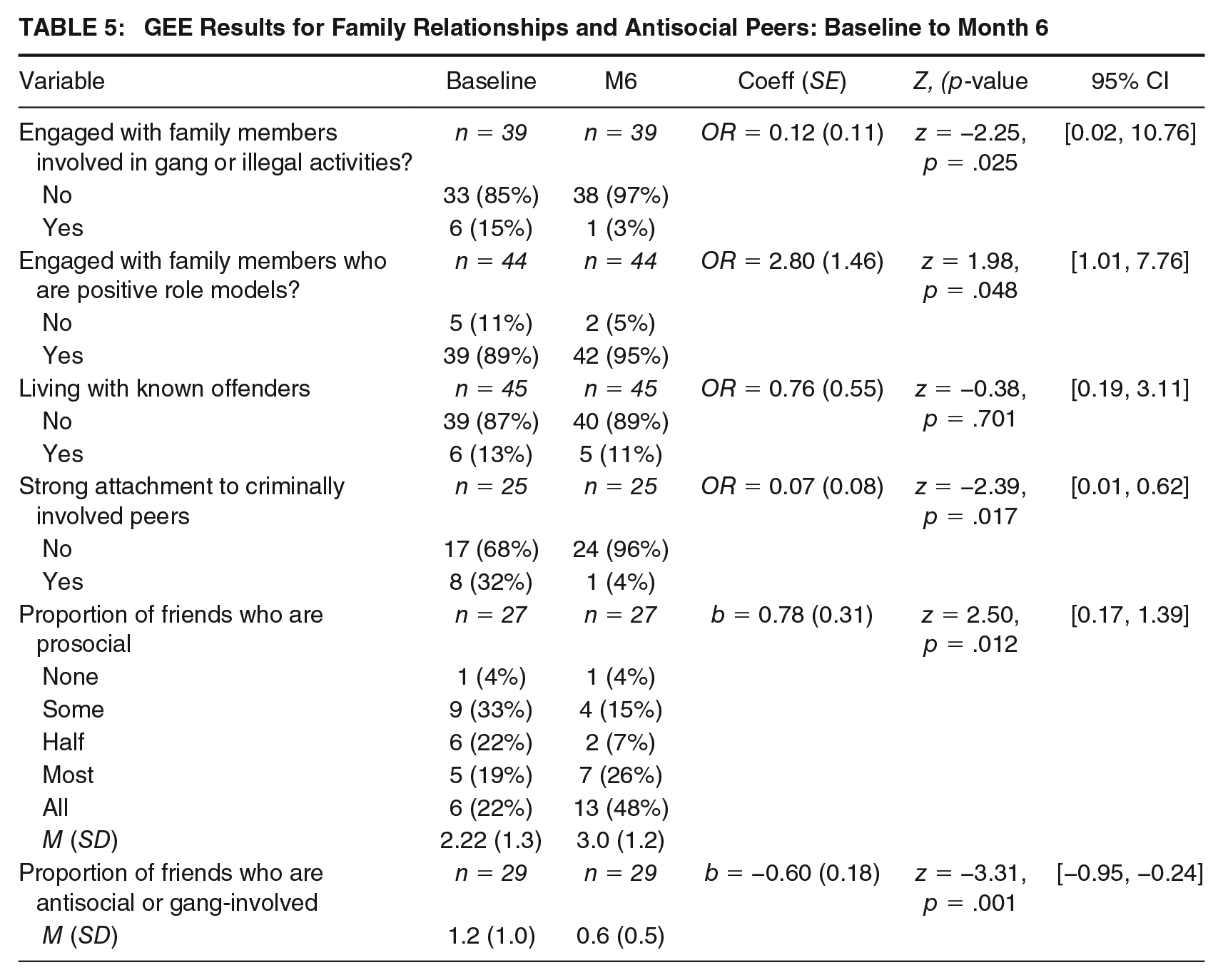
Furthermore, GIEP clients also decreased in their level of attachment to criminally involved peers (z = −2.39, p = .017), with a predicted probability of 32% at Baseline and 4% at Month 6. Clients also noted an increase in the proportion of their friends who are prosocial (z = 2.50, p = .012), with an expected mean of 2.2 at Baseline and 3.0 at Month 6. Last, clients reported a decrease in the proportion of friends who are antisocial, known to police, and/or gang-involved (z = −3.31, p = .001), with an expected mean of 1.2 at Baseline and 0.56 at Month 6.
Attitudes toward the gang lifestyle
Table 6 presents GEE results for gang-related attitudes for those clients with complete Baseline and Month 6 risk assessment data. Few changes were shown following the first 6 months in the program, apart from a significant decrease in client desire for what the gang lifestyle could give them (z = −2.36, p = .018), with a predicted probability of 53% at Baseline decreasing to 38% at Month 6. Clients also reported an increase in the amount of leisure time spent in non-gang activities (z = 4.80, p < .001), with an expected mean score of 2.8 at baseline and 4.0 at Month 6.
GEE Results for Attitudes toward the Gang Lifestyle: Baseline to Month 6
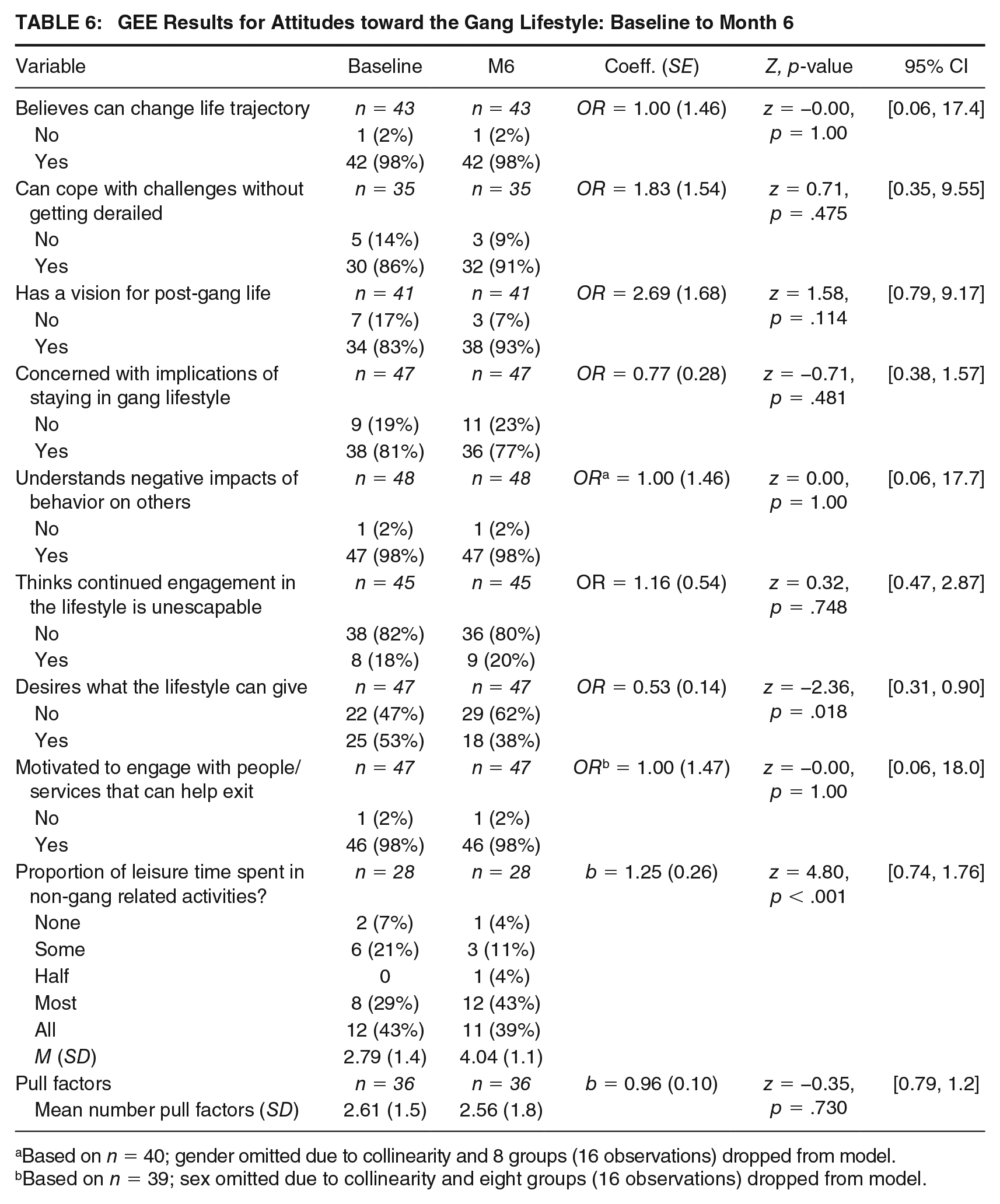
Based on n = 40; gender omitted due to collinearity and 8 groups (16 observations) dropped from model.
Based on n = 39; sex omitted due to collinearity and eight groups (16 observations) dropped from model.
Longitudinal Trends
To examine how client outcomes persisted or shifted over the longer term, we implemented GEE models to assess linear trends in outcomes over the four follow-up waves of the survey (Month 6–Month 24). A minimum sample size of 15 was required for all models; as such, some of the short-term outcomes are not included in these analyses. As shown in Table 7 and Figure 1, 12 clients exhibited a decrease over time in their desire for what the gang lifestyle could give (z = −2.39, p = .017), with a predicted probability of 37% at Month 6 compared with 8% at Month 24. No other long-term changes were found for any of the variables examined.
GEE Results: Month 6 to Month 24
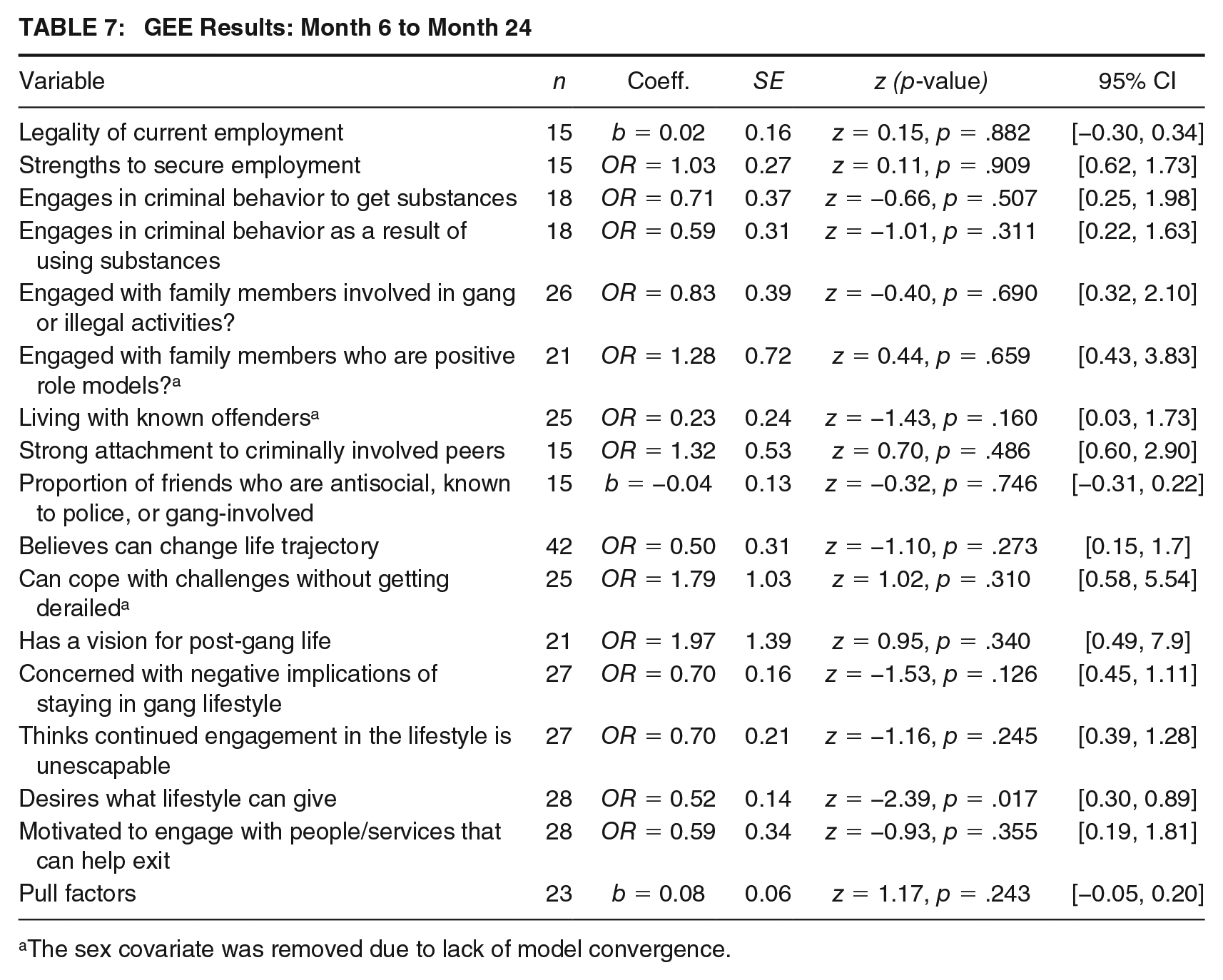
The sex covariate was removed due to lack of model convergence.
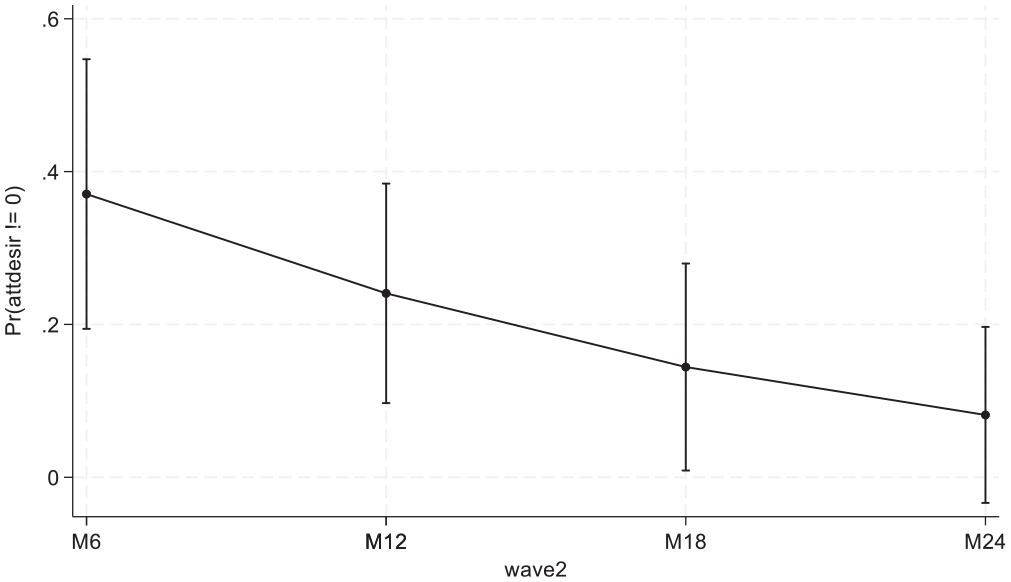
Predictive Margins for Desires What the Lifestyle Can Give: Months 6 to 24
Case Manager Priority Scores
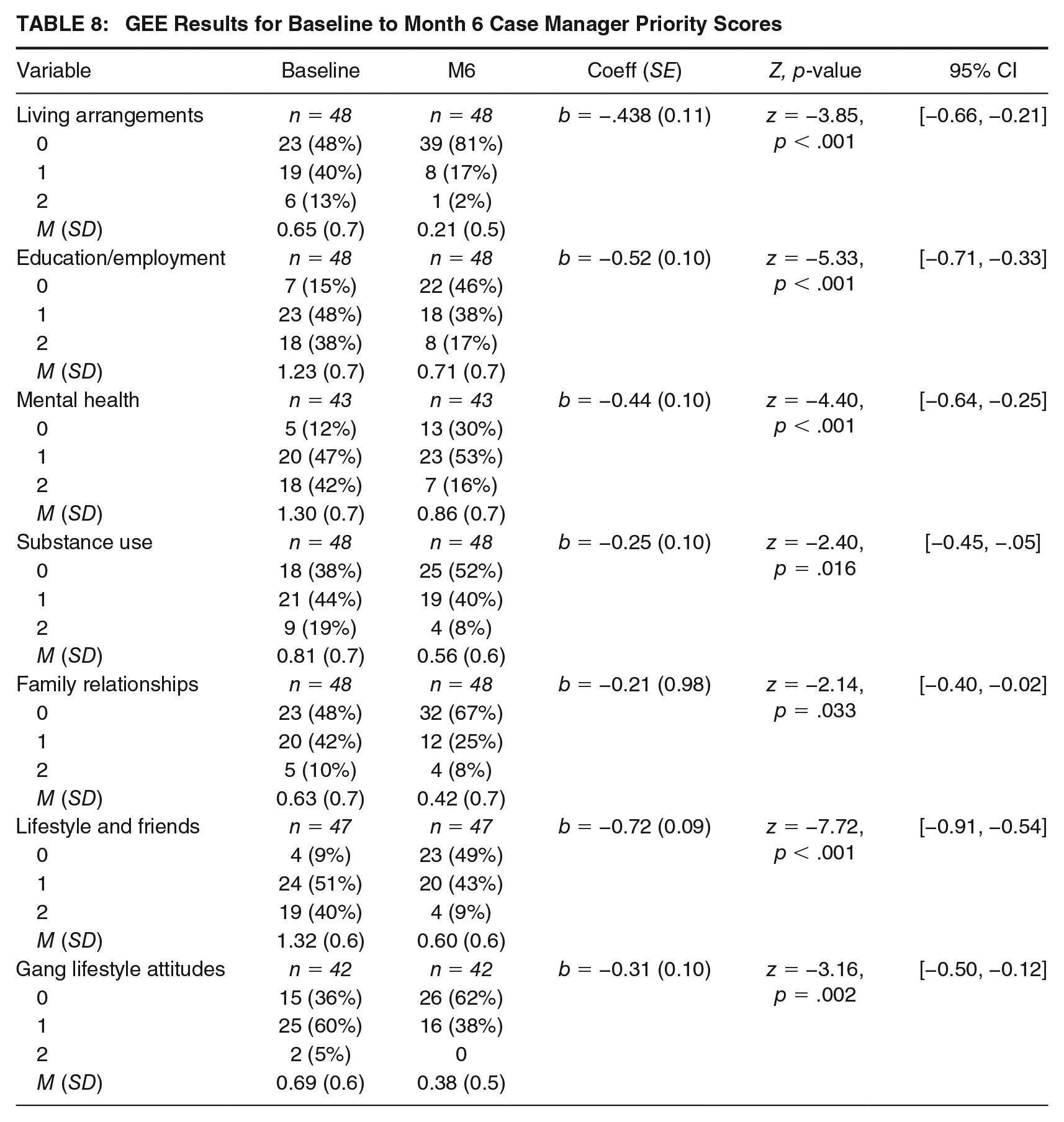
Supplemental Appendix Table S2 presents descriptive findings for the case manager priority scores over seven domains of the Risk Assessment Tool. For all priority scores, unadjusted percentages over time suggest a mostly decreasing trend; this was particularly evident from the Baseline to Month 6 assessment. For example, 20% of case manager priority scores for client living arrangements were rated as high priority at Baseline, versus 2% at Month 6, while high priority needs for physical/mental health services decreased from 46% at baseline to 16% at Month 6. Short-term results for the GEE models examining case manager priority scores are presented in Table 8. All seven scores decreased significantly over time. For example, a typical client scored a 1.23 (out of a possible 2) on the education/employment priority score at Baseline, and 0.71 at Month 6.
GEE Results for Baseline to Month 6 Case Manager Priority Scores
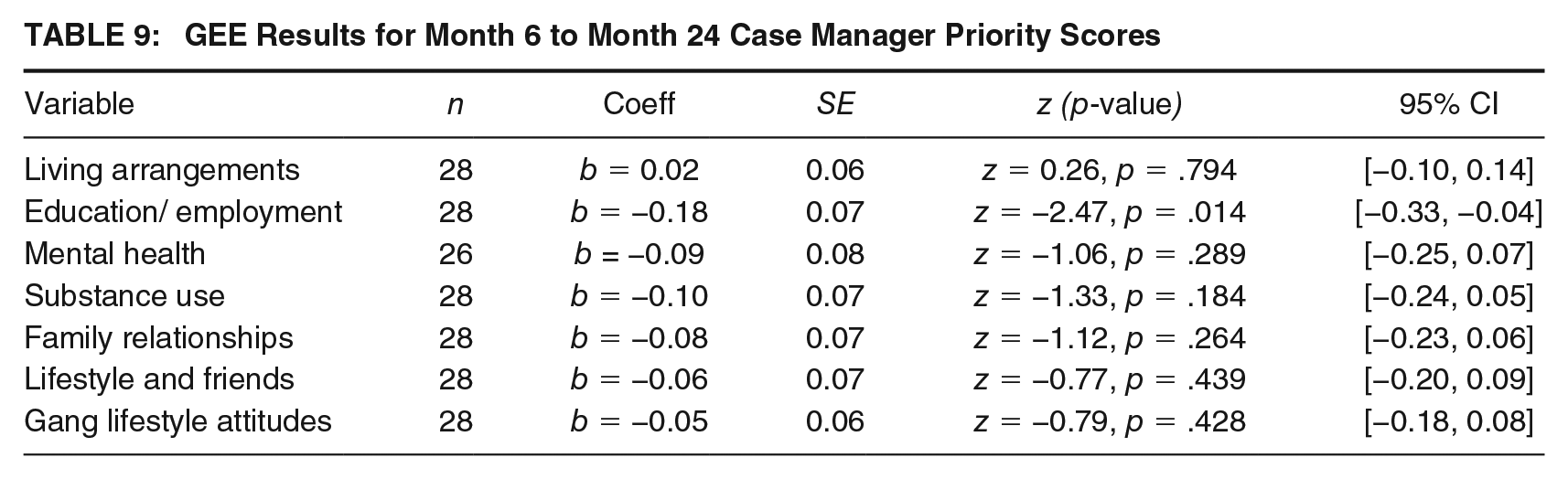
Longitudinal findings for priority scores from Months 6 to 24 (Table 9) showed a significant decrease over time for education/employment (z = −2.47, p = .014), suggesting that case managers were less likely to rank this as a high priority need over time. No other linear trends were found, indicating no notable changes in priority scores after the Month 6 assessment.
GEE Results for Month 6 to Month 24 Case Manager Priority Scores
Discussion
The process of disengaging from gang life is nuanced and non-linear, with multiple factors impacting an individual’s trajectory (Decker et al., 2013; Pyrooz & Decker, 2011). The GIEP uses police officers, civilian case managers, and various community service providers to provide a holistic case management approach to gang desistance. Results of the current evaluation suggest that the GIEP may have contributed to several short-term improvements in the areas of employment, substance use behaviors, engagement with prosocial peers and family, decreased association with antisocial or criminally involved family and peers, and proportion of time spent in non-gang-related activities. In addition, clients exhibited a significant decrease over both the short and long term with respect to belief in what the gang lifestyle can offer them. The individualized approach may be particularly useful for the target population in the province of BC to account for the wider range of risk factors present. For example, while some active members may have been motivated into the lifestyle for financial or negative familial reasons, it is common for BC gang members to come from upper-middle class, supportive homes (Bhatt & Tweed, 2018; CFSEU-BC, 2021b; McConnell, 2015). The GIEP structure allows case managers to address factors rated as high priority—many of which differ across participants and require different service provision. Importantly, as GIEP participation is voluntary, enrolled clients are already willing to engage to some extent with case managers and may have a propensity toward desistance. As such, these findings should not be generalized to all high-risk individuals who would not choose to participate in an intervention/exiting program.
In terms of case manager priority ratings, short-term results were unanimously positive and significant. In many respects it seems obvious that case managers felt that the urgency of service provision decreased by Month 6; during the first 6 months staff advised and provided external referrals for their clients, which decreased their need for additional services at Month 6. Nevertheless, the prominent decrease in the number of clients with high priority needs for specific services after 6 months is a positive sign. Although the scores are subjective measures, they nevertheless reflect some aspect of risk severity; lower priority scores indicate reduced urgency to address a certain domain (such as housing). The lower ratings at Month 6 and beyond not only suggest that service provision was quickly initiated and used by clients (at least those who had follow-up risk assessment data), but that case managers felt they were adequately tailoring services to client risk factors.
Participants reported higher rates of legal employment at Month 6 compared with baseline. This finding is similar to that found by Pyrooz et al. (2019) in the GRID program evaluation, which showed higher rates of employment post-program participation. The increase in legal employment indicates a strong step toward a prosocial lifestyle. Money is a common motivator for entry into gang life (Chalas & Grekul, 2017; Decker & Curry, 2000) and the employment supports and services provided by the GIEP allow participants to access more financial opportunities. Notably, the sample size for clients responding to this item at both the Baseline and Month 6 surveys was small (n = 17). It is certainly possible that some clients were still engaging in (unreported) illegal methods of earning money at Month 6 (e.g., selling drugs); the desistance process is expected to be gradual and may not result in a complete cessation of criminal activities (Pyrooz & Decker, 2011). Participants also reported significant improvement in employment strengths at Month 6 compared with Baseline. As services and supports related to job readiness and employment skills are commonly addressed in case management plans, these findings suggest that GIEP efforts in this domain have positive impacts on clients.
While the frequency of substance use could not be examined due to low response rates, GIEP clients were less likely to report engaging in criminal behaviors to obtain illicit substances or as a result of the effects of illicit substance use. Drug offenses are common among gang members, particularly within the BC gang landscape, and the likelihood of substance use is high (Decker et al., 2008; Empower Surrey, 2023). A reduction in related substance use behaviors is promising and suggests a greater likelihood of drug use desistance overall.
The current findings also indicate significant improvements in clients’ family and peer relationships. As associating with family and friends who are actively gang-involved is highly correlated with gang entry (Lenzi et al., 2015; O’Brien et al., 2013), personal relationships are critical to address in the exiting process. Personal relationships can serve to encourage and support negative behaviors when the relationship is deviant; they can also provide support and encouragement for prosocial and positive decisions and behaviors (Merrin et al., 2015, 2020; Pyrooz et al., 2013). While the GIEP appears to positively impact peer relations, this is only somewhat consistent with findings from an evaluation of the Los Angeles GRYD program. Cahill et al. (2015) noted that although positive changes in peer associations were observed, the reduction was the smallest of all measured constructs, suggesting that peer associations may be more difficult to address in shorter time periods given the strength and influence of peer connections. However, the GIEP and GRYD programs are focused on slightly different populations, with GRYD targeting those at-risk of gang involvement, but not yet involved, whereas the GIEP also works directly with gang members.
While few notable changes were seen for client attitudes toward the gang lifestyle, Baseline results for most outcomes were already positive (see Table 5). For example, at Baseline 93% of clients believed they could change their life trajectory, and 93% understood the negative impacts of their behavior on others. These measures were assessed at program entry, which for many clients meant they had already decided to begin the exiting process, or at least were open to communicating with a case manager and accepting services targeted toward that goal. As such, it is not unexpected that attitudes toward exit would be generally positive at Baseline, and the lack of significant changes at Month 6 and over later waves is not particularly surprising.
Limitations
Unfortunately, the retrospective evaluation design and timeframe for the evaluation precluded the identification of a suitable comparison group for GIEP clients; we cannot rule out the possibility that any changes in outcomes observed may have been unrelated to program services. Given the risks to internal validity with single group designs (e.g., selection threats, maturation, history), the lack of comparison group is a major limitation to the assessment of program outcomes. 13 Second, the sample for the evaluation is small, particularly for the later waves of the risk assessment tool data, which reduced the statistical power to detect significant effects should they exist. While the decreasing response rates to the later waves of follow-up were in part related to staggered program admission dates (i.e., clients admitted closer to the end of the evaluation period had not been in program services long enough to complete an 18- or 24-month risk assessment), it remains true that the modest sample for the follow-up surveys overall limits our ability to generalize findings to the full population of GIEP clients.
Third, the risk assessment data was limited by differential survey administration procedures across case managers (file review), as well as some lack of adherence to timing protocol (e.g., baseline surveys being completed 3 months after intake). Ideally only in-person risk assessments would have been included; however, the use of file review was common and dropping these risk assessments from the sample would have precluded many of the analyses herein. In addition, there was notable missing data within surveys and for entire waves of data, which limited the operationalization of variables into measurable outcomes. Relatedly, several known risk factors were not included in the Risk Assessment Tool (e.g., community level factors) or the available items had large amounts of missing data, which also led to limitations in the operationalization of several constructs (e.g., substance use, psychological risk factors, code of the street). Last, the evaluation time period encompassed the acute period of the Covid-19 pandemic (2020–2021), during which in-person meetings and external services were halted and/or reduced for short periods of time. The extent to which these changes in services may have impacted both the quality of services provided as well as risk assessment ratings is unknown.
Conclusion
The impact of multiple risk and protective factors in relation to gang involvement and exit is complex and varies across individuals. The current evaluation suggests that the GIEP’s individualized approach to service provision may contribute to client improvements in employment, substance use behaviors, engagement with prosocial peers and family, decreased association with antisocial family and peers, and the proportion of time spent in non-gang-related activities. As risk factors and their subsequent influences manifest differently across individuals, this study provides support for the use of individualized, multipronged intervention approaches delivered through an interplay of civilian and law enforcement staff.
Supplemental Material
sj-docx-1-cjb-10.1177_00938548251357778 – Supplemental material for Mitigating Risk and Magnifying Protection: The Impacts of a Gang Intervention and Exiting Program on Criminogenic Risk Factors
Supplemental material, sj-docx-1-cjb-10.1177_00938548251357778 for Mitigating Risk and Magnifying Protection: The Impacts of a Gang Intervention and Exiting Program on Criminogenic Risk Factors by Jennifer S. Wong and Chelsey Lee in Criminal Justice and Behavior
Footnotes
Author’s Note:
We gratefully acknowledge the extensive efforts of GIEP staff members to assist with rectifying data errors and providing answers to any and all questions. In particular, we thank Catherine Shaffer, Karine Descormiers, and Jennifer Warkentin for their time and dedication. We also thank the BC Ministry of Public Safety and Solicitor for providing funding for the project, and Tara Haarhoff at the RCMP E-Division for her assistance with inquiries regarding the structure and coding of police contact data in BC. Last, we are indebted to Matthias Schonlau for guidance on statistical modeling.

Supplemental Material
Notes
References
Supplementary Material
Please find the following supplemental material available below.
For Open Access articles published under a Creative Commons License, all supplemental material carries the same license as the article it is associated with.
For non-Open Access articles published, all supplemental material carries a non-exclusive license, and permission requests for re-use of supplemental material or any part of supplemental material shall be sent directly to the copyright owner as specified in the copyright notice associated with the article.
