



Abstract
Firesetting behavior is a pervasive yet underexamined area with both research and practice often involving men-only or mixed samples. This exploratory systematic review aimed to synthesize international findings and trends regarding the potential risk factors for firesetting behavior in adult women. Following full-text review, 12 studies were deemed suitable; 10 of these were from the United Kingdom and two from the United States. None of the potential risk factors identified in the review could be determined as a causal factor in women’s firesetting behavior. Instead, associations and correlations at best were revealed, including mental health concerns, difficulties in emotional regulation, maladaptive coping strategies, impulsivity, and self-harm/suicidal ideation. Further research was deemed necessary regarding the role of psychopathy, substance abuse, problems with interpersonal relationships, antisocial behavior, and childhood adversity, and there was a significant lack of focus on inappropriate fire interest/scripts in women.
Firesetting refers to all intentional and deliberate acts of setting a fire, encompassing, but not limited to, the specific criminal act of arson. In England and Wales, arson is more narrowly defined as the act of deliberately setting a fire to a property or dwelling with the result of damaging property and/or endangering life (Criminal Damage Act, 1971). By considering this broader definition of firesetting, this review accounts for behaviors that may not lead to conviction under the legal parameters of arson.
Firesetting is a pervasive issue, with a total of 62,707 deliberate fires attended to in England in the year ending September 2023 (Home Office, 2024). Its consequences are often devastating, with high cost of both physical and emotional harm. For example, in the year ending March 2020 in the United Kingdom, the total social and economic cost was calculated at 100.7 million (Home Office, 2023). Although an underexamined area compared with other offense-related behavior (Sambrooks & Tyler, 2019), there is a growing breadth of research on adult firesetters, with studies exploring the complex interaction of the many psychological, developmental, situational, and dynamic risk factors for this behavior. For the most part, however, samples have included men or mixed samples, with only a few studies focusing solely on women (e.g., Cunningham et al., 2011; Gannon, 2010). Indeed, a recent meta-analysis into firesetting reoffending reported the characteristics of the samples involved as predominantly men who were young and White (Sambrooks et al., 2021). In 2019, there were 88 women in prison in England and Wales with an arson conviction and 187 women under community supervision, compared with 759 and 766 men, respectively (Ministry of Justice, 2019). With women being imprisoned at lower rates than men, it is often within the context of psychiatric services where women’s firesetting behavior is examined, where admissions are commonly due to firesetting incidents (Cunningham et al., 2011).
Existing Theory and Research
Firesetting behavior involves a diverse range of characteristics, including psychological, social, and environmental factors. This variability underscores the importance of a robust theoretical framework to identify and understand key risk factors that contribute to such behavior. A comprehensive model can enhance assessment, intervention, and prevention strategies by addressing the complex interplay of individual and situational influences.
Linking the knowledge of characteristics and features into a sound theoretical model enables effective formulation and treatment of offenses such as firesetting. The Multi-Trajectory Theory of Adult Firesetting (M-TTAF) developed by Gannon and colleagues (2012) is an example of this. The M-TTAF combines existing typologies, and both single- and multifactor theories into a two-tier, comprehensive theoretical framework for firesetting behavior in adults. Tier 1 outlines the etiological framework whereby poor caregiver environment, learning experiences, cultural forces, and biology/temperament are all believed to provide the developmental context, which interacts with a person’s psychological vulnerabilities during the transition from childhood to adulthood. These vulnerabilities are identified as inappropriate fire interest, offense supporting attitudes, self/emotional regulation issues, and communication problems. When these vulnerabilities become heavily primed and interact with proximal factors and triggers, such as life events, internal affect/cognition, and culture, they become key critical risk factors for facilitating fire setting behavior. Tier 2 of the M-TTAF builds on Tier 1 to propose five trajectories for firesetting behavior: antisocial cognition, grievance, fire interest, emotionally expressive/need for recognition, and multifaceted. Each trajectory outlines prominent and likely risk factors, as well as how these may present in clinical practice and the possible motivators.
To address these key components, the first specialist group therapy for fire setting behavior was developed: the Firesetting Intervention Programme for Prisoners (FIPP; Gannon et al., 2015). The intervention targets fire-related factors such as problematic interest and fire safety and aims to restructure offense-supportive cognitions involving violence, entitlement, and antisocial behavior. The role of anger arousal in the lead up to their offending is also examined and effective strategies for regulating this in the future are developed. Finally, improved social competence is addressed via psychoeducation and experiential learning (Gannon et al., 2015).
One of the key strengths of the M-TTAF is its ability to explain the variability of firesetting behavior and characteristics often reported in clinical practice (Gannon et al., 2012). However, while it was developed to account for both men and women who carry out firesetting behavior, the literature it is based upon is heavily dominated by samples of men who set fires. In addition, the FIPP has been evaluated using predominantly male samples. This creates a need for specific empirical examination of the features of women who exhibit firesetting behavior (Alleyne et al., 2016).
At the micro-level, Barnoux and colleagues (2015) developed a descriptive model of adult men who carry out firesetting behavior (DMAF) using offense chain analysis. Contextual, behavioral, cognitive, and affective events were explored through interviews with 38 men with at least one recorded fire incident. From this, two distinct pathways to firesetting were identified: approach firesetters and avoidant firesetters. For the approach of firesetters, multiple “fire factors” emerged in childhood such as fire interest, normalization, early firesetting, and negative fire experiences. They had experienced troubled childhoods and were characterized by early antisocial behavior, and high levels of aggression and violence. This continued into adulthood with antisocial peers, endorsement of criminal values, and criminal activity being common. The fires were often planned, with anger being the most reported trigger. Those men on the avoidant pathway similarly experienced troubled childhoods but were characterized by a lack of assertiveness with little involvement in early criminal behavior. Pro-social lifestyles in adulthood were reported, but with significant life stressors experienced. The fires were indirectly approached and were often seen as an out-of-proportion response to the trigger, possibly due to the mounting grievances. The two pathways in the DMAF are accounted for by previous existing theories such as the M-TTAF and provide clinical utility by highlighting key areas for treatment, thus assisting in treatment formulation. Despite this, the findings are limited to firesetters who are men. When offense chain analysis has been used with adult firesetters with intellectual and developmental disabilities (Collins et al., 2023), sample-specific concepts have been identified that could not be accounted for by the DMAF or M-TTAF, such as the impact of peer influence, and a lack of understanding/empathy of the consequences of fire. This highlights the need for caution when applying existing firesetting theories and offense chain models to women; there may be pathways in addition to those outlined in the current models that have not yet been identified or tested (Tyler & Gannon, 2021).
Indeed, feminist pathways theory argues that there are trajectories to offending that are distinct to women. Daly (1992) described five unique pathways for women: (a) “harmed,” who experienced abuse or neglect as a child; (b) “street” women, who often fled abuse, thus leading to substance addiction and prostitution; (c) women whose involvement in crime was linked to the abuse from intimate partners; (d) drug connected women; and (e) those who were economically motivated. Work such as Daly’s and those that have built on it since (e.g., Brennan et al., 2012; Salisbury & Van Voorhis, 2009) have highlighted the potential difference in criminogenic needs between men and women, thus emphasizing the need for caution when applying theoretical explanations of offending behavior to women. Currently, however, there is no distinct theoretical explanation for why women carry out fire setting behavior.
The lack of theory and research exploring the features and characteristics of women who set fires makes it difficult to determine the risk factors and motivations driving the behavior as highlighted in Gannon’s (2010) review of the literature on women arsonists, the only review to date in this area. In the studies included, the previous offense history of the sample remained unclear, and although the presence of personality disorders was highlighted, the studies lacked sufficient detail regarding this. Schizophrenia, affective disorders, and substance abuse were all associated with women arsonists, similar to women who offend generally. A prevalence of sexual abuse, depression, and psychosis, along with motivations of attention seeking and parasuicide were reported as the key features that differentiated women arsonists from men who are arsonists.
The review provides an outline of the features and psychopathologies associated with women arsonists that were reported in the literature at the time. However, the inclusion and exclusion criteria used during the search for empirical evidence are not clear and there were only a handful of studies included in the review that included adequate control groups. Indeed, Gannon (2010) concluded from the review that a basic understanding of women firesetters’ features (compared with counterparts who are men) was still required to help inform professional intervention. Fourteen years later, this is, arguably, still the case, thus deeming a review of the existing research to date involving adult women firesetters as essential.
Aims
A risk factor can be defined as something that increases the chances of a certain outcome for a determined population (Kraemer et al., 1997). This exploratory systematic review aims to synthesize international findings and trends regarding the potential risk factors for firesetting behavior in adult women. In doing so, the review’s main goal is to better understand the psychological and sociological factors associated with women’s engagement in firesetting behaviors. The review is expected to find risk factors that have been both statistically and nonstatistically associated with women’s firesetting behaviors and descriptions of self-reports of risk factors linked to women’s firesetting behaviors.
Method
This systematic review was registered on Prospero in May 2022 (Kitson-Boyce et al., 2022), which outlined a clear protocol to be undertaken following PRISMA guidelines. All aspects of the protocol were followed apart from one amendment. Originally, review studies were to be included as an eligible study. However, on examination of the findings it was more transparent to apply our eligibility criteria (see below) to those studies other reviews had included, thus thoroughly answering our own review question.
Eligibility Criteria
A scoping review conducted in June−July 2021 highlighted a dearth of relevant papers; therefore, no restrictions on publication date were used. For inclusion, eligible studies had to be published in a peer review journal, book, or thesis and have adult (over 18) women or females as participants (based on U.K. criminal justice definitions of adults; Gov.UK, 2024). The terms “women” and “female” were used in the eligibility criteria as both are used in the literature to describe the populations. The authors of this review, however, align with the term “women” and have, therefore, used language consistent with this throughout the study.
Participants must have carried out firesetting behavior during their lifetime as defined by themselves, the courts, or other professionals such as psychiatrists. The titles or abstracts needed to identify risk factor indicators for the firesetting behavior and be written in the English language. Studies were excluded from the review if they focused solely on children, adolescents, or firesetters who were men. In addition, studies were excluded which included participants under the age of 18 with adult women or studies where no age range was stated to avoid ambiguity. This exclusion criteria were set due to the difference in the way that adults are treated compared with children in U.K. law.
Search Strategy
The scoping search highlighted relevant terms to be included in the full systematic review and generated four main categories (Firesetting; Women; Psychosocial factors; Perpetration).
In May 2022, the following databases were searched: ProQuest (to include APA PsycArticles, APA PsycInfo, Applied Social Sciences Index and Abstracts, Criminal Justice Database), CINAHL, Web of Science, Science Direct, Scopus and EBSCO—Criminal Justice Abstracts. The following search terms were then used across the selected databases: (Wom?n OR female) AND (perpetrat* OR offend* OR firesetter* OR arsonist*) AND (“fire*setting” OR arson* OR “fire starting” OR “fire play” OR pyromania*) AND (“Psycholog* factor*” OR “sociolog* factor*” OR “risk factor*” OR “risk marker*” OR Motivat* OR predictor OR characteristic* OR vulnerabilit*).
The search initially identified 4,286 results. All references were added to a Zotero database and duplicates removed, resulting in 3,967 articles. References were then exported to Rayyan, a web application that enables collaboration on systematic review screening and application of inclusion/exclusion criteria (Ouzzani et al., 2016).
Selection Process
Two researchers independently screened the 3,967 abstracts against the inclusion and exclusion criteria to determine their eligibility for inclusion in the review (see Figure 1). Of these, 3,931 were excluded due to not being on firesetting (n = 3,774); wrong population (n = 108); wrong study design where the studies methods or objectives were not relevant to our review, that is, an evaluation of an intervention (n = 5); foreign language (n = 3); background article (n = 2); and wrong publication type (n = 3). Where discrepancies or uncertainties arose over a study’s eligibility (n = 9), the reviewers met to discuss and then came to an agreement about inclusion in the next stage. Where there was any ambiguity about the suitability of articles, they were included in the full-text review.
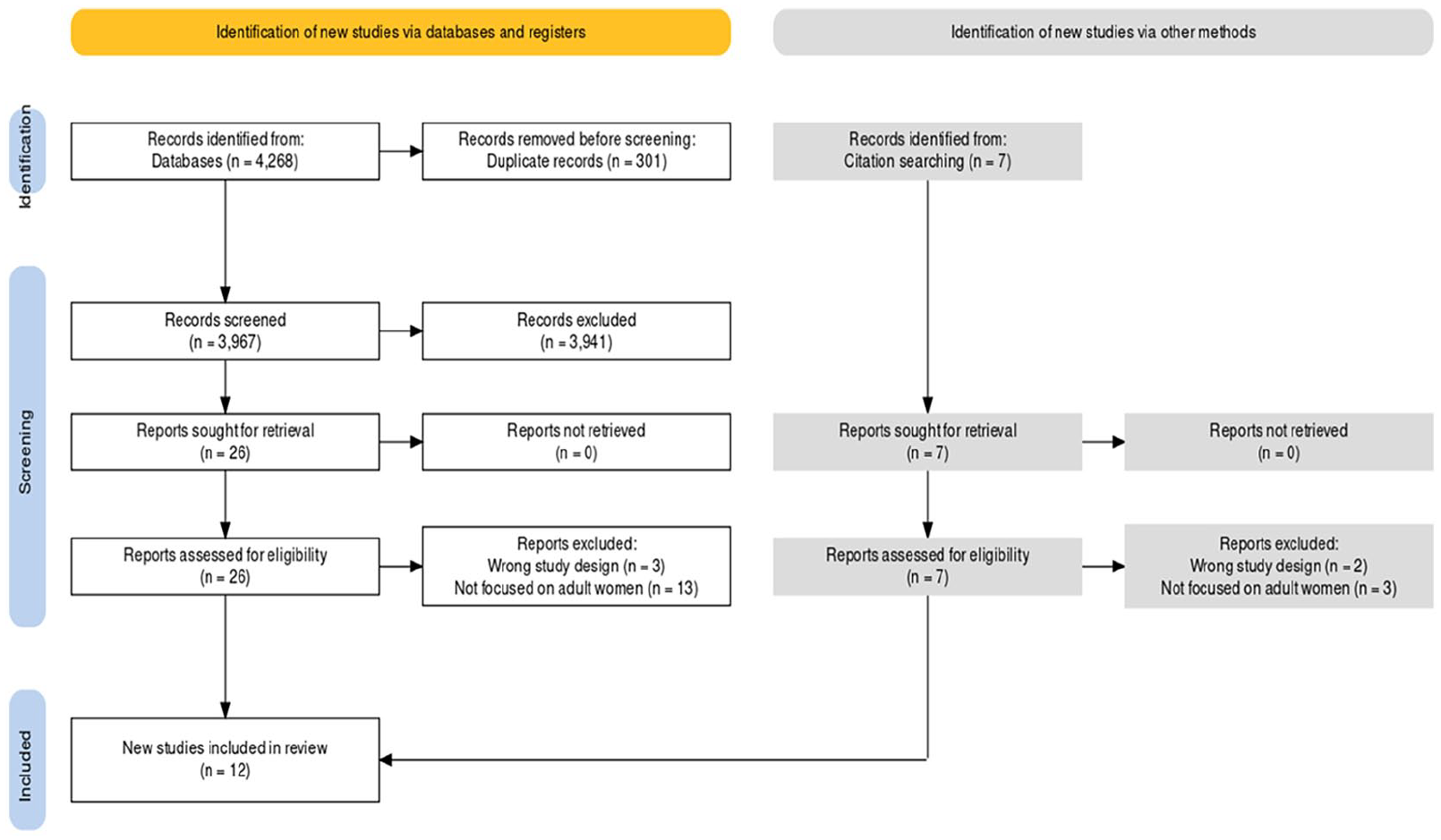
Search Strategy Based on the PRISMA Model, Developed Using Software From Haddaway et al. (2022).
Following the screening of abstracts, 26 articles were found to provisionally meet the eligibility criteria and were included for full text review. Two researchers took 50% of the papers each and applied the inclusion and exclusion criteria to the full-text articles; any uncertainties were discussed with the full research team. Of the 26 articles, 10 were found to meet the inclusion criteria. In addition to this, further studies were identified by reviewers from references sections of eligible articles. Seven further studies were reviewed, and two were included based on this. In total, 12 studies were found to meet the inclusion criteria and were included in the data extraction process.
Data Extraction
A data extraction table was developed based on the aims of the research. Two researchers completed the table, taking 50% of the papers each. The data extracted included year of publication, authors, country, purpose/objective of the article, demographic data, population details, the method used (interview, survey etc.), risk factors studied, and motivations considered. All authors reviewed the data extraction table to ensure there was consistency between reviewers. As studies used different definitions of firesetting, different outcome measures, and different analytic strategies, there was a lack of homogeneity across the studies. Therefore, data from each study were drawn together from the data extraction table to allow for a narrative synthesis of results (please see supplementary information for the full extraction table, available in the online version of this article).
Results
Study Characteristics
Twelve papers were included in this review (see Supplemental Table 1, available in the online version of this article), including a total of 443 women firesetters drawn from the United Kingdom (10 studies) and the United States (two studies). Participants were recruited from mainly psychiatric populations (eight studies), then two studies recruited from forensic populations, one study from a mixed psychiatric and forensic population, and one study that had drawn from a nationally representative pool of participants. Where studies did report on the ethnicity of their samples, the majority were White (43.9%−100%) with participants from Hispanic ethnicity representing a proportion of the U.S. studies (Hoertel et al., 2011 – 12.3%; Leong et al., 2019 – 36.6%). Seven studies compared women firesetters with men who were firesetters, six studies compared women firesetters with women non-firesetters, and four studies had samples of women firesetters with no control group. These figures do not add up to 12 as some studies had both men and women and firesetters and non-firesetters. Nearly all studies involved a quantitative research design (11 studies), with seven of these involving a form of case or file review (e.g., hospital records, clinical notes, existing psychometric data, offense history). The remaining four quantitative studies collected psychometric and/or questionnaire data from participants and one study had a qualitative research design (Cunningham et al., 2011).
Most articles determined the participants as firesetters if they had a recorded incident of firesetting or arson either in their offense history (Cunningham et al., 2011; Dickens et al., 2007; Leong et al., 2019; Long et al., 2015; Noblett & Nelson, 2001; Rix, 1994; Tyler et al., 2015; Wyatt et al., 2019) and/or while in a health (Wyatt et al., 2019) or prison (Alleyne et al., 2016) setting. One paper focused on recidivist firesetters who had set a minimum of three fires (Long et al., 2014), another required evidence of firesetting behavior as determined by at least two professionals (Miller & Fritzon, 2007), and the final study relied upon self-report of firesetting behavior (Hoertel et al., 2011). The mean age of the female samples ranged from 18 to 42.2 years.
Risk of Bias Assessment
Quality assessment was completed by two research associates and reviewed by the lead author using the Mixed Methods Appraisal Tool (MMAT; Pluye et al., 2011). The MMAT enables the risk of bias to be assessed in quantitative, qualitative, and mixed methods studies and could, therefore, be applied to the full range of studies within the review. The research team judged the quality of the papers as high, adequate, or low depending on the MMAT score however, in line with the tool’s recommendations, and because our review was exploratory in nature, none of the studies were excluded based on quality. As shown in Supplemental Table 1, seven studies were deemed as high quality (an MMAT score of four or five), three studies of adequate quality (an MMAT score of three), and two studies were found to be of low quality (MMAT score of one or two).
Synthesis of Results: Potential Risk Factors
There was variation in the type of potential risk factors of firesetting behavior studied and the motivations that were identified. These were grouped together, therefore, in overarching themes and discussed below. The inclusion of statistical analyses and subsequent effect sizes also varied between the studies and has, therefore, only been stated specifically in the full extraction table (see supplementary information).
Psychopathology
This theme outlines the psychopathology issues among women firesetters, including any current diagnoses and their mental health history. Distinct mental health concerns such as personality disorders, depression, and schizophrenia are discussed, with some papers also considering their previous contact with psychiatric services.
Psychiatric/mental health diagnosis
Having a mental health concern appeared common within women firesetters with eight of the 12 studies documenting a mental health diagnosis. Miller and Fritzon (2007) noted that just under half of the women firesetters in their study were diagnosed with an antisocial personality disorder. As their sample was drawn from a psychiatric population, this finding is somewhat expected. However, a second study (Hoertel et al., 2011) that included a sample representative of the general population reported that for women firesetters the most prevalent psychiatric disorders were major depressive disorder, antisocial personality disorder, and bipolar disorder. When compared with women non-firesetters, women firesetters were significantly more likely to have conduct disorder, antisocial or obsessive-compulsive personality disorder as well as psychotic disorder, bipolar disorder, and schizoid personality disorder. However, although assessed as a high-quality paper, firesetting was determined through self-report, as was the presence of a psychiatric disorder meaning that both elements may have been under- or overreported. In another study (Long et al., 2015), women firesetters were reported to be significantly more likely to be diagnosed with personality disorder and schizophrenia than women non-firesetters. This was a low-quality paper however, with the authors acknowledging that the sample may not have been representative of women firesetters.
Two other studies also utilized women non-firesetters as a control group. Noblett and Nelson (2001) reported that the women who were firesetters scored significantly higher on clinical scales that examined the presence of somatic complaints, anxiety-related disorders, depression, paranoia, schizophrenia, and borderline features, and Alleyne et al. (2016) found that a higher proportion of women firesetters met the criteria for bipolar (manic) and major depression. In addition, schizoid, avoidant, dependent, compulsive, masochistic, schizotypal, and borderline personality disorders were all significantly related to women firesetters, with a higher proportion meeting the diagnosable criteria when compared with both women non-firesetters and men who were firesetters (Alleyne et al., 2016).
Of those studies that included comparisons with firesetters who were men, one reported that women who set fires were more likely to receive a diagnosis for a personality disorder (Wyatt et al., 2019) and two asserted that women were more likely to suffer from a diagnosable affective disorder (Dickens et al., 2007; Rix, 1994). The latter study (Rix, 1994), however, requires caution due to the age range of the sample of men, which included under 18s (unlike the women’s sample). Notably, one study (Leong et al., 2019) reported similar rates of schizophrenia in both men (84.8%) and women (87.5%). This study used a particularly small sample size however, with just eight women being included, which could have contributed to the lack of significant effect when considering the differences in gender.
Previous contact with psychiatric services
As in the previous theme, Leong et al. (2019) described no difference between men and women firesetters in relation to whether they had received prior mental health services. A high-quality study (Alleyne et al., 2016) with a much larger sample, however, reported that women firesetters (85%) had greater previous engagement with mental health services when compared with firesetters who were men (58%) and women who offend generally (60%).
When describing their sample of 49 women firesetters, Long et al. (2015) reported the mean age at first contact with psychiatric services was 16.91 years, while the mean age at first admission to psychiatric care was 22.44 years. Within this, those women who set multiple fires were significantly younger than single firesetters at first contact with psychiatric services.
Psychological Characteristics
This theme encompasses the potential risk factors that can be defined as psychological characteristics, including emotion regulation difficulties, impulsivity, stress and maladaptive coping, loneliness, self-harm/suicidal ideation, low IQ, and current fire interest. The studies included in this review commonly cited several to be associated with firesetting behavior, as discussed below.
Emotional Regulation Difficulties
When assessing the antecedents to a firesetting incident, one high-quality study (Long et al., 2014) described negative emotions (anger, depression/low mood, jealousy, anxiety) as being dominant before the majority (92%) of fires set by women in their sample. This focused only on the 24 hr immediately before the incident though and did not involve a control group for comparison. Another high-quality study (Wyatt et al., 2019) compared women and men who were firesetters with a mental disorder. They concluded that in the month leading up to the incident, emotion regulation problems uniquely predicted women mentally disordered firesetting only and were not associated with mentally disordered men who were firesetters. In addition, three studies identified revenge or anger as motivation behind firesetting behavior in women specifically (Cunningham et al., 2011; Long et al., 2014; Rix, 1994).
Impulsivity
High-quality studies also reported a significantly higher impulsivity score in women firesetters when compared with women non-firesetters (Long et al., 2014), and greater impulsive behavior in the month leading up to the firesetting incident when compared with firesetters who were men (Wyatt et al., 2019). Another study (Long et al., 2014) highlighted that 81% of the women firesetters in their sample had reported not thinking about the incident until the day they committed it. Likewise, some of the participants within a qualitative study (Cunningham et al., 2011) described their firesetting as an “impulse,” or “urge,” not thinking through the consequences of their behavior. Contrary to this, however, when comparing mentally disordered women who were firesetters with mentally disordered women in a control group, Wyatt et al. (2019) found higher levels of incident premeditation.
Stress and Maladaptive Coping
Maladaptive coping of stressful and distressing situations was noted by three studies as being associated with women’s firesetting behavior. One study (Noblett & Nelson, 2001) reported a significant difference in stress between women firesetters and women non-firesetters, leading them to recommend treatment which targeted coping behaviors specifically. Another study (Wyatt et al., 2019) highlighted in their high-quality study a trend toward mentally disordered women firesetters as having more likely experienced a triggering event in the month leading up to the incident relative to counterparts who were men. Although no further information is given regarding the triggering events, it is possible that the maladaptive coping of them is what leads them to be related to firesetting behavior. Dickens et al. (2007) noted that just over half of the firesetting incidents studied occurred in the context of a recent major life event (e.g., bereavement or other loss) for both women and men alike, suggesting maladaptive coping is not always a risk indicator, and that it may not be unique to women.
A high-quality qualitative study (Cunningham et al., 2011) reported a theme of distressing experiences whereby women firesetters discussed periods of difficulty caused by recent and early life events, as well as current emotional distress. Although the cause and coping strategies of the distress varied, the shared experience of the women firesetters was feeling overwhelmed and unable to cope. Contrastingly, one high-quality study (Alleyne et al., 2016) identified more effective anger regulation in women firesetters than women who offend generally. Authors suggested, however, that this may have resulted from firesetting being used as a coping strategy, suggesting the need for further research in this area.
Loneliness
Following from the above theme, the same three studies discussed the prevalence of loneliness in those women who set fires. In a high-quality study (Wyatt et al., 2019), comparing firesetters and non-firesetters with a mental disorder, self-isolation predicted women firesetters only. Likewise, Noblett and Nelson (2001) reported a significant difference in “non-support” between women firesetters and non-firesetters. Adding more context, Cunningham et al. (2011) outlined a theme of isolation from support in their high-quality qualitative paper. Within this, a lack of support from services or personal relationships was discussed, resulting in feelings of isolation. The authors acknowledge, however, that previous assessments and interviews may have resulted in the participants sharing a “well-practised script” (Cunningham et al., 2011, p. 138).
Self-Harm/Suicidal Ideation
Half of the studies in this review (six) discussed self-harm and/or suicidal ideation in relation to firesetting behavior in women. Two studies (Cunningham et al., 2011; Long et al., 2015) identified a history of self-harm within women who set fires. A third high-quality paper (Long et al., 2014) highlighted how 68% of the women firesetters experienced self-harm or suicidal thoughts between 24 hr and immediately before the incident, with 73% of the sample expressing self-harm as a direct motive. The authors acknowledged that the high prevalence of self-harm and suicidal thoughts surrounding the incidents could reflect an underlying psychological process connecting them with firesetting, also highlighted in another study within the review (Miller & Fritzon, 2007). It is worth noting, however, that the participants in both these studies (Long et al., 2014; Miller & Fritzon, 2007) had a diagnosis of psychosis and/or borderline personality disorder. As stated previously, the role of psychopathy within women who set fires needs to be examined further for the extent of self-harm as a risk indicator to be clear.
Finally, one study’s (Noblett & Nelson, 2001) findings reached statistical significance when comparing suicidal ideation in women firesetters and women who committed violent offenses, with the women firesetters more likely to admit deliberate self-harm. In contrast to this, however, another study (Dickens et al., 2007) reported no significant difference in self-harm between men and women. The high-quality study did, however, report that fires set by women were significantly more likely to include an element of attention seeking or parasuicide than those set by men. The authors argued, therefore, that firesetting in women is self-destructive and may possibly be used interchangeably with self-harm.
Low IQ
Only two studies discussed the IQ levels of women firesetters specifically. One study (Noblett & Nelson, 2001) reported no significant difference between the women firesetters and women who commit violent offenses. Both groups, however, had significantly lower IQ than the women in the control group, which may say more about offending behavior generally than firesetting behavior specifically. Likewise, Dickens et al. (2007) reported just under half of their sample (41.9%) as having a below-average IQ but found no significant differences between women and men who set fires.
Current Interest in Fire
One high-quality study (Alleyne et al., 2016) reported that serious fire interest differentiated women firesetters from women who offend generally. However, another high-quality study (Long et al., 2014) reported a low presence of childhood interest or involvement with fires when considering the antecedents to adult firesetting behavior. A third study in the review (Tyler et al., 2015) noted that mentally disordered firesetters expressed a significantly greater interest in fire/explosives compared with non-firesetters. However, no gender differences were reported in relation to this. Given the presence of this risk indicator in both the most recent theory (M-TTAF, Gannon et al., 2012) and descriptive models (DMAF, Barnoux et al., 2015), further research is required to explore fire-interest-related risk factors to determine their role, if any, in women’s firesetting behavior.
Social Characteristics
Several studies in this review discussed factors that relate to the social situation of the women participants, which we are grouping under the category “social characteristics.” Studies mostly highlighted participants’ interpersonal relationships, while other indicators in this area related to situational descriptors and educational history.
Problems With Interpersonal Relationships
The majority of women firesetters (79%) in one high-quality study (Long et al., 2014) reported relationships problems with family members and/or partners as contributing to a firesetting incident; 60% reported having thought about relationship problems in the 24 hr immediately before the firesetting incident. Although no comparison group was used here, another high-quality study (Dickens et al., 2007) reported a history of relationship difficulties as being more prevalent among women who set fires (86.8%) when compared with men who carry out the same behavior (65.9%). Women firesetters similarly discussed, in qualitative interviews, problematic relationships often characterized by factors such as rejection, conflict and dismissal (Cunningham et al., 2011).
When considering social relationships more generally, one study (Noblett & Nelson, 2001) indicated that women who set fires may present as more self-conscious in social interactions, uncomfortable as the focus of attention, and be more likely to be unskilled in asserting themselves when compared with women who carry out violent offenses.
Situational Descriptors
Two of the studies in the review characterized the majority of women firesetters in their sample as single (Long et al., 2014, 2015). It is unclear, however, whether this was due to their choice, their firesetting behavior, or due to problems with relationships like those outlined above. In addition, women firesetters were reported as living alone, either in care or in supported accommodation (Long et al., 2014) and unemployed (Long et al., 2014; Rix, 1994). As very few studies discussed these descriptors, it is uncertain whether they are representative of all women who carry out firesetting behavior.
Also, relevant here are findings from one low-quality study (Rix, 1994) that reported setting fire to a council house to be rehomed as a common motive among women firesetters. The number with this motive was small however (n = 5), and all were reported as also suffering from a psychiatric disorder, making it difficult to draw firm conclusions.
Level/Type of Education
In relation to the type of school attended, one high-quality study (Dickens et al., 2007) reported women firesetters (7.9%) as less likely to have attended a special school than men who set fires (42.5%). In contrast, Rix (1994) reported no gender differences in the 25% of their firesetting sample who had attended a special school, although this was a low-quality paper.
There were no further gender differences noted in relation to education and firesetting behavior in men and women. For example, Dickens et al. (2007) reported schooling difficulties, with 42.5% of the men and women who were firesetters judged to be poor students. Likewise, Alleyne et al. (2016) reported in their high-quality study that both men and women firesetters displayed lower education attainment (secondary school qualifications or less) than the women who offended generally.
Substance Misuse Problems
Nine studies discussed substance misuse in relation to firesetting, however with conflicting results and no differentiation made between historic and current issues. One high-quality study (Hoertel et al., 2011) identified alcohol use disorders, drug use disorders, and nicotine dependence as being some of the most prevalent associations with firesetting behavior in women. The sample for this study, however, was derived from the National Epidemiologic Survey on Alcohol and Related Conditions (NESARC), meaning that these findings are somewhat expected. In a different sample of firesetters from a hospital setting, another study (Leong et al., 2019) noted the presence of a comorbid alcohol/substance use disorder in nearly two thirds of the sample, although they do not discuss the gender differences within this. For example, the authors highlighted a need for firesetting treatment to target alcohol and substance misuse; however, it is unclear how many in need of this were women.
Three high-quality studies used firesetters who were men as a comparison group and all reported similar findings. Tyler et al. (2015) determined the mean number of previous convictions for drug and alcohol offenses as being significantly higher for firesetters who were men compared with women firesetters. Similarly, Wyatt et al. (2019) identified lower levels of substance misuse disorder as a reliable predictor of mentally disordered firesetters who were women only, with Dickens et al. (2007) reporting women firesetters as significantly less likely to have an alcohol problem compared with firesetters who were men. They additionally noted, from their high-quality study, that women were significantly less likely to be intoxicated at the time of the firesetting incident compared with men.
Two further studies considered women firesetters with women non-firesetters. Where the control group involved people who do not offend, women firesetters scored significantly higher in relation to drug problems but not alcohol problems (Noblett & Nelson, 2001). However, in studies where the control consisted of women who offend generally, alcohol dependence was endorsed more by the women firesetters (Alleyne et al., 2016).
In a qualitative study (Cunningham et al., 2011), participants blamed intoxication when discussing the motives for their firesetting behavior. Finally, Rix (1994) stated that 21% of the women in their sample started fires when intoxicated. This could not be reliably compared though with the men within the sample who were firesetters due to the age range of the men falling within the exclusion criteria of this review.
Criminality/Risk-Taking Behaviors
This theme refers to any record or discussion of antisocial behavior or previous criminal behavior. Two high-quality papers discussed women firesetters’ conviction history, whereas others focused specifically on firesetting or antisocial behavior.
History of Arrest/Convictions
Two studies used firesetters who were men as a comparison group and reported less frequent offending histories in women firesetters compared with the men. Women who set fires were reported as having less violent convictions (Alleyne et al., 2016) and significantly less convictions for theft and vehicle offenses (Dickens et al., 2007). The latter study (Dickens et al., 2007) also noted women firesetters were significantly older than men at the time of their first criminal conviction and spent significantly less time in prison.
Firesetting Specific Offending and Convictions
Two high-quality studies compared women with men in relation to their firesetting behavior specifically. Dickens et al. (2007) noted that women within the sample (M = 32.2 years) were older than men (M = 28.6 years) when setting their first fire, although this was not statistically significant. Tyler et al. (2015) reported that women firesetters had significantly more incidents of adult and juvenile firesetting, more convicted and non-convicted incidents of firesetting, and had set more fires in hospital than firesetters who were men, suggesting that women firesetters’ criminality perhaps centers around this behavior, rather than being varied.
One study (Rix, 1994) found only 4% of women firesetters to have previous convictions for arson, 17% to have a previous history of firesetting, and around a third to have multiple firesetting behavior. Even though the participants were derived from both forensic and psychiatric settings, all participants in this low-quality study had been referred to the authors for a psychiatric assessment.
Antisocial Behaviors
Two studies considered antisocial behavior generally in women firesetters. When comparing women firesetters drawn from a forensic population with women who offend violently and women who do not offend, one study (Noblett & Nelson, 2001) reported that women who set fires scored significantly higher on antisocial features. No further information was provided, however, regarding how these features presented in the participants.
A second study (Hoertel et al., 2011), which was high quality, controlled for socioeconomic factors, and found nine antisocial behaviors that were significantly more associated in women than in men with a lifetime history of firesetting (namely, cutting class and leaving without permission, running away from home overnight, traveling around for more than a month without plans, having driver’s license suspended, getting into lots of fights, getting into a fight that came to swapping blows with others, using a weapon in a fight, hitting someone so hard that he or she was injured, and physically hurting others on purpose). No antisocial behavior was significantly more associated with firesetting in men than in women; however, men and women firesetters were both significantly more likely to have an antisocial personality disorder than non-firesetters. Although this final study described a sample representing the general population, it was conducted by the National Institute on Alcoholism and Alcohol Abuse, which may have influenced participation in the study.
Related to this theme, three studies considered antisocial motivations behind the firesetting behavior. One high-quality study (Wyatt et al., 2019) found that higher levels of targeting property during firesetting incidents reliably predicted mentally disordered women compared with the mentally disordered control group. Similarly, Long et al. (2014) in their high-quality study reported an intention to damage property in 34% of their sample. However, one low-quality study (Rix, 1994) did not find vandalism to be a motive for any of the women firesetters.
Childhood Background and Adversity
The final potential risk indicator to consider is in relation to childhood adversity, with several studies discussing childhood abuse in women firesetters specifically.
Growing Up in Care
Only one low-quality study examined whether women firesetters were more likely to have grown up in care. Rix (1994) acknowledged that 38% of women who set fires had been in some form of institutional care as children. However, the comparison with the firesetters within the sample who were men cannot be considered in this review as the age range includes those below 18 years, thus falling within the exclusion criteria.
Problematic Families
The same study (Rix, 1994) reported parental separation during childhood in 13% of the women firesetters, a paternal psychiatric history in 13% and a maternal psychiatric history in 33%. Again, these descriptors cannot be compared with the firesetters within the sample who were men due to an unmatched age range.
Childhood Abuse
Four of the studies in this review considered abuse within childhood. Two studies reported that women firesetters were significantly more likely to have experienced sexual abuse as a child compared with firesetters who were men (Dickens et al., 2007) and women who carry out violent offenses (Noblett & Nelson, 2001). A third study (Long et al., 2015) similarly highlighted that the majority of women firesetters had a history of emotional, physical, and/or sexual abuse; however, the study does not specify at what point this occurred, that is, childhood or adult life. Finally, Cunningham et al. (2011) in their high-quality qualitative study discussed how a third of the participants reported the impact of being sexually abused as a child.
Discussion
The purpose of this systematic review was to explore and identify the possible risk factors associated with firesetting behavior in women. To the authors’ knowledge only, Gannon (2010) has previously reviewed the literature for key features that differentiate women arsonists from arsonists who are men. A full systematic review including all relevant studies, for example, also including studies with a women’s control group, was therefore deemed beneficial. From this current review, it is apparent that none of the potential risk factors identified can be determined as a causal factor in women’s firesetting behavior. Instead, associations and correlations at best are revealed, which will now be discussed in the context of the most recent descriptive models and theories.
Potential Risk Factors
Over half of the studies in the review reported the presence of mental health concerns and diagnoses in women firesetters (Alleyne et al., 2016; Dickens et al., 2007; Hoertel et al., 2011; Long et al., 2015; Miller & Fritzon, 2007; Noblett & Nelson, 2001; Rix, 1994; Wyatt et al., 2019). Caution must be utilized, however, when interpreting the review findings as five of these studies used samples recruited from psychiatric settings. The number of adult firesetters admitted to forensic health services is reported at 10% to 54.4% with women overrepresented (one in four; Tyler et al., 2015), meaning it is unsurprising that such samples form a majority of the research base. While two studies did use forensic populations (Alleyne et al., 2016; Noblett & Nelson, 2001), more research is needed with non-psychiatric samples including a control group to determine whether this risk indicator is specific to women firesetters. Indeed, mental illness features heavily in the feminist pathways perspective of offending (e.g., Daly, 1992; Salisbury & Van Voorhis, 2009). Likewise, the M-TTAF (Gannon et al., 2012) based on samples dominated by men, states that mental health acts as a moderator of existing psychological vulnerabilities in those who carry out firesetting behavior. It is possible therefore, pending further examination, that the same applies for women.
From the studies examined in this review, difficulties in emotional regulation (Cunningham et al., 2011; Long et al., 2014; Rix, 1994; Wyatt et al., 2019), along with maladaptive coping strategies (Cunningham et al., 2011; Dickens et al., 2007; Noblett & Nelson, 2001; Wyatt et al., 2019), appeared to be associated with firesetting behavior in women. Impulsivity (Cunningham et al., 2011; Long et al., 2014; Wyatt et al., 2019) and self-harm/suicidal ideation (Cunningham et al., 2011; Long et al., 2014, 2015; Miller & Fritzon, 2007; Noblett & Nelson, 2001) were also present in many of the samples. Poor problem-solving and coping strategies have been found to be present in men who set fires’ offense chains (Barnoux et al., 2015) with self/emotional regulation issues encompassing anger, poor coping/problem-solving and impulsivity, outlined in the M-TTAF (Gannon et al., 2012). Indeed, from the studies in this review, it appears the emotionally expressive trajectory set out in the M-TTAF may be the most relevant for women firesetters.
Further evidence for this is provided by Nanayakkara et al. (2020) who classified women firesetters as a dysregulated type defined by diagnoses of personality disorder, symptoms of mood disorder, engagement in self-harm and motivations of suicide and frustration. Although their sample included those below 18 years of age, they argued that the function of firesetting is to relieve tension and self-regulation, thus providing empirical support for the emotionally expressive trajectory. Ducat et al. (2017) also provided empirical evidence in support of the emotionally expressive trajectory in women, although they too included those aged below 18 in their sample. Their study highlighted clinical issues in women firesetters such as depression, substance abuse, and personality disorders. Neither of these two studies could be included in this review due to the age range of the samples. Within those that were included, the role of substance abuse in women’s firesetting behavior was not clear, with many of the studies providing contradictory findings (Alleyne et al., 2016; Cunningham et al., 2011; Dickens et al., 2007; Hoertel et al., 2011; Leong et al., 2019; Rix, 1994; Tyler et al., 2015; Wyatt et al., 2019). Although substance abuse is regularly documented in the literature as a predictor of general offending behavior in women (Hollin & Palmer, 2006), it cannot, in the authors’ opinion, be determined as a potential risk factor in women’s firesetting behavior until the field is better understood.
Problems with interpersonal relationships (Cunningham et al., 2011; Dickens et al., 2007; Long et al., 2014; Noblett & Nelson, 2001) and sexual abuse experienced in childhood (Cunningham et al., 2011; Dickens et al., 2007; Long et al., 2015; Noblett & Nelson, 2001) were also reported within the studies as being associated with firesetting behavior in women. Both indicators have also been found to be present in the offense chains of men who set fires (Barnoux et al., 2015); however, it is possible that it is the maladaptive coping of these issues which then leads to the firesetting behavior. Abusive/dysfunctional relationships and previous childhood abuse are discussed in feminist perspectives and present within four of the five pathways to offending identified by Daly (1992). Building on this, Salisbury and Van Voorhis (2009) highlighted how the psychological and behavioral effects developed from the experience of child abuse play a key role in the pathways to offending, thus judging the issue more relevant to women who offend than men. Likewise, their relational model of offending demonstrated the indirect effect dysfunctional relationships could have on women’s reoffending. However, research evidence demonstrates that experiences of child abuse are also correlated with firesetting in men (Gannon & Pina, 2010), suggesting that child abuse may not be a factor unique to women firesetters. More research is, therefore, required though to gain a deeper understanding of the factors involved in women’s firesetting behavior specifically, including how they interact with one another. This falls within the developmental context of the M-TTAF (Gannon et al., 2012), thus deeming it another area in need of further investigation.
The final area to discuss is that of criminality and antisocial behavior. Antisocial lifestyles are present in DMAF (Barnoux et al., 2015) and general antisocial behavior/attitudes are present in some of the trajectories in the M-TTAF (Gannon et al., 2012). In addition, Daly (1992) identified a subgroup of women, “street women,” whose offending pathway involved a criminal lifestyle such as petty crime and involvement with the criminal justice system. From the studies in this review, however, the findings for women were inconclusive with some reporting lower conviction histories than their counterparts who are men (Alleyne et al., 2016; Dickens et al., 2007), yet another reported a higher level of adult and juvenile firesetting incidents than men who are firesetters (Tyler et al., 2015). Antisocial behavior generally was noted for some of the women (Hoertel et al., 2011; Miller & Fritzon, 2007; Noblett & Nelson, 2001) along with antisocial motives (Long et al., 2014; Wyatt et al., 2019); however, as Gannon (2010) also argued, it is still unclear as to whether their firesetting behavior in women is part of a wider criminal lifestyle.
What is also of significance is the lack of focus on inappropriate fire interest/scripts in women. The presence of this element is argued in the literature to be part of what differentiates firesetters from other types of offense (Gannon et al., 2015). Indeed, recent theory (Gannon et al., 2012) and offense chain analyses (Barnoux et al., 2015; Collins et al., 2023) based on samples of men outline this as relevant in firesetting behavior. In the studies included in this review, the concept of inappropriate fire interest has largely been ignored with only one study reporting a current serious interest in fire that was distinct from other women who offend (Alleyne et al., 2016). Many of the other studies in this review used methodologies involving case reviews to analyze data retrospectively. It is possible, therefore, that evidence for this potential risk factor was hard to determine from the records provided. As Tyler and Gannon (2021) argue, the use of fire in harmful ways is likely to be underpinned by fire-specific attitudes, interests, and cognitions. It is essential, therefore, that further research exploring thoughts about firesetting is conducted to explore and measure this in women firesetters.
Limitations
While the review summarizes the main findings from studies carried out using adult women, the inclusion/exclusion criteria excluded several studies with those below 18 years of age that also had adult women included within their samples. We actively decided to exclude papers in which samples included under 18s because of the difference in the way adults are treated compared with children in U.K. law. However, we note that future research could benefit from exploring the needs and risk factors related to children and adolescents who set fires. For example, Moffitt (1993) highlighted two distinct categories of antisocial behavior in children and young people: adolescent-specific and life-course-persistent. However, this has been tested relatively little on women who offend (Brennan et al., 2012) and not at all in relation to firesetting behavior. Due to the inconclusive findings regarding antisocial behavior in adult women firesetters, it may be useful to explore Moffitt’s categories in relation to individuals who engage in firesetting behavior in adolescence only and those who continue through to adulthood. In addition, the samples that were included were dominated by those of White ethnicity, again suggesting an area of future study in relation to the diversity of samples. Finally, the terms “women” and “females” were often used within the studies without clarity as to whether they were referring to the sex or gender of the participants.
Further limitations evolve around the methodology of the studies, with many using case file review to analyze data retrospectively. The depth and detail of the data recorded/retained will likely have varied between participants, thus having an impact on the findings reported. Alongside this, there was also variation between studies in how the firesetting was measured. Some studies used a conviction, others used records provided by professionals, and one study asked participants to self-report any previous firesetting behavior. Again, this may have created limitations on the conclusions that could be derived from the studies.
Future Implications
Feminist theories have previously explained why some women engage in offending behavior. However, from the potential risk factors discussed in this review, none of the pathways map neatly to women firesetters. Indeed, Brennan et al. (2012) acknowledged that the feminist pathways are not always separate, instead merging and folding into complex pathways. Our findings highlight the need for a significant increase in focus on women who carry out firesetting behavior. Women’s pathways to firesetting need to be explored explicitly to truly understand and explain the, possibly distinct, ways in which women engage in the behavior. This in turn will better inform the existing firesetting theories enabling, for example, the trajectories in the M-TTAF to be further developed, adapted, or reliably applied to women’s fire setting behavior. Carrying out an offense chain analysis with women firesetters, similar to that underpinning the DMAF (Barnoux et al., 2015), is one way to achieve this. For example, an in-depth exploration of the fire-related scripts and interests prevalent within both the DMAF and the M-TTAF, but absent in the studies considered in this review, could be explored.
The recent Women’s Policy Framework (Ministry of Justice, 2021) states that a gender-informed approach to working with women who offend is required, one that is “built on the theories of women’s crime, taking into account the characteristics of women who offend and factors that affect the response of women to interventions” (Ministry of Justice, 2021, p. 4). However, without a clear understanding of the underlying risk factors, we cannot confidently explain why women set fires or what the treatment should target.
Conclusions
This systematic review has highlighted gaps in knowledge regarding the risk factors relevant to firesetting behavior in women. Difficulties in emotional regulation, maladaptive coping strategies, impulsivity, self-harm/suicidal ideation, problems with interpersonal relationships, and sexual abuse as a child were all highlighted in the findings as being associated with fire setting behavior for women, similar to the risk factors reported for men who set fires. However, there were contradictory findings for substance abuse and general criminality/antisocial behavior, meaning it is unclear whether these factors are more or less prevalent for women firesetters than men. Finally, the relationship with psychopathology and firesetting in women needs further examination as does the presence of any possible inappropriate fire interest/scripts.
Potential risk factors that can be easily identified as target treatments have been difficult to determine. Thus, the findings of this review offer suggestions for vital future research that center around better understanding the temporality of risk indicators to firesetting in women.
Supplemental Material
sj-docx-1-cjb-10.1177_00938548251336789 – Supplemental material for What Do We Know About the Risk Factors for Women’s Firesetting Behavior: A Systematic Review
Supplemental material, sj-docx-1-cjb-10.1177_00938548251336789 for What Do We Know About the Risk Factors for Women’s Firesetting Behavior: A Systematic Review by Rosie Kitson-Boyce, Jennifer Mackay, Katie Bell, Helen Gair and Sara Zara Milani in Criminal Justice and Behavior
Footnotes
Authors’ Note:
This study was registered on Prospero in May 2022 (CRD42022330523). There are no conflicts of interest to declare. The authors would like to recognize Jieru Ronnie Yan for their contribution to the study.

References
Supplementary Material
Please find the following supplemental material available below.
For Open Access articles published under a Creative Commons License, all supplemental material carries the same license as the article it is associated with.
For non-Open Access articles published, all supplemental material carries a non-exclusive license, and permission requests for re-use of supplemental material or any part of supplemental material shall be sent directly to the copyright owner as specified in the copyright notice associated with the article.
