



Abstract
The field of ‘women in science’ in India is evolving with policies that could support ending gender discrimination in the practice and culture of science. Gender inclusivity in science is a complex phenomenon, and it differs in forms and scale across institutions. This complexity has invoked feminist scholars, governments, and organisations to critically engage with issues of gender inequities in science. This article, based on a sample study, seeks to understand the idea of gender inclusivity in science, and the discrimination and marginalisation women scientists face, while exploring how they negotiate institutional spaces and address specific and unique challenges in their everyday reality.
Introduction
Many factors have shaped the field of gender and science as it exists today. The growth of this field cannot be separated from factors such as the emergence of women’s movements, changes in policy formulation, and the growth of gender-inclusive initiatives globally (Larivière et al., 2013). The idea of gender inclusivity is found to be complex when it intersects with science, its allied fields, and institutional climate (Nasscom-Mercer, 2009). This complexity has invoked feminist scholars, governments, and organisations to critically engage with the issues of gender inequities in science. In India, the field of gender and science places significant emphasis on gender mainstreaming in which women’s empowerment has remained the core principle for achieving equality for women (Sharma & Dhal, 2016). Hence, the field of ‘women in science’ is evolving steadily with policies that could support ending gender discrimination in the practice and culture of science.
Notwithstanding the aspects relating to the evolution of ‘women in science’ as a field of research, the feminist scholars in academia have been able to explore and explain the challenges of gender biases that still signify the culture and practice of science in India (Gupta & Sharma, 2002; Dhal, 2018). For instance, despite mandated government policies and growing debates in the media and academia, the notion of gender inclusivity continues to remain an unsolved arena in both science studies and other streams of academia. The idea of gender inclusivity becomes more problematic when it intersects with science and its allied fields. This complexity has invoked feminist scholars to critically engage with issues of gender inequities in science. With this background, this article seeks to understand the idea of gender inclusivity in science and explores how do women scientists manage to work in institutional spaces by addressing specific and unique challenges pertaining to their everyday reality. It thus allows feminist scholars to intervene at the policy level for initiating institutional change in science (Bilimoria & Liang, 2012).
Methodology
The data collected from primary and secondary sources was analysed adopting an interpretative approach. The field data gathered from women scientists working at various educational and research institutions including colleges, universities, and scientific research organisations across India was used for analysis. The selection of the sample was done using purposive sampling. The actual sample was selected from the group of women scientists who participated in the leadership training programmes for women scientists conducted between the years 2016–2018. These training and capacity-building programmes were conducted in the eastern, northern and southern parts of India.
Researchers selected a total of 28 women scientists, technologists, science teachers, and research scholars showing willingness to participate in this study. Unstructured interviews, a research tool advocated by Schostak (2006) where individuals feel comfortable speaking about their daily lives, were conducted for this study. The study also used the same tool to elicit information and consent from the participants. The study used descriptive questions to ask what challenges and barriers the participants face in their everyday lives as scientists. Researchers used secondary data to reflect upon the macro-realities concerning gender equity, diversity, and inclusion in science, technology, engineering and mathematics (STEM) disciplines. The experiences of research participants were treated as empirical data to theorise their positions as scientists, technologists, and science educators working within the organisational boundaries of natural sciences. Besides unstructured interviews, focus group discussions (FGDs) were used to collect qualitative data. Research participants covered in this study were in the age group of 25–55. From the sample, except for three participants, the remaining scientists were working at the middle-management level. Three scholars pursuing their doctoral research, at that time, were also included in the sample. To protect participants’ identities, authors have not provided the details of their job designations and locations. Participants were drawn from disciplines including chemistry, physics, dairy technology, biotechnology, electrical engineering, ayurveda, and health sciences.
This research is not free from limitations. The sample for this research was purposively selected; therefore, the result of this research can be contextualised in relation to a particular social and professional location of the research participants. The macro-data set used in this research is very limited, and the researchers could not access the gender-disaggregated data of women scientists, technologists, and teachers across disciplines and sectors in India.
Participation of Women Scientists in Science and Technology Fields
Given the diversity of feminist work and gender-inclusive policies in India, a core question hangs over the issue of the representation of women in scientific positions and their participation in scientific institutions. Earlier research and reports indicate that the representation of women in national laboratories and universities is less than 15 per cent except in scientific funding agencies such as the Department of Biotechnology and Indian Council of Medical Research (Gupta & Sharma, 2002; INSA Report 2004, cited in Kumar, 2008). As of 1 April 2018, the total number of women employed in Research and Development (R&D) establishments across the country was 104,311. Among these, 33,073 (31.7 per cent) were working in the central sector (major scientific agencies, central government ministries, and departments), including the public sector R&D units also. Out of the 56,747 women, who constituted 16.6 per cent of the total R&D person power and were directly involved in national-level R&D activities, 24.2 per cent were part of the central sector, including the public sector. Notably, in the central sector, which encompasses the public sector, approximately 19.1 per cent of the R&D workforce consisted of women (Research and Statistics, 2019–2020). 1
Figure 1 provides data on the participation of women in the national STEM workforce, particularly in the Department of Science and Technology-aided institutions in India. Past research has documented the central challenge of the STEM workforce in different countries indicating the gender composition of the academic workforce which calls for urgent steps in diversifying the STEM workforce. The diversification concerning the STEM workforce could be possible by addressing issues of underrepresentation and lack of a critical mass of women faculty at all ranks across institutions (Bilimoria & Liang, 2012). The data on gender diversification across scientific institutions in India recognises the critical importance of lower representation of women working in scientific positions (Gupta & Sharma, 2002) and reaffirms the findings of earlier research which suggest that a major proportion of women remained at the bottom rungs or in junior faculty positions (Sur, 2011; Bal, 2005, as cited in Kurup et al., 2010). This gap widens in the hard sciences like mathematics, engineering, physics, and industrial research. Kumar (2008) noted that in India not only scientific institutions are hierarchical vis-à-vis gender but also women scientists seem to be clustered in certain disciplines such as life sciences and chemistry.
Workforce Participation of Women Scientists.
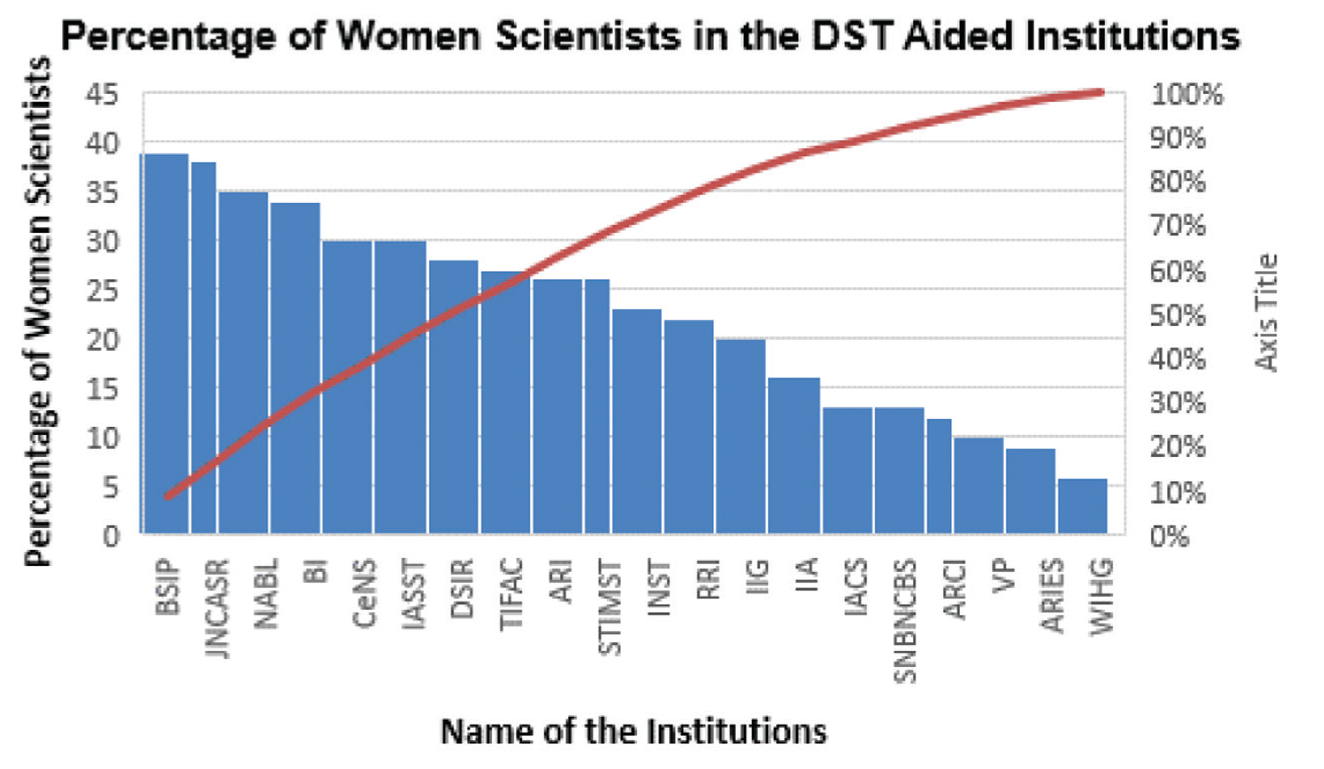
The data presented in Figure 1 also indicates that institutions such as the Birbal Sahni Institute of Palaeosciences (39 per cent), the Institute of Advanced Study in Science and Technology (30 per cent), the Bose Institute (34 per cent), the National Accreditation Board for Testing and Calibration Laboratories (35 per cent), the Sree Chitra Tirunal Institute for Medical Sciences and Technology (26 per cent), and the Jawaharlal Nehru Centre for Advanced Scientific Research (38 per cent)—which is primarily focussed on research in the fields of biology, plant science, and medicine—have approximately 35 per cent of women scientists. In contrast, institutions like the International Advanced Research Centre for Powder Metallurgy and New Materials (12 per cent), the Aryabhatta Research Institute of Observational Sciences (9 per cent), the Wadia Institute of Himalayan Geology (6 per cent), the Indian Association for the Cultivation of Science (13 per cent), and the S. N. Bose National Centre for Basic Sciences (13 per cent)—which is more oriented towards engineering, astronomy, astrophysics, atmospheric sciences, and mathematics—have fewer than 15 per cent women scientists in their workforce.
Women’s exclusion from disciplines of natural sciences is premised on power structure as the core principle of scientific endeavour. While there is an increasing proportion of women in scientific positions and R&D establishments, analysis of the workforce participation of women scientists and technologists depicts underrepresentation in various STEM disciplines and institutes (Bilimoria & Liang, 2012).
Professional Recognition of Women Scientists in the STEM Field
Bilimoria and Liang (2012) noted the work of Stewart and LaVaque-Manty (2007) which states that the issue of underrepresentation of women in science is itself subjected to diverse interpretations that include tenure status, professional position, and leadership opportunities. While expanding this concept in the Indian context, authors have included another dimension, that is, professional recognition of women scientists in the scientific life. The Shanti Swarup Bhatnagar Award, considered one of the measures of a successful scientific career, has very few women recipients.
The data presented in Table 1 shows that out of 587 awardees until 2022, only 19 are women. The current data trend finds resonance with the findings of past studies on the underrepresentation of women in awards and other recognitions (Bal, 2005; Kurup et al., 2010; Subramaniam, 2007). Numbers across disciplines reveal the presence of a glass ceiling when it concerns receiving prestigious awards and recognitions by women scientists (Mascarenhas, 2023). Bal (2005) states, ‘in the entire history of the Bhatnagar awards, very few women have been considered worthy of the award in any field of science’ (p. 877). Past research and data reveal a substantial gender gap in engineering and physical sciences which ultimately contributes to women’s overall underrepresentation in STEM across countries (Bilimoria & Liang 2012; Sharma et al., 2019).
Women-Scientists as Recipients of Shanti Swarup Bhatnagar Award (1958–2022).
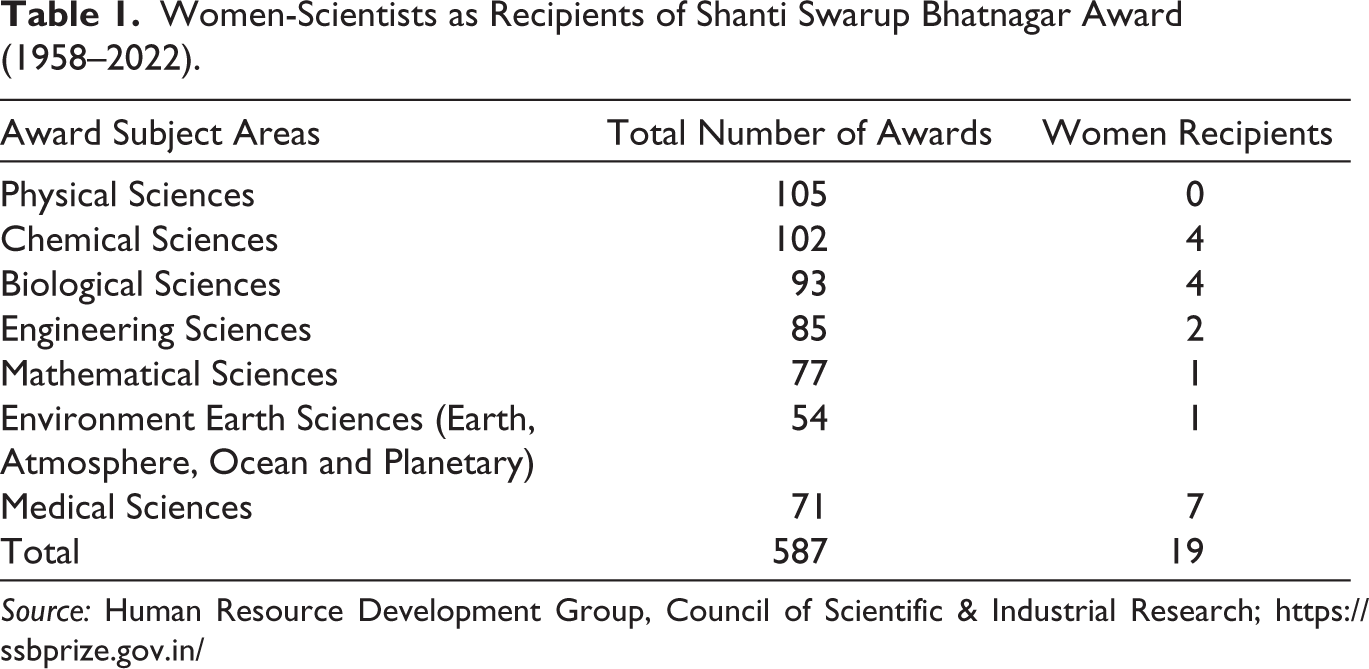
Source: Human Resource Development Group, Council of Scientific & Industrial Research;
Indian Science Academies’ Fellows
Three academies, Indian National Science Academy (INSA), National Academy of Sciences (NASI), and the Indian Academy of Sciences (IASc) instituted fellows in core and allied disciplines of natural science. Table 2 provides gender-disaggregated data on fellows elected by the three science academies till 2022. The overall figure depicts a similar view of science as a field of knowledge production, which is heavily dominated by men.
Under IASc, only 97 women scientists have been elected as fellows till the year 2022. Similar data trends are observed for elected women fellows under INSA and NASI which accounted for less than 10 per cent of total elected fellows under the three academies.
Table 3 presents gender-disaggregated data on the World Academy of Sciences (TWAS) fellows till 2015. Out of a total of 1,138 elected fellows, only 117 were women scientists. Only 15 women scientists from India were elected as TWAS fellows compared to 222 male scientists. The data reiterates that in India the participation of women in science has become visible in recent decades but their presence in science scholarship remains invisible in the history of science (Sur, 2011).
Gender-Wise Composition of Fellows till 2022.
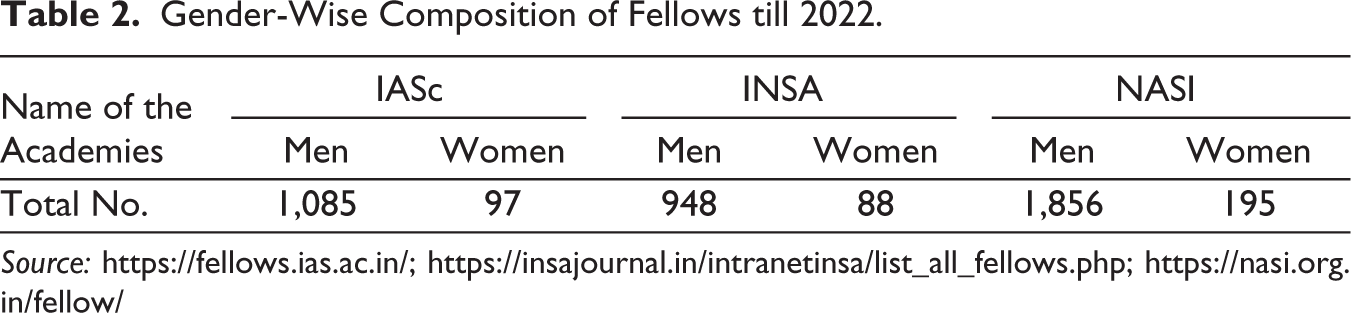
Source:
Gender Distribution of TWAS Fellows.
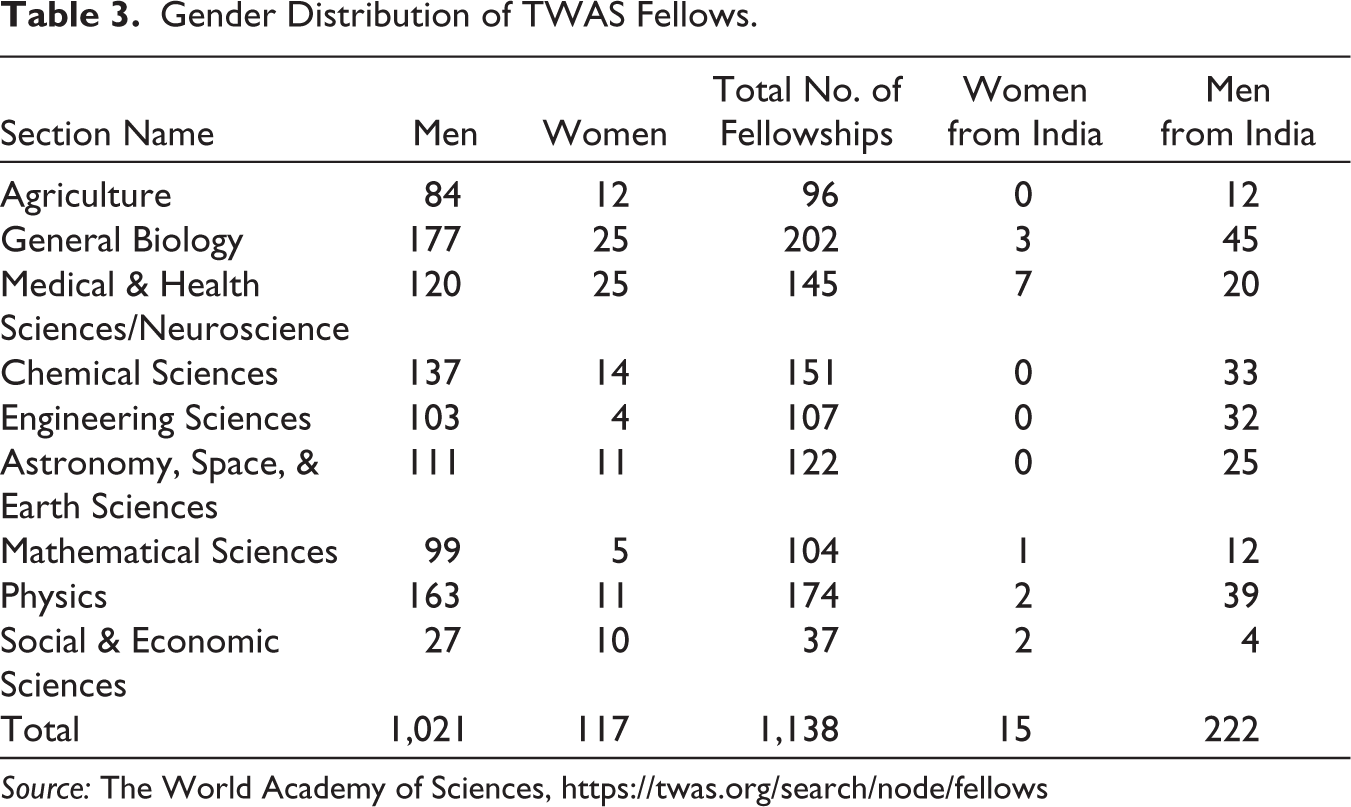
Source: The World Academy of Sciences,
Workplace Climate Assessments: Individual Experiences
The phrase ‘workplace climate assessment’ is inferred from the work of Bilimoria and Liang (2012). They undertook a study of 19 institutions in the US to carry out an assessment of the macroclimate (university) and microclimate (department) of their workplace for women faculty and other minorities. In the present study, we have used ‘workplace climate’ as an indicator to understand the microclimate or realities of the workplace using the experiences of individual faculty. This indicator is used in a limited sense in this article to be able to reflect upon some of the constraints or barriers faced by women faculty in various professional spaces within the institution.
One of the scientists participating in the present study reflected upon the exclusion of women from science in her doctoral research. She shared her experience of working in the area of feminist science studies which enabled her to understand the need for women’s inclusion in science.
Case Note (CN) 1: This scientist was teaching chemistry in an undergraduate college and pursuing doctoral research in feminist science studies in the discipline of chemistry. She shared that it was difficult to convince her supervisor about the topic of her research since he worked on core science subjects. However, she was firm to work in this area as she felt she should take up a topic that could bring some difference to the practice of doing science. She decided to interrogate the practice of science from a feminist epistemological position which was never taught in science disciplines.
This case note describes the importance of feminist scholarship in science. The absence or exclusion of women from science cannot be addressed only by reflecting the gender differences in scientific and technical careers. The above case note reflects that once women scientists occupy the position of decision-making, they engage with critical issues pertaining to science culture and practice in contemporary times. She shared that she faced subtle resistance in her own discipline for taking up a research topic that does not deal with ‘core or experimental science’. She collected data from different research laboratories and interpreted the culture of doing laboratory science from a gender perspective. It had been a challenge for her to work on an interdisciplinary topic intersecting chemistry and feminist science as it requires more of feminist readings. Her peers and colleagues often thought that she was working on a ‘non-science research area’.
In another case (CN2), the scientist was from the discipline of biochemistry. She worked in the division of drug discovery and development. She participated in the leadership programme because she wanted to learn about leadership qualities to lead any division as a woman scientist. She suggested the importance of conducting training sessions on gender issues, science literacy, communication skills, and mentoring for her women students. She shared the difficulties of organising training programmes/workshops on leadership, mentoring, and networking among women in science as these are not related to core or allied disciplines of natural science. These case notes indicate a subtle division that plausibly exists between ‘scientific research’ and the research area which is not considered to be scientific and point towards a specific form of differentiation which women scientists face within their peer community if they choose to work in areas not aligned with the mainstream science disciplines or laboratory research.
Research participants in an FGD conducted during the training sessions shared how they were discouraged by their peer community in the scientific organisation to participate in awareness/leadership training programmes designed for women science managers. One of the research participants shared about administrative apathy to organising sensitisation workshops for women students in science disciplines. These are unique challenges faced by women managers/scientists or technologists in science with regard to areas in scientific research vis-à-vis social science research. These are specific experiences of women scientists reiterating the underlying gender inequity in the microclimate of institutions which were even cited by earlier researchers that ‘there may be paradigms embedded or hidden in the practice of science that contribute to gender inequity’ and for women scientists to become different means to ‘become lesser’ (Shastri et al., 2013, p. 107; Sur, 2011, p. 181).
Women, Science and Leadership: Issues of Contestation and Change
Despite national efforts and initiatives, women in science careers and professions face a host of barriers and one such obstacle includes lesser opportunities for leadership (Gupta et al., 2015; National Science Board, 2003, as cited in Settles et al., 2007). Our primary data reflects on leadership issues among women scientists in relation to the workplace climate. Given the centrality of this theme, feminist scholars Bennett and Robinson (1992) state that the vision and goals of institutions need to be aligned with the daily lives of the faculty who work in the microclimate of every institution including departments and programmes (as cited in Settles et al., 2007, p. 272).The workplace environment is a critical aspect of women’s leadership within any scientific organisation.
One of the significant issues that came up during the FGD was how women scientists at different stages of their career addressed the critical question of leadership. Three research participants who were pursuing their doctoral degree stated that publishing their research papers in indexed journals is the only way to disseminate their work. They shared, along with bringing out publications, their participation in workshops and conferences enabled them to survive in science academics. As young leaders in science, they are mapping their career paths by publishing their research. The career path for them is more structured compared to scientists who are in the middle level of science academia, management, and administration. The majority of respondents at the middle-management level shared that their roles are not only limited to publication and research, but involve diversity in academic and administrative activities. Research studies resonate that leadership issues in the scientific institutions are linked to the overall environment of the department (Settles et al., 2007). Consider CN3:
The woman scientist shared her struggle to acquire the required academic weightage in male-dominated institutes. Sometimes, it was difficult to become a part of any project/course team or committee. Information about outside consultancy was shared within a particular team or with a select group of people. Administrative and research freedom is lacking in institutions. Networking, mentorship, and mobility are certain structural barriers which women scientists encounter in scientific institutions. She shared that she did not face problems related to work-life balance but believed that women in science need to make choices on how to manage their careers and professional work. She works in the area of bio-informatics; therefore, she targets to publish one paper in a year while keeping in mind the impact factor of the journal.
Such narratives highlight the workplace challenges of women scientists in daily life. As Bilimoria and Liang (2012) note, the work culture in science academia ‘is essentially an individual profession, with individualised results and rewards’ (p. 39). Past research in India suggests that gender inequities and uncongenial work climate in institutions may have adverse ramifications for women scientists in their careers (Kurup et al., 2010, p. 10; Gupta & Sharma, 2009, as cited in Kurup et al., 2010). Women scientists who are in their early careers define leadership in relation to their research. They shared that women scientists at entry level are aware of the struggles or situations of women in academics; therefore, they are prepared to navigate their careers well. At the time of PhD, they focussed on the publication of their research in journals having experimental impact factors. On the other hand, for women scientists at the middle-level management, leadership question delves deep into their struggles and negotiations at the workspace. They constantly balance between multiple job responsibilities to perform competently in relation to their career. One participant said that she joined the university as an assistant professor and was given the charge of heading the department for an interim period of about 6 months. There were challenges in the department to acquire professional credits and to prove that women scientists are effective leaders in administrative capacities.
The interrelationship between women in science and leadership questions invokes many complex issues such as structure of the workplace and the nature of work culture which originate from ‘particular sets of beliefs held by (predominantly male) faculty and administrators’ (Bilimoria & Liang, 2012, p. 39) in scientific institutions and organisations. In support of the above assertion, one respondent shared her experience as a scientist in a research institute. She was not part of the research project on ‘river front development’ which is part of her research domain. Instead, she was kept on the RTI committee. Further, not a single woman was put on the renovation committee which looks into development of institutional infrastructure which needs to be gender inclusive in nature. Women scientists point towards the existing gender inequity that is subtly operating within the working culture of scientific institutions. On the other hand, another participant observed that in her institute, women handled projects independently and published as single authors. She shared that in the absence of a team, she faced specific challenges pertaining to project management. Since there are very few women scientists in some research institutes, they often work in isolation.
Women wishing to work and grow in science-based professions continue to face obstacles pertaining to ‘institutional governance’ (Godbole et al., 2002, p. 360), institutional climate, and the culture of scientific work which are found to be governed by men (Ellis, 2003; Gupta & Sharma, 2002). Women scientists in research establishments have resorted to their individual way of organising the scientific work to be able to advance in a working culture where there is less representation of women in scientific positions. Some respondents have stated that there are only a few women in scientific positions in their institutions; therefore, women often face challenges due to isolation. Since women are not represented in large numbers in many scientific research institutes, there is also an absence of the culture of communication, networking, and group formation among women scientists within the professional space. The physical structure of a scientific establishment, the lesser representation of women scientists in the workplace, and the nature of scientific work to be carried out in laboratories have significantly contributed to women’s seclusion in science (Dhal, 2018; Ellis, 2003; Gupta & Sharma, 2002).
Is Leadership a Concern for Women in Science?
Past research suggests that science as an institution and scientific organisations are inherently gendered in nature which in turn makes it more challenging for women progressing towards leadership positions considering their potential (Ellis, 2003; Jaiswal, 1993, as cited in Gupta & Sharma, 2002). Some of the inevitable challenges faced by women in science leadership include limited mobility for women, concern of articulation or science communication among women scientists, lack of team building, issues of safety in the absence of gender-enabling infrastructure at work, and a lack of critical mass of women scientists. Mentoring and networking are identified as two significant dimensions of any leadership position for women in science in India. Workshops focusing on mentoring, networking, and leadership of women scientists provide a platform to share their experiences of subtle discrimination and isolated struggles in the academic life. Two of the scientists who worked in the area of ‘drug discovery and development’ shared their experiences of developing negotiation and networking skills for carrying out research in the department and becoming self-dependent in academic life. One of them shared that her department was not supportive regarding delegation and facilitation of administrative and research work. To overcome these barriers, she approached different agencies expressing her research interests. She encouraged and mentored her women students to participate in conferences in order to gradually deal with mobility issues in their science careers. A similar experience was shared by another research participant, a dairy technologist. Initially, she was the only woman technologist in the department. In the beginning of her career, she faced enormous challenges with labour management. Supervisors and workers were not familiar with taking instructions from a woman boss. Since, it was a field-based work, infrastructures such as separate washrooms or rooms for women and opting for night shift were issues of concern. It was a challenge for her to perform in the male-dominated work culture.
Such case narratives demonstrate women’s ability for self-efficacy while dealing with leadership related issues in the workspace. Studies have found that women who were self-confident in their abilities to navigate their organisation’s political landscape and balance different roles in their social spaces reported to be satisfied in their jobs and careers (Fouad & Singh, 2011, as cited in Bilimoria & Liang, 2012). It is not possible for all the women scientists to become leaders in their respective institutions, but they mentor or provide encouragement in creating women leaders in science for the future. Other research participants attached to the government and private universities stated that innovative institutional space, supervisor as mentors, and their accessibility to women scientists’ schemes have played significant roles in their careers to emerge as leaders in science in their own ways. Many research participants agreed it was important for women to take up leadership responsibility in the laboratory and the department—‘women need to think beyond the routine work’. One participant stated that on becoming the warden of the hostel, she insisted on the provision of a sanitary napkin incinerator in the hostel. Further, she addressed the practice of having only one woman scientist in interview committees for doctoral research as it may impact the selection of women candidates for doctoral programmes.
Apart from individual efforts, institution-led initiatives play a key role in promoting women’s leadership in science. In this connection, a research participant from the Department of Health Sciences shared her experience. She teaches in a university which encourages women to have academic freedom. She created specialisations such as ‘paediatrics’ and ‘community healthcare’ and worked independently to develop these streams in her department. She started a clinic and formed a team with her PhD scholars to run an outdoor patient department at her university. Through these narratives, it can be inferred that women developed their own ways of defining leadership skills in science. They learnt to negotiate with the structure of the organisation and also have voice and agency for having a gender-neutral space within the male-centric disciplines of natural science. One faculty member shared the supportive role played by an incentive-based award system followed by her university. She said faculties were honoured for the best research paper and received a cash amount too. These initiatives motivate women faculty to present the research work and compete for awards in a fair manner. On the other hand, some institutions have developed an internal appraisal system for faculty evaluation and promotion.
There are gender-based structural barriers at the microclimate of the institutions which many women scientists face in everyday life. Another research participant working at middle-level management shared her experiences of how a woman scientist working for the implementation of women-specific programmes can herself be discriminated. She elaborated, ‘It was my passion to work in the area of women and science. I helped develop many need-based national and international gender equity programmes. I faced overt discrimination at the workspace. I was frequently transferred and suffered mental agony’.
Women scientists sometimes engage themselves with critical questions and try to find a way forward for bringing gender parity in institutions. Challenges are more with how to fight patriarchy at various levels across organisational spaces. During the group discussion, one respondent shared her experience of negotiating subtle forms of patriarchy that operates in her department. She was assigned the most difficult student as a research associate. She thought of many ways to handle the person in a more productive manner. Also, she now feels that he is the best student to work with her, and he has taken up gender-related issues in a proactive manner within the institutions.
In a group discussion, some respondents mentioned that women who think outside the box are perceived as a threat though they only want to pursue time-bound work. These are ways in which women scientists pose their identity as strong professionals in the workplace. Some scientists were of the view that some of the issues, like how to manage the workplace climate, need to be given importance in the capacity building programmes for women scientists.
Discussion and Conclusion
The underrepresentation of women in science across societies in terms of their participation in higher education and in institutional structures is evident from various research studies (Bilimoria & Liang, 2012; Hussenius et al., 2016; Sahoo & Klasen, 2021). ‘The issues of gender underrepresentation and inequities in organisations received attention from researchers and practitioners alike, and their manifestations and causes have been well studied’ (Ely & Meyerson, 2000; Meyerson & Kolb, 2000, as cited in Bilimoria & Liang, 2012, p. 6). In recent years, gender-inclusive policies attempted to increase women’s participation in science education and profession in India and across the world; however, this policy change needs to rethink about addressing systematic gender inequity issues within STEM fields, that is, to uncover the subtle or latent disparities which exist in the workplace between women and men faculty concerning women’s participation and access to decision-making process and leadership positions. There has been a change in contemporary situation of women engaged with science. However, the phenomenon of gender scarcity, segregation, and women’s invisibility in science are stark realities of both developed and developing worlds (Kumar, 2012). To cite Kumar (2012, p. 22): ‘Access of females to science, their enrollment into it has improved remarkably, yet gender inequality in various forms remains pronounced’.
The primary data suggests that women scientists and managers at the middle-management level engage with critical issues pertaining to the culture and practice of science in diversified institutional spaces. They have made an effort to raise their voices on matters related to gender inequity, working in isolation, challenging institutional governance, and the need for institutional transformation at the micro-level of the organisations. As part of the Gender Advancing Through Transforming Institutions (GATI) charter, institutions in India need to deeply engage with the central issue of advancing gender equality by encouraging women in leadership roles, sustaining institutional support structure for women, and initiating systemic and cultural changes across all levels of the organisations.
Yet, the research confirms that there are perennial challenges that subtly exist in the structure of various scientific institutions. It reaffirms the existing literature which argues that structure, culture, and the practice of science are masculine in nature which continuously pushes women to the periphery (Gupta & Sharma, 2002). There is a data gap in undertaking gender mapping of various departments, universities, and institutions in India. In-depth research is required with regard to exploring the numerical strength of women in various organisations and their distribution across different levels. There are many individual strategies that women scientists are building to climb the professional ladder, manifesting their academic credentials in the academic space.
Different nature of support systems for women in science may be encouraged by institutions to create women leaders in the field of science. The first step is to sensitise more women about barriers in the academic life of women scientists. The training programmes on leadership and capacity-building practically help in building up a network of women scientists who share similar experiences or barriers at workplace. It is important to create a gender-enabling environment in institutions to make the work climate women-friendly at all levels of the institutions (Gupte et al., 2002). Institutions could initiate change by designing career development programmes for developing effective communication skills and writing style, particularly acquiring skills on proposal writing, creating atmosphere for team building and research collaborations, and developing mentorship programmes focusing on creating opportunities for networking and role models for future generation of women scientists (Gupta et al., 2015; Gupte et al., 2002; Kurup et al., 2010; Subrahmanyan, 1995). Leadership and mentoring are continuous processes in which engendering can happen through sensitisation and research.
Footnotes
Declaration of Conflicting Interests
The authors declared no potential conflicts of interest with respect to the research, authorship and/or publication of this article.
Funding
The authors received no financial support for the research, authorship and/or publication of this article.