




Abstract
The novel corona virus pandemic has influenced people buying behaviors. Due to the significant psychological and behavioral impact of COVID-19 on society, this study aimed to examine the determinants of panic buying behavior and a resultant psychological outcome in the form of a sense of security. The purpose of this study is to investigate the effect of COVID-19 caller ringback tone (CRT) experiences, that is, informational and stimulation experience, on the panic buying behavior and how rumors moderate this relationship. This research is quantitative and uses a purposive sampling method to collect the survey-based data from 264 respondents. The researchers analyzed the data using Partial Least Square Structural Equation Modeling (PLS-SEM). The results of data analysis indicated that the informational and stimulation experience of COVID-19 CRT had a significant influence on panic buying behavior which further resulted in a sense of security in public. This study could not find evidence of the moderating role of rumors in the relationship between COVID-19 CRT experiences and panic buying behavior. The findings highlight the role of the COVID-19 CRT in causing panic buying behavior and resultant psychological outcome and thus provide implications for policymakers on the control of panic buying under COVID-19.
What do we already know about this topic?
COVID-19 has influenced public thinking patterns and behaviors; however, little is known about the effect of COVID-19 Caller Ringback Tone on the public panic buying behavior and resulting psychological outcomes.
How does your research contribute to the field?
The results of data analysis indicated that informational and stimulation experience of COVID-19 CRT had a significant influence on panic buying behavior which further resulted in a sense of security in public, whereas this study could not find evidence of the moderating role of rumors between the relationship of COVID-19 CRT experiences and panic buying behavior.
What are your research’s implications toward theory, practice, or policy?
The findings highlight the role of the COVID-19 CRT in causing panic buying behavior and resultant psychological outcome. It provides implications for policymakers on the control of panic buying under COVID-19 as well as improves preparedness for future pandemics.
Introduction
The global outbreak of COVID-19 has adversely affected the healthcare infrastructure and the quality of people’s life. 1 In addition to affecting the healthcare system, COVID-19 also influenced human behaviors. 2 For instance, hashtags related to COVID-19 on social media platforms caused panic buying behavior among the general public. 3 Such panic behavior led to an increase in sales of online groceries by 51.5% in the UK compared to pre-pandemic time. 4 Many people suffered from anxiety and stress due to empty shelves in supermarkets that was caused by consumer panic buying behavior during the COVID-19 pandemic. 5 Apart from the severe effect on individuals, panic buying behavior also resulted in increased pressure on supermarkets and suppliers around the world. 2 According to one study, people tend to decrease the uncertainty caused by the COVID-19-related information by adopting preventive behaviors. 6 In other words, information and practical advice regarding COVID-19 acted as a catalyst for panic buying behavior. 2 Hence, an investigation of the role of media platforms in enhancing panic buying behavior would enable policymakers in the cautious and planned use of such information disseminating platforms.
One important tool of information dissemination is the caller ringback tone (henceforth CRT) which is used in a number of countries, including Pakistan, the United Arab Emirates and India. Specifically, Pakistan Telecommunication Authority (PTA) directed all cellular service providers to alter their standard CRT with COVID-19 preventive message. This COVID-19 CRT is akin to public service announcements which aim to spread awareness regarding preventive measures.7,8 Though health-related public service announcements affect consumer actions, such messages can also evoke experiences, including informational and stimulation, that can cause fear in public and change their attitude. 9 Furthermore, COVID-19 CRT can cause information overload that can result in increased anxiety and confusion among the public. 10 Though existing evidence suggests that panic buying behavior is a negative irrational behavior, little is known about the effect of COVID-19 CRT-based experiences on panic buying behavior. In addition, existing research on panic buying behavior is spread across multiple unrelated disciplines with few studies in the context of a pandemic.
Recent developments in the global healthcare landscape heightened the need for research on buying behavior at the time of the pandemic. A considerable amount of research has investigated panic buying behavior. These studies examined where and when panic buying behavior occurs, 11 social determinants of panic buying behavior, 3 ways to prevent panic buying, 12 and effects of national culture on the extent of panic buying. 13 Although extensive research has been carried out on panic buying behavior, no single study exists that examines the role of informational experience and stimulation experience of COVID-19 CRT on panic buying behavior and how such behavior leads to psychological reactions, including the sense of security. We propose that the informational and stimulation experience of COVID-19 CRT will enhance panic buying behavior which subsequently results in a sense of security in public. In addition, no research has been conducted on the moderating role of COVID-19-related rumors in enhancing panic buying behavior among the public. Literature is silent on the moderating effect of crisis-related rumors on the relationship of people’s experiences with their reactions to experiences. Rumors are a natural outcome of any crisis situation. 14 However, knowledge regarding rumors role in enhancing panic buying behavior during the COVID-19 pandemic is particularly limited. Greatly needed is research on how people react to COVID-19 CRT in the presence of rumors. It is important to investigate the antecedents of panic buying behavior which has its roots in herd mentality. 15 Panic buying behavior causes negative consequences such as aggressive in-store behaviors, hoarding, shop raiding, and stockpiling. 16 Retailers try to control such irrational behavior by introducing limits on products sold. 17 Specifically, the pharmacy retailers are subjected to inappropriate and irrational panic buying behavior to which they respond by rationing over-the-counter medicines. 16 A study of the role of COVID-19 CRT-based experiences in driving panic buying behavior would enable policymakers in predicting and controlling such negative behavior.
This study contributes to the literature by answering the following questions: What is the impact of the informational and stimulation experience of COVID-19 CRT on panic buying behavior? How do rumors moderate the relationship between people’s experiences of COVID-19 CRT and panic buying behavior? Does panic buying behavior result in a sense of security? By answering these questions, this study seeks to achieve the following research objectives: (a) to examine the role of COVID-19 CRT in enhancing panic buying behavior among the public; (b) to investigate how COVID-19-related rumors influence the relationship between people’s experiences of COVID-19 CRT and panic buying behavior; and (c) to examine the role of panic buying behavior in enhancing the sense of security in public.
In light of stated important research gaps, the goal of this study is to empirically investigate how people react to COVID-19 CRT in terms of panic buying behavior and what happens as a result of such behavior. In doing so, this study makes several contributions to the literature in the area of health care and public welfare. First, this study provides an initial investigation into the under-researched areas of customer experience with COVID-19 CRT, measured in terms of stimulation and informational experiences. Specifically, this study examines the impact of stimulation and informational experience on panic buying behavior. Previous research on panic buying behavior has focused primarily on government policies, excessive and missing information, stressors, such as queuing and crowding, and disordered use of the internet as drivers of panic buying behavior.10,18-21 Our study expands on this by examining the impact of stimulation and informational experience of COVID-19 on panic buying behavior. Second, we examine whether and how rumors interact with people’s experience of COVID-19 in causing panic buying behavior. Third, we investigate whether panic buying behavior results in a sense of security. This issue has yet to be examined in the context of the COVID-19 pandemic. An understanding of this relationship is especially important for policymakers as this will highlight the outcome for which people resort to panic buying behavior. Creating a sense of security in public may reduce their propensity of behaving in panic during a crisis. Our study also has important implications for policymakers because policymakers need to understand how to reduce panic in public. Reducing information and stimulation caused by the COVID-19 CRT can result in reduced panic buying behavior in people. Furthermore, enhancing a sense of security in public may also reduce panic buying behavior.
The next section of this paper presents a review of the literature and hypothesis development. This is followed by an overview of the research methodology used to collect and analyze the data, and the findings of the study. Next, a discussion of the results is given. The paper concludes with a discussion of the theoretical and managerial implications arising from this study, the limitations of the study, and future research directions.
Theoretical Background and Hypothesis Development
COVID-19 Caller Ringback Tone Experience
In marketing, experience has been considered a key concept that has relationships with other concepts such as brand loyalty,22,23 satisfaction,24,25 and brand equity.26,27 Customer experience is a customer’s cognitive, emotional, behavioral, sensorial, and social responses to a firm’s offerings during the customer’s entire purchase journey. 28 Scholarly work on the concept of customer experience began in the late 1990s, which specifically focused on examining the value of customer experience for consumers and firms.29-31 For instance, researchers examined the phenomenon of consumption as an all-inclusive phenomenon that entails a consumer who intermingles with the company, brands, products, or other offerings throughout his/her interactive journey.32,33 In recent years, there has been an increasing amount of literature on the phenomenon of experience in varied contexts such as human resources, 34 education, 35 psychology, 36 information systems, 37 technology, 38 and media content.39,40 Although extensive research has been carried out on experience construct, no single study has investigated the role of experience in the context of health care and affiliated behaviors.
Traditionally, it has been argued that customer experience involves thoughts and feelings on interactions with certain objects. 41 Thus, experience with CRT represents consumers’ feelings and thoughts evoked when consumers interact with CRT while making a call using their cell phone. There is a consensus among marketing scholars that consumer experience is a multidimensional construct consisting of facets such as sensory, affective, cognitive, and behavioral dimensions of experience. 28 However, the extant literature suggests that experience is a context-specific phenomenon whose dimensions vary with the context. 41 This study conceptualizes experience with CRT as a multidimensional construct consisting of two dimensions that represent consumers’ feelings and thoughts, including information and stimulation. 42 Information refers to finding relevant events and conditions in immediate surroundings. 42 Stimulation refers to the excitement and enthusiasm toward a stimulus. 43 While some research has been carried out on consumer experiences in the context of media,42,43 there is very little scientific understanding of consumer experience with COVID-19 CRT and its outcomes.
Panic Buying Behavior
COVID-19 has brought changes in people’s behavior where people have shifted toward panic buying, impulsive buying, compulsive hoarding, retail raiding, stockpiling, and aggressive in-store reactions.16,44,45 Panic buying behavior refers to the act of buying unusually large amounts of merchandise due to a forecast of supply disruption caused by a severe disaster or crisis. 46 Panic buying behavior is a product of a postmodern culture that places more importance on personal gains over collective gains, and this practice can cause social problems. 47 Specifically, in developing countries, people start competing for limited resources when they learn that they have to live under conditions of scarcity. 48 During the COVID-19 pandemic, people relied on alternative media such as social media, word-of-mouth, and independent websites. 10 Alternative media can amplify the spread of official media news and lead to increased confusion and anxiety among the public. 10 The mixed messages transmitted through varied news channels, the prevailing ambiguity among people, fear of lockdown, and imagery of empty shelves in retail outlets on social media cause panic buying in people and lead them to behave irrationally.49,50 Table 1 presents the drivers and outcomes of panic buying behavior. Table 1 suggests that a considerable amount of literature has been published on drivers of panic buying behavior; however, there are few studies on the consequence of panic buying behavior. Furthermore, extant research on the drivers of panic buying behavior has focused on anxiety and stress arising from the environment and has not dealt with customer experiences with media as an antecedent of panic buying behavior.
Antecedents and Outcomes of Panic Buying Behavior.

COVID-19 CRT can be a source of informational experience for people. 22 Informative experience of COVID-19 CRT is goal-based and rests on how CRT provides functional information that can help in goal fulfilment.58,59 An informative experience of COVID-19 CRT may motivate consumers to act irrationally out of fear of scarcity. 10 COVID-19 CRT provides information about how serious this pandemic is and how to avoid getting infected. On the other hand, COVID-19 CRT is experienced by the masses and thus can result in herd mentality and mass behaviors, including panic buying behavior. This logic suggests the following hypothesis:
Existing media studies suggest that stimulating experience with media content can result in excitement and enthusiasm.60,61 In other words, a message that is exciting and evokes enthusiasm is considered stimulating. 43 Recent evidence suggests that stimulation caused by media news can result in behavioral responses in people.62,63 That is to say, the stimulating experience of COVID-19 CRT can motivate people to take action. People experience high energy and a desire to act quickly due to stimulation caused by the media content. 64 Extant research on political messages indicates that messages that evoked enthusiasm resulted in stimulating interest and desire to get involved in political activities. 65 Therefore, the authors propose the following hypothesis:
Rumors
More recently, literature has emerged that offers findings about moderating factors in driving panic buying behavior. These studies examined retailer interventions, perceived lack of control, gender, and online news verification as moderators.51,53,54 However, few writers have been able to draw on any systematic research into moderating the role of rumors in driving panic buying behavior. Rumors are a natural by-product of any crisis situation. 14 The COVID-19 outbreak is unique and different from previous pandemics in the way that COVID-19 was subjected to rumors, conspiracy theories, and misinformation. 14 It is owing to rumors and misinformation that COVID-19 is termed the first infodemic the world experienced. 66 Rumors refer to information that is unverified and not based on facts. 67 Rumors satisfy the public’s information-based needs by enabling them to develop an understanding of the ambiguous environment and facilitating them to fight negative emotions such as uncertainty, fear, and anxiety. 68 Several studies thus far have linked misinformation and rumors with media messaging. 69 Rumors related to COVID-19 on social media enhanced panic and fear among the public and fueled panic buying of products, which negatively affected the supply chain and increased food insecurity among the public. 70 In other words, rumors can be a catalyst for panic buying behavior. Based on this discussion, it can be hypothesized that:
Sense of Safety
COVID-19 created challenges for people that resulted in the uncertainty of life, shaking people’s sense of safety and security. 70 Sense of safety refers to people’s perceptions of danger when interacting with a specific object and the level of comfort during the interaction. 71 COVID-19 enhanced the severity of the perceived threat to people’s physical and psychological well-being, which motivated them to undertake protection behavior. 72 Stressful situations, such as health disasters and wars, enhance the need for safety and security, and people ensure their security by taking actions, including panic buying. 2 Recently investigators have examined the effects of panic buying behavior on the sense of security and safety. 51 However, the sense of safety has not been Extant research does not take account of media experiences in the framework nor does it examine the moderating effect of rumors in the framework of driving sense of security and safety through panic buying behavior. Previous studies have reported that people engaged in behaviors such as panic buying and stockpiling of food, toilet paper, pharmaceuticals, and other goods to secure themselves.73,74 This leads to the following hypothesis:
Conceptual model is presented in the Figure 1.

Conceptual model.
Methods
Research Setting
Since this study is mainly looking at panic buying behavior during the COVID-19 pandemic, data were collected from the people who were involved in buying the grocery items during the COVID-19 time. Data were retained from individuals for analysis who were responsible for the grocery purchase because they went through the panic during the COVID-19 pandemic while making any purchase.
Measures and Questionnaire Development
For measuring the selected variables for this study, tools were adapted from the existing studies. The tool for panic buying behavior was adapted from the study of Lins and Aquino, 75 and it was measured through 7 items. Sense of Security was measured through a 4-item scale which was adapted from Prentice et al, 51 Shamim et al, 76 and Archer et al. 77 Ariel et al’s 78 3-items scale was adapted for measuring rumors about COVID-19. Information and stimulation experience of COVID-19 mobile ringtone were measured through 4-items and 6-items respectively and the tool was adapted from Calder and Malthouse 43 and Malthouse et al. 79 Finally, the marker variable was measured through a 3-item scale and was adopted from the study of Miller and Simmering. 80 All items were measured on a 5-point Likert scale.
Age, monthly income, gender, level of education, and frequency of buying groceries were taken as control variables. The survey was conducted in English. Smart PLS was used for the purpose of data analysis.
Sample and Data Collection Procedures
An online cross-sectional survey was conducted to test the proposed hypotheses. Google Doc. was used for the collection of data as it is considered a cost-effective and reliable source for the said purpose. 81 Marker variable was used to assess the common method variance. For the sake of sample selection, researchers used purposive sampling as it helps in looking for representative cross-sections, or specific groups to be recognized and targeted. 82 Household members responsible for buying groceries and aged above 18 years were targeted as the sample for this study. A total of 264 responses were received out of which 14 responses were removed for being outliers. The demographic profile of the respondents is provided in the results section.
Estimation Method
To assess the hypothesized relationships between constructs, we employed Partial Least Structural Modeling (PLS-SEM) approach. PLS-SEM is considered an appropriate technique when the goal of a study is to find prediction-based relationships, for example, prediction of panic buying behavior and sense of security. 83 We used statistical software SmartPLS 3.2.8 to analyze the data in this study. PLS-SEM also produces accurate estimates even if the data is not normally distributed. 84
Results
Socio-Demographic Characteristics of Study Participants
During the 3-week data collection period, a total of 264 respondents completed the survey. Fourteen outliers were removed from the data, resulting in a final sample of 250. Table 2 presents the socio-demographic characteristics of respondents. The majority of respondents were male (88%). Most of the respondents were in the age range of 31 to 40 years (39.2%). Around half (50%) of respondents had 16 years of education and more than 37.2% of the respondents’ monthly income was between PKR 80 000 and 100 000. The majority of respondents (46%) reported buying groceries twice a month.
Respondents’ Demographic Characteristics.

N = 250.
Assessment of Common Method Variance (CMV)
We examined the existence of common method variance using a 3-item measured latent marker variable (MLMV). We ensured that the latent marker variable had no theoretical relationship to the variables included in our study. Results revealed that the latent marker variable did not increase the R 2 value significantly (<10%), thus indicating a lack of common method variance. 85
Assessment of Measurement Model
The reflective measurement models were estimated to examine the factor loadings, construct reliability, and validity. Assessment of construct reliability was undertaken using Cronbach’s α and composite reliability values. 84 The result showed that all Cronbach’s α and composite reliability values were higher than the threshold of 0.70 (see Table 3), hence meeting the recommended criteria of reliability. 85 We examined the factor loadings and average variance extracted (AVE) values of each construct to determine the convergent validity. The results revealed that most of the factor loadings were greater than 0.7 with few loadings greater than 0.6, whereas the AVE values exceeded 0.50 (see Table 3), thus indicating an acceptable convergent validity. 84
Construct Reliability and Convergent Validity.
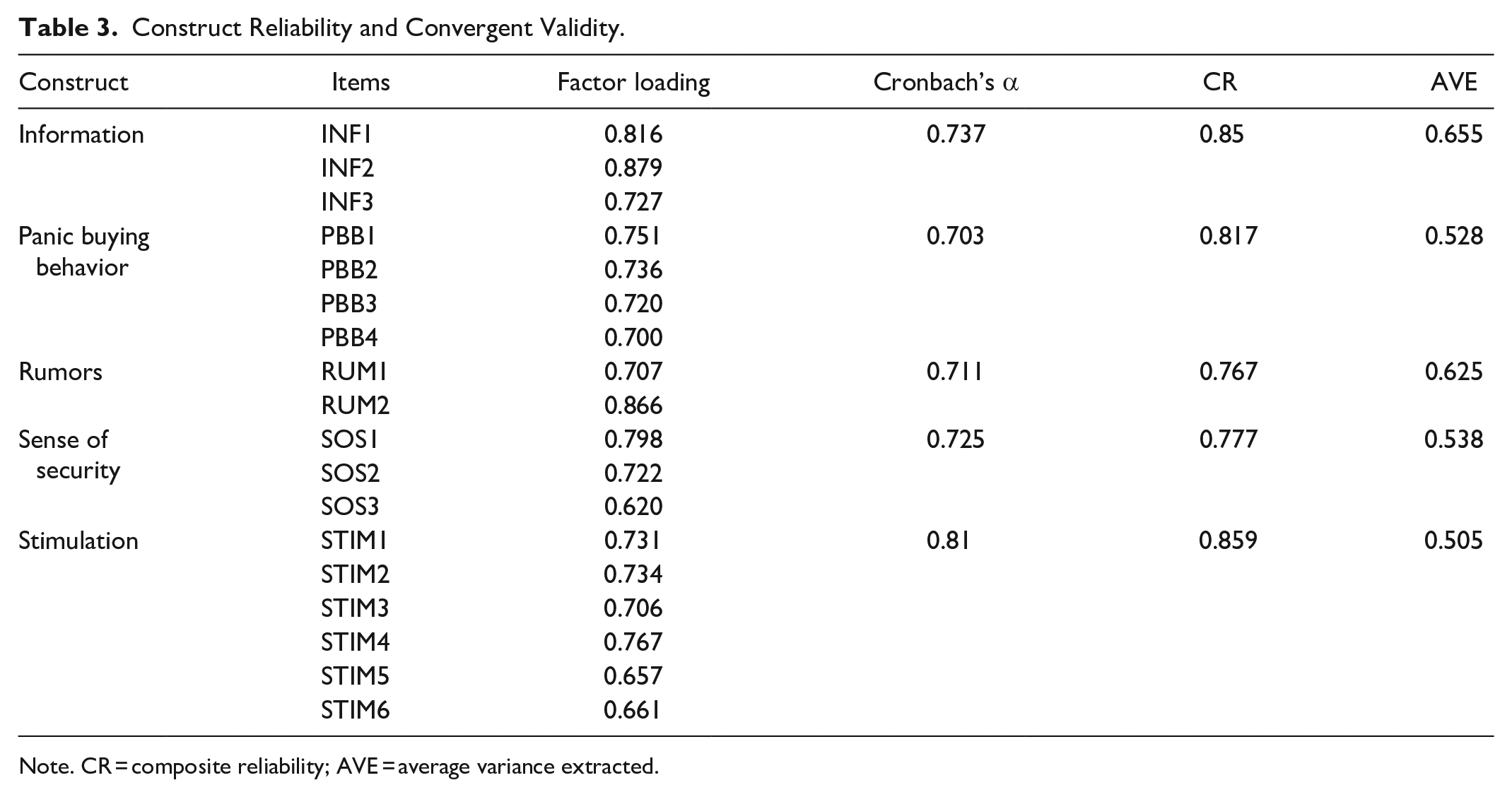
Note. CR = composite reliability; AVE = average variance extracted.
Discriminant validity was examined to assess the extent of overlap between conceptually distinct constructs using the Fornell-Larcker criterion. 86 Table 4 shows that the square root of the AVE of each reflective construct is greater than its correlation coefficient with other constructs, thus supporting the discriminant validity. To further substantiate the discriminant validity, an examination of cross-loadings was undertaken which revealed that each item loaded the highest on its relevant construct with very small cross-loading on other constructs. 84
Discriminant Validity.

Note. Diagonal bold italics entries are the square root of AVE; all others are correlations coefficients.
Assessment of discriminant validity was also undertaken using the heterotrait-monotrait ratio of correlations (HTMT) criterion proposed by Henseler et al. 87 Table 5 shows that the correlation values corresponding to the respective construct are way less than the threshold level of .85, thus demonstrating discriminant validity. 84
Heterotrait-monotrait (HTMT) Results.

Note. Bootstrap subsamples = 5000, Confidence Interval = 0.95 (one-tailed).
Assessment of Structural Model
Before commencing the assessment of hypothesized relationships, we examined the collinearity between constructs using the variance inflation factor (VIF) statistics. The results showed that all VIF statistics were in the range of 1.1 to 1.5, thus not exceeding the cut-off of 3.3, indicating that collinearity did not exist between constructs. 88
Examination of the coefficient of determination (R 2 ) showed that all exogenous variables explained 52% of the variance in panic buying behavior, whereas panic buying behavior explained 38% of the variance in the sense of security. Moreover, we evaluated the predictive relevance of the structural model with Stone- Geisser’s Q 2 criterion. 84 The result showed that Q 2 values were over the threshold level of 0 for panic buying behavior (Q 2 = 0.241), and the sense of security (Q 2 = 0.19), hence indicating the predictive relevance of both exogenous variables.
Partial least squares (PLS)-Predict was run to assess the model’s out-of-sample prediction power for the final target construct, that is, sense of security. 84 The model was estimated on a training sample and assessed its predictive performance on the holdout sample. Table 6 shows that all indicators of the sense of security produced lower prediction errors compared to the naïve LM benchmark, which indicates a high predictive power. 89 In other words, PLS estimates of RMSE were lower than the corresponding LM estimates for all indicators.
PLS-predict Assessment.

Note. SOS = sense of security; RMSE = root mean squared error; PLS = partial least squares path model; LM = linear regression model.
Next, we assessed the hypothesized structural relationships between endogenous and exogenous constructs. Table 7 (Figure. 2) reports the result of the algorithm and bootstrapping assessment (with a sample draw of 5000), including the 95% bias-corrected confidence interval, effect sizes (coefficient β), the significance of relationships (T statistics and P-values), and concluded result for each hypothesis (supported or not supported). The structural model achieved a good model fit, that is, SRMR = 0.09. 90 Table 7 shows that informational experience is significantly related to panic buying behavior (β = .218, P < .001). Similarly, stimulation experience is significantly related to panic buying behavior (β = .14, P < .001). Furthermore, panic buying behavior is significantly related to the sense of security (β = .604, P < .001). These findings support H1, H2, and H4.
Results of Algorithm and Bootstrapping Tests.

Note. INF = informational experience; STIM = stimulation experience; RUM = rumours; PBB = panic buying behavior; SOS = sense of security; NS = not supported.
Significant at .05 (two-tailed).
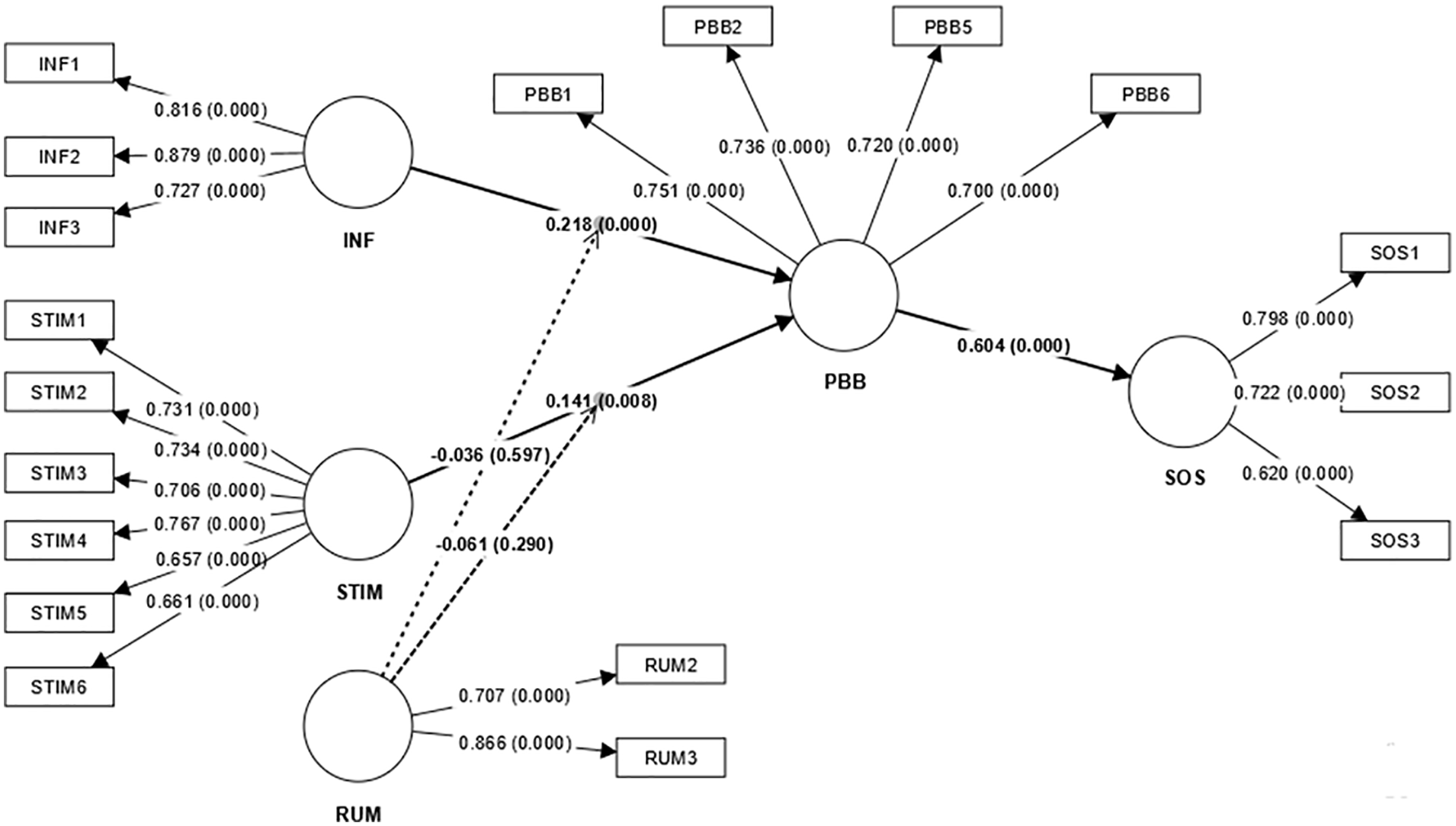
Result of structural model assessment.
This study’s results do not support the moderation effect of rumors. The relationship between informational experience and panic buying behavior is not statistically significant (β = −.037, P > .05). Similarly, the influence of stimulation experience on panic buying behavior is not statistically significant (β = −.06, P > .05). Thus, we could not find support for H3a and H3b.
Discussion
This study aims to investigate the constructs that affect panic buying behavior and how panic buying behavior enhances a sense of safety and security in face of a pandemic namely COVID-19. This study identified and explained several key findings. First, the informational and stimulation experience of COVID-19 CRT were key variables that affected the panic buying behavior. However, rumors did not significantly moderate the relationship between the stimulation and informational experiences of COVID-19 CRT and panic buying behavior. Furthermore, panic buying behavior resulted in a sense of security in public.
As expected, COVID-19 CRT remained the central source of informational experience for people. 22 The findings are in line with existing studies that identified COVID-19 CRT as an important source of information, preventive measure and awareness among the masses. 22 Given the situation of a pandemic such as COVID-19 and in times of lockdown and imposition of strict social distancing, the use of mobile calls and social media remained vital sources of socialization, information and awareness. The government and other state agencies set CRT as the main medium of functional information that can serve the goal of informing the masses consistently to educate them about the devastative effects of COVID-19 and to avoid getting the deadly infection.58,59 On the other hand, the repeated interaction with the COVID-19 CRT is conceived by the masses as an information overload that leads to a negative perception among people about the pandemic and creates fear, anxiety and panic and compels them to engage in panic buying. 54 This support existing studies that consider COVID-19 CRT as infodemic, which leads to panic buying as a response to both environmental and perceived/reflective thinking. 54 The perceived susceptibility and severity of a pandemic in particular and social influence and norms can trigger the perceptions of scarcity and affective response, which in turn leads to the impulsive decision of panic buying. 91 Thus, people depict the herd mentality of irrational buying, where the focus is more on the self-fulfilling process of personal gain that can cause demand and supply imbalance and social evils in the market such as price hikes and hoarding.92,93 Stories of stockpiling and images of empty shelves highlighted by the various sources of media might suggest that others are only watching out for themselves, hence, provoking a desire to follow the same behavior, such as stocking up on supplies. 94
This is in line with the view that panic buying behavior is influenced by impulsive responses from the external environment and rational reflection on the ability to control the situation. In the case of normal buying, the consumers are confident to have control over the current situation. Conversely, when consumers evaluate that the situation is not in their control and fear sufferings in the future if they do not stockpile, they show panic buying behavior to regain control and to remain safe. 95 In addition, stimulation was also identified as a significant variable that leads to panic buying. We identified that both social factors and the external environment stimulate individuals’ internal cognitive and emotional mechanisms which in turn influence a certain response namely panic buying.54,96 It is noted that the level of perceived susceptibility and severity of a pandemic event as well as social influence and social norms remained stimuli for consumers’ perceptions of scarcity and affective responses, which in turn lead to the impulsive decision of panic buying. It is interesting to note that a perceived lack of control also influences panic buying. In a situation where the consumers assess that product unavailability is not in their control and are confused by the perception that the pandemic is going to be prolonged and worsened in coming times, they indulge in panic buying behavior to enhance their sense of control over the situation.
Contrary to expectations, this study did not find evidence of rumors as a significant moderator between the relationship of stimulation and informational experiences of COVID-19 CRT and panic buying behavior. As we noticed that a large number of studies have considered rumors as the main variable that strongly influences panic buying behavior. 51 It could be due to the fact that people were loaded by the abundance of information, where they could not differentiate between accurate and fictitious information and found it hard to search for trustworthy sources of information. In our case due to limited information and readiness for COVID-19, people irresponsible behaviors, acceptance of social stigma and conspiracy theories at large made people accept and trust any fabricated, false information as a fact that stimulated them toward panic buying. Therefore, people considered rumors fake news and hoaxes as real information. This supports the existing studies that showed fake news spread faster than the real ones 97 and significantly influences panic buying behavior. 91 Moreover, panic buying behavior was significantly associated with a sense of safety and security.
The pandemic created numerous challenges that pose threats and risks of varying intensity perceived by individuals based on the susceptibility and severity of the crises, which resulted in uncertainties, shaking the sense of safety and security.70,98 COVID-19 enhanced the susceptibility and severity of the perceived threat to people’s physical and psychological well-being, which motivated them to undertake protective behavior to reduce risk.72,99 In this regard hoarding behavior during COVID-19 can be considered a self-protective behavior to reduce risks. 100 Therefore, it is noticed that the risk can be mitigated by panic buying behavior- storing large quantities of supplies which can result in a sense of security and safety in public to a certain extent. It is interesting to note that people not only enhance their sense of safety and security via buying large quantities of supplies, but they also practice social distancing (further reducing their number of visits to stores), and hence, avoid the spread of viruses. In this regard, panic buying can be viewed as a self-protection mechanism to simultaneously satisfy the safety and security needs of individuals. This support existing studies, that relate hoarding behavior with self-protection to minimize risk,100,101 by storing supplies which can confer people sense of safety, security, and wellbeing. 99
Theoretical Contributions
This study makes several theoretical contributions to the field of consumer behavior and consumer psychology. Firstly, limited research has been conducted on panic buying during COVID-19 focusing on the external (ie, stimulus) and internal (ie, physical, and psychological cognition) lens. This phenomenon under investigation in this study is important to be examined because a better understanding of panic buying behavior and its various drivers is critical for understanding and establishing a mechanism to manage the herd mentality, and mass behaviors, including escalation of panic buying and promoting the recovery of supply chain networks. This study adds to the stream of literature by examining the informational and stimulation experience of COVID-19 CRT, which are induced by external and internal and impulsive factors such as health, social and certain decisions (rational, irrational etc.), and influence the panic buying behavior.
Secondly, this research models the interaction of information and stimulation with the moderating effect of rumor. Interestingly, rumors do not affect the relationship between the information and stimulation experience, and panic buying behavior. This could be due to the fact people are so used to the rumors, and fake and false information in this part of the world that they consider rumors as authentic information and being trusted. This implies that panic buying behavior is linear and influenced by information and stimulation. Thus, the impulsive system remained a critical actor in panic buying decisions.
Practical Implication
The current findings also provide an understanding of panic buying behavior for policymakers and managers. It provides implications for policymakers on the control of panic buying under COVID-19 as well as improves preparedness for future pandemics. Firstly, considering the impact of the COVID-19 threats on consumers’ perceived scarcity and emotional responses, firm measures should be implemented to reduce the spread of the pandemic. Secondly, media play an extremely vital role in conveying information and influencing people’s perceptions, the nature of exaggeration of information should be restricted. The sources of information needed to be aware of their responsibility in reducing the projection of rumors and false information. Moreover, a lack of trust in the government’s control ability can increase the likelihood of panic buying. Hence, state agencies should utilize media to disseminate real information and effective control to gain public trust. Thus, there is a need to share positive news to reduce fear and anxiety among people. Also, appropriate limits and quotas can be imposed on products to minimize stock-out situations. This will indeed reduce the perception of scarcity and fear due to large purchases. Additionally, businesses should enhance their supply chain and logistic resilience to cope with uncertainties. In this regard, sophisticated technologies such as IoT, blockchain, and big data analytics can be applied to acquire real-time data and respond to the need accordingly.
Limitations and Recommendations
The current study has several limitations. Firstly, this study is context-specific and conducted in Pakistan with its unique demographic and psychographic characteristics, market factors, and institutions. Therefore, the result would not be directly generalizable to other contexts. Future research should be conducted in other contexts with different demographic and psychographic characteristics, market factors and institutions to cross-validate the results. It will be interesting to focus on other theories and factors to enhance the explanatory power of the model. Thirdly, the moderation effects of rumors will be interesting to focus on and explore further to enhance our understanding. Fourthly, this study examines panic buying based on a single point in time, a longitudinal observation will be meaningful to explore changes in the effects of the determinants in different periods of COVID-19.
Conclusion
This study addressed the influence of COVID-19 on panic buying behavior. Given the high magnitude impact of COVID-19 on psychological and behavioral aspects of people and society, we investigated the contributing factor of panic buying behavior. More specifically, we examined the effect of COVID-19 CRT experiences, that is, informational and stimulation experiences, on the panic buying behavior and how rumors moderate this relationship.
The results indicated that the informational and stimulation experience of COVID-19 CRT has a significant influence on the panic buying behavior and resultant psychological outcome. The panic buying behavior is influenced by impulsive responses from external environment stimuli and rational reflection on the individual’s ability to have certain control in an uncertain situation. Consumers feel secure in case of normal conditions and depict normal buying behavior, whereas, in an uncertain situation like COVID-19, consumers have the fear of suffering and loss of control over the situation, they show panic buying behavior and stockpile resulting in a sense of security in public. We did not find evidence of the moderating role of rumors in the relationship between COVID-19 CRT experiences and panic buying behavior. This is because people frequently encounter huge information, where it is hard to distinguish between authentic and false information. Also, the lack of readiness for COVID-19 and acceptance of social stigma remain influential to accept and trust false information that stimulates panic buying.
Footnotes
Declaration of Conflicting Interests
The author(s) declared no potential conflicts of interest with respect to the research, authorship, and/or publication of this article.
Funding
The author(s) received no financial support for the research, authorship, and/or publication of this article.
Ethics and Consent Statement
Our study did not require an ethical board approval or consent statement because it did not involve human or animal subjects.
