




Abstract
While age-friendly urban design traditionally prioritises physical accessibility, the acoustic environment remains a neglected dimension, despite it being an essential consideration in the realisation of restorative living conditions for older residents. This article investigates the soundscape in Raheny, Dublin, an area with a long-standing commitment to age-friendly initiatives. We adopt the ISO 12913 framework, distinguishing the acoustic environment (physical) from the soundscape (perceived) with a novel approach of graph-based network analysis using closeness centrality metrics. The study employed seven soundwalks during consecutive days along routes encompassing major community facilities and diverse land uses. Acoustic conditions were systematically evaluated across main roads, residential streets, narrow alleyways and parks. The findings provide insight into the auditory environment of Raheny and its relation with well-being and social participation of older adults, highlighting the importance of integrating soundscape considerations into the broader framework of age-friendly urban planning.
Introduction
As societies continue to age, particularly those with advanced industrialised economies, the need for designing cities and communities in ways that effectively meet the evolving requirements of their increasingly older populations is becoming increasingly clear (Van Hoof et al., 2021). For this reason, the World Health Organisation (WHO) developed the concept of age-friendly cities and communities, identifying domains that should be considered when adapting urban spaces for older people (World Health Organisation, 2007). However, older individuals are not the sole users of urban spaces and the solutions implemented within them. Given their often more pronounced limitations in daily functioning compared to younger generations, older residents can actually serve as an excellent barometer for determining which solutions truly enhance the quality of life for all users. Through this lens, solutions designed with older adults in mind can embody universal design principles (Steinfeld, 2008), ultimately improving living conditions for younger generations as well.
When adapting urban environments, the focus often lies on factors that are visible or related to physical structures. Much effort is typically dedicated to dismantling architectural barriers in buildings (Hełdak et al., 2024; Kurtyka-Marcak et al., 2019) or creating tangible resting spots, such as designing recreational areas (Levinger et al., 2025; Paudel et al., 2025; Van Puyvelde et al., 2025). Less attention, however, is paid to non-physical elements. In the context of under-resourced local governments, inadequate existing infrastructure, strong political influence and low levels of trust between residents and planning authorities, material interventions whose benefits are immediately visible to the public are often prioritised by planners over other improvements. Yet, due consideration of non-physical or invisible aspects of our built environments is equally important, offering promising routes for enhancing the quality of life of urban residents. One such non-physical factor is the soundscape of a given space.
Soundscape studies consider urban acoustics, that is to say sound sources, their co-occurrence and how people appraise them as positive or negative (Chrobak et al., 2025), an important distinction and departure from the focus on noise and noise control commonly discussed within urban studies. Research shows that the acoustic environment, or soundscape, can aid human regeneration, serving a therapeutic function (Iyendo et al., 2024; Jaszczak et al., 2021). It can therefore be concluded that the soundscape present in a place of residence influences the conditions and quality of life of its inhabitants. Yet, soundscapes are not sufficiently explored in research concerning age-friendly urban spaces, with studies to date being very limited (Salminen and Arpiainen, 2024). A significant research gap exists in understanding how non-physical environmental factors, such as soundscapes, support or hinder the goals of age-friendly urban initiatives. Most current planning relies on ‘tangible’ physical barriers, ignoring the ‘invisible’ acoustic barriers that can lead to social isolation. To better understand the synergy between age-friendly environments and soundscapes, we propose a conceptual framework that takes seriously soundscapes as sensory layers of ‘outdoor spaces and buildings’, an important domain within the WHO age-friendly framework. This layer directly influences the restorative potential of urban environments, which is crucial for older adults’ well-being and their continued participation in social life.
The aim of this research was to characterise the soundscape in Raheny, Dublin, across different parts of its urban area. Identifying conditions in specific land uses such as main roads, residential streets, narrow alleyways and parks allows for determining how particular types of land development influence the character of acoustic conditions. The study area included locations of essential services, key amenities, notable landmarks and established residential areas in Raheny in an attempt to capture routes that older residents might traverse. Specifically, this study seeks to answer the following research questions: (1) How do soundscape compositions differ across varied urban land-use types in Raheny? (2) Which sounds act as central elements in the acoustic networks of these areas? and (3) To what extent does the current soundscape align with the restorative needs of older residents? The novelty of this research lies in its methodological integration: using network analysis to quantify soundscape complexity in an age-friendly urban context, thereby moving beyond traditional noise-level assessments to a relational understanding of urban acoustics.
To demonstrate this, the next section engages with existing literature to present our theoretical framework, before we then discuss our methodology in the section ‘Materials and methods’. Sections ‘Results’ and ‘Discussion’ present our results and key findings respectively, before we conclude with recommendations for improving urban planning practices.
Literature review
Our review of the literature focuses specifically on an analysis of works addressing the soundscape sensitivity and preferences of older adults, the impact of acoustic environments on their well-being, health and well-being in the context of soundscapes and the implications for urban design and public policy. The structure of the literature review was supported by the use of ScopusAI.
Compared to other age groups, older adults exhibit distinct sensitivity and clear preferences regarding urban soundscapes. With advancing age, physiological changes, such as presbycusis (age-related hearing loss; Gates and Mills, 2005), can affect both the way people process and interpret sounds and which sounds they perceive from their environment (i.e. those within their hearing range). Consequently, older adults are more susceptible to noise annoyance, for instance from traffic, construction sites or crowded public spaces (Wang et al., 2021). These undesirable sounds can induce stress, irritability and even lead to avoidance of certain locations. Research indicates that older adults have specific preferences for quieter and more orderly acoustic environments (Baquero Larriva and Higueras García, 2023; Zhang and Kang, 2022). However, this does not imply a complete absence of sound (often mistakenly treated as noise) but rather refers to its quality and characteristics. Older adults prefer low sound modulation, meaning that sudden, abrupt or unpredictable changes in perceived sound level or type are less desired. Instead, they value rhythmic sound sources that can have a calming and predictable effect, such as the rustle of leaves, birdsong, or calm, steady movement. Pleasant sounds like birdsong and music can increase the heart rate and decrease skin conductivity, indicating positive physiological responses (Cui et al., 2022). It is also crucial that these environments are not overly loud (Zhang and Kang, 2022), allowing for comfortable communication, relaxation and a general sense of security.
The quality of the acoustic environment directly influences the emotional experiences and satisfaction levels among older adults. Studies confirm that environments enriched with slow-rhythm music and natural sounds are particularly beneficial (Mu et al., 2022). Calm melodies can have a relaxing and mood-enhancing effect, while natural sounds, such as the murmur of water, birdsong or a gentle breeze, are often associated with peace and tranquillity, thus fostering psychological regeneration. Conversely, negative acoustic conditions can significantly inhibit older adults’ willingness and ability to engage in activities (Chen and Zhang, 2025). High noise levels, combined with other factors like damaged roads (limiting mobility) or neglected public facilities (e.g. lack of benches, inaccessible restrooms), create an environment that discourages leaving home and participating in social life. This can lead to isolation and a diminished quality of life. Acoustic conditions, therefore, have a confirmed impact on the well-being of older adults.
There is a link between the quality of the acoustic environment and functional health outcomes, as well as overall quality of life (Chan et al., 2024; Kamp et al., 2016; Sutcliffe et al., 2019). Soundscapes characterised by an appropriate balance between natural and anthropogenic sounds are perceived as more conducive and can significantly improve overall well-being. Harmony among the acoustic elements of an environment affects stress levels, sleep quality and the ability to concentrate, all of which directly impact health. Furthermore, the presence of urban greenery (like parks or gardens) and recreational facilities has a proven impact on improving mental health and increasing social participation among older adults (Chen and Zhang, 2025). Contact with nature and opportunities for physical activity outdoors promote stress reduction, mood improvement and the building of social bonds with other users of public spaces. Favourable environmental conditions can thus aid in fostering intergenerational relationships, which older adults themselves prefer as the most beneficial social connections (City and Co Consortium, 2025). Research confirms that older people are willing to travel longer distances to reach green areas where they feel comfortable (Kukulska-Kozieł et al., 2024), and therefore the issue of immediate proximity is not a factor limiting social interaction.
Despite the importance of acoustics in shaping quality of life for older people, they have yet to be sufficiently explored within urban studies. Recent research by Senetra et al. (2024) emphasises that well-being in age-friendly residential areas is a result of both functional and aesthetic factors, where the harmony of the landscape plays a crucial role in the overall quality of life. However, while their work focuses on the physical and visual components of these areas, the acoustic dimension – the ‘socio-acoustic landscape’ – remains a critical but under-examined extension of this framework. Furthermore, as Blyth (2019) notes, the perception of public space by older people is deeply rooted in feelings of belonging and safety, which is often dictated by sensory cues. When an environment is acoustically overwhelming, it creates a form of sensory exclusion that discourages older adults from utilising even the most physically accessible public spaces. Despite these advancements, there is a clear research gap in the literature: most studies treat age-friendly criteria (WHO domains) and soundscape studies as separate silos. Resultantly, there is a lack of empirical evidence on how the relational complexity of sounds impacts the socio-spatial experience of older residents in officially designated age-friendly zones.
Given these considerations, urban planning should integrate soundscape design to create inclusive environments for all generations, regardless of age (Baquero Larriva and Higueras García, 2023; Zhang and Kang, 2022). This is not merely a matter of noise reduction but an active shaping of the city’s acoustic character. This process should consider various factors that influence older adults’ evaluation of the soundscape, including: physiological (e.g. changes in hearing), psychological (e.g. sense of security, tranquillity), social (e.g. opportunities for communication, meetings) and cultural (e.g. the significance of certain sounds in a given community; Baquero Larriva and Higueras García, 2023). Age-friendly city frameworks, such as those promoted by the WHO, should adopt an integrative approach to both the physical and non-physical aspects of urban environments (Sehrawat et al., 2024). This means that in addition to creating barrier-free pathways, accessible transportation and resting areas, attention must also be paid to creating therapeutic spaces that can enable personal regeneration, combat isolation and allow for the building of strong social ties through increasing opportunities for interaction and participation in public life. Only such a holistic approach can effectively support the mobility, independence and active social participation of older adults, allowing for ageing to happen as well as possible in place (Grove, 2021; Van Hoof et al., 2011).
Materials and methods
Our case study is Reheny, a suburban area on the northside of Dublin City, Ireland, where an age-friendliness initiative is already active (Age Friendly Ireland, 2018). The analysed route chosen for this study totalled 4.5 km in length and took the researcher approximately 50 minutes to walk (Figure 1). Prior to commencing fieldwork, this route was specifically planned to traverse various types of land use and to pass by key points of interest within Raheny, namely schools, the library, medical facilities, a church, the local shopping centre, restaurants, the post office and parks. The route commenced near the train station and included five distinctive land-use types: main roads; residential streets; narrow alleyways; community gardens; and parks. When passing between these area types, the researcher marked the change using voicenotes spoken into the recorder.
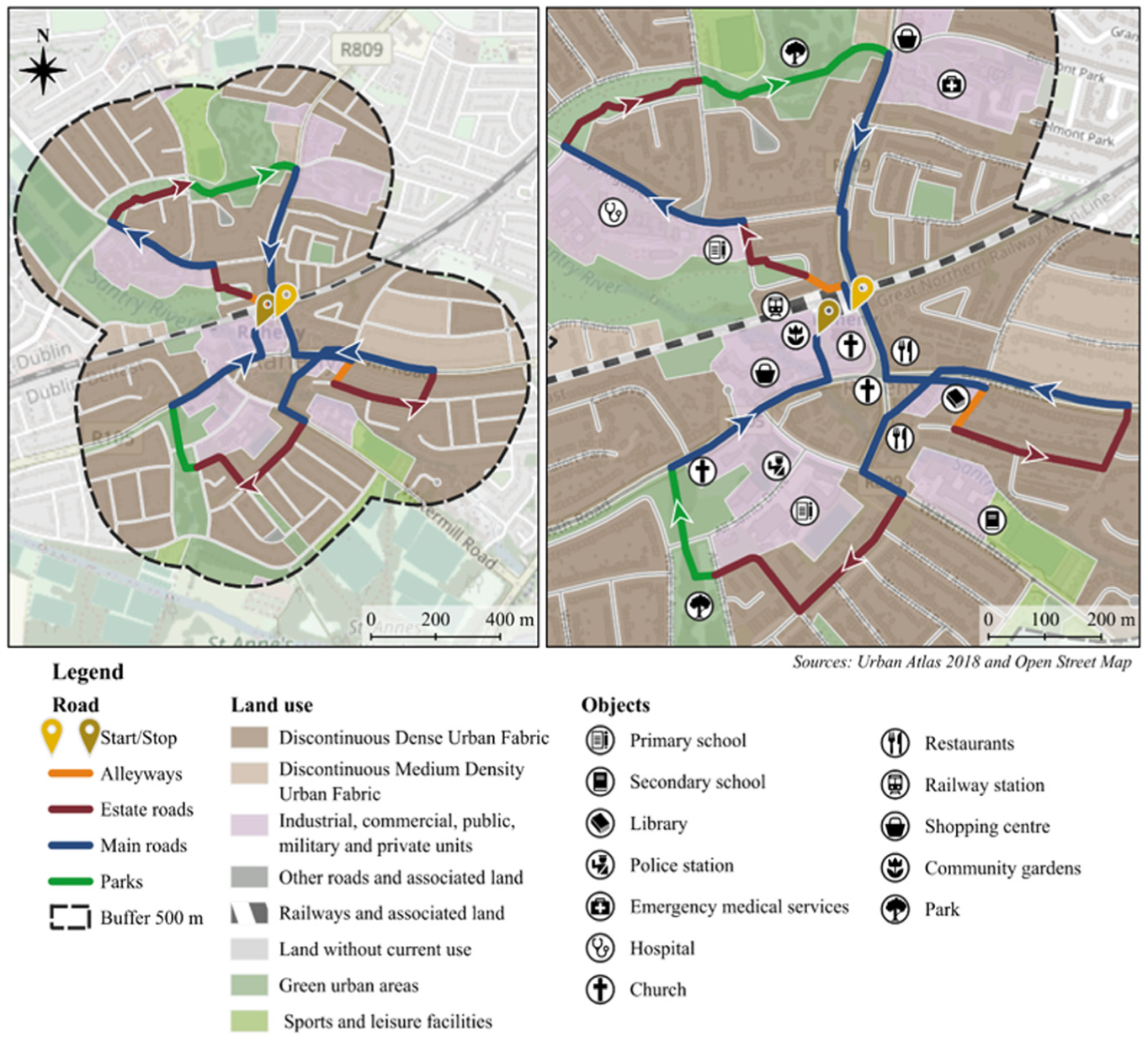
Research area.
When designing the fieldwork, the researchers attempted to select times for the soundwalk that would align with the timeframes that older people might use public spaces. In the absence of research on when older people use public space most commonly in Raheny, or similar urban areas of Dublin, the research team chose times based on the following understandings. Firstly, as Shan (2020) has shown in relation to the use of urban green spaces, older people’s preferences for using these public spaces vary and depend partly on climatic and sociocultural factors, with noon and afternoon being the preferred timeframe in non-tropical climatic zones. Secondly, research on older people in northern and northwestern European countries suggests that they prefer using urban green spaces most frequently in the afternoons (see Peschardt et al., 2012, for a discussion of Copenhagen; and Van Hecke et al., 2017, for a discussion of similar preferences in Ghent). Thirdly, given the choice of route which included key services and amenities, it was decided that the soundwalk should happen during times when these sites were open to the public and when they normally experience higher levels of busyness within the aforementioned noon and afternoon timeframe. To determine this, the researchers used Google Maps’ ‘Popular Times’ function to chart the busiest times for all key sites included.
Measurements were conducted over seven consecutive days between 10 and 16 May 2025, and all soundtracks were recorded in the afternoon (starting time of each recording: 14:20, 14:00, 15:45, 16:25, 12:30, 14:30, 15:20). Throughout the entire measurement period, the weather was predominantly sunny, sometimes partly cloudy, with no rainfall. In open areas, windy conditions were noticeable on some days. The data was collected using a binaural recording during soundwalks. Measurements were performed using Roland CS-10EM binaural microphones and a TASCAM DR-07X stereo digital audio recorder. During the measurements, photographic documentation was also made and observations of people’s behaviours were carried out as part of urban ethnography (Anderson, 2001; Larsen, 2025).
One of the fundamental characteristics of soundscape research is its focus on the subject who hears sounds while moving through space, rather than focusing on the source of the sounds that are being listened to. As such, soundwalk researchers record sounds while moving rather than utilising a fixed position of the recording device (Aceska et al., 2024). Here, a single soundtrack was created totalling five hours and 50 minutes, consisting of seven recordings arranged chronologically, corresponding to each day. To analyse this data, one researcher identified the sounds occurring in each minute and created a matrix that served as the basis for creating undirected graphs. The identified sounds were verified and assigned to appropriate categories by the person conducting the soundwalks, based on the time and place of the sound occurrence.
We built undirected co-occurrence graphs using nodes (sound types) and edges (co-presence within a one-minute window). We computed closeness centrality on the (weighted/unweighted) graph to describe each sound’s position in the network (Hansen et al., 2020). The graph-based visualisation provides information about the basic characteristics of the soundscape, including the number of recognised sounds and their co-occurrence. In this study, closeness centrality was selected as the primary metric because it mathematically represents the degree of integration of a sound within the local system. Conceptually, a sound with high closeness centrality is ‘proximal’ to all other sounds, meaning it co-occurs consistently across various contexts and serves as a dominant anchor for the soundscape. The closeness centrality values indicate how close a given sound is to all other sounds. Low values indicate that the sound is peripheral or distant from the rest of the sounds and therefore occurs sporadically. High values indicate that the sound is central and often interacts with other sounds and therefore occurs commonly. They indicate whether a given sound is dominant or peripheral, based on information about its co-occurrence (Chrobak et al., 2024).
The research results were developed using: Audacity (version 3.7.4) for sound recognition and spectrogram analysis; Microsoft Excel for the creation of a matrix with recognised sounds; Gephi (version 0.10.1) for the preparation and visualisation of graphs; and Canva for visualisation of graphs and graphic attachments.
While this study provides innovative insights into the age-friendly soundscape of Raheny, several limitations must be acknowledged. First, the temporal sampling of certain zones, particularly the community garden, was constrained by the physical size of the site, which allowed for a transit time of less than one minute. Although this was mitigated by static sampling for three to four minutes per walk, an extended recording period might have captured a broader variety of sporadic sounds. Second, in the absence of local data on the specific peak-usage hours for older residents in Raheny, the timing of the soundwalks was based on literature from other European contexts and digital busyness indicators (Google Maps’ ‘Popular Times’), which may not perfectly reflect the daily patterns of the local population. The acoustic analysis utilised uncalibrated binaural recordings, meaning spectrogram levels are relative (dBFS) and used qualitatively rather than as absolute sound pressure measurements. The complexity of the urban environment also led to instances where simultaneous sounds masked one another, occasionally complicating the identification of quieter acoustic elements. Finally, while the single-route approach in Raheny allowed for a deep dive into an active age-friendly initiative, the findings are site specific.
Results
General character of the soundscape in Raheny
The soundscape of the analysed area is shaped by 30 recognised sounds, which have been classified into four types (Table 1). Each sound identified was given an individual identifier number between 1 and 30, with these numbers being used for further analyses and visualisations. Anthrophones and technophones are related to human activities: the former relate directly to humans, for example conversations, footsteps, sneezing or people using bicycles or scooters; while the latter refer to any sound related to the operation of machinery, electronics or repairs, for example sirens, motorised vehicle sounds or construction and repair work. Biophones and geophones are not generated by humans. Biophones relates to the sounds of animals, while geophones are for example the sounds of the wind blowing, the rustling of the trees or the sound of branches breaking.
Anthrophony/technophony/biophony/geophony.
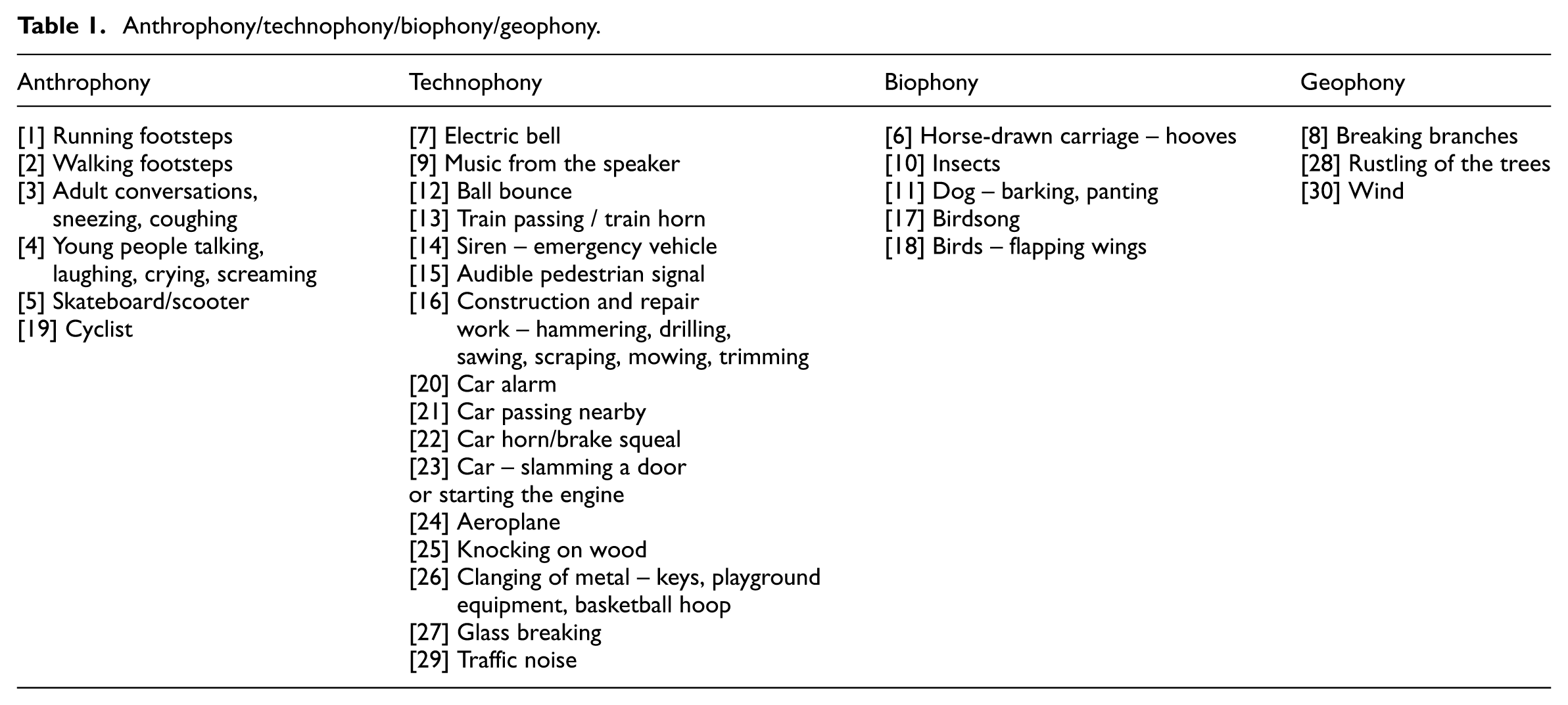
The analysed area is dominated by technophones, accounting for 53% of all sounds, which is reflective of its urbanised character. Geophones constitute the lowest share, accounting for only 10% of all sounds. However, wind, which is included in this category, shows a high degree of closeness centrality, indicating frequent interaction with other sounds consistent with its presence across many minutes and contexts.
There were 266 cases of sound co-occurrence. Edges are weighted by these counts in the graph analyses. At times, the simultaneous occurrence of different sound sources caused them to mask each other, which in some cases made it difficult to identify individual sounds. Across the entire route’s soundscape, the dominant sounds with the highest closeness centrality values were wind, traffic noise, birdsong, tree rustling, cars passing nearby and young people’s conversations (Figure S1). Sounds with a lower degree of centrality but which occur frequently included people talking, car horn/brake squeal, passing aeroplanes and the clanging of metal. The most peripheral sounds, which occur rarely, were skateboards or scooters, electric bells (e.g. doorbells) or passing trains and the sound signals they generated.
The soundscapes recorded are directly linked to the area’s urban form. The high proportion of wind noise is associated with the low density of development, the open spaces and the proximity to the coastline, which are typical for older neighbourhoods in Dublin. The sound of trees rustling in the wind was recognisable in areas with dense vegetation. The significant proportion of birdsong may indicate well-developed green systems and high levels of biodiversity, although additional calculations are necessary to validate such indicative findings. The sounds of cars and traffic noise are common in urban areas. The occasional sound of aeroplanes indicates the close proximity of Raheny to Dublin airport, which is 6 km away. By comparing the timestamps of recordings with the walking route map, nearly all recorded instances of conversations could be geolocated to areas surrounding schools and libraries. These conversations most often involved adult-to-adult or young person-to-young person interaction, with intergenerational interactions featuring least frequently. The clanging of metal comes from many sources, including construction and repair work in residential and commercial buildings but also the jingling of keys that children often wear around their necks.
The insignificant number of people travelling on skateboards or scooters may indicate a lack of interest in these forms of mobility, or a scarcity of suitable infrastructure. Electric doorbells were uncommon sounds identified in the analysis. While there is a hospital located along the route, the sounds of emergency vehicle sirens were also uncommon in our data, an unsurprising absence given that this hospital does not operate an emergency department. It is worth noting the low proportion of sounds from passing trains in our dataset, despite the existence of a railway station. This is most likely caused by the lower elevation of the station relative to the surrounding area and the planting of vegetation along the tracks. The location of the acoustically disruptive tracks in a low-lying area helps to reduce the spread of noise associated with rail transport, which calms and quietens the soundscape.
Impact of urban design on soundscape
The soundscape’s characteristics are not uniform across the entire study area. The types of sounds that occur and how they propagate depend heavily on land use. For this reason, the route passes through five different types of land use (Figure 2) to show how varied urban design influences the soundscape of residential areas.
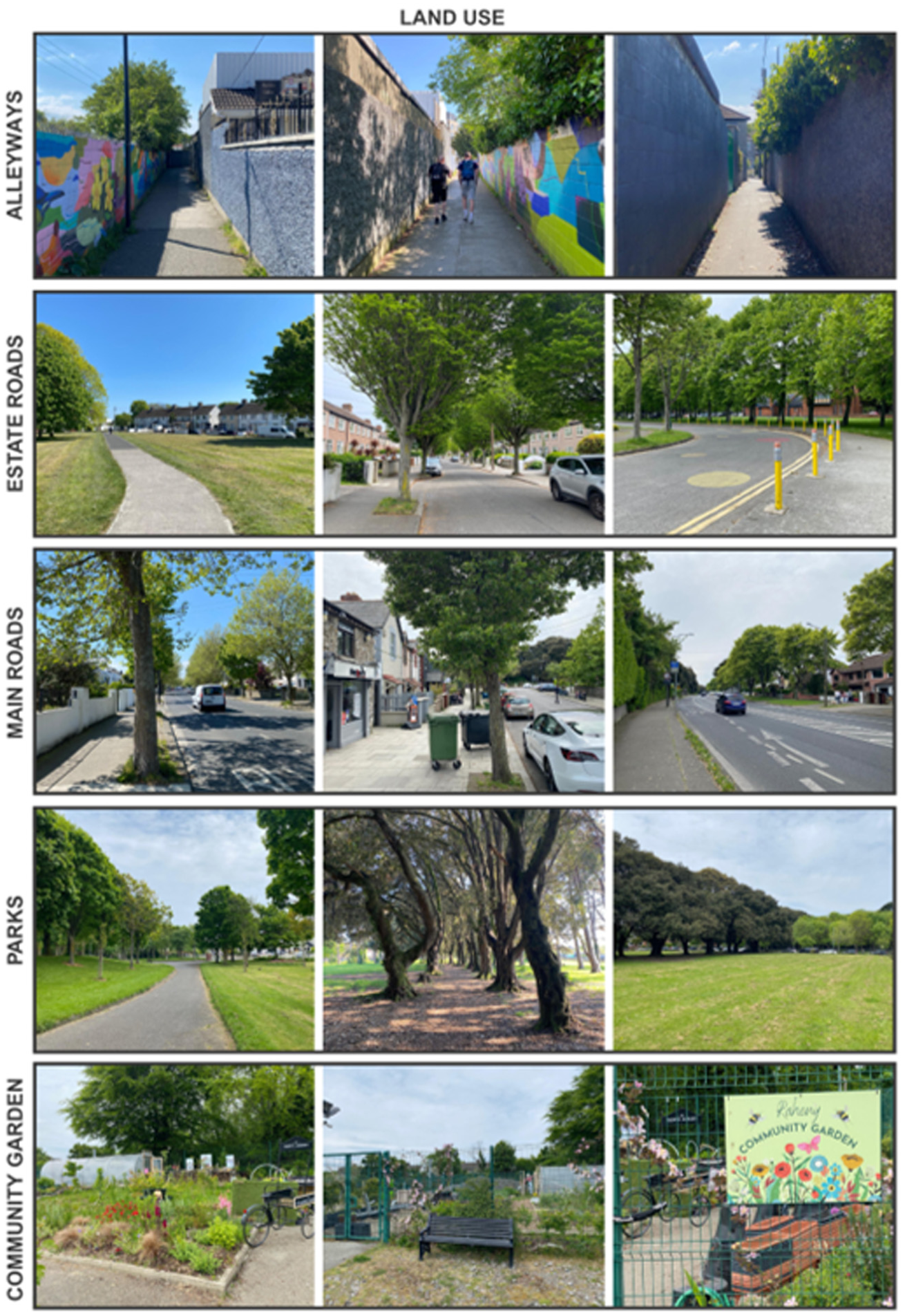
Land use types at the study area.
The spectrogram analysis complemented by undirected graphs revealed a relationship between land use and soundscape. Differences were visible in the relative level on the spectrogram (dBFS), along with changes in source mix. Spectrograms (Figure 3) show changes in land use in most cases depending on the loudness of sounds. Recordings were not calibrated; spectrogram levels are relative (dBFS) and used qualitatively. While certain types of land use were most commonly associated with specific sounds, it should be noted that in terms of the audibility of sounds, the boundaries between these areas were blurred. For example, in the fourth spectrogram from 15 May 2025, heavy traffic can be observed on the main road, which generates traffic noise that was heard during a walk in the next section, an alleyway. This was a narrow area, bordered on both sides by high walls. Traffic noise was audible in all alleyways on the route, with the relative level being higher at the openings of the alleyways, especially those linked to main roads. The differences between the park and the estate road (second spectrogram from 14 May 205) are less distinctive. Additionally, it can be concluded that open and unprotected areas are more exposed to wind, although the sound of wind is noticeable along the entire route.
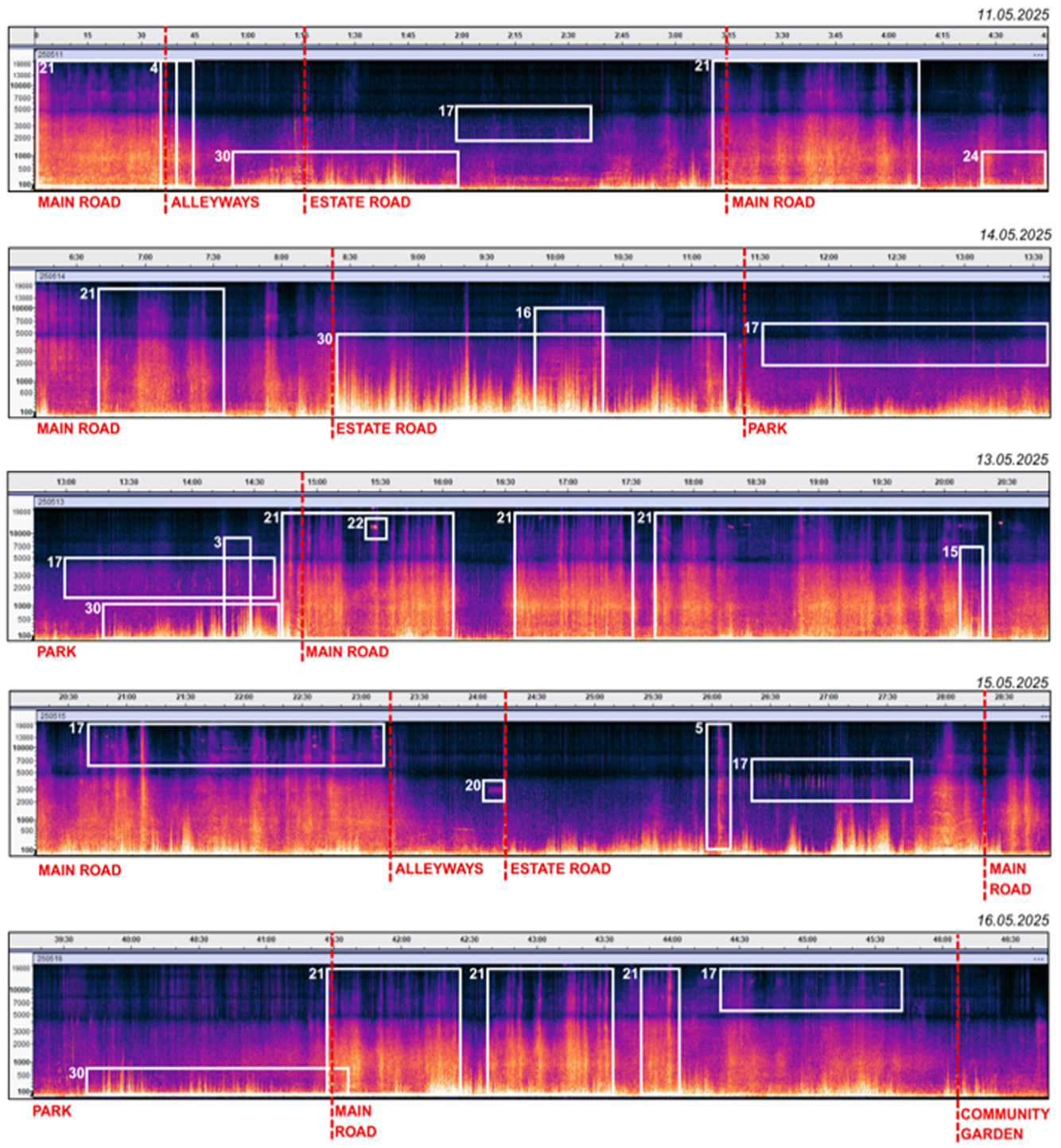
Examples of spectrograms from different days of sound recordings.
While some common sounds are shared between areas, there are also individual characteristics in different parts of the route that suggest distinctive soundscapes, which are represented by undirected graphs (Figures S2 and S3). Based on the calculated closeness centrality values, three groups of sounds were identified in each zone (Table S1). The most dominant central sounds were those for which the index value was higher than 0.9. Sounds with a lower degree of centrality, but still playing an important role in the soundscape, are those for which the closeness centrality value ranges from 0.8 to 0.9. Peripheral sounds, the least central ones, are those that have the lowest values among all sounds. In the case of the alleyways, estate road, main road and park zones, the index values are lower than 0.6. In the community garden zone, peripheral sounds are those with the lowest values of 0.66.
The highest sound-type richness is observed on the estate road, where 24 sounds were identified. The lowest diversity was observed in the community garden (15 recognised sounds), but it should be noted that this section was the shortest recording, which may affect the number of sounds observed in this area. The highest number of sound co-occurrences was recorded on the main road (182 co-occurrences) and the lowest in the community garden (77 co-occurrences). The soundscapes of alleyways were shaped by 20 sounds that occurred simultaneously 115 times. The central sounds (cc > 0.9) were wind, traffic noise and birdsong. Less dominant, but still significant (0.8 < cc < 0.9), were the conversations of adults and young people and the rustling of trees near this area. Rarely occurring sounds (cc < 0.6) include the flapping of birds’ wings, insects, car alarms and the closing of vehicle doors or the starting of engines. The most frequently co-occurring sounds were traffic noise, wind and bird chirping. Ten sounds (1, 5, 6, 7, 8, 9, 12, 13, 14 and 27) that occurred in other zones were not recorded in this area.
Estate roads are characterised by more complex soundscapes, consisting of 24 recognised sounds and 164 recorded co-occurrences of sounds. The most central sounds (cc > 0.9) include wind, traffic noise, birdsong and rustling trees. Less dominant sounds (0.8 < cc < 0.9) included cars passing nearby, young people talking on their way home from school (confirmed also based on observation during data collection) and adults talking. Peripheral sounds (cc < 0.6) included skateboards or scooters, audible pedestrian signals and electric doorbells. The sounds of emergency vehicle sirens are also considered peripheral. The most common co-occurring sounds were traffic noise and wind, followed by birds chirping. Six sounds (6, 8, 9, 13, 20 and 27) were not recorded in the estate road zone but were observed in other parts of the route.
The soundscapes of main roads are characterised by high complexity, shaped by 23 sounds that occur together 182 times. The dominant sounds (cc > 0.9), apart from wind, traffic noise and birdsong, were conversations between people, audible pedestrian signals at traffic lights, cars passing nearby and car horns or the squealing of brakes. Less dominant sounds (0.8 < cc < 0.9) included the slamming of car doors, the starting of engines, the clanging of metal and sounds generated by cyclists. It is worth noting that road infrastructure in this area of Dublin rarely features separate cycle paths, with cyclists observed using bus lanes. The lack of adequate cycling infrastructure likely impacts residents’ sense of safety in relation to mobility choices. Along main roads, a large number of central sounds were noted, which is related to the multitude of these sounds occurring simultaneously. Sporadic sounds (cc < 0.6) included the breaking of branches, which was more frequently recorded close to parks, and the breaking of glass near restaurants in the village centre, which is associated with the disposal of waste in bins and the removal of rubbish by refuse collection vehicles. On main roads, wind and traffic noise were most frequently heard together, followed by cars passing nearby. Although birdsong was one of the dominant sounds, its role is less significant compared to cars passing nearby. Seven sounds (5, 7, 10, 12, 13, 14 and 25) that occurred in other zones were not observed in the main road area.
The soundscape of parks includes 21 identified sounds and 131 recorded co-occurrences. The most common sounds (cc > 0.9) were wind, traffic noise, birdsong, human conversations and tree rustling. Less central (0.8 < cc < 0.9) but also frequently occurring sounds included young people’s conversations and aeroplanes. Peripheral sounds (cc < 0.6) included the flapping of birds’ wings, which given the relatively low audibility of this sound may have been masked by other sounds. Car alarms, car doors slamming and engines starting are also less dominant sounds. While cars were not permitted to drive through the parks, the sounds they generated in neighbouring areas reached the park zones, albeit in a peripheral capacity. In the analysed parks, wind and birdsong were the most common sounds, followed by traffic noise, which may indicate that other sounds sometimes masked the traffic noise. More specifically, it is possible that the density of urban greenery may have reduced traffic noise in the parks. Nine sounds (5, 6, 7, 12, 13, 14, 15, 25 and 27) that were observed in other parts of the route did not occur in the parks of Raheny.
The community garden area has the least complex soundscape, which is shaped by 15 identified sounds, co-occurring 77 times. The most central sounds (cc > 0.9) are wind, traffic noise, birdsong, young people talking and car horns or the squealing of brakes. The sound of aeroplanes was less common (0.8 < cc < 0.9) but had a high share in shaping the soundscape. The most distant sounds (cc = 0.67) were those of passing trains. As the community garden neighbours the train line and is in close proximity to the train station, the insignificance of passing trains in our analysis indicates that our visits to this area of the soundwalk did not coincide with passing train services and would likely have been different if more time had been spent in the community garden area. Other sporadic sounds included renovation work, cars passing nearby, the clanging of metal and the flapping of birds’ wings. Compared to other sections, the lowest closeness centrality values in the community gardens area were higher than in other parts of the area, amounting to 0.67. The sounds that occurred most frequently, in equal amounts, were wind, traffic noise and birdsong. Half of the recognised sounds (1, 2, 5, 6, 7, 8, 9, 10, 11, 12, 14, 15, 19, 20 and 25) recorded in other areas were not observed in the community garden area.
There was only one community garden on the route, compared to multiple areas included from the other types of land use, and its small size and enclosed nature meant that the soundwalk along its perimeter was completed in less than a minute. While the researcher did try to mitigate this factor by waiting in this space for three to four minutes on each soundwalk – the only area where they remained static other than waiting at road crossings for safe passage – it is possible that the soundscape of this place could have been different if the amount of time allocated for recording had been extended or if the researcher had walked the length of the small community garden repeatedly rather than standing statically. Although this resulted in a lower total count of co-occurrences (77) compared to more extensive zones like the main road (182), the closeness centrality metrics remained informative. Notably, the lowest closeness centrality value in the garden (0.67) was significantly higher than the peripheral values in all other zones (all < 0.60), indicating that despite the lower richness of 15 sounds, the acoustic elements present in the garden formed a more tightly integrated and less fragmented system than those in more complex environments.
Older people moving around Raheny
During data collection, an urban ethnography was also conducted through observing users of the space. In the context of age-friendliness, different ways in which older people moved around Raheny were observed, with comparative observations made against the observer’s expertise in a Central European context. During the measurements, various types of movement were observed, which confirms the approach recognised in the literature that there is no single type of behaviour among older people. Most of the descriptions below are presented in photographs (Figure 4).
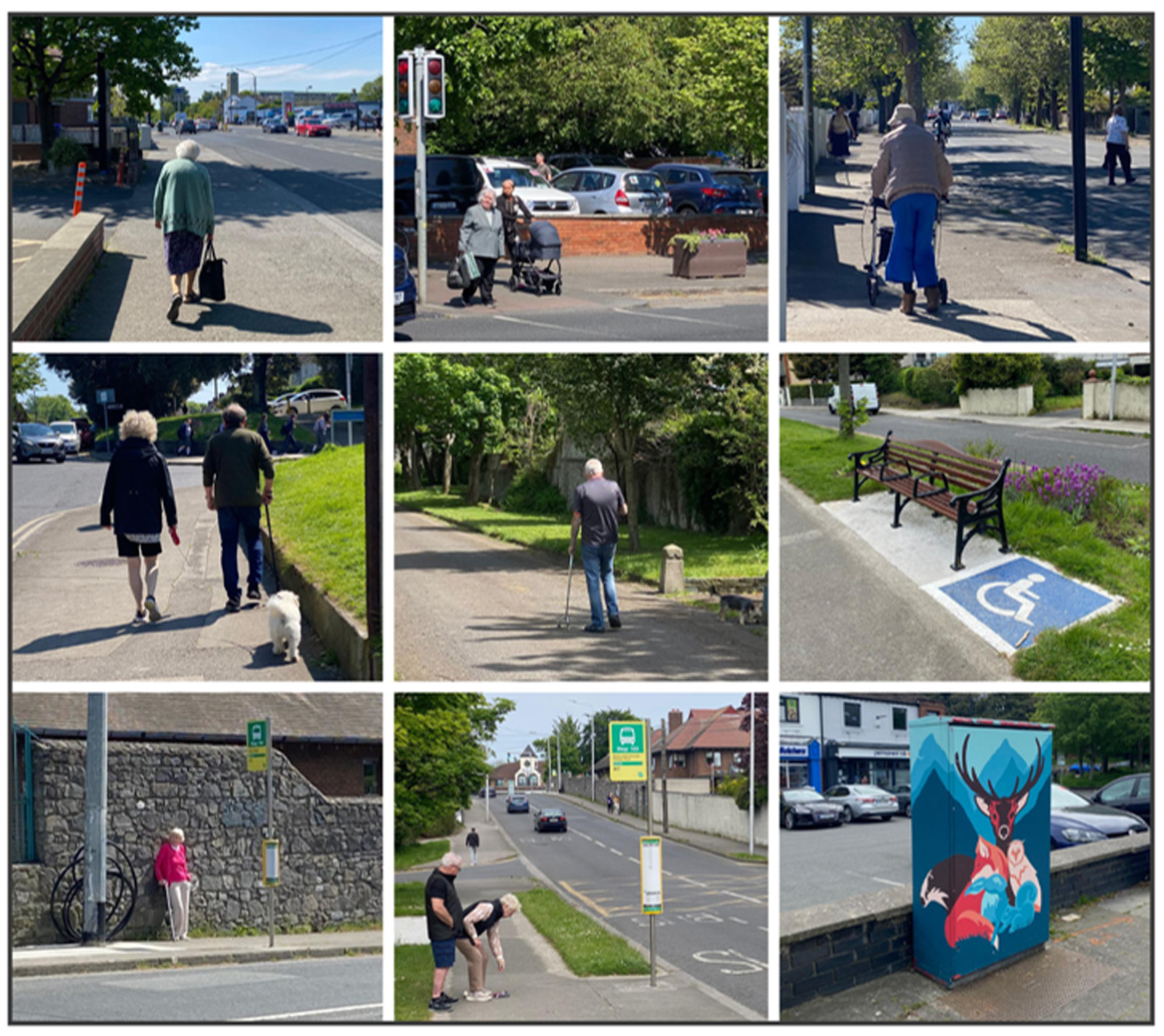
Photos taken during soundwalk.
On the one hand, older people were observed moving independently without the use of any mobility aids. These individuals were able to carry loads (e.g. shopping bags) while performing their daily tasks. There were also people who moved with the help of a walking stick. In the case of these individuals, it was noted that their walking pace (which did not differ from the average walking pace of other pedestrians) suggests that, with the support of a walking stick, these individuals do not significantly deviate from the motor skills of the majority of the population of a similar age.
A significant difference in the pace of movement was observed in the case of individuals using wheel walkers. In this case, the pace of movement was significantly slower, which suggests that the spatial range and distances that these users can cover are significantly limited. It should be noted that far fewer people were observed using wheel walkers than walking sticks or walking unaided. One reason for this may be the layout of streets and paths, and the number of obstacles, such as fences, forcing pedestrians to take longer routes to reach their destinations. The other reason may be the small number of benches where people with mobility limitations could rest.
With reference to the observer’s Central European experience, one of the key elements observed in Raheny was the very limited number of benches and opportunities to rest while moving around. This is particularly noticeable in places where waiting is often necessary, such as at public transport stops. In conditions of limited infrastructure, it must be acknowledged that where it was possible, users tried to use other elements for support. When waiting for a bus, a person was observed leaning against a wall, which provided some support while standing in place. Furthermore, near a street crossing, while waiting for the green light, a person was observed sitting on a low wall separating the pavement from car parking spaces (this person was not photographed but the wall is seen in Figure 4). It should be noted that these types of low walls are a fairly common feature along the measurement route. It can therefore be stated that in the conditions in which users had to function, they tried to adapt and use elements of other infrastructure as support while moving around the area.
Discussion
Social connectedness and community support are crucial for the well-being of older adults, but all age groups similarly benefit. Older adults, as a vulnerable demographic, serve as a barometer, indicating solutions that improve the quality of life and providing valuable insights for universal design. As analyses conducted for Raheny show, the soundscape of the entire area is characterised by a complex mix of sounds, with technophones being the most dominant, accounting for 53% of all sounds. This information, taken out of context from other sounds, does not suggest that Raheny offers good restorative conditions. However, this high proportion of technophones is due to the fact that the overall number of sounds is lower compared to studies in other urban areas (Chrobak et al., 2024). It is therefore important to view the soundscape as a more complex system and to consider the co-occurrence of sounds. The most central and frequently co-occurring sounds across the entire route were a combination of elements like wind, traffic noise and birds tweeting. Considering that the analysed fragment is part of the urban space of a major European city, this soundscape seems to be very simple in its main characteristics. This finding aligns with the fact that low sound variation is proven to positively impact human psychological health (Cui et al., 2022). The recorded levels away from main roads were relatively low, aligning with older adults’ preference for quieter places (Zhang and Kang, 2022). The significant presence of wind is likely due to the low-density development and proximity to the coastline, while the high proportion of birdsong suggests a well-developed green infrastructure and high biodiversity.
The study revealed a strong relationship between land use and the local soundscape. The highest acoustic diversity was found on estate roads (with very similar results for main roads), while the community garden had the least complex sound system. Diagnosing these factors is crucial for decisions on the design of future forms of spatial development, as it shows what conditions we can provide for residents through specific actions. This is important because older adults, who are particularly sensitive to noise, prefer quieter and more orderly acoustic environments with natural sounds. Therefore, spaces like the community garden and parks, which are rich in natural sounds, could serve as restorative spaces for residents. An interesting finding was the effectiveness of terrain shaping in dampening railway noise near the train station, a key point of interest on the route. The lower elevation of the station and the presence of vegetation along the tracks significantly reduced the spread of noise, creating a quieter soundscape in the surrounding area. This demonstrates that specific urban design strategies can effectively mitigate noise pollution and improve the acoustic environment.
Our ethnographic observations revealed that in zones dominated by high-centrality technophones (e.g. main roads), interactions between older adults, if they occurred, were shorter, often involving information exchange rather than more elaborate conversations. The exceptions were places near shops and restaurants, where conversations were similar to those in places with a more natural soundscape. In parks, where biophones like birdsong were central, we observed more frequent calm behaviour regarding the speed of mobility, suggesting that the soundscape and environment with less stimuli directly support or inhibit the comfortability of movement. This knowledge can be useful for urban planners to ensure adequate space for interaction between residents in places where they can socialise and create social bonds.
The sound of human voices was not central along the whole route, and therefore it is not a typical element that characterises the soundscape of Raheny, a perhaps surprising factor given its urban context. Despite very good weather conditions for Ireland during the measurement period, which allowed for outdoor activities and interactions, and the time of recording designed to overlap with the daily activities of older people, people’s conversations were neither at the centre of the graphs nor on their peripheries. In the spatial structure, conversations were categorised as central only along main roads. Observations during data collection prove that the concentration of amenities (like pubs, cafes, shops, etc.) as well as the proximity to schools played a key role in the appearance of these sounds. The other aspect that can impact the appearance of conversations is the personal characteristics of the community residing in the area and the differing vocal emotional expressions (Laukka et al., 2014).
In addition to social factors, the urban design of Raheny is likely a contributing factor. Low-density development is characterised by large plots, dispersed single-family houses and a lack of land use diversity. This means that residents are largely dependent on cars to reach basic services. This, in turn, reduces the number of pedestrians, cyclists and public transport users, thereby reducing the number of chance encounters with neighbours or other residents in public spaces (Leyden, 2003). Dispersed development often leads to a lack or shortage of so-called ‘third places’ – informal public spaces that are neither home nor work (e.g. cafes, squares, local shops, parks with benches, community centres). These places are crucial for spontaneous interpersonal interactions and building social bonds (Oldenburg, 2023), which is needed in creating age-friendly cities (Buitendijk et al., 2025). The findings of our soundwalk would suggest that these places are equally important for social interaction in Raheny, as conversations were most frequently identified in the village centre where services and amenities are mostly located.
It should be emphasised that one of the goals of urban design is to create suitable conditions for various types of human activity. The aim is not to have uniform conditions (including acoustic conditions) across the entire area. Spaces are needed that offer both conditions for human interaction and areas for regeneration and rest. Raheny is a place that provides opportunities to spend time in quiet areas, especially in urban green spaces, while the main location for audible human interaction is in the areas along the main streets, where points of interest are concentrated. In our analysis of the acoustic climate, alleyways do not offer the most pleasant conditions (mainly dominated by a combination of traffic noise and wind), but these sections are relatively short, and in most cases a pedestrian can see the adjacent area within their line of sight. Yet, given the layout of residential roads in the observed areas of Raheny – which include numerous cul-de-sacs – alleyways allow residents to move between areas in shorter distances. As such, they offer potentially beneficial routes for enhancing mobility not only for older people but also for others with limited mobility. Therefore, while alleyways’ soundscapes are unfavourable, their potential for improving mobility makes them a beneficial urban design feature in the context of inaccessible residential road layouts, demonstrating the need for the holistic interpretation of acoustic data analysis. A preferred approach, however, would be to use residential road layouts that guarantee shorter routes for pedestrians and cyclists while lacking full through-traffic for cars, by implementing Low Traffic Neighbourhoods (Dudley et al., 2022).
By conducting soundwalks over seven consecutive days using binaural technology, we captured the lived auditory experience of Raheny’s streets, providing a more nuanced ‘barometer’ of urban quality than static noise maps. The research findings presented offer important insights into how acoustic conditions in urban spaces can shape the comfortability of movement for residents. In doing so, the study highlights the importance of integrating soundscape considerations into the broader framework of age-friendly urban planning.
Understanding the relationship between urban design and acoustic conditions is an important contribution to the integrated design of neighbourhoods and cities, as it highlights the non-physical effects of decisions made by local authorities. Quantifying this variable makes this factor easier to assess and, therefore, easier to consider as a goal for future design. While closeness centrality provided a robust measure of sound dominance and system complexity in Raheny, future research should incorporate complementary network metrics to deepen our understanding of soundscape topology. For instance, betweenness centrality could be utilised to identify sounds that act as ‘connectors’ between different land-use zones, while modularity analysis could reveal if specific biophone or technophone groups form isolated acoustic communities. Such multi-metric approaches would allow for a more granular assessment of how urban design interventions – like the noise-dampening vegetation observed near Raheny station – alter the structural connectivity of the environment.
Furthermore, soundscape issues can be evaluated not only through acoustic audits, as were used in this case, but also by involving the local community in the assessment of the acoustic climate. There is a growing body of work documenting good practices for including residents in planning processes to identify locally appropriate and impactful solutions (Moore-Cherry et al., 2025; Phelan et al., in press). In regards to inclusive planning approaches, older people are a valuable source of local expertise about existing challenges and opportunities for improved urban design (Odeyemi et al., 2024). Similarly, the objective acoustic measures presented in this study can be supported by a qualitative analysis that addresses older people’s lived experiences and emotions associated with sound in urban spaces. Such qualitative approaches to acoustic assessments are important for two key reasons. Firstly, while age is an important lens through which to understand urban residents’ lived experiences, it should not be understood as an essentialising category; lifestyles and experiences can be shared intergenerationally, while also being varied among people of similar age groups (Van Hoof and Dikken, 2024). Secondly, age intersects with other embodied and socio-culturally coded aspects of identity such as sex, socio-economic status, race and limited abilities, all of which play a role in shaping our understandings of, and engagements with, the world around us. As such, the suggested mixed-method approach would allow for a better understanding to be gained of how age intersects with other facets of peoples’ lives, while also moving towards more inclusive urban research and design practices.
Conclusions
Our findings suggest that age-friendly planning must evolve to include acoustic zoning. We recommend that local governments, both in Dublin and beyond, integrate soundscape assessments into their age-friendly strategies, prioritising the preservation of natural biophones and the mitigation of disruptive technophones in key social corridors. Based on the conducted research, we suggest that local urban planning and development practices should incorporate several key actions:
Utilise the experiences of vulnerable groups for universal design: Due to their limitations from biological changes, some older adults are a valuable group that can provide information on which solutions are also convenient for people with limited abilities. Solutions tailored to their needs can be universal, thus being comfortable for all groups of urban space users.
Active soundscape design: Urban designers and spatial planners should consider diverse acoustic zones in their work. These should include quiet places with a rhythmic and low-variation soundscape to create conditions for regeneration, as well as more liveable areas suitable for social integration where it will be easier to initiate interactions between different social groups. The use of Low Traffic Neighbourhoods is also recommended, as it can have a positive effect on encouraging more users to be active.
A holistic approach to neighbourhood design: Both physical and non-physical aspects of an age-friendly environment must be considered to promote active aging and improve the quality of life for all residents. Convenient conditions can support longevity (Plater-Zyberk and Ball, 2021), helping residents live ‘as well as they can’ in these neighbourhoods for as long as possible by maintaining a high level of physical activity and social relationships.
Inclusive and integrated approaches to planning: The lived experiences and place-based knowledge of urban residents should be integrated into planning through inclusive approaches to urban planning. This would ensure that: the needs of diverse groups of residents are considered; communities and residents are empowered; plans developed are place appropriate and impactful; and behavioural change can be unlocked via adequate infrastructure and service provision.
Supplemental Material
sj-docx-1-usj-10.1177_00420980261427671 – Supplemental material for Echoes of inclusion: The soundscape of age-friendly Raheny, Dublin
Supplemental material, sj-docx-1-usj-10.1177_00420980261427671 for Echoes of inclusion: The soundscape of age-friendly Raheny, Dublin by Jan K. Kazak, Dean Phelan, Aleksandra Lubańska and Grzegorz Chrobak in Urban Studies
Footnotes

Funding
The authors disclosed receipt of the following financial support for the research, authorship, and/or publication of this article: This publication was prepared within the project PROM-Short-term academic exchange (project no. BPI/PRO/2024/1/00001/U/00001), financed by the Polish National Agency for Academic Exchange (NAWA). The APC is financed by the Wrocław University of Environmental and Life Sciences.
Declaration of conflicting interests
The authors declared no potential conflicts of interest with respect to the research, authorship, and/or publication of this article.
Supplemental material
Supplemental material for this article is available online.
References
Supplementary Material
Please find the following supplemental material available below.
For Open Access articles published under a Creative Commons License, all supplemental material carries the same license as the article it is associated with.
For non-Open Access articles published, all supplemental material carries a non-exclusive license, and permission requests for re-use of supplemental material or any part of supplemental material shall be sent directly to the copyright owner as specified in the copyright notice associated with the article.
