



Abstract
Rapid urbanization and demographic shifts are compelling cities to create inclusive public spaces serving diverse age groups, particularly children and older adults. While research on age-friendly and child-friendly environments has advanced understanding of age-specific needs, the potential for physical environments in urban public spaces to simultaneously support both groups remains underexplored. To address this gap, we conducted a systematic review of 64 studies from 2000 to 2024, employing thematic analysis to examine potential integration between age-friendly and child-friendly environments. Our analysis reveals substantial similarities across four key dimensions: accessibility and mobility, safety, aesthetics and natural environment, and land-use patterns. These similarities suggest promising potential for integrated public spaces that can optimize resource allocation in urban settings, yet our findings highlight two critical complexities: first, shared environmental preferences manifest differently in practice (e.g. both groups value natural elements but children seek active exploration while older adults prefer passive engagement); second, certain aspects like noise tolerance and facility preferences reveal conflicting age-specific requirements that could potentially undermine integration efforts. By systematically identifying both integration opportunities and inherent challenges, this review provides insights to guide future empirical research and the design of public spaces that effectively accommodate distinct generational needs while fostering intergenerational interaction.
Introduction
By 2050, nearly 68% of the world’s population will live in urban areas, with older adults and children comprising significant proportions of these the urban population (United Nations, 2024). This demographic shift has prompted global initiatives to create more inclusive urban environments. The World Health Organization’s Age-Friendly Cities Initiative, introduced in 2007 to promote active ageing, has since evolved into a broader framework for healthy ageing across the life course, extending beyond cities to diverse urban and rural communities worldwide (WHO, 2007, 2015, 2020). While initially focused on older adults, the framework now emphasizes that supportive environments benefit all generations. Similarly, UNICEF’s Child-Friendly Cities Initiative (UNICEF, 2004, 2018) advocates for urban spaces that protect children’s rights and foster their development, with recent guidance emphasizing children’s participation, equity, and sustainability. Building on these age-specific foundations, recent policy developments have begun to emphasize connections between generations. WHO (2023) now explicitly promotes intergenerational partnerships through local community engagement, supported by growing empirical evidence of intergenerational benefits for both children and older adults in urban settings (Larkin et al., 2010; Lyu and Forsyth, 2022). Practical intergenerational examples documented in the WHO Global Database of Age-Friendly Practices, including community-based activities in Mexico, city-level programs in Australia, and toolkits in the United Kingdom, demonstrate how this integrated approach is being implemented globally (WHO, n.d.a, n.d.b, n.d.c).
Despite these global initiatives, research addressing the needs of different age groups has largely developed along separate paths. Studies on age-friendly environments have established theoretical frameworks to support older adults’ independence, focusing on mobility, social participation, and active ageing (WHO, 2007). Empirical research has explored how older adults experience these factors in diverse urban contexts (Cao et al., 2022; Perek-Białas et al., 2024). Similarly, research on child-friendly environments has developed theoretical principles and assessed how environmental design supports children’s play, learning, and development (Adjei-Boadi et al., 2022; Van Hecke et al., 2018). While both fields have advanced the understanding of age-specific needs, this separation has limited the development of integrated approaches that could simultaneously benefit both groups (Nelischer and Loukaitou-Sideris, 2023), resulting in inefficient urban resource use and overlooking opportunities for spontaneous intergenerational interactions that strengthen community cohesion and social connections (Kaplan et al., 2020).
This separation is particularly evident in public spaces. For this study, we define public spaces as freely accessible urban open spaces such as parks, squares, and neighborhood green spaces that serve as essential settings for both older adults’ daily activities and children’s outdoor experiences (Carmona, 2010; Loukaitou-Sideris and Sideris, 2009; Luo et al., 2024). These spaces are critical for older adults’ social participation and physical activity (Wang et al., 2022), while simultaneously providing children with opportunities for play and development (Adjei-Boadi et al., 2022). Given that public spaces naturally bring different generations together through their daily activities, they provide unique opportunities to examine how physical environment features could support both age groups’ needs while potentially facilitating meaningful intergenerational interaction (Nelischer and Loukaitou-Sideris, 2023).
Within these public spaces, the role of physical environments—comprising built and natural elements such as spatial layout, amenities, and landscape features—remains particularly understudied in supporting intergenerational interaction (Kaplan et al., 2007). While these environmental features fundamentally shape how both children and older adults engage with their surroundings (Artmann et al., 2017; Cordero-Vinueza et al., 2023), current understanding of how such spaces might simultaneously serve different generations is limited. Given that efforts to integrate age-friendly and child-friendly approaches are still at a nascent stage (Nelischer and Loukaitou-Sideris, 2023), a systematic review is essential to identify where environmental needs are shared or distinct across both age groups. This understanding could ultimately inform the development of inclusive public spaces that effectively meet the specific needs of both children and older adults while fostering opportunities for beneficial intergenerational interaction.
This review systematically examines the potential for integration between age-friendly and child-friendly approaches, addressing a fundamental gap in our understanding of how public spaces might serve multiple generations simultaneously. Specifi-cally, we investigate:
Whether factors of the physical environment that contribute to age-friendly public spaces also support child-friendly public spaces, and vice versa.
Whether there are particular considerations or challenges when attempting to integrate physical environmental features across age groups.
Through this systematic analysis, we aim to identify similarities and differences between age-friendly and child-friendly public spaces, ultimately informing how public spaces might be optimally designed to accommodate both age groups while facilitating opportunities for meaningful intergenerational interaction.
Research method
This review employed a three-stage process of identification, screening, and analysis to examine how physical environments support children and older adults, following approaches used in urban studies (Ataman and Tuncer, 2022; Cordero-Vinueza et al., 2023). The process followed PRISMA 2020 guidelines (Page et al., 2021) to ensure transparency and replicability, and was informed by Xiao and Watson (2019) for disciplinary relevance in planning and urban studies. To synthesize findings across diverse study designs, we applied thematic analysis (Braun and Clarke, 2006), combining inductive and deductive coding to identify and compare patterns across age-friendly and child-friendly literatures.
Search strategy and search terms
The literature search was conducted primarily using two databases, Scopus and Web of Science, selected for their extensive and interdisciplinary coverage of the urban studies literature (Ataman and Tuncer, 2022). In addition, we performed forward and backward citation searches in Google Scholar. Search terms covered age-specific (“age-friendly,” “child-friendly”), environmental (“environment,” “community,” “neighborhood”), and spatial (“public space,” “open space,” “outdoor space”) concepts, combined with “urban”/“city” and intergenerational terms (“intergenerational,” “multigenerational”). Full search strings are provided in Supplemental Table S1.
Gray literature from the WHO Global Database of Age-friendly Practices and UNICEF Child-Friendly Cities and Communities initiatives was also screened, but most records were descriptive reports lacking empirical data on physical environments and were excluded. The complete selection process is presented in the PRISMA flow diagram (Supplemental Figure S1). The systematic review was initially conducted in early 2024, with the final database search completed on November 1, 2024.
Eligibility criteria and screening process
Article selection proceeded through a two-stage process: initial screening of titles, abstracts, and keywords, followed by full-text review of potentially relevant papers. Eligibility criteria were established based on conceptual and practical considerations, aligned with our research objectives and PRISMA guidance.
Eligible studies focused on children (≤18 years), older adults (≥60 years), or intergenerational groups. We concentrated on physical environment features of urban public open spaces such as parks, squares, gardens, playgrounds, and fitness corners. Streets were excluded due to their primary role as transport corridors and distinct safety considerations, which differ functionally from dedicated gathering spaces (Ekawati, 2015). This scope allows clearer comparison of environmental factors across age groups, while acknowledging streets as an important avenue for future research. This focus reflects evidence that dedicated gathering spaces are better suited to sustained intergenerational interaction (Gehl, 2013; Madanipour, 2015).
We included peer-reviewed articles, conference proceedings, and reports published in English from 2000 onward, while excluding editorials, book reviews, technical notes, and earlier publications. Detailed inclusion criteria are provided in Supplemental Table S2.
Screening involved duplicate removal, title and abstract review, and full-text assessment, with reasons for exclusion (e.g., no empirical evidence on physical environment features, not public open space) recorded. Reference lists were also checked through citation searching. All screening was undertaken by the review team, with uncertainties resolved through discussion until consensus was reached. Studies were retained only if they provided explicit empirical or interpretive evidence of how physical environment features shaped children’s, older adults’, or intergenerational use of space.
Thematic analysis
Following the screening process, 64 studies met the eligibility criteria and were included in the thematic analysis. We conducted thematic analysis following Braun and Clarke’s (2006) six-step framework, using both inductive and deductive approaches. Full texts of included studies were reviewed, with data primarily extracted from the results sections and, where relevant, supplemented by discussion or methods sections describing physical environment features.
The coding framework was developed collaboratively by the review team, and uncertainties were resolved through discussion until consensus was reached. Codes were systematically generated and grouped into themes based on conceptual and functional relationships, which were refined to ensure coherence and distinctiveness.
To assess distribution and overlaps, we constructed a study–theme matrix indicating whether each theme appeared in each study. Frequencies and co-occurrences were then summarized and visualized using an UpSet plot (Figure 1(c)), which provides a structured means of displaying both the relative emphasis on individual themes and their co-occurrences.
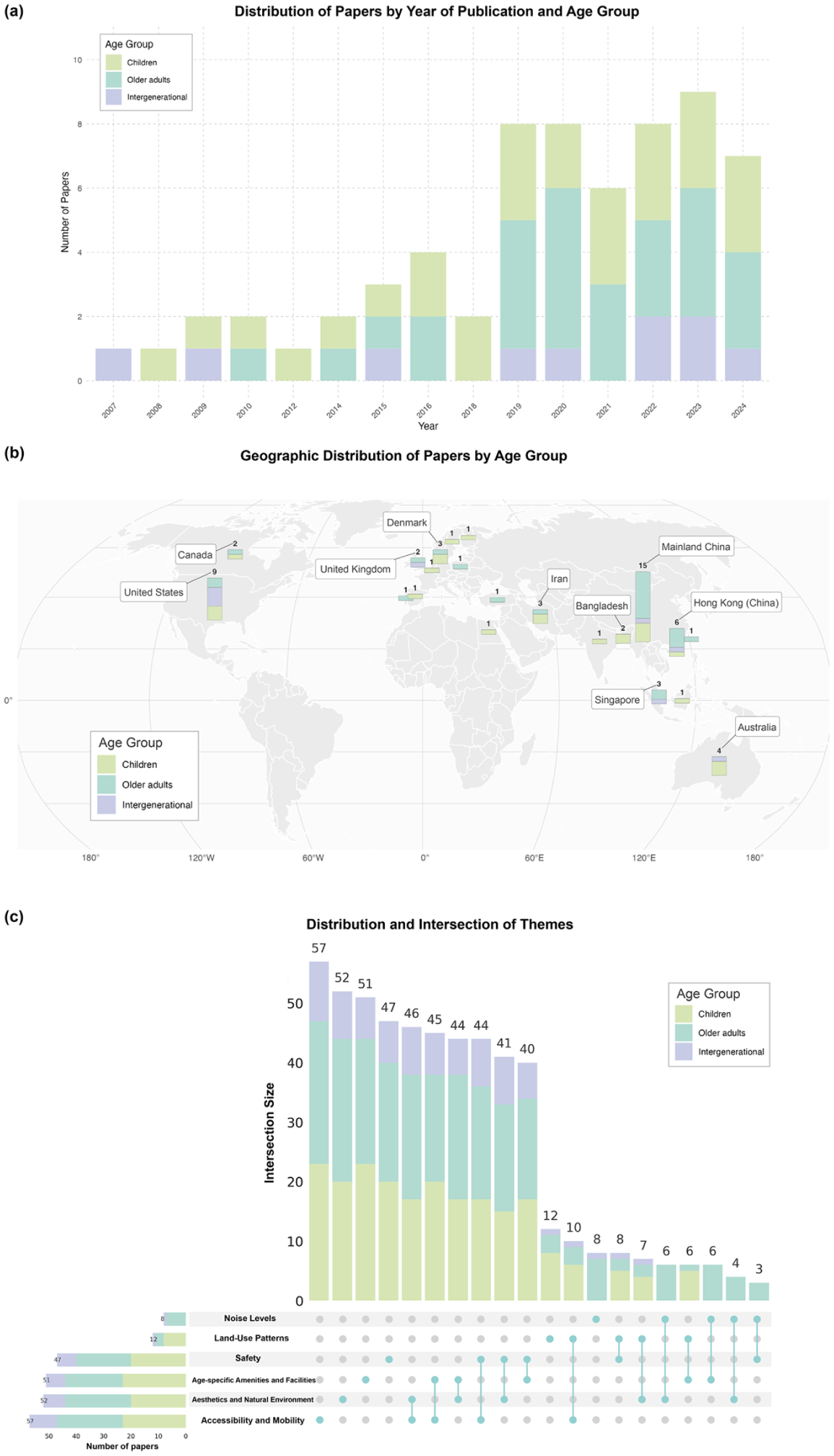
(a) Distribution of papers by year of publication and age group. (b) Geographic distribution of papers by age group. (c) Distribution and intersection of themes. The UpSet plot shows the frequency of each theme (left bars) and its co-occurrence with other themes across papers (top bars). Connected dots beneath vertical bars indicate theme combinations.
Final theme definitions were developed to capture the key features of each theme and to clarify their relevance for understanding physical environment factors in age-friendly and child-friendly public spaces.
Overview of findings
This section analyses the general patterns, characteristics, and statistical distribution of the identified papers, providing an overview of the research landscape through complementary analysis.
Temporal and geographic distribution of physical environment research
Figure 1(a) illustrates the temporal distribution of research on the physical environments of urban public spaces over the past two decades. Publication frequency increased markedly after 2015, particularly in studies examining both age-friendly and child-friendly environments, coinciding with major global initiatives like WHO’s Age-Friendly Cities Initiative and UNICEF’s Child-Friendly Cities Initiative.
The temporal analysis reveals three distinct research phases. Prior to 2015, research focused primarily on age-specific environments, with minimal intergenerational attention. From 2015 to 2019, researchers began examining potential integrations between age-friendly and child-friendly environments in urban spaces (Biggs and Carr, 2015). Since 2019, publications have shown substantial growth across age-friendly, child-friendly, and intergenerational environments, though intergenerational perspectives remain proportionally underrepresented compared to age-specific studies.
Geographically, Figure 1(b) shows concentrations of studies in East Asia, Europe, and North America, with China, the United States, and the United Kingdom accounting for the largest shares. Smaller clusters are evident in Australia and the Middle East. Research on older adults is particularly prominent in China, whereas studies in North America and Europe more evenly address both children and older adults. Intergenerational studies remain limited, appearing infrequently across regions.
Physical environment analysis in intergenerational public spaces
The review reveals three distinct research paths in public space environments: age-friendly, child-friendly, and intergenerational spaces. While these streams have evolved in parallel, age-friendly and child-friendly studies have advanced more substantially since 2015, with studies on physical environments for intergenerational spaces remaining proportionally underrepresented. This parallel development offers an opportunity to explore how physical environment considerations across these approaches might inform more inclusive public spaces.
Three key patterns have emerged in intergenerational space research. First, most studies examine physical environments as one component within broader theoretical frameworks, such as Kaplan et al.’s (2020) eight-dimensional Intergenerational Contact Zone framework which integrates physical, temporal, psychological, sociocultural, political, institutional, virtual, and ethical aspects. Second, research shows a progression from conceptual frameworks to empirical investigations of specific environmental elements, with studies increasingly focusing on tangible features. Third, recent studies (2020–2024) demonstrate increasing attention to specific physical features such as infrastructure, spatial configuration, and environmental elements, although this body of work remains smaller than broader studies of intergenerational interaction.
Empirical studies show an evolution from broad conceptual understanding to specific environmental investigations. Early studies established foundations by examining how physical environments influence intergenerational engagement. Kaplan et al. (2007) emphasized the significance of diverse sensory elements—colors, textures, materials, and lighting quality—in fostering intergenerational interaction. Building on this foundation, Thang (2015) demonstrated how co-located facilities like playgrounds and fitness areas created opportunities for spontaneous encounters within Singapore’s public housing neighborhoods.
Recent empirical research (2020–2024) has advanced through investigation of specific physical elements. Zhong et al. (2020, 2022) examined how environmental features, including transportation infrastructure, land uses, and neighborhood development patterns, influenced intergenerational interactions in communities. Katz and Kaplan (2022) developed a framework for intergenerational community planning that includes specific design criteria for integrated spaces, particularly including intentional interaction points, universal accessibility, and flexible design elements. Zhang et al. (2023a) demonstrated that uneven distributions of age-specific amenities across public open spaces create inequitable access for different age groups, while urban green spaces have emerged as promising settings for supporting shared use across ages (Reece et al., 2024).
The literature reveals that while studies have identified various physical environment elements supporting intergenerational interaction, findings remain preliminary, focusing more on interaction outcomes than a comprehensive understanding of environmental requirements across age groups. This highlights the need to examine physical environment factors across both age-friendly and child-friendly spaces to identify potential similarities and differences in environmental needs.
Thematic analysis of physical environment factors in age- and child-friendly public spaces
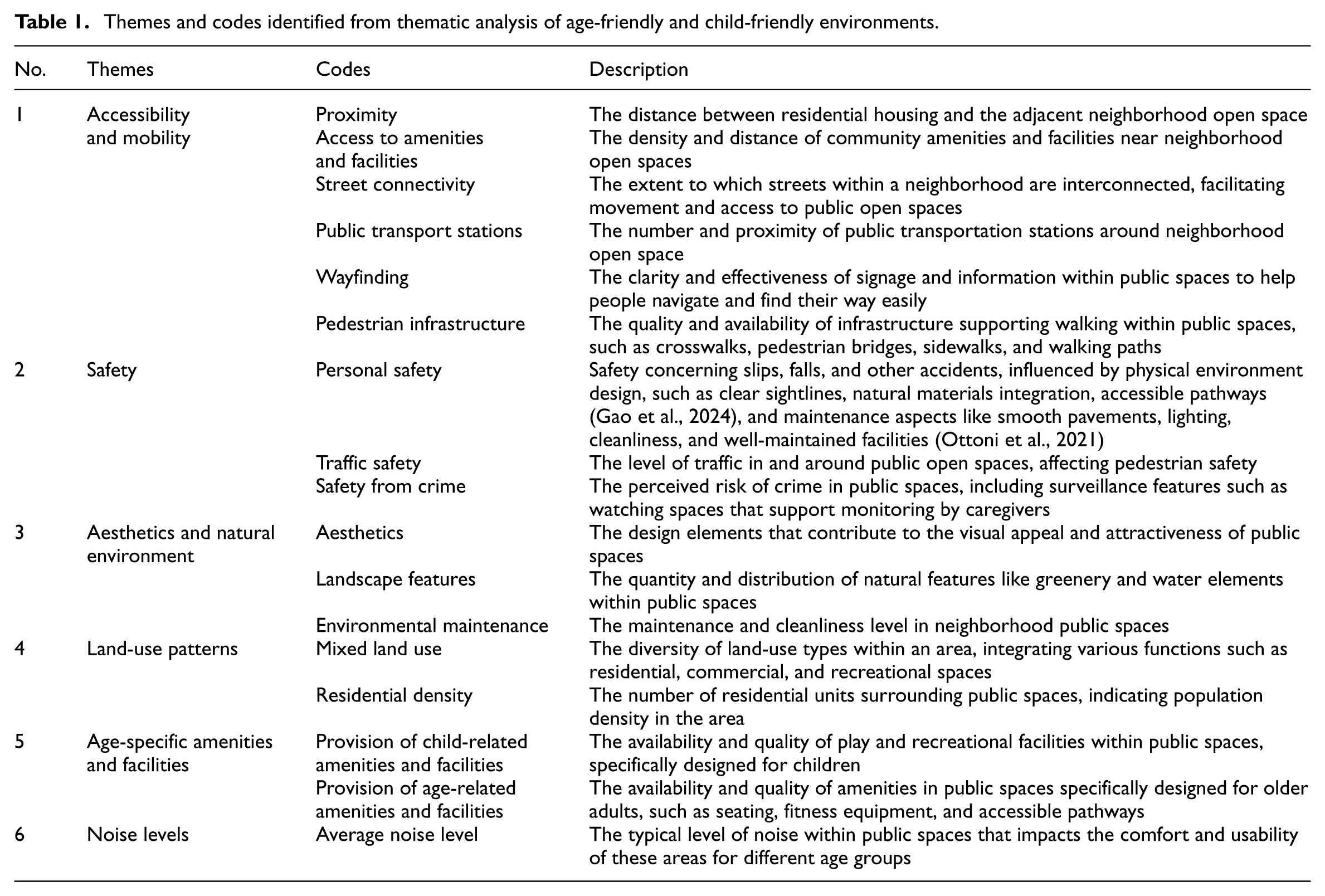
Thematic analysis identified six primary themes and 17 associated codes characterizing physical environment factors in age-friendly and child-friendly public spaces (Table 1). Four themes, accessibility and mobility, safety, aesthetics and natural environment, and land-use patterns, represent similarities across both age groups, while two themes, age-specific amenities and facilities, and noise levels, highlight age-specific differences. Together, these themes capture the diverse ways in which urban public spaces can support children and older adults and provide the foundation for the comparative analysis that follows. The distribution of studies across sub-dimensions by age group is shown in Table S3, and an overview of the selected studies is provided in Table S4.
Themes and codes identified from thematic analysis of age-friendly and child-friendly environments.
The distribution and intersection of these themes reveal significant patterns (Figure 1(c)). Theme co-occurrence analysis demonstrates that the four shared themes are deeply interconnected in practice, while the two age-specific themes show more isolated patterns, reflecting their more specialized nature.
Examining frequency distributions reveals accessibility and mobility as the most frequently studied theme (57 papers), followed by aesthetics and the natural environment (52 papers), highlighting these as primary considerations in both age-friendly and child-friendly design. Strong interconnections appear between aesthetics and the natural environment and accessibility and mobility (46 intersections), suggesting these aspects are often considered interdependent in public space design. In contrast, although land-use patterns appear in 12 studies, its limited intersection with other themes indicates it is often examined in isolation, revealing potential gaps in current research approaches. These co-occurrence patterns reveal how physical environment factors interact to support both age groups, demonstrating established research focuses and identifying areas for future investigation.
Key findings: Similarities and differences among age-friendly and child-friendly public spaces
The thematic analysis revealed how physical environments contribute to both age-friendly and child-friendly urban public spaces. The findings identify the similarities and differences of environmental factors that support the needs of both age groups (Figure 2).
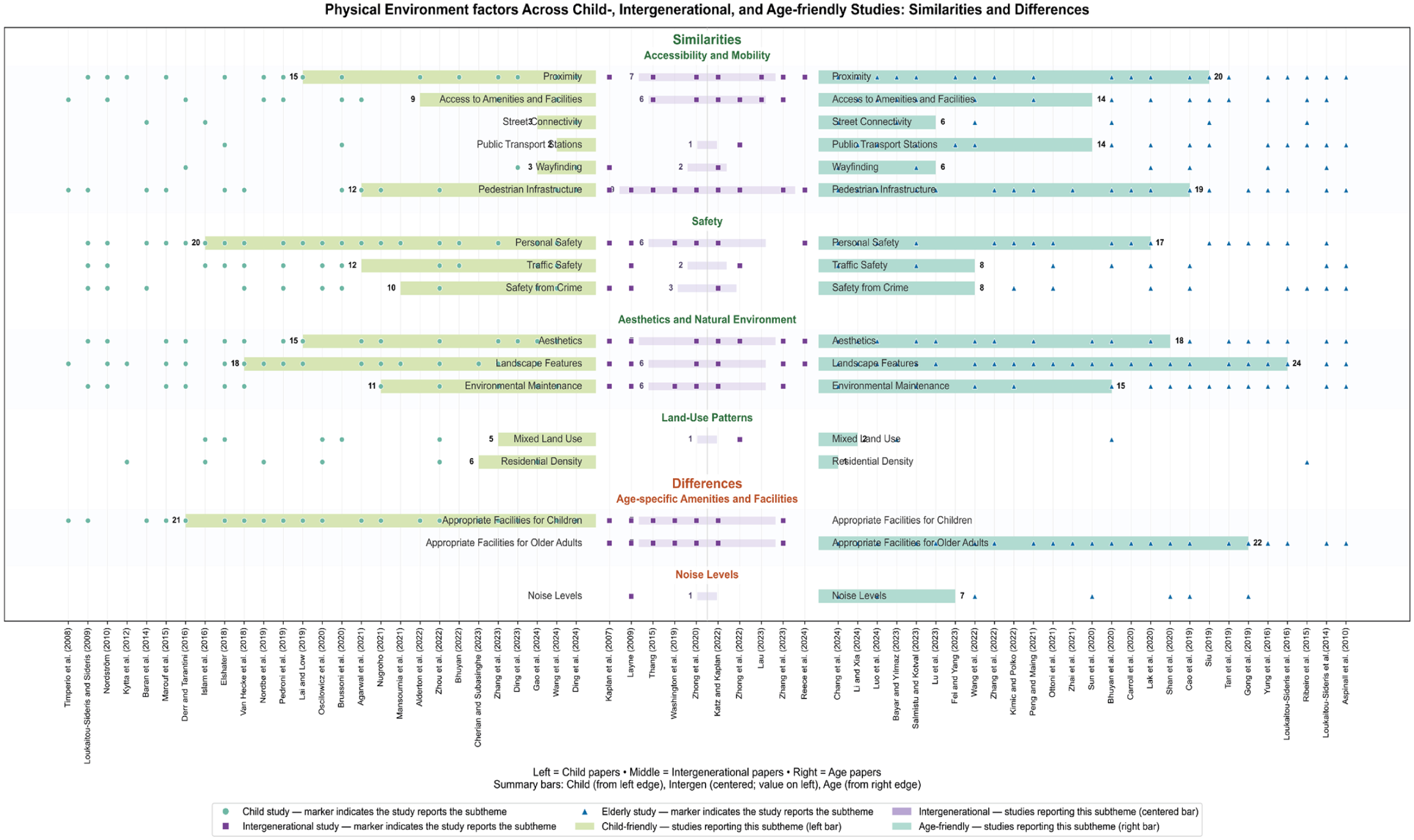
Physical environment factors across child-friendly, intergenerational, and age-friendly studies. Themes are grouped into similarities and differences. Bars show the number of studies reporting each subtheme (left = child-friendly, center = intergenerational, right = age-friendly); markers denote individual studies (green = child-friendly, purple = intergenerational, blue = age-friendly).
Similarities between age-friendly and child-friendly public spaces
The thematic analysis revealed significant overlaps in how physical environments support both older adults’ and children’s public space use. Through the systematic review, we identified four themes: accessibility and mobility, safety, aesthetics and the natural environment, and land-use patterns. These themes demonstrate how specific physical characteristics simultaneously serve both populations’ needs. While usage patterns may differ, these environmental factors consistently create public spaces that benefit both age groups.
Accessibility and mobility
Analysis identified six key factors of accessibility and mobility influencing how both children and older adults use urban public spaces: proximity, access to amenities and facilities, street connectivity, public transport availability, wayfinding, and pedestrian infrastructure. These interconnected factors consistently emerge as essential for ensuring public space accessibility across generations.
Proximity
Research shows residential proximity to public spaces significantly influences usage patterns for both age groups. For children, adjacent open spaces increase outdoor time by an average of 23 minutes on weekdays, with nearby recreational facilities correlating to higher physical activity levels (Islam et al., 2016). For older adults, proximity proves crucial for recreational space use, although they will travel longer distances for essential facilities like markets (Cao et al., 2019). Walking distances of 100–200 m already challenge many older adults, particularly those with mobility limitations (Lak et al., 2020).
Proximity affects facility access patterns for both groups. Immediate access to suitable outdoor spaces is essential for children’s movement and peer interactions (Marouf et al., 2015), while older adults’ facility use depends on proximity combined with facility type and size (Wang et al., 2022). Both populations benefit from nearby amenities, though with varying distance tolerances and facility preferences.
Studies reveal how proximity shapes intergenerational interaction opportunities. Strategic positioning of complementary amenities, such as playgrounds near fitness corners, effectively serves both age groups’ needs (Thang, 2015). In high-rise neighborhoods, shared public spaces that bring generations into physical proximity may provide opportunities for interaction (Lau, 2023). This spatial proximity, both of facilities and users, emerges as an important factor supporting intergenerational interaction.
Access to amenities and facilities
Studies found that both age groups require basic support facilities enabling extended public space use. Core amenities such as public toilets, seating areas, and shelters enhance visit duration by providing essential comfort and rest opportunities (Lak et al., 2020; Van Hecke et al., 2018; Wang et al., 2024). Research shows the proximity of open spaces to community facilities matters—open spaces within 500 m of community facilities experienced higher visitation rates among older adults (Wang et al., 2022).
Diverse facility types further enhance public space utilization for both age groups through similar mechanisms. For older adults, accessible healthcare centers, shops, and cultural facilities encourage increased space use (Chang et al., 2024; Wang et al., 2022), with cultural and community centers particularly supporting social engagement. Similarly, children’s outdoor activity increases with access to recreational facilities and commercial spaces (Islam et al., 2016; Wang et al., 2024), with older children especially benefiting from parks offering multiple amenities (Agarwal et al., 2021).
Studies examining shared facility use highlight how thoughtfully designed amenities can simultaneously meet the needs of both age groups while creating interaction opportunities. Wang et al. (2024) found rest facilities designed with features accommodating different physical capabilities (varying seat heights, adequate spacing) successfully serve both populations. This integration of amenities not only meets practical needs but facilitates spontaneous intergenerational engagement, as demonstrated by increased intergenerational interactions in spaces with such shared facilities (Salmistu and Kotval, 2023).
Street connectivity
Street connectivity emerges as a critical factor shaping both age-friendly and child-friendly environments, particularly through the balance between safety and accessibility. Research reveals both age groups respond significantly to connectivity levels, though often in complex and seemingly contradictory ways. In this review, street connectivity is examined specifically as a measure of how easily people can access public open spaces.
For older adults, research identifies complex relationships between street connectivity and public space use. While high street connectivity theoretically improves accessibility, older adults more frequently visit open spaces located on streets with lower integration values (Wang et al., 2022). Streets with high integration values, typically main roads, create challenges due to heavy traffic and difficult crossings (Wang et al., 2022). Intersection nodes, while providing connectivity, can result in confusion and safety risks for older adults in crowded metropolitan areas (Bayar and Yilmaz, 2023). However, well-connected streets benefit older adults in accessing public transport stations (Chen et al., 2022).
Similarly, safety considerations shape how street connectivity affects children’s public space use. Street characteristics significantly influence children’s outdoor behavior, with heavy traffic associated with reduced outdoor time (Islam et al., 2016). Children’s public space use depends heavily on safe access routes, with poorly connected spaces near high-traffic areas discouraging usage due to safety risks (Wang et al., 2024). Conversely, low-traffic areas like cul-de-sacs encourage outdoor play and physical activity (Islam et al., 2016). These findings demonstrate that both age groups benefit from street networks that balance protection from traffic with essential accessibility.
Public transport stations
Public transport accessibility fundamentally shapes how both age groups engage with public spaces, with station location affecting usage patterns. For older adults, accessibility needs encompass multiple dimensions and vary based on individual mobility levels. Despite generally adequate public transport coverage, walking distances between stops and destinations present persistent challenges (Fei and Yang, 2023). In high-density areas, bus stop availability shows diminishing returns for older adults’ functional ability beyond a certain threshold (Chen et al., 2022). Barrier-free features—legible signage are key priorities for older adults in accessing public transport and open spaces (Yung et al., 2016). Studies identify three fundamental elements shaping transport accessibility: the distance, safety, and comfort of walking routes (Siu, 2019).
For children, transport accessibility primarily facilitates independent mobility, with needs varying significantly across age groups. Analysis of transport justice highlights accessibility’s crucial role in children’s development, though children often face exclusion from transport planning (Cordero-Vinueza et al., 2023). Safe pedestrian connections between stops and destinations emerge as particularly significant for children’s supervised journeys, especially for younger children requiring closer supervision. Well-designed transport access, especially safe walking routes, supports public space accessibility for both age groups, though considerations vary based on individual mobility levels and age-specific supervision needs.
Wayfinding
Research shows that both older adults and children rely heavily on visual landmarks and environmental cues for navigation. For older adults, consistent use of materials and colors in built environments aids navigation and provides safer walking routes (Bhuyan et al., 2020). Studies show that older adults develop navigation strategies using multiple environmental cues (Bhuyan et al., 2020).. In high-density residential areas, they rely on mental maps comprising routes, nodes, and landmarks—such as overhead bridges, bus stops, and shopping malls—as reference points (Cao et al., 2019). In similar-looking environments, even subtle markers like block numbers and crowd patterns serve as navigation aids.
Similarly, for children, research reveals their reliance on visual reference points and landmarks for navigation, with particular attention to distinctive environmental features like playgrounds, parks, and colored objects. Both age groups utilize environmental cues for wayfinding, with each group naturally attending to landmarks that align with their daily activities and interests.
Pedestrian infrastructure
Research shows that well-designed pedestrian infrastructure supports public space use through specific features beneficial to each age group. For older adults, trail usage emerges as a dominant pattern, with seniors spending significant portions of park visits walking these paths. Pathway use links directly to physical activity levels (Zhai et al., 2021), while paved open spaces primarily serve as social and rest areas (Lee et al., 2017). In tropical environments, sheltered walkways prove crucial for navigation (Cao et al., 2019), and obstruction-free footpaths with resting areas enhance accessibility (Bhuyan et al., 2020). Addressing mobility challenges, Hong Kong’s Universal Accessibility Program introduced barrier-free infrastructure and smart pedestrian signals (Siu, 2019).
For children, safe, wide pathways and traffic-free areas support independent mobility and outdoor play (Islam et al., 2016). Current research indicates a need for further investigation into how pedestrian infrastructure serves different age groups and their specific needs.
Safety
Safety emerged as a critical environmental factor influencing public space utilization for children and older adults. Studies documented how these age groups required similar environmental features to support safe engagement with public spaces, encompassing personal safety infrastructure, traffic protection measures, and security considerations.
Personal safety
Research demonstrates that physical environment conditions similarly influence safety perceptions and space utilization patterns across both age groups. For older adults, studies found that environmental features directly impacted physical safety, with Lak et al. (2020) documenting how inadequate amenities, poor maintenance, and insufficient lighting created fall risks and deterred space use. Supporting this, Ottoni et al. (2021) identified strategically placed rest points as essential safety infrastructure that enabled older adults to manage exhaustion risks during activities.
For children, safety considerations manifest primarily through parental assessment of the environment and spatial design characteristics. Research found that natural materials had the strongest positive impact on perceived safety, followed by different sizes and types of spaces that allow for varied activities and clear sightlines (Gao et al., 2024). Supporting this, Islam et al. (2016) demonstrated that these environmental assessments directly influence children’s outdoor activity permissions, with supervision capabilities being the key factor. Notably, Marouf et al. (2015) found that controlled risk in playgrounds contributes positively to children’s physical development.
Both populations share a fundamental requirement for well-maintained infrastructure. Van Hecke et al. (2018) identified how maintenance quality—from lighting functionality to surface conditions—creates universal safety impacts affecting both groups’ ability to use public spaces, despite their different activity patterns.
Traffic safety
Physical infrastructure features mediating traffic exposure shape how both children and older adults access and use public spaces. Features like traffic barriers, safe crossings, and buffer zones serve both populations’ safety needs simultaneously.
High traffic levels create similar barriers to public space use across age groups. Islam et al. (2016) and Van Hecke et al. (2018) found that motorized traffic around public spaces reduced children’s visitation and physical activity, particularly in non-residential areas. Similarly, Ottoni et al. (2021) showed that traffic exposure affected older adults’ walking and mobility patterns through the same environmental mechanism.
Environmental features that reduce traffic exposure benefit both age groups by creating safer and more accessible spaces. Van Hecke et al. (2018) linked safe road crossings with increased children’s public space visitation, while Nordström (2010) identified traffic as a primary safety concern particularly affecting inner-city children. Ottoni et al. (2021) revealed the complex role of natural buffers like trees and bushes—while they provided protection from traffic during daytime, these same features could compromise safety by intensifying darkness and creating feelings of insecurity at night among older adults. This complexity requires careful consideration to maintain clear sightlines for road visibility and overall safety.
Safety from crime
Environmental features such as lighting, clear sightlines, and maintenance enhance crime safety perceptions for both children and older adults. Kimic and Polko (2022) identified these physical elements, along with video surveillance, as crucial determinants of older adults’ security perceptions. Van Hecke et al. (2018) demonstrated that the same features encouraged children’s outdoor engagement by similarly enhancing parental perceptions of safety.
The presence of other people also influenced perceived safety. Ottoni et al. (2021) documented how social presence enhanced older adults’ safety perceptions through both casual interactions and planned activities. For children, Islam et al. (2016) found that concerns about “stranger danger” significantly influenced parental decisions about outdoor activity, particularly in less populated non-residential areas.
Cultural context further mediates safety perceptions. Tan et al. (2019) found that in some Asian cities, the relationship between environmental features and perceived safety varied significantly, suggesting that cultural factors moderate how children and older adults interpret and respond to safety-related environmental elements.
Aesthetics and the natural environment
Enviro-nmental aesthetics influence public space use by appealing to both children and older adults through features such as greenness, landscape elements, and maintenance quality.
Aesthetics
Specific environmental features create aesthetic appeal that attracts both age groups. Van Hecke et al. (2018) showed how greenness, landscape beauty, and maintenance quality increased space attractiveness and encouraged adolescents’ visitation across generations. Natural elements emerged as particularly effective shared features, with Lak et al. (2020) and Van Hecke et al. (2018) showing that paths, greenery, and shade encouraged both older adults’ presence and children’s visitation in similar ways.
Sensory diversity in environmental design creates successful shared spaces that further promote intergenerational interaction. Kaplan et al. (2007) found that varied elements—colors, textures, materials, and lighting—engaged both age groups. Their discussion of Chattanooga’s freshwater history park illustrated how specific design features can support multilevel participation across generations.
Visual appeal, combined with maintenance, supports activities for both groups. Van Hecke et al. (2018) showed that attractive, well-maintained spaces encouraged increased visitation and physical activity among adolescents, while maintaining safety and function as primary priorities.
Landscape features
Specific landscape features—vegetation, trees, water elements, and terrain variety—support space use for both children and older adults. Zhao et al. (2023) and Chang et al. (2024) found that green vegetation and trees enhanced space appeal across generations by providing both exploration opportunities and restorative experiences.
Natural elements create diverse engagement opportunities through shared landscape characteristics. Van Hecke et al. (2018) and Aspinall et al. (2010) documented that creeks, ponds, and varied landscapes encouraged visitation among different user groups, including those with mobility limitations.
Though interaction patterns differ—with Van Hecke et al. (2018) showing children’s active engagement through climbing and exploration, and Zhai et al. (2021) documenting older adults’ passive use for scenery and social interaction—both populations share fundamental preferences for well-maintained green spaces (Chang et al., 2024; Zhao et al., 2023).
Environmental maintenance
Maintenance quality shapes public space use through specific physical conditions that affect both children and older adults. Van Hecke et al. (2018) found that clean facilities, modern equipment, and good upkeep encouraged visitation among younger users, while issues like garbage, graffiti, broken equipment, and poor cleanliness deterred use.
Comprehensive maintenance approaches create conditions supporting diverse user needs through systematic practices. Zhou et al. (2022) showed that good sanitationand safe activity facilities enhanced the usability of neighborhood outdoor spaces and supported children s independent activities. This systematic approach ensured consistent environmental quality that made these spaces more supportive of use.
Beyond basic cleanliness, maintenance quality influences safety perceptions and social interactions. Gao et al. (2024) demonstrated how well-maintained environments enhanced perceived safety and facilitated social engagement, showing how regular upkeep and rapid repairs created spaces where both age groups felt comfortable gathering and interacting.
Land-use patterns
Studies examining mixed land use and residential density revealed how these spatial characteristics shaped public space utilization through shared impacts on accessibility and daily activities for children and older adults.
Mixed land use
Studies demonstrated that diverse land-use patterns enhanced public space visitation by providing accessible destinations for both age groups. For older adults, mixed-use neighborhoods supported daily activities through multiple destination options within walking distance (Bayar and Yilmaz, 2023), such as local shops, community centers, and healthcare facilities, while well-connected streets and diverse destinations increased their public space use (Lak et al., 2020). This pattern of enhanced accessibility through mixed land use similarly benefited children’s access to recreational spaces and daily activities (Islam et al., 2016), demonstrating how diverse land-use patterns create opportunities through improved proximity and connectivity for both age groups.
Residential density
The relationship between density and space quality is significant for supporting multiple generations. High-density environments increased the reliance on public spaces due to limited private outdoor spaces and smaller residential units, with natural elements such as trees, grass areas, and landscaping features enabling diverse activities from children’s play to older adults’ passive recreation and social interaction (Zhao et al., 2023). These areas required carefully designed spaces that could serve different age groups effectively, particularly when space was limited (Yung et al., 2016).
Differences between age-friendly and child-friendly environments
While sharing some similar environmental preferences, age-friendly and child-friendly public spaces also exhibit distinct differences in their age-specific needs. Research reveals how these environments must respond to age-specific requirements, particularly regarding specialized amenities, facilities, and environmental sensitivities.
Age-specific amenities and facilities
The analysis revealed distinct amenity and facility preferences for child-friendly and age-friendly environments, with each age group needing specialized amenities to support their unique activities and usage patterns.
Age-friendly amenities and facilities
Research identified specific facility requirements essential for older adults’ use of public spaces. Accessible local health facilities, particularly family health centers, proved crucial for neighborhood-level service, especially benefiting those unable to use public transport due to health or financial restrictions (Bayar and Yilmaz, 2023). Diverse activity facilities and barrier-free amenities enhanced older adults’ gathering and communication, particularly supporting those with mobility challenges (Lu et al., 2023). Well-designed environments featuring active amenities, rather than passive ones, better facilitated social interactions among older adults, addressing their social engagement needs (Yung et al., 2016).
Child-friendly amenities and facilities
Chil-dren’s spaces require distinctly different facility types for different age groups. Van Hecke et al. (2018) found that standard playground equipment often failed to engage older children, who preferred age-appropriate features like sports fields and adventurous elements. While basic facilities like swings and slides suited younger children, adolescents needed more challenging infrastructure such as basketball courts, bike tracks, and BMX trails.
Zhang et al. (2023b) documented how specialized play areas significantly influenced children’s activity intensity, though noting concerns about facility uniformity in some contexts. Cordero-Vinueza et al. (2023) found that children often preferred naturally managed environments offering balanced risk opportunities over traditional playgrounds, highlighting the importance of diverse play settings.
Noise levels
Research revealed distinct differences in noise tolerance between age groups, with studies particularly documenting older adults’ sensitivity to sound levels in public spaces.
Noise levels significantly impacted older adults’ public space use. Sun et al. (2020) found that communication frequency increased in spaces with lower noise (≤58 dB) and medium noise (>58 and ≤70 dB) compared to louder environments (>70 dB). These findings aligned with Lak et al.’s (2020) research showing that noise pollution negatively affected older adults’ sense of enjoyment and comfort, linking quiet environments to psychological well-being. Shan et al. (2020) identified design solutions, demonstrating that plant-based sound barriers could effectively reduce noise while maintaining the open spaces older adults preferred for activities.
In contrast, studies on children’s responses to noise levels in public spaces remain limited. This gap in the literature suggests a need to explore how noise affects children’s use and enjoyment of public spaces, particularly in intergenerational settings where different noise tolerances may need to be balanced.
Discussion
Towards integrated inclusive public spaces: Foundation and potential
Our systematic review reveals substantial potential for integrating child-friendly and age-friendly approaches in urban public spaces. By analyzing age-specific environments in urban public spaces, we identify fundamentally similar priorities in accessibility and mobility, safety, aesthetics and the natural environment, and land-use patterns that suggest opportunities for creating environments that serve both age groups effectively, while potentially fostering spontaneous intergenerational interaction.
This foundation for integration is evidenced through multiple overlapping physical environment factors. Well-designed pedestrian infrastructure facilitates children’s exploration while ensuring older adults’ safe mobility (Islam et al., 2016; Lak et al., 2020). Natural elements serve dual purposes, providing creative play opportunities for children and relaxation spaces for older adults (Chang et al., 2024; Zhao et al., 2023). Clear sightlines support both parental supervision of children and older adults’ sense of security (Ottoni et al., 2021; Wang et al., 2024). These similarities not only indicate the potential for efficient resource use in urban planning but also suggest opportunities for creating more inclusive public spaces that naturally encourage intergenerational interaction.
These four themes, accessibility and mobility, safety, aesthetics and the natural environment, and land-use patterns, work synergistically in supporting both age-specific needs and intergenerational interaction. For example, well-designed land-use patterns that strategically position age-specific amenities work together with accessible pathways to create flexible spatial configurations (Kaplan et al., 2020) that accommodate diverse needs while creating opportunities for spontaneous encounters. Similarly, the integration of natural elements with clear sightlines creates environments that can simultaneously support different types of engagement—from children’s active play to older adults’ passive recreation—while maintaining the visual connection that enables a comfortable coexistence.
Through these similarities and their interconnections, our analysis reveals the strong potential for developing integrated environments that move beyond age-segregated approaches. The alignment of basic environmental needs provides a foundation for creating spaces that not only serve both groups effectively but also potentially foster natural intergenerational connections, supporting what recent empirical research has identified as key conditions for spontaneous intergenerational encounters (Zhang et al., 2023a; Zhong et al., 2022).
Complexities in creating integrated public spaces
Despite the identified similarities in environmental requirements, assuming straightforward integration of child-friendly and age-friendly approaches would overlook substantial challenges that warrant careful consideration. Our examination reveals significant complexities that manifest primarily in two interconnected ways: direct contrasting needs in spatial use, and nuanced differences in how age groups utilize and respond to shared environmental features.
The most immediate challenges arise from directly contrasting needs within public spaces. Most notably, the groups have contrasting requirements regarding noise levels and activity patterns. Child-friendly spaces typically accommodate higher noise levels associated with energetic play, while older adults prefer quieter environments for relaxation and conversation (Lak et al., 2020; Sun et al., 2020). This extends to spatial organization, where children need active play spaces while older adults seek areas for passive recreation and social interaction. The required amenities also differ substantially: child-friendly spaces need playgrounds for active play, while age-friendly spaces require benches, gentle exercise equipment, and accessible pathways (Lu et al., 2023; Van Hecke et al., 2018). These fundamental differences in activity preferences create significant challenges in spatial organization, requiring careful consideration of both active and quiet zones while balancing proximity for interaction with sufficient separation for comfortable concurrent use.
More subtle complexities emerge in how age groups differently utilize and respond to seemingly similar environmental features. Beyond differences in physical use, nuanced complexities also arise in how environments are perceived. While noise appears as a straightforward contrast between age groups’ preferences, how noise is conceptualized reveals further complexity. Most studies in our review focused on noise levels rather than types, yet different sound sources may be perceived in contrasting ways even at similar intensities (Luo et al., 2023). For instance, children’s play sounds may be tolerated or even welcomed by older adults, while traffic or construction noise is generally considered disruptive by both age groups. This distinction remains underexplored in the selected literature and suggests that managing acoustic environments in integrated spaces requires consideration not only of sound intensity but also of sound characteristics and sources. Natural elements, while valued by both groups, serve distinctly different purposes—children engage through active exploration and play (Zhao et al., 2023), while older adults seek passive engagement through observation and relaxation (Chang et al., 2024). Street connectivity provides another clear illustration of this complexity. While connected street networks theoretically improve accessibility for all users, older adults often avoid well-connected areas, preferring quieter streets despite reduced connectivity (Wang et al., 2022). Similarly, children and their caregivers tend to avoid highly integrated areas due to traffic safety concerns (Wang et al., 2024). These findings highlight how features intended to benefit both groups can inadvertently create barriers to use and limit opportunities for intergenerational interaction.
These complexities demonstrate that creating inclusive spaces requires more than simply incorporating features that appear beneficial to both groups. Understanding how different generations interpret and interact with environmental features, alongside the effective management of inherent conflicts in spatial needs, is crucial for developing integrated public spaces. These challenges, however, do not exist in isolation but are deeply intertwined with broader social and cultural factors that shape how different generations perceive and use public spaces.
Social and cultural dimensions in environmental integration
Beyond physical environment challenges, our review provides additional insights into how social and cultural dimensions critically influence the effectiveness of integrated environments. These factors shape how physical features are perceived and used by different age groups, suggesting that successful integration requires understanding broader social contexts. Older adults’ willingness to use public spaces depends heavily on how these spaces align with their cultural understanding of appropriate social settings and activities (Lak et al., 2020). Similarly, children’s engagement with natural features and play spaces varies significantly based on culturally influenced play patterns and social norms (Zhao et al., 2023). These cultural influences extend beyond individual preferences to shape fundamental patterns of use and social interaction.
The relationship between physical environments and intergenerational interaction also evolves over time as social norms and communication patterns change. Contemporary interaction patterns differ from traditional assumptions about how generations naturally mix in public spaces (Lau, 2023), suggesting that the effectiveness of physical spaces should be continuously reassessed as social dynamics evolve.
These insights demonstrate that while thoughtful physical design provides a foundation for integration, its success is also influenced by how effectively it aligns with and supports social patterns and cultural preferences. Beyond social and cultural factors, governance and participatory decision-making processes also shape which physical interventions are prioritized and implemented. Both age-friendly and child-friendly frameworks emphasize participatory processes to ensure environments reflect diverse generational needs.
While our inclusion criteria focused on physical environment factors, perceptions, preferences, and pattterns of use are also shaped by social, cultural, and economic contexts.
Future research opportunities
Our systematic review offers a foundation for developing an integrated conceptual framework by identifying similarities, differences, and complexities in linking child-friendly and age-friendly environments. This foundation requires empirical validation across different contexts, suggesting three key directions for future investigation.
First, building on the shared environmental priorities, empirical studies should examine whether identified similarities effectively support both older adults’ and children’s use of public spaces. While our review reveals common preferences in accessibility, natural environments, and land-use patterns, research needs to verify whether these shared features actually bring generations together or merely enable parallel usage. Studies could evaluate how different natural elements and pedestrian infrastructure influence both groups’ usage patterns and interaction opportunities.
Second, building on our analysis of integration complexities, research should examine how identified differences affect space utilization by both age groups. Studies need to investigate how contrasting requirements for noise levels and activity patterns influence each group’s space use, while exploring practical strategies for accommodating these differences. This could include examining the effectiveness of various spatial organizations in balancing active and quiet zones, and evaluating how different degrees of separation or integration affect both groups’ comfort and usage patterns.
Third, empirical research should investigate how the interplay between environmental similarities and differences shapes intergenerational interaction. Studies should evaluate which combinations of environmental features most effectively support meaningful interaction between generations, rather than just parallel presence. This research could measure how different spatial arrangements influence the frequency and quality of intergenerational interactions, providing evidence-based guidance for designing truly integrated spaces.
Through these empirical investigations, future research can validate our framework while developing practical insights for creating integrated public spaces that potentially foster meaningful intergenerational interactions.
Conclusion
This systematic review enhances our understanding of how physical environments can support both children and older adults in urban public spaces. By analyzing two decades of research, we find that creating integrated public spaces requires moving beyond shared preferences to understanding how different generations interact with these environments. Our analysis reveals that the relationship between physical environments and generational needs is more nuanced than previously recognized; while certain environmental elements support both groups, their effectiveness depends fundamentally on how each generation interprets and uses these spaces.
By developing a framework for examining physical environment factors across age groups, this study challenges the conventional age-segregated approach to urban public spaces while identifying integration opportunities that could optimize urban resource utilization. This framework offers insights for developing evidence-based approaches to creating inclusive public spaces that potentially promote intergenerational interaction while accommodating distinct generational needs.
Several limitations should be considered when interpreting these findings. First, the identified integration patterns require empirical validation across diverse urban contexts. Second, while this review focuses specifically on physical environments, social and cultural dimensions also influence how spaces are used. The interplay of these social and cultural factors across different urban contexts and communities requires further investigation. Third, this review excluded streets as activity settings. Although initiatives such as open streets and ciclovías can foster community life, their primary transport function and contextual variability placed them outside our synthesis. Future research could extend this framework to examine how such programs complement dedicated open spaces in supporting intergenerational engagement.
As cities worldwide face increasing demographic diversity alongside resource constraints, understanding how physical environments can serve multiple generations is increasingly critical. This review advances our understanding of urban public spaces that can strengthen community connections while accommodating distinct generational needs. Future research can build on this framework to develop evidence-based approaches for creating more inclusive urban environments that foster meaningful intergenerational interaction.
Supplemental Material
sj-docx-1-usj-10.1177_00420980261428806 – Supplemental material for Can age-friendly and child-friendly urban public spaces be integrated? A systematic review and thematic analysis
Supplemental material, sj-docx-1-usj-10.1177_00420980261428806 for Can age-friendly and child-friendly urban public spaces be integrated? A systematic review and thematic analysis by Yanhan Liu, Leng Leng Thang and Ye Zhang in Urban Studies
Footnotes
Acknowledgements
The authors are grateful to the anonymous reviewers for their constructive comments and suggestions, which have greatly improved the article.

Funding
The authors disclosed receipt of the following financial support for the research, authorship, and/or publication of this article: This study was supported by the National Natural Science Foundation of China (Grant No. 20241710038).
Declaration of conflicting interests
The authors declared no potential conflicts of interest with respect to the research, authorship, and/or publication of this article.
Supplemental material
Supplemental material for this article is available online.
References
Supplementary Material
Please find the following supplemental material available below.
For Open Access articles published under a Creative Commons License, all supplemental material carries the same license as the article it is associated with.
For non-Open Access articles published, all supplemental material carries a non-exclusive license, and permission requests for re-use of supplemental material or any part of supplemental material shall be sent directly to the copyright owner as specified in the copyright notice associated with the article.
