




Abstract
The burgeoning growth of racial capitalism work within urban studies (RCUS) has garnered considerable attention. In this critical commentary, we embark on an examination of existing scholarship to ascertain its theoretical relevance within this domain. Our inquiry reveals a predominant focus on the plight of individuals ensnared in the web of everyday racial capitalism. The existing body of work predominantly directs its gaze towards what we term ‘spaces of victimisation’, while largely neglecting those who derive advantages from this system. Transcending from the study of victimisation to the exploration of spaces characterised by benefit presents formidable challenges. We consider some of the challenges to making the leap from spaces of victimisation to spaces of benefit: the routineness of benefit, the scale(s) of benefit, and the remoteness of benefit. In sum, we suggest how the application of RCUS might confront these multifaceted challenges, offering a unique vantage point for critical analysis.
Introduction
Prior to 2019, ‘racial capitalism’ was rarely invoked explicitly in social sciences and humanities journals, but since then it has appeared in hundreds of articles, books, and reviews (Figure 1). Its rise not only occurred within academic discourse, but also within activists’ circles and the spatial imaginaries of global antiracist resistance efforts against police brutality (See Dantzler, 2022), among other oppressions. A substantial component of recent racial capitalism work has occurred in urban studies. This is perhaps not surprising as cities are concentrated versions of socio-economic processes that occur elsewhere. Using a conservative definition of ‘urban studies’– journal and articles with the word ‘urban’ in the title, and those that are explicitly about a particular city – about 15–20% of the post-2019 rise has occurred within the field. This ratio increases when one includes articles about processes that are particularly acute in cities, or tangentially urban in content. However, its analytical utility is still up for debate as scholars employ several techniques to draw outs its theoretical portability (e.g. Bledsoe et al., 2022; Dantzler, 2021; Dorries et al., 2022; Fluri et al., 2022; López-Sanders, 2024; Mayorga, 2023; Rucks-Ahidiana, 2022; Vargas, 2022).
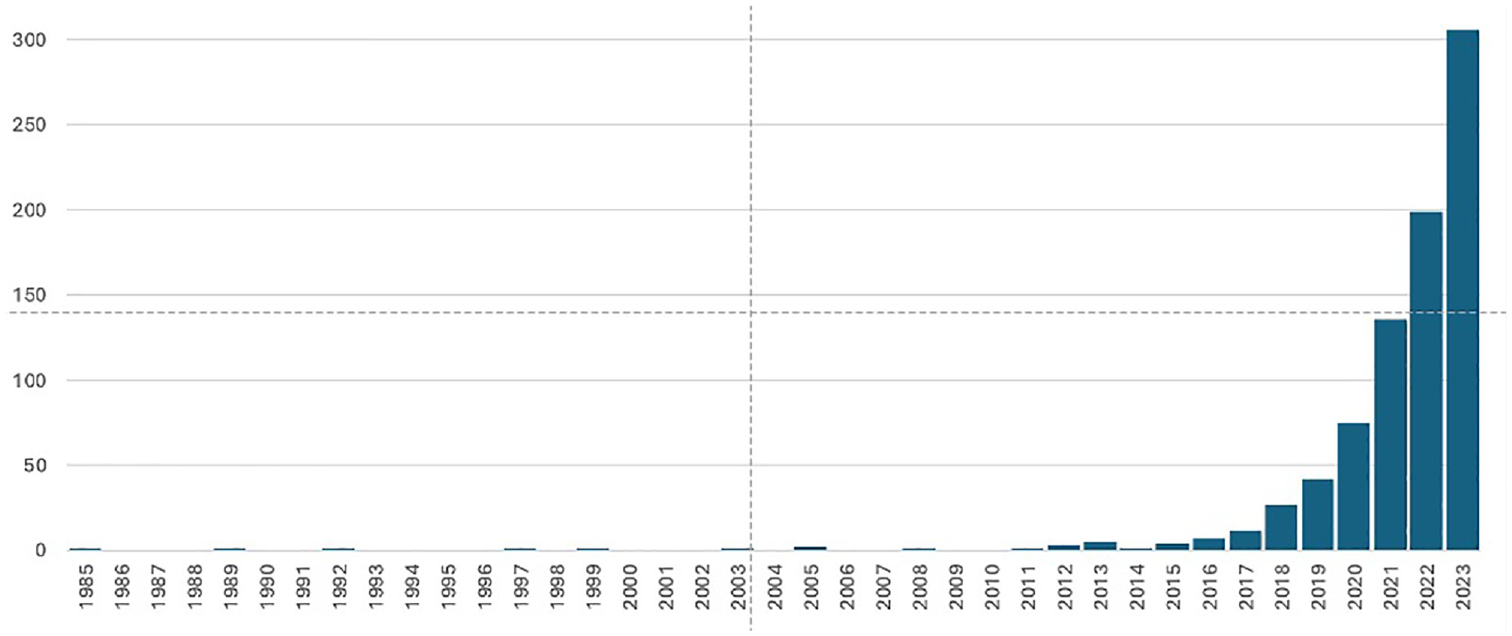
Invocations of ‘racial capitalism’ in academic article titles, abstracts, and text, 1985–2023. Source: Scopus.
This critical commentary is a brief critique, and intervention to, recent racial capitalism work within urban studies (RCUS). The range of topics, methods, and perspectives is considerable, so our intent is not to devise an all-encompassing description of the RCUS literature. Rather we wish to emphasise one tendency − the fact that much of the RCUS literature focuses on spaces of victimisation: the places that are disadvantaged by racial capitalism overwhelming fixated on Black, Indigenous, and other communities of colour. 1 The racialized nature of these spaces intersects with other modes of social difference (e.g. gender, nativity, housing tenure). Understanding the impacts of the varieties of everyday racial capitalism is important; however, by not identifying and deconstructing who benefits from this system of exploitation, urban scholars risk the tendency to obscure how urban processes (re)produce material advantages for groups, institutions, systems, sectors, and economies. To address this tension, we consider some of the challenges to making the leap from spaces of victimisation to fuller depictions of racialized capital accumulation within urban studies scholarship. In doing so, the particular beneficiaries, and their range of benefits, may become more illuminated beyond a focus solely on racialized subjugation and capital exploitation.
Racial capitalism in urban studies
There is a wider literature on the definition and origin of racial capitalism (among many others see, Burden-Stelly, 2020; Dantzler et al., 2022; Hackworth, 2021; Levenson and Paret, 2023; Melamed, 2015). We do not wish to wade into those debates too deeply, but there are a few important themes that help situate the specifically urban work on the concept. The first, known, explicit usage of the phrase ‘racial capitalism’ came from Blauner (1972) in his book Racial Oppression in America (Levenson and Paret, 2023). Blauner’s book was largely disconnected with contemporaneous debates occurring in the U.S., U.K. and South Africa about the interconnections between racism and capitalism, so it is often disregarded in racial capitalism genealogies. Most scholars argue that the origin of the label ‘racial capitalism’− as a way to understand the interconnections between systemic racism and capital accumulation − began in South Africa in the late 1970s. There, Marxian scholars like Neville Alexander posited a particular relationship between racism and capitalism that helped not only scholars understand subjugation in South Africa, but also contributed to the eventual dismantling of apartheid. Moreover, the debates about what was, and was not, included in racial capitalism captivated and involved scholars like Cedric Robinson in the U.S. and Stuart Hall in the U.K. − both of whom would go on to make important arguments about racial capitalism in the years following (Hammer, 2023).
Most North American scholars implicitly or explicitly invoke Cedric Robinson when explaining the origin of their use of racial capitalism. Robinson’s (1983)Black Marxism was initially ignored, but has since experienced a revival of interest since its reprint in 2000. The wide ranging book directly challenges some underlying assumptions about the origin and ongoing reproduction of capitalism, chief amongst these being the assumption that racism is a feudal residual that will eventually be eliminated by the class relation under capitalism. To Robinson, racial forms of differentiation were essential, not just tangential or particular, to capitalism. Importantly, this was not an unmoored argument. He built his understanding on the Black Radical Tradition, with full chapters devoted to Du Bois, James and Wright. Central to scholars within this tradition is an embedded sense of political praxis and racial justice based upon, and informed by, the struggle for Black freedom. This is important because while the label ‘racial capitalism’ may only be 50 years old, the discussion of the interconnections between racism and capitalism is at least as old as Du Bois (1935). Moreover, by denoting the political praxis of these Black scholars, Robinson describes a fuller picture of resistance by Black thinkers through their epistemological approaches to the everyday logics of capitalism. As Kelley (2021) notes, Black Marxism was primarily about Black revolt, not racial capitalism. The relational nature of racial capitalism becomes evident here.
As of August, 2023, there were 115 invocations of racial capitalism in urban studies journals (listed on Scopus), with all but 11 of these appearing since 2020. In the broader literature on racial capitalism, the denigration of land and labour value for material gain are the most popular foci (e.g. Dorries et al., 2022; López-Sanders, 2024; Pulido, 2017). 2 Most of the urban-focussed articles in this surge of work do not formally describe the origin. But when they do, Cedric Robinson is by far the most common source. In most articles, racial capitalism is implicitly or explicitly conceptualised as the suggestion that racism and capitalism are interrelated in some way (e.g. Drake Rodriguez and Dantzler, 2024; Fortner, 2023a, 2023b; Korver-Glenn et al., 2023; Pulido, 2016). In more assertive conceptualisations, the two depend upon each other (e.g. Dantzler, 2021; Dantzler et al., 2022; Dorries et al., 2022). When, where, and at what scale this dependence or relationship occurred or continues to occur are subjects of debate (e.g. Melgaço and Xavier Pinto Coelho, 2022; Rucks-Ahidiana, 2022; Vargas, 2022). Like the broader literature, RCUS emphasises the devaluation of labour and land, and their uneven impacts. Within the realm of labour devaluation, scholars have noted a number of groups who are socially positioned as lesser to pave the way for lower compensation (e.g. Gilmore, 2007; López-Sanders, 2024). More recently, scholars have used the U.S. as a primary focus of study within RCUS (e.g. Graetz and Esposito, 2023; Howell and Teresa, 2022; Korver-Glenn et al., 2023; Summers and Fields, 2024); however, racial capitalism has been used to underscore differentiation and subjugation of racialized minorities around the world (e.g. Fluri et al., 2022; Levenson and Paret, 2023; Melgaço and Xavier Pinto Coelho, 2022). Among other examples, Gebrial (2022) documents the exploitation of immigrant Uber drivers in London, Babar and Vora (2022) the exploitation of guest construction workers for the Qatar world cup, Hjalmarson (2022) the exploitation of Jamaican farmworkers in Okanagan, British Columbia, and Krivonos (2023) the exploitation of Eastern European service workers in Helsinki.
RCUS articles on land devaluation emphasise a number of themes including land theft and the pathologization of Black, Indigenous, and other communities of colour as dangerous or dysfunctional as a way to justify evictions and inexpensive purchase for urban renewal, gentrification, or banishment. For example, Mays (2023) explains how dispossession of land from Indigenous people has helped shape, and continues to shape, modern urban development, Goldstein (2023) pinpoints cycles of segregation, manufactured scarcity, and displacement as drivers of the modern housing crisis in Oakland, Herbert and Brown (2023) examine how the confluence of settler and domestic colonialisms has shaped neighbourhood change in the American Rust Belt. Other RCUS land devaluation themes address more contemporary issues. Howell and Teresa (2022) situate evictions as a continuation of longstanding practices of dispossession and disempowerment in Black neighbourhoods within Martínez’s (2023) examination of racism that explores the creation of a virtual ‘frontier’ in Atlanta paving the way for displacement, while Hackworth (2023) suggests that racial capitalism creates an ethnoracial hierarchy of land values in a city.
While the classical emphases on land and labour are common in the RCUS literature, urbanists have also emphasised a number of other forms of accumulation not as typical in the wider racial capitalism literature. Two, in particular, are the social justification for locating negative market externalities and assigning austerity to racialized minority populations. The environmental racism literature has been integral to exploring how indifference to lower-income communities of colour paves the way for locating negative externalities, particularly but not exclusively, toxic waste produced as part of a production process. This emphasis predates the aforementioned recent rise of racial capitalism as a concept, but there are those in this vein attempting to link them together (See Pulido, 2000, 2017). Vasudevan’s (2021) examination of aluminium production in Badi North Carolina, and Pelot-Hobbs’s (2021) exploration of the petrochemical industry in Louisiana stand out in this regard.
There is also considerable work in the RCUS body about political structures and the assignment of austerity to Black, Indigenous, and other communities of colour. In these neighbourhoods, the racial denigration of inhabitants is used to justify the withdraw of resources, the conflicts between and across class alliances, and the assignment of predatory forms of governance (Fortner, 2023a, 2023b; Hackworth, 2019a, 2022). The disposability of these spaces rationalises the use of political strategies, financial instruments and legal structures to derive value from the slow erasure of state involvement and capital extraction. Black spaces, or rather Blackness, serves as a capacious category embedded within political-economic functions of, and resistance to, disposability, expendability, and devalorisation (Burden-Stelly, 2020; Dantzler, 2024; Taylor, 2024). This centres racial capitalism as a political claim over capital. Among other examples, Purifoy and Seamster (2021) explore how Black towns in Texas have long been the targets of multiple forms of predatory governance, resource extraction, and the like, all under the auspices of legality. Ponder (2021), moreover, explores how credit ratings have been used historically to effectively redline Black spaces and deprive them of infrastructure upgrades (see also Howell and Teresa, 2022; Phinney, 2023). Finally, Pulido (2016) details the racial capitalist framework that led to the austerity-driven poisoning of the water supply in Flint Michigan. These studies underscore the political ideologies and institutional arrangements facilitated by the state, among other political actors.
The topical variety in the RCUS literature is considerable, and only partially reflected here. However, there is an overwhelming tendency in this literature to explore the sites of victimhood − the places where people are denied their full labour or land value, where austerity leads to crumbling infrastructure, or where the toxic residues of the production process are buried. This is important and valuable work. The level of systematic denial that racism is an important factor, or even real, by mainstream academics, politicians and cultural figures provides a justification for continuing to reveal and explicate the victims of racial capitalism. But by the same token, we would like to suggest, following a longer line of activist scholars (e.g. Davis, 1983; Du Bois, 1935; Gilmore, 2022; McKittrick, 2006; Pattillo, 2021; Taylor, 2024; Wells-Barnett, 1892), that it would be valuable to complete this narrative by also highlighting the beneficiaries of racial capitalism.
Why is a focus on the beneficiaries of racial capitalism important? First, racial capitalism is a system of material disadvantage and advantage. It is a thought system and a set of expectations. For it to be a form of capitalism, there needs to be a beneficiary. Locating negative externalities does not just pollute Black, Indigenous and other communities of colour; it privileges White people to live longer, healthier lives while the system continues to produce their goods and services (see Lastre Pirtle, 2020). Imposing austerity does not just deprive communities of colour of resources; it severs privileged (mostly White) people from social responsibilities like infrastructure, schools, healthcare and adequate housing. Denigrating land and labour value does not just displace ‘troubled’ communities; it opens a variety of profit opportunities for investors and employers while normalising White places and spaces. Not all forms of racial animus or oppression have a material dimension, but those under the auspice of ‘racial capitalism’ do, and we believe this should be more fully explicated.
Second, scholars have long argued that academia plays a sometimes unintentional (sometimes not) role of legitimating widely-held beliefs, reinforcing stereotypes, and the status quo more generally. Black, Indigenous and other marginalised scholars in particular, have made powerful arguments about the pernicious impacts of research approaches that frame their own communities as ‘depleted’, ‘deprived’, or ‘dysfunctional’. Urban sociologist Pattillo (2021) has argued that this deficit perspective is saturated with stigma. Furthermore, she writes, ‘The tarnished, disreputable, spoiled identity of Black people in the eyes of White people leads to all manner of violence, exclusion, dispossession, harassment, erasure, objectification, theft, and more’ (Pattillo, 2021: 7). Indigenous scholar Tuck (Tuck, 2009; Tuck and Yang, 2014) reminds us how even the most well-intended work on Indigenous communities has emphasised depletion. Black Studies scholar Kelley (1997) has similarly argued how the anthropological obsession with poor Black communities has done little more than reinforce the pathologization of those spaces. These scholars challenge us to consider ways of emphasising not only the victims of oppressive processes like racial capitalism, but also its founders and beneficiaries.
In a fiery debate at the American Sociological Association Annual Meeting over 50 years ago, Nicolaus (1969) challenged critical scholars to consider the many ways that their research upholds the status quo and to consider ‘reversing’ the gaze in asking ‘What if the habits, problems, actions, and decisions of the wealthy and powerful were daily scrutinised?’ (155). More than 50 years after these words were written, amidst a surge in racial capitalism research, we suggest that this message is as apt now as it was then. Scholars of RCUS may (un)intentionally risk reiterating Du Bois’s (1903) earlier question: ‘how does it feel to be a problem?’ (Pattillo, 2021). By focussing solely on the victims, we lose sight of what makes (some forms of) racial oppression a form of capitalism, and we reinforce the pathologization of Black, Indigenous, and other communities of colour by solely focussing on their victimisation. 3 Moreover, we risk normalising White people and places by recreating racial hierarchies across differentiated socio-spatial sites based on race and class exclusivity (Taylor, 2024).
Navigating the challenges of highlighting benefit within RCUS
Of course, identifying and including a more robust portrait of racial capitalism’s beneficiaries is no small task. Yet, the possibilities are articulating cycles of accumulation to present a more nuanced understanding of the varieties of, and struggles against, everyday racial capitalism. However, there are three salient challenges, in particular, that urban scholars must navigate as they pursue this goal: (1) understanding the routineness of the benefit; (2) understanding the multi-scalar nature of the benefit; and (3) understanding the remoteness of the benefit.
The routineness of the benefit
Finding evidence of the systematic nature of benefit is challenging in a sea of culturally accepted norms and beliefs (See Feagin, 2013). These pressures are even more acute for urban researchers because they study areas that have been covered by Civil Rights legislation and often centred within the assimilationist constructs of nation belonging and good citizenship. To the issue of social desirability, we must add an awareness of illegality. Most landlords, realtors, educators, and employers know that open racial bias will come with legal consequences, and in some of these areas (especially rental housing) there are active ‘testers’ hired by the Department of Housing and Urban Development to periodically assess compliance. So, an urban researcher assessing the benefits of steering or rental discrimination is likely to encounter carefully worded denials. But we should be less convinced by such denials than by the many experiments that illustrate that racism is an impediment (See Gaddis, 2018). For example, contemporary works like Korver-Glenn’s (2021)Race Brokers and Mayorga’s (2023)Urban Spectres illustrate how housing market professionals and local residents reproduce and reinforce the durability of segregation through racist ideas and racialized mundane practices of everyday life (See also Hackworth, 2023). In other work, Blackness is aestheticised and employed as a planning strategy to organised landscapes and raise capital through land valuations (See Hyra, 2017 or Summers, 2019). Moreover, López-Sanders (2024) highlights the ways in which employers use preferential hiring practices to replace Black workers with Hispanic undocumented immigrants. These dynamics rely upon normalised assumptions about residential and occupational differences.
Perhaps the solution for RCUS scholars is reversing the paradigm built by those that historicise racism’s existence or its continued material impact. Rather than assuming that racism does not exist until proven otherwise with an open verbal declaration of the perpetrator, why not assume that it does until real evidence to the contrary is produced (such as audit studies that do not illustrate racial bias or stratification studies that see equitable material gains across racialized groups and spaces)? This would entail reversing normative assumptions and the ideological underpinnings of urban life such as tracing the normality of uneven development, (de)coupling economic outcomes with other quality of life measures, and underscoring the motivations and desired outcomes of political resistance movements. These approaches do not just rest upon studying urban phenomena that are easily visible or popular; rather, they entail unpacking their guiding logics. Evidence of abstractions like ‘the market’ is built on circumstantial assumptions with an ever-evolving set of institutional structures to increase its validity and adherence to public perceptions and engagement while simultaneously marginalising, or invisibilising, resistance efforts. 4 Urban scholars should focus on understanding the ideological roots for everyday practices of avoidance, distancing, and selective engagement (Mayorga, 2023; Mayorga et al., 2022). Such actions become naturalised and mundane to the everyday individual, which in turn accentuates the focus on disadvantages and their material consequences. There is no logical reason why racial benefit cannot be built on similar assumptions and copious circumstantial evidence.
The scale(s) of benefit
The details of racial capitalism’s beneficiaries can be more challenging to operationalise and understand than the circumstances of its victims. By the ‘scale of benefit’, we simply mean the size of the group that benefits from racial capitalism. The scale of victimhood is often more discrete. Dumping toxic waste in a neighbourhood will victimise everyone in that neighbourhood and possibly downstream. Scaring a White owner to sell their house at a discount because Black people are moving into their neighbourhood then flipping the same house to a Black family for a higher cost because it is in an integrated neighbourhood victimises both families. But who does it benefit? There are potential ways to calculate the immediate beneficiaries. The realtor, as an individual, will probably profit handsomely, as many did in the middle 20th century in integrating cities (Massey and Denton, 1993). It is also possible that those individuals are organised into realtor groups, with associations with banks, and other officials in the real estate transaction process who benefit from blockbusting (Korver-Glenn, 2021). Those realtors may in turn be working on behalf of a White community to maintain property values, as was the case in the Grosse Point neighbourhoods outside of Detroit from the 1940s through the 1960s (Maniere, 2024; Sugrue, 2005). So in a sense, some form of comparable accounting could take place where a researcher could match the losses (victims) to the benefits. But the benefits of racial capitalism can, and often do, accrue to larger social groups in direct and indirect ways.
A number of historians, for example, have discussed the maintenance of Herrenvolk and its material benefits (Roediger, 2007, 2017). Herrenvolk consists of efforts to preserve benefits for a socially constructed ‘master’ race that supersede any obvious class-based access to those benefits. Du Bois (1935) famously discussed some of these efforts in the late antebellum and early postbellum eras. These efforts included allowing poor Whites to become slave-catchers, then police officers. They included Jim Crow laws enforcing interpersonal fealty to be shown by Black people in the presence of White people, voting and land ownership rights. Others have extended these themes to urban areas. Shabazz (2015), for example, discussed efforts by White ethnic groups to be accepted as White (Irish and German in Chicago). Anti-Black violence was key to building durable intra-race, cross-class alliances in Chicago and elsewhere. Anderson (2016) similarly, details 200 years of anti-Black violence being used to squash Black material success. She argues that these actions benefit not only the White perpetrators of lynching and other forms of violence, but also White Supremacy. More recently, some have illustrated how such efforts by the post-Civil Rights Conservative Movement have centred on anti-Blackness. By fomenting White working class anger about issues like school desegregation, White elites are able to dominate a deregulatory policy agenda and separate most White people from basic social provision through education (Delmont, 2016; Hackworth, 2019a, 2019b, and 2022). The benefits of anti-Blackness thus accrue to all White people regardless of class, even those who were not immediately present in high-profile attempts to desegregate southern schools.
There is a simultaneity and multi-scalarity to racial capitalism benefits. The benefits can, and often do, accrue to those present and most responsible for the form of violence or discrimination in question. But the tolerance of those acts both fuels, and is fuelled by, a broader system of unspoken assumptions about labour, land, and individual value. For example, while Korver-Glenn (2021) describes local housing market actors within the Houston metropolitan area (See also Howell and Korver-Glenn, 2018, 2021), studies like Hoang’s (2022)Spiderweb Capitalism complicate our understanding about the rise of global markets based on elites’ navigation of frontier markets. Studies like these illustrate particular relationships with state actors and regulatory environments that incentivise the reproduction of capital through subsidiary markets and complex webs of institutional arrangements. Nevertheless, there is a dialectical relation between scales (e.g. the individual versus the group versus the institution) which requires us to understand how they relate to one another. As Pulido (2000) argues, ‘scale is an important analytical tool in that it is both defined by racism and transcends it’ (p. 15). There is thus an asymmetry − the range of victims is usually more discrete and present. The beneficiaries and the pathways to benefit are different, and not easily summarised.
The remoteness of benefit
A final challenge for urban studies is the frequent remoteness of an obvious beneficiary. One could, for example, find rent exploitation in predominately Black neighbourhoods, but the beneficiaries of such activity are often absentee landlords who live in the suburbs or perhaps in another country. One could study, moreover, the repeated acts of anti-Black violence, but the beneficiaries of such acts are political movements centred elsewhere in the country.
Marxist geographers have long argued that under capitalism, decline and growth are dialectically related. For growth to occur somewhere, it means decline or disinvestment has occurred somewhere else. Smith (1982) famously referred to the ‘seesaw’ of capital in urban regions. When suburban house construction was generating higher returns, investment flowed to that end and was drawn away from the inner city. When investment opportunities in inner city locations began to generate higher returns, capital seesawed back to those locations. Harvey (1989) applied a similar framework to an even larger geography by insisting that capital ‘switches’ between different sectors of the economy and regions of the world. He demonstrated how, in the 19th century, investment switched back and forth between the United Kingdom and the United States in search of higher returns.
Though this model has hitherto (to the knowledge of these authors) not been applied to racial capitalism, there are reasons it ought to be, namely that the spaces of victimisation logically portend the existence of a beneficiary somewhere else. But if this analogy holds, it also underscores the challenges of finding beneficiaries. Given their differing racial underpinnings and capital logics, the spaces of victimisation are, by design, different from the spaces of benefit. Predatory investors have an interest in not only containing their work in concentrated, often corralled communities, but in not residing there themselves. Petrochemical company executives and owners generally do not live in the places they pollute. Fields and Raymond’s (2021) discussion of financialization allows us to consider how private property functions as a key institution of racial capitalism. Geographies of financialization obscure processes of consumption and investment (Fields and Raymond, 2021); however, tracing the pathways of capital flows across boundaries provides a fuller picture of the logics of capitalism. Several considerations would help guide urban scholars in this endeavour: exploring the range of intermediaries involved in the circulation of capital; how are local markets structured within a broader ecosystem of global capital flows; what are the temporal logics surrounding capital accumulation? Temporality is likely to obscure the remoteness of the benefit given that its material impact may not be realised for years or decades, if not centuries. Spaces of victimisation are likely to be very distant from spaces of benefit, by design. This is not a fatal problem, but it does suggest a research challenge for RCUS. In particular, studying spaces of benefit probably entails different fieldwork locations, datasets, and methodologies from those used to study spaces of victimisation. Heynen’s (2021) focus on the plantation past/futures of Sapelo Island, GA to explore the abolitionist efforts of the Indigenous Saltwater Geechee and Cheng’s (2020) focus on the racial plunder of Japanese American families in Los Angeles, CA offer models for contending with the preconditions and afterlives of racial capitalism. Overcoming this challenge requires a reorientation to understanding the power and organisation of capital flows. This entails understanding who constructs, distributes and protects wealth creation across time and space (see Hoang, 2022; Korver-Glenn, 2021; Taylor, 2019).
Conclusion
A substantial segment of the recent surge in racial capitalism research has taken place within urban studies. In addition to the conventional emphases on land and labour, RCUS scholarship has also been considerable in the areas of placing negative market externalities and austerity. But like the wider body of racial capitalism research, RCUS tends to focus on space of victimisation more than the spaces, institutions, and individuals who benefit. While it is important to focus on the victims of racial capitalism − in particular because there are organised forces arguing that it does not exist − it is also important, we argue, to focus on the beneficiaries of the system. First, for it to be a form of capitalism there have to be beneficiaries. And second, the over-emphasis on spaces of depletion has tended to reinforce stereotypes of Black, Indigenous, and other communities of colour rather than leading to change.
Increasing the focus on racial capitalism’s beneficiaries is thus an important but not a simple task. We argue that there are three challenges. First, finding the continued material impact of systematic racism is difficult in the ‘colourblind’ or ‘laissez-faire’ world of racism where policies and ideas are routinised, and the beneficiaries of racial capitalism strenuously deny its normalisation. Second, the beneficiaries of racial capitalism range radically in scale. Many forms of racial capitalism benefit individuals and entire countries in complicated ways. Third, the beneficiaries of racial capitalism are often spatially separated from the victims by design. None of these are fatal challenges, but they do each suggest a need to shift methodologies, datasets, units of inquiry and locations of fieldwork. The ongoing attacks on education (e.g. CRT bans, the dissolving of DEI offices, the arrests of student and faculty protestors) make this work even more salient. The tenuous nature of the academic today reminds us of both the political praxis embedded within scholars of the Black Radical Tradition and grassroots abolitionist efforts local and global. In this vein, we can seek to develop an evolving set of emancipatory politics to address White Supremacy and intersectional forms of oppression in and outside of academia.
Footnotes
Acknowledgements
The authors would like to thank William Conroy, Claire Herbert, Zachary Levenson, Elora Raymond, and Brian Sargent for helpful comments on an earlier draft of this article. We would also like to thank the anonymous reviewers for their constructive critiques and comments.
Declaration of conflicting interests
The author(s) declared no potential conflicts of interest with respect to the research, authorship, and/or publication of this article.
Funding
The author(s) received no financial support for the research, authorship, and/or publication of this article.
