




Abstract
There are many indoor and outdoor areas where one encounters acoustic discomfort. In this study, the design possibilities of a passive acoustic panel with macro-openings are investigated. An acoustic panel which absorbs a defined frequency of sound can be created when a suitable combination of acoustic absorption affecting parameters is found. These optimum parameters for a panel with macro holes were sought by means of experimental research regarding: the type of raw material suitable for the production of the components of the acoustic panel, the optimal hole shapes, their size and positioning on the panel lid, the possibility of using shredded textile from unsorted textile waste. The experiments in which the influence of the hole size and placement on the acoustic absorption was investigated were verified using a theoretical electrical equivalent circuit model created in the MathCad programming environment. The study found that the commonly used perforated panels made of Plexiglas can be fully replaced by panels made of shredded unsorted textile waste. It has also been shown that the shapes of the holes which can act as a design element can have various combinations, i.e. as long as the same percentage of perforation is maintained, the size of the circular holes or the shape of the slotted holes do not matter, as their acoustic absorption is within approximately the same range. The findings published in the study can help in the design of passive panels for both interiors and exterior use.
Surrounded by modern technology and material abundance, people are increasingly thinking about environmental sustainability, their own relationship to nature, and the possibilities of preserving the Earth's wealth. There are many effects of human activity which do not benefit nature. In our research study, we have focused on two of them, textile waste and noise. The aim of our research was to link the two topics by attempting to, at least partially, address the impact of both negative factors on nature, i.e. to try to design and manufacture a noise absorbing panel from textile waste and other materials. We want to apply the findings of the research to both exterior and interior panels.
The garment industry is responsible for a huge amount of waste resulting from a rapidly changing fashion culture based on designing garments characterized by intrinsic obsolescence. 1 World textile production has been growing steadily in recent years Today's fashion consumption patterns are increasing the rate of overproduction of textile products, fueled by one-off trends, aesthetic fads, and new styles quickly launched on the market. 2
In the European Union, consumers throw away around 5.8 m tons of textile waste every year. Only 1.5 m tons of this textile waste are recycled by charities and industry. The remaining waste goes to landfill or municipal waste incinerators. 3
Based on information published by the World Health Organization, 4 traffic noise is ranked second among environmental stressors assessed for their impact on public health in six European countries. Exposure to noise is increasing in Europe compared to other stressors (e.g. exposure to passive smoking, dioxins, and benzene) which are decreasing.
The human ear is sensitive to air vibrations from about 20–20,000 Hz. This is also the frequency range of most unpleasant vibrations of mechanical devices. 5
The sound energy of railway wheel noise is concentrated mainly in the mid- and high-frequency bands from 500–2000 Hz. 6 When wheel-rail contact is lost, followed by impact on the rail, periodic vibrations are generated over a wide frequency range, mostly concentrated around 1 kHz. 7 The frequency range of the engine rumble noise is in the range of 20–200 Hz. 8 Tyre noise propagates at a frequency of 600 Hz, as given by Deulgaonkar. 9
People experience an unpleasant feeling from noise not only in the exterior context but also in the interior context. This is especially common nowadays, when minimalism prevails in interior design, as carpets and curtains, which were the best absorbers of noise, are disappearing from interiors for reasons of hygiene and ease of maintenance. The production of suitable noise absorbing panels for classrooms is the subject of a study by Fasllia and Yilmazer. 10 Normally, hearing children and young adults can hear a variety of pitches over a very wide frequency range (20–20,000 Hz). However, the most important pitches for speech understanding range from 500–6000 Hz. If noise in the classroom occurs slightly below or within the frequency range of speech sounds, the noise may obscure or mask the perception of speech sounds. 11
One of the many research studies focused on the development of an absorbent noise panel for railway corridors was the topic of combining a geopolymer with a textile component. The panel was designed to not only reflect sound but also, more importantly, to absorb it. Preliminary parameters were set: to absorb sound frequencies of 1000 Hz with at least 70% efficiency. With new findings and possible applications, the research study has expanded to include further development of absorption panels for interiors (schools, doctors' waiting rooms, open offices). The requirements were to absorb unwanted sound as low as 500 Hz. Our study group tackled the optimization of the design of a hollow panel which would contain as much textile waste as possible. Design parameters such as mechanical strength etc. will be the subject of further research studies.
Theoretical basis
The experimental part of this study was preceded by the study of mathematical models of perforated panels. There are several approaches to predict the acoustic response of perforated panels. The first mathematical models were described as early as 1975 in a study by Maa. The work of Maa12,13 was followed by studies by other authors including Sakagami et al., 14 Tayong, 15 Prasetiyo et al., 16 and Jung et al. 17 Most of the articles are focused mainly on micro perforated panels (MPPs). These are panels with a diameter of circular holes less than 1 mm. There are some studies in which samples of panels with a hole diameter larger than 1 mm are presented. If the perforation radius is between 1 mm and 1 cm, this is generally referred to as Atalla macro perforated systems. 18 In this article, the authors present theoretical models of a macro perforated panel as well as a cavity filled with porous material. Based on these works, we have also constructed a mathematical model of the hollow panel (Figure 1(a)) using the principle of the electric circuit (Figure 1(b)).
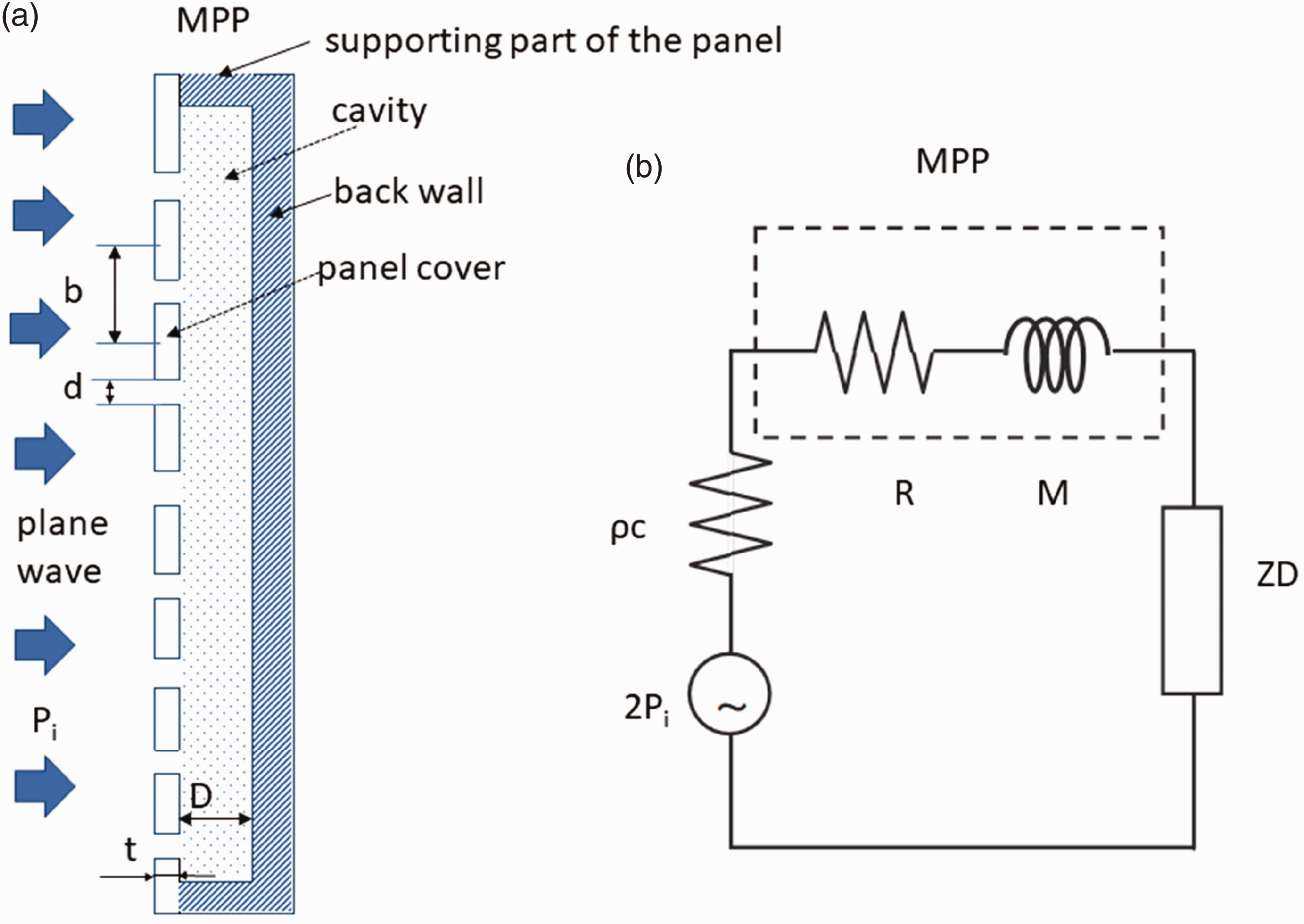
Panel diagram (a) and corresponding electrical circuit (b). Where d is diameter of perforation hole (m), b is span between holes (m), D is cavity depth (m), t is thickness of panel (m), 2Pi is plane wave pressure. MPP: micro perforated panel; ZD: acoustic impedance of cavity.
The total acoustic impedance Ztot is given as follows:





The sound absorption coefficient (SAC) is α:

Using the equations (1)–(6), we investigated the effect of the diameter of the holes on the acoustic absorption α. The diameter d of the holes gradually took three values: d1 = 0.003 m; d2 = 0.006 m; d3 = 0.009 m; other values characterizing the geometry of the perforated panel remained constant: b = 0.02 m; D = 0.05 m; t = 0.01 m. The results are shown in Figure 2.
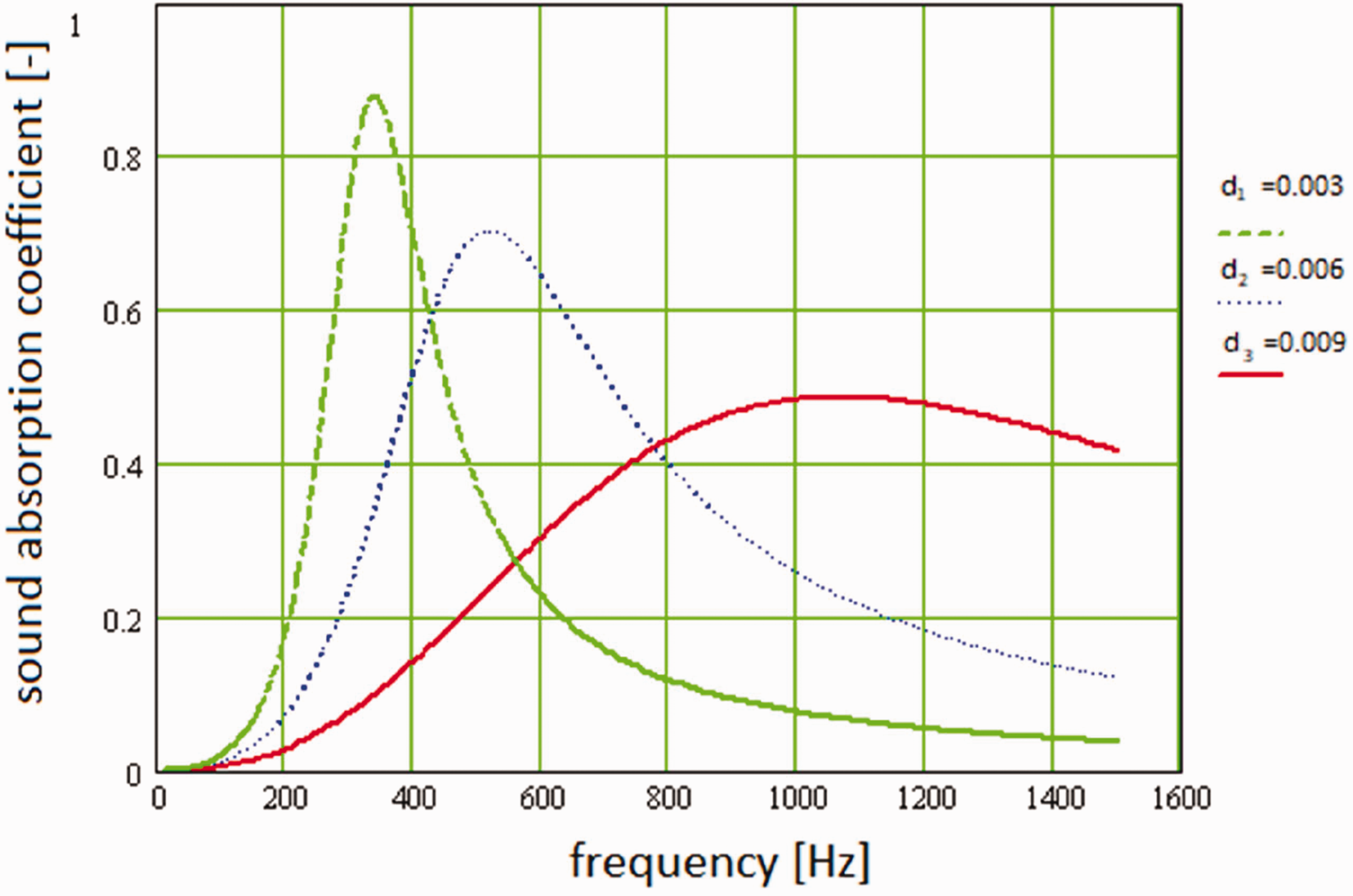
Effect of circular hole size on the sound absorption coefficient.
The computational model shows that if the diameter of the perforation hole, or the percentage of perforation, increases while the remaining geometric parameters of the panel remain constant, sound of higher frequency is absorbed. For our desired frequency range of 1000 Hz, a perforated panel of thickness t = 0.01 m, with an air cavity of D = 0.05 m with a hole diameter of 0.009 m and a hole spacing of b = 0.02 m appears to be optimal. The validity of the results of the theoretical model was verified by experimental research. The theoretical model is in good agreement with the experiment.
Materials and methods
Materials
The model of the impedance tube panel consists of three parts: (a) a support part with a cavity; (b) a perforated lid, i.e. the cavity cover; (c) bulk cavity filling (Figure 1(a)).
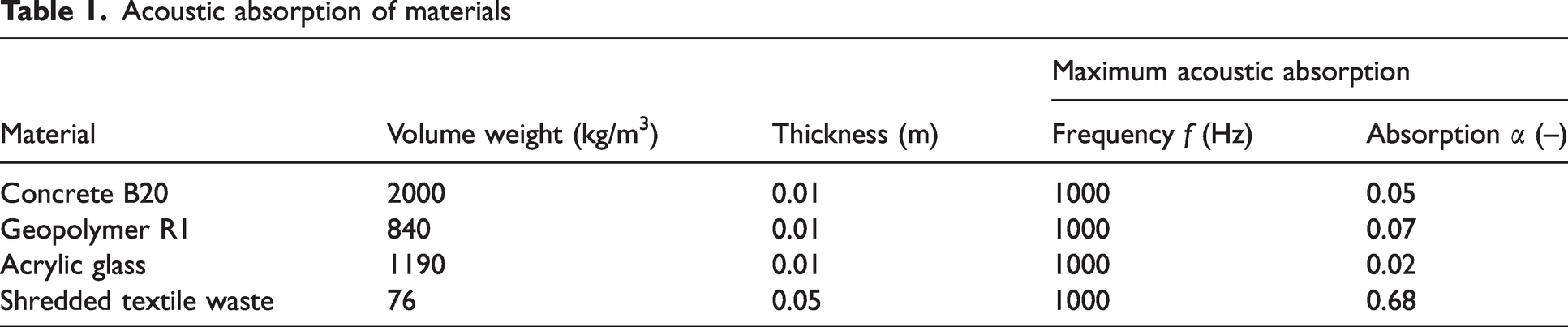
In the development and production of the panel, we used solid and bulk materials, the object of our interest being their absorption around 1000 Hz (Table 1).
Acoustic absorption of materials
The first 99 mm diameter samples that were tested in the impedance tube were made of commercially produced B20 concrete and foamed geopolymer (formulation R1, Table 2). The development of geopolymer foams for multifunctional purposes can be found in the work of Boros and Korim. 19 An overview of the applications and properties of the high foam geopolymer is presented by Bai and Colombo. 20 Different admixtures of the geopolymer, such as glass, aramid, and carbon fibers, affect its strength according to Korniejenko et al. 21
R1-foamed geopolymer formulation

Carbajo et al. 22 tested cylindrical geopolymer samples with a diameter of 70 mm and a height of 50 mm with perforations of 6, 10, and 15 mm. Park et al., 23 in their research study, used two different perforation sizes in the panel, 15 mm and 8 mm, with a range of perforation depths of 20–80 mm. However, none of these studies tested a panel with a cavity filled with bulk material.
For the experiments, we created a model of a geopolymer panel, according to formulation R1 (Table 2). The sample consisted of a support part containing a cavity and a lid. The diameter of the model panel was 99 mm with a depth of 60 mm. The 10 mm thick lid had different perforations. The geometry of the perforation was varied, i.e. the diameter of the perforation took two values d1 = 3 mm and d2 = 10 mm, and then the position of the perforations and their number were varied (Figure 3).

Samples of hollow panel for impedance tube.
Many technological problems had to be solved in the production of the geopolymer samples. It was difficult to achieve a constant height, width, and shape of the sample. Although the samples were poured into the moulds from the same formula mixture, due to the uneven drying of the material the sample lid height values ranged from 10–18 mm, i.e. a variance of 8 mm. A similar problem occurred with the sample plan view, where the circular shape of the sample plan view changed to an elliptical shape due to uneven drying. For impedance tube measurements, the samples need to be circular with a diameter of dv = 99 mm. For the fabricated samples, the values varied from 94.8 to 101 mm, i.e. a variance of 6.2 mm. Samples with a dimensional variation greater than 1.5 mm had to be discarded. For samples where the variation was less than 1 mm, the variation was compensated for by wrapping the sample in a thin polyurethan(PUR) foam strip, see Figure 3(e). For further analysis of the sound absorption as a function of sample perforation, we chose other materials due to the above-described technological problems in the production of geopolymer samples.
The effect of changing the geometry of the sample perforation on the sound absorption is very often investigated on samples produced by 3D printing. The advantages of this technology seem to be: easy variability (change of thickness, hole placement, hole shape, etc.), and speed of sample production. There are many studies where the influence of the geometrical parameters of the perforation on the sound absorption of samples produced on a 3D printer is investigated: Aslan and Turan, 24 Guild and Rohde, 25 Monkova et al., 26 Khosravami and Reinicke, 27 Vashina et al., 28 Yang et al., 29 and Zielinski et al. 30 However, in most of these studies we find perforated samples with a hole diameter of less than 1 mm and the diameter of these circular samples is d = 30 mm. For further experiments, we produced our samples on a 3D printer, Figure 4. We used a common material, i.e. polylactic acid(PLA) string. We made a panel with several lids that contained macro holes, i.e. holes of diameter ranging from 3–12 mm.
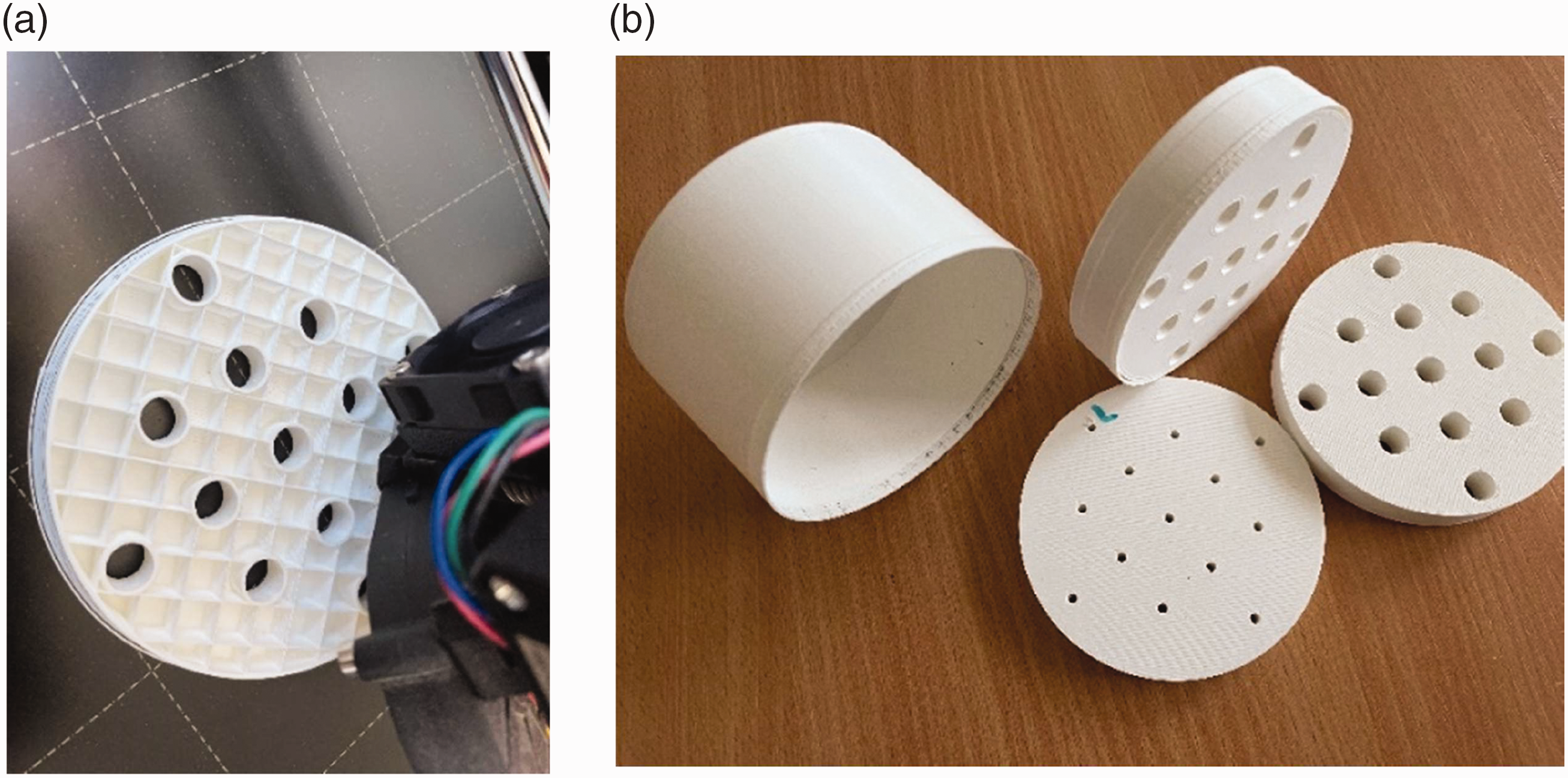
Model of a perforated panel produced on a 3D printer.
The model of the panel is cylindrical in shape with a diameter of 99 mm, the height of the cylinder is 60 mm, the thickness of the bottom of the cylinder is 5 mm. We made a basic set of samples, where we varied the thickness of the perforated lids (t1 = 5 mm; t2 = 10 mm; t3 = 15 mm), and the diameter of the holes on the lid (d1 = 3 mm; d2 = 6 mm; d3 = 9 mm; d4 = 12 mm). Only two parameters remained constant: the spacing between the holes b = 20 mm and the number of holes n = 13. We made two lids with holes 3 mm and two lids with holes 6 mm. The error in the measurement of the acoustic absorption coefficient did not exceed 5%.
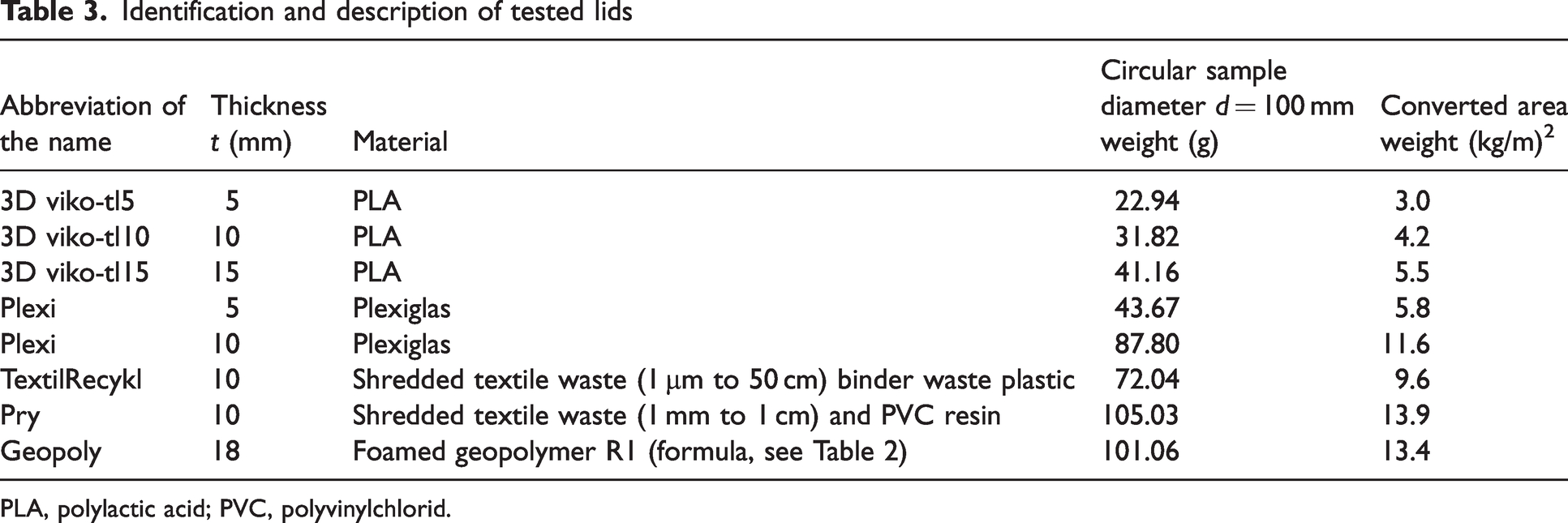
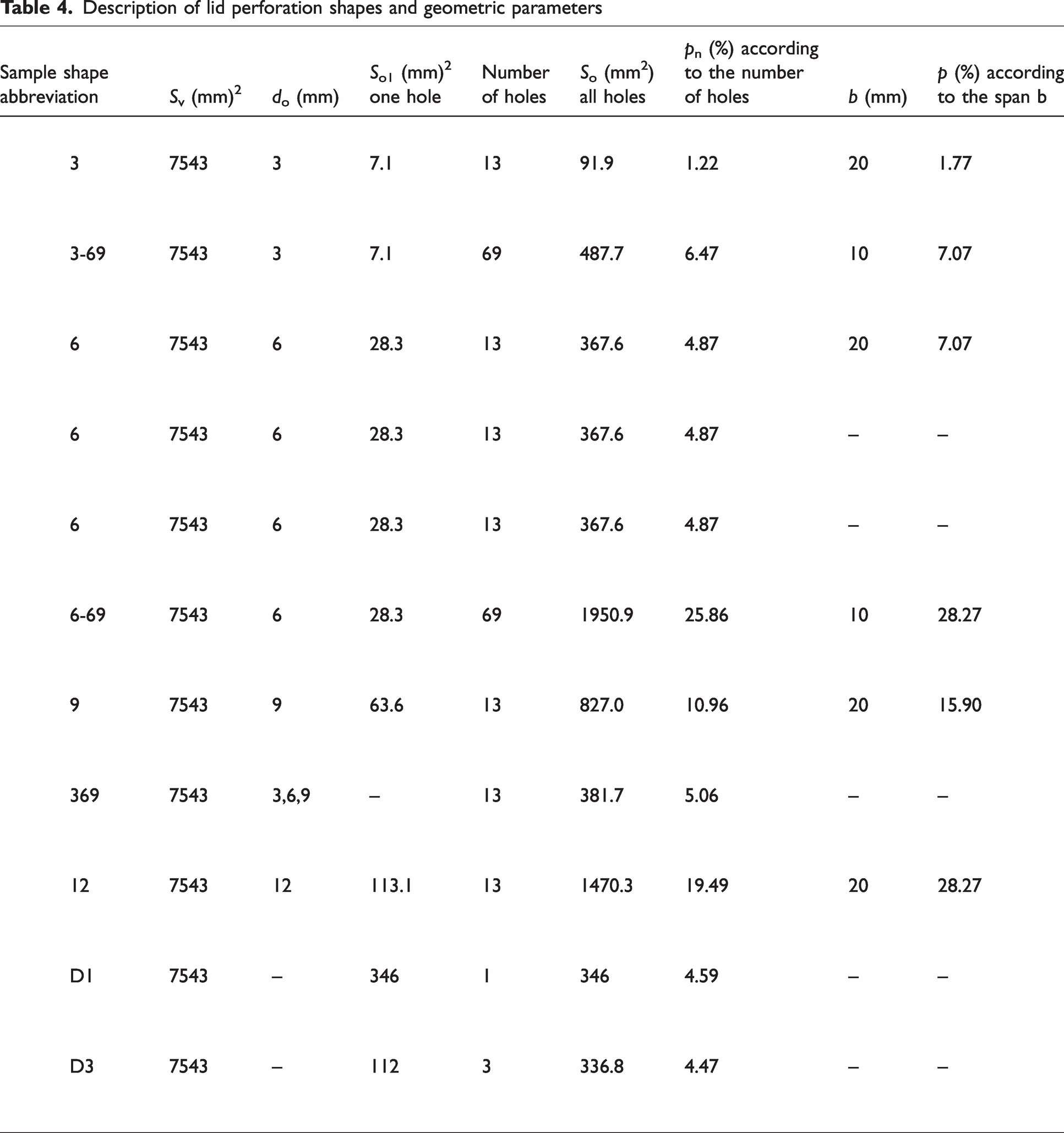
The basic set of lids was made on a 3D printer. The other lids were laser cut (on a Thunder Laser) from Plexiglas panels and recycled textile panels. A detailed description of the lids is in Tables 3 and 4.
Identification and description of tested lids
PLA, polylactic acid; PVC, polyvinylchlorid.
Description of lid perforation shapes and geometric parameters
The lid labeled TextilRecykl was cut from unique panels produced by Diakonie Broumov (PUV 2023-41000). The production process: unusable textile waste material (1 µm to 50 cm) is shredded and mixed with a binder material based on melted waste plastic. The resulting mixture is compressed at a higher pressure and temperature, with a cover layer (paper or parchment or aluminum foil) on both sides of the panel. The compression, followed by cooling and formatting to a specific size, produces the final product, a panel usable in the construction industry. For a square meter of a 12 mm panel, around 10.6 kg of textile and binding material are used. The last set of samples, labelled Pry, was also made from waste textiles that were shredded in a laboratory mill (Cutting Mill P19 Fritsch) and the resulting textile bulk (1 to 10 mm) was then mixed and bonded with polyvinylchlorid(PVC) resin in a 1:1 ratio. The sample took 24 h to cure.
Methods
The aim of the experiment was to find suitable parameters for the panel which can absorb sound in the frequency range of 600–1000 Hz with an acoustic absorption coefficient of at least 70%. To evaluate the SAC, we used an impedance tube, see Figure 5. The experiments were performed according to ISO 10534 in part 2
31
in a Brüel and Kjaer type 4206 two microphone impedance tube. There were two types of impedance tubes used. Sound absorption in the frequency range of 16 Hz to 1.6 kHz was measured in a 100 mm diameter tube and sound absorption in the range of 50 Hz to 6.3 kHz was measured in a 30 mm diameter tube. For the actual analysis of the sound signal, a Brüel and Kjaer type 2034 analyzer and the BZ5050 application software were used. Calculation of the SAC for the perpendicular impact is shown in equation (7):

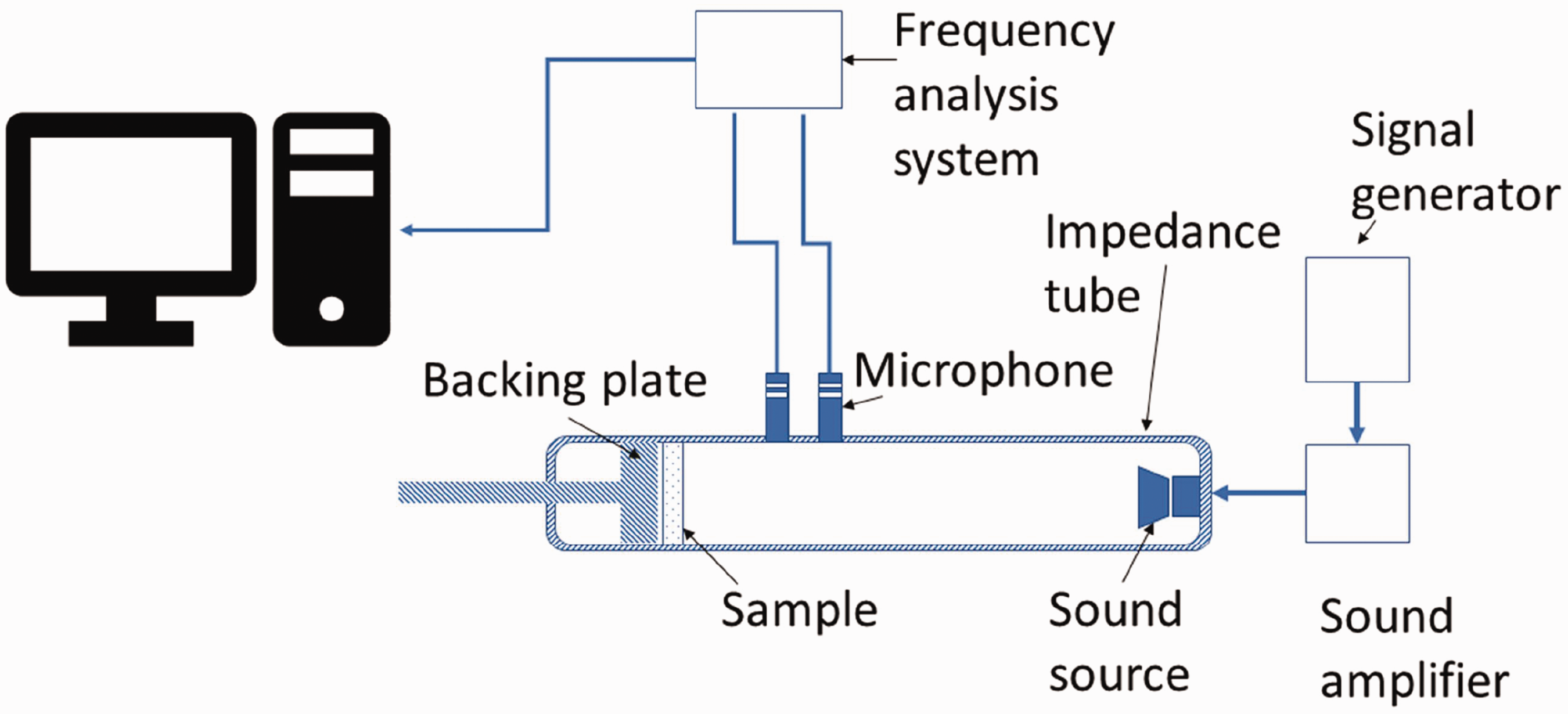
Schema of the measuring device for acoustic absorption measuring in an impedance tube.
Discussion of results
The resulting acoustic absorption values are presented in the 1/3 octave band, which is used as a more suitable characteristic for human hearing perception.
Figure 6 shows the results of the experiment performed on the geopolymer panel model. The required values, absorption greater than 70% and a frequency range of 500–1000 Hz, were met. The hollow panel alone, without any bulk cavity filling, absorbed 99% of the sound for a frequency of 1000 Hz. When the cavity of this panel was filled with kapok fiber, the sound absorption remained at 99%, but the absorbed frequency shifted towards a lower value, i.e. 550 Hz.
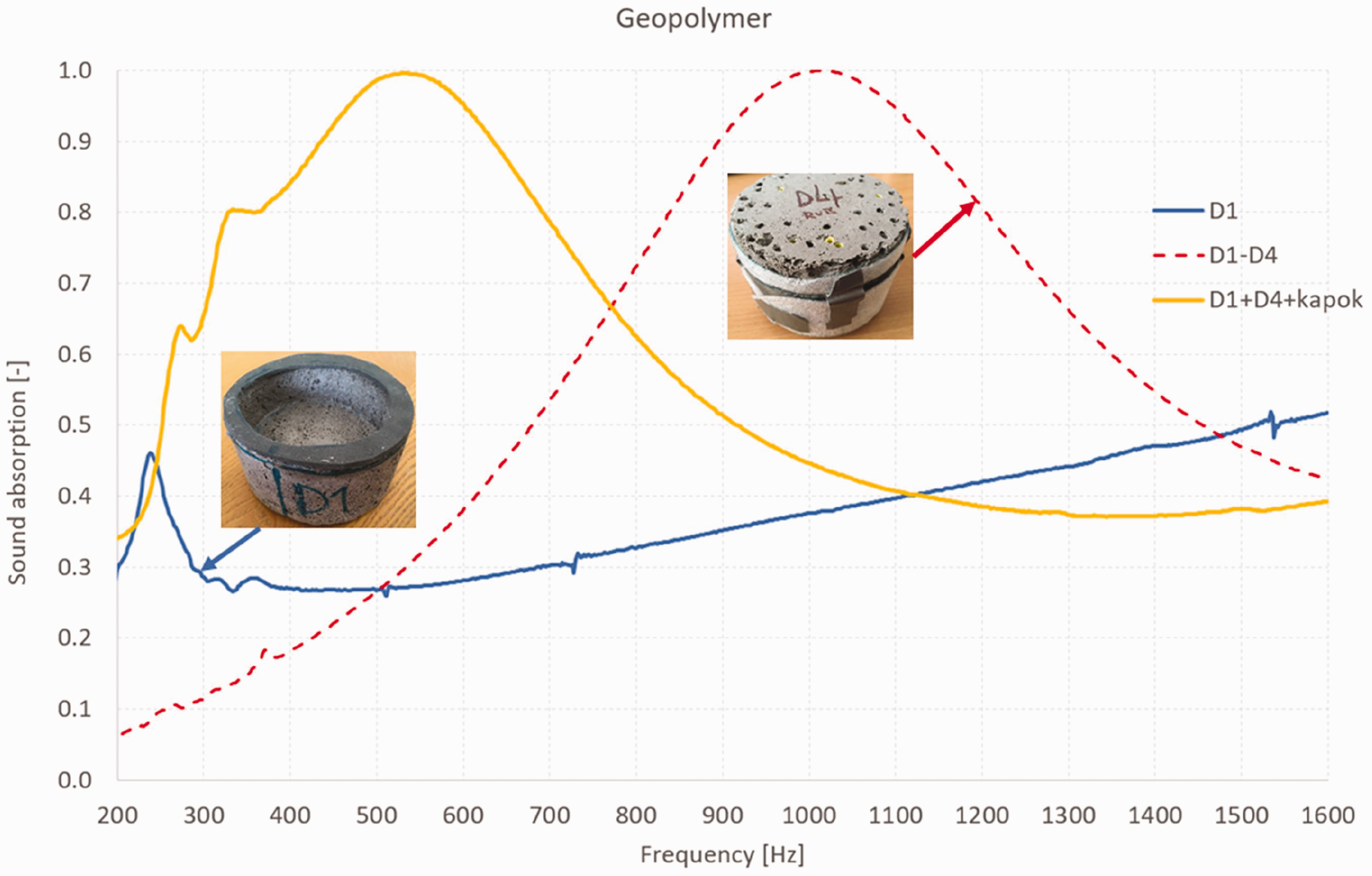
Hollow geopolymer panel: sound absorption.
In the materials section we mentioned technological problems. The measurement results were affected by these factors: (a) the panel diameter was not 99 mm and a PUR strip had to be wrapped around the circumference to reach the correct dimension; (b) the lid had to be attached to the panel because it was impossible to make a 1 mm thick rim into which the lid would fit, thus creating air gaps; and (c) there was porosity inside the panel cavity, which increased the acoustic absorption of the panel.
We made a hollow panel on a 3D printer (Figure 4(b)). We covered this panel with a geopolymer lid (Figure 7). We tested the effect of the hole size on the sound absorption, and the results are in agreement with the theoretical model presented in Figure 2. The value of the absorbed sound frequency increases with the increasing size of the diameter of the circular hole.
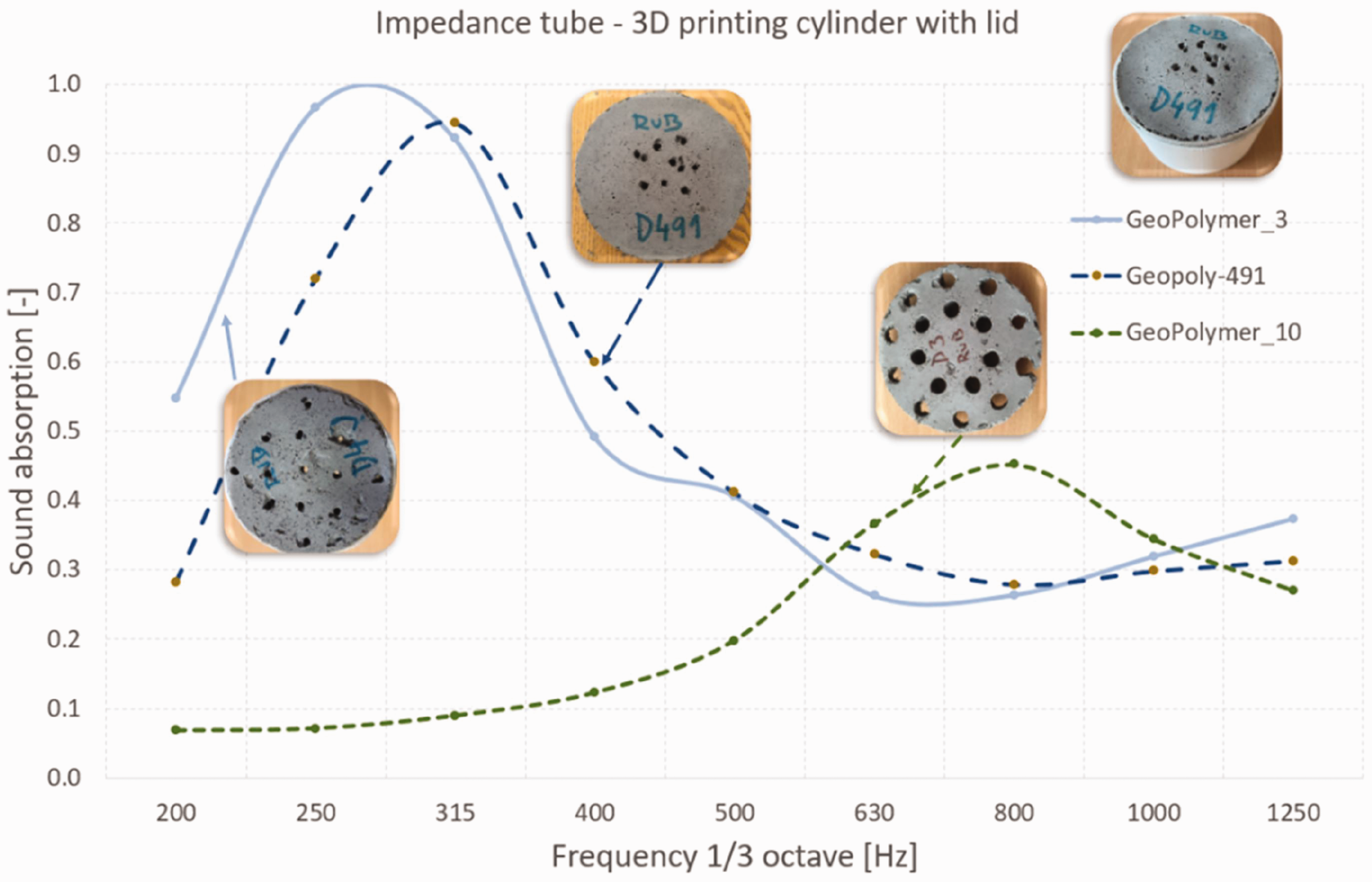
Sound absorption of the geopolymer panel lid.
The effect of the diameter size of the circular holes in the lid of a hollow panel
Perforated lids were produced on the 3D printer with the following parameters: thickness 5 mm, number of holes 13, hole spacing 6 mm. The diameter of the holes was changed: d1 = 3 mm, d2 = 6 mm, d3 = 9 mm, d4 = 12 mm. Figure 8 shows that as the hole diameter increases, higher frequencies are absorbed but the absorption value decreases, as predicted by the mathematical model, see Figure 2. The lowest absorption value is for the sample with 9 and 12 mm diameter holes. We are most interested in sound absorption in the frequency range of 500–1000 Hz, and the graph shows that a panel with holes ranging from 6–9 mm and 12 mm in diameter would be most suitable for this purpose. Samples with 6–12 mm diameter holes are capable of absorbing frequencies in our desired range, i.e. 500–1000 Hz. The disadvantage was that the value of the SAC decreases with a larger hole diameter.
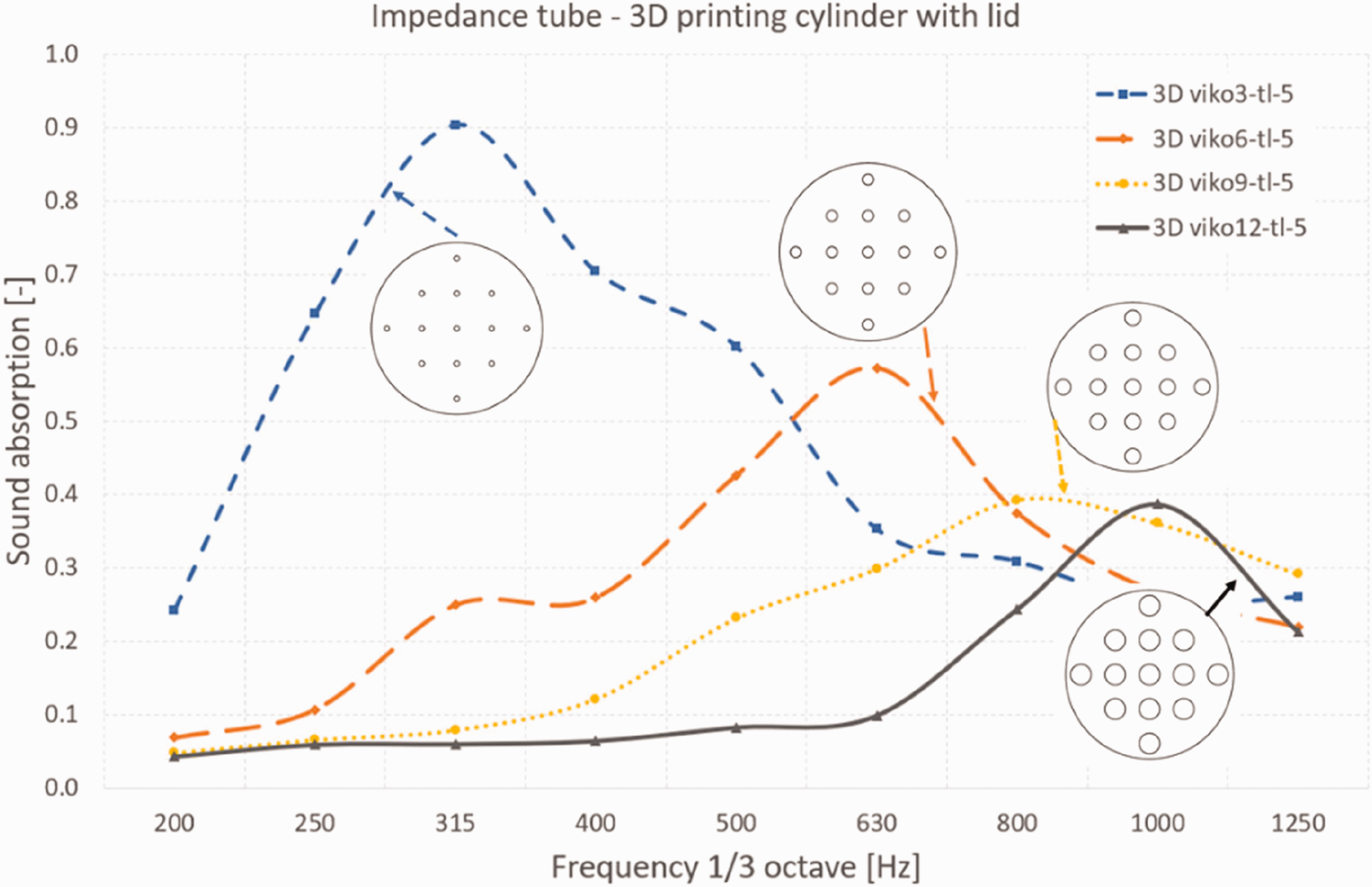
Sound absorption of the 3D printed panel. Effect of the lid hole diameter on sound absorption. 3D viko3-tl-5, d1 = 3 mm; 3D viko6-tl-5, d2 = 6 mm; 3D viko9-tl-5, d3 = 9 mm; 3D viko12-tl-5, d4 = 12 mm; tl-5 lid thickness 5 mm.
The effect of hollow panel lid thickness while maintaining perforation geometry
The effect of the lid thickness is presented on the Plexiglas lid samples, t1 = 5 mm, t2 = 10 mm (see Figure 9). As the thickness of the lid increases, the absorbed sound frequencies shift to lower values. For the Plexi-9-tl10 lidded panel, where the lid has a hole diameter of d = 9 mm and thickness of t = 10 mm, the frequency value is reduced from 820 Hz to 650 Hz. Our experiments show that it cannot be confirmed that the absorption coefficient of the sample increases with the growing thickness of the lid, but the absorbed sound frequencies always shift to a lower value due to the increasing thickness of the sample lid. This trend applied to both kinds of materials: the homogeneous Plexi and Pry lids and also the porous non-homogeneous 3D printed and TextilRecykl lids.
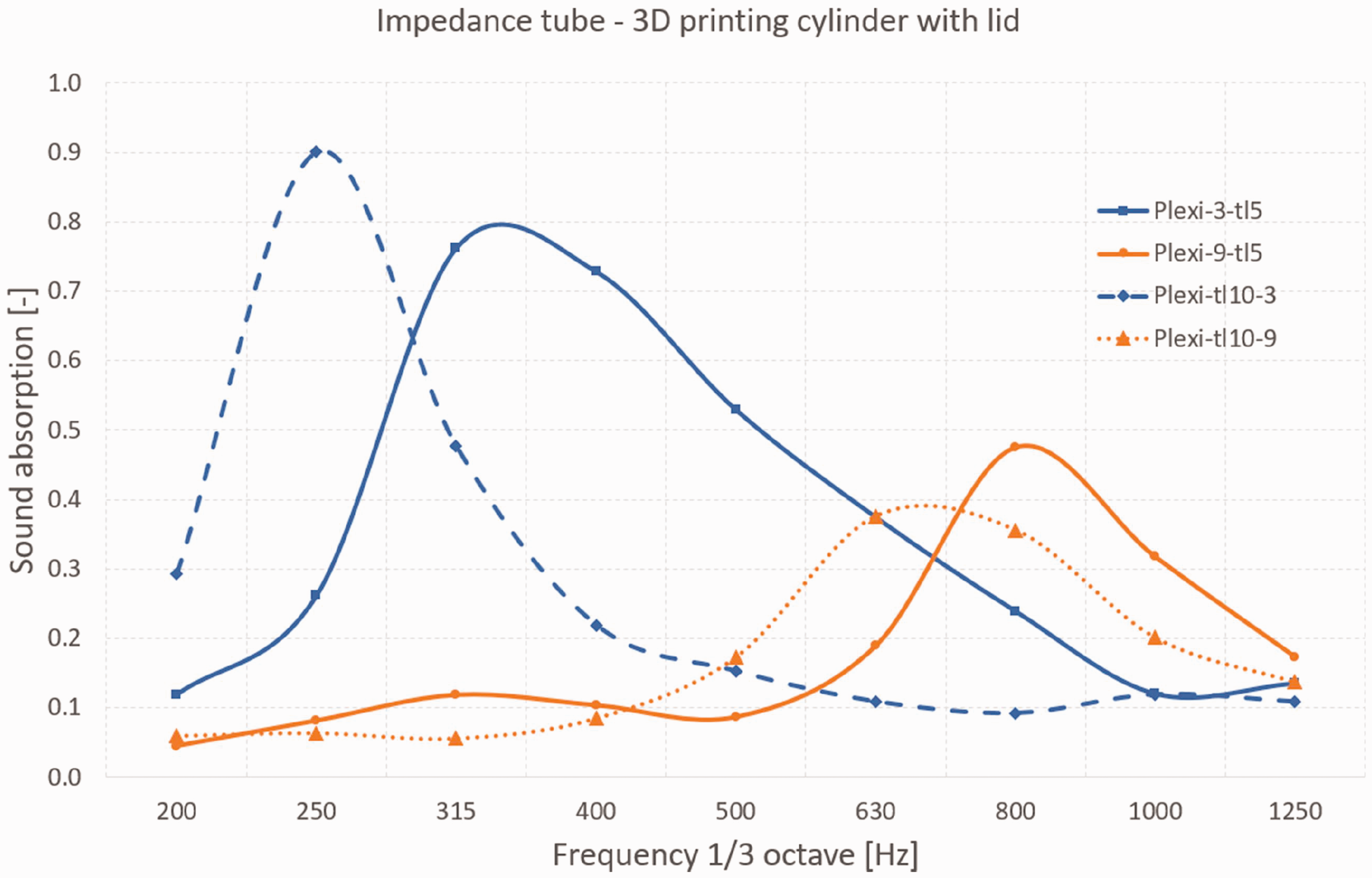
Sound absorption of the 3D printed panel. Effect of Plexi lid thickness on sound absorption coefficient (SAC).
The effect of the material composition of the hollow panel lid
Three types of lid material with the same lid thickness t = 10 mm were evaluated. Lids with 6 mm diameter holes were made of the following materials: plexiglass = Plexi-tl10-6, resin with shredded textile =Pry-6, and recycled textile panels = TextilRecykl-6.
As can be seen in Figure 10, if the lid geometry is maintained but the lid material is changed, the same sound frequency is absorbed, only the SAC value changes. The TextilRecykl-6 material achieved the highest SAC value, which was probably due to the higher porosity of the material. The homogeneous Plexi-tl10-6 sample, as well as the Pry-6 resin sample, were the least porous and achieved the lowest SAC values compared to the TextilRecykl-6 sample. These two samples are more reflective. A similar trend was observed for all types of perforated lids.
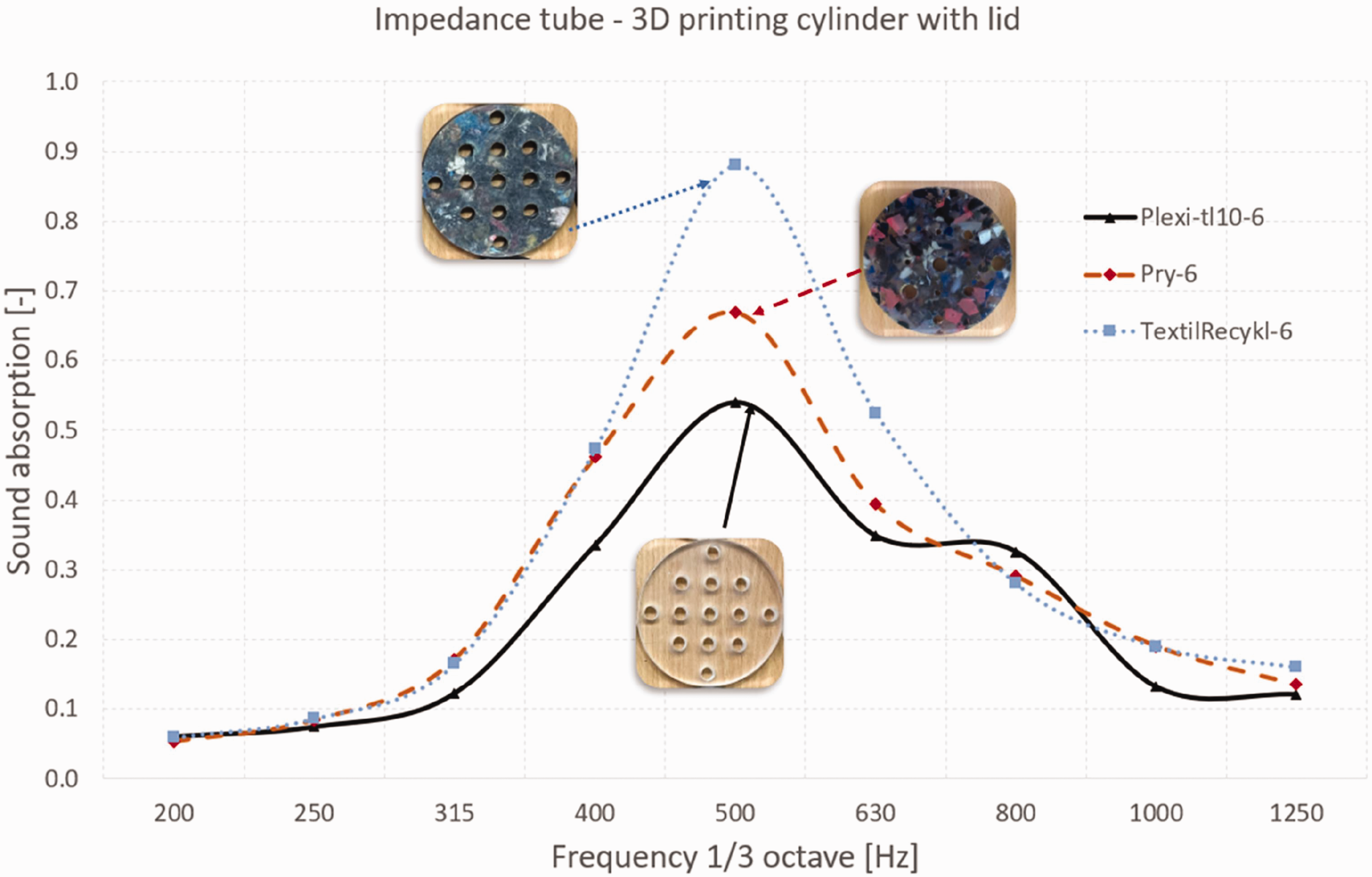
Sound absorption of the 3D printed panel. Effect of lid material on sound absorption while maintaining lid perforation geometry.
The effect of the shape of the perforation of the hollow panel lid while maintaining the percentage of hole coverage
In the studies of Mosa et al. 32 and Bucciarelli et al., 33 samples with different perforation shapes are tested in impedance tubes. There are few studies where 99 mm diameter samples with 1–9 mm diameter circular or slotted macro perforations are tested.
For further analysis of the effect of hole shape on acoustic absorption, we produced samples of perforated lids with circular and slotted macro holes, see Table 4. The percentage of perforation is a quantity that can be used to measure the number of holes per total lid area. There are two methods of calculation. The first method of calculation: pn = n*(So/Sv); where n is the number of perforations, So is the area of one perforation, and Sv is the area of the sample. The second method of calculation: p = 0.25*π (
A Plexiglas lid panel with a thickness of 10 mm was tested, see Figure 11. The lid openings were designed so that the perforation ratio was close to 5%, but the shape of the openings was different, see Table 4. The aim was to determine whether the different perforation shape has a significant effect on the acoustic absorption. The specimen with a longitudinal hole labelled 1D, had a perforation percentage of pn = 4.59%; the specimen with three longitudinal holes labelled 3D, had pn = 4.47%; the specimen with circular holes with a diameter of d = 6 mm, had pn = 4.87%. The specimen with combined holes of d = 3, 6, and 9 mm, had the highest perforation percentage of pn = 5%. From the results (Figure 11), it can be seen that the specimen with the combination of three different hole diameters of 3, 6, and 9 mm had the best SAC = 65%. All panels absorbed frequencies of 400 and 500 Hz.
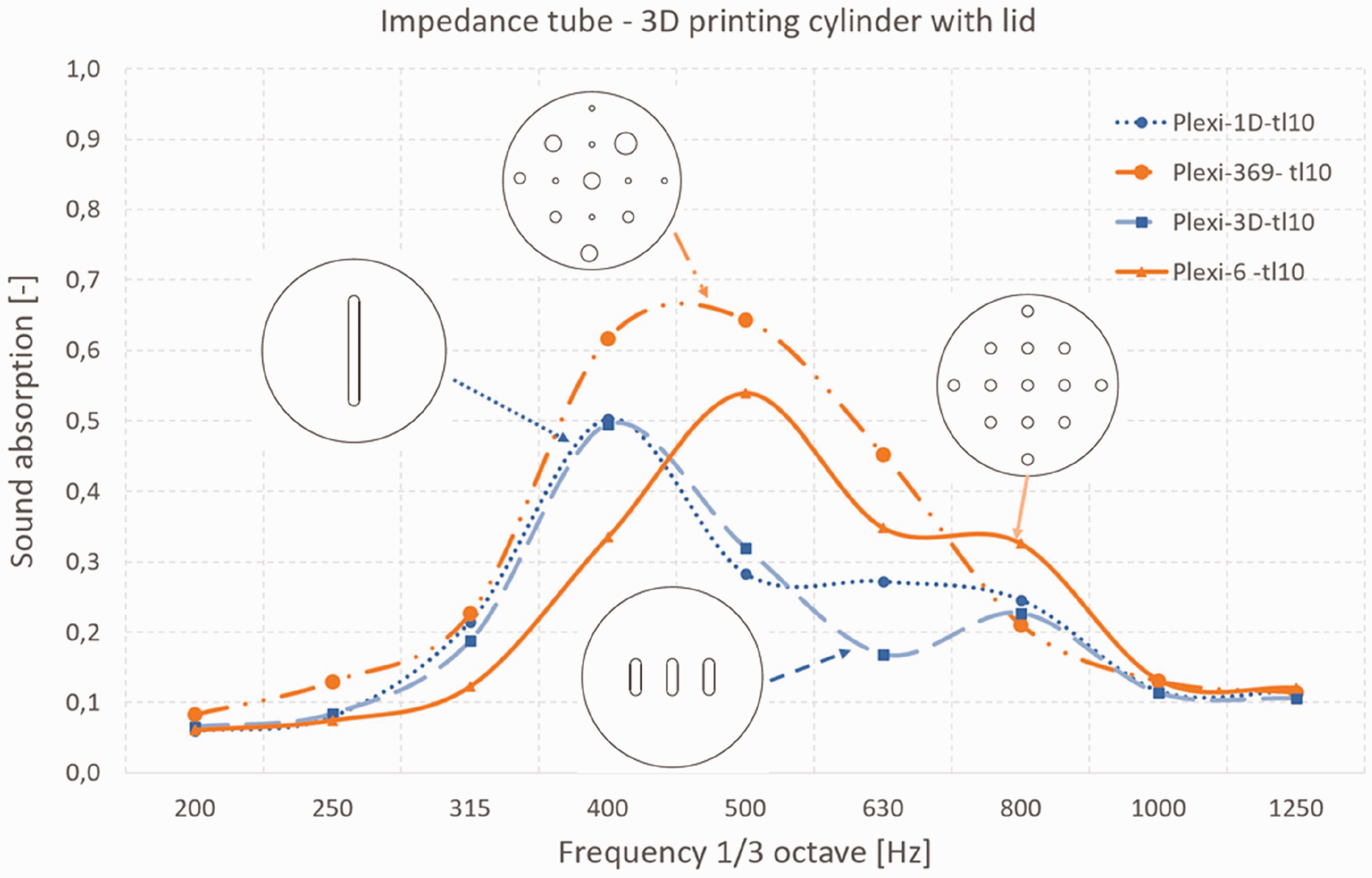
Sound absorption of the 3D printed panel. Effect of Plexi lid perforation shape on sound absorption.
The absorption parameters are significantly improved if the cover is made of 10 mm thick TextilRecykl shredded textile, see Figure 12. The panel with this lid showed the best absorption values for the single longitudinal hole perforation and for the lid with 13 holes of 6 mm diameter perforation, where the absorption reached values of 85% for sound frequencies of 450 and 500 Hz. For the remaining lid perforation shapes, the absorption was 70% for 400 Hz. This result, which is very different from the previous result of the sound absorption test for the Plexiglas lidded panel, is probably influenced by the micro-porosity of the material.
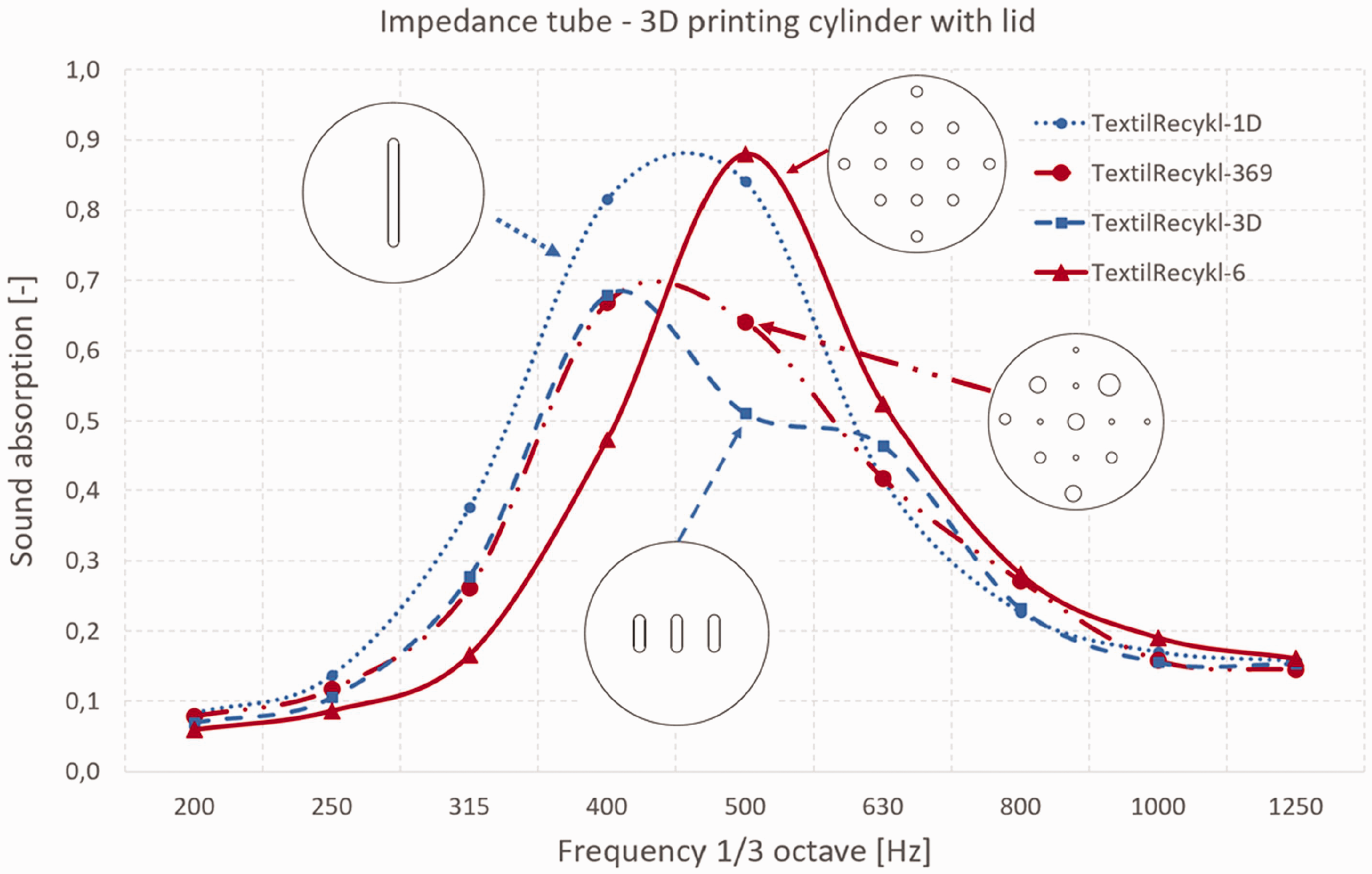
Sound absorption of the 3D printed panel. Effect of TextilRecykl lid perforation shape on sound absorption.
Next, we observed how the acoustic parameters change if we keep the thickness of the lid, the size of the holes, and the number of holes the same, changing only the placement of the holes. The percentage of hole coverage remains the same for all samples pn = 4.87% (Figure 13). We did not observe any significant difference in the SAC values in this case either, the range of absorbed sound frequencies is highest in the 450–550 Hz region.
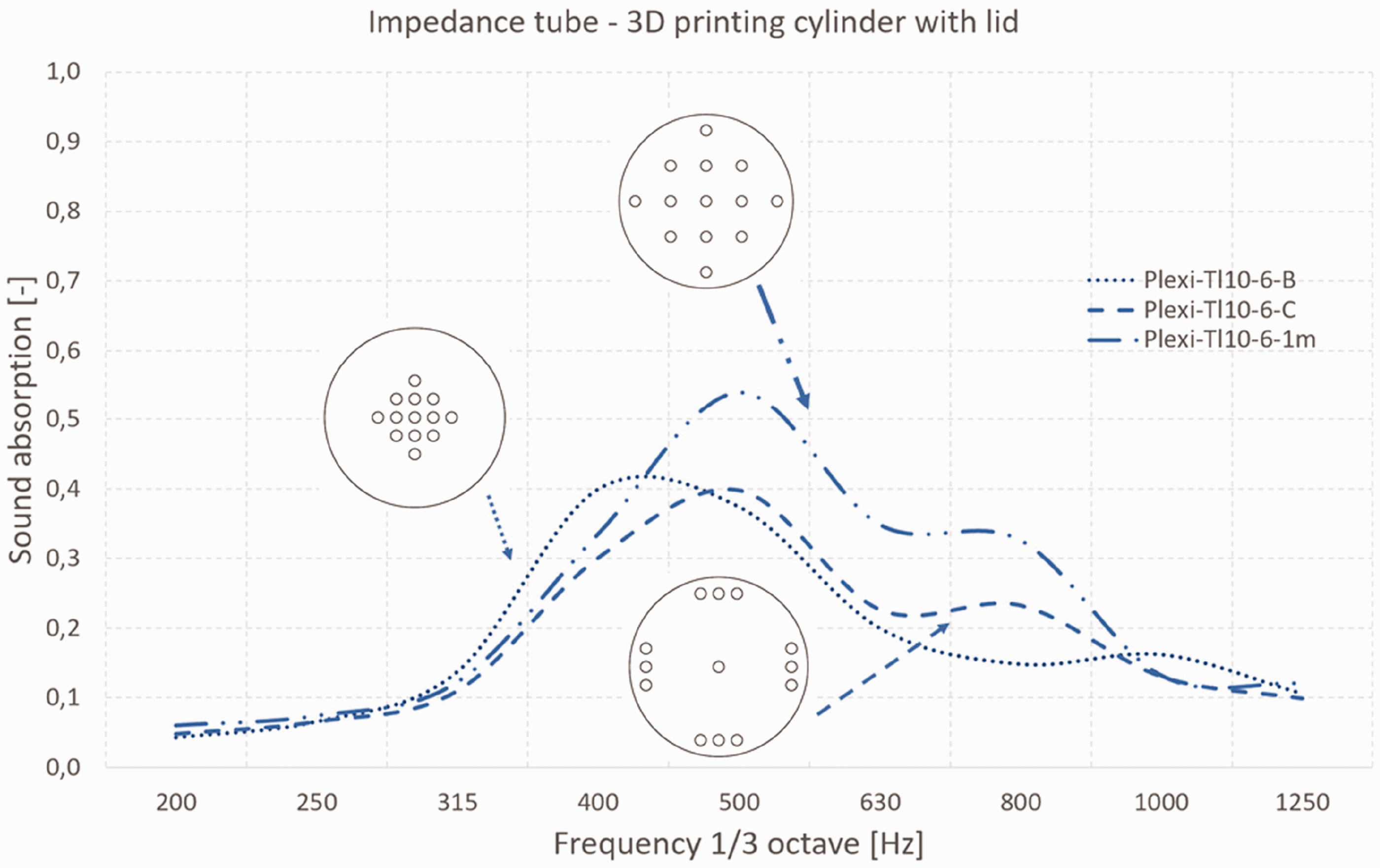
Sound absorption of the 3D printed panel. Effect of hole placement on sound absorption.
The effect of increasing the value of the percentage of the lid coverage by circular holes
For samples with the same hole diameter, the value of the absorbed sound frequency increases due to increasing coverage ratio, but the SAC value decreases, as shown in Figure 14. The panel sample with a lid with 13 holes of 6 mm diameter where pn = 4.87% showed a SAC = 68% for a sound frequency of 500 Hz, the sample with 69 holes where pn = 25.86% had a SAC = 32% for a sound frequency of 1000 Hz. The sample with 13 holes with a diameter of 9 mm and pn = 10.87% had a SAC = 40% for a sound frequency of 650 Hz.
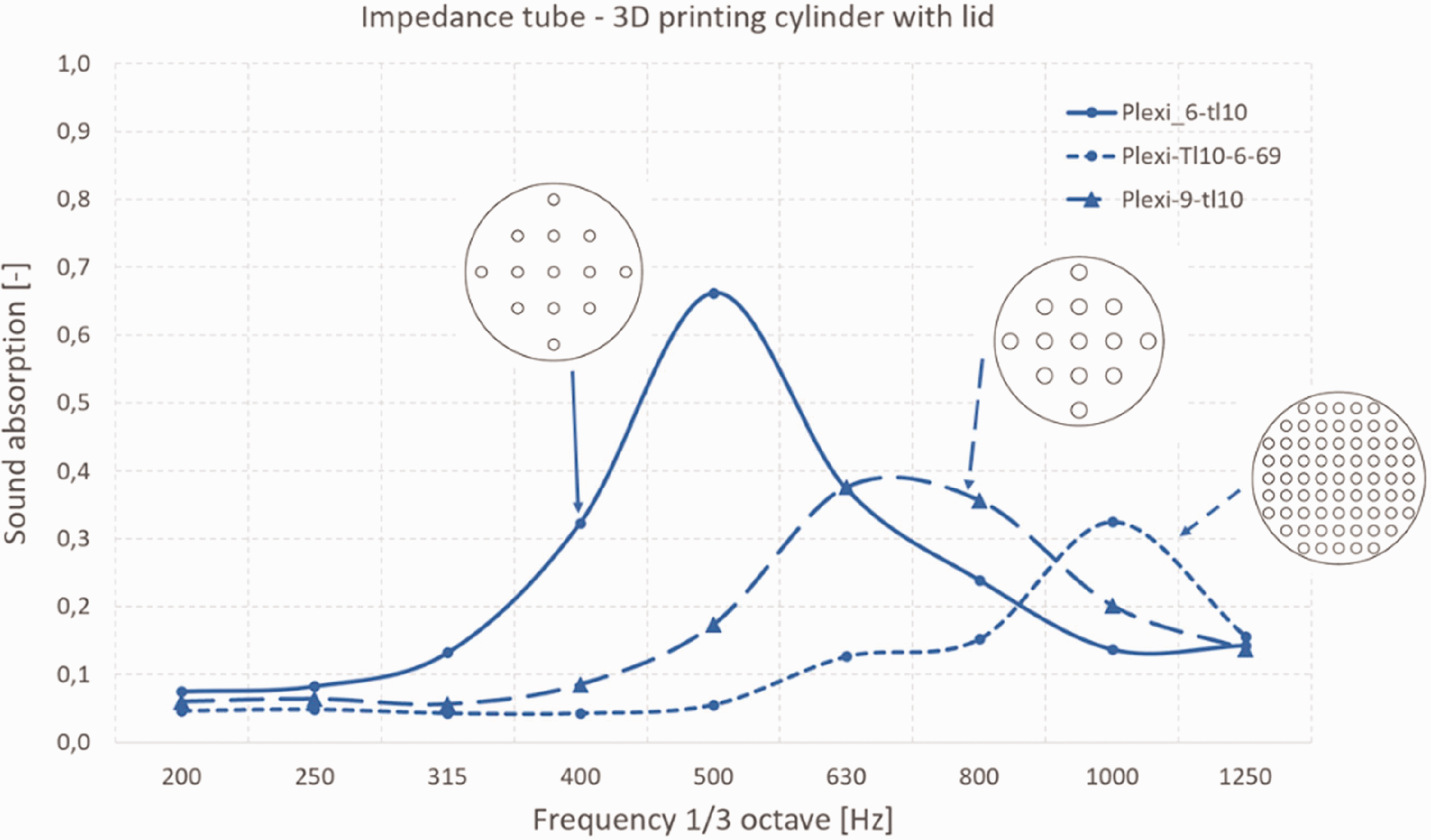
Effect of the percentage of hole coverage on the sound frequency value.
The effect of the cavity filling for a panel with a perforated lid
In previous experiments, we tested hollow panels without the bulk cavity filling. We repeated the experiments again, but the panel cavity contained shredded waste textile. The SAC value always improved due to the loose filling, and the absorbed sound frequency always shifted to lower values. We analyzed how the acoustic parameters of a 3D printed hollow panel change. The cavity of the 50 mm deep panel was filled with 30 g of shredded textile waste, i.e. the calculated bulk mass of the filler was 76 kg/m3. For the panel with 9 mm holes, the sound absorption increased from 40% to 99% due to the filler, but the absorbed frequency decreased from 820 Hz to 635 Hz. For the panel with 6 mm holes, the filling increased the sound absorption from 58% to 95% but reduced the absorbed frequency from 630 Hz to 450 Hz.
The required sound frequency absorption in the interval of 500–1000 Hz was reached by testing a panel with a perforated lid that had 6 mm diameter holes and 10 mm span between the holes, and the total number of holes was 69, the perforation percentage pn = 25.86%, as can be seen in Figure 15. A hollow panel without any loose material filling with a lid where pn = 25.86% had a value of SAC = 32%. The SAC value increased to SAC = 95% due to the loose material in the panel cavity, i.e. almost three times more.
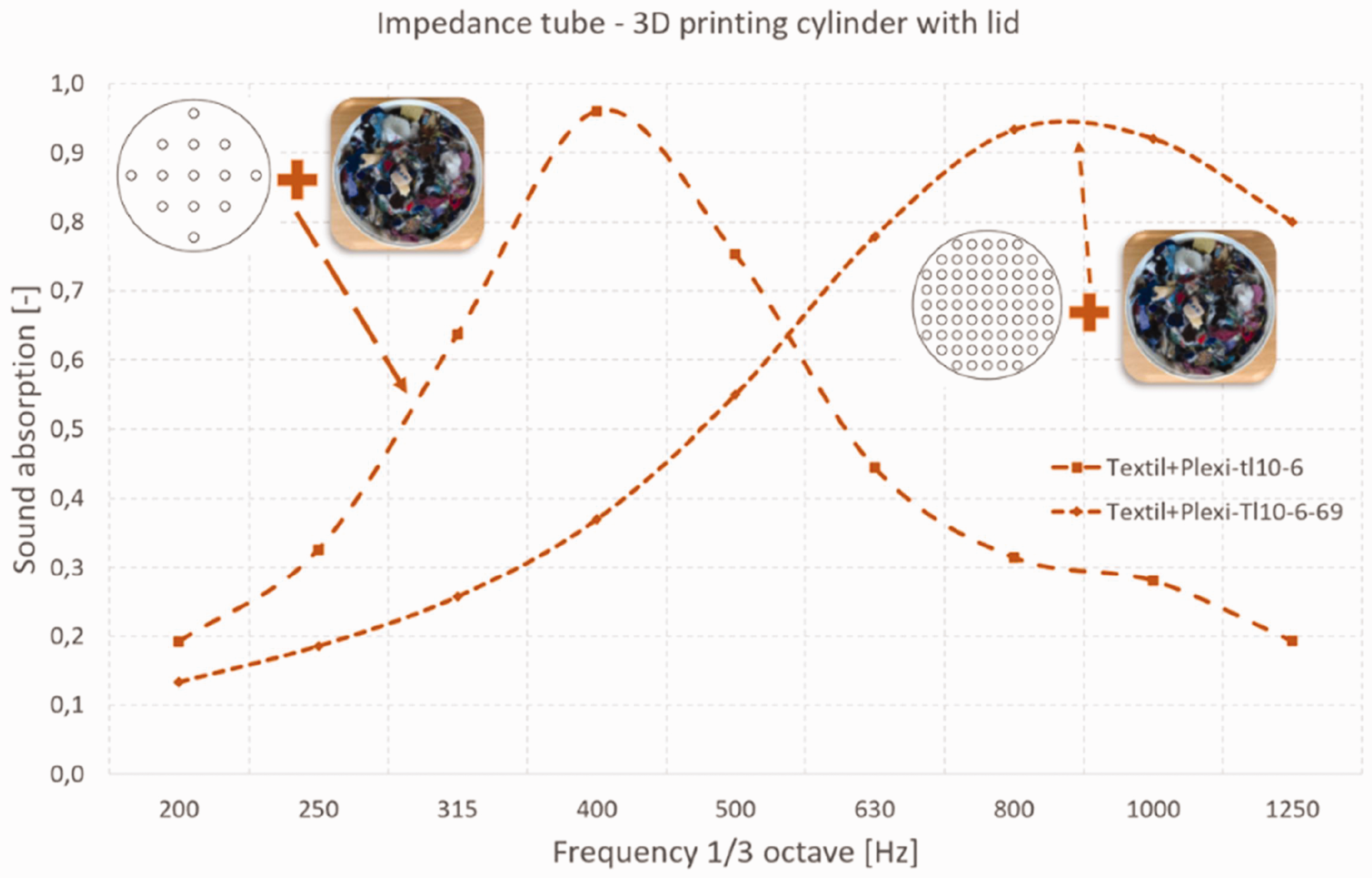
Effect of the cavity filling for a panel with a perforated lid.
Conclusion
Optimal parameters for a hollow panel covered by a lid with macro holes were sought by means of experimental research. The panel should absorb sound frequencies in the region of 500–1000 Hz with a SAC of at least 70%. In order to design a suitable panel construction, six parameters were analyzed which affect the SAC and the value of the absorbed sound frequency:
The size of the diameter of the circular holes on the lid of the hollow panel: as the diameter of the circular hole increases, while keeping the same number of holes in a lid, the sound frequencies shift to higher values, but the SAC decreases. If we want to absorb the low frequency region of 300 Hz, we choose a hole diameter of 3 mm. A 12 mm hole diameter will allow absorption of frequencies in the 1000 Hz region (Figure 8). The thickness of the hollow panel lid while maintaining the perforation geometry: as the thickness of the hollow perforated panel lid increases, the absorbed sound frequency shifts to lower values. Our experiments show that we cannot confirm the trend that the SAC increases with the lid thickness of the sample (Figure 9). Material composition of the hollow panel lid: with the same perforation geometry and lid thickness, the porous and least homogeneous material (TextilRecykl-6), achieved the highest SAC = 89%. On the other hand, the homogeneous Plexi-tl10-6 sample showed the lowest SAC = 50%. All samples absorbed sound frequencies in the interval 315–630 Hz (Figure 10). Perforation shape of the hollow panel lid while maintaining the percentage of hole coverage: we compared the effect of changing the shape of the hole from circular to slotted at a coverage percentage between 4.5–5%. The range of absorbed frequencies for all shapes is between 315–800 Hz. The SAC value ranges from 50–65% (Figure 11). The effect of the positioning of the holes did not show much change in the SAC value either. For all samples, sound frequencies in the range 315–630 Hz were absorbed, with SAC in the interval 40–55% (Figure 13). Increasing values of the percentage of the lid coverage by circular holes: it is possible to increase the value of the absorbed sound frequency while maintaining the shape of the hole by increasing the number of holes or decreasing the value of b, i.e. the distance between the holes. The absorbed sound frequency of the sample with 13 holes of 6 mm diameter moved to a higher value, i.e. from 500 Hz to 1000 Hz. However, the SAC of 68% dropped to 32%, (Figure 14). Filling of the cavity of a panel with a perforated lid (Figure 15). Experiments have clearly demonstrated the effect of the density of the filling on the value of the SAC. For the specimen where the lid had 69 circular holes with a diameter of 6 mm, the SAC value increased almost threefold due to the bulk material filling.
Surprising SAC results were obtained for the TextilRecykl sample, i.e. panels made of shredded textile. The panel samples without any bulk filling achieved SAC values of up to 90% just due to the lid perforation (Figure 12).
From the experiments conducted, it is evident that we will be able to use a combination of diameters of circular holes or slotted holes in the panel lid both from the functional point of view (to tune the appropriate value of the absorbed sound frequency) and from the aesthetic point of view (to arrange different shapes and numbers of holes). We are able to increase the low value of the SAC of hollow panels with perforated lids by bulk filling of their cavity and regulate the SAC value by changing the bulk density of the filling. This direction will be the subject of further research.
Footnotes
Declaration of conflicting interests
The author(s) declared no potential conflicts of interest with respect to the research, authorship, and/or publication of this article.
Funding
The author(s) received no financial support for the research, authorship, and/or publication of this article.
