




Abstract
Human and non-human subjects are exposed to micro plastics through drink, food, and air. Micro-plastics propagating through atmosphere are breathable particles during inhalation and exhalation leading to deposition of them in the deep lung via the alveoli of the lungs. Teabags are made of plastics that are not recyclable and biodegradable. Therefore, we intend to remove used teabags from the natural environment by repurposing them to make sound attenuating panels for building and architectural industries, contributing in this way to a sustainable circular economy. The panels were designed and developed from consumed teabags as porous material by filling a frame to investigate acoustics wave propagation through them at normal incidence. Experimental testing was carried out on circular teabag panels in an impedance tube using a transfer function method to determine their sound absorption coefficient and transmission loss. Furthermore, the impedance gun method was used to determine the absorption properties of square panels. Results show that 75 mm thick circular panels give an absorption coefficient higher than 0.8 between 400 and 1600 Hz. Up-to 9.8 dB sound transmission loss of circular panels is obtained at higher frequencies. Absorption coefficients for square teabag panels are very good despite a coincidence-dip seen at 800 Hz. The satisfactory sound absorption and sound transmission characteristics of acoustic panels made of consumed tea bags can make this recycled material a cost-effective solution in the production of sustainable acoustic treatment in indoor spaces. The results suggest that recycling of consumed teabag as the panel could be applied as alternative sound absorbing materials.
Introduction
Tea infusions have been consumed as a beverage and formed part of human cultures since 2500 B.C. Around 6 million tons of fermented and unfermented tea bags are being consumed by people every day across the world. Teabags are sealed with a non-poisonous glue. Tealeaves are biodegradable, natural, and environmentally friendly materials. The plastic that is used to make teabags is not recyclable and biodegradable.
Traditional synthetic fibres are used as noise attenuating materials. But there is an increasing interest for using plant based natural fibres instead of synthetic fibres due to growing health concerns and environmental pollution. Tea leaf fibre is a unique natural fibre with fresh aroma and rich in phenolic extractive content which contribute to be more resistant against fungal and termites. 1 Multi-layer coir fibres have been found useful as a noise attenuating material as an alternative for synthetic fibre materials. 2 An investigation was carried out on polyurethane foams that are loaded with tea leaf fibres. 3 A study carried out on jute fibre materials have found that thickness of materials and alkali treatment showed significant effect on the acoustical performance of jute fibre. 4 The absorption coefficient of paddy waste fibres was found to be comparable with the absorption coefficient of synthetic glass wool with same thickness of sample. 5 A feasibility study of spent tea leaf fibre was carried out to determine their application as an eco-friendly sound absorbing material. Spent tea leaves, when compressed and mixed with natural rubber latex binder, present a very good resistance to fire, to termites and fungal growth, as they are rich in polyphenols.6,7
Sound absorbing porous materials are used widely for noise control applications in a variety of industry across the world. The preliminary theoretical work describing the sound propagation through porous materials was introduced by Zwikker and Kosten 8 who presented the model of effective density and bulk modulus. Biot9,10 presented frame elasticity, where the skeleton of the material is not rigid and is capable of transmitting sound waves. Biot determined three types of sound waves, two compression waves and one shear wave, existing in porous materials. Delany and Bazley 11 showed that measured values of characteristic impedance and propagation coefficient for a range of fibrous materials, normalized as a function of frequency divided by flow resistance, could be presented as simple power law functions. Attenborough 12 observed that the normalizing parameter used by Delany and Bazley appeared in the theoretical expressions for any pore shape and concluded that empirical relationships of the form proposed by Delany and Bazley should be valid for non-fibrous porous materials, and the coefficients in the Delany-Bazley model would be unique to each type of porous material.
Conventional plastic tea bags cannot decompose totally when discarded in a land fill or at sea conditions. Therefore, these plastics can cause environmental pollution. There is a need to keep teabags related plastics in the economy but out of the natural environment. This could help world’s financial system by creating a circular economy for plastics. To do so, we have aimed to investigate potential applications of consumed teabags as sound attenuation materials in built environment and architecture industry. It is aimed to utilize consumed teabags to make circular and square acoustic panels. The porous nature of the teabag panels could permit them to attenuate acoustic energy and reduce reverberant sound field in closed spaces. Acoustic measurements were carried out on teabag panels employing impedance tube and using impedance gun techniques to determine their sound absorption coefficient and transmission loss. Acoustic properties of teabag panels were investigated at normal incidence and compared with acoustic properties of conventional building materials experimentally and theoretically for first time based on authors best knowledge.
Theory of sound absorption through porous materials
Delany and Bazley model
A layer of material fixed on a rigid impervious wall is subjected to sound waves. When sound waves impinge on the front surface of the material, a part of the sound wave reflects back into same medium while other part propagate and attenuate through the material. The impedance at the surface of the material is given by 13 :

where d is the thickness of the material,
Delany and Bazley measured the complex wave number, k, and the characteristic impedance


where
Flow resistivity is the most important physical characteristic of sound absorbing materials. Flow resistivity of porous materials as a function of density is given as follow 14 :

where A and B are the regression parameters, 0.01 and 1.01 respectively.
The reflection coefficient at the surface of the material can be written as

where Z0 is the impedance of the fluid layer (air).
The absorption coefficient

When a layer of material separated from a rigid impervious wall by an air gap is subjected to a sound pressure the impedance at the surface of the material is given by 13 :

where
Sound absorption using transfer function method
When a sound wave generated by a loudspeaker at the frequency of interest is sent down a close ended tube, it will be partially reflected from other end of the tube or from the sample under test that is placed at the end in the tube as shown in Figure 1. The incident and reflected sound waves will be in phase at some points along the tube, leading to an antinode because they are sinusoidal and of the same frequency and they interfere constructively while they are interfering destructively when they are out of phase and leading to a node in the tube. The experimental procedure is based on the acoustic reflection coefficient at normal incidence being determined from the measured transfer function between two microphone positions in front of the tested material.
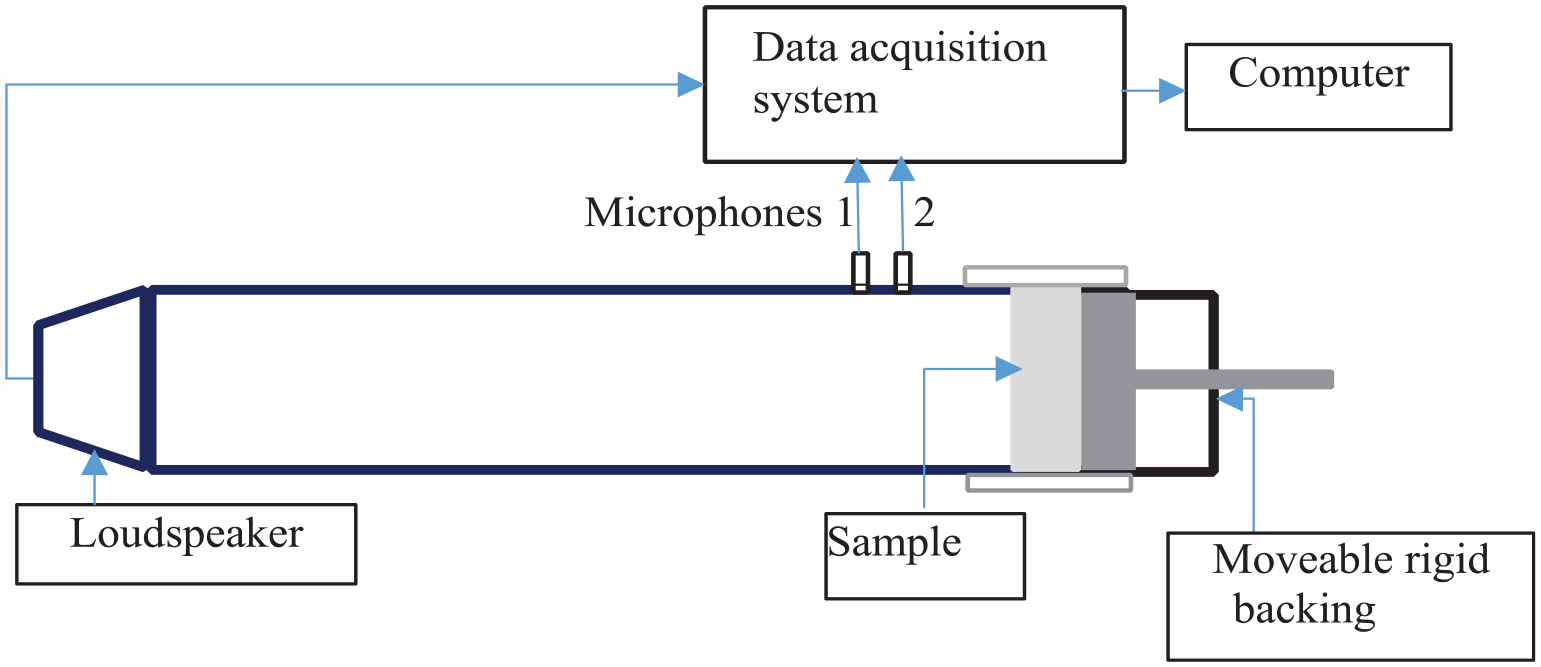
Measurement set-up for transfer function system. 15
The sound pressures of the incident wave


where
The sound pressure


Where
The reflection coefficient is given as:

Where
Therefore, the normalized specific acoustic impedance of the panel absorber is:

while the absorption coefficient α is:

Sound transmission through materials
The sound transmission loss of a material is given in equations (15a) and (15b)17:


where s is the distance between the centre of microphones, and k is the complex propagation constant,
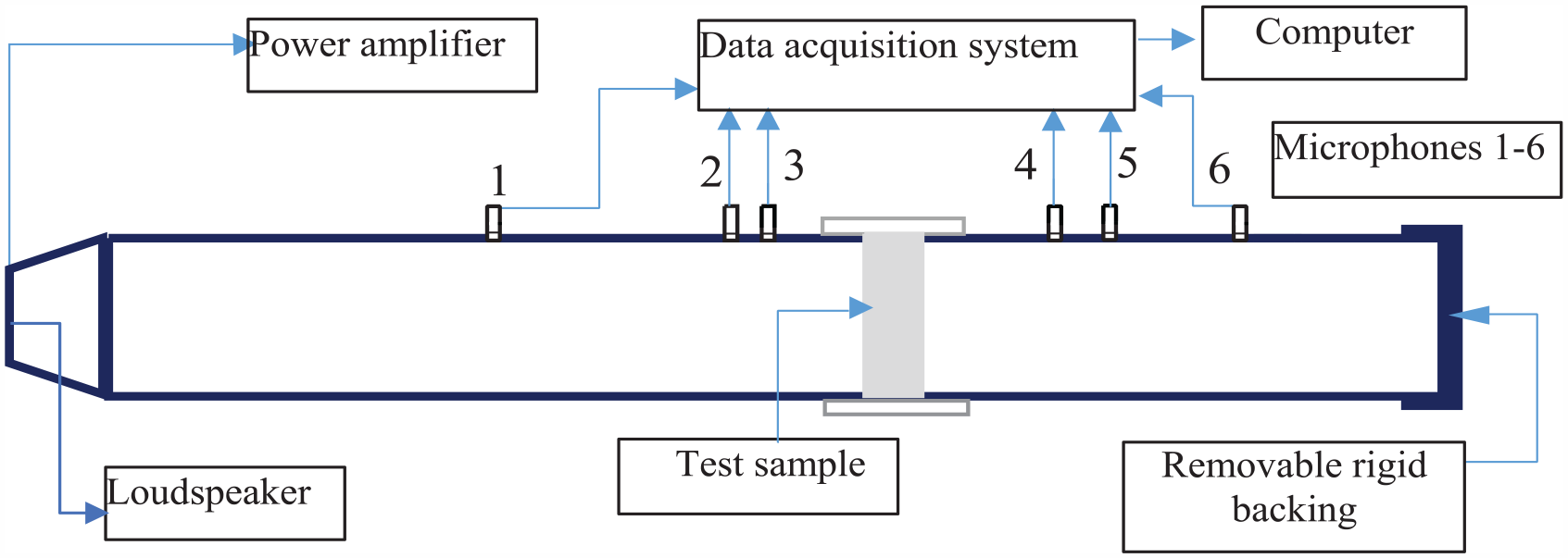
Impedance tube system for transmission loss measurement. 15
Measurement methodology
A variety of consumed teabags were collected from public cafes and private homes. They were hand-washed to remove sugar, milk, and tea-residue. Then they were left on the table for 3 days to dry at room temperature. The squared shaped teabags that have dimensions of 75 mm × 75 mm were selected to develop panels. Two circular and two square panels samples were developed from rolled teabags as seen in Figure 3. Circular panels with a diameter of 10 cm are made of 64 consumed teabags and its total weight is 110 g, see Figure 3(a). Two square tea-panels that have an internal dimension of 40 cm × 40 cm × 7.5 cm as shown in Figure 3(b) were built from 1300 units of consumed teabags. The total weight of square teabag panel was 3.016 kg including the weight of the frame of 0.7576 kg. Total weight of teabags is 2.2584 kg which will give a density of circa 208.5 kg/m3. The depth of the panels is 75 mm which was decided considering the dimensions of the square shaped tea bags. Figure 3(c) and (d) show unused and used tea removed from the bag. When the tea leaves are mixed with hot water, they would be brewed and release their flavour. Therefore, they change chemical composition, undergo colour changes, and become more light brown as it can be seen from Figure 3(d).
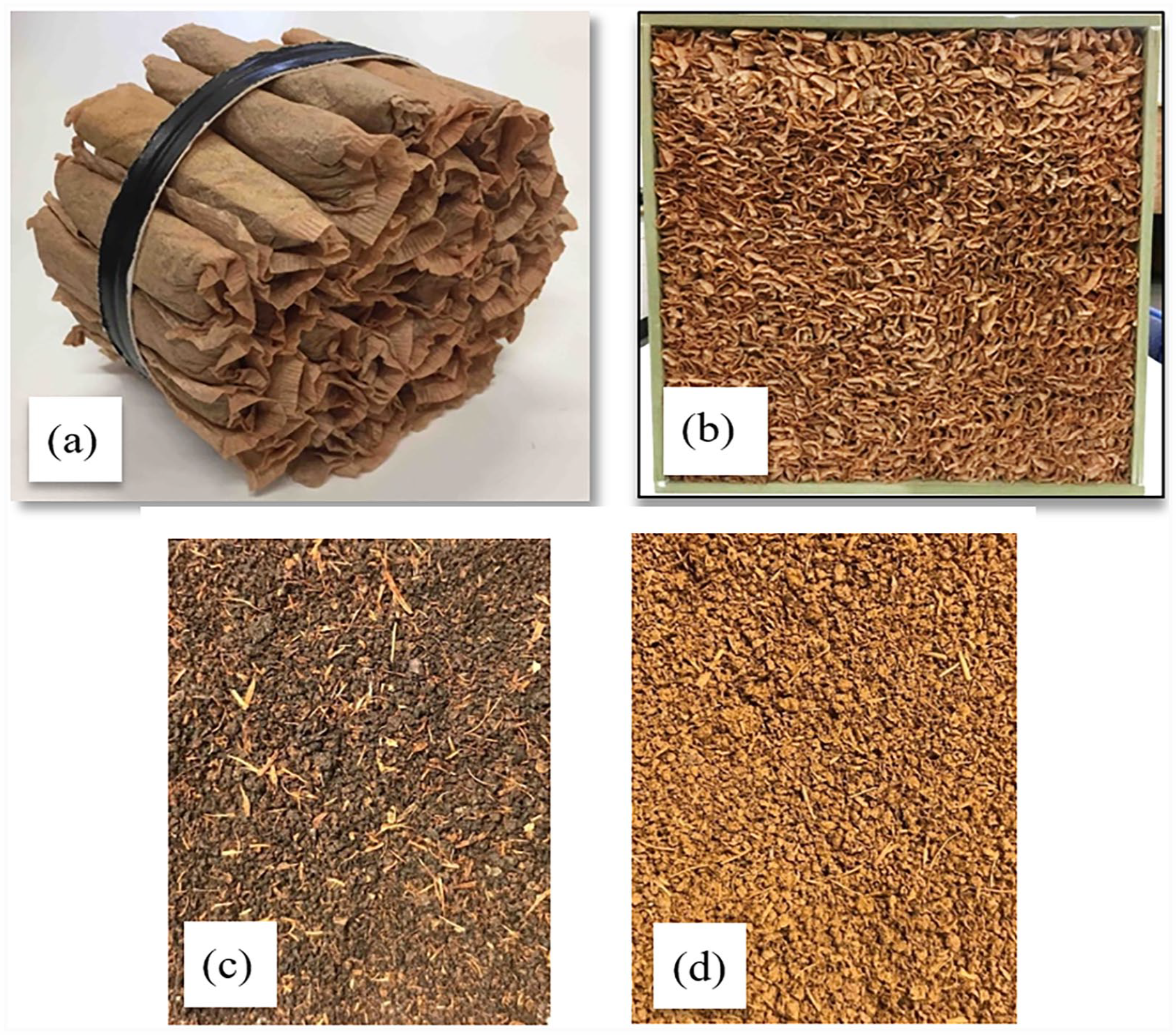
Teabag panels: (a) circular sample of 10 cm diameter (circular panel 1), (b) square panel of 40 cm × 40 cm × 7.5 cm (square panel 1), (c) an image of unused tea, and (d) an image of used tea.
Measurement of absorption coefficient
Measurements of sound absorption coefficient were carried out in a circular impedance tube with an internal diameter of 100 mm (see Figure 1). The absorption coefficient experiments were conducted in accordance with the procedure outlined in BS EN ISO 10543-2:2001, 16 while the transmission loss is determined in accordance with Bolton et al. 17
The circular panel samples were placed at one end of a tube and a loudspeaker was placed at opposite end of the tube (see Figure 1). The circular panel was supported by a movable rigid backing that do not allow sound waves to transmit through. Two quarter inch microphones were mounted into a microphone grid at positions along the length of the impedance tube (as indicated in Figure 1), with each microphone grid being sealed tight to its housing. The microphones were fed to a four-channel data acquisition card (type MC3242, BSWA Tech.) which was connected to a computer for logging and further analysis. An incident plane sinusoidal wave Pi was created by a loudspeaker with a built-in amplifier. The transfer function method was used to determine the acoustical properties of the circular teabag panel whereby the sound pressure at two fixed microphone locations within the tube was measured and then used as input for the acoustic transfer function to calculate the absorption coefficients in frequency domain.
Sound transmission loss through circular panels
The sound transmission loss (TL) is an important property of sound absorbing materials that are used in the building industry. An impedance tube was used for measurements of transmission loss. 18 The procedure described in Chung and Blaser 19 and Bolton et al. 17 was adhered to measure the transmission loss of circular teabag panels in a circular impedance tube with an internal diameter of 100 mm (see Figure 2). A circular tea-panel (see Figure 3(a)) sample was placed in the middle of the tube with a loudspeaker at one end and a rigid plate at the other. Six one-fourth inch microphones were mounted into a microphone grid at positions along the length of the impedance tube. Each microphone grid was sealed tight to its housing. The microphones were fed to a four-channel data acquisition card (type MC3242, BSWA Tech.) which was connected to a computer for data analysis. The acoustic sound field Pi was created by a loudspeaker that was fed with a power amplifier with a built-in pink noise generator (type PA50, BSWA Tech.). The sound signals at four fixed microphone locations within the tube were simultaneously measured. Microphones 1 and 3 for upstream tube and 4 and 6 for downstream tube are used to measure the transmission loss of this sample between 63 and 500 Hz while microphones 2 and 3 for upstream tube, and 4 and 5 for downstream tube are used to measure between 250 and 1600 Hz. The incident and reflected energy from the measured transfer function, were separated using Transfer Function Method and then estimates the sound transmission loss of the tested sample installed in the tube.
Measuring absorption coefficient of materials using the impedance gun method
The impedance Gun method is defined as an in situ method. The method is based on a rather recent and innovative technology and despite it is widely used in research and development applications. It does not have yet a recognized standardized test procedure. Hence the measurement procedure was devised following the Impedance Gun’s manufacture’s manual. 20 The core of the system is probe consisting of a platinum mini sensor (see Figure 4), and it is able to measure the particle velocity and the acoustic pressure at the same position in space, being particularly accurate at high frequencies and having a sensitivity range from 10 nm/s to 1 m/s. White noise is generated towards rectangular tea-panel using an embedded sound source (loudspeaker) at 23 cm from the probe. The impedance gun is equipped with a system designed to decouple the sensors from structure born vibration generated by the spherical loudspeaker. The sound pressure and acoustic particle velocity are measured directly on the surface of the material using Polyurethane (PU) sensor that is connected to signal conditioner which is fed into data acquisition system connected to computer as shown in Figure 4. The absorption and reflection coefficients can be obtained directly from the measured impedance as the complex ratio of sound pressure to particle velocity.
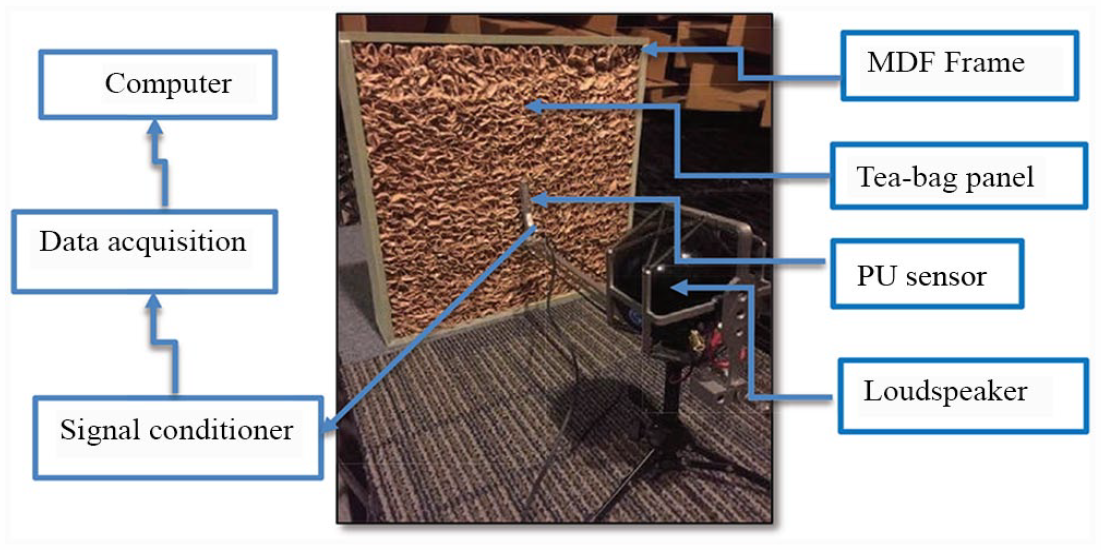
Impedance gun measurement set-up for teabag panel.
Measurements results
Sound absorption coefficients of two circular panels were measured. Experiments for each panel were repeated four times and average absorption coefficients of them are shown in Figure 5. Absorption coefficients for both panels are similar throughout the frequency range. Sound absorption from panels is reasonable at frequencies below 315 Hz. Maximum absorption of 0.99 is seen at 630 Hz while a minimum sound absorption is observed at 1250 Hz. The dip at 1250 Hz corresponds to the frequency equivalent to the quarter-wavelength of the total thickness of the absorber. The results are compared with Delany and Bazley model in Figure 5. There is some discrepancy between measured data and predictions of sound absorption of the panel throughout the frequency range. This might be due to chosen regression parameters and estimated flow resistivity of the material.
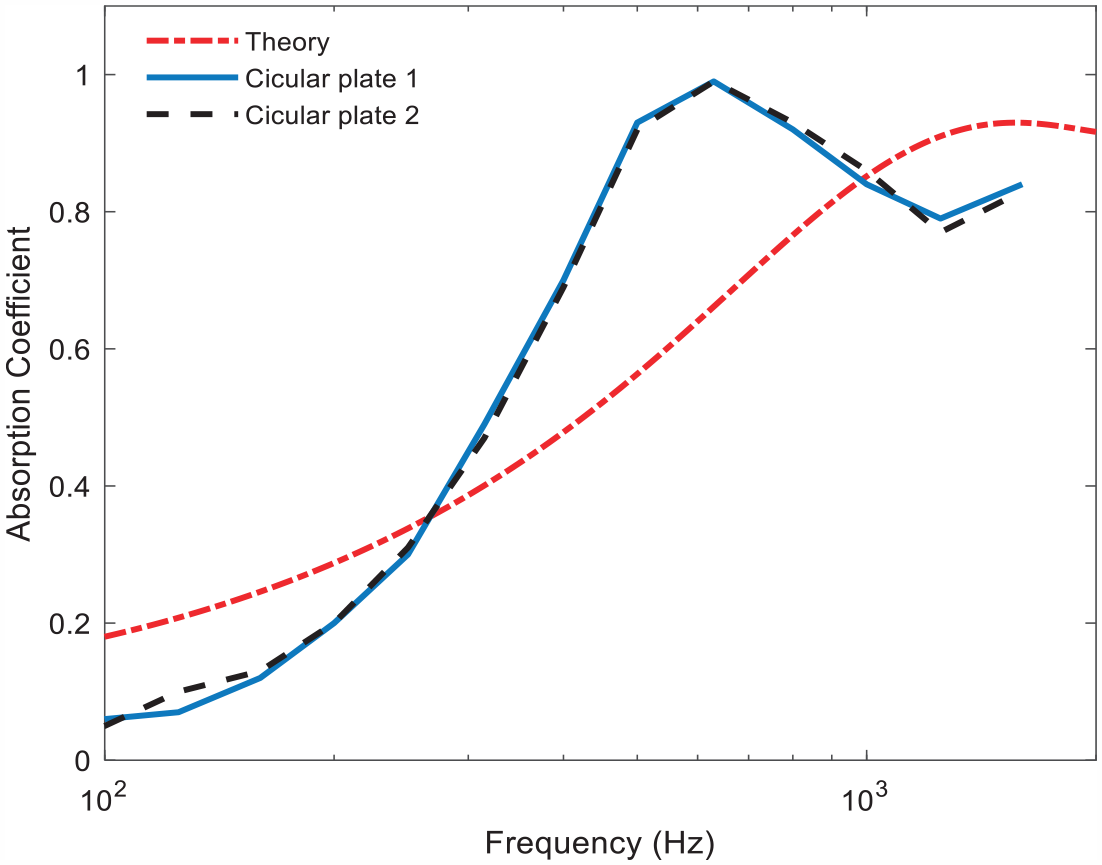
Absorption coefficient of two 75 mm thick circular panels made of teabags compared with theoretical results using Delany and Bazley model.
Furthermore, measured absorption coefficients of circular panels are compared with absorption coefficients of three different materials (felt, glass-bead, and black plate that are given in Figure 6). Felt panel is a non-woven textile produced by matting, condensing, and pressing woollen fibres (animal hairs or cotton) together. 18 Recycled glass bead panels are structural components comprising two fibreglass facing sheets surrounding an inner core of recycled glass beads bonded in a matrix of polyurethane (PU) resin. 15 Glass-bead panel is 130 mm thick with a nominal glass bid diameter of 4–8 mm. Black plate which is 20 mm thick, is black foam saturated by air, and is fabricated from particles of plastic foam obtained from recycled car dashboards. A comparison of absorption coefficients of sound absorbing materials is given in Figure 7. It can be seen that glass-bead panel attenuate more sound than other materials at low frequencies below 300 Hz while teabag panels are most effective sound absorbers at mid and high frequencies above 300 Hz except for a pressure minimum seen at 1250 Hz. Felt made of animal hairs provides less sound attenuation than other materials between 250 and 800 Hz.
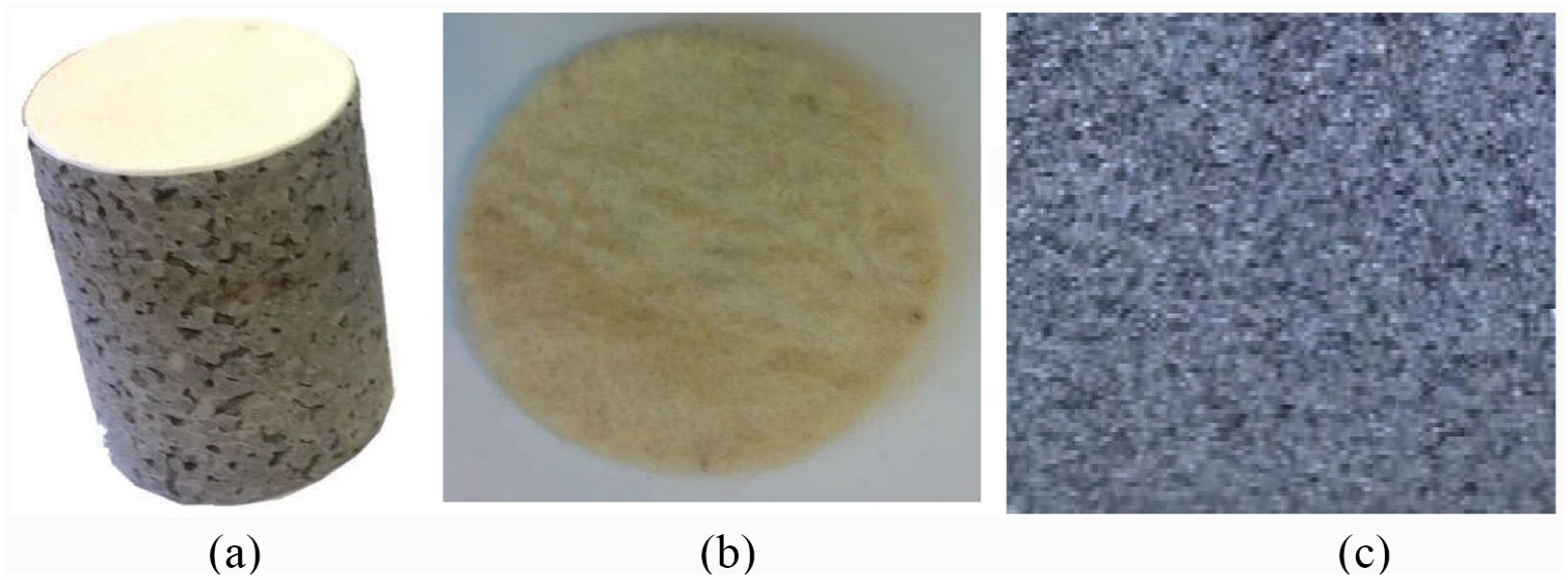
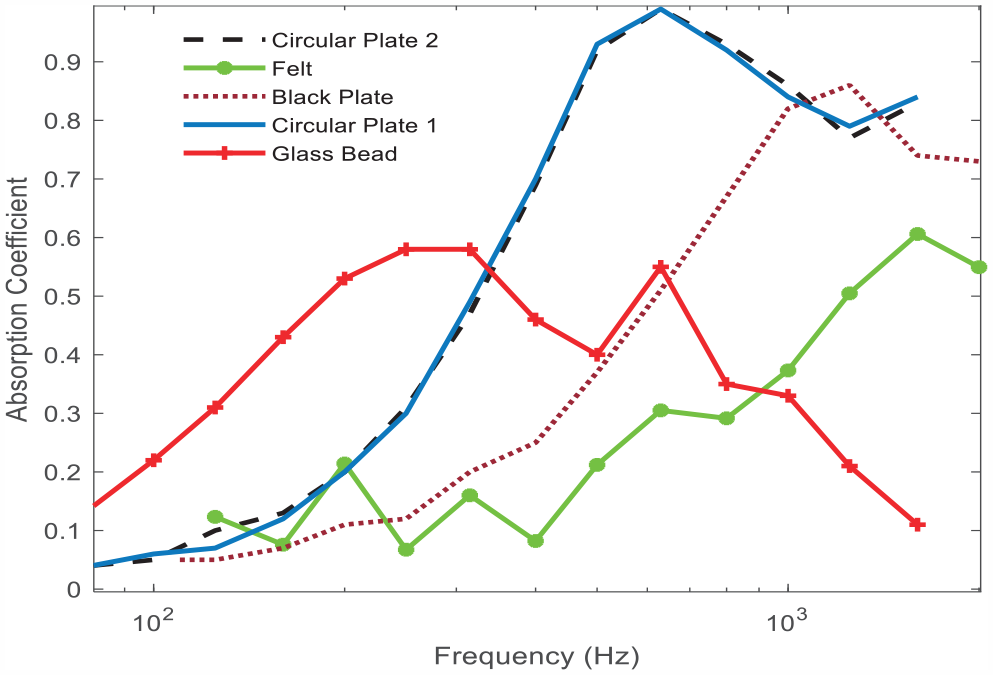
Comparison of absorption coefficients of different materials in frequency domain.
Additionally, more experiments were carried out on circular panel-1 with two different air cavities to investigate the effects of the air gap on sound absorption mechanism of the teabag samples. The panel was separated from the moving rigid backing by 30 and 75 mm air cavities. Absorption coefficients of circular panels were compared with air cavities and without air cavities in Figure 8. Using an air cavity behind the panel has increased low frequency performance of the panel and shifted maximum absorption from 630 to 400 Hz. A decline in sound absorption was observed at 250 Hz for 75 mm air gap behind the panel. Measured sound absorption coefficient of the panel with an air gap behind it is compared with predicted absorption coefficient using Delany and Bazley model in Figure 9. There is a good agreement between data and predictions at higher frequencies.
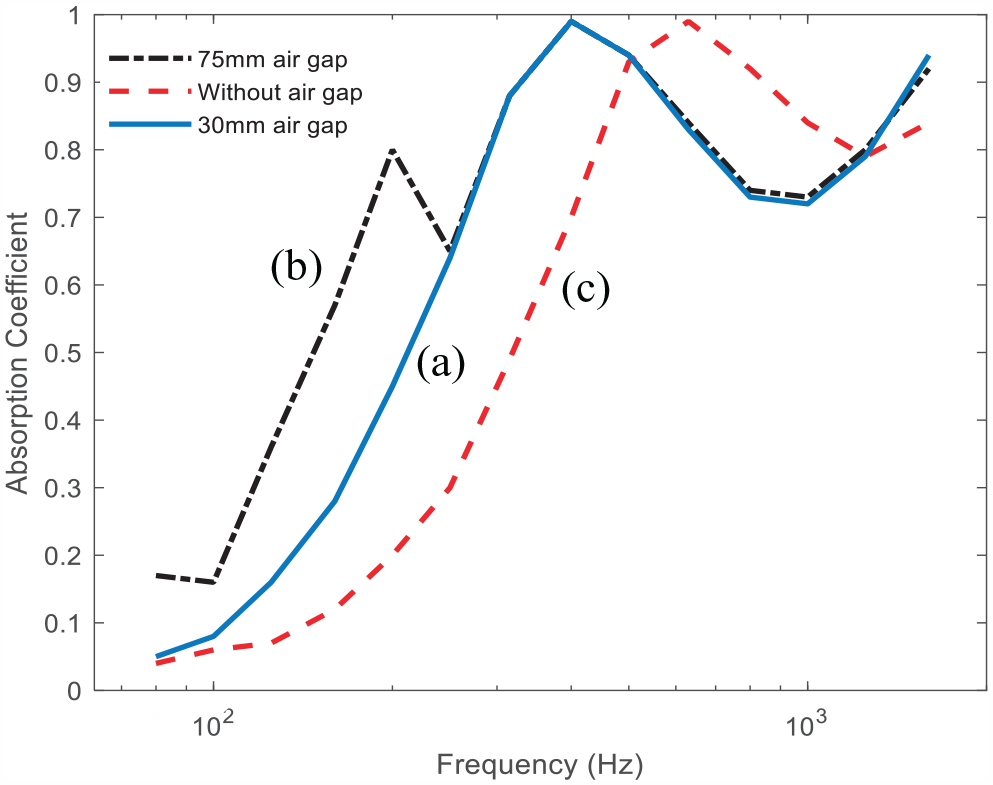
Absorption coefficient of 75 mm thick circular panel: (a) with 30 mm air cavity, (b) 75 mm air cavity, (c) without air cavity.
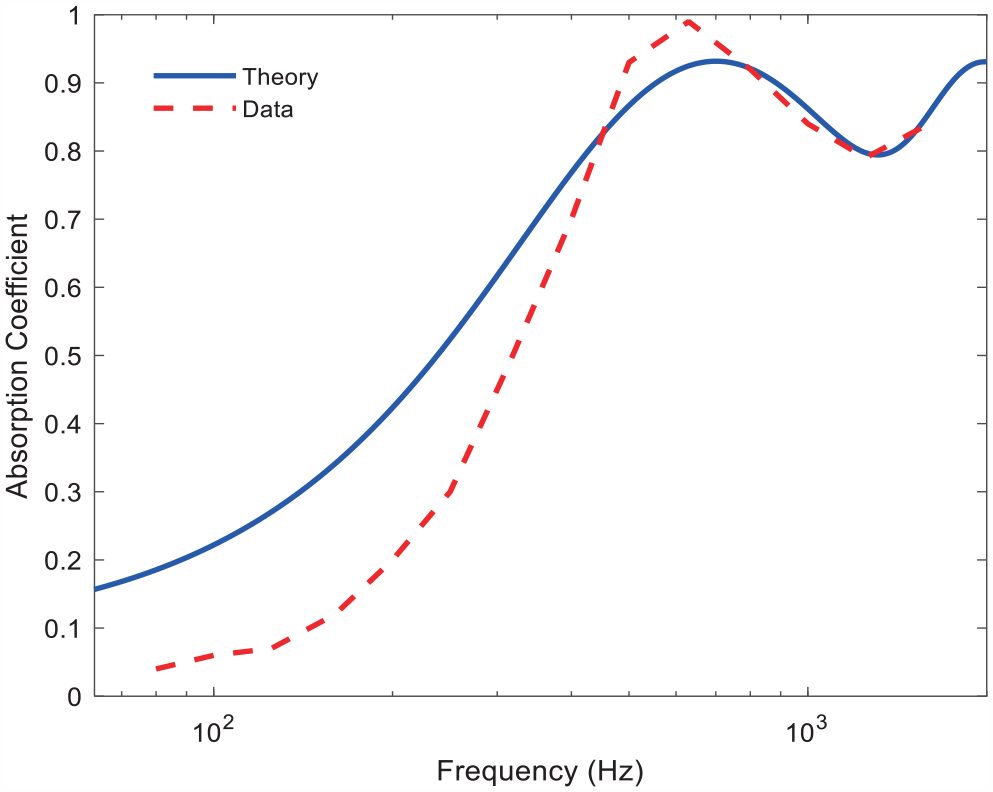
A comparison of data and predicted sound absorption coefficient of 75 mm thick circular panel with a 75 mm air cavity behind it.
Absorption coefficients of two rectangular tea-bag panels (see Figure 4) were measured using impedance gun method in an anechoic chamber which is a special laboratory room characterized by a very low background noise. All room surfaces of anechoic chamber are covered with sound absorbing wedges to make sure no sound is reflected back to the source. Measurements for each panel were repeated four times and averaged absorption coefficient of both panels are compared with sound absorption of felt panel in Figure 10. The results throughout frequency range are considered very good, especially above 1250 Hz. A dip in absorption coefficient is observed at 800 Hz. This dip might be caused by several reasons: electronic of impedance gun system or limitation of lower cut-off frequency of the impedance gun method. Another reason may be the low flow resistivity of sample causing a low absorption performance at lower frequency. Sound absorption coefficient of the felt is lower than absorption coefficients of square panels throughout frequency range.
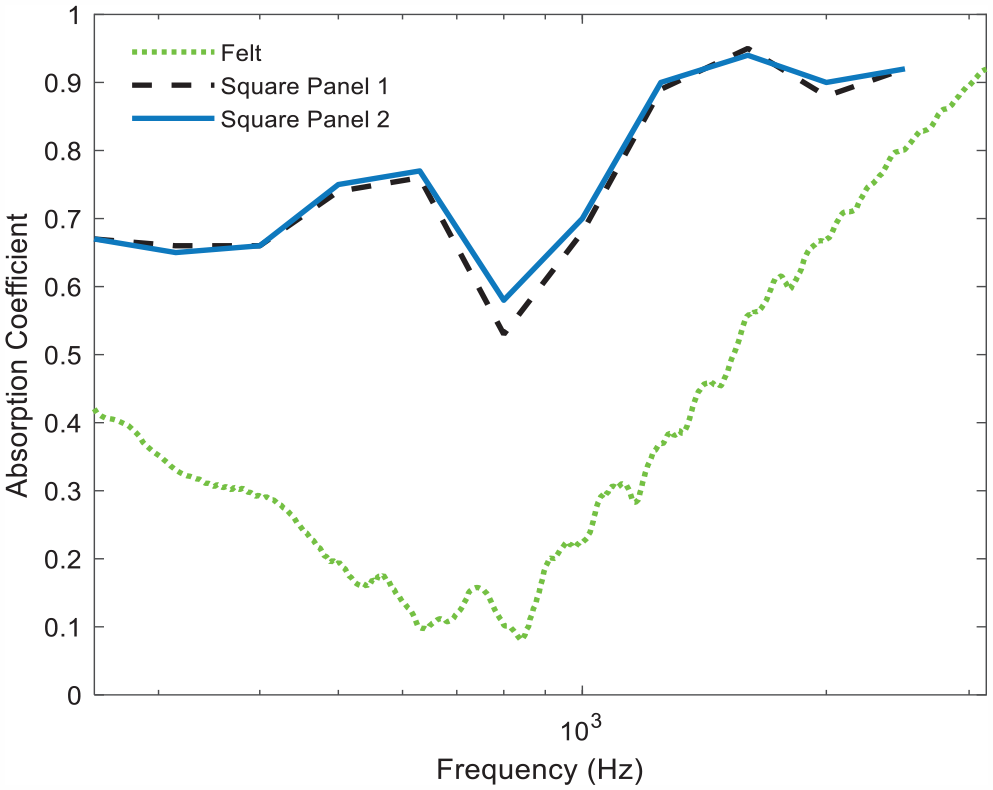
A comparison of absorption coefficients of felt made of animal hairs, and tea-bag panels measured in anechoic chamber using Impedance gun.
Transmission Loss (TL) of two tea-bag circular panels are measured in impedance tube and the results are compared in Figure 11. TL of both panels increases with frequency throughout frequency range. Up to 9.8 dB transmission loss is observed at 2500 Hz while low frequency performance is considered reasonably good. Transmission Loss of glass bead samples varies between 15 dB at lower frequencies and 30 dB at higher frequencies as it can be seen in Figure 12. Glass-bead has higher transmission loss than teabag panels throughout the frequency range. This might be because of glass bead samples are 55 mm thicker than teabag samples.
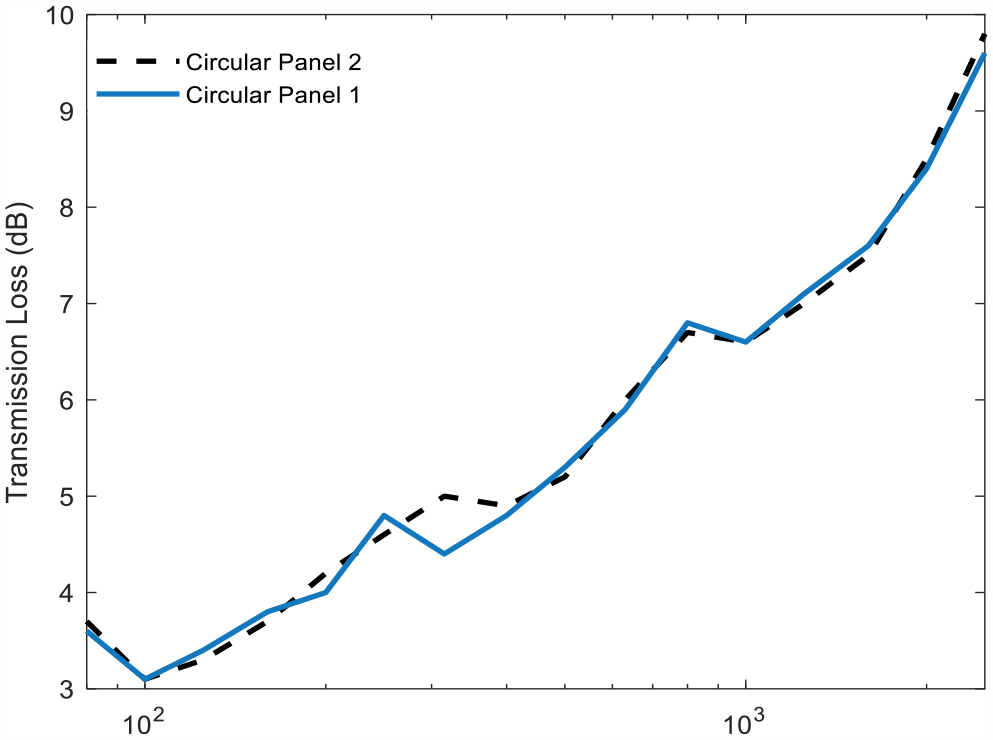
Transmission loss of two circular teabag panels in frequency domain.
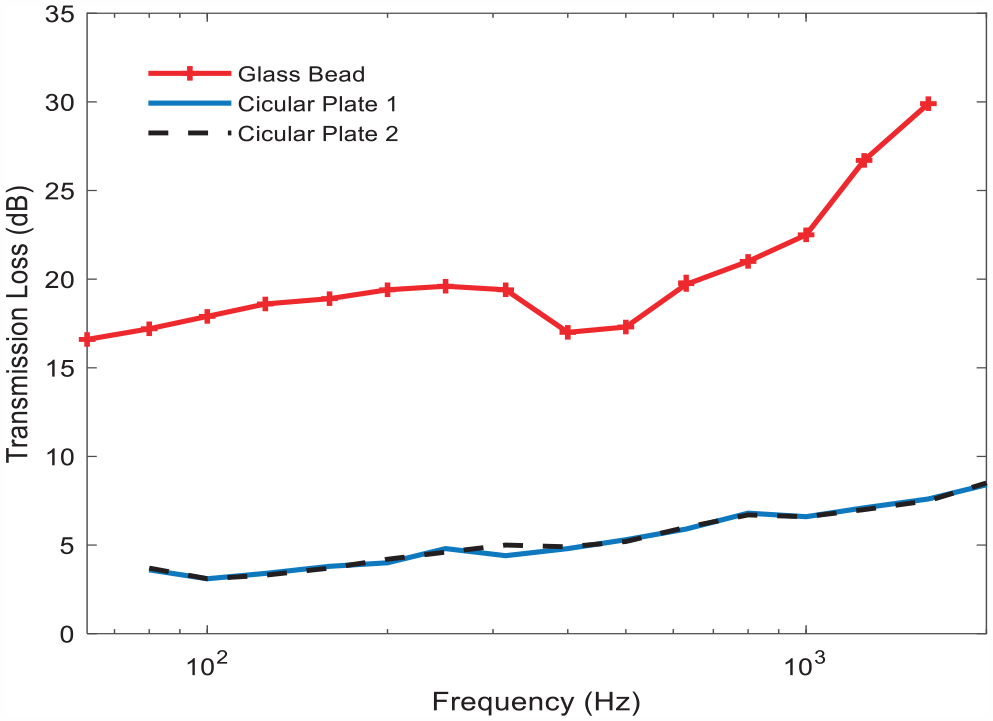
A comparison of transmission loss of two circular tea-bag panels, and glass bead panel in frequency domain.
Conclusion
Environmentally friendly acoustic panels were designed and developed utilizing consumed teabags to investigate their acoustic properties that are relevant to applications in architectural and building industry. Normal incidence sound absorption coefficient and transmission loss of 70 mm thick circular panels were determined using the impedance tube transfer function method while the impedance gun technique was used to determine absorption coefficient of square panels.
Results show that 75 mm thick circular panels give an absorption coefficient higher than 0.8 between 400 and 1600 Hz while using them with 30 and 75 mm air gaps has increased low frequency performance and shifted maximum absorption peak from 630 to 400 Hz. Teabag panels have higher absorption coefficient than felt panel, glass bead panel and black panel at frequencies above 300 Hz while glass-bead panel attenuate more sound than other materials at low frequencies below 300 Hz. Felt that is made of animal hairs has a lower absorption coefficient than other materials between 250 and 800 Hz. Square teabag panel measured using impedance gun method, provide better sound attenuation than other panels throughout frequency. Up to 9.8 dB sound transmission loss of circular panel is obtained at higher frequencies while transmission loss at 500 Hz is above 5 dB. Transmission loss of teabag panels is lower than transmission loss of glass-bead panels throughout the frequency range.
Measured absorption coefficients and transmission loss of circular panels, and absorption coefficients of square panels at normal incidence suggest that recycling of consumed teabags could be applied as sound absorbing panels to solve noise problems in built environment and to reduce environmental pollution as they are made from renewable materials, making teabag panels eco-friendly materials.
Footnotes
Declaration of conflicting interests
The author(s) declared no potential conflicts of interest with respect to the research, authorship, and/or publication of this article.
Funding
The author(s) disclosed receipt of the following financial support for the research, authorship, and/or publication of this article: This work was supported by the London South Bank University and Acoustics research group.
