




Abstract
The problem of textile waste is obvious and relevant, and detailed research into the problem is still lacking. In particular, there is a lack of research on the recycling and reuse of textile waste in such areas as the construction industry. The aim of this research is to develop an interior finishing panel by combining denim textile waste with an eco-friendly binder, to investigate, analyze and evaluate the main physical–mechanical properties of this panel. The investigated panels were made from denim textile waste with different structures for interior decoration. The results have shown that different manufacturing methods provide different sound insulation, and better sound insulation properties were distinguished by a panel made from fabric threads. When assessing the surface hardness of the panels, it was found that a panel made from threads has a higher hardness than a panel made from fabric scraps. Thus, evaluating the results of the performed research, it can be seen that the use of textile waste in acoustic panels is possible, with textile waste as the main component. Scanning electron microscopy analysis confirmed that the strength properties of the panel are closely related to the technology and structure of the panel, and that panels made from scraps have poorer strength and acoustic properties than panels made from threads.
For a long time, growing consumption of textiles and clothing products has been observed, due to the growth of the human population, the strengthening of their purchasing power, the fast fashion business model and rapid production. According to EURATEX, 1 in 2018 the population of the European Union (EU) spent almost 264 billion euros on clothing (10% growth per decade). It is estimated that the average annual per capita consumption of textiles in Europe is 26 kg. 2 Such high consumption of textiles and clothing, among other environmental problems, leads to a huge amount of waste from these products; unfortunately, the prevailing practice for the treatment of textile waste is landfilling.2–8 In many European countries, textile waste is disposed of simply by burying it with other household waste or by incineration. According to a report by the Global Fashion Agenda & The Boston Consulting Group, “Pulse of the Fashion Industry. 2017” in 2017, as much as 57% of the world's textile waste was disposed of by burial, 25% by incineration and only 18% recovered, of which only 8% was recycled. In 2018, in the USA, 13 million tons of clothing and footwear waste were generated, and approximately 70% of them were landfilled. 4 Some 80% of the textile waste was destined to irregular dumps and landfills in Brazil. 9 As far as the amount of waste generated is concerned, the pre-consumer waste must be acknowledged too. 10 – 13 Research has shown that interlocking waste accounts for approximately 20–25% of the total amount of materials used in production. Despite the introduction of computer technology and other technical progress, a radical reduction in waste is not possible, which should lead to a fundamental overhaul of the design process for clothing products focusing on a zero-waste production method, which is quite difficult. 10
The scale of the problem means that research has extensively addressed the reuse and recycling of textile waste, together with other recyclability issues, and the importance of the circular textile economy has been discussed broadly.14–17 An analysis of scientific publications reveals that textiles can be fully reused and recycled in general, thereby reducing environmental impact compared to incineration and landfill. The research concludes that reuse is more beneficial than recycling. 14
However, not all textile products can be reused due to damage, so it is very important to spare no effort in exploring the possibilities of recycling textile waste to other valuable products and finding areas of application that will bring several benefits for the producer and customers. The construction industry looks very promising to use recycled materials as an alternative to virgin ones, as well as contributing to increase building energy efficiency and other factors leading to a reduction in the environmental impact. Research has shown that non-woven materials made from textile waste have good insulation properties compared to traditional insulation materials (glass wool, mineral wool, etc.). Therefore, insulation with non-woven textile waste can be a viable solution for the insulation of buildings. 18 Bakkal at el. 19 produced and investigated polymer composite panels reinforced with waste cotton fabric. The test results of the composite panels were compared with those of a pure low density polyethylene (LDPE) panel. The test results show that the tensile strength was increased while reducing the impact properties. The tensile properties were reduced due to fiber damage. According to the detailed information, the thermal effects of the recycling were limited. However, in this research, textile waste was not the main component of the product. In order to address the problem of interlocking textile production waste, insulation products made from 100% polyester (PES) industrial waste, remaining after the cutting process, were investigated. The aim of the research was to obtain insulating products without destroying textile waste to fiber. It was determined that the achieved sound absorption, with noise reduction coefficient (NRC) ranging from 54.71% to 74.77%, surpassed standard commercially used insulators. 11
In a number of studies, the potential to utilize textile waste in materials to be used as thermal and acoustic insulation materials in buildings, interiors and vehicles is revealed.20–25 It is stated that products based on recycled textiles can play an important role in saving energy and reducing environmental pollution, which are among the main problems of the EU in the 21st century. Application of the textile waste in development of an acoustic material is an area of interest due to the light weight and low cost of this kind of waste. The nature of textile waste and the proportions in new composites determine the sound-absorbing capacity; nevertheless, it is desirable to continue the research. Most industrial textile waste is discarded, even though these textiles could be recycled, for example, into thermal or acoustic insulation products. 20 Going deeper, it is evident that the development of new composites from textile waste for noise control and the theoretical and experimental studies of their properties are the focus of researchers. Bujoreanu et al. 26 analyzed sound absorption coefficients, including products from combined material waste such as rubber particles, polypropylene, crushed plastic, wood, jute and cord fabrics. The results highlight the influence of the presented combined materials on the sound absorption results and promote the idea of environmentally friendly solutions to improve them.
In the research of acoustic properties of rigid polyurethane closed-cell foam products, 10–50% textile waste including different amounts of textile waste was used. The resulting composite materials were found to have better sound absorption properties compared to rigid polyurethane foams. The noise reduction coefficient of a composite material containing 40% textile waste and 60% rigid polyurethane foam is twice that of 100% rigid polyurethane material. 27 The research showed that textile waste can be recycled, but in the research, textile waste accounted for only 40% of the test product.
The research evaluated the potential of landfilled textile waste for the production of sound insulation products for use in construction. Techno-economic analysis showed that the cost of sound insulation products that have been made from textile waste is 1.73 times lower than the cost of conventional sound insulation products. The diversion of textile waste from landfill to recycling provides a more cost-effective solution for reducing traffic noise. 21 Other research investigated phenolic resin-bonded recycled denim as a potential replacement to synthetic sound absorbers. Research has shown that the composite specimens could successfully compete with commercial glass wool sound absorbers. 28 The ecological effect is reduced by the fact that in these researches, phenolic resin has been used.
In order to reduce the amount of waste from the textile industry and to decrease industrial noise, panels of different thicknesses were made from textile waste and investigated. The analysis of the results shows that the absorption properties of the panels increase depending on the thickness of the material. The aim of these panels is to obtain laminated composite materials used to reduce industrial noise sources. 29 Also, in Dissanayake et al., 30 a positive correlation thickness and sound insulation property of panels made from cotton/PES mixed wastes was obtained and natural rubber was used as a bonding agent.
Research on textile waste has evaluated the feasibility of using recycled cotton textiles as filler in the core of oriented strand board (OSB) panels. The research showed that it is possible to add 5% of recycled textile materials to the core of OSB panels without significantly reducing their physical or mechanical properties. 31 Another research also sought to determine the acoustic properties of panels made from textile and wood waste. In this case, it was found that the composition of the binders used in the tests had a significant influence on the acoustics. The proposed materials are lightweight, recyclable or degradable and have high noise reduction performance, suitable for use in building structures, noise barrier structures and automotive components.32,33 However, in these cases, textiles did not cover the entire part of the panels under investigation.
Tests on acoustic elements made from textile waste and polyethylene terephthalate waste showed that the thicker elements made from textile waste had the best acoustic properties. The authors of the research emphasize that production from waste also contributes to sustainability and economic viability. 22
The acoustic properties of composite panels made from 100% wool fiber waste and bonded with a chitosan solution and an Arabic rubber solution were also investigated. Samples of 5 cm thick and of different densities were evaluated in the research. The experimental results showed that the results of the acoustic research were very promising, which proved that it could be possible to produce a sustainable alternative to traditional commercial synthetic products.34,35 As carpets make up a large proportion of textile waste, a series of studies are being carried out looking specifically at the possibilities of recycling carpets into building materials. Furthermore, in other research, the researchers investigated acoustic underlay manufactured from carpet tile waste. Research has shown that it is possible to produce acoustic underlays from carpet tile waste. According to the authors, this acoustic underlay product would adequately compete with commercially available acoustic underlays.36–38 It was also found that waste jeans represent one of the largest fractions of textile waste, as millions of tons are generated every year. 8
Although the problem of textile waste is obvious and relevant not only in the EU but also worldwide, more detailed research into the problem is still lacking. In particular, there is a lack of research on the recycling and reuse of textile waste in other areas such as the construction industry. Research lacks a wider range of applications of textile waste, products where textile waste is the main component. However, these investigations are very promising, because reduced weight, along with their enormous availability, make recycled fabrics, such as denim jeans, promising substitutes for e-glass or carbon fibers. The reason for this replacement lies in their easier recyclability and in their possible coupling with various polymers, with the idea of producing new composites, as textile reinforcements. 39
The aim of this research is to develop an interior finishing panel by combining denim textile waste with an eco-friendly binder, to investigate, analyze and evaluate the main physical–mechanical properties of this panel.
Materials and methods
The object of the research is to investigate panels made from commercial denim textile waste with different structures for interior decoration. Two panels (Figure 1) were made, with different preparation of raw–reused material from denim (Table 1). The first panel (hereinafter referred to as panel 1) was made from thread (Figure 1(a)) obtained by disassembling the fabric selected for the research, with thread lengths ranging from 1 to 5 cm. The second panel was made from square-cut scraps of the same fabric (Figure 1(b)), ranging in area from 0.5 to 1.5 cm2 (hereafter referred to as panel 2).
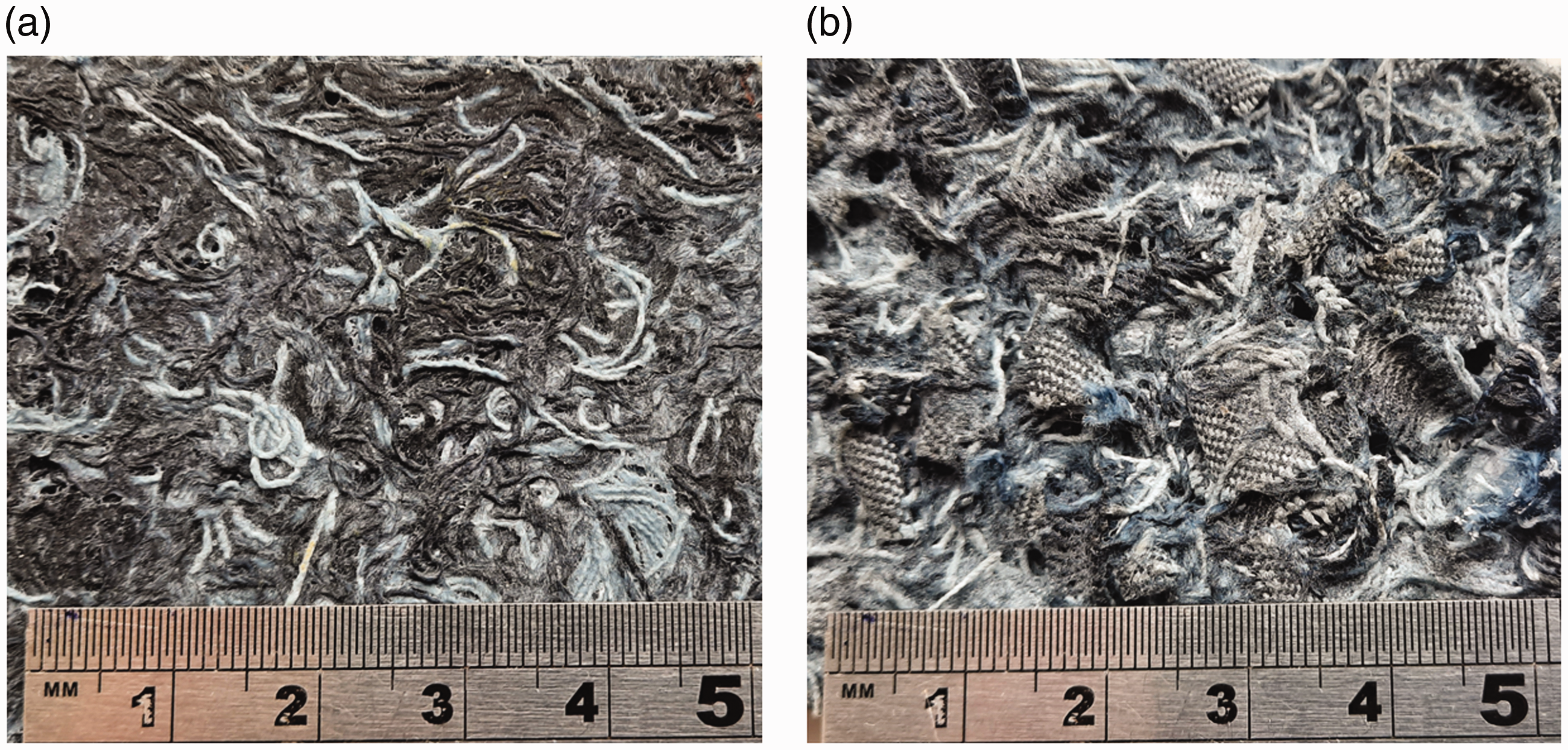
Top view of the panels: (a) panel 1 and (b) panel 2.
Characteristics of denim
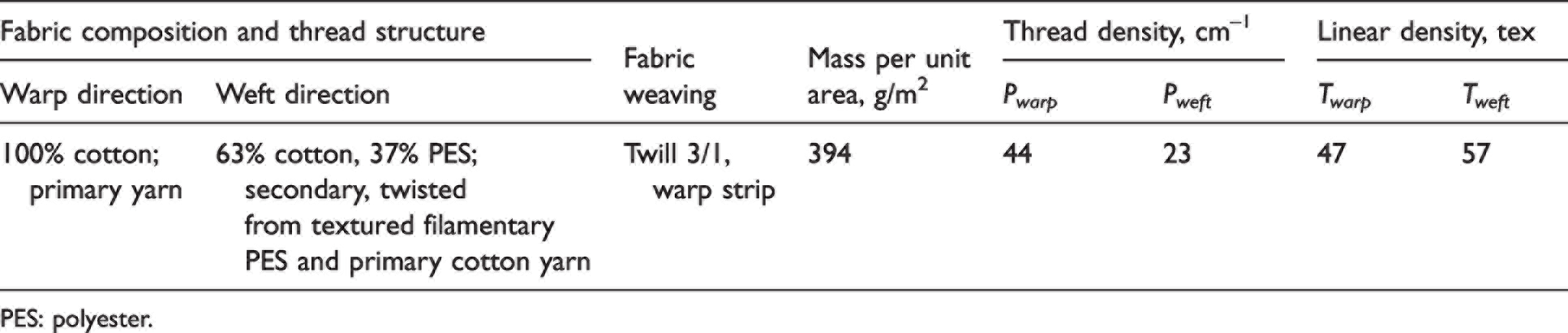
PES: polyester.
According to good structural compatibility, 40 corn starch was used as a binder. In the manufacture of the panels, the ratio of waste material to starch was 1:1, the starch was dissolved in 1 liter of warm water and the mixture was stirred with a mechanical device until the mass was evenly mixed.
The panels were formed with dimensions of 30 cm × 30 cm and heated for 1 day at 100°C in a SNOL 58/350 oven; the pressure was 967 Pa. Then they were conditioned for one week at an ambient temperature of 23 ± 2°C and a humidity of 50 ± 5%. The thickness of the panels was measured with an electronic device with an accuracy of 0.01 mm. The thickness of the panel made from thread ranged from 8 to 12 mm and the density of the panel was ∼0.04 g/cm3. The thickness of the panel made from small scraps ranged from 14 to 16 mm and the density of the panel was ∼0.03 g/cm3.
The structure of the acoustic panels was investigated using a scanning electron microscope (SEM), a Quanta 200 FEG. Microscopic images were done at the same technical and technological conditions: the electron beam accelerating voltage was 20.00 kV, the beam spot was 5.0, the magnification was 100×, 1000× and 5000×, the work distance was 9.5 mm, low vacuum (80 Pa) and the detector was an LFD.
A special test stand was made to determine the acoustic properties of the panels (Figure 2). A tunnel was made out of a 15 cm thick thermal insulation panel. Two microphones were placed in the tunnel 40 cm apart and a loudspeaker was placed at the front of the tunnel. First of all, the background environmental noise was measured. In the second stage, sound from 8 to 16,000 Hz was emitted through the loudspeaker and the volume was measured. Then the first panel was placed between the microphones and the fixed volume of both microphones was measured. A similar test was carried out with a second panel. The method is not standard. The aim of the test was to compare how different panels transmit acoustic waves. The test was carried out using precise calibrated metrological testing equipment (pulse 3560 analyzer, manufacturer Bruel and Kjaer).
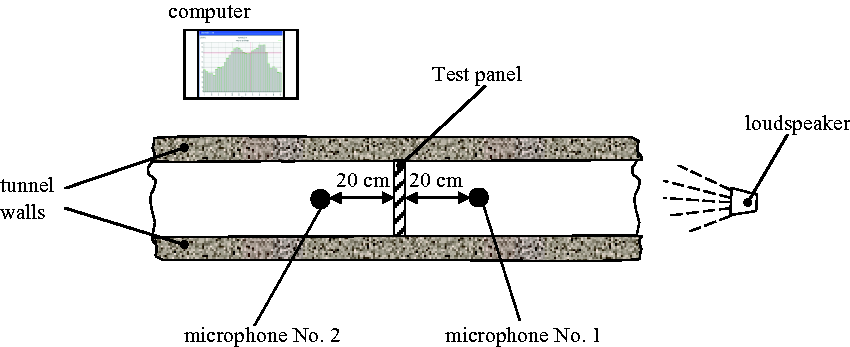
Top view of the test stand of the panel section.
The viscous properties of the panels were determined using the original methodology and equipment shown in Figure 3. 41 A test stand was used to determine the mechanical properties of the specimens on the basis of the non-destructive testing (transverse resonant vibrations) method. The research was performed at a frequency of 20–2000 Hz. The frequency of the oscillations was measured to an accuracy of 0.1 Hz and the amplitude to an accuracy of 0.1 m/s2.
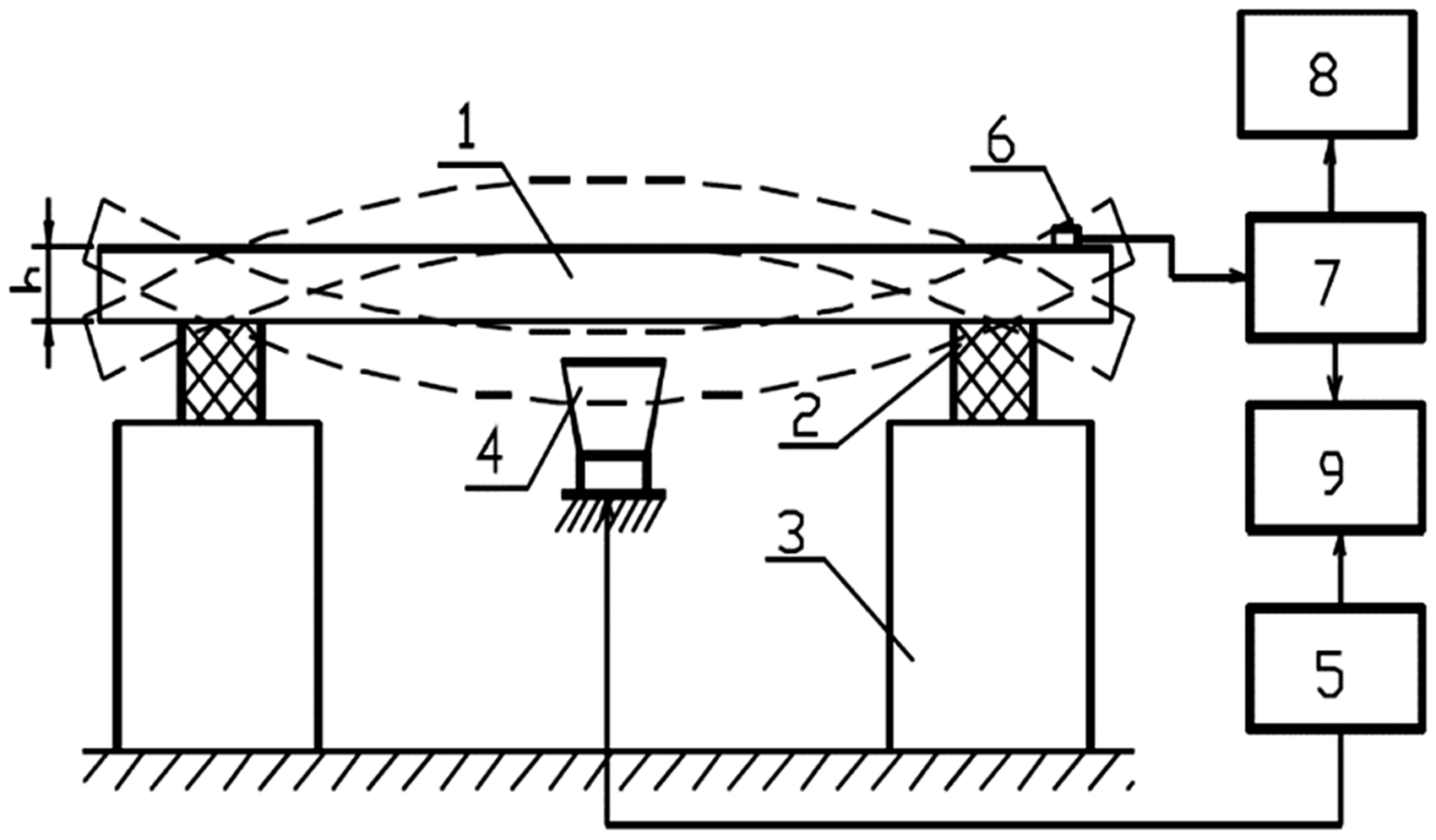
The scheme of the test stand: 1: specimen; 2: vibration damping material (foam rubber); 3: massive supports; 4: loudspeaker; 5: vibration generator; 6: sensor; 7: measuring instrument; 8: oscilloscope; 9: phase meter.
The isotropic body, vibrating at its own (resonant) frequencies, depending on its geometric shape (rod, round or rectangular plate) and the method of attachment, bends in the corresponding shapes (modes). After determining the frequency of vibrations, curvature mode, geometric and other parameters of the body, it is possible to calculate its elastic modulus.42,43 In some cases, anisotropic bodies, whose mechanical properties are clearly expressed in different directions, also obey these regularities of isotropic bodies. These include timber blocks, point panels, particleboards, etc. Therefore, the theory of oscillations of isotropic bodies (the theoretical isotropic rod) can be used to estimate the elastic properties of such materials.41,44
The viscous properties of the studied specimens were evaluated based on the following formula
43
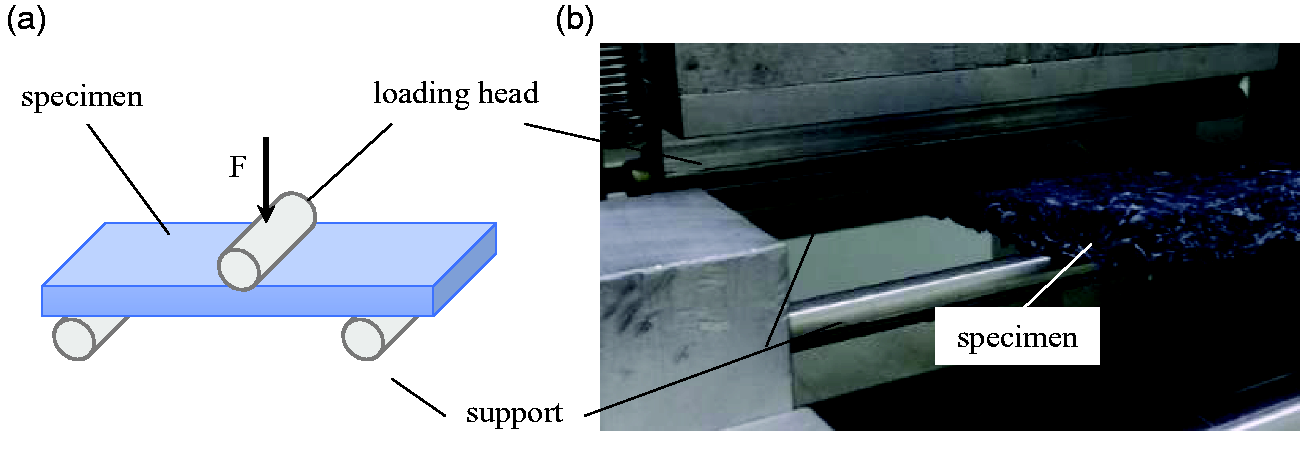
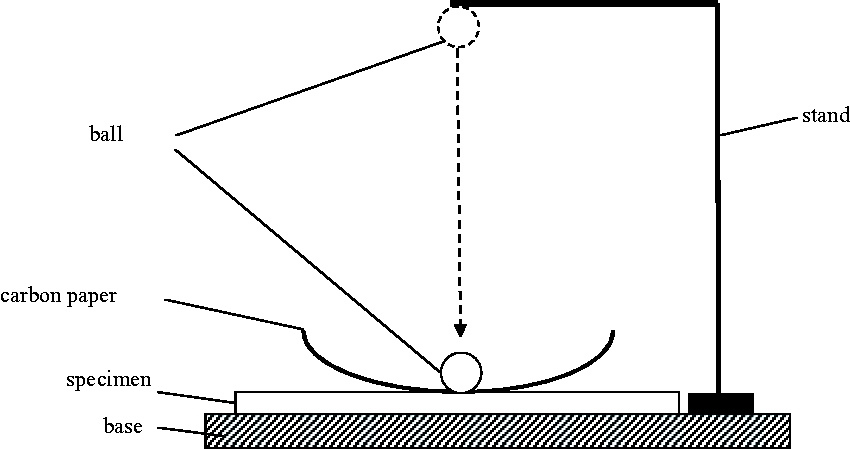
The bending test of the panels was performed on a universal test machine, a BTI FB-050 TN (Zwick). The modulus of rupture MOR was determined when the load was applied to the center of the specimen placed on the two supports (Figure 4). The width of the sample is 50 mm, the distance between the axes of the supports is 150 mm, the diameter of the supports is 10 mm, the ambient temperature during the test is 23 ± 2°C and the relative humidity is 52 ± 2%. Scheme of the panel bending test (a) and the view (b). To determine the surface hardness of the panels, the standard EN 15283-1 methodology was used. A metal ball weighing 0.52 kg was dropped from a height of 500 mm onto a specimen placed on a rigid plate and covered with carbon paper (Figure 5). The diameter of the color imprint on the plate was measured with the accuracy of 1 mm and the test was repeated three times. Surface hardness determination scheme. The test results were statistically processed; the coefficient of variation did not exceed 10%.
Results
The surface images of the panels recorded by the SEM revealed differences in the structure of the panels made from threads and scraps (Figures 6 and 7). Panels made from threads have a more uniform structure, and these panels have a smooth surface (Figure 6(a)). The starch particles as a binding agent are also evenly distributed on the surface (Figure 6(c)). However, when analyzing the inside of the panels, the gaps between the individual threads are visible (Figure 6(b)); in this case the binder is located between the threads (Figure 6(d)) and the starch particles are covered around the thread fibers (Figure 6(e)).
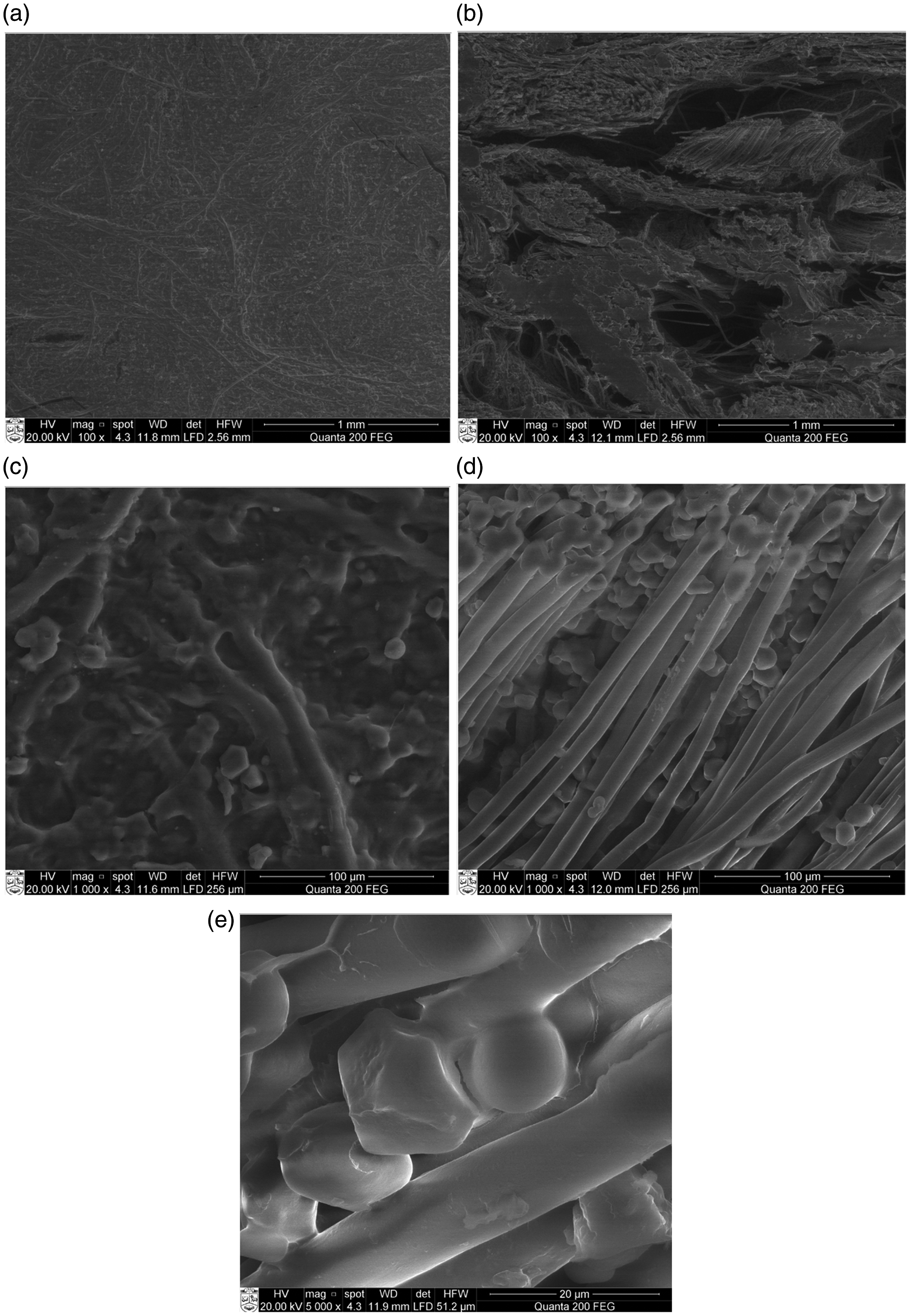
Top view of acoustic panels made from threads, side view at 100× magnification (a) and inside view at 100× magnification (b). Side view at 1000× magnification (c) and inside view at 1000× magnification (d). Adhesion of the starch particles to the fibers in the panel (e).
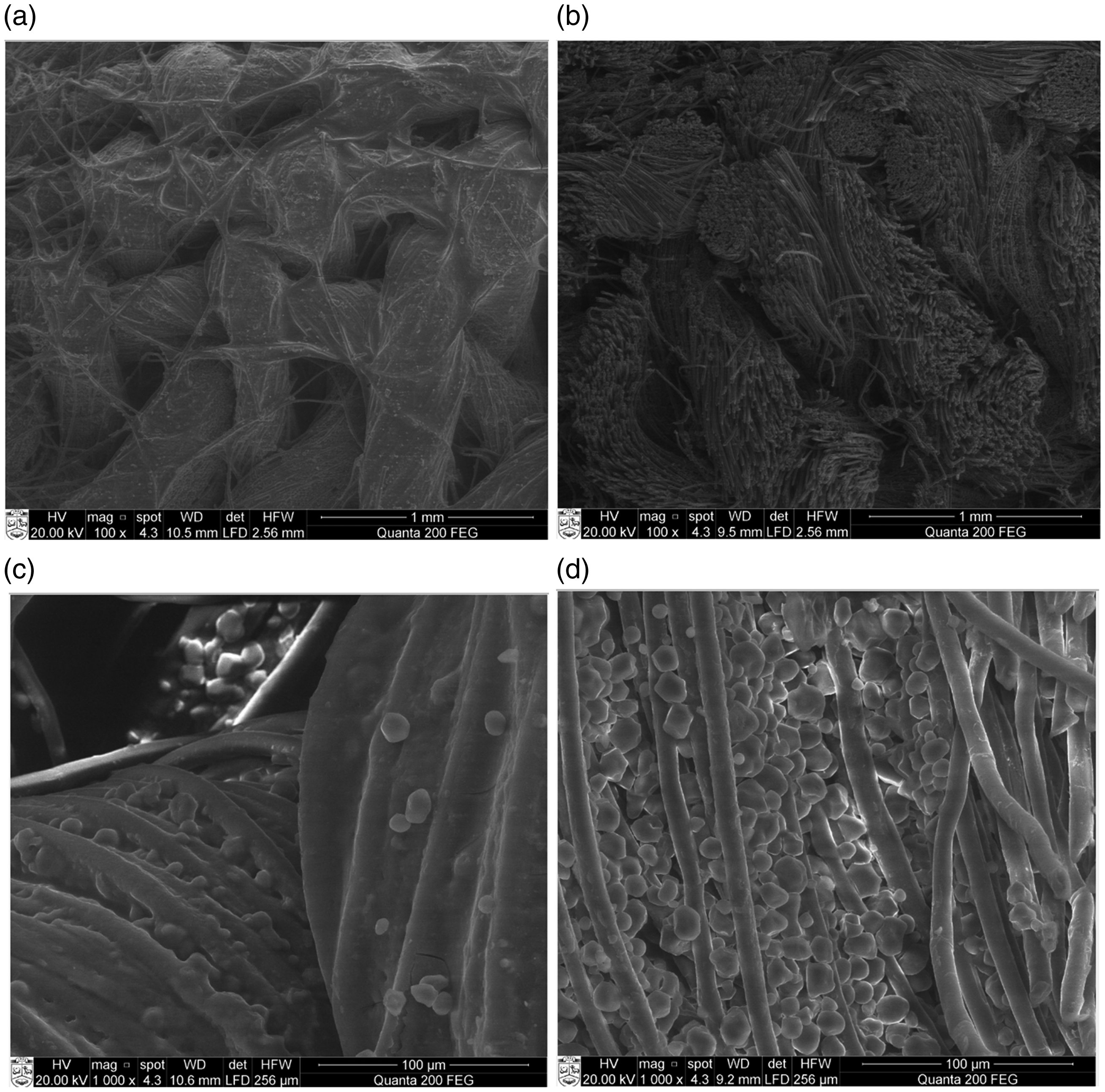
Top view of acoustic panels made from scraps side view at 100× magnification (a) and inside view at 100× magnification (b). side view at 1000× magnification (c) and inside view at 1000× magnification (d).
Analyzing the structure of the panels made from denim scraps, it was found that in this case there are more gaps in the surface of the panel due to the interweaving of the threads in the fabric (Figure 7(a)), which are not filled with the panel binder (Figure 7(c)). Interweaving of threads is visible, resulting in more gaps in the panel. When assessing the view of the panel from the inside (Figure 7(b)), gaps between the warp and weft thread systems were also determined.
The acoustic tests on the panels were carried out by first measuring the background of the stand. The results showed that both microphones (1 (Figure 8) and 2 (Figure 9)) recorded a volume of approximately 25–40 db. Then sound frequency from 8 to 16,000 Hz was generated and the volume was measured. The results show that both microphones recorded a similar volume.

Recorded volume of microphone 1 near the loudspeaker at different sound frequencies, where is the background without the panel,  is panel 1,
  is panel 2 and
  is noise without the panel.
Recorded volume of microphone 2, which was behind the test panel, at different sound frequencies, where is the background without the panel, is panel 1, is panel 2 and is noise without the panel.
Investigating the acoustic properties of the panels, the test panel was placed between the two microphones. The first test was carried out on panel 1, which is made from threads, and the second test was carried out on panel 2, which is made from scraps. According to the obtained results, it can be seen that microphone 1, which is located next to the loudspeaker, actually recorded the same volume in both cases as without the test panel (Figure 8).
Slightly different results were obtained by recording the volume with microphone 2 behind the test panel. In this case, it can be seen (Figure 9) that at sound frequencies about up to 700 Hz, the volume recorded by microphone 2 with or without the panel is virtually the same. When the sound frequency is between 700 and 8000 Hz, the results show that the panels are sound-absorbing and the volume behind the panel was lower than it was without the panel (25–34 and 36–89 dB, respectively). Also in this case, it can be seen that the different manufacturing methods of the panels result in different levels of sound insulation. In this case, the panel made from fabric threads had better sound insulation properties. The panel made from scraps also insulated sound, but within a smaller range than the panel made from threads (34–71 and 36–78 dB, respectively). When the sound frequency was 8000 Hz and higher, the sound of both panels was equally isolated, resulting in analogous results behind the microphone.
Investigating the elastic–plastic properties of the panels, the amplitude–frequency characteristics of the panels were determined at three locations: at the center of the panel, at the corner of the panel and at the edge of the panel. The analysis of the results obtained from panel 1 shows that the panel has between 6 and 12 resonant frequencies in different zones within the 20–2000 Hz frequency range. The amplitude–frequency characteristics of each zone are different (Figure 10), indicating that the different zones have different physical–mechanical properties.

Amplitude–frequency characteristics of panel 1 measured at the center of the panel (), in the corner of the panel ( ) and at the edge of the panel (
 ).
).
Subsequently, the modes of the oscillations of the panel are determined when it vibrates at each of these frequencies. As each frequency oscillates, the panel bends in a particular mode. Examining panel 1, modes similar to theoretical isotropic rods or isotropic rectangular panels are not recorded. As an isotropic rod, the panel does not bend with vibration at any frequency due to the lack of explicit mechanical properties. Similarly, like an isotropic panel, it does not bend due to the high dispersion of mechanical properties in individual zones, which means that individual zones have different mechanical properties. The panel vibrates more not as a single body, but as a system of individual masses (bodies).
It was found that at different frequencies and in different zones the panel damping coefficient varied between 0.04 and 0.07. In the range of 20–800 Hz it was 0.05–0.07, while in the higher range it was about 0.04–0.05. Thus, the results show that the panel made from threads dampens vibrations well enough. Compared to wood and wood-based panels, the damping coefficient is two to three times larger, indicating that the panel has good acoustic properties.41,45
Examining panel 2, made from scraps, it was found it has between four and nine resonant frequencies in different zones in the frequency range of 20–2000 Hz; resonant frequencies above 900 Hz are not found. In addition, the panel did not vibrate at a frequency higher than 820 Hz. The research has shown that the amplitude–frequency characteristics of each zone are different (Figure 11). It is also found that the frequency spread is lower than that of panel 1, which means that a panel made from threads has a higher degree of integrity than a panel made from scraps.
Amplitude–frequency characteristics of panel 2 measured at the center of the panel (), in the corner of the panel () and at the edge of the panel ().
The damping coefficient varies between 0.1 and 0.2. The same damping coefficient is obtained at both low and higher frequencies.
The first panel was found to oscillate at higher frequencies than the second panel. As an example, the resonant frequencies of the central zones of the panels are given (Table 2).
Resonant frequencies and oscillation amplitudes of the central zones of the panels

From the obtained data it can be stated that the first panel has better elastic properties.
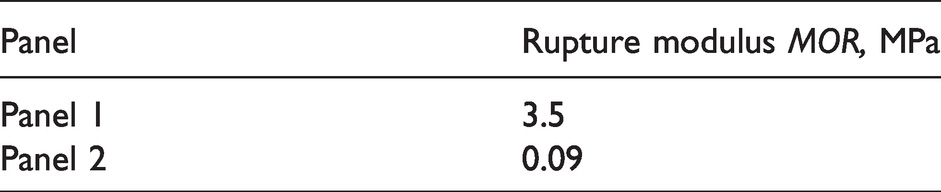
The MOR results of the panel rupture module are presented in Table 3. The rupture modulus of the two panels was found to be significantly different. The rupture modulus of panel 1 is almost 39 times larger than that of panel 2, made from scraps. Compared to other construction panels, such as fiber cement sheets, it can be seen that the value of the rupture modulus of panel 1 is close to the value of the minimum rupture modulus of class 1 in wet and laboratory conditions (4 MPa).
Rupture modulus results MOR, MPa
The different behavior of the panels in bending is reflected by the characteristic force–deflection curves (Figure 12). The curve of panel 1 is relatively smooth; the force gradually increases with increasing bending load until it reaches a maximum value and a rupture develops, that is, a further increase in load leads to the separation of the components of the composite matrix and the force starts to decrease. Visual inspection of the test object shows that the threads forming the composite do not break during bending, as the reduction in force is due to the separation of the threads and the bonding material. Meanwhile, when bending the panel from fabric scraps, the formation of small min–max force is observed during the whole process, from which it can be concluded that the panel made from scraps is less well “bonded” by the bonding agent than the thread panel.
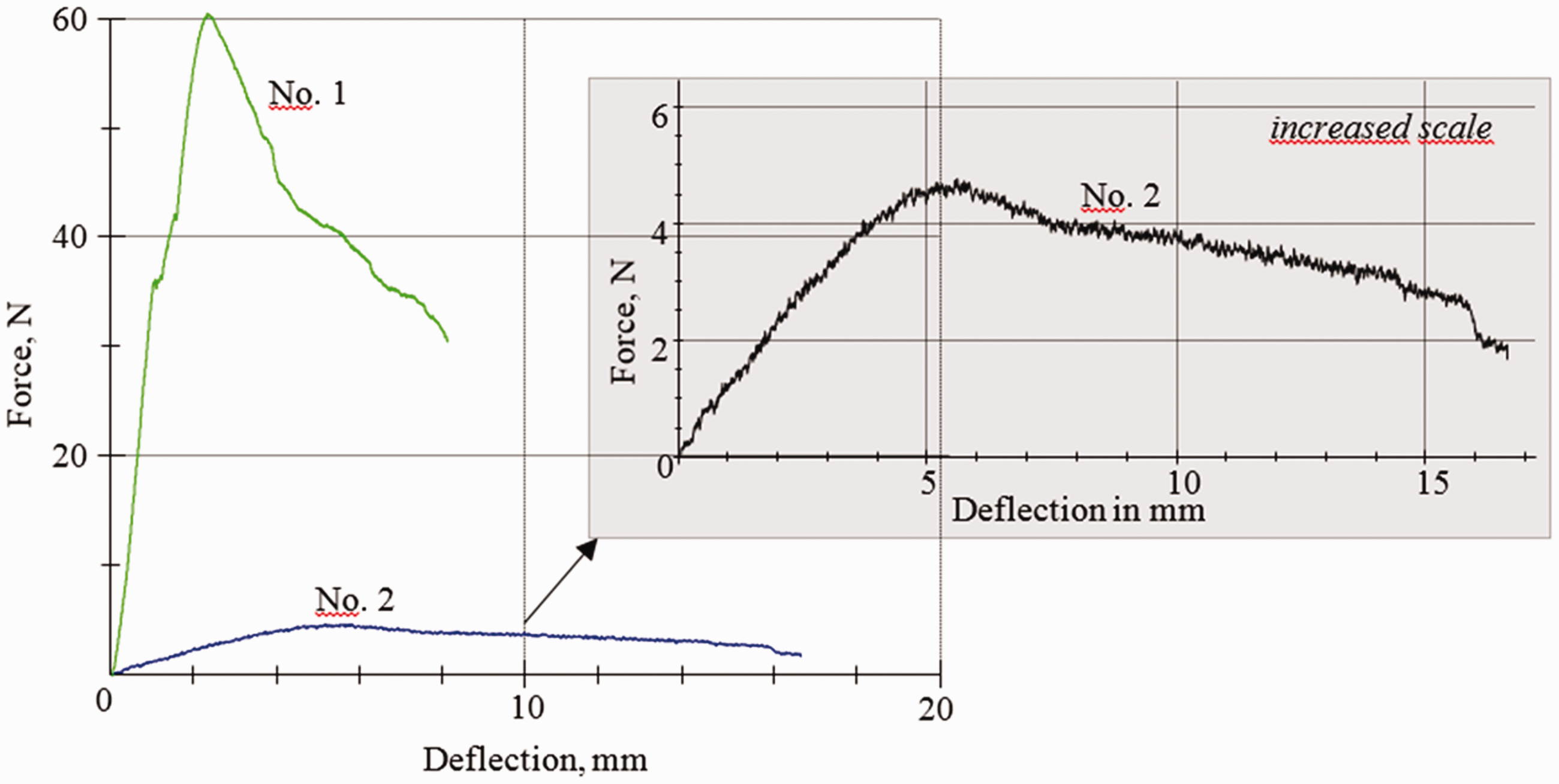
Force–deflection curves of panels 1 and 2.
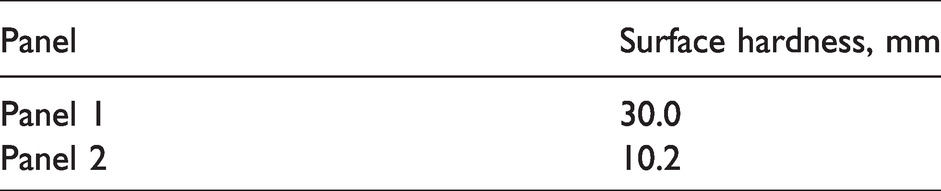
Assessing the surface hardness of the panels, it was found that panel 1, made from threads, has a higher hardness than panel 2, made from fabric scraps (Table 4). Such results can be explained by differences in the structure of the panels themselves, as the threads in the panel adhere better to the integral system than the fabric scraps. Therefore, the hardness of its surface is higher.
Surface hardness results of the panels
Thus, evaluating the results of the performed research, it can be seen that the use of textile waste in acoustic panels is possible, with textile waste as the main component. SEM research has confirmed that the strength properties of a panel are closely related to the technology and structure of the panel, and that panels made from scraps have poorer strength and acoustic properties than panels made from threads.
Conclusions
The research has shown that different manufacturing methods provide different sound insulation, and better sound insulation properties were distinguished by a panel made from fabric threads. This research investigated denim waste, and a review of the literature showed that there is still a lack of such studies, especially studies with textile waste as a major component. The SEM analysis of the surface of the panels and the interior of the panels has shown that the panels made from scraps have gaps between the interwoven systems of the different threads, so that the panel made from scraps does not have the same uniformity as a panel made from threads only. The research confirmed that it is possible to produce construction products whose main component is denim textile waste. This would improve the topical issue of textile waste disposal.
The panel made from scraps also insulated sound, but to a lesser extent than the panel made from threads. At sound frequencies of 8000 Hz and higher, both panels isolated the sound equally, with similar loudness results behind the microphone. A panel made from scraps also insulated sound, but within a smaller range than a panel made from threads (34–71 and 36–78 dB, respectively).
In the case of panels made from textile waste, it was found that, as an isotropic rod, the panels do not deflect in vibration at any frequency. This shows that their mechanical properties are not clearly expressed. Like an isotropic panel, they do not bend due to the wide dispersion of mechanical properties in the individual zones, meaning that the individual zones have different mechanical properties. Plates oscillate as a system of individual masses (bodies) rather than as a single body.
Tests have shown that the damping coefficient of a panel made from threads is 0.04–0.07 (two to three times higher than that of a panel made from wood and wood-based materials), indicating that the textile waste panel has good acoustic properties.
The obtained results of the bending properties show that the panel made from threads is stronger (the rupture modulus is 3.5 MPa) than the panel made from scraps (the rupture modulus is only 0.09 MPa). When assessing the surface hardness of the panels, it was found that the panel made from threads has three times higher hardness than the panel made from fabric scraps. The research results have confirmed that the use of textile waste in acoustic panels is possible, with textile waste as the main component in building products.
Footnotes
Declaration of conflicting interests
The author(s) declared no potential conflicts of interest with respect to the research, authorship, and/or publication of this article.
Funding
The author(s) received no financial support for the research, authorship and/or publication of this article.
