




Abstract
The electrical properties and electromagnetic shielding effectiveness of raw, dyed and softened, and treated with an antibacterial finish polygiene VO-600 cotton/antistatic polyester fabrics of two knit patterns, such as 1 × 1 rib and half-Milano rib, giving a very similar appearance for the fabric surface and having four polyester percentages (10%, 20%, 30%, and 35%) were investigated. Surface and the volume resistivity were measured according to EN 1149, and the effectiveness of electromagnetic shielding was determined according to ASTM D4935-18. The effect of individual factors (fiber composition, knit pattern, technical side, and treatment) and their complexity on the electrical properties of fabrics was evaluated by applying analysis of variance. The research revealed that the fiber composition of fabrics as an individual factor has the greatest influence on electrical properties. Electrical resistance decreased with the increasing percentage of polyester. Half-Milano rib fabrics were significantly more resistant than 1 × 1 rib fabrics. Raw fabrics were less electrically resistant than dyed and softened fabrics, and treated with antibacterial finish fabrics. Antibacterial finished fabrics were more electrically resistant than dyed and softened fabrics. The analysis of variance revealed that the complexity of investigated factors, such as fiber composition, knit pattern, and treatment, has a significant impact on fabric resistivity for both technical sides. Therefore, when selecting knitted fabrics with a very similar appearance for final applications in daily clothing, not only the impact of individual factors on their performance must be evaluated. The shielding effectiveness of the fabrics was too low to protect against electromagnetic waves.
Keywords
All materials are made up of atoms with positive and negative charges to balance the energy of the atom. When two different materials are rubbed against each other, an exchange of electrons occurs that makes the material surface charged, and if the materials are conductive, then charges flow and make themselves neutral. However, textile materials are insulators that do not allow static charges to flow on the textile surface. These static charges present on any surface can damage electrical and electronic devices, explode in the chemical environment, and even cause electric shocks to the wearer. Therefore, the development and application of conductive and antistatic textile materials is crucial to avoid static electricity generation or rapid dissipation. 1 Many researchers have worked to develop antistatic or conductive textile fabrics by applying different conductive agents to them. Arumugam et al. 2 investigated knitted fabrics developed using polypyrrole-coated cotton and polyester yarns that run in a direction of course at different intervals of the fabric and confirmed that an increase in the percentage of polypyrrole-coated fiber yarn in the knitted fabric structure increases its electrical conductivity. Polypyrrole was a very common agent applied to textiles by many researchers to natural and synthetic fabrics3–5 to provide electrical conductivity and electromagnetic shielding properties. In addition to polypyrrole coatings, some metal particles, such as cobalt, nickel, aluminum, silver, gold, titanium, zinc, and many other metals, were applied for the same purpose.6,7 Ahmad et al. 8 developed conductive fabrics using three different concentrations of silver nanoparticles and a binding agent to finish cotton, polyester, and nylon fabrics and determined that an increase in the concentration of nanoparticles increases the electrical conductivity depending on the different behaviors of the binding agents with the fabric substrate. El-Newashy et al. 9 investigated the electrical conductivity of five pique knitted fabrics of different stitch lengths treated with zinc oxide (ZnO) nanoparticles and confirmed that the electrical conductivity of these fabrics depends on the stitch length. A different amount of ZnO particles was found for different fabric structures. Moazzenchi and Montazer 10 confirmed that nickel nanoparticles applied to polyester fabrics ensure good electrical conductivity and electromagnetic shielding. Together with the use of metal nanoparticles to coat yarns and fabric, metal wires, metal fibers, and metal yarns can also be applied to develop conductive textiles. Although metal-based yarn fabrics are considered more efficient in their electrical properties, they also have some disadvantages. Yu et al. 11 investigated the electromagnetic shielding properties of knitted fabrics with elastic wrap yarns consisting of a stainless steel core yarn and concluded that with the incorporation of a stainless steel core into the yarn, the electromagnetic shielding is improved. Furthermore, the fabric layers assembled at different angles (0°, 45°, 90°) influence good electromagnetic shielding because of the formation of grid-like structures that provide more shielding effectiveness (SE) than single-layer fabrics. Metal core yarns are used to achieve high conductivity and electrical properties for technical applications.8,12–15 Despite their very good electrical properties, metal yarn-based fabrics are not considered highly desirable for clothing because of their poor mechanical properties.
The fabric structure is also an important factor that alters its electrical performance because each knitted fabric structure has a different number of pores, interlacement points, and stitches. Pragya and Deogaonkar-Baride 5 studied cotton and polyester fabrics treated with the same amount of polypyrrole to determine the effect of interlacement points on the electrical conductivity of fabrics. Testing of four types of woven fabric structures and a single jersey knitted fabric structure to evaluate the influence of the structure on electrical surface conductivity showed that a higher number of floats in the woven structures influences higher electrical surface conductivity. Furthermore, different forms of carbon, such as graphene oxide and carbon nanotubes, are increasingly important in the development of protective textile fabrics 16 due to the very high electrical and thermal conductivity and the strength of carbon having a nanoscale surface. Carbon-based antistatic polyester fibers are used in blends with other high-performance fibers to achieve flame retardant and antistatic properties for technical applications.17,18 Li et al.18 investigated textiles from carbon nanotube core-spun yarns and wool and evaluated their thermal and mechanical properties and approximately 20 dB electromagnetic SE, confirming their suitability for functional and wearable textiles; they even had much lower SE than 50 dB SE in a maternity dress with integrated metal fibers. Hou et al. 19 and Cao et al. 20 used reduced graphene oxide to coat knitted polyester and spandex fabrics and study the electrical conductivity of the fabric before washing and after repeated washing cycles. The unwashed fabrics showed very good electrical conductivity, but after repeated washing of two, four and eight washing cycles, the conductivity decreased. In conclusion, from the literature review, it can be stated that there are many methods to obtain electrically conductive and electromagnetic shielding fabrics, such as using yarns made of copper, aluminium, stainless steel, etc.,11–15,21–23 carbon materials,18,19,21,24 and/or metal nanoparticles, such as cobalt, nickel, aluminium, copper, silver, gold, titanium, and zinc,3,6,7,10,23,25 or polyaniline and polypyrrole coatings2–5,20 incorporated in the production of textiles used for technical applications, such as sensors, electrodes, hi-tech shielding fabrics, etc. Therefore, it can be seen that there is a lack of research on the electrical properties of textile fabrics suitable for everyday clothing. Thus, this research is focused on the investigation of cotton/antistatic polyester knitted fabrics treated with an antibacterial finish. The cotton fibers themselves have good antistatic ability and absorb moisture very well, but they release it slowly, therefore creating good conditions for bacterial growth. In this research, to enhance moisture management properties, cotton fibers are mixed with synthetic fibers, such as antistatic polyester, which are prone to accumulate electrical charges. Moreover, the combined approach to provide double functionality, such as antistatic and antibacterial properties, creates new possibilities for clothing to remain cleaner longer and to be laundered less frequently due to the lower accumulation of dust or other particles in the textile structure. An antibacterial treatment also decreases the number of washes during the exploitation of cotton fiber-based knitted fabrics that quickly absorb moisture but slowly evaporate, thus influencing the more effective growth of bacteria. Due to the highly evident lack of knowledge about the influence of the individual factors and their complexity on the electrical properties of cotton/antistatic polyester knitted fabrics that demonstrate antistatic and antibacterial behavior and are more suitable for daily clothing, the aim of this research is to investigate the effect of individual factors, such as fiber composition, the knit pattern of the fabric, the technical side of the fabric, and fabric treatment, and the complexity of evaluated factors on the electrical properties and electromagnetic SE of cotton/antistatic polyester knitted fabrics by applying the statistical method of analysis of variance (ANOVA).
Materials and methods
Raw, dyed and softened (S), and treated with an antibacterial finish Polygiene VO-600 (S + P) cotton (CO)/antistatic polyester (PETA) knitted fabrics of two knit patterns, such as 1 × 1 rib (MR) and half-Milano rib (MM), giving a very similar appearance for fabric surface and having four different percentages of PETA, such as 10%, 20%, 30%, and 35%, were newly developed and investigated to evaluate the electrical properties and electromagnetic SE in this research. All parameters were tested for both technical fabric sides because both half-Milano rib and 1 × 1 rib knit patterns give almost the same aesthetic appearance of their technical faces, and thus both can be used by fashion designers for the outside surface of garments suitable for daily wear. The newly developed knitted fabrics were expected to have permanent elimination of the static charge problem; that is, antistatic because of the use of the polyester yarns containing carbon black. The purpose of testing the SE property of the developed antistatic knitted fabric was to measure the ability of the samples to protect the wearer from the radiation of the electrical and electronic devices used in daily life; for example, smartphones, televisions, computers, smart watches, etc.
To estimate the significance of the influence of individual factors and their complexity on the surface resistivity and volume resistivity testing, Minitab 17 statistical software based on the one-way ANOVA method was applied, and the P-value was examined. When the P-value was less than 0.05, the influence of the factor or complexity of evaluated factors was concluded to be significant.
The characteristics of the knitted fabrics newly developed for this research are given in Table 1. For the manufacture of raw knitted fabrics, Z-twisted CO/PETA (containing 0.6% carbon as the conductive medium, as seen in the scanning electron microscope (SEM) images of the fabric samples presented in Figure 1) blended yarns produced by Haining Taierxin New Materials Co. Ltd. were used. The strength of the yarns used was equal to 2.0 cN/dtex, and the elongation – 72% or 4-ply yarns were used to produce fabric samples with almost the same fabric thickness and loop densities for both 1 × 1 rib (MR) and half-Milano (MM) knit patterns. A M-100 full automatic flat knitting machine (Matsuya, Japan, 2016) with a gauge of 14 E and all constant machine settings was used to make the knitted fabric samples.
Characteristics of investigated knitted fabrics
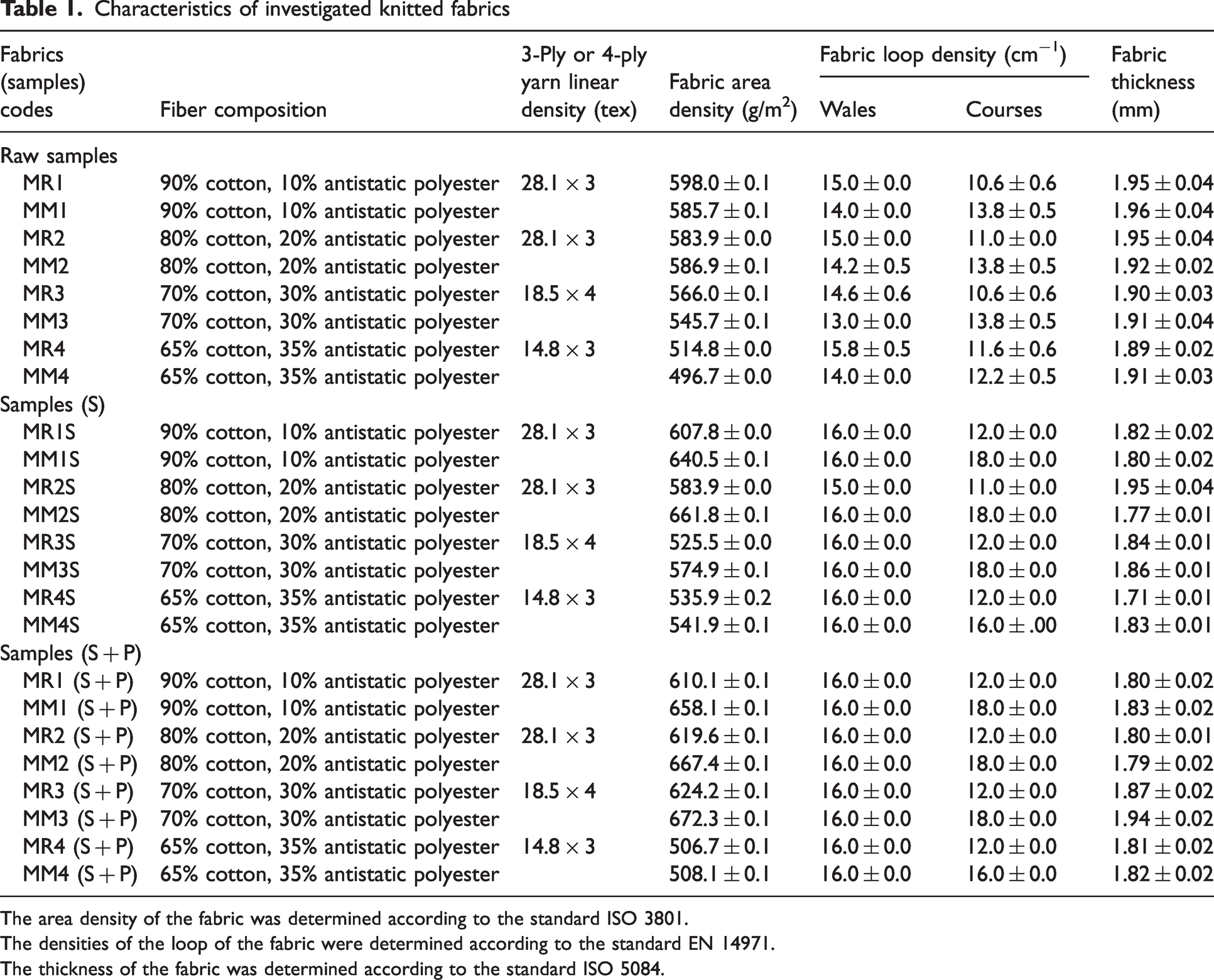
The area density of the fabric was determined according to the standard ISO 3801.
The densities of the loop of the fabric were determined according to the standard EN 14971.
The thickness of the fabric was determined according to the standard ISO 5084.
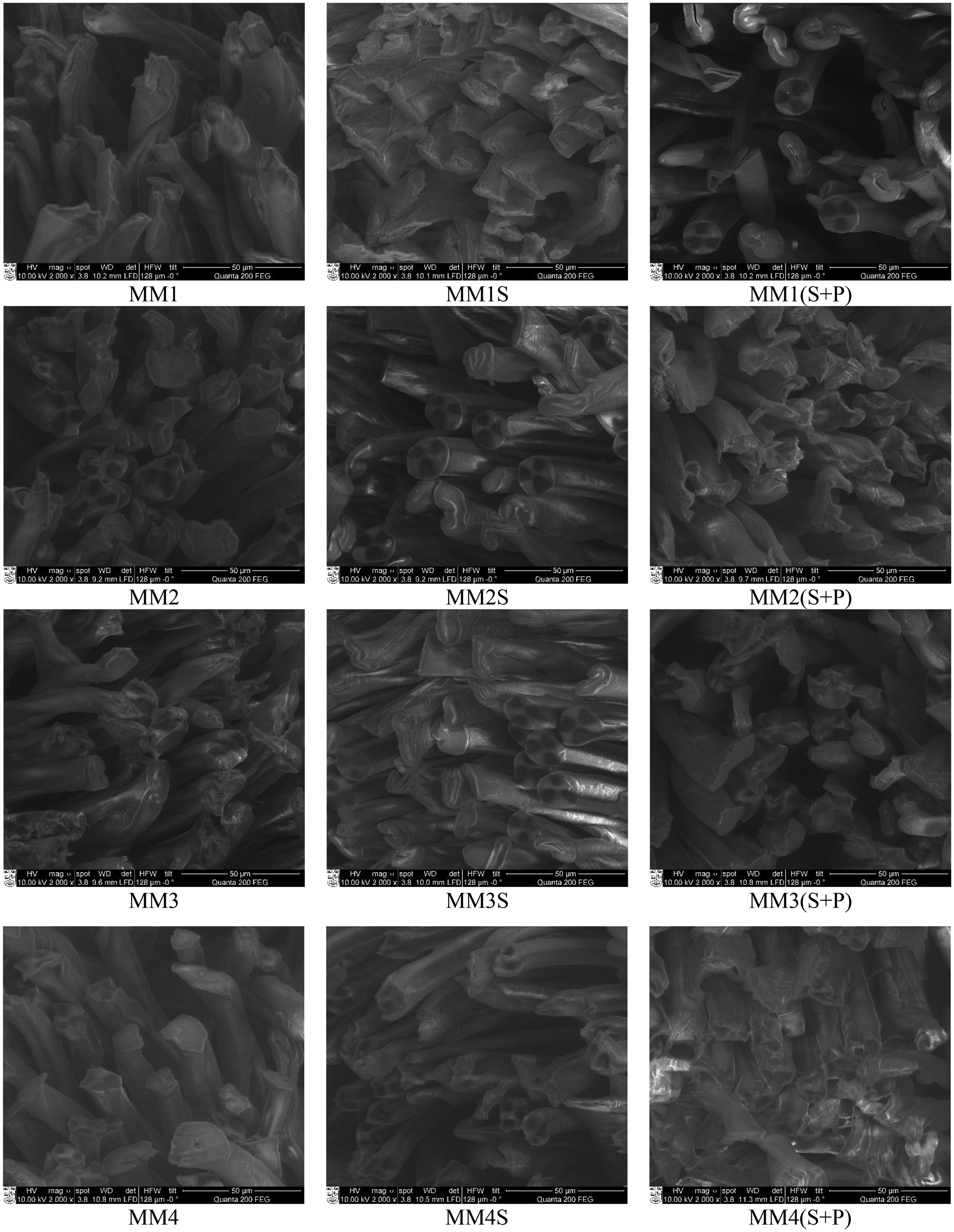
Scanning electron microscope (SEM) images of the cross-sections of antistatic half-Milano rib knitted fabrics.
The raw knit fabrics were divided into three groups for each of the applied knit patterns (Table 1) to prepare the tested samples: (a) raw samples were raw fabrics tested directly after knitting and conditioning under standard atmosphere conditions; (b) (S) samples were fabrics washed, dyed and treated with softener; and (c) (S + P) samples were fabrics washed, dyed, softened, and treated with antibacterial finish. For fabric dyeing, the Thies Minisoft machine (Germany, model 1995) was used, and the Santex CH9555 Tobel machine (Switzerland) was used for softening with the hydrophilic softener Aquasoft SI and application of the antibacterial Polygiene VO-600 application.
SEM image analysis (Figure 1 and Figure 2) of newly developed knitted fabrics was performed with a Quanta 200 FEG SEM at a magnification of 2000x.
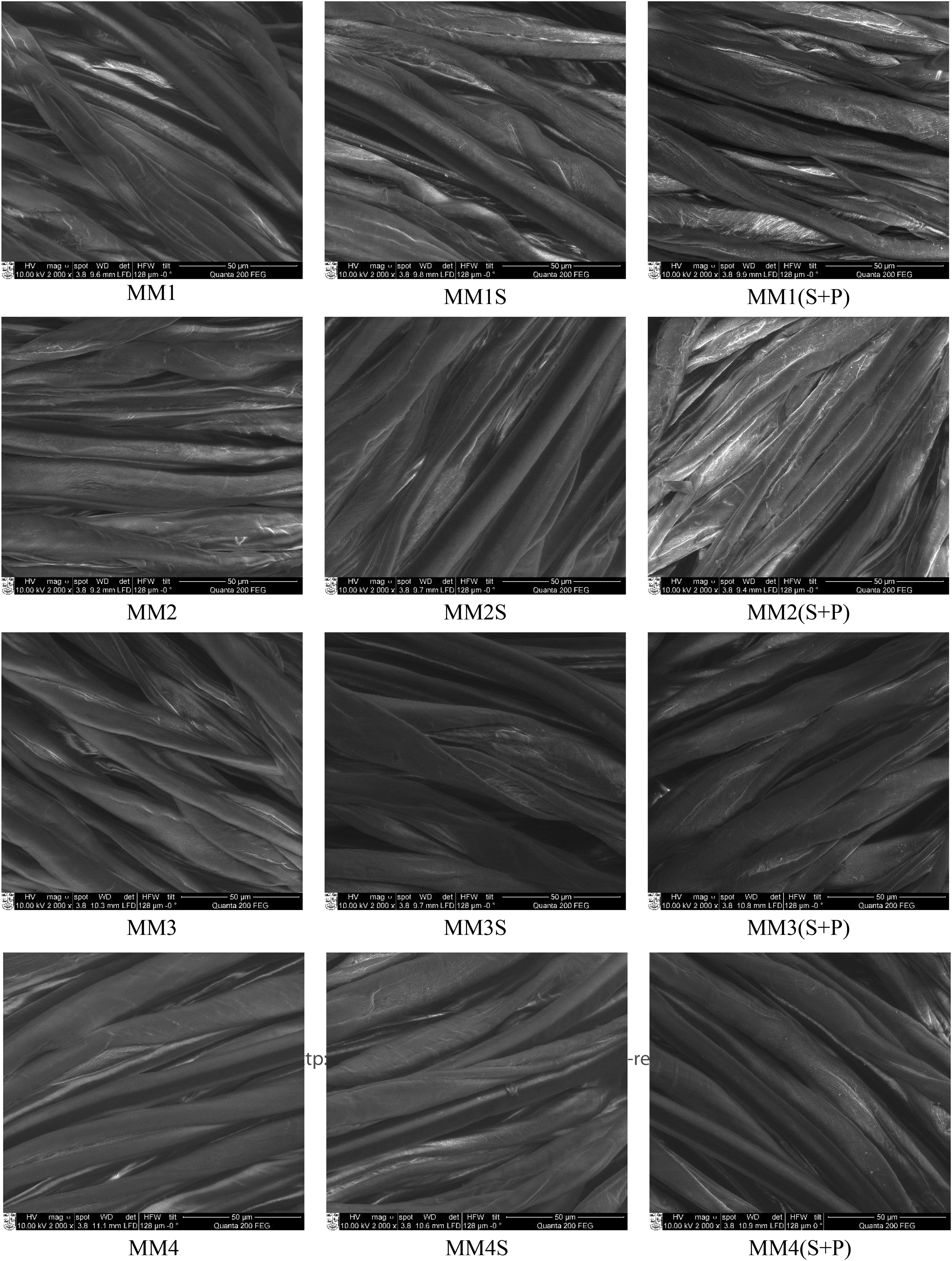
Scanning electron microscope (SEM) images of the surfaces of antistatic half-Milano rib knitted fabrics.
The surface resistivity, volume resistivity, and electromagnetic SE of antistatic knitted fabrics were measured according to the standards EN 1149-1, EN 1149-2 and ASTM D 4935-18, respectively. Electromagnetic shielding is defined as the process of limiting the flow of electromagnetic fields between two locations by a barrier.
21
Electromagnetic shielding occurs due to the reflection, absorption, or multiple reflections of incident radiation by the barrier.
21
Thus, in the case of nonionizing radiation, the electromagnetic shielding barrier needs to have a dielectric constant, high conductivity, or high magnetic permeability. It is known from the literature that textiles are intrinsically nonelectromagnetic shielding materials (are rather insulating materials) that can be successfully turned into electromagnetic shielding fabrics by applying a new production process, making process adaptations, or changing raw materials. In this investigation, carbon black-containing polyester fibers were used to change the properties of the polyester fibers. The electromagnetic SE was measured to show how effectively the fabric provides protection. SE (dB) was calculated according to equation (1):


High SE results show that the textile fabric absorbs electromagnetic waves very well, although negative SE results show resonance, which means that signals/waves are strengthened instead of shielding. The SE of the knitted fabrics was measured in the frequency range of 30 MHz to 3 GHz. This range of tested electromagnetic waves is located under radio waves that consist of a small wave length λ, approximately 10 cm ≤λ < 100 m with a high energy range of 1.2 ×10⁻⁵ eV ≤ E < 1.2 × 10⁻⁸ eV. The SE for personal shielding (general use) cannot be less than 12 dB, but an excess of the upper limit is not allowed. 4 The requirement specified by the Committee for Accreditation and Certification of Functional and Technical Textiles (http://www.ftts.org.tw/images/fa003E.pdf) states that the SE value should be in the range of 10 to 20 dB in the frequency spectrum of 0.8 to 2.5 GHz.
Results and discussion
SEM image analysis
SEM analysis of fabric samples was applied to capture cross-sectional (Figure 1) and surface (Figure 2) images. The surface and cross-sectional images of the antistatic knitted fabric give information about the antistatic polyester fibers in the yarn (Figure 1) and the deposition of antibacterial finish particles (Figure 2).
In Figure 1 it can be seen that the number of antistatic polyester fibers (PETA) increases with an increase in the percentage of antistatic polyester according to the following sequence of raw fabrics: MM1 >MM2 > MM3 > MM4 as well as dyed and softened fabrics (S samples), and treated with softener and antibacterial finish fabrics (S + P) samples that have those fiber compositions, respectively (Table 1). This explains the impact of the fiber content on the surface resistivity (Figure 3) and the volume resistivity (Figure 5) of the investigated fabrics. To show changes in the fiber surfaces of the investigated knitted fabrics with different fiber content due to their treatment, such as dying and softening (S samples) and softening and antibacterial finishing (S + P samples), the SEM images for the surfaces of the investigated knitted fabrics are presented in Figure 2. There, it can be seen that the finishing materials were deposited in some areas of the surface of the textile fiber, but the spaces between the fibers were not filled.
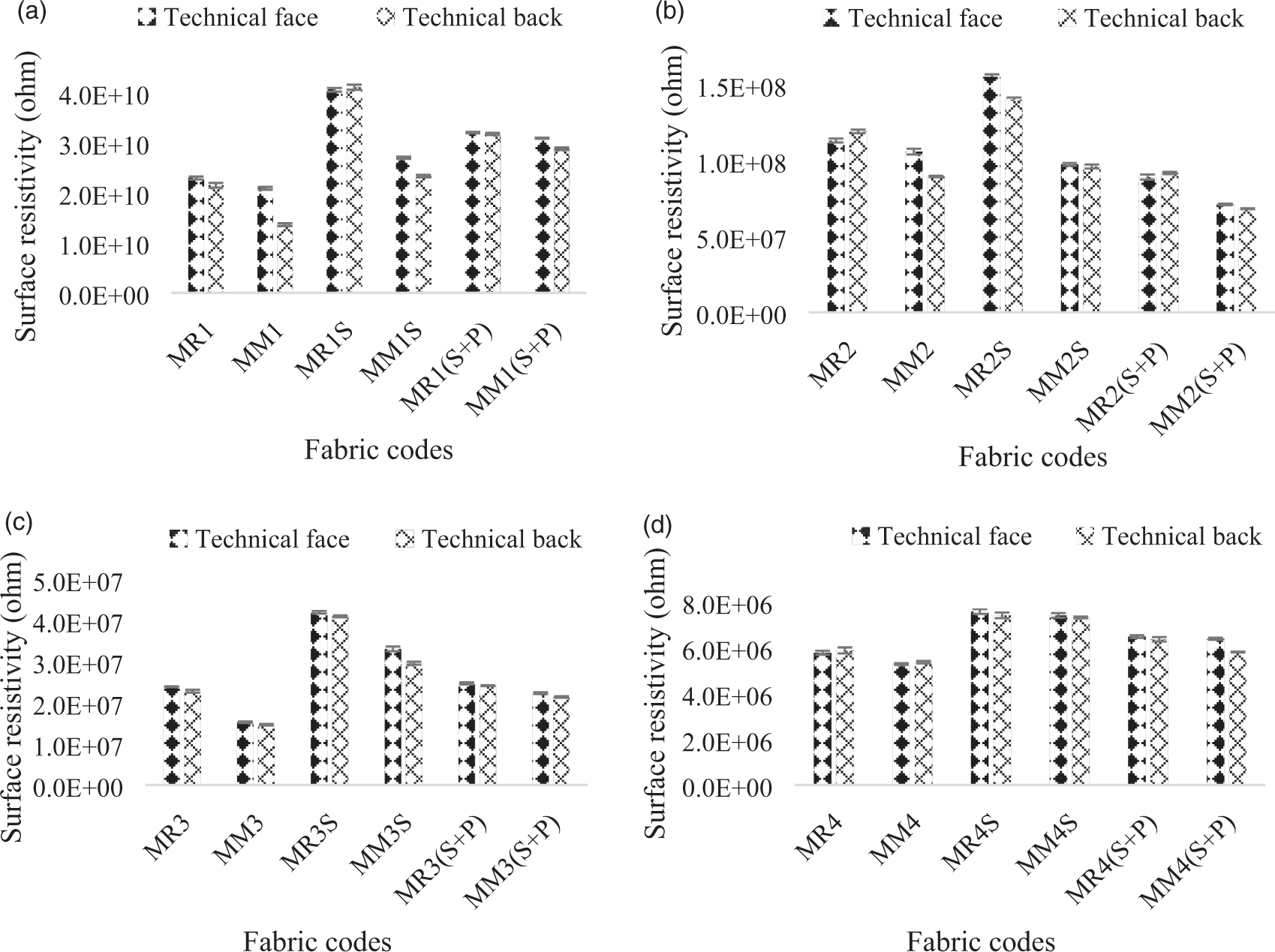
Surface resistivity results of antistatic knitted fabrics: (a) 90% cotton/10% antistatic polyester fibers (PETA); (b) 80% cotton/20% antistatic PETA; (c) 70% cotton/30% antistatic PETA and (d) 65% cotton/35% antistatic PETA.
Surface resistivity
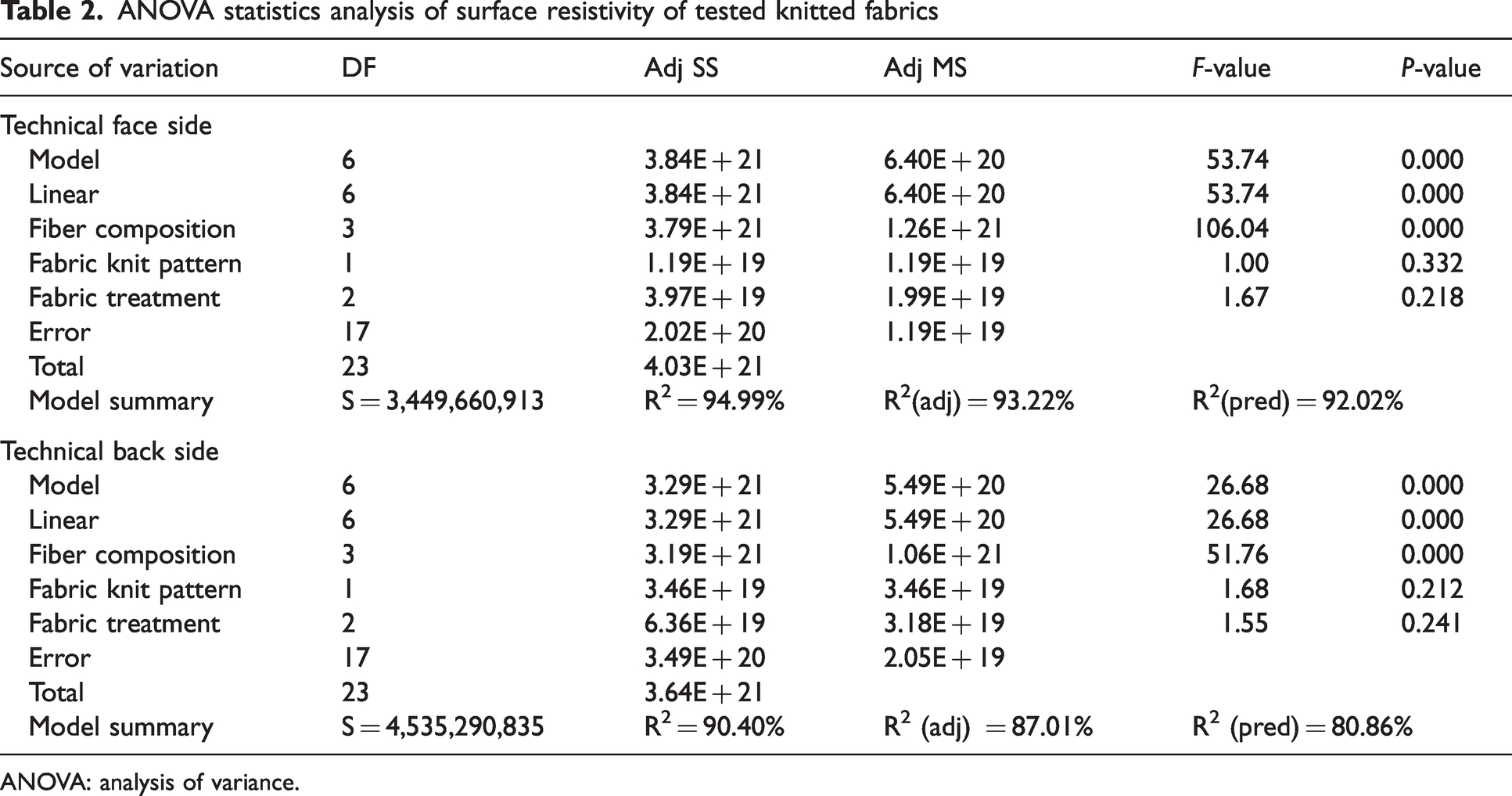
The influence of fiber composition, fabric knit pattern, and fabric treatment on surface resistivity of the 1 × 1 rib (MR) and half-Milano (MM) knitted fabrics was investigated (Figure 3). The statistical analysis of ANOVA (Table 2) confirmed that the complexity of factors, such as fiber composition, fabric knit pattern, and fabric treatment, have a statistically significant impact on surface resistivity for the face and back technical sides of the investigated knitted fabrics, as the P value of the summary model was equal to 0. The dyed and softened 90% CO/10% PETA 1 × 1 rib knitted MR1 fabric has the highest surface resistivity, and the raw 65% CO/35% PETA half-Milano rib knitted fabric has the lowest. Therefore, when selecting knitted fabrics with a very similar appearance for final applications in daily clothing, not only the raw materials must be evaluated, despite the fact that the fiber composition of the fibers as an individual factor significantly influences the surface resistivity of the investigated knitted fabrics, that is, the surface resistivity of the knitted fabric gradually decreases (Figure 4) with an increase in the percentage of antistatic polyester fibers (PETA) from 10% to 35% in the fabric content (MR1 >MR2 > MR3 > MR4 and MM1 > MM2 >MM3 >MM4) (Table 1).
ANOVA statistics analysis of surface resistivity of tested knitted fabrics
ANOVA: analysis of variance.
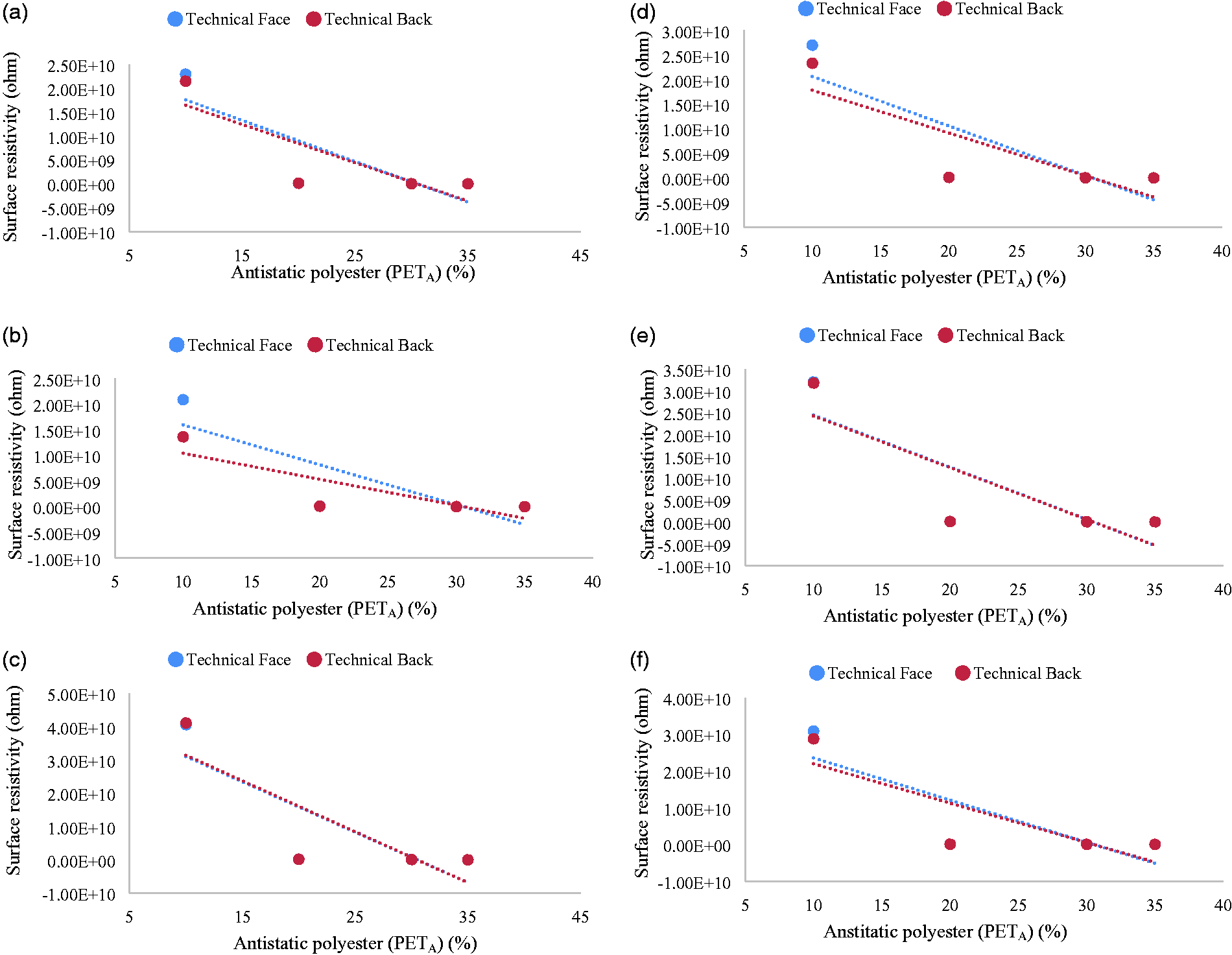
Relationship between the percentage of antistatic polyester fibers (PETA) and surface resistivity of: (a) raw samples of 1 × 1 rib knitted fabrics; (b) raw samples of half-Milano rib knitted fabrics; (c) (S) samples of 1 × 1 rib knitted fabrics; (d) (S) samples of half-Milano rib knitted fabrics; (e) (S + P) samples of 1 × 1 rib knitted fabrics and (f) (S + P) samples of half-Milano rib knitted fabrics.
From the results presented in Figure 3, it can also be seen that all raw fabric samples show lower surface resistivity than treated fabrics. In addition, samples belonging to the group (S) are more surface resistant than samples from the group (S + P). However, the results of the statistical analysis presented in Table 2 show that these changes in surface resistivity due to fabric treatment as an individual factor are insignificant for both technical sides of the fabrics, as the P value is greater than 0.05 (Table 2). Low differences in surface resistivity appear, supposedly, due to the finishing of fabrics with antibacterial Polygiene VO-600 finish (S + P), which contains silver salts and silver ions, helping to reduce surface resistivity, 8 but not due to the larger amount of adhered finishing materials (Figure 2).
Figure 3 shows that half-Milano rib knit fabrics have an insignificantly (Table 2) lower surface resistivity than 1 × 1 rib knitted fabrics for both technical sides, as the P value is greater than 0.05 (Table 2). Low differences in surface resistivity due to the fabric knit pattern appear, supposedly, due to the tighter structure of half-Milano knitted fabrics than 1 × 1 rib knitted fabrics.
Volume resistivity
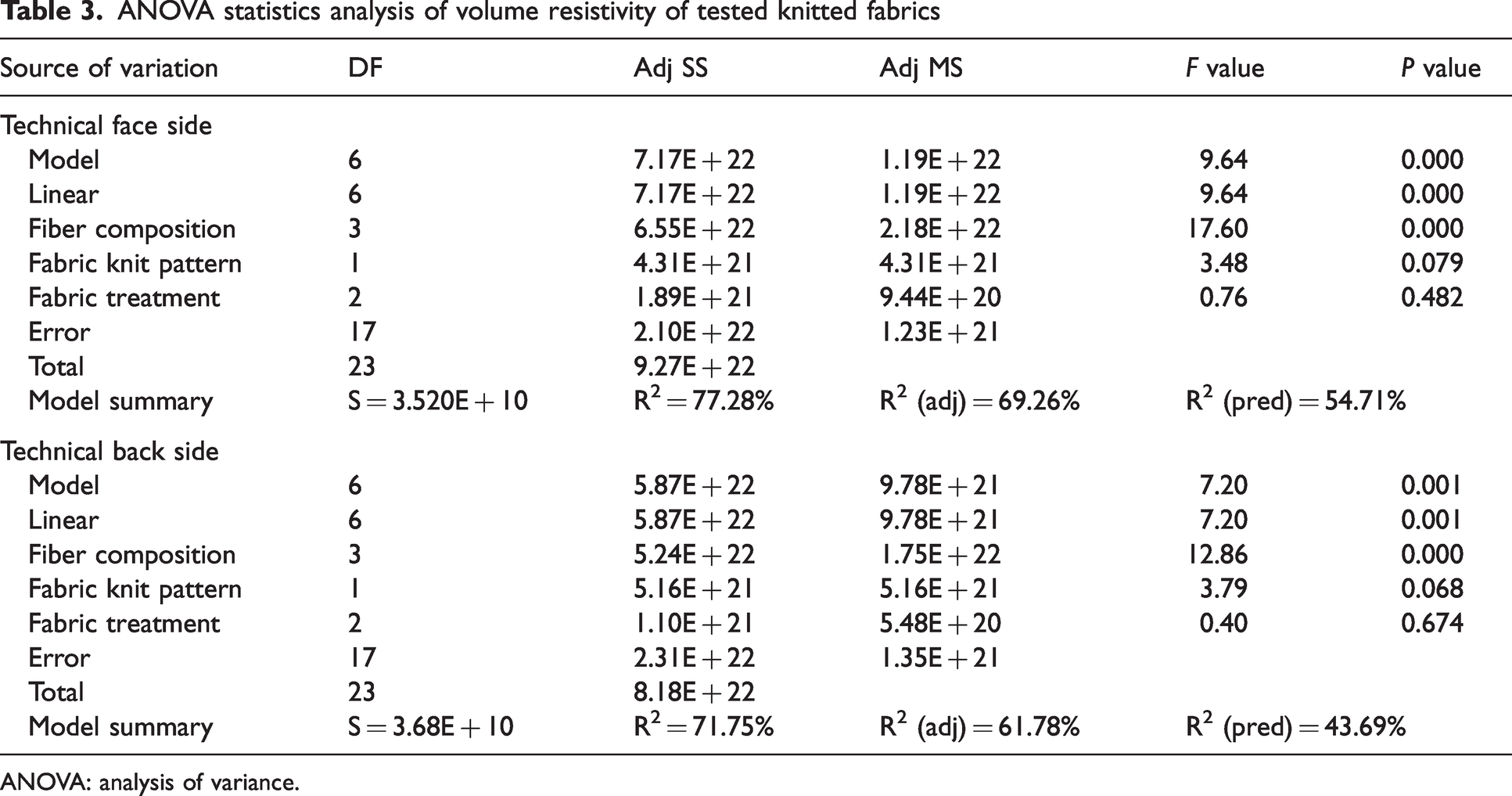
The volume resistivity of the fabric shows its electrical resistance when electrical charges flow through the thickness of the fabric. The influence of fiber composition, fabric knit pattern, and fabric treatment on the volume resistivity of the knitted fabrics 1 × 1 rib (MR) and half-Milano (MM) was tested (Figure 5). The statistical analysis of ANOVA (Table 3) confirmed that the complexity of the evaluated factors, such as fiber composition, fabric knit pattern, and fabric treatment, have a statistically significant impact on volume resistivity for the fabric face and back sides, as the P value of the summary model was equal to 0. The results of the statistical analysis of ANOVA presented in Table 3 show the significant influence of the fiber composition of the fabric as an individual factor on the volume resistivity, as the P value is equal to 0.000. The results of volume resistivity for 1 × 1 rib (MR) and half-Milano (MM) knitted fabrics presented in Figure 5 show that with an increase in the percentage of antistatic polyester fibers (PETA) from 10% to 35% (MR1 > MR2 > MR3 > MR4 and MM1 > MM2 >MM3 > MM4) in the fabric structure (Table 1), the volume resistivity of knitted fabrics decreases significantly (Figure 6). Furthermore, when comparing the surface resistivity (Figure 3) with the volume resistivity (Figure 5) for each fabric fiber composition and each knit pattern case, it can be seen that the volume resistivity is slightly higher than the surface resistivity, supposedly due to the presence of air in the fabric pores that act as an insulator. 26
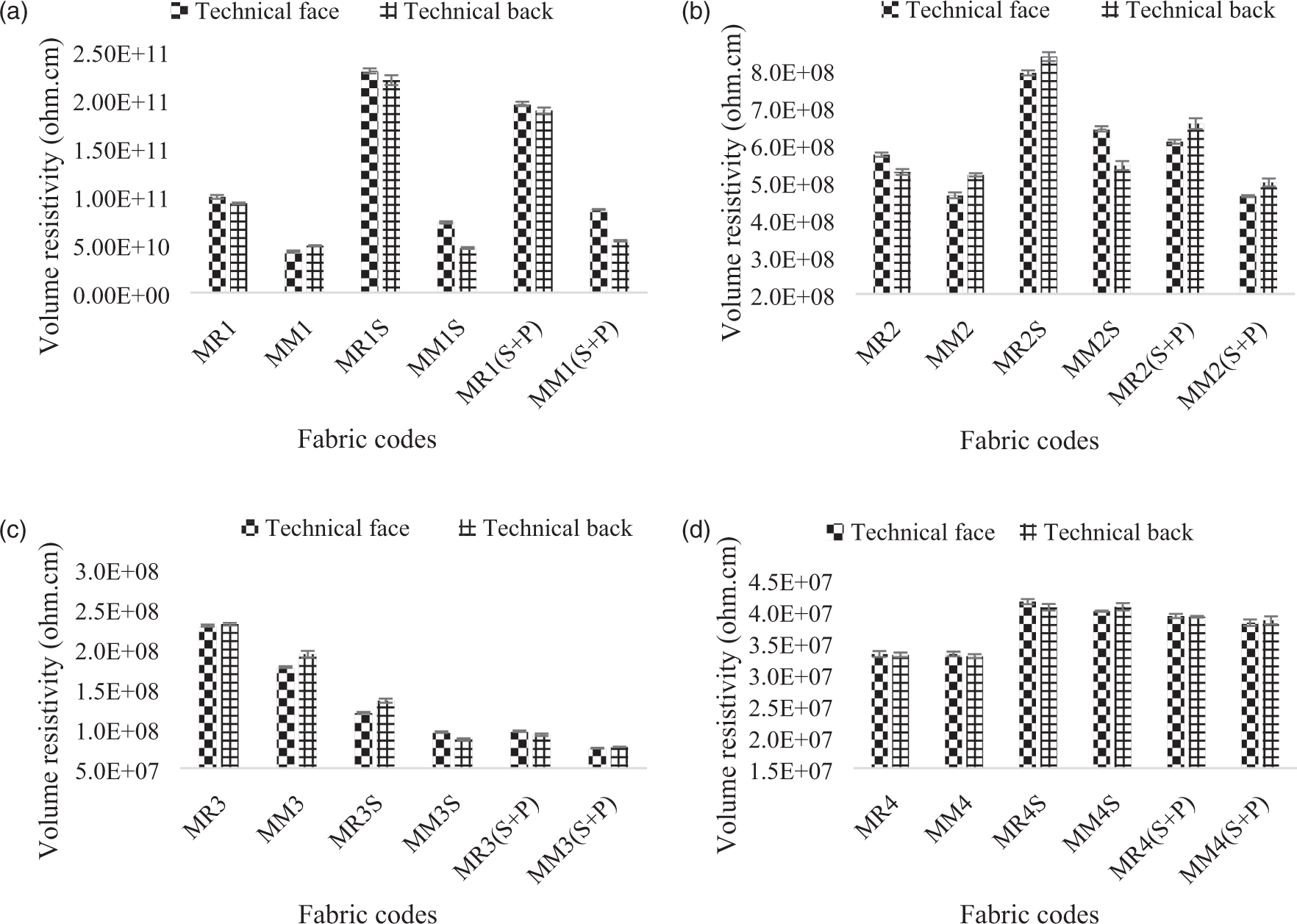
Volume resistivity results of antistatic knitted fabrics: (a) 90% cotton/10% antistatic polyester fibers (PETA); (b) 80% cotton 20%/antistatic PETA; (c) 70% cotton/30% antistatic PETA and (d) 65% cotton/35% antistatic PETA.
ANOVA statistics analysis of volume resistivity of tested knitted fabrics
ANOVA: analysis of variance.
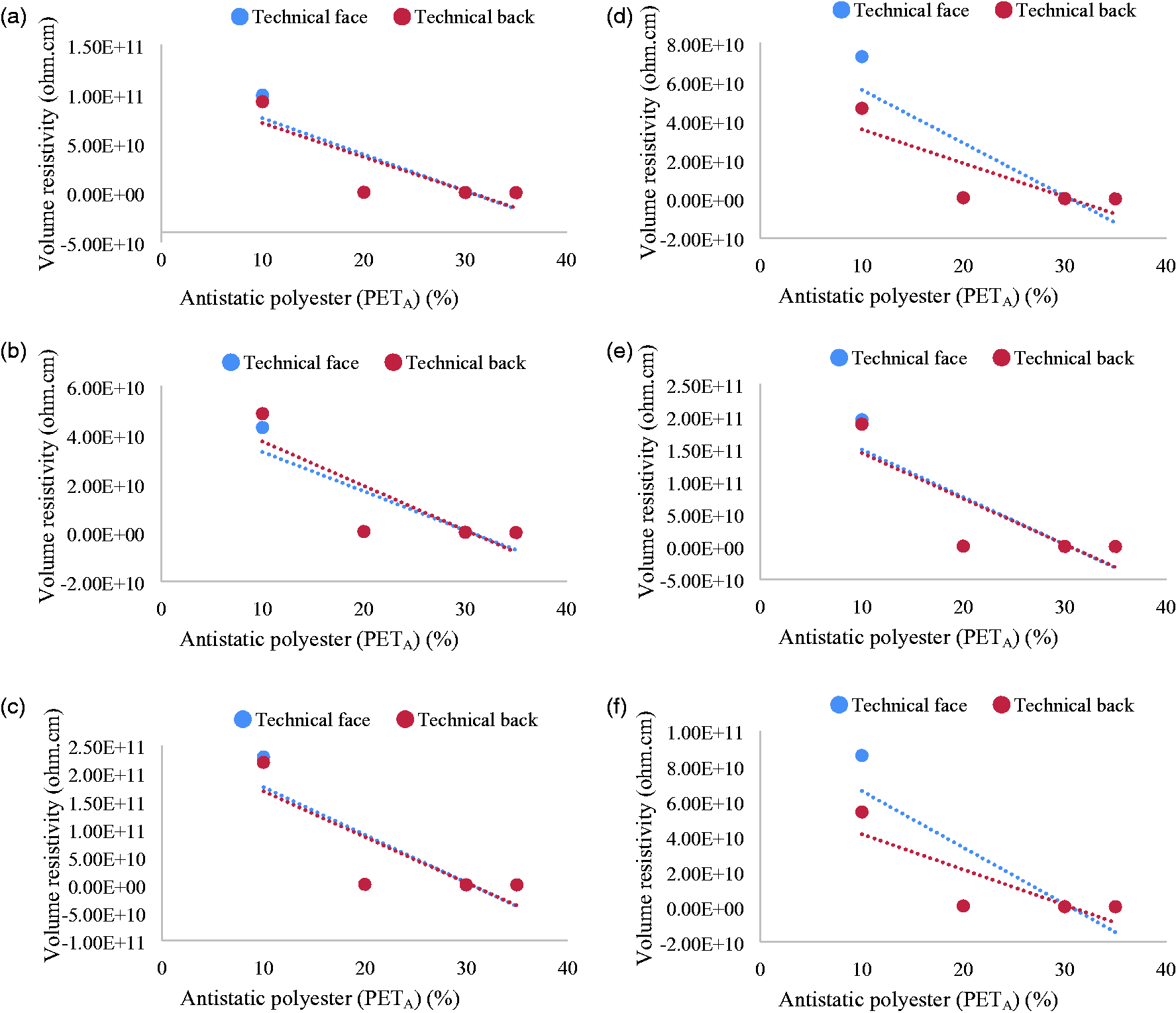
Relationship between the percentage of antistatic polyester fibers and volume resistivity of: (a) raw samples of 1 × rib fabrics; (b) raw samples of half-Milano rib fabrics; (c) (S) samples of 1 × 1 rib fabrics; (d) (S) samples of half-Milano rib fabrics; (e) (S + P) samples of 1 × 1 rib fabrics and (f) (S + P) samples of half-Milano rib fabrics.
Half-Milano rib knitted fabrics show insignificantly lower volume resistivity compared with 1 × 1 rib knitted fabrics for both technical sides of the fabrics, as the P value is greater than 0.050 (Table 3). These insignificant differences due to the fabric knit pattern occur, supposedly, due to the specific structure of the half-Milano rib fabric that contains missed stitches that feature lower elasticity in width and ultimately smaller air pores of the half-Milano rib knitted fabrics than the 1 × 1 rib knitted fabrics.
The statistical analysis of ANOVA (Table 3) shows that the influence of fabric treatment as individual factors on volume resistivity is also insignificant (Table 3). Despite this, when raw, (S), and (S + P) samples are compared among themselves for each fabric fiber content and each knit pattern, it can be seen that there are low differences in volume resistivity due to treatment; that is, the highest volume resistivity was determined for dyed and softened knitted fabrics (S samples).
Electromagnetic SE
Electromagnetic shielding can reduce the coupling of electrostatic, electromagnetic, and radio waves. The electromagnetic SE of textile fabric is measured to understand the ability of the fabric to provide effective blocking from the electromagnetic spectrum. The SE of antistatic knitted fabrics is shown in Figures 7 –9.
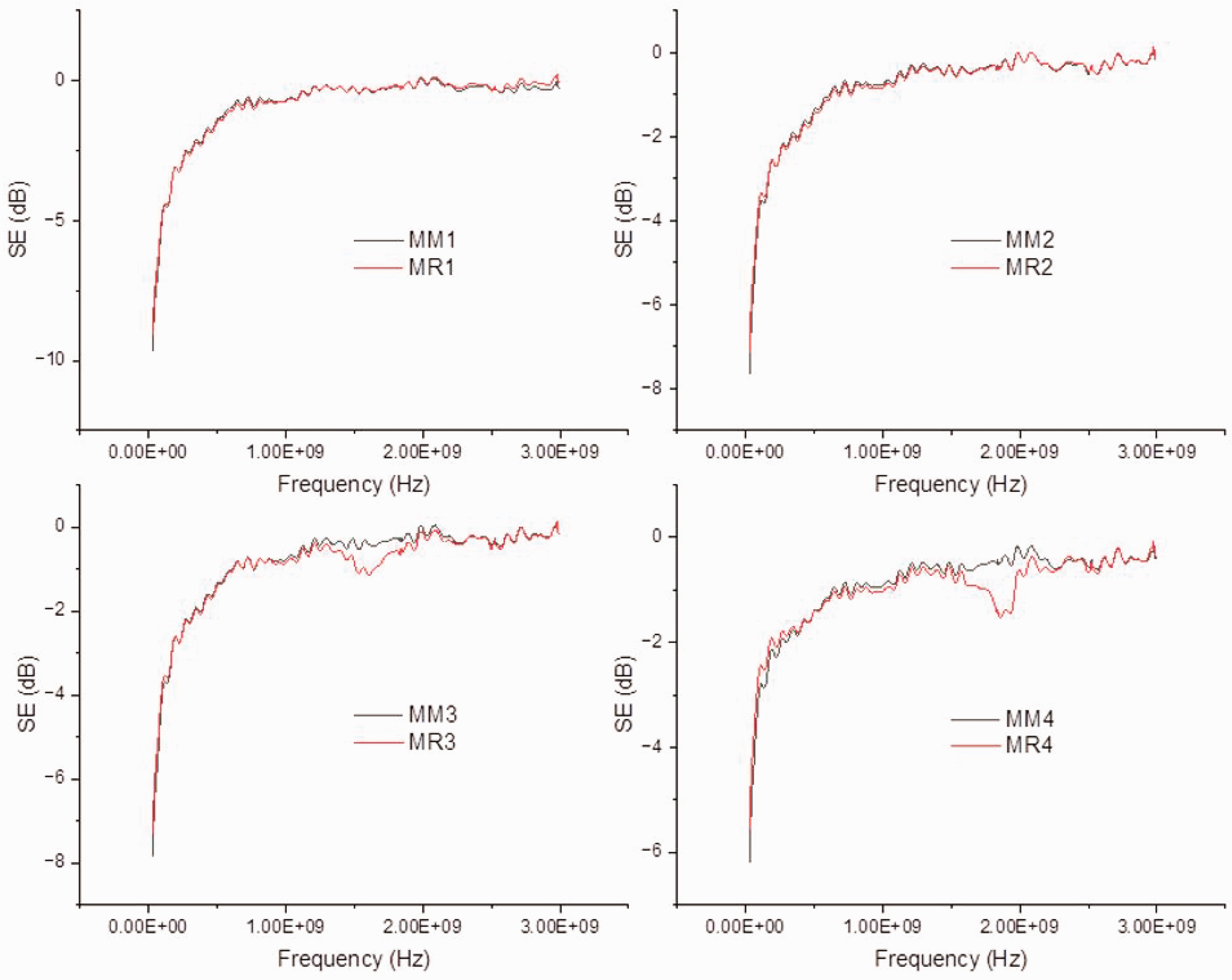
Electromagnetic shielding effectiveness (SE) results of the raw knitted fabrics.
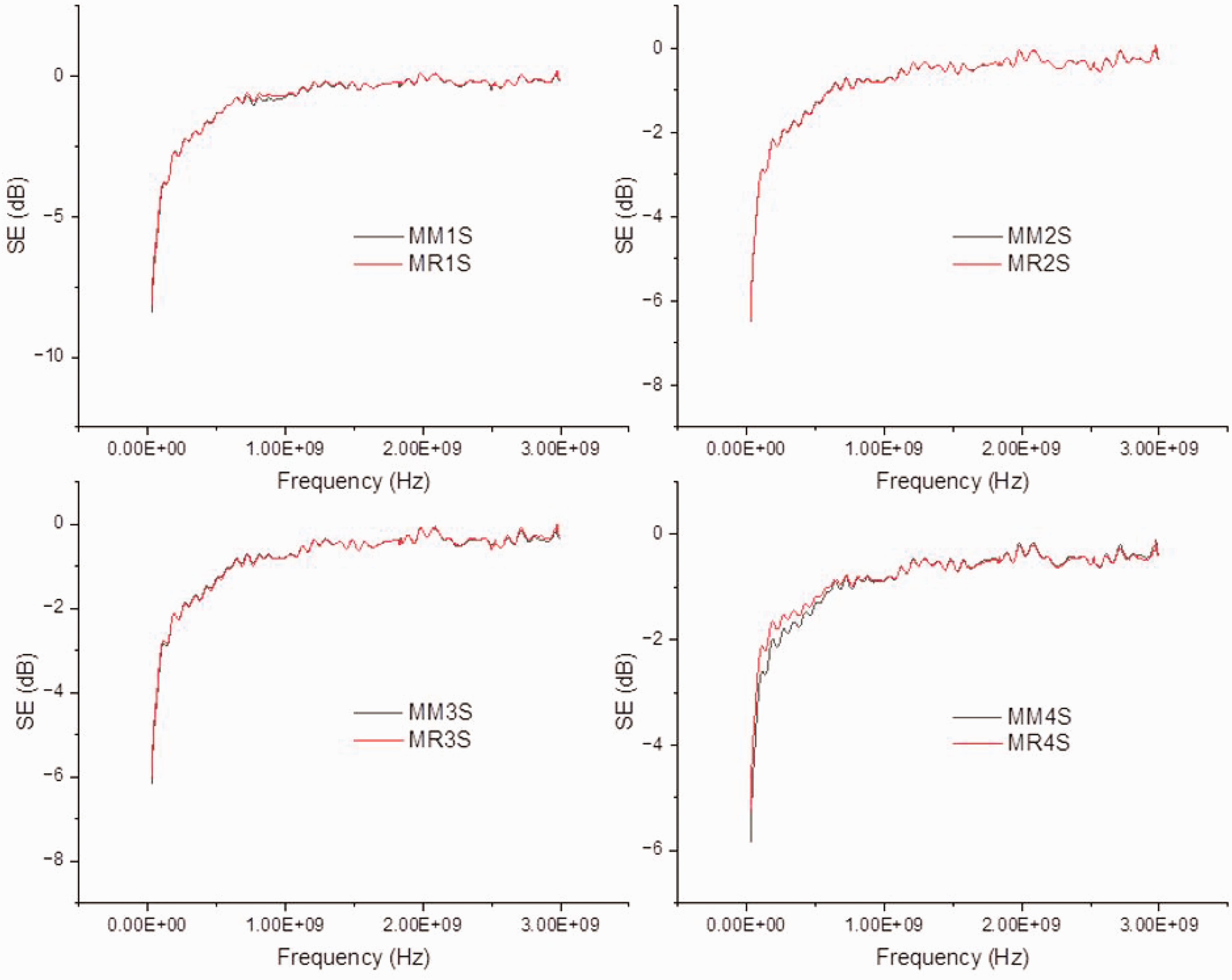
Electromagnetic shielding effectiveness (SE) results of the knitted fabrics treated with softener (S).
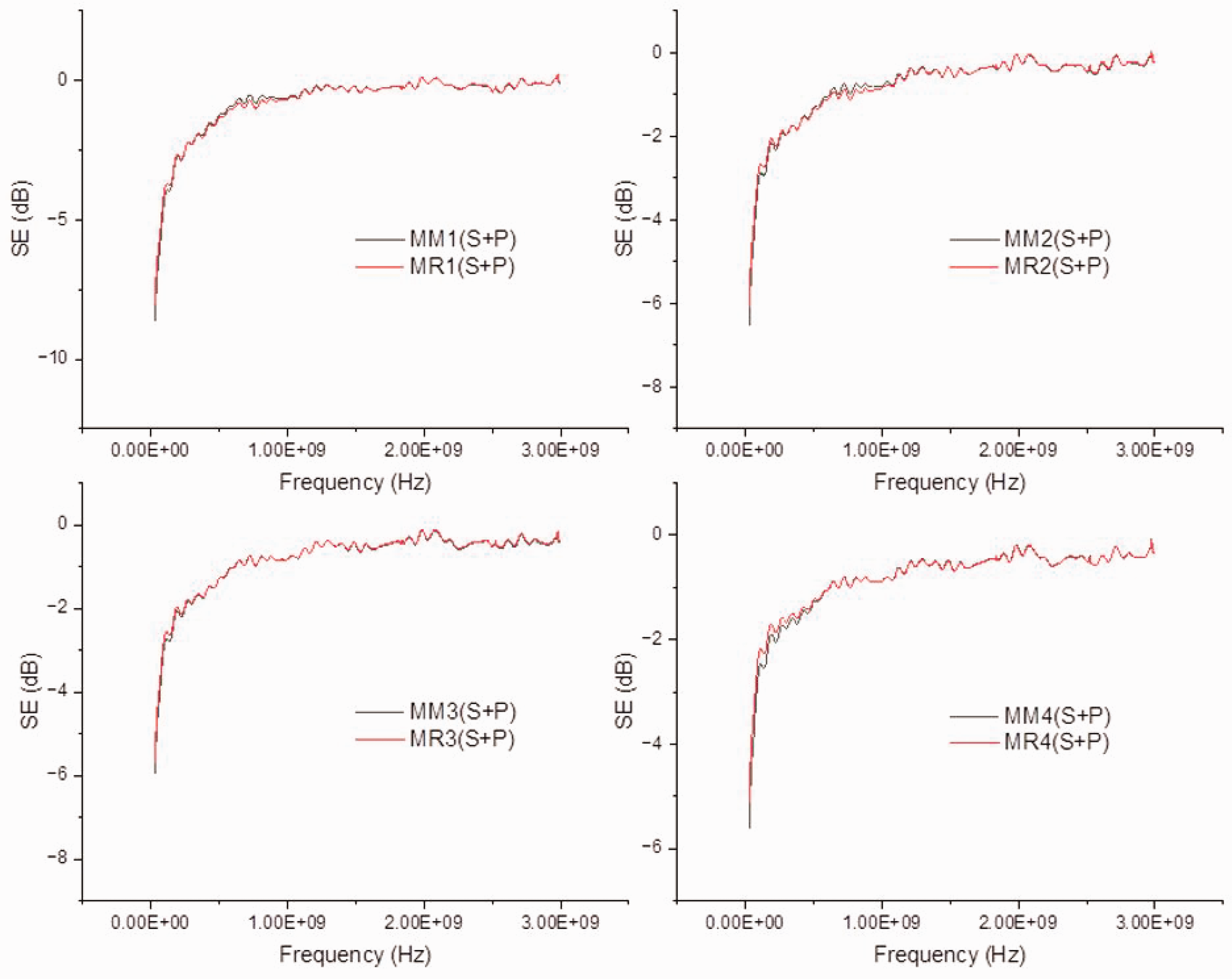
Electromagnetic shielding effectiveness (SE) results of the knitted fabrics treated with softener and antibacterial finish (S + P).
The electromagnetic SE of the fabrics was measured in a frequency range of 30 MHz to 3 GHz. The SE values of the antistatic knitted fabric were found to be quite low and all measurements were negative, showing the power loss when the SE was measured. These results confirmed that the presence of conductive medium in the knitted fabrics was insufficient to protect the human body from electromagnetic shielding; thus, the wearer of the garment must avoid intensive electromagnetic shielding when wearing the garments sewn from those fabrics. Apparently, the too low SE was due to the low carbon content in the polyester fiber. 24 Therefore, it can be concluded that a higher SE can be expected by increasing the percentage of antistatic polyester fibers in the blend or by increasing the percentage of carbon content within the polyester fibers. Although the first prediction seems possible, several technical problems may arise in achieving optimal values of the polymer characteristics, such as the viscosity and density of the polyester solution, the proper ratio of fiber mixing, etc.
Conclusions
This research investigates the effect of fiber composition, knit pattern, technical fabric sides, and fabric treatment on the electrical properties of knitted fabrics suitable for daily clothing. The significance of the impact of each separate factor and the three factors involved in the statistical analysis of ANOVA on the electrical properties of innovative knitted fabrics was verified.
The results of the statistical analysis of ANOVA revealed that the complexity of the factors evaluated, such as fiber composition, knit pattern, and fabric treatment, have a statistically significant impact on the surface resistivity and volume resistivity of the investigated knitted fabrics for both their technical sides. Therefore, when selecting knitted fabrics with a very similar appearance for final applications in daily clothing, not only the impact of individual factors on their performance must be evaluated.
It was determined that the percentage of antistatic polyester fibers in the fabric content significantly influences both the surface resistivity and the volume resistivity of the knitted fabrics. The research results confirmed that with an increase in the percentage of antistatic polyester fibers from 10% to 35% in the yarn composition, the resistivity of the knitted fabrics decreases, but it is still sufficient for daily clothing. The volume resistivity was found to be slightly higher than the surface resistivity, supposedly because of the insulation caused by the air pores in the knitted fabric structure.
Based on the statistical analysis of ANOVA, it was confirmed that the changes determined in both surface resistivity and volume resistivity of the knitted fabrics for both technical sides due to the knit pattern as an individual factor were statistically insignificant. Half-Milano rib knitted fabrics could show lower resistivity due to their tighter knitted structure compared with 1 × 1 rib knitted fabrics.
Although the research results approved by the statistical analysis of ANOVA confirmed that the fiber composition of the yarn is the only individual factor that has a statistically significant impact on the surface resistivity and the volume resistivity of the knitted fabrics, the research results show that insignificant differences due to the treatment in fabric resistance also exist; that is, the raw samples have lower electrical resistivity compared with the samples (S) and the (S + P), and the samples (S + P) are less resistant than the samples (S), supposedly because of the effect of silver-based antibacterial finish particles on the surface of the fabric.
The electromagnetic SE of antistatic knitted fabrics measured in the range of 30 MHz to 3 GHz was very low, supposedly due to a too small amount of carbon black in the yarn composition to absorb and reflect the energy of incident waves, and therefore can be improved by increasing the percentage of carbon particles in polyester.
Research confirmed that the electrical properties of cotton/antistatic polyester knitted fabrics treated with antibacterial finish are mainly influenced by the fiber composition of the yarns used to knit the fabrics. Although the good antistatic ability of fabric is ensured with the good antistatic ability of cotton fiber itself, innovative textiles are now developed using blends of natural and synthetic fibers and functional finishes to improve their moisture management properties and ensure good comfort of daily clothing. In addition, electrical properties also depend on the humidity of the environment and the amount of moisture collected in the fabric structure. As in this study it was shown that the increase in the percentage of antistatic polyester in the knitted fabric decreases its surface resistivity and volume resistivity, and the investigated electrical properties are significantly influenced by all the factors together studied in this research, the moisture management properties of the same cotton/antistatic polyester knitted fabrics with antibacterial finish are planned to be studied in future research to obtain a comprehensive understanding of their behavior.
Footnotes
Declaration of conflicting interests
The author(s) declared no potential conflicts of interest with respect to the research, authorship, and/or publication of this article.
Funding
The author(s) received no financial support for the research, authorship, and/or publication of this article.
