




Abstract
This systematic review concerns the use of smart textiles enabled applications based on myoelectric activity. Electromyography (EMG) is the technique for recording and evaluating electric signals related to muscle activity (myoelectric). EMG is a well-established technique that provides a wealth of information for clinical diagnosis, monitoring, and treatment. Introducing sensor systems that allow for ubiquitous monitoring of health conditions using textile integrated solutions not only opens possibilities for ambulatory, long-term, and continuous health monitoring outside the hospital, but also for autonomous self-administration. Textile-based electrodes have demonstrated potential as a fully operational alternative to ‘standard’ Ag/AgCl electrodes for recording surface electromyography (sEMG) signals. As a substitute for Ag/AgCl electrodes fastened to the skin by taping or pre-gluing adhesive, textile-based electrodes have the advantages of being soft, flexible, and air permeable; thus, they have advantages in medicine and health monitoring, especially when self-administration, real-time, and long-term monitoring is required. Such advances have been achieved through various smart textile techniques; for instance, adding functions in textiles, including fibers, yarns, and fabrics, and various methods for incorporating functionality into textiles, such as knitting, weaving, embroidery, and coating.
In this work, we reviewed articles from a textile perspective to provide an overview of sEMG applications enabled by smart textile strategies. The overview is based on a literature evaluation of 41 articles published in both peer-reviewed journals and conference proceedings focusing on electrode materials, fabrication methods, construction, and sEMG applications. We introduce four textile integration levels to further describe the various textile electrode sEMG applications reported in the reviewed literature. We conclude with suggestions for future work along with recommendations for the reporting of essential benchmarking information in current and future textile electrode applications.
Keywords
Introduction
Smart Textiles in Healthcare is a recent research and development focus at the intersection of Material Science & Textile Engineering, Healthcare & Biomedical Engineering, and Electronics, Computer Science & Information Technology (IT). The main reason for this interest is the possibility to extend healthcare initiatives by introducing wearables, that is, sensor systems that allow ubiquitous ambulatory monitoring of health conditions1–4 using textile integrated solutions. The integration of wearable sensor systems in garments not only opens up long-term and continuous health monitoring outside the hospital, but also makes this fully self-administered, that is, completely in the hands of the user/patient. This opportunity has resulted in a wealth of applications targeting person-centered and self-administered monitoring of heart activity.5–7 Self-administered applications based on myoelectric signals related to (skeletal) muscle activation have much in common with heart monitoring, for example, the electrical activity from both the heart and muscles can be recorded using the same type of electrodes. However, these initiatives differ due to a wider range of applications, such as rehabilitation,8–11 sports,12,13 occupational settings,14,15 myoelectric controlled prostheses,16–18 and robotic exoskeletons,19–22 each presenting specific challenges in terms of the recording and utilization of the myoelectric signal. This systematic review solely concerns the use of smart textiles enabled applications based on myoelectric activity.
Electromyography
Electromyography (EMG) is a technique for the recording and evaluation of electrophysiological activity related to muscle activity (also referred to as the myoelectric signal). EMG is a fundamental method for understanding the muscle activity of the human body under normal and pathological conditions. 23 There are two main methods for recording EMG: intramuscular EMG (iEMG) and surface EMG (sEMG). The iEMG is recorded using needle or fine wire electrodes inserted into the muscle. 24 The iEMG has a long history of use for the diagnosis and treatment of neuromuscular disorders. 25 However, as iEMG is an invasive method and needs to be performed by healthcare professionals, it is essentially limited to clinical practice performed at hospitals and is not a candidate for self-administered applications. sEMG obtains signals from electrodes placed on the surface of the skin over the muscle(s) of interest. sEMG is preferred over iEMG for studying the simultaneous and continuous activity of a large group of muscles, owing to its lesser invasiveness and limited interference with natural function. Overall, sEMG allows for new opportunities in the development of non-invasive, unobtrusive methods for long-term and self-administered muscle activity recording and monitoring.
Electrodes for sEMG recording
The electrodes used for recording sEMG can be classified as either dry electrodes or wet electrodes. Wet electrodes are basically a dry electrode with an additional gel layer or layers saturated with electrolyte. The electrode materials that compose the layer in contact with the skin must allow for excellent electrode–skin contact, low electrode–skin impedance, and stable behavior over time. The presence of a gel/electrolyte decreases the skin–electrode impedance, as it facilitates current to flow from the body to the electrode/instrumentation. However, wet/gelled electrodes have the disadvantage of signal degradation due to dehydration of the gel/electrolyte. In addition, wet electrodes are typically self-adhesive, and the use of self-adhesive gelled electrodes may result in skin irritation, especially in long-term use.
There are several types of dry electrodes, such as metal pin-based, 26 nanowire electrodes, 27 and flexible polymer-based electrodes consisting of carbon particles. 28 The electrode–skin contact achieved when using these types of dry electrodes is typically not as good as that of wet electrodes due to the missing gel. This disadvantage can, to some extent, be lessened by applying pressure to the dry electrode to increase the electrode–skin contact, which also contributes to keeping it in place (i.e. the electrode does not move over the skin). A light or moderate pressure can also accelerate the local perspiration, which can act as an electrolyte. The natural humidity of the skin and/or local perspiration under the electrode improves the recording conditions when using dry electrodes similar to what the added gel contributes in a wet electrode. However, even light or moderate pressure tends to result in discomfort, a fact that can limit metal, nanowires, or carbon-based dry electrodes in long-term applications.
The physical construction of the electrode and the signal conditioning stages/instrumentation (typically involving input from more than one electrode) determine the recorded signal properties and potential use. The SENIAM project 29 compiled the ‘European Recommendations for Surface Electromyography,’ stating that the electrode shape, size, and material should be reported as they affect the sEMG recording properties. Further, the ensemble of electrodes (monopolar, bipolar, or multi-/electrode array) and the used instrumentation should be reported, that is, as in the common use of two electrodes connected to a differential amplifier to realize a bipolar recording that is less prone to disturbances. Of particular interest is the inter-electrode distance (IED) in bipolar and multi-electrode configurations, as it determines the pickup volume, that is, the volume of muscle that contributes to the recorded myoelectric signal.
Textile-based electrodes for sEMG recording
Textile-based electrodes have potential as a full operational alternative to conventional Ag/AgCl electrodes for recording electrophysiological signals. As a substitute for electrodes that are fastened to the skin by taping or pre-gluing adhesive on the skin surface, textile-based electrodes have the advantages of being soft, moist, and air permeable; thus, these electrodes have the potential to lessen skin irritation relative to that caused by the ‘standard’ electrodes that are glued to the skin. Textile electrodes are typically flexible and stretchable, allowing them to conform to skin contours 30 and, therefore, they have the potential to improve electrode–skin contact. Textile electrodes have advantages in medicine and health monitoring, especially when self-administered, real-time and/or long-term monitoring are required.31–33 Such advances have been achieved through various smart textiles techniques, that is, adding functions at different levels in textiles, including fibers, yarns, and fabrics, and the various methods for incorporating functionality into textiles, such as knitting, weaving, embroidery, and coating.
Aim
The aim of this study was to systematically review the current literature reporting sEMG applications based on textile sensors/electrodes with a focus on textile materials, fabrication methods, electrode construction, and applications. Further, to discuss the findings from a textile engineering perspective with the aim to increase the basic knowledge about key qualities of sEMG sensors/electrodes and to promote the reporting of essential information in future reporting of textile electrode applications.
Methods
Systematic review strategy
A detailed literature review of textile-based electrodes for long-term sEMG recording was carried out using the following four steps adopting Fink's methodology
34
: select the article databases; choose the search terms; apply the screening criteria; and evaluate the selected literature. The PRISMA review strategy
35
was applied to search the selected databases (Figure 1). The review was conducted on the full papers, including journal papers and conference proceedings. Book chapters, patents, and review papers were not included in this literature review study. We considered only articles in the English language.
The PRISMA flow diagram.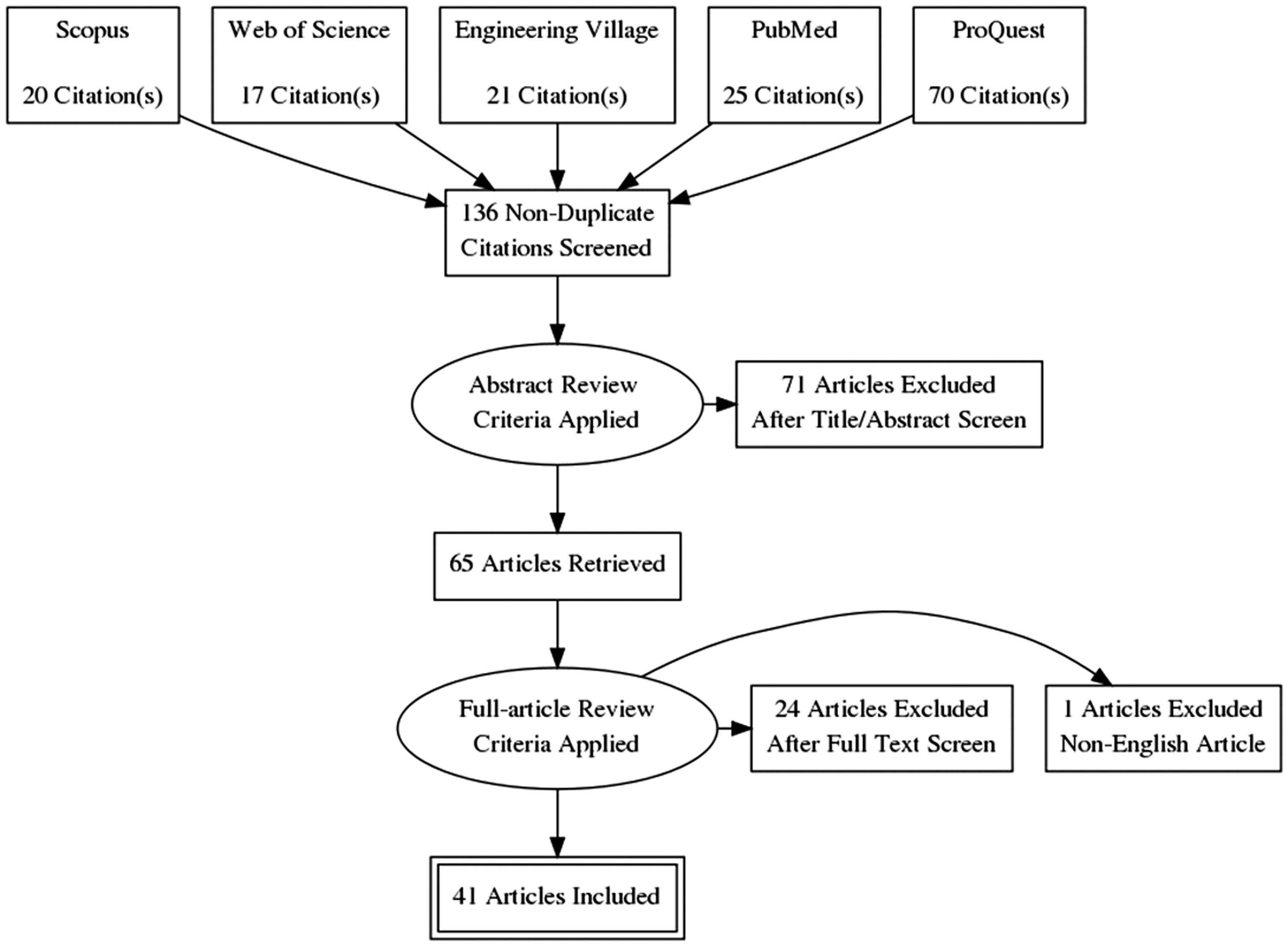
Selection of the databases
Five databases, including three general databases, were selected. Scopus and Web of Science are the largest citation databases of peer-reviewed literature, including scientific journals, books, and conference proceedings. Engineering Village, most often used and designed by the engineering community, provides comprehensive engineering literature and patent information. Also, PubMed and ProQuest health and medical collection were selected as this literature study focuses on sEMG recording and monitoring, which is in the medical and healthcare domains. These two databases have the most citations for medical and biomedical literature and life science journals and books. It is believed that the combination of these five databases provided a relevant and comprehensive overview of the available engineering and medical literature.
Search terms
Searching blocks.

The search results from 1 OR 2 OR 3 resulted in tens of thousands of literature hits, while the searching for 1 AND 2 AND 3 resulted in too few articles for review. We used the search results from 1 AND 2 to analyze most of the sEMGs used for long-term monitoring and added searching block 3 to exclude cases when long-term monitoring was not mentioned in the title, abstract, or keywords. Combining 1 AND 2 resulted in 136 pieces of literature after removing duplicates prior abstract review.
Screening criteria
All articles were downloaded into a reference management software. We initially screened articles by reading the abstract and conclusion, from which 65 articles were identified for the full paper review in which the following criteria were applied.
Type of electrodes: articles that used dry electrodes were selected. Articles on the use of gel-based electrodes or dry electrodes with added gels were excluded.
Materials: articles using textile materials, that is, fabrics (including non-woven fabrics), as sensor elements or textiles as substrates to host soft-type electrodes were selected. Articles reporting the use of conventional/commercial EMG units for sEMG were excluded regardless of whether textiles were used as the host materials. Articles including printed circuit boards (PCBs) used as the substrate were considered beyond the scope of this review paper.
Structure: electrode materials with multi-curvature properties were selected for review. The multi-curvature property is one of the identified material properties that most fabrics and soft polymers possess. These materials conform well to skin curvature. 36 Thin plastic films were excluded due to their single curvature property.
Method of skin attachment: electrodes that were mechanically attached to the skin without penetration or glue were selected. Microneedle/needle/pin-based, tattoo-based (e-skin), and implanted electrodes were considered beyond the scope of this review.
EMG signal location: studies recording sEMG signals from limbs were included, while articles reporting on EMG signals from the face, fingers, mouth, tongue, neck, or cervical area were excluded.
Based on the criteria mentioned above, we excluded 25 papers and retained 41 articles for the final review.
Results
Literature evaluation
The literature evaluation was based on 41 full papers selected for final review. In total, 14 were articles published in peer-reviewed journals, whereas the other 27 were conference papers, including 20 published in the Institute of Electrical and Electronics Engineers (IEEE) series of conference proceedings. We evaluated articles based on their research area, distribution over time, and country of origin. Some evaluated parameters were cross-linked to investigate their relationships.
Analysis based on research area
Due to the multi-disciplinary nature of the field, the reviewed literature was grouped by research area, which is a combination of the authors' research background and affiliations, and the type of study. In total, we identified nine research areas (Table 2), which were grouped into three main categories: Materials Science and Textile Engineering, Healthcare and Biomedical Engineering and Electronics, and Computer Science and IT, see Figure 2. The cross-section of the three research areas creates four cross/multi-disciplinary research focus areas, including smart textiles in healthcare, which is the main application focus of this literature review.
The three main research areas and the cross-disciplinary research area. The identified nine research areas and the number of publications.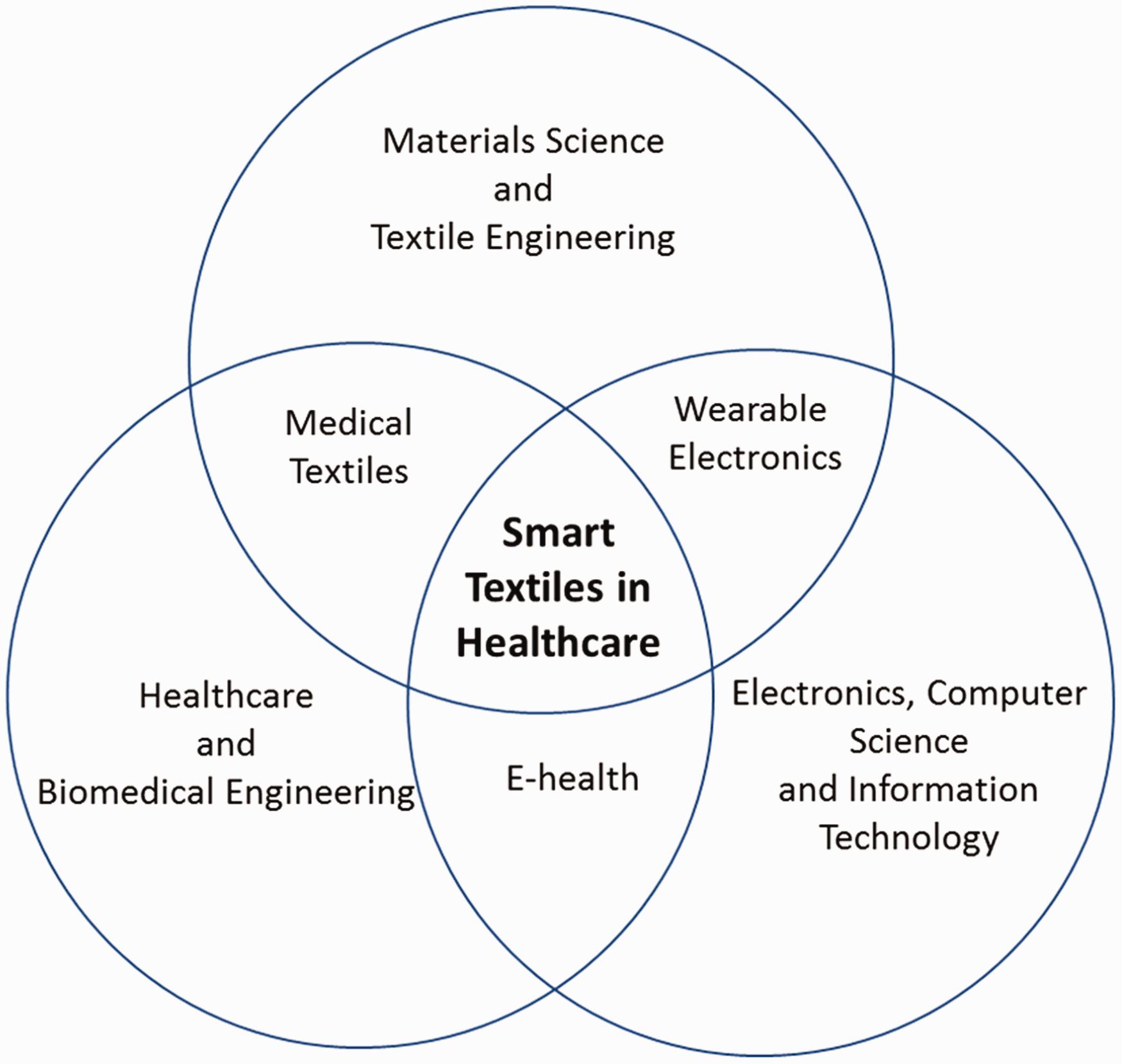
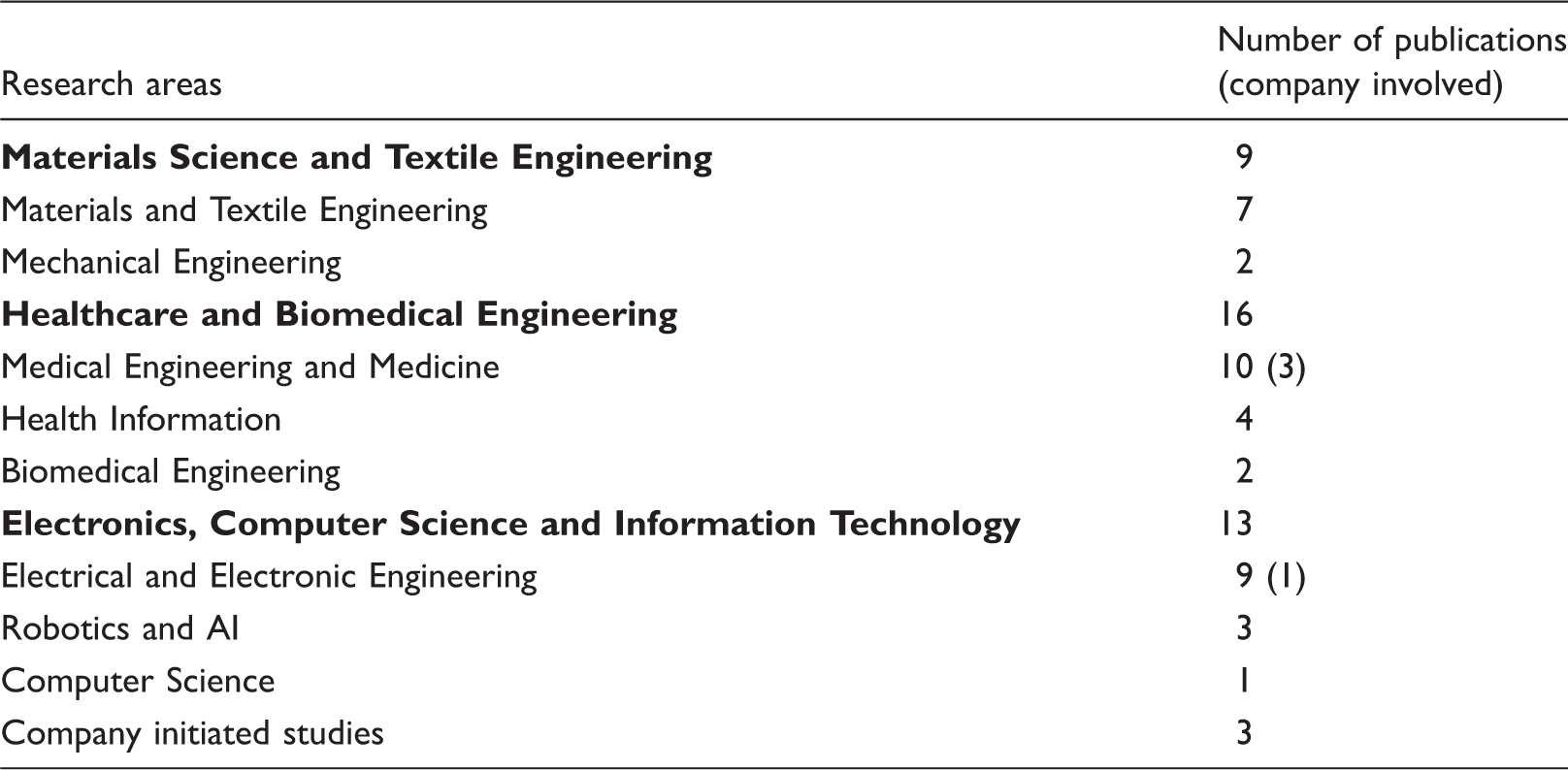
As can be seen in Table 2, the majority of studies published in the three main research areas are from healthcare and biomedical engineering, followed by the electrical and electronic engineering. Table 2 shows also the industrial involvement in the production of articles. The healthcare and biomedical engineering area holds the majority of articles with industrial participation. This involvement might be related to clinical study requirements prior to products reaching the market, when companies are heavily invested.
Distribution of articles over time
Research papers published until July 2018 were included in this review. The first accessible article in this research area is from 2007. The distribution of papers in this time span is depicted in Figure 3. We can see that the number of articles published each year was relatively stable. In 2017, there were nine papers published, five of which were from the Electronics, Computer Science, and IT focus area. Material and textile engineers have been steadily contributing to this research since 2009; however, the publication amount is relatively low.
Publication of articles over time and research focus.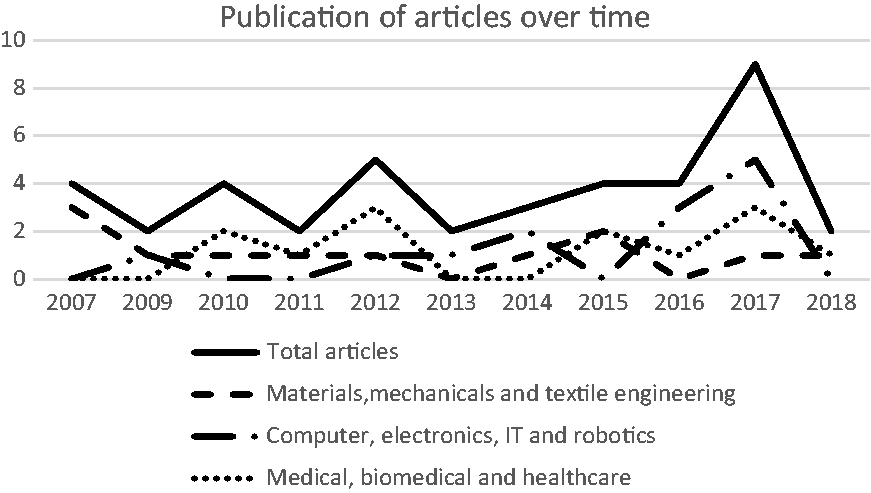
Analysis based on author affiliation
First author affiliation with a particular country or region provides information on research and development activities in each region. Figure 4 shows that most of the studies were conducted in central European countries and the UK (20/41), and the applications were mostly related to health monitoring and rehabilitation. Research in this area has recently developed in east Asia and south Africa. We found 13 articles from these regions, and eight of them were published in 2017 and 2018. The applications in these articles concentrated on prosthetic device control. Scandinavian countries, such as Sweden, Denmark, and Finland, also contributed to the reviewed literature (6/41) with various applications.
Author affiliations and related applications.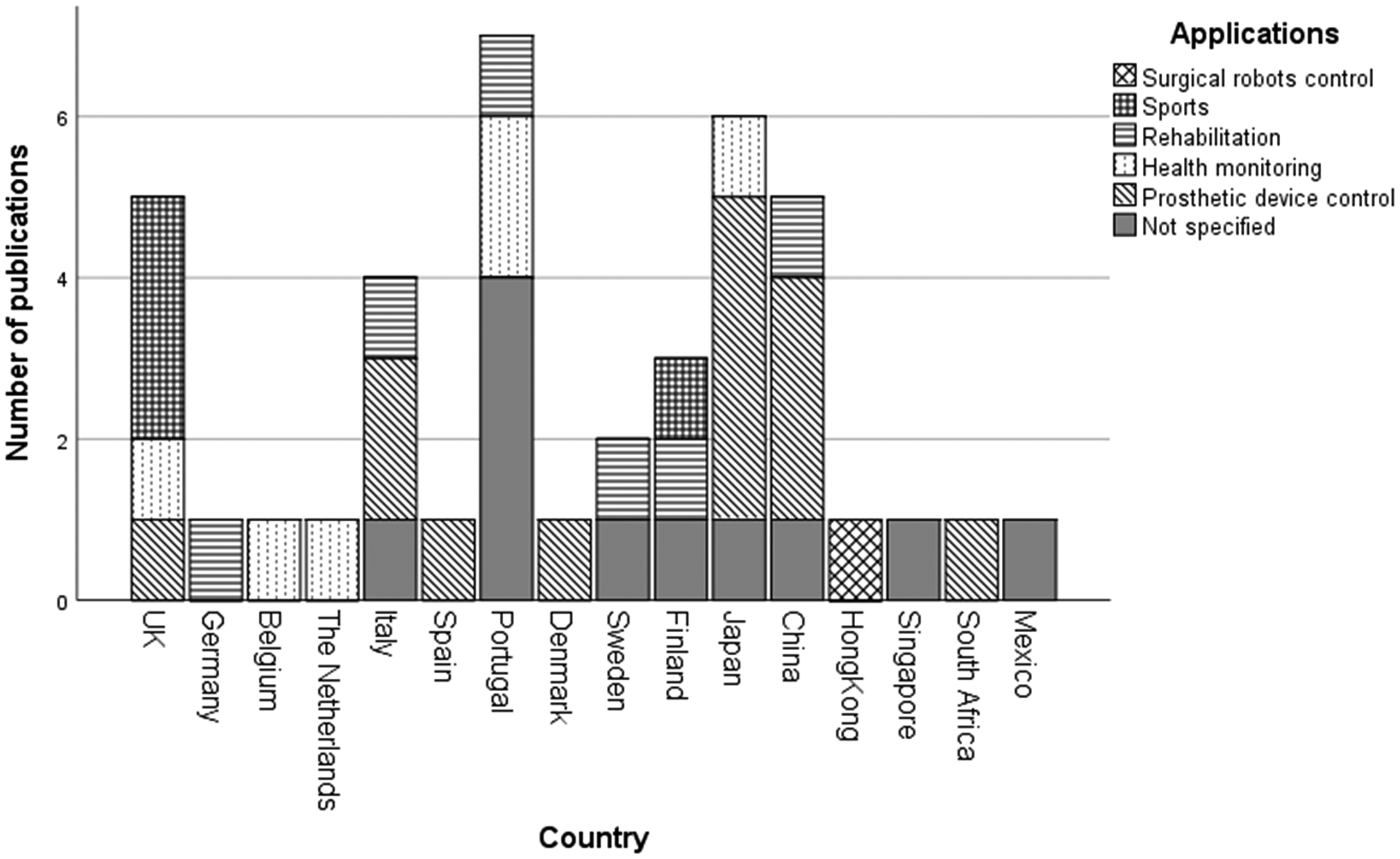
Textile-based electrodes for long-term/continuous sEMG recording
Electrode materials, textile composition, and electrode configurations
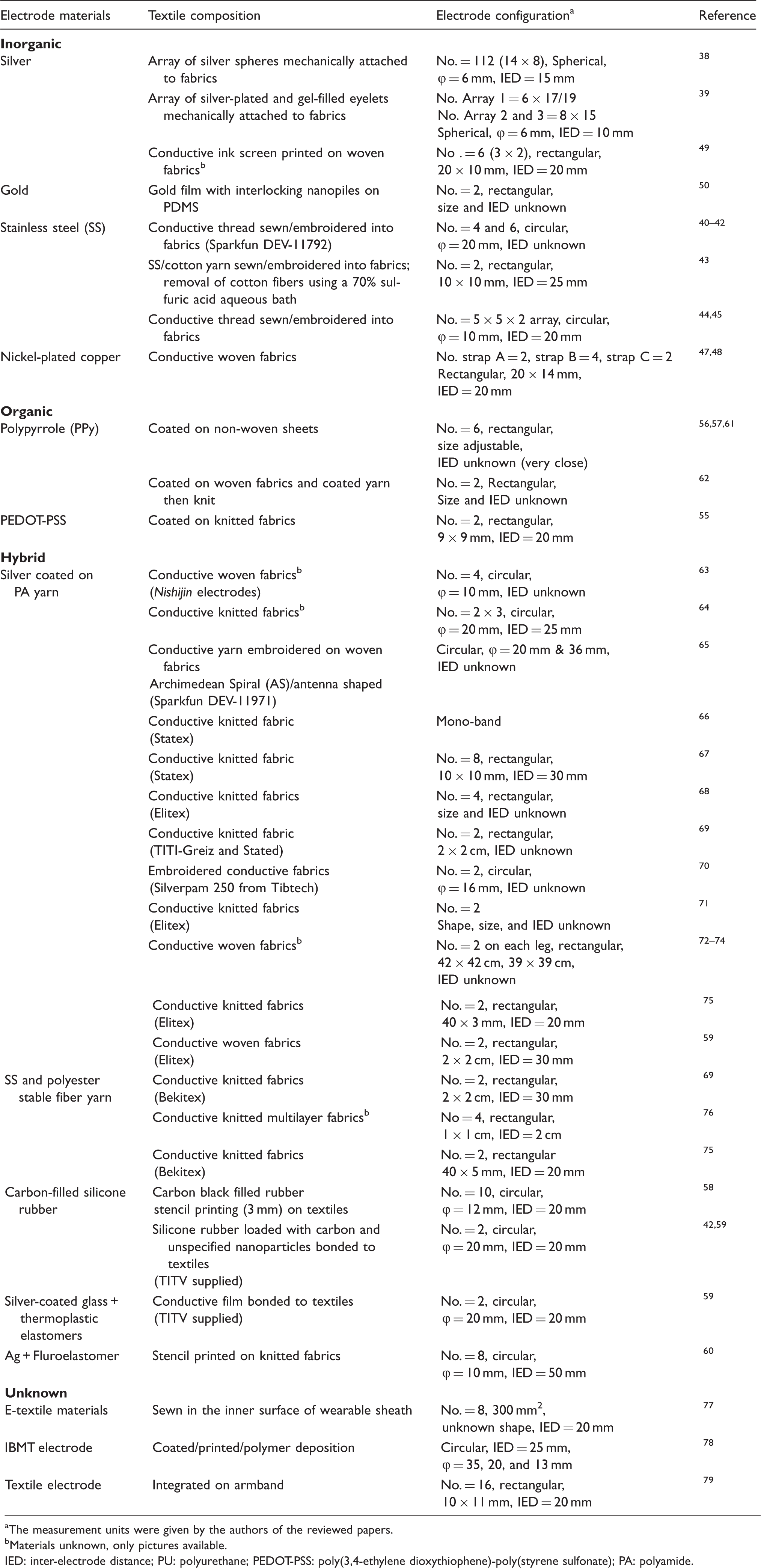
The measurement units were given by the authors of the reviewed papers.
Materials unknown, only pictures available.
IED: inter-electrode distance; PU: polyurethane; PEDOT-PSS: poly(3,4-ethylene dioxythiophene)-poly(styrene sulfonate); PA: polyamide.
Electrode materials and construction
Materials employed for textile-based electrodes can be classified into three groups: inorganic metals, organic-based polymers, and combination materials. The following sections summarize the materials utilized for textile-based electrodes in the reviewed literature.
Inorganic metals
Inorganic metal-based electrodes have been reported with three designs: spherical electrodes mechanically attached to a textile substrate to formulate a linear or two-dimensional (2D) array of electrodes; yarn-based electrodes implemented into textiles using sewing/embroidering; and electrode films directly applied onto a textile substrate.
The array type of electrode is usually called a multi-channel electrode.38,39 The active materials reported in these studies are pure metals, for example gold or silver, with textiles serving as the support for the electrode array. Multi-channel electrodes are mostly applied when spatial resolution or distribution of the myoelectric signal is of interest.
Metal-based electrodes in yarn configurations are mostly made of stainless-steel (SS) multifilaments.40–45 SS has high electrical conductivity that allows it to be used for sensors, electrodes, and data transmission lines. In wearable system designs, the use of SS simplifies the selection of electrically conductive materials and their manufacturing process. However, SS is relatively stiff and abrasive compared with hybrid yarns, which reduces the wearing comfort. Furthermore, SS yarns are not wash resistant; washing results in broken filament ends and reduced conductivity. 46 The broken fiber ends that come out from the yarn can also irritate the skin. Two articles47,48 reported a nickel-plated copper-based conductive electrode; however, the details of the materials were not described.
Conductive inks made of silver 49 or gold 50 have been reported as materials that can be directly added to a textile substrate by screen printing 49 and thermal evaporation. 50 Coating or screen printing onto textiles, that is, a flexible substrate, could induce cracks of the printed area due to strain, as there are almost no conductive materials than are intrinsically stretchable. Tao et al. 49 applied silver inks on woven fabrics by screen printing; the stretchability of the screen-printed fabric was very limited. Liu et al. 50 proposed a novel nanopile interlocking structure to solve this material challenge. In the proposed structure, gold ‘roots’ extend into the soft substrate to regulate the strain distribution in the metal film; hence, high-adhesion stretchable electrodes were produced. This electrode can also be used as a strain sensor with tuneable stretchability and a high gauge factor.
Organic polymers
The very promising developments in organic material science and technology have promoted the realization of flexible electrodes based on organic polymers, such as polypyrrole (PPy), polyaniline (PAni), and poly(3,4-ethylene dioxythiophene)-poly(styrene sulfonate) (PEDOT-PSS). These materials are light weight, flexible, inexpensive, and easy to process.51–54 They can be fabricated into fibers by spinning or into fabrics by various coating methods. However, organic-based electrodes have low electrical conductivity, which limits their applications. The reviewed literature revealed two types of organic polymers that have been used for sEMG signal recording, namely PPy and PEDOT-PSS. Concerning their electrical conductivity, PEDOT-PSS-coated textile electrodes showed a resistance of 35 kΩ at 100 Hz. 55 The PPy-based electrode reported by Jiang et al. 56 has a surface resistivity <1 × 10⁵ Ω/sq, which is lower than that of PEDOT-PSS. However, PPy exhibits low water solubility and hygroscopicity in the ambient environment; therefore, when the electrodes become wet or humid due to skin perspiration, they may provide a more stable performance making them usable in daily life.56,57
Hybrid materials
Since there are no natural intrinsically stretchable materials that are highly electrically conductive, 50 hybrid materials that combine inorganic conductive materials (e.g. metals and carbon) and organic elastic polymers (e.g. polydimethylsiloxane (PDMS) and polyurethane (PU)) have been introduced to achieve electrodes with both stretchability and electrical conductivity. Hybrid electrodes can be divided into two subgroups: yarn-based electrodes, which are comparable with SS-based electrodes, and polymer composite electrodes, which are comparable with nanopile-interlock electrodes created with the same purpose, that is, to achieve a combination of high stretchability and electrical conductivity.
We found that almost all of the yarn-based hybrid electrodes are made from commercially available materials: silver-coated polyamide (PA) multifilament yarn from either Statex Produktions und Vertriebs GmbH or imbut GmbH. The sophisticated yarn-coating methods result in conductive yarn characterized by high conductivity, high flexibility, and sufficient elasticity, and this yarn is processable using conventional textile manufacturing techniques, for example knitting and weaving. Polymer composite electrodes are mainly made of one material with high electrical conductivity as a ‘filler’ or ‘coating,’ such as carbon black particles58,59 or silver, 60 and one polymer that provides the elastic properties, such as silicone rubber58,59or a thermal plastic elastomer. 60 Screen printing and stencil printing have been reported as electrode realization methods. Compared with screen printing, stencil printing provides electrodes with a specific thickness, which produces a local pressure at the skin–electrode interface, thus reducing motion artefacts and enhancing signal quality. Polymer composite electrodes can often be applied without using a textile substrate.
Electrode configuration
The electrode configuration consists of the physical dimensions, shape, and electrode allocation. The electrode configuration strongly influences the quality of the recorded sEMG signals. In 1996, the European commissioned project SENIAM (surface EMG for non-invasive assessment of muscles) proposed the SENIAM recommendations to enable a more useful exchange of data obtained with sEMG, including sEMG electrodes, electrode placement, signal processing, and modeling. 29 In this review, we compared the textile-based electrode configuration (shape, size, and IED) with SENIAM's recommendation to understand the similarities and differences in applying textile-based electrodes to conventional sEMG electrodes. The comparison only applied to bipolar electrodes.
In SENIAM, 29 both rectangular and circular electrodes were studied. Most circular electrodes studied (59/75) had diameters ranging from 8 to 10 mm, but no preferred electrode size was found for the rectangular electrodes. In this review, a total of 28 articles were evaluated with both rectangular and circular electrodes. However, rectangular electrodes were used more often (16) than circular electrodes (10) (two articles did not specify the electrode shape). Regarding size, most of the circular electrodes have diameters ranging from 10 to 20 mm, that is, larger than conventional electrodes. The rectangular electrodes mostly have lengths varying from 10 to 40 mm and widths ranging from 5 to 20 mm. Four articles did not specify the size of the electrodes, and three articles reported adjustable electrode size.56,57,61 The orientation of the electrode with respect to the muscle fiber was poorly described in the reviewed literature, although the orientation is of importance.
The IED, which is an essential property of sEMG acquisition as it determines the volume (depth and width) where the myoelectric signal is detected in a bipolar electrode configuration, varied from 20 to 50 mm, which indicates different applications and/or different target muscles or muscle groups. However, most of the reported IEDs were 20 mm (11/18), which corresponds to SENIAM's recommendation. Ten of the evaluated papers did not provide this essential information.
Discussion
The objective of this review article was to survey the current state-of-the-art in terms of textile-based electrodes for long-term sEMG recording/monitoring. By doing this we also hope to stimulate and engage the textile community in the further development of sEMG electrodes and sEMG applications. We also want to introduce ‘textile thinking’ to other disciplines. It is our hope that a more profound knowledge about the available textile materials, structures, manufacturing techniques, integration methods, and applications will help both textile engineers and other disciplines to better understand and further develop this field.
Various types of reviewed studies
One of the challenges of conducting a literature review is the diversity of article types. A clear view of the type of study presented will make comparisons of the methodologies and results easier. Due to the multi-disciplinary character of the reviewed research area, the selected publications reported various types of studies. In this study we have grouped them according to four main levels of development. The most basic level focuses on materials and (textile) structures. The next two levels report electrode and system design, respectively, and the most advanced level of reporting concern the feasibility of the developed system or concept, as illustrated in Figure 5.
Types of studies presented in the literature.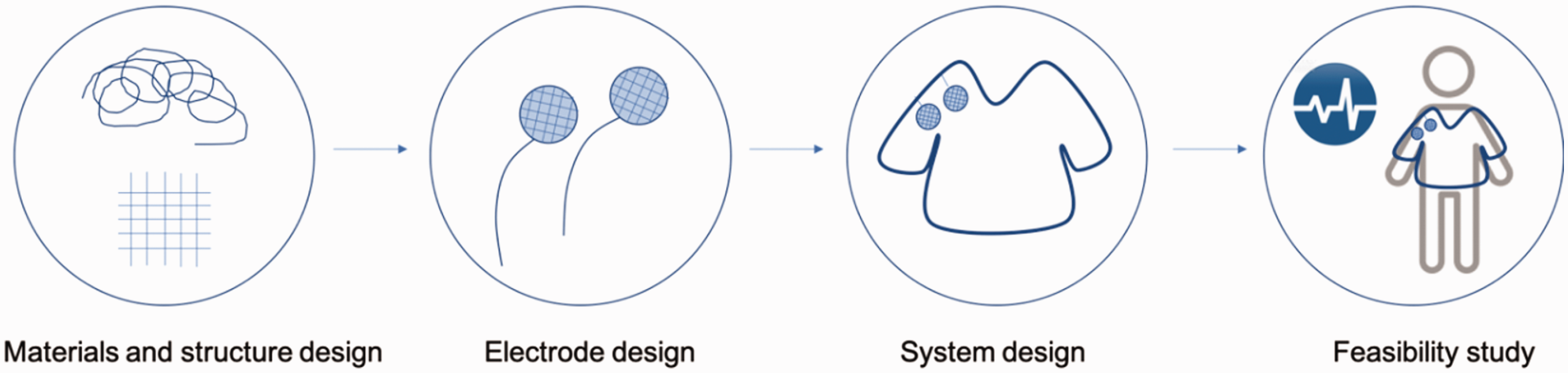
Materials and structure design: in these papers, the materials and/or structure development are the primary focus. Novel materials were designed, and their properties, such as electrical conductivity, were evaluated in comparison with those of commonly used materials. In these studies, testing at the device level is not the main focus; however, the intended application of the designed materials/structures is often mentioned. Six of the reviewed articles were grouped into this category. Three focused on material design50,55,60 and three focused on structure design.58,65,80
Electrode design: articles in this category mainly address the development and construction of textile-based electrodes. The novelty of this type of article may be the materials, textile constructions, and/or testing methods. In this category, textile-based electrodes are mainly tested in laboratory environments. Ten articles were placed in this category. Eight articles focused on electrode design43,47,48,62,69,75,78,81 and two focused on testing and evaluating electrodes.59,70
System design: articles in this category focus on the design of wearable systems, and the integration of electrodes into wearable devices, for example shirts, leggings, and armbands, is emphasized. Electrodes are tested as part of a system rather than as a single element. In total, 20 papers were categorized as focusing on system design, including 18 papers40–42,44,45,49,56,57,61,63,67,71,73,76,77,79,82,83 on textile/wearable system design and two papers64,68 on wearable acquisition system design, including an evaluation of the complete system.
Feasibility study: five papers38,39,66,72,74 were in this category. In feasibility studies, electrodes integrated into textiles, as an alternative to conventional ones due to various advantages, were used in different application areas, such as phantom limb pain (PLP) treatment 61 and detection ventilatory threshold during incremental running. 67 The design and evaluation of the textile-based electrodes used in these studies had typically been reported in previous publications.
Wearable system integration level
Conductive materials are applied to soft materials/textiles to create textile-based electrodes by textile manufacturing methods. Textile electrodes can be added into a system after manufacturing or directly integrated into a system during manufacturing. In this section, we suggest different levels of integration describing how textile electrodes are integrated into garments as part of a wearable system for sEMG recording (Table 4). We defined four levels of integration, as presented in Figure 6.
Wearable system integration levels. Summary of the wearable system integration levels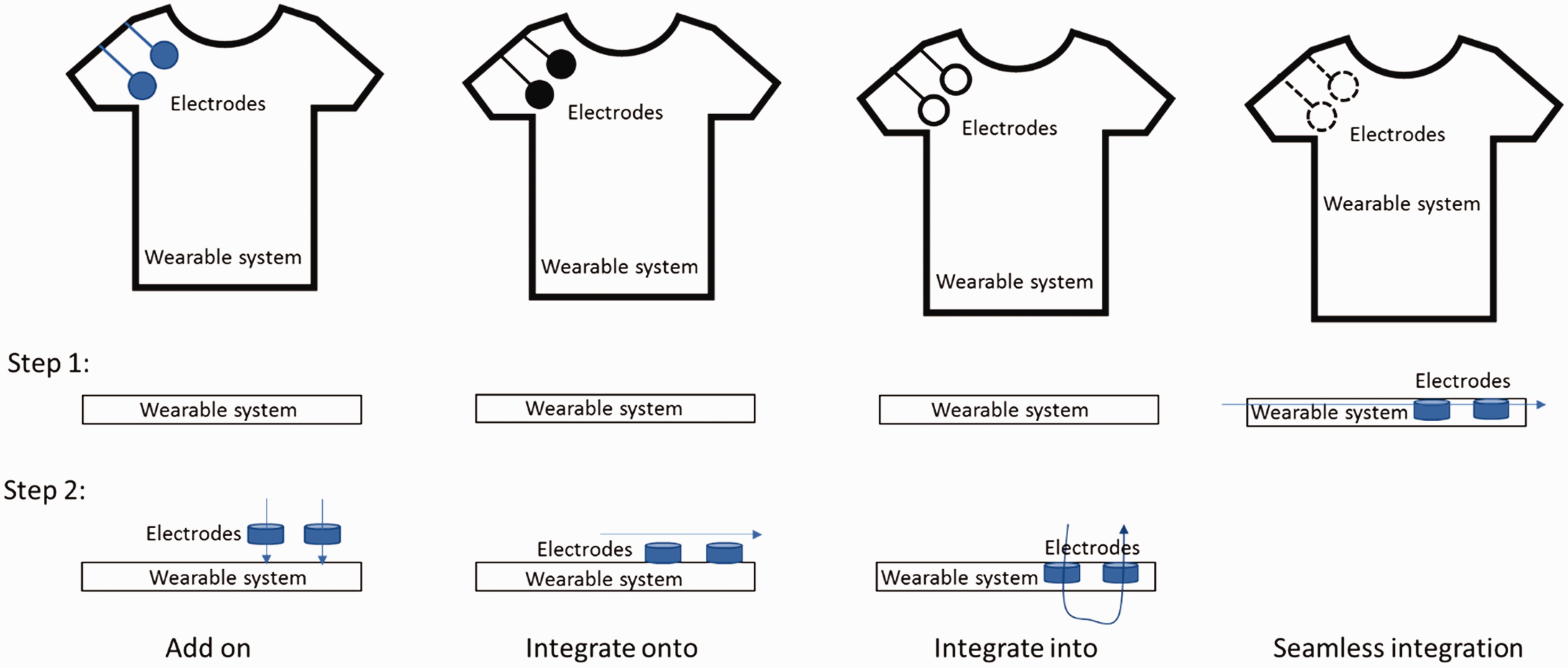
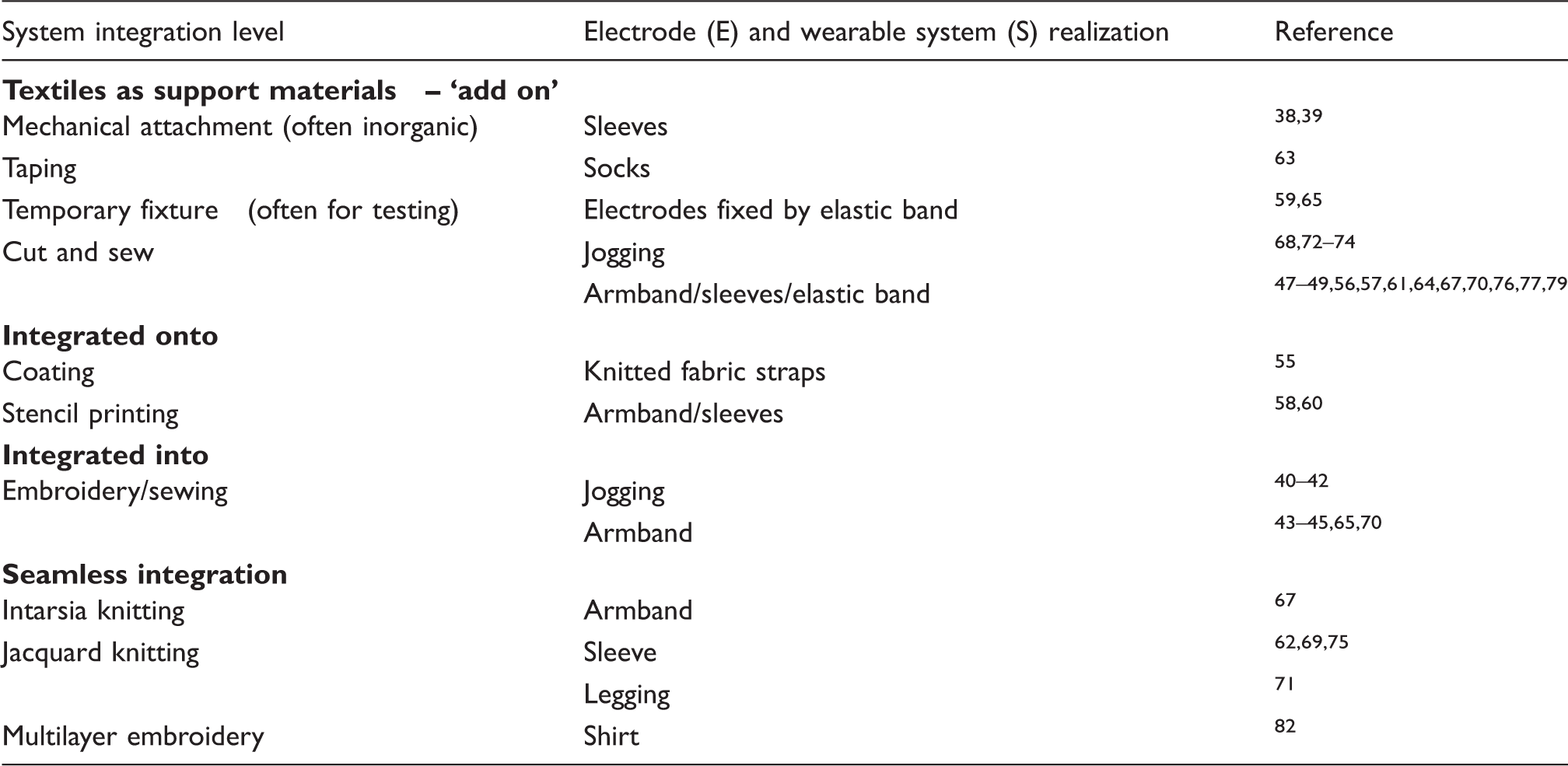
Level 1 – add on: textiles serve as supporting materials. The electrodes can be made of any conductive material and configured according to the intended application (monopolar, bipolar, or vector/matrix). For example, the gold/silver electrode arrays reported by Rojas-Martinez et al. 39 and Gazzoni et al. 38 were mechanically added to a textile, that is, a sleeve. The textiles do not function as electrodes and only act as hosts/carriers to position the electrodes. Another common ‘add on’ system is created by the cut-and-sew method. The electrodes are made from various materials, including conductive fabrics; however, integration with the wearable system, such as an armband, is still performed by cutting and sewing post-processing. ‘Add on’ integration is also applied in testing scenarios using a temporary fixture, such as taping. As shown in Figure 6, ‘add on’ integration requires post-processing to connect the electrodes into/onto the wearable system.
Level 2 – integrate onto: at this level, electrodes are applied to the textile substrate by coating or printing. Contrary to ‘add on,’ the electrode shape and size is formulated in the integration process, that is, coating and printing. Both coating and printing are well-defined textile manufacturing methods, and the wearable system can be made before or after electrode integration. However, most are made after integration. This level of integration requires a prior or post-processing step to integrate electrodes onto the textile substrate/garment hosting the wearable system.
Level 3 – integrate into: similar to integrate onto, in this level of integration the electrodes are formulated when introduced into the textile substrate of the wearable system. Conductive yarns are commonly used as functional materials and are integrated into the system by either sewing or embroidery. Differing from integrate onto, the integrate into level involves functional materials penetrating the textile substrate of the wearable system. In this way, the fixation of electrodes is more robust. Furthermore, sewing/embroidery is a much more flexible process than coating or printing and requires fewer production facilities and less space. The integrate into process is often accomplished after the wearable system has been created, as sewing can easily be applied to ready-made garments. This level of integration also requires a post-processing step.
Level 4 – seamless integration: computerized knitting is a flexible technology that allows for complex pattern design. Electrodes realized by knitting conductive yarns into a garment can seamlessly be integrated into the textile substrate of a wearable system by, for instance, Intarsia knitting or Jacquard knitting, as a ‘pattern.’ The core feature of seamless integration is that no prior or post-process step is required. The electrodes and wearable system are simultaneously created. The seamless integration can be applied to other components of the wearable systems as well; for example, as seen in Figure 6, the conductive path, which functions as the signal transmission line, could also be seamlessly integrated into a system using the knitting technique.
Reported applications
Thirty of the 41 articles targeted a specific application or suggested an application. This included the following domains (see Figure 7).
The number of publications in the reported application areas.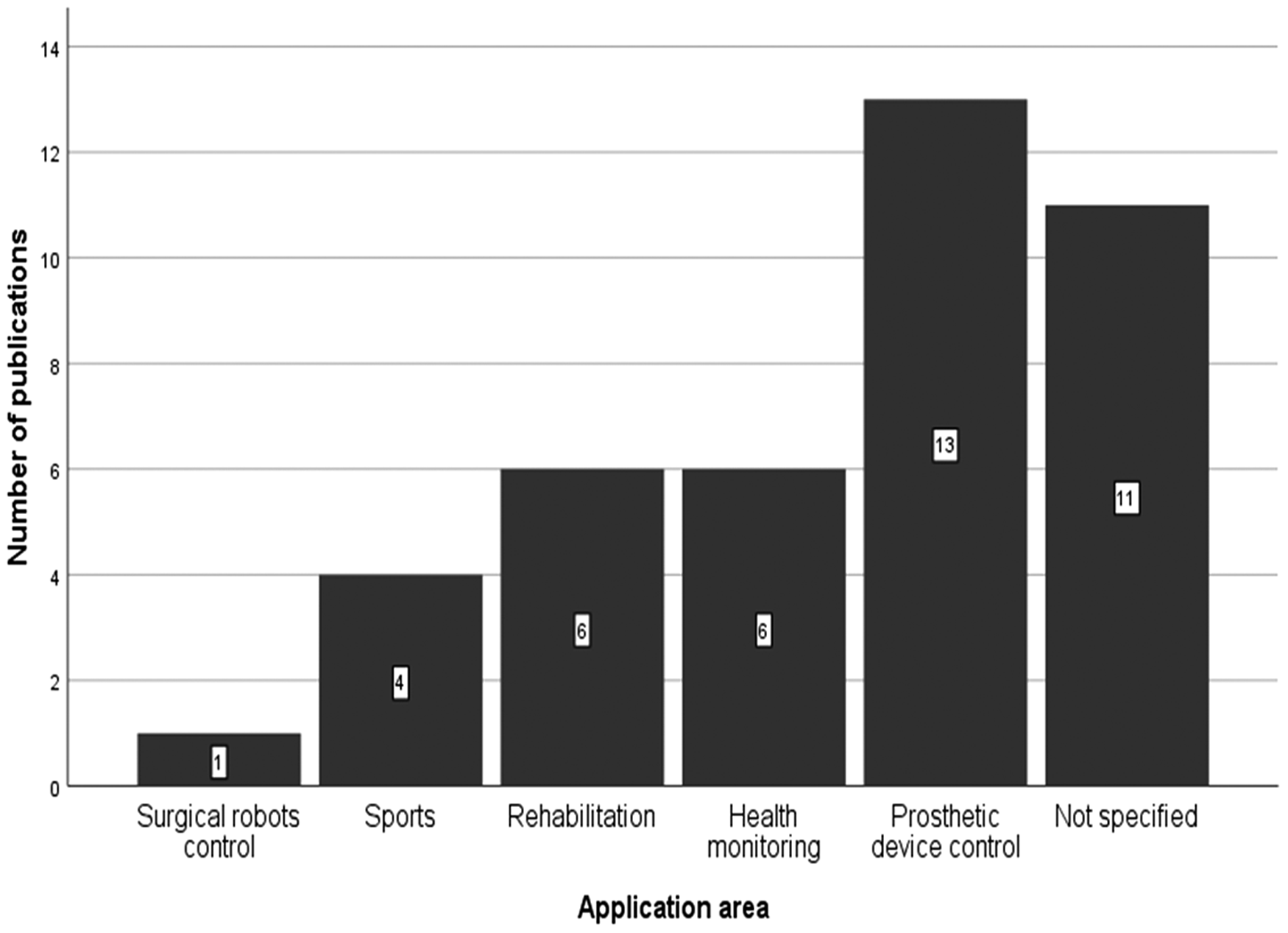
Prosthetic hand control
Powered prosthetic hands,38,39,41,44,45,47–49,56,57,60,61,65 which are controlled by myoelectric signals, are considerably more advanced than the control strategies used to command them. 24 The myoelectrical signal sensors commonly used for prosthetic hand control are large in size and stiff, which limit the number that can be applied to the limb and cause pressure-related discomfort for users. For high-level amputees, the movement of the arm can induce displacement of said electrodes and cause mistakes or delays in control. The use of textile-based or flexible electrodes has been explored as an alternative to common metal electrodes.48,49,56 However, the signal quality and the motion artefacts generated by the relative displacement need to be addressed, which require the development of novel materials and textile structures, and potentially the improvement of control algorithms.
Rehabilitation
sEMG has been shown to be a useful tool in rehabilitation.55,59,62,66,76,79 sEMG enables active training in post-surgery/accident rehabilitation. Yang et al. 79 introduced an internet of things (IoT)-enabled stroke rehabilitation system based on a smart armband; the textile-based electrodes in the smart armband managed to collect myoelectrical signals from the wrist and could discriminate nine gestures to drive a three-dimensional (3D)-printed five-finger robot, with an average accuracy of 92.2%. Lendaro et al. 66 introduced a method for PLP treatment using EMG signals acquired from the residual limb; the user controls a virtual representation of the lost limb in an augmented reality (AR) environment. This approach creates an opportunity for home rehabilitation; however, in the current system the electrodes need to be positioned according to the remaining muscles of the residual limb, which requires an experienced user or professional. Any misplacement of the electrodes due to difficulties in finding the target muscles or misalignment will result in erroneous signal readings, making it difficult or even impossible for the user to perform exercises during training. The case study reported in this paper 66 has shown that using a textile band as a common ground electrode decreases the needed time of use and improves user compliance. The use of wearable systems shifts the low-motivation day-to-day repeated passive training to active machine involved training and facilitates home-based rehabilitation.
Health monitoring
Wearable solutions using textile-based electrodes have been used for healthcare monitoring,43,58,63,71,82,83 including sEMG signals. Monitoring of health-related conditions, for example, sleep disorders 63 and psychosocial conditions, such as stress levels,82,83 based on a home-based protocol will increase patient activity and reduce clinical visits. This means not only improved quality of life for these patients but also a substantial reduction in healthcare and service costs, as well as reduced training and educational costs for health professionals.
Sport
The correct and economic utilization of muscles/muscle coordination enhances training efficiency and reduces the risk of injury. sEMG has been used in sport applications40,42,72,74 as a dynamic analysis tool to identify muscle activation and detect muscle fatigue,40,42 helping to develop performance and promote healthy training. With the help of wearable systems, sEMG analysis can be performed in an outdoor environment as the textile electrodes can be integrated into training clothes. The flexible electrode–skin interface made possible by textile-based electrodes also improves user comfort significantly and has no negative influence on sports performance.
Finally, one article 77 introduced the use of sEMG to control surgical robots. The results showed that the wearable solution has accuracy comparable with that of the conventional solution but it takes a longer time to complete.
Conclusion and future perspectives
According to the reviewed literature, textile-based electrodes have the potential to enable the design and production of wearable, functional products, with minimal discomfort for the user in various application areas. Sensing functions can be added to different textiles, including fibers, yarns, and fabrics, and the electrodes can be incorporated into textiles by various methods, such as knitting, weaving, braiding, and embroidery. The utilization of textile-based electrodes as an alternative to conventional electrodes provides considerable opportunities to change healthcare interventions and improve the quality of life for human beings. However, the reviewed literature presents projects and prototypes reporting technology and/or manufacturing barriers that must be addressed in future development. The main challenges include the following.
The development of multifunctional materials
The sEMG signal quality is determined by the impedance between electrodes and skin. It has been proven that the electrode surface conductivity and skin hydration significantly influence the electrode to skin impedance84–86; materials with high electrical conductivity and excellent moisture management are required to achieve long-term stable skin–electrode contact. The articles reporting materials development, for instance, fibers and yarns, are small in number, and commercially available metal yarns or metal-coated yarns are mostly used for fabricating textile-based electrodes. These yarns are, however, not primarily designed for electrodes, as most of them are used for antistatic or antibacterial purposes. This fact implies the need for the development of novel fibers/yarns that can be conductive and elastic and provide dynamic moisturizing properties that will not affect the state of skin hydration.
Electrode construction
Electrodes with smooth surface morphology are preferable over rough electrodes, because smooth surfaces create more contact area with skin. 87 On the other hand, as suggested by Hui et al., 81 a brush-like structure allows better skin–electrode contact and has an ‘inclining’ effect that can keep the electrode in place, reducing motion artefacts to a minimum. Adding localized pressure to electrodes also significantly improves the signal quality,88–90 as the pressure both increases the electrode to skin contact and restricts the skin–electrode displacement. However, human skin is a sophisticated organ that does not tolerate sustained and concentrated exposure of any kind. The major challenge is how to distribute force and pressure on the electrode over the skin to provide adequate signal recording conditions in a comfortable manner without jeopardizing pressure damage to the skin tissue.
System development
Design and development should be conducted at the system level, including both the materials used for the electrodes and the textile constructions that function as the host. Seamless integration is highly recommended for simple processing procedures, which leads to shorter production time and less waste. Seamless integration, for example, computerized knitting, will result in being able to reproduce the same dimensions, roughness, density, elongation, and stability in a controlled manner.
Novel testing methods and standardization
The review shows that when studies focus on the fabric or garment level, the surface electrical resistance of such fabrics is rarely considered, and the methods of measuring surface resistance are not discussed. Textiles differ from pure metallic sheets in that they are anisotropic materials, and their surface resistance in different directions may differ. Therefore, the standards used for surface resistance measurements of metallic sheets are not suitable for conductive textiles – new methods are needed.
Environmental and sustainability issues
A final challenge we would like to bring up is the environmental and sustainability aspect related to the production, use, and disposal of the various materials used. The environmental and sustainability aspect is rarely or not at all discussed in the literature. One reason could be that, so far, the applications of smart textiles are focused on a niche market for professional and medical textiles. Very few studies have designed prototypes with an eye toward safe disposal once the products have reached the end of their life cycle. This needs to be changed when smart textiles become part of the mass market industry and can result in large waste streams. 91 This literature study revealed the fact that most of the conductive materials were made by metal, for example silver or copper, deposited on fibers or yarns. The layer of these depositions is too thin to be either disposed of or recycled in a mechanical way. Novel materials, such as carbon nanotubes and graphene, have the potential to improved efficiency and functionality and can bring environmental and societal benefits. However, their impacts on the environment and human health are little studied. 92 The basic suggestion from Köhler et al., 91 and in line with the precautionary principle, is to design smart textiles with as few toxic materials as possible and with ease of disassembly in mind.
Recommendations for reporting on textile electrode applications
During the literature search and later in the review process, the various and diverse terminology used in publications posed a challenge to comprehensibly cover the breadth of work done using textile electrodes. A weakness of this review was precisely limitations brought about by the said variety and existing appraisal tools. We focused this review on electrode materials, constructions, and configurations, which is in line with the recommendations developed by SENIAM. They state that the electrode's shape, size, and materials, as well as the ensemble of electrodes (monopolar, bipolar, or arrays), IED, connection to the analog front-end (instrumentation), and its application, must to be reported in order to allow for comparisons between studies. An outcome of this review is that said crucial aspects are not always reported.
Although the SENIAM recommendations emphasize the reporting of sEMG instrumentation and application specifics, it has been beyond the scope of this review to evaluate how the sEMG signal is processed from the electrode's connection to the front-end/instrumentation and onward. However, some generic performance metrics related to electrode design should be considered. The signal-to-noise ratio (SNR) should be reported for novel textile electrode solutions, along with that of the conventional electrodes commonly used in the proposed application. SNR degradation over time should also be reported for applications requiring long-term use, along with benchmarking with current solutions. In applications requiring decoding of motor volition, it is advisable to report decoding accuracy, sensitivity, and specificity offline and in real-time, as it is known that offline accuracy alone can be a misleading metric.93,94. An important factor in mobile applications is the resilience of the electrode–skin interface to interference and motion artefacts, and although no standard currently exists for this purpose, it is advisable that novel textile-based electrodes are compared to current solutions in such matters, as they are well-known limitations of sEMG.
Despite that these performance metrics were not part of this review, they are essential factors for electrode characterization. Textile-based solutions must be compared to well-stablished electrode technologies, and therefore it is highly recommended that performance metrics are presented when introducing novel textile solutions for sEMG or other types of physiological recording/monitoring. From a textile engineering perspective the existing recommendations and performance metrics presented above may be difficult to fully address without the support from adjacent fields of expertise. Introducing textile solutions in healthcare applications represent a true multi-disciplinary challenge where each discipline has its own specific contributions to the development of the field. One finding from this review is that the textile related issues are not as well covered as they should which limit the exchange of knowledge and the development of the field. In addition to the existing recommendations we therefore strongly recommend that future reporting of textile electrode – based initiatives also include information on the applied textile technique, or manufacturing process, as well as the textile integration level as introduced and discussed in this systematic review.
Footnotes
Data availability
The reviewed literature is available to the scientific community. No further sources than those included in the reference list have been included in the analysis or reporting.
Author contributions
The review of the state-of-the-art literature was mainly conducted by LG. All co-authors equally contributed to the text editing.
Declaration of conflicting interests
The authors declared the potential conflicts of interest with respect to the research, authorship and/or publication of this article: MOC was partially financed by Integrum AB, a company developing prosthetic control solutions using implanted electrodes not relevant to this work. All other authors declare they have no conflicts of interest.
Funding
The authors disclosed receipt of the following financial support for the research, authorship, and/or publication of this article: The work leading to these results was supported by the Swedish Knowledge Foundation (KK-stiftelsen) (Grant agreement No. 20160030). MOC was financed by the European Commission (FLAG-ERA, GRAFIN project), Stiftelsen Promobilia, IngaBritt och Arne Lundbergs Forskningsstiftelse, and VINNOVA.