




Abstract
This article explores the nature of domestic labour involved in sustainability transitions at the household level, with waste reduction as an exemplar. We draw on national survey data (N = 2717) from Australia, and qualitative data from a participatory action project working with 34 householders on experiments in low waste living. We found low waste living was challenging work mentally, physically and interpersonally and required information, skills and the resources of time and money. Waste reduction in households also required relational labour inside and outside the household. On the basis of existing literature and our findings we theorise that sustainability labour is comprised of five overlapping elements: physical, cognitive, relational, economic and political tasks. We argue that reducing waste is an example of sustainability labour that is led largely by women, as they work to change household practices and the systems in which these are embedded, towards a more sustainable future.
Introduction
As the global climate crisis deepens the need for social and cultural transformation and sustainability transitions is becoming more urgent, and more apparent within Sociology as a discipline (Klinenberg et al., 2020). In this article we discuss the case of households transitioning to low waste living in Australia and argue that sustainability labour is linked to both production and consumption systems, and the social organisation of care. We demonstrate that low waste labour is more likely to be initiated and managed by women than men as an extension of their consumption and caring roles within households.
To define terms, ‘sustainability transitions’ refers to the systemic socio-technical changes needed to respond to environmental problems (Huttunen et al., 2022). ‘Low waste living’ refers to domestic practices of waste reduction such as changing or reducing consumption or reusing and recycling products. We define a household in broad terms as a social unit of one or more people linked to a dwelling – but acknowledge that households frequently contain intimate relationships of coupling, care, support and economic exchange (Zelizer, 2005).
Understanding the role of households in sustainability transitions is an under-developed field, even though households are critically important for reducing consumption and pollution and moving away from high-carbon lifestyles. In the sustainability transitions literature households are most commonly understood as homogenous singular units. By contrast there is less research using an ‘open box’ approach where the internal dynamics of the household and relationships between household members are acknowledged alongside interactions with broader socio-technical systems (Hargreaves and Middlemiss, 2020; Raven et al., 2021). In this article we contribute to knowledge on the ways in which internal household dynamics shape sustainable practices and explore the gendering of responsibility for sustainability labour within households, both of which have implications for sustainability transitions.
Our analysis is informed by several rich streams of sociological research on the interconnected domains of domestic labour, consumption work and care (Lindsay and Maher, 2013). Domestic labour continues to be profoundly gendered and unequal with women undertaking more of this labour than others (Baxter, 2000; Craig and Mullan, 2010; Sullivan et al., 2018). Gendered labour theory has identified that domestic labour has particular features: it is frequently entwined with care so it can be deeply emotional and relational labour (DeVault, 1991; Hochschild and Machung, 2012); it ranges from mundane physical tasks to complex organisational and planning tasks, described as ‘cognitive labour’ by Daminger (2019), and it may be experienced as a mental load (Dean et al., 2022); it involves unpaid labour but is connected to the broader economy particularly through the organisation of money in households (Bandelj, 2020; Glucksmann, 1995; Zelizer, 2005), and through consumption in advanced economies (Glucksmann, 1995). We bring these insights together to inform our analysis of sustainability labour, which we argue is a significant emerging mode of labour inside and beyond the domestic sphere.
The connections between sustainability and domestic labour within households have received some attention from sociologists (Oates and McDonald, 2006). A key body of work by Glucksman and Wheeler on the household dynamics around recycling and disposal of goods argues that ‘consumption work’ should be understood as a broad category of all forms of labour involved in purchasing, using, re-using and disposing of goods (Wheeler and Glucksmann, 2013, 2016).
Our analysis is also informed by geographers who have found that sustainability labour is profoundly gendered, complex, unpaid and frequently unacknowledged by policy makers (de Wilde and Parry, 2022; Hobson, 2020; Hobson et al., 2021; Mylan et al., 2016; Organo et al., 2013). Debates about sustainability and transitioning to a circular economy have failed to recognise the amount of additional labour that will be required of households and the gendered division of this labour within households (Hobson et al., 2021). As Farbotko (2018: 3) outlines, domestic environmental labour ‘is often labour-intensive, involving anything from sophisticated learning and creative effort, to mundane, repetitive, drudge-like chores, and it is implicated in wider social and political relations’. There is significant labour involved in ‘researching, evaluating, sourcing, selecting, designing, reusing, transporting, installing, modifying, maintaining, using, improving, upcycling, replacing and disposing of goods and services for reduced environmental impact in, of and around the home’ (Farbotko, 2018: 3) but this labour is gendered, undervalued and invisible (Organo et al., 2013). Women tend to do sustainability labour as part of their role as mothers and household managers and take responsibility for everyday implementation and habit changing while men are more likely to be involved in researching and installing new systems, gardening and transport (Organo et al., 2013; Waitt et al., 2012).
To contribute to theorising sustainability labour we explore household waste reduction practices. Our research questions are: (1) What labour is undertaken to reduce waste in Australia at the household scale and who takes responsibility for this labour within households? (2) How do householders change practices and what barriers do they face as they move towards low waste living?
Methods
The broader study involved a quantitative survey and a qualitative participatory action project experimenting with low waste living and we draw on both data sources for this article. Ethics clearance was granted by Monash University human ethics committee in 2021.
National Survey
The national quantitative survey was conducted among individuals aged 18 years and over by a market research company based in Melbourne, Australia. Eligible participants on the online panel maintained by the market research company were invited to participate. The survey was open from mid-March to early April 2022, and took an average of 30 minutes to complete. An initial national sample of 1500 participants was recruited. The sample was representative in terms of metro and non-metro regions in each Australia state in 2021 and in terms of national gender distribution. To enable statistically valid policy comparisons, Adelaide, Brisbane and Melbourne were oversampled by 400 participants each. Although the target was 2700 completed surveys, the final sample size was 2717 completed surveys. We applied sampling weights in the analysis to account for this oversampling. In this article we report on the results of descriptive univariate and bivariate analyses (cross-tabulations and significance tests) conducted using STATA (STATA/SE 18.0). For analytic purposes and given the small numbers we omit those who identify as non-binary/gender diverse and those who ‘prefer not to say’ from the bivariate analysis.
The survey aimed to capture consumption practices, at both household and individual levels, and some attitudes, on three broad categories. These were: large/durable items (clothing and accessories, appliances and white goods, and furniture and homewares), food consumption and food waste, and single-use and reusable household items. The questions on large/durable goods were organised around three themes: acquisition (purchasing new, second-hand purchase or borrowing), prolonging use (maintenance/repair and sharing with others) and disposing (passing it on and disposing). For food consumption, the questions were organised around two themes: acquiring and preparing/cooking food. The survey also included questions on sociodemographic characteristics and attitudes/opinions on values and norms about the environment, social inequality and politics. We used standardised measures where available drawing on survey research on the circular economy (Macklin and Kaufman, 2023) and social attitudes (McNeil et al., 2023). In terms of household characteristics, the survey instrument included questions on dwelling structure, household composition and housing tenure.
Household Experiments Study
The qualitative household experiments study used a participatory action-research approach where participants were invited to participate in an interview and a series of workshops, co-design a six-week experiment in low waste living and report on the results. Individuals from households in Melbourne, Australia were recruited through social media, including dedicated low waste living Facebook groups in July–August 2021. As this component was a small-scale experimental study, we chose to limit the study to Melbourne residents for practical purposes. Individuals from 67 households signed up for the study, and 34 were interviewed (30 Female, 4 Male). Types of households included single person households (n = 5), shared households (n = 3), couple households (n = 6) and households comprised of parents and children (including adult children) (n = 20). Participants were aged between 26 and 75 (see Online Appendix Table 1). The interviews lasted one hour on average and followed a semi-structured approach with questions about household dynamics, consumption and waste management practices. All interviews were recorded and transcribed.
The householders were then invited to participate in a series of three workshops, which took place online via Zoom, and to undertake a household experiment over six weeks and document the results through a structured weekly diary where the research team asked open-ended questions about the experiment and its progress each week. In all but one case, one person from each household formally consented to the study, participated in the interviews, workshops and diaries.
In the first workshop participants were guided through a semi-structured process to imagine, design and self-select a household experiment in low waste living. Participants were encouraged to discuss and seek support from others in their households to conduct the experiments. The six-week experiments began the following week. The second workshop involved a focus group discussion and invited participants to share their experiences and discuss enablers and barriers to change (n = 19). The third workshop was held in-person and brought together householders (n = 9) in the study with local and state-level policy-makers (n = 6) to discuss implications for policy. Results were collectively recorded on white boards, photographed and digitised for data analysis.
All transcripts from the initial interview and the second workshop (focus group discussion), as well as diary entries and digitised notes from the first and third workshops, were imported into NVivo (v.14) for thematic analysis. Coding and sensemaking were approached through an iterative process of reading, analysing the material and writing summaries. Our coding framework was developed both inductively from ideas and practices described in the data, and deductively by drawing on scholarly insights. The data from each collection method were coded separately as ‘chunks of text’ under seven major thematic categories by David Reynolds (see Online Appendix Table 2). The dimensions of low waste labour were identified by Jo Lindsay as the article was drafted and revised.
The experiments participants chose to undertake fall into three broad categories: (1) producing less waste; (2) adapting or adopting particular practices such as shopping, cooking and gardening; and (3) social influence or educating others (see Online Appendix Table 3). Most of the experiments involved implementing novel practices in the household. In addition, there were some social influence experiments where participants operated as change agents on waste or sustainability issues within their social networks and communities.
The household experiments study has a number of limitations. The self-selected sample is skewed towards cis gendered, heterosexual women. Participants tended to be early adopters who were committed to sustainability. It is also important to note that the experiments were conducted during the COVID-19 pandemic at a time of extended lockdowns in Melbourne. This was enabling for some experiments, providing time at home to trial new practices, while for others it was problematic, preventing travel to specialty stores outside their area and particularly for those wanting to do face-to-face community education. The major disruptions caused by the pandemic may partly explain the high attrition rate within the study along with the intensive nature of the study, which required the adoption of new domestic routines over several weeks and documentation. Finally, activities undertaken for the experiment may not continue after the study or occur in everyday life outside the research. Despite these limitations the qualitative data from the interviews, workshops and diaries provide complementary insight into patterns observed in quantitative data.
Patterns of Engagement in Low Waste Practices
We begin the analysis of low waste activities undertaken within Australian households by outlining the quantitative findings from the national survey. The survey data show that there is a wide array of low waste activities being undertaken within Australian households every year (see Online Appendix Table 4). These activities include considering material content, durability and disposal when purchasing new goods. Low waste acquisition practices were performed by the majority when purchasing clothing (70%), and over half chose low waste options with appliances and furniture in the last year as well. Half of the sample had purchased second-hand goods and one in four had borrowed goods in the last 12 months. Maintaining and repairing goods were mainstream practices, as were disposing of goods through a range of channels including thrift shops and recycling.
Reduction of single-use items is also critical for the transition to low waste living. As shown in Online Appendix Figure 1, practices such as refillable water bottles, using reusable face masks or using food storage containers could be considered mainstream. By contrast, using fabric napkins, using milk in reusable containers, using reusable nappies or sanitary products are minority practices. In the following section we move on to discuss patterns of responsibility for undertaking low waste practices.
Gendered Responsibility for Low Waste Practices
A key finding from the survey is that gender has a substantial and significant impact on who takes responsibility for low waste practices within households. This accords with long-standing research on domestic labour more broadly (Coltrane and Shih, 2010; Sullivan, 2000) and sustainability labour more specifically (de Wilde and Parry, 2022; Farbotko, 2018). Low waste practices can be understood as part of ‘consumption work’, the labour of household provisioning and disposal, as well as an extension of caregiving (Wheeler and Glucksmann, 2013, 2016). We begin by outlining survey data on responsibility for relevant household practices. We then tease out these findings by exploring the difference between women’s and men’s reports of how responsibility for low waste practices is distributed within their households.
As shown in the bar charts (Figure 1) there are distinct differences in handling household items as they move through households from consumption to disposal. Women tend to take primary responsibility for clothing while appliances and furniture tend to be shared. The charts provide an overall picture of the gendering of responsibility for key low waste tasks according to both male and female participants reporting on their households.
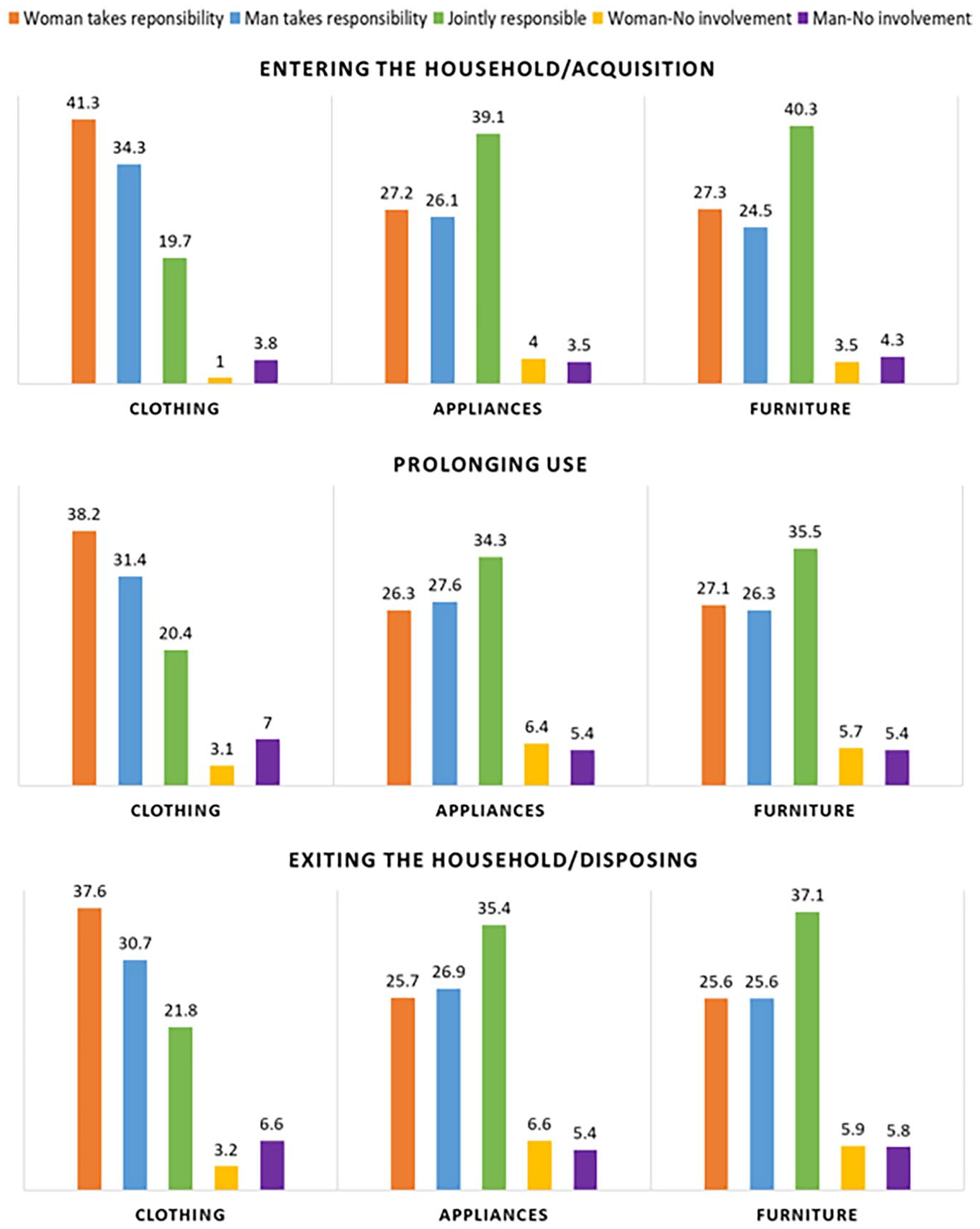
Percentage distribution of responsibility for durable products by gender, Low Waste Survey 2022 (N = 2717).
Acquiring clothing is most commonly reported to be the primary responsibility of women (41.3%) as is prolonging the use of clothing (38.2%) and disposing of clothing (37.6%) (Figure 1). In the domain of food, provisioning responsibility is taken by women or jointly, with a pronounced subgroup of men reporting no involvement in acquiring, preparing and cooking food (Figure 2).
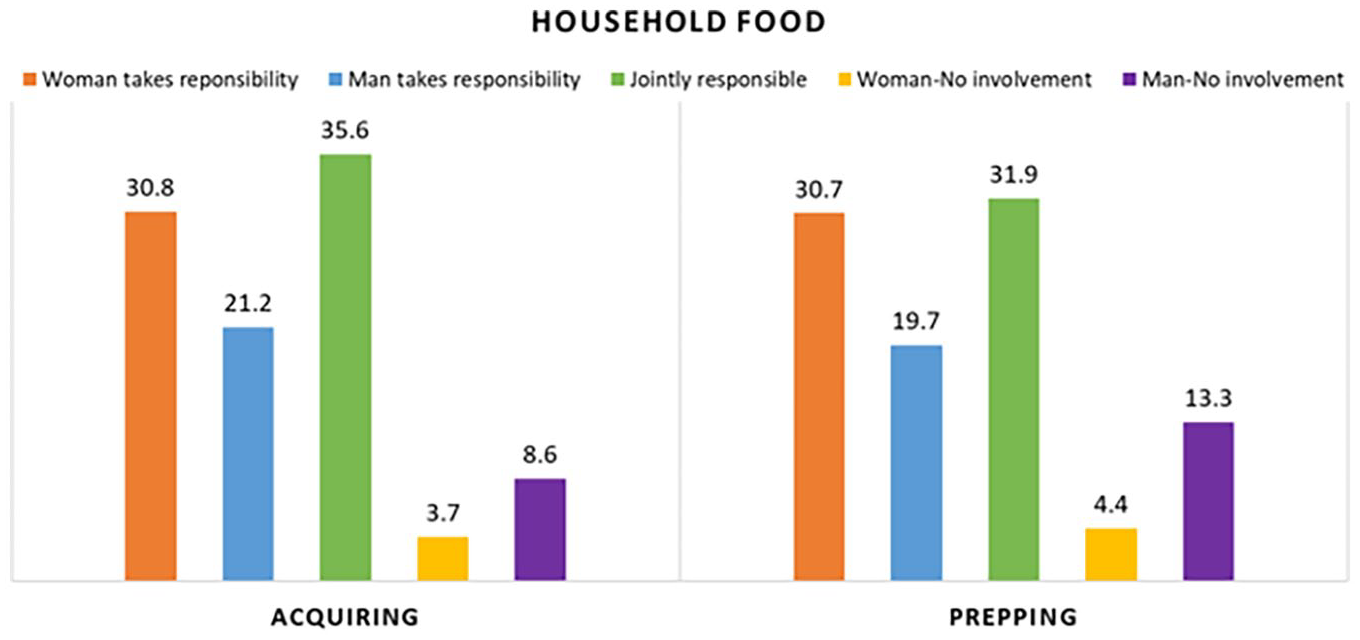
Percentage distribution of responsibility for acquiring and preparing food by gender, Low Waste Survey 2022 (N = 2717).
Taking joint responsibility is much more pronounced for other goods. For example, purchasing appliances is seen as a joint responsibility (39.1%), as is prolonging their use (34.3%) and their disposal (35.4%). Reported joint responsibility is even stronger for furniture (40.3%), as is prolonging its use (35.5%) and its disposal (37.1%) (Figure 3). The considerable amount of joint responsibility reported across all three categories is interesting, but it is also notable that in no category did men take primary responsibility in greater numbers than women. These findings suggest that women are more likely to take primary responsibility for the cognitive work (Daminger, 2019) of organising and managing domestic low waste activities than men – the tasks of anticipating opportunities for lowering waste, identifying options, making decisions and monitoring outcomes, while men are more likely to play a support role, or participating role, than women (see also Oates and McDonald, 2006).
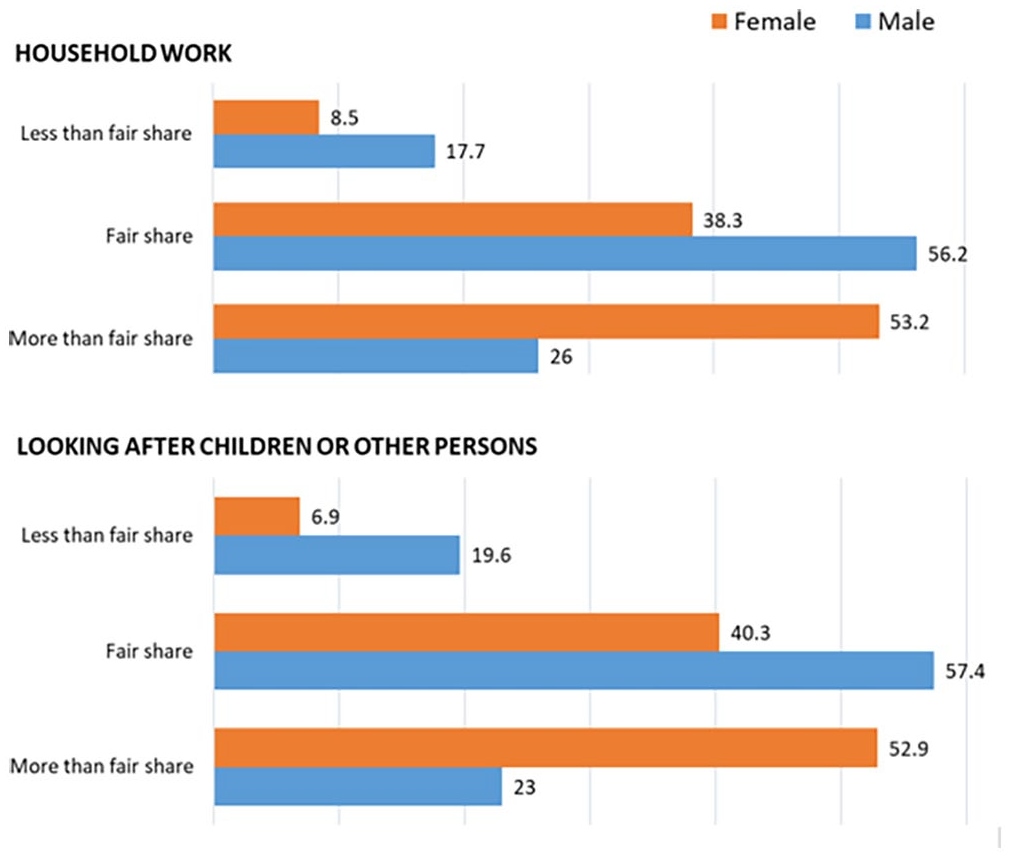
Division of household work around the house by gender, Low Waste Survey 2022 (N = 2717).
There were significant gender differences in reports of low waste actions. Women were significantly more likely than men to report using reusable items, including reusable face masks (69.9% cf. 59.5%), reusable cutlery/straws (40.8% cf. 29.7%), reusable cups (52.0% cf. 41.4%), reusable produce bags (60.9% cf. 52.8%), refillable water bottles (75.1% cf. 60.1%) and reusable containers (33.3% cf. 27.9%) outside of the household. Women were also significantly more likely to report using reusable items within their home such as reusable food wraps/pouches (33.6% cf. 26.1%), food storage containers (79.5% cf. 67.9%), silicone baking mats (27.4% cf. 22.1%), reusable dishcloths (65.2% cf. 52.2%), fabric napkins (26.3% cf. 21.3%) and reusable drinking straws (38.0% cf. 24.2%). By contrast, men were significantly more likely than women to report using handkerchiefs (43.9% cf. 35.1%) and rechargeable batteries and chargers (55.3% cf. 50.1%). When it comes to taking action to avoid using single-use/disposable items women were more likely than men to report checking to make sure they do not have an item stored away (40.7% cf. 34.4%) or looking for an alternative item within their home (38.7% cf. 29.1%), while men were more likely to report taking no action to avoid using single-use/disposable items (43.2% cf. 38.3%) (all significant to .0001 level).
He Said, She Said: Gendered Differences in Reporting Who Takes Responsibility for Low Waste Practices
Women and men reported responsibility for low waste tasks in quite different ways. The gender difference in reporting is more stark when we look at the separate frequency distributions for women and men. Women were more likely to see themselves as primarily responsible for tasks than men, a finding that accords with decades of research on the feminisation of domestic responsibilities (de Wilde and Parry, 2022).
As demonstrated in Table 1, women are much more likely than men to identify themselves as primarily responsible for purchasing and acquiring goods than men. This was particularly the case for clothing (84.9% cf. 66.6%). Women were also more likely to identify themselves as responsible for purchasing and acquiring appliances and furniture than others. By contrast men tended to emphasise both their participation and joint responsibility for acquisition instead of primary responsibility.
Gender differences in responsibility for household products, Low Waste Survey 2022 (N=2717).
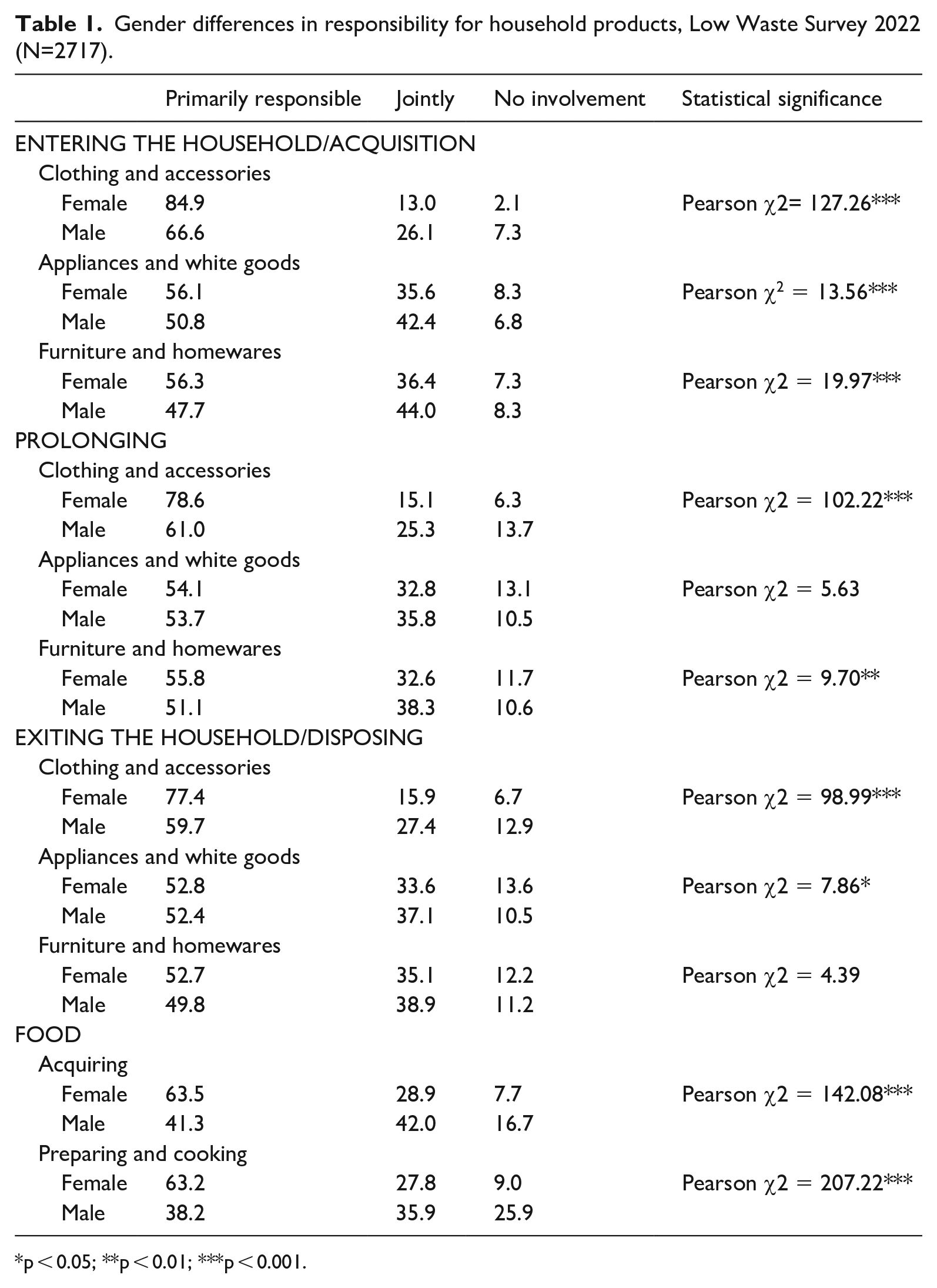
p < 0.05; **p < 0.01; ***p < 0.001.
When it comes to prolonging the use of goods through maintenance and repair within households, women are much more likely to identify themselves as primarily responsible for prolonging the use of clothing. By contrast, this gender difference is not so evident for appliances or furniture. With the disposal of goods through selling, passing on or recycling, women were significantly more likely to nominate themselves as primarily responsible for disposing of clothing (77.4% cf. 59.7%). There were no gender differences with responsibility for disposing of appliances or furniture.
The survey had a separate section on food waste and we have included two key questions about food purchasing and preparation here, because they are critical for involvement in, or responsibility for, limiting or generating food waste. There are significant gendered differences here too – women are much more likely to identify themselves as primarily responsible while men emphasise joint responsibility. Men were more likely to indicate their lack of involvement with food purchasing than women (16.7% cf. 7.7% of women state they are not involved) and food preparation (25.9% cf. 9% of women state they are not involved).
Taking responsibility for low waste tasks appears to be linked to gender divisions of labour and care within households. As shown in Figure 3, women are more likely to state that they take more responsibility for household tasks and looking after children than men, while men are more likely to emphasise their participation in household tasks and caring and state that they do their fair share.
Gender Differences in Environmental Values
Importantly, we found that environmental values and specifically concern about the environment were also significantly shaped by gender (Figure 4). A third of women state they are extremely concerned about the environment, in comparison with one-quarter of men. This accords with the findings from the international literature over several decades, that women express slightly greater environmental concern than do men (McCright and Xiao, 2014). We note that environmental values do not necessarily translate to practice, but that the survey data consistently show gendered patterns in sustainability labour, with women engaged more in sustainable practices within the home.
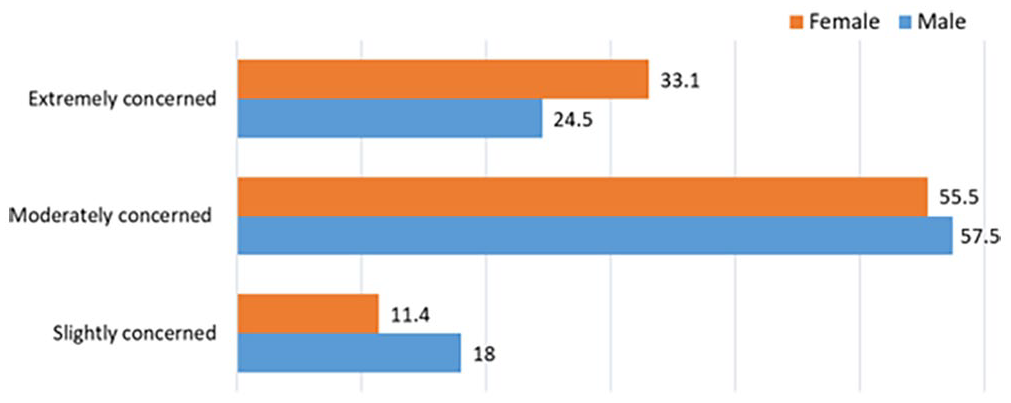
Concerns about environmental issues by gender, Low Waste Survey 2022 (N = 2717).
In the following sections we explore the labour involved in low waste living in more depth via our qualitative research project with people setting out to make change within their households.
Experimenting with Low Waste Practices
We now turn to discuss the findings from the low waste household experiments study with a sample of motivated householders in Melbourne. First, we provide a description of the nature of low waste practices they undertook during the study and show that these require information and learning, skill building and material resources of time and money. Second, we demonstrate that low waste labour is similar to other ‘domestic environmental labour’ (Farbotko, 2018) in that it requires coordination across fields and is linked to care (Wheeler and Glucksmann, 2016). We confirm that sustainability labour within the home is shaped by gender and is most often initiated by women (Cousins, 2021; de Wilde and Parry, 2022). Third, we describe how low waste practices are relational. They require engagement with, and cooperation from, other household members, and can also be informed, shaped and spread through community relationships.
The Labour Involved in Adopting Low Waste Practices
Householders in the study described how waste is generated by everyday practices, such as cooking and cleaning, and time-saving consumption, such as shopping at a supermarket or purchasing take-away meals. Participants detailed how research identifying options and skill building were required to reduce household waste. The cognitive labour of sourcing information was seen as particularly challenging (Daminger, 2019). According to Zoya, ‘You get a lot of false leads’ and for Marg, ‘I feel like if all of that information was in one place, then it would make your life so much easier.’ Susan commented that: ‘It’s a process, and I think every little bit of information that you can perhaps glean from others, that you can share, means that you can make a change.’
Many householders drew on digital platforms or social media to inform and support their low waste practices. Social media, websites and apps were used to share information or for selling or gifting second-hand goods. Product recommendations and disposal recommendations were valued as was advice from the low waste community – effectively a community of practice (Connett, 2013). Patricia, Marg and Caterina spoke about the value of Facebook groups for information exchange. Patricia highlighted that: ‘That’s how I learned things’ (interview).
Actually, that’s the only reason I’m still on Facebook, pretty much, is I’m part of a few zero waste communities, and we exchange tips . . . – because obviously, you have more power and creative thinking as a community, right? (Caterina, interview)
Information, time and money were experienced as key resources for low waste living. New practices had to be synchronised and integrated into household routines (Southerton, 2020). New practices also had to be integrated into family budgets (Bandelj, 2020). As Judith advised: ‘Research first and have it all ready’, ‘Look at cheaper options and what the overall costs would be to tackle this. . . both time and money’ (diary). Material changes within the household, particularly making space for low waste food production and storage were sometimes required. As Amalie explained: ‘It’s definitely difficult to shop in bulk when you don’t have a lot of storage room’ (interview). Lori moved house shortly before the experiment to somewhere more spacious, ‘a place that’s more conducive to doing those sorts of things’ (interview).
New Shopping Routines
Participants described how feminised domestic tasks such as shopping needed to be reconfigured to achieve aspirations and intentions for low waste living. For example, Sandra explained that a higher level of organisation and coordination is required to manage use of bulk food shops or recycling collection points that are not en route or are further away – entailing additional mental work: [With bulk food stores] you can’t go shopping like in the evening after work because they’re only open 10 a.m.–6 p.m. or whatever so you have to plan and make a trip for them. You’ve got to get all your containers together and bring them, so I’d like to probably work out a system for doing that. (Sandra, interview)
Many participants described how reducing plastic consumption through new modes of shopping was a time commitment. As Michelle said, ‘it gets really hard to find the time to do all that stuff’ (workshop 2) and Tom explained: ‘It does make shopping a little harder and more time consuming’ (diary). Sandra explained that low waste living in her household requires ‘a lot of menu planning – you can’t really spontaneously purchase things if they need to be packaged a certain [low waste] way’ (diary). Sandra also described how the challenges involved in avoiding plastic emerged early in the experiment, notably the extra time, labour and expense needed to achieve her low waste goals: Definitely the mental energy it takes up, and also the budget – it’s more than 500% more expensive to buy oats or lentils at the Source compared to Woolworths, for example, and reducing waste involves a lot more domestic labour (extra dishes to wash, packing/unpacking foods, meal planning). (Sandra, diary)
The added expense, effort and time needed to shop at bulk food/low waste stores was discussed by many. As Megan said, ‘they’re incredibly expensive and not something a regular person would normally go to’, and ‘I have to drive there’ (interview). Marthe found that shopping at a more sustainable local butcher was much more expensive than her local supermarket: ‘that’s not sustainable for me. So I will go half–half’ (diary). Patricia yearned to be able to afford zero waste products: ‘If I was a multimillionaire, I would produce no waste because the clothes I bought, the food I bought and anything else [. . .] would all be from those [zero waste] companies’ (interview).
The dominant shopping system through supermarkets introduced unwanted plastics into the home and limited recycling infrastructure made disposal very challenging. According to Judith: ‘The packaging is such a big problem. It’s just ridiculous. It should be stopped’ (interview).
Participants also described how default shopping practices were reactivated through economic and time pressures: It’s like a late-night Coles run and there’s bread on discount for 50 cents and you’re like, ‘Ooh, bread!’; or you run into someone you know at a cafe so you just get a coffee and you haven’t brought your KeepCup; or it’s in lockdown and you’re quite tired and you just want takeaway but you have no way of knowing what takeaway places package their things in. (Sandra, workshop 2)
Or as Amalie put it: ‘Sometimes life gets in the way and old habits pop back up’ (diary). In the context of women bearing primary responsibility for household management and labour, this reflection highlights how the completion of domestic tasks may require abandoning more resource-intensive low waste practices.
The Relational Work of Low Waste Practices
Engagement with social relationships was necessary to experiment with low waste living. Family, household and community relationships were all implicated in introducing low waste practices within the household. Many participants reported positive interactions, were supported in their efforts at home and encountered interest from friends and colleagues. Yet some reported a lack of interest in change, or resistance from other household members, as well as the continuation of old practices by other household members, which thwarted implementing experimental change.
Relationships within the household, including children–parent relationships, relationships between partners or with flatmates in shared housing, were all influential in supporting or resisting change. Participants in the study described how they initiated new practices and encouraged cooperation and participation within their families. This relational work was added to their heavy domestic loads. As Susan said, ‘You can only do so much in a day, when you’re doing it all’ (interview).
Michelle found her family supportive with the apparent proviso that she does the additional labour in low waste living: Well, I’m here with my husband and my kids so it was supportive definitely, it wasn’t – they didn’t make it more difficult, apart from the fact that they all eat a lot of food and I have to buy stuff for them. That was fine. My husband’s on board as well, so we’re always trying to reduce the amount of rubbish that we’re making, but at the same time, I’m the one who does most of the shopping, so it was really up to me to try and do that. (Michelle, workshop 2)
There were also accounts of household negotiations about what could be changed, and the limits of change imposed by other family members. For Ellen this meant doing ‘as much as works for us’ (diary), while Patricia was given an ultimatum by her family: ‘I’ve taken them on this zero waste journey to a particular point and they’re not prepared to go any further’ (workshop 2).
Some participants also encountered resistance or pushback against change from other household members. The participants talked about family members unwilling to cooperate with, or even opposing, the experimental changes, as well as the complexities of balancing low waste experimentation with usual tasks of caring for household members. Gloria explained that meeting the individual food preferences and needs of family members is already difficult making it even more ‘challenging to be focused on plastic free packaging’ (diary). Jenny spoke about the challenge of reducing food waste with children in the house and that changing her own behaviour is easier than changing domestic practices (interview). Others spoke about having to re-do tasks such as recycling that family members resisted. As Amber explained: ‘Yeah, they just weren’t really interested. I was finding myself going through even the recycling bins or even our garbage’ (interview). Gloria also found herself re-sorting waste and explained that: ‘It’s just too many steps . . . it’s just too hard basket and it’s too complicated for them’ (interview). These examples of managing household and familial relationships with sustainability labour align with gendered patterns identified in the broader literature on the relational aspects of domestic labour (Beagan et al., 2008; DeVault, 1991).
Building and Mobilising Community Relationships beyond the Household
Several householders in the study chose to undertake experiments in community education on low waste living, a form of local activism. Some were new to low waste living while others were activists who were deeply engaged with the zero waste movement. Lili’s experiment focused on supporting others to reduce food waste going to landfill and supporting the uptake of the FOGO (food organics, garden organics) bin scheme introduced in her local area. She was keen to initiate change in her local community through educational outreach and social influence. Marie’s experiment was a community education project that mobilised her relationships as a deeply committed sustainability advocate and community leader in an innovative way. Responding to COVID-19 restrictions, she pivoted her experiment to live videos on social media via Facebook and YouTube channels, generating a series of ‘cook-a-long’ videos demonstrating how meals can be created from food that may be otherwise discarded and discussing practical and systemic enablers and barriers to low waste living. By enlisting the support of a well-known Australian television personality with a large social media following, she was able to reach a national audience.
In summary, the data from the qualitative experiments study provide a window into the intensity and complexity of the labour involved in low waste living and the challenge of initiating and sustaining a sustainability transition from the householders’ perspective. It also foregrounds women as central to initiating and undertaking low waste labour. The household experiments in this study involved different levels of ambition, challenge and success. Most of the experiments required changed consumption practices and changed meanings, materials and competences to successfully enact them (Shove et al., 2012). The experiments of reducing the use of packaging and single-use plastic required the most fundamental changes to everyday routines and had the highest level of difficulty. These experiments challenged interpersonal relationships and pushed against local economic systems that are predicated on highly packaged and high convenience modes of supply.
Discussion
The qualitative and quantitative datasets we have drawn on are not directly comparable but together they provide a unique insight into sustainability labour and the transition towards low waste living in Australia, in particular. The national survey is the first of its kind in Australia, and elsewhere, to provide data on the prevalence of low waste living practices (acquiring, prolonging and disposing of goods) across multiple waste streams. A key survey finding is that for the majority of these activities, women were more likely to report undertaking them than were men. Extending Daminger’s (2019) insights we suggest that in heterosexual households, women may play a larger role in the cognitive tasks of anticipating and identifying low waste options, while sharing decision making about those options with men. It is possible that women perceive the full extent of their hidden cognitive labour and therefore view themselves as primarily responsible for low waste labour, while men may see their joint decision making as evidence of shared responsibility. The gendered patterns of responsibility in our survey findings are similar to other research on waste disposal (Oates and McDonald, 2006), environmental labour (Cousins, 2021; de Wilde and Parry, 2022; Farbotko, 2018) and long-standing gendered divisions of household labour and care (Baxter, 2000; Coltrane and Shih, 2010; Sullivan, 2000; Sullivan et al., 2018).
Our key research question and aim was to establish what labour is undertaken to reduce waste and determine who takes responsibility for this labour within households. We found there are a wide array of physical, organisational and relational tasks involved in reducing waste within households. We argue that sustainability labour is a distinct mode of gendered labour and we draw together concepts from sociological and geographical research and our research findings to explicate this. We theorise that sustainability labour is comprised of five overlapping elements; it is physical, cognitive, relational, economic and political work (see Figure 5).
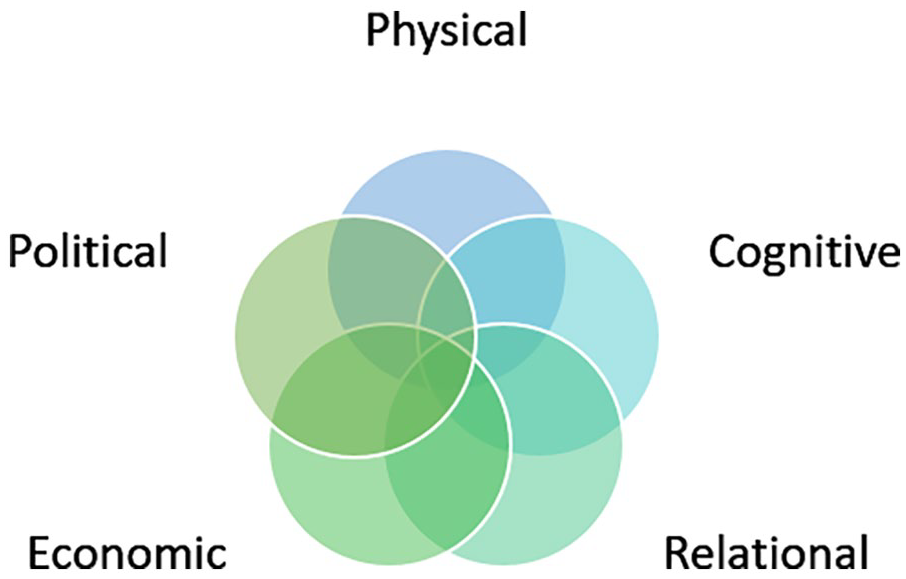
Elements of sustainability labour.
Sustainability labour involves physical labour in tasks such as shopping, household provisioning, care, repair, cleaning and waste management/disposal. The survey findings showed women are more likely to identify themselves as primarily responsible for tasks than men. By contrast men were more likely to emphasise that they took shared responsibility with others for low waste tasks. The gender division of sustainability labour in our study chimes with research on domestic labour and caring tasks (Coltrane and Shih, 2010; Craig and Mullan, 2010; Sullivan et al., 2018).
We argue that sustainability labour involves cognitive labour as outlined by Daminger (2019). Participants in the low waste experiments study described the organisational or management work of anticipating ways to lower household waste, identifying options, deciding between options and monitoring outcomes to ensure low waste aspirations were met (Daminger, 2019). Changing practices is challenging because it means coming up against mainstream high waste systems of production, consumption and waste disposal. Within the household it means interrupting or modifying domestic routines and temporal rhythms (Southerton, 2020). Households in the experiments aimed to reduce their waste, particularly with food waste and food packaging but substantially reducing waste, while possible, takes considerable thought, organisation and planning to identify alternatives and travel to acquire them. The concept of ‘mental load’ for understanding domestic work as invisible, boundaryless, cognitive and emotional is useful here (Dean et al., 2022). We suggest that sustainability labour may be experienced as a ‘mental load’ that involves the worry of caring for others but also worry for the future of the planet entwined with the cognitive and physical tasks of household labour.
The relational and emotional aspects of domestic labour have been theorised in classic works by Arlie Russell Hochchild, Viviana Zelizer, Marjorie Devault and others and we draw on these insights in our analysis of sustainability labour (DeVault, 1991; Hochschild and Machung, 2012; Zelizer, 2005). We found that relationships within households played a major role in the success or failure of the new routines established during the study. We argue that sustainability labour is relational – it is about care, negotiation and compromise within households (Hargreaves and Middlemiss, 2020; Lindsay and Maher, 2013). Households vary in terms of the numbers of people yet the nature of the relationships within them has an impact on shared practices and resource consumption (Yates, 2016). Our survey data showed that regardless of household type, sharing and borrowing goods through relationships with friends and family was relatively common. Familial relationships are more likely to involve direct care through consumption and domestic labour but it is important to recognise that people have ‘linked lives’ within and across households and this extends to consumption and the potential for the transition to low waste living (Bolton et al., 2023; Burningham and Venn, 2020).
Sustainability labour is also a type of economic activity linked to labour, production and consumption and household resources (Zelizer, 2005). While we did not collect data on negotiation within households over allocating money to low waste living, it is evident that money was a consideration in taking on low waste shopping, for example. Several participants told us that price was a barrier to becoming more sustainable through shopping, for instance at bulk food stores. More research on the prioritisation and allocation of domestic money within households to sustainability goals is needed to test this aspect of our framework.
We also argue that there is a political dimension to sustainability labour because it involves challenging and working against mainstream high waste systems of production, consumption and waste disposal. Some of the participants in our research engaged in grassroots activism to create change in their local communities while others encouraged change among friends, family and local retailers. For those in our study who undertook social influence or community education experiments, there was an emphasis on beginning conversations with people new to sustainability and providing practical examples of low waste living. There was also informal activism when participants asked retailers to avoid single-use products and to use the containers and bags brought from home. The participants in the experiments study readily identified systemic barriers limiting their agency, such as the lack of local alternatives for low packaged or sustainably packaged items and the lack of information about alternative waste management avenues. We note that previous research has identified gender differences in environmental activism with women being more active and committed than men (Buckingham, 2020; Cousins, 2021).
Our research has some limitations. The experiments study had few male participants (4/34) despite our best efforts to specifically recruit men to achieve gender balance in the sample. COVID-19 lockdowns also had a negative impact on the study, likely contributing to 15 withdrawing from the research. One further limitation is that we focused on comparing those who identify as women and men in the survey analysis. Owing to small numbers those who identify as gender diverse, non-binary individuals and those who ‘prefer not to say’ were not included in the analysis of gender differences. We note that other research has found that trans and non-binary individuals tend to support sustainable consumption more than people who identify as men (Bloodhart and Swim, 2020), though more research is needed to explore the relationship between gender identity and sustainability labour. The survey sample and qualitative experiments study involved people in a wide range of household configurations: single people, shared households, couple households and households with and without dependent children – including, and going beyond, heterosexual households. Across all of this diversity, gender differences in sustainability labour were significant.
Conclusion
We conclude that it is useful to understand ‘sustainability labour’ as a distinct mode of household labour that is emerging in response to the climate crisis. Sustainability labour is a mode of labour that includes consumption labour, broadly defined (Hobson et al., 2021; Wheeler and Glucksmann, 2016), but also goes beyond it by entwining physical, cognitive, relational, economic and political elements. As the qualitative experiments study illustrated, sustainability labour is about getting household and caring tasks done, but it is also about creating environmental and social change. Tapping into sustainability networks, creativity and problem solving were needed to find low waste alternatives and change domestic routines. Participants in the experiments study sought to create change within their households, and beyond them. They sought system change through interaction with production, consumption and waste systems, but also for some of the participants, through engagement in political systems via local and national activism.
Our qualitative and quantitative findings demonstrate that women are initiating and managing this labour while men are supporting and participating in it as households adapt to the sustainability challenges before us. Understanding the nature and gendering of sustainability labour is critically important information for practitioners seeking to target policy change or implement new programmes at the household level. On the one hand, the tasks of sustainability labour are mundane and banal but on the other they are also complex and challenging to implement because they are integrated into existing global production, consumption and waste systems (Spaargaren and Oosterveer, 2010). Sustainability labour is also integrated into existing household routines so requires organisational and relational work to secure cooperation from other household members. Our theorisation of sustainability labour as involving five overlapping elements of physical, cognitive, relational, economic and political work demonstrates that focusing on ‘individual choice’ or ‘behaviour change’ or ‘consumer acceptance’ fails to capture the full extent of labour required to implement sustainability transitions (Hobson et al., 2021; Schot et al., 2016).
To support the transition to low waste living, or the circular economy, attention must be paid to the complexity and rigour of household labour, care and the temporal rhythms of daily practice alongside the infrastructural arrangements that support or thwart this labour (Hobson, 2020; Lindsay and Maher, 2013; Southerton, 2020). In terms of broader environmental politics and commitment the ‘citizen-consumers’ in our study who were the most active in environmental change were women – a fact that has not yet been fully recognised in mainstream policy debates or sociological theorising about agency and sustainability transitions (Kennedy and Kmec, 2018; Spaargaren and Oosterveer, 2010).
Supplemental Material
sj-docx-1-soc-10.1177_00380385241231737 – Supplemental material for Household Sustainability Labour and the Gendering of Responsibility for Low Waste Living
Supplemental material, sj-docx-1-soc-10.1177_00380385241231737 for Household Sustainability Labour and the Gendering of Responsibility for Low Waste Living by Jo Lindsay, David O Reynolds, Dharma Arunachalam, Rob Raven and Ruth Lane in Sociology
Footnotes
Acknowledgements
We are deeply grateful for all participants in the study for generously sharing their time, insights and efforts with us. Sincere thanks to Dr Apoorva Nambiar for producing the tables and charts.
Funding
The authors disclosed receipt of the following financial support for the research, authorship and/or publication of this article: this research was funded by the Australian Research Council ARC Discovery Grant DP200100324 2020-2022.

Supplemental material
Supplemental material for this article is available online.
References
Supplementary Material
Please find the following supplemental material available below.
For Open Access articles published under a Creative Commons License, all supplemental material carries the same license as the article it is associated with.
For non-Open Access articles published, all supplemental material carries a non-exclusive license, and permission requests for re-use of supplemental material or any part of supplemental material shall be sent directly to the copyright owner as specified in the copyright notice associated with the article.
