




Abstract
Objective
Occupational exposure to carcinogens significantly contributes to the global burden of tracheal, bronchial, and lung (TBL) cancers. This study aims to quantify the global, regional, and national burden of TBL cancers attributable to occupational carcinogens using Global Burden of Disease (GBD) 2021 data and project trends to 2050. Additionally, we employ Mendelian Randomization (MR) to explore potential causal relationships between modifiable risk factors and TBL cancers.
Methods
We extracted mortality and Disability-Adjusted Life Year (DALY) data for TBL cancers caused by occupational carcinogens from the GBD 2021 database. Exponential smoothing and autoregressive integrated moving average (ARIMA) models projected the burden to 2050. Two-sample MR analysis utilized genome-wide association study (GWAS) data, primarily from individuals of European ancestry, to investigate causal links.
Results
In 2021, occupational carcinogens caused 285,628 deaths and 6.12 million DALYs globally. While age-standardized mortality and DALY rates declined in some high-income countries, low- and middle-income countries (LMICs) showed rising trends. Projections indicate a potential shift, with some regions plateauing while others face increasing burdens due to persistent exposure. MR analysis confirmed significant causal relationships, identifying higher BMI, smoking, visceral adiposity, and waist circumference as risk factors, while coffee consumption, dried fruit intake, physical activity, and education were protective.
Conclusion
Despite progress, the burden of occupational TBL cancers remains substantial, particularly in LMICs. The discordance between declining rates in high-income nations and rising burdens elsewhere highlights the need for targeted interventions and stricter regulations. Integrating genetic evidence supports precision prevention strategies focusing on both occupational safety and modifiable lifestyle factors.
Keywords
1. Introduction
Cancer remains one of the most formidable public health challenges globally, accounting for nearly 10 million deaths in 2021 and ranking as the second leading cause of mortality after cardiovascular diseases.1,2 Among malignancies, tracheal, bronchus and lung (TBL) cancer represent a significant proportion of this burden, contributing to over 2.2 million deaths annually.3,4 While tobacco smoking remains the predominant risk factor for lung cancer, occupational exposure to carcinogens has emerged as a critical, yet underprioritized, contributor to this disease burden. However, it must be acknowledged that occupational lung cancer is inherently difficult to establish and diagnose, owing to its multifactorial etiology, long latency periods, and frequent confounding by smoking. Consequently, only a small proportion of cases are formally recognized as occupational, leading to substantial under-ascertainment in surveillance systems and burden estimates. Occupational carcinogens (OCs) such as asbestos, silica, diesel engine exhaust, and polycyclic aromatic hydrocarbons (PAHs) are pervasive in industrial and manufacturing settings, posing substantial risks to workers worldwide.5,6 Despite decades of regulatory efforts in high-income countries, the global burden of lung cancer attributable to occupational exposures persists, particularly in low- and middle-income regions undergoing rapid industrialization without adequate safeguards.
Occupational lung cancer results from prolonged exposure to inhaled carcinogens, leading to DNA damage, chronic inflammation, and epigenetic alterations.7,8 Major contributors include asbestos (associated with mesothelioma and lung adenocarcinoma), crystalline silica (linked to silicosis and lung cancer), and diesel engine exhaust, which has been classified as a Group 1 carcinogen by the International Agency for Research on Cancer (IARC).9,10 Although asbestos use has declined in high-income countries due to stringent regulations, its legacy persists in the construction, shipbuilding, and mining industries across Asia and Africa. 11 Likewise, silica exposure remains widespread in sectors such as mining, ceramics, and construction, with recent cohort studies demonstrating dose-dependent increases in mortality risk, even at low exposure levels.12,13 At the same time, diesel engine exhaust exposure has risen in regions experiencing rapid expansion of transportation and heavy industry, disproportionately affecting low- and middle-income countries (LMICs), where emission regulations remain weak. 14
The Global Burden of Diseases, Injuries, and Risk Factors Study (GBD) has systematically quantified the health impacts of risk factors since 2010, offering critical insights into the evolving landscape of disease etiology.15,16 While previous iterations of the GBD study provided initial insights into occupational cancer burdens, they often aggregated cancer types or relied on older datasets that predate significant socioeconomic and industrial shifts. The GBD 2021 dataset offers an updated and more comprehensive framework to evaluate these evolving trends. However, no specific analysis has yet addressed the burden of lung cancer attributable to occupational factors using this latest data. 17 Previous GBD analyses have quantified occupational cancer burdens but often aggregated results across cancer types or focused on limited carcinogens.18,19 Moreover, methodological limitations such as reliance on population-level exposure estimates and inadequate latency period adjustments may underestimate true burdens. This is a major and persistent challenge in low- and middle-income countries (LMICs), where occupational cancer estimates rely heavily on modeling due to the scarcity of high-quality registries and weak surveillance systems. The absence of robust primary epidemiological data remains a critical constraint when interpreting regional disparities.
In addition, Mendelian randomization (MR) analysis is widely employed to investigate the relationship between genetic variations and disease risk. MR is a statistical approach used to infer causal relationships by leveraging genetic variants as instrumental variables. 20 With the discovery of numerous genetic variants strongly associated with specific traits and the public release of large-scale genome-wide association study (GWAS) data linking hundreds of thousands of exposures to diseases, these aggregated datasets enable researchers to estimate genetic associations in large populations. 21
Therefore, this study aims to bridge these gaps by conducting the first comprehensive analysis of the global burden of tracheal, bronchial, and lung cancers attributable to occupational exposures using GBD 2021 data. Specifically, we seek to: Quantify age-standardized mortality and disability-adjusted life years (DALYs) for occupational lung cancer from 1990 to 2021, stratified by sex, age, and geographic region. Evaluate temporal trends using estimated annual percentage changes (EAPCs) for key carcinogens, including asbestos, silica, diesel exhaust, and PAHs. Examine disparities across Sociodemographic Index (SDI), identifying regions with rising burdens despite global declines. Furthermore, in order to investigate the causal relationships between several possible risk factors with TBL cancer, this study also applies two-sample MR analysis to offer fresh insights on the disease’s prevention and management.
2. Method
2.1. Global burden of diseases
2.1.1. Data source
GBD 2021 study (https://vizhub.healthdata.org/gbd-results/) comprehensively gathers and analyzes up-to-date global disease burden data on 371 diseases and injuries, while also estimating the associations between 88 risk factors and health outcomes.2,22 The data on deaths, DALYs, years Lived with disability (YLDs) and years of life lost (YLLs) of TBL cancer attributable to occupational carcinogens used in this study were all obtained from the GBD 2021 database.
2.1.2. Descriptive analysis
In this study, we examined the distribution characteristics of the burden of TBL cancer attributable to occupational carcinogens globally and across different genders, age groups, regions and countries in 1990 and 2021. In GBD 2021 study, the formula for ASR calculation is as follows:
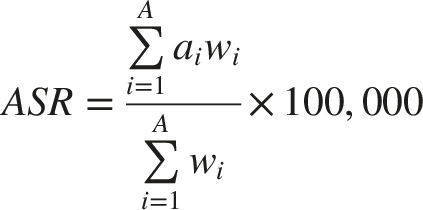
Uncertainty intervals (UIs) were estimated based on the 2.5th and 97.5th percentiles derived from a 1000-draw distribution for each metric. 24 Countries and territories in the GBD 2021 dataset are classified into five groups according to their SDI scores: low (<0.46), low-middle (0.46-0.60), middle (0.61-0.69), high-middle (0.70-0.81), and high (>0.81). 25 All analyses were conducted using R software (version 4.1.0), with statistical significance defined as a P-value below 0.05.
2.1.3. Trend analysis
The average trends in age-standardized mortality rate (ASMR), age-standardized DALYs rate (ASDR), age-standardized YLDs rate (ASYR) and age-standardized YLLs rate during 1990 to 2021 are assessed using the EAPC. The formula for calculating EAPC is as follows:


2.1.4. Decomposition analysis
Decomposition analysis determines the additive contributions of the effect of the differences in factors in two populations to their overall value differences. 27 In this study, we quantified the contribution of age structure, population growth, and epidemiologic changes to the overall changes of deaths, DALYs, YLDs and YLLs of TBL cancer attributable to occupational carcinogens by gender from 1990 to 2021. Besides, Epidemiological changes in this study refer to the residual changes in disease burden that are not explained by population growth or aging, primarily reflecting shifts in incidence, advancements in diagnostic techniques, and improvements in clinical survival rates.
2.1.5. Forecasting analysis
In this study, the projections for the burden of TBL cancer attributable to occupational carcinogens performed using the exponential smoothing (ES) model and the autoregressive integrated moving average (ARIMA) model. The ARIMA model is particularly effective in capturing trends and seasonal patterns in data, while the ES model prioritizes recent observations, providing a comprehensive outlook on potential future developments. 28
2.2. Two-sample MR analysis
2.2.1. Study design
We conducted a two-sample Mendelian randomization (MR) analysis to elucidate the causal relationships between potentially modifiable factors and TBL cancers. This analysis was based on three fundamental assumptions: (1) the relevance assumption, which requires that instrumental variables (IVs) be strongly associated with the exposure; (2) the independence assumption, which stipulates that IVs are not influenced by confounders, whether known or unknown; and (3) the exclusion restriction assumption, which asserts that IVs affect the outcome solely through the exposure of interest. 29 Given that this study relied on anonymized, publicly available datasets, ethical approval and informed consent were not required.
2.2.2. Data source for the GWAS
Genetic instruments associated with putative risk factors were identified using publicly available GWAS data from individuals of European ancestry. In brief, most instrumental variables for exposures such as smoking, alcohol consumption, and physical activity were derived from the UK Biobank, a large-scale, population-based cohort study conducted between 2006 and 2010. 30 Detailed information on these instruments is provided in Supplementary Table 1. TBL cancer cases were identified based on International Classification of Diseases (ICD)-10 and ICD-9 diagnostic codes. The control group consisted of 378,749 individuals of European ancestry from the UK Biobank cohort who had no diagnosis of TBL cancer according to ICD codes at the time of recruitment. Additionally, genetic data on tracheal, bronchus and lung (TBL) cancer were obtained from the FinnGen study, a large-scale genomics initiative analyzing over 500,000 Finnish biobank samples. 21 This project integrates genetic data with health records to investigate disease mechanisms and genetic predispositions.
2.2.3. Selection of instrumental variables
SNPs with significant correlation with exposure factors (P<5×10⁻⁸) were selected as instrumental variables. Set the linkage disequilibrium coefficient r2=0.001 and set the region width to 10,000 kb to ensure that each SNP is independent of each other and eliminate the influence of gene pleiotropy on the results. 31 To reduce the weak instrumental variable bias, we calculated the F statistic for each SNP individually and subsequently filtered for weak instrumental variables with an F statistic lower than 10.
2.2.4. Statistical analysis
The inverse-variance weighting (IVW) method was used as the primary approach for MR analysis. This method employs an asymptotic estimate of the standard error for the causal (ratio) estimate of each variable and assigns weights based on the inverse of the variance. 32 A key characteristic of IVW is that it does not account for the intercept term. Depending on the level of heterogeneity, IVW adopts different models: when heterogeneity is high (P > 0.05), a random-effects model is applied; otherwise, a fixed-effects model is used. 32 However, IVW does not consider the uncertainty of genetic associations with risk factors and may underestimate the true effect, particularly when instrumental variables (IVs) are weak. 33 To address this limitation, MR-Egger regression incorporates an intercept term, allowing for weighted linear regression even when genetic IVs are invalid, thereby providing an adjusted causal estimate. 33 Additionally, the weighted median method offers reliable causal estimates even if up to 50% of the genetic instruments are invalid due to pleiotropic effects. 33 The intercept term in MR-Egger regression reflects the average pleiotropic effect of IVs; a significant deviation from zero suggests the presence of horizontal pleiotropy. 34
All statistical analyses were conducted using R software (version 3.6.2) with the “MendelianRandomization,” “MRPRESSO,” and “TwoSampleMR” packages. A P-value < 0.05 was considered statistically significant evidence for a causal association.
3. Result
3.1. Global burden
The deaths and age-standardized mortality rate (ASMR) of tracheal, bronchus and lung (TBL) cancer attributable to occupational carcinogens in 1990 and 2021.

The DALYs and age-standardized DALYs rate (ASDR) of tracheal, bronchus and lung (TBL) cancer attributable to occupational carcinogens in 1990 and 2021.


The global burden of tracheal, bronchus and lung (TBL) cancer attributable to occupational carcinogens from 1990 to 2021. (This figure was created by the authors.).
3.2. Sex-specific burden
In 2021, the ASMR and ASDR of TBL cancer attributable to occupational carcinogens for males is significantly higher than those for females (Figure S1). The deaths, DALYs, YLDs and YLLs of TBL cancer attributable to occupational carcinogens in 2021 by sex are depicted in Figure S2. From 1990 to 2021, the ASMR of TBL cancer attributable to occupational carcinogens for females increased from 1 (95% UI: 0.72-1.32) in 1990 to 1.19 (95% UI: 0.84-1.55) in 2021, with an EAPC of 0.54 (95% CI: 0.46-0.62). while the ASMR of TBL cancer attributable to occupational carcinogens for males decreased from 9.23 (95% UI: 7.01-11.63) in 1990 to 6.14 (95% UI: 4.64-7.73) in 2021, with an EAPC of -1.22 (95% CI: -1.31--1.12). the ASDR of TBL cancer attributable to occupational carcinogens for females increased from 24.25 (95% UI: 16.76-32.17) in 1990 to 27.19 (95% UI: 19.04-36.38) in 2021, with an EAPC of 0.3 (95% CI: 0.22-0.37). while the ASDR of TBL cancer attributable to occupational carcinogens for males increased from 195.44 (95% UI: 149.15-246.4) in 1990 to 121.53 (95% UI: 90.82-152.93) in 2021, with an EAPC of -1.47 (95% CI: -1.56--1.39) (Figure S3). Trends in the deaths, DALYs, YLDs and YLLs of TBL cancer attributable to occupational carcinogens from 1990 to 2021 by sex are depicted in Figure S4.
3.3. Age-specific burden
In 2021, the ASMR and ASDR of TBL cancer attributable to occupational carcinogens initially increased with age, then decreased after reaching a certain age, with the highest ASMR observed in the 90-94 age group [59.03 (95% UI: 38.87-76.9)] and the highest ASDR observed in the 85-89 age group [567.16 (95% UI: 378.51-722.94)] (Figure S5). The deaths, DALYs, YLDs and YLLs of TBL cancer attributable to occupational carcinogens in 2021 by age are depicted in Figure S6. From 1990 to 2021, the most rapid increases in both ASMR and ASDR were observed in the 95+ age group, with EAPCs of 1.95 (95% CI: 1.83-2.08) and 1.88 (95% CI: 1.75-2.01), respectively (Figure S7). Trends in the deaths, DALYs, YLDs and YLLs of TBL cancer attributable to occupational carcinogens from 1990 to 2021 by age are depicted in Figure S8.
3.4. Regional burden
In 2021, The ASMR and ASDR of TBL cancer attributable to occupational carcinogens are positively correlated with the SDI of the corresponding region, with high SDI regions having the highest ASMR and ASDR [ASMR: 5.82 (95% UI: 4.36-7.14), ASDR: 111.33 (95% UI: 84.92-136.63)] (Figure S9). The deaths, DALYs, YLDs and YLLs of TBL cancer attributable to occupational carcinogens in 2021 by SDI region are depicted in Figure S10. From 1990 to 2021, the fastest growth in the ASMR and ASDR of TBL cancer attributable to occupational carcinogens occurred in low middle SDI region [EAPC for ASMR: 1.27 (95% CI: 1.23-1.31), EAPC for ASDR: 1.19 (95% CI: 1.14-1.23)] (Figure S11). Trends in the deaths, DALYs, YLDs and YLLs of TBL cancer attributable to occupational carcinogens from 1990 to 2021 by SDI region are depicted in Figure S12.
3.5. National burden
In 2021, the three countries with highest ASMR of TBL cancer attributable to occupational carcinogens were Monaco [15.37 (95% UI: 10.44-20.93)], Greenland [14.31 (95% UI: 10.06-19.89)] and Netherlands [10.25 (95% UI: 7.78-12.52)]. The three countries with highest ASMR of TBL cancer attributable to occupational carcinogens were Monaco [308.14 (95% UI: 210.76-418.83)], Greenland [285.72 (95% UI: 199.07-403.8)] and France [198.86 (95% UI: 147.23-245.86)] (Figure 2). The world map of the deaths, DALYs, YLDs and YLLs of TBL cancer attributable to occupational carcinogens in 2021 is depicted in Figure S13. From 1990 to 2021, the fastest growth in the ASMR of TBL cancer attributable to occupational carcinogens were Georgia (EAPC=5.23, 95% CI: 4.33-6.12), Egypt (EAPC=4.75, 95% CI: 3.95-5.55) and Croatia (EAPC=4.18, 95% CI: 3.18-5.19). The fastest growth in the ASDR of TBL cancer attributable to occupational carcinogens were Egypt (EAPC=4.37, 95% CI: 3.7-5.03), Georgia (EAPC=4.32, 95% CI: 3.52-5.13) and Lesotho (EAPC=3.9, 95% CI: 3.08-4.73) (Figure 3). World map of the age-standardized mortality rate (ASMR), age-standardized DALYs rate (ASDR), age-standardized YLDs rate (ASYR) and age-standardized YLLs rate of tracheal, bronchus and lung (TBL) cancer attributable to occupational carcinogens in 2021. (Figure was created by the authors.). World map for the EAPC of the age-standardized mortality rate (ASMR), age-standardized DALYs rate (ASDR), age-standardized YLDs rate (ASYR) and age-standardized YLLs rate of tracheal, bronchus and lung (TBL) cancer attributable to occupational carcinogens from 1990 to 2021. (This figure was created by the authors.).

3.6. Decomposition analysis
The decomposition analyses showed that from 1990 to 2021, the burden of TBL cancer attributable to occupational carcinogens measured in deaths, DALYs, YLDs and YLLs increased significantly. Population growth, aging of the world population and epidemiological change contributed 64.14%, 26.75%, 9.12% to the increase of deaths due to TBL cancer attributable to occupational carcinogens from 1990 to 2021, respectively. However, Population growth and aging of the world population contributed 92.08%, 56.7% to the increase of DALYs due to TBL cancer attributable to occupational carcinogens from 1990 to 2021, respectively. While epidemiological change contributed 48.77% to the decrease of DALYs from 1990 to 2021 (Figure 4). Changes in the deaths, DALYs, YLDs and YLLs of tracheal, bronchus and lung (TBL) cancer attributable to occupational carcinogens according to population-level determinants of population growth, aging, and epidemiological change from 1990 to 2021 at global level and by SDI quintile.
3.7. Projections to 2050
As projected by the ARIMA model, the deaths and DALYs of TBL cancer attributable to occupational carcinogens for both females and males are expected to increase during 2022 to 2050. However, the ASMR and ASDR of TBL cancer attributable to occupational carcinogens for females are expected to increase slightly and linearly, while those for males are expected to decrease significantly and linearly (Figure 5). Projections to 2050 of the global burden of tracheal, bronchus and lung (TBL) cancer attributable to occupational carcinogens performed using the Autoregressive Integrated Moving Average (ARIMA) model.
As projected by the ES model, the deaths and DALYs of TBL cancer attributable to occupational carcinogens for both females and males are expected to increase during 2022 to 2050, with the rate of growth slowed down. However, the ASMR and ASDR of TBL cancer attributable to occupational carcinogens for females are expected to remain stable, while those for males are expected to decrease slightly, with the rate of decline slowed down (Figure 6). Projections to 2050 of the global burden of tracheal, bronchus and lung (TBL) cancer attributable to occupational carcinogens performed using the Exponential Smoothing (ES) model.
3.8. Mendelian randomization
The results from the IVW method for the relationship between genetically determined significant traits and the risk of TBL are presented in Figure 7. In brief, we found that genetically predicted higher BMI was associated with an increased risk of TBL (OR: 1.28, 95% CI: 1.17–1.40, P = 7.10×10⁻⁸). Sensitivity analyses suggested no potential directional pleiotropy detected by MR-Egger regression (intercept P-value = 0.270), and the association remained consistent across the weighted median (OR: 1.34, 95% CI: 1.18–1.53, P = 1.45×10⁻⁵) and maximum-likelihood methods (OR: 1.28, 95% CI: 1.17–1.40, P = 9.02×10⁻⁸). Additionally, childhood BMI showed a weaker association with TBL, with a suggestive risk increase in the fixed-effect IVW method (OR: 1.17, 95% CI: 1.02–1.33, P = 0.023). Sensitivity analyses revealed consistent findings using the weighted median approach (OR: 1.27, 95% CI: 1.04–1.56, P = 0.020). For other obesity-related metrics, genetically predicted increased visceral adiposity (OR: 1.34, 95% CI: 1.17–1.55, P = 3.85×10⁻⁵) and waist circumference (OR: 1.40, 95% CI: 1.08–1.80, P = 0.010) were positively correlated with TBL risk. These associations were consistent across different MR methods, reinforcing the robustness of the findings. Forest plot of the associations between genetically determined significant risk factors with the risk of tracheal, bronchus and lung (TBL) cancer. Abbreviations: CI, confdence interval; OR, odds ratio; SNP, single nucleotide polymorphism.
For lifestyle traits, genetically predicted higher lifetime smoking exposure was significantly associated with increased risk of TBL (OR: 4.06, 95% CI: 2.93–5.63, P = 3.38×10⁻¹⁷). Similarly, smoking initiation showed a strong positive association (OR: 1.76, 95% CI: 1.58–1.96, P = 2.04×10⁻²⁵). Cigarettes per day was inversely associated with TBL (OR: 0.20, 95% CI: 0.14–0.28, P = 1.18×10⁻¹⁸). No evidence of pleiotropy was detected for these traits (MR-Egger intercept P-values > 0.05). Regarding dietary factors, increased coffee consumption was associated with a lower risk of TBL (OR: 0.82, 95% CI: 0.70–0.96, P = 0.016). Likewise, dried fruit intake was inversely correlated with TBL risk (OR: 0.36, 95% CI: 0.22–0.59, P = 5.65×10⁻⁵). Physical activity was also linked to TBL risk reduction, with moderate-to-vigorous physical activity (MVPA) showing a strong inverse association (OR: 0.23, 95% CI: 0.10–0.52, P = 4.18×10⁻⁴). Similarly, higher education levels were associated with a decreased risk of TBL (OR: 0.65, 95% CI: 0.59–0.71, P = 6.20×10⁻¹⁸). Further details on all examined exposures and their associations with TBL are available in Supplemental Table 2.
4. Discussion
The GBD 2021 study provides critical insights into the evolving trends of TBL cancers attributable to OCs. This analysis underscores the persistent and complex challenges posed by occupational exposures, despite global efforts to mitigate risks. The following discussion synthesizes key findings, contextualizes them within existing literature, and explores their implications for public health policy and future research.
In 2021, occupational carcinogens were responsible for 285,628 deaths and 6,120,478 DALYs due to TBL cancers worldwide, marking a significant increase from 1990. However, ASMR and ASDR exhibited a declining trend between 1990 and 2021. These contrasting patterns—rising absolute numbers but declining standardized rates—reflect the interplay of demographic shifts, evolving occupational exposures, and advancements in prevention. Aging populations, particularly in high-income regions, face cumulative exposure risks from historical occupational hazards such as asbestos and silica, which have long latency periods spanning decades.35,36 Conversely, the decline in ASMR and ASDR suggests the impact of improved occupational safety regulations, early detection, and treatment in certain regions. For example, asbestos bans implemented in high-income countries since the 1980s have significantly reduced exposure; however, the legacy effects persist due to the prolonged latency periods associated with mesothelioma and lung cancer.37,38 Similar trends were observed in the GBD 2019 study, where reductions in asbestos-related mortality in Western Europe contrasted with increasing burdens in low- and middle-SDI regions lacking stringent regulatory frameworks. 39 Although the global ASDR for asbestos-related cancers declined (EAPC: -1.08), asbestos exposure still accounted for 47.8% of occupational cancer-related DALYs in 2021. Silica exposure, which is prevalent in mining and construction, contributed 17.3% of DALYs, with a slower rate of decline. Meanwhile, emerging risks such as diesel engine exhaust highlight the evolving landscape of industrial carcinogen exposure, particularly in the transportation and manufacturing sectors. 40 These findings align with previous studies underscoring the shift from traditional hazards to newer occupational carcinogens, particularly in rapidly industrializing economies.
High-income regions, such as Western Europe and Australasia, exhibited the highest ASMR and ASDR in 2021, reflecting historical exposure peaks. However, their declining EAPCs (-1.29% and -2.04% for ASDR, respectively) contrast with rising burdens in South Asia and sub-Saharan Africa, where occupational protections lag industrial growth. This dichotomy underscores a distinct 'double burden' of occupational cancers shaped by different socio-economic drivers. In high-SDI regions, the high disease burden is primarily a consequence of legacy exposures from peak industrial activities in previous decades, coupled with the long latency periods of carcinogens like asbestos. Conversely, the rising trends in low- and middle-SDI regions are driven by current regulatory gaps; in these areas, rapid industrial expansion often outpaces the implementation and enforcement of workplace safety standards, leaving workers vulnerable to active and unmitigated exposures. In addition to regulatory gaps, structural constraints in LMICs, such as the lack of effective preventive measures and limited social security coverage for informal and precarious workers, remain major challenges. These factors not only sustain high levels of hazardous exposure but also contribute to under-detection and poor documentation of occupational cancers, complicating accurate burden estimation and policy response.
In 2021, males had significantly higher ASMR and ASDR compared to females. While male ASMR and ASDR declined, female rates increased slightly. These trends reflect occupational segregation, biological susceptibility, and evolving workforce demographics. These gender disparities are driven by a complex interplay of occupational, biological, and behavioral factors. While occupational segregation remains a primary driver, as males dominate high-risk sectors like mining and construction—this only partially explains the trend. Biological differences play a crucial role; for instance, distinct lung capacities and sex-specific metabolic pathways may influence the deposition and clearance of inhaled carcinogens, potentially amplifying male susceptibility. 40 A 2020 meta-analysis linked formaldehyde exposure in nail salons and healthcare settings to elevated TBL cancer risks among women, corroborating these trends. 41 In addition, biological differences, such as lung capacity and metabolic pathways, may amplify male susceptibility to inhaled carcinogens.42,43 Furthermore, smoking patterns significantly interact with occupational hazards; historically higher smoking rates among men in industrial jobs create a synergistic effect with OCs, though successful tobacco control is now contributing to the decline in male ASMR. For women, the stagnation or slight increase in rates may reflect limited access to gender-specific healthcare and screenings in industries often perceived as 'low risk' but involving emerging carcinogens, such as formaldehyde in the textile and beauty sectors.44,45 However, declining male ASMR/ASDR suggests successful tobacco control and occupational safety campaigns in high-income regions. In contrast, stagnant female rates highlight gaps in addressing gender-specific exposures, such as secondhand smoke in workplaces or domestic silica exposure from household industries.
The burden of TBL cancer increases with age, peaking at 59.03 per 100,000 in ASMR among individuals aged 90-94 years and 567.16 per 100,000 in ASDR among those aged 85-89 years in 2021. The oldest age groups (≥95 years) exhibited the most rapid increases in ASMR and ASDR, underscoring the prolonged latency of occupational carcinogens. For instance, mesothelioma typically manifests 30-40 years after asbestos exposure. The rising burden among older populations reflects peak occupational exposures during past industrialization periods. In contrast, the declining ASMR and ASDR among younger cohorts (<60 years) in high-SDI regions suggest the effectiveness of asbestos bans and enhanced workplace safety regulations. However, in low-SDI regions, persistent exposure in informal sectors (e.g., artisanal mining) may sustain future disease burdens. Aging populations in high-income countries also face compounded risks due to multimorbidity and immunosenescence, complicating cancer management. Furthermore, limited access to early diagnostics and palliative care in low-resource settings exacerbates mortality among older individuals. In 2021, high-SDI regions recorded the highest ASMR and ASDR, reflecting historical industrialization and the long latency of occupational carcinogens. However, the most rapid increases were observed in low-middle SDI regions, where rapid industrialization has outpaced regulatory frameworks.46,47 Targeted screening programs for high-risk occupations, alongside geriatric oncology initiatives, are crucial for mitigating these disparities.
Decomposition analysis revealed that 48.77% of the reduction in DALYs was attributable to epidemiological changes, likely reflecting improvements in survival and earlier diagnosis.18,39 In contrast, population growth and aging contributed to increases in absolute deaths and DALYs. YLLs accounted for the majority of the disease burden, underscoring the significant impact of premature mortality, particularly among working-age populations. 48 Projections from the ARIMA model indicate a continued rise in deaths and DALYs for both sexes through 2050. Female ASMR/ASDR are expected to show a slight increase, whereas male rates are projected to decline marginally. These trends likely reflect persistent occupational exposures in informal sectors and inadequate protective measures for women. 49 The model also suggests a deceleration in growth post-2030, with female rates stabilizing and a gradual decline in male rates. However, residual risks associated with diesel exhaust and silica exposure in emerging economies may counteract these gains. 50 Finally, gender-specific interventions should target female-dominated industries with tailored occupational safety protocols, such as enhanced ventilation in textile manufacturing facilities, to reduce exposure-related risks. 41
Genetically predicted lifestyle factors, including higher BMI and smoking exposure, were identified as significant contributors to TBL cancer risk. While occupational carcinogens are the primary focus of this study, these modifiable factors interact with workplace hazards to exacerbate disease burden. For instance, smoking and obesity are known to exhibit multiplicative synergistic effects with asbestos and silica, where the combined exposure leads to a risk significantly greater than the sum of individual risks. 51 The underlying biological mechanism involves shared inflammatory pathways, primarily the activation of the NF-κB signaling pathway and the induction of chronic oxidative stress. 52 Both occupational hazards (like silica) and lifestyle factors (like obesity) trigger the systemic release of pro-inflammatory cytokines, including interleukin-6 (IL-6) and tumor necrosis factor-alpha (TNF-α). 53 This sustained inflammatory microenvironment facilitates DNA damage, impairs genomic stability, and suppresses immune surveillance, thereby accelerating malignant transformation in pulmonary tissues.54,55 For instance, a large-scale cohort study demonstrated that both active smoking and higher BMI were significantly associated with an increased risk of lung cancer. 56 Similarly, a meta-analysis of case-control studies reported that ever-smokers had a significantly higher risk for lung cancer compared to never-smokers, and obesity was also identified as a contributing factor independent of smoking status.57,58 Smoking is known to induce DNA damage, chronic inflammation, and oxidative stress, all of which contribute to lung carcinogenesis.54,59 Additionally, smoking impairs immune surveillance by suppressing natural killer cell activity and promoting an immunosuppressive milieu, further facilitating cancer progression.60,61
Obesity, on the other hand, is associated with systemic inflammation, altered immune responses, and elevated levels of adipokines such as leptin, which have been implicated in tumor growth and progression.62,63 Additionally, metabolic dysregulation in obesity, including insulin resistance and hyperinsulinemia, may further promote oncogenic pathways in lung tissue.64,65 Given the inherent limitations of observational studies, including potential confounding and reverse causality, our MR analysis strengthens the causal inference by leveraging genetic instruments that are less susceptible to these biases. These findings highlight the importance of targeted interventions for smoking cessation and obesity management in TBL prevention. Future research should explore the underlying molecular pathways and assess whether these risk factors interact synergistically to exacerbate TBL risk.
While this study provides a comprehensive assessment of the global burden of TBL cancers attributable to occupational carcinogens, several limitations must be acknowledged. First, variations in data quality across regions, potential misclassification of occupational carcinogen exposure, and methodological assumptions may introduce biases in our findings. Second, the projection of disease burden to 2050 is based on historical trends and assumed risk factor trajectories, which may not fully account for future changes in occupational exposures, healthcare advancements, or policy interventions. Unforeseen economic, environmental, or technological shifts could substantially impact our estimates. Third, the MR analysis depends on the validity of genetic instruments used to infer causal relationships. Despite efforts to minimize pleiotropy and confounding, residual biases may persist, potentially affecting the robustness of our causal inferences. Fourth, the classification and measurement of occupational carcinogen exposure vary across regions and time periods, leading to potential inconsistencies in risk estimation. Fifth, our study relies on aggregated data rather than individual-level occupational histories, limiting our ability to assess personalized risk factors, gene-environment interactions, and exposure duration effects. Furthermore, as a formal sample size calculation was not performed for the MR analysis, the potential for limited statistical power in certain associations should be considered. Consequently, as these findings are based on the bioinformatic analysis of large-scale databases, they should be treated as hypothesis-generating results that require further validation through clinical research or longitudinal cohorts. Future research integrating detailed occupational histories and biomarker data could significantly enhance the precision of such risk assessments.
5. Conclusion
Occupational carcinogens remain a formidable contributor to the global TBL cancer burden, with profound disparities across gender, age, and geography. While declining ASMR/ASDR in high-SDI regions signal progress, rising absolute burdens in low-middle SDI areas demand urgent action. Future strategies must integrate robust surveillance and equitable policy frameworks with precision prevention measures. By incorporating MR-driven genetic insights, policymakers can better identify high-risk subgroups within occupational settings, enabling more targeted and cost-effective interventions to mitigate this preventable scourge. As industrialization accelerates, the lessons from asbestos’s legacy must guide proactive measures against emerging carcinogens, ensuring that worker health is not sacrificed for economic growth.
Supplemental material
Supplemental material - Global, regional and national burden of tracheal, bronchus and lung cancer attributable to occupational carcinogens from 1990 to 2021 and projections to 2050: A finding from the global burden of disease study 2021 and Mendelian randomization
Supplemental material for Global, regional and national burden of tracheal, bronchus and lung cancer attributable to occupational carcinogens from 1990 to 2021 and projections to 2050: A finding from the global burden of disease study 2021 and Mendelian randomization by Shanwu Ma, Chutong Lin, Fuxin Guo ,Yingze Ning, Jizheng Tang, Huayu He and Guangliang Qiang in Science Progress.
Footnotes
Acknowledgements
The study funders did not participate in the design of the study, data collection, analysis, interpretation, or report writing.

Author contributions
The design and guidance of this study was performed by Guangliang Qiang. Shanwu Ma and Chutong Lin analysed the GBD data. Fuxing Guo, Yingze Ning, Jizheng Tang, Huayu He contributed to the statistical analysis and interpretation of data. Shanwu Ma drafted the manuscript, Guangliang Qiang verified the underlying data and revised the manuscript.
Funding
The authors disclosed receipt of the following financial support for the research, authorship, and/or publication of this article: the Key Clinical Projects of Peking University Third Hospital (Grant No. BYSYRCYJ2023001,Grant No. BYSYZD2025049); Peking University Third Hospital Fund for Interdisciplinary Research (Grant No. BYSYJC2024003).
Declaration of conflicting interests
The authors declared no potential conflicts of interest with respect to the research, authorship, and/or publication of this article.
Data Availability Statement
Data used for the analyses are publicly available from the Institute of Health Metrics and Evaluation. The data on deaths, DALYs, years Lived with disability (YLDs) and years of life lost (YLLs) of TBL cancer attributable to occupational carcinogens used in this study were all obtained from the GBD 2021 database.
Supplemental material
Supplemental material for this article is available online.
References
Supplementary Material
Please find the following supplemental material available below.
For Open Access articles published under a Creative Commons License, all supplemental material carries the same license as the article it is associated with.
For non-Open Access articles published, all supplemental material carries a non-exclusive license, and permission requests for re-use of supplemental material or any part of supplemental material shall be sent directly to the copyright owner as specified in the copyright notice associated with the article.
