




Abstract
An intuitionistic fuzzy rough model is a powerful tool for dealing with complex uncertainty and imprecision in graph-based models, combining the strengths of intuitionistic fuzzy sets and rough sets. In this research, a correlation coefficient is an established tool for finding the strength of the relationship between two intuitionistic fuzzy rough graphs since correlation coefficients are very capable of processing and interpreting data. Furthermore, an intuitionistic fuzzy rough environment is integrated with attribute decision-making based on correlation coefficients. In order to measure the correlation between two intuitionistic fuzzy rough graphs, this suggests utilising the correlation coefficient concept and weighted correlation coefficient. In order to identify decision-making issues that are supported by intuitionistic fuzzy rough preference relations, the Laplacian energy and new correlation coefficient of intuitionistic fuzzy rough graphs are calculated in this study. We propose a new approach to computing the relative position loads of establishments by adjusting the correlation coefficient between one personality's intuitionistic fuzzy rough preference relation and the other items, as well as the undecided corroboration of the intuitionistic fuzzy rough preference relation. This paper determines the ranking order of all alternatives and the best one by using the correlation coefficient between each option and the ideal choice. In the meantime, the appropriate example improves decision-making for robotic vacuum cleaners by effectively handling uncertain and imprecise data, thereby optimising cleaning performance.
Keywords
Introduction
In the rapidly evolving landscape of smart home technologies, robotic vacuum cleaners (RVCs) 1 have emerged as a pivotal innovation, offering automated and efficient cleaning solutions. Robotic vacuum cleaners are automated machines made to clean floors without the need for human assistance. They can avoid stairs, manoeuvre past obstructions and occasionally even adapt to different types of flooring thanks to sensors and configurable settings. These gadgets frequently have a number of functions, such as self-recharging docking stations, smartphone remote control and periodic cleaning. Robotic vacuum cleaners collect dirt, dust and debris from floors using a mix of brushes, filters and suction. A comprehensive floor cleaning solution may be obtained by using certain models that come with mopping features as well. 2 They are becoming more common in homes and businesses because of technological advancements that have improved their efficiency, battery life and cleaning capabilities. Since the late 1990s, when the first RVC was unveiled, the technology has advanced quickly. Leading brands in the industry, including iRobot, Neato, Samsung and Dyson, provide a variety of devices to suit varying demands and price points. Robotic vacuum cleaners are now even more integrated into home automation because of the growth of smart home ecosystems, which enable more advanced control and communication with other smart devices. 3 Robovacs, or RVCs, are becoming more and more common in households all over the world. A normal home would be a real-world example of utilising an RVC. However, the performance and adaptability of these devices in diverse home environments remain critical challenges. Enhancing their operational efficiency and decision-making capabilities necessitates advanced computational methodologies.
In 1965, Zadeh created the initial fuzzy set theory (FST). 4 Being able to express fuzzy information is one of the main contributions of FST. The theory of FS has advanced in a variety of ways and in many disciplines. FSs are applied in a variety of fields, including management science, expert systems, artificial intelligence, computer science, control engineering and decision theory. The FST also allows mathematical operators and programming to apply to the fuzzy domain. 5 Atanassov and Atanassov 6 extended fuzzy sets and introduced intuitionistic fuzzy sets (IFSs) by adding non-membership grades to classical fuzzy sets. An IFS is characterised by membership, non-membership and hesitancy degrees, and the sum of membership and non-membership grades for each element must be less than or equal to 1. Atanassov and Atanassov 7 to produce an interval-valued IFS, which is now extensively used in cluster analysis, decision-making, medicine, agriculture and education. A technique for comparing intuitionistic fuzzy values is presented by Xu, 8 who also constructs aggregation operators for the purpose of aggregating these values and establishes the features of these operators. Intuitionistic fuzzy set is used in RVCs to handle uncertainty and impressions in decision-making, optimising cleaning performance and efficiency even in scenarios with ambiguous or incomplete information.
Rough Set Theory (RST) is a formal mathematical method that was created by Pawlak9,10 to solve ambiguity and inconsistency in information systems. Unlike probability theory and FST, the rough set technique does not require extra information; therefore, items with the same description may be separated using the information that is available at the time. 11 Rough Set Theory ideas are formed by dividing information into equivalence groups. Rough Set Theory is effective in machine learning, expert systems, decision analysis and pattern recognition, but it is unable to manage differences from domains with a preference order. Rough Set Theory in RVCs efficiently manages complex data sets, identifying patterns and optimising cleaning routes based on incomplete or noisy sensor data, enhancing their adaptability and efficiency. Rough Set Theory and IFS can be combined to create a refined, adaptive control mechanism for RVCs, addressing vagueness and ambiguity. Fuzzy rough sets (FRSs) and rough fuzzy sets (RFSs) were studied by Dubois and Prade. 12 The concept of RFSs is based on the approximation of a FSs using crisp coding of indiscernibility between the objects of the target set, whereas in FRSs, a fuzzy set is approximated using fuzzy indiscernibility relations between the objects. Rough sets manage uncertainties resulting from granulation or indiscernibility in the feature space, whereas fuzzy sets in rough-fuzzy pattern recognition handle uncertainties arising from insufficient information and overlapping concepts. Fuzzy rough sets are also studied by Radzikowska and Kerre. 13
By defining operators based on axioms, the paper suggests an operator-oriented characterisation of intuitionistic FRSs (IFRSs). It is guaranteed that distinct forms of intuitionistic fuzzy relations yielding the same operators result from different axiom sets of lower and upper IFS-theoretic operators. Cornelis et al. 14 described IFRSs. The pair of lower and upper intuitionistic fuzzy rough approximation operators derived from an arbitrary intuitionistic fuzzy relation were examined by Zhou et al.15,16 Further, the fundamental characteristics of the intuitionistic fuzzy rough approximation operators are scrutinised. The intuitionistic fuzzy rough approximation operators are classically represented by introducing cut sets of IFSs. We further show the linkages between intuitionistic fuzzy rough approximation operators and particular intuitionistic fuzzy relations. Haq et al.'s approach 17 to semantic problems with incomplete information consists of defining types, offering a comprehensive framework, recommending fuzzy decision tables and creating rule extraction methods. A modified version of the Decision-Theoretic Rough Set model, known as Generalized Intuitionistic Decision-Theoretic Rough Set (GI-DTRS), was introduced by Ali et al. 18 Mazarbhuiya and Shenify 19 created a hybrid method that combines IFSs with ideas from Bayesian theory for anomaly discovery in computer networks and databases. Aggregation operators have been successfully utilised for the information aggregation process in multicriteria decision-making problems. 20 Intuitionistic FRSs improve RVCs’ capabilities by handling uncertainty and imprecision in real-world environments. They improve sensor data interpretation, allowing vacuums to navigate safely around obstacles such as furniture and pets. These sets optimise cleaning strategies based on imprecise information, ensuring a thorough process. They also enable better decision-making by integrating multiple sources of uncertain data.
Graph theory is a valuable tool for studying network models and pairwise relationships, with fuzzy graph theory increasingly being used in real-time system modeling. Fuzzy models aim to reduce differences between traditional numerical models in engineering and sciences and symbolic models in expert systems, making them increasingly useful in understanding complex systems. Operations on graphs in fuzzy contexts were defined by Mordeson and Chang. 21 The fuzzy graph complement was first proposed by Sunitha and Vijayakumar. 22 Parvathi and Karunambigai 23 provide a new view of intuitionistic fuzzy graphs, exploring their characteristics and presenting a range of ideas that are examined using illustrations. The size, order and degree of an intuitionistic fuzzy graph were examined by Gani and Begum. 24
Graphs are symmetric binary relations on sets, essential in mathematical modeling and applied across various branches of science and engineering. They solve real-life problems and unify RST and graph theory. Graph theory, where objects are represented by vertices and relations by edges, is useful for representing information involving relationships. Rough graphs are designed to address ambiguity in object descriptions or relationships. He et al. 25 introduced a weighted rough graph algorithm that generalises the classical Kruskal algorithm for exploring the optimal tree, presenting an application in relationship analysis. Mathew et al. 26 introduce vertex rough graphs, discuss graph theoretic definitions and use Pawlak's RST to create a matrix and expand rough precision and similarity degree concepts. Akram et al. 27 apply the concept of FRSs to graphs. For fuzzy-rough feature selection, Chen et al. 28 provide a novel graph-theoretic approach that outperforms current techniques in terms of computing time and classification accuracy, especially for large-scale data sets. Recently, Wang and Zhang 29 developed a new approach to multicriteria problem resolution based on an intuitionistic FRS model with optimistic multi-granulation.
Some other hybrid structures of rough graphs, such as soft rough graphs and intuitionistic fuzzy rough graphs, are also introduced in. 30 The decision-making process was introduced by Zhan et al. 31 in an intuitionistic fuzzy rough environment, and its real-world applications were examined. Akram and Zafar 32 introduced various hybrid models based on rough fuzzy graphs, fuzzy rough graphs and intuitionistic fuzzy rough graphs. By integrating intuitionistic fuzzy C-means and rough set models, Tiwari et al.33,34 present a unique method to decrease high-dimensional data, improving the prediction of animal toxin peptides and phospholipidosis-positive compounds. Gerstenkorn and Manko 35 conducted the initial research on the correlation coefficient notion in 1991. The correlation coefficient's variance and covariance are derived directly from the scalar product of two IFSs’ membership function and non-membership function values, respectively. The correlation coefficient for fuzzy sets is becoming more and more important in real-world decision-making and cluster analysis. The available ranges for correlation coefficient values are [0, 1] to [–1, 1]. A method for determining the correlation between fuzzy sets was built using conventional statistics. The Laplacian energy of an intuitionistic fuzzy graph was extended to the Laplacian energy of a fuzzy graph by Basha and Kartheek. 36 Akram and Naj 37 explore the energy and Laplacian energy of Pythagorean fuzzy graphs and digraphs and their applications in decision-making, including satellite communication system design and reservoir operation evaluation. Liu and Kao 38 devised a mathematical programming approach for the derivation of fuzzy measures based on the correlation coefficient. Reddy and Basha use correlation coefficient measures to assess the strength of the association between hesitancy fuzzy graphs and decision-making. 39 Akula and Shaik 40 investigate the use of intuitionistic fuzzy graphs to enhance decision-making uncertainty. Bajaj and Kumar 41 propose a novel method for determining correlation coefficients in IFSs, demonstrating its superiority and practicality in pattern detection and medical diagnosis. According to Golui et al., 42 a major portion of transportation uses fossil fuels such as petroleum and diesel, whose combustion releases greenhouse gases like carbon dioxide.
Given the limitations of human comprehension in this domain, it is extremely challenging to employ a single uncertainty method to resolve complex problems. Therefore, in developing hybrid models, it is necessary to consider the benefits of several different mathematical models that address uncertainty. The intuitionistic fuzzy rough model is more flexible and practical than previous models. It may be useful to substitute graphical methods for logic and set theory. It motivates us to think about intuitionistic fuzzy rough graphs and their applications. However, to the best of our knowledge, no research has been written about the correlation coefficient in an intuitionistic fuzzy rough graph. For this reason, we confine our inquiry and examination in this work to the correlation coefficient of an intuitionistic fuzzy rough graph. To make these concepts clear, we give an example. Additionally, a new method for ranking the options in the decision-making selection issue has been devised using the intuitionistic fuzzy rough graph.
In this paper, we present a strategy for addressing decision-making problems where the weights (loads) of the criteria are entirely unknown, and the alternatives are determined solely by the intuitionistic fuzzy rough graph. To handle ambiguous information criteria, we employ the Laplacian energy measure to compute the relative weights based on each decision matrix. To meet the total weight vector requirement, we combine the Laplacian energy weights obtained. We then use the correlation coefficient metric to evaluate the alternatives within the intuitionistic fuzzy rough graph, selecting the best options by calculating the correlation degree for each ranking of the alternatives. This paper proposes an innovative approach that leverages an intuitionistic fuzzy rough correlation coefficient to enhance the performance of RVCs. By incorporating this advanced correlation coefficient, we aim to improve the accuracy and reliability of the decision-making processes, leading to more efficient and effective cleaning operations. The method is expected to enable RVCs to better understand and navigate complex environments, adapt to varying cleaning requirements and optimise their cleaning strategies. The intuitionistic fuzzy rough model's effectiveness and applicability are validated by its theoretical properties, including consistency, robustness, scalability, convergence, generalisability and interpretability. These properties ensure reliable, stable outcomes across datasets, handling uncertainties, scalability and adaptability to different contexts.
The paper is structured as follows: ‘Preliminaries’ section describes the basic definitions to make it easy to understand the paper. In ‘Laplacian energy and new correlation coefficient of an intuitionistic fuzzy rough’ section, decision-making is demonstrated using the new correlation coefficient and the Laplacian energy method developed by the intuitionistic fuzzy rough graph. ‘Real-life application: Choosing the most robotic vacuum cleaner’ section contains the relevant application. In the end, ‘Conclusion’ section presents the article's conclusion.
Preliminaries
The following fundamental definitions and ideas will be covered in this section:
Definition 6
Let F be the universe of discourse with
Definition 9
Let F be a nonempty universe of discourse. Let R be an equivalence relation on F. A pair


Definition 15
Let F be a nonempty and finite universe of discourse and R




Definition 30
An intuitionistic fuzzy rough graph G on a nonempty set F is a four-order tuple (M,


Definition 43
Let F, G






Definition
An intuitionistic fuzzy rough adjacency matrix (IFRAM) is A(G) =
Definition
Assume that IFRG of G = (


Definition
A new approach is developed for finding the correlation coefficient between intuitionistic fuzzy rough graphs as follows:
Let F and H be an IFRG of G = (
For lower approximation



For upper approximation

Note that the condition
Laplacian energy and new correlation coefficient of an intuitionistic fuzzy rough graph in decision-making
Method for calculating expert scores
The finest ranking outcome is obtained by comparing two options pairwise and generating an intuitionistic fuzzy rough preference relation (IFRPR) in order to prevent the limited ability of human thought from influencing the decision-making process. Thus, IFRPRs are the most often used method by decision-makers of expressing their preferences. Assume that
Laplacian energy can identify the unclear IFRG indicator. Each IFRPR seems to be an IFRG in the adjacent matrix; hence, Laplacian energy determines the ambiguous specificity. An IFRPR can have a range of values from 0 to 1. Due to the complexity of the decision-making process, a lack of domain knowledge, and other factors, individuals might have a range of possible values when determining the preference degree of one object over another. Laplacian energy of an intuitionistic fuzzy rough graph, which allows elements to belong to a set represented by several potential values, is a suitable representation for this kind of preference value. Determining the weights of experts according to their social standing, reputation and acknowledged expertise in particular fields is a common practice in decision-making problems. Intuitionistic fuzzy rough preference relations might not always be considered, even when they reflect the expert's true expertise, because their judgement about the alternatives is also evaluated during the problem-solving process. Weights can be essential in ranking alternatives during the practical decision-making process. Thus, it becomes important how we allocate the experts appropriate weights. This study considers the experts’ present significance weights to be subjective weights. It could be feasible to more precisely determine the experts’ objective weights by comparing the IFRPRs with the predetermined weights and examining the experts’ preferred replacements according to their IFRPRs. It is generally expected that the uncertainty degree of the IFRPR will be minimised during the decision-making process to ensure more reliable results. As a result, the new correlation coefficient degree
This study created the working technique below in accordance with the previously described analysis to assess the experts’ objective weights.
Working procedure
With an emphasis on IFRPRs, a functional technique for group decision making valid issues is being created.
Consider
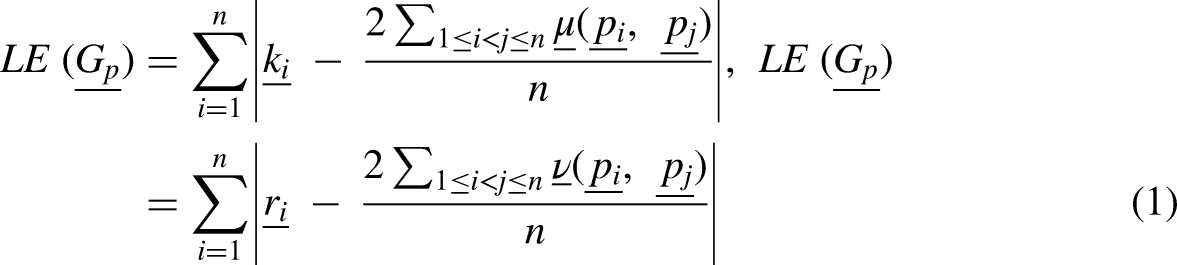
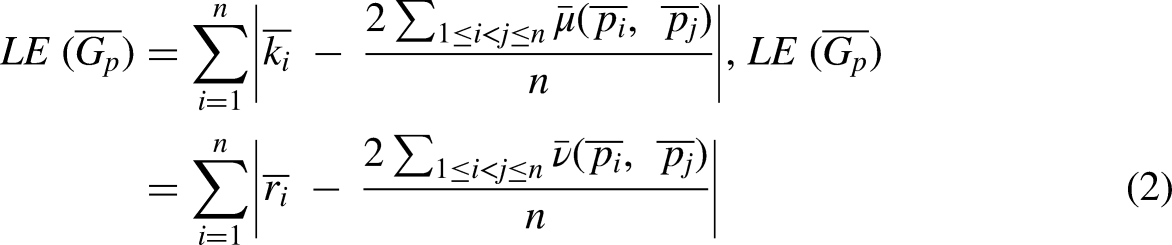


















The new correlation coefficient between intuitionistic fuzzy rough graphs.
Flow chart
Real-life application: Choosing the most RVC
Suppose a family lives in a two-story home with carpets and hardwood flooring mixed together. They have a busy lifestyle with full-time jobs, children and a pet dog. Their busy schedule makes it difficult for them to frequently clean the floors. They chose to get a RVC in order to keep things tidy and control pet hair. They pick a model with strong suction power, sophisticated navigation technology and the ability to handle various surfaces. The robovac begins its usual operation when they put it up. It carefully navigates the house, avoiding obstructions such as stairs and furniture, and adjusts its cleaning mode to suit the surface. With an emphasis on high-traffic areas and the rooms where the pet spends the most of its time, a vacuum is set to clean the whole house every day. The family appreciates how the RVC saves them time and effort. They no longer have to vacuum the floors manually as often, and the house stays cleaner on a regular basis. The robovac also comes with a smartphone app, allowing them to schedule cleanings, set no-go zones and track the cleaning progress even when they are not at home. This real-life example highlights how a RVC can be a practical and valuable addition to a modern household, helping to maintain cleanliness and saving time for busy families. So that the family select six categories of RVC
Figures 2, 3 and 4 show the lower intuitionistic fuzzy rough graphs related to the criteria of performance and features (performance includes suction power, navigation and various cleaning modes), battery life and charging (battery life covers runtime, charging time and the ability to auto-recharge and resume cleaning), ease of use and connectivity (ease of use involves the user interface, app integration and compatibility with smart home systems). Figures 5, 6 and 7 show the upper intuitionistic fuzzy rough graphs related to the same criteria.

LIFRG

LIFRG

LIFRG
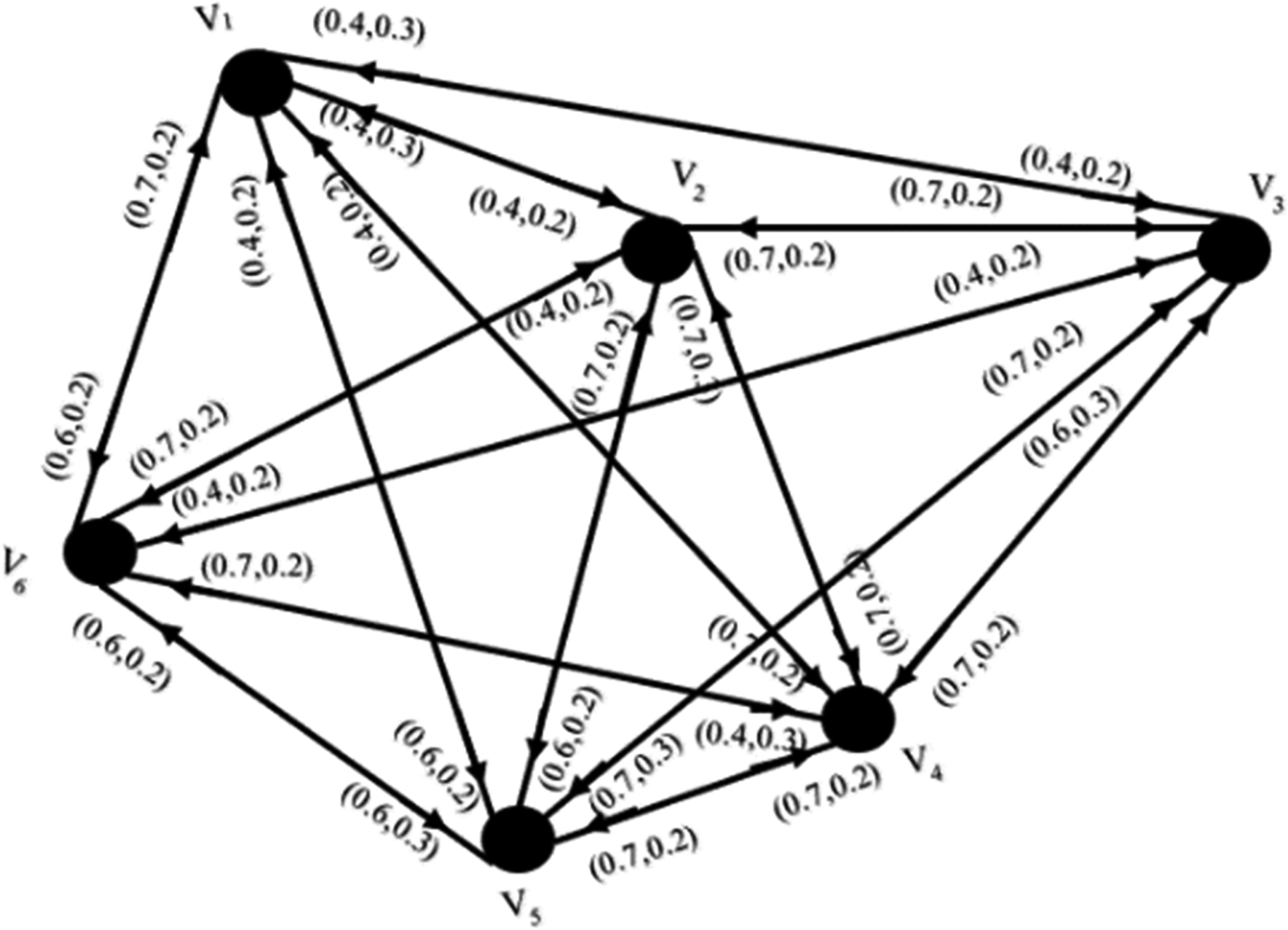
UIFRG

UIFRG

UIFRG
Lower intuitionistic fuzzy rough graph
Lower IFRAM from Figure 2:














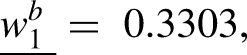







Then from the matrices







Hence
As a result, among the three categories listed,
Upper intuitionistic fuzzy rough graph
Upper IFRAM from Figure 5:















Then from the matrices






Hence
As a result, among the three categories listed,
The ordering of alternatives plays a crucial role in determining the most advantageous options in decision-making issues with IFRPRs. A lower intuitionistic fuzzy rough graph, which provides an exact and reliable representation of alternatives, is often preferred. In this context, the position ordering for lower intuitionistic fuzzy rough graph places
Conclusion
In practical decision-making scenarios, decision-makers often face a certain level of ambiguity due to inadequate data and understanding of potential alternatives. To address this challenge, the intuitionistic fuzzy rough notion proves to be an effective method. In our research, we propose a methodology for handling decision-making problems where the criteria weights are entirely unknown, and choices are solely dependent on the intuitionistic fuzzy rough graph. The Laplacian energy measure is employed to calculate relative weights based on each decision matrix, effectively managing the uncertainty associated with criteria. By aggregating these Laplacian energy weights, we obtain the overall weight vector. We then assess alternatives to the intuitionistic fuzzy rough graph using a novel correlation coefficient measure, subsequently establishing rankings and identifying the optimal choice. Through an illustrative example involving correlation criteria and decision-makers, we demonstrate the efficacy of our approach in resolving a decision-making problem. Thus, our method is particularly well-suited for implementation in challenging practical scenarios where uncertainty and a lack of explicit criteria weights are prevalent. Despite the effectiveness of our methodology, there are certain limitations to consider. Its application to circumstances unaccustomed to this idea may be limited by its dependence on intuitionistic fuzzy rough graphs. Furthermore, the Laplacian energy measure's computational complexity could pose challenges for large-scale issues. Our methodology has been verified on a representative case; hence, more testing in other real-world settings has to ensure robustness. In future, the statement raises the possibility of applying statistical ideas like variation coefficients to different kinds of intuitionistic fuzzy rough hypergraphs. This suggests that these statistical concepts have wider relevance outside of the particular context that was previously described, potentially expanding their usefulness to a number of situations involving intuitionistic fuzzy rough hypergraphs.
Footnotes
Acknowledgements
The authors are highly thankful to the honourable Editor, Associate Editor and anonymous referees for their valuable comments and suggestions which significantly improved the quality and representation of the paper.
Author contribution
The contributions of all authors are equal. All authors have read and agreed to the published version of the manuscript.
Declaration of conflicting interests
The author(s) declare that they do not have any conflict of interests regarding the publication of this paper.
Funding
The author(s) disclosed receipt of the following financial support for the research, authorship, and/or publication of this article: This research work supported and funded was provided by Vellore Institute of Technology, Vellore, Tamil Nadu, India.
