




Abstract
The world has moved toward renewable energy resources for three major reasons: (1) to mitigate climate change arising from the excessive emission of greenhouse gases, (2) to protect health by lowering greenhouse gas emissions, and (3) to meet ever-increasing demands for energy. Shiraz is a major city in Iran and struggles with pollution challenges due to the presence of highly polluting industries. The increased energy demand and the lack of a demand–supply trade-off have led to frequent power outages in Shiraz in recent years. Batteries have been of great interest to researchers as they have a wide range of compounds and variety in the market and strongly influence the function and initial costs of hybrid energy systems. This study models a hybrid renewable energy system using four different batteries, that is, lead-acid, Li-ion, vanadium redox, and zinc-bromine batteries. These four scenarios were subjected to techno-economic analysis in HOMER. The system was assumed to generate 3000 kW of industrial power and 300 kWh of office/domestic power. It was demonstrated that the hybrid system with the lead-acid battery was the most optimal system to supply power to the case-study industrial plant for both industrial and domestic load, with a levelized cost of energy of 0.47 USD/kWh and an initial cost of 6.02 million USD. However, the hybrid system with the Li-ion battery will become more optimal than the system with the lead-acid battery if Li-ion batteries continue to become more affordable in < 5 years. This system would decrease CO2 emissions by 1,060,133 kg every year as compared to the diesel system.
Introduction
The world has moved toward renewable energy resources for three major reasons: (1) to mitigate climate change arising from the excessive emission of greenhouse gases (GHGs), (2) to protect health by lowering GHG emissions, and (3) to meet ever-increasing demands for energy.1–3 Iran is the 10th largest producer of GHGs, with 471 million tons of CO2 produced overall each year, leading to air and water pollution challenges. The ecosystem of the Caspian Sea is in serious danger. Municipal waste, chemical waste from factories, and other pollutants are in most cases discharged into the Caspian Sea. 4 Although they have significant contributions to the development and bring several economic achievements, industrial towns are among the largest CO2 producers, 5 and Shiraz is no exception in this respect. Although Shiraz is among the cleanest metropolitan areas in Iran, the presence of polluting industries remains a major challenge. 6 Apart from pollution, the increased energy demand and the lack of a trade-off between the energy demand and supply have resulted in frequent power outages in recent years. The resilience of energy systems can be enhanced by deploying hybrid systems.7–9 Batteries have been of great interest to researchers as they have a wide range of compounds and variety in the market and strongly influence the function and costs of hybrid energy systems. Lead-acid (LA) batteries are the most commonly used batteries; however, they have a maximum lifespan of 5 years. Li-ion batteries are the second-most used batteries and are extensively employed in energy systems because of their lower maintenance cost and higher safety. Vanadium redox storages are also used in energy systems and have major economic and environmental advantages in energy storage in wind farms. Zinc-bromine (ZB) flow batteries have advantages such as large-scale energy storage capacities and affordable maintenance.10–13 The aims of this study are to model a hybrid renewable energy system (HRES) using four different batteries, that is, LA, Li-ion, vanadium redox, and ZB batteries. Additionally, a primary objective of this study is to model a fully renewable energy system with zero CO2 emissions.
Literature review
Hybrid energy generation systems have been the subject of numerous studies in recent years. Dhundhara et al. 11 reported the techno-economic analysis of different configurations of wind/photovoltaic panel (PVP)/diesel/biodiesel power systems with Li-ion and LA batteries. They showed that Li-ion batteries have higher techno-economic resilience than LA batteries for energy storage and are expected to play a key role in future power systems. Ciez and Whitacre 14 reported a comparative techno-economic analysis of PVP/diesel/battery power systems with three different batteries. They showed that low-cost Li-ion batteries had the potential to compete with a non-renewable solution in some cases. It has been proved that the discount rate is important in the cost competition of hybrid power systems. At low discount rates, the levelized cost of energy (LOCE) is only slightly higher than diesel power generation, and costs diverge as the discount rate rises. The discount rate also determines which battery technology provides the lowest cost of energy. Shaahid 15 analyzed the effects of battery storage on the economics of hybrid wind/diesel systems for commercial loads in hot climates. The simulations suggested that in a hybrid system with a wind power capacity of 100 kW, a diesel power capacity of 175 kW, and battery storage with four medium-load hours, the cost of energy (COE) would be 0.139 USD/kWh for a diesel fuel price of 0.1 USD/L. The hybrid system had an energy saving of only 27% compared to a diesel system. 16 Li et al. 16 conducted a techno-economic analysis of a hybrid wind turbine (WT)/diesel generation (DG)/battery power system with different batteries in a cold climate in China. It was found that the DG/ZB system was the most optimal hybrid energy system, with 1460 kWh of DG power, 500 kWh of ZB flow battery power, and a 400-kW converter. The DG/ZB system had the lowest net price cost (NPC) and COE (compared to the DG system). On the other hand, the WT/LA system had the highest NPC and COE due to the high WT maintenance cost. Furthermore, it was found that DG/LI was more eco-friendly than DG/ZB and DG/LA.
Khalil et al. 17 discussed the use of HOMER Pro software for designing hybrid power systems to optimize power plant configurations, decrease dependence on conventional energy resources, and reduce operating costs and gas emissions. The results of simulations show that the proposed hybrid system design is the most economical. Usman et al. 18 reported the optimization of hybrid energy system models with solar PV, diesel generators, and grid, in the context of increasing energy demand, depletion of conventional resources, and global promotion of renewable energy, with a focus on cost analysis and GHG reduction. Islam et al. 19 reported optimizing an HRES for sustained rural electrification in developing countries, particularly in Bangladesh, through the use of advanced optimization techniques and sensitivity analysis. Amupolo et al. 20 evaluated the off-grid renewable energy-based electrification schemes for an informal settlement in Namibia, comparing solar home systems to centralized microgrids, and found that a hybrid system with solar PV, a diesel generator, and batteries offers the most cost-effective solution. Mubaarak et al. 21 evaluated the global concern of global warming and climate change, the importance of renewable energy, the study of potential renewable energy in Yemen, the assessment of technical and economic feasibility of hybrid energy systems, and the effectiveness of the system in supplying power to a large-scale load, as well as its sensitivity to changes in load scale, real interest rate, and fuel price. Ishraque et al. 22 examined a dispatch strategy governed hybrid renewable energy microgrid for both on and off-grid conditions, evaluated different strategies, and demonstrated stable operation through specific controllers. Altin 23 reported the statistical presentation of how synthetic wind speed distribution can affect HRES sizing and the associated cost of Energy. Rehman et al. 24 reported the techno-economic analysis with an optimized sizing of HRES components to meet the residential load demand of a specific area in Pakistan and the optimal component sizes were determined. Ahmed et al. 25 provided a techno-economic feasibility analysis of an off-grid HRES for a rural village of district Kech, Balochistan, Pakistan and results show that the proposed system can meet the power requirements of 197.74 kWh/day primary demand load with 27.87 kW peak load. Konneh et al. 26 showed that the HRES is a better option for electrifying the Banana Islands than the current stand-alone system.
Arabzadeh Saheli et al. 27 assessment of the performance of a hybrid WT/DG/PVP power system for a household in Manitoba, Canada, using HOMER. The optimal system was found to have a 2-kW DG, five batteries, a 1-kW PVP system, and a 2-kW converter, with a total NPC of 33,110 USD and a COE of 0.444 USD/kWh. The numerical results suggested that the system had the lowest cost and highest efficiency among the systems under study and contributed to the reduction of GHG emissions. Rehman and Al-Hadhrami 28 studied a battery-supported hybrid PVP/DG power system for a village where power was supplied by a DG system. They attempted to evaluate the replacement of the DG system with solar energy. The sensitivity analysis of the system indicated that the hybrid system would have an equal or lower COE than the DG system at a diesel fuel price of 0.6 USD/L or higher. Therefore, the hybrid DG/PVP system would be more economical than the DG system. Mondal and Denich 29 analyzed hybrid battery/DG/WT, PV/WT/battery/DG, battery/DG/PV, and DG systems to supply power to rural areas in Bangladesh. They primarily sought to optimally size the systems that could meet the initial load requirement of 50 kWh/day with a peak load of 11 kW for 50 households in three remote sites in Cox's Bazar, Sylhet, and Dinajpur. It was found that the hybrid battery/PVP (6 kW)/DG (10 kW) system was economically the most optimal and had the lowest COE of nearly 25.4 TL/kWh.
Mamaghani et al. 30 analyzed the techno-economic feasibility of a hybrid WT/battery/DG/PVP power system in three stand-alone Colombian villages with different climates in HOMER. The hybrid system with an NPC of 836,210 USD and a COE of 0.437 USD/kWh was found to be the most optimal in Puerto Estrella. Shezan et al. 31 analyzed the performance of an off-grid hybrid WT/DG/battery/PVP system in a remote area using HOMER. It was found that the optimized hybrid system could have a nearly 29.65% lower NPC and 16 tons lower CO2 emissions compared to conventional power systems. The NPC of the optimized system was ∼ 288.194 USD, with a COE of 1.877 USD/kWh. Baneshi and Hadianfard 32 conducted a techno-economic analysis of off- and on-grid hybrid WT/PVP/DG/battery power systems for heavy non-residential power consumption in the south of Iran using HOMER. It was found that the COE and renewable fraction (RF) of off-grid hybrid systems were 9.3–12.6 USD/kWh and 0%–4.39%, respectively. The COE and RF of the grid under study were 5.7–8.4 USD/kWh and 0%–53%, respectively.
Khan et al. 33 evaluated the techno-economic feasibility of different configurations of hybrid WT/PVP/DG/battery power systems for telecommunication systems in different cities of Punjab State, India. It was found that the WT/PVP/DG/battery hybrid system had higher power generation than the PVP/DG/battery, PVP/WT/DG, WT/DG/battery, WT/DG, and PVP/DG systems. The COE was obtained to be 0.162, 0.210, 0.198, and 0.199 USG/kWh in Amritsar, Ludhiana, Patiala, and Chandigarh at a peak load of 1.3 kW, respectively. The most optimal configuration of the PVP/WT/DG/battery system would be useful for power generation. Baseer et al. 34 evaluated the techno-economic aspects of PVP/WT/DG/battery and PVP/WT/battery hybrid power systems in three residential areas of the industrial city of Al Jubail, Saudi Arabia, in HOMER. They showed that the PVP/WT/DG/battery system had the lowest COE. This hybrid system was optimized to supply power to three residential complexes with one, two, and three bedrooms with daily load demands of 3288, 4865, and 11,160 kWh and peak loads of 270, 463, and 685 kW, respectively. Ghasemi et al. 35 analyzed the techno-economic feasibility of PVP/DG hybrid systems to supply power to remote rural areas in Eastern Iran with an irradiance of 5 kWh/m. 2 They conducted a comparative analysis of optimizing system configurations to meet the demands of sites in Iran using HOMER.
Sen and Bhattacharyya 36 analyzed residential, institutional, commercial, agricultural, and small-scale industrial demands in HOMER. The optimal off-grid alternative was identified and compared to conventional grids. It was found that a hybrid combination of renewable generators in an off-grid location can be a cost-effective and sustainable alternative to grid extension. This grid is techno-economically viable and environmentally sound. Olatomiwa et al. 37 reported the techno-economic analysis of two hybrid configurations, including PVP/DG/battery and PVP/DG/WT/battery, to power a mobile base transceiver station in a Nigerian village. It was demonstrated that the hybrid PVP/DG/battery system reduced CO2 emissions by nearly 16.4 tons per year compared to a stand-alone DG system.
Dursun 38 investigated if fuel cells could be included in hybrid systems. On-grid systems were expected considered to be cost-effective. Although on-grid hybrid PVP systems had the lowest COE and NPC, a fuel cell/PVP hybrid system had a slightly higher COE, that is, 0.294 USD/kWh, than the optimal system. This system was strongly recommended since it was cleaner and had lower emissions. Boussetta et al. 39 evaluated the potential of WT/PVP hybrid systems to supply energy to public facilities in Moroccan climates. They showed that a PV/WT hybrid microgrid system would be the optimal solution under all the climates under study, except for the eastern climates with a low average wind speed during the year. Abbaspour et al. 40 conducted a techno-economic analysis of an off-grid hybrid PVP/WT/DG/battery system in different Spanish climates. They showed that the PVP/WT/DG/battery system was the most optimal configuration with a COE of 0.199, 0.24, 0.252, 0.276, 0.32, 0.329, 0.343, 0.366, and 0.374 USD/kWh and an NPC of 1.39, 1.67, 1.76, 1.92, 2.23, 2.29, 2.39, 2.55, and 2.61 million USD in Coruña, Bilbao, Ponferrada, Almería, Barcelona, Salamanca, Seville, Zaragoza, and Madrid, respectively. Furthermore, the climate of Coruña minimized the CO2 emissions to 25,190 kg/year, with an RF of 95.5%. The Madrid climate maximized the CO2 emissions to 59,242 kg/year, with an RF of 89%.
While there have been numerous studies on the modeling and optimization of HRESs, there remains a research gap in understanding the techno-economic analysis and the selection of appropriate batteries for such systems in the context of pollution reduction in industrial cities. Existing studies have primarily focused on the performance and cost analysis of individual battery types, without considering the specific requirements and constraints of industrial load and the associated pollution reduction targets.
Furthermore, limited research has been conducted on the comparison and evaluation of LA, Li-ion, vanadium redox, and ZB batteries within the framework of an HRES. The selection of an optimal battery type is crucial as it directly impacts the system's performance, LOCE, and initial cost. Additionally, the potential for Li-ion batteries to become more affordable in the near future presents an opportunity to reassess their competitiveness against traditional LA batteries.
Therefore, this study aims to address this research gap by conducting a comprehensive techno-economic analysis of an HRES in the specific context of pollution reduction in Shiraz, Iran. By comparing and evaluating the performance and cost implications of LA, Li-ion, vanadium redox, and ZB batteries, this research will contribute to the understanding of the most optimal battery choice for supplying power to industrial and domestic loads, while simultaneously reducing CO2 emissions. The findings of this study will provide valuable insights for policymakers, energy planners, and industrial stakeholders in making informed decisions regarding the adoption of HRESs and battery technologies in pollution-intensive industrial cities.
Methodology
Figure 1 shows how to optimize hybrid systems using the HOMER program. Entries in the flowchart are described in order to produce the desired results. 40 An acceptable outcome will be achieved for each configuration based on the required input data, which includes resources and climate data, load and demand data, economic data, project conditions, and component selection if it can fulfill the required load at the lowest NPC. If this criterion is not met, the outcome will not be considered acceptable, and a new configuration will be assessed. Ultimately, the final responses will include different configurations that have successfully met the required load while minimizing the NPC.
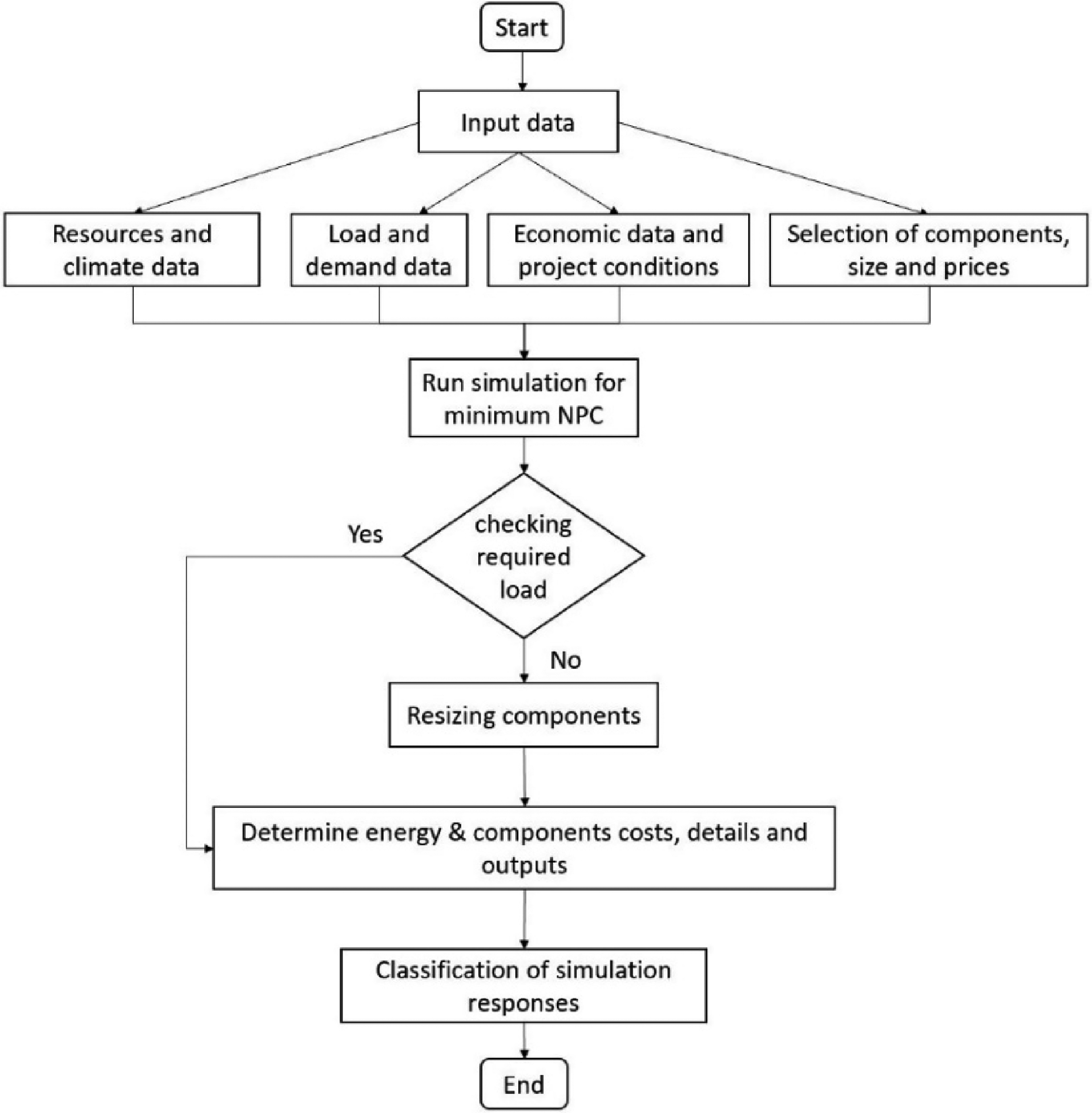
Flowchart for optimizing hybrid renewable systems.
Technical analysis
The technical calculations required for each component are calculated by the HOMER software using equations.
Wind turbine
Equation (1) is used by HOMER to calculate the wind speed at the hub height:
41

First, in order to calculate a WT's power at the standard air density, the software determines the wind speed at the hub height. To determine power compared to velocity, it is next adjusted to the WT power curve. When the velocity is outside the power curve's range, no power is produced. This phenomenon could manifest at speeds that are outside the turbine's operating range. The power output at standard pressure and temperature is commonly calculated using the power curve. According to equation (2), this is calculated using HOMER software by dividing the expected power obtained using the power curve by air density:

Photovoltaics
To determine the PV array's power output, HOMER applies equation (3):41–43

Inverter
Equation (4) was used to determine efficiency in systems that use a power inverter to convert DC to AC.

Battery (charge and discharge)
The capacity of the battery

Economic analysis
HOMER analyzes financial values using the following techniques.41–44
Real discount rate
In order to convert between one-time and yearly costs, the actual discount rate is used. Using equation (6), HOMER calculates the yearly real discount rate, usually referred to as the real interest rate as well as the interest rate.

Net present cost (NPC)
NPC stands for the installation and startup costs incurred over the course of the project. Life-cycle costing is a synonym for it. The priority and classification of optimization and HOMER responses are determined by this parameter. Equations (7) and (8) can be used to calculate it:


Levelized cost of energy
LCOE, which could be computed using equation (9), represents the average cost of electricity produced by the system per kW [$/kWh]:

Data collection
This article evaluated the hybrid energy system in HOMER. Earlier works mostly selected remote case-study regions to evaluate energy systems; in the present study, however, Shiraz was selected as the case-study region to analyze its potential for the deployment of a hybrid energy system and its contributions to the reduction of emissions as a major factor concerning the health of residents in populated urban areas. Batteries play a key role in hybrid systems, and their large variety in price and function has been a challenge to the designers of such systems. This article used four common batteries in power systems to evaluate their effects on the lifecycle, LOCE, initial investment cost, CO2 emission, and CO2 emission reduction relative to fossil-fueled power plants. There are a variety of industrial plants in the Shiraz Industrial Town (29°29.6′ N, 52°32.2′ E) (Figure 2), for example, chemical, cellulose, food, power, and electronic plants. Hence, the supply of power to these plants has been a challenge to the power grid, leading to power rationing in this industrial town. As a result, PVP and WT power systems can strongly contribute to avoiding manufacturing disturbance in these plants during power outages. 45

Shiraz industrial town.
Wind and solar energy data resources
NASA's surface meteorology and solar energy database can be used by HOMER to extract data on radiation, temperature, and average wind speed.46,47 Figure 3 plots the average wind speed during the year in the Shiraz Industrial Town. As demonstrated, the highest wind speed range was recorded in June and July. The average global horizontal irradiance for various months of the year is shown in Figure 4. As can be seen, the maximum daily radiation (kWh/m2/day) occurred in May, June, and July. The average daily temperature is shown in Figure 5. In July, a high average daily temperature of 30 °C was measured.

Average wind speed for each month in Shiraz industrial town.
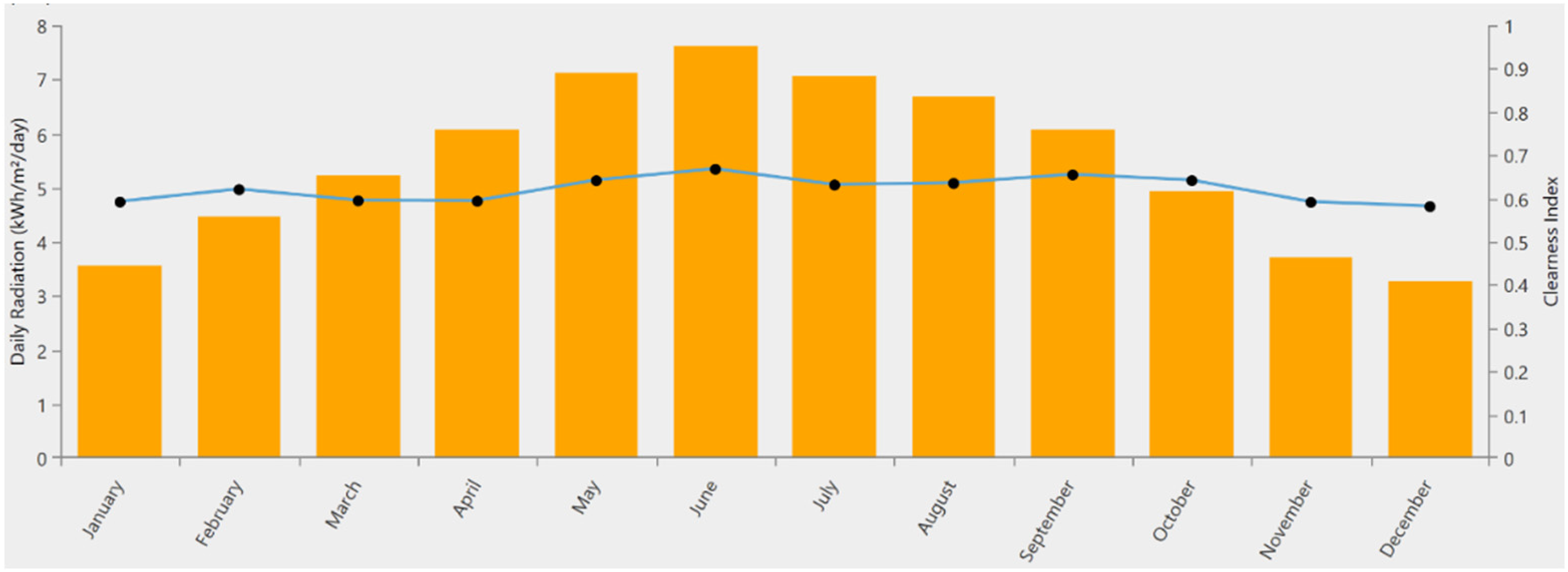
Daily radiation in Shiraz industrial town.
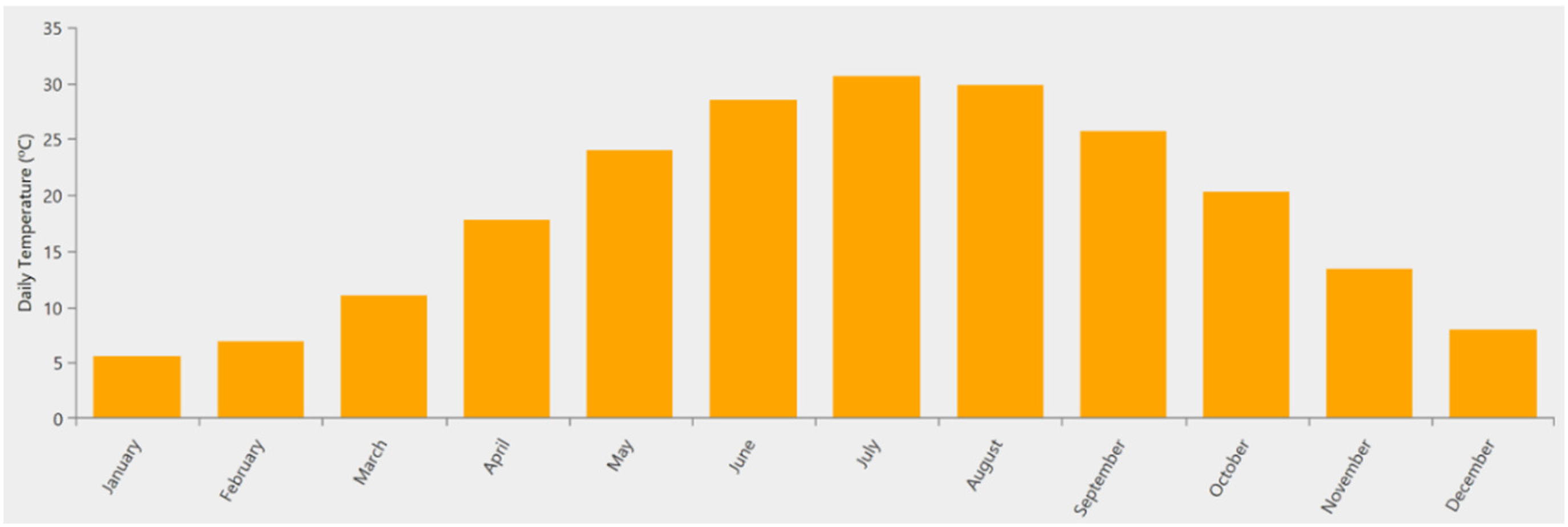
Daily temperature.
Loads profile
This study modeled industrial and office/residential loads. The renewable supply of loads is a major objective of the proposed system. Figure 6 depicts the daily and seasonal industrial load of 3000 kWh/day for a peak load of 229.15 kW for a manufacturing line. Figure 7 plots the daily and seasonal office/residential load of 300 kWh/day for a peak load of 56.31 kW. 48
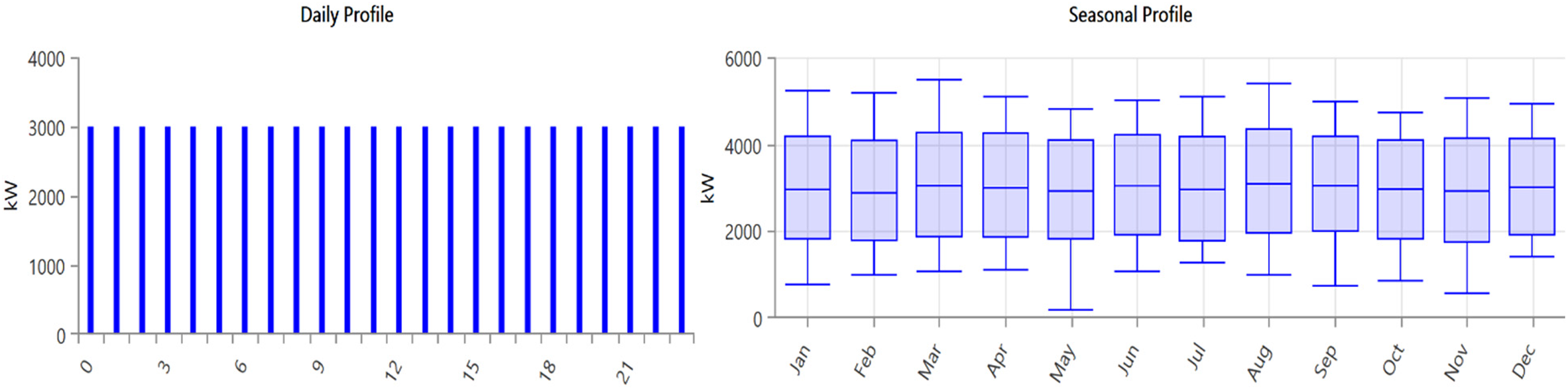
An overview of the minimum and maximum values of the industrial load in addition to daily and seasonal load profiles.

An overview of the minimum and maximum values of the residential load in addition to daily and seasonal load profiles.
Economic input
Economic parameters are crucial in the design and analysis of energy systems. Iran has had an average exchange rate rise of 2% and a discount rate of 8% since 2000. The suggested system was estimated to have a 20-year lifespan. 49
Equipment input and hybrid system configuration
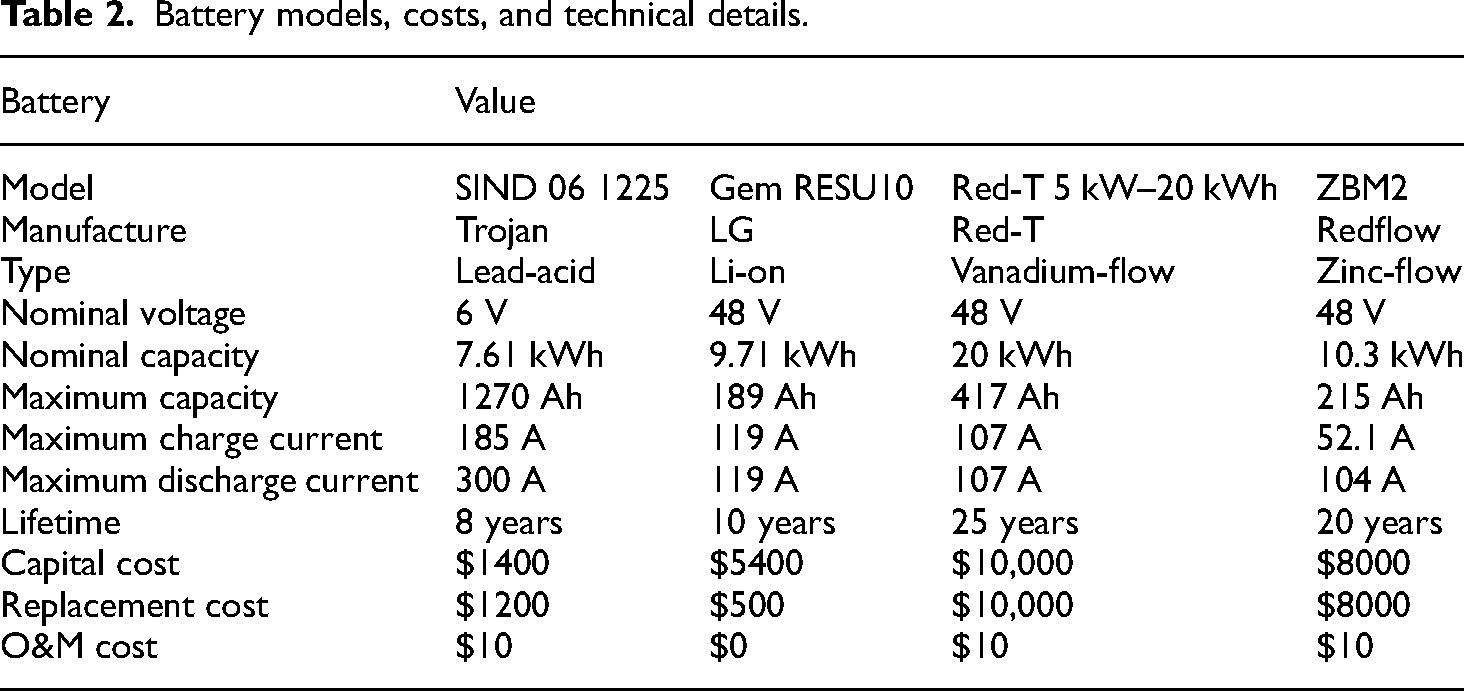
To model the renewable hybrid suggested system, the WT, PVP, battery, and inverter modules were selected from the library of HOMER. This study used EXCEL 6 WTs (Bergey Windpower Co.), plate-plate PVPs, and an inverter, based on Table 1. Table 2 indicates the parameters of the four battery technologies. Figure 8 depicts the WT power curve. Figure 9 illustrates a schematic of the hybrid renewable system (HRS) scenarios.

Bergey Excel 6 wind turbine power curve.

Schematics of the proposed hybrid renewable system in different scenarios.
Wind turbine, photovoltaic panel, and inverter models, costs, and technical details.

Battery models, costs, and technical details.
Result and discussion
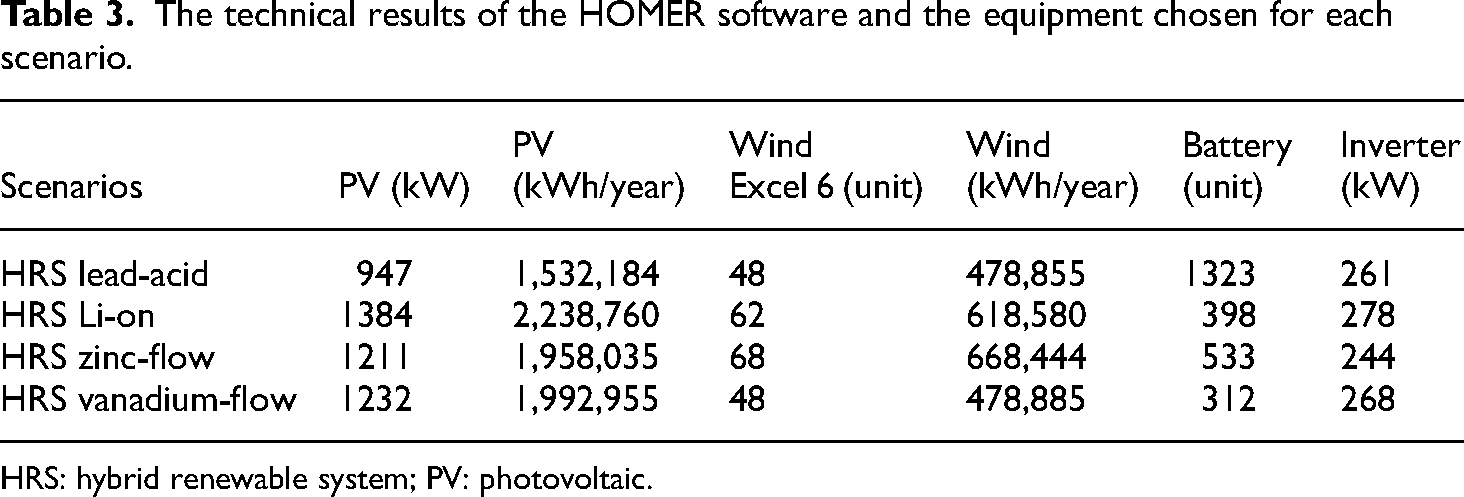
Technical parameters of renewable systems, particularly the number of components, are important factors. Renewable energy systems are optimized to enhance the output power and minimize the number of components. The optimizer of HOMER optimized the number of components required to supply the industrial load. As shown in Table 3, the minimum number of PVPs was calculated to be 947, 1232, 1211, and 1348 for the renewable system with the LA, zinc-flow, vanadium-flow, and Li-ion batteries, respectively. Furthermore, the minimum number of WTs was calculated to be 48, 48, 62, and 68 for the systems with the LA, vanadium-flow, Li-ion, and zinc-flow batteries, respectively.
The technical results of the HOMER software and the equipment chosen for each scenario.
HRS: hybrid renewable system; PV: photovoltaic.
According to Figure 10, the components of the proposed renewable system had different contributions to the supply of the loads. The PVP contribution was 80.6%, 78.4%, 76.2%, and 74.5% in the HRSs with the vanadium-flow, Li-ion, LA, and zinc-flow batteries, respectively. The maximum WT contributions were found to be 25.5%, 23.8%, 21.6%, and 19.4% in the HRSs with the zinc-flow, LA, Li-ion, and vanadium-flow batteries, respectively. As the case-study region has high daily radiation, the PVPs were expected to have the largest contribution to power generation in the system.

The percentage of each component used in each scenario's electricity generation.
Figure 11 shows the output power of each component to supply the demand in each month. As can be seen, the PVP output power was expected maximized in hot months.

The output power of each component to supply the demand in each month in all scenarios.
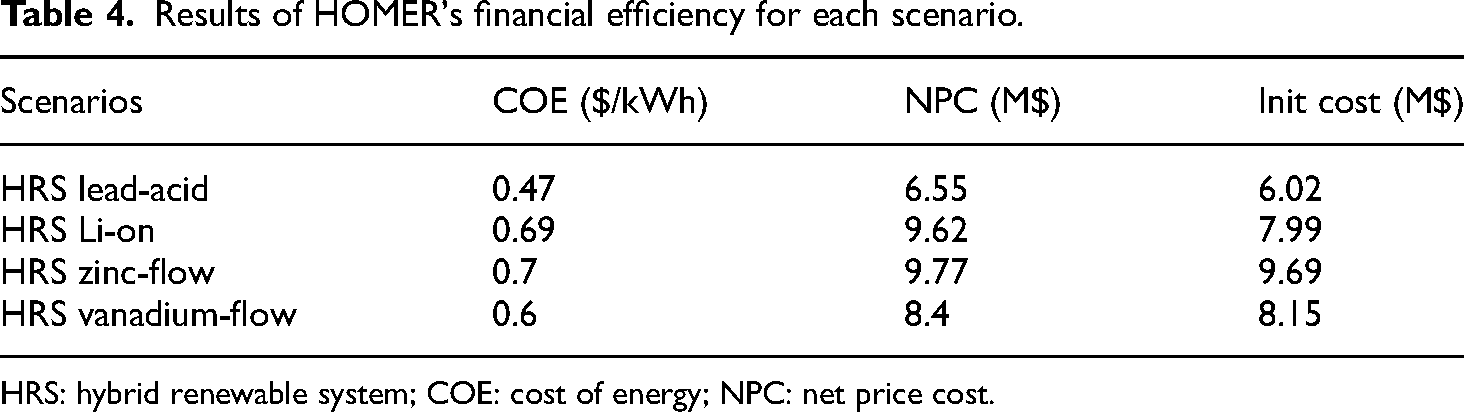
Figure 12 compares the NPC of the proposed system in four different scenarios. As can be seen, the minimum and maximum NPCs were 6.55 and 9.77 million USD in the HRSs with the LA and zinc-flow batteries, respectively. The NPC was also calculated to be 9.62 million USD in the HR Li-ion scenario and 8.4 million USD in the HRS vanadium-flow scenario. Figure 13 compares the COEs of the four scenarios. As can be seen, the HRS LA scenario had the minimum COE (0.47 USD/kWh), while the HRS zinc-flow scenario had the maximum COE (0.701 USD/kWh). The COEs of the HRS Li-ion and HRS vanadium-flow scenarios were 0.69 and 0.603 USD/kWh, respectively. Table 4 reports the NPC, COE, and initial costs of the scenarios. Figure 14 illustrates the battery technologies’ shares of the lifecycle cost of the proposed HRS. In addition, Li-ion and vanadium-flow batteries accounted for 34% and 35.5% of the NPC, respectively.

Net price cost (NPC) for different scenarios.
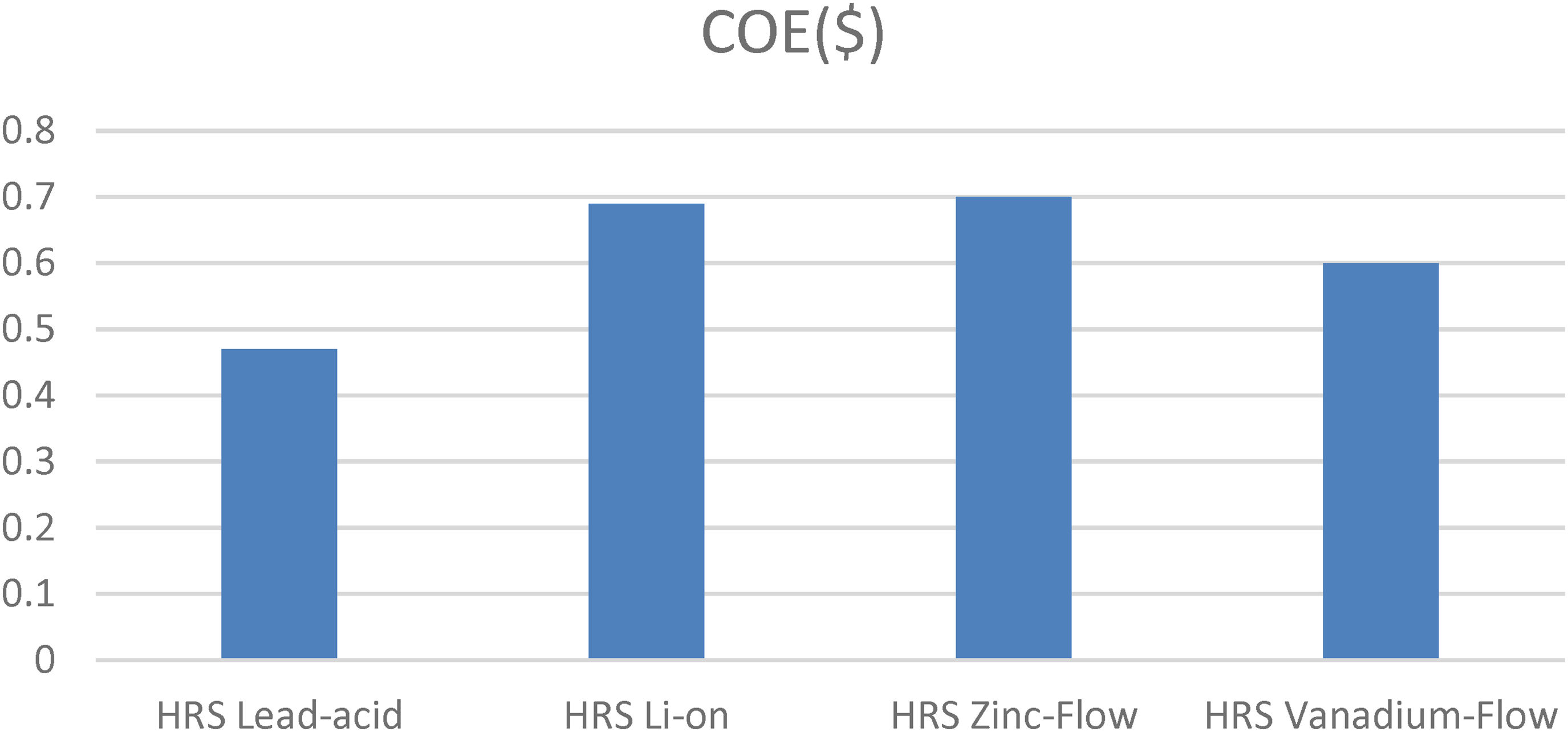
Cost of energy (COE) for different scenarios.

The percentage share of each battery in net price cost (NPC).
Results of HOMER's financial efficiency for each scenario.
HRS: hybrid renewable system; COE: cost of energy; NPC: net price cost.
The proposed HRS would have a lifecycle of 20 years, and the optimal configuration (i.e. PV/WT/battery) requires the replacement of only batteries during its service life. Hence, the price variation of these battery technologies over the past 20 years was analyzed. It was concluded that Li-ion batteries had ever-increasing production and experienced price reductions, being expected to become the most optimal battery technology for the HRS within up to 5 years. It was required to measure the magnitude of the price reduction of Li-ion batteries to obtain an optimal and cost-effective configuration. It was found that Li-ion batteries experienced an 88% price reduction during 2010–2020.50,51 The simulations suggested that a price reduction of 2000 USD would be optimal, decreasing the COE below 0.47 USD/kWh to provide the most optimal HRS configuration.
The reduction of CO2 emissions upon the deployment of the proposed HRS was analyzed, as shown in Table 5. The CO2 emissions of the suggested HRS, CNG-only system, and DG-only system were calculated in HOMER to evaluate the contribution of the proposed HRS to CO2 reduction.
Emission comparison between DG-only and CNG-only systems in the selected area.
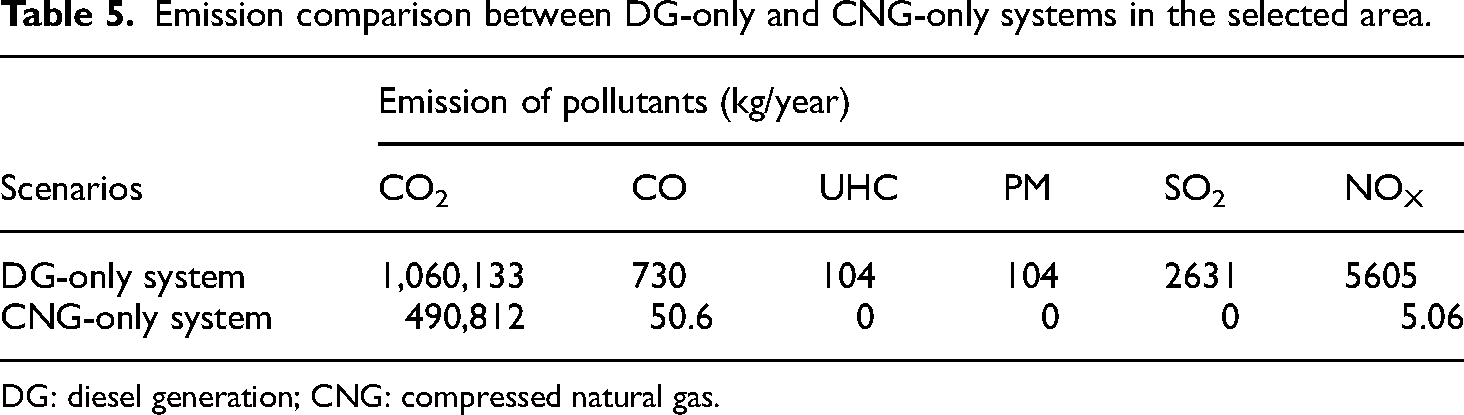
DG: diesel generation; CNG: compressed natural gas.
Table 6 compares the component sizes and economics of different scenarios with different system configurations. Since HRSs occupy large spaces, different techno-economic system configurations were modeled. As can be seen, the PVP/WT/battery hybrid system was the most economically optimal configuration, and the exclusion of a component would lead to a higher cost to raise the output power to the predefined level. The PVP/WT/battery system was found to be the most technically optimal configuration. It would be required to utilize a 250 kW generator in the case HRS was not deployed.
Comparisons between different system configurations in all scenarios.

HRS: hybrid renewable system; PV: photovoltaic; COE: cost of energy; NPC: net price cost.
Conclusion
This study models an HRES using four different batteries, that is, LA, Li-ion, vanadium redox, and ZB batteries. These four scenarios were subjected to techno-economic analysis in HOMER Pro. HOMER optimizes energy systems using the LCOE (USD/kWh). The results can be summarized as follows:
The PV/WT/battery system was found to be the most optimal configuration to supply the load of the industrial plant associated with COE and NPC in all the scenarios. The HRS LA, HRS vanadium-flow, HRS Li-ion, and HRS zinc-flow scenarios had COEs of 0.47, 0.6, 0.69, and 0.7 USD/kWh and NPCs of 6.65, 8.4, 9.62, and 9.77 million USD, respectively. For the plants that could not adopt the optimal configuration (i.e. PVP/WT/battery) or had to exclude a component, different configurations were analyzed (e.g. PV/battery and WT/battery). It was found that higher costs would be incurred to supply the load if one component was excluded. It was also found that the LA, Li-ion, vanadium-flow, and zinc-flow battery technologies would account for 30.3%, 34%, 35.2%, and 39.5% of the lifecycle cost of the power system. Components had different contributions to the supply of the load in the HRSs. The PVP contribution was 80.6%, 78.4%, 76.2%, and 74.5% in the HRS vanadium-flow, HRS Li-ion, HRS LA, and HRS zinc-flow scenarios, respectively. Since the case-study region has high daily radiation, the PVP was expected observed to have the largest contribution to the output power. The proposed system has a lifecycle of 20 years, and the optimal configuration (i.e. PV/WT/battery) would require the replacement of only the batteries during its service life. Therefore, the price variation of the four battery technologies over the past 20 years was analyzed. Considering the ever-increasing production and price reduction of Li-ion batteries, the HRS Li-ion scenario was expected to become the most optimal HRS configuration within up to 5 years. It was found that a price reduction of 2000 USD would be optimal, decreasing the COE below 0.47 USD/kWh to provide the most optimal HRS. The modeling of a fully renewable energy system with zero CO2 emissions was a primary objective of the present study. Therefore, no DG was employed in the HRS. Moreover, the contribution of the proposed HRS to the reduction of CO2 emissions was measured. The simulation of the DG-only and CNG-only systems revealed that the proposed HRS has 1,060,133 and 490,812 kg lower annual CO2 emissions than the DG-only and CNG-only systems, respectively. Overall, as mentioned, the PV/WT/battery configuration with LA batteries was discovered to be the most optimal system in the case-study region. However, Li-ion batteries are expected to become more optimal than LA batteries, considering the ever-increasing production and price reduction of Li-ion batteries. Renewable systems not only help save fossil fuel but also strongly contribute to the reduction of CO2 emissions and the protection of public health by mitigating/reducing respiratory diseases.
Footnotes
Declaration of conflicting interests
The author(s) declared no potential conflicts of interest with respect to the research, authorship, and/or publication of this article.
Funding
The author(s) received no financial support for the research, authorship, and/or publication of this article.
