




Abstract
Cyber dating abuse involves psychological and relationally harmful behaviours enacted through digital technologies within romantic relationships. Although prior research links dispositional variables to cyber dating abuse, perpetration and victimisation frequently co-occur, complicating the interpretation of individual differences. This study examined associations among personality traits, romantic jealousy, empathy, and gender with psychological and relational cyber dating abuse perpetration and victimisation in 503 young adults aged 18 to 25 in the UK. Hierarchical regression analyses accounted for overlap across forms of cyber dating abuse involvement. Psychological and relational perpetration and victimisation were strongly interrelated, with other forms of involvement accounting for most explained variance across models. After modelling this overlap, dispositional variables explained small but statistically significant increments in variance, with behavioural jealousy and lower agreeableness most consistently associated with perpetration. Dispositional variables did not meaningfully predict psychological victimisation, and gender effects were modest and inconsistent. Overall, the findings suggest cyber dating abuse is best understood as a relational phenomenon characterised by co-occurring perpetration and victimisation, with individual differences shaping how behaviours are expressed rather than serving as primary drivers.
Electronic communication technologies are now central to the initiation and maintenance of romantic relationships, particularly among young adults (Ortega Baron et al., 2019). Platforms such as messaging apps, social media, and video calls offer increased flexibility and connection (Baker & Carreno, 2016), enabling partners to maintain frequent contact regardless of physical proximity. For many young adults, digital interaction is also a key pathway through which romantic relationships are initiated and sustained, extending access to potential partners beyond traditional social settings (Burke et al., 2011; Johanis et al., 2023). As romantic communication becomes increasingly digitised, expectations about availability and responsiveness can shift, and misunderstandings may emerge when communication patterns do not align across partners (Hall & Liu, 2022; Katz & Aakhus, 2001). These changes have contributed to growing interest in digitally mediated relational harms, including cyber dating abuse (Temple et al., 2016; Van Ouytsel et al., 2016).
Cyber dating abuse refers to harmful behaviours enacted within romantic relationships using digital technologies (Zweig et al., 2013). It includes direct psychological aggression such as insults, threats, and intimidation, alongside relationally oriented behaviours such as social exclusion, manipulation, and threats to the relationship enacted through digital platforms (Borrajo et al., 2015). Cyber dating abuse includes controlling and intrusive behaviours such as surveillance, location monitoring, and privacy invasion (Cava & Buelga, 2018). These behaviours mirror psychological and relational harms seen in offline contexts, but digital environments can increase immediacy and accessibility and may normalise monitoring or control as routine relationship behaviour (Linares et al., 2021; Temple et al., 2016). This is particularly important in young adulthood, when individuals may still be developing expectations about healthy romantic boundaries and may interpret intrusive digital behaviours as romantic concern or commitment (Belotti et al., 2022; Nardi Rodriguez et al., 2019).
A further challenge is that cyber dating abuse can be difficult to identify consistently across individuals and contexts. There is variation in how behaviours are defined and labelled, and some behaviours may be interpreted as ambiguous or commonplace within contemporary digital relationships (Rodríguez de Arriba et al., 2021), which has implications for both measurement and prevention efforts. It also helps to explain why cyber dating abuse is often studied through self-report measures that capture a range of psychologically and relationally harmful behaviours enacted through everyday technologies (Morelli et al., 2017).
Although the literature on cyber dating abuse is growing, key conceptual and analytic issues remain. Many studies focus on prevalence and broad correlates rather than examining multiple psychological constructs together within the same model (Afrouz & Vassos, 2024; Monteiro et al., 2023). Furthermore, perpetration and victimisation are often examined separately, despite evidence that these experiences frequently overlap within relationships (Van Ouytsel et al., 2016). Rather than discrete categories, involvement in cyber dating abuse may involve co-occurring perpetration and victimisation, where individuals report both experiencing and engaging in harmful digital behaviours (Jaureguizar et al., 2024; Zweig et al., 2013). This overlap has important implications for interpretation, because modelling perpetration without accounting for victimisation, or vice versa, may inflate associations with dispositional variables by failing to model shared relational variance.
There is a need for careful interpretation of regression-based findings within cross sectional designs. Regression models can estimate the unique statistical contribution of variables to outcomes, but they do not establish temporal ordering or causal direction. This distinction is particularly important in cyber dating abuse research because perpetration and victimisation are often strongly correlated, and associations may reflect shared relational dynamics rather than directional effects (Temple et al., 2016; Van Ouytsel et al., 2016). Accordingly, research that models multiple forms of involvement can clarify the extent to which dispositional variables contribute incremental variance beyond overlap across cyber dating abuse forms, while avoiding causal claims that are not supported by cross sectional data.
Within this context, dispositional variables remain relevant, but their role is likely to be modest once relational overlap is considered. Personality traits have been linked to aggressive or harmful online behaviours, with lower agreeableness and other interpersonal traits associated with abusive digital engagement (Villora et al., 2019). Recent work has reported associations between high agreeableness and lower levels of digital dating abuse perpetration (Bhogal & Taylor, 2024). Romantic jealousy is also a consistent predictor of cyber dating abuse, particularly when jealousy is expressed through monitoring, intrusive checking, and controlling behaviours enacted via digital platforms (Bhogal et al., 2025; Deans & Bhogal, 2019; Elphinston & Noller, 2011). Importantly, jealousy is multidimensional. Cognitive jealousy reflects suspicious thoughts and concerns, emotional jealousy reflects affective responses, and behavioural jealousy reflects enacted behaviours such as monitoring or confronting a partner (Pfeiffer & Wong, 1989). Distinguishing these subtypes is essential because different jealousy components may relate differently to psychologically and relationally harmful digital behaviours.
Empathy has also been considered relevant to digitally mediated harm. Deficits in cognitive empathy may reduce perspective taking and increase the likelihood of engaging in harmful digital behaviours, while affective empathy may relate to emotional responsiveness in relational contexts (Davis, 1983; Jolliffe & Farrington, 2004). However, findings across studies remain mixed, and empathy is rarely examined alongside jealousy subtypes and personality traits within the same analytic framework. Examining these constructs together can clarify which dispositional variables account for incremental variance beyond co-occurring perpetration and victimisation.
Gender is frequently included in cyber dating abuse research, but findings are inconsistent. Some studies report higher victimisation among women, whereas other studies report similar rates across genders, and some evidence suggests men may report victimisation for particular forms of digitally mediated relational harm (Cutbush et al., 2018; Hinduja & Patchin, 2020; Van Ouytsel et al., 2016). These inconsistencies may reflect differences in measurement, social norms related to disclosure, and the types of digital behaviours assessed. For this reason, gender effects are best treated cautiously and described as exploratory unless there is strong theoretical and empirical justification for directional hypotheses.
The present study examined statistical associations between personality traits, multidimensional romantic jealousy, empathy, and gender with self-reported psychological and relational cyber dating abuse perpetration and victimisation among UK based young adults aged 18–25. The study modelled overlap across cyber dating abuse involvement by including other forms of perpetration and victimisation as predictors in regression models. This approach was used to examine co-occurrence and to test whether dispositional variables explain incremental variance beyond shared relational variance. Because the design is cross sectional and correlational, the findings are interpreted as associations rather than temporal or causal effects. This study extends rather than replaces existing international research by examining how these associations operate within a UK context and when accounting for co-occurrence of CDA involvement.
Based on prior work linking jealousy, empathy, and interpersonal traits with digitally mediated harm (Bhogal et al., 2025; Bhogal & Taylor, 2024; Deans & Bhogal, 2019; Elphinston & Noller, 2011; Villora et al., 2019), the following hypotheses were proposed: (1) Psychological and relational perpetration and victimisation will be positively associated at the bivariate level, reflecting substantial overlap across cyber dating abuse involvement. (2) After accounting for demographic variables and overlap across cyber dating abuse involvement, higher behavioural jealousy and lower agreeableness will be statistically associated with higher levels of psychological and relational perpetration. (3) After accounting for demographic variables and overlap across cyber dating abuse involvement, jealousy and empathy dimensions will show small but statistically meaningful associations with perpetration and victimisation outcomes, reflecting incremental dispositional contributions within broader relational dynamics. (4) Given the inconsistent findings in prior research, gender will be explored as a statistical correlate of perpetration and victimisation outcomes, without directional predictions.
Method
Design
This study employed a cross sectional, correlational design to examine statistical associations between personality traits, empathy, romantic jealousy, and demographic characteristics with experiences of cyber dating abuse (CDA) among UK based young adults aged 18–25. Hierarchical multiple regression analyses were conducted to examine predictors of psychological and relational CDA perpetration and victimisation. Pearson correlations were computed to examine bivariate associations among key variables.
Although regression models were used and the term predictor is applied throughout, predictors are examined in a statistical sense only. Given the cross-sectional design, predictor terminology does not imply temporal precedence or causal influence, and all findings should be interpreted as non-causal associations.
Participants
A total of 503 participants aged 18–25 (M = 22.61 years) were recruited via social media platforms (e.g., Facebook, X), online research sites (e.g., Psychology Research on the Net), and the university research participation scheme, SONA. Eligibility criteria included being in a current or recent (within the past 12 months) romantic relationship.
Of the total sample, 283 identified as female, 211 as male, and 9 as non-binary. Gender was treated as a categorical variable and coded as 1 = male, 2 = female, 3 = non-binary. All participants, including those identifying as non-binary, were retained in the analyses. Participants who did not meet eligibility criteria were prevented from progressing. No participants were excluded post hoc for failing eligibility criteria.
Most participants reported being in a current relationship (n = 416), while others had dated in the past year (n = 87). Sexual orientation was primarily heterosexual (n = 135), with smaller numbers identifying as homosexual (n = 15), bisexual (n = 23), or other (n = 1). Sexual orientation was collected for descriptive purposes but was not included as a predictor or control variable in the regression analyses. This decision reflected the focus on psychological and relational predictors of cyber dating abuse and the small and uneven distribution of sexual orientation categories in the sample, which limited the feasibility of meaningful subgroup or covariate analyses.
An a priori power analysis was conducted using G Power 3.1 to determine the minimum sample size required for the planned multiple regression analyses. The analysis was based on hierarchical multiple regression, with the most conservative assumption corresponding to the final model, which included up to 17 predictors (demographic variables, other forms of cyber dating abuse involvement, and dispositional variables). Assuming a medium effect size (f2 = .15), an alpha level of .05, and desired statistical power of .80, the minimum required sample size was 379 participants.
The final sample (N = 503) exceeded this threshold, indicating that the study was adequately powered to detect medium sized effects in the full regression models. Given the hierarchical modelling strategy and the substantial variance accounted for by overlap across cyber dating abuse forms, the study was well powered to detect moderate incremental contributions of dispositional predictors, but smaller incremental effects should be interpreted cautiously.
Materials
All measures were administered via Qualtrics.
Cyber Dating Abuse Inventory
The Cyber Dating Abuse Inventory (Morelli et al., 2017) is a 22-item measure used to assess psychological and relational CDA perpetration and victimisation. Participants responded on a 4-point scale (0 = never to 3 = six or more times). Internal consistency in the present sample was high for perpetration (a = .832) and victimisation (= .883).
Romantic Jealousy Scale
Romantic jealousy was measured using the Romantic Jealousy Scale (Pfeiffer & Wong, 1989). The scale includes subscales for cognitive, emotional, and behavioural jealousy rated on a 5-point Likert scale. One item referencing heterosexual norms was removed for inclusivity. Internal consistency in the present sample was high for cognitive jealousy (a = .942), behavioural jealousy (a = .928), and emotional jealousy (a = .839).
Confirmatory factor analysis was conducted to evaluate the three-factor structure of the Romantic Jealousy Scale in the present sample following removal of one cognitive jealousy item (item 8) for inclusivity. Items were specified to load on their intended factors (cognitive, emotional, behavioural jealousy) in line with the original scoring instructions.
Big Five Inventory
Personality traits were assessed using the Big Five Inventory (John & Srivastava, 1999). The 44-item scale assesses openness, conscientiousness, extraversion, agreeableness, and neuroticism on a 5-point scale. Internal consistency in the present sample was acceptable to high: openness (a = .740), conscientiousness (a = .813), extraversion (a = .863), agreeableness (a = .790), and neuroticism (a = .871).
Interpersonal Reactivity Index Short Form
Empathy was assessed using the Interpersonal Reactivity Index (Davis, 1983). Only the perspective taking and empathic concern subscales were used to assess cognitive and affective empathy. Each subscale contains seven items rated from 0 (not at all) to 4 (extremely). Internal consistency in the present sample was acceptable for cognitive empathy (a = .779) and affective empathy (a = .734).
Procedure
Participants accessed the study through a link or QR code on advertisements. After reading the information sheet and providing informed consent, they completed a demographic questionnaire followed by the main study measures. Upon completion, participants were debriefed, online. Data were collected anonymously via Qualtrics and exported to SPSS for analysis. Ethical approval was granted by the host institution.
Data Screening and Quality Checks
Prior to analysis, the dataset was screened to ensure basic response quality and eligibility. Only fully completed questionnaires were retained for analysis. Participants who did not meet eligibility criteria (i.e., not currently or recently in a romantic relationship within the past 12 months) were prevented from progressing beyond the screening stage.
The dataset was inspected for potential duplicate entries using a combination of identical response patterns and closely matched completion timestamps. No duplicate cases were identified. Completion times were examined descriptively to identify implausibly rapid responding indicative of insufficient engagement; no cases fell below a threshold suggestive of automated or non-deliberative responding relative to the overall distribution of completion times.
Responses were also examined for uniform or invariant responding across multi-item scales (e.g., selecting the same response option for all items). No cases met criteria for exclusion on this basis. No formal attention or instructional manipulation checks were included, which is acknowledged as a limitation of the study. No cases met exclusion criteria following these screening procedures.
Analytic Strategy
Pearson correlations were computed to examine bivariate associations among study variables. Hierarchical multiple regression analyses were conducted separately for four outcomes: psychological CDA perpetration, psychological CDA victimisation, relational CDA perpetration, and relational CDA victimisation.
In each regression model, demographic variables (age, gender, relationship length, and weekly time spent online) were entered in Block 1. In Block 2, other forms of CDA involvement were entered to account for overlap and co-occurrence across perpetration and victimisation experiences. This block was included to model shared variance in CDA involvement and does not imply temporal or causal ordering between CDA forms. In Block 3, dispositional variables were entered (Big Five traits, cognitive and affective empathy, and cognitive, emotional, and behavioural jealousy) to examine whether they accounted for incremental variance beyond demographic factors and CDA overlap. No cases met exclusion criteria. Multicollinearity was assessed by tolerance and VIF values. All values have been reported in tables presenting the regression statistics.
Results
Descriptive Statistics for All Study Variables
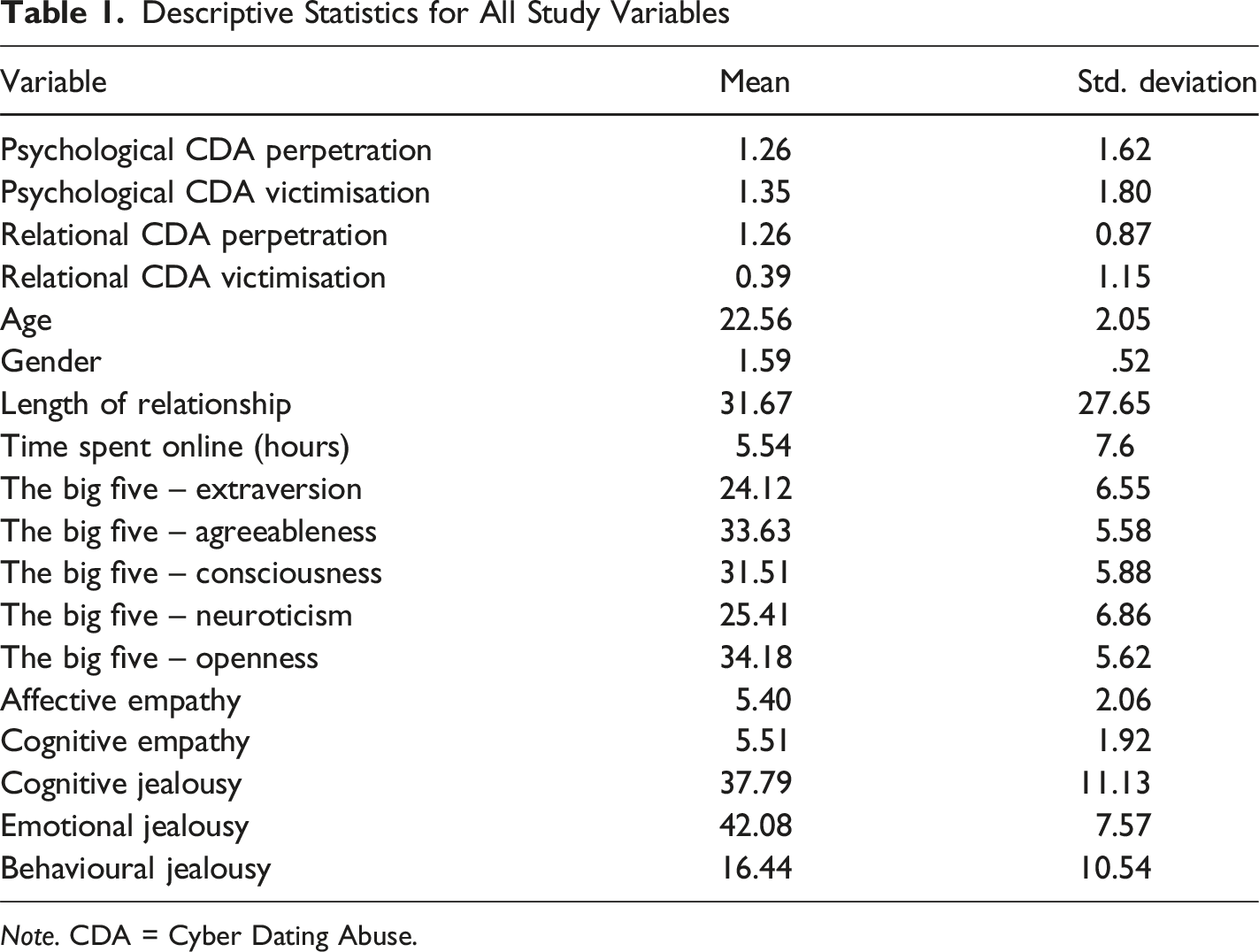
Note. CDA = Cyber Dating Abuse.
Intercorrelations Among All Study Variables
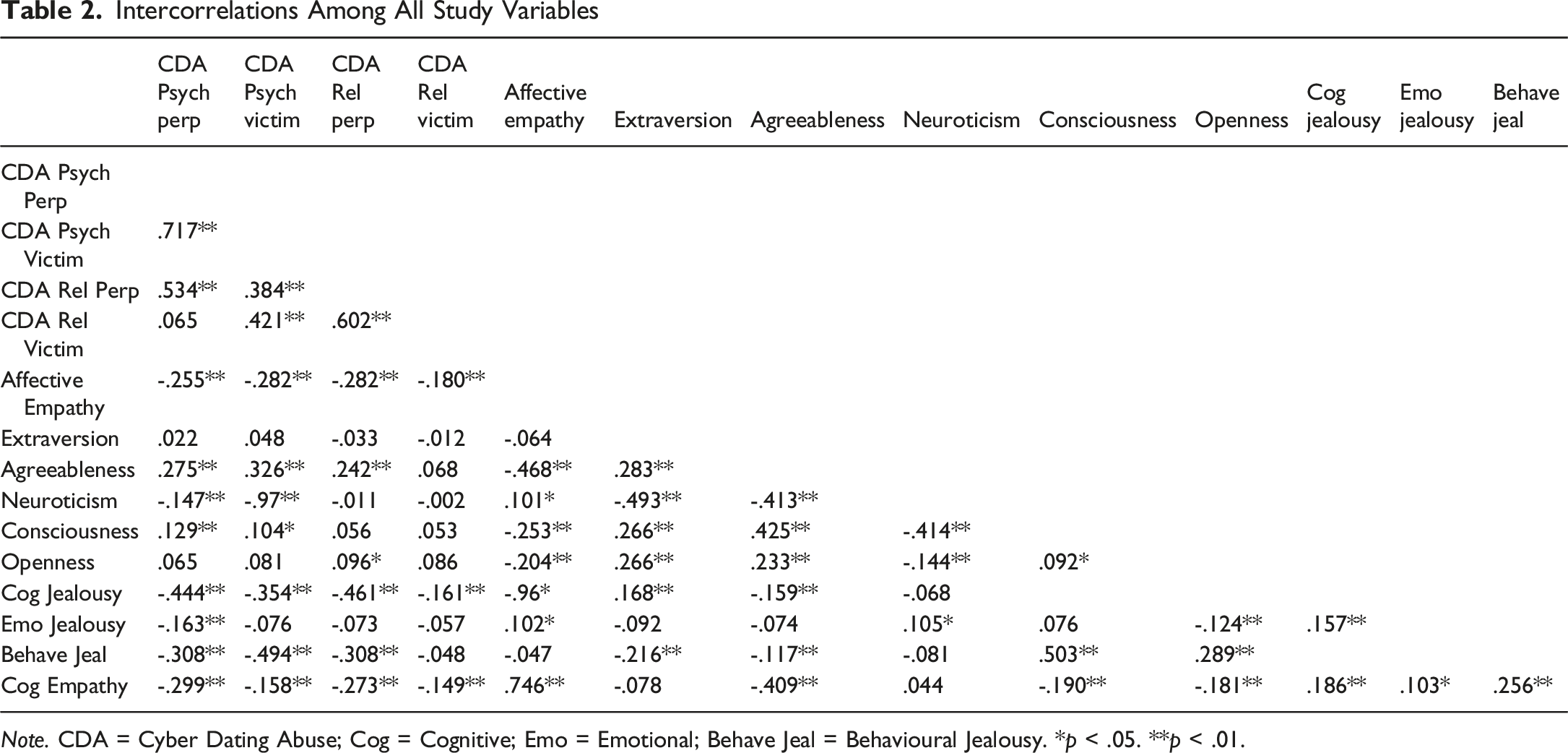
Note. CDA = Cyber Dating Abuse; Cog = Cognitive; Emo = Emotional; Behave Jeal = Behavioural Jealousy. *p < .05. **p < .01.
Hierarchical Multiple Regression Predicting Psychological CDA Perpetration
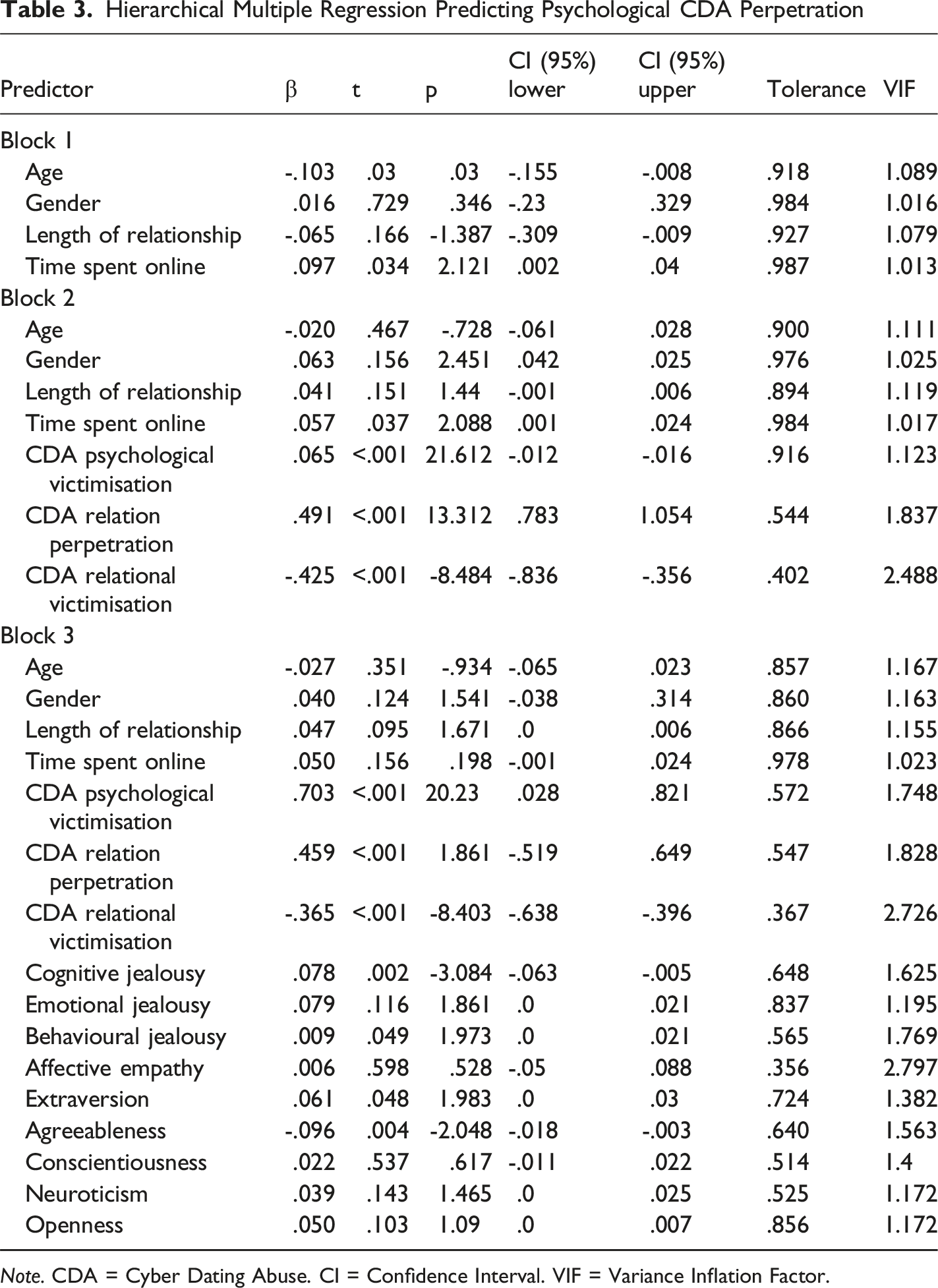
Note. CDA = Cyber Dating Abuse. CI = Confidence Interval. VIF = Variance Inflation Factor.
Hierarchical Multiple Regression Predicting Psychological CDA Victimisation
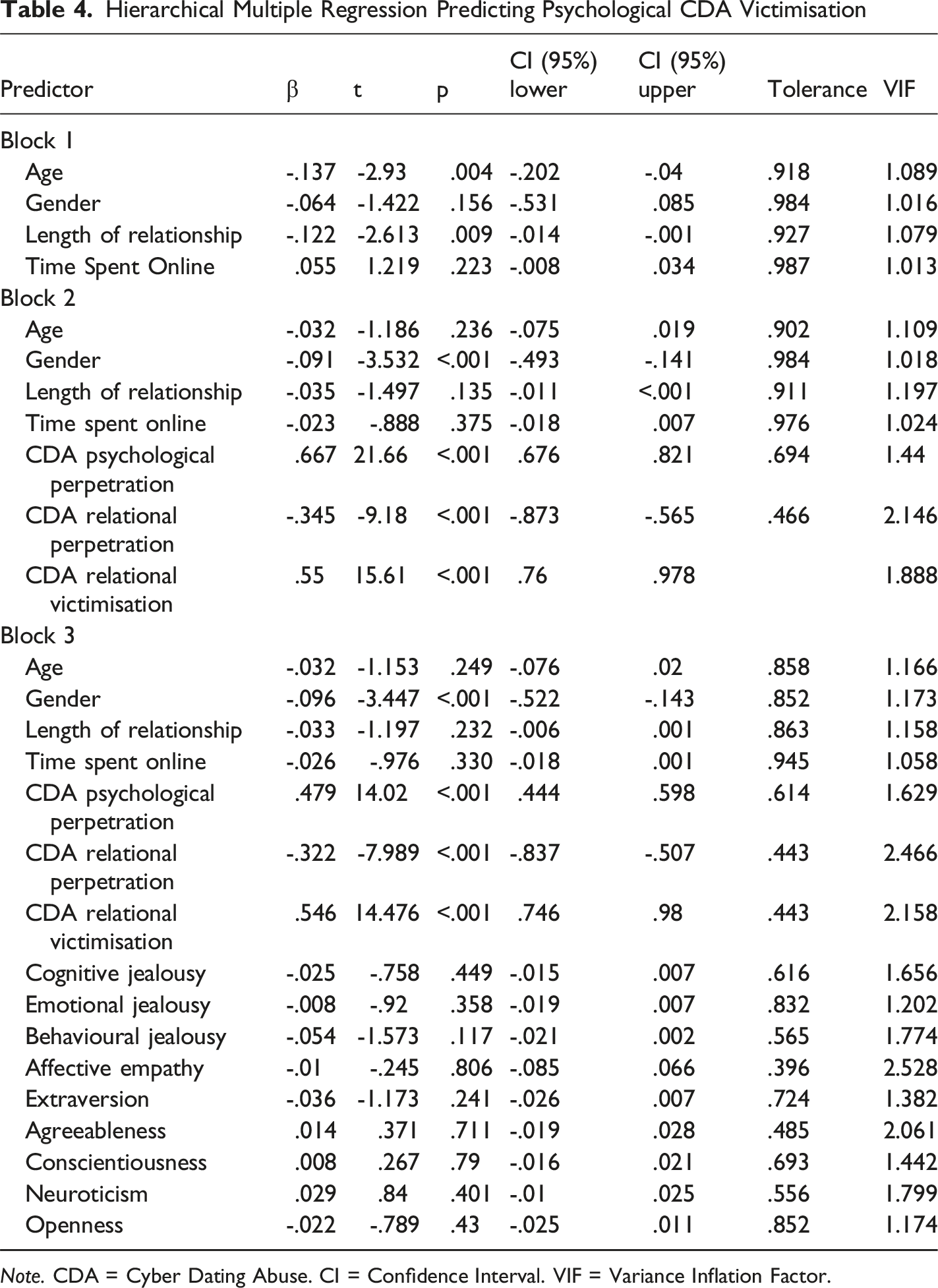
Note. CDA = Cyber Dating Abuse. CI = Confidence Interval. VIF = Variance Inflation Factor.
Hierarchical Multiple Regression Predicting Relational CDA Perpetration
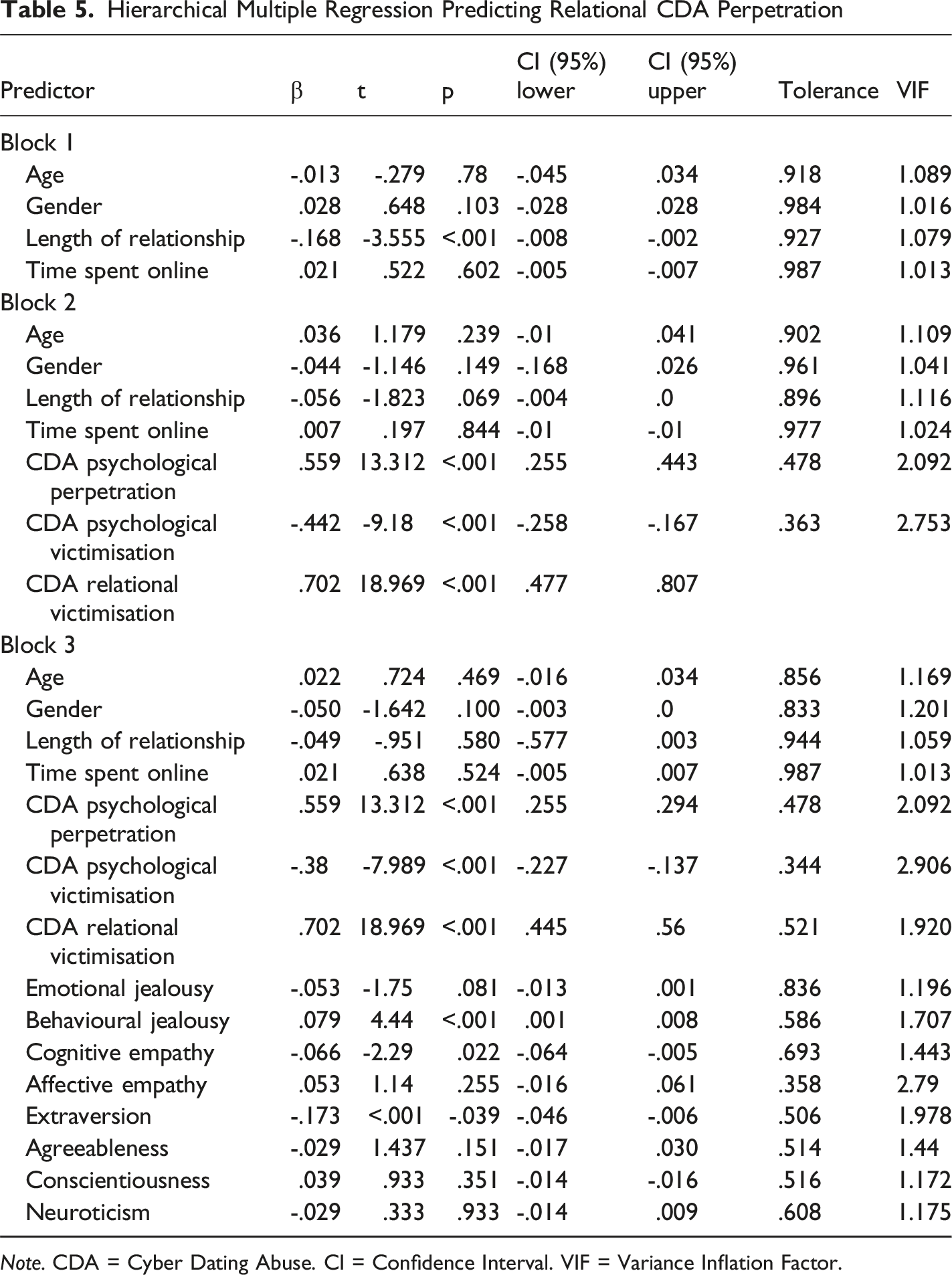
Note. CDA = Cyber Dating Abuse. CI = Confidence Interval. VIF = Variance Inflation Factor.
Hierarchical Multiple Regression Predicting Relational CDA Victimisation
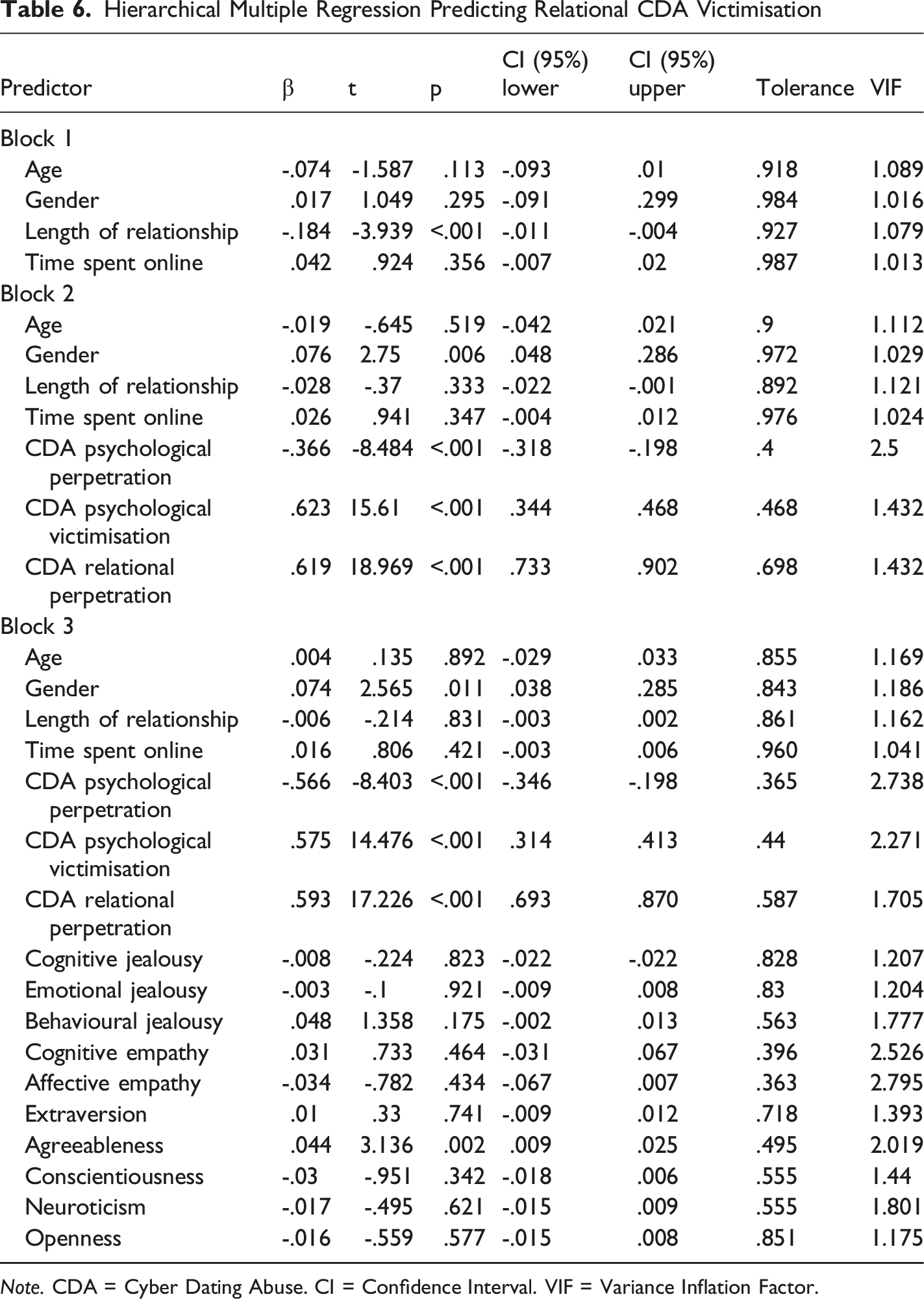
Note. CDA = Cyber Dating Abuse. CI = Confidence Interval. VIF = Variance Inflation Factor.
Confirmatory Factor Analysis of the Romantic Jealousy Scale
A confirmatory factor analysis evaluated the intended three factor structure (cognitive, emotional, behavioural jealousy) in the present sample after removal of the cognitive jealousy item 8. Model fit indices indicated suboptimal global fit, although all items loaded significantly on their intended factors. The model showed the following fit: χ2(227) = 1498.90, p < .001, CFI = .848, TLI = .831, RMSEA = .106, 90% CI[.101,.111]. Standardised loadings were all statistically significant and ranged from .690 to .908 for cognitive jealousy, .464 to .782 for emotional jealousy, and .646 to .885 for behavioural jealousy.
Data Screening and Analytic Approach
In the regression models, other forms of CDA involvement (perpetration and victimisation) were included as predictors to account for the substantial overlap and co-occurrence between different forms of digitally mediated abuse. This strategy was used to model shared relational variance and to examine whether dispositional variables explained incremental variance beyond this overlap. Accordingly, these analyses do not imply causal or temporal ordering between CDA forms.
Correlational Analyses
Pearson’s correlations indicated substantial associations between psychological and relational CDA perpetration and victimisation. Psychological perpetration was strongly correlated with psychological victimisation and relational perpetration, while relational perpetration was strongly correlated with relational victimisation. These associations indicate a high degree of overlap between different forms of CDA involvement at the bivariate level.
Several dispositional variables showed small to moderate associations with CDA outcomes. Lower agreeableness and lower cognitive empathy were consistently associated with higher levels of both psychological and relational perpetration and victimisation. Behavioural jealousy was positively correlated with CDA perpetration and victimisation, whereas cognitive jealousy showed negative associations with several CDA outcomes. Emotional jealousy demonstrated weaker positive associations with relational forms of CDA. Personality traits including conscientiousness and openness showed small negative correlations with CDA involvement, while extraversion displayed weaker and less consistent associations. Full correlation coefficients are reported in Table 1.
Psychological Perpetration of Cyber Dating Abuse
A hierarchical multiple regression analysis examined variables statistically associated with psychological CDA perpetration. In Block 1, demographic variables (age, gender, relationship length, and weekly time spent online) accounted for 2.1% of the variance (adjusted R2 = .021), F(4, 471) = 3.60, p = .007. In Block 2, other forms of CDA involvement (psychological victimisation, relational perpetration, and relational victimisation) were added and explained an additional 62.4% of the variance (adjusted R2 = .624), F(3, 468) = 280.59, p < .001. In Block 3, individual difference variables (Big Five personality traits, cognitive and affective empathy, and jealousy subtypes) explained an additional 3% of the variance (adjusted R2 = .030), F(10, 458) = 4.38, p < .001. The final model explained 67.2% of the variance in psychological perpetration (adjusted R2 = .672, Durbin Watson statistic = 2.23).
In the final model, psychological perpetration was positively associated with psychological victimisation, relational perpetration, behavioural jealousy, and extraversion, and negatively associated with relational victimisation, cognitive jealousy, and agreeableness. The majority of explained variance was attributable to overlap with other forms of CDA involvement, with dispositional variables accounting for a small but statistically significant incremental contribution.
Psychological Victimisation of Cyber Dating Abuse
A hierarchical multiple regression examined predictors of psychological CDA victimisation. Demographic variables entered in Block 1 accounted for 4.3% of the variance (adjusted R2 = .043), F(4, 471) = 6.29, p < .001. In Block 2, CDA perpetration and victimisation variables were added, explaining an additional 64.1% of the variance (adjusted R2 = .641), F(3, 468) = 325.16, p < .001. Block 3 introduced dispositional variables which did not significantly increase explained variance (adjusted R2 = .006), F(10, 458) = 0.87, p = .565. The final model explained 68.7% of the variance (adjusted R2 = .687, Durbin Watson statistic = 2.04).
Psychological victimisation was positively associated with psychological perpetration and relational victimisation and negatively associated with relational perpetration and gender. Follow up independent samples t-tests showed no significant mean level difference in psychological victimisation between male and female participants, indicating that the gender effect observed in the regression model was conditional on other variables in the model.
Relational Perpetration of Cyber Dating Abuse
A hierarchical multiple regression examined predictors of relational CDA perpetration. Demographic variables in Block 1 accounted for 2.3% of the variance (adjusted R2 = .023), F(4, 471) = 3.76, p = .005. Block 2 added CDA involvement variables, explaining an additional 57.4% of the variance (adjusted R2 = .574), F(3, 468) = 226.87, p < .001. Block 3 added dispositional variables, which explained an additional 3.9% of the variance (adjusted R2 = .039), F(10, 458) = 5.01, p < .001. The final model explained 63.1% of the variance (adjusted R2 = .631, Durbin Watson statistic = 2.04).
Relational perpetration was positively associated with psychological perpetration, relational victimisation, cognitive jealousy, and behavioural jealousy, and negatively associated with psychological victimisation and agreeableness. As with other outcomes, most explained variance was attributable to overlap with other forms of CDA involvement, with jealousy and agreeableness contributing small incremental effects.
Relational Victimisation of Cyber Dating Abuse
A hierarchical multiple regression examined predictors of relational CDA victimisation. Demographic variables in Block 1 accounted for 5.1% of the variance (adjusted R2 = .043), F(4, 471) = 6.34, p < .001. Block 2 introduced CDA perpetration and victimisation variables, explaining an additional 60.1% of the variance (adjusted R2 = .601), F(3, 468) = 268.97, p < .001. Block 3 added dispositional variables, which explained an additional 3.0% of the variance (adjusted R2 = .030), F(10, 458) = 4.39, p < .001. The final model explained 68.2% of the variance (adjusted R2 = .670, Durbin Watson statistic = 2.07).
Relational victimisation was positively associated with psychological victimisation, relational perpetration, gender, and agreeableness, and negatively associated with psychological perpetration and cognitive jealousy. Independent samples t-tests indicated no significant mean level difference between males and females, suggesting that the regression-based gender effect reflects a conditional association rather than a robust mean difference.
Discussion
This study examined the extent to which personality traits, romantic jealousy, empathy, and gender were statistically associated with psychological and relational cyber dating abuse perpetration and victimisation among UK based young adults. Using hierarchical regression models that accounted for demographic factors and overlap across cyber dating abuse involvement, the results show substantial co-occurrence between perpetration and victimisation, with dispositional variables explaining relatively small but meaningful increments in variance beyond these relational dynamics. Overall, the findings indicate that individual differences operate within broader patterns of overlapping abuse, rather than functioning as isolated drivers.
A key feature across models was the dominance of cyber dating abuse overlap variables. Psychological and relational perpetration and victimisation were strongly interrelated, consistent with research suggesting that digitally mediated harm in relationships often involves fluid roles and shared involvement rather than discrete categories of victim and perpetrator (Jaureguizar et al., 2024; Van Ouytsel et al., 2016). These results should be interpreted as evidence of co-occurring experiences within relationships, not as support for temporal or causal sequencing.
Psychological Perpetration
Psychological perpetration was strongly associated with psychological victimisation and relational perpetration, indicating substantial overlap between experiencing and enacting psychologically aggressive behaviours in digital interactions. After accounting for this overlap and demographic factors, behavioural jealousy and extraversion were positively associated with psychological perpetration, whereas agreeableness and cognitive jealousy were negatively associated. This pattern supports the value of distinguishing jealousy subtypes. Behavioural jealousy, which reflects active monitoring and controlling behaviours, appears more closely aligned with psychological perpetration than cognitive jealousy, which involves internalised thought-based jealousy rather than enacted behaviours (Bhogal et al., 2025; Elphinston & Noller, 2011). The negative association with agreeableness is consistent with previous findings linking agreeableness to lower digitally mediated abuse, possibly reflecting greater concern for interpersonal harmony (Bhogal & Taylor, 2024). Extraversion showed a small positive association, which may reflect greater engagement in digital communication and therefore greater exposure to situations in which conflict or coercive exchanges can occur.
Importantly, the incremental contribution of dispositional predictors was small relative to overlap across cyber dating abuse variables. This indicates that psychological perpetration is best understood as embedded within relational dynamics, with individual differences shaping how behaviours are expressed within these dynamics.
Relational Perpetration
Relational perpetration was strongly associated with psychological perpetration and relational victimisation, again reflecting substantial co-occurrence between enacting relationally harmful behaviours and reporting relational victimisation experiences. After accounting for overlap and demographic factors, behavioural jealousy and cognitive jealousy were positively associated with relational perpetration, while agreeableness and psychological victimisation were negatively associated. The jealousy findings suggest that both enacted jealousy related behaviours and jealousy related cognition are relevant to relational tactics, such as exclusion, manipulation, or relationship threat-based behaviours enacted via digital platforms. This aligns with work linking jealousy to surveillance and control-oriented behaviours in online contexts (Bhogal et al., 2025; Deans & Bhogal, 2019). The negative association with agreeableness is consistent with the broader pattern that prosocial traits are linked to lower levels of perpetration (Bhogal & Taylor, 2024). The negative association between psychological victimisation and relational perpetration should be interpreted cautiously, as it may reflect differences in how individuals report and engage with distinct cyber dating abuse forms once shared variance is modelled.
Again, the increment from dispositional predictors was modest. This reinforces the interpretation that relational perpetration is tightly embedded within broader patterns of cyber dating abuse involvement, with jealousy and agreeableness making incremental contributions.
Psychological Victimisation
Psychological victimisation was most strongly associated with psychological perpetration and relational victimisation, indicating substantial overlap between experiencing psychological harm and reporting perpetration and other victimisation experiences. In contrast to expectations, the block of dispositional predictors did not account for a meaningful increment in variance in the final model. This is an important result, and it suggests that psychological victimisation in this sample was primarily explained by relational involvement factors rather than by individual differences in personality, empathy, or jealousy once overlap was accounted for. This pattern aligns with the broader conclusion that dispositional characteristics contribute modestly when relational context is modelled.
Gender emerged as a negative predictor within the regression model for psychological victimisation, but the follow up comparison between males and females showed no meaningful mean level difference. This indicates that any gender association is conditional on other variables in the model rather than reflecting a robust mean difference. As such, interpretations should remain cautious and avoid overstatement.
Relational Victimisation
Relational victimisation was strongly associated with psychological victimisation and relational perpetration, again emphasising co-occurrence across cyber dating abuse forms. After accounting for overlap and demographics, gender and agreeableness were positively associated with relational victimisation, whereas cognitive jealousy and psychological perpetration were negatively associated. The finding related to agreeableness is notable because agreeableness was protective for perpetration outcomes yet positively associated with relational victimisation in the multivariate model. One interpretation is that individuals higher in agreeableness may be less likely to retaliate, less confrontational, or more likely to maintain the relationship in the face of relational harm, which could be linked to higher reported victimisation experiences. However, given the possibility of suppression effects when modelling highly correlated predictors, this pattern should be interpreted as an adjusted association rather than a straightforward risk factor.
Gender was a statistically significant predictor of relational victimisation within the regression model, but the mean level comparison between males and females was not significant and had a trivial effect size. This again suggests a conditional association rather than a robust difference between genders. It is therefore more appropriate to describe gender effects as modest and model dependent, consistent with mixed findings in the literature (Cutbush et al., 2018; Hinduja & Patchin, 2020; Van Ouytsel et al., 2016). Claims that the finding regarding gender challenges traditional assumptions should be interpreted accordingly.
Cognitive jealousy was negatively associated with relational victimisation in the final model. Given the small incremental variance explained by dispositional predictors and the likelihood of correlated predictors, this finding should not be interpreted as evidence that cognitive jealousy is inherently protective. It may reflect unique variance after shared variance with other jealousy dimensions and other relational variables is controlled.
Theoretical and Practical Implications
The results support the view that cyber dating abuse is best conceptualised as a multifaceted phenomenon characterised by substantial overlap across perpetration and victimisation experiences. The consistent dominance of overlap variables suggests that prevention and intervention approaches may benefit from moving beyond simple victim perpetrator classifications and instead considering relational patterns of mutual involvement (Jaureguizar et al., 2024; Van Ouytsel et al., 2016). At the same time, dispositional variables, particularly jealousy subtypes and agreeableness, accounted for modest but meaningful incremental variance in several outcomes. This indicates that individual differences may shape the form and expression of abusive digital behaviours within relationships, especially in relation to jealousy related control and monitoring behaviours (Bhogal et al., 2025; Elphinston & Noller, 2011).
Practically, these findings support the value of prevention efforts that address jealousy related processes and interpersonal functioning, including helping young adults identify when monitoring, checking, or controlling behaviours are being normalised within digital relationships. Interventions may also benefit from considering how prosocial traits and conflict management tendencies relate differently to perpetration and victimisation outcomes, particularly in relational forms of cyber dating abuse.
Limitations and Future Research
Several limitations should be acknowledged. The study relied on self-report data and was cross sectional, which limits causal inference and temporal ordering. The online data collection method did not include formal attention checks, although basic screening procedures were used, and future research should incorporate explicit response quality indicators. Although internal consistency was high and a confirmatory factor analysis was conducted to evaluate the intended three factor structure, the Romantic Jealousy Scale was modified by removing one item for inclusivity. As a result, strict comparability with studies using the full original item set cannot be assumed. Future research should examine measurement invariance when adapting established jealousy measures. Although the CFA indicated suboptimal global fit, the pattern of strong and significant item loadings supports use of the cognitive, emotional, and behavioural jealousy subscales as conceptually distinct dimensions, consistent with prior research.
Further analytic consideration concerns the inclusion of multiple cyber dating abuse subscales as predictors within the same regression models. This strategy was used to model co-occurrence and shared relational variance, and it resulted in large proportions of explained variance being attributable to overlap across cyber dating abuse forms. Consequently, dispositional predictors explained relatively small incremental variance once relational dynamics were accounted for. Future studies may benefit from joint modelling approaches, including path based or structural models, to represent co-occurring perpetration and victimisation more explicitly.
Finally, the convenience sampling approach may have introduced self-selection bias, and recruitment source was not modelled as a covariate. Although sexual orientation was reported descriptively, it was not included in the regression models due to the small and uneven distribution of categories. Future research with larger and more diverse samples should examine recruitment context and sexual orientation as potential covariates or moderators and should include larger numbers of gender diverse participants to support more robust subgroup analyses.
Conclusion
This study adds to the growing literature on cyber dating abuse by demonstrating substantial overlap between perpetration and victimisation and by identifying modest incremental contributions from jealousy subtypes, agreeableness, and extraversion across outcomes. The findings indicate that individual differences matter, but primarily within a broader relational context characterised by co-occurring involvement in digitally mediated abuse. These results support prevention approaches that address jealousy related monitoring and control behaviours and that recognise the complex relational dynamics that underpin cyber dating abuse.
Footnotes

Ethical Considerations
Ethical approval was granted by the psychology department ethics committee at the host university.
Consent to Participate
All participants provided informed consent online prior to taking part in the study.
Funding
The authors received no financial support for the research, authorship, and/or publication of this article.
Declaration of Conflicting Interests
The authors declared no potential conflicts of interest with respect to the research, authorship, and/or publication of this article.
Data Availability Statement
Parts of this manuscript are based on the first authors original doctoral thesis, which is cited in the reference list.