




Abstract
The shift to online learning during the COVID-19 pandemic provided university students with many more opportunities for academic cheating. Using survey data from 530 Canadian undergraduate students collected during the winter semester of 2021, we examined the relationships between stress due to COVID-19, attitudes, personality traits (i.e., HEXACO, psychopathy, grandiose and vulnerable narcissism, Machiavellianism), demographic variables, and engagement in academic cheating during the fall 2020 semester. Cheating was assessed using both a binary self-report (yes/no) and a checklist of 14 specific cheating behaviours. Overall, 67.5% of students admitted to engaging in at least one form of cheating (e.g., using textbooks during online exams), and 86.6% believed that moving classes online increased cheating rates among other students. Regression analyses indicated that younger age, positive attitudes toward cheating, and lower honesty-humility (e.g., dishonest, greedy, immodest) were associated with higher cheating engagement across both measures. On the other hand, grandiose narcissism was uniquely related to the behavioural checklist, whereas vulnerable narcissism was uniquely related to the binary cheating outcome. Contrary to our expectations, COVID-related stress was unrelated to cheating. Considering our findings, we discuss avenues for targeted interventions that may help promote academic integrity in current university settings.
Introduction
Academic cheating can be defined as a violation of academic rules for the purpose of gaining an academic advantage, and it includes behaviours such as cheating on exams, plagiarism, and copying other students’ work (Jensen et al., 2002; Waltzer & Dahl, 2023). Cheating is present at all levels of education (Jensen et al., 2002; Malik et al., 2023) and has been reported in different countries and cultures around the world (e.g., Chudzicka-Czupała et al., 2016; Zhang et al., 2019). Despite variations in cheating rates across studies, most of the research on academic cheating has found that more than 50% of students engaged in some form of cheating in the past year (Blais et al., 2025; Newstead et al., 1996). In addition to its prominence in physical learning environments, academic cheating is also prevalent in online learning environments (Dendir & Maxwell, 2020; Malik et al., 2023). Many online cheating behaviours mirror those conducted in physical learning environments (e.g., plagiarism, copying notes, and bribery); however, some are online-specific, including the use of software, smartphones, or the internet to cheat during exams (Malik et al., 2023; Ramim, 2005). In both physical and online learning environments, collaborative cheating (i.e., working jointly to cheat) and altruistic cheating (i.e., helping another student cheat) have been the most common types of cheating behaviours (Ljubin-Golub et al., 2020; Malik et al., 2023); however, a more recent systematic review found that during the COVID-19 pandemic, students were more likely to engage in online cheating individually rather than collaboratively (Newton & Essex, 2024).
Increased stress is an established correlate of cheating (Ip et al., 2016; Tindall et al., 2021). Many students reported experiencing increased levels of stress during the COVID-19 pandemic, when most educational institutions were forced to switch from physical learning environments to online learning modules (UNESCO, 2020). The rapid switch to online learning methods (Khan et al., 2020; Wang et al., 2020) presented students with substantially more opportunities to cheat (Eaton, 2020; Newton & Essex, 2024; Plessen et al., 2020). Increased stress due to the pandemic may have facilitated cheating even further. Therefore, the purpose of the current study was to consider whether stress due to the pandemic was related to cheating in the online learning environment, while also considering established predictors of cheating such as demographic factors (i.e., age and gender), personality factors (i.e., the HEXACO and the Dark Triad traits), and positive attitudes towards cheating. Understanding the situational factors related to cheating behaviours, combined with the individual characteristics of those more likely to cheat will help in the development of classroom policies and accommodations to reduce the prevalence of cheating behaviours, especially within the online learning environment.
Individual Correlates of Cheating
There are several demographic factors associated with the likelihood of cheating, such as being younger, being male, and coming from a lower socioeconomic status (SES) household (Hendy, 2017; Newstead et al., 1996). Beyond demographics, positive attitudes toward cheating have been consistently shown to be associated with cheating behaviours (Blais et al., 2025; Chudzicka-Czupała et al., 2016; Yu et al., 2017). For instance, Yu et al. (2017) found that students who held more lenient views about academic misconduct were more likely to engage in cheating behaviours, especially if they perceived that cheating was a common behaviour at their academic institution. By developing more tolerant attitudes, students are better able to rationalize their cheating behaviours as a means of keeping pace with other dishonest students (Davis et al., 1992; Yu et al., 2017). When examining several different correlates of cheating (e.g., demographics, boredom-proneness, antagonistic personality traits), Blais et al. (2025) found that attitudes toward cheating were the strongest predictor of cheating engagement.
Some personality traits have also been established as predictors of cheating. Personality can be defined as one’s average combination of behaviours, thoughts, and feelings across different times and situations (Larsen et al., 2017). The HEXACO is a well-established model of general personality that contains six factors: (1) honesty-humility (e.g., sincerity, greed-avoidance), (2) emotionality (e.g., fearfulness, anxiety), (3) extraversion (e.g., expressiveness, sociability), (4) agreeableness (e.g., forgiveness, gentleness), (5) conscientiousness (e.g., diligence, prudence), and (6) openness to experience (e.g., creativity, unconventionality; Ashton & Lee, 2007). The HEXACO model has been shown to predict a wide variety of outcomes, including academic achievement (Avram et al., 2019; Komarraju et al., 2011), health outcomes (Pletzer et al., 2024), relationship success (Sohrabi & Narimani, 2018), and job performance (Johnson et al., 2011; Wilmot & Ones, 2019).
Given the inclusion of the honesty-humility factor, the HEXACO model may be especially suited to examine cheating behaviours. Indeed, studies have confirmed that individuals lower in honesty-humility (e.g., dishonesty, immodesty, avarice) are more likely to cheat (Ljubin-Golub et al., 2020; Plessen et al., 2020; van Rensburg et al., 2018). These findings are not surprising, as individuals who are lower in honesty-humility have also been shown to engage in other dishonest behaviours such as lying to spouses in romantic relationships (Reinhardt & Reinhard, 2023) and cheating in laboratory experiments (Gylfason et al., 2016; O’Connor et al., 2022). Beyond honesty-humility, several studies, including two meta-analyses (i.e., Giluk & Postlethwaite, 2015; Lee et al., 2020) have found that individuals higher in agreeableness (i.e., cooperative; kind) and conscientiousness (i.e., disciplined; planful) are less likely to cheat (Hendy, 2017; Williams et al., 2010). Between all three traits, lower honesty-humility appears to be the strongest correlate of academic cheating (Plessen et al., 2020). The remaining factors of the HEXCAO (i.e., extraversion, emotionality, and openness to experience) were not significant predictors of cheating in previous studies (Cheung & Egan, 2021; Giluk & Postlethwaite, 2015; Williams et al., 2010).
Cheating has also been associated with Dark Triad traits. The Dark Triad was first introduced by Paulhus and Williams (2002) and encompasses the three personality traits of subclinical psychopathy, Machiavellianism, and narcissism. Psychopathy is often characterized by four facets: (1) interpersonal (e.g., pathological lying), (2) affective (e.g., shallow affect), (3) lifestyle (e.g., impulsivity), and (4) antisocial (e.g., juvenile delinquency; Hare & Neumann, 2009). Machiavellianism is characterized by power-seeking, amorality, and a cynical view of human nature, encompassing three main factors: (1) planfulness (e.g., deliberation, order), (2) agency (e.g., assertiveness, self-confidence), and (3) antagonism (e.g., cynicism, manipulation; Collison et al., 2018). Lastly, narcissism can be divided into two types: grandiose and vulnerable (Miller et al., 2017). Grandiose narcissism is characterized by immodesty, manipulation, and assertiveness, while vulnerable narcissism is characterized by self-absorbedness, worrying, and defensiveness (Miller et al., 2017; Wink, 1991). Both types of narcissism share traits of antagonism, intolerance, and bossiness (Miller et al., 2017).
Previous studies on the relationship between the Dark Triad and cheating have found that psychopathy is the most prominent predictor of cheating out of the three Dark Triad traits. For instance, Williams et al. (2010) examined the relationships between university cheating, general personality traits, and Dark Triad personality traits (N = 249) and found that, after controlling for all other variables, having a higher psychopathy score was the only significant predictor of cheating. Similarly, Ljubin-Golub et al. (2020) found that psychopathy added incremental variance in explaining cheating over other predictors, such as honesty-humility. However, these studies failed to examine the unique contribution of each of psychopathy’s four facets. Some previous studies (e.g., Azizli et al., 2016; Cheung & Egan, 2021) analyzed each Dark Triad trait as a single construct and used unidimensional tests such as the Dirty Dozen (Jonason & Webster, 2010) and the Short Dark Triad (Jones & Paulhus, 2014). These measures fail to capture the multidimensional nature of each Dark Triad construct and may therefore mask important nuances in the relationships between components of the Dark Triad traits and cheating.
When examining the broader literature of each Dark Triad trait, there is reason to expect aspects of each trait to be related to cheating. For psychopathy, the interpersonal and antisocial facets should be strongly related to cheating, given that they are characterized by manipulativeness and rule-breaking, respectively; however, Blais et al. (2025) found that only the antisocial facet was significantly related to cheating behaviours. Based on trait descriptions, grandiose narcissists are self-enhancing, sensation-seeking, and non-compliant, which could lead them to feel entitled to receiving higher grades and therefore disobey academic integrity rules to obtain the grades they believe they deserve (Miller et al., 2017; Wallace, 2011). Vulnerable narcissists are also characterized by entitlement, non-compliance, and anxiety (Miller et al., 2017), potentially leading them to violate academic integrity rules if they feel anxious about obtaining higher grades. This possibility was supported by a study conducted by Curtis et al. (2022), where academic entitlement was found to mediate the association between all Dark Triad traits, including narcissism, and academic misconduct. Lastly, Machiavellians use deception (including cheating) to achieve their goals (Azizli et al., 2016), which could lead those higher in the agency factor of Machiavellianism to be more inclined to cheat to receive higher grades. The antagonism factor should be related to cheating given its negative associations with conscientiousness and agreeableness (Collison et al., 2018), as it may lead individuals to break rules and cut corners to obtain higher grades. Given that cheating has been related to higher impulsivity (Williams et al., 2010) and lower conscientiousness (Plessen et al., 2020), the planfulness aspects of Machiavellianism should theoretically be inversely related to cheating.
Situational Correlates of Cheating
In addition to individual and personality correlates, situational factors have also been shown to impact engagement in academic cheating. In previous research, participating in online classes was associated with higher cheating engagement (Ramim, 2005) and more lenient attitudes toward cheating behaviours (Ma et al., 2008). A similar shift in attitudes and behaviour may have occurred during the COVID-19 pandemic, when nearly all university classes shifted online (Eaton, 2020; Plessen et al., 2020). This possibility is supported by a systematic review which found that the rates of academic cheating almost doubled during the COVID-19 pandemic compared to pre-pandemic rates, with students disclosing that they engaged in more cheating behaviours due to the increased ease of doing so (Newton & Essex, 2024). Stress levels may also relate to cheating behaviours. For example, students that experience more negative emotionality tend to report more positive attitudes toward cheating (Tindall & Curtis, 2020) and may be more likely to engage in plagiarism (Tindall et al., 2021). Ip and colleagues (2016) found that stress was ranked as the third most common reason for cheating on assessments in a sample of pharmacy students. Nevertheless, Wenzel and Reinhard (2020) found that students’ perceptions of an assessment’s stressfulness were not significantly associated with their likelihood of cheating. More research is therefore needed to understand how stressful situations (like the COVID-19 pandemic) impact cheating behaviours in online university settings.
The levels of stress experienced by people around the world increased exponentially after the COVID-19 outbreak (Khan et al., 2020; Li et al., 2021), and individuals with poorer health or poorer perceived health suffered from higher levels of stress due to fear of infection (Tee et al., 2020; Wang et al., 2020). Students specifically were found to experience higher levels of stress and anxiety due to the pandemic (Khan et al., 2020; Li et al., 2021; Tee et al., 2020; Wang et al., 2020), especially students who were concerned about infection, physical exercise, and financial and food insecurity (Khan et al., 2020), as well as those who were concerned about the negative impact of the pandemic on their academic progression (Tee et al., 2020; Wang et al., 2020). Paired with the transition to online learning, increased stress due to the COVID-19 pandemic may have contributed to the increased rates of cheating that were evident during that time.
Purpose
The COVID-19 pandemic created a unique situation where universities were forced to make quick transitions to online learning; many institutions have continued to offer more and more virtual classes even as restrictions due to the pandemic were lifted. The move to online learning combined with increased stress levels may have contributed to the increased rates of cheating behaviours observed during this time (Jenkins et al., 2023). The purpose of the current study was to examine the relationship between pandemic-related stress and online academic cheating while also considering established correlates such as demographics, cheating attitudes, and personality traits.
Hypotheses
Demographics and Attitudes
Based on previous studies examining the effect of age, gender, and attitudes towards cheating (Hendy, 2017; Newstead et al., 1996; Yu et al., 2017), we expected that students who are younger, male, and have more tolerant attitudes towards cheating would be more likely to engage in academic cheating.
HEXACO
Based on Ljubin-Golub et al. (2020) and Williams et al.’s (2010) research, we hypothesized that students who score higher on the HEXACO traits of honesty-humility (e.g., ethical, humble), agreeableness (e.g., warm, lenient), and conscientiousness (e.g., hard-working, orderly) would be less likely to engage in academic cheating.
The Dark Triad
Based on Williams et al.'s (2010) study, as well as descriptions of the Dark Triad traits, we expected that individuals scoring higher in the interpersonal (e.g., manipulative, cunning), lifestyle (e.g., reckless, irresponsible), and antisocial (e.g., aggressive, rule-breaking) facets of psychopathy would be more likely to engage in cheating. We expected that people scoring higher on the agency (i.e., driven, ambitious) and antagonism (i.e., manipulative, cynical) facets of Machiavellianism would engage in more cheating, whereas those scoring higher in planfulness (i.e., orderly, deliberative) would engage in less cheating. Finally, we expected that people scoring higher in grandiose (i.e., arrogant, entitled) and vulnerable (i.e., hypersensitive, vengeful) narcissism would be more likely to engage in cheating.
Stress Due to COVID-19
Given that stress may play a role in cheating engagement (e.g., Ip et al., 2016), we hypothesized that higher levels of stress due to the pandemic would be associated with more engagement in cheating.
Methods
Participants
Based on previous literature (Korn & Davidovitch, 2016; Plessen et al., 2020; Tindall et al., 2021), we assumed that our full regression model would account for 12% of the variance in cheating behaviour, while a model without our smallest hypothesized predictor (i.e., stress due to COVID-19) would account for 10% of the variance in cheating behaviour. G*Power 3.1.9.6 (Faul et al., 2007) was used to estimate the sample size required to detect this effect using linear regression, assuming an alpha of .05 and 80% power. For all hypothesized predictors, the required sample size was 348 (see supplemental materials for a more detailed description of the power analysis; S1, p. 1). The same survey was administered to undergraduate students at two large Canadian universities. Originally, there were 980 total clicks to the survey, which was administered online through Qualtrics. Before the two university samples were merged, we compared the raw data in terms of age, gender, full-time student status, and race; the only significant difference was for race (one school had slightly more Black students while the other had slightly more Hispanic students). Given these minimal differences, the data were merged into one dataset. We then removed participants who had completed the survey in under 3 minutes (20th percentile, 83% faster than the raw median time of 17.5 minutes; n = 196), left the survey blank (i.e., completed fewer than 10% of the survey items; n = 22), did not complete any items from the outcome measure or provided straight-line answers (n = 40; see Kim et al., 2019), or who failed an attention check (n = 92). Then, duplicate cases containing the same ID were removed, prioritizing the first survey attempt (n = 95).
The final sample included 535 full-time undergraduate students, who all completed classes online during the fall 2020 semester. The sample comprised 436 women (81.5%), 94 men (17.6%), two non-binary participants (0.4%), and three participants who did not report their gender (0.5%). Given the small number of non-binary participants, all further analyses were restricted to men and women (n = 530). Among those who reported their age (n = 523), ages ranged from 17 to 58 years (M = 20.16, SD = 4). The participants were predominantly White (63.6%), followed by Asian (13.2%), Black (6.6%), and Middle Eastern (5.8%), with the majority being in their first year of university (52.1%). Psychology was the most commonly reported major of study (35.8%), followed by criminology (12.4%), and health science (8.3%). The median number of courses being completed in the fall 2020 semester was 5 (considered a full-time course load) and the estimated median grade across these courses was an “A.”
Measures
Demographics
Participants were asked their age, gender, racial/ethnic background, academic major, year of study, and whether it was their last year of study. Participants were also asked to provide the number of courses they had completed during the previous semester and their estimated average grade for these courses.
The HEXACO Model
The HEXACO-60 (Ashton & Lee, 2009), a 60-item self-report scale, was used to measure the HEXACO model of personality, which assesses six facets: honesty-humility, emotionality, extraversion, agreeableness, conscientiousness, and openness to experience. Each statement is rated on a 5-point Likert scale ranging from 1 (strongly disagree) to 5 (strongly agree). Example items include: “I would never accept a bribe, even if it were very large” (honesty-humility, α = .77); “I feel strong emotions when someone close to me is going away for a long time” (emotionality, α = .78); “When I am in a group of people, I’m the one who often speaks on behalf of the group” (extraversion, α = .80); “I rarely hold a grudge, even against people who have badly wronged me” (agreeableness, α = .79); “People often call me a perfectionist” (conscientiousness, α = .78); and “I like people who have unconventional views” (openness, α = .74). A total score for each trait was obtained by taking the mean of the participant’s available scores. Total scores therefore ranged between 1 and 5, with higher scores indicating higher endorsement of the trait.
Subclinical Psychopathy
The Self-Report Psychopathy Scale 4-Short Form (SRP: 4-SF; Paulhus et al., 2016), a 29-item self-report scale, was used to measure subclinical psychopathy along the facets of the four-facet model (Hare & Neumann, 2009): interpersonal, affective, lifestyle, and antisocial (Hare & Neumann, 2009). Each statement is rated on a 5-point Likert scale ranging from 1 (strongly disagree) to 5 (strongly agree). Example items include: “You should take advantage of other people before they do it to you” (interpersonal, α = .80); “People say that I’m cold-hearted” (affective, α = .72); “I like to have sex with people I barely know” (lifestyle, α = .77); and “I have assaulted a law enforcement official or social worker” (antisocial, α = .60). A total score for each facet was obtained by taking the mean of the participant’s available scores. Total scores therefore ranged between 1 and 5, with higher scores indicating higher endorsement of the trait.
Machiavellianism
The Five Factor Machiavellianism Inventory (FFMI; Collison et al., 2018), a 52-item self-report scale, was used to measure three factors of Machiavellianism: antagonism, agency, and planfulness. Each statement is rated on a 5-point Likert scale ranging from 1 (disagree strongly) to 5 (agree strongly). Example items include: “Humility is overrated” (antagonism, α = .85); “I aspire for greatness” (agency, α = .88); and “I like to carefully consider the consequences before I make a decision” (planfulness, α = .78). A total score for each factor was obtained by taking the mean of the participant’s available scores. Total scores therefore ranged between 1 and 5, with higher scores indicating higher endorsement of the trait.
Grandiose Narcissism
The Narcissistic Grandiosity Scale (NGS; Rosenthal et al., 2020), a 7-item self-report measure, was used to measure grandiose narcissism. Participants rate the degree to which they believe the trait adjective describes them, on average, on a scale from 1 (not at all) to 7 (extremely). The adjectives are authoritative, dominant, envied, high-status, powerful, prominent, and superior (α = .91). A total score for the NGS was obtained by taking the mean of the participant's available scores. Total scores therefore ranged between 1 and 7, with higher scores indicating higher endorsement of the trait.
Vulnerable Narcissism
The Narcissistic Vulnerability Scale (NVS; Crowe et al., 2018), an 11-item self-report measure, was used to measure vulnerable narcissism. Participants rate the degree to which they believe the trait adjective describes them, on average, on a scale from 1 (not at all) to 7 (extremely). The adjectives are ashamed, ignored, self-absorbed, fragile, underappreciated, envious, resentful, insecure, irritable, misunderstood, and vengeful (α = .87). A total score for the NVS was obtained by taking the mean of the participant’s available scores. Total scores therefore ranged between 1 and 7, with higher scores indicating higher endorsement of the trait.
Stress
The Impact of Event Scale-Revised (IES-R; Weiss, 2007), a 22-item self-report measure, was used to measure participants’ stress during the previous seven days due to the coronavirus (COVID-19) pandemic. The IES-R contains three subscales: intrusion, avoidance, and hyperarousal. Each statement is rated on a 5-point Likert scale ranging from 0 (not at all) to 4 (extremely). Example items include: “I had trouble staying asleep” (intrusion), “I stayed away from reminders of it” (avoidance), and “I was jumpy and easily startled” (hyperarousal). Exploratory factor analysis with oblimin rotation and principal axis factoring was used to examine the dimensionality of the IES-R. 1 The scree plot suggested that a one-factor should be extracted. After removing three items with low loadings, 2 the one-factor model accounted for 46.20% of the variance. A total score for the IES-R was obtained by taking the mean of the participant’s available scores across the 19 items. Total scores for the IES-R ranged between 0 (low stress due to COVID-19) and 4 (high stress due to COVID-19). Cronbach’s alpha for the current sample was .94.
Attitudes towards Cheating
Attitudes toward academic cheating were assessed using two items adopted from Raines et al. (2011): “It’s only considered cheating if you get caught” and “I see nothing wrong with students helping each other when it comes to schoolwork and testing.” (α = .59). The items were measured using a 10-point Likert scale ranging from 1 (completely disagree) to 10 (completely agree). A total score for attitudes was obtained by taking the mean of the participant's available item scores. Total scores for cheating attitudes ranged between 1 and 10, where higher scores indicate more favourable attitudes toward cheating.
Outcome Measures
Several questions were used to assess engagement in academic cheating during the fall 2020 semester. After providing a definition of academic cheating, participants were asked the following: “Even though you wouldn’t usually cheat, did you engage in any behaviours that could be considered an academic offence?” (yes, no, prefer not to answer). Participants’ responses were re-coded as yes (1) and no (0) and used as a binary outcome. Participants were then asked about their engagement in specific cheating behaviours across 14 items, each measured using a 5-point Likert scale ranging from 0 (never) to 4 (many times). Items were adopted from King et al. (2009), Ljubin-Golub et al. (2020), and Šimić Šašić et al. (2009). Example items include: “Having another person take an online exam/test/quiz for me” and “handing in homework that was not fully my own” (α = .81).
The actual wording of both outcomes can be found in the supplemental materials (S2, p. 2). Given that we expected that some of the behaviours may have low endorsement compared to others, each behaviour was re-coded so that responses of “never” were coded as 0, and any indication that participants had engaged in the behaviour (rare to many times) was coded as 1 (α = .76). We attempted Starkweather’s (2014) approach to factor analysis using dichotomized items, but the low Kaiser-Meyer-Olkin (KMO) statistic determined that factor analysis was not appropriate. 3 Nevertheless, a total score for the 14-item cheating measure was obtained by taking the sum of the participant's available items. Total scores therefore ranged between 0 (i.e., no cheating) and 14 (i.e., engaging in many different forms of cheating). The pre-dichotomized cheating outcome was very strongly correlated with its dichotomized version (r = .91). After the outcome measures, the participants were also asked whether they thought moving classes online increased cheating behaviour among students (yes/no).
Procedure
The study protocol was approved by the ethics boards at both universities. The questionnaires were administered online through Qualtrics, and participation in the study was anonymous and voluntary. Participants received undergraduate course credit, and they had the choice to exit the study at any time, with no repercussions. Personality questionnaires and the measure of stress were presented in random order to participants. Participants were then presented with the outcome measures. Two random attention checks were included within the personality questionnaires. The median time to completion was 17.5 minutes. All analyses were preregistered on the Open Science Framework prior to data analysis (https://osf.io/pb29v/).
Results
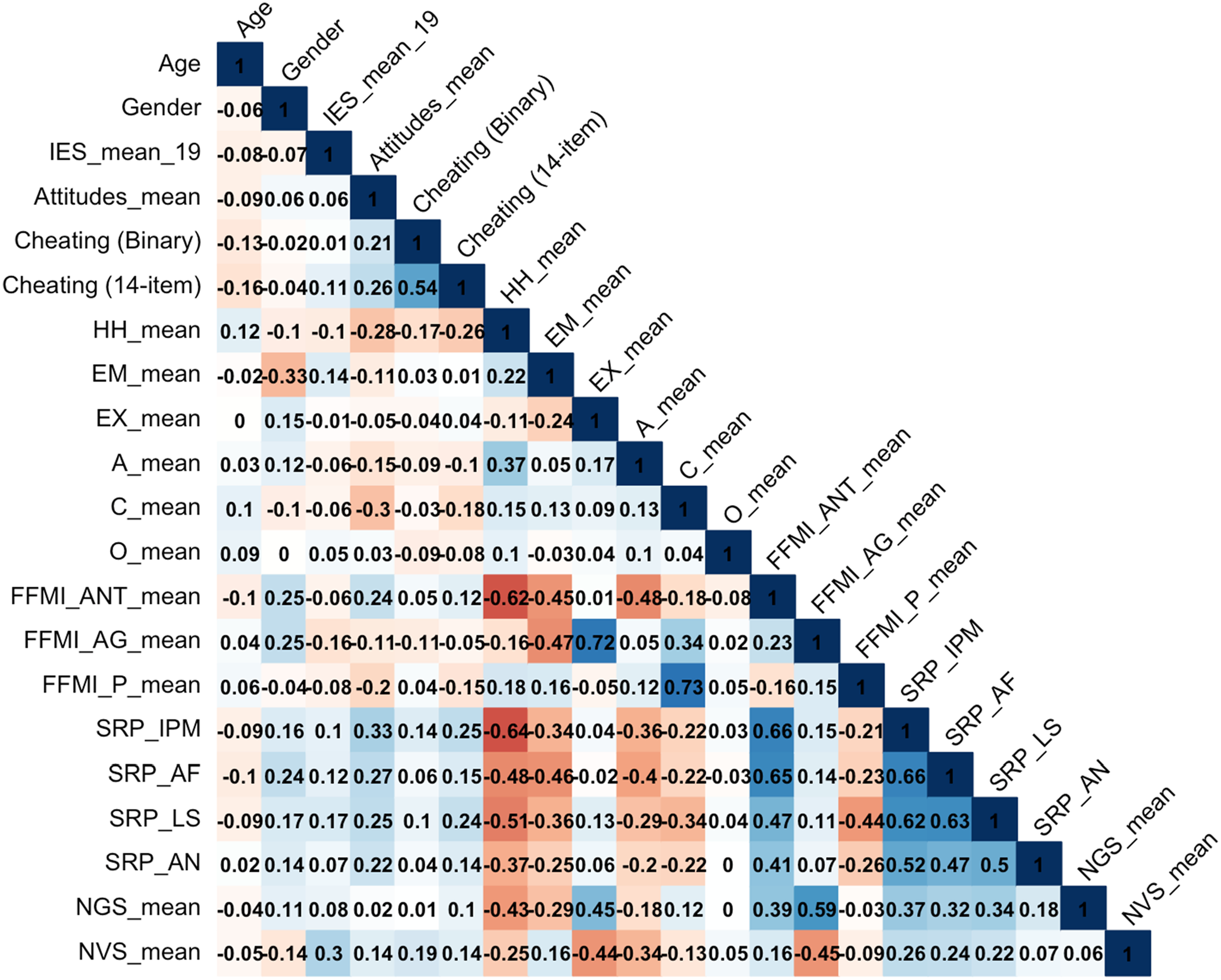
Descriptive statistics for all variables can be found in the supplemental materials (S3, p. 4). Among students who responded to the binary cheating question (n = 474), 34.4% (n = 163) reported that they had engaged in behaviours that would be considered an academic offence. Among all respondents (n = 530), 86.6% (n = 459) believed that moving classes online increased cheating behaviour among students. Since we dichotomized the 5-point Likert scale on the 14-item measure to a binary variable (0 = never engaged in this form of cheating; 1 = engaged in this form of cheating at least once), Figure 1 plots the percentage of students who engaged in each type of cheating behaviour at least once. The actual percentages and the pre-dichotomized item means and standard deviations are presented in the supplemental materials (S4, p. 5). More than half of students (55.1%) admitted to using outside material in an online assessment when it was not allowed. Furthermore, around a quarter of students reported engaging in the following behaviours at least once: working collaboratively on homework, essays, and assignments when they were supposed to work independently (28%); consulting others during quizzes and tests when they were not supposed to (26.3%); and helping other students cheat on quizzes and tests (e.g., giving them answers; 19.4%). Overall, 67.5% of the sample admitted to engaging in at least one form of cheating. Among students who reported not having engaged in any cheating during the fall 2020 semester (i.e., through the yes/no item; n = 311), half of them (50%) later admitted to engaging in at least one form of cheating at least once (i.e., their total score was greater than zero). The distribution of responses to the dichotomized and pre-dichotomized continuous cheating outcome are presented in the supplemental materials (S5, S6). Zero-order correlations between all study variables are presented in Figure 2. Engagement in Each of the 14 Cheating Behaviours. Note. The y-axis Represents the Percentage of Students Who Responded That They Engaged in the Behavior. Item Wording for Each Cheating Item is Presented in the Supplemental Materials (S4, p. 5). 1 = Using Outside Resources During Online Exam; 2 = Another Person Takes Exam; 3 = Consulting Others During Exam; 4 = Obtaining Exam Questions Ahead of Time; 5 = Keeping Exam Questions; 6 = Using Software During Exam; 7 = Handing in Someone Else’s Work as My Own; 8 = Working With Others When Not Allowed; 9 = Lying for an Extension; 10 = Plagiarizing Work From Internet; 11 = Handing Something Not Fully Mine; 12 = Helping Others Cheat; 13 = Letting Someone Hand in My Work as Their Own; 14 = Anything to Help Another Student Cheat Zero-Order Correlations for all Study Variables. Note. Gender = Male (1); IES_mean_19 = Stress Due to COVID-19; Attitudes_mean = Positive Attitudes Toward Cheating; Cheating (Binary) = Any Cheating in the Fall 2020 Semester (yes/no); Cheating (14-Item) = Sum of 14 Cheating Behaviors; HH_mean = Honesty-Humility; EM_mean = Emotionality; EX_mean = Extraversion; A_mean = Agreeableness; C_mean = Conscientiousness; O_mean = Openness; SRP_IPM = Interpersonal Manipulation; SRP_AF = Affective; SRP_LS = Lifestyle; SRP_AN = Antisocial; FFMI_AG_mean = Agency; FFMI_P_mean = Planfulness; FFMI_ANT_mean = Antagonism; NGS_mean = Grandiose Narcissism; NVS_mean = Vulnerable Narcissism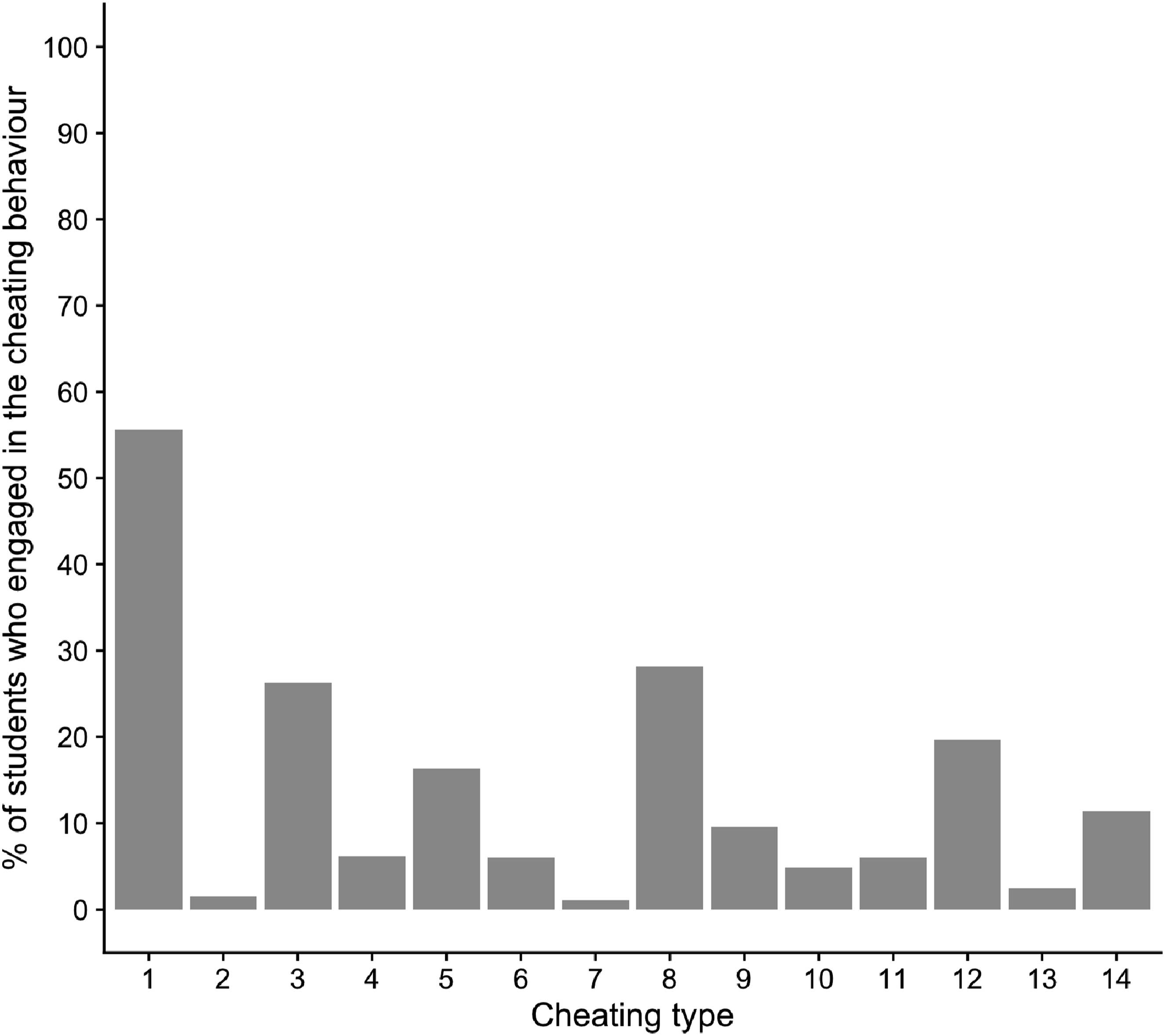
Binary Cheating Measure
Personality Traits and Academic Cheating (Binary Logistic Regression)
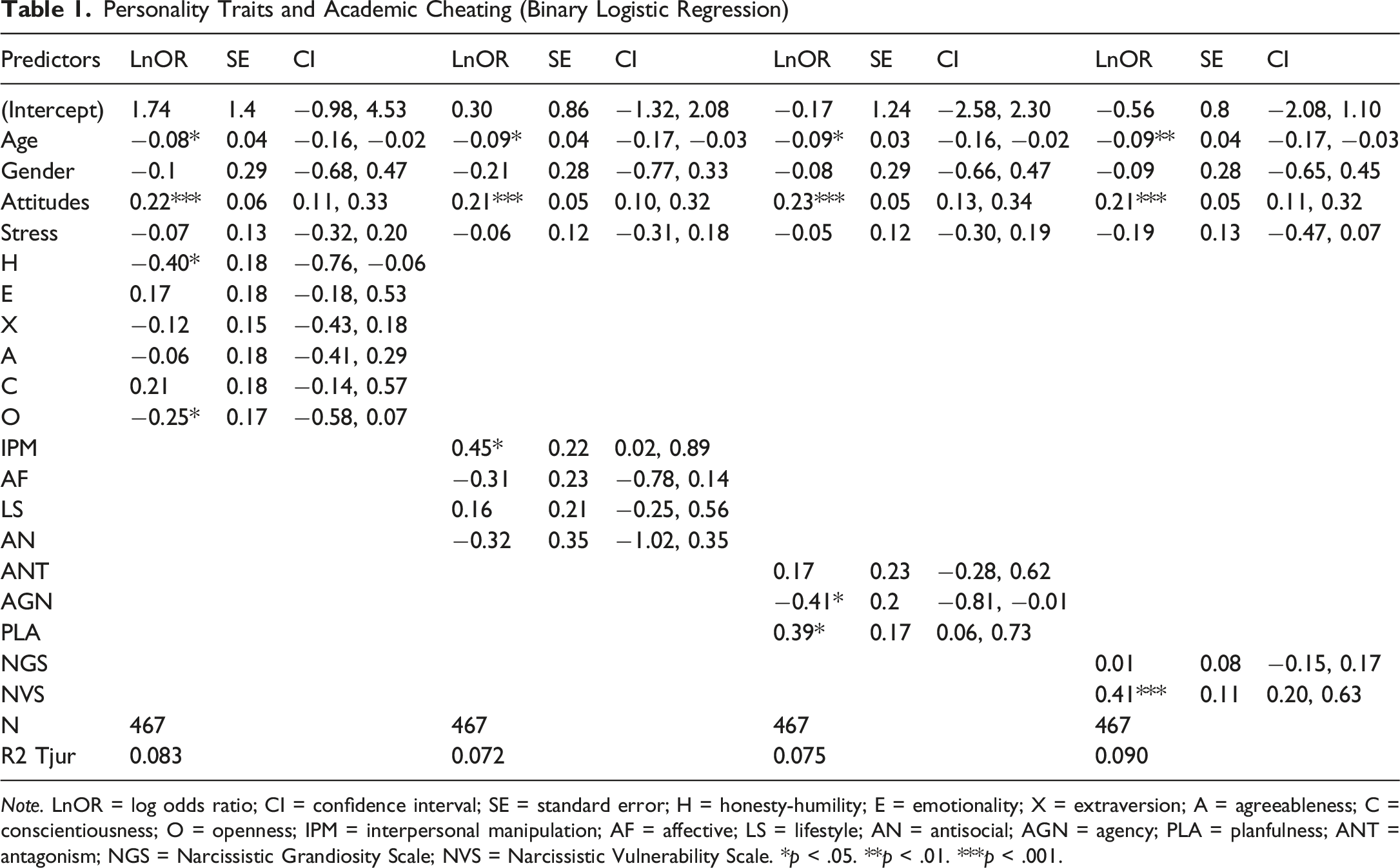
Note. LnOR = log odds ratio; CI = confidence interval; SE = standard error; H = honesty-humility; E = emotionality; X = extraversion; A = agreeableness; C = conscientiousness; O = openness; IPM = interpersonal manipulation; AF = affective; LS = lifestyle; AN = antisocial; AGN = agency; PLA = planfulness; ANT = antagonism; NGS = Narcissistic Grandiosity Scale; NVS = Narcissistic Vulnerability Scale. *p < .05. **p < .01. ***p < .001.
Continuous Cheating Measure
Personality and Specific Cheating Behaviours (Robust Regression)
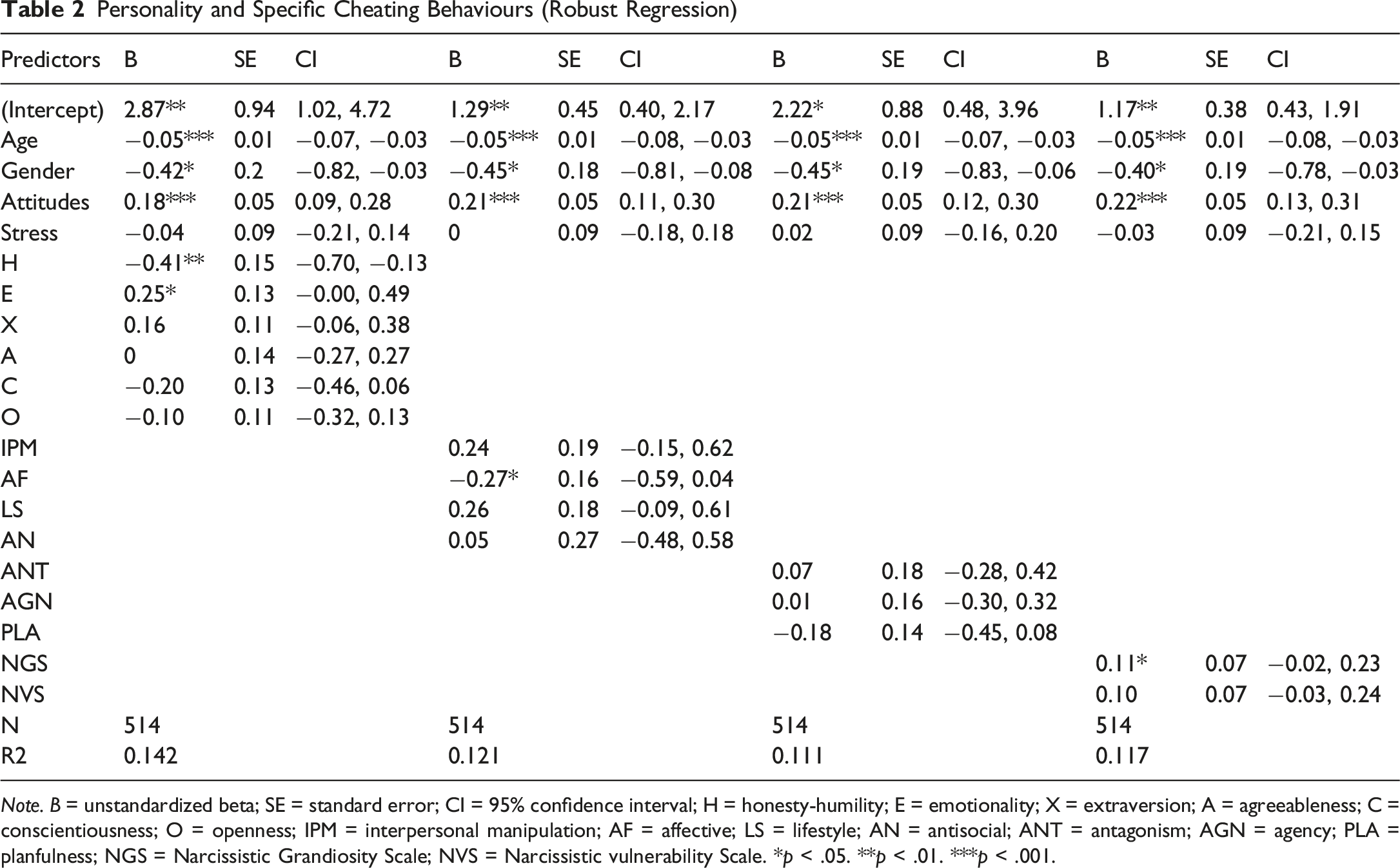
Note. B = unstandardized beta; SE = standard error; CI = 95% confidence interval; H = honesty-humility; E = emotionality; X = extraversion; A = agreeableness; C = conscientiousness; O = openness; IPM = interpersonal manipulation; AF = affective; LS = lifestyle; AN = antisocial; ANT = antagonism; AGN = agency; PLA = planfulness; NGS = Narcissistic Grandiosity Scale; NVS = Narcissistic vulnerability Scale. *p < .05. **p < .01. ***p < .001.
Discussion
The objective of this study was to explore the role of stress due to COVID-19 in academic cheating engagement during the fall 2020 semester, while also examining the role of personality traits, attitudes toward cheating, and demographic characteristics. Using robust measures of personality and self-report data from two Canadian universities, we found that stress due to COVID-19 was not associated with increased engagement in cheating. However, we did find that cheaters tended to be younger and held more positive attitudes toward cheating. Cheaters also tended to score higher on personality traits associated with dishonesty, emotionality, interpersonal manipulation, planfulness, and grandiose and vulnerable narcissism. Cheaters tended to score lower on agency, callousness, and openness.
Cheating Behaviours
In our sample, academic integrity offences were common. Over two-thirds of students admitted to engaging in at least one form of cheating during the fall 2020 semester, and the vast majority of students believed that moving classes online led to increased rates of cheating. When students were presented with a definition of academic cheating and were asked whether they had engaged in any, half of those who said “no” later admitted to engaging in at least one form of cheating. This suggests that students may not be fully aware of all the behaviours that constitute cheating.
What Predicts Cheating?
In our study, age and positive attitudes toward cheating were the most consistent predictors of cheating. With respect to attitudes, this finding is not surprising given the essential role that attitudes play in behaviour formation in both general and antisocial behaviour. For example, according to the Theory of Planned Behaviour (TPB; Ajzen, 1991), a given behaviour can be predicted by a person’s intention to perform the behaviour, which is in turn predicted by positive attitudes toward the behaviour, subjective norms (i.e., peers’ attitudes toward the behaviour), and perceived behavioural control (e.g., beliefs about one’s capacity to perform the behaviour). TBP has been applied to diverse behaviours (Armitage & Conner, 2001; McEachan et al., 2011) and also explains a large portion of variance in cheating behaviours (e.g., Alleyne & Phillips, 2011; Chudzicka-Czupała et al., 2016; Stone et al., 2010). Along with subjective norms and perceived behavioural control, positive attitudes toward cheating have been shown to be a consistent predictor of academic cheating around the world (e.g., Chudzicka-Czupała et al., 2016). Our findings are also in line with Social Learning Theory, which proposes that antisocial behaviour is primarily learned through social interaction, and that socially learned attitudes toward crime are a key determinant of offending (Pratt et al., 2010). Antisocial attitudes are indeed robust predictors of crime, such that people who hold more favourable attitudes toward crime are more likely to commit them (Pratt et al., 2010). Given that attitudes toward academic cheating are potentially malleable in the classroom, changing attitudes may be a crucial avenue for reducing cheating behaviours.
We also found that younger people were more likely to report engagement in cheating, which is in line with a recent meta-analysis that found that younger students are more likely to engage in academic dishonesty (Lee et al., 2020). Students in their first year, for example, may be less familiar with what counts as an academic integrity offence and may be less familiar with the consequences of university-level cheating. Our results underscore the importance of prioritizing younger students as targets for interventions.
In line with previous research (Lee et al., 2020; Ljubin-Golub et al., 2020; Williams et al., 2010), we found that personality traits were predictive of cheating behaviours. In our study, people who were generally dishonest, immodest, and greedy (lower honesty-humility) were consistently more likely to report engaging in cheating. Cheaters were also more likely to be manipulative (higher interpersonal manipulation), conventional (lower openness), emotional (higher emotionality; lower affective psychopathy), and unambitious (lower agency). In addition, cheaters had an inflated sense of superiority (higher grandiose narcissism) and vengefulness (higher vulnerable narcissism) but may think carefully about their actions (higher planfulness).
Our consistent finding that dishonest and manipulative students were more likely to report engaging in cheating is in line with previous studies (Lee et al., 2020) and is also in line with a large body of literature demonstrating that personality traits play a reliable role in unethical and antisocial behaviours (Spaans et al., 2017; Tharshini et al., 2021). Nevertheless, some of our results diverged from previous research. Whereas the interpersonal facet of psychopathy was the only unique facet associated with cheating, only the antisocial facet of psychopathy was associated with cheating in a previous study (Blais et al., 2025). Conscientiousness had been negatively related to cheating in previous research (Lee et al., 2020), but in our study, conscientiousness was unrelated to cheating. In addition, traits similar to conscientiousness (i.e., Machiavellian agency and planfulness) were not related to cheating in the expected direction. Despite some inconsistencies in results, it should be noted that the relationship between conscientiousness and cheating reported in the meta-analysis by Lee et al. (2020) was smaller than the relationship between psychopathy and cheating. Also, most studies of Dark Triad personality traits and cheating used measures that fail to account for the multidimensionality of each trait; future research is therefore needed to fully understand the relationship between specific personality traits and cheating.
Interestingly, some correlates diverged between our two outcome measures. For example, gender was not associated with the binary cheating outcome but was associated with the continuous cheating outcome, with women reporting slightly more cheating behaviours than men. This is inconsistent with Lee et al. (2020), who reported that men tended to engage in more academic dishonesty than women; however, the results were not analyzed by different operationalizations of cheating. It is possible that men and women in our study reported similar rates of any cheating, but that when asked about specific behaviours, women were more likely to then honestly report engaging in behaviours not previously known to constitute cheating. This possibility is consistent with the fact that participants who had indicated not engaging in any cheating did go on to select several specific cheating behaviours when each behaviour was specifically defined. However, the current sample was also predominantly comprised of women, meaning that our estimate of men’s cheating behaviour may be less reliable. Gender differences in the current study should therefore be interpreted cautiously.
For narcissism, only vulnerable narcissism predicted the binary cheating outcome while only grandiose narcissism predicted the continuous cheating outcome. The diverging results for narcissism may also reflect statistical noise but could be explained by the wording of the outcomes and the distinction between narcissistic subtypes. Participants may have interpreted the binary cheating question as a global reflection of identity or character. Since vulnerable narcissists are prone to shame (di Sarno et al., 2020) and use supplication tactics (e.g., appearing weak to gain help or sympathy; Hart et al., 2017), they may have been excessively critical and erroneously labelled themselves as cheaters, even if they were not more likely to engage in specific cheating behaviours. Meanwhile, people who scored higher in grandiose narcissism may have been more likely to cheat, but due to the tendency to enhance their self-image (Hart et al., 2017), did not label themselves as cheaters when completing the binary cheating outcome. Regardless of the differences across cheating outcomes, narcissism is clearly an important personality trait when assessing academic dishonesty, consistent with previous research (Lee et al., 2020).
Contrary to expectations, there was no association between stress due to COVID-19 and engagement in cheating. This finding is in direct contrast to past research that has identified a relationship between students’ stress and academic cheating (Borge, 2024; Ferguson et al., 2023). Ferguson et al. (2023) assessed the relationship between different types of stressors, including those related to the pandemic, and found that participants who identified more stressors were more likely to report engaging in various cheating behaviours. There are several possible explanations for these diverging findings. Since the current study only asked about COVID-19 related stress, it is possible that it is the additive impact of stressors that leads to cheating behaviours, rather than any one discreet stressor. Unlike Ferguson et al. (2023), the current study also assessed personality and attitudes towards cheating, factors that may be more important in driving cheating behaviours than stress. It is also possible that rather than directly impacting cheating behaviours, stress may have an interactive effect through specific personality traits. For example, among a sample of 706 adults, Korotkov (2008) found that stress moderated the relationship between neuroticism and engaging in health-related behaviours. Further research into potential interactions between stress, personality, and cheating behaviour is therefore warranted.
Implications
The ways to cheat have only become more sophisticated since the fall of 2020, especially since the widespread adoption of Large Language Models (LLMs; e.g., ChatGPT). Given the profile identified here, general classroom policies should be targeted toward students who are at a higher risk of engaging in academic dishonesty. The consistent finding that younger students are more likely to engage in cheating (Lee et al., 2020) suggests that first-year introductory courses should be a primary target for intervention. In these courses, instructors should challenge and reshape students’ beliefs and attitudes toward cheating. Given the widespread misconceptions about academic cheating, instructors must clearly define academic dishonesty and its consequences. These definitions should be tailored to the specific context of each course and communicated explicitly by instructors.
However, challenging attitudes will not be enough, given that some cheaters are dishonest by nature and unlikely to change (i.e., lower in honesty-humility). Ellis and Murdoch (2024) argue that adopting only one strategy to prevent cheating (e.g., general rules applied to all students; focusing on identifying and punishing students) is likely to be ineffective. Instead, institutions should adopt a “this-for-that” approach, matching their response to different kinds of students. Promoting academic integrity may be beneficial for students who are willing and able to do the work of learning, and detection techniques may deter cheating among people who are not always willing or able to do the work of learning (Ellis & Murdoch, 2024). However, increasingly severe punishments (up to and including exclusion or revocation) may be necessary for “criminal” cheaters, i.e., students who are unwilling or unable to do the work of learning and for whom intervention may be ineffective (Ellis & Murdoch, 2024). Our results support this approach, given that some predictors of cheating (e.g., low honesty-humility) may be particularly difficult to change through intervention (Sleep et al., 2022).
Limitations
This study has several limitations. First, our data were collected among undergraduate students from two Canadian universities; results may therefore only be generalizable to similar sociocultural contexts (e.g., United States, United Kingdom, Australia). Second, our measure of cheating is self-reported, meaning that many students may have concealed or misremembered their cheating behaviours. Nevertheless, over two-thirds of students admitted to at least one form of cheating, suggesting that our self-report measure may be less biased than one might assume. A third limitation relates to our measure of stress. The IES-R measured stress broadly and assessed overall life stress during the period of the pandemic rather than focusing on specific forms of stress related to cheating, such as stress related to academics. Furthermore, the IES-R involved a seven-day recall period, which led to a timing discrepancy between the measure for stress (winter 2021) and the measure for cheating (fall 2020). Future research should therefore replicate our findings outside the Canadian sociocultural context, use objective indices of cheating behaviour, and more valid measures of situational stress.
Conclusion
In summary, this study found that academic cheating was widespread during the fall 2020 semester. However, those who were younger, held more positive attitudes toward cheating, and who tend to be dishonest in their everyday lives were much more likely to report cheating. The profile identified here can help inform the development of targeted interventions that promote academic integrity in the age of online learning.
Supplemental Material
Supplemental Material - A Pre-Registered Examination of the Relationship Between Personality, Stress, and Academic Cheating in the Age of Online Learning
Supplemental Material for A Pre-Registered Examination of the Relationship Between Personality, Stress, and Academic Cheating in the Age of Online Learning by Luke R. Mungall, George R. Fazaa, and Julie Blais in Psychological Reports
Footnotes
Funding
The authors received no financial support for the research, authorship, and/or publication of this article.
Declaration of Conflicting Interests
The authors declared no potential conflicts of interest with respect to the research, authorship, and/or publication of this article.
Data Availability Statement
Requests for access to the data and code for the purposes of verifying the findings of this article can be addressed to Julie Blais at  .
.
Supplemental Material
Supplemental material for this article is available online.
Notes
Author Biographies
References
Supplementary Material
Please find the following supplemental material available below.
For Open Access articles published under a Creative Commons License, all supplemental material carries the same license as the article it is associated with.
For non-Open Access articles published, all supplemental material carries a non-exclusive license, and permission requests for re-use of supplemental material or any part of supplemental material shall be sent directly to the copyright owner as specified in the copyright notice associated with the article.
