




Abstract
Objectives: The positive effects of mindfulness have been studied extensively, but research identifying how mindfulness works is lacking. This study aimed to investigate two possible working mechanisms of mindfulness. First, we explored whether mindfulness works by buffering the negative effects of work stress. Second, we tested whether mindfulness improves work outcomes through the enhancement of psychological capital. Method: An online cross-sectional survey assessing mindfulness, psychological capital, stress, turnover intentions, work engagement and job satisfaction was completed by 293 working adults. Three structural equation models tested different ways in which mindfulness exerts its positive influence on these outcomes through moderating and mediating effects. Results: Findings indicate that mindfulness can buffer the negative impact of stress on work engagement, job satisfaction and turnover intentions. In addition, psychological capital mediated the effect of mindfulness on work engagement and job satisfaction. Conclusion: The results suggests that mindfulness exerts its positive influence on work outcomes through different pathways either by buffering stress or by aiding in the development of personal resources, depending on the specific outcome. Both mindfulness training and training to increase psychological resources should be integrated in the workplace.
Keywords
Mindfulness has received great attention across the last decade. Numerous positive outcomes have been associated with it, including mental health benefits such as reduced depression and anxiety (Davis & Hayes, 2011; Hofmann et al., 2010), physical health enhancements like mitigated chronic pain, and cognitive improvements such as enhanced memory and decision-making capabilities (Chiesa et al., 2011). Mindfulness also has been shown to have positive effects in the workplace such as lower employee burnout and greater job satisfaction (Goodman & Schorling, 2012; Hülsheger et al., 2013). Further, mindfulness has been found to have beneficial interpersonal influences like fostering kindness, acceptance, and compassion (Kabat-Zinn et al., 1985; Liu et al., 2018). It seems that mindfulness is a promising treatment for several problems but what is it about simply being present that can help us in so many domains?
The benefits of mindfulness are well evidenced but the pathways through which mindfulness exerts its positive outcomes have received little empirical attention (Britton et al., 2021). This study aims to fill the gap in the literature by testing two possible pathways through which mindfulness may affect key workplace outcomes. The first pathway explored is the moderating role of mindfulness and how it possibly acts to buffer the negative effects of work stress. The second pathway we investigate is whether mindfulness acts to enhance psychological capital, which has been linked to several positive workplace outcomes.
Theory and Hypothesis Development
Mindfulness
First mentions of mindfulness in Buddhist psychology date back as far as over 2500 years with earliest records coming from ancient Indian Buddhism. While first being thought of as esoteric and bound to religious beliefs, mindfulness is now considered an inherent quality of the human consciousness that can be assessed empirically across individuals while being independent of religion, spiritual and cultural beliefs (Black, nd).
The traditional goals of mindfulness lay in spiritual liberation, liberation from suffering, greed and the awakening from delusions, cravings and aversions. In the West, modern psychology has replaced the traditional goals of mindfulness with a focus on trying to improve mental states and alleviate negative emotions (McMahan, 2008).
Today’s interpretations of mindfulness have been heavily impacted by Jon Kabat-Zinn (2003) who defines it as bare awareness of the present moment, characterized by a state of non-judgment and without interference. Being mindful means fostering an attitude of openness, acceptance, curiosity and present-focused attention rather than being preoccupied with the past or future (Creswell & Lindsay, 2014; Kabat-Zinn, 1994; Ristić & Hizarci-Payne, 2020).
In psychology, mindfulness is seen as both a trait and a state varying between and within individuals. Trait mindfulness is a person’s disposition to be mindful in everyday situations. It is an innate tendency, and like a personality trait, it tends to be stable over time (Vasiļjeva et al., 2023). In comparison, state mindfulness refers to a specific moment in which we experience mindfulness such as when engaging in a mindfulness meditation (Kiken et al., 2015) it can fluctuate from moment to moment. In this study, we focus on trait mindfulness in the workplace and its beneficial outcomes.
Trait Mindfulness in the Workplace
Several studies have found positive associations between trait mindfulness and work-specific outcomes. Mindfulness correlates with elevated levels of job satisfaction and performance, increased work-engagement, and better well-being in the workplace while exhibiting a negative relationship with turnover intentions (Dane & Brummel, 2014; Panditharathne & Chen, 2021). Additionally, mindfulness is linked to enhanced employee mental health including reduced burnout, anxiety and depression along with increased employee happiness (Glomb et al., 2011; Panditharathne & Chen, 2021). It is also associated with lower subjective perceptions of work-related stress (Mesmer-Magnus, 2017). Moreover, mindfulness can enhance work performance-related concepts such as psychological resilience, decision making, problem-solving and creativity (Glomb et al., 2011).
Mindfulness Mechanisms: Stress Buffering and Resource Building
Although we have robust evidence that mindfulness is associated with various beneficial outcomes, the underlying working mechanisms remain unidentified in the scientific literature (Vieth & Stockhausen, 2022). Previous research has insufficiently focused on attempting to understand how mindfulness works (Britton et al., 2021). In order to utilise mindfulness as effectively as possible, an understanding of its working mechanisms for different outcomes is essential. This will further enable researchers and practitioners to develop tailored, evidence-based interventions. This paper introduces and investigates two possible pathways through which mindfulness works in facilitating favourable workplace outcomes, namely work engagement, job satisfaction and turnover intentions. The first pathway suggests that mindfulness works by buffering the negative effects of stress (Mindfulness Stress Buffering Hypothesis; Creswell & Lindsay, 2014). That is, mindfulness has its effects by reducing the impact of workplace stressors. We also propose a second pathway that may work in tandem with this first one: the mindfulness resource building model. As a resource-builder, we suggest that mindfulness helps build psychological capital, which in turn promotes a number of positive workplace outcomes (Gilbert et al., 2017). The following section will detail the two suggested pathways including an outline of existing literature before introducing outcome variables and the design of the current study. Finally, a combined model encompassing both pathways will be introduced.
Work Stress
The feeling of stress arises when the pressures placed on an individual exceed their perceived capacity to respond to them, causing a feeling of emotional tension (Lazarus & Folkman, 1984; Stranks, 2005). According to appraisal theory, the level of stress an individual experiences is dependent on how they interpret the stressor (Lazarus, 1984). Stress occurs when a situation is appraised as threatening or challenging and if the individual lacks sufficient resources to effectively deal with the event (de France, 2009; Hulin et al., 2024). Stress is therefore not simply an internal response but an interaction between the individual and a work environment posing demands (Epel et al., 2018; Long, 1995). Work stress is described as an individual’s response to workplace characteristics that seem emotionally and physically threatening (Jamal, 2000). Stressors include long work hours, job insecurity and lack of social support at work (Goh et al., 2015). Prolonged work stress can have an impact on the physiological stress response. It can alter the functioning of neuro-endocrine and lead to increased levels of inflammatory markers (Shih, 2016). Moreover, work stress negatively impacts the pre-frontal cortex and has been found to be associated with reduced hippocampal volume (Schnorpfeil et al., 2003; Shih, 2016). During stressful times, the organism needs to adapt which evokes allostatic responses. Allostatic load refers to the cumulative influence that chronic stress and its physiological responses have on an individual (Guidi et al., 2021). When challenges exceed the individual’s ability to cope, allostatic overload ensues. Various physiological processes are in a prolonged state of activity in attempt to adapt to the stressor, resulting in a chronic biological burden (Schorpfeil et al., 2003).
Experiencing prolonged work stress can have negative outcomes for both the employee and the organization. Heightened stress can lower productivity and there seems to be a negative relationship between work stress and performance (AbuAlRub, 2004; Westman & Eden, 1996). Elevated work stress has also been found to be related to lowered job satisfaction, job performance and job engagement and it can increase absenteeism (Fairbrother & Warn, 2003; Fontes, 2019; Jamal, 2000). It is one of the leading causes of employee burnout and turnover intentions (Colligan & Higgins, 2006; Liu & Onwuegbuzie, 2012; Tziner et al., 2015; Zhang & Yu, 2007) Further, employees’ cognitive abilities can be affected. Functions like memory, concentration, problem-solving and decision making can be impaired as a result of extended work stress which can impact successful job performance (Baker, 1985; Michie, 2002). Apart from having detrimental effects in the workplace, work stress can also impact employees’ psychological and physiological health. At the physiological level work stress can lead to changes in heart rate and blood pressure as well as cause headaches and fatigue (Baker, 1985; Wellens & Smith, 2006).
Mindfulness Stress Buffering Hypothesis
The mindfulness stress buffering hypothesis proposes that the benefits of mindfulness stem from its ability to mitigate the adverse impact of stress on workplace outcomes (Bergin & Pakenham, 2016). According to Lazarus and Folkman’s (1984) stress framework, it is not only the presence of a stressor but an individual’s subjective appraisal of the stressor that imposes a negative feeling of stress. Higher levels of mindfulness have been associated with lower amygdala activity which may facilitate an individual’s ability to encounter stress with acceptance and equanimity which in turn reduces primary threat appraisals so that a stressor is interpreted as less threatening (Bergin & Pakenham, 2016; Brown et al., 2013).
A major part of effectively coping with workplace stress lies in detecting early signs of its onset such as headaches or fatigue so that coping resources can be activated in time. The attentional aspect of mindfulness may play a role in this matter. People with higher levels of trait mindfulness have an increased awareness of early stress symptoms which can enhance early coping resources and buffer the negative effects of stress (Bränström et al., 2011). Hence, it has been proposed that mindful individuals have a greater capacity to manage stressors (Bergin & Pakenham, 2016). From a neurological viewpoint mindfulness may work by reducing stress appraisals through increasing the activity of the stress-regulatory regions in the pre-frontal cortex (top-down pathway) or, mindfulness may reduce biological stress reactivity in the stress processing regions (bottom-up pathway) (Lucas-Thompson et al., 2019).
Initial studies have found support for the mindfulness stress buffering hypothesis. A study by Bränström et al. (2011) found that trait mindfulness buffered the negative effects that stress has on psychological well-being. Further research by Marks et al. (2010) showed that higher mindful awareness buffered the negative effects of everyday life stressors on psychological well-being.
Similarly, Brown et al. (2012) found that trait mindfulness may buffer cortisol reactivity, which is frequently used as a biomarker of psychological stress reaction (Hellhammer et al., 2009). In Brown et al.’s randomized control trial study, trait mindfulness was associated with lower experienced stress as measured by cortisol levels in response to a social stress task.
The growing evidence suggests that mindfulness might moderate the relationship between work stress and several work outcomes. While previous research has shown that mindfulness can lower stress experiences at work, no research to date has tested how mindfulness may buffer the impact of work-related stress on detrimental work outcomes. Therefore, our first goal is to replicate previous findings, using a sample of working employees and test the following hypothesis: Hypothesis 1: Mindfulness moderates the negative relationship between stress and workplace outcomes; work engagement, job satisfaction and turnover intentions.
Mindfulness and Psychological Capital
Stress consumes our body’s energy and resources, such that during prolonged times of stress these resources become depleted which can lead to the emotional, psychological, physiological, and behavioural consequences we have outlined (Baker, 1985). Rather than simply buffering against the impacts of work stress, therefore, a second mechanism through which mindfulness may work could be by enhancing or building psychological resources such that they are not depleted as quickly in times of heightened stress. Psychological resources represent our positive appraisal of circumstances and our subjective sense of control over the environment (Grover et al., 2018). If people believe they have sufficient resources to deal with a stressful situation at work such as a tight deadline, they will perceive the stressor as a challenge rather than a threat and deal with it more successfully (Lazarus & Folkman, 1984).
One of these resources is psychological capital (PsyCap) which is a multidimensional construct consisting of four different mental resources that can have positive impacts on employee’s attitudes, behaviours, and performances (Avey et al., 2011). The four resources are hope, self-efficacy, resilience, and optimism (HERO). Hope is a positive motivational state that helps direct one’s actions towards goals and when necessary, redirect one’s path to succeed (Avey et al., 2011). Self-Efficacy is characterized by a person’s confidence in their abilities and resources to be able to succeed in challenging tasks (Liu et al., 2012; Rabenu et al., 2017). Resilience is defined as the ability to sustain and bounce back from failure and withstand when faced with failure and negativity (Avey et al., 2009). Finally, optimism is defined as a positive mindset about successful performance and a positive attribution style. Positive events are attributed to internal, stable causes while negative events are attributed to external, unstable causes (Jain & Singh, 2016). Research found the four resources combined into one core construct are a stronger predictor for attitudes and performance than any of the four facets alone (Roche et al., 2014).
Psychological capital can be measured empirically and can be developed over time; hence it is not a stable personality trait but open to change. Research has shown that psychological capital is related to physical as well as mental health and people with higher psychological capital experience more positive and less negative emotions as compared to people with lower psychological capital (Rabenu et al., 2017; Smith et al., 2010). This is because PsyCap can facilitate positive appraisals of past, present and future. It decreases negativity bias and fosters hedonic adaptation, helping to maintain well-being over time (Luthans & Youssef-Morgan, 2017). The four HERO resources share an underlying mechanism of “positive appraisal of circumstances and probability for success based on motivated effort and perseverance” (Luthans et al., 2007, p. 550). Moreover, Luthans & Youssef-Morgan (2017) identified agentic conation, positive cognitive appraisals and social mechanisms as theoretical underpinnings of PsyCap. Conation refers to intentional and motivational behaviour. It is the planful, proactive and goal-oriented component of motivation (Huitt, 2005). Conation facilitates goal-directed energy which aids in activating the necessary resources for goal pursuit while also promoting a positive rather than negative reaction to encountered obstacles. Positive cognitive appraisals allow individuals to reframe negative situations and interpret them in a more positive light, thereby fostering perseverance. PsyCap is also directly related to positive emotions which can broaden our thought-action repertoires (Frederickson, 2001) leading to more creative solutions and restoration of previously depleted resources. Finally, social mechanisms such as social support and connectedness to others play an important role for building resilience and efficacy. Further, when resources are scarce, reliance on others can facilitate hope and optimism pathways (Luthans & Youssef-Morgan, 2017).
In the workplace, psychological capital has been positively linked to employee well-being, job satisfaction, job performance and higher organisational commitment (Avey et al., 2011) and a better work-life balance (Siu, 2013). It is negatively correlated with workplace stress, turnover intentions, burnout, anxiety and depression (Rabenu et al., 2017).
There is extensive research evidence that PsyCap and mindfulness are positively linked. For example, higher trait mindfulness is associated with both higher overall psychological capital (Bi & Ye, 2021) and all four of the HERO resources (Avey et al., 2009). Avey et al. (2008) observed a positive interaction effect between mindfulness and psychological capital, indicating that these constructs may provide enhanced effects when combined. Due to having elevated awareness, mindful individuals can react to challenging situations in a more flexible and less impulsive manner which is likely to be associated with great self-efficacy, resilience, hope and optimism (Malinowski & Lim, 2015). Additional research demonstrated positive associations between mindfulness and the individual constructs of psychological capital. Many studies have linked mindfulness to resilience with individuals high in mindfulness also possessing higher levels of resilience (Keye & Pidgeon, 2013; Kurilova, 2013; Ledford et al., 2024; Thompson et al., 2011). This may be because mindful people tend to engage in less rumination and habitual worrying (Malinowski & Lim, 2015). According to Roche et al. (2014) by facilitating a wider range of actions and reactions, mindfulness enhances flexible responding, opening people up to more resilience and positivity. Ashu et al. (2015) found that trait mindfulness correlates with hope. Through mindfulness, stress levels decrease which calms the mind and subsequently increases hope (Munoz et al., 2018). Moreover, trait mindfulness has also been associated with optimism (Heckenberg et al., 2019). The heightened state of attention and awareness that characterises mindfulness facilitates self-monitoring so that people can identify their unproductive thinking patterns and increase their positive judgements thereby reducing negativity bias and fostering a more optimistic perspective on life (Avey et al., 2008; Bunjak et al., 2022). Finally, mindfulness has been positively linked to self-efficacy. Mindfulness may contribute to self-efficacy through its positive relationships with self-awareness and self-regulation (Vago & Silbersweig, 2012).
In conclusion, previous research has shown evidence that trait mindfulness may help build psychological capital which itself is related to many positive outcomes in the workplace. Therefore, in this study, we test the following hypothesis: Hypothesis 2: Psychological capital plays a mediating role in the relationship between mindfulness and work outcomes, namely work engagement, job satisfaction and turnover intentions.
Work outcomes
In the current study, we assess the relationship between stress and mindfulness with the following outcome variables: work engagement, job satisfaction and turnover intentions.
Work Engagement
Work engagement is characterized by high energy, involvement and efficacy (Maslach & Leiter, 1997). It has been defined as a unique, positive, work-related state of mind characterized by vigor, dedication and absorption (Schaufeli et al., 2002). Vigor is characterized by high levels of resilience and persistence and high levels of effort. Dedication can be thought of as a sense of significance, enthusiasm, inspiration, pride, and challenge. Lastly, absorption means to be fully concentrated and deeply engrossed in one’s work (Schaufeli et al., 2012). Employees with high engagement feel that they are able to effectively deal with the demands of their jobs and have a sense of energetic and effective connection with their activities in the workplace (Schaufeli, 2012). Work engagement influences organisational performance, organisational commitment and pro-active behaviours in the workplace (Banihani et al., 2013). It is related to employee well-being and psychological health (Tuckey et al., 2018). Research shows that work stress is related to lower work engagement (Rahmi et al., 2021).
Studies have found positive relationships between engagement and psychological capital. People with high psychological capital are more likely to be engaged in their jobs than people with lower psychological capital (Wardani & Anwar, 2019). Interestingly, Malinowski and Lim (2015) found a positive relationship between mindfulness and work engagement and this relationship was mediated by psychological capital.
Job Satisfaction
Job satisfaction is a positive psychological and emotional state that arises from feelings employees have towards their jobs (Locke, 1976). It can be thought of as the way people feel about their jobs and whether they like it or not (Lopes et al., 2014). It is linked to productivity and personal well-being (Al Farsi et al., 2017).
A vast body of research has found stress to have a negative impact on job satisfaction (Mansoor et al., 2011; Rizwan et al., 2014; Terry et al., 1993). High levels of stress are generally associated with low levels of job satisfaction (Fairbrother & Warn, 2003).
Studies showed that people with higher levels of trait mindfulness report higher levels of job satisfaction than people who are less mindful (Hülsheger et al., 2013). Those higher in mindfulness are able to deal with work stress more effectively and experience more positive reactions thereby increasing job satisfaction (Andrews et al., 2014). Moreover, several studies have found positive correlations between psychological capital and job satisfaction (Jung & Yoon, 2015; Mello, 2012; Youssef & Luthans, 2015). Badran and colleagues (2015) found that all four HERO elements were individually positively related to job satisfaction.
Turnover Intentions
Turnover intentions are defined as the deliberate and conscious intention to resign from a job (Erat et al., 2017), they occur before the actual decision to leave and predict final turnover (Mann et al., 2004). Several studies found high work stress to be a significant predictor of turnover intention (Duraisingam et al., 2009; Liu & Onwuegbuzie, 2012). High work stress levels decrease job satisfaction which in turn leads to increased turnover (Celik, 2018).
Both psychological capital and mindfulness seem to buffer against the effects of work stress and decreased job satisfaction on employees’ intention to leave. Psychological capital has been found to have a negative relationship with turnover intentions (Avey et al., 2009). People with higher psychological capital are equipped with more psychological resources that help them effectively deal with job demands and stress (Avey et al., 2011). Studies have revealed that mindfulness negatively correlates with turnover intentions. This may be due to the fact that mindfulness enhances self-regulation, helping individuals to assess challenging situations with emotional balance. Moreover, mindfulness helps people adapt to demanding work situations and protects against emotional exhaustion, making people less likely to leave their jobs (Dane & Brummel, 2014).
Research Aim
The aim of this study is to investigate two possible co-existing mechanisms underlying the effectiveness of mindfulness in one conceptual model (Figure 1). We suggest a moderating effect of mindfulness between work stress and three work outcomes: work engagement, job satisfaction and turnover intentions and a mediating effect of psychological capital between the relationship of mindfulness and these work outcomes. We hope to advance the literature on mindfulness by detecting possible ways through which mindfulness works, rather than solely demonstrating its effectiveness. Full Conceptual Model.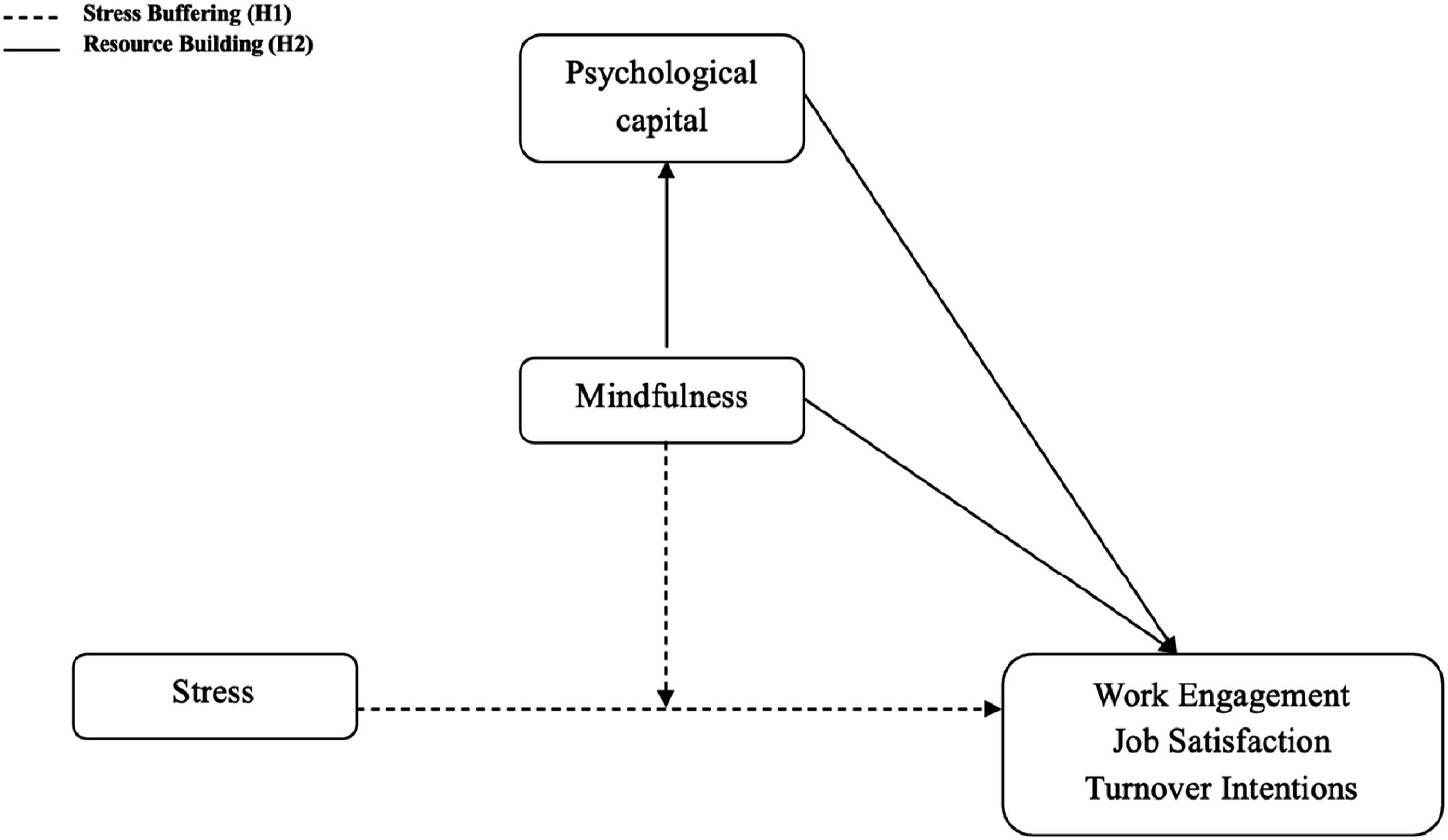
Method
Participants and procedure
Participants were recruited using the online survey platform Prolific. The sample consisted of 293 participants with a mean age of 32.93 (SD = 9.09). A-priori power analysis for SEM with 4 latent variables and 60 indicator variables, with 80% power to detect a medium effect size at a probability level of .05, indicated a minimum sample size of N = 137. Post-hoc power analysis revealed statistical power of .99 for our sample size.
Participants were 59.4% male and 39.6% female. Participants identified themselves as White (56.0 %), Latino/Hispanic (19.85), Black (10.6%), Asian (10.2%), Middle Eastern (1.4%) Mixed (0.7%) Caribbean (0.3%) and Māori (0.3%). All participants were full-time employees.
Prior to the study, ethics approval was granted by the authors’ institutional ethics committee. Responses were anonymous, and participants had the right to withdraw from the survey at any time. Informed consent was given by participants.
Measures
Mindfulness
Trait mindfulness was measured using the Five Facet Mindfulness Questionnaire (FFMQ-15; Baer et al., 2006), which consists of 15 items rated on a 5 point-Likert scale (1 = never or very rarely true; 5 = very often or always true). The scale measures the five facets of mindfulness: observation, description, aware actions, non-judgmental inner experience, and non-reactivity. Example items include “I pay attention to sensations, such as the wind in my hair or sun on my face” [observation] and “I am good at finding words to describe my feelings” [description]. The scale showed good reliability in this study (α = .79).
Psychological Capital
Psychological capital was measured using the psychological capital questionnaire (PCQ; Luthans et al., 2007). Each of the four PsyCap constructs (self-efficacy, optimism, hope, resilience) were measured using 6 items. Example items include “I feel confident analysing a long-term problem to find a solution” [self-efficacy], “If I should find myself in a jam at work, I could think of many ways to get out of it” [hope] and “When I have a setback at work, I have trouble recovering from it, moving on” [resilience]. Items were rated on a six-point Likert scale ranging from 1 (strongly disagree) to 6 (strongly agree). Items were summed up to create an overall PsyCap score. The scale was found to have very good reliability in the current study (α = .92).
Work Stress
The workplace stress scale was used (American Institute of Stress, 1978) to assess stress in the workplace. Participants rated eight statements regarding their current job on a 5-point Likert scale (1 = never, 5 = very often). An example item is “I feel that job pressures interfere with my family or personal life”. The scale showed good reliability (α = .88).
Job satisfaction
The Brief Job Satisfaction Measure II (Judge et al., 1998) was utilized to measure this construct. Participants answered five items on a 5-point Likert scale ranging from 1 (strongly disagree) to 5. (strongly agree). Example items were “I feel fairly satisfied with my job” and “I consider my job rather unpleasant”. Reliability was shown to be good (α = .86).
Work Engagement
Work Engagement was measured using the 9-item Utrecht Work Engagement Scale (UWES–9S; Schaufeli et al., 2006). The scale measures engagement with three dimensions (vigor, dedication, and absorption). Each dimension is assessed by three items which are rated on a 7–point Likert scale ranging from 0 (never) to 6 (always). An example item is “I am enthusiastic about my work”. Items were added up to create a single dimension. This scale showed excellent reliability (α = .94).
Turnover Intention
We utilized the 6-item Turnover Intention Scale developed by Roodt (2004). The scale measures turnover intentions using example items such as “How often have you considered leaving your job” and “How often do you dream about getting another job that will better suit your personal needs?”. Items were rated on a 5-point Likert scale ranging from 1 (never) to 7 (always). This scale exhibited good reliability of α = .84.
Data Analysis
Data was cleaned by removing three participants who completed the survey 50% faster than the median completion time (Greszki et al., 2014). Next, a Mahalanobis distance analysis was ran which followed the exclusion of three cases resulting in a final sample size of 293.
Several studies have raised concern regarding the one-dimensionality of the Five Facet Mindfulness Questionnaire (Duan & Li, 2016; Medvedev et al., 2018). Both the observing and the non-reactivity facets have been shown to have weak psychometric properties. Non-reactivity was found to have an extremely weak correlation with the overall mindfulness factor as well as low reliability and factor loadings. Further, the observing facet has been shown to have non-significant loadings on the overall factor of mindfulness and research has suggested that the observing facet may be interpreted differently by people who have mindfulness experience in comparison to unexperienced participants (Duan & Li, 2016; Gu et al., 2016; Medvedev et al., 2018). Thus, following confirmatory factor analyses, we excluded all items measuring non-reactivity and observing. This resulted in a single robust measure of mindfulness as a construct, retaining items 1, 5, 6, 10, 11, and 15.
To analyse the data, Pearson Correlations and Structural Equation Modelling (SEM) were run in JASP 0.18.3 (JASP Team, 2024). We ran three separate analyses of the full model presented in Figure 1, one for each of the outcome variables, to assess model fit and test effect sizes. Each latent construct was measured at the item level with each item serving as an indicator for the overall construct. Models tested the relationship between the independent and dependent variables as well as mediation and moderation pathways. To test the moderating effect of stress and mindfulness on work engagement, job satisfaction and turnover intentions, an interaction variable was created (Stress x Mindfulness) and included in the model.
Results
Descriptive Statistics and Pearson Correlation Matrix.
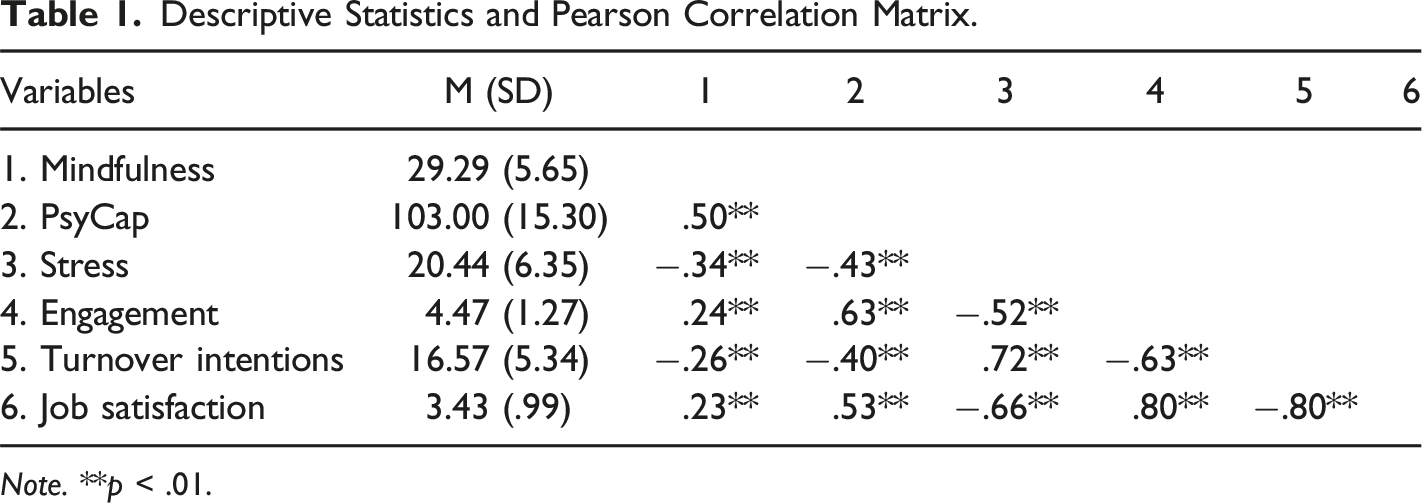
Note. **p < .01.
Structural Equation Model for Engagement
Factor loadings indicated an overall good measurement model. Factor loadings were all within acceptable range with items loading onto their expected scales (see Table 5, Appendix A.) For the structural model, while the χ2 test indicated poor model fit (χ2 (1216) = 3670.417, p < .001), this test is over-sensitive to sample size and may increase p-values in larger samples (Babyak & Green, 2010). To assess model fit, therefore, we report the Root Mean Square Error of Approximation (RMSEA) and the Goodness of Fit (GFI). RMSEA values between .05 and .08 indicate close model fit and GFI cut-offs of .90 and .95 are suggested for good and excellent model fit, respectively (Hooper et al., 2008; Hu & Bentler, 1999; Schumacker & Lomax, 2015). The RMSEA exhibited a good model fit (.084, 95% CI [.081, .088]) as did the GFI (.936).
Mindfulness and Engagement coefficients.
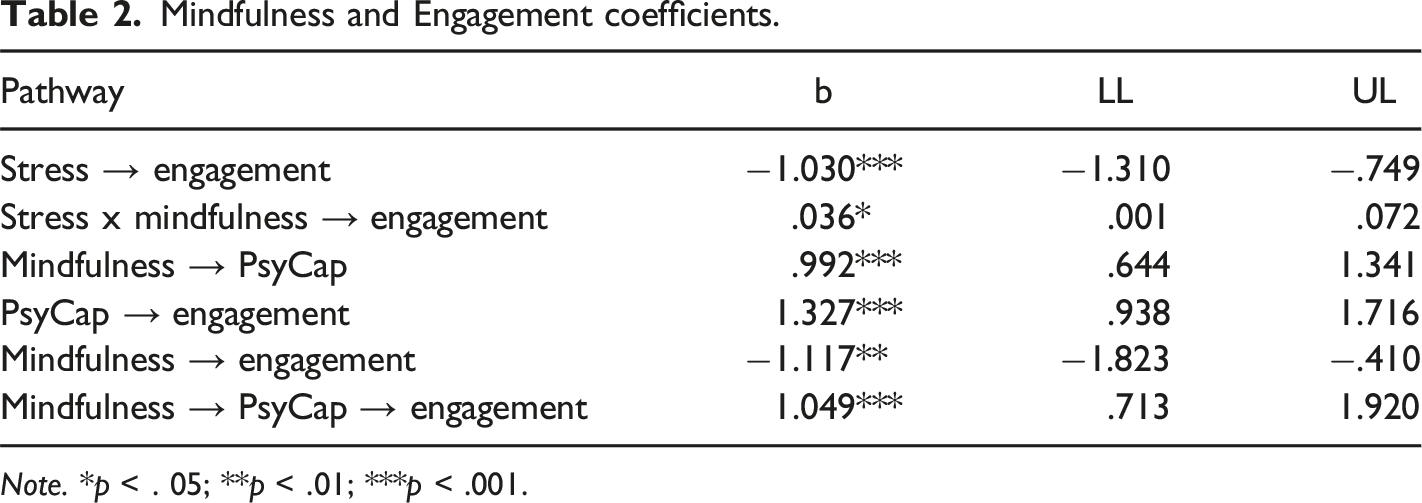
Note. *p < . 05; **p < .01; ***p < .001.
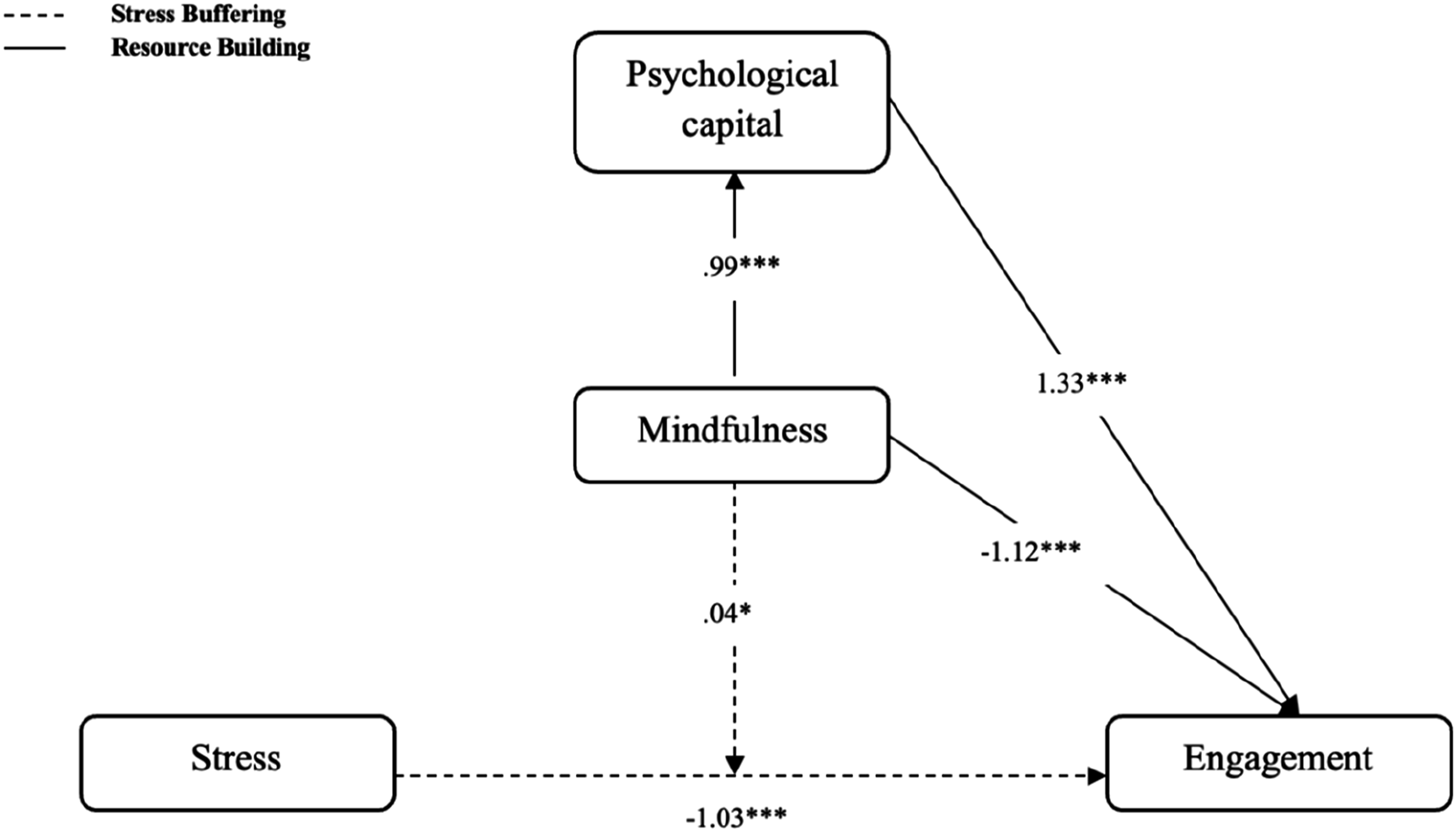
Path diagram with engagement as outcome variable with unstandardised regression weights. Note. Measurement model omitted for clarity.
As predicted, mindfulness had a significant direct effect on PsyCap (b = .992, p < .001) and the direct effect of PsyCap on engagement was positive and significant (b = 1.327, p < .001). The indirect effect of mindfulness on engagement through PsyCap was significant (b = 1.049 p < .001) while the direct effect of mindfulness on engagement was negative and significant (b = −1.117, p < .01). This shows support for the hypothesis that psychological capital plays a mediating role in the relationship between mindfulness and work engagement.
Structural Equation Model for Job Satisfaction
Factors all loaded onto the expected scales, indicating an overall good model fit. As expected, the χ2 test did not indicate good model fit (χ2 (1026) = 3282.553, p < .001). Both the RMSEA (.087, 95% CI [.083, .090]) and the GFI (.932) indicated decent fit. The results of the job satisfaction model are summarized in Figure 3 and detailed in Table 3. As hypothesized stress had a negative significant effect on job satisfaction (b = −.906, p < .001). The interaction of stress and mindfulness on job satisfaction was significant (b = −.037, p < .05), suggesting a moderating effect. While the relationship remained negative, the negative impact of stress on job satisfaction was reduced at higher levels of mindfulness. This suggests that mindfulness can buffer the negative effects of stress on job satisfaction, aligning with our first hypothesis. Path diagram with job satisfaction as outcome variable with unstandardised regression weights. Note. Measurement model omitted for clarity. Mindfulness and Job Satisfaction coefficients. Note. *p < . 05; **p < .01; ***p < .001.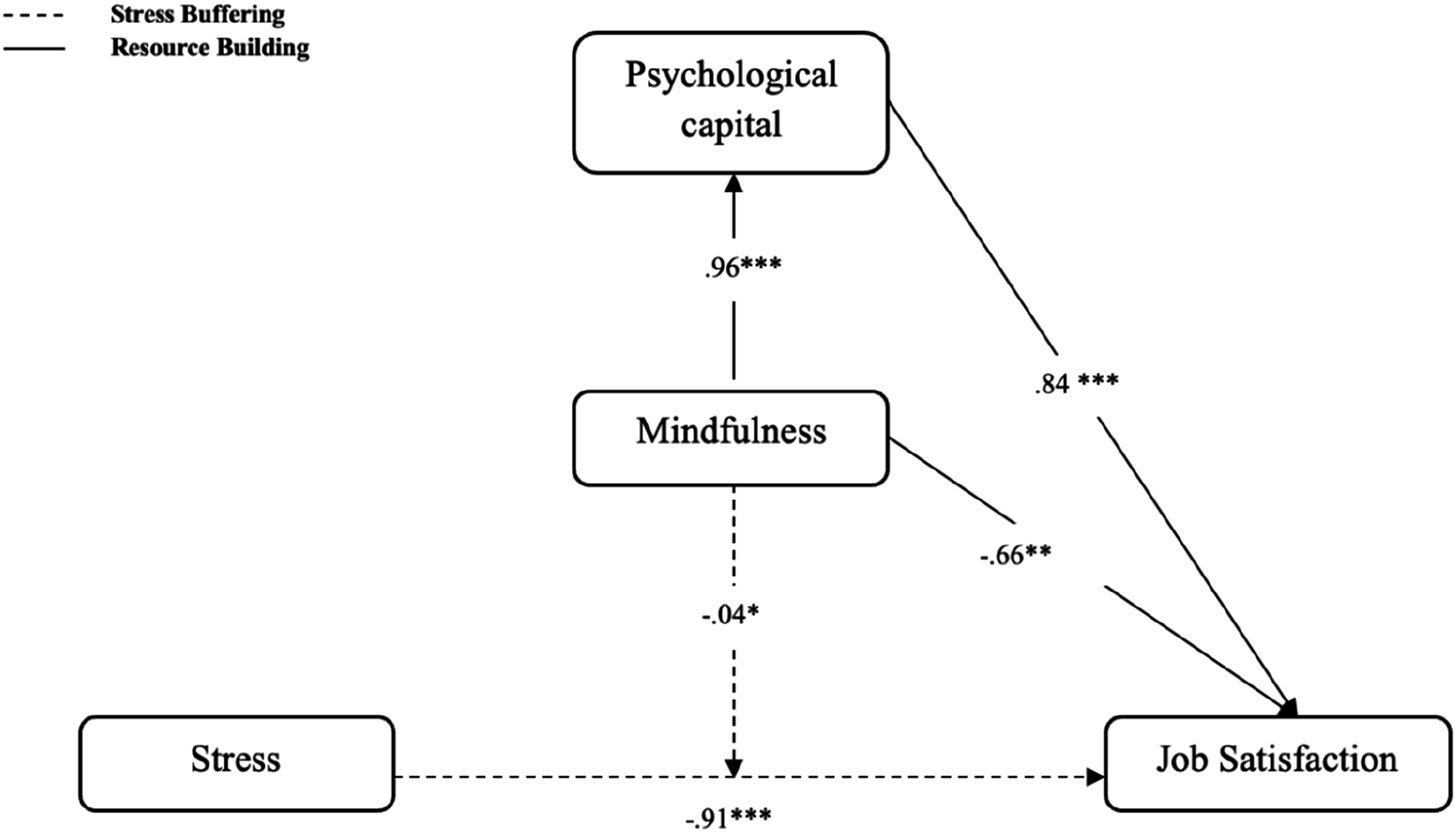
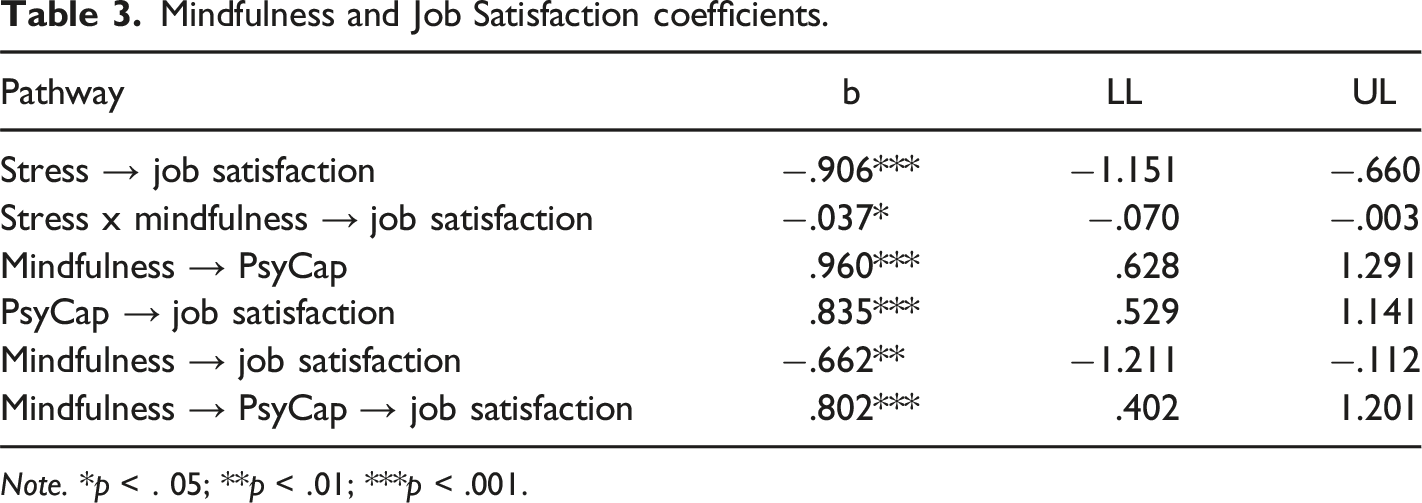
As hypothesized mindfulness was positively related to PsyCap (b = .960, p < .001) and PsyCap was positively related to job satisfaction (b = .835, p < .001). The direct effect of mindfulness on job satisfaction was negative and significant (b = −.662, p < .05). The indirect effect of mindfulness on job satisfaction through PsyCap was positive and significant (b = .802, p < .001). This shows support for our second hypothesis.
Structural Equation Model for Turnover Intentions
Factor loadings were all within an acceptable range with items loading on their expected scales and indicating an overall good model fit. Again, the χ2 test indicated poor model fit (χ2 (1072) = 3384.976, p < .001) while both the RMSEA (.086, 95% CI [.083, .089]) and the GFI (.936) indicated a decent fit. Results of the full model are summarized in Figure 4 and detailed in Table 4. In line with our hypotheses, stress had a positive significant effect on turnover intentions (b = 1.054, p < .001). The interaction of stress and mindfulness on turnover intentions was also positive and significant (b = .042, p < .01), indicating a moderating effect. The relationship remained positive, but to a lesser degree, suggesting that higher levels of mindfulness can reduce the impact stress has on turnover intentions. This aligns with our first hypothesis. Path diagram with turnover intentions as outcome variable with unstandardised regression weights. Note. Measurement model omitted for clarity. Mindfulness and Turnover Intentions coefficients. Note. *p < . 05; **p < .01; ***p < .001.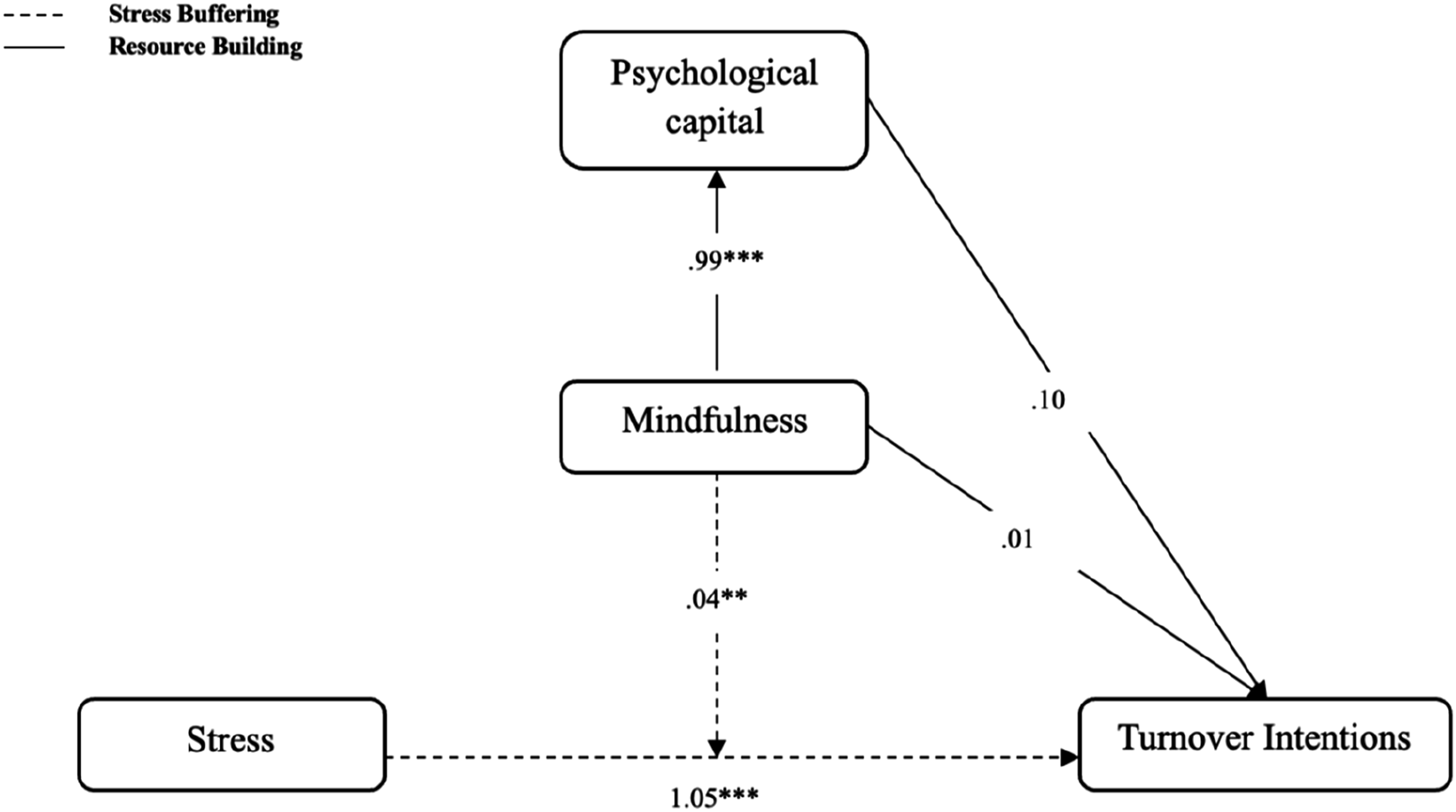
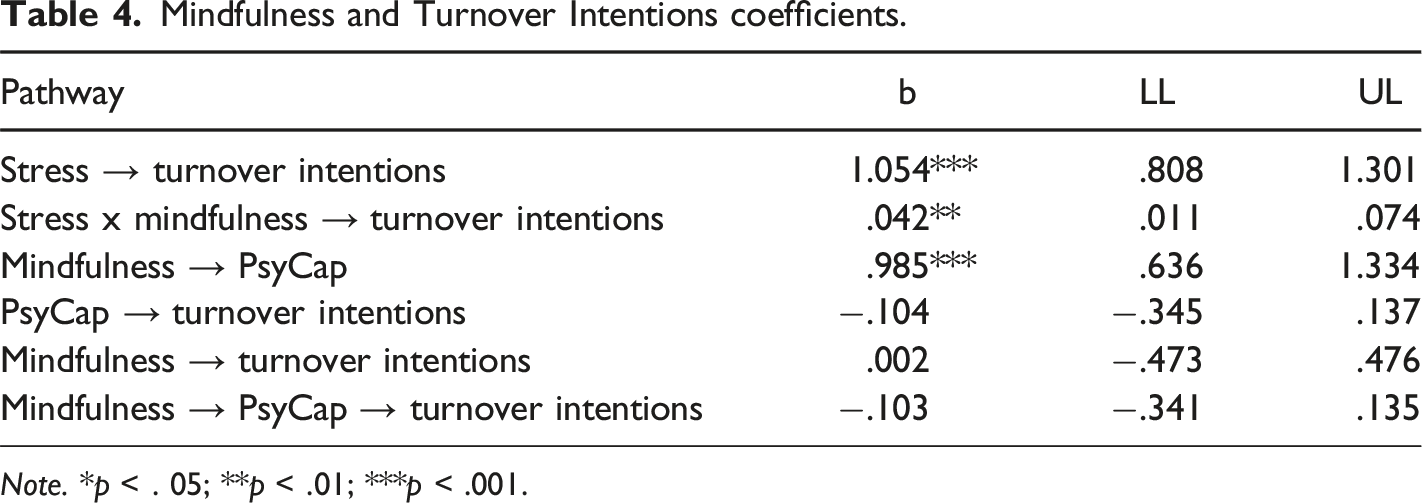
Mindfulness also had a significant effect on PsyCap (b = .985, p < .001) while PsyCap and mindfulness both had no significant effect on turnover intentions. The indirect effect of mindfulness on turnover intentions mediated by PsyCap was non-significant.
Discussion
Mindfulness and its wide range of associated positive outcomes have been a growing topic of interest in psychological research. In the workplace, mindfulness has been found to be positively correlated to several favourable outcomes including job satisfaction, work engagement and productivity while also protecting against burnout, absenteeism, and turnover (Hyland et al., 2015). Despite exponential growth in publications on mindfulness and its benefits, research has yet to identify the underlying working mechanisms that make mindfulness so powerful (Hölzel et al., 2011). The aim of this paper was to explore two possible pathways through which mindfulness exerts its positive influences, namely as a moderator of the stress response and by building psychological capital. We hypothesised that mindfulness buffers the relationship between work stress and three workplace outcomes (work engagement, job satisfaction and turnover intentions). Further, we hypothesised that psychological capital would mediate the relationship of mindfulness and the previously named workplace outcomes.
Mindfulness positively predicted PsyCap in all our models. This is in line with a vast body of research that has found these two concepts to be related (Avey et al., 2008; Kotzé, 2018; Malinowski & Lim, 2015). Further research by Jain and Singh (2016) showed that all four components increased following mindfulness-based stress reduction (MBSR) thus demonstrating that mindfulness could be a meaningful tool to develop PsyCap. Our findings suggest that mindfulness aids in developing psychological capital which in turn can have desirable effects on several work outcomes (Hussain, 2022).
Mindfulness and Engagement
Stress was found to have a negative effect on work engagement aligning with existing research (Fiabane et al., 2013; Padula et al., 2012). Moreover, we also found that high levels of mindfulness buffer the negative effect of stress on work engagement. This supports our first hypothesis and further provides evidence in support of the mindfulness stress buffering hypothesis discussed by Creswell and Lindsay (2014). In a high stress work environment, employees lack the necessary resources needed to invest in engagement and as a result reduce their work engagement level (Miranda et al., 2020). However, being high in mindfulness diminishes this negative effect so that stress no longer negatively impacts employees’ work engagement. This may be due to mindfulness increasing present moment awareness so that people’s attention may shift from experienced stress towards immersion in their jobs which characterises high levels of work engagement (Coo & Salanova, 2018; Tuckey et al., 2018).
Surprisingly, the direct relationship between mindfulness and engagement was negative. According to Zheng and Gunasekara (2018) for mindfulness to have a positive effect on work engagement individuals need to channel their mindfulness towards nurturing positive emotions and resources which can help to foster engagement. Research by Leroy (2013) found that the positive effect of mindfulness on work engagement is fully mediated by authentic functioning and employees need to engage with their work tasks out of self-motivated reasons. Further studies found that mindfulness has no direct effect on engagement and mediators like psychological flourishing, positive affect and PsyCap may play a role (Malinowski & Lim, 2015; Zheng et al., 2018). Our study found that the positive correlation between mindfulness and engagement turns negative when partialing out its shared variance with PsyCap. This ties in with the finding of PsyCap mediating the relationship between mindfulness and work engagement and suggests that mindfulness alone may have a negative effect on engagement directly, but it can increase PsyCap which in turn increases engagement. This is in line with previous research by Malinowski and Lim (2015) who found that mindfulness acts positively on engagement by increasing hope, optimism, self-efficacy and resilience. More personal resources increase dedication and commitment towards goals as more resources facilitate accomplishment and pursuit of goals leading to greater work engagement (Hussain, 2022). Engagement has been linked to positive emotions including joy, enthusiasm and gratitude (Rahmi et al., 2021) and is associated with other positive workplace outcomes such as job satisfaction, job performance and happiness at work (Alarcon & Edwards, 2011; Bakker & Oerlemans, 2016; Hanaysha, 2016). These results suggest that it is not mindfulness itself that accounts for heightened work engagement but its influence on and shared variance with psychological capital.
Mindfulness and Job Satisfaction
As expected, stress had a negative effect on job satisfaction. In line with our first hypothesis, mindfulness was able to buffer this relationship so that the negative effect of stress on job satisfaction decreases when individuals possess higher levels of trait mindfulness. These individuals have a higher ability to self-regulate and adapt to stressful situations (Andrews et al., 2014). By focusing on the present moment in a receptive and non-judgmental way, mindfulness facilitates adaptive appraisal of stressful events so that challenges are interpreted as less stressful. This shift in perspective contributes to positive affective reactions which lead to a more positive evaluation of one’s work situation, enhancing job satisfaction (Hülsheger et al., 2013).
Our study found mindfulness to have a negative effect on job satisfaction. This is surprising as previous studies have found mindfulness to be positively related to job satisfaction. Here too, when partialling out the shared variance with psychological capital, the correlation between mindfulness and job satisfaction becomes negative, suggesting that the positive effects may be due to other underlying constructs and mediating mechanisms such as PsyCap. Song et al. (2021) found that mindfulness had an indirect effect on job satisfaction through positive emotions and basic psychological needs. Binu Raj et al. (2023) found mental well-being and physical well-being to have a mediating role and Yin et al. (2024) identified self-efficacy as a mediator between mindfulness and job satisfaction. The negative relationship may also be explained by the fact that people who have high mindfulness tend to have a heightened awareness of their thoughts and emotions (Brown & Ryan, 2004) which can make them more attuned to dissatisfaction. The removal of the facet non-reactivity from the FFMQ measurement scale of mindfulness may have played a role as well. Non-reactivity plays a stronger role in the regulation of negative emotions than the other facets (Hülsheger & Alberts, 2021), so removing these items from our scales may have led to a less nuanced understanding of mindfulness and its relationship with job satisfaction.
In line with our second hypothesis, PsyCap mediated the relationship between mindfulness and job satisfaction. This aligns with previous research by Hussain (2022) who found that psychological capital mediated the effect mindfulness had on several work outcomes such as job performance, organizational citizenship behaviour and job engagement. Lin et al. (2020) found especially resilience to play a role as a mediator between mindfulness and job satisfaction. Hope and optimism foster a higher belief in success and self-efficacy supports self-trust in one’s own abilities promoting higher job satisfaction in those with high PsyCap (Luthans et al., 2007). These findings highlight the importance of a combined effect of both mindfulness and PsyCap on job satisfaction and suggest that mindfulness may not be a sole contributor to increased job satisfaction but may be executing its effects through other underlying mechanisms and shared variances with mediators.
Mindfulness and Turnover Intentions
As expected, stress was positively related to turnover intentions, aligning with research that has reported this relationship in the past (Ahn & Wang, 2019; Duraisingam et al., 2009; Liu & Onwuegbuzie, 2012; Mann et al., 2004). Mindfulness was found to buffer this relationship and diminish the negative effects of stress on turnover intentions which support our first hypothesis. The effect of stress on turnover intentions moderated by mindfulness was still negative but to a smaller degree. To our best knowledge, no study so far has examined the moderating role of mindfulness on the relationship between work stress and turnover intentions. However, existing studies have shown mindfulness to be negatively related to turnover intentions (Dane & Brummel, 2014; Lee et al., 2020; Reb et al., 2017). Na-Nan (2023) found that positive thinking which is tightly interwoven with mindfulness moderated the relationship between work stress and turnover intentions. Mindful people generally tend to have more positive outlooks on life and see work stress as a challenge they can successfully deal with rather than wanting to quit their work (Donaldson et al., 2019). Our findings show that mindfulness can be a meaningful tool to lower the effect of work stress in producing turnover intentions.
The direct effect of mindfulness on turnover intentions was non-significant as was the mediating effect of PsyCap on this relationship. It could be that other variables play a more pronounced role in determining turnover intentions at work. For example, Rebenu et al. (2017) suggest that the relationship between mindfulness and turnover intentions may be mediated through emotional exhaustion. In addition, Andrews et al. (2014) found indirect effects of mindfulness on turnover intentions via self-regulation and job satisfaction.
Theoretical Contributions
Work stress was negatively related to work engagement, job satisfaction and turnover intentions. This highlights the importance of lowering stress levels at work to prevent negative outcomes for both the employee and organisations.
We were able to further support the mindfulness stress buffering hypothesis proposed by Creswell and Lindsay (2014) and found evidence that being mindful could be used as a meaningful tool to protect against the negative effects of work stress on several work outcomes. High levels of mindfulness enable people to respond to stress with more awareness and acceptance which enhances access to personal coping resources (Bergin & Pakenham, 2016; Bränström et al., 2011). Moreover, mindful people have a better ability to regulate their emotional response to stress and are able to refrain from making negative stress appraisals resulting in lower experienced stress (Hülsheger & Alberts, 2021; Lazarus & Folkman, 1984).
The current study found that mindfulness was positively associated with psychological capital, a positive construct comprised of the four positive psychology resources hope, optimism, self-efficacy and resilience. We demonstrated the effects of mindfulness through PsyCap on a number of desirable workplace outcomes including job satisfaction and work engagement.
Practical Implications
Our study demonstrated that mindfulness may positively influence workplace outcomes via two distinct pathways that operate simultaneously: by mitigating the negative effects of stress and by building personal resources.
Stress Buffering
According to the mindfulness stress buffering hypothesis, mindfulness can act as a protective factor against the adverse effects of stress (Creswell & Lindsay, 2014). Previous studies have shown that mindfulness can buffer the effect that stress has on psychological well-being such as depression and anxiety (Bergin & Pakenham, 2016; Bränström et al., 2011; Marks et al., 2010) or its effect on biological measures of stress such as heightened cortisol levels (Brown et al., 2012). We advance the stress buffering hypothesis by being the first study to test whether trait mindfulness can buffer the effect of work stress on a range of relevant work outcomes. We were able to find support for this proposition by demonstrating that being mindful can buffer the negative outcomes of work stress for certain work outcomes, namely work engagement, job satisfaction and turnover intentions. This suggests that mindfulness not only impacts psychological responses to everyday stress but also buffers work stress and can protect against unfavourable work outcomes. Previous research has shown that mindfulness training programs can offer an effective approach to enhancing trait mindfulness which can increase stress resilience (Choi et al., 2024; Johnson et al., 2020). Trainings should thus be considered in the workplace.
Resource Building
Previous research has found mindfulness and psychological capital to be two related concepts (Avey et al., 2009; Bi & Ye, 2021; Kotzé, 2018; Li & Li, 2020) and other studies have investigated several possible mediating mechanisms linking mindfulness to job outcomes (Charoensukmongkol & Suthatorn, 2018; Jha, 2015; Malinowski & Lim, 2015; Nübold, 2021). However, we suggested a specific resource building mechanism in which mindfulness operates through the enhancement of positive personal resources that are connected to beneficial workplace outcomes. Results showed that being high in mindfulness is predictive of possessing higher personal resources. PsyCap was found to be a significant mediator for work engagement and job satisfaction which highlights the enhancement of personal resources as a key mechanism of mindfulness. Our results suggest that it may not be mindfulness itself that facilitates positive results but rather its potential to build resources that benefit individuals in the workplace. In our study, the mediating effect was only found for two out of three tested outcomes. It may be that different mechanisms come into play depending on the outcome. Previous research has also demonstrated that different facets of mindfulness can predict different outcomes. In general, awareness and attention seem to be connected to positive outcomes whereas non-judgment and non-reactivity predict negative outcomes (Cameron & Frederickson, 2015). This could explain why we found mindfulness to buffer stress for some outcomes but not all since we did use separate factors and removed observing and non-reactivity from the FFMQ scale. We therefore, suggest embracing a multi-faceted perspective on mindfulness that highlights how different components of mindfulness relate to different work outcomes.
Our results highlight the importance of fostering mindfulness in employees to protect against the negative effects of stress. Mindfulness based trainings such as MBSR are a meaningful tool to enhance both trait and state mindfulness and have also been shown to build psychological capital (Choi et al., 2024; Jain & Singh, 2016). Further, coaching and PsyCap interventions (PCI) are useful for developing psychological capital (Luthans & Youssef-Morgan, 2017). Research has revealed that mindfulness-based interventions at work can improve mindfulness, compassion (Vonderlin et al., 2020), emotional intelligence, resilience (Christopher et al., 2016) attentional performance, and working memory capacity (Jha et al., 2015; Jha et al., 2015). Moreover, employees experiencing adverse situations in the workplace can make use of mindfulness by engaging in brief exercises such as on-the-spot mindfulness interventions that consists of short meditations lasting only a few minutes which have shown immediate effects such as improved focus and reduced sensitivity to negative stimuli (Hafenbrack, 2017). This collective evidence emphasizes the benefits of mindfulness trainings.
Nonetheless, while mindfulness promises a number of benefits, it is important to note that mindfulness is not the solution to everything. Our findings highlight that mindfulness seems to promote some work outcomes better than others and while being high in mindfulness seems to have stress-buffering qualities, it might not be mindfulness itself that promotes work outcomes but its close interrelation with PsyCap. This raises the question of whether workplace interventions should focus on developing personal resources rather than mindfulness. We suggest that organisations should offer employees access to both mindfulness and resource building trainings like the ones discussed above to achieve the best outcomes.
Limitations and Directions
The study shows a few limitations. First, the study was of cross-sectional nature, therefore, although we can identify relationship pathways, we cannot infer casual relationships. Despite this, cross sectional designs can still yield meaningful results when used appropriately and are an invaluable tool, especially in novel areas of inquiry. According to Spector (2019), cross-sectional approaches are an efficient tool for investigating important organisational phenomena. Findings about associations between variables even in the absence of established causality serve as an important basis for developing theories and interventions (Spector, 2019). To enhance the robustness of our findings, future research should combine cross-sectional data with longitudinal mindfulness interventions.
Our study measured mindfulness as a unidimensional construct, however, several studies have suggested mindfulness could also be conceptualised as a multifactor construct in which different facets operate in different ways and impact different outcomes (Cameron & Frederickson, 2015; Coffey et al., 2010; Hülsheger & Alberts, 2021). To achieve a more nuanced understanding, future research should explore mindfulness utilising a multifactorial approach.
Additionally, the study did not account for all potential confounding variables. Factors such as certain personality characteristics, cultural upbringing and external life events could confound the results. Moreover, previous experience with mindfulness practice may have influenced self-reported mindfulness. Further studies should aim to incorporate a broader range of variables to provide better evidence of our findings. Collecting data at several different time points lowers the risks of external events influencing participants’ answers.
Lastly, the sample was relatively small and ethnically homogenous, with most participants being of Caucasian heritage. This limits the generalizability across more diverse populations. This is especially important since mindfulness has its roots in Eastern cultures and religions such as Buddhism, Hinduism and Taoism where mindfulness practices play an important role and are integrated into daily life (Kang & Whittingham, 2010). These cultures may have different interpretations and experiences of mindfulness that differ from Western views. Research including a more diverse sample could shed light on how and if mindfulness affects workplace outcomes in these cultures.
Conclusion
The results of this study make an important contribution to the understanding of the working mechanisms of mindfulness in the workplace. We were able to find evidence that mindfulness works both by buffering stress and by building psychological capital. This adds to an existing body of research confirming the importance of incorporating mindfulness in the workplace. Organisations should also aim to establish conditions for employees to develop personal resources like hope, optimism, resilience and self-efficacy. Future research should investigate further mechanisms of mindfulness by studying other mediators and moderators. Additionally, studies should aim to conceptualise and assess mindfulness as a multi-factor construct in which different components may have different influences. Finally, future studies could look further into the mindfulness stress buffering hypothesis, examining if mindfulness is still beneficial under low stress conditions.
Footnotes
Declaration of Conflicting Interests
The author(s) declared no potential conflicts of interest with respect to the research, authorship, and/or publication of this article.
Funding
This study was supported by the University of Waikato Doctoral Scholarship.
Ethical Approval
The study was approved by the University of Waikato Human Research Ethics Committee.
Informed Consent
Digital informed consent was given by all participants.

Data Availability Statement
The data that support the findings of this study are available upon reasonable request.
Appendix
Factor Loadings. Note. Confirmatory Factor Analysis conducted as part of a Structural Equation Model using Maximum Likelihood estimation.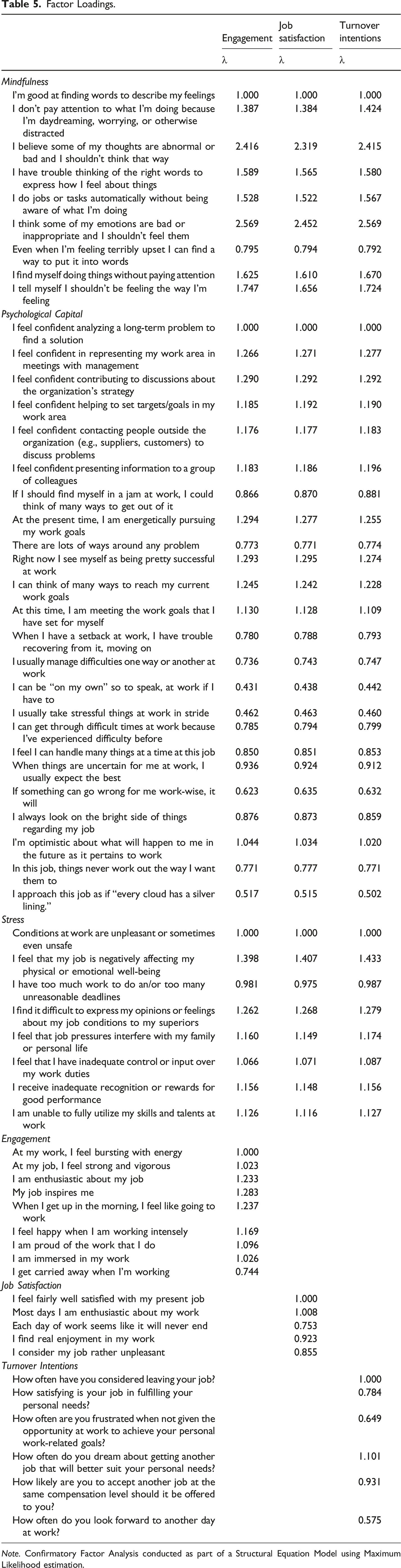
Engagement
Job satisfaction
Turnover intentions
λ
λ
λ
Mindfulness
I’m good at finding words to describe my feelings
1.000
1.000
1.000
I don’t pay attention to what I’m doing because I’m daydreaming, worrying, or otherwise distracted
1.387
1.384
1.424
I believe some of my thoughts are abnormal or bad and I shouldn’t think that way
2.416
2.319
2.415
I have trouble thinking of the right words to express how I feel about things
1.589
1.565
1.580
I do jobs or tasks automatically without being aware of what I’m doing
1.528
1.522
1.567
I think some of my emotions are bad or inappropriate and I shouldn’t feel them
2.569
2.452
2.569
Even when I’m feeling terribly upset I can find a way to put it into words
0.795
0.794
0.792
I find myself doing things without paying attention
1.625
1.610
1.670
I tell myself I shouldn’t be feeling the way I’m feeling
1.747
1.656
1.724
Psychological Capital
I feel confident analyzing a long-term problem to find a solution
1.000
1.000
1.000
I feel confident in representing my work area in meetings with management
1.266
1.271
1.277
I feel confident contributing to discussions about the organization’s strategy
1.290
1.292
1.292
I feel confident helping to set targets/goals in my work area
1.185
1.192
1.190
I feel confident contacting people outside the organization (e.g., suppliers, customers) to discuss problems
1.176
1.177
1.183
I feel confident presenting information to a group of colleagues
1.183
1.186
1.196
If I should find myself in a jam at work, I could think of many ways to get out of it
0.866
0.870
0.881
At the present time, I am energetically pursuing my work goals
1.294
1.277
1.255
There are lots of ways around any problem
0.773
0.771
0.774
Right now I see myself as being pretty successful at work
1.293
1.295
1.274
I can think of many ways to reach my current work goals
1.245
1.242
1.228
At this time, I am meeting the work goals that I have set for myself
1.130
1.128
1.109
When I have a setback at work, I have trouble recovering from it, moving on
0.780
0.788
0.793
I usually manage difficulties one way or another at work
0.736
0.743
0.747
I can be “on my own” so to speak, at work if I have to
0.431
0.438
0.442
I usually take stressful things at work in stride
0.462
0.463
0.460
I can get through difficult times at work because I’ve experienced difficulty before
0.785
0.794
0.799
I feel I can handle many things at a time at this job
0.850
0.851
0.853
When things are uncertain for me at work, I usually expect the best
0.936
0.924
0.912
If something can go wrong for me work-wise, it will
0.623
0.635
0.632
I always look on the bright side of things regarding my job
0.876
0.873
0.859
I’m optimistic about what will happen to me in the future as it pertains to work
1.044
1.034
1.020
In this job, things never work out the way I want them to
0.771
0.777
0.771
I approach this job as if “every cloud has a silver lining.”
0.517
0.515
0.502
Stress
Conditions at work are unpleasant or sometimes even unsafe
1.000
1.000
1.000
I feel that my job is negatively affecting my physical or emotional well-being
1.398
1.407
1.433
I have too much work to do an/or too many unreasonable deadlines
0.981
0.975
0.987
I find it difficult to express my opinions or feelings about my job conditions to my superiors
1.262
1.268
1.279
I feel that job pressures interfere with my family or personal life
1.160
1.149
1.174
I feel that I have inadequate control or input over my work duties
1.066
1.071
1.087
I receive inadequate recognition or rewards for good performance
1.156
1.148
1.156
I am unable to fully utilize my skills and talents at work
1.126
1.116
1.127
Engagement
At my work, I feel bursting with energy
1.000
At my job, I feel strong and vigorous
1.023
I am enthusiastic about my job
1.233
My job inspires me
1.283
When I get up in the morning, I feel like going to work
1.237
I feel happy when I am working intensely
1.169
I am proud of the work that I do
1.096
I am immersed in my work
1.026
I get carried away when I’m working
0.744
Job Satisfaction
I feel fairly well satisfied with my present job
1.000
Most days I am enthusiastic about my work
1.008
Each day of work seems like it will never end
0.753
I find real enjoyment in my work
0.923
I consider my job rather unpleasant
0.855
Turnover Intentions
How often have you considered leaving your job?
1.000
How satisfying is your job in fulfilling your personal needs?
0.784
How often are you frustrated when not given the opportunity at work to achieve your personal work-related goals?
0.649
How often do you dream about getting another job that will better suit your personal needs?
1.101
How likely are you to accept another job at the same compensation level should it be offered to you?
0.931
How often do you look forward to another day at work?
0.575