




Abstract
Establishing a work environment that is conducive to creativity and innovation is a key priority for organizations of all kinds. A variety of measures have been developed to assess the climate and culture for creativity and innovation and some limited literature is available that reviews these. Those sources that do review these assessments usually include only a handful of measures and their reviews are brief. The purpose of this article is to comprehensively summarize forty years of research, development, and application of one of these assessments called the Situational Outlook Questionnaire (SOQ). This summary includes an overview of the development, conceptual and theoretical foundations, psychometric characteristics, as well as the status of the evidence for reliability and validity of the SOQ. It also includes three new analyses of data that illustrate its relationship to a variety of other variables. Finally, although much progress has been made, the article concludes by suggesting a number of future fruitful pathways for further inquiry.
Keywords
Establishing conditions that support creativity and innovation is a major challenge for all organizations to help them survive and grow. Having measures that provide for productive assessment of this kind of climate can help those who lead and manage organizations. One such measure, the Situational Outlook Questionnaire has been available since the 1980s (Isaksen, 2007; Isaksen et al., 1999).
A wide variety of measures exists, yet few attempts have been made to synthesize and evaluate measures of climate for creativity and innovation (e.g., Dubina, 2013; Mathisen & Einarsen, 2004; Moultrie & Young, 2009). These have focused on a select handful of assessments, and some have included rather cursory reviews (e.g., da Silva Veiga & Cortez, 2022). Those who may be considering using an assessment of the climate or work environment for creativity and innovation need to have a more comprehensive picture of any measure they may apply.
The purpose of this article is to provide potential researchers and practitioners a comprehensive summary of the Situational Outlook Questionnaire (SOQ). This includes up-to-date psychometrics, and evidence of reliability, validity, and uses of the assessment. This article represents the most current and comprehensive overview of more than 40 years of research, development, and practical application of the SOQ. Further, we present three new analyses of SOQ data to illustrate aspects of its validity.
The Creative Climate Project
The impetus for the creative climate project stems from a program of research and development initially focused on the impact of learning and applying creative problem solving (CPS). Earlier work on the Creative Studies Project had demonstrated the effectiveness of learning and applying CPS (Parnes, 1987). This program of research spawned two additional areas of inquiry. The first was a series of impact studies to find out what aspects of CPS worked in applied settings. This resulted in significant changes to our instructional efforts (Isaksen & Treffinger, 2004). The second area of inquiry was the Cognitive Styles Project (Isaksen, 2004) that focused on improving our understanding individual differences associated with learning and applying CPS.
The importance of the work environment emerged as a key theme from our continuous efforts to study the impact of learning CPS (e.g., Isaksen, 2023c). Participants who returned to their workplaces felt that they had the means, but their motive and opportunity to apply what they learned greatly depended on the nature of their work environment. This led to the formation of the key guiding question for our inquiry: what (aspects of CPS) works (has impact), for whom (different styles), under what circumstances (climate)?
The impetus for the creative climate project was based on practical experiences and needs. Yet, we realized that our work on the work environment (climate and culture) for creativity and innovation sits within a complex conceptual and theoretical landscape – all four constructs are complex, muti-dimensional, and multi-level.
The creative climate project, through cooperative efforts of other scholars, has yielded 74 dissertations and theses, 246 published articles, chapters, books and monographs. One keystone of the project has been the development and validation of the Situational Outlook Questionnaire (SOQ).
Conceptual and Theoretical Foundations of the SOQ
Our primary reliance has been on theories that place creativity within a complex social system (e.g., Csikszentmihalyi, 2014; Hennessey, 2017; Katz & Kahn, 1978) and consider an interactionist approach to creative behavior as influenced by both the person and situation (e.g. Tett et al., 2021; Woodman et al., 1993; Woodman & Schoenfeldt, 1989, 1990). This led us to embrace an ecological approach to our program of research (e.g. Isaksen et al., 1993; Staber, 2011; Withagen & van der Kamp, 2018).
The idea that people observe patterns of behavior, and that these observations stem from the interaction of multiple factors within the larger psychosocial organizational environment is supported by a diversity of theories. Over the past 40 years we’ve identified many of these theoretical foundations that are aligned and complementary with the importance of social conditions influencing creative behavior. Many of these theories belong to the person-environment fit family (De Cooman & Vleugels, 2022). For example, Social Cognitive Theory posits that behavior stems from the dynamic interaction of people with their environment (e.g. Bandura, 2001, 2018).
The creative climate project was influenced by the groundbreaking work of Göran Ekvall, a Swedish industrial psychologist who was one of the earliest scholars who recognized the importance of the climate for creativity. His work on employee suggestion systems led him to see that the nature of the climate, beyond individual characteristics of the suggesters, made a difference for innovation (Ekvall, 1976). His review of literature led to a bounded definition of creative climate, a preliminary conceptual model, and a measure called the Creative Climate Questionnaire (Ekvall, 1983). His visit to us in 1984 was foundational to our program of research. We see climate as the consistent and persistent observations of patterns of behavior and interaction that characterize life within the organization. A creative climate is those observed patterns of behavior that influence creativity and innovation. Creativity is defined as the creation of a valuable, useful new product, service, idea, procedure, or process by individuals working together in a complex social system (Woodman, 2014, p. 472). Innovation is focused on the adoption, execution, and implementation of these new outcomes.
Many factors within the broader work environment influence the climate for creativity and innovation. This climate also influences many outcomes within the workplace. We have built on Ekvall’s (1987; 1996) original conceptual model by integrating Burke and Litwin’s (1992) work on organizational change. Our conceptual model’s origin and use are more fully elaborated in Isaksen (2013; 2017; 2023a). This model presents climate as an intervening multi-level construct influenced by numerous antecedent factors and influences numerous outcomes and dependent constructs. A few key distinctions are noteworthy. The first is the placement of organizational culture as an antecedent to climate. Culture and climate are two primary constructs included within the literature on work environment (Ehrhardt et al., 2014; Schneider et al., 2017). In contrast to climate, organizational culture is conceived as shared values, beliefs, and assumptions reflecting the deeper identity of the organization, and can often exist at the preconscious level (Schneider et al., 2017). Climate is what people within the organization experience, and culture refers to what the organization values. Contrary to culture’s current salience in popular vernacular, the consensus is that organizational culture is an antecedent to climate – climate is considered an ‘artifact’ of culture (e.g. Ostroff et al., 2013; Schein, 2017) and an organizational attribute.
The second noteworthy issue relating to our conceptual model is the placement of leadership behavior as an antecedent to climate. The importance of leadership behavior in creating a climate for creativity, innovation, and change is well supported in the literature (e.g. Isaksen, 2017; Sheffield et al., 2022). Some measures of the climate for creativity and innovation include leadership as a climate dimension. Since leadership behavior is such an influential factor, we consider it as an antecedent to climate. For example, Ostroff et al. (2013: p. 652) argued that “the constructs of leadership and climate should be treated separately, and the behaviors and styles of supervisors should be viewed as triggers or antecedents of climate.” By treating leadership this way, deeper insights can be gleaned regarding the dynamics of how it influences climate (e.g. Ekvall & Arvonen, 1991; Sandvik et al., 2015).
The Development of the SOQ
Dimensions of the SOQ.
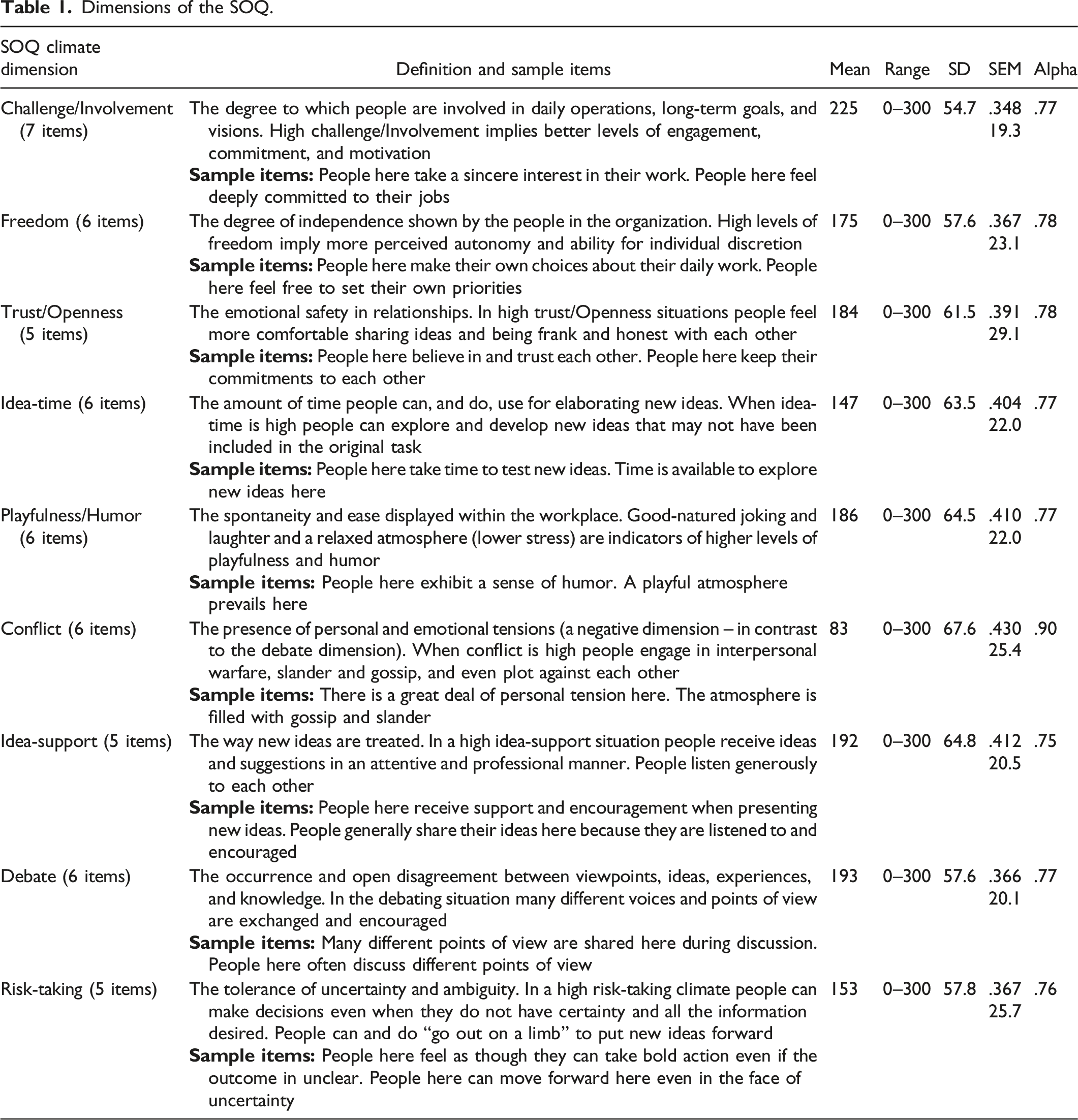
Descriptive Statistics
The climate dimensions of the SOQ are assessed quantitatively on a four-point Likert-type scale ranging from not at all applicable (zero) to applicable to a high degree (three). In 1991 we added additional open-ended narrative questions to allow participants to identify other salient factors with the work environment that were acting as helps, hinders, and actions they would take to improve their context for creativity. The SOQ is now a multi-method assessment that provides quantitative results for broad comparison, as well as narrative results allowing participants to identify other salient factors within the broader work environment and providing more depth regarding how the quantitative dimensions are playing out in the workplace.
Definitions, samples items, and descriptive statistics for each of these based on the current database including 24,675 subjects from 300 organizations is included in Table One. The average age of respondents was 42 years with a range from 18 to 81. The sample included 5800 females and 9051 males for the 14,851 people who provided their gender.
Intercorrelations of SOQ Dimensions.
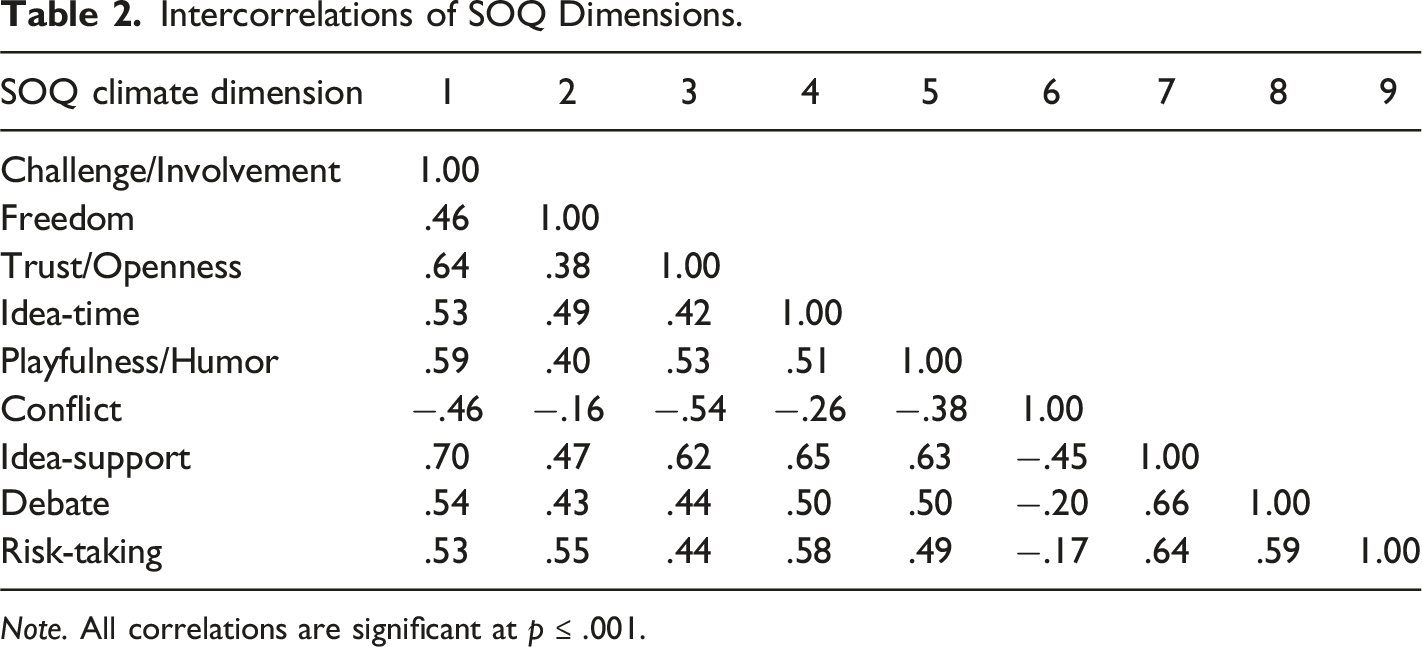
Note. All correlations are significant at p ≤ .001.
Reliability
The climate dimensions assessed by the English translation of the CCQ, and the SOQ have been shown to have adequate levels of internal reliability and stability over time (Isaksen, 2007; Isaksen & Ekvall, 2015a, 2015b; Isaksen et al., 1999). The average Cronbach’s alphas for the nine dimensions of the current version of the SOQ was .86, well above the generally accepted standard of .70. The average Guttman split half was .83, and the average Spearman Brown was .85.
The stability over time has been examined through several studies. For example, a longitudinal study of a high-tech company was conducted over a three-year period with assessments every three months. Ekvall (1993) reported that the scores over time were relatively stable. He was able to explain any observed differences based on specific factors and events within the organization. Another study included 798 subjects of similar level who attended a leadership development program. They included four different groups who attended the program, and each group completed the SOQ as a part of the workshop. The workshops were spread over a 7-month period. Differences across the four groups on the nine dimensions of the SOQ were tested via MANOVA and ANOVA. No significant differences were found. Another study was conducted to examine the stability of format to compare an online versus paper version of the SOQ. This study included 119 subjects who completed the SOQ (counterbalanced) once for each form. The average overall correlation between the two forms was .92.
Validity
The current standards include five interrelated sources of evidence comprising a contemporary understanding of validity (AERA, APA, & NCME, 2014). Validity is never fully accomplished as it includes a continuous effort to ensure that the assessment measures what it was designed to measure. The status of the validity of the SOQ is summarized below along the five sources contained within the current standards. Evidence of construct, content, concurrent, and criterion validity is shared within these sources.
Evidence Based on Test Content
The first source of evidence examines the relationship of the SOQ items and dimensions to its theoretical and conceptual rationale. There is substantial support in the literature for each of the nine dimensions of the SOQ (Isaksen, 2023b; Lauer, 1994). Throughout the iterative development process efforts were taken to document the explicit historical and conceptual foundations of the assessment (Isaksen & Ekvall, 2015a) and ensure that the SOQ adequately sampled the domain of the climate for creativity.
For example, Q-sort studies were performed along with other studies that provided support for relevance to the domain of creative climate. The precursor to the SOQ included one dimension called tension. After repeated factor analysis this dimension contained two different aspects of tension. One was tension among different points of view. Another kind of tension focused on hostility among people. This resulted in two dimensions going forward. One was renamed debate, the other conflict (Isaksen & Ekvall, 2010). This shift is consistent with the general conflict literature that makes a distinction between task and relationship conflict (e.g. Jimmieson et al., 2017).
Another shift in defining the dimensions resulted in fusing two dimensions within the early translation. The two dimensions were dynamism and liveliness and challenge and motivation. Again, repeated factor analysis showed nearly complete overlap resulting in a new more inclusive dimension called challenge and involvement.
One of the first to provide evidence of the fit between the dimensions and the domain of climate was a study of the relationship between the climate dimensions and the occurrence of occupational stress. Talbot et al. (1992) found that higher scores on the eight positive dimensions and lower scores on the Conflict dimension related to lower levels of stress. Similar findings were reported within the health care industry (Sandberg et al., 2018). Further support for relevance to the domain was provided by Turnipseed (1994) who studied the relationship between the social environment supportive of innovation and the dimensions of the SOQ. Puccio et al. (1995) examined the relationship between their Survey of Creative and Innovative Performance which assess the degree to which people feel the products they produce are creative, and the dimensions of the SOQ. They found support for the clear influence of climate on how people perceive their creative performance. Isaksen et al., (2001a) found support for the dimensions reflecting individuals’ perception for the support of creativity in their workplace. More recent studies have confirmed these findings (e.g. Biekart, 2014; Erickson, 2010; Knox, 2003). Isaksen and Lauer (2002) and Sandvik et al. (2018) expanded this inquiry and found support for a similar relationship at the team level.
More recent studies have examined the boundary conditions of the domain by making distinctions and exploring the relationships between the SOQ and other core constructs. For example, Sundgren et al. (2005) applied the dimensions of the SOQ as dependent variables and information sharing, intrinsic motivation and learning culture were found to be drivers of the climate for creativity within the pharmaceutical industry. Abdullah et al. (2006) found clear distinctions between organizational culture and the dimensions of the SOQ. Sellgren et al. (2008) found support for making distinctions between job satisfaction and the SOQ dimensions. O'Shea and Buckley (2007) provided an integrative conceptual overview and placed the SOQ within the larger domain of creativity and innovation. Turnipseed and Turnipseed (2013) explored the relationship between organizational citizenship behaviors and the SOQ dimensions. Afshari and Arshadi (2015) found clear distinctions among organizational structure, leadership, and climate as assessed by the SOQ. Douglas et al. (2017) conducted a case study to examine the relationship between the SOQ and organizational readiness to make change happen. Iqbal (2019) found evidence for the intervening nature of the SOQ dimensions between strategic human resource practices and organizational performance.
Finally, the SOQ technical materials have been subjected to external expert review. Porter (2010). Sample (2010, p. 550) reported: Ekvall, Isaksen, and associates make a strong argument for the effect of organizational climate on change, creativity, and innovation. The developers of the SOQ provide a solid foundation for the theory, nature, and context for change, including a useful distinction between an organization’s climate and culture. The history for the identification of dimensions and items for the SOQ, and its predecessor the CCQ, are supported by more than adequate attention to reliability, validity, and related analysis.
Evidence Based on Response Processes
This source of evidence relates to the ‘fit’ between the construct and the detailed nature of the performance or responses provided by those who complete the assessment. For example, Lauer and Isaksen (2001) studied the impact of gender, age, educational status, and years in current position on dimensional scores of the SOQ. Most of the comparisons were non-significant. Given the large sample size, some significant differences were observed and implications for interpretation were outlined. In general, females tended to have more positive scores on the dimensions. The relationship with age was significant, but the average correlation was very small at .07. Isaksen and Ekvall (2015b) reported the SOQ results for different occupational groups to demonstrate the similarity in results as well as the amount of time it took participants to complete the assessment. They examined item and scale responses, distributions, and correlations and found similarity across groups. They also found no significant differences between paper and digital versions of the SOQ (they correlated at .92). Übius et al. (2013) and Pupal (2020) examined the influence of cultural differences on the response processes for the SOQ.
Yström et al., (2015) conducted a mixed method study to examine the effects of open innovation on the climate for creativity. They applied the SOQ and conducted interviews with the participants of 26 partner organizations that innovate together. They found that the pursuit of uniformity of the climate needs to be questioned and that a plurality of climates may be required for open innovation. Olsson et al. (2019) also conducted a mixed-method study within Swedish retail organizations. They applied the SOQ dimensions through a quantitative survey and followed up with semi-structured interviews. The interviewees confirmed the findings on the dimensions and provided elaboration of other aspects of the work environment.
Evidence Based on Internal Structure
Principal Component Analysis (Promax Rotation) SOQ Version 7.
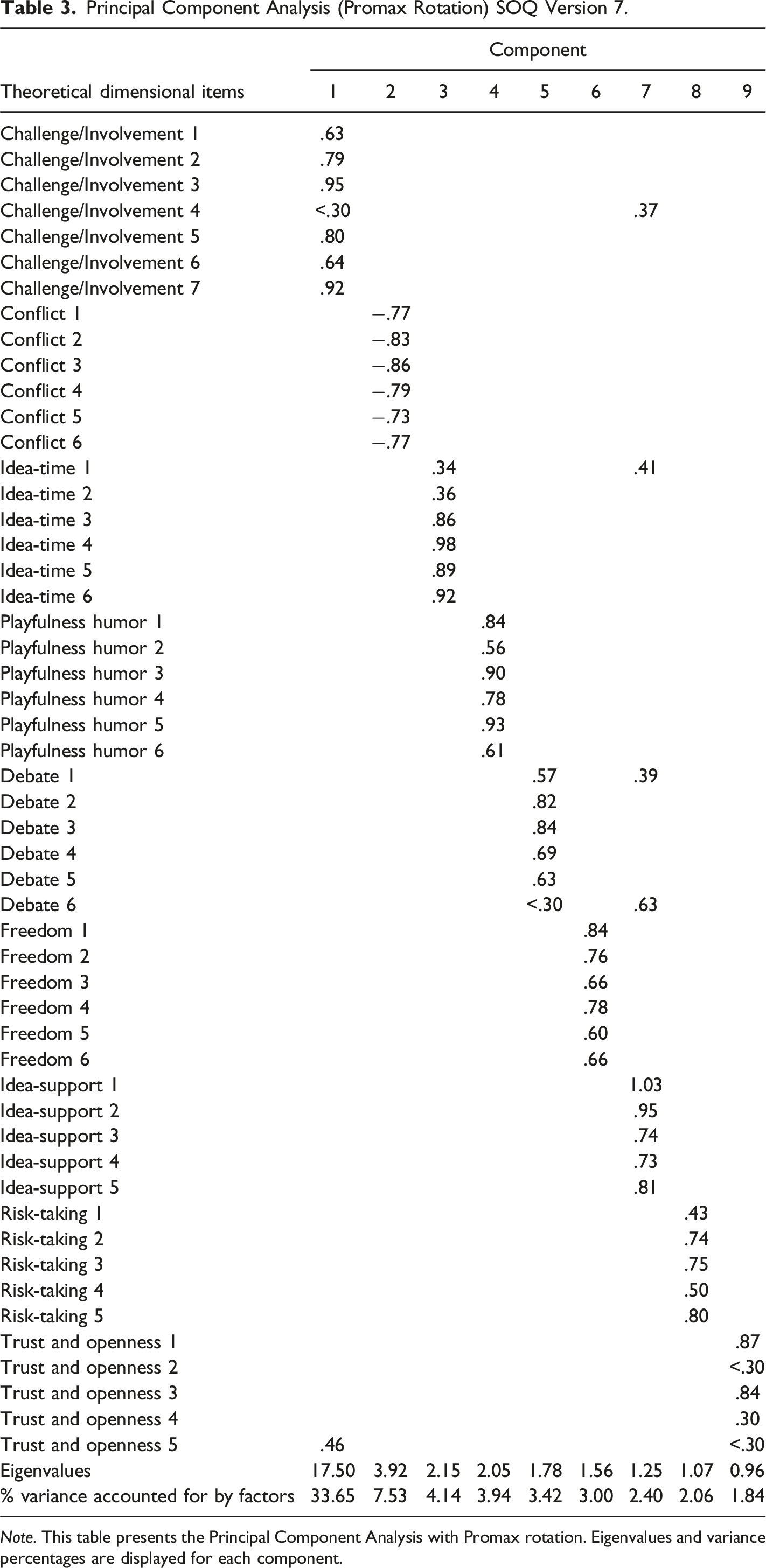
Note. This table presents the Principal Component Analysis with Promax rotation. Eigenvalues and variance percentages are displayed for each component.
Two studies have conducted confirmatory factor analysis on the SOQ. Isaksen and Aerts (2011) conducted a confirmatory factor analysis with 225 samples of convenience (N = 7345) resulting in an adequate fit of the nine-dimensional model (χ2 (1238) = 17,568, GFI = .88, AGFI = .87, TLI = .89, NFI = .89, and RMSEA = .047). Swinnen et al. (2019) conducted a confirmatory factor analysis with a sample of 180 aerospace engineers and reported adequate fit of the nine-dimensional model (χ2 = 2404.7, GFI = .87, AGFI = .85, TLI = .90, CFI = .91, and RMSEA = .05). These results are generally supportive of a nine-dimensional measurement model.
Evidence Based on Relationships With Other Variables
In addition to the studies reported above on test content, researchers have examined numerous convergent or concurrent, and discriminant or predictive factors associated with the SOQ. Ryhammar (1996) Ryhammar and Smith (1999) and Ryhammar and Andersson (2001) published a series of studies utilizing the Work Environment Inventory (WEI, Amabile & Gryskiewicz, 1989) an earlier version of KEYS - the Work Environment Inventory (Amabile et al., 1996). Ryhammar and colleagues found that the dimensions of the WEI that were climate variables correlated with the dimensions of the SOQ, but other WEI dimensions reflected aspects of the broader work environment.
The dimensions have successfully differentiated organizational levels of innovative productivity (e.g. Bertels et al., 2011; Ekvall, 1996; Nasurdin et al., 2014; Shanker et al., 2017). For example, Parry et al. (2009) examined the idea cycle time for new product development in 164 firms. They found that establishing a climate and work environment supporting freedom, idea time, idea support, as well as challenge and involvement reduced cycle time. Other studies have shown clear relationships between the SOQ dimensions and innovative work behavior (e.g. Kermani & Solhdoost, 2017). The dimensions have also shown positive relationships to higher sales volumes, market share, profitability, and greater impact from implementing new social and technical systems (like self-managed teams), in addition to implementing more complex work designs (e.g. Carlfjord et al., 2010; Davis, 2000; Firenze, 1998; Porzse et al., 2012).
Comparison of More and less Innovative Organizations.
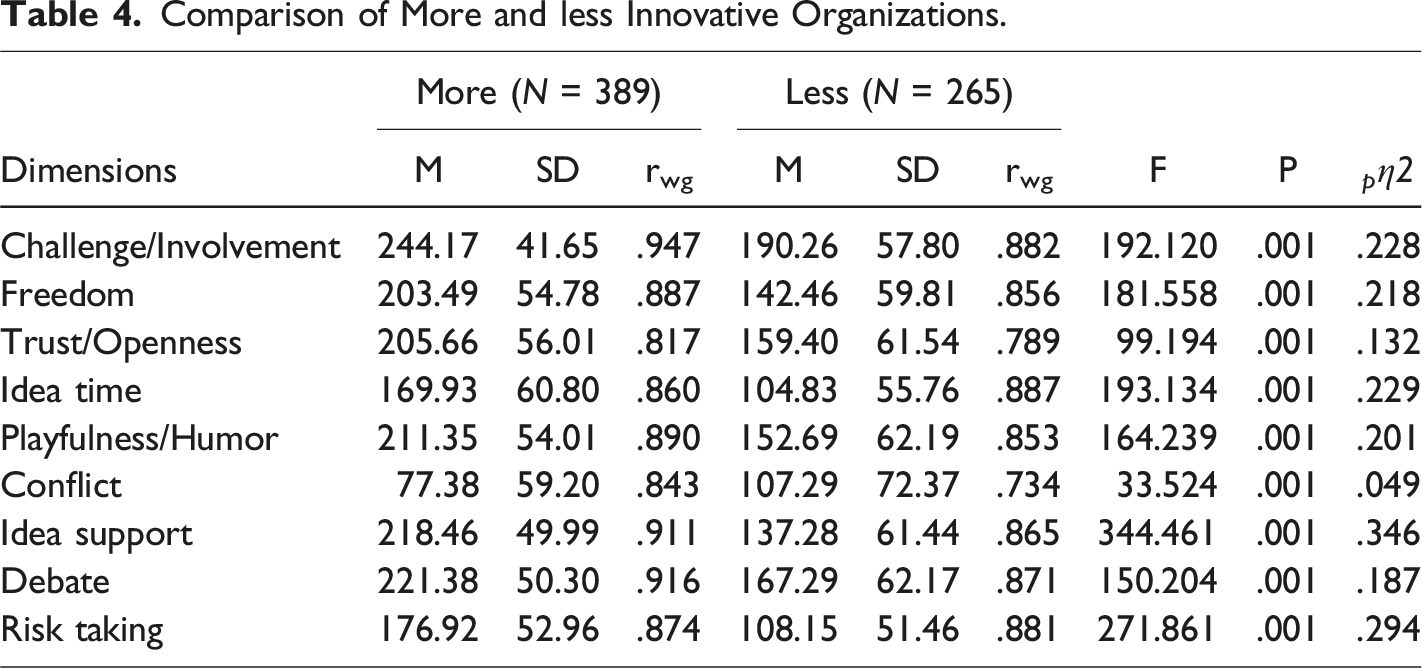
All nine dimensions yield significantly different scores when comparing the more and less innovative organization results. The results from these eight metrics are like Ekvall’s (1996) comparison of innovative versus stagnated organizations. The directionality of the dimensions is the same with minor variations across specific scores. There is general support for within group agreement, and eight of the nine dimensions yield a large effect size.
Since organizational innovation and creativity imply transformation and change, the dimensions have also been linked to climate that supports organizational change and transformation (e.g. Douglas et al., 2017; Lofquist & Isaksen, 2019), and organizational capacity to support entrepreneurship (Abbasinezhad, 2017), organizational resilience (Mafabi et al., 2015), and the ability of organizations to cope with the complexities of knowledge-intensive industries (Lone et al., 2014). The dimensions of the SOQ have also been shown to discriminate levels of personal and job satisfaction and well-being (e.g. Rasulzada & Dackert, 2009).
Isaksen et al., (2001b) studied the ability of the SOQ to discriminate between best and worst-case work situations. Since that initial study, additional data has been collected on subjects by three master of science theses (Hoßbach, 2019; Johansson & Kirkeby, 2024; Myhre & Skovli, 2015), a published research study (Isaksen & Aerts, 2011), as well as project team members as they have taught classes and workshops. This resulted in a final sample size of 1262 individuals. For those who provided their age (N = 789), the average was 32 years. For those who provided their gender (N = 696), there were 256 males, and 440 females.
Respondents completed the SOQ twice, once for a best-case and another for a worst-case situation. The best-case was defined as “an environment in which you felt you did your best work because it encouraged, nurtured, or supported your use of creativity.” The worst case was “characterized as an environment in which you felt unproductive because it discouraged, hindered, or interfered with your use of creativity.” The order of completion of the SOQ was counterbalanced for each of the samples of convenience.
The MANOVA results showed a significant interaction between the overall scores for best and worst-case SOQ results (Wilks’ Λ = 0.360, F (9, 2514) = 497.420, p < .001).
Comparison of Best and Worst-Case SOQ Results.
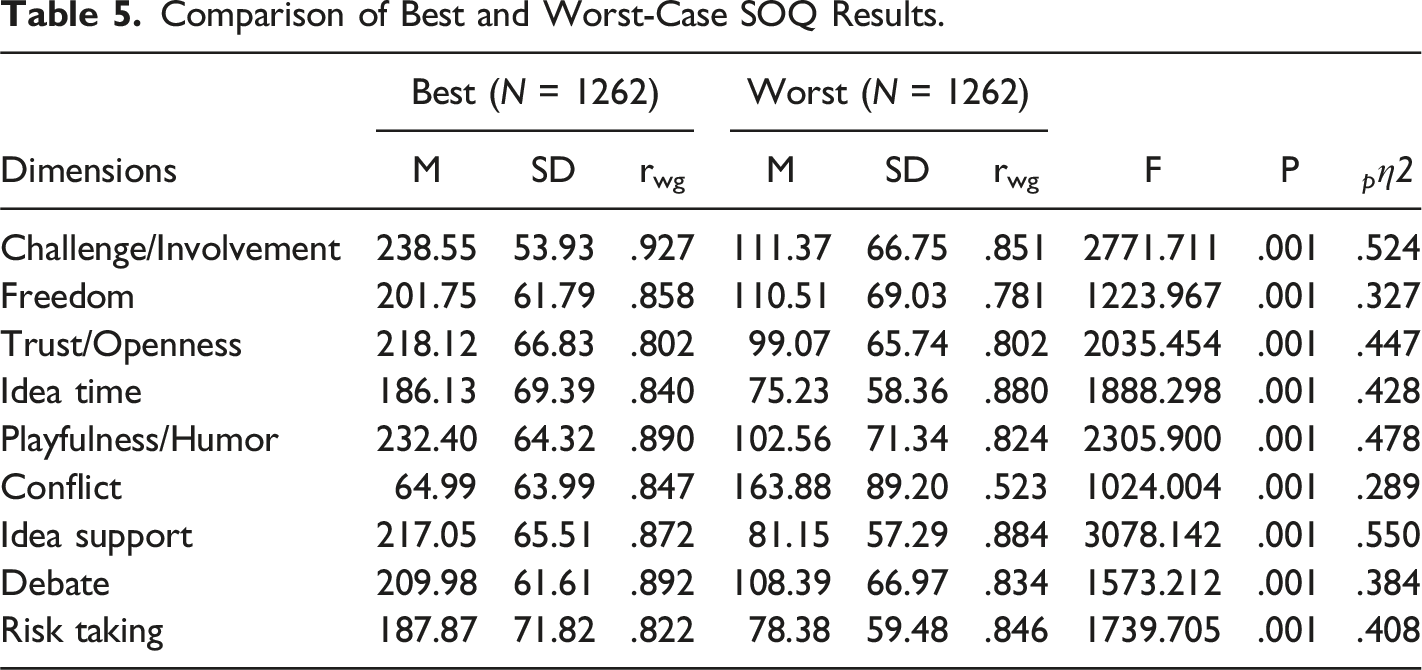
The results show significant differences across all nine dimensions when comparing best versus worst-case work situations and replicate the results of the earlier study (Isaksen et al., 2001b). The effect sizes for all the dimensions are large. There was support for aggregating the two different measures, except for the conflict dimension. Examination of the data showed that for the worst-case results had a unique distribution for a subset of females showing that some had low, and others had high scores for this negative dimension.
We also had access to the SOQ data from nine studies that we aggregated under the general heading of positive, and creatively productive workplaces. The sample included results from two unpublished doctoral dissertations. Erickson (2010) applied the criteria provided by the Veterans Administration to distinguish magnet from non-magnet hospitals and the SOQ (N = 71). Bushart (2015) studied the relationship between collaborative relationships using an independent scale and the SOQ (N = 222). Additional data was aggregated from three published studies. Isaksen and Lauer (2002) applied the SOQ dimensions to distinguish more and least creative teams (N = 154, taken twice). Lofquist et al. (2018) studied the relationship between engagement using an independent scale and the SOQ (N = 95). Isaksen et al. (2024) studied the efficacy of talent development using an independent scale and the SOQ (N = 497).
Three studies conducted to meet practical needs of organizations were also included that used single items or independent short scales. The first was conducted in 2010 with a large university interested in the promotion of diversity and inclusion, and included three additional metrics that were added to the SOQ (N = 525). The second was conducted in 2016 with a manufacturing facility within a large consumer products organization interested in how focusing on safety can also encourage creativity and innovation (N = 299). The third practical study was conducted in 2024 with a North American publishing organization interested in the relationship between the SOQ and having a sense of belonging and level of use of creative problem solving (N = 330).
The best versus worst workplace study reported above was also included for this analysis (N = 1262, taken twice). When the SOQ was taken twice the metrics were split at their means for analysis. The total sample for this analysis included 4871 subjects. The average age was 37 for those who provided this information (N = 1378). The sample included 610 males and 856 females for those who provided their gender (N = 1466).
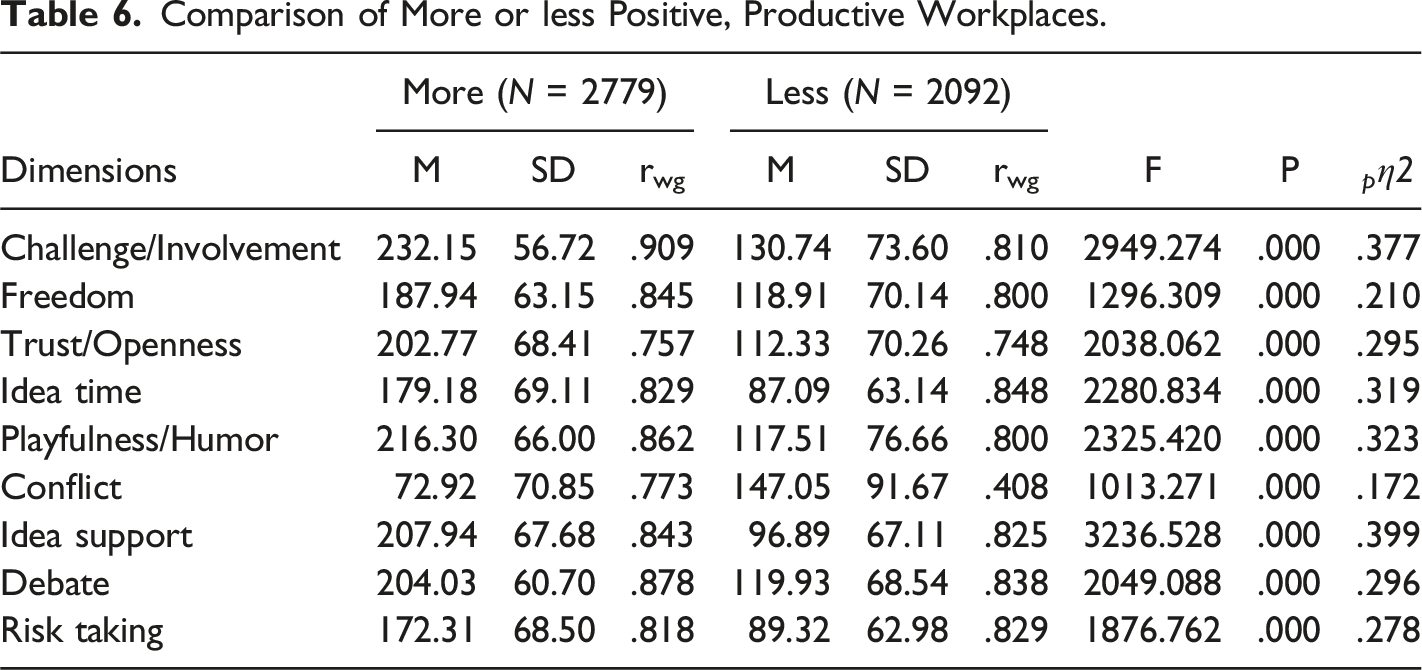
Before conducting the one-way ANOVA, a nine (number of SOQ dimensions) by two (More or Less Productive) MANOVA was applied to reduce the likelihood of a Type I error when examining the differences in the means. For this sample, there was a significant interaction, Wilks’ Λ = .547, F (9, 4861) = 447.03, p < .0001. The means, standard deviations, rwg values, and F-values, are presented in Table six below.
The results indicate clear and significant differences in the means between those organizations having positive levels of creative productivity versus those with less positive results by aggregating twelve distinct metrics. All comparisons yielded large effect sizes. There was support for aggregating the two different combinations of metrics, except for the conflict dimension. Examination of the raw data revealed that for those within the less creatively productive organizations, some younger females reported rather low levels of interpersonal tension, and higher scores on the positive SOQ dimensions. This deserves some additional inquiry.
Evidence Based on Consequences and Uses
The SOQ has demonstrated multi-level relevance in its use and inquiry. It has been applied at an individual level of analysis (Isaksen & Lauer, 1999, 2001; Yee et al., 2014), team and group level (Isaksen & Lauer, 2002; Sandvik et al., 2018), as well as the organization level (Lofquist et al., 2018; Olsson et al., 2019). More recently, the dimensions have also been applied at a national level of analysis (e.g. Hodge, 2021; Pupal, 2020; Übius et al., 2013).
The SOQ has been translated into multiple other languages. Current research editions are available in Chinese, Dutch, French, German, Italian, Norwegian, Polish, and Spanish. The procedures and current progress on these are reported in Isaksen and Ekvall (2015c).
Feedback on the dimensions has demonstrated ability to help organizations make improvements in their ability to produce technological innovation (Abdel-Razek & Alharbi, 2017), increase the effectiveness of organizational scenario planning (Chermack et al., 2015) and increase awareness of faculty to establish a climate conducive to creativity (e.g. Allen & Zeisler, 2015). Providing feedback on SOQ results has also resulted in building capabilities for innovation management (e.g. Björkdahl & Börjesson, 2011; Fomujang et al., 2019).
Numerous case studies illustrate the ability of the SOQ to help organizations make meaningful changes on the dimensions they target based on the unique needs of their organizations (e.g., Isaksen & Tidd, 2006). The dimensions have provided insight into the relationships among creative climate, knowledge-sharing, and innovative work behavior within start-ups. For example, Munir and Beh (2019) found that a creative organizational climate affects knowledge-sharing, which ultimately affects innovative work behavior. Two integrative reviews of the literature provide support for the intervening nature of the dimensions between strategic human resource practices and innovative organizational performance (Iqbal, 2019; Loewenberger, 2013). The intervening nature of the dimensions of creative climate was also supported by Zubair et al. (2015). They found that creative climate acted as a partial mediator between employee participation in decision making and managers’ encouragement of creativity.
The dimensions have also demonstrated relevance to learning. Aliberti and Paolino (2018) found that the creative climate dimensions were linked to learning and transfer of training, particularly within work environments characterized by technological learning. Cirella et al. (2016) found that the dimensions were related to cognitive, structural, and procedural learning mechanisms. The dimensions of creative climate were also found to be related to collaborative learning (Hong et al., 2014) and to an organizational learning culture (Ismail, 2005; Sundgren et al., 2005). In a study of 15 English secondary schools, McLellan and Nicholl (2013) found that the dimensions of creative climate were able to distinguish differences in perceptions of the students versus their teachers. Students did not see their classroom climates as conducive to their creativity, but their teachers did. Chaubey et al. (2022) studied the relationship between training and organizational innovation and found that this relationship was strengthened by employee creativity. Further, employee creativity acted as a mediator between the two, and that the SOQ climate dimensions augmented the mediation process by coherently creating a positive moderating influence.
When it comes to practical application of the SOQ, only those who successfully complete a qualification program can apply the assessment. This ensures that the measure is appropriately applied. The earlier technical resources are now available as digital downloadable versions for the public, and others are available only to qualified practitioners. The qualification program and technical resources are continuously updated and improved and is currently provided by Better Change Tools.
Summary and Future Directions
Comparison of More or less Positive, Productive Workplaces.
There is currently little or no consensus regarding what dimensions should be included within the conceptual arena of the climate for creativity. This is due, in part, to a lack of agreement on the conceptual definition of climate itself. Some assessments include leadership or organizational culture within their concept of climate resulting in conflicting inclusion of dimensions. Some work has been done to address these concerns (Hunter et al., 2005, 2007; da Silva Veiga & Cortez, 2022; Isaksen, 2023a) but much more work is required. For example, further inquiry should include examination of the levels of abstraction of the dimensions. It is likely that some dimensions operate at a rather concrete level, and others (perhaps latent factors) are at a much higher level of abstraction. This conceptual work would enhance the quantitative application of creative climate assessments and should be complemented by qualitative research.
Some qualitative work has been accomplished with the SOQ after adding three open-ended questions. This allows subjects to provide elaboration on how the dimensions and other salient factors may be seen as helpful, hindering, or in need of actions to improve the workplace. These narrative results also allow for cross-site examination (e.g. Geurts, 2009; Sobieck, 1996). Yet, much more qualitative work would provide deeper insight into how climate (both as antecedent and intervening variables) affects creative and innovative outcomes. This should include the use of structured and unstructured interviews, for example.
The nature of work is changing. We see more hybrid and digital working, and AI technology is also influencing the world of work and creativity (e.g. Cropley et al., 2022; Tigre et al., 2024). Climate assessment starts with individuals and requires them to consider observed patterns of behavior. So, with these changes to the workplace, subjects could be challenged regarding the opportunities for direct and holistic observation of behavior. Along with these changes, many organizations are attempting to reduce the dysfunctions associated with hierarchy by flattening their structures and attempting to set up ‘bossless’ organizations (e.g. Foss & Klein, 2022). Since leadership exerts such an influence on the climate for creativity, we will need to consider the impact of these changes going forward.
Our theoretical foundation for work with the SOQ is based on an interactionist and ecological approach (e.g. Hennessey, 2017), so a natural area of interest is considering individual differences in relation to the climate for creativity. The work environment plays a key role in determining if, how, and when both surface and deep-level diversity affects performance (e.g. Kim et al., 2024; Lauer & Isaksen, 2001; Trinh, 2016). Some work has already been accomplished to investigate the relationships between cognitive and problem-solving style and the dimensions of the SOQ (e.g. Hoßbach, 2019; Isaksen, 2009; Isaksen & Lauer, 1999). Future work should be focused on expanding our understanding of how these and other individual differences may influence the climate and work environment for creativity and innovation. This could lead to expanding our inquiry to other important organizational constructs such as fairness, managing diversity, and organizational justice, among others.
Building on the future efforts to better understand the people-place relationship and the changing nature of the workplace, we should conduct studies that add to our understanding of the relationship of climate and work environment to the processes related to creativity and innovation (e.g. Hunter et al., 2020; Isaksen, 2023b; Oppert et al., 2022). It is well established that we can deliberately develop creativity in organizational settings (e.g., McKay et al., 2024). Yet, there could be important differences in the work environment that enhances and supports diverse aspects of creative and innovative processes. For example, there are likely to be meaningful differences in the climates that support exploratory versus exploitative innovation. This sort of effort could serve to disentangle the complex interplay between person, process, and place (Green et al., 2023).
Footnotes
Declaration of Conflicting Interests
The author(s) declared no potential conflicts of interest with respect to the research, authorship, and/or publication of this article.
Funding
The author(s) received no financial support for the research, authorship, and/or publication of this article.

Data Availability Statement
Data is available from the corresponding author. All data was collected in conformance with APA and Data Protection Policies.