



Abstract
Introduction
An athlete’s ability to adapt to the constraints of their environment, whilst managing different emotional states, is vital to successful performance (Headrick et al., 2015; Jones, 2003; Lewis, 2004). In self-paced tasks such as place kicking in Rugby Union or putting in golf, performers must execute actions under fluctuating contexts (e.g., score, time, distance to target; Pocock et al., 2018). In golf, putting accounts for 41% of all strokes made during an average round of tournament play (Campbell & Moran, 2014). Therefore, a golfer’s ability to perform under varying constraints is a vital contributor to elite performance (Campbell & Moran, 2014; Carey et al., 2017; Karlsen & Nilsson, 2008; Shaw et al., 2021). To develop this skill, representative training environments that reflect the constraints of the performance environment are required (Pinder et al., 2011). To inform recommendations on practice design, there is a need to understand the constraints placed on golfers during performance in professional tournaments.
To understand the demands placed on athletes, conceptual frameworks can provide a lens through which to describe and analyse performance. The ecological dynamics approach combines well developed theory from ecological psychology and dynamical systems to provide a conceptual framework through which to describe behaviour (Davids et al., 2013). This approach also builds on Newell’s (1986) constraints-led approach to describe human behaviour. Constraints can be defined as features which influence the expression of the form achieved by the system (or sub-system) seeking a stable state of organisation (Newell, 1986). Newell (1986) proposed that individual, task, and environmental constraints interact to shape behaviour. In this approach, individual constraints include factors such as the physical, physiological, emotional, and cognitive attributes of the performer (e.g., perceived pressure of successfully holing the putt). Task constraints are the specific rules and goals of the task itself (e.g., putt distance). Environmental constraints refer to factors such as altitude, weather, lighting, and other surrounding objects as well as societal and cultural norms (Clark, 1995). For example, condition of the grass that a golfer is putting on. As such, it is vital to explore the athlete and the information which shapes their performance environment (Davids & Araújo, 2010).
Skilful behaviour in sport is the outcome of an individual’s ability to adapt to these interacting constraints (Connor et al., 2018). To truly understand performance, researchers should consider the impact that these interacting constraints have on an athlete’s performance (Davids et al., 2013). Previous research has shown that athletes adapt their behaviour based on individual constraints such as emotions (Headrick et al., 2015; Runswick et al., 2018) and task constraints that influence the visual information available to the performer (Stone et al., 2015). However, researchers have often neglected information that is available during performance but is not necessarily available through visual input, referred to as contextual constraints (see Harris et al., 2022; Runswick et al., 2021). For example, previous shots in tennis rallies (Murphy et al., 2018) or field settings in cricket (Runswick et al., 2018, 2019) have been shown to affect performance in perceptual-motor tasks. Considering the importance of putting performance in golf and the huge amounts of prize money available in golf (Shaw et al., 2021), it is important to understand contextual constraints in this task.
The majority of previous research on golf putting has investigated underpinning motor control and cognitive processes but has often focused on putt execution in laboratory environments in the absence of context (e.g., Arsal et al., 2016; Beilock & Carr, 2001; Campbell & Moran, 2014). However, some progress has been made toward using representative tasks in that Dias et al. (2014) examined the impact of visually available information (task constraints like putt distance and slope) upon laboratory-based putting performance and found that amateur golfers adapted the duration of the backswing phase, the speed of the club head, and the acceleration at the point of impact with the ball. Similarly, Carey et al. (2021) manipulated an indoor putting surface to afford both straight and sloped putts and found less variable quiet eye duration to be associated with successful performance and extended periods of quiet eye to be associated with a decline in performance. Previous experience and current skill level were not observed to influence performance. One study has explicitly investigated contextual constraints in golf putting experimentally. Runswick et al. (2021) had novice golfers perform putts either with no context or to win or tie a hole. Results suggested that context affected quiet eye duration (i.e., focus on the ball) and putting performance. Aside from Carey et al. (2021), this work was conducted with novice players and fails to give insight into the contextual constraints and other factors faced by high-level golfers in competition.
Work that has taken place on the course with context available has primarily used think aloud methods to capture thought processes during ‘competition’ play (Whitehead et al., 2016). For example, Whitehead and Jackman (2021) captured on-course cognitions during a staged competition to create a framework of cognitive processing in golf before and after the shot was played. This included acknowledgement of contextual constraints and context specific cognitive processes, including golfers reporting thought processes on competition status and dwelling on previous shots. While this is a step toward capturing data on the constraints experienced in competition, the sample included amateur golfers playing six holes. To advance our understanding of cognitive processes of professional golfers during decision-making (green reading 1 ) and putting, Shaw et al. (2021) found that amateur golfers verbalised more technical execution related statements in comparison to professional golfers who concentrated more on outcome focused planning when putting on a real golf course. Despite advancing our understanding of expert-novice differences and the impact of constraints on putting performance, future research needs to examine the full spectrum of constraints (including contextual constraints) that professional golfers face during competition.
One way of capturing data from high-level performers on what they face during competition is through interviews. Pocock et al. (2020) interviewed six professional rugby players who took place kicks for their teams and found 11 key constraints that influenced performance, including individual constraints (e.g., expectations and fatigue), task constraints (e.g., angle and distance to the posts), and environmental constraints (e.g., weather). While these findings were linked to the constraints led approach (Newell, 1986), Pocock et al. (2020) also found that performers experienced situational (or contextual) constraints, such as previous performances and the score margin, which impacted their performance. This supports the assertion of Runswick et al. (2021) that golf putting could be affected by such non-visual sources of information about the task. Further research using alternative approaches such as qualitative methods are therefore warranted to advance our understanding of the influence of contextual constraints on performance in high-level golfers. Indeed, research (see summary in Eklund & Tenenbaum, 2014) has consistently demonstrated that expert athletes tend to have a more comprehensive knowledge of sport-specific information and tend to be more proficient at remembering and using this knowledge to benefit their performance than their novice counterparts. As such, examining professional athletes provides a fruitful avenue for scientific endeavour (Swann et al., 2015). While we acknowledge that recruiting professional athletes is challenging, the present study provides a unique contribution to our understanding of putting during competition by using a sample of touring professional golfers.
In the present study we address this need by examining the experiential knowledge of professional golfers with a focus on gathering information on contextual constraints that affect performance (e.g., holing the putt, reducing the distance to the hole, reducing putts per hole/round/tournament). Such knowledge may help to identify the key task, environmental, individual (Newell, 1986), as well as contextual constraints (Pocock et al., 2020) that professional golfers experience whilst putting which could inform representative practice design. Therefore, the aim of the present study was to explore the key constraints that professional golfers experience when putting in competitive golf.
Method
Philosophical Position
Our study adopted a critical realist epistemology, acknowledging that while data can uncover some parts of participants’ reality, interpretation is necessary to reveal deeper meaning of lived experiences (Willig, 2001). Critical realism posits that while an objective reality exists, our understanding is influenced by our perceptions and social contexts (Bhaskar, 1978). Researchers must therefore engage in interpretative activities to comprehend the full complexity of participants’ lived experiences, while acknowledging their own role in knowledge construction (Maxwell, 2012). We acknowledge that our backgrounds as authors (e.g., first author is a practitioner while the second and last authors are researchers who both work with golfers) shape knowledge construction and may influence said interpretative activities. As such, we recognise that participants’ subjective experiences of interacting with constraints offer valuable but incomplete insights into their reality of putting performance.
Participants
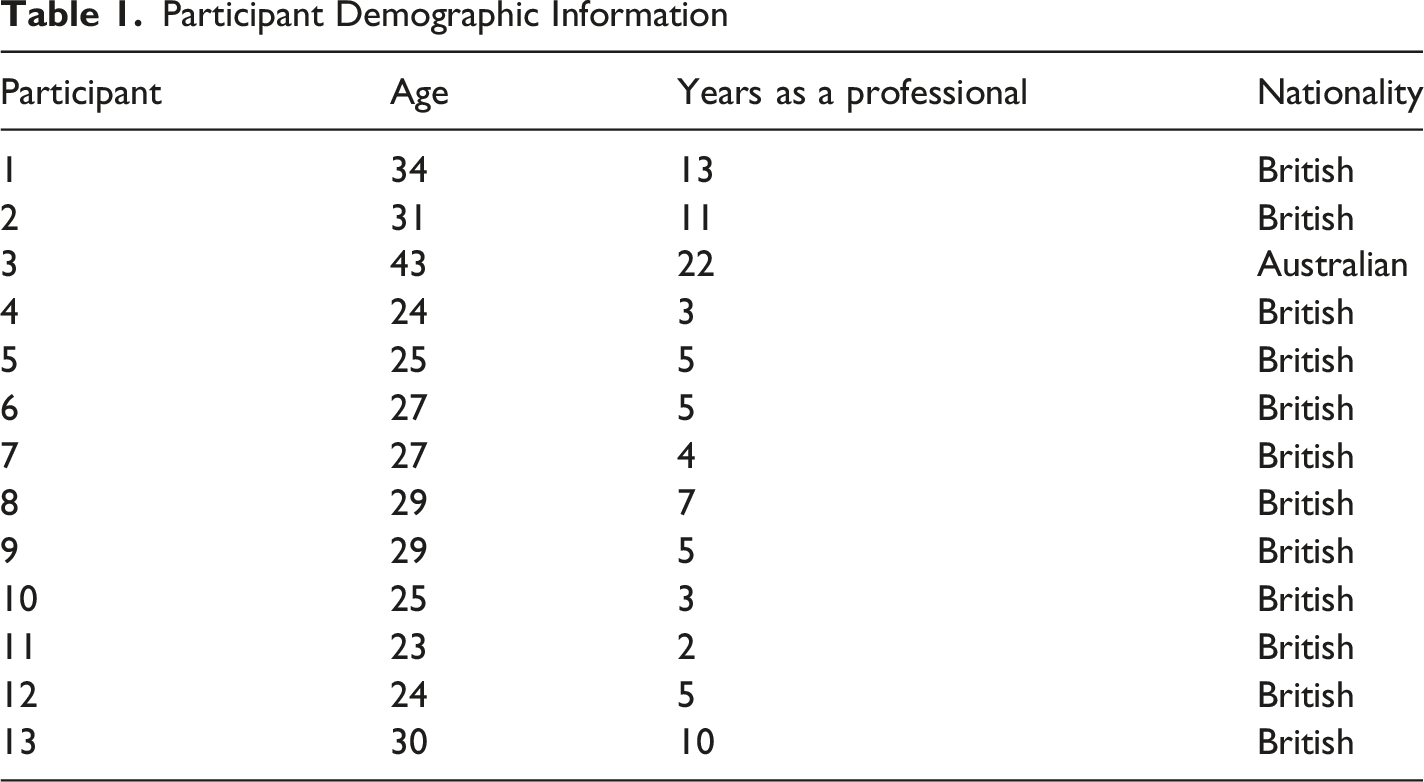
Participant Demographic Information
Procedure
Consistent with our epistemological positioning, a semi-structured interview guide was developed based on similar studies examining the impact of constraints in sport (e.g., Pocock et al., 2020) to elicit relevant experiences and facilitate the interview process. The first, second, and last author had extensive knowledge of golf through both practice and research which further informed the development of questions. Each participant was interviewed individually as the participants were required to share personal experiences. The interview guide was split into two main sections, namely career history and experience of putting on a professional tour. The opening career history section of the interview (e.g., years of professional tour golf, tours competed on) was designed to build rapport and contextualise participant responses relating to their constraints encountered. Following this introduction, the questions focused on the aim of the present study by discussing the constraints of putting on a professional golf tour (experiences of putting on tour and factors that made putting challenging).
The interview guide was pilot tested with two separate participants who were ex-tour professionals. Reflecting upon these pilot interviews led to minor changes to the interview guide including repositioning broader questions about the participant’s experiences of putting on tour to the start of the interview guide. As such, participants were initially asked open-ended questions to get the participant talking about their experiences of putting in professional golf including “can you tell me about your experiences of putting in tournament golf?” Questions then provided participants with the opportunity to discuss their experiences of challenges faced when putting on tour including “can you tell me about a time that you found putting difficult during a competition?” and “why does that make putting more difficult?” To further understand specific participant experiences, clarification and elaboration questions including “why did you feel that way?” and “how did that impact your putting performance?” were used in the interviews. All 13 interviews took place and were recorded via Zoom. The interviews (mean interview time = 40.2 minutes, SD = 5.9 minutes) were transcribed verbatim before data analysis using Microsoft Excel.
Data Analysis
We adopted a deductive theory driven approach which harnessed Newell’s (1986) model of constraints (individual, task, environmental) including contextual constraints as identified by Pocock et al. (2020). Theoretical frameworks and similar research (e.g., Newell, 1986; Pocock et al., 2020) were used to inform definitions of each constraint. Specifically, individual constraints were defined as data extracts relating to the thoughts, emotions, or body of the golfer, task constraints were defined as data extracts relating to the putt itself (e.g., distance to the hole, type of putt, putting action), environmental constraints were defined as data extracts relating to the surrounding environment (e.g., wind, weather, green conditions, proximity of the crowd), and contextual constraints were defined as data extracts relating to perceptions of the context in which the golfers perform in (e.g., score, position in the tournament, time in the round, other performances and logistical issues).
Consistent with our epistemological positioning, reflexive thematic analysis was used following Braun et al.’s (2023) guidelines (i.e., familiarisation, data reduction, condensation, coding, and conducting a thematic representation). We acknowledge the potential restrictive nature of adopting a deductive theory driven approach in that it could stifle the reflexive and organic generation of themes and sub-themes. However, the advantage of our integrative approach is that theoretical and empirical knowledge may be advanced by including contextual constraints that may not otherwise be categorised and/or understood using only Newell’s (1986) model of constraints. Using this approach, our goal was to reflexively and thoughtfully engage with the analytic process to interpret stories from the data. As such, data were transcribed verbatim, read and re-read and were subjected to line-by-line deductive coding using the four constraint themes by the lead author, resulting in 50 pages of coded data extracts. The last author then acted as critical friend to facilitate the reflexive and collaborative process including clustering codes to generate themes, checking whether themes work in relation to the codes and the entire data set, refining the specifics of each theme to define their essence, naming the themes and sub-themes, and generating the narrative using analytic interpretation to convey the experiences of the professional golfers. Our approach was designed to develop a richer and more nuanced interpretation of the data, as opposed to seeking a consensus on meaning (Braun & Clarke, 2019).
Our goal was to explore the fluctuating, and interacting, constraints that influence performance from the perspectives of several professional golfers, rather than trying to reach a consensus/agreement, or define ‘good’ performance. However, our reflexive approach facilitated some interpretative tensions between the first and last authors. For example, the first author initially categorised the adaptability sub-theme as an environmental constraint whereby golfers need to interpret the demands of the environment and change their decision-making and behaviour accordingly. Yet, the last author challenged this categorisation on the grounds that golfers had not directly cited the environment per se in their need to be adaptable. Through discussion between the first and last author it was decided that adaptability was more akin to the demands placed on the performance, and as such, the adaptability sub-theme was categorised as an individual constraint.
Methodological Rigour
To integrate rigour into our study, and in reflection of our epistemological positioning, four strategies were adopted. First, criterion-based purposeful sampling was employed, with specific criteria (status as a professional golfer, competed on a professional tour in the last month) used to ensure authenticity of experiences to discuss for the study (Patton, 2002) and to ensure data credibility (Tracy, 2010). Second, the last author acted as critical friend to the first author to develop critical dialogue and share interpretations of data, as well as providing a sounding board to facilitate reflection on and exploration of alternative interpretations (Smith & McGannon, 2018). For example, we had detailed discussions about why the codes from the raw data would represent one constraint and not another. Often the critical friend would remind the lead author about the definitions of each constraint to ensure the data were coded accurately. The first author was also required to justify that the available data supported his interpretations which encouraged reflexivity by challenging the author’s construction of knowledge (Cowan & Taylor, 2016). Third, we are confident that rigour was enhanced by using Braun et al.’s (2023) guidelines for reflective thematic analysis and critically discussing the generation of themes/sub-themes with a critical friend (Cowan & Taylor, 2016). Finally, member checking was used to enable participants to view their transcribed data and themes/sub-themes to ensure they accurately represented their experiences (Smith & McGannon, 2018). No revisions were made to the transcripts or the analyses.
Results & Discussion
We generated a total of 18 sub-themes which were categorised into four themes of constraints (individual, task, environmental, contextual). The four themes will be discussed separately including key quotations to reflect the generated sub-themes.
Individual Constraints
Pressure
The generated sub-theme of pressure was represented in that all tour professional golfers recalled the pressure that they felt whilst putting during a tournament round of golf and spoke broadly about the pressures of being a professional golfer. One professional golfer said: Well, number one thing is, I mean as a professional, it's got to be pressure. You know, I think generally I would say that we are all very good putters but playing in tournaments it’s all down to the pressure you are under to perform. (Golfer 4)
Other golfers also made the direct link that the pressure they felt hindered their putting performance. Another golfer said: It’s high pressure you get a bit tense over the putt you don’t quite commit to your putting stroke as you were before, not as smooth which means I can be really jabby which is not good at all. And I can get really handsy and use my hands a bit too much and don't commit to making a good stroke. (Golfer 2)
Interestingly, not only was the perception of pressure deemed as a constraint on performance, it also seemed to affect perceived task difficulty as golfers suggested that when they felt under pressure they found it more difficult to putt well, which is similar to the findings of Pocock et al. (2020). In addition, there is a wealth of research that suggests that perception of pressure may lead to poor performance in golf (Beilock & Carr, 2001; Stern et al., 2013) which would support the data from the golfers in the present study. Most golfers recognised that self-expectations contribute to the pressure they feel whilst putting in professional tour golf. One golfer said: I think expectations will be a big word I've used with my psychologist a lot to try and manage my expectations for the round…. I’ve had it in the past where my own expectations are around my score and how many putts I need to hole and it’s a nightmare. (Golfer 8)
The individual constraints of self-expectations appear to interact with contextual constraints associated with current performance within competitions, as well as perceived consequences within competition of any missed putts. Other golfers suggested that their expectations about holing putts and winning can be tough to manage and frustrating which in turn affects their performance. One golfer added “I think that expectation to win or play well because you know you’re capable of it is tough to manage” (Golfer 7). This is important for applied practitioners as it suggests that golfers may feel more pressure because of their self-expectations for success, whether that be winning events or holing putts. Previous research suggests that instead of focusing on their self-expectations, golfers should use process goals to focus on their putts (Palmer et al., 2016; Ziv et al., 2019).
Confidence
We generated the sub-theme of confidence as golfers regularly mentioned the impact of belief on their putting performances, with most acknowledging that putting became more difficult when they were less confident. One golfer said: Confidence is such a huge thing in golf and more so in putting. If you’re confident it feels like you can hole anything and if you’re not it feels like the worst. Golf is such a confidence sport so if you miss important putts it affects you and anyone who says it doesn’t would be lying to you. (Golfer 1)
Other golfers suggested that when they are not confident they find putting difficult and are less successful. Another golfer said: Confidence has got a big part in it I suppose. You know, sometimes you can stand over a putt and just think I’m not going to hole this, like I can’t see this going in. So, then you have to step away and then get back in and it can get quite hard to manage. (Golfer 11)
Previous research has suggested that experienced golfers are more confident than novice golfers at putting (Arsal et al., 2016). Indeed, it is clear that professional golfers value confidence in their pursuit for putting excellence.
Fatigue
The generated sub-theme of fatigue was highlighted by the golfers as a factor that makes putting more difficult. One golfer spoke explicitly about mental fatigue, saying: In the first few months when I started I definitely got more mentally fatigued…that definitely affected my putting not being as focused and not going through my routine properly and being deliberate in my routine that definitely plays a part. (Golfer 2)
Whereas another golfer spoke more broadly about being exhausted. Golfer 12 said “I was kind of just exhausted, so I wasn’t putting well.” Both golfers suggested that fatigue negatively influenced their putting performance. Previous research suggests that fatigue is prevalent in golf (Higdon et al., 2012) and that tiredness negatively affects fine motor tasks (Huysmans et al., 2008). Laboratory-based research has suggested that fatigued golfers are less successful when putting (Grealy & Mathers, 2014). The qualitative approach taken in the present study uncovered that fatigue is a key constraint that impacts putting performance on tour. This is important as practitioners may look to help golfers to manage their mental and/or physical fatigue in order to putt well in tournament rounds of golf. Recent research suggests that mindfulness interventions can help to reduce mental fatigue in athletes (Cao et al., 2002; Coimbra et al., 2021). A recent review suggests that there are a range of behavioural, physical, and psychological interventions may help athletes to manage mental fatigue (Proost et al., 2022).
Focus
We generated this sub-theme as golfers discussed their focus being an individual constraint on their putting performance when under pressure. One of the golfers said: Everything is going on at that moment, your mind is going crazy, you're thinking about scores, you're thinking about the leaders, you're thinking about what score you're on for the day. It is hard to stick to what you're good at and stay focused…instead you often start trying to force it which doesn’t help. (Golfer 12)
Here the golfer talks about how their focus of attention can be shifted towards external events or elements outside of their control like scores and how others are playing. Previous research also suggests that focus of attention is important in golf putting (Kearney, 2015; Perkins-Ceccato et al., 2003; Poolton et al., 2006). For example, Kearney (2015) suggests that a distal focus of attention leads to superior performance during a putting task. However, much of this research is laboratory based so the experiential knowledge of tour professional golfers gleaned in the present study is an important addition to the existing literature. Additionally, participants discussed that when it is difficult to focus, they often try to force their putting. An internal focus of attention can interfere with processes of self-organisation, which generate functional movement patterns under interacting constraints (Gottwald et al., 2023).
Adaptability
We generated this sub-theme as golfers spoke about how they needed to be good at adapting to facilitate high level putting performance: Whereas we're kind of going straight into another, straight into another, we're always adapting and so it means that skill is a good skill to have… I don’t really want to take six events to get adapted, so being able to adapt to what’s in front of you quickly is very important. (Golfer 3)
Given how important putting is in golf and how sub-themes were identified for each constraint, it is intuitive to find that golfers recognise the importance of adaptability in golf. Renshaw et al. (2020, p. 26) suggests that ‘successful golf performance requires an ability to adapt to the multiple, messy chaotic situations that arise on the golf course’. Given these findings, we encourage researchers to explore the cognitive mechanisms underpinning adaptability in putting, which in turn, could inform the development of methods to improve adaptability of professional golfers in competitive environments.
Task Constraints
Pace Control and Line of Putt
This sub-theme was generated as golfers suggested that their capacity to predict the pace and line of a putt impacts their confidence and subsequent outcomes. Golfer 13 said “You can’t get away from the fact that line is king, well pace and line are king, if you can’t get those it doesn’t matter where you are, what situation you’re in, you’re not holing anything”. Golfer 3 said “I feel like it’s a lot harder under pressure to get your pace right. Pace control is quite a big a big thing.” Research has identified the importance of pace and line in putting performance (Campbell & Moran, 2014; Carey et al., 2017; Karlsen & Nilsson, 2008), with elite golfers focusing more on planning and predicting putts (McRobert et al., 2011; Shaw et al., 2021). Interestingly, previous research often refers to pace and line of the putt being an environmental constraint due to its association with characteristics of the putting surface (Campbell & Moran, 2014; Carey et al., 2017; Karlsen & Nilsson, 2008). However, our findings appear to highlight the importance of pace and line as a controllable constraint: Controlling start line is a big one for me. When I feel like I've got control of start line, I tend to trust a lot of my putts. And of course, that combined with feeling like I can get the pace of the putt means I’m going to putt well. (Golfer 7)
The present study supports previous research which has identified the importance of pace and line in putting success, but also highlights the need for future research to better understand the interaction between task (e.g., one’s ability to predict pace and line) and environmental constraints (e.g., characteristics of putting surface).
Proximity
We generated this sub-theme as all golfers spoke about proximity to the hole being a major factor in putting performance: I think that proximity is the key factor here. So, if I'm ever hitting anything inside 15 feet, I know I've got a very, very good chance of holing it and outside of that it’s harder so like 30 foot, like a 25 foot and above. You know naturally, the longer the putt is away from the hole the more variables there will be. (Golfer 1)
Whilst most golfers suggested that longer putts were harder, they also suggested that the shorter putts were more pressurised. One golfer added “You have to be good at short putting really, like you can’t be missing them as a pro” (Golfer 4). Whilst proximity of the ball to the hole may increase task difficulty, it may also change the personal expectations of golfers. Proximity of the ball to the hole has been previously reported as part of situational appraisals (e.g., Whitehead and Jackman, 2021) and may influence a golfer’s perception of task difficulty.
Technique
This sub-theme was generated as golfers highlighted the importance of their technique for putting success: It could be your stroke when it comes to putting which most of the time is the problem. It could be your alignment too, could also be ball position, so many factors with technique that could make you a bad putter. (Golfer 1)
Here, the golfer suggests that their putting stroke has a massive impact on their putting performance. This is important as previous research suggested that the putting stroke only had a minor impact on putting performance for elite players (Karlsen et al., 2008). Not only does this suggest that elite level golfers consider their technique to be an important factor in their performance, it also shows how by asking the golfers themselves they get a more nuanced view on what they think impacts their performance.
Another golfer discussed the consequences of poor putting and the impact poor outcomes can have on over analysing their technique. Golfer 12 said “When I putt badly, I start to strangle the putter, I’m hunching over kind of strangling the grip, and you end up hitting the ball, not stroking it because you just start over analysing it.” The relationship between over analysing technique and poor performance has been well documented whereby skilled performers who engage in cognitive control of an action increase the likelihood of inefficient skill execution and poor performance outcomes (Beilock & Carr, 2001; Masters, 1992). Our findings support previous literature and highlight the need for elite golfers to perform under a variety of task-based constraints (Newell, 1986; Pocock et al., 2020).
Environmental Constraints
A somewhat unique feature of professional golf compared to other professional sports is the extent to which the environment can change between competitions, between rounds, and even during the day of competition.
Green Difficulty
We generated this sub-theme as golfers discussed the challenges faced in adapting to constantly changing green conditions. The golfers suggested that three factors contribute to this; grain, contours, and Stimp rating (an approximation of the speed of the green, whereby higher ratings represent faster greens). One golfer said: Going from week to week obviously playing different courses the speed of the greens is different so I think that's been quite hard. Sometimes it’s like 12/13 on the stimp so anything lower feels so slow which makes judging it difficult. (Golfer 6)
Here, the golfers talk about the factors that make green difficulty a key constraint in putting performance. Another golfer added “I mean the grain of the green is massive. It can change how you see or think of the putt but also how quick it is going to be. With grain, you’re almost just guessing” (Golfer 1). Previous research suggests that green difficulty plays an important role in putting performance (Fearing et al., 2011) and that elite golfers have to make judgements about the speed and line of putts (Shaw et al., 2021). However, the present study is the first to document professional golfers’ experiences of constraints which contribute to green difficulty and by doing so documents the complex relationship between the green itself and putting performance.
Weather Conditions
This sub-theme was generated as all golfers discussed the importance of weather as a key constraint on putting performance. A range of weather features made putting more difficult, including wind, rain, lighting, and dew. Golfer 7 said, “when I say weather I mean everything rain, dew, wind, everything so if you get that you’re gonna struggle.” Another golfer added: When ‘I’m putting and it’s really raining. You’ll see droplets falling off your hat, which then is like shooting for your eyes. You’ll see the droplets from the rain itself falling in front of you. You have a little tunnel from like your eyesight over the ball. And all you see is rain coming down on you. And you see the ball getting wet where you see the ground getting wet. And that also affects the speed of the greens as well going forward (Golfer 9).
Similar to previous research, golfers in the present study discussed a range of weather conditions as key constraints in putting performance, with calmer conditions being preferred, similar to preferred calm kicking conditions in Rugby Union (Pocock et al., 2020). What is somewhat novel about the findings from the present study is how the variability in weather conditions impacts other task constraints like focus and other environmental constraints including green speed, which in turn, may impact task difficulty. It would be interesting for future research to explore how perceptions of weather conditions impact pre-performance states (e.g., confidence) as this may help practitioners develop effective mental strategies with their athletes.
Green Condition
We generated this sub-theme as all golfers spoke about the condition of the green being a factor that makes putting more difficult during professional golf competitions. The main constraints that underpinned green condition were imperfections on the green, marks made by other competitors, and where they were in the world (e.g., what country they were in). One golfer said “But I mean we’re lucky on the European Tour with the standard of the greens. Some of the other tours the putts are so slow or bobbly it’s a nightmare and means there’s more luck to it” (Golfer 10). Another golfer added: So, it’s different all over the world, if you play over here (the UK) we aren’t always blessed with great conditions and that often changes at different venues in Europe too, whereas in the states for example it’s consistently good. (Golfer 6)
Here, golfers explicitly discussed challenges they face relating to green condition which is important for a number of reasons. Firstly, very few research studies have documented golfers discussing these constraints. Secondly, it suggests that when working with golfers on putting performance or measuring golfers putting performance, asking golfers to putt on a perfect surface (like on a smooth mat in a lab) is not representative of what they face at the professional level. Lastly, it shows practitioners that there are constraints that golfers cannot control or plan for that may influence their performance. The findings from the present study may therefore help practitioners explore potential challenges that golfers face in professional golf and highlight the importance of practitioners using methods to help golfers to focus on what they can control when performing (Harmison, 2006).
Type of Course/Grass
This sub-theme was generated as all golfers discussed the type of course and the type of grass on the greens as constraints that make putting more difficult in professional competition. One golfer said “It completely depends on where you are, it’s going to roll different weather you are in the UK, the US, Europe, Asia, the middle east, it all changes and that’s all to do with the grass really” (Golfer 1). Another golfer added: Usually, we play on a lot of bent grass you don't really see you know too much grain on greens when I lived in the Caribbean and competed out there and in America you literally you can see a putt even though it's sloping left to right it will go the other way because of how the grass grows and what grass it is. (Golfer 5)
Our findings highlight the uniqueness of these constraints to golf whereas in most other sports the environment is somewhat consistent (i.e., pitches are often the same) at the elite level. However, golfers in the present study suggest that their environment varies greatly. Such knowledge may be incredibly valuable for researchers, practitioners, and coaches as it highlights the need for golfers to practice in similar environments prior to a competition as constraints such as type of course and type of grass may impact putting performance.
Infrastructure
This sub-theme was generated as golfers discussed variations in infrastructure as an environmental constraint. The main infrastructure golfers discussed were leaderboards, TV cameras, and crowds. Golfer 11 discussed how infrastructure affects their putting performance; “You’ve got all the cameras on you and stuff like that you, you find yourself becoming a lot more aware of what you’re doing.” Another golfer added “I feel like if I look at leaderboards, it probably just puts more pressure on me and it makes me sort of, change what I’m doing and how I’m thinking” (Golfer 9). These quotes suggest that there are other environmental conditions beyond weather, course type, and green condition that golfers need to manage. In line with previous research, golfers reported crowds as an environmental constraint (Pocock et al., 2020), and that such infrastructure predisposes them towards a heightened state of awareness. Reinvestment theory (Masters, 1992) suggests that automated motor processes (like putting) can be disrupted under conditions of heightened anxiety, which could be a function of specific contexts and environments (like environments with crowds, cameras, and leaderboards). These unique insights from the professional golfers supports previous theory and research (Newell, 1986; Pocock et al., 2020; Renshaw et al., 2020) that suggest that athletes perform under a range of environmental constraints, which in turn, may help practitioners better design interventions which consider playing environments.
Contextual Constraints
Consequence
This sub-theme was generated as all golfers suggested that they think about the consequences of missing putts and what they could gain by putting well during competition. Golfers said that thinking about these consequences (e.g., winning, money earned, making the cut, qualifying, and status) makes it more difficult for them to putt well. One golfer said “In qualifying, you are aware that you need to qualify otherwise you’ve got nothing so those putts to qualify are tough.” (Golfer 11) Another golfer added: But I had to hole this for my card, you know if you don't get your card, you don't play on the main tour, you don't play any events on tour. Whereas if you get your card you play loads of events. So, like one putt is the difference between like playing on tour or not playing on tour all as simple as that. (Golfer 2)
Golfer 2 highlights that several consequences to putting make it harder to putt freely in competition and that these constraints may interact (i.e., winning means more money, qualifying changes status). Our findings build on previous research of Runswick et al. (2021) who suggest that amateur golfers are more accurate at putting when they know that they have to hole their putt to win. Whilst this may be the case for amateur golfers used by Runswick et al. (2021), professional golfers in the present study suggest that when they know that they have to hole their putt to win, it can make it more difficult to execute it well.
Support
We generated this sub-theme as golfers discussed how the support around them from their team, family, sponsors, and the crowd, although all supporting with good intentions, may have a negative impact on their putting. When talking about the influence of the crowd, one golfer said: Sometimes when there are people watching you know so if you're playing in a tournament and you've got spectators watching you and things like that it sometimes can make you feel like you've got to do something different or perform better for them and that can affect your decision making with putting for sure. (Golfer 9)
The support, and size of crowd, can also interact with environmental constraints discussed by professional golfers in the present study, including the type of course and the infrastructure of the tournament. The notion that people watching can negatively impact decision making and performance is an important consideration for practitioners. For example, practitioners working with professional golfers who are starting out on tour might want to explore this with their golfers to see if they have experience of playing in front of crowds. In this case for example, practitioners might help the golfer to focus on the process rather than the outcome, or on mastery (i.e., how to putt at their best) and not ego (what others think) to perform optimally (Kassim et al., 2014). Our findings are also important as previous research examining golf putting in laboratory settings suggest that social support enhances putting performance (Moll et al., 2017; Rees et al., 2007; Rees & Freeman, 2010). However, in the present study, professionals suggest that specific forms of social support may make it more difficult to perform well. As such, practitioners might work with golfers to help them to be able to persist with their mental process regardless of who is watching. Golfers also discussed the impact of other people’s expectations on their performance. Golfer 11 said “I think the biggest thing to be completely honest with you is other people’s expectations, and also tour averages and stuff like that.” Our findings suggest that professional golfers putting in ecologically valid settings may be hindered by the expectations of others, which opposes previous research by Palmer et al. (2016) who suggest that enhanced expectancies improve lab-based putting performance.
Performance
This sub-theme was generated as golfers often discussed performance as a contextual factor when putting which included personal performance, personal score, competitors’ performance, competitors score, format, position in tournament, electronic scoring, and tee times. Golfers often referred to their own performance as a contextual factor. Golfer 1 said, “When you are playing well you might say you have the momentum, it certainly works the other way round like it’s easy to slip into a poor run of putts.” Interestingly, research suggests that momentum is important in competitive environments (Briki, 2017; Briki et al., 2013). Specific to golf, more recent research has suggested that momentum in competitive play is important for performance (McCarthy et al., 2020), supporting the theory of psychological momentum (Iso-Ahola & Dotson, 2014).
Golfers also mentioned how having knowledge of their own score, scores of others, and the performance of others could make putting difficult. For example, Golfer 7 said “You’ve also got the score in the back of your mind and the position that you’re in…and that makes it difficult.” Although previous research suggests that contextual information (e.g., score margin in rugby; Pocock et al., 2020) and outcome of the putt (Runswick et al., 2021) may influence performance, our findings provide novel insights by identifying unique constraints for professional golfers when putting.
Golfers mentioned how different formats of golf can change their perception of putting. For example, Golfer 4 said “I think match play is tough for putting.” Previous research has suggested that the context of the match can influence putting performance (Runswick et al., 2021). The present study is the first to explore golfers’ perceptions of these contexts and how golfers think this impacts their performance.
Golfers discussed their position in the tournament as a putting constraint. One golfer said “Later in the tournament becomes a little bit harder, because you’re aware that you’re running out of chances” (Golfer 13). While previous research has suggested that time remaining can influence performance (Pocock et al., 2020), this has not yet been investigated in golf. Golfers in the present study suggested that the longer they stay in the tournament and the more time they spend playing, the harder it becomes to perform well. Future research should explore this further. For example, investigating when different constraints become more prevalent as golfers move through rounds in a tournament.
Golfers mentioned that the electronic scoring systems being used was a constraint. As an example, Golfer 2 said “The new app that we have to fill in is an absolute ball ache because the leader board comes up whenever it reloads so you always know, even if you don’t want to, where you are and then what every putt means.” This novel insight is important as it suggests that this method of scoring changes a golfer’s focus of attention to seemingly unhelpful information. This may be of significance to governing bodies who put these measures in place and for practitioners who wish to develop strategies to help golfers manage their attention.
Lastly, golfers also mentioned how different tee times impact performance. One golfer said: Yeah, late tee times are harder for putting. Because conditionally greens aren't as good terms but, like, you always like to be out early, you get the pure greens, and you're not really dwelling on what could or could not happen. You're not looking at the scores. But if you're out there late, you know, everyone shooting, you know what's good and what's bad. (Golfer 9)
This is somewhat unique to golf in that all competitors play in the same event but often under different conditions and contexts based on tee times. Although this is a part of the game and as such, it’s difficult to avoid, these constraints seem to impact performance. This is important knowledge for practitioners to better understand the context in which their clients play and how it can influence their performance. Our findings support previous research that there are a range of contextual constraints in elite performance (Harris et al., 2022; Runswick et al., 2021) and demonstrate that there is a wealth of contextual constraints that golfers encounter in elite level golf that may not be captured when analysing constraints through the lens of Newell’s (1986) constraints led approach.
Practical Implications
This study explored experiential knowledge of professional golfers and therefore offers a range of applied implications. Our research suggests there are a vast array of constraints to consider when designing interventions to help golfers perform better under pressure outside of their internal thoughts and feelings. Our research also suggests that a variety of constraints and contextual constraints may influence putting performance and as such should be considered when designing representative practice environments (Pinder et al., 2011). Although previous research does not always consider contextual constraints (e.g., Arsal et al., 2016; Beilock & Carr, 2001), our research suggests that there is a difference between environmental constraints and contextual constraints experienced in golf putting. Therefore, we encourage researchers to consider and further examine the impact that contextual constraints have on performance. Governing bodies (e.g., Royal and Ancient, Professional Golfers’ Association) who support highly skilled amateur golfers on their journey to becoming professional should consider how to best support golfers in mitigating these constraints where possible (i.e., support and money), support golfers by ensuring they have opportunities to practice and compete under these constraints (i.e., environmental constraints), and provide access to sport psychology support to help manage internal constraints. For example, practitioners could manipulate constraints in applied practice by using fun yet meaningful fitness forfeits (or similar consequences) if players do not achieve a specific score in a practice task and/or do not reach specified leaderboard positions when competing against other players within practice.
Our findings contradict results of projects that were conducted in lab environments with less-skilled players (e.g., Beilock & Carr, 2001). While experimental research is important to advance our understanding of “what” is happening, our unique contribution to the literature using qualitative methods highlights the importance of experiential knowledge of performers to advance the understanding of “why” it happens. Our findings demonstrate the benefits of examining performance processes of elite golfers using alternative approaches which are not constrained by largely objective epistemologies within the motor control literature. We therefore encourage future research to explore numerous methodologies to further our understanding of elite golfer’s experiences in real world competitions and capture performance in more representative settings. Although our study provides a rich understanding of the complex and interacting constraints that golfers experience, it does not examine the application of said constraints by practitioners (e.g., to manage pressure, to create representative learning designs). Therefore, future research should examine how practitioners could use the information gained in the present study to support athletes.
Limitations
Although our study is the first to explore the perceived constraints experienced by professional golfers whilst putting in competition, it is important to acknowledge the limitations of our study and consider how future research may advance understanding. We acknowledge the benefits of capturing the experiences of support staff who may actively manipulate constraints (e.g., sport psychology practitioners, coaches, caddies) and encourage future research to triangulate information sources to further advance our understanding of the impact of constraints upon golf putting performance. As highlighted in our data, we also understand the importance of geographical location when exploring the full range of environmental constraints (e.g., type of course/grass). Therefore, we encourage future research to capture the experiences of golfers who have competed in different climates around the world as the environmental constraints placed on them are likely to be very different. Finally, we acknowledge that our sample was exclusively male. It is intuitive to predict that differences in individual constraints (e.g., putting mechanics due to anatomical differences) may exist between males and females. Research by Horan et al. (2014) identified kinematic and anatomical differences between males and females when putting. Future research should therefore interview female athletes to elucidate possible gender differences.
Conclusion
Our study is the first to explore a fully comprehensive range of constraints that professional golfers experience whilst putting during competition, namely those which can be categorised using Newell’s (1986) constraints as well as highlighting the importance of contextual constraints (Pocock et al., 2020). By exploring and developing a deeper understanding of the individual, environmental, task, and contextual constraints faced by golfers we can inform the development of improved practice and research designs for investigating and improving putting in golf. Future work should focus on developing an understanding of the interaction between contextual constraints and how these can impact the athlete and their performance.
Footnotes

Funding
The authors received no financial support for the research, authorship, and/or publication of this article.
Declaration of Conflicting Interests
The authors declared no potential conflicts of interest with respect to the research, authorship, and/or publication of this article.