



Abstract
In this investigation, we examined the influence of two approaches of motor skill learning (differential learning and repetition-based) for an explosive motor skill. Twenty-seven individuals completed four training sessions of a standing broad jump task, presented with either differential training or a repetition-based approach. We collected pre-and post-training assessments that included maximal jump distances used to index performance and the recording of ground reaction forces to determine potential biomechanical changes (normalized vertical ground reaction force – GRFvert, rate of force development – RFD, and horizontal take-off velocity - Vhor). Results showed that differential training exhibited greater jump distances than repetition-based training (p < .001) but no training effect was found for jump distances between pre- and post-assessments for either training approach (p = .15). However, a significant increase occurred for Vhor with greater velocities achieved following training (p = .03). Overall, differential training failed to show the expected performance enhancements for a discrete, explosive motor task; this may be related to limited exposure and task specific demands of the movement. Further research is needed to better understand the task factors influencing skill acquisition from differential training.
Introduction
When executing various motor tasks, from daily living activities to sport skills, individuals never truly repeat the same movement patterns; yet the repeatability of optimal movement patterns has typically been associated as a key attribute of highly skilled performance. Understanding how different practice environments facilitate not only high-performance outcomes, but also the development of movement adaptability, is critical for various practitioners and for a theoretical understanding of motor skill acquisition. Various practice designs (e.g., contextual interference, practice variability) have been employed to examine the effect of task outcome variability on retention and transfer of motor skill learning (Schmidt et al., 2021). However, given evidence of movement variability occurring between repeated task repetitions, a critical question has arisen as to how the degree of movement pattern variability incorporated during practice promotes the acquisition of motor skills and the ability to produce efficient performance outcomes (Ranganathan & Newell, 2013). Traditional theoretical frameworks have typically posited that movement errors need to be constantly corrected and reduced throughout practice; whereas other theories (i.e., differential learning) have proposed that including variability during training allows for movement explorations that help learners find an optimal solution and thereby promote movement flexibility (Beckmann & Schollhorn, 2006; Braun et al., 2009). This theoretical debate has created a need for more research to understand how various practice designs may enhance motor skill acquisition.
The practice design approach of differential learning presents distinctly different perspectives to the traditional practice variability ideas with the main theoretical elements grounded in the principles of self-organization and stochastic resonance (Schollhorn et al., 2012). In practice, executing a range of movement patterns allows for the enhanced probability of an individual finding an optimal solution that fits specific constraints related to the individual and the motor task. Accordingly, increasing the breadth of movement fluctuations experienced by an individual can lead to a transition towards a set of more stable, optimal movement solutions while simultaneously increasing adaptability when confronted with external perturbations (Schollhorn et al., 2012). Thus, the incorporation of such variability relates to adding stochastic resonance to the motor system in that the promotion of movement variability facilitates the seeking of sensory and perceptual information, rather than needing to eliminate movement errors, to find the ideal solution. Specifically, differential learning proposes that random fluctuations of movement variability augment background motor signal information that may not be realized through standard repetition-based practice (Schollhorn et al., 2012).
To overcome the early stages of learning characteristics of high movement outcome variability and inconsistent movement patterns, most practice designs have typically focused on movement repetitions or task goal variations It is common for coaches and practitioners to promote a repetitive approach (i.e., shooting a basketball from the same location) based on the assumption that an ideal movement pattern can be achieved by numerous execution repetitions during the learning process (Gentile, 1972). Other learning designs such as practice variability (Schmidt, 1975) and contextual interference (Shea & Morgan, 1979) emphasize the use of movement parameter variations (i.e., absolute force/duration) or task order (i.e., blocked/random designs). Schmidt’s schema theory (1975) focuses on the idea of a generalized motor program and the manipulation of a small set of parameters (i.e., throwing a ball with different trajectories or speed). Practice designs, such as serial and random order, center around how to optimize the learning of multiple motor tasks and appear to promote the retention and transfer of motor skills (Hall et al., 1994; Shea & Morgan, 1979), even for highly experienced individuals (Fialho et al., 2006).However, these approaches lack application to individuals finding an optimal movement solution, but are aimed instead at eliminating movement errors. Conversely, differential learning approaches promote an increase in motor noise to stimulate adaptability (Santos et al., 2018) and the associated variability is not seen as noise to be eliminated, but rather an opportunity for participants to adapt and explore the most efficient movement for their system.
To this point, research supporting differential learning has utilized a variety of sport tasks to determine the training impact on motor skill performance. For example, increasing movement fluctuations in resistance training has shown positive benefits to change-of-direction performance in sprint speed, and maneuverability in youth basketball players (Poureghbali et al., 2020; Taheri et al., 2017). For novice speed skaters, incorporating different postural positions significantly increased start performance (Savelsbergh et al., 2010). Positive benefits of differential learning have also been observed among novice athletes in volleyball (Reynoso et al., 2013), basketball (Santos et al., 2017) and golf putting (Schmidt et al., 2021). Among skilled individuals, differential learning promoted enhanced creative and tactical behaviors of soccer players (Santos et al., 2018) and more effective shot technique in novel situations for hockey players (Beckmann et al., 2010). Despite this evidence of enhanced skill acquisition in various tactical environments, there remains a gap in understanding the application of differential learning to explosive motor tasks (Beckmann et al., 2016).
Overall, differential learning has been effective and positive for learning motor skills performed in dynamic settings that require constant adaptability. However, aside from the original investigation with the shot-put task (Beckmann & Schollhorn, 2006), limited investigation has examined the application of differential learning for discrete motor skills that require maximal force production. Thus, we sought to evaluate whether applying differential learning to a standing broad jump task would enhance skill acquisition when compared to a traditional, repetition-based approach. We examined task outcome performance (jump distance) and the biomechanical properties associated with the standing broad jump task to determine the key contributing factors to enhanced performance and how to modify them through differential and repetition-based training. According to the theoretical tenets of differential learning (Frank et al., 2008; Schollhorn et al., 2012), we predicted that differential learning would positively enhance task outcome (jump distance) and force production characteristics, when compared to a repetition-based approach.
Method
Participants
A total of 38 heathy, physically active participants (24 females, 14 males; M height = 170.9, SD = 10.6 cm; M weight = 69.2, SD = 12.3 kg) between the ages of 18 and 30 (M age = 22.56, SD = 1.41 years) were from a university population. Participants were excluded if they had previous formal jump (i.e., long or broad) training or an injury to the lower extremity within the past year. Participants were randomly assigned into either the repetition-based (control) or differential (experimental) training group. A total of nine participants were excluded from the analysis due to their failure to complete both pre- and post-training assessments, not adhering to the required accountability of training logs, or technical issues during data collection.
Using G*Power software, we used the statistical test of a within-between subject interaction ANOVA and assumed an effect size of d = .61, as reported by Tassignon et al. (2021), to determine that a total of 30 participants were needed to achieve 95% statistical power with statistical significance set at p < .05. The loss of data from the nine participants we excluded reduced the achieved statistical power to 94%.
All experimental procedures were approved by our institutional review board for human research. All participants provided written informed consent prior to engaging in study procedures, and all participants received monetary compensation ($25 gift card) for completing all study phases.
Procedures
Standing broad jump testing
Following participant consenting procedures, participants completed an active warm-up that included one set of eight repetitions of the following exercises: bodyweight squats, alternating high kicks, alternating forward lunges, butt kicks, and alternating lateral lunges (Baechle & Earle, 2008). Next, the participant performed four maximal-effort broad jumps, enabling us to measure the distance from the force plate. They were required to take at least a 30 second rest period between each attempt with longer rests provided as needed. Jump distance was determined from the starting line marked on the force plate to the closest landing mark of the nearest heel. Post-testing sessions occurred eight days after pre-testing whereby participants were taken through the same active warm-up and completed another set of four maximal-effort broad jumps (Figure 1). Study Design Diagram Illustrating the Training Timeline for Differential (top) and Repetition-Based (bottom) Training Groups with Pre- and Post-Training Assessments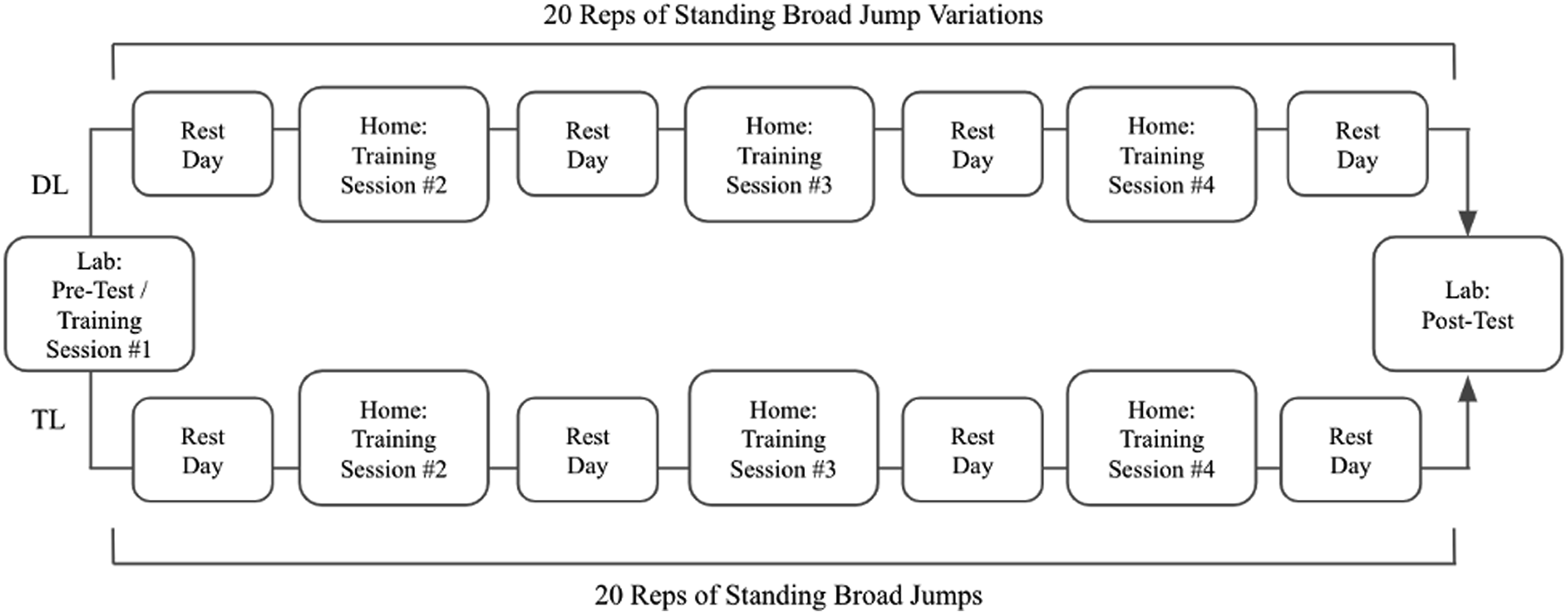
Training sessions
Jump Variations Used for Differential Training.
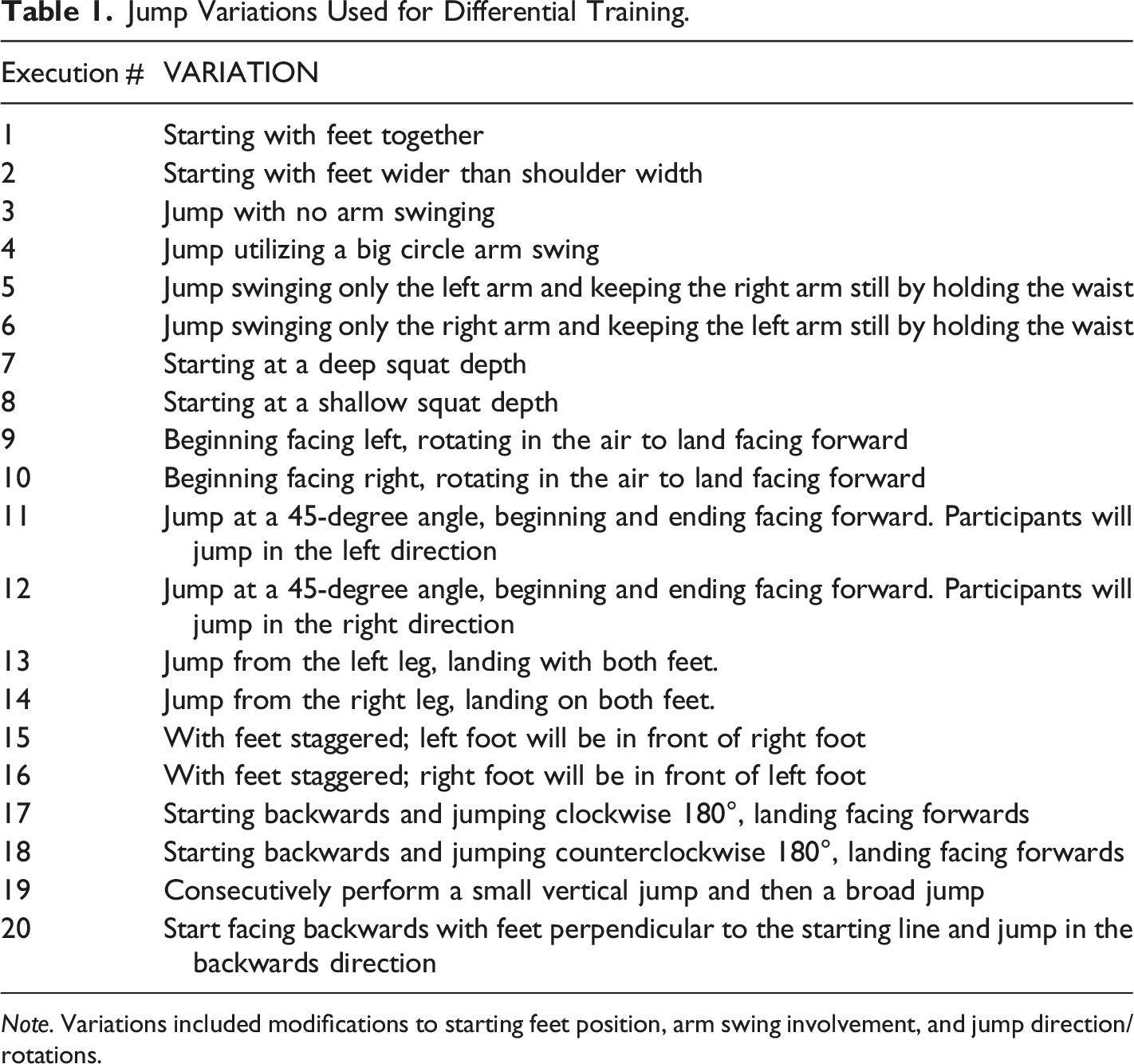
Note. Variations included modifications to starting feet position, arm swing involvement, and jump direction/rotations.
Participants were required to complete a written training log provided by the researchers, whereby they noted the date and time of each training session. Additionally, participants were instructed to video record the training with a phone (or other device) using a single recording of all 20 jumps. To facilitate consistency of training sessions, all individuals were provided with a paper training packet that included written instructions (exercise and volume) of the warm-up activities, hard-copy of a training log template (date and time), and jump training instructions (differential learning: 20 jump variations, see Table 1; repetition-based: 20 long jump executions). Prior to the post-testing assessment, researchers verified the logs.
Instrumentation and Outcome Measures
Jump distance
We measured jump distance with a metric tape measure and reported findings in meters (m). A force plate (OR6-7, AMTI, Boston) recorded ground reaction forces (GRF) in the anteroposterior (GRFap), and vertical (GRFvert) directions, and the force data were sampled at 150 Hz.
Biomechanical data for the broad jump process
Kinetic data from the force plate were imported into Visual 3D (C-Motion, Germantown, MD) and filtered using a four-order Butterworth filter with a 10 Hz cut-off frequency. Custom-written pipelines were constructed to identify movement initiation, peak vertical force, and toe off events. Using the vertical ground reaction force, movement initiation was determined as ±3 SDs from a steady baseline state collected prior to movement initiation. All movement events were checked and visually confirmed prior to computing the following variables. Peak vertical ground reaction force (GRFvert) was determined for each trial and normalized to the participant’s bodyweight. Rate of force development (RFD) was computed as the change in force (GRFpeak - GRFminimum) divided by the temporal window of these two force events. Lastly, the normalized horizontal impulse was determined from GRF in the anterior-posterior direction between the events of movement initiation and toe off and used to calculate horizontal velocity (Vhor) at take-off.
Statistical Analysis
The maximum jump distances from the four pre- and four post-training assessments were used to determine each participant’s broad jump performance. Each dependent variable was analyzed in separate repeated measures ANOVAs with a within-subject factor of Test (pre/post) and a between-subject factor of training Group. Partial eta-squared (
Results
Figure 2 showed the mean jump distance for both training groups during pre- and post-training assessments. Results revealed a statistically significant main effect of Group for jump distance, F (1, 200) = 34.04, p < .001, Jump Distance Performance at Pre- and Post-Training Assessments for Differential and Repetition-Based Training Groups.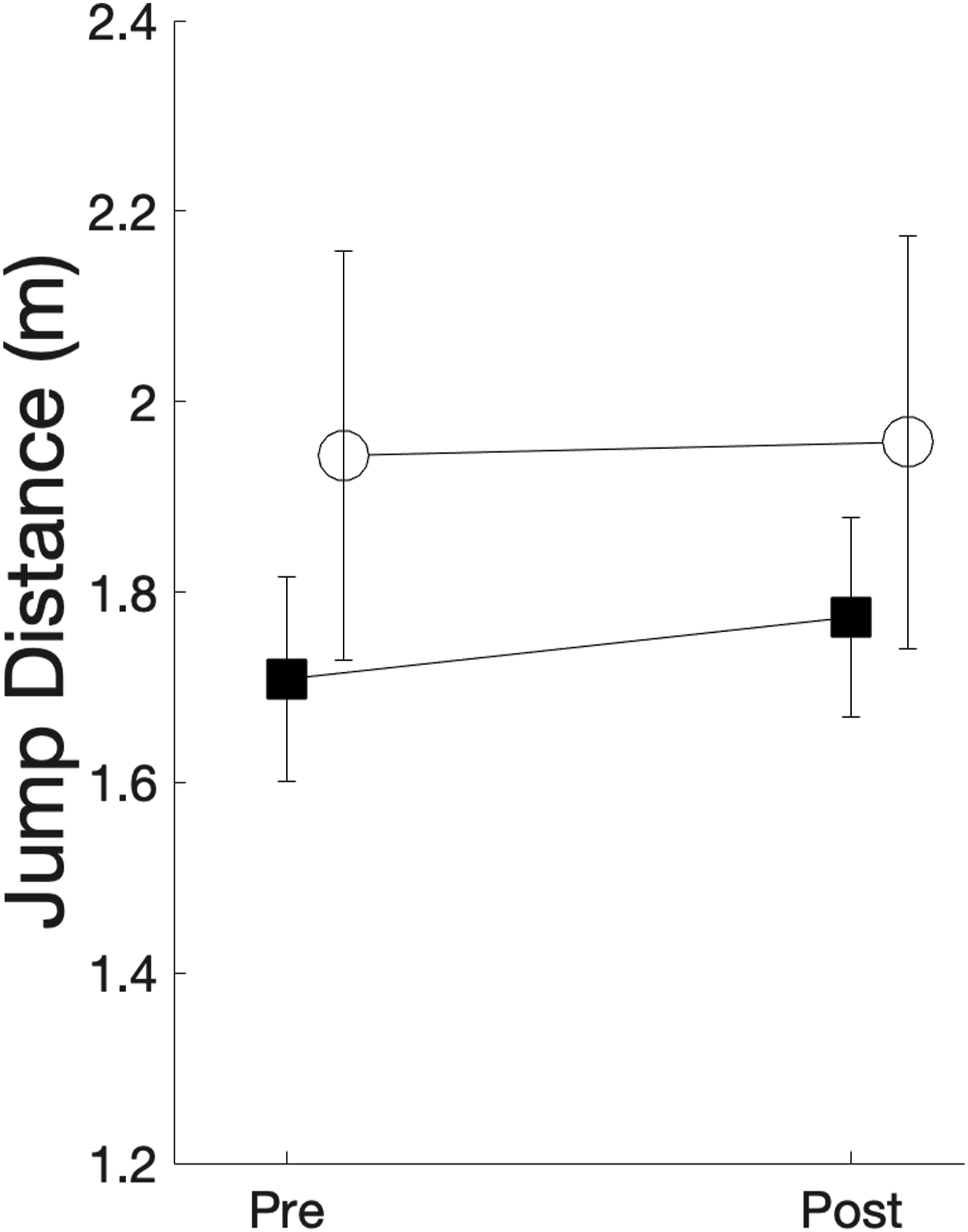
Figure 3 (left) displayed the peak GRFvert and the statistical analysis revealed a significant main effect for Group, F (1,192) = 10.22, p = .002, Peak GRFvert (left) and Vhor (right) Were Greater for Both Groups at Post Training with the Differential Group Showing Greater Overall Takeoff Velocity.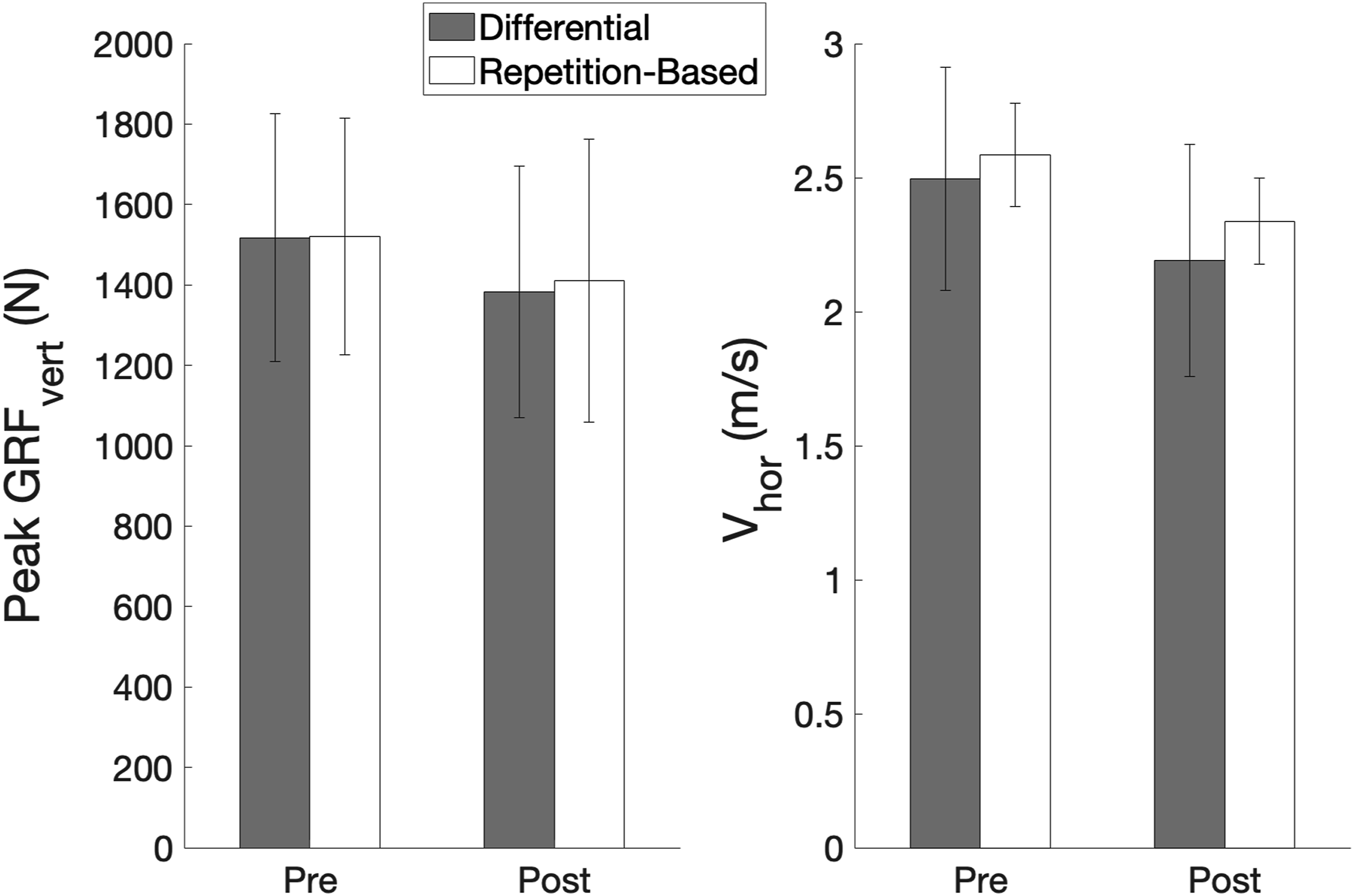
The results of the RFD revealed a lack of significance for the main effects of Group and Test (Figure 4). However, the Group × Test interaction, F (1, 192) = 2.42, p = .08, Rate of Force Development (RFD) at Pre- and Post-Training Assessments.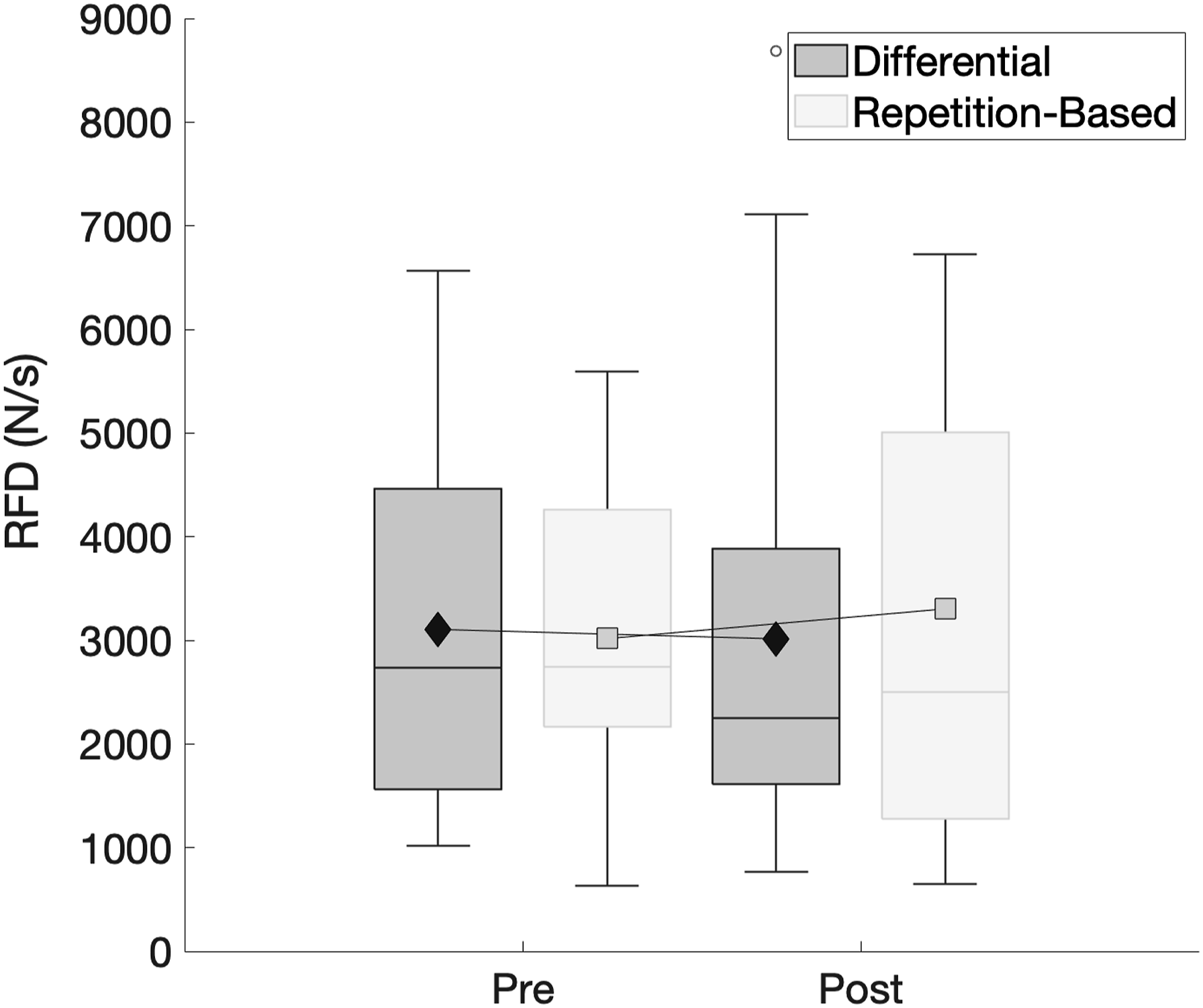
Discussion
Our aim in the current study was to evaluate the effect of differential learning on the acquisition of a standing broad jump task among individuals with minimal jumping experience (i.e., lacking formal jumping training). In accordance with differential learning theory, we predicted that movement variations (i.e., changes in jump direction, body rotation, arm utilization, and starting foot position) would facilitate the self-organization process of efficient movement patterns in the acquisition of the broad jump task compared to a repetition-based approach. However, our results failed to support our original prediction in that the practice effect was similar for both training groups and failed to show the expected performance enhancement following exposure to training environments that varied the movement executions.
The duration of training included four training sessions distributed over a total of eight days, and the results revealed a trend toward statistical significance for jump distance in both training groups. Vhor did show a significant training effect, providing an indication of an effective training volume. However, the lack of a training effect for the performance outcome measure (jump distance) may be due to the limited exposure to the explosive movement patterns required to execute the standing broad jump. A wide range of training durations have been implemented in previous differential learning investigations. Short-term training studies included investigations ranging from a single session examining postural changes (Hossner et al., 2016; James, 2014) to five days for learning volleyball serves (Fialho et al., 2006) and one week training for recreational speed skaters improving their start times (Savelsbergh et al., 2010). Longer training durations showing positive effects of differential learning have spanned a range from four weeks to five months while examining a variety of motor tasks, such as shot put, hockey passes, baseball hitting, and tactical behavior in soccer (Beckmann et al., 2016; Hall et al., 1994; Henz & Schöllhorn, 2016; Santos et al., 2018). The short training volume we used may indicate that additional practice is required for novice learners to promote the proposed benefits of differential learning on an explosive motor task like the broad jump. As suggested by Tassignon and colleagues (2021) in a recent meta-analysis, it will be important for future investigators to carefully consider how factors related to training volume, motor task, and learner population influence the overall effects of differential training.
A finding in further support of the idea that individuals may need further training exposure to the explosive components of the standing broad jump can be seen in the RFD results (Figure 4). In contrast with our original hypothesis, repetition-based training trended toward an increase in RFD at post-testing, while differential training displayed a decreasing trend. Individuals in the differential learning environment may have experienced difficulty learning the maximal force production elements when performing the jump variations. This difficulty may have further compounded any training benefit when considering the limited exposure of each jump variation throughout the study. In contrast, repetition-based training exposed individuals to the same movement pattern that appears to have allowed for greater increases in force production during each repetition. Furthermore, while movement variations have been linked to improved motivational processes (Romer et al., 2009), the additional challenge of completing a new jump variation after every repetition may have led participants to focus on developing a non-optimal movement solution to meet the task execution goal rather than producing maximal effort in order to achieve the greatest jump distance. Importantly, while training consisted of no movement correction during the acquisition process to promote the self-organizing feature of differential learning, supervised training sessions can provide further encouragement and should be considered in future investigations.
To determine the overall efficacy of including movement variability in practice, differential learning has been examined across a variety of motor tasks. For example, some investigations have included physical proficiency elements within the training (Coutinho et al., 2018; Fialho et al., 2006; Gaspar et al., 2019; Savelsbergh et al., 2010) whereas others have used tactical sport skills (Santos et al., 2016, 2018). However, few studies have used an explosive movement such as the broad jump task. The initial evidence of differential learning was shown in a shot-put task that demands similar explosive elements. Also, recent evidence from Gaspar et al. (2019) showed that a short duration of differential training resulted in small increased in countermovement jump height as well as soccer kicking velocity. Our findings were inconsistent with these previous results in that similar changes occurred in the movement outcome (jump distance) between the differential and repetition-based training. It is unclear whether retention benefits of differential learning occurred within the standing broad jump task or whether enhanced generalization would have been present to novel tasks. These elements should be incorporated into future differential learning study designs. For the application of differential learning, it may be the case that tactical and creative movement solutions within a sport context offer richer environments for movement variations than discrete motor skills requiring explosive movements. Nonetheless, the heterogenous pool of motor tasks (i.e., tactical, technical, fine motor, and posture) found across the differential training literature has also led to several methodological limitations including low sample sizes and limited statistical power, and further contributes to the fragmentation of tasks used across motor learning studies (Ranganathan et al., 2021)
According to Schollhorn, it is ideal for DL movement variations to cover a maximal range of motion patterns in order to optimally promote self-organization and to become in resonance with individual needs (Beckmann & Schollhorn, 2006). However, few studies have explored the potential movement variability bandwidth used during training. Beckmann and Schollhorn (2006) incorporated three types of differential learning when applying training to a hockey pass skill, but most of variations focused on the traditional task outcome variability. Furthermore, their results revealed similar levels of performance between groups that experience no movement execution variations compared to large amounts of execution variations. Schmidt et al. (2021) showed a similar finding on a golf putting task between individuals who experienced movement execution variations and those that had the additional variation of a golf putter. In the current investigation, the lack of a training effect may have been influenced by the large range of movement variability experienced during training in that the broad jump variations were too dissimilar to a standard broad jump task. Based on the variations used by Beckmann et al. (2016), we used variations that included elements related to jump direction, initial foot position, flight rotation, and arm swing patterns. Both tasks (shot-put throw and standing broad jump) represent explosive closed-chain movements with the main difference being propelling an object versus projecting the body. However, the planes of motion associated with each also slightly differ in that the broad jump occurs predominantly in the sagittal plane, whereas the rotational elements of the shot-put throw potentially add more movement variations. Overall, future investigations are needed to better identify the appropriate bandwidth of movement variability and it may be necessary to develop a common model task paradigm around differential learning to evaluate the robustness of this theoretical approach.
Limitations and Directions for Further Research
A few limitations of the current study should be considered. First, our sample population were individuals with no formal jump training such as that which typically accompanies participation in sports such as basketball, triple jump, and high jump; however, the wide range of physical activity our participants reported may have impacted our findings. Next, similar to the majority of past differential learning studies (Tassignon et al., 2021), our research design used pre- and post-training assessments to determine training effectiveness. However, this approach limited our understanding of retention and transfer elements associated with differential learning. Lastly, while participants kept written and video logs to ensure accountability, we could not directly control their effort level during training. As highlighted above, supervised training session may be more appropriate for this explosive motor tasks rather than allowing individual’s degree of motivation play a factor into the results.
Conclusion
In conclusion, the effects of differential learning may differ for tactical and creative movements. The variations used for the explosive broad jump movement must specifically contribute to maximal force production to develop self-organizing processes for the desired movement rather than the variations. Further studies should aim to investigate the appropriate bandwidth of variations for explosive motor tasks and extend the duration of the training period to optimize opportunity for a transfer affect to develop from training to post-testing.
Footnotes
Acknowledgments
The researchers would like to thank all the participants for their commitment to completing the procedures of the study.
Declaration of Conflicting Interests
The author(s) declared no potential conflicts of interest with respect to the research, authorship, and/or publication of this article.
Funding
The author(s) disclosed receipt of the following financial support for the research, authorship, and/or publication of this article: The investigation was funded in part from the Julian Carr Aliber grant offered by the Department of Kinesiology at TCU.
