



Abstract
Our aim in this study was to translate and psychometrically evaluate a Chinese version of the Behavioral Regulation in Sport Questionnaire (BRSQ). Participants were Chinese collegiate athletes (N = 361) who were competitive in their respective sports. We examined the construct validity of the Chinese BRSQ using alternative structural equation models and evaluated convergent validity, factor score reliability, and measurement invariance of the optimal model. Due to insufficient score reliability for some subscales, our initial Chinese BRSQ was deemed problematic. A modified version of the questionnaire with a four-factor structure (amotivation, external regulation, introjected regulation, and autonomous motivation) demonstrated excellent construct validity, convergent validity, and score reliability. There was measurement invariance across athlete level and sex. This tool provides a valuable resource for practitioners and sport psychology researchers for assessing sport motivation among competitive university athletes in China.
Introduction
Athletes’ motivation towards sport participation has been widely studied across the world (Amemiya & Sakairi, 2019; Buonamano et al., 1995; Chan et al., 2015; Chen et al., 2007; Farrell et al., 2004; Smith et al., 2016). A framework frequently relied upon to understand an individual’s motivational processes is Self-determination Theory (SDT, Deci & Ryan, 1986, 2008). SDT holds that human behaviors are driven by different types of motivation, and these fall on a continuum varying in degrees of self-determination (Deci & Ryan, 1986, 2000, 2008). Accumulating evidence has found that more self-determined motivation is positively associated with sport participation (McLoughlin et al., 2017), sport commitment (Zahariadis et al., 2006), deliberate practice (Vink et al., 2015), doping avoidance (Chan et al., 2015), flow experience (Jackson et al., 1998), and level of physical activity in youth sports (Fenton et al., 2016), whereas less self-determined motivation is positively related to sport drop-out (Garcia Calvo et al., 2010), athlete burnout (Barcza-Renner et al., 2016; Jordalen et al., 2016, p. 201; Lemyre et al., 2007; Madigan et al., 2016), and negative emotions during sport participation (Vallerand & Losier, 1999). These associations underlie the critical value of understanding athletes’ sport motivation to determine various positive and negative sport consequences.
The continuum begins with amotivation, which represents the least self-determined form of motivation and is characterized by not acting at all or acting passively toward a specific goal or enterprise. Extrinsic regulation is the next least self-determined type of motivation, and it refers to acting because of various degrees of extrinsically manipulated reasons that can be further divided into four distinct but related types: external regulation, introjected regulation, identified regulation, and integrated regulation. External regulation, the most controlling form of extrinsic regulation, occurs when actions are purely governed by external rewards or avoiding punishment. Introjected regulation is a partially integrated form of extrinsic motivation, but it is still externally controlling. Individuals endorsing this type of motivation tend to pursue ego-oriented outcomes, as exemplified by the pursuit of internal pressures, such as the need to maintain self-respect or avoid guilt, rather than pure enjoyment of the game or external rewards. Identified regulation refers to the internal endorsement of the values associated with taking action, which is somewhat autonomous. Integrated regulation is the most autonomous type of extrinsic regulation because the identified values of an activity is consistent with one’s own values. The continuum ends with intrinsic motivation, the most self-determined type of motivation, characterized by pure enjoyment, pleasure, and volition for engaging in an activity (Deci & Ryan, 1986, 2000, 2008). With the continued development of SDT, some researchers have proposed a revised taxonomy of motivation, that distinguishes between amotivation, controlled motivation (external regulation and introjected regulation) and autonomous motivation (identified regulation, integrated regulation, and intrinsic motivation; Vansteenkiste et al., 2010). The SDT framework is a comprehensive representation of human motivation that has consistently been applied across achievement contexts, including sport. Based on this theoretical substructure, several psychological instruments measuring sport motivation have emerged.
The development of the Sport Motivation Scale (SMS, Pelletier et al., 1995) was the initial attempt to measure sport motivation using an SDT framework. This scale has shown satisfactory validity and reliability, and it has been tested across cultures (Chantal et al., 1996; NÚÑez et al., 2006), gender (Li & Harmer, 1996), age (Zahariadis et al., 2005), and sport type (Pelletier & Dion, 2007). This instrument evaluates all the SDT motivation types, except integrated regulation. As Deci and Ryan (2008) noted, integrated regulation and intrinsic motivation are distinct, even if they appear similar. While the former should be considered an extrinsic motivation in which individuals act to achieve preferable sport outcomes, the latter characterizes motivation driven solely by the internal enjoyment of engaging in a sport. Therefore, with the omission of integrated regulation, some have questioned the content validity of the original SMS (Mallett et al., 2007) and have suggested including of an integrated regulation subscale. The SMS-6 and SMS-II are revised versions of the SMS that included an integrated regulation subscale. These instruments have also demonstrated good construct validity, consistent with SDT (Mallett et al., 2007; Pelletier et al., 2013).
A second scale designed to assess sport motivation and address the content validity concerns of the SMS is the Behavioral Regulation in Sport Questionnaire (BRSQ; Lonsdale et al., (2008). Lonsdale et al. (2008) proposed two different versions of the BRSQ. The BRSQ-6 is a six-factor model in which intrinsic motivation is regarded as a unidimensional construct; the BRSQ-8 is an eight-factor model in which intrinsic motivation is divided into three components (accomplish, knowledge, and stimulation). The BRSQ-6 has been applied more frequently in the sport setting than the BRSQ-8, because it more closely matches SDT (Deci & Ryan, 1986, 2008). The BRSQ-6 has been adapted to address cultural differences and translated into a number of languages, retaining adequate validity and reliability, and these adaptations have included Spanish (Viladrich et al., 2011), English (Hancox et al., 2015), Turkish (Çetinkaya & Mutluer, 2018), and Portuguese (Monteiro et al., 2018). The BRSQ-6 was found to be scalar invariant across gender, age, and competitive level of dancers in the United Kingdom (Hancox et al., 2015). Despite favorable psychometric features identified in various language versions of the BRSQ-6, the external regulation and introjected regulation subscales of the BRSQ-6 were found to be highly correlated (Hancox et al., 2015; Lonsdale et al., 2008), suggesting a possible measurement problem, as the two subscales are meant to be conceptually distinct according to SDT.
Although previous studies have established promising construct validity evidence for different versions of the BRSQ-6, they have failed to integrate the two broad motivation factors into the factor structure of the entire instrument. As motivation can also be subdivided by the degree of the controlling nature of these two broad factors - controlled and autonomous motivation (Vansteenkiste et al., 2010) - it is plausible that both broad and specific motivation dimensions may co-exist and collectively explain different portions of item covariance. Another possibility is that some specific motivation factors may be redundant when considering the two overarching factors. For instance, the high correlation between external regulation and introjected regulation identified in previous BRSQ studies (Hancox et al., 2015; Lonsdale et al., 2008) could be resolved by integrating a broader controlled motivation factor. This factor alone could be sufficient to explain most of the common variance shared by the items under the external regulation and introjected regulation subscales. In fact, Hancox et al. (2015) discovered that, when using a single controlled motivation factor to predict items under the external regulation and introjected regulation subscales, the model fit was comparable to the original factor structure of the BRSQ, and factor loadings were statistically significant and large. This finding suggests that multiple models with and without the addition of broader motivation factors (controlled and autonomous motivation) should be compared to identify the optimal factor structure of the BRSQ.
Two hierarchical models, named higher-order confirmatory factor analysis (HCFA) and bi-factor confirmatory factor analysis (BCFA), can be used in comparative analyses of the BRSQ to allow simultaneous modeling of both its specific and general motivation factors. The primary distinction between HCFA and BCFA is that BCFA requires fewer model constraints than HCFA. Specifically, the HCFA approach requires mediation effects from superordinate factors to items via subordinate factors, whereas the BCFA approach assumes that the common variances among items can be explained by one or more general factors and the remaining covariances can be explained directly by specific factors (Chen et al., 2006). As a result of this relaxed assumption, BCFA often yields a better model fit than HCFA (Chen et al., 2006). Another advantage of the BCFA approach is the independence of latent factors. All the latent factors estimated from the BCFA model are presumed to be uncorrelated, thus making the results easier to interpret (Gignac, 2016). To evaluate a postulated hierarchical factor structure, a BCFA model should be favored in the absence of any theoretical justifications necessitating the employment of a HCFA model. Therefore, in the current research, we utilized a BCFA method to concurrently examine specific and general motivational factors of a Chinese version of the BRSQ, to determine its optimal factor structure.
Despite the broad adoption of the BRSQ in different countries, no corresponding Chinese BRSQ has been developed. Although the Chinese SMS-II (Li et al., 2018) is available to measure athletes’ sport motivation in China, Lonsdale et al. (2014) showed that both the SMS-II and the BRSQ demonstrated strengths and weaknesses for measuring sport motivation and advised additional comparisons between these two scales to determine which is preferable. Moreover, the identified regulation, integrated regulation, and intrinsic motivation subscales of the Chinese SMS-II were found to be highly correlated (Li et al., 2018), indicating that the translation of items under these subscales may be problematic if they are to have similar meanings in Chinese. Given that the BRSQ and SMS-II employ entirely different item pools, translating the BRSQ into Chinese may alleviate this issue. Therefore, we believed it was imperative to develop a Chinese BRSQ to provide an alternative measure of sport motivation for the Chinese population. As the merits and limitations of the SMS-II and BRSQ identified in Western cultures may not apply to a different culture, the availability of a Chinese BRSQ allows sport motivation researchers and practitioners in China to compare it with the SMS-II to determine which instrument is best suited for implementation in the Chinese culture.
Our primary purpose in the present study was to translate and assess the construct validity, convergent validity, and factor score reliability of the Chinese BRSQ-6 among Chinese collegiate athletes. Considering the high correlation between external regulation and introjected regulation subscales found in previous BRSQ studies (Hancox et al., 2015; Lonsdale et al., 2008), as well as the high correlation between identified regulation, integrated regulation, and intrinsic motivation subscales of the Chinese SMS-II (Li et al., 2018), we utilized alternative CFA and BCFA models to determine the optimal factor structure for the Chinese BRSQ-6. Specifically, we tested all the possible combinations of the general and specific motivation factors including: (a) a CFA with six specific motivation factors (M1); (b) a CFA with amotivation and two general motivation factors (M2); (c) a BCFA with two general motivation factors and six specific motivation factors (M3); (d) a BCFA with two general motivation factors, amotivation, external regulation, and introjected regulation (M4); (e) a BCFA with two general motivation factors, amotivation, identified regulation, integrated regulation, and intrinsic motivation (M5); (f) a CFA with amotivation, controlled motivation, identified regulation, integrated regulation, and intrinsic motivation (M6); and (g) a CFA with amotivation, external regulation, introjected regulation, and autonomous motivation (M7). In addition to determining the optimal factor structure, we examined convergent validity, reliability of the factor scores, and measurement invariance of the best factor structure across sex and athlete level.
Method
Participants
Chinese undergraduate student-athletes (N = 361) from several public universities participated in this study. As the BRSQ-6 requires the respondents to be at least at a competitive level in their specialized sport (Lonsdale et al., 2008), we recruited students majoring in athletic training or physical education because these majors require students to be competitive in their specialized sports. In order to enroll in these majors, students must pass a special college admission exam in which they must display extraordinary competence in their specialized sports. On average, the participants were aged 20.45 years (SD = 1.41) and had been involved in their respective sports for 5.67 years (SD = 3.44). The sample consisted of 269 men and 92 women. A majority of the participants were freshmen (n = 123) and sophomores (n = 155), along with a smaller number of juniors (n = 59) and seniors (n = 24). Approximately two-thirds of these students were professional athletes (n = 232), with the remainder being competitive athletes (n = 129, see Instrumentation section for categorization details).
Ethical Considerations
This study received approval from the first author’s second institution’s Institutional Review Board (approval number: 2382122). Upon approval, a letter requesting access to students was sent to college professors in China who were selected through the primary researcher’s personal network. Following these professors’ permission, students in their classrooms were asked to participate in this study. All participants gave their consent to participate in this study before answering the questionnaires.
Instrumentation
Demographic Questionnaire
We collected the participants’ demographic information using a brief demographic questionnaire that included questions about school year, age, sex, and years playing their primary sport. Participants were also asked the question, “What is your certification in your main sport?” with response options: (a) no certification; (b) national level 3; (c) national level 2; (d) national level 1; (e) national player; (f) international player. Because people with certificates higher than national level 2 are widely considered professional players in China, those who responded with “a” or “b” were regarded as competitive players and those who responded from “c” to “f” were considered professional players.
Behavioral Regulation in Sport Questionnaire
The BRSQ-6 (Lonsdale et al., 2008) consists of 24 items and measures six different types of behavioral regulation: amotivation (e.g., “I participate in my sport but the reasons why are not clear to me anymore”); external regulation (e.g., “I participate in my sport because if I don’t other people will not be pleased with me”); introjected regulation (e.g., “I participate in my sport because I would feel ashamed if I quit”); identified regulation (e.g., “I participate in my sport because it teaches me self-discipline”); integrated regulation (e.g., “I participate in my sport because it’s a part of who I am”); and intrinsic motivation (e.g., “I participate in my sport because I enjoy it”). Respondents rate items on a Likert scale ranging from 1 (not at all true) to 7 (very true). The score for each type of behavioral regulation was calculated by averaging the scores of the items within the same subscale. The initial study on BRSQ-6 has confirmed the structural validity evidence (χ 2 (237) = 385.44, p < .01, CFI = .99, and TLI = .99) and good internal consistency (Cronbach’s alpha ranging from .79 to .92) of this scale (Lonsdale et al., 2008).
Chinese Basic Needs Satisfaction in Sport Scale
We used the Chinese Basic Needs Satisfaction in Sport Scale (BNSSS; Ng et al., 2011) to measure participants’ basic psychological needs satisfaction in sport. The BNSSS consists of 20 items measuring competence (e.g., “I am skilled at my sport”), autonomy-choice (e.g., “In my sport, I get opportunities to make choices”), autonomy-internal perceived locus of causality (e.g., “In my sport, I feel I am pursuing goals that are my own”), autonomy-volition (e.g., “I feel I participate in my sport willingly”), and relatedness (e.g., “In my sport, I feel close to other people”). Individuals record their response to each item using a 7-point Likert scale ranging from 1 (not true at all) to 7 (very true). The score for each subscale was calculated by averaging the scores of the items within the same subscale. The BNSSS has demonstrated good structural validity (χ 2 (160) = 341.70, p < .01, NNFI = .96, CFI = .97, SRMR = .07) and internal consistency (Cronbach’s alpha values range between .76 and .82 for all subscales, with the exception of the autonomy-volition subscale, which has an alpha of .61) among college athletes (Ng et al., 2011).
Questionnaire Translation
The English version of BRSQ-6 was translated into Chinese by three bilingual students according to the method recommended by Beaton et al. (2000). All students had been studying in the United States for two-to-three years. Each of the three individual translations was evaluated by the other two students, and any inconsistencies in item translation were discussed collectively. This process continued until all students agreed on a final version of the Chinese BRSQ-6. The translated instrument was then back-translated into English by a Chinese immigrant who has lived in the United States for over 15 years and is a college psychology professor. The differences between the back-translated and original versions of the instrument were evaluated by two monolingual English speakers with expertise in sport psychology. If any discrepancy was found, the monolingual speakers gave detailed feedback to the three forward-translators who then rewrote the troublesome items, and the back-translator translated the corrected items into English again. This process continued until the two monolingual speakers considered the items identical.
Data Collection Procedures
The implied consent form, Chinese-translated version of the BRSQ-6, and the BNSSS were electronically sent to students through Wen Juan Xing (Ranxing, Changsha), an online questionnaire management application. Students completed these questionnaires independently at their preferred time and location. The completion of all instruments took around 10 minutes. The completed surveys were automatically stored in Wen Juan Xing online and were downloaded by the first author.
Data Analysis
We used the statistical software program, R, for data preparation and Mplus for data analysis. We evaluated the univariate and multivariate normality of the item scores using the Shapiro-Wilk test and the Mardia estimate of multivariate kurtosis, respectively. Items having a z score exceeding 3.29 or less than −3.29 were deemed to be outliers (Warner, 2012) and were removed from further data analysis. The maximum likelihood robust (MLR) estimator was used to estimate the parameters, as it provides a more precise parameter estimation for Likert scale with five or more response categories, and is robust when the multivariate normality assumption is violated (Finney & DiStefano, 2006). In the CFA model, items were specified to regress on their specific latent factors that are allowed to correlate with each other. In the BCFA model, items were specified to regress on two general latent factors (controlled motivation and autonomous motivation) as well as on their specific factors. The latent factors in the BCFA model were not allowed to correlate with each other. Figure 1 shows the graphical representation of all the proposed models. Graphical Representation of the Tested Measurement Models.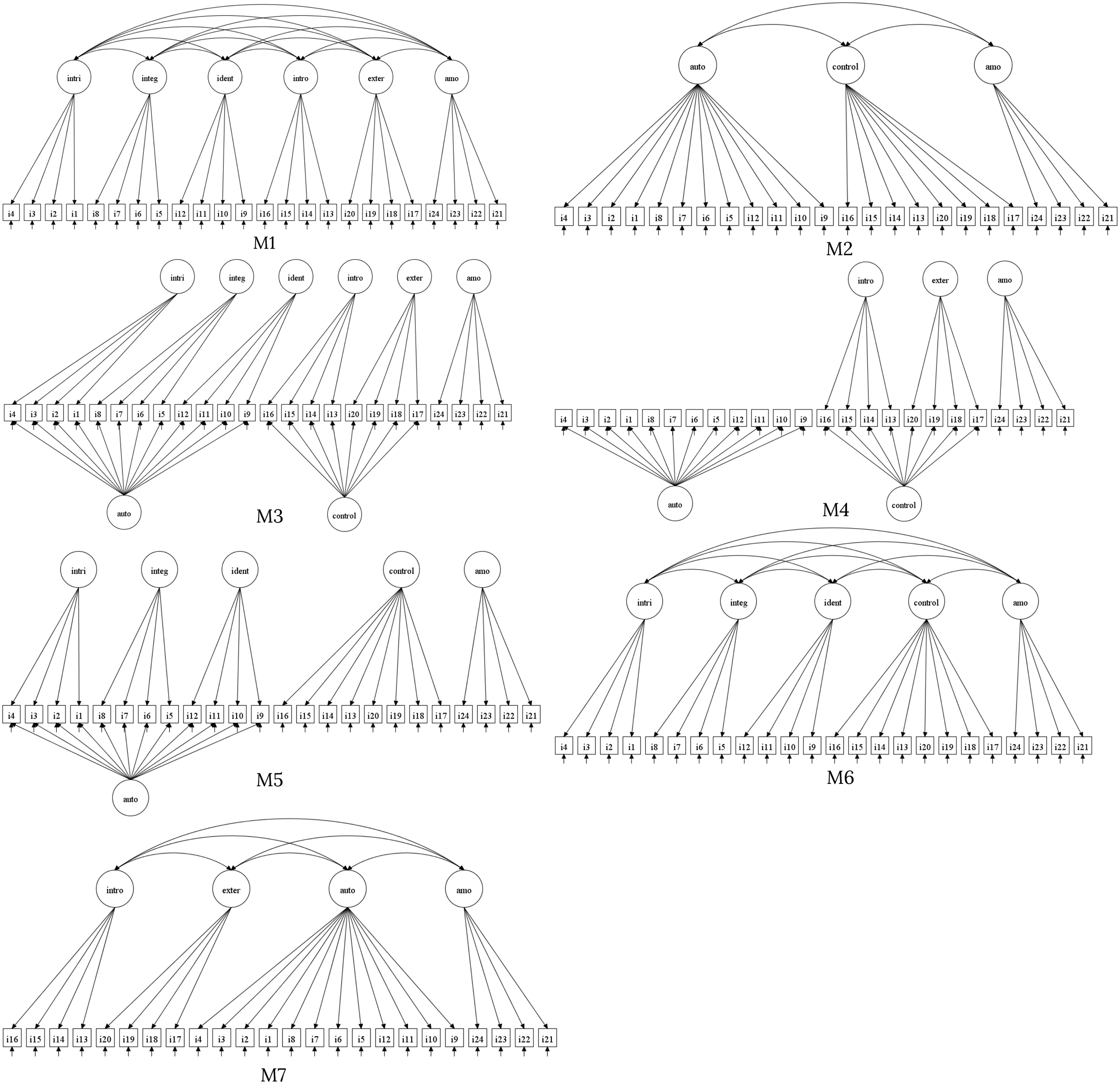
The chi-square (
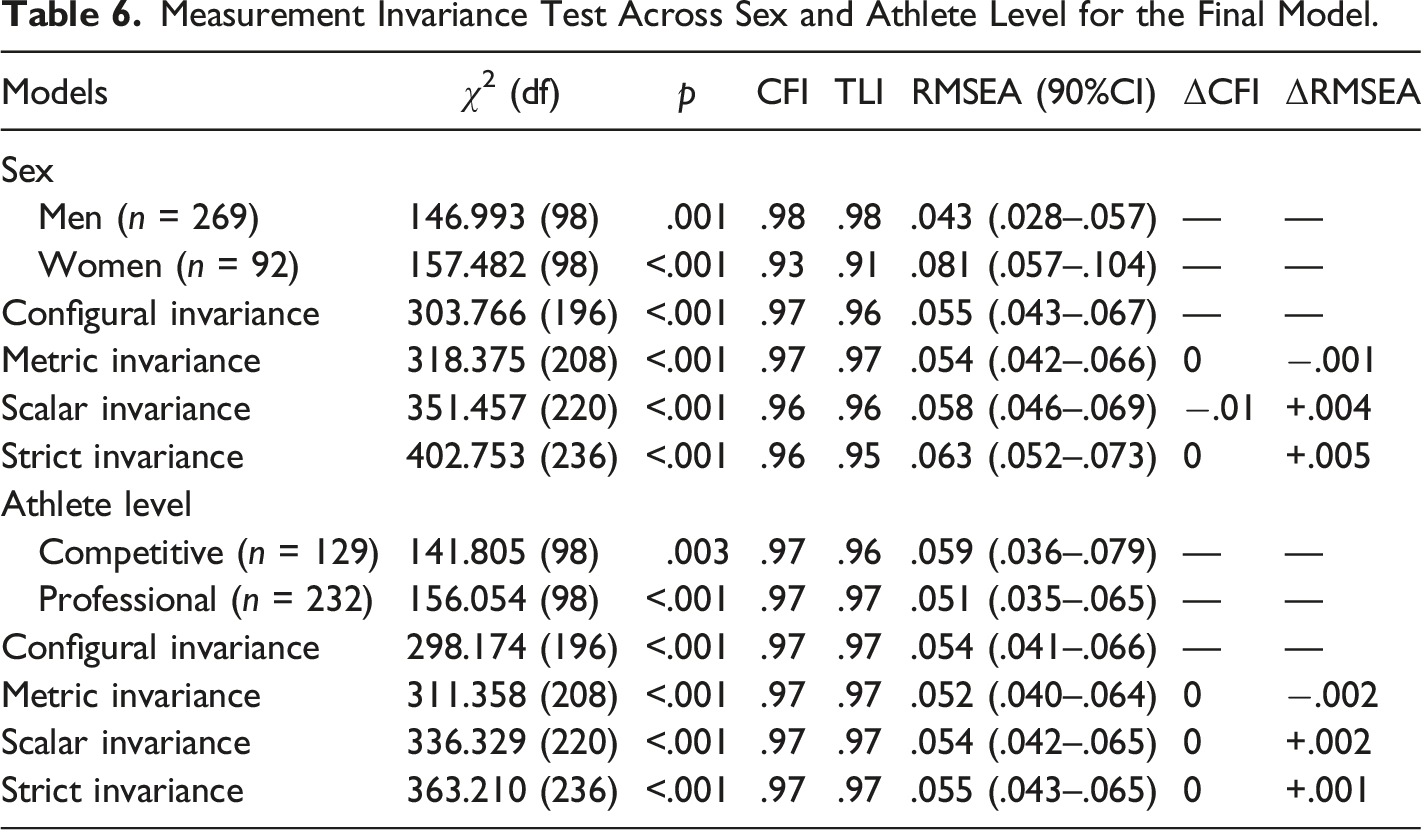
Measurement invariance testing was conducted in accordance with Putnick and Bornstein’s (2016) recommendation. The best-fitting model was first fitted separately to each subgroup to test for model fit. A multi-group model was conducted to test the measurement invariance across sex and athletic level. The configural (no equality constraints), metric (equality of factor loadings across groups), scalar (equality of factor loadings and intercepts across groups), and strict invariance (equality of factor loadings, intercepts, and residual variances across groups) tests were performed. A decrease in CFI less than .01 and an increase in RMSEA less than .015 from less-constrained model to more-constrained model were used as evidence of group invariance (Cheung & Rensvold, 2002).
Convergent validity evidence, defined by the extent of agreement between two instruments that measure theoretically relevant constructs, was evaluated by correlating BRSQ factor scores with the factor scores from BNSSS. According to a previous study that found more controlling types of motivation had a more negative relationship with the BNSSS factors and more autonomous types of motivation had a more positive relationship with the BNSSS factors (Ng et al., 2011), similar relationships were hypothesized to be found in the present study.
The composite omega (ωc) was adopted to evaluate the model-based reliability for all the models. The composite omega measures the proportion of explained total score variance that can be attributed to all common factors. Composite omega with a value greater than .80 indicates that the factor score is satisfactorily reliable (Nájera, 2019). The hierarchical omega (ωh) was used to measure the proportion of explained score variance that is only attributable to a single latent factor for the BCFA models. A hierarchical omega greater than .80 indicates the factor score is essentially unidimensional (Rodriguez et al., 2016). The explained common variance (ECV) was used to determine the extent to which a general factor explains the common variance among a set of items. The percentage of uncontaminated correlations (PUC) was used to determine the number of correlations that can be described by the general factor in the absence of specific factors (Rodriguez et al., 2016). When both the ECV and PUC values are greater than .70, it implies that the items represent an essentially unidimensional latent construct (Rodriguez et al., 2016). Item explained common variance (I-ECV) was used to assess the item common variance that is attributable to a general factor. I-ECV greater than .80 indicates an item essentially reflects the general factor (Stucky & Edelen, 2014).
Results
Data Screening
Except for item 11 with six outliers, no outliers were found for other items. The Shapiro-Wilk test indicated that none of the item scores met univariate normality (all ps <.05). The Mardia estimate of multivariate kurtosis indicated deviation of the item scores from multivariate normality (p < .05). The potential biases introduced by outliers and non-normality were addressed using the MLR estimator (Zhong & Yuan, 2011).
Goodness of Fit Indices
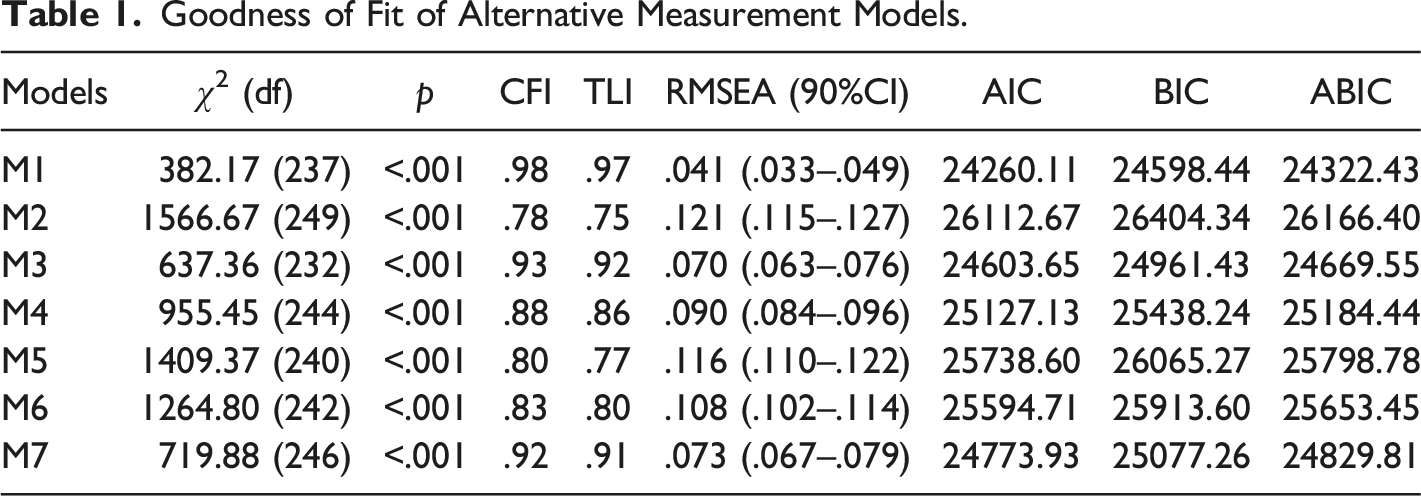
Goodness of Fit of Alternative Measurement Models.
Standardized Factor Loadings, Score Reliability Estimates, and Factor Correlations for the M1 Model.
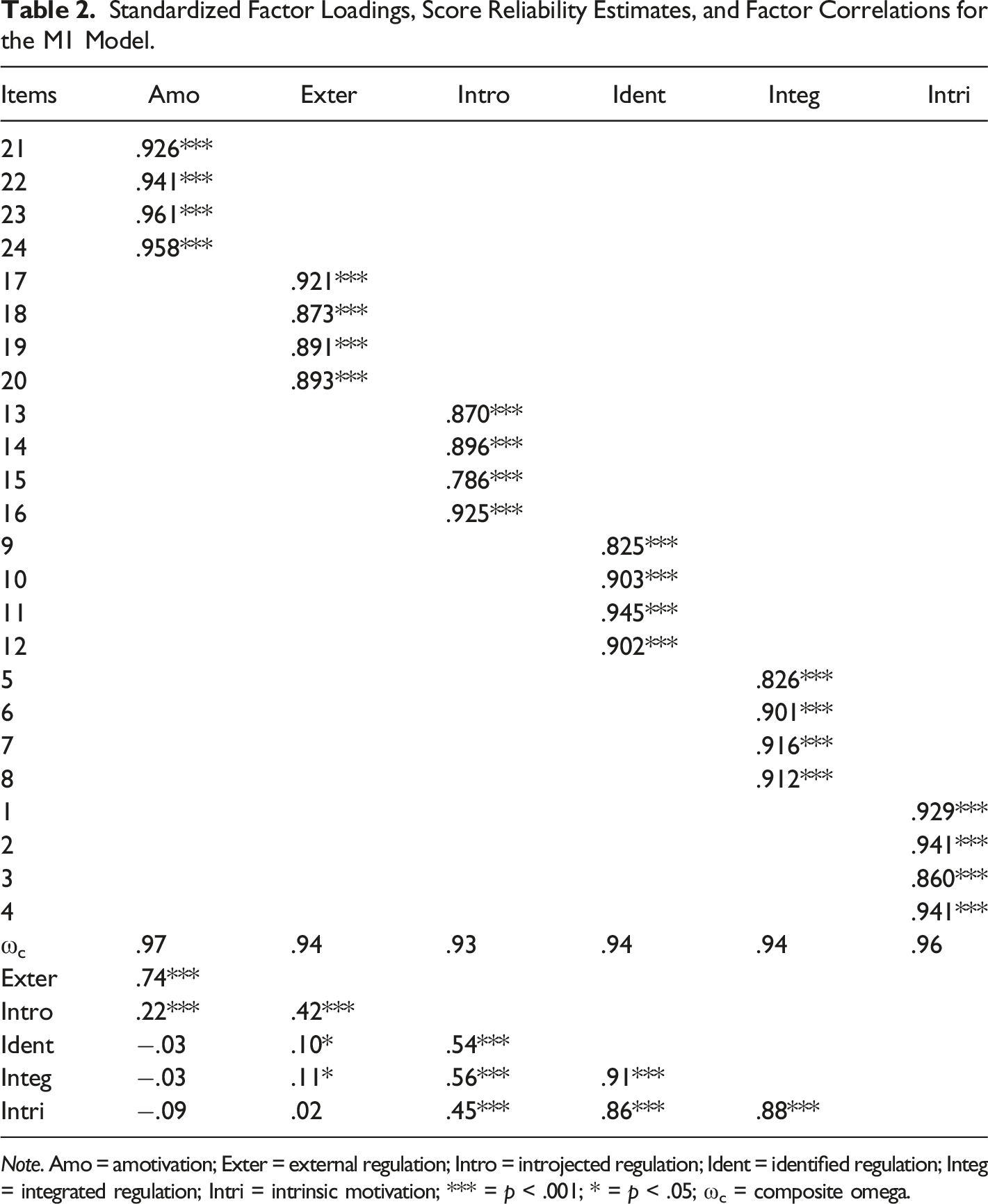
Note. Amo = amotivation; Exter = external regulation; Intro = introjected regulation; Ident = identified regulation; Integ = integrated regulation; Intri = intrinsic motivation; *** = p < .001; * = p < .05; ωc = composite omega.
Standardized Factor Loadings and Score Reliability Estimates for the M3 Model.
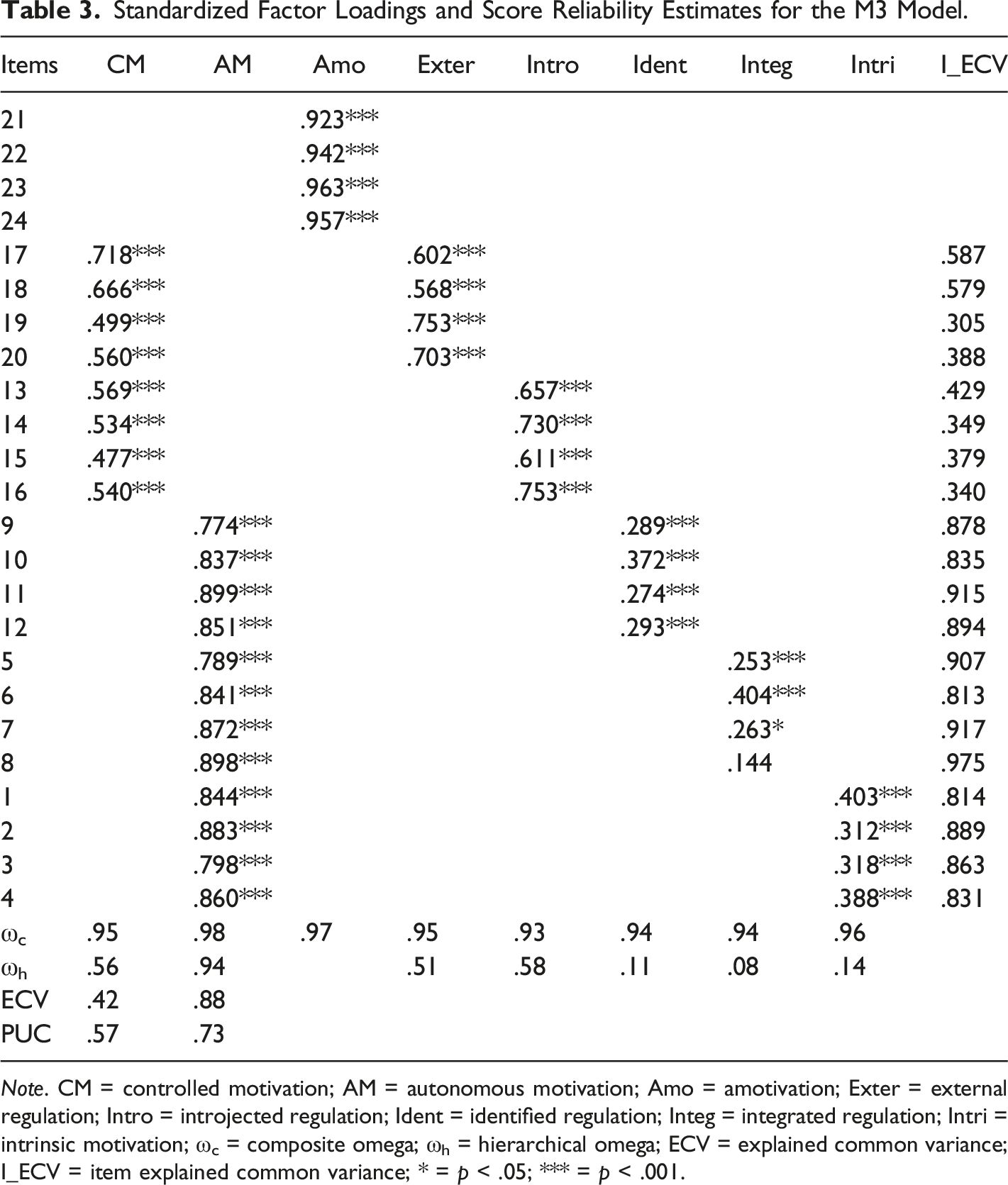
Note. CM = controlled motivation; AM = autonomous motivation; Amo = amotivation; Exter = external regulation; Intro = introjected regulation; Ident = identified regulation; Integ = integrated regulation; Intri = intrinsic motivation; ωc = composite omega; ωh = hierarchical omega; ECV = explained common variance; I_ECV = item explained common variance; * = p < .05; *** = p < .001.
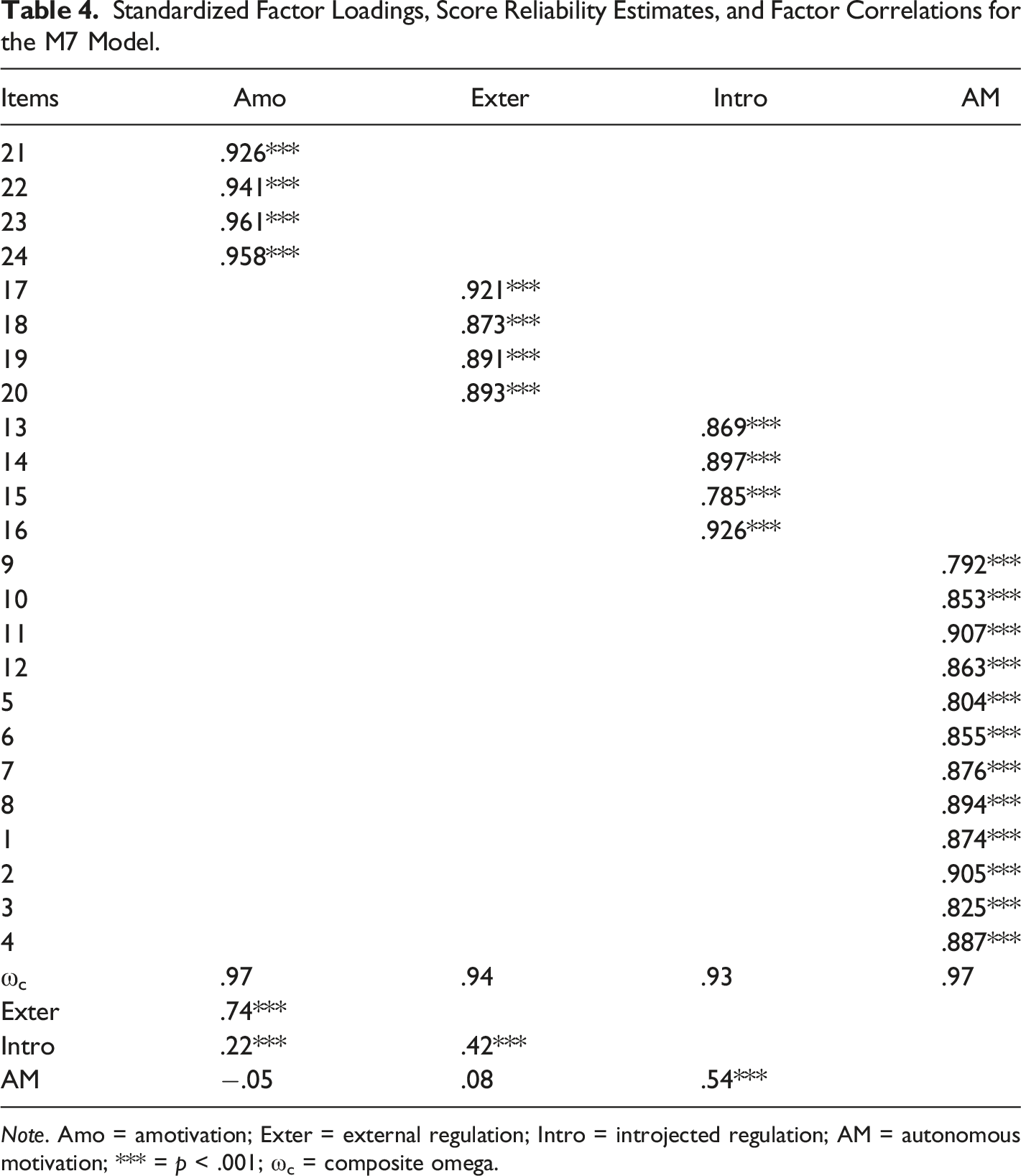
Standardized Factor Loadings, Score Reliability Estimates, and Factor Correlations for the M7 Model.
Note. Amo = amotivation; Exter = external regulation; Intro = introjected regulation; AM = autonomous motivation; *** = p < .001; ωc = composite omega.
Although the standardized factor loadings and reliability estimates were excellent in the M1 model, the factor correlations revealed that the identified regulation, integrated regulation, and intrinsic motivation factors were highly correlated with each other, indicating the possibility that they were measuring a unidimensional construct. The M3 model revealed that after including a general autonomous motivation factor, the factor loadings for the items under the identified regulation, integrated regulation, and intrinsic motivation factors dropped substantially. In addition, the hierarchical omega, ECV, and I_ECV values indicated that a general autonomous motivation factor explained almost all the reliable sources of covariance among the items under the identified regulation, integrated regulation, and intrinsic motivation factors, indicating that these items essentially represented a single autonomous motivation. In contrast, the standardized factor loadings for the items under the external regulation and introjected regulation factors remained relatively high after introducing a general controlled motivation factor. The hierarchical omega, ECV, and I_ECV values for the controlled motivation factor indicated that a single controlled motivation was inadequate to explain the common covariances among the items under the external regulation and introjected regulation factors, indicating these items essentially represented a multidimensional construct (external regulation and introjected regulation). As M7 encompassed the factor structure of amotivation, external regulation, introjected regulation, and autonomous motivation and demonstrated adequate fit statistics, factor loadings, and score reliability estimates with no extremely high factor correlations, M7 was chosen as the best model.
Considering that it is unnecessary to use all 12 items to measure a single autonomous motivation factor and preferable to have a more parsimonious model, we proceeded to reduce the number of items under the autonomous motivation factor in the M7 model to four by referencing the modification indices. The items (item 3, item 5, item 8, and item 9) with the first four lowest modification indices were retained. Another CFA was run using the M7 factor structure, but it only included the retained items under the autonomous motivation factor. The final model showed excellent fit to the data, except for the significant result of the chi-square test (χ2 (df) = 180.81 (98), p < .001, CFI = .98, TLI = .97, RMSEA (90%CI) = .048 (.037–.059)). Figure 2 shows the factor structure of the final model. Graphical Representation of the Final Measurement Model.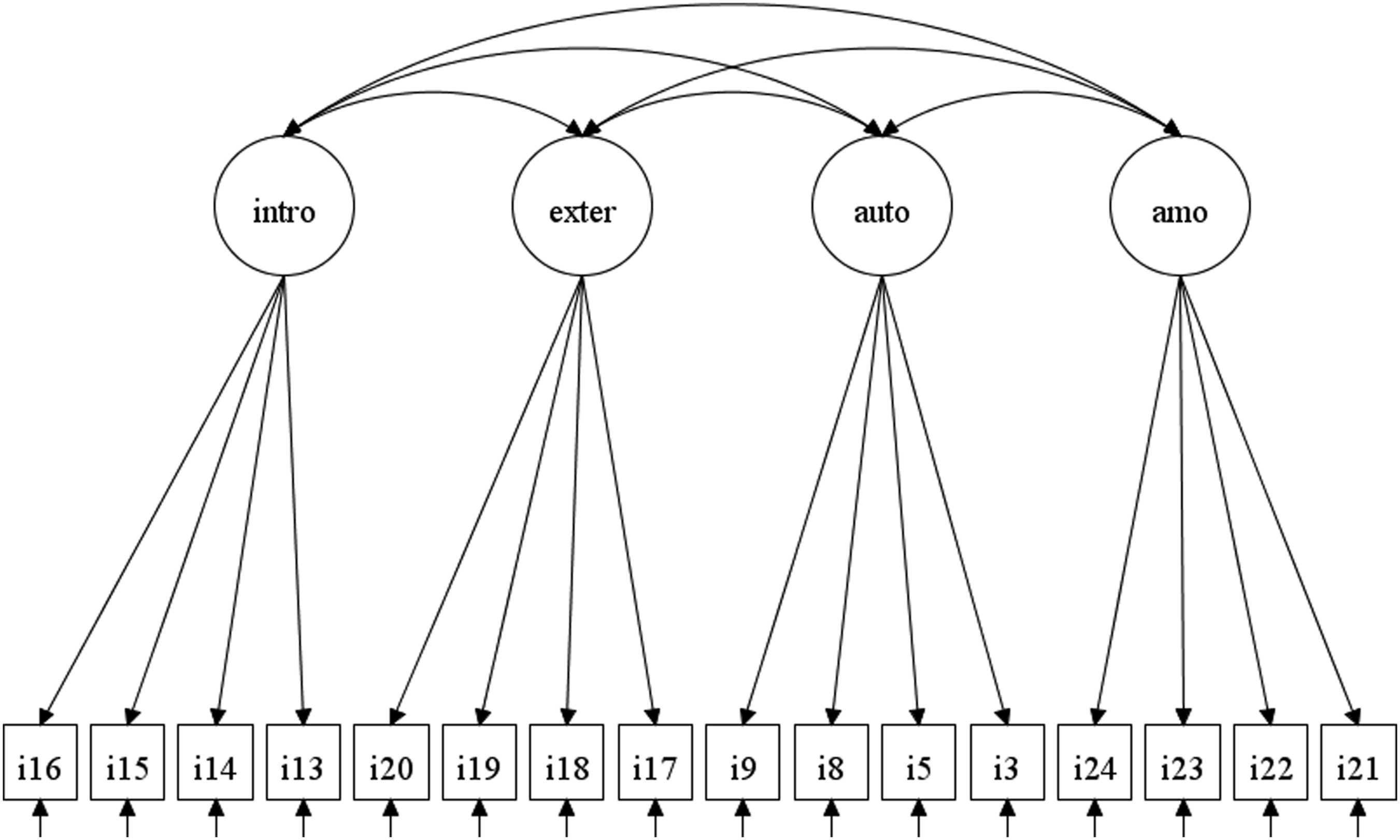
Standardized Factor Loadings, Score Reliability Estimates, and Factor Correlations for the Final Model.
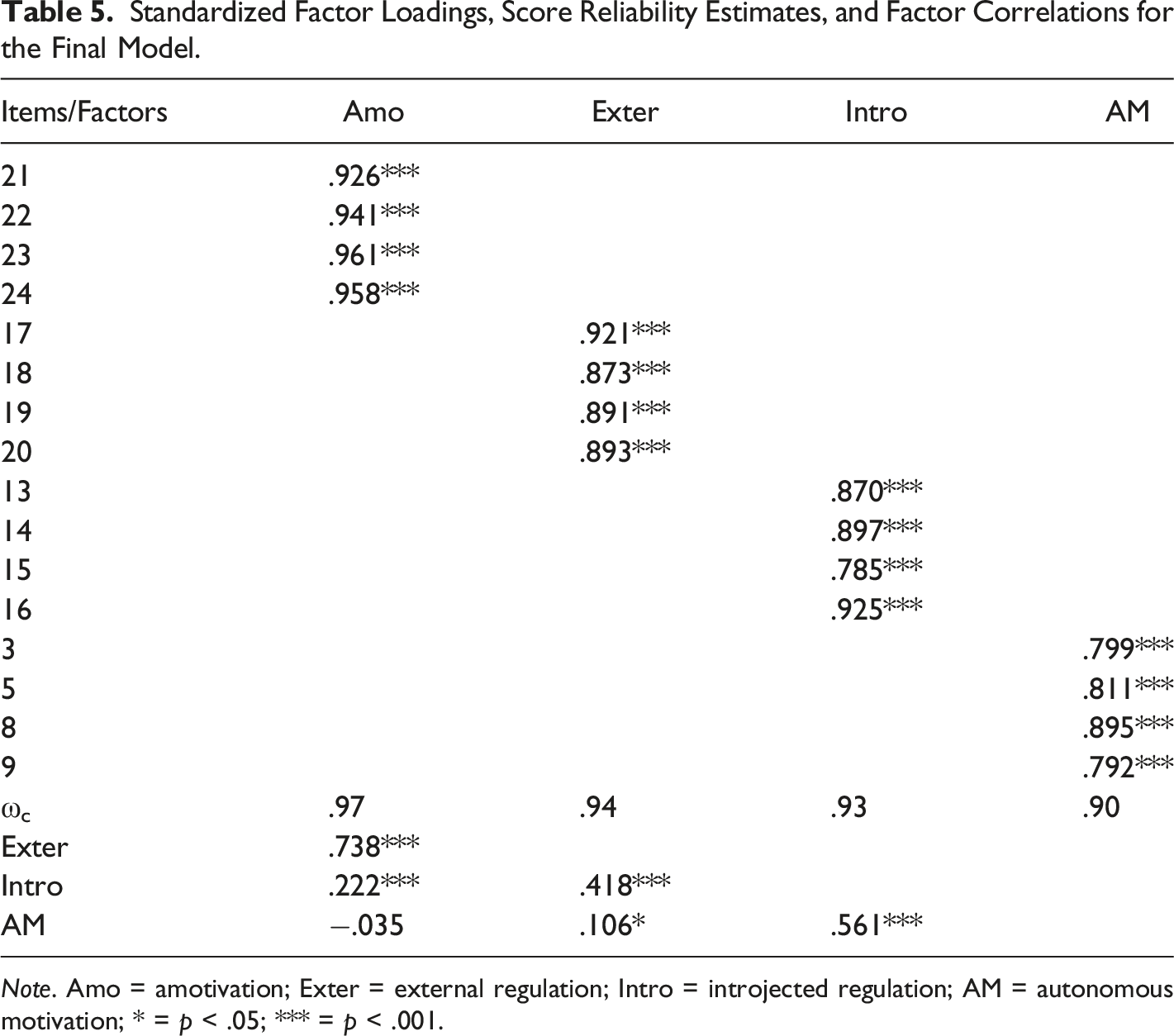
Note. Amo = amotivation; Exter = external regulation; Intro = introjected regulation; AM = autonomous motivation; * = p < .05; *** = p < .001.
Measurement Invariance Test Across Sex and Athlete Level for the Final Model.
Standardized Regression Coefficients for Covariates Regressed on Types of Motivation.
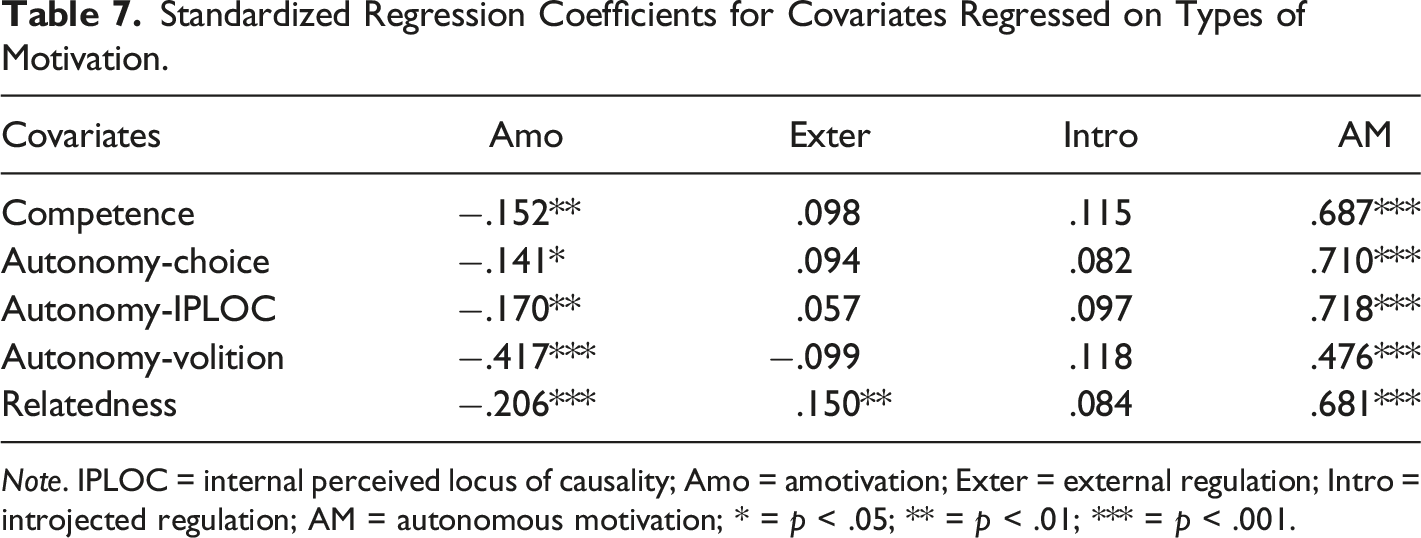
Note. IPLOC = internal perceived locus of causality; Amo = amotivation; Exter = external regulation; Intro = introjected regulation; AM = autonomous motivation; * = p < .05; ** = p < .01; *** = p < .001.
Discussion
The purpose of this study was to translate and evaluate the psychometric properties of the Chinese BRSQ-6. This study included 361 Chinese undergraduate sport athletes. Several alternative structural equation models revealed that the four-factor structure solution for the Chinese BRSQ (amotivation, external regulation, introjected regulation, and autonomous motivation) was optimal. This instrument is hence named Chinese BRSQ-4. Following the elimination of some items under the autonomous motivation factor, the modified Chinese BRSQ-4 demonstrated adequate construct validity, score reliability, strict invariance across sex and athlete level, and adequate convergent evidence of validity.
Our most salient finding in this study was that an autonomous motivation factor was sufficient to explain most item covariances under the identified regulation, integrated regulation, and intrinsic motivation subscales. In other words, the conceptual distinction of the identified regulation, integrated regulation, and intrinsic motivation should be deemed redundant because of their psychometric similarities with one another. Our factor structure for the Chinese BRSQ-4 is similar to the original BRSQ study that found an exceptionally high correlation between identified regulation and integrated regulation (Lonsdale et al., 2008). Furthermore, our result precisely duplicated the finding of the Chinese SMS-II which also found the identified regulation, integrated regulation, and intrinsic motivation subscales to be substantially correlated among university sport athletes (Li et al., 2018). Since the Chinese BRSQ-4 and Chinese SMS-II used different item pools, these identical findings are unlikely to have been the result of item-level misspecification. Rather, the unidimensional characteristic of the autonomous motivation subscale among Chinese university students should be viewed as robust and independent of the selection of measuring instrument.
Although none of the following BRSQ studies replicated the unidimensional finding of the autonomous motivation, previous researchers who explored the psychometric features of the Behavioral Regulation in Exercise Questionnaire (BREQ) revealed that a general autonomous motivation score should be calculated for the Chinese BREQ-2 (Chen et al., 2018) and Chinese BREQ-3 (Luo et al., 2022). Similar to BRSQ, BREQ-2 and BREQ-3 (two revised versions of BREQ) were developed, based on SDT, in an effort to evaluate motivation in an exercise context. Taken together, these findings led to the conclusion that the lack of distinction between specific autonomous motivation factors was prevalent in both the Chinese sport and exercise settings. Potential explanations are that: (a) it is empirically inappropriate to divide autonomous motivation into specific motivation factors, as proposed by SDT, in the context of sport and exercise motivation for Chinese university students (i.e., this population conceptually perceives only a single autonomous motivation); and/or (b) the semantic nuances of the various autonomous motivations are difficult to convey in Chinese due to language constraints. Future research should investigate these possibilities to have a deeper comprehension of the unidimensionality of the autonomous sport and exercise motivation among Chinese university students.
Utilizing an array of reliability indices inherent to bi-factor modeling, we were able to determine that the subscale scores for identified regulation, integrated regulation, and intrinsic motivation lacked reliable information, thus favoring the adoption of a single autonomous motivation. Considering the literature’s predominant use of traditional confirmatory factor analysis for evaluating the BRSQ’s factor structure, practitioners and researchers in applied sport psychology should exercise caution when using the factor scores derived from the specific autonomous motivation factors in different language versions of the BRSQ. It is imperative that subsequent research investigates the disparities between models that either include or exclude controlled and autonomous motivation factors, in order to ascertain the most suitable factor solution for the BRSQ.
Instead of using latent factor scores which correct for measurement error, manifest factor scores (e.g., the scores calculated by summing or averaging the observed item scores) are commonly used in sport psychology research and practice. To compare manifest factor scores across groups, item residual variances, as well as factor loadings and item intercepts, should be constrained equal across groups (Marsh et al., 2013). To accommodate the use of the manifest factor scores for the purpose of group comparison, the present study tested and established strict measurement invariance for the Chinese BRSQ-4 across sex and athlete level. This result provided justification for researchers and practitioners to compare manifest factor scores of any of the motivation factors of the Chinese BRSQ-4 across sex and athlete level.
Limitations and Directions for Further Research
Several limitations of the present study must be acknowledged. First, although the degree of social desirability (i.e., participants providing answers they perceive to be viewed as positive by others) was reduced by notifying participants that their responses were anonymous, studies have highlighted the importance of incorporating social desirability scales into surveys like ours to ensure accurate interpretation of individual test outcomes (Perinelli & Gremigni, 2016; Schumm, 2015). The primary aim of our research was to assess the psychometrics of an existing tool (BRSQ) for its suitability with Chinese participants. Nevertheless, we highly encourage future researchers to further develop both the original instrument and its Chinese adaptation to investigate the degree to which respondents are influenced by social desirability when providing their responses. For instance, student-athletes might portray overly positive attitudes towards their sports to appease teachers or coaches when responding to the BRSQ. To mitigate this bias, we suggest the inclusion of a specialized social desirability scale for athletes. This scale could feature contextually relevant items such as: “I worry that admitting discouragement in my sport might cause issues with authority figures” or “I feel compelled to show my sports attitudes positively.” These items, answered with a simple yes or no and more yes responses indicating higher social desirability, can help reduce survey response bias. For data analysis, the frequency of yes responses can serve as a covariate, or separate analyses can be conducted for groups with varying levels of social desirability. Second, it is possible that the basic assumption of independence of observations for CFA models might be violated due to the restricted participant sample (i.e., participants may know each other personally). If participants completed the online survey together in person, their answers to the survey questions may have been affected by one another. Finally, the sample sizes for men and women in the measurement invariance test across sex were uneven. The sample size for men’s group was nearly three times that of women’s group. As the chi-square statistics used in the measurement invariance test were weighted by sample size, an imbalanced sample size may influence the results (Yoon & Lai, 2018). The higher sample size of the men’s group contributed more to the determination of the final chi-square values, potentially reducing the effect of measurement non-invariance on the women’s group.
Conclusion
The present study translated and investigated the psychometric properties of the Chinese BRSQ-6. Our findings suggested that four factor scores should be calculated for the Chinese BRSQ, including amotivation, external regulation, introjected regulation, and autonomous motivation (item 3, 5, 8, and 9). We named this modified instrument Chinese BRSQ-4. The Chinese BRSQ-4 exhibited satisfactory construct validity, convergent validity, and score reliability. Its manifest subscale scores permit comparisons based on sex and athlete level. This instrument is a valuable tool for sport scholars and practitioners in China to assess the sport motivation of university student athletes.
Footnotes
Declaration of Conflicting Interests
The author(s) declared no potential conflicts of interest with respect to the research, authorship, and/or publication of this article.
Funding
The author(s) received no financial support for the research, authorship, and/or publication of this article.

Data Availability Statement
Data available on request from the authors.
Appendix
中文版运动自我决定量表 (BRSQ-4). Calculate the average scores for the following subscales. Amotivation (13,14,15,16) External Regulation (9,10,11,12) Introjected Regulation (5,6,7,8) Autonomous Motivation (1,2,3,4).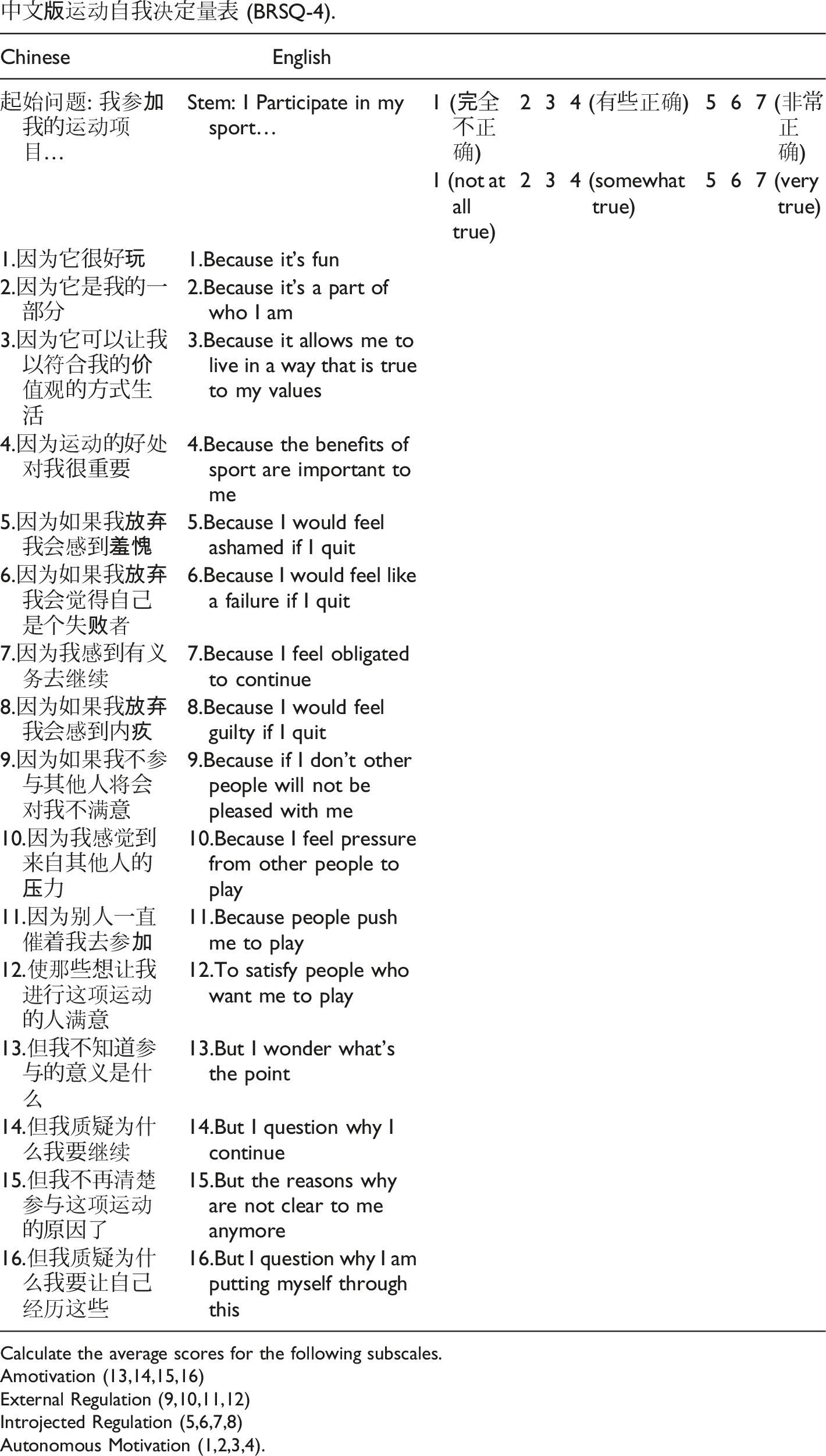
Chinese
English
起始问题: 我参加我的运动项目…
Stem: I Participate in my sport…
1 (完全不正确)
2
3
4 (有些正确)
5
6
7 (非常正确)
1 (not at all true)
2
3
4 (somewhat true)
5
6
7 (very true)
1.因为它很好玩
1.Because it’s fun
2.因为它是我的一部分
2.Because it’s a part of who I am
3.因为它可以让我以符合我的价值观的方式生活
3.Because it allows me to live in a way that is true to my values
4.因为运动的好处对我很重要
4.Because the benefits of sport are important to me
5.因为如果我放弃我会感到羞愧
5.Because I would feel ashamed if I quit
6.因为如果我放弃我会觉得自己是个失败者
6.Because I would feel like a failure if I quit
7.因为我感到有义务去继续
7.Because I feel obligated to continue
8.因为如果我放弃我会感到内疚
8.Because I would feel guilty if I quit
9.因为如果我不参与其他人将会对我不满意
9.Because if I don’t other people will not be pleased with me
10.因为我感觉到来自其他人的压力
10.Because I feel pressure from other people to play
11.因为别人一直催着我去参加
11.Because people push me to play
12.使那些想让我进行这项运动的人满意
12.To satisfy people who want me to play
13.但我不知道参与的意义是什么
13.But I wonder what’s the point
14.但我质疑为什么我要继续
14.But I question why I continue
15.但我不再清楚参与这项运动的原因了
15.But the reasons why are not clear to me anymore
16.但我质疑为什么我要让自己经历这些
16.But I question why I am putting myself through this