



Abstract
This study asks whether there is utility in knowing who sources soybean seed within the household and why when explaining variation in seed obtained from the formal versus informal sector. Survey data collected in Malawi in 2018 were used to explore the question. Results suggest that the identity of the person who sources seed has little to do with whether the seed was obtained from the formal sector. Instead, why the person sources soybean seed is the better predictor. As formal seed system actors mobilize to persuade more smallholder farmers to adopt improved varieties, understanding why people source seed may be key for targeting and when designing agricultural development interventions.
Introduction
Over the past decades, a wide range of gender analyses of rural agricultural contexts have examined the division of labour within and outside the household (e.g., Iradukunda et al., 2019; Nakhone and Kabutha, 1998; Rajaratnam et al., 2015; Tangka et al., 2000). With these kinds of information at hand, development organizations and other actors can tailor their programmes to meet the needs or perceived interests of women and men at household and community levels.
While knowing ‘who does what’ may improve programme targeting, it may be equally important to know the rationale behind why individuals carry out certain tasks within the household and whether the reasons indicated explain any more of the variation in household outcomes than that which is explained by who does what.
As one example. Given that male smallholder farmers are predominantly responsible for sourcing soybean (Glycine max [L.] Merr) seed in Malawi (Cook et al., 2014), actors operating in the formal sector could use this information to inform their marketing or outreach strategies. Likewise, development actors could modify their programmes to help increase women’s participation in sourcing improved soybean varieties from the formal seed sector. 1 Through these efforts, there is an increased likelihood that quality seed of improved varieties will be used by more smallholder farmers for enhanced productivity, profitability, and food and nutrition security. However, households might resemble each other on who carries out a specific task or who makes a specific decision but may differ on why they perform the task or make the decision (Bernard et al., 2020). In certain households, an individual may secure soybean seed because they are the head of household and in charge of purchasing key inputs, while in other households it is because they are more knowledgeable about seed quality. Thus, there may be utility in collecting this additional information on ‘why’ to inform the ways relevant actors, operating in or supporting the formal seed sector, refine their targeting of or engagement with smallholder households to help increase the uptake of improved seed.
Quantitative studies that inquire about who does or decides what and why, while also determining how these variables explain variation in household outcomes, are rare in the literature. Some studies in the women’s empowerment literature ask who makes a certain decision and to what extent they are involved in making the decision (e.g., studies using the Women’s Empowerment in Agriculture Index (WEAI) or a derivative thereof – see Alkire et al., 2013; Cole et al., 2020; Colverson et al., 2020), but do not extend the inquiry to ask why a person makes the decision and relate this to household outcomes.
A recent study by Bernard et al. (2020) explored who within the household makes certain agricultural production and consumption decisions and, using vignettes, determined the rationale people use to decide why decisions are made by certain individuals. Each vignette (via a story) described a different logic to help study respondents pinpoint why specific production or consumption decisions get made by individuals within their households, either by using a ‘unitary’ model (whereby an individual or a couple together makes the decision), a ‘contribution’ model (the decision is made by the person who contributes the most resources to the job), a ‘separate spheres’ model (specialized decision-making by a person in charge of a specific domain), a ‘norms’ model (decisions made based on social norms), or by using a ‘most informed’ model (decision made by the individual who has the most information). Once the vignettes were read aloud, spouses were asked to indicate which one illustrated their decision-making process. These data on ‘who’ and ‘why’ were used to explain production (e.g., average milk output per cow) and consumption (e.g., average hemoglobin level for young children) outcomes in their econometric models.
This study aims to provide one testing ground for Bernard et al.’s (2020) overall methodology and analytical framework using a relatively unique dataset from Malawi. The dataset contains information on individual (or joint) roles within the household performing soybean production and post-harvest tasks and on why certain individuals perform said tasks. We specifically focus our analysis in this study on who sources soybean seed within the household and why and relate these to whether the household sourced their soybean seed from the formal versus informal sector (the outcome variable). The study’s research questions are: (1) Who sources soybean seed within the household; (2) What is the rationale (or explanatory model) used for determining who sources soybean seed; and (3) Does who sources soybean seed and why help explain whether the household sourced seed from the formal sector?
The paper is structured as follows. In the next part of the introduction, we present a description of the study area. The methods and data are described thereafter along with the analysis strategy the study used, followed by the results section. The paper then discusses the utility of collecting and analysing the data with regard to assisting formal seed system actors with an understanding of how to better reach and benefit women and men smallholder farmers in Malawi, as well as for improving our understanding of the gender division of labour and its influence in shaping agricultural development outcomes. The paper ends with a brief conclusion.
Description of the study area
Malawi is a predominantly rural country with an agriculture-based economy. Close to 83% of the total population of Malawi lives in rural areas where people are mostly engaged in small-scale, rain-fed agriculture (Bezner Kerr, 2012; World Bank, 2020). The agriculture sector accounts for close to 28% of the Gross Domestic Product (Ministry of Agriculture, Irrigation and Water Development, 2017). The sector creates jobs for nearly 90% of the employed working age population (15–64 years) in Malawi (Baulch et al., 2019). The farming system is dominated by maize (Zea mays L.), which according to some sources, is grown by 97% of farming households on at least 60–80% of the total cultivated land (Bezner Kerr, 2012; Gumma et al., 2019; White, 2019). The lack of crop diversification in the country’s farming system is evident in the estimated agricultural production figures produced by the Government each year (see Ministry of Agriculture, Irrigation and Water Development, 2017).
There has been decline or stagnation in crop productivity in Malawi over the years, especially in crops like maize due in part to soil fertility depletion and changes in intra-seasonal weather shocks (Ministry of Agriculture, Irrigation and Water Development, 2017; Stevens and Madani, 2016). A well-known benefit of including grain legumes such as soybean in farming systems in Africa is that the crop fixes atmospheric nitrogen, thereby improving soil fertility (Giller et al., 1998; Ojiewo et al., 2020; Sanginga, 2003; Van Vugt et al., 2018). Soybean is grown in almost all the districts of Malawi, although the major producing areas are Kasungu, Mchinji, Lilongwe, Ntchisi, Mzimba and Dedza. These districts account for 80% of the total soybean production in the country (Tufa et al., 2019).
Soybean is becoming an important and popular cash crop to cultivate by many smallholders in Malawi (Bezner Kerr et al., 2007; Ecker and Qaim, 2011; Tufa et al., 2019). Most soybean produced in Malawi (95%) is cultivated by smallholder farmers (Opperman and Varia, 2011). The area under soybean cultivation has more than doubled since 2011 and there was a 57% increase in soybean production in Malawi from 132,417 t in 2016 to 208,556 t in 2017 (FAOSTAT, 2017). According to Meyer et al. (2018), this increase is the result of smallholder farmers switching cash crops from tobacco to soybean given the latter requires less labour to grow and yields a greater return on investment than tobacco. Soybean produced in Malawi attracts a premium price because of its GMO-free status, and therefore, Malawi has been a net exporter of soybean since 2008 (Meyer et al., 2018). Nonetheless, a considerable amount of soybean produced in Malawi is consumed within the country. The feed sector (especially poultry feeds) by far drives the current demand for soybean in Malawi, thus creating an important source of income for smallholder soybean farmers (Meyer et al., 2018; Opperman and Varia, 2011; Tinsley, 2009). Importantly, soybean is not a ‘traditional’ food consumed as a relish alongside the main maize-based staple food (nsima) but is used as an ingredient to make a porridge for children (known as likuni phala). Soybean is more oftentimes cultivated and sold by smallholders for processing by the industry into oil and more recently milled into flour and combined with other ingredients to produce ‘instant soya pieces’ 2 or used in large-scale public health interventions as supplementary food to prevent and treat moderate acute malnutrition in children (e.g., see Rogers et al., 2017).
The availability of improved soybean varieties from both the formal and informal sectors has increased over the past years to support the growing demand for soybean in Malawi (Tufa et al., 2019). Improved soybean varieties have productivity-enhancing and other benefits when combined with the use of good crop management practices (Van Vugt et al., 2017). Tufa et al. (2019) used nationally representative data from Malawi to investigate the productivity and income effects of adopting improved soybean varieties. They found that only 30% of their sample adopted improved varieties, with adopters having higher yields (by 61%) and net crop incomes (by 53%) compared to non-adopters. Their study results suggest there is some justification for investigating who within the household sources soybean seed and why to better inform how formal seed system actors could intervene to help increase smallholder adoption rates of quality seed of improved varieties, thereby helping women and men farmers achieve greater agronomic and economic gains.
Material and methods
Methods and data
The data used for this study were collected in July and August 2018 from three districts (Lilongwe, Mchinji and Dedza) located in central Malawi. A two-stage process was used to identify respondents to participate in the study. In the first stage, the three districts and six Extension Planning Areas (EPAs) were purposively selected because of their high soybean production potential. In the second stage, random sampling was used to select 24 sections within the six EPAs and 457 smallholder households in the 24 sections who met the criterion of having cultivated soybean during the agricultural season before the survey was conducted. Respondents who were interviewed were selected because of their involvement in carrying out soybean production and other related tasks within their households. Only one person who met this selection criterion was interviewed per household. Given the study’s main research questions, we only analysed the data from those respondents who indicated they were in a marital relationship – either in a monogamous or polygynous marriage (N = 399, 44% female and 56% male).
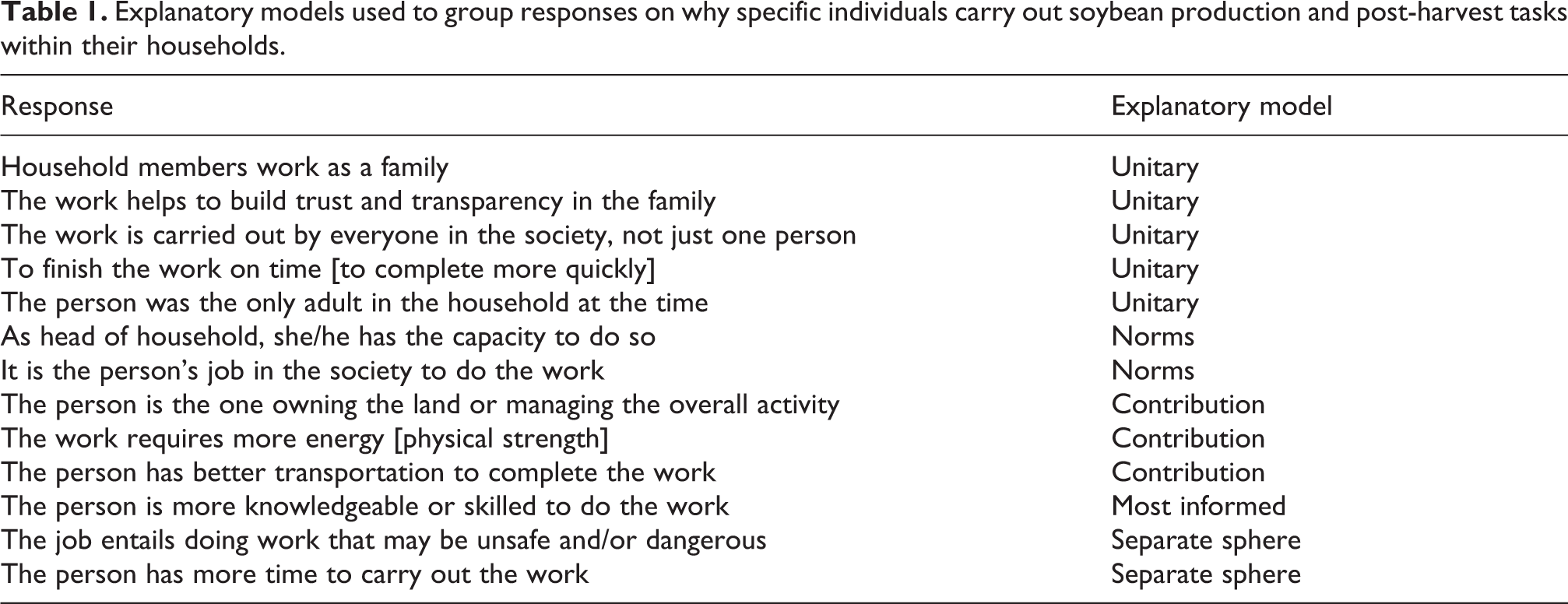
The survey instrument used to collect the data was designed to ask a range of questions on who carries out soybean production and post-harvest tasks (self, spouse, or jointly together) and ascertain why the person(s) perform said tasks. For the first questions asking about who carries out a particular task, responses were coded as ‘wife without husband’, ‘husband without wife’, or ‘wife and husband together’. These three variables are all binary. The responses to the questions on why spouses carry out a particular task on their own or together were free listed by study respondents and recorded during interviews and later coded before the data were entered into Stata 16.0 (StataCorp, College Station, TX, USA). Once in Stata, the ‘why’ responses were categorized according to the explanatory process they typified – either unitary, norms, contribution, most informed, or separate spheres model – per Bernard et al. (2020). For example, a response by a study respondent who indicated that a person in their household sources soybean seed because they own the land or manage soybean production was categorized as contribution model. If a respondent indicated a person in their household sources soybean seed because they are more knowledgeable or skilled at carrying out the task, the response was categorized as most informed model. A response by a study respondent who indicated someone in their household sources soybean seed because they are the head of the household was categorized as norms model. All the explanatory model variables are binary. While the focus of this study is on who sources soybean seed and why, the categorization process just described was applied to all soybean production and post-harvest tasks using a relatively wide range of responses (see Table 1).
Explanatory models used to group responses on why specific individuals carry out soybean production and post-harvest tasks within their households.
Respondents were also asked to indicate the source of the soybean seed they used in the prior agricultural season. This information was used to generate the main outcome variable employed in the analysis. The variable equals one (1) if the respondent indicated they sourced their seed from the formal sector, and zero (0) if they sourced from the informal sector. For this study sample, seed sourced from the formal sector was exclusively improved varieties (either Tikolore, Makwacha, Seranade, or Nasoko) from reputable suppliers, for example, private companies and agro-dealers, public initiatives, or non-government organizations (see Zidana et al., 2012). Such seed is certified, packaged, and labelled for smallholder farmers to purchase at retail outlets and/or from a source at a subsidized price (e.g., seed from the Government’s Farmer Input Subsidy Program). There are seven officially released soybean varieties in Malawi, and Tikolore, Makwacha, Seranade, and Nasoko have certain traits that smallholder farmers prefer, such as earlier maturity, more pods per plant, disease tolerance, enhanced performance under less and inconsistent rainfall, and increased lodging resistance (Kananji et al., 2013; Tufa et al., 2019). Seed sourced from the informal sector was a combination of improved and local varieties, often referred to as ‘farmer-saved’ seed (Zidana et al., 2012), obtained from neighbours, relatives, open markets or recycled own seed. As is well known, improved or local varieties sourced from the informal sector are incredibly important in smallholder farming systems, supplying an affordable product (usually at scale) for especially those who cannot access seed from the formal sector (Almekinders and Louwaars, 2002; Almekinders et al., 1994; Louwaars and de Boef, 2012). Seed from the informal sector may be comparable to the improved varieties sourced from the formal sector in term of its tolerance to biotic stresses, for instance, although may not be of the same quality due to factors such as poor processing and storage of the seed and seed degeneration (Louwaars and de Boef, 2012).
Informed consent was obtained from all study respondents prior to administering the survey questionnaire.
Data analysis strategy
We model a household’s decision to use the formal seed sector under the general framework of utility maximization given that soybean is primarily grown as a cash crop in Malawi. Within this framework, a household weighs the costs of using seed from the formal sector (e.g., higher prices) against the potential benefits (e.g., assurance that the seed purchased is certified and has high potential to germinate compared to seed from open markets or other informal sources). They decide to use the formal sector if the perceived utility from using the sector is significantly greater than that of the informal sector. If they decide not to use the formal sector, they may save costs. However, they may incur a loss in revenue from not having used certified seed.
Following Greene (2003), we model the household’s decision to use the formal sector as a discrete choice problem involving two distinct alternatives (e.g., acquire seed from the formal sector or the informal sector). The household’s decision to access seed from the formal or informal sector can be represented as a binary variable as:

where
In equation (1), Yi
has a discrete distribution at each covariate pattern, (i.e., it is a binary indicator variable that equals one (1) if a household sourced their soybean seed from the formal sector and zero (0) otherwise) with mean = pi
and variance =
Given the main dependent (or outcome) variable is binary, we can assume either logistic or standard normal distribution. These two distributions will give rise to logit and probit specifications, respectively. We can choose to use either of these specifications as there are no theoretical grounds to favour one over the other (Greene, 2003). Both specifications yield similar parameter estimates that are difficult to distinguish statistically (Amemiya, 1981). In this study, we chose the logit model as the parameter estimates are amenable to easy interpretation.
Therefore, following Greene (2003), we can specify the conditional probability of using the formal sector pi as:

where the right-hand expression is the logistic distribution function; and pi is the conditional odds of using the formal sector.
Rearranging Equation (2) the log odds of using the formal sector can be given as:

where
Two variants of the logistic regression model (Equation (3)) are used to help explore the research questions. The main independent variables that were included in the models are who sources soybean seed and why (the explanatory models). Model 1 includes only who sources soybean seed along with control variables to determine if there is an association between who sources and whether the household obtained their soybean seed from the formal versus informal sector. Model 2 includes the explanatory model variables to determine if there is (added) value to asking why along with who when predicting whether households obtained soybean seed from formal versus informal sources.
The control variables included in the two models are sex and age (years) of the household head, household size, land area devoted to soybean production (in hectares), marital type (monogamous versus polygynous), land ownership (female-owned versus male-owned versus joint ownership of land), and dummy variables indicating the districts where respondents reside. Descriptive statistics of the control variables are presented in the results section. Mean differences between those who indicated they source their seed from the formal versus the informal sector were evaluated using a t-test to determine if they were significant at or below the 5% confidence level. Correlations were also run to explore the similarities and differences between the explanatory model variables.
Diagnostic tests were run on the logistic regression models, including a goodness-of-fit test and tests for specification error and multicollinearity. A receiver operating characteristic (ROC) analysis was also carried out to investigate the tradeoff between the sensitivity of the positive cases (those who source soybean seed from the formal sector) and the specificity of the negative cases (those who source soybean seed from the informal sector) and whether it is acceptable. A Wald test was used to determine whether the coefficients of the explanatory model variables are both simultaneously and separately equal to zero as one means of establishing the added value of including these variables in the model to predict whether households sourced their soybean seed from the formal sector.
Finally, Bernard et al. (2020) highlighted the need to establish whether certain respondent characteristics affect the answers they provided when administering the survey. To determine this, a respondent reliability test was carried out by estimating ordinary least squares (OLS) regressions of who sources soybean seed on the sex and on the age of the respondent separately. If the coefficient estimates of these variables are found to be significantly associated with who sources soybean seed, it is necessary to control for these key respondent characteristics in the models.
Results
The distributions of respondent answers to who sources soybean seed within the household based on whether the household sourced from the formal versus the informal sector are presented in Figure 1. Very similar responses were recorded for both groups, with 71% of respondents indicating that husbands (without their wives) perform this task when accessing soybean seed from the formal sector and 67% when accessing from the informal sector.
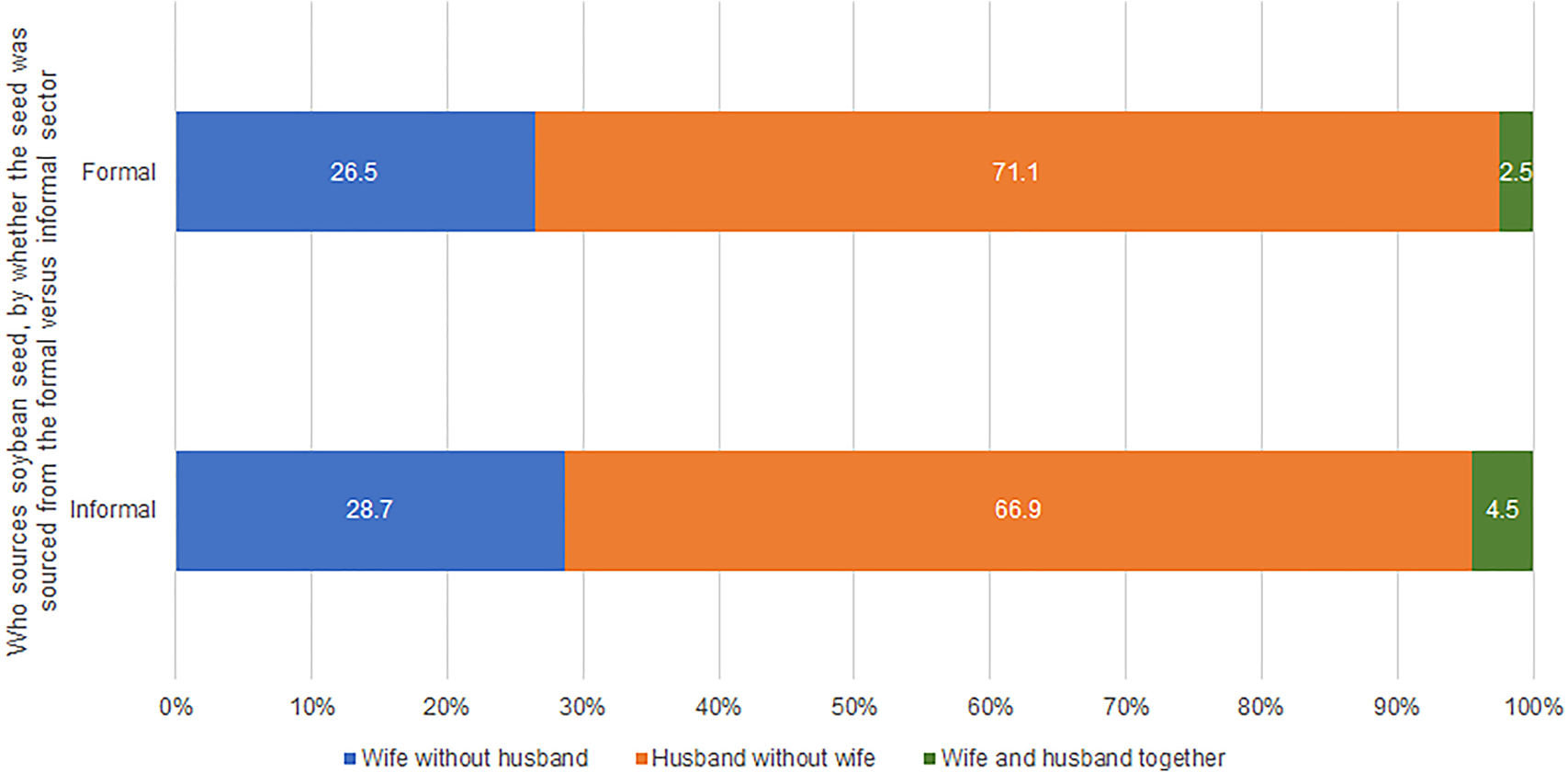
Who sources soybean seed within the household, based on whether the household sourced seed from the formal versus informal sector.
Very few respondents indicated that sourcing soybean seed was an activity carried out by wife and husband together. This contrasts with other soybean production and post-harvest tasks carried out in the household (Table 2). Most respondents indicated that wife and husband carry out the other soybean related tasks together except for when managing soybean against disease and pests, transporting soybean to market, and when marketing (or selling) their soybean. Regarding the latter, only 11% of respondents indicated that wife and husband together market their soybean.
Soybean production and post-harvest tasks, by who does what in the household (%).
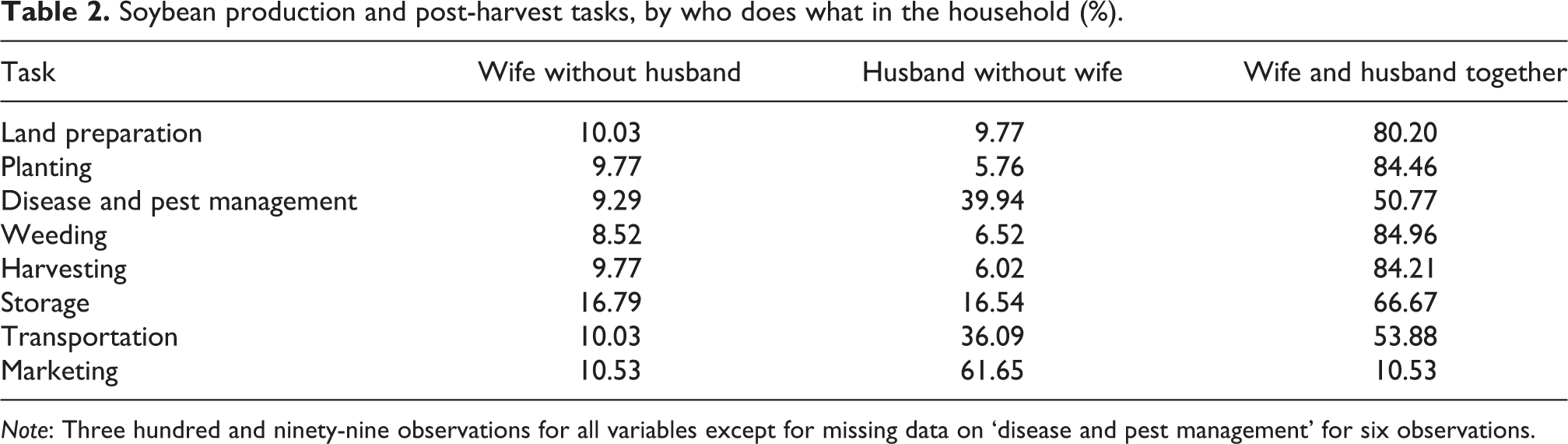
Note: Three hundred and ninety-nine observations for all variables except for missing data on ‘disease and pest management’ for six observations.
Correlations between the explanatory model variables were all negative, reflecting their dissimilarities when explaining why people within the household source soybean seed. The largest correlations were between norms and most informed models (r = −0.55) and contribution and most informed models (r = −0.34), while the smallest correlations were between unitary and contribution models (r = −0.10) and unitary and separate sphere models (r = −0.07).
Figures 2 to 4 present the explanatory model results based on who does what. Each figure presents the distribution of the models used to explain who sources soybean seed within the household at the aggregate level (Figure 2) and by whether they sourced seed from the formal (Figure 3) versus informal (Figure 4) sector. When women source seed on their own, the majority of respondents indicated that their household employs a most informed model (63%) followed by a separate spheres model (24%). Using the response information from Table 1, women primarily source soybean seed because they are either more knowledgeable about sourcing seed or have more time to source seed. 3 When men source seed on their own, the majority of respondents indicated that their household employs a norms (43%) or most informed (34%) model when determining who should source soybean seed. Men primarily source soybean seed because they are the heads of households, responsible for sourcing seed given strong normative views that shape their involvement, or are more knowledgeable about sourcing seed. All respondents who replied that wife and husband jointly carry out the task, while few, indicated their household uses a unitary model. Similar trends were noticed when the data were disaggregated by sector type.
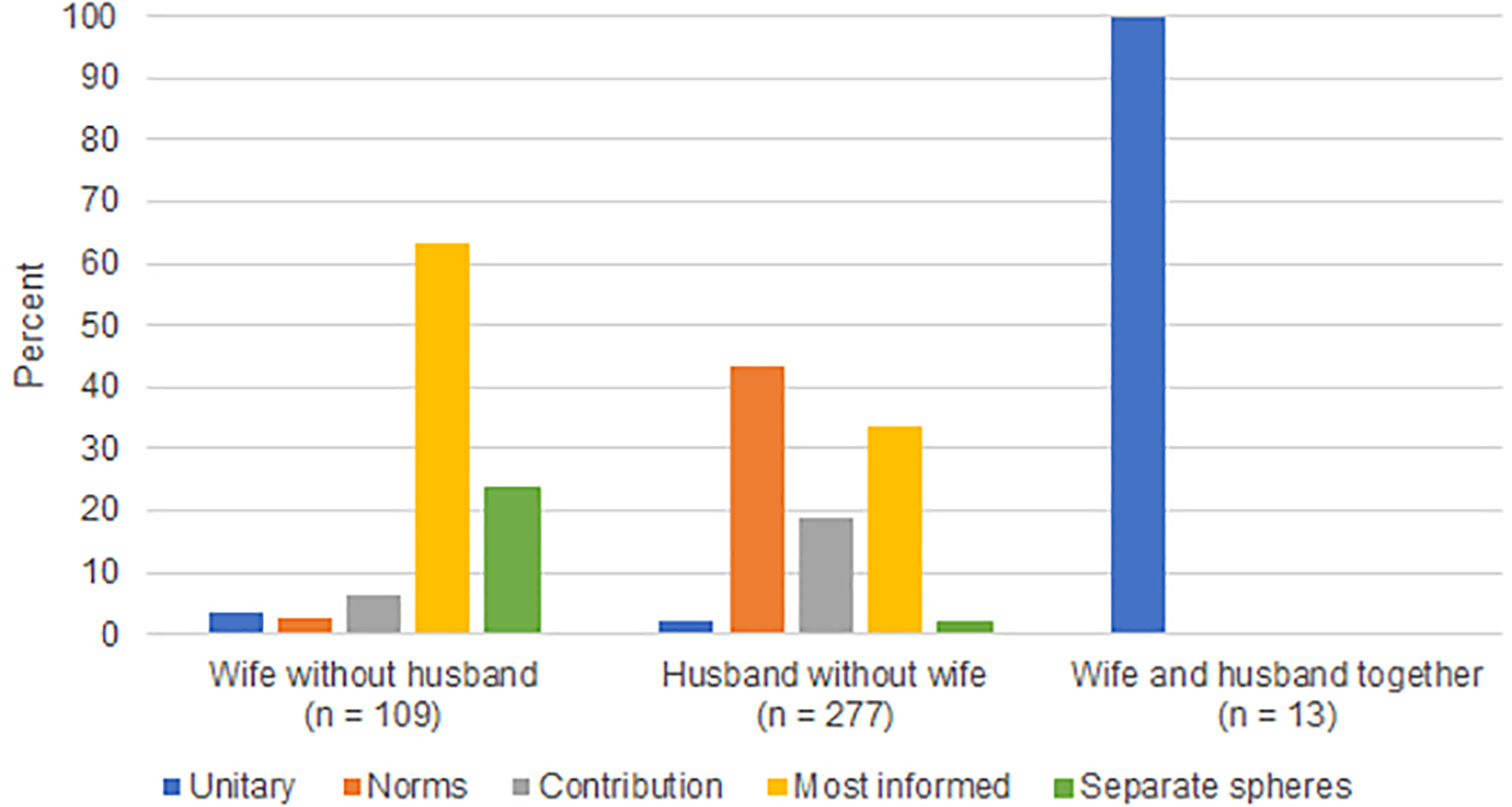
Explanatory model (rationale used to source soybean seed), by who does what within the household.
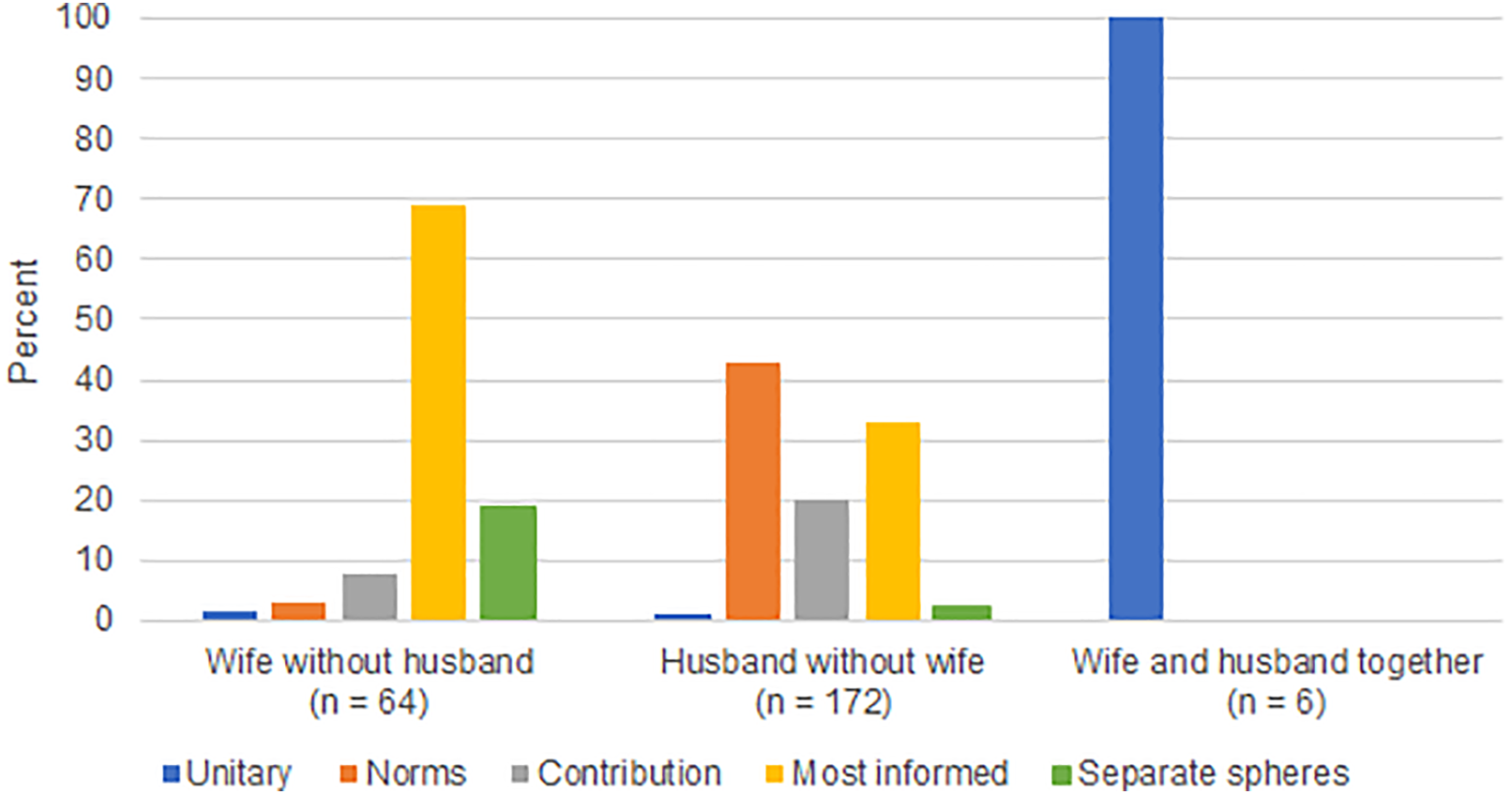
Explanatory model (rationale used to source soybean seed), by who does what within the household and based on whether the household sourced seed from the formal sector.
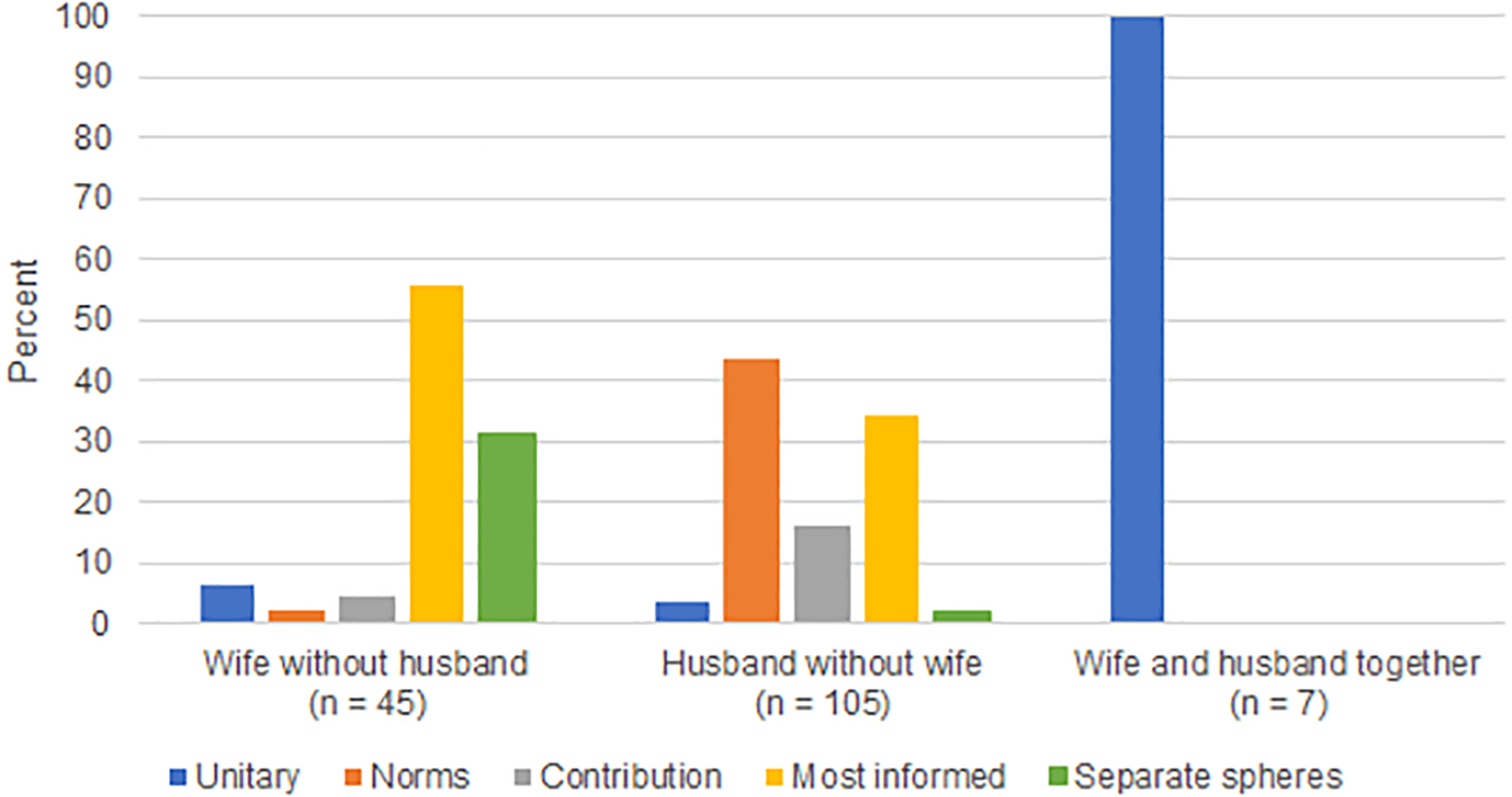
Explanatory model (rationale used to source soybean seed), by who does what within the household and based on whether the household sourced seed from the informal sector.
There is evidence that female respondents indicated they source soybean seed on their own (Table 3) and less so by their husbands without them, thus suggesting some level of respondent bias. The age of the respondent appears to have no effect on how respondents answered the questions on who sources soybean seed within their households. The results indicate there is a need to control for sex of the respondent in the logistic regressions.
Reliability test on who sources soybean seed.
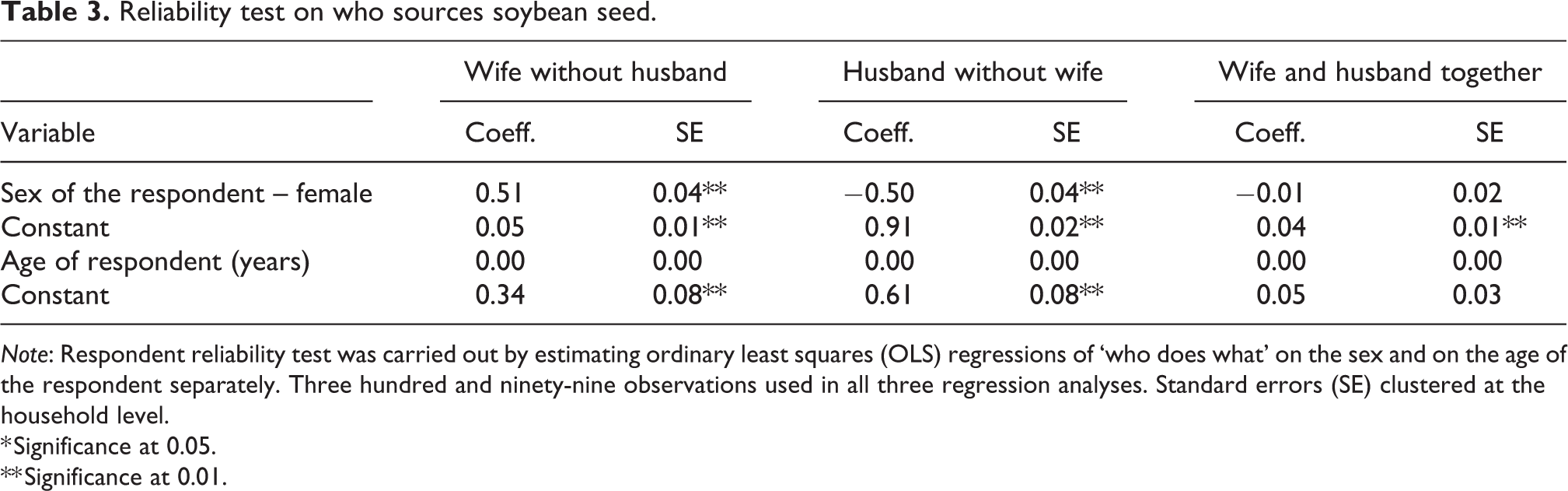
Note: Respondent reliability test was carried out by estimating ordinary least squares (OLS) regressions of ‘who does what’ on the sex and on the age of the respondent separately. Three hundred and ninety-nine observations used in all three regression analyses. Standard errors (SE) clustered at the household level.
* Significance at 0.05.
** Significance at 0.01.
Table 4 presents the descriptive statistics for the control variables included in the two different models by sector type. Mean differences of several variables were found to be statistically significant at or below the 5% confidence level, including joint ownership of land, household size, land area (size in hectares), one of the district dummy variables (Lilongwe), and sex of the respondent.
Descriptive statistics of variables included in the logistic regression models, by whether the household sourced soybean seed from the formal versus informal sector.
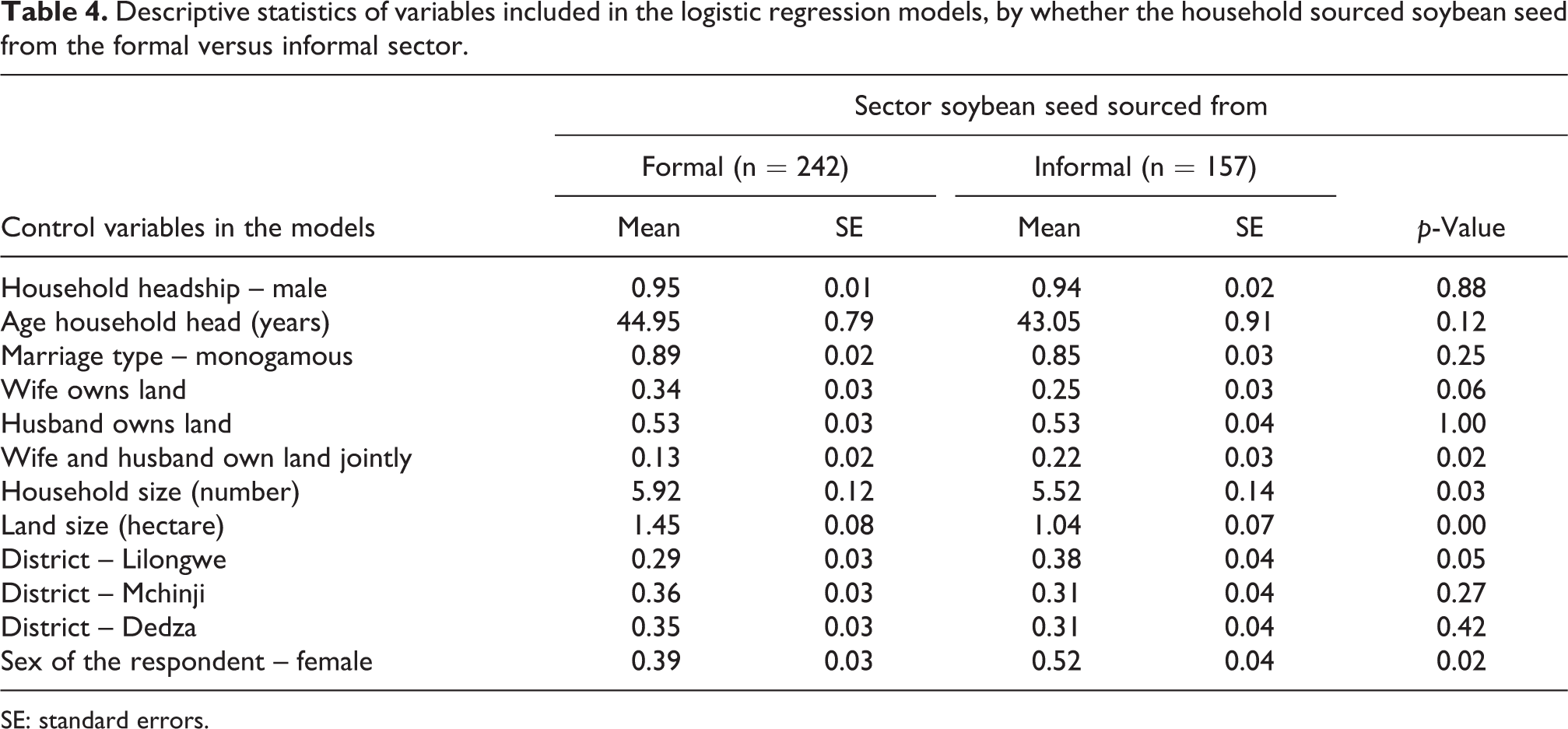
SE: standard errors.
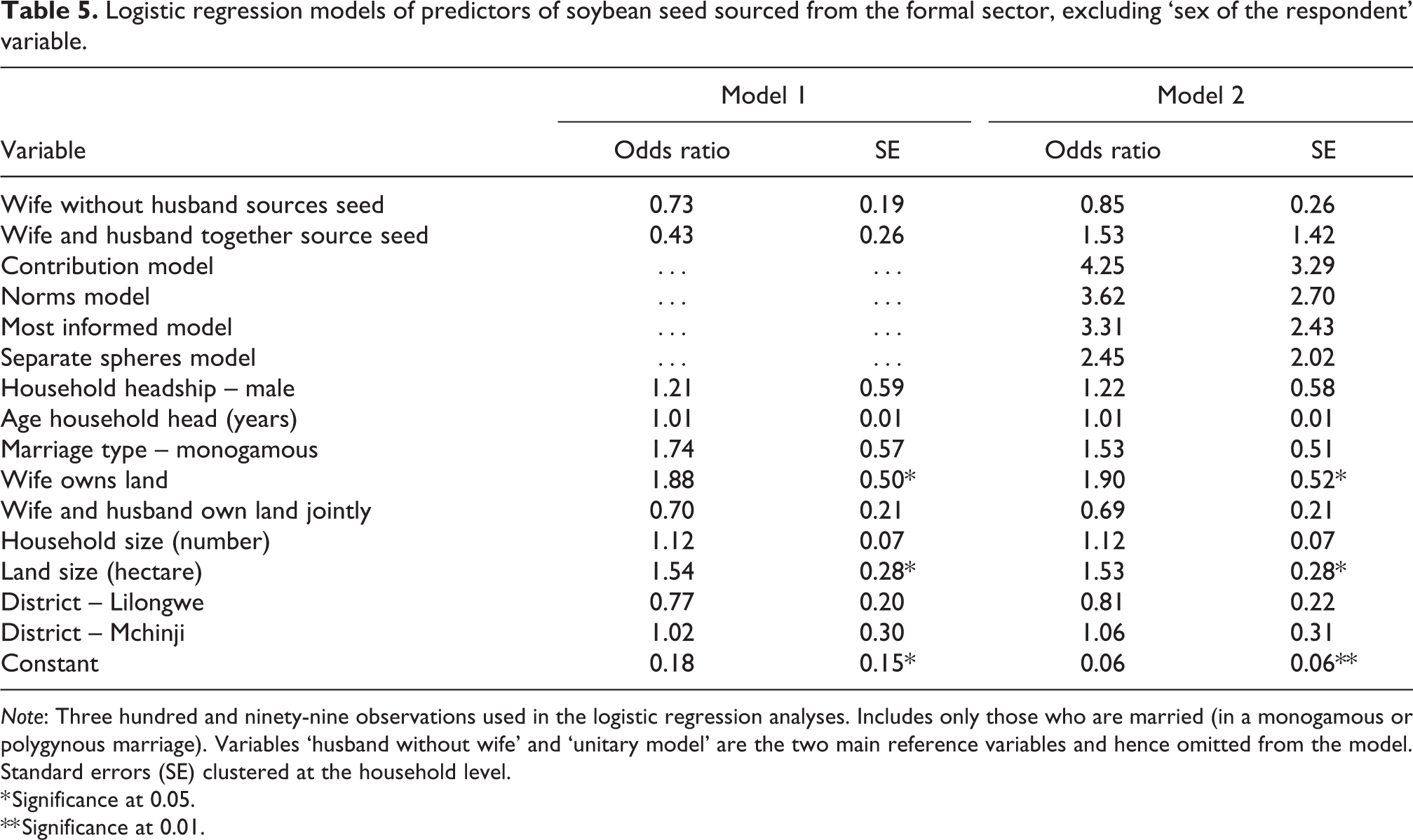
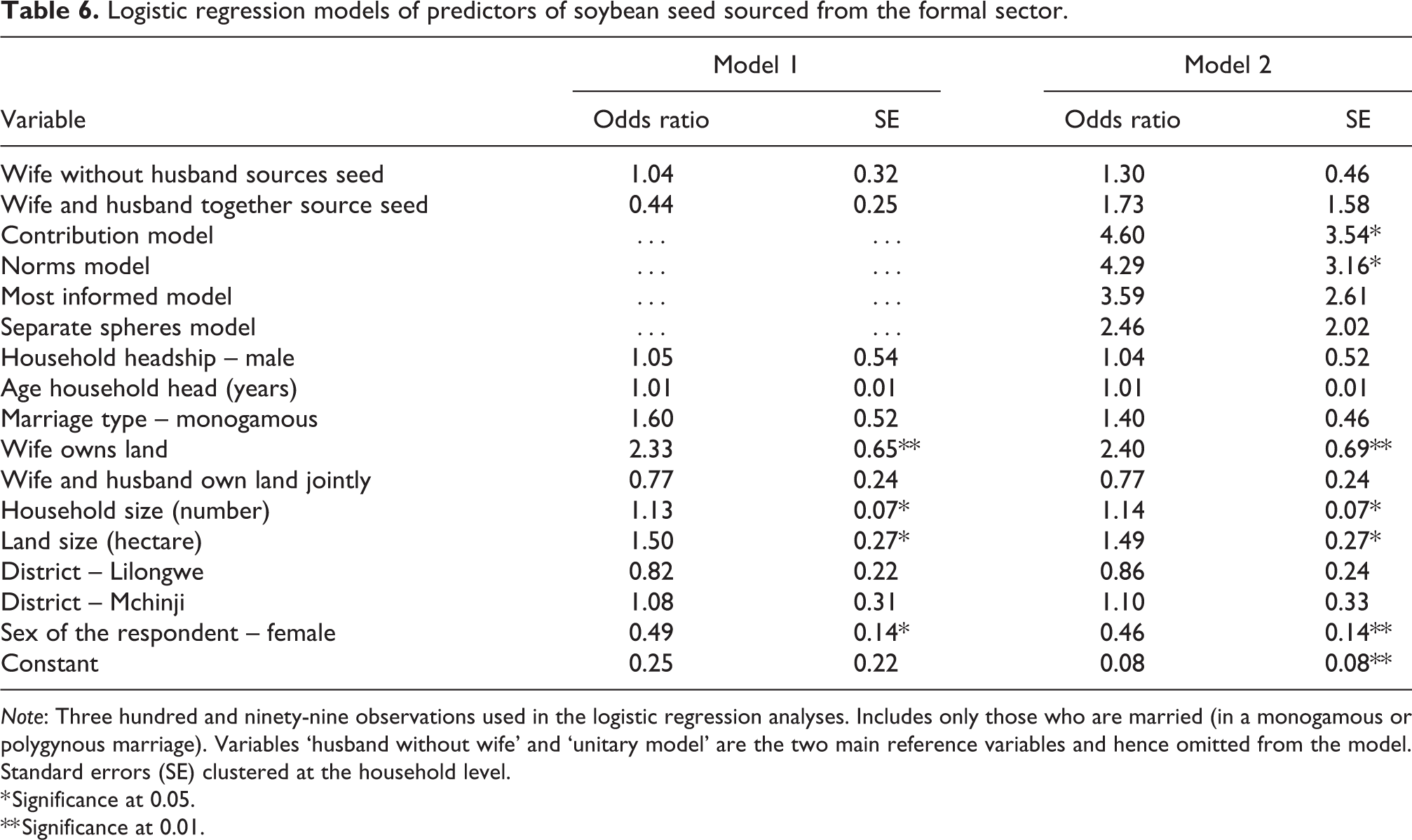
Table 5 presents the results from running the two logistic regression models without controlling for the variable sex of the respondent. Neither who sources soybean seed or why was significantly associated with whether the household sourced soybean seed from the formal sector. Table 6 presents the results from the two models that controlled for the sex of the respondent variable. In Model 1, there were no significant associations between who sources soybean seed and whether the household sourced soybean seed from the formal sector. When adding the explanatory model variables in Model 2, there were no changes to the relationships between who sources soybean seed and the outcome variable. However, the contribution model and the norms model were associated with a higher probability that the household sourced soybean seed from the formal sector compared to the reference (or omitted) variable, unitary model. The responses that were considered as being characteristic of households using a contribution model (see Table 1) included: the person is the one managing soybean production; sourcing soybean seed requires more energy (physical strength); or the person has better transportation to source soybean seed. For those who indicated using a norms model, responses included: as head of household she/he has the capacity to source soybean seed; or it is the person’s job in Malawi to source soybean seed. While not a primary focus in this study, the significant association found between women’s ownership of land and whether the household sourced soybean seed from the formal sector is important to highlight.
Logistic regression models of predictors of soybean seed sourced from the formal sector, excluding ‘sex of the respondent’ variable.
Note: Three hundred and ninety-nine observations used in the logistic regression analyses. Includes only those who are married (in a monogamous or polygynous marriage). Variables ‘husband without wife’ and ‘unitary model’ are the two main reference variables and hence omitted from the model. Standard errors (SE) clustered at the household level.
* Significance at 0.05.
** Significance at 0.01.
Logistic regression models of predictors of soybean seed sourced from the formal sector.
Note: Three hundred and ninety-nine observations used in the logistic regression analyses. Includes only those who are married (in a monogamous or polygynous marriage). Variables ‘husband without wife’ and ‘unitary model’ are the two main reference variables and hence omitted from the model. Standard errors (SE) clustered at the household level.
* Significance at 0.05.
** Significance at 0.01.
The diagnostic tests run on the logistic regression models indicated that the models fit the data well (Model 1: χ2 = 12.48, p = 0.13; Model 2: χ2 = 9.22, p = 0.32) and were correctly specified (Model 1: z = −0.12, p = 0.91; Model 2: z = 0.11, p = 0.91). The test for multicollinearity indicated that the independent variables are not linear combinations of each other in Model 1 as all VIF values were below 10, while in Model 2 only the variable most informed model had a value of >10 (11.10). We do not consider this to be well above the threshold to warrant cause for concern. The value of the area under the ROC curve for Model 1 was 0.68 and for Model 2 was 0.69, indicating that the tradeoff of sensitivity and specificity in both models are roughly acceptable.
Finally, using the Wald test, we failed to reject the null hypothesis that the coefficients of the explanatory model variables were simultaneously equal to zero (χ2 = 5.02, p = 0.28) and that the coefficients of the most informed model (χ 2 = 3.10, p = 0.08) and separate sphere model (χ2 = 1.20, p = 0.27) were equal to zero, yet rejected the null hypothesis that the coefficients of the contribution model (χ2 = 3.93, p = 0.05) and norms model (χ2 = 3.89, p = 0.05) were equal to zero. Therefore, we can conclude that these latter explanatory model variables are adding considerable value in helping predict whether a household sourced soybean seed from the formal sector.
Discussion
Using a dataset from Malawi, containing information on who sources soybean seed within the household and the rationale households use to explain why specific individuals carry out the task, this study explored whether who sources soybean seed and why are important predictors of whether the household sourced the seed from the formal sector. Based on the descriptive statistics presented above, we showed that men overwhelmingly source soybean seed on their own, be it seed from the formal or the informal sector. The result is consistent with that found by Cook et al. (2014) from their qualitative study on gender roles in the soybean value chain in Malawi. They found that men are primarily responsible for sourcing soybean seed within the household along with preparing the land for planting and transporting and marketing soybean once harvested, while women make significant labour contributions performing many of these production and post-harvest tasks (see also Ussar, 2017). Our study supports this latter result as well, as it was found that a large percentage of respondents indicated that wife and husband carry out most of these tasks together.
Our study also found gender differences in the model types that households use to explain why specific individuals source soybean seed. For women who source soybean seed on their own, the majority of households use either a most informed or separate spheres model to explain women’s roles in carrying out the task. On the other hand, most households use either a norms or most informed model to explain men’s roles in sourcing soybean seed on their own. This latter result in some ways is also supported by Cook et al. (2014). In their study, male soybean farmers described themselves as primary decision makers within their households, including making decisions on which crops to grow. Chirwa et al. (2011) and Fisher and Kandiwa (2014) also highlighted the strong gender norms in rural Malawi that shape intra-household roles and decision-making powers. As such, Ussar (2017) found that men have control over soybean sales given their role as household heads in Malawi. For seed sourced jointly by women and men, it was found that households in this sample only use a unitary model. This result comes with little surprise given that when spouses source seed jointly they are assumed to be doing so because of their common preferences for carrying out the task together. Similar descriptive statistics were found when these data were disaggregated according to whether the seed was sourced from the formal versus informal sector.
When using the regression models to examine the relationship between who sources soybean seed and why and whether the household sourced seed from the formal sector, the analysis yielded more nuanced results. First, the study found evidence of respondent bias, and specifically that female respondents were more likely to report ‘wife without husband’ regarding who sources soybean seed. While possibly similar across the many studies that have investigated the gender division of labour and decision-making within the household (Bernard et al., 2020), the result required that this study control for the sex of the respondent variable in the regression models.
After controlling for the variable sex of the respondent, the study found that who sources soybean seed is not an important predictor of whether the household sourced soybean seed from the formal sector. So, while men tend to be primarily responsible for sourcing soybean seed within their households, their role in sourcing the seed does not influence whether they source from the formal versus the informal sector. In contrast, why a specific person sources soybean seed seems to be an important factor explaining whether the household sourced soybean seed from the formal sector. Compared to using a unitary model, when a contribution or a norms model is used, there is a greater likelihood the household sourced soybean seed from the formal sector. These results suggest that rural smallholders in Malawi use non-cooperative logics, shaped by social norms or based on who contributes more, when determining who should source soybean seed – with increased probability of them sourcing seed from the formal sector when using a contribution or norms model. The results are not entirely surprising given that sourcing soybean seed from the formal sector likely requires more capital, which for smallholder farmers in Malawi is often controlled by heads of households or those who oversee production. Similarly, if someone owns the means to travel to purchase seed or is considered to be endowed with more physical strength to carry out the task, households believe this justifies them leaving their homestead to travel and source quality seed of improved varieties from agricultural input suppliers or through government or non-government supported initiatives, which are often located in urban areas in Malawi (Chirwa and Dorward, 2013).
While not a focus of the study, we also found a significant association between women’s ownership of land and whether the household sourced soybean seed from the formal sector. This result held even after controlling for who sourced seed and the sex of the household head and respondent and implies that when women control the land they cultivate, their households are more likely to obtain seed that is certified and from a reputable source. Similarly, Benjamin (2020) found that matrilocal residence practices in Malawi, that entail a couple cultivates the land that belongs to the family of the wife, increases agricultural investment.
In summary, while the descriptive statistics depict men as the dominant group who sources soybean seed in rural Malawi and suggest that certain models to explain why households source soybean seed are more commonly used than others, regression results showed that the identity of the person who sources seed has little to do with whether the seed sourced comes from the formal sector. Rather, why certain individuals within the household source soybean seed is the better predictor, with non-cooperative models being more significant than the cooperative (unitary) model in explaining the positive relationship between why and where the seed is sourced. As formal seed system actors mobilize to persuade more smallholder farmers to adopt improved soybean and other crop varieties, understanding why potential ‘clients’ source seed may be key for targeting and when designing agricultural development interventions.
So, how can these results help inform future efforts by seed system actors who endeavour working with smallholder farmers to increase the prospects that they will source seed from the formal sector? And methodologically, how can this study’s application of Bernard et al.’s (2020) approach help future studies design and carry out their research? We believe that characterizing households based on the rationale their members use to explain who does what instead of only highlighting who performs a particular task could add considerable weight to analyses of intra-household roles and responsibilities. A focus on ‘who’ and ‘why’ could strengthen future gender analyses that would otherwise only quantify who does or decides what. Such analyses would seemingly improve marketing efforts and programme targeting for private seed companies and development actors wishing to get quality seed of improved varieties in the hands of a greater number of rural smallholders, thereby informing their ‘seed delivery pathways’ to farmers (see McEwan et al., 2021: 8). For example, instead of inviting only male farmers or random groups of smallholder farmers to promotion or knowledge sharing events to demonstrate how the latest improved soybean varieties perform against landrace varieties, private seed companies and extension officers could instead invite those farmers who manage plots of land for soybean production. While seemingly obvious, field days or other like events held in rural areas in Malawi often aim to attract a larger number of smallholder farmers rather than targeting specific groups.
Along with the programmatic implications of the research, this study also acts as the first case example of how future studies can use the methodology developed by Bernard et al. (2020) to pursue similar research questions. Our study piloted their methodology by exploring who does what and why and their explanatory power predicting whether households sourced soybean seed from the formal sector. Bernard et al. (2020) instead looked at who makes decisions and why and whether this matters regarding certain household production and consumption outcomes. From our experience using the methodology, it is quite useful when exploring who does what and why. Our study did not use vignettes but rather asked study respondents to free list why said person(s) source soybean seed or carry out other soybean production and post-harvest tasks. These responses were eventually coded using the models described by Bernard et al. (2020). Our study showed this option, arguably requiring less time and effort to implement, yielded acceptable results given the breadth of responses recorded that were later coded using all five explanatory model types.
Finally, there are a couple limitations of this study that future research on gender division of agricultural labour and decision-making within the household could overcome to strengthen their designs and analyses. First, we used cross-sectional data to explore our research questions, which do not appreciate that rural farmers may source different varieties from different sectors from one season to the next. Future research should attempt to collect panel data to evaluate whether farmers are more likely to change or remain dependent on one sector from season to season. Second, this study did not inquire about where specifically seed from the formal or the informal sector was sourced. Future research could ask farmers to specify the agro-dealer or open market where they sourced the seed as well as to provide other details about the source of the seed including how far they travelled to obtain the seed. With this level of specificity, studies could determine with more precision the types of formal or informal actors who women and men farmers source their seed from and explore whether other factors (e.g., distance to seed source) explain why these farmers source seed from the formal versus informal sector.
Conclusions
This study asked whether there is utility in knowing who sources soybean seed within the household and why when explaining variation in seed obtained from the formal versus informal sector in Malawi. The study used survey data collected in three major soybean growing districts in Malawi, which were analysed using a modified framework employed by Bernard et al. (2020) in their study that explored who makes certain intra-household decisions on agricultural production and consumption matters and why. Results suggest that, holding everything else constant, who sources soybean seed within smallholder farming households included in this sample is not a predictor of whether the household sourced seed from the formal versus informal sector. Instead, the rationales behind why specific individuals within the household source soybean seed appear to be the more important factors. Specifically, rural smallholders use non-cooperative logics when determining who should source soybean seed from the formal sector using a contribution or norms model. Given the relatively sub-optimal adoption rates of improved soybean varieties in Malawi, this paper concludes that there likely is value in examining who within the household sources soybean seed and why to better inform the seed delivery strategies that private and development actors use to increase uptake of improved varieties by women and men smallholder farmers for enhanced productivity, profitability, and food and nutrition security.
Footnotes
Acknowledgements
We acknowledge the administrative and logistical support provided by the International Institute of Tropical Agriculture (IITA) Malawi office. We acknowledge the training and mentorship provided to co-author Therese Gondwe by the Gender-responsive Researchers Equipped for Agricultural Transformation (GREAT) project, and in particular, the mentorship provided by Peace Musiimenta. We thank all the people who participated in the study for taking the time to provide information about their soybean production and post-harvest tasks in rural Malawi.
Declaration of conflicting interests
The author(s) declared no potential conflicts of interest with respect to the research, authorship, and/or publication of this article.
Funding
The author(s) disclosed receipt of the following financial support for the research, authorship, and/or publication of this article: This work was undertaken as part of the CGIAR Research Program on Grain Legumes and Dryland Cereals (GLDC). We thank all donors who support this programme through their contributions to the CGIAR Fund.
