



Abstract
Yam is an important food and cash crop in Nigeria. The seed system is mostly farmer-based and its challenges and opportunities are not well documented. This study reports results of surveys, interviews, focus group discussions and participant observations that describe local practices characterizing yam cultivation and the farmer-based seed system in five states in Nigeria. Our findings show that ware and seed yam are dynamic and highly commercialized goods in Nigeria. There is a high demand for, and a high turn-over of, seed yam. The reasons for the high demand are the low multiplication rate and degeneration of seed yam which lead farmers to frequently acquire fresh seeds and replace varieties, investing significantly in the seed of ware yam. The study found some farmers specializing in seed yam production but less than expected for such a highly commercial crop. The market is the major source for off-farm sourced seed yam, and although completely informal, the seed yam sector is vibrant and well organized. The identification of strategically positioned farmers and traders can offer opportunities and entry points for introduction of new varieties and improved seed production techniques. Building on the existing farmer-based system is a more logical strategy than replacing it with formal structures and legislative regulation.
Introduction
Seed system functioning and development
In the current thinking around seed system development, the challenges of seed systems like that of yam, are perceived as ensuring that the new varieties that are truly superior to what farmers currently grow are effectively delivered to farmers (Crops to End Hunger, 2021). Only with well-functioning seed systems, it is possible to capture the benefit of the genetic gains from breeding programs in the form of adoption of these superior varieties. Interventions in seed systems to improve their effectiveness require a diagnosis of their current status and the identification of challenges and opportunities (Andrade-Piedra et al., 2020). With increasing recognition that the farmer-based seed supply plays an essential role in overall production and diffusion of seeds and varieties, this part of the seed system also needs to be included in an analysis of the effectiveness of the seed system. Relatively under-researched, the farmer-based yam seed system is often categorized as ‘underdeveloped’ “for reasons such as outdated seed production methods, poor distribution networks and a lack of quality assurance systems” (Alawode and Lynch, 2017). However, research has pointed out that in many situations these farmer-based seed systems function relatively well (Almekinders et al., 2019; Coomes et al., 2015). Farmers tend to be more involved in the seed system for vegetatively propagated crops than for crops that are propagated through true seed (Almekinders et al., 2019; Andrade-Piedra et al., 2020; Bentley et al., 2018). Whereas seed systems of potato may be relatively well-researched, little information is available on seed systems of other vegetatively propagated crops, despite their huge importance for the food security of a large number of people (Thiele et al., 2021). Yam in Nigeria is a case in point.
This study describes the practices and organization of the farmer-based yam seed system in Nigeria. The understanding of the social structure of the system and the different seed practices, preferences, needs and interests of men and women farmers are important for the breeders of the yam breeding program of the International Institute of Tropical Agriculture (IITA) and the YIIFSWA project i . In addition and complimentary to the objective of YIIFSWA, for a functional, commercial yam seed system to be established, it is imperative to understand male and female farmers’ seed sourcing behavior, the social networks involved in accessing seed yam and variety and seed-lot turnover in Nigeria.
Yam in Nigeria
Yam (Dioscorea spp.) is a versatile and vegetatively propagated staple crop that critically contributes to food security and income in West Africa. Almost 94% of the worlds’ yam production is from this region, and 75–78% of it is from Nigeria (FAO (Food and Agriculture Organization of the United Nations), 2017). Yam ranks as the most important source of dietary calories in Nigeria and is the country's most important crop in terms of gross value of production (about $11.3 billion US dollar, FAO (Food and Agriculture Organization of the United Nations), 2017). The crop directly supports the food and income security of almost a third (31.8%) of the population in the country (Mignouna et al., 2014).
Of the 11 cultivated species of Dioscorea (Darkwa et al., 2020) there are three (Dioscorea rotundata, Dioscorea alata, Dioscorea cayenensis) that are economically important in Nigeria. Yam is normally propagated through the use of small whole tubers (seed yam) or cut pieces of tuber (setts). Yam planting material forms 25–30% of the investment in ware yam production (Mignouna et al., 2013). The vegetative propagation makes the crop vulnerable to viruses and other diseases (Aighewi et al., 2015 Almekinders et al., 2019; Bentley et al., 2018;) which leads to the degeneration of planting material resulting in up to 50% of harvest loss for farmers (IITA, 2020). The yam breeding programs at the International Institute of Tropical Agriculture (IITA) and the National Root Crops Research Institute (NRCRI) target only two of the important species: D. rotundata (white yam) and D. alata (water or greater yam). Seed systems and breeding initiatives (AfricaYam ii , CAY-seed iii , and YIIFSWA) have sought to improve the quality and availability of seed yam and market penetration of improved varieties in Nigeria. Over the past two decades, 24 improved varieties of yam have been released in Nigeria (AfricaYam, 2018). However, the adoption rate of new yam varieties is low (IITA, 2020). The strategies advocated to improve adoption and increase the availability of quality seed yam vary. The AfricaYam program focuses mainly on breeding to improve productivity, the focus of the CAY-seed program is on improving the availability and quality of seed yam of improved varieties to smallholder farmers, while YIIFSWA focuses on developing a formal and commercially viable seed yam system. However, the yam seed system in Nigeria is not systematically studied. To identify which type of interventions would be effective to introduce new varieties, the farmer-based part of the seed system needs to be better understood: which farmers could serve as seed multipliers and diffusers of new materials, how could these farmers meet the needs of the large group of farmer-clients who produce ware yam, and what kind of business models have the potential to be sustainable.
Materials and methods
Study area
This study purposively selected key yam production areas in Nigeria. A total of 12 communities and 14 markets were visited across the major yam cultivating agro-ecological zones in five states: Niger, Federal Capital Territory (FCT), Benue, Anambra and Oyo. The study sites were selected on the basis of: 1) representation of the major different cultural and agro-ecological yam production zones, 2) presence of small to large sized yam farmers, and 3) comprises the major yam cropping systems. The YIIFSWA project is active in four of the selected states. To identify differences, one state without YIIFSWA intervention was selected, i.e. Anambra state. Niger, Benue, FCT, and Oyo state are YIIFSWA project areas, although not all sampled villages were part of the project.
Description of the study sites
FCT, Benue, and Niger state are in the middle-belt savanna agro-ecological zone of Nigeria and form part of the highest yam-producing zone of Nigeria (Figure 1). This zone experiences a rainy season from May to October, followed by 6 months of dry season. Yam can be found in abundance in the markets from September to November. Oyo and Anambra state are located in the southern belt of the country. These states are covered with savanna in the northern part and with humid tropical rainforest in the southern part. The humid tropical rainforest zone is characterized by a rainy season running from March to October. Yam can be found here in abundance in the markets from August to October. Benue in particular is known as the largest yam producing state in the country, and famous for the Zaki Biam market, the largest yam market in the country. Anambra is recognized by its seed yam producers, who specialize in producing seed tubers using small tuber pieces of 80 to 100 grams (Aighewi et al., 2015).
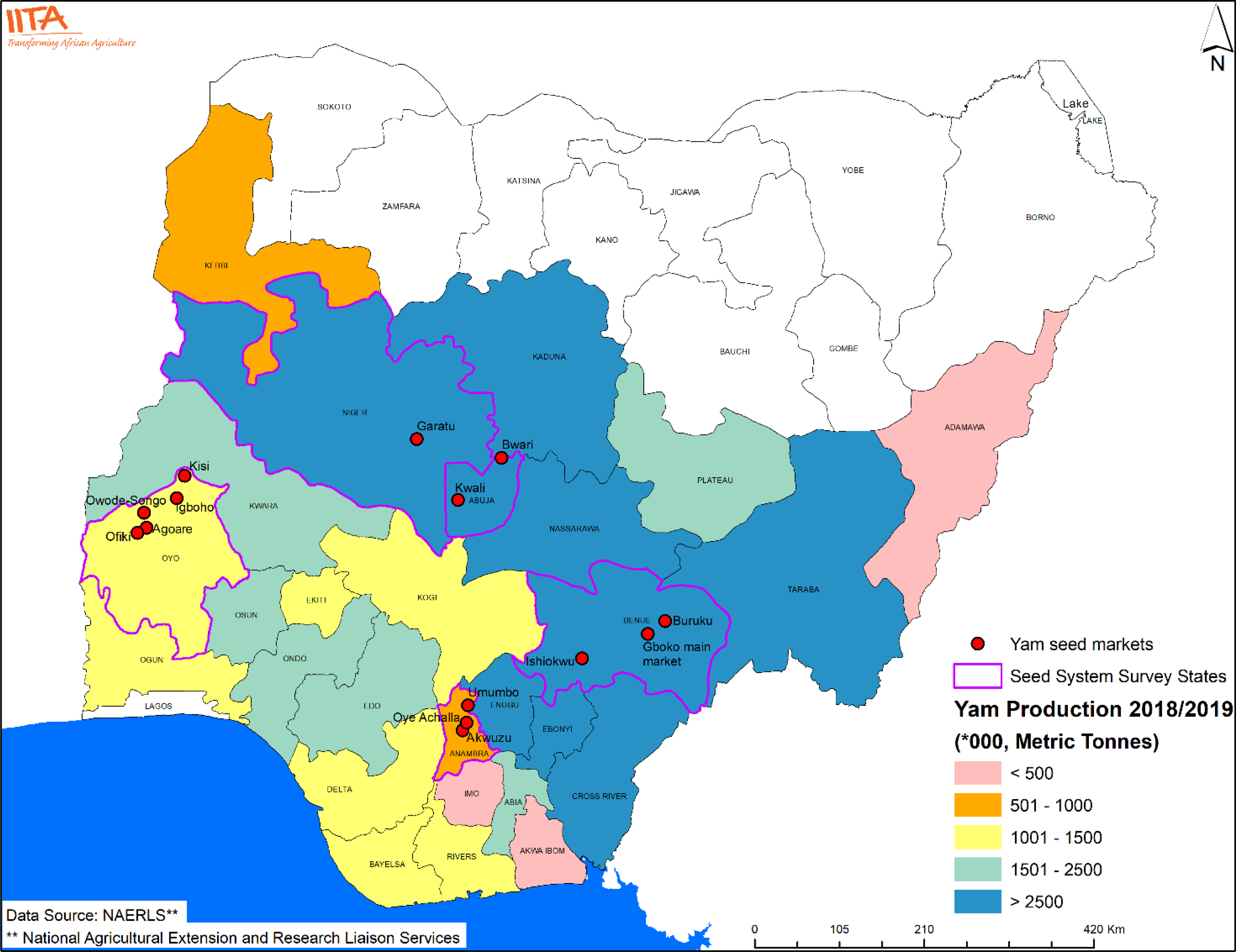
Survey sites and visited markets in the five states of Nigeria where data was collected.
Focus group discussions and sampling of respondents
The study, carried out between October and December 2018, applied the principles of a small N/exploratory case study (Andrade-Piedra et al., 2020), with the intention of gaining a first-hand understanding of how farmers use and handle their seed through open-ended and closed questions. The data collection activities were carried out by an interdisciplinary research team consisting of IITA yam breeders and a social scientist of the Wageningen University and Research (WUR), supported by translators and enumerators who received a preparatory training.
In each of the study sites, the data collection started by introducing the study to the village lead farmer, who in the YIIFSWA project areas, was generally the focal person for the YIIFSWA project in the community, as well. Subsequent focus group discussions (FGDs) (one per study site, 12 in total) with a mix of male and female farmers, helped to explore the local context of yam farming, to identify important actors and yam markets. These discussions also explored the communities’ awareness of IITA projects. The FGDs lasted 1.5–2 h and additionally discussed farming practices and yam seed systems with men and women yam farmers.
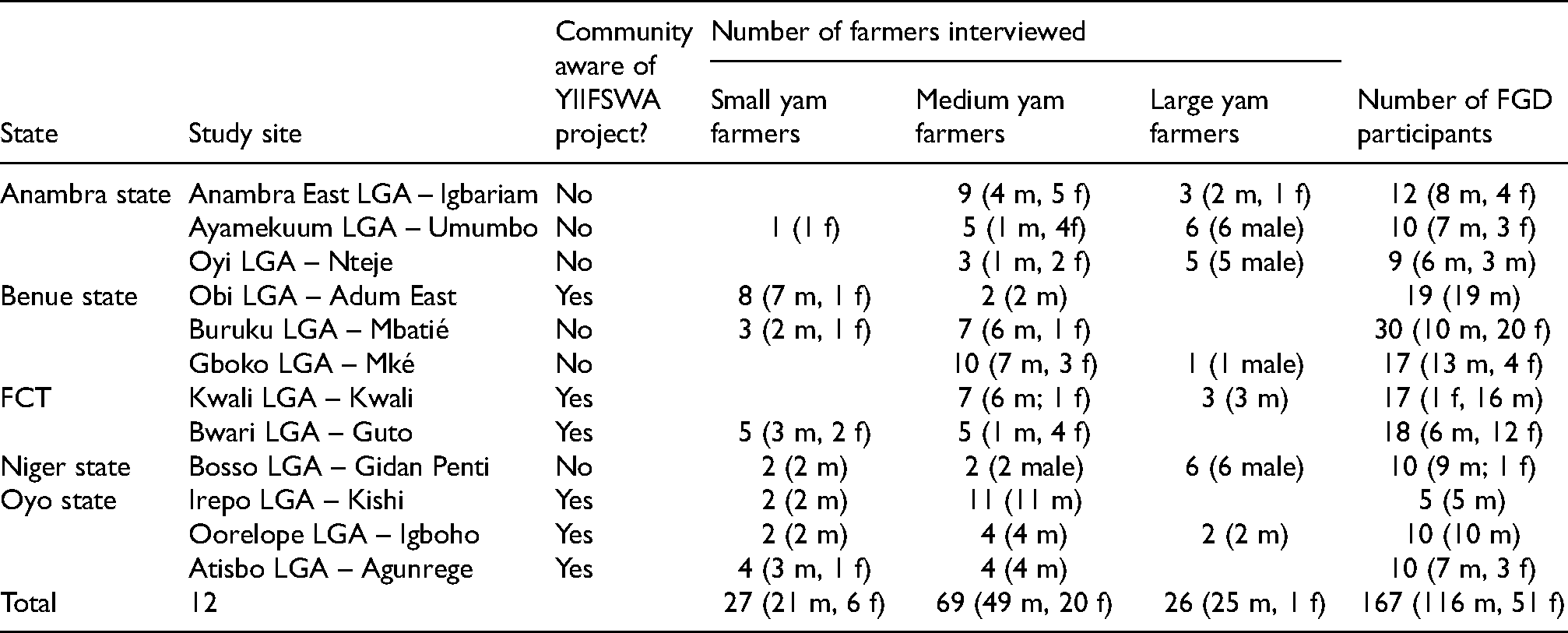
In each study site, questionnaires were conducted with yam farmers, discussing yam farming practices, the yam seed supply system, seed sourcing behaviour, traits men and women are looking for when purchasing new varieties and the frequency with which male and female farmers sell and acquire fresh seeds and/or new varieties. The yam farmers were selected based on three categories of yam farmers: small (size of yam fields < 0.5 ha), medium (size of yam fields 0.5–2 ha) and large (size of yam fields > 2 ha). The categorization was based on discussions with the IITA yam breeding team on how they would differentiate yam farmers in Nigeria. The interviewed farmers were mobilized with the help of the lead farmer or other community resource persons. A total of 122 yam farmers were interviewed (Table 1).
We visited 14 markets (Figure 1) where seed yam was seasonally sold. The markets were selected based on where many farmers in the selected study sites sold their yams or on markets being well known for their importance in yam sales. In each selected market, we held one FGD with the market committee or with the yam sellers’ association. The FGDs were held on the market and lasted 1–1.5 h. In the FGDs we discussed buying and selling practices for (seed) yam, customer profiles, sale volumes and prices with men and women yam sellers. In addition, questionnaires (with an average duration of 1 h) were conducted with a total of 90 seed yam sellers. The yam sellers were selected on the criteria that they sell seed yam during the planting season. The survey questions concerned the volume of seed yam sales, the source of seed yam and main client categories for seed yam.
Analysis
The data of the questionnaires were entered into an Excel spreadsheet, while the recorded interviews from the FGDs were transcribed. Participants’ answers to open questions were coded into themes for analysis. For both the questionnaires and FGDs (where useful) we used Excel for the coding-counts. On that basis, we calculated the number of times a theme was mentioned. For the amount of ware and seed yam sold per year, different unit sizes used in the different states were categorized and averages were calculated. Plotting and multiple comparisons testing were performed using a plotting package ggplot2 in R environment (Wickham, 2016). These and other data, disaggregated for state and gender can be found in the supplementary materials. We used the information from the FGD narratives to crosscheck the validity of the information from the questionnaires and to complement the findings from individual interviews.
Results
This section begins with a socio-economic characterization of the respondents. The three subsequent results sections are structured around three key areas, ‘production’, ‘varieties’ and ‘yam value chain’. The first two sections are based on the FGDs and interviews with yam farmers, while the last section is based on FGDs and interviews with yam sellers.
Socio-economic characteristics of respondents
Most farmers who participated in the FGDs and questionnaires did not have other incomes apart from farming, but were growing other crops alongside yam. Men clearly dominated yam production across the study sites, while women were significantly more involved in the sales of yam. Despite efforts to include a gender-balanced sample of interviewees, only 22% of the interviewed yam farmers were women. About 77% of the surveyed farmers produce yam for both home consumption and sales, and 18% of the farmers produce yam for home consumption, sales and processing. Only a few respondents grow yams solely for domestic use or only for the market (Figure 2). The answers from the female farmers were similar to those of the male farmers. In all study sites, farmers sell fresh tubers. Only in Oyo State, processing of yam into Elubo (yam flour) is popular and farmers process between 20% to 40% (33% on average) of their total yam produced into the product. In the market, we found sellers who also produced yam, and sellers who did not produce yam themselves. We did not find specialized seed yam sellers in the market. Among the yam sellers who did not produce yam themselves (n = 29), women dominated and made up 86% of our interviewees. Among those yam sellers who also produce (n = 61), 59% were women and 41% were men.
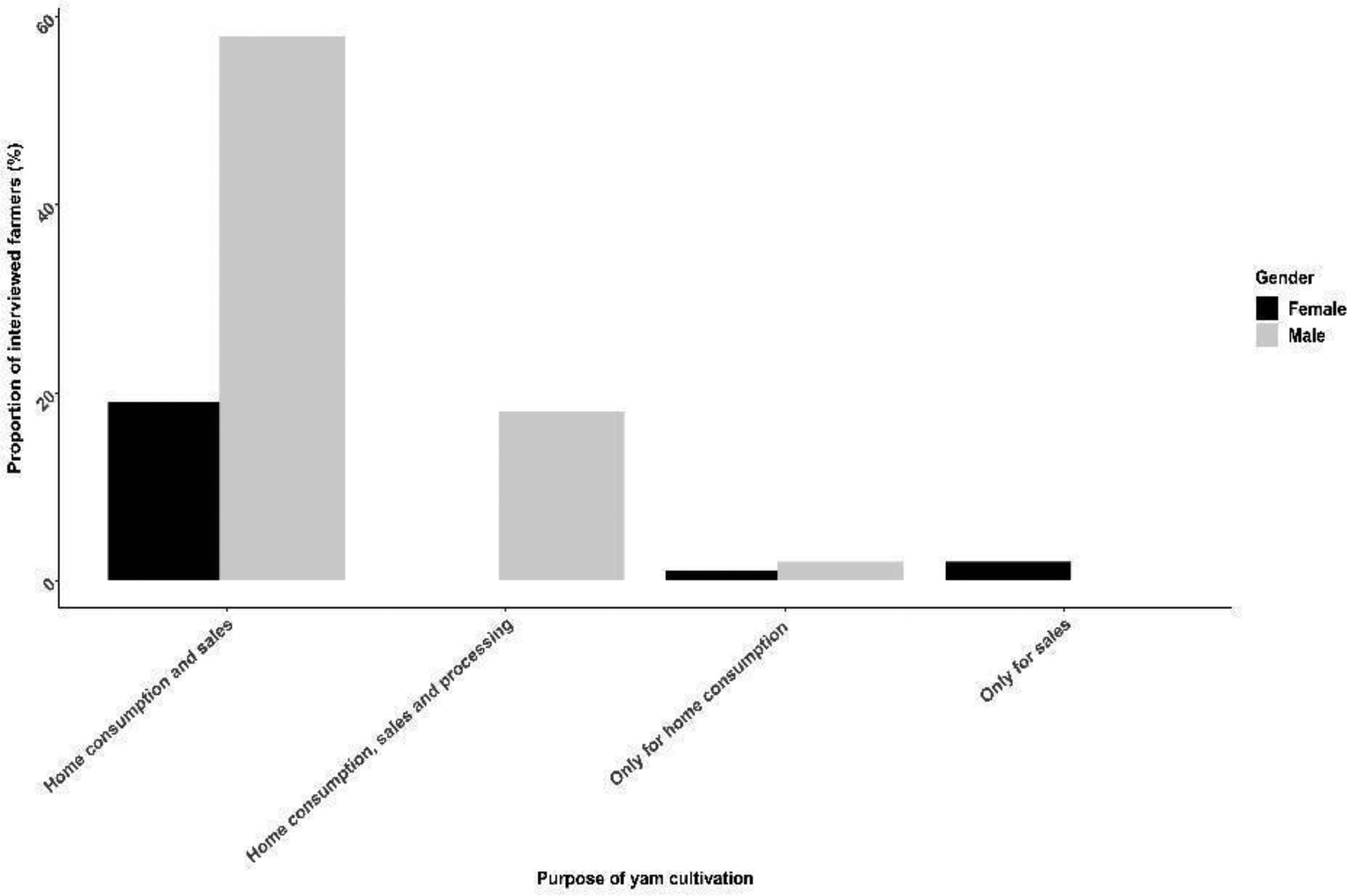
Purpose of yam production of interviewed male and female farmers in five states in Nigeria (n = 95 and n = 27 respectively).
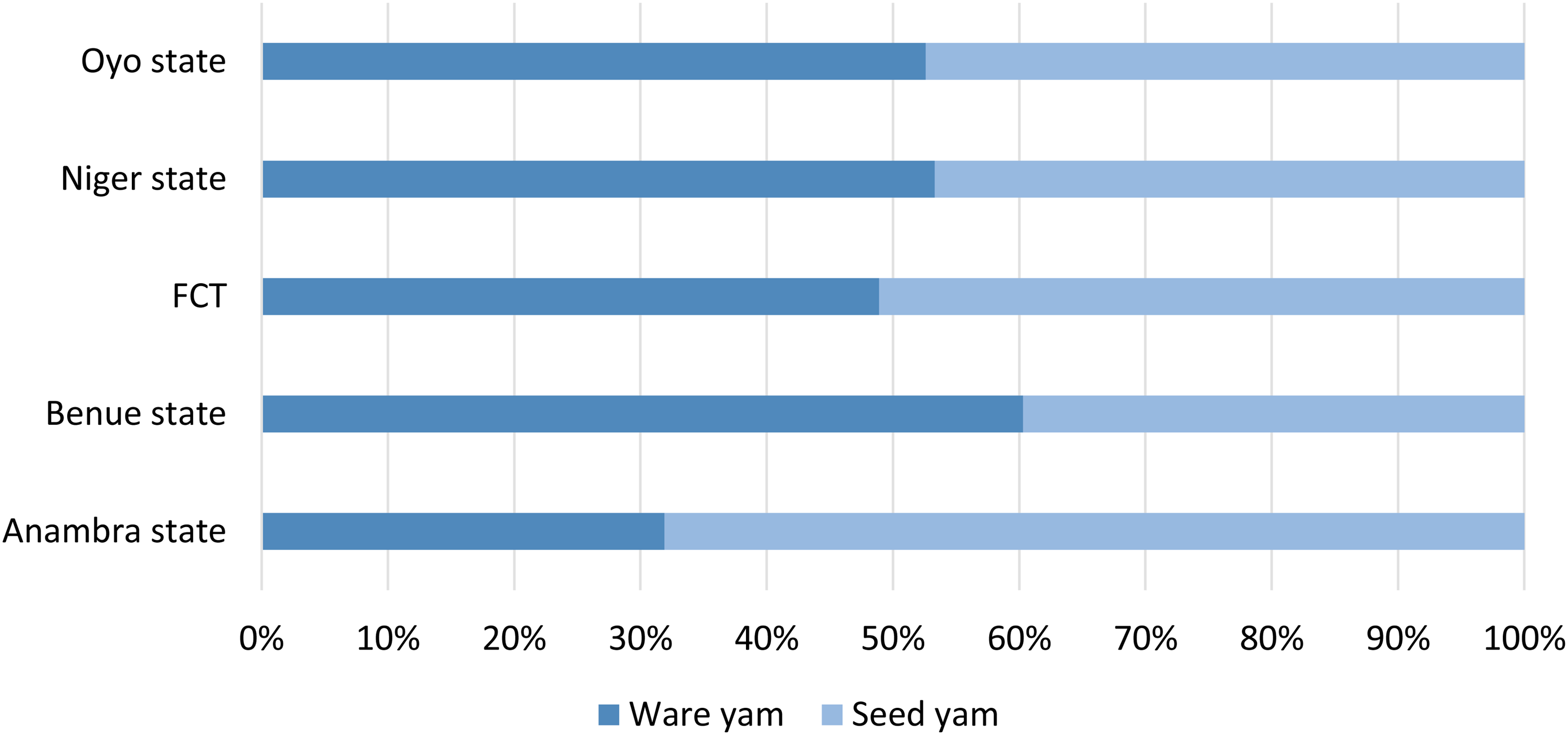
Percentage of the harvest produced and destined by farmers to ware and seed yam at the end of the season in five states in Nigeria (n = 122).
Practice of production: ware and seed yam in the study area
Seed and ware yam production
Yam is an important food and cash crop for the farmers we surveyed. We noticed that 40% or more of the harvest is used for seed yam (Figure 3). However, farmers in the study sites of some states dedicate larger proportions of their production to seed yam. In Niger and Benue states, farmers dedicate significantly (p < 0.001) larger proportion of their production to ware yam while in FCT and Anambra state, they focus more on seed yam production (see Supplementary materials). We found no significant differences between male and female farmers. The FGDs confirmed these results.
FGDs in FCT confirm that the majority of seed yam is used for planting (72.4%), while smaller percentages are shared (5.8%) and sold (21.9%). The FGD in Niger state shows that farmers use the majority of seed yam for their own fields (98.7% and sell only 1.3%). In Anambra, where there is a stronger focus on seed yam production for sales, the proportions of seed yam used (51%) and sold (49%) are almost equal.
Farmers in the FGDs and individual interviews explained their practices for producing ware and seed yam. Farmers in FCT and Benue state mostly plant all yam in one field and categorize the tubers based on their size after harvest The biggest tubers (>0.5 kg) are sorted as ware yam to sell in the market, while the smaller tubers (<0.5kg) are sorted and used for home consumption and as seed yam for next season's planting. Farmers in Niger, Anambra and Oyo states usually dedicate specific proportions of land to ware and seed yam production. They prepare the field for seed yam with small heaps of soil and the field for ware yam with large heaps of soil.
In contrast to the other locations, farmers in Anambra state have a clear focus on seed yam production and sales, and cultivate relatively few ware yam tubers for home consumption. One farmer in Nteje, Anambra state, explained ‘we specialize more in seed yam here. Big yam production is only a supplement. We don’t have fertile land to produce big ware size yam. People from other parts of Anambra, Delta, Kogi, and Cross River state come here to buy the seeds to produce big tubers’. The specialization on seed yam production is caused by poor soil fertility, causing the production of smaller tubers.
Multiplication practices and strategies
Farmers in the study sites of the five states used different practices to produce seed yam (Figure 4), including selection, milking 1 and preparation of (mini-)setts (Aighewi et al., 2015). Selection of seed yam is based on size. During the FGDs, farmers indicated that they use the yams of 0.2 to 0.5 kg as seed yam. However, selecting the smaller tubers for seed increases the risks of selecting tubers from diseased plants. This leads to a low quality of seed yam being used and sold on the market. Setts, a cutting from the yam tuber with one or more eyes, are the most frequently used planting materials used across all study sites (Figure 4). They are prepared by the farmer before planting. The average sett size farmers use is relatively big, cutting 2 kg tubers into 4 to 6 setts. A bigger set normally gives bigger sized tubers in the following harvest, which in turn, determines their classification as ware or seed yam. The setts are cut smaller for planting during the rainy season (April/May) and they are cut larger for planting in the dry season (to prevent drying up) or to produce large ceremonial yams – used for gracing a marriage, naming ceremonies, burials, and rituals (Obidiegwu and Akpabio, 2017). Farmers in Anambra state explained that the variety also determines the size in which setts can be cut.
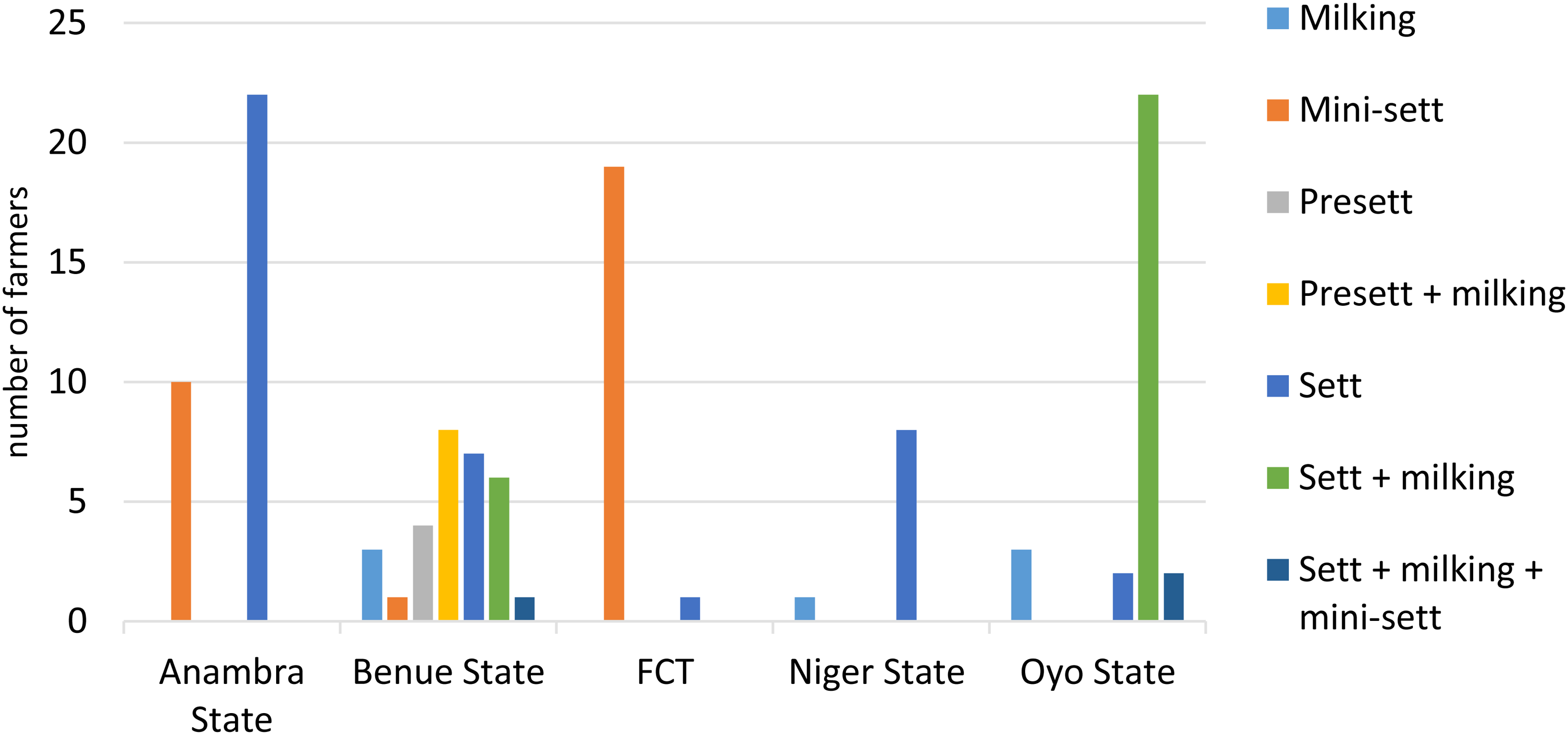
Seed multiplication practices of yam farmers (n = 122) in five states in Nigeria.
FGD participants explained that planting distances are related to the size of the sett. Small setts are usually planted in closely spaced mounds (heaps) that will produce seed yam, and big setts are planted on big mounds to produce ware yam. Not all farmers use separate mounds for seed and ware yam production. Some farmers plant setts of different sizes in one field, and sort the bigger and smaller tubers upon harvest Farmers also practice ‘milking’ by harvesting big tubers between June to August by opening the mound, while leaving the above-ground part and roots in place. Around December, the small cluster of new tubers formed in place of the removed ware yam tuber, can be harvested and used as seed in March to June for planting.
Enhanced seed technologies
There are categories of propagules that can be used to produce high-quality seed yam, such as micro-tubers (generated from tissue culture plantlets), mini-tubers (generated from vines) and mini-setts (generated from tubers). Micro-tubers and mini-tubers are not generally used by farmers as their preparation is labour intensive, requires adequate treatment (fungicide/insecticide application, skills and specialized equipment) and because not all varieties respond well to these techniques. With mini-sett technology, big tubers of healthy plants can be selected and multiplied into mini-setts, thereby breaking the cycle of choosing diseased tubers for planting. The mini-setts are planted to produce seed tubers, which is preferred for the production of yam, because of better sprouting and field establishment.
Different seed initiatives have introduced farmers in the study sites to the mini-sett technology. In Mbatié and Obi in Benue state, the mini-sett technology was introduced by staff from the Benue Agricultural and Rural Development Authority. In Bwari, FCT, CAY-seed introduced the mini-sett technology in 2015/2016, and farmers cut medium sized tubers into mini-setts whenever there was not enough seed yam from the harvest The mini-sett technology was adopted by 90% of the farmers who participated in the individual interviews in Bwari. Farmers explain ‘before, we found it difficult to have enough seed yam. At least every two years we would go to the market in Minna and we would not even get good seeds for planting. Since the introduction of the technology in 2015, we now have excess seed to even take it to the market’. Contrary to these positive experiences, 15 out of 17 FGD participants in Kwali, FCT abandoned the mini-sett technology because the ridges were destroyed either by heavy rains or the cows of Fulani herdsmen. Sometimes high temperatures caused the mini-setts to cook in the soil. Farmers in Niger state have a similar experience with small sets being prone to rot in the soil. Among the FGD participants in Oyo state, we found farmers to increasingly focus on seed yam production as a result of the introduction of mini-sett technology by IITA projects in the sampled locations. A farmer in Oyo explained that seed yam is a lucrative business ‘the production costs of seed yam are lower (due to smaller heap making) and the plant population is higher. We make more money with seed yam than with ware yam’. Farmers in Anambra state cut mother seed tubers into relatively small sett sizes of 100 to 200 grams (referred to as ‘mini-sett’, see table 4) because of their focus on seed production. They had not been introduced to the mini-sett technology by research projects.
Number of interviewed male (m) and female (f) farmers in individual interviews and FGDs in different sites of the five states in the study.
The farmers in Oyo (2), Benue (2) and FCT (18) who used mini-setting for seed production, adopted different cultivation methods, such as planting on smaller mounds or ridges (some planted setts at 25cm spacing on ridges, while others used mounds on which they planted around 10 mini-setts), earlier harvesting (within 6 months), and a focus on popular varieties.
Varieties and seed sourcing
Variety use
Respondents across the study sites mentioned a total of 90 names of local varieties being grown (Table 2). Due to possible use of different names for the same varieties, the real number of varieties is probably lower. All interviewed farmers cultivate one to four yam varieties at the same time, in separate, adjacent fields. Almost all varieties that farmers mentioned are landraces. A few farmers identified Oju-iyawo in Oyo state and Meccakusa in FCT as improved varieties. Oju-iyawo, Meccakusa and Hembakwase are, in fact, the same yam variety that were given different names in different regions (Alex Edemodu, personal communication, 10/01/2019). Obiaoturugo, Amula, Hembakwase, Ekpe and Alushi are landrace cultivars that were registered in Nigeria's National Crop Varieties and Livestock Breeds Register in 2016. Newly improved varieties were only found in the fields of FGD farmers in FCT, Oyo and Benue states, who received those varieties in 2017 through different seed initiatives. They plan to share and eventually sell the new varieties as ware and seed yam. Farmers in Benue state grow at least twice as many varieties than farmers in the other four study sites.
List of yam varieties mentioned by respondents and their presence in five states in Nigeria.
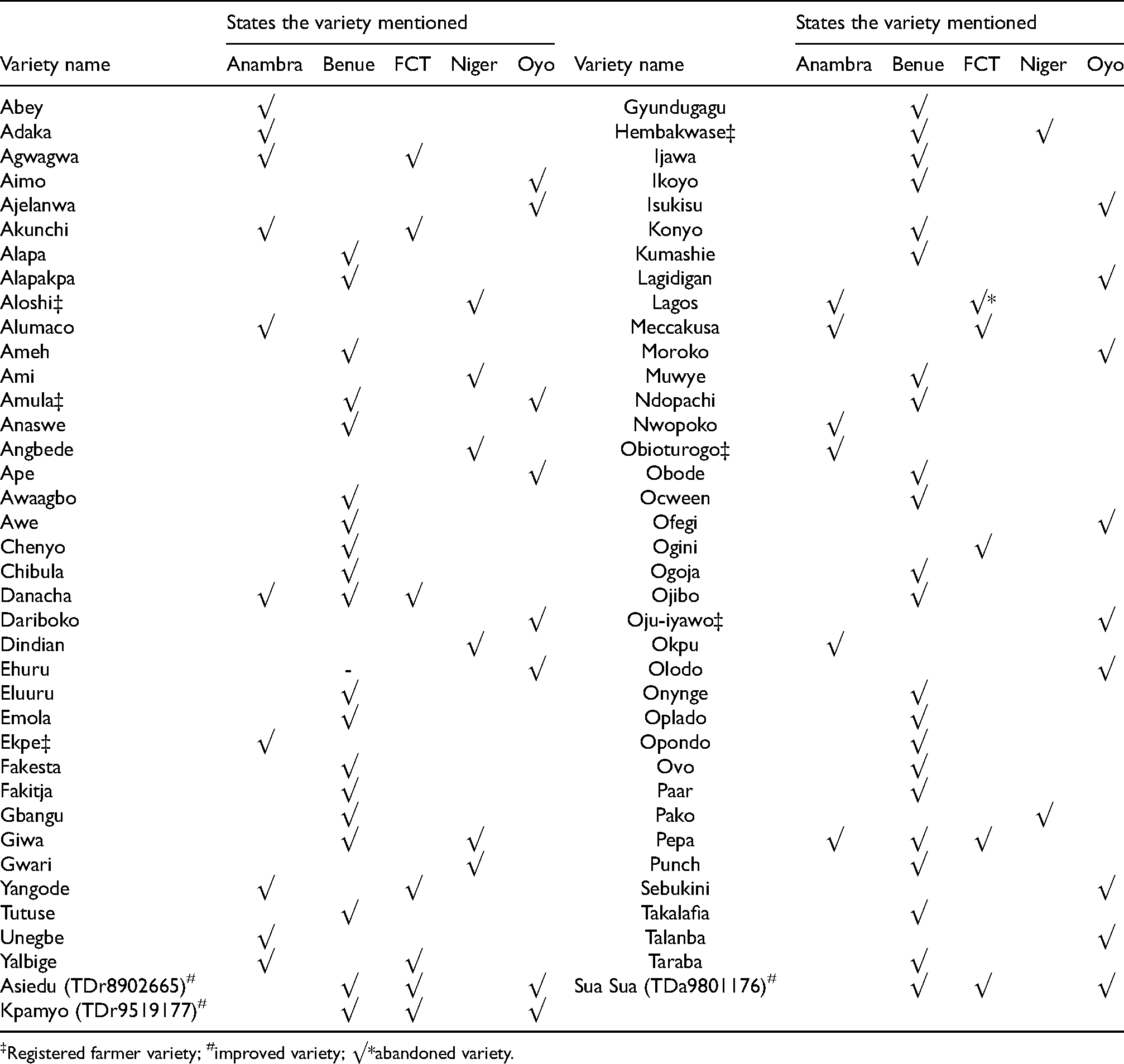
Registered farmer variety; #improved variety; √*abandoned variety.
Desired traits of yam seeds and varieties
When sourcing seed, farmers generally look for fresh yam tubers with a smooth skin, which are expected to generate a high yield when planted and that are pest and disease free (Figure 5). Farmers look for specific varieties when sourcing seed yam. Some look for varieties that are suitable for their specific soil type from their experience or by choosing from areas of similar soil types. We found no clear differences between men and women in terms of importance they give to the different traits. Although many farmers explained that being pest and disease free is an important characteristic, the 17 FGD participants in Kwali, FCT, did not recognize nematodes as a pest When asked for the suitability of a nematode infested tuber to be used as seed yam, the farmers confirmed the tuber suitable to be used as seed yam.
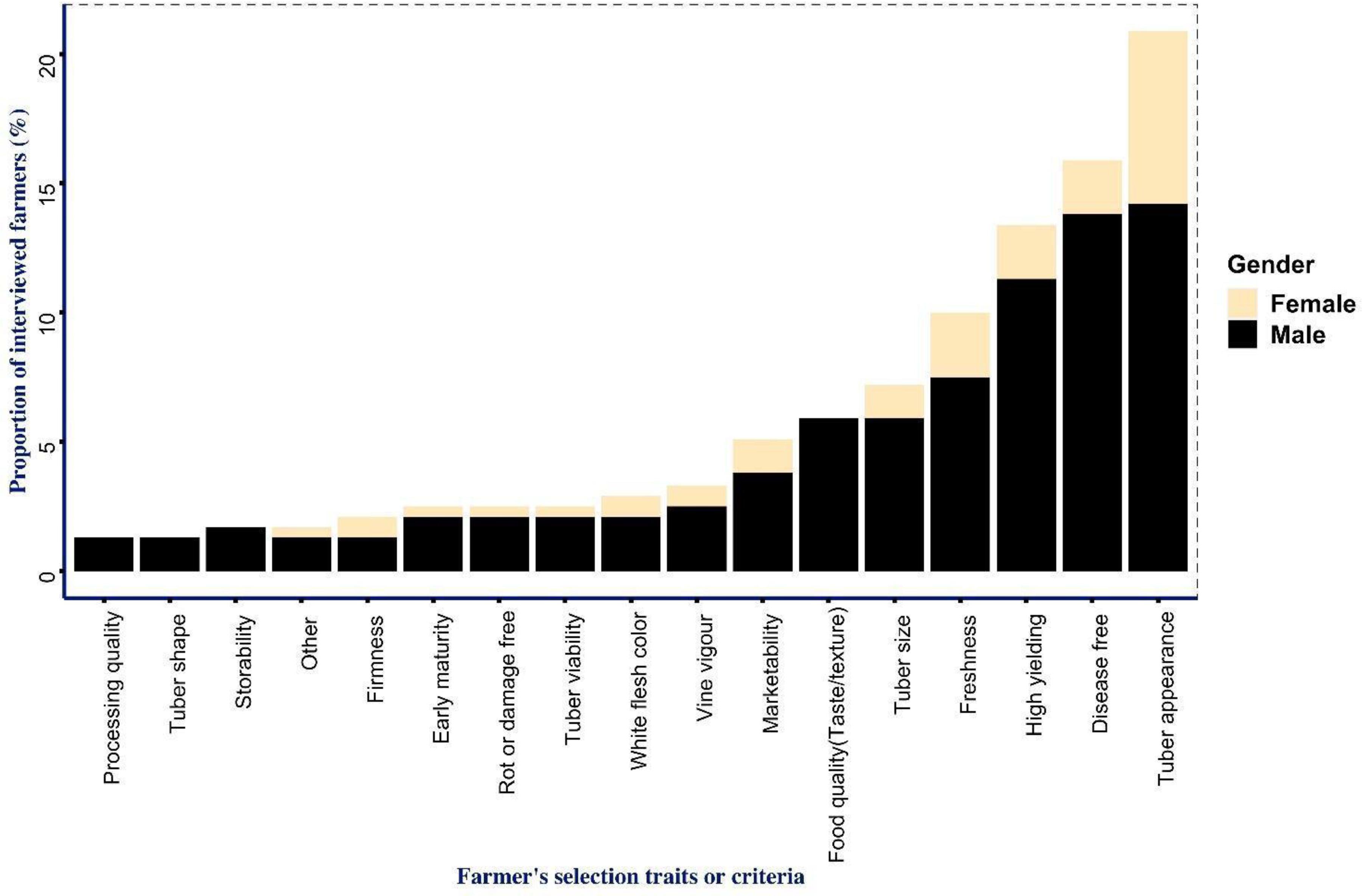
List of traits or criteria male and female farmers use (n = 95 and n = 27, respectively) for assessing or describing yam varieties.
Seed sourcing
There is a continuous need for seed yam. From our study, two main causes for the high demand for seed yam emerge: the low multiplication rate and the degeneration of yam. The degeneration of yam is related to the accumulation of viruses and nematodes (thread-like microscopic worms or parasites that feed intra-cellular in root and tuber tissue and cause harm to the plant) (IITA, 2020). These factors result in high seed sourcing rates: 58% of all farmers indicated that during the study year they sourced at least part of their seed from sources other than their own or their family's farm (Figure 6). For this specific question, data were triangulated by asking farmers what they did in the study year.
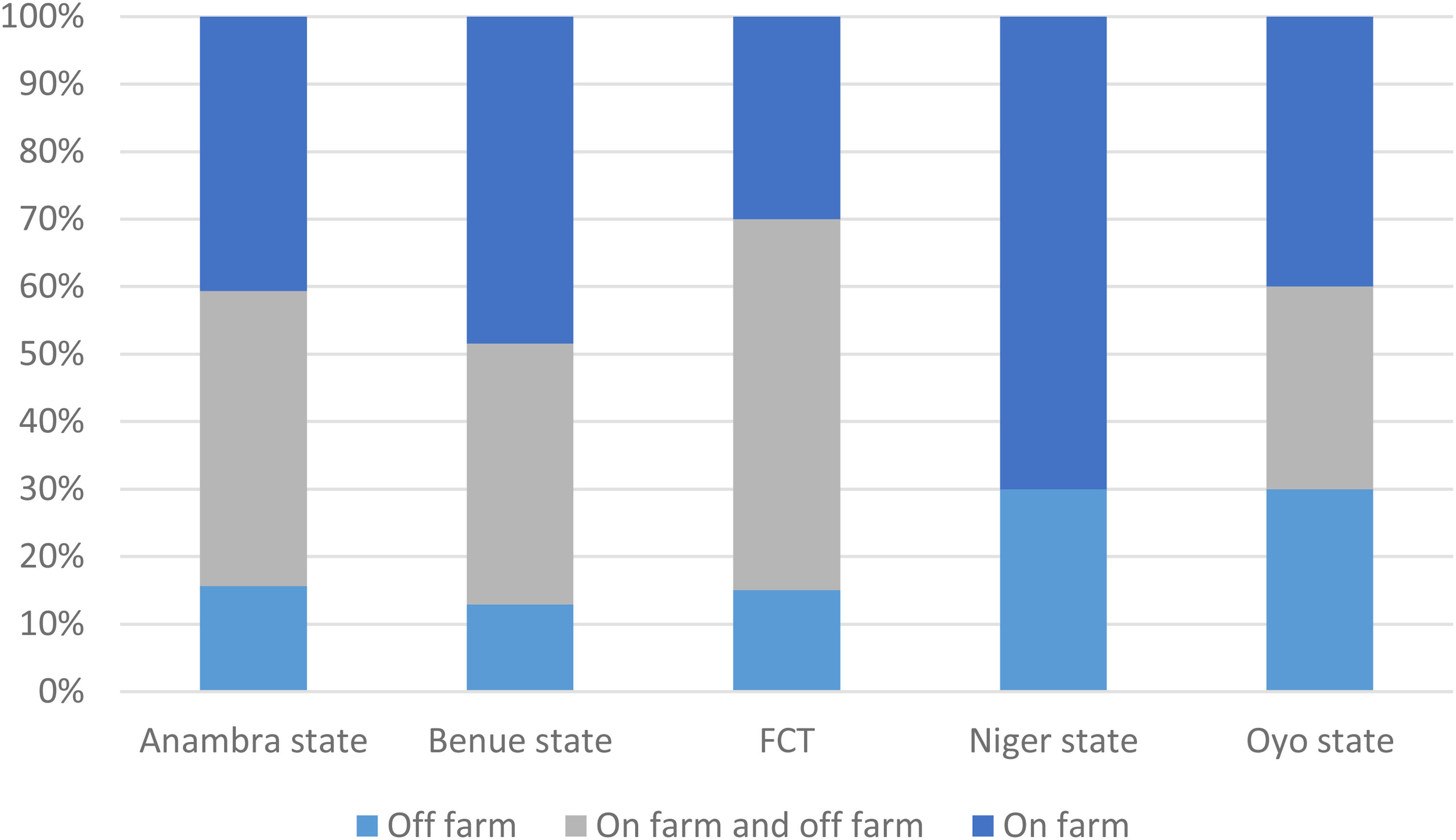
The percentage of farmers (n = 122) sourcing seed yam on-farm and off-farm in 2018 in five states in Nigeria.
Farmers use a combination of acquiring seed from their own farm and somewhere else, mostly from the market. Almost 60% of the farmers source seed off farm, mostly (80% of them) to complement their own seed. Only in Niger state, relatively few farmers (30%) sourced seed off farm. FGD participants explained that a lack of money caused farmers to cut ware yam tubers into setts for planting, rather than to buy seed yam from the market. Across the study sites, the amount of seeds farmers source is between 20% and 40% of their planting material (30% on average). The main reason for sourcing off-farm is the low multiplication rate of yam (50%), followed by looking for a new variety (30%) and because their existing seed is not producing well due to degeneration (20%). The results of the questionnaires showed that on average farmers buy fresh seed every 2.9 years, which was confirmed in the FGDs. Most farmers (90%) source their off-farm seeds from the market or from a combination of market and friends, family and neighbours. Only 7% got seed yam only from neighbouring farmers and family, and 3% indicated research institutes including IITA as their source. Gender did not seem to play a role in the seed sourcing practice.
Although there are farmers who travel more than a hundred kilometers (the maximum distance found in sample is 230km) to source their seed yam, the average distance from the farmer to the source is 21.1 km. Overall, farmers are willing to travel longer distances to buy seed yam from the market. They do so in search of a higher quality or a lower price (Table 3).
Mean distances (km) travelled by respondents to acquire seed yam in Nigeria .

Seed lot replacement
In addition to purchasing additional seeds (as described in previous section), farmers also regularly replace some of their seed lot. Farmers mentioned (a combination of) different reasons for seed replacement, of which productivity, i.e. the performance of a seed lot in their fields, was by far the most important (Figure 7). A woman seed seller in Oyo state explains ‘it happens that they replace seed lot if a particular variety is not yielding well anymore or is diseased. Some of the old varieties such as Lasinrin and Olodo have been completely abandoned’.
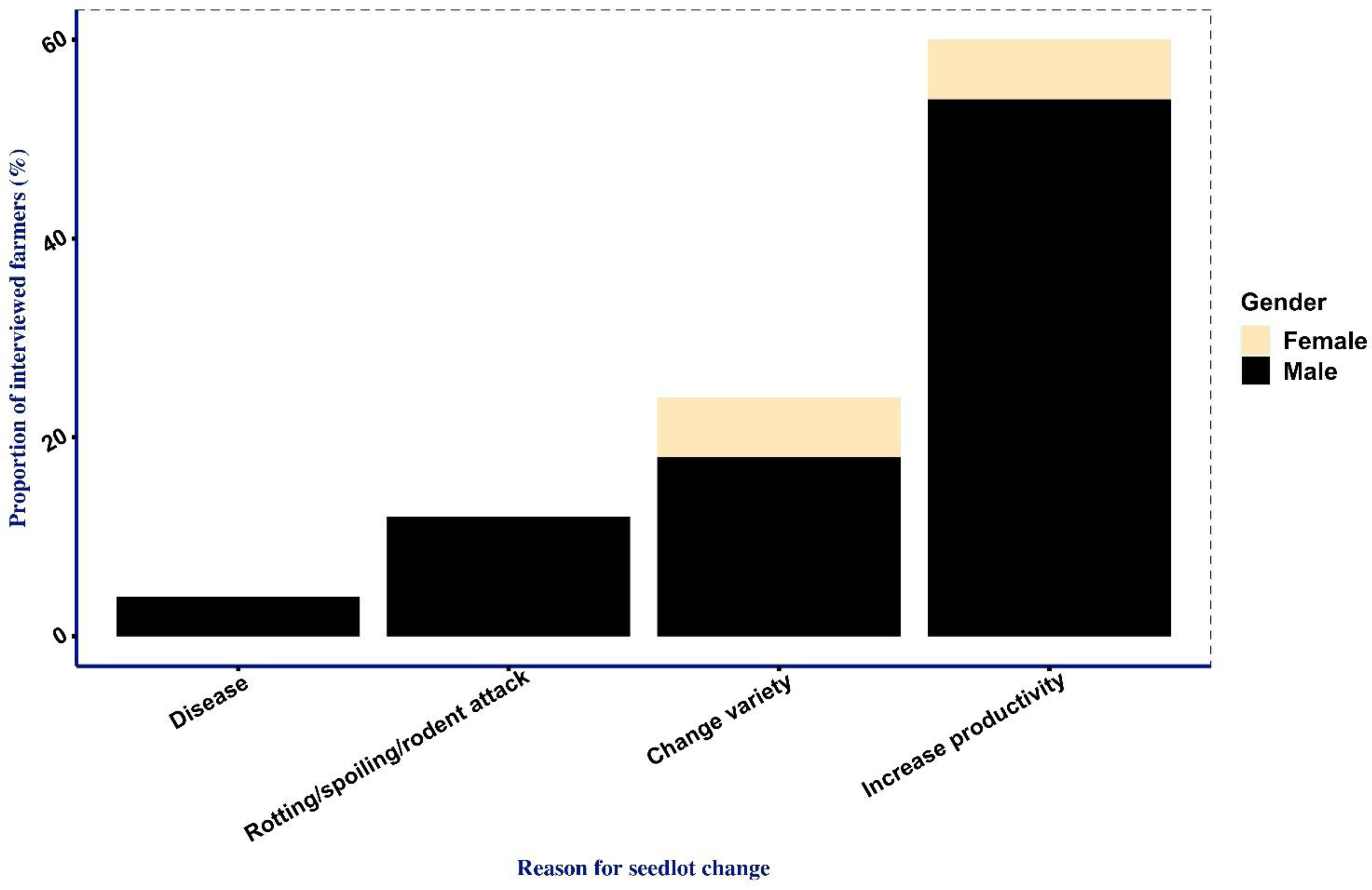
Reasons for male and female farmers (n = 95 and n = 27, respectively) to partially or totally replace their seed lot (note: more than one reason could be given).
In the case of seed lot replacement, farmers generally replace one of the (on average 2–4) varieties grown in their field. The farmers replace a seed lot on average every 2.2 years (with standard deviation of ± 1.5 year and range 1–10 years; the median year of seed lot replacement is 2 years). While replacing their seed lots, farmers also often change to another variety. Varieties were changed on average every 3.5 years (with standard deviation ± 3.2 year, a range of 1–22 years; the median year of sourcing a new variety is 3 years).
The FGDs indicate that relative differences in the seed lot replacement practices exist in different regions. In Benue state, farmers explained ‘when we discover that a particular set of seeds is not harvesting well, we discard the variety completely. This happens every two years’. Farmers in Oyo state explain ‘at any point in time we will replace the seed lot, if a particular variety is diseased or if it is no longer yielding well. That usually happens every 5 to 10 years’. In Anambra state, farmers explained that seed lot replacement was a community decision ‘3 years ago there was a particular yam variety grown that we discovered had a problem: it was susceptible to damage by maggots and rot. The elders decided to change it to another variety of yam to see if it would solve the problem’. We could not discern differences in seed replacement practices related to gender.
Yam value chain
Household sales of yam
Of those farmers who sold yam, 23% had a focus on sales of ware yam, 36% on seed yam sales and 41% on sales of both, although we can assume that these ratios change from year to year. Such changes can depend on the household needs and on the volume of production. Since ware and seed yam are mostly distinguished by their size, one year to the next can provide more or less ware or seed yam, depending on how big the tubers are. This is influenced by soil quality, rainfall and other climatic circumstances. Farmers in the FGDs in Benue, FCT, Niger and Oyo state mentioned that most communities aim for the production of ware yam, while sales of seed yam is a seasonal (side) business.
Sharing yam seed and yam loans
Sharing (small amounts of) seed yam as a gift is a common practice among community members and among families. Of the farmers we interviewed, 50% share seed yam, of whom 97% share with friends, relatives and neighbours and 3% with the elderly or people in need. It is a common practice for farmers to help new farmers to establish a first yam field by providing them with a small quantity of seed yam. Farmers are well aware that seed yam is a valuable cash crop, and the amounts shared are therefore small.
Another common practice is the use of exchange mechanisms, where a starting farmer may work as laborer on someone's field for a certain time in exchange for seed yam, or where a new farmer receives seed tubers as a loan from another farmer in return for a share of the ware tubers upon harvest In Anambra state, farmers explain that apart from starting farmers, seed yam loans are also common when there is a disaster: this coming season many farmers from Aguleri will take a yam loan because a flood destroyed most farms. So most farmers will not be sufficiently financially buoyant to purchase seed from the market and the alternative is to go for a yam loan’.
Commercialization of seed yam
The market is the main point for commercializing seed yam: 74% of the farmers sell their yam on the market or to yam traders; 26% sell to other farmers directly; and 14% sell to friends, relatives and neighbours (n.b. more than one answer could be given). Those farmers who sell their seed yam to market sellers, either bring their produce to middlemen in the market or the middlemen buy the seed yam from farmers’ fields. If a farmer does not have enough yam to fill one vehicle, farmers will hire and fill one vehicle together. Farmers and yam sellers establish a price per unit (the size of a unit varies between study sites) depending mostly on the size of the yam.
Characterizing yam sellers: sourcing and selling strategy
The markets we visited were general markets held on a daily or 4-daily basis. A distinction can be made between main markets in larger urban areas and bush markets, located in villages and often the first aggregation point of farmers’ produce. Among the 90 yam sellers we interviewed in yam markets, we found yam sellers who are also farmers and sell their own produce (referred to as farmers/sellers), or a combination of their own produce and that of others on the market. There are also yam sellers who are purely selling yam and not involved in its cultivation (referred to as sellers) (Table 4). These are mostly (86%) women who generally buy and sell ware and seed yam in large quantities.
Characterizing of the surveyed yam sellers in the selected 14 markets (n = 90).
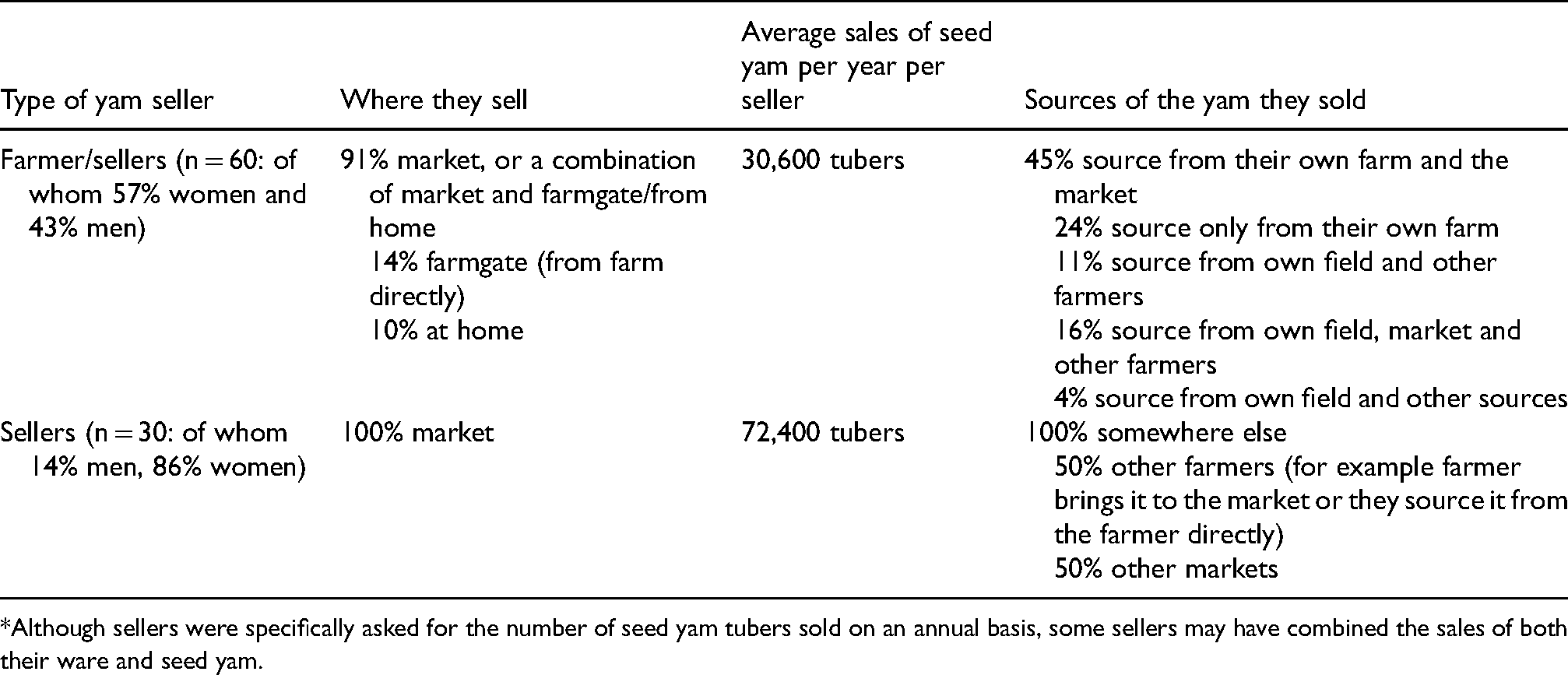
*Although sellers were specifically asked for the number of seed yam tubers sold on an annual basis, some sellers may have combined the sales of both their ware and seed yam.
Yam farmers who sell their own yam in the market are mostly found in village or bush markets where farmers and consumers from the area come to buy and sell their produce. The interviewed yam farmer/sellers indicate that on average, 55% of their total sales comes from their own farm and 45% from other sources. The farmer-sellers on the Oye Achalla market in Anambra state explained ‘the ones here today are not cultivated by us, but from January we sell our own ware and seed yam. You can recognize them by the red soil’. The women of the Yam Sellers’ Association at Buruku market in Benue state explained ‘we are all yam sellers and yam farmers. We sell our own and our husbands’ yam, because our husbands don’t carry yam to the market’.
We did not find any specialized seed yam sellers in the markets, yam sellers sell ware yam throughout the year and only engage in seed yam sales during the planting season. A woman trader from Bwari market, FCT, explains ‘when the time of seed yam reaches, I will abandon ware yam and focus on sales of seed yam (smaller tubers). I earn more than usual during that period’.
Prices of ware and seed yam
The prices of both ware and seed yam vary between seasons (Table 5). Prices are lowest in the December/January harvesting period, and increase to their highest level at the end of the planting season in June/July. Apart from seasonality, the variety and size of yam tubers influence the price: there are certain popular varieties that attract a higher price and larger ware yam tubers are more expensive. Ware yam ranges from 1 to 5 kg and yam of more than 5 kg is classified as a ceremonial yam.
Overview of the common units used in five states in Nigeria and the average number of tubers and price of the units.
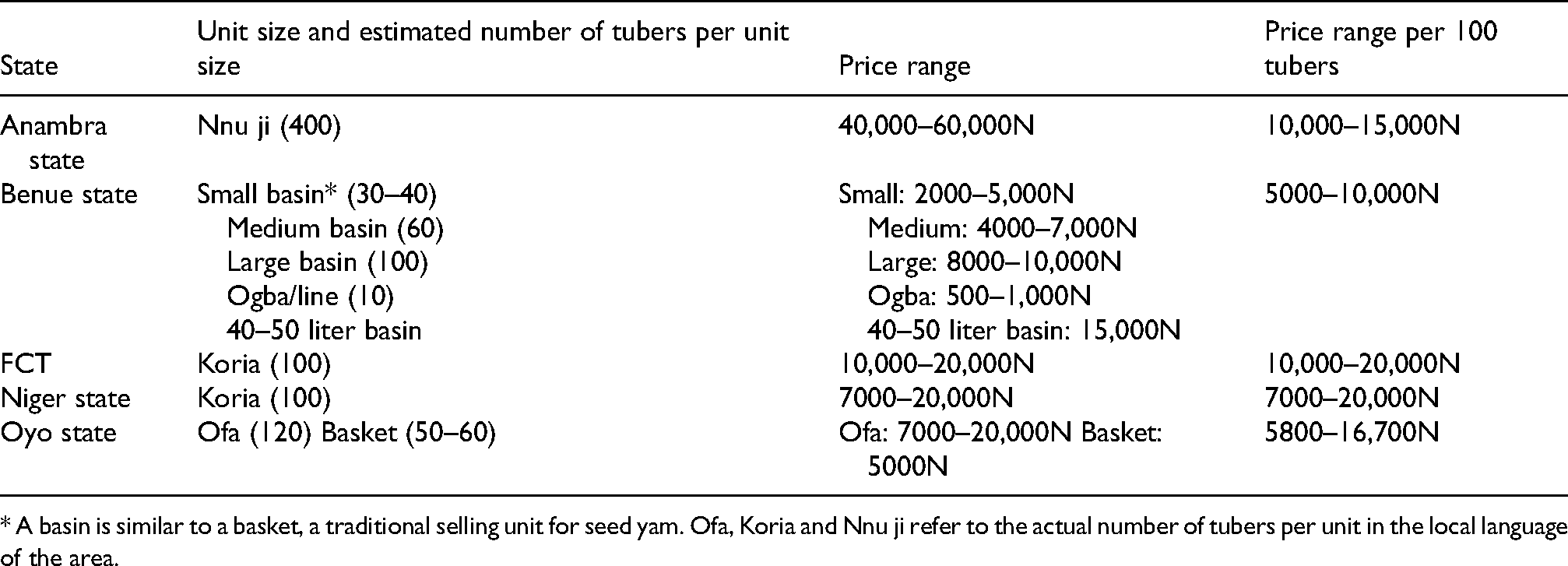
* A basin is similar to a basket, a traditional selling unit for seed yam. Ofa, Koria and Nnu ji refer to the actual number of tubers per unit in the local language of the area.
Generally, any tuber between 0,2 and 0,5 kg is classified as seed yam. Seed yam is sold in different unit sizes (ofa, basin, ogba, koria, etc.) across the different sites and prices vary greatly. Despite these differences, a price range of 50 – 200N per seed yam tuber can be observed. Farmers selling their tubers to other farmers, relatives, friends or market sellers often price their seed yam lower than the yam sellers on the market, who have to bear additional costs associated with transport and market access.
Discussion and conclusion
This study shows that the seed system of yam is largely informal – but very dynamic and highly commercial. Although farmers cultivate yam partly for home consumption, yam is also a cash crop which gives farmers an important flow of income. Farmers invest significantly in their yam crop, given the high prices they pay for seed yam. There is a high demand for, and a high turn-over of, seed yam. The reason for the high demand is the low multiplication rate of yam and the degeneration of seed tubers. The low multiplication rate of yam led many (60%) farmers in our study to have insufficient seed at planting time, causing them to source seed yam to supplement their own selected seed tubers. Seed degeneration in yam is poorly studied, but our study indicates that seed degeneration and the associated yield loss is an important driver for farmers to replace their seed. In our study, farmers replaced the seed of each of the 2–4 yam varieties on average every 2.2 years. They tend to replace their seed with seed of another local variety, thus leading to high rates of variety turn-over. The varieties being used by farmers who sell seed yam are local varieties; only a hand-full recently improved varieties was found in our study. There is a large portfolio of local yam varieties that are only partially inventoried.
The low seed multiplication rate and seed degeneration show to be key elements in the commercial seed yam model. Currently few farmers specialize in seed yam. Only in Anambra state is there a specialization in seed yam production, seemingly induced by the low yield levels in the area, which facilitates the production of small tubers. The preparation of (mini)setts is not a practice that all farmers engage in and is partly dictated by the regional ecology. Farmers seem to prefer to pay for planting materials from elsewhere.
Understanding a seed system is critical in designing strategic interventions to improve seed system functions (Andrade-Piedra et al., 2020; McEwan et al., 2021). Through relatively simple diagnostics the study was able to arrive at a first reconnaissance of the yam seed system in key yam production areas in Nigeria. The findings offer interesting opportunities and entry points. In contrast to the situation in many other seed systems of vegetatively propagated crops and other countries, yam farmers in Nigeria seem to have little hesitation to pay good prices for seed. The limitations to seed availability because of low multiplication rates and seed degeneration provide motives for farmers to invest in seed. Commercial seed yam business models do exist and although they are part of a largely informal economy, they are by no means unstructured and seem to be well connected with the yam producers.
Although we have only studied a number of sites and markets, the findings suggests that entry points for an influx of new varieties are relatively easy and abundant. Farmers change varieties and although the primary reason may be the quality of the seed, this takes out an important hurdle in the adoption of new varieties. In addition, the fact that yam crops are providing the farmers considerable cash incomes, justifies and enables cash-investments in seed yam by the ware yam producing farmers. When high prices are being paid for seed yam, specialization in seed yam can be attractive, particularly in environments and with practices that reduce the rate of seed degeneration.
Given these commercial dynamics in the yam seed system, it is surprising that we did not find more specialization. Drawbacks of specialization could be related to the time-investment needed for seed yam production through mini-sett, the profitability of seed yam production, the investment and riskiness of mini-sett techniques and other specialized seed multiplication techniques, but also to ways that specialization affects seed or food security as is suggested by McNamara and Morse (n.d.). A yam system with primarily local varieties may offer ample opportunities for improved varieties, which could be introduced at the points where key actors of the informal yam seed system are active. These key actors could be seed producers as well as traders. The last category of actors have shown to be important seed brokers in the potato seed system of Bolivia (Almekinders et al., 2010) and in Tanzania traders have shown to be important in diffusion of new bean varieties (Sperling et al., 2020). The possibilities of producing and providing quality seed seem worth exploring through further study of the yam seed system.
The opportunities of a commercialized and specialized yam seed system contrasts with the situation in other vegetatively propagated crops (Almekinders et al., 2019). With the value proposition for seed business models being obvious because of seed degeneration and the low multiplication rate, it becomes a challenge to find ways to build on the existing commercial system. Projects that support farmers in specializing and becoming entrepreneurs should have an understanding of who is already engaged in such practices and be connected to relevant traders and producers. If not, interventions can, for example, jeopardize women who are currently important seed yam traders. As of now, there is too little knowledge about yam seed systems to be able to point to challenges around inclusiveness and how it caters for different type of farmers.
The fact that this system is informal, from a seed system perspective, should not be a drawback. Legitimizing this system by finding ways to connect with it may have better results than trying to formalize it and replace current drivers and conditions with certification and other legislative regulation. For example, involving farmer/sellers to disseminate new yam varieties could serve the agenda of both farmers and breeders.
Supplemental Material
sj-docx-1-oag-10.1177_00307270211058209 - Supplemental material for Yam seed system characteristics in Nigeria: Local practices, preferences, and the implications for seed system interventions
Supplemental material, sj-docx-1-oag-10.1177_00307270211058209 for Yam seed system characteristics in Nigeria: Local practices, preferences, and the implications for seed system interventions by Esmé Stuart, Asrat Asfaw, Patrick Adebola, Norbert Maroya, Alex Edemodu, Tunde Adeosun, Robert Asiedu and Conny Almekinders in Outlook on Agriculture
Footnotes
Acknowledgements
Support from AfricaYam and YIIFSWA to the field work, data processing and the preparation of the manuscript is highly appreciated. We thank the two anonymous reviewers for their constructive comments and suggestions. The editing by Nicholas Parrott is highly appreciated.
Declaration of conflicting interests
The author(s) declared no potential conflicts of interest with respect to the research, authorship, and/or publication of this article.
Funding
The author(s) disclosed receipt of the following financial support for the research, authorship, and/or publication of this article: This work was supported by the Netherlands Organization for Scientific Research (NWO)—WOTRO Science for Global Development (grant number 17940).

Supplemental material
Supplemental material for this article is available online.
Notes
References
Supplementary Material
Please find the following supplemental material available below.
For Open Access articles published under a Creative Commons License, all supplemental material carries the same license as the article it is associated with.
For non-Open Access articles published, all supplemental material carries a non-exclusive license, and permission requests for re-use of supplemental material or any part of supplemental material shall be sent directly to the copyright owner as specified in the copyright notice associated with the article.
