




Abstract
Directive 2010/63/EU was adopted in September 2010 by the European Parliament and Council, and became effective in January 2013. It replaces Directive 86/609/EEC and introduces new requirements for the protection of animals used for scientific purposes. In particular, it requires that establishments that breed, supply or use laboratory animals have a designated veterinarian (DV) with expertise in laboratory animal medicine, or a suitably qualified expert where more appropriate, charged with advisory duties in relation to the well-being and treatment of the animals. This paper is a report of an ESLAV/ECLAM/LAVA/EVERI working group that provides professional guidance on the role and postgraduate training of laboratory animal veterinarians (LAVs), who may be working as DVs under Directive 2010/63/EU. It is also aimed at advising employers, regulators and other persons working under the Directive on the role of the DV. The role and responsibilities of the DV include the development, implementation and continuing review of an adequate programme for veterinary care at establishments breeding and/or using animals for scientific purposes. The programme should be tailored to the needs of the establishment and based on the Directive’s requirements, other legislations, and current guidelines in laboratory animal medicine. Postgraduate laboratory animal veterinary training should include a basic task-specific training module for DVs to complement veterinary competences from graduation, and continuing professional development on the basis of a gap analysis. A tiered approach to further training in laboratory animal veterinary medicine and science offers career development pathways that are mutually beneficial to LAVs and establishments.
Keywords
Veterinarians are leading advocates for animal welfare and have the responsibility to ensure the health and welfare of all animals under their care. The replacement of Council Directive 86/609/EEC 1 by Directive 2010/63/EU 2 on the protection of animals used for scientific purposes provides a legal environment for veterinarians to continue to fulfil this responsibility in the field of animal research. Article 25 of Directive 2010/63/EU requires that ‘each breeder, supplier and user has a designated veterinarian with expertise in laboratory animal medicine, or a suitably qualified expert where more appropriate, charged with advisory duties in relation to the well-being and treatment of the animals’. The Directive therefore offers an opportunity for developing a level playing field in the management of the health and welfare of laboratory animals throughout Europe. In May 2013 the European Commission invited the European Society of Laboratory Animal Veterinarians (ESLAV, http://eslav-eclam.org/) and the European College of Laboratory Animal Medicine (ECLAM, http://eslav-eclam.org/), amongst other non-governmental organizations, to designate an expert to participate in the 3rd Meeting of the Expert Working Group (EWG) on Education and Training within the context of Directive 2010/63/EU and to prepare a thought-starter document on the following topics: (i) roles and responsibilities of the designated veterinarian (DV) (Article 25 of the Directive); (ii) training needs for the DV; (iii) training needs for veterinarians involved in project evaluation (Article 38 of the Directive); (iv) role of the veterinarians in the training of persons in Article 24 (1) (a–c) of the Directive. As for previous meetings of this EWG, ESLAV and ECLAM accepted this invitation and invited the Laboratory Animal Veterinary Association (LAVA, http://www.lava.uk.net/) in the preparation of the document in view of LAVA’s long-standing experience with the concept and responsibilities of the Named Veterinary Surgeon (NVS) under the Animals (Scientific Procedures) Act 1986 3 in the UK. The Board of the Association for European Veterinarians in Education, Research and Industry (EVERI, http://www.fve.org/about_fve/sections/EVERI.php) was involved at a later stage in the writing of the paper and endorsed it.
This paper is based on the interpretation of the Directive by and presents the views of experienced laboratory animal veterinarians (LAVs). The aims are (i) to provide professional guidance on the role and responsibilities of DVs and LAVs such as proposed by the endorsed document on the ‘Development of a Common Education and Training Framework to Fulfil the Requirements under the Directive’; (ii) to highlight the need for postgraduate veterinary training in this field at the minimum DV level as agreed by EU Member States, and mid-tier level as anticipated by Veterinary Continuing Education in Europe (VetCEE), a recent European accreditation scheme; and (iii) to discuss postgraduate training opportunities for DVs and LAVs.
Background
ESLAV, ECLAM, LAVA and EVERI recognize that the use of animals is currently still necessary for scientific progress and for the discovery of new medicines that will ultimately benefit humans and animals. These groups also recognize that veterinarians have professional, legal and ethical obligations to protect animal health and welfare and share the mission of ensuring high standards for the care and use of laboratory animals, through the continuing education, training, and postgraduate qualification of LAVs. ESLAV was founded in 1996, ECLAM in 2000, and both organizations are well recognized within and outside Europe. ESLAV and ECLAM have a strong membership of veterinarians working in laboratory animal medicine and science (LAMS) across European countries and beyond (356 members in 33 countries, of which 81 are ECLAM Diplomates). LAVA was founded in 1963 and now has 161 members. Based on the membership of these organizations and the existence of similar professional organizations in EU Member States, it is estimated that more than 1000 veterinarians are employed in the field of laboratory animal medicine and science in Europe fulfilling one or more of the responsibilities stated in Directive 2010/63/EU. EVERI, one of the sections of the Federation of Veterinarians in Europe (FVE, http://www.fve.org), is an umbrella organization of National and European associations of veterinarians employed in the sectors of education, research and/or industry, that was founded in 2005.
LAVs have been providing advice on animal health and welfare to establishments involved in the breeding or use of animals for scientific purposes for many years in Europe and in other parts of the world.
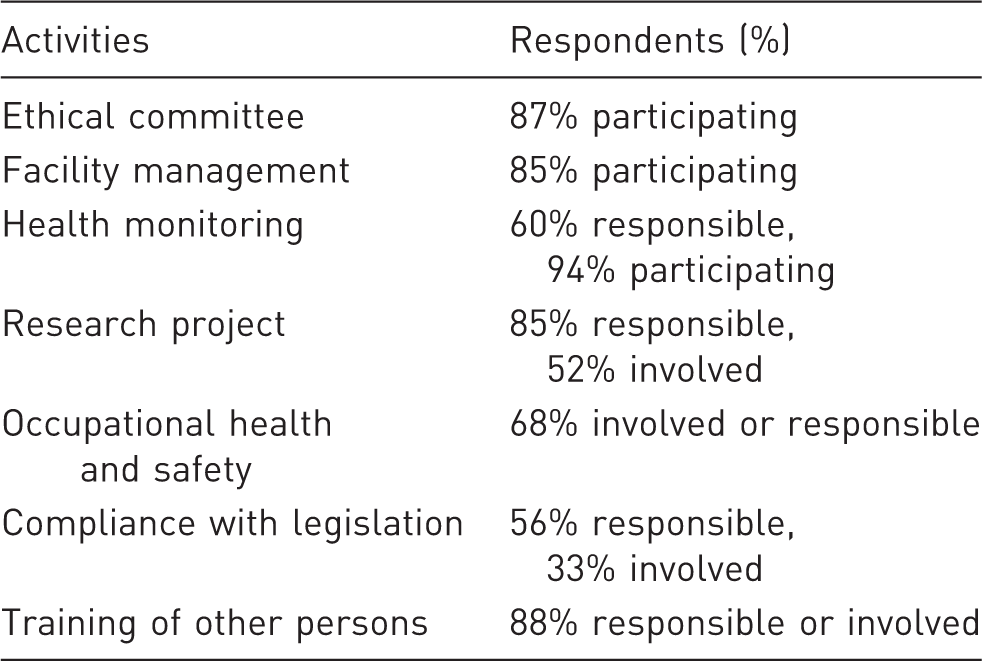
In 2012 ESLAV and ECLAM conducted an online survey on the role, education and training of LAVs and their expectations with regard to the impact of changes associated with the implementation of Directive 2010/63/EU. A total of 123 LAVs participated in the survey, out of which 30% were ECLAM Diplomates, and 50% were holders of another Diploma (e.g. PhD, or Diploma in Laboratory Animal Science). More than 80% of the responders were working in a full-time position.
Current roles and responsibilities of respondents to an ESLAV–ECLAM survey run between April and June 2012 on the role of veterinarians under Directive 2010/63/EU.
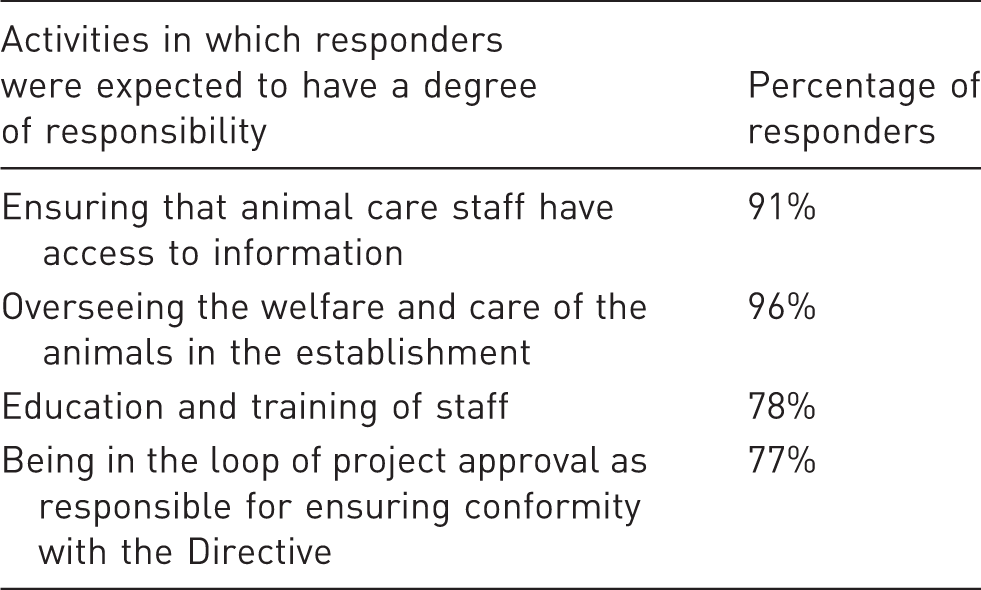
Activities in which respondents to the April–June 2012 ESLAV–ECLAM survey on veterinarians in Directive 2010/63/EU expected to have a degree of responsibility under the Directive.
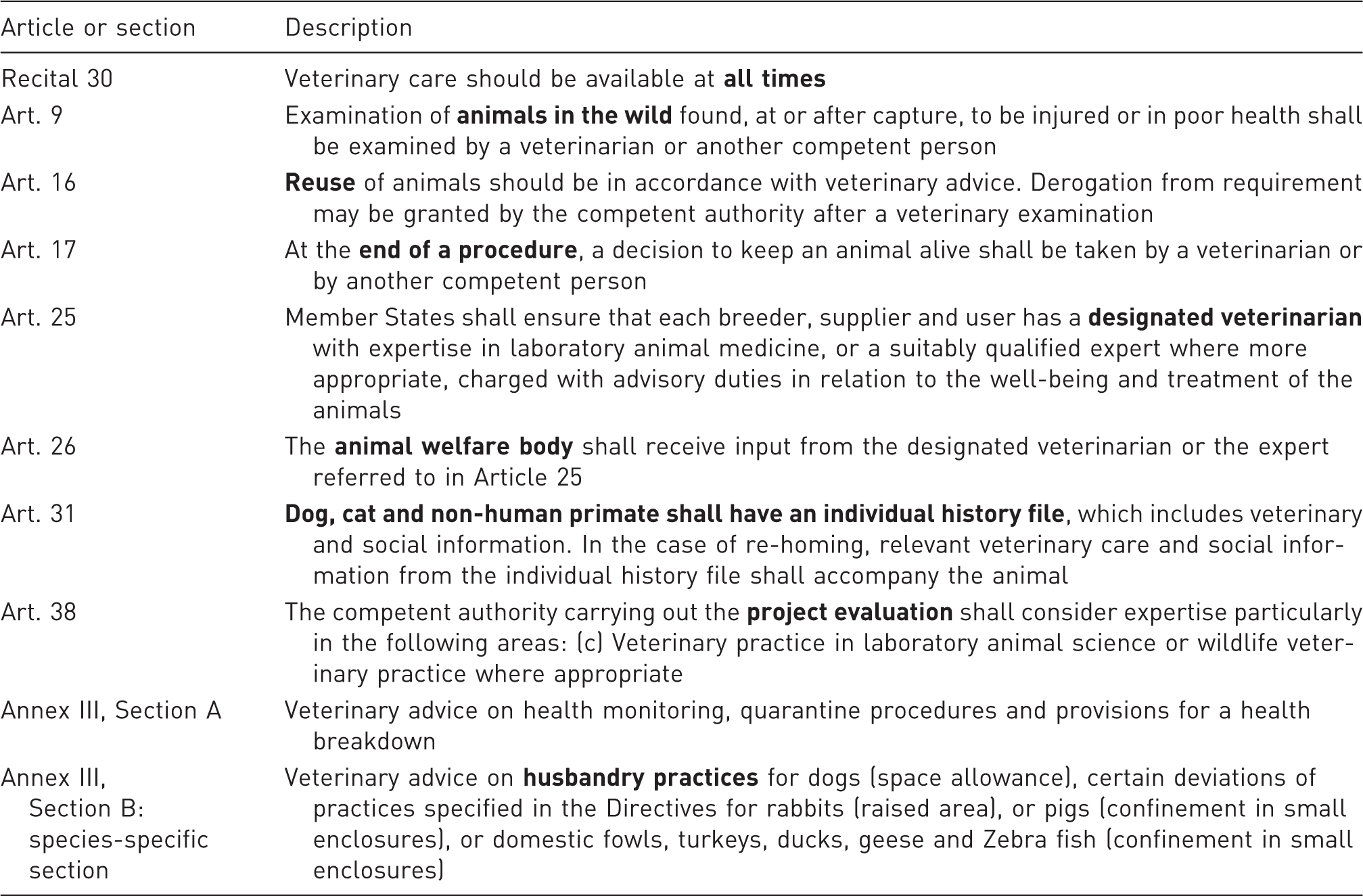
Veterinary roles, tasks and responsibilities under Directive 2010/63/EU
Veterinary tasks required under the Directive
Summary of the roles and responsibilities of veterinarians specified in Directive 2010/63/EU.
The Directive offers limited guidance on (i) veterinary care programme; (ii) veterinary input to the AWB; (iii) the role of the veterinarian in training others; (iv) the interface between the Directive and other veterinary regulations; and (v) the importance of maintaining effective communications with other persons working in the establishment. These aspects are developed in the following sections of this paper.
Provision of an adequate veterinary care programme
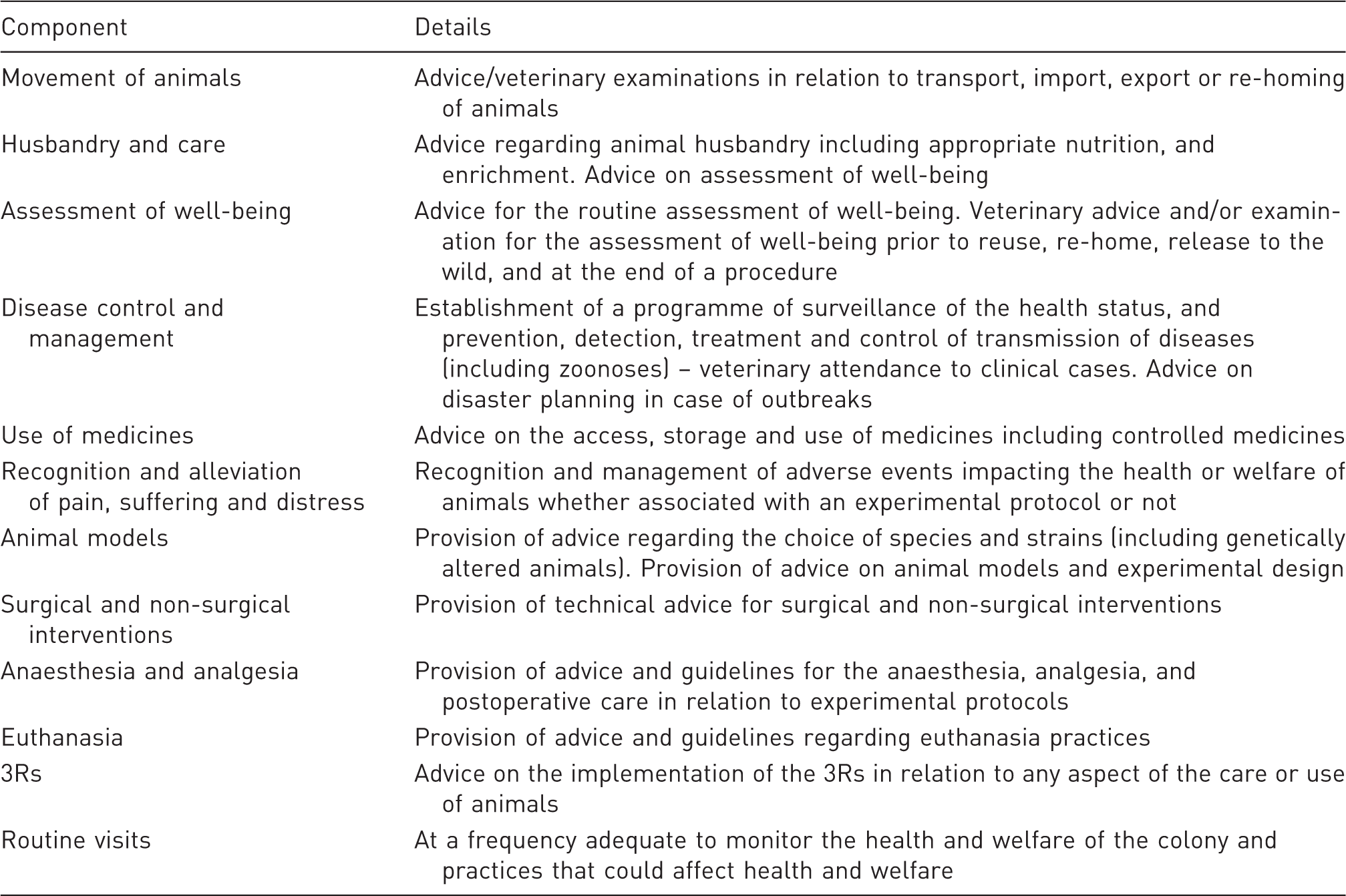
It is the professional view of the authors that the veterinary services and tasks that are stated in the Directive should form the basis of a comprehensive veterinary care programme that is tailored to the needs, complexity and purpose of the establishment. The concept of a programme of veterinary care for laboratory animals has been described in the 2008 report of the FELASA/ECLAM/ESLAV Joint Working Group on Veterinary Care 5 and in the Guide for the Care and Use of Laboratory Animals. 6 It is recognized in the American College of Laboratory Animal Medicine’s position on adequate veterinary care 7 (ACLAM, http://www.aclam.org/) and is referred to elsewhere.8,9
Elements of a veterinary care programme.
Input to the AWB
The Directive does not require a veterinarian to be a full member of the AWB, but requires that the AWB seeks veterinary input from the DV or the expert referred to in Article 25 (Article 26). Expert advice in laboratory animal medicine is relevant and important to the five main functions assigned to the AWB by the Directive: (i) advice on animal welfare; (ii) advice on the principles of the 3Rs; (iii) establishment and review of procedures that may impact animal welfare; (iv) continuous monitoring of projects and advice on opportunities for application of the 3Rs; and (v) advice on re-homing of animals. To fulfil this role the DV needs to have sufficient awareness and understanding of the local practices, and needs to be able to contribute to discussions taking place at the AWB. It is therefore the view of this working group that the DV should be a full member of the AWB.
Involvement in project evaluation
The Directive requires that projects are evaluated and authorized by the relevant National competent authority (Articles 36, 37 and 38). In some establishments a local ethical review process may be established to enable the evaluation and the refinement of project proposals prior to their evaluation by the competent authority. In such circumstances, the DV and/or an LAV working with the DV may be requested to contribute to the review of project proposals. Veterinary input in the ethical review of projects brings critical information and recommendations on the design of protocols (Article 38.3b) that support the application of the 3Rs. Advice include considerations for the choice of species or animals, the choice of animal model, the relevance of a procedure for the intended purpose, the reduction of bias in study results, the refinement of procedures and/or animal care in order to minimize its severity, the classification of the severity of the procedure, and the establishment of humane endpoints.
Training, supervision and assessment of competences of other persons
Due to the breadth of skills and knowledge required to ensure adequate animal care and use in scientific procedures, the training of personnel participating in these activities often follows a multidisciplinary approach, in which experts are invited to provide training in their focused area of expertise. In this context, veterinarians have a professional responsibility of ensuring that activities normally considered as acts of veterinary practice under National laws are performed in accordance with standards accepted by the veterinary profession, whether they are performed by veterinarians or by other persons allowed to perform such activities under Directive 2010/63/EU. Veterinarians have a solid base of knowledge and expertise in comparative pathology, diagnosis, prognosis, disease prevention and treatment, anaesthesia and surgery, pain recognition and control, breeding control, and euthanasia that is relevant to laboratory animals. They are therefore uniquely qualified to provide training, assessment and supervision on what is considered to be veterinary interventions for scientific procedures. Consequently, it is strongly recommended that they are included in the provision of training and supervision to others.
Interface between the Directive and veterinary regulations
A complex veterinary legal and regulatory framework exists at National and EU levels. This forms an important interface with the Directive 2010/63/EU which requires special attention. Laws and codes of practice acknowledge the specific training and expertise needed to perform acts of veterinary practice, including the provision of anesthesia, surgery and the control of the use of medicines. Directive 2010/63/EU permits other suitably qualified persons to provide advice in relation to animal health and welfare. The authors recommend that the decision process aimed to nominate another suitably qualified person involves consultation with a veterinarian with sufficient knowledge and training in laboratory animal medicine. In addition, when acts of veterinary practice have to be executed, which are assigned to licensed veterinarians in other regulations, such as a surgical procedure to relieve an animal from pain not related to the experimental protocol, those should be performed by a licensed veterinarian or under his/her responsibility and direct supervision. Similarly the acquisition and use of controlled substances and veterinary medicines should be compliant with European and National veterinary medicines laws and regulations. Finally, the knowledge that is necessary to fulfil obligations to report public health hazards to the authorities should also be taken into account.
Veterinary services should comply with specific National and EU legal requirements aimed at protecting the health and welfare of both animals and humans. These regulations apply to a wide range of veterinary services in relation to exotic animals, animal by-products, hygiene, animal transport, and import and export of animals between establishments and countries. Veterinary advice may also be sought in the context of the Convention on International Trade in Endangered Species (CITES, www.cites.org).
Communication lines involving the LAV
Although the role of the DV is advisory under the Directive, in practical circumstances it is important that veterinary advice is carefully considered. For this to happen, the DV will need to have sufficient competence, to gain respect from colleagues and be provided with adequate support and authority by the establishment.
The DV and additional LAVs need to interact with a variety of professionals within and outside the establishment. The DV has a statutory responsibility towards the representative of the local establishment in addition to other government and professional bodies. He/She also frequently interacts with persons that are responsible for projects or those that work with animals in order to provide advice on matters related to health and welfare of protected animals. To ensure that advice is given when needed, clear communication lines should be established between the DV and the person(s) responsible for overseeing the welfare and care of the animals, and a clear process indicating when and how the DV should be contacted when health or welfare issues occur should be agreed (Article 24.1). The DV should also build and maintain constructive relationships with scientists in order to develop mutual understanding and respect.
In order to keep everyone abreast with developments in the 3Rs, the DV should actively engage with and contribute to the activities of the AWB, thereby enabling the establishment to be updated.
Communication lines should therefore be established between the DV and the persons and group indicated below:
The person responsible for ensuring compliance with the provisions of the Directive (Article 20.2); The person(s) responsible for overseeing the welfare and care of the animals in the establishment (Article 24.1); The AWB (Articles 26, 27); The personnel working with animals (Article 23); Scientists responsible for projects (Article 24.2); The DV’s line management.
The DV should also be supported in maintaining links with laboratory animal veterinary associations, other professional networks and associations in the field of laboratory animal medicine and science such as the Association for Assessment and Accreditation of Laboratory Animal Care (AAALAC, http://www.aaalac.org/), International or National laboratory animal science associations, as well as diagnostic and other laboratories. The DV should develop and maintain effective communications with the competent authority.
Employment modalities for the DV
The employment remit of the DV should include responding to the needs of the establishment based on its size, complexity and purpose. Consultancy-based or part-time employment may be suitable at some establishments. In such cases, the DV should ensure that appropriate veterinary care is available at all times, and routine visits to the establishment should be made at sufficient intervals for the health and welfare of the animals to be effectively monitored. The provision of guidance on an adequate animal care and use programme may be shared by several LAVs depending on the size, the complexity, the species bred or used, and the purpose of the establishment. In such cases it is recommended that each DV has overall responsibility for, and oversight of, the veterinary services provided.
Competence requirements for the DV
Mobility of veterinarians in Europe
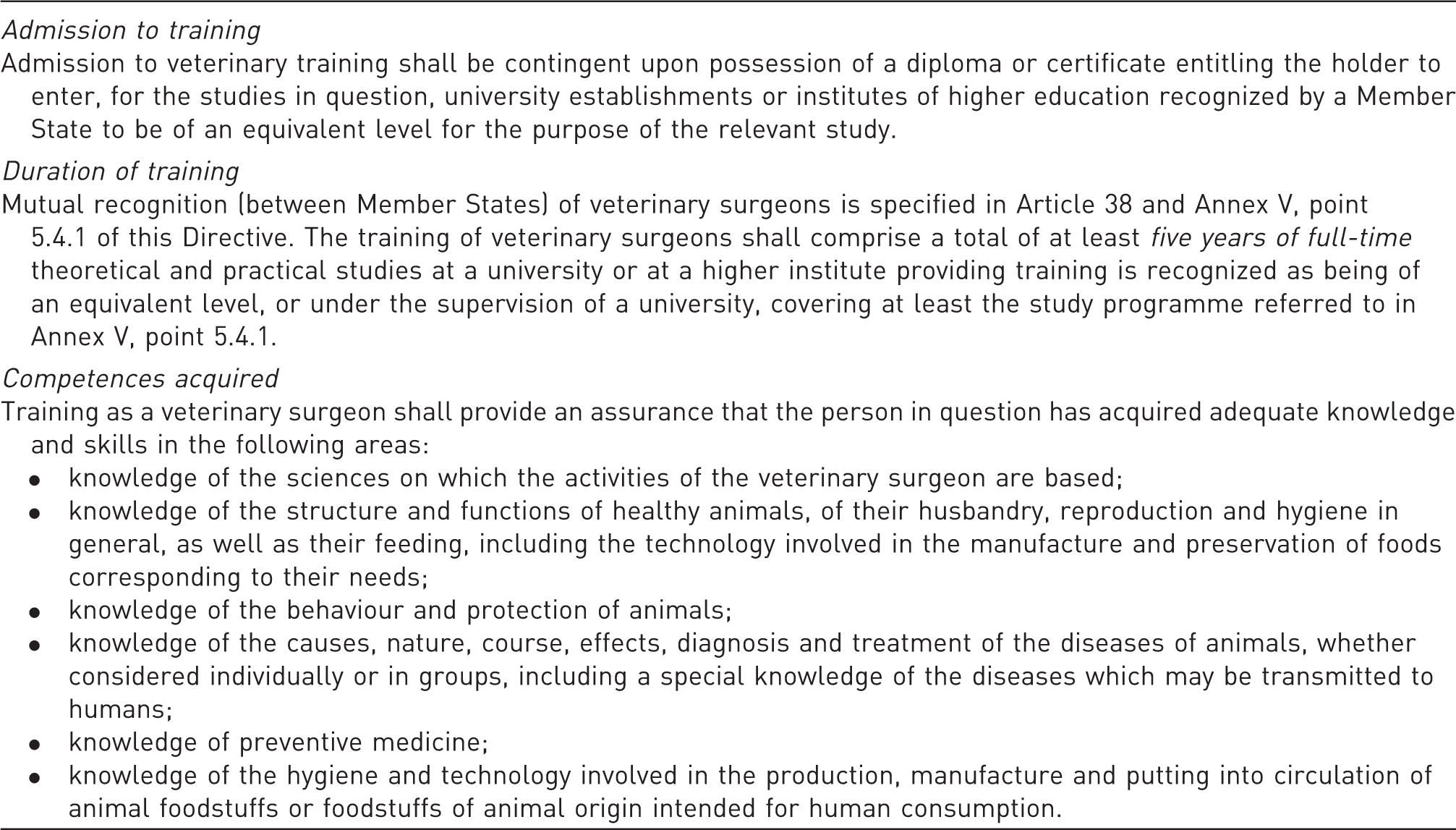
Through their undergraduate training, veterinarians gain a strong basis in animal welfare and acquire extensive knowledge in the prevention, diagnosis and intervention concerning animals’ health and care as ‘day-one competences’ upon graduation. Training requirements of veterinarians have been harmonized across Europe in order to facilitate the free movement and mobility of veterinarians in Europe. Directive 2005/36/EC on the recognition of professional qualifications lays out minimum requirements for study programmes and the minimum training period leading to the qualification of Veterinary Surgeons (Article 38.3 and amendments). 10 It guarantees the mutual recognition of professional qualifications between Member States by requiring them to consider the qualifications acquired elsewhere in the Community to allow access to regulated professions. The European Association of Establishments for Veterinary Education (EAEVE, http://www.eaeve.org) assures the quality of veterinary establishments by evaluating, promoting and further developing the quality and the standard of establishments for veterinary medical education and their teaching within the EU.
When designing training frameworks for DVs, consideration should be given to facilitate the mobility of DVs in Europe.
Summary of the key training requirements for veterinarians stated in Article 38 of Directive 2005/36/EC on the recognition of professional qualifications.
Current postgraduate training framework and opportunities to LAVs
Training programmes leading to postgraduate qualification of veterinarians in laboratory animal medicine and science in Europe.
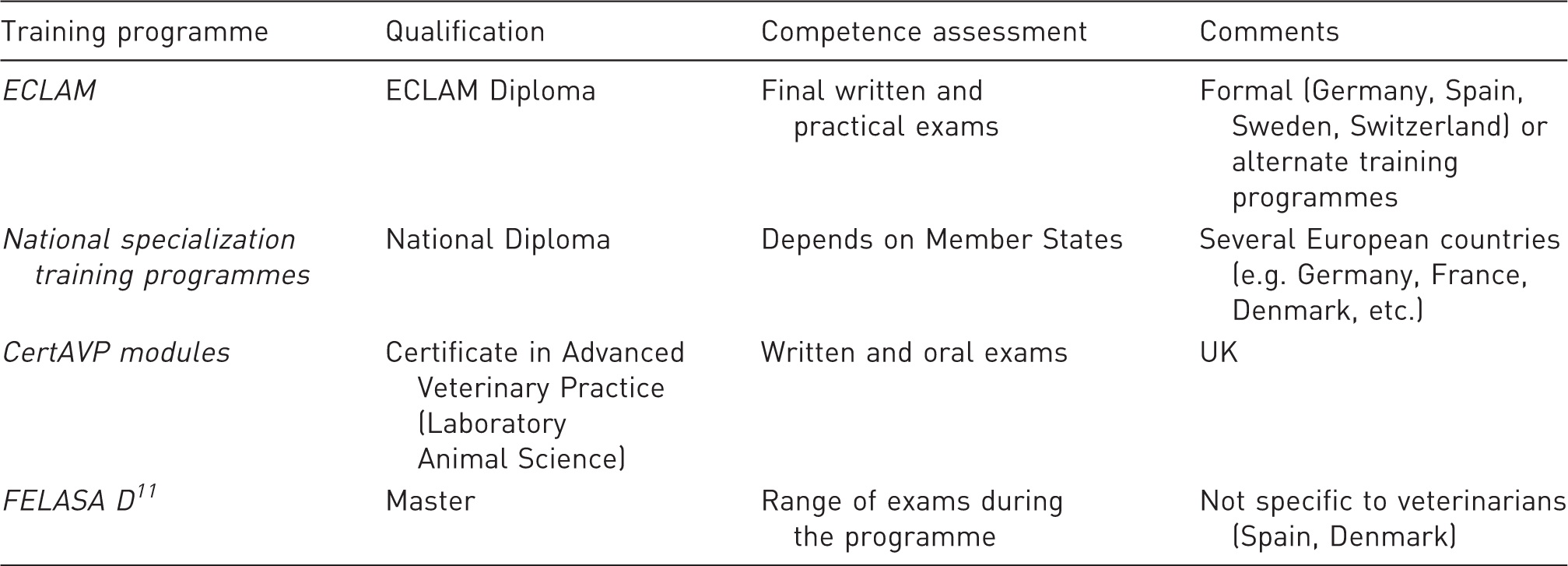
Introductory training opportunities in laboratory animal medicine exist in Europe although they are not widely available (e.g. Royal College of Veterinary Surgeons (RCVS)-recognized NVS course in the UK, http://www.rcvs.org.uk). Other training courses that do not lead to a formal qualification but address specific topics of laboratory animal medicine and science are available online or through direct attendance.
Recommendations for the training and education of the DV
DVs should have a minimum set of recognized core competences in laboratory animal medicine and science enabling them to adequately perform their roles and fulfil their responsibilities under the Directive. The endorsed document on the ‘Development of a Common Education and Training Framework to Fulfil the Requirements under the Directive’
12
offers guidance on this topic. These competences should at least cover:
European and National laws and regulations which are relevant to laboratory animals and to the role of the DV. Ethics, animal welfare and 3R considerations applicable to laboratory animals and the role of the DV; justifying the importance of good animal health and welfare and recognizing the relationship between health and welfare and scientific validity; identifying criteria used in making a harm–benefit analysis and being able to apply them; identifying the role of the DV in advising on choice of animal model and model refinement. Principles of the management of a programme of veterinary care, including husbandry, disease, surgery, anaesthesia and pain, and clinical assessment that are applicable to laboratory animals. Concepts in the design of scientific procedures and research projects; defining strategies for effective communication and explaining how these promote animal welfare and good science; seizing and reviewing opportunities to gather further veterinary information in laboratory animal medicine and science.
Training leading to minimum core competences for the DV should be taken prior to, or when this is not possible, within a year of taking up a role as a DV. A modular approach to this training would be beneficial because it would enable a degree of customization in function of the minimum core competences needed, and because it would facilitate accessibility prior to starting an assignment as a DV.
Opportunities for gaining minimum core competences should be made widely available to veterinarians throughout Europe. In this regard, the establishment of distance learning courses (e.g. webinars, e-learning) should be encouraged and supported. The training courses need not lead to a formal qualification; however, the acquisition of competences should be verified by an exam and records of successful completion of the training course should be maintained. To promote the mobility of DVs across Europe, introductory training courses should be designed according to learning outcomes that are defined and regularly reviewed by a European veterinary body composed of experts in the laboratory animal medicine and science field, and are mutually approved by the European Member States. ESLAV and ECLAM are well recognized professional associations with expertise in this field and could therefore take a role in this framework.
Depending on the size, purpose and complexity of the establishment, and also according to the needs of the veterinarian, further competences could then be gained. This will certainly allow the veterinarian to gain respect from colleagues working at their establishment and to perform their role with authority.
Veterinarians who provide input and advice to the ethical review of project proposals should have sufficient knowledge and expertise in the following areas: (i) competences in laboratory animal medicine regarding the species involved; (ii) knowledge about the models and procedures to be used in projects, and how these may impact on animal well-being; (iii) a sound understanding of the concept of harm/benefit analysis and of the assessment of severity; (iv) expertise on sourcing animals (including breeding and quality aspects such as genetics and microbiological quality and standardization) and their husbandry and care; (v) how any deviations from the standards in Annex III of Directive 2010/63/EU (for scientific reasons) would impact animal welfare and study outcome; (vi) application of the principles of the 3Rs based on contemporary best practices; and (vii) a sound understanding of experimental design and procedures resulting from experience as a researcher. In-depth specific training in these topics would therefore be helpful.
The quality of any training programme depends on the competence of those engaged in the establishment of training standards and in the delivery of the training. The assessment of competences requires additional training that is typically not part of the veterinary undergraduate training programmes. It is recommended that suitable training on how to assess competences be obtained from academia, online training courses, etc. where needed. LAVs should be able to demonstrate personal competences in these training topics.
Proposed training framework for a tiered approach to professional development
A tiered approach to postgraduate veterinary training in laboratory animal medicine and science offers a professional and career development pathway that can be combined with jobs of increasing complexity and responsibilities (Figure 1).11,13 For instance, a veterinarian that is relatively new to the field could enrol in a training programme leading to a mid-tier level qualification such as a Master or a Certificate in Laboratory Animal Science. As their career develops, a higher laboratory animal medicine and science qualification may be desired for LAVs working at larger establishments where a large variety of species are kept or where the type of work involved at the establishment is particularly complex, or subject to rapid change, or taking on high-level managerial responsibilities. Options for further development to the specialist level include a National Diploma, or an ECLAM Diploma which constitutes the highest European qualification in this field. Diplomates may be particularly well suited to provide advice for the review of complex projects that require in-depth understanding of the importance of good scientific design and the minimization of the occurrence of bias.
Routes for a tiered approach to training and education in laboratory animal medicine and science.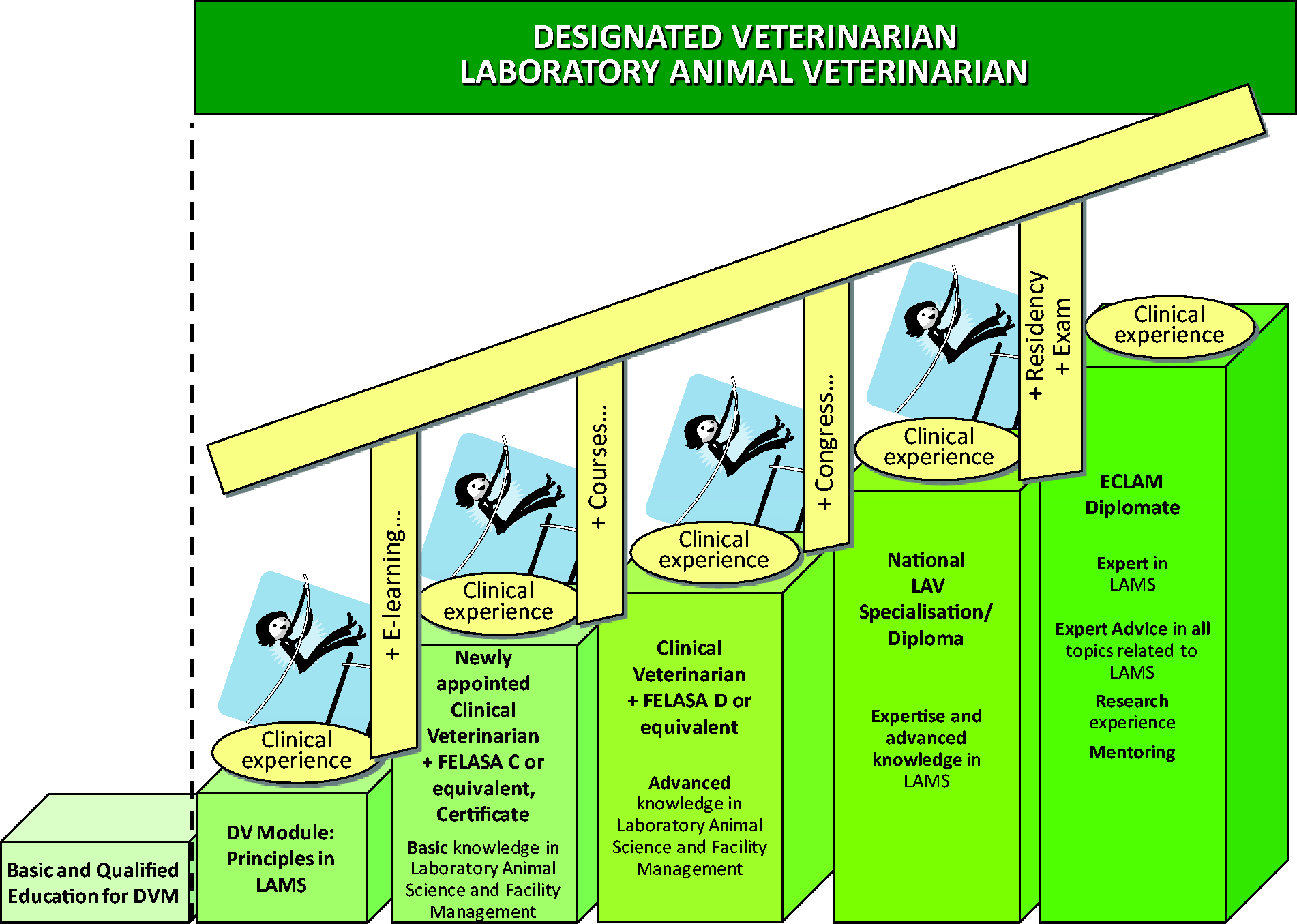
VetCEE 14 is a European accreditation scheme for mid-tier level veterinary postgraduate continuous education programmes addressed to practising veterinarians in different areas of the veterinary profession. It was recently set up as a joint initiative of EAEVE, European Body of Veterinary Specialisation (EBVS, http://www.ebvs.org/), FVE and Union of the European Veterinary Practitioners (UEVP, http://www.fve.org/). Its remit is to promote harmonization of lifelong learning for veterinarians, to ensure quality education at the mid-tier level, and to facilitate mutual recognition of the different training schemes between the different European countries. VetCEE, based on input from experts in the field, could provide the basis for a harmonized approach to veterinary continuing education in laboratory animal medicine and science in Europe between the DV minimum level as defined above and the ECLAM Diplomate level.
Continuing professional development of laboratory animal veterinarians
Veterinarians should take part in continuing professional development (CPD) in order to maintain and develop the level of knowledge and skills relevant to their work. Advanced training opportunities discussed above represent a formal conduit to ensure CPD. However, CPD can also be gained through attendance and/or participation in scientific meetings organized by professional veterinary organizations.
The online survey conducted by ESLAV and ECLAM between April and June 2012 revealed that 90% of responders had access to CPD in their current position and expressed a strong interest in taking part in CPD on various topics to gain in-depth knowledge. However, it also showed that budget constraints were seen as the main hurdle in receiving CPD.
It is important that employers recognize the need for CPD of LAVs as the acquired skills and knowledge will certainly be beneficial to the establishment. Therefore they should allow not only sufficient time but also the means to participate in CPD. When working as a consultant, the DV should take personal responsibility for ensuring they gain relevant CPD.
Conclusion
DVs together with LAVs play an important role in ensuring high standards for the care and use of laboratory animals. The field of laboratory animal medicine and science is currently not systematically and consistently included in the veterinary curriculum in Europe, and additional postgraduate training is likely to be needed to ensure that adequate competences are acquired. A basic task-specific DV module should be developed on the basis of learning outcomes that are mutually recognized across Europe to ensure that DVs have minimum core competences to assume their role and responsibilities under the Directive. Competences should be ideally acquired prior to, or at least within 12 months of taking up an assignment. Further training and education in laboratory animal medicine and science should be gained as part of continuing professional education, could be part of a tiered approach towards higher qualifications and would benefit both the institution and the career development framework of the LAV.
Footnotes
Declaration of conflicting interest
The authors declare that there is no conflict of interest.
Funding
The cost of publishing the colour figure has been paid by the following organizations: ESLAV, ECLAM, LAVA and EVERI.