




Abstract
This article reports on trends in organized violence, building on new data from the Uppsala Conflict Data Program (UCDP). In 2022, fatalities from organized violence increased by a staggering 97%, compared to the previous year, from 120,000 in 2021 to 237,000 in 2022, making 2022 the deadliest year since the Rwandan genocide in 1994. The increase was driven by two, particularly deadly, state-based armed conflicts: the Russia–Ukraine war, and the war in Ethiopia against TPLF (Tigray People’s Liberation Front). With more than 81,500 and 101,000 fatalities respectively, these are the two most deadly state-based conflict-years recorded in the post-1989 period. The Russian invasion of Ukraine is the first large-scale interstate war in 20 years, and the first interstate armed conflict since World War II where a major power in the international system seeks both territorial gains for itself and the subjugation of another state through regime change. We have witnessed an emerging trend of increased conflict between states in the last decade, including cases where major powers support opposite sides in internationalized intrastate conflict. UCDP recorded 55 active state-based armed conflicts in 2022, an increase of one compared to the previous year. Eight of these conflicts reached the level of war. While the fatalities caused by non-state conflict decreased somewhat when compared to 2021, the number of non-state conflicts, as well as both the number of civilians killed in one-sided violence and the number of actors carrying out such violence, increased in 2022.
Organized violence 1989–2022 1
In 2022, the number of fatalities in organized violence saw a continuation of the steep increase recorded since 2020. Figure 1 shows that total fatalities in organized violence increased by a staggering 97%, compared to the previous year, from 120,000 in 2021 to 237,000 in 2022. 2022 was thus the most violent year recorded since the Rwandan genocide in 1994, with almost three times the number of fatalities since the numbers started to climb in 2019. The increase in 2022, just as in 2021, was mainly due to a small number of very deadly state-based conflicts, in particular the Ethiopian intrastate conflict over government and the Russia–Ukraine interstate conflict. In the context of both these conflicts, significant one-sided violence targeting civilians has also occurred, mainly perpetrated by the Ethiopian, Eritrean, and Russian governments. Together, one-sided violence in Ethiopia and Ukraine constituted about one-quarter Organized violence by type of violence, 1989–2022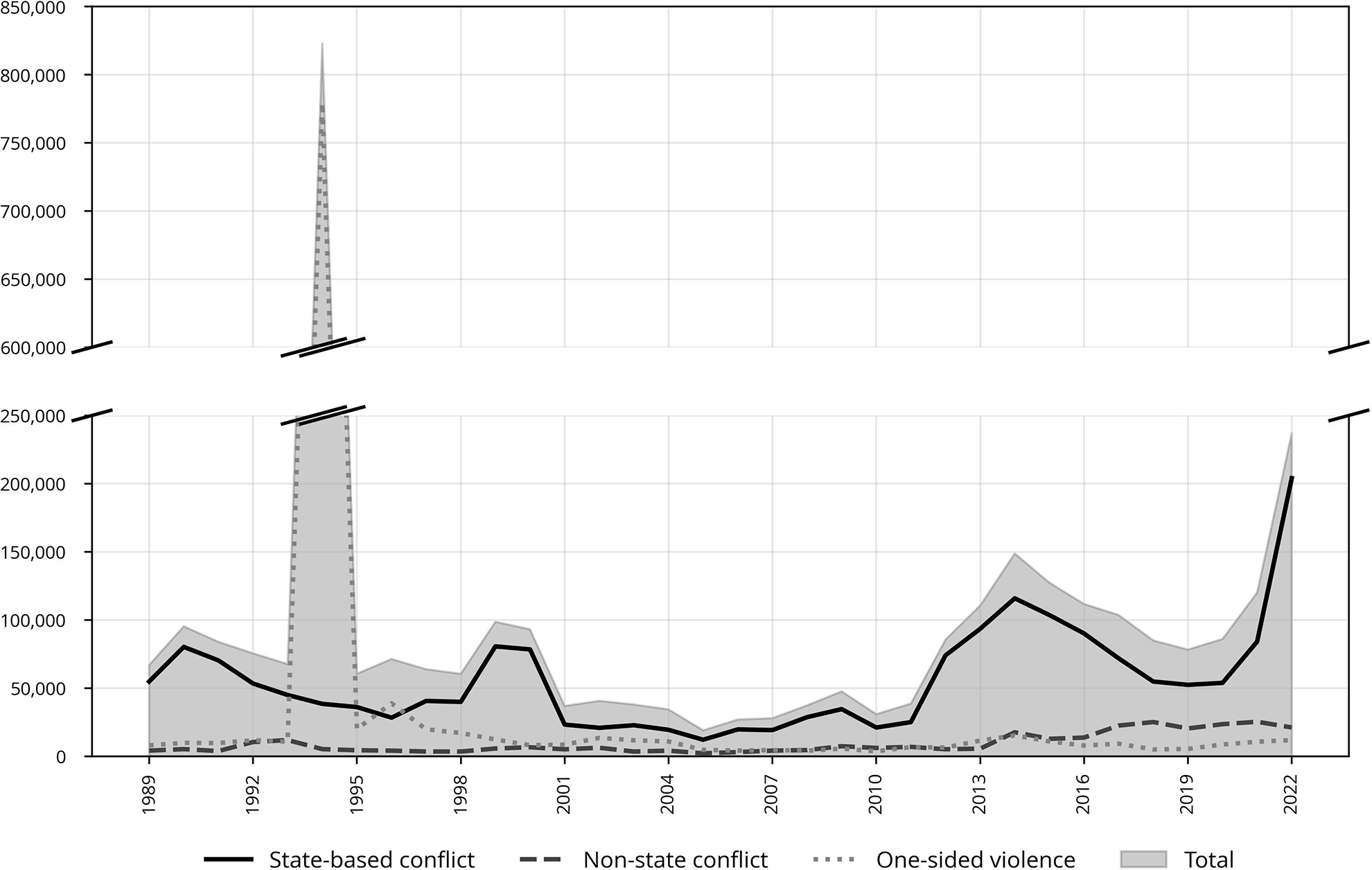
While fatalities increased in both the state-based and one-sided categories of violence, non-state fatalities decreased. The number of state-based and non-state conflicts, as well as the number of actors perpetrating one-sided violence, increased in 2022 compared to 2021. On a positive note, violence in Asia and the Middle East decreased in 2022, as the two most violent conflicts in 2021, the conflicts over government in Yemen and Afghanistan, saw significant de-escalation. With only around 6,000 fatalities each in 2022, Asia and the Middle East have gone from being the most violent regions in 2021, to the least violent regions in 2022, contributing to considerable changes in the geographical pattern of violence in 2022 compared to previous years.
The first section of this article presents recent trends in the three types of organized violence, focusing particularly on events in 2022. The second section focuses on several recent trends which point to increased tension between states in the international system, including the first interstate war in 20 years and a rising number of cases of external states granting secondary warring support to non-state actors fighting against governments.
State-based armed conflict
Fatalities in state-based armed conflicts increased markedly from 2021, reaching the highest levels recorded by the UCDP in the post-1989 period. In total, UCDP recorded over 200,000 battle-related deaths in 2022, more than double the 84,000 recorded in 2021. This means that the death toll in state-based conflicts has almost quadrupled since 2020, when we recorded 54,000 battle-related deaths. This increase occurred despite considerable de-escalation in the two most deadly conflicts in 2021, the conflicts over government in Afghanistan and Yemen. Two conflicts, the interstate conflict between Russia and Ukraine and the conflict over government in Ethiopia, were responsible for about 89% of all recorded battle-related deaths in 2022, with more than 81,500 and 101,000 fatalities, respectively. Despite significant difficulty related to the systematic collection of information on specific lethal events in both Ukraine and Ethiopia in 2022, the two Fatalities in state-based conflicts by region, 1989–2022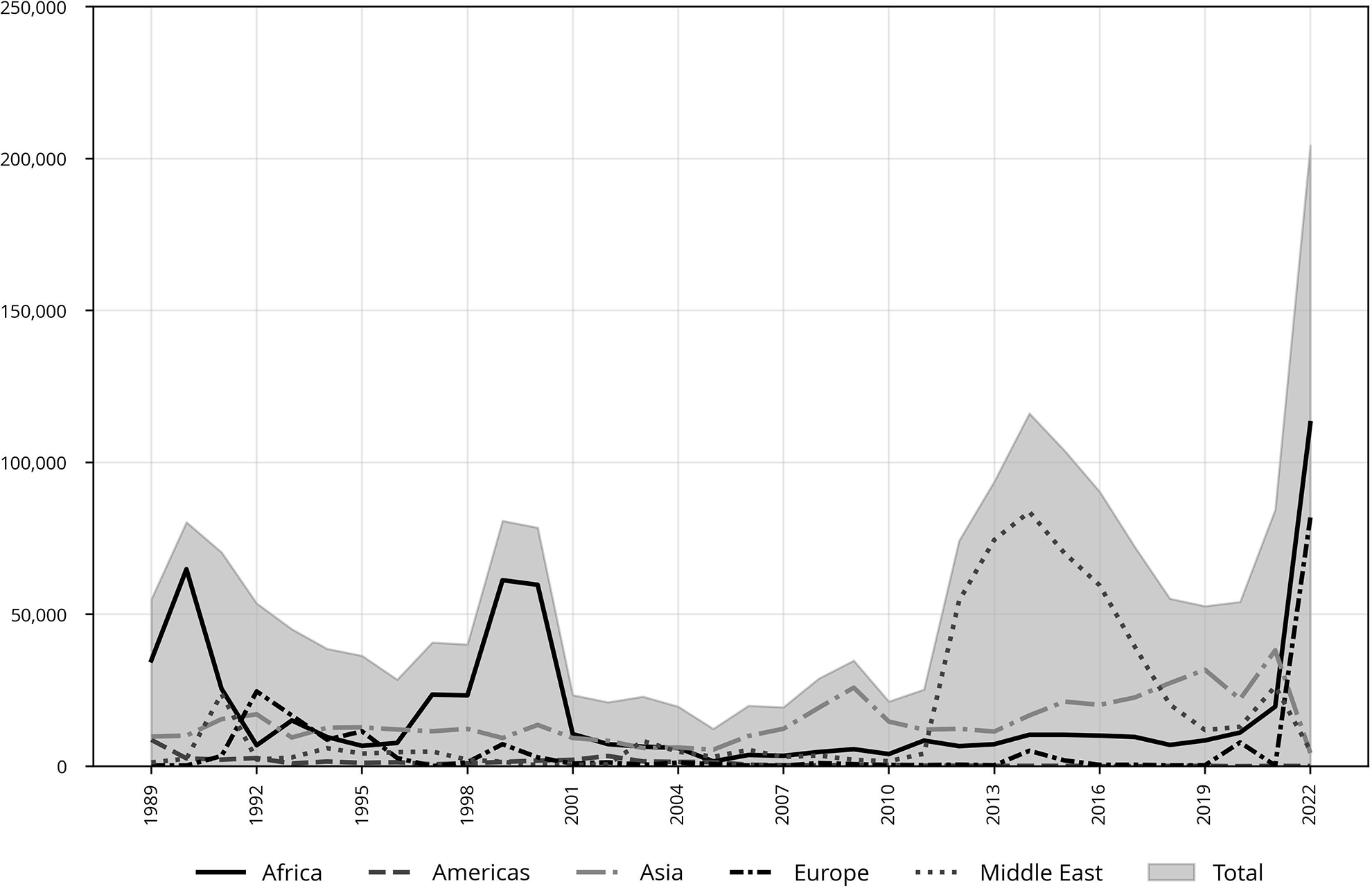
The increase in battle-related deaths corresponded to an increase in both the number of state-based armed conflicts, from 54 in 2021 to 55 in 2022, and in the number of conflicts that reached the intensity level of war, meaning that they caused at least 1,000 battle-related deaths during the year. The number of state-based armed conflicts has remained at a historically high level since 2015, with 52–56 state-based armed conflicts recorded annually. This can be compared to the 31–39 annual conflicts recorded between 2000 and 2013. In 2022, UCDP recorded eight wars, an increase by three from 2021, and the same number as was recorded in 2020. 3
As seen in Figure 2, violence drastically increased in both Africa and Europe, in particular due to the wars in Ethiopia and Ukraine. The conflict over government in Ethiopia between the Ethiopian government, supported by Eritrea, and the former ruling party TPLF (Tigray People’s Liberation Front), broke out in late 2020. After the TPLF nearly succeeded in reaching the capital, Addis Ababa, during the autumn of 2021, a government counter-offensive drove TPLF back. While the conflict had been brutal even before the re-eruption of fighting in late August 2022, after close to eight months of relative calm, the last phase of the conflict reached levels of violence not seen earlier in the war.
An estimated 750,000 troops were involved, and much of the fighting was conducted as a bloody infantry war on several fronts, with both sides accused of using recently recruited fighters as cannon fodder, launching human wave attacks through mined areas towards enemy trenches. Resembling WW1 fighting, this type of warfare causes massive death tolls, and it is estimated that at least 100,000 fighters were killed on the battlefield between late August and the signing of the cessation of hostilities agreement on 2 November, making it the deadliest state-based conflict-year ever recorded by the UCDP since events-based data collection began in 1989.
Out of the six wars, other than those in Ethiopia and Ukraine, that were active in 2022, four saw significant escalation, whereas two, the Islamic State conflict in Nigeria and the conflict over government in Yemen, de-escalated. Of the four that escalated, three – the conflicts between the Somali government and Al-Shabaab, and the Burkinabe and Malian governments and JNIM (Jamaat Nusrat al-Islam wal-Muslimin) – were located in Africa, whereas the fourth was the conflict over government in Myanmar. Africa remained the continent with the highest number of state-based armed conflicts, as it has for several years. Contrary to the trend in recent years, the increase was not due to the expansion of IS (Islamic State), which was active in one less conflict in 2022 compared to 2021. 4 Instead, the al-Qaida-aligned JNIM was largely responsible for the increase in the number of active state-based armed conflicts in Africa, which increased by one from the previous year to 26.
JNIM has rapidly expanded its presence in neighboring countries since it emerged following a merger of several groups in Mali in 2017, often by exploiting existing grievances among Fulani communities (Merz, 2022). JNIM was involved in 3,000 state-based fatalities in 2022, almost double that of 2021, and was active in five conflicts over government, including two wars. 5 This represents an increase by two new conflicts from 2021, due to an upsurge in activity in Benin and Togo, as the group crossed the border into these countries from positions in Burkina Faso. It marks the first time the government of Benin has been involved as a primary warring party in an active conflict, whereas the government of Togo has previously only been active during one conflict-year in 1986. In Somalia, activity involving Al-Shabaab, another al-Qaida affiliate, has mainly increased due to a more concerted effort by the newly elected government to bring the group to heel.
The increased violence in Europe was due to the Russian invasion of Ukraine. The Russia–Ukraine war is part of a worrying trend of renewed interstate conflicts over territory that have emerged in recent years, which will be discussed further in the final section of the article. Beginning in February 2022, the invasion superseded the intrastate conflict between the Russian-backed militias of DPR (Donetsk People’s Republic) and LPR (Luhansk People’s Republic) in eastern Ukraine and the Ukrainian government, which had been ongoing since the Russian covert invasion and annexation of Crimea in 2014. The intrastate conflict in Ukraine had seen low intensity fighting along stable frontlines, with yearly fatality estimates in the low hundreds since the signing of the Minsk II protocols in early 2015. Resulting in what should be considered a conservative number of over 81,500 battle-related fatalities in 2022, the invasion sparked the most violent conflict-year recorded in Europe, and became the second most deadly state-based conflict-year on record. 6 After Russia abandoned its northern axis of attack towards Kyiv in March 2022, fatalities have been heavily concentrated in relatively static frontlines in the Donbass region in southeastern Ukraine, with the cities of Mariupol and Bakhmut, both in Donetsk oblast, seeing the highest fatality numbers.
Figure 2 shows that whereas the Middle East and Asia were the regions that largely drove the trend of fatalities in state-based armed conflicts between 2005 and 2021, violence significantly shifted away from these regions in 2022. The decreased violence in the Middle East was mainly due to a ceasefire that lasted between April and October between the main warring parties in the conflict over government in Yemen, which in 2021 had seen its most deadly year to date. For Asia, the decrease was largely due to the Taliban victory in the conflict over government in Afghanistan in August 2021. Despite continued activity by anti-Taliban forces, the fatalities in the governmental conflict fell from a record high post-1989 of 35,000 in 2021, to below the threshold for war in 2022 for the first time since 2004. The State-based armed conflict by type, 1946–2022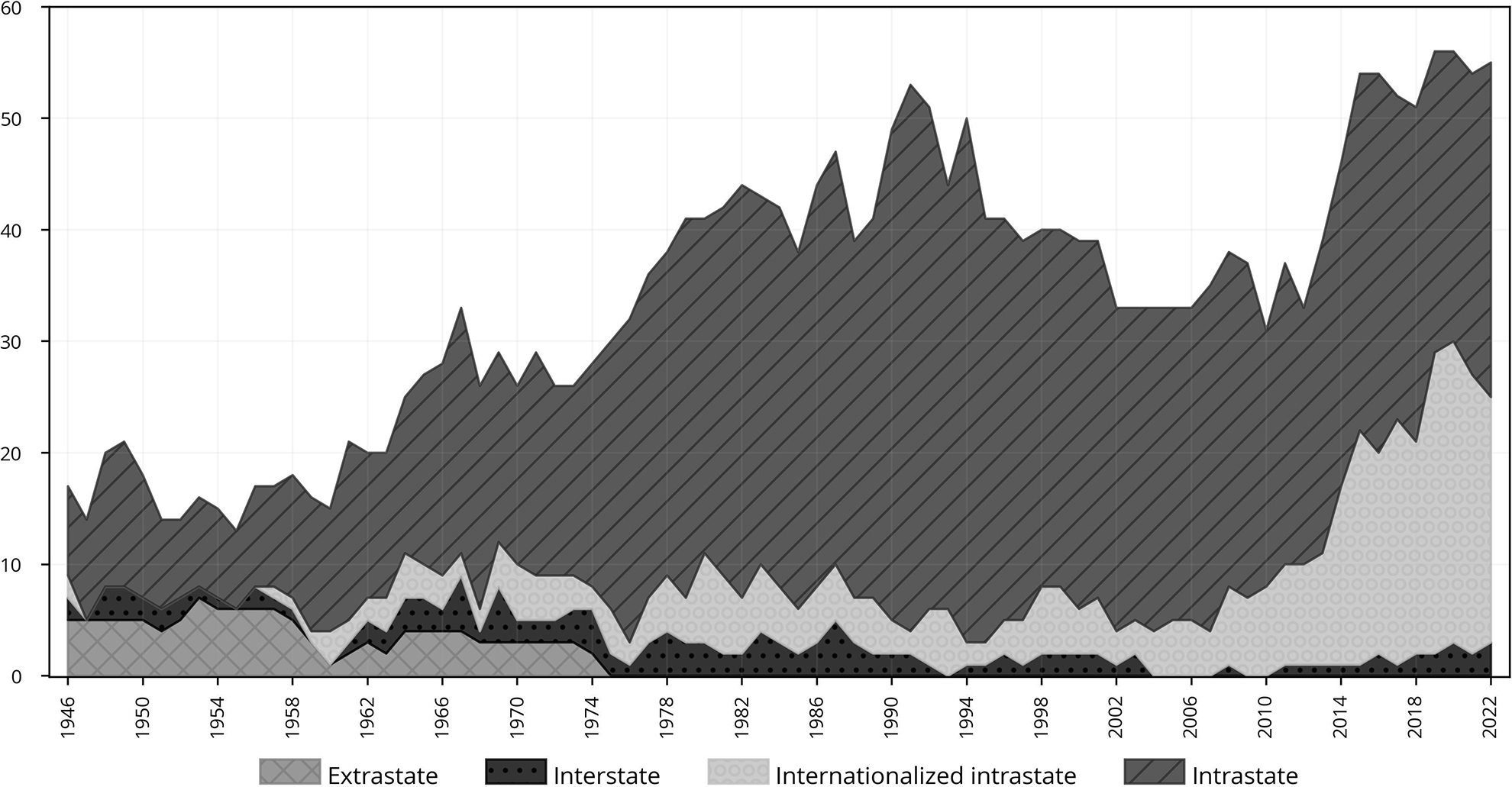
Figure 3 shows that internationalized intrastate conflicts, data on which have been collected since 1946, has been decreasing in recent years, though they remain at historically high levels. Twenty-two such conflicts, where one or both parties to an intrastate conflict receive troop support from an external state, were recorded in 2022, a decrease by three since 2021, and down from the peak of 27 during 2020 and 2019. The first time UCDP recorded more than ten internationalized conflicts in a year was in 2014, and the prevalence of such conflicts has remained high since. This trend has largely been driven by efforts by the United States and its European allies to combat transnational jihadist groups, most notably IS. The degradation of IS, coupled with the shifting attention of these governments from terrorism towards interstate conflicts, specifically increasingly adversarial relations with Russia and China, has led to what appear to be the early signs of a declining trend in the number of internationalized intrastate conflicts. The effect these adversarial relations are having on trends in armed conflict, in particular on rising trends in interstate conflict and secondary warring support for non-state actors fighting governments, will be discussed further in the final section of the article. Western engagement against transnational jihadist groups is set to decrease further given French withdrawals in 2022 from Mali, and its February 2023 withdrawal from Burkina Faso.
Non-state conflicts
UCDP registered 82 non-state conflicts globally in 2022. While the number of active conflicts increased from 76 in 2021, the fatalities caused by these conflicts decreased from more than 25,000 in 2021 to at least 21,100 in 2022. Yet, 2022 was one of the five most deadly years in non-state conflict since 1989, and the past nine years have witnessed unprecedented levels of non-state violence, as shown in Figure 4. Violence in Mexico and Syria has been driving this trend.
Only one of the ten most deadly non-state conflicts in 2022 occurred outside of Mexico, the conflict between IS and SDF (Syrian Democratic Forces) in Syria, which is where the bulk of fatalities in non-state conflicts were incurred in the mid-2010s. Non-state violence in Syria has decreased to comparatively low levels since, though non-state violence involving IS increased to 1,500 deaths worldwide in 2022, more than double the 700 fatalities it was involved in the previous year. Most of this increase stems from IS operating in many areas with weak state presence, where it has increasingly engaged in fighting other non-state actors, while being involved in less state-based violence. Non-state violence increased particularly in Mali, where the French withdrawal has allowed IS more operational freedom, allowing it to focus its Fatalities in non-state conflict by type of organization, 1989–2022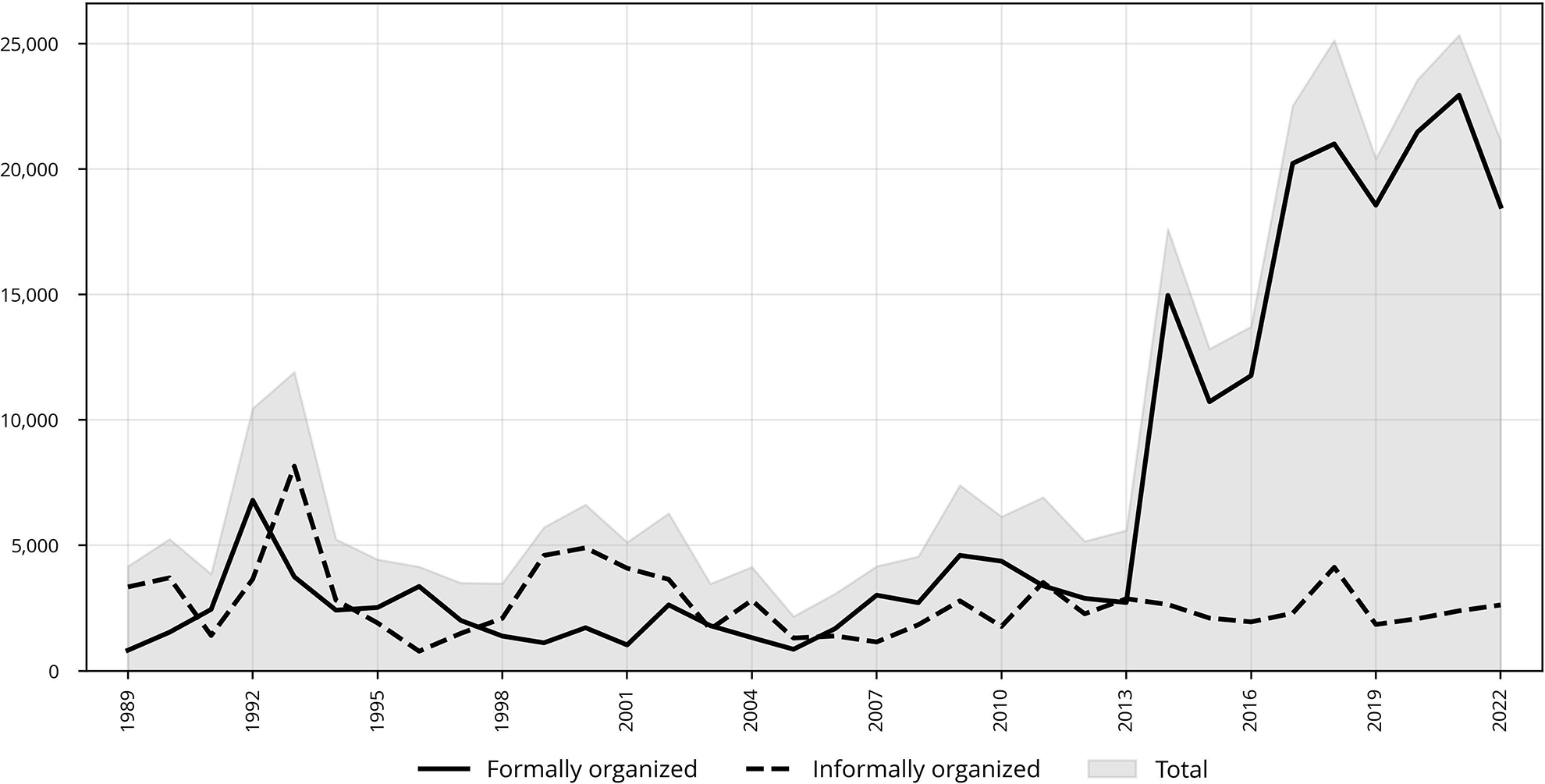
Of the nine high-intensity non-state conflicts in Mexico, CJNG (Jalisco Cartel New Generation) was involved in seven, including the deadliest non-state conflict last year, which pitted CJNG against the Sinaloa Cartel. The CJNG originally emerged as a splinter from the Sinaloa Cartel, and the two have since endured a bloody fight to control drug trafficking across Mexico. In 2022, the conflict took place in 15 Mexican states. Moreover, their rivalry has expanded well beyond the country’s borders in recent years, as they have gained influence in Colombia and support opposing gangs in Ecuador. In total, CJNG was active in ten different non-state conflicts in 2022, resulting in over 11,000 deaths.
In general, non-state conflicts are less lethal than state-based armed conflicts. States generally have access to more resources and weaponry, and better training, making their battles deadlier. Likewise, non-state conflicts between formally organized groups, such as rebel groups or criminal gangs, can be expected to result in more severe encounters than conflicts between informally organized groups, 7 such as communal groups or supporters of different political parties, which tend to have access to fewer resources and weaker command structures.
Figure 4 reveals that until 2013, these two types of non-state conflicts caused roughly similar numbers of deaths. In 2014, however, the number of fatalities stemming from fighting between formally organized groups increased rapidly, and this type of non-state conflict has completely dominated the trend ever since. A common denominator of the actors involved in these particularly deadly non-state conflicts is the building of state-like armies, with access to sophisticated weapons and technology, including drones (Braddick, 2022). While fighting between different rebel groups in connection to the wars in Syria initiated the steep rise in the mid-2010s, criminal gangs and cartels in the Americas, particularly in Mexico, drove the trend during the past seven years. Figure 5 separates criminal groups from other formally organized groups, 8 showing how the number of fatalities resulting from gang violence has skyrocketed since 2016.
In addition to Mexico, several other countries in Latin America and the Caribbean region have seen spiraling gang violence in recent years. In Brazil, the main transit point for cocaine transports from America to Europe, Fatalities in non-state conflict between criminal gangs compared to other formally organized groups, 1989–2022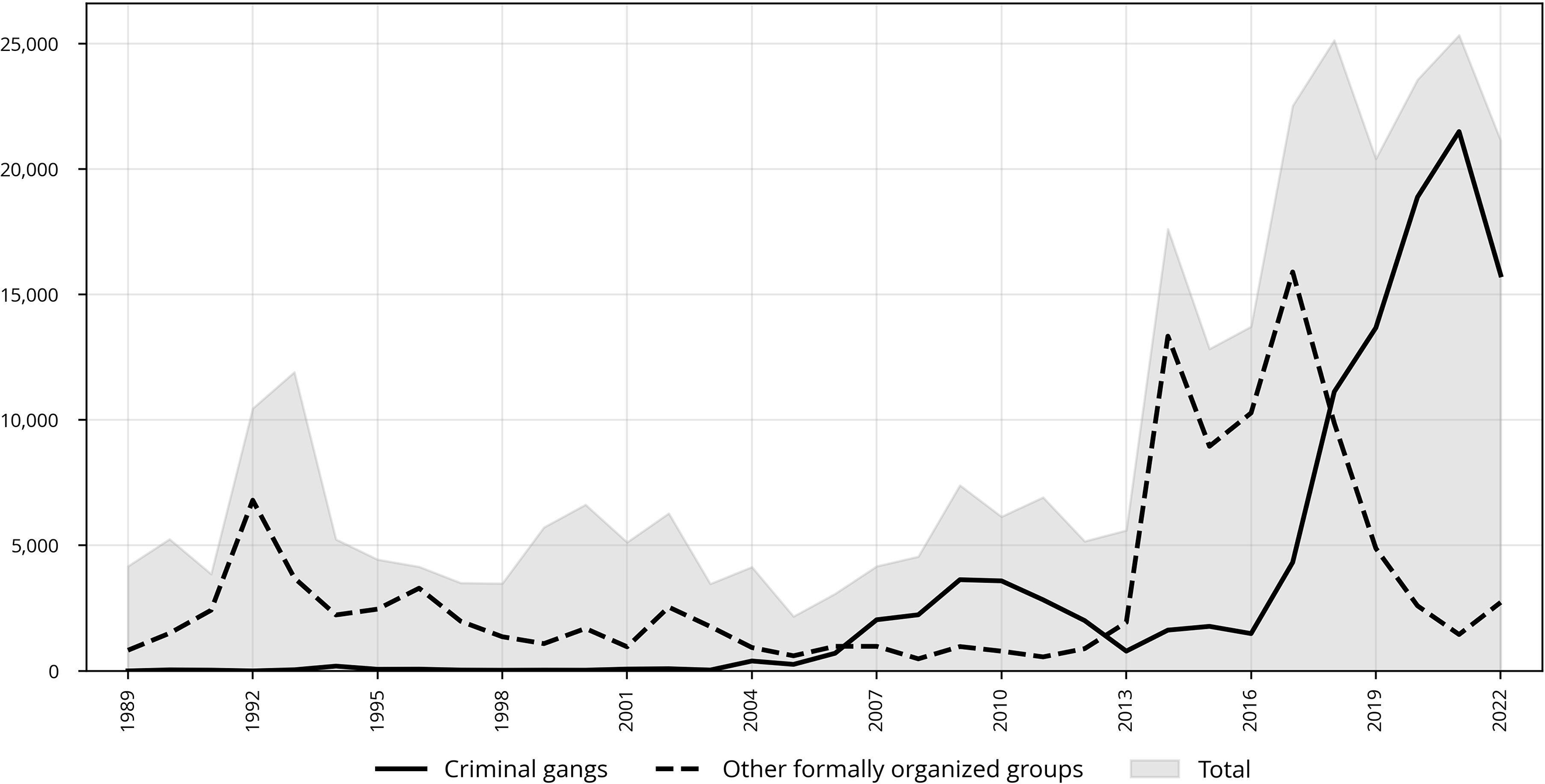
In Haiti, gangs teamed up in bigger coalitions in 2020, and have since been expanding aggressively in and around the Haitian capital Port-au-Prince. In December 2022, the UN estimated that gangs controlled more than 60% of the city (Lederer, 2022). In both El Salvador and Honduras, states of emergencies were declared during 2022 in response to the gang violence, resulting in rising levels of authoritarianism and accusations of human rights violations (OHCHR, 2023; Palencia, 2023).
One-sided violence
With 45 actors active in one-sided violence, and at least 11,800 civilian fatalities registered in 2022, the trend in one-sided violence continued to increase. In 2021, UCDP registered 42 actors, killing 10,700 civilians in one-sided violence. Figure 6 shows that the number of civilians killed in this type of violence has increased every year since 2018, and the total for 2022 is the highest number recorded since 2014. Africa continued to dominate the trend, with around 70% of both the number of actors and the number of deaths caused by these actors. Violence against civilians in the Democratic Republic of Congo was particularly deadly. UCDP registered at least 3,200 civilian fatalities in one-sided violence in the country in 2022. This surge was caused by a combination of the resurgence of several actors, including M23 (March 23 Movement), as well as groups expanding into new areas.
For the eighth consecutive year, IS was the actor killing most civilians in one-sided violence. With attacks registered in 13 different countries, and more than 3,700 civilian fatalities recorded, the group increased its activity compared to the previous year. Most killings occurred in Ituri and North Kivu in DR Congo, where the government imposed martial law in 2021, in an attempt to increase security in the region (HRW, 2021). However, reprisal attacks and massacres of civilians have continued unabated, and even intensified during 2022. The largest increase occurred in Mali, however, where IS killed almost 900 civilians, up from less than 100 in 2021. IS also stepped up its attacks on civilians, primarily Shia Muslims and Hazaras, in Afghanistan following the Taliban takeover in August 2021.
Figure 6 shows that non-state actors have been responsible for most one-sided killings during the past decade. However, there has been an uptick in state-on-civilian violence since 2019 and the second most deadly actor in 2022 was the government of Russia, responsible for widespread atrocities in connection to the invasion, and occupation, of territories in Ukraine. Russian forces directly and intentionally targeted more than 1,100 Fatalities in one-sided violence by type of actor, 1989–2022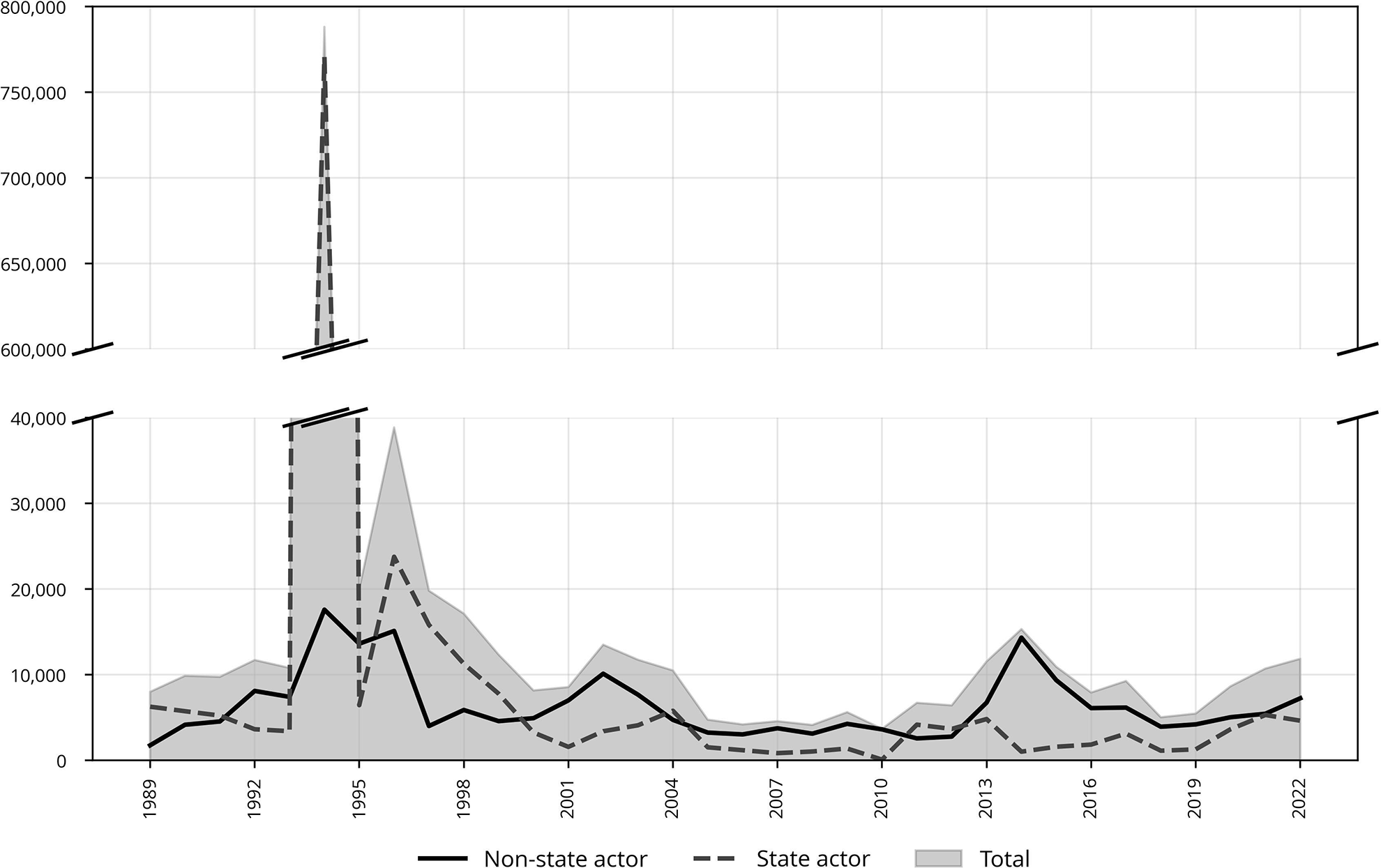
It is important to point out that one-sided violence does not include civilians killed in crossfire, or in indiscriminate types of warfare, such as shelling and airstrikes, which commonly cause heavy casualties among the civilian population during armed conflict. Rather, fatalities stemming from this type of violence are recorded as part of a state-based armed conflict. For example, in the war between Russia and Ukraine, more than 37,000 civilians and individuals of unknown identity have been killed as part of the state-based conflict (see above), including at least 26,750 in Mariupol. 10 Heavy use of artillery shelling and missiles by both Ukraine and Russia frequently result in civilian losses. During the first months of the war, Russian shelling and airstrikes caused an overwhelming majority of the civilian deaths in Ukraine, including most of the victims of the siege of Mariupol. However, the second half of the year saw significantly fewer civilians killed as Russia was pushed out of artillery range of major unoccupied cities with significant civilian populations remaining.
Another government using large-scale violence against civilians in a country different from its own was Eritrea in Ethiopia, responsible for more than 1,000 one-sided fatalities in 2022. Pushed out of Tigray the year before, Eritrea and Ethiopia fought their way back into the region in October, the former soon resuming its attacks on civilians. Many attacks took the form of revenge killings against civilians in villages previously controlled by TPLF (Harter, 2023; Kelly & Le, 2023). While the peace agreement signed in early November between Ethiopia and TPLF terminated the fighting between the warring parties, Eritrea did not take part in the peace process, and its atrocities against civilians in Tigray continued during the rest of the year.
2022 also witnessed some large-scale protest movements that resulted in one-sided violence. The most notable example is the countrywide protests against the regime in Iran following the death of Mahsa Ahmini in police custody in September. Ahmini’s death triggered protests against the Islamic Republic of Iran, its religious rule, and the mandatory hijab. While the protests were largely peaceful, the Iranian regime responded with a harsh crackdown on protestors, resulting in at least 340 civilians killed in one-sided violence. 11
Return of international rivalry and conflict between states? 12
The Russian invasion of Ukraine in 2022 is not only the first large-scale interstate war since the 2003 invasion of Iraq, it is also the first interstate armed conflict since World War II where a major power in the international system seeks both territorial gains for itself and the subjugation of another state through regime change. It represents the most blatant challenge to the rules-based world order upheld by US hegemony since Iraq’s attempted annexation of Kuwait. With the US less willing to act as the world’s police, this order has been increasingly challenged during the past decade. A widening array of states has engaged in interstate conflicts, as well as militarily supported non-state actors fighting against governments, challenging the norms of the international order. Increasingly adversarial relations between the USA and its allies and Russia and China risks causing not only increased proxy conflicts between these powers, but will likely open the space for more localized conflicts between states by diverting US attention.
With the invasion of Ukraine, a conflict over both territory and government, 2022 became the third consecutive year in which a new or long latent territorial dispute between states has flared into an armed conflict. Previously, in 2020, the China–India conflict over the Aksai Chin reignited after decades of quiet and in 2021 the Kyrgyzstan–Tajikistan border conflict became active for the first time in UCDP data. Interstate conflicts have been breaking out with increased frequency in recent years, even if they remain a relatively rare occurrence. The first three years of the 2020s have already had eight active interstate conflict-years, the same number as the entire first decade of the 2000s.
As noted in Davies, Pettersson & Öberg (2022), internationalized intrastate conflict in which external states support non-state actors fighting against governments has increased in the last decade. This constitutes instances of state armies fighting each other outside of interstate conflicts, and 2022 saw a record number of such cases at five. 13 Both 2020 and 2021 had four such cases each year. The entire first decade of the 2000s saw only seven such instances, whilst the 2010s witnessed 22. Just in the first three years of the 2020s, 13 have now been recorded. Increasing incidents of conflicts with two state armies involved against each other are especially concerning, as they carry the potential to be deadlier than other forms of conflict. The average number of battle-deaths per conflict-year is over three times higher compared to intrastate conflicts that are not internationalized.
In an unprecedented threat to the US-led international order, Russia and China have both stated their ambitions to change the existing world order, by ending US hegemony and establishing their own spheres of influence in a multipolar world (Economy, 2014; Kremlin, 2022). The Russian invasion of Ukraine thus takes place in a context of increasing great power rivalry over status and influence (e.g. Brands & Gaddis, 2021; Kotkin, 2022). Historically this kind of positional rivalry has been associated with arms races, the forming of opposing alliances, an increased frequency of militarized disputes and crises, higher levels of more internationalized armed conflict, and more severe humanitarian consequences (e.g. Colaresi, Rasler & Thompson, 2008; Melander, Öberg & Hall, 2009; Tønnesson, 2017).
For example, during the Cold War geopolitical rivalry between the United States, China, and the Soviet Union contributed to make East Asia the most conflict-ridden region globally. From 1946 to 1980, East Asia suffered the majority of all battle-deaths in the world – in some periods, around 90% of all battle-deaths. This number dropped to less than 7% after China turned away from geopolitical competition with the USA and toward economic development in 1978–79 (Lacina & Gleditsch, 2005; Tønnesson, 2017). 14 With the end of the Cold War, the geopolitical competition between the Soviet Union and the United States also ended, and battle-deaths in East Asia fell below 3% of total battle-deaths globally.
There has already been an increase in the number of conflicts where Russia and the USA, and other Western powers, support opposite sides, including the Russian intervention in Georgia (2008), in Syria (2014–22), and in Ukraine (2014–22). The increasing great power rivalry has also led to arms races in both Europe and East Asia (SIPRI, 2022; Lendon, 2023), creating a more unstable international system.
Conclusion
The number of fatalities in organized violence increased sharply in 2022, making it the most violent year since the Rwandan genocide in 1994. This increase in deaths occurred despite a significant de-escalation in the two most violent conflicts in 2021, Afghanistan and Yemen. Russia’s invasion of Ukraine, the first large-scale interstate war in 20 years, and the conflict between Ethiopia and TPLF together resulted in over 180,000 deaths. 2022 witnessed a clear regional shift away from Asia and the Middle East to Africa and Europe. In both Ukraine and Ethiopia, the state-based armed conflicts were accompanied by widespread one-sided violence carried out by Russian and Ethiopian and Eritrean forces, respectively. Although the increase in one-sided violence compared to 2021 was minor, we recorded the highest number of fatalities in this type of violence since 2014. In non-state violence, Mexico continued to dominate the trend, with only one of the ten most deadly conflicts in 2022 occurring outside the country. While the number of fatalities in non-state conflict decreased slightly in 2022, the number of active conflicts increased. In addition to Mexico, several other countries in the Latin America and the Caribbean region have seen spiraling gang violence in recent years, and the number of fatalities resulting from gang violence has skyrocketed since 2016.
Footnotes
Authors’ notes
The data for all three categories included in organized violence go back to 1989; for state-based armed conflict, they extend back to 1946.
Replication data
The complete UCDP datasets updated to 2022, as well as older versions of the datasets, are found at https://ucdp.uu.se/downloads/. The figures in this article were created directly from the Excel sheets at the UCDP web page. Detailed descriptions of the individual cases are found in the UCDP Conflict Encyclopedia at https://ucdp.uu.se/. Replication data and the Online appendix for this article can be found both at https://ucdp.uu.se/downloads/ and  .
.
Acknowledgements
Numerous colleagues in Uppsala have contributed to the data collection, notably, Marcus Andersson, Amber Deniz, Garoun Engström, Tania Estrada, Helena Grusell, Victor Hasslöf, Nanar Hawach, Stina Högbladh, Amanda Löfström, Gabrielle Lövquist, Lotta Themnér, Mert Can Yilmaz, and Herman Wieselgren. Interns Cynthia Abazie, Igor Barrreto, Adrián Estañol, Agnes Holm, Jonas Holmberg, Jonnathan Romero Huertas, Andrea Mularoni, Marco Antonio Paulino and Leticia Souza were also of great help. A special thanks to Margareta Sollenberg and Lotta Themnér who provided helpful comments on earlier versions and to Mert Can Yilmaz for assistance with designing the figures. We also thank the editor and three anonymous reviewers for helpful comments.
Notes
Appendix 1. State-based armed conflicts active in 2022
This list includes all conflicts that exceeded the threshold of 25 battle-related deaths in 2022 and fulfilled the other criteria for inclusion.1 The column ‘Year’ shows the latest range of years in which the conflict has been active without interruption. The start year is found in parentheses in the ‘Incompatibility’ column, which indicates when the armed conflict reached 25 battle-related deaths for the first time. If a conflict has been inactive for more than ten years or if there has been a complete change in the opposition side, the start year refers to the onset of the latest phase of the conflict. The column ‘Intensity in 2022’ displays the aggregated number of battle-related deaths. Thus, if more than one dyad is active in the conflict, the intensity column records their aggregated intensity. Three fatality estimates are given in the table: low, best and high.
Appendix 2. Non-state conflicts active in 2022
This list includes all non-state conflicts that exceeded the minimum threshold of 25 deaths in 2022 and fulfilled the other criteria for inclusion.1 The column ‘Start year’ shows the first year when the non-state conflict caused at least 25 fatalities (since 1989). The column ‘Fatalities in 2022’ displays the number of people killed, in the low, best and high estimate.
Appendix 3. One-sided violence in 2022
This list includes all cases of one-sided violence that exceeded the minimum threshold of 25 fatalities in 2022 and fulfilled the other criteria for inclusion.1 The column ‘Start year’ shows the first year when one-sided violence caused at least 25 fatalities (since 1989). The column ‘Fatalities in 2022’ displays the number of civilians killed, in the low, best and high estimate.