




Abstract
This article reports on trends in organized violence, building on new data by the Uppsala Conflict Data Program (UCDP). The defeat of Islamic State (IS) in Syria and Iraq has pushed the number of fatalities, almost 75,600, to its lowest level since the outbreak of the Syrian civil war in 2011. However, this de-escalation in Syria is countered by increased violence in Africa, as IS and other transnational jihadist groups have relocated their efforts there. Furthermore, violence has continued to increase in Afghanistan; UCDP recorded more than 31,200 fatalities in Afghanistan in 2019, which accounts for 40% of all fatalities from organized violence across the globe. The general decline in fatalities from organized violence does not correspond with the trend in the number of active conflicts, which remained on a historically high level. UCDP recorded 54 state-based conflicts in 2019, including seven wars. Twenty-eight state-based conflicts involved IS (Islamic State), al-Qaida or their affiliates. In the past decade, conflicts involving these transnational jihadist groups have driven many of the trends in organized violence.
Organized violence 1989–2019 1
UCDP data show several significant events for organized violence in 2019. The defeat of Islamic State (IS) in Syria and Iraq has pushed the number of fatalities to its lowest level since the outbreak of the Syrian civil war in 2011, illustrated in Figure 1 and Table I. However, this de-escalation in Syria is countered by increased violence in Africa, as IS and other transnational jihadist groups have relocated their efforts there. Pushing into new territories, and continuing to spread terror with complex suicide attacks, IS still dominated the trend in organized violence, despite being severely weakened by large-scale offensives. Furthermore, violence has continued to increase in Afghanistan, in spite of attempts at negotiating peace, and the country witnessed its bloodiest year since the end of the Soviet intervention in 1989. UCDP recorded more than 31,200 fatalities in Afghanistan in 2019, which accounts for 40% of all fatalities from organized violence across the globe. Table I shows that Afghanistan is the third most conflict-affected country in terms of total fatalities in the 1989–2019 period, after Rwanda and Syria.
The first section of this article presents recent trends in three types of organized violence, focusing particularly on events in 2019 and their impact on the landscape of organized violence. In the second section, we look closer at the recent expansion of transnational groups, such as IS, al-Qaida, and their affiliates.
State-based conflict 1946–2019
In 2019, UCDP recorded 54 active state-based conflicts – the highest number in the post-1946 period – matching the previous peak year of 2016.
2
This is an increase by two compared to 2018. Africa seems to be driving this Fatalities in organized violence by type, 1989–2019 The ten most conflict-affected countries in terms of fatalities, 1989–2019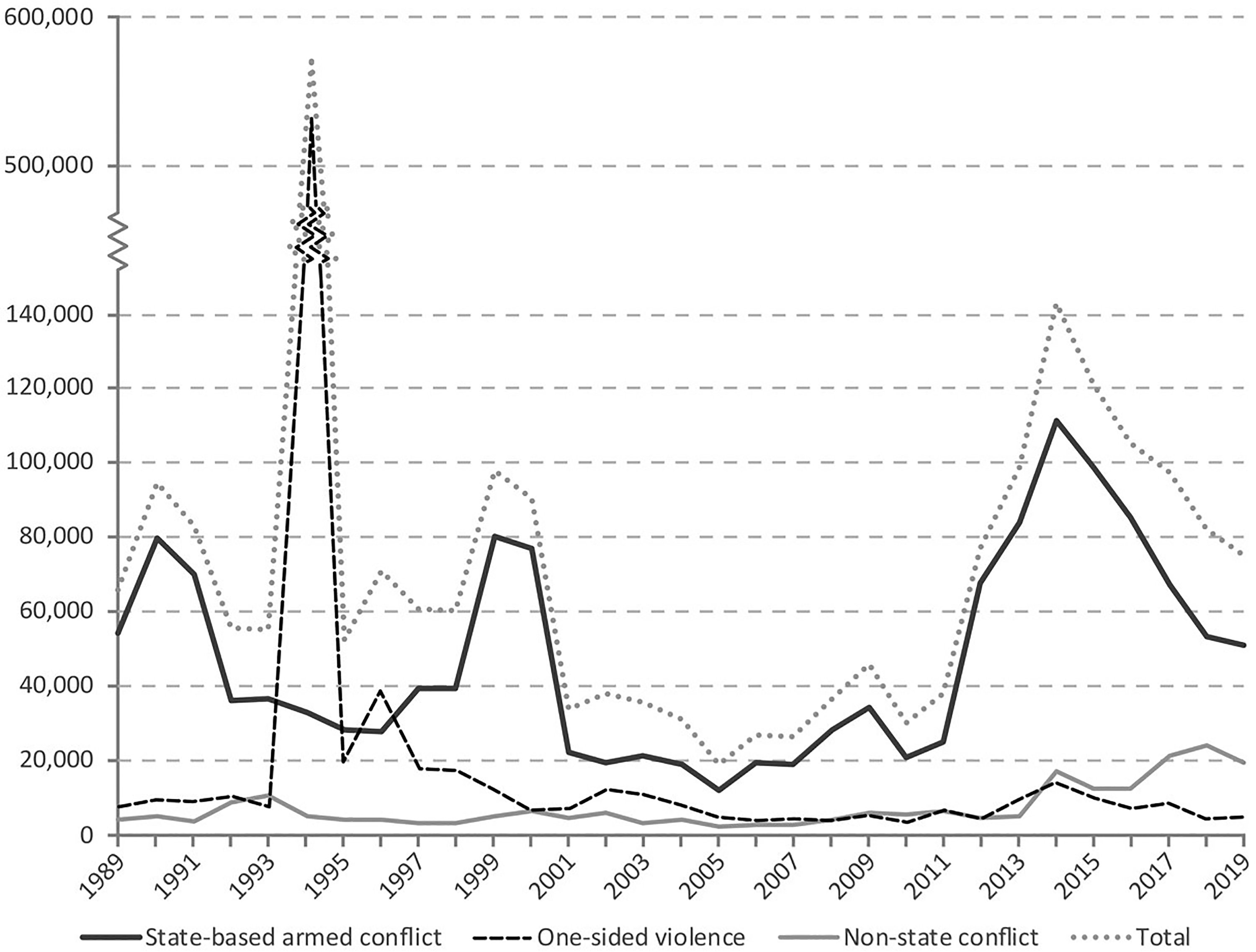
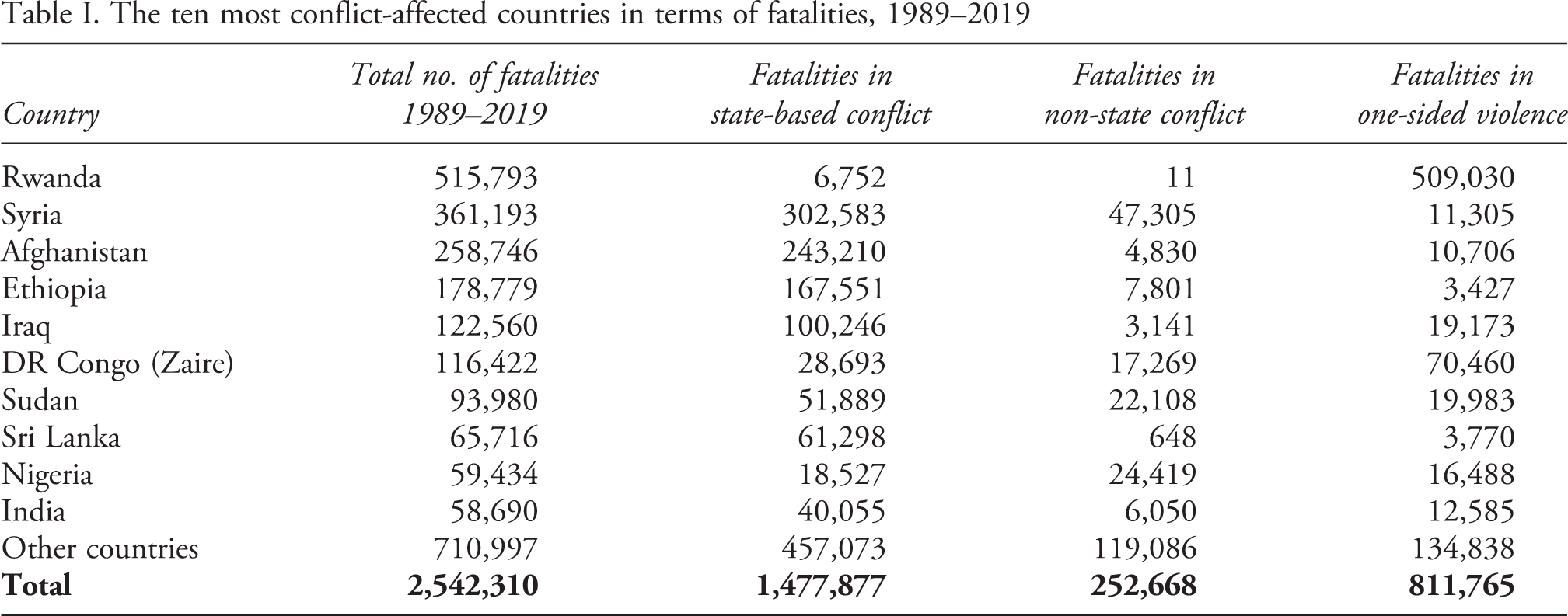
The number of interstate conflicts continued to be low; the two conflicts recorded in 2018 were also active in 2019: Iran–Israel and India–Pakistan. However, Figure 3 shows that the number of intrastate conflicts State-based armed conflict by region, 1946–2019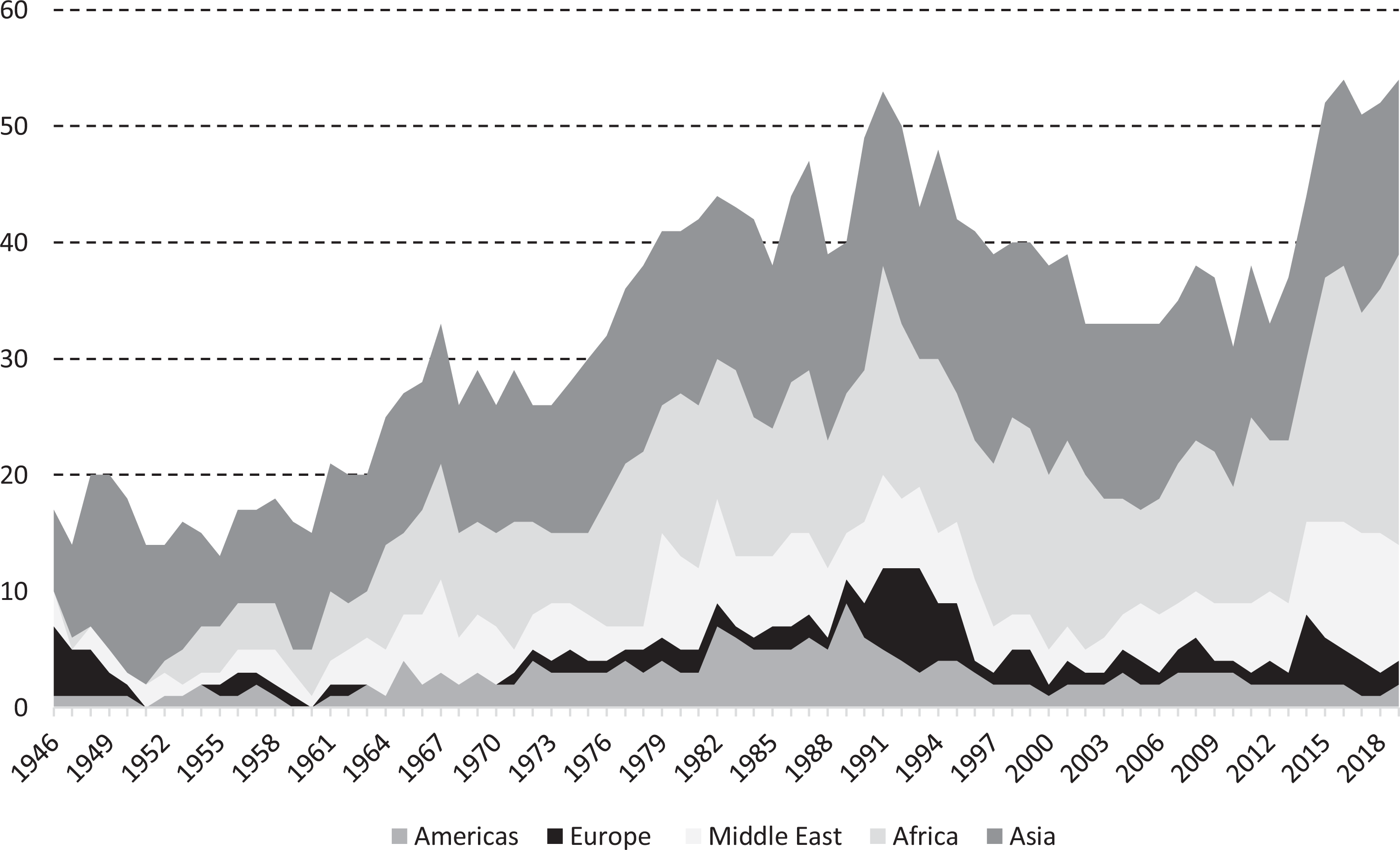
In 2019, seven conflicts reached the intensity level of war, with at least 1,000 battle-related deaths during the year. This is an increase by one from 2018. In two countries – Nigeria (Islamic State) and Libya (government) – violence escalated during 2019, again reaching the level of war after several years of lower levels of violence, whereas one conflict – Syria (Islamic State) – de-escalated, and was not registered as war for the first time since 2013. 5
The de-escalation in Syria contributed to the total number of fatalities reaching its lowest level since 2011; UCDP recorded just over 51,000 fatalities incurred in state-based armed conflict in 2019. Figure 1 shows that this is the fifth consecutive year with falling numbers of battle-related deaths, and the drop since the peak year of 2014 is more than 54%. As in recent years, this is mainly due to the de-escalation in Syria and Iraq, but also in Yemen. Meanwhile, violence escalated in Afghanistan and Libya.
In Syria, two active state-based conflicts
6
caused 7,300 deaths in 2019. Down by almost 4,500 (38%) from 2018, this is the lowest level recorded since the Arab Spring in 2011. IS has been pushed by the Syrian regime from the west, while losing territories east of the Euphrates river to the Kurdish-led alliance SDF (Syrian Democratic Forces) supported by a US-led coalition. In 2019, the final push against IS’s last enclave in Deir Ezzor, resulted in a ‘100% territorial defeat’ being declared by SDF on 23 March (Bali, 2019). Another State-based armed conflict by type, 1946–2019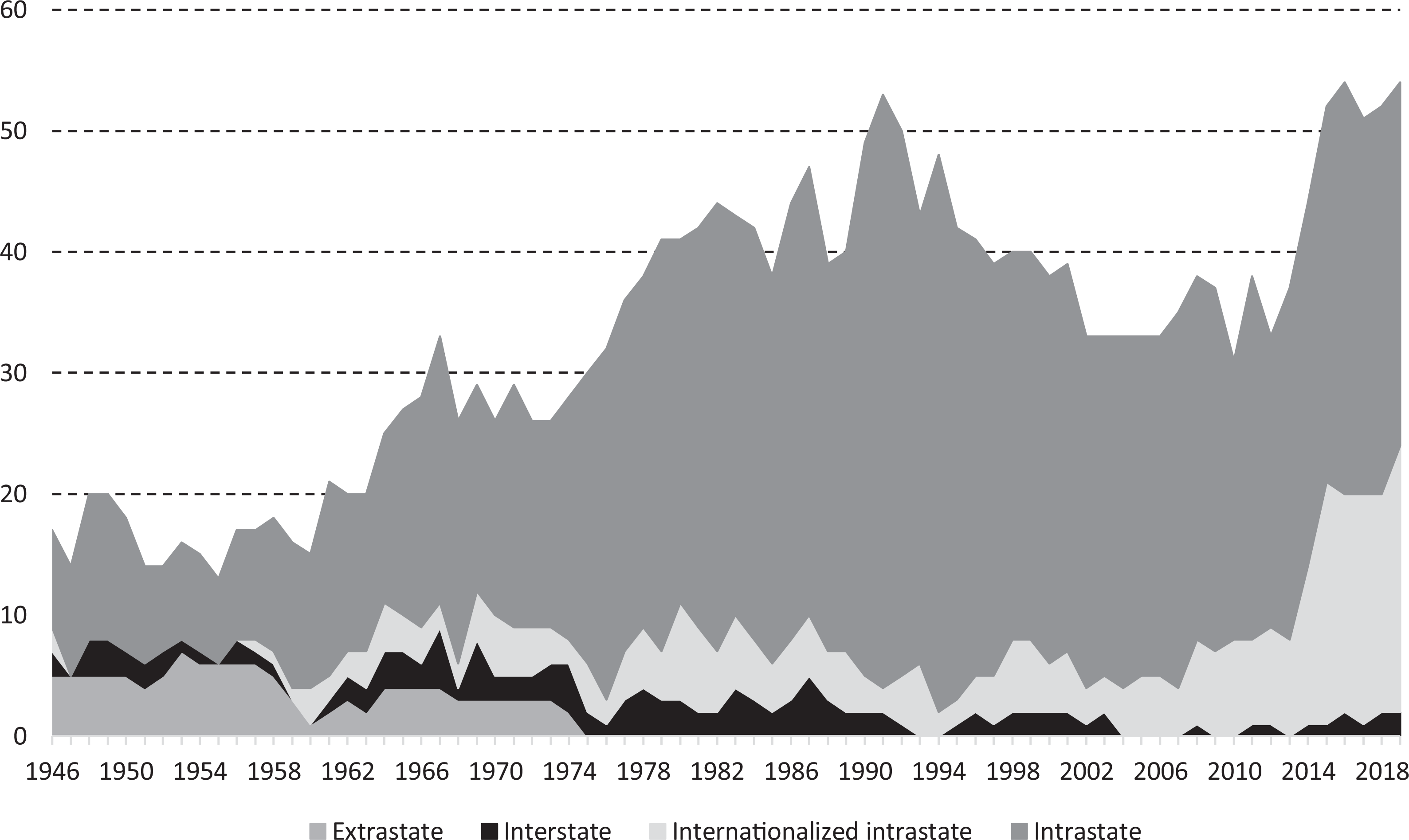
Fighting between the government of Syria and other opposition groups also declined in 2019, in spite of the offensive in Idlib province, pitting the Syrian regime against different al-Qaida linked jihadists and Turkey-backed rebels. Accompanied by extensive Russian airstrikes, the Idlib operation resulted in thousands of civilian casualties and created a severe humanitarian crisis (Berger, 2019).
In Yemen – one of the worst cases of state-based violence in 2018 – battle-related deaths decreased drastically in 2019. 8 This was partly due to the UN-brokered peace talks in Sweden in December 2018. While parts of the Stockholm Agreement have been implemented, others have stalled, raising fears that the agreement will collapse. The Saudi-led coalition conducted fewer airstrikes in 2019 and the number of fatalities due to fighting in and around the city of Hodeida decreased markedly. Despite the de-escalation, the impact on civilians remained disastrous (UN, 2019; BBC, 2020).
For the second consecutive year, Afghanistan was the country hardest hit by state-based violence, despite the peace talks between the Taliban and the USA. In order to strengthen their bargaining power, rebel groups may escalate violent attacks with the start of negotiations (e.g. Bara, 2020). With over 29,900 fatalities recorded in state-based conflict, 2019 was the bloodiest year in Afghanistan since the end of the Soviet intervention in 1989. US airstrikes also increased in intensity in 2019, accidentally killing civilians on at least nine occasions. 9 However, violence involving IS in Afghanistan plummeted during the year. UCDP recorded just over 1,000 battle-related deaths in fighting between the Afghan government and IS, a 62% drop from 2,800 fatalities in 2018. The group has been severely weakened due to offensives launched by both the Afghan government and the Taliban in IS’s stronghold Nangarhar, along the border with Pakistan.
Another case of concern is Libya, where violence intensified during 2019, and the conflict reached the level of war for the first time since 2016. In April 2019, Khalifa Haftar’s forces, loyal to Libya’s eastern-based House of Representatives, launched an offensive against Tripoli and its internationally recognized government. Haftar’s forces met more resistance than anticipated as an array of militia groups joined forces with the government to protect the city. By the end of the year, Fatalities in non-state conflict, 1989–2019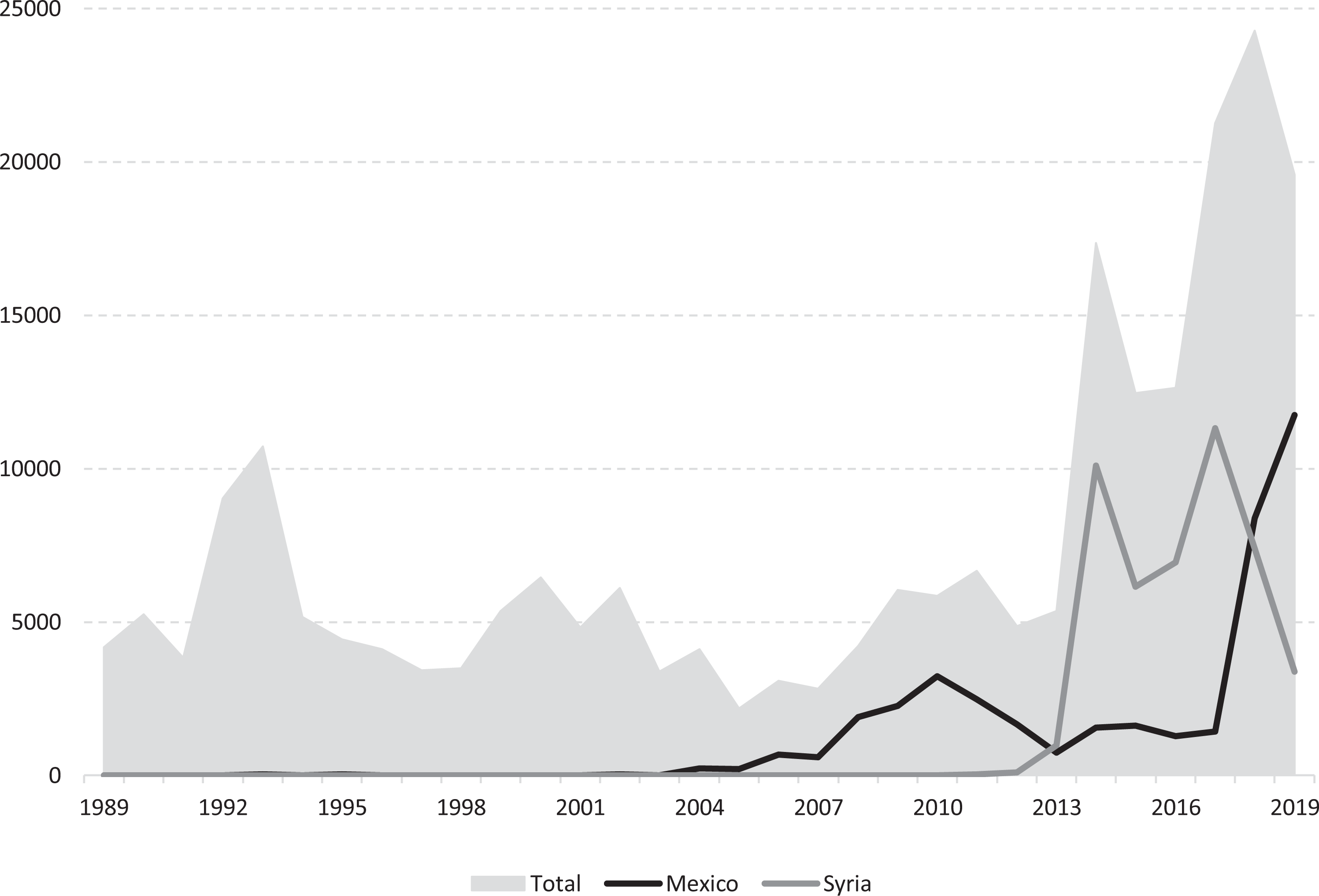
Non-state conflict 1989–2019
Non-state conflict decreased in 2019, both in terms of number of active conflicts and in the number of fatalities directly caused by these conflicts.
Since 1989, UCDP has recorded 763 active non-state conflicts with a yearly average of 41. Higher numbers of non-state conflicts have characterized the years following 2012; during 1989–2011, the yearly average was 31 conflicts in contrast to 70 conflicts on average in the 2012–19 period. In 2019, the number of registered conflicts was 67, a decrease by 13 (16%) from 2018, 10 and the lowest number reported since 2013.
With a drop from 12 conflicts involving 17 different groups in 2018, to five conflicts with five different groups, Syria recorded the most notable reduction in the number of non-state conflicts. In the peak year of 2014, UCDP registered 32 non-state conflicts in Syria. A large share of the non-state conflicts have centered around IS and its rivalries against other opposition groups – the number sky-rocketed in 2014 following IS’s declaration of a world-wide Islamic caliphate – and with the group nearly defeated the number of active conflicts has also diminished. Yet, Figure 4 shows that Syria continued to be one of the countries with the highest number of recorded fatalities in non-state violence, surpassed only by Mexico.
Being the most fatal non-state conflict for several years, IS against SDF de-escalated in 2019. During the first three months of 2019, an SDF offensive, supported by US-led airstrikes and troops, pushed IS from its last strongholds in eastern Syria. The other main non-state conflict cluster in Syria took place in the northern parts of the country, for many years under the control of SDF. After the final push against IS in March, SDF’s dominance in northern and eastern Syria caused Turkey’s concerns to increase. Turkey sees the main component of the SDF as an offshoot of PKK (Kurdistan Worker’s Party), which has fought against the government of Turkey since the 1980s. Following the US announcement in early October that it would reduce the number of troops in northern Syria, Turkey initiated ‘Operation Peace Spring’, pitting the Turkey-backed rebel group SNA (Syria National Army) against SDF. This increased tension between NATO allies Turkey and USA, who supported opposing sides in this non-state conflict. There were also concerns that the offensive against SDF could help IS to regroup, in addition to creating a humanitarian crisis in northern Syria (Cebul, 2019).
Fatalities in one-sided violence by region, 1989–2019
Mexico continues to be one of the countries with the highest number of non-state conflicts. UCDP recorded 11 different non-state conflicts in 2019, making Mexico the country hardest hit for the second consecutive year. Figure 4 shows that UCDP also recorded an increase in the number of fatalities in Mexico, reaching 11,700 in 2019. The Jalisco Cartel New Generation continued to dominate the cartel landscape, present in at least 25 of Mexico’s 32 states and active in seven non-state conflicts. The Jalisco Cartel is known for its aggressive tactics and use of forced recruitment, and violence involving the group constituted 90% of the fatalities recorded in Mexico during 2019 (Borderland Beat, 2019). Three of the four deadliest non-state conflicts in the world in 2019 involved the Jalisco Cartel. Fighting against the Sinaloa Cartel has surged as the latter has been weakened by leadership struggles after extradition of Sinaloa leader Joaquín ‘El Chapo’ Guzman. Forging alliances with remnants from the Tijuana Cartel, Jalisco Cartel has tried to take control of Tijuana – an important gateway to the USA – with thousands of deaths as a result (Fry, 2020). In Guanajuato, another strategically important state, Jalisco’s push to take control resulted in the state being the deadliest one in Mexico last year (Mexico News Daily, 2020).
Globally, UCDP recorded at least 19,500 fatalities from non-state conflict in 2019. This is a decrease by almost 4,700 fatalities (19%) since 2018. In spite of this decrease, Figure 4 shows that the past three years are the worst in terms of fatalities since 1989.
One-sided violence 1989–2019
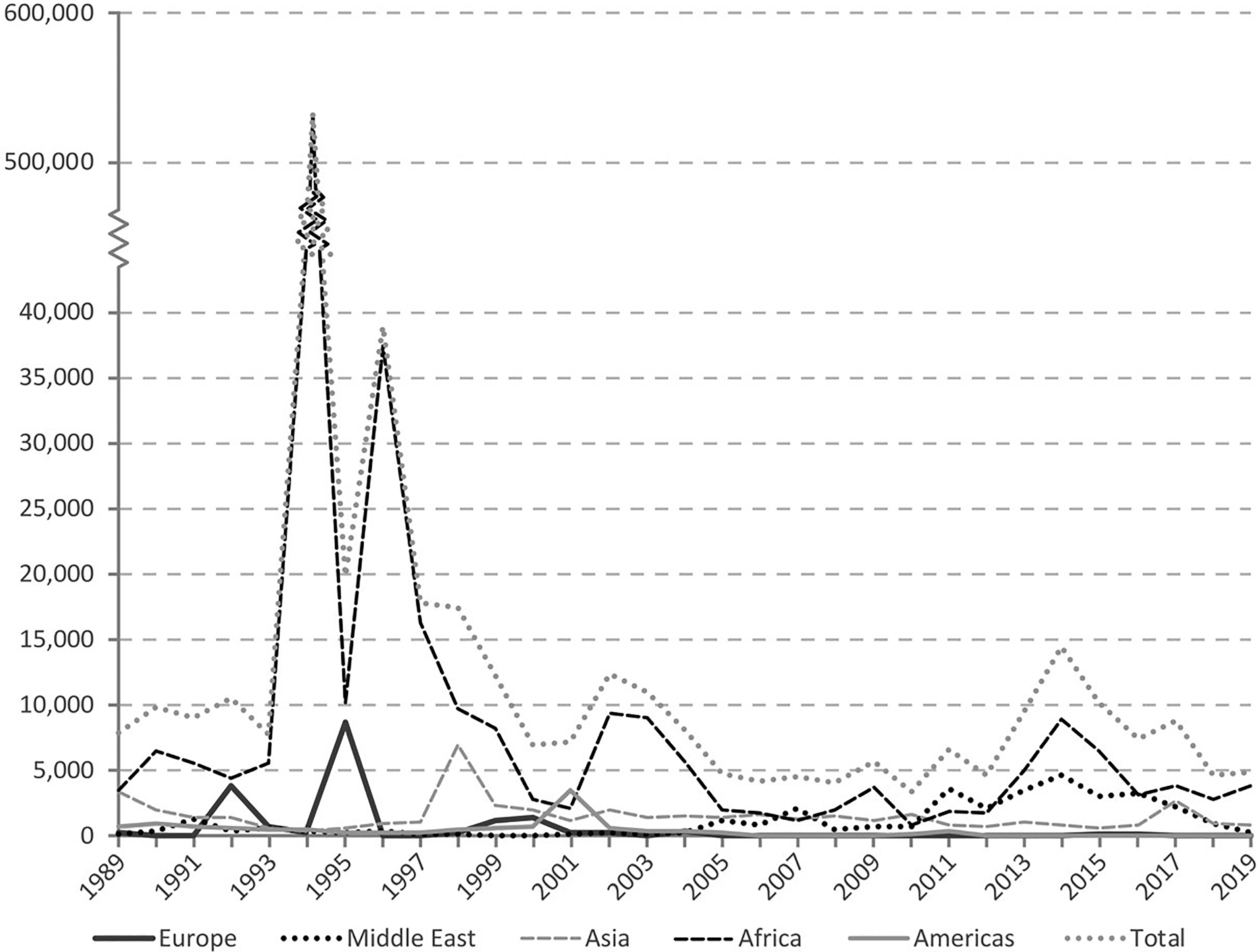
UCDP registered 31 actors targeting civilians in 2019, a decrease by three since 2018. 11 Since 1989, UCDP registered 281 actors active in one-sided violence, with a yearly average of 33.
Although Figure 5 shows a slight increase in the number of civilians killed in targeted violence, from almost 4,700 in 2018 to just over 4,900 last year, the level of one-sided violence is still on a low level compared to the five years preceding 2018. Excluding Africa, one-sided killings in fact decreased by 43% in 2019. Africa however, witnessed a 37% increase when compared to 2018.
A few cases account for this increase in violence, most notably Burkina Faso and Mali. Both countries have witnessed an upsurge of violence connected to the al-Qaida-loyal alliance JNIM (Jamaat Nusrat al-Islam wal-Muslimin) which in turn has led to several self-defense militias, for example the Koglweogo, taking up arms. This has caused non-state conflicts, as well as extensive one-sided violence, in the region. 12 The growing presence of armed groups has reinforced longstanding tension between the mainly Muslim, pastoralist Fulani ethnic group, and other, agriculturalist, groups. The Fulani have been accused of collaborating with jihadi groups, and anti-jihadi militias have frequently targeted Fulani civilians, sparking retaliatory attacks by al-Qaida affiliates (BBC, 2019; Kleinfeld, 2020).
For the fifth consecutive year, IS continued to be the actor most involved in one-sided violence. However, the number of people killed by IS has decreased steadily since 2015. In spite of this general decrease, IS has stepped up its attacks in Africa, where IS one-sided killings increased by 56% in 2019. During the year, attacks targeting Christian civilians in the Greater Sahel region intensified. Following the killing of IS leader al-Baghdadi and IS spokesperson Abul-Hasan al-Muhajir in October, the group claimed revenge attacks against aid workers and other civilians (Ewang, 2020; Keay, 2019). 13
Just like in recent years, non-state groups carried out most of the one-sided violence. Governments were responsible for 17% of the fatalities in 2019. Notable cases include violent crackdowns on the wave of protests that spread over the world during the year, including in Sudan and Iran. 14
Transnational jihadist groups, 2010–19
In the past decade, conflicts involving transnational jihadist groups have driven many of the trends in organized violence. In 2019, 28 of 54 state-based conflicts involved IS, al-Qaida, or their affiliates. These groups have also generated much international attention, security concerns, and military interventions, contributing to the increase in internationalized intrastate conflict in recent years. They have been recruiting fighters and performing or inspiring attacks in a large number of countries, raising security concerns far outside their core operating areas. Here we look at trends in violence involving transnational jihadist groups 2010–19.
Following Melander, Pettersson & Themnér (2016: 731; see also Svensson & Nilsson, 2018) we define transnational jihadism as ‘the immediate or future aim of a non-state group to establish a caliphate across internationally recognized borders, using violence’. 15
Figure 6 shows the share of fatalities in organized violence involving IS, al-Qaida, and their affiliates. The sharp increase in violence beginning in 2012 is driven by the escalating conflicts in Syria and Iraq at the time, involving both IS and al-Qaida. Also, the recent decrease in the number of fatalities caused by al-Qaida, and more importantly IS, has contributed to the general decrease in fatalities from organized violence in the world. 16 Looking at state-based conflicts alone, in seven out of the last ten years, conflicts involving al-Qaida, IS, and their affiliates generated the majority of battle-related deaths in the world. Considering the core groups only, the share has decreased precipitously, from a high of 44% of the global total in 2017 to 14% in 2019. Yet, if we include affiliates of IS and al-Qaida, 73% of all battle-deaths in 2019 occurred in fighting involving transnational jihadist groups. This recent trend is, in large part, driven by the escalating conflict in Afghanistan, which sees both IS and the al-Qaida affiliated Taliban 17 challenging the government, as well as fighting each other and killing civilians.
The transnational jihadists have also been prominent in the non-state category. From 2014 to 2017 more than half of the non-state fatalities occurred in conflicts involving IS and al-Qaida. As noted above, fighting between IS and other rebel groups skyrocketed in 2014, following its declaration of an Islamic caliphate. Many of these conflicts also attracted external support from other countries, for example the US-led coalition supporting SDF with Fatalities in organized violence, IS, al-Qaida, and affiliates, 1989–2019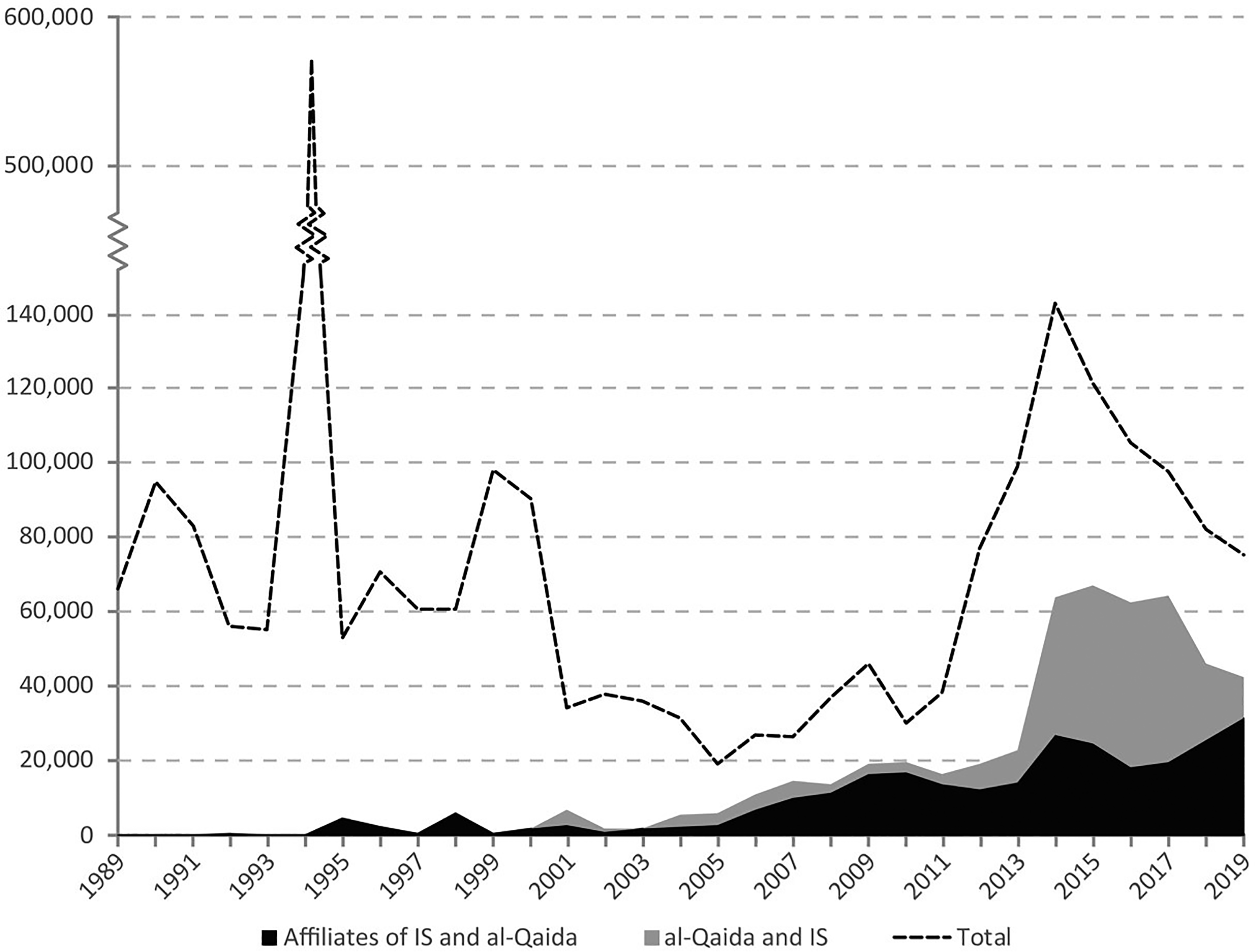
Regarding one-sided violence IS, al-Qaida, and their affiliates are responsible for a large share of the civilian victims. In 2019, 71% of fatalities caused by non-state groups were due to attacks from these groups. Surpassed only by AFDL (Alliance of Democratic Forces for the Liberation of Congo) in DR Congo, IS is in fact the second most deadly non-state actor since 1989, responsible for at least 28,000 civilian fatalities in direct targeting. Al-Qaida was severely weakened after the counterterrorism operations following 9/11, again with the killings of Osama bin Laden and other senior leaders, and finally with the split of al-Qaida in Iraq, which became IS in 2013. However, experts warn that the group has used the counterterrorism focus on IS to regroup and to grow stronger (Jones, 2017; Carey, 2019). The one-sided attacks by al-Qaida or affiliates coded by UCDP have indeed increased during the past few years, but the trend is largely driven by JNIM attacks in Burkina Faso and Mali.
Thus, the transnational jihadist groups have either driven or had a major impact on the trends in all categories of violence in the past ten years. In a longer historical perspective, however, it is not their capacity for violence that set them apart (Melander, Pettersson & Themnér, 2016: 733). What does set IS and al-Qaida apart is their transnational presence, their ability to attract allegiance or affiliation of local Islamist groups, and their ability to recruit fighters and followers globally. There is nothing similar in recent history. However, the anarchist movement and the revolutionary socialist movements of the late 19th and early 20th centuries display some similarities. The anarchists were a transnational non-state movement active in many countries, engaging in terror attacks, fighting in civil wars and revolutions, and raising international security concerns (cf. Atran, 2010: 84–88; Joll, 1980: Part 3).
The Bolshevik movement in the early 20th century is perhaps the closest historical parallel to IS. They were a radical exponent of a broader ideological movement present in many countries. In a time of regional upheaval, they managed to establish a revolutionary state in Russia along with the Comintern to promote world revolution. Many Bolshevik or similarly inclined movements across Europe and beyond joined the revolution along with young idealists around the world (cf. McDonald, 1988). Some of the young idealists went to fight abroad, most famously in the Spanish Civil War, but many other revolutionary movements also attracted foreign fighters, like the Janglai in Iran (Dailami, 1990). Within a few years after the Russian Revolution, local Soviet Republics were established in many countries (e.g.
Geographical distribution of IS, al-Qaida, and affiliates, 2010 Geographical distribution of IS, al-Qaida, and affiliates, 2019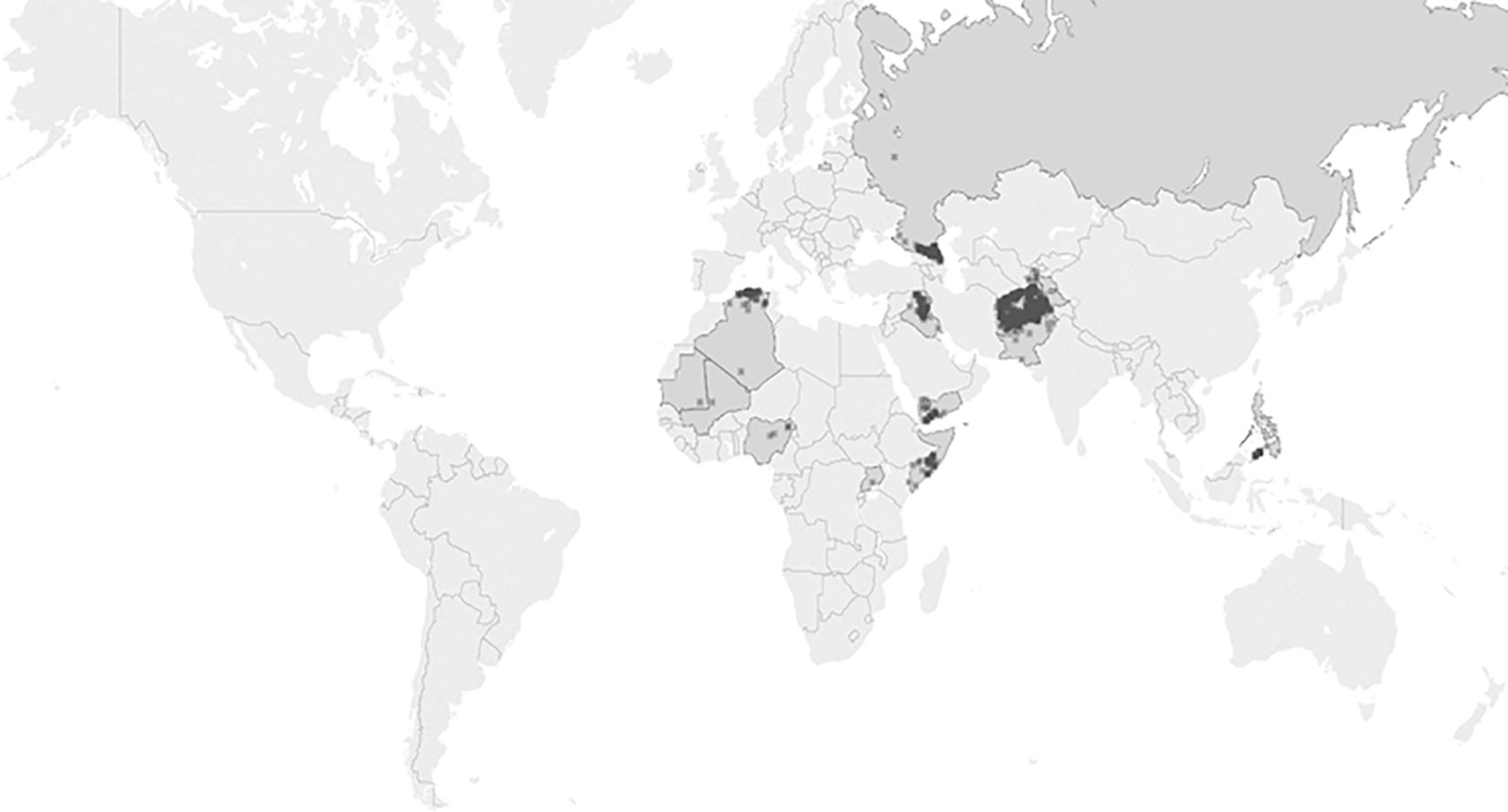
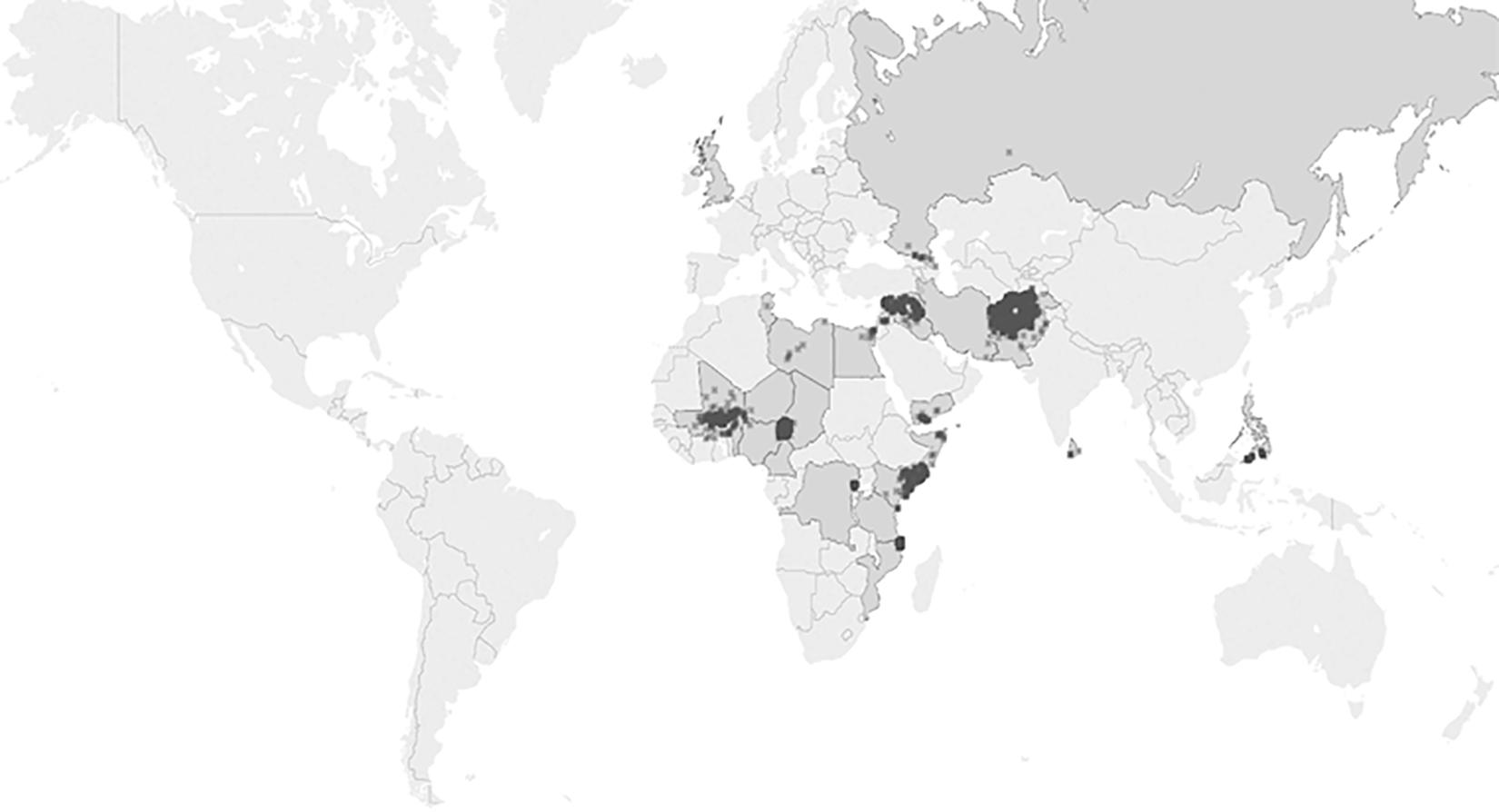
Figures 7 and 8 show the geographical expansion of the transnational jihadist movements over the past ten years. In 2010, al-Qaida and affiliated organizations were active in 13 different countries and challenged 11 different governments in state-based armed conflict. At that time, what was to become IS was al-Qaida in Iraq. Having separated from al-Qaida in 2013, IS established a caliphate in parts of Iraq and Syria in 2014, and declared that it would expand its territory across the globe. Aside from its core group in Iraq and Syria, IS’s global ambitions meant that it also established ‘provinces’ (wilayah) in other countries. In the years following 2014, IS created such provinces in Libya, Egypt, Yemen, Afghanistan/Pakistan (Khorasan), Algeria, West Africa, and Russia (Leigh, French & Juan, 2016). Establishing a province often included a merger of local militant outfits into the IS umbrella structure. In some areas, IS established presence without declaring a province. Examples include the Philippines, where IS named a local commander emir of the area without incorporating the country into its official structure. The global aspirations of IS contributed to the increase in the total number of state-based armed conflicts in the world. In 2019, IS, al-Qaida, and their affiliates carried out attacks in 25 countries, challenging 20 different governments. In spite of major setbacks and military defeats in Syria during 2019, IS and affiliated groups were active in 23 different countries in that year, having emerged since 2014 as the leading transnational jihadist organization. In 2019, IS also declared a new province – Central Africa – the first one since 2017.
It has been noted previously that the transnational jihadists have had difficulties realizing their goals compared to other rebel groups (Melander, Pettersson & Themnér, 2016). The defeat of IS in Syria and Iraq in March 2019, and the death of al-Baghdadi in October the same year underscore this observation. But even as IS has been in decline in Syria in recent years, the group has expanded geographically.
In the longer term, the ability of IS and al-Qaida to reach their goals may depend on how they are received locally. The transnational jihadist goals at times come into conflict with local goals and desires, and the groups’ reliance on foreign fighters may be a problem if it is seen as a foreign intrusion or imposition on local authorities. IS has experienced resistance – even defeat – from local groups, including from local jihadist groups that may otherwise be expected to sympathize with IS’s goals. For example, in Libya, IS first established a presence in Derna through the local Majlis Shura Shabab al-Islam, which pledged allegiance to IS that was accepted in November 2014. IS proceeded to set up courts and schools and attempted to persuade another local Islamist group, the Derna mujahideen, to also pledge allegiance to IS – but they refused. Increased tensions led to the killing of two Derna mujahideen commanders by IS militants in June 2015. 18 This, in turn, led the Derna mujahideen to declare jihad against IS and after two rounds of intense fighting they threw IS out of Derna in April 2016. A similar episode transpired in Benghazi, forcing surviving IS members to retreat to Sirte (Zoschak & Gambhir, 2015; Joscelyn, 2016).
Conclusion
The number of fatalities in organized violence decreased for the fifth consecutive year in 2019. The defeat of IS in Syria and Iraq has pushed the number of fatalities to its lowest level since the outbreak of the Syrian civil war in 2011. Yet, the number of active state-based conflicts remained on a historically high level, many of them involving IS, al-Qaida, or their affiliates. A recent expansion by IS into new territories in Africa has contributed to this trend. In the past decade, transnational jihadist groups, such as IS and al-Qaida, have driven many of the conflict trends, across all three types of violence recorded by UCDP. One example is Afghanistan, where fighting involving IS and/or the al-Qaida affiliated Taliban caused over 31,200 fatalities in 2019, the bloodiest year in Afghanistan since the end of the Soviet intervention in 1989. Since 2013, the country has witnessed a sharp increase in fatalities, which in 2019 made up 40% of all deaths from organized violence in world.
Footnotes
Replication data
The complete UCDP datasets updated to 2019, as well as older versions of the datasets, are found at http://ucdp.uu.se/downloads/. The tables and figures in this article were created directly from the Excel sheets at the UCDP web page. Detailed descriptions of the individual cases are found in the UCDP Conflict Encyclopedia at www.ucdp.uu.se/. Replication data for this article can be found both at http://ucdp.uu.se/downloads/ and  .
.
Authors’ notes
The data for all three categories included in organized violence go back to 1989; for state-based armed conflict, they extend back to 1946.
For the first time, the UCDP Geo-referenced Events Dataset version 20.1 includes events data for Syria. Note that these data are preliminary and may be significantly revised in future versions.
Acknowledgements
Numerous colleagues in Uppsala have contributed to the data collection, notably, Marie Allansson, Shawn Davies, Garoun Engström, Helena Grusell, Nanar Hawach, Lukas Hegele, Stina Högbladh, Gabrielle Lövquist, Fredrika Moberg, Marcellina Priadi, Lotta Themnér, Kajsa Tidblad-Lundholm, and Mert Can Yilmaz. Interns Amber Deniz and Ayako Tsujisaka were also of great help. A special thanks to Margareta Sollenberg and Lotta Themnér who provided helpful comments on earlier versions, and to Martin Tegnander and Mert Can Yilmaz for assistance with designing the figures.
Notes
Appendix 1. State-based armed conflicts active in 2019
This list includes all conflicts that exceeded the minimum threshold of 25 battle-related deaths in 2019 and fulfilled the other criteria for inclusion.1 The column ‘Year’ shows the latest range of years in which the conflict has been active without interruption. The start year is found in parenthesis in the ‘Incompatibility’ column, which indicates when the armed conflict reached 25 battle-related deaths for the first time. If a conflict has been inactive for more than ten years or if there has been a complete change in the opposition side, the start year refers to the onset of the latest phase of the conflict. The column ‘Intensity in 2019’ displays the aggregated number of battle-related deaths. Thus, if more than one dyad is active in the conflict, the intensity column records their aggregated intensity. Three fatality estimates are given in the table: low, best, and high.
Appendix 2. Non-state conflicts active in 2019
This list includes all non-state conflicts that exceeded the minimum threshold of 25 deaths in 2019 and fulfilled the other criteria for inclusion.1 The column ‘Start year’ shows the first year when the non-state conflict caused at least 25 fatalities (since 1989). The column ‘Fatalities in 2019’ displays the number of people killed, in the low, best, and high estimate.
Appendix 3. One-sided violence in 2019
This list includes all cases of one-sided violence that exceeded the minimum threshold of 25 fatalities in 2019 and fulfilled the other criteria for inclusion.1 The column ‘Start year’ shows the first year when one-sided violence caused at least 25 fatalities (since 1989). The column ‘Fatalities in 2019’ displays the number of civilians killed, in the low, best, and high estimate.