



Abstract
This article reports on trends in organized violence, building on new data by the Uppsala Conflict Data Program (UCDP). The falling trend in fatalities stemming from organized violence in the world, observed for five consecutive years, broke upwards in 2020 and deaths in organized violence seem to have settled on a high plateau. UCDP registered more than 80,100 deaths in organized violence in 2020, compared to 76,300 in 2019. The decrease in violence in Afghanistan and Syria was countered by escalating conflicts in, for example, Artsakh (Nagorno-Karabakh), Azerbaijan and Tigray, Ethiopia. Moreover, the call for a global ceasefire following the outbreak of the COVID-19 pandemic failed to produce any results. In fact, the number of active state-based and non-state conflicts, as well as the number of actors carrying out one-sided violence against civilians, increased when compared to 2019. UCDP noted a record-high number of 56 state-based conflicts in 2020, including eight wars. Most of the conflicts occurred in Africa, as the region registered 30 state-based conflicts, including nine new or restarted ones.
Organized violence 1989–2020, with a special emphasis on Syria 1
The hopes that the COVID-19 pandemic would lead to reduced violence had long been crushed as 2020 came to an end. UCDP data, illustrated in Figure 1, shows that the falling trend in fatalities stemming from organized violence in the world, witnessed every year since the latest peak in 2014, broke upwards in 2020. UCDP registered more than 80,100 deaths in organized violence in 2020, compared to 76,300 in 2019. While this is a 45% drop compared to the more than 144,700 fatalities recorded in 2014, the decline tapered off in 2018–19 and deaths seem to have settled on a high plateau. Moreover, the number of active state-based and non-state conflicts, as well as the number of actors carrying out one-sided violence against civilians, increased when compared to 2019.
The two largest wars of the past decade, Afghanistan and Syria, both de-escalated in 2020. At the same time, violence in other areas escalated as old tensions, having simmered for years or even decades, flared up in conflicts such as the one over government power in Ethiopia, pitting the Addis Ababa regime against TPLF (Tigray People’s Liberation Front) and the separatist conflict over Artsakh (Nagorno-Karabakh) in Azerbaijan.
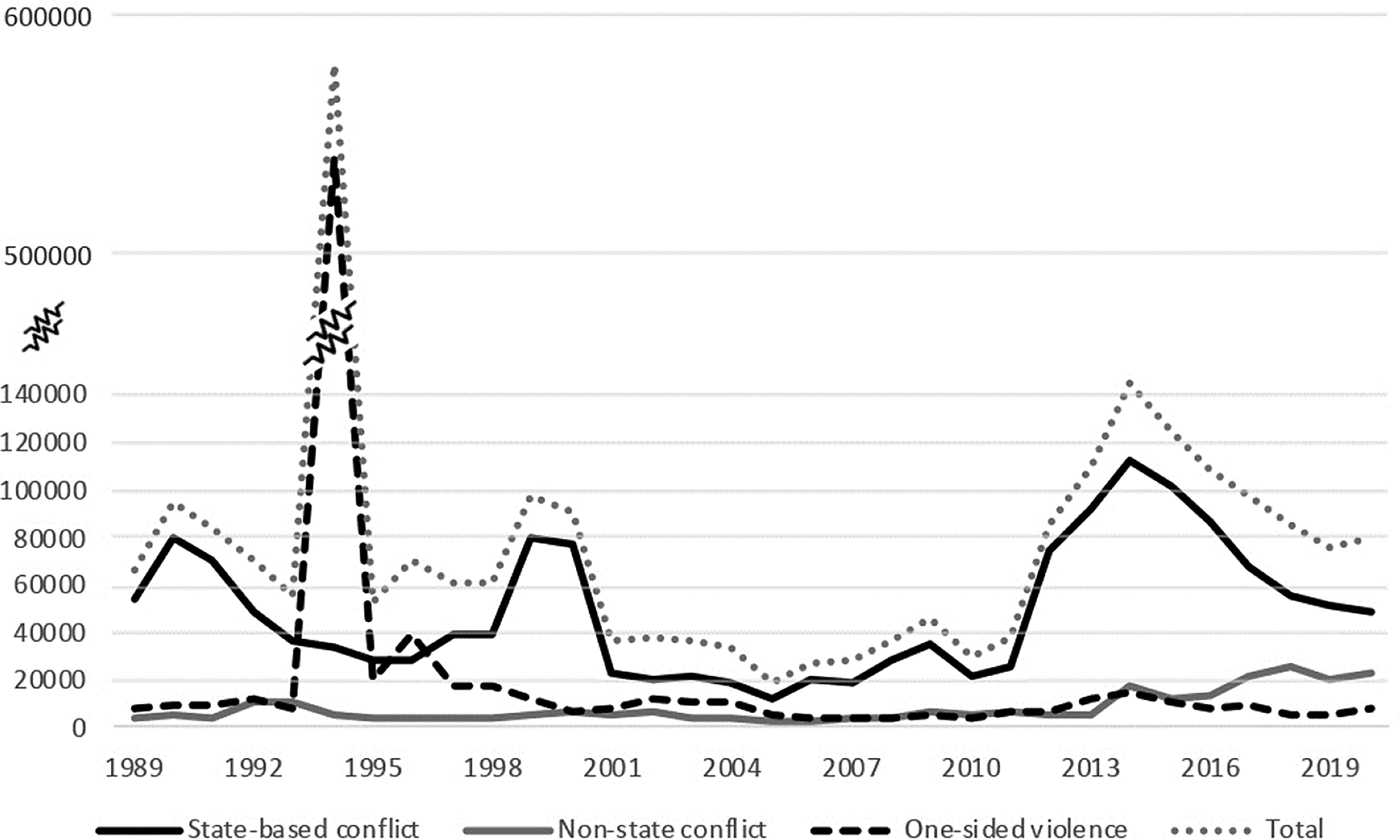
Fatalities in organized violence by type, 1989–2020
In recent years, there has been a clear regional shift from the Middle East to Africa now driving the trend in organized violence. Completely dominant in one-sided violence, and the location of more than half of all state-based armed conflicts in the world, Africa witnessed its bloodiest year since 2014.
The first section of this article presents recent trends in three types of organized violence, focusing particularly on events in 2020. The second section takes a closer look at Syria, home to the bloodiest conflicts of the 21st century. Using new disaggregated data from UCDP, we explore how Syria has dominated the trends in organized violence in the past decade.
State-based armed conflict 1946–2020
UCDP documented a record-high number of state-based armed conflicts in 2020, after observing a slowly rising trend for several years. In 2020, 56 armed conflicts were active around the world. This is an increase of one compared to 2019, 2 and the highest number recorded in the post-1946 period. 3 While most conflicts are minor and result in relatively few battle-related deaths, the sheer number of armed struggles is alarming, as they run the risk of escalating into conflicts that are more lethal.
The year 2020 also saw several examples of escalating violence in conflicts that had been inactive for years or even decades. The border conflict between China and India had not been active since 1967, but lethal skirmishes erupted in the Galwan Valley in June 2020.
4
Fighting between the two nuclear powers subsided but tension lingers (Dalton & Zhao, 2020). In February 2021, after several rounds of high-level talks between the two nations, they agreed to pull back their troops from some of the border areas (BBC, 2021). In Azerbaijan, the separatist conflict against the Republic of Artsakh, with Armenia and Turkey involved as secondary warring parties, had been inactive since 2017 and, before that, active on a very low level of intensity since the large-scale war of the early 1990s. In mid-2020, tension between the parties escalated, followed by heavy fighting starting on 27 September.
5
After one and a half months of clashes, resulting in over 7,500 deaths, Number of state-based conflicts by region, 1946–2020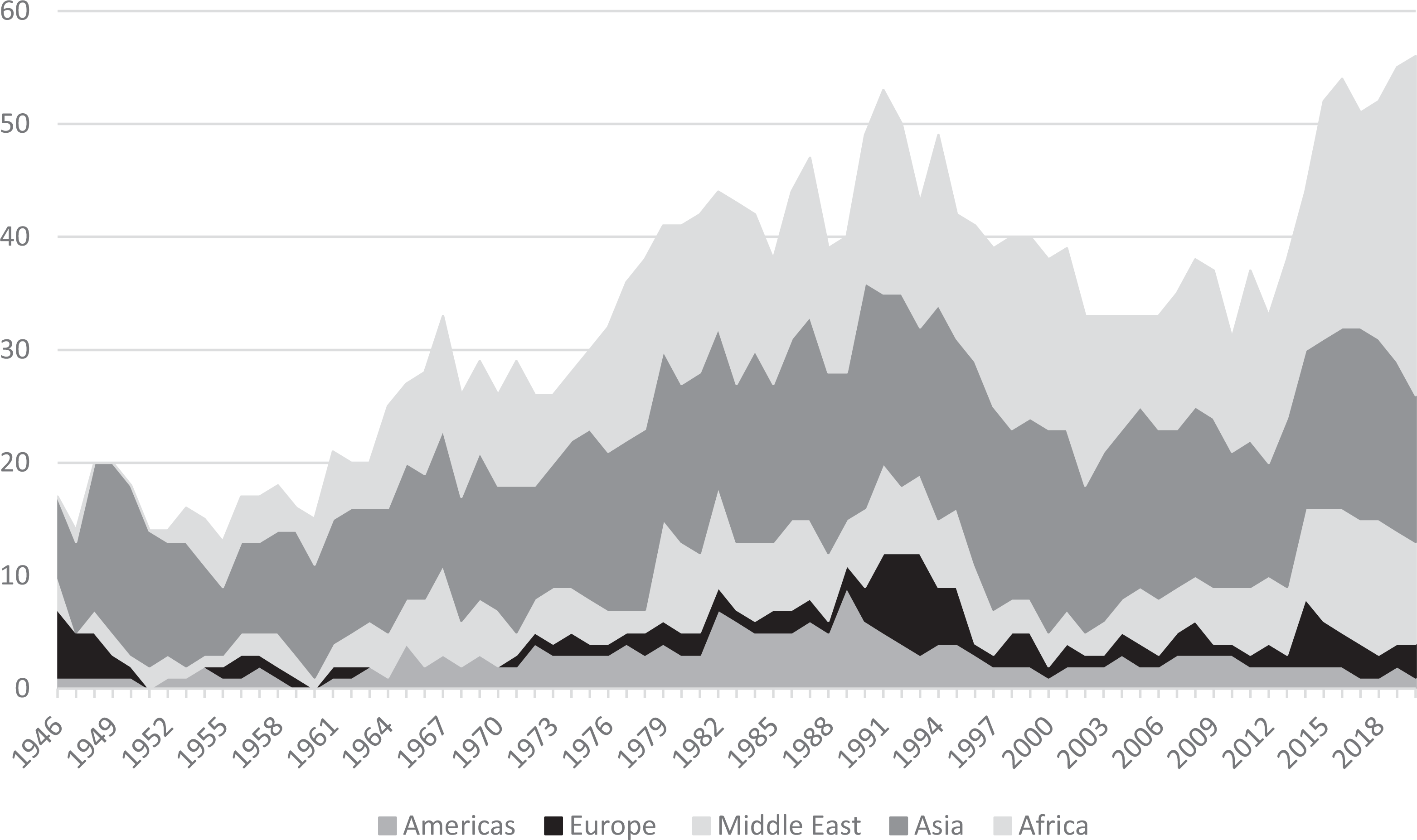
In general, Africa drives the growth in the number of active conflicts. Figure 2 shows that the number of active conflicts decreased or remained at the same level in all regions except Africa, where conflicts have increased from 19 in 2017 to 30 in 2020. Pettersson & Öberg (2020) observed this trend in 2019, and it became even more pronounced in 2020, with nine new or restarted conflicts in the region. Most of the increase was due to conflicts restarting after having been inactive for one or a few years, but one conflict, Tanzania: Islamic State, was completely new in 2020, and another, Ethiopia: Government, had not been active since 1991. Africa is now home to more than half of all state-based armed conflicts in the world.
In 2019, much of the increase in the number of conflicts was due to IS (Islamic State) moving into new areas. In 2020, only one new conflict arose in this way as escalating violence carried out by IS in Mozambique spread to Tanzania. The conflict in Mozambique’s Cabo Delgado province began in 2017 with the emergence of the Salafist group Ansar al-Sunnah. In July 2019, the group pledged allegiance to IS and violence escalated sharply. The conflict has evolved from mostly one-sided attacks by small groups of insurgents to large-scale, coordinated attacks against the military. In August 2020, IS captured the regional hub of Mocimboa da Praia, 6 and in October, the group crossed the border into Tanzania. 7 In addition to fighting government forces in both Mozambique and Tanzania, the group has carried out several massacres of civilians.
The prevalence of internationalization of conflicts, where one or both sides in the conflict receive troop support from an external state, remained high in 2020. Figure 3 shows that the number of internationalized conflicts has skyrocketed in recent years, from nine in 2012 to 25 in 2020. Moreover, UCDP recorded three interstate conflicts in 2020. While this is only 5% of the total number of active conflicts, we have not seen as many active interstate conflicts since 1988. The presence of interstate conflicts, with two state armies involved, is concerning as they carry the potential to be deadlier than intrastate conflicts.
In total, UCDP recorded at least 49,300 battle-related deaths in state-based armed conflict in 2020, compared to at least 51,200 in 2019. In the beginning of 2020, the world was hoping for a reduction in violence in the face of the COVID-19 pandemic. Following the appeal from UN Secretary-General António Guterres for a global ceasefire, in March 2020 (UN, 2020), several ceasefires Number of state-based conflicts by type, 1946–2020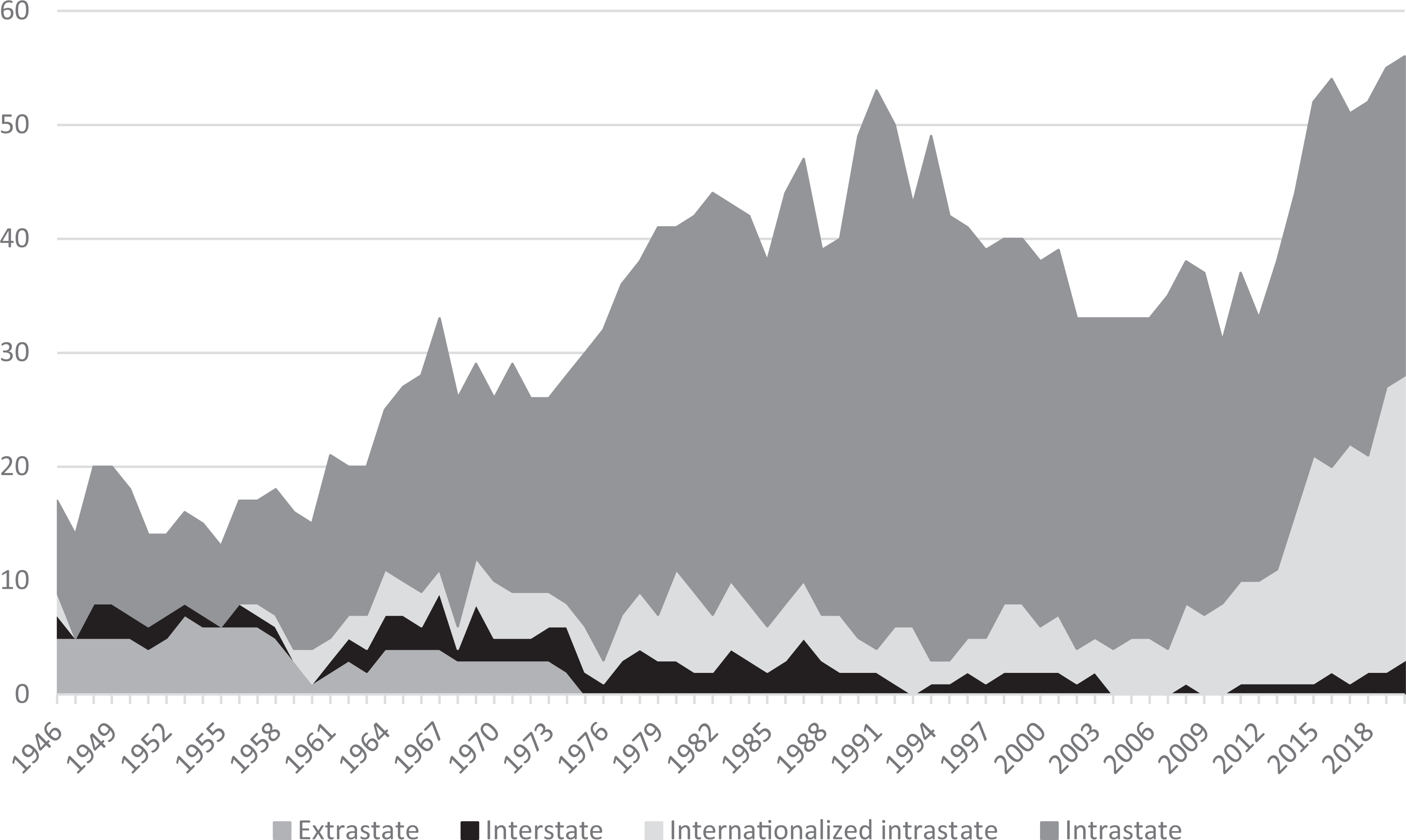
In Syria, violence has plummeted since 2013–14, the most violent years of the civil wars. In 2020, UCDP recorded just over 4,500 fatalities in the two state-based armed conflicts active in Syria, 9 a decrease of almost 2,800, or 38%, since 2019. The situation has evolved from a countrywide war involving hundreds, if not thousands, of groups, to a frozen situation with a few regional hotspots. The conflict with IS, however, intensified in 2020, despite the reported defeat of the group in 2019. Although IS has lost all territory it previously held in Syria, it continues to carry out attacks against both security forces and civilians. After a one-year lull, the conflict again reached the intensity of war in 2020, with more than 1,000 battle-related deaths.
In Afghanistan, violence had been rising steadily since 2013, and UCDP recorded almost 30,000 battle-related deaths there in 2019. In 2020, however, fatalities decreased substantially. UCDP data show a 32% decrease in 2020, or almost 9,500 fewer deaths, compared with 2019. The main reasons are the peace process and the drastic drop in airstrikes carried out by the USA in support of Afghan forces. Following 18 months of negotiations, the Taliban signed an agreement with the USA on 29 February 2020. The agreement provided for a complete withdrawal of foreign forces from Afghanistan and the start of intra-Afghan talks (Maizland, 2020). During the first half of 2020, battle-related deaths dwindled. When intra-Afghan talks finally started in September, violence had begun to increase again, however, and in October, large-scale offensives took place in the southern provinces of Hilmand and Kandahar. 10 Escalating violence in the face of, or during, periods of peace talks can be used as a way of strengthening one’s negotiating position (e.g. Bara, 2020), and this could potentially explain the Taliban escalation of violence. The peace talks failed to yield any significant progress as the deadline for full US troop withdrawal was approaching. Despite escalating violence during the second half of 2020, however, the total number of battle-related deaths in Afghanistan reached its lowest level since 2016. Still, the conflicts in Afghanistan accounted for 40% of global battle-related deaths in state-based conflicts in 2020.
Failing to result in de-escalation, the COVID-19 pandemic was in fact the driving force behind some conflicts flaring up in 2020. In DR Congo, two conflicts, which had been inactive for several years, escalated again in 2020 following protests against the responses to the pandemic by the Congolese government. In late March, police killed protesters from the Kata Katanga and Bundu dia Kongo movements in Lubumbashi and Kinshasa, 11 causing both these conflicts to escalate and to become active in 2020.
Eight conflicts reached the intensity level of war in 2020. This is an increase by one since 2019, but still a lower number than the 10–12 wars listed in 2014–17. As mentioned above, Syria: Islamic State escalated in 2020 and reached the intensity of war after a one-year lull. Additionally, two conflicts that were not even active in 2019 were added to the list following heavy fighting during the second half of the year; Azerbaijan: Artsakh and Ethiopia: Government. In Afghanistan, the conflict against IS de-escalated below the level of war for the first time since 2015, and in Libya, a UN-brokered ceasefire signed in October 2020 and subsequent peace talks halted the fighting between the two rival governments. The eight wars accounted for 80% of all battle-related deaths recorded in 2020. 12
Non-state conflict 1989–2020
Non-state conflict increased in 2020, in terms of both the number of active conflicts and the number of deaths incurred in fighting between non-state groups.
UCDP registered 72 different non-state conflicts in 2020, which is an increase of two compared to 2019, but a lower number than in most years since 2013. 13 In total, these conflicts resulted in at least 23,100 fatalities. Figure 4 shows that this is an increase when compared to the 20,000 deaths recorded in 2019, and that non-state fatalities remain at a historically high level. The past seven years are in fact the bloodiest ones in non-state violence in the period covered by the UCDP data. Since 1989, UCDP has registered 808 different non-state conflicts, with a yearly average of 42 active conflicts resulting in 8,100 deaths. In contrast, the average for the past seven years is 76 active non-state conflicts resulting in 19,000 deaths.
Figure 4 shows that the trend of decreasing violence in the Middle East is also visible when looking at non-state conflict. In this case, however, the Americas have replaced the Middle East as the worst hit region. The development in the latter is remarkable. Dominating the trend in non-state conflict for several years, the Middle East is now relatively spared from this type of organized violence. Syria made up a large share of the fatalities registered in the region and the weakening of IS is the most important factor behind this decrease. In 2014, the group was involved in almost 10,000 of the non-state fatalities in the region, while in 2020, UCDP recorded just over 170 fatalities in non-state conflicts involving IS in the Middle East.
Mexico is now driving the trend in non-state conflict, as the country witnessed almost 16,300, or 71%, of the global fatalities in 2020. Figure 4 shows that the Americas has been the region hardest hit by non-state violence for the past three years. This trend is largely driven by Mexico, but non-state violence has also been on the rise in Brazil. Fatalities have risen steeply since 2016, partly explained by the power vacuum that followed the (re)capture of Sinaloa Cartel leader Joaquín ‘El Chapo’ Guzmán, and the subsequent rise of the Sinaloa splinter group Jalisco Cartel New Generation. Mexican and US counter-drug efforts to remove cartel leaders have, in many cases, increased cartel fragmentation and in-fighting (Calderon et al., 2020). Research on civil wars shows that increased fragmentation is associated with increased violence, including targeting of civilians and fighting between organizations (Cunningham, 2016). In recent years, the Jalisco Cartel New Generation has grown into one of the dominating organizations, controlling several key areas and having a presence in at least 27 of Mexico’s 32 federal entities (Americas Quarterly, 2021). The Jalisco Cartel was involved in seven of the 14 non-state conflicts in Mexico during 2020, and fighting involving the group accounted for more than 14,500 deaths. This is 89% of the total non-state fatalities registered in Mexico.
One-sided violence 1989–2020
UCDP recorded 39 actors carrying out one-sided violence in 2020. This is an increase by eight since 2019, and the highest number noted since 2004. Since 1989, Fatalities in non-state conflict by region, 1989–2020 Fatalities in one-sided violence by region, 1989–2020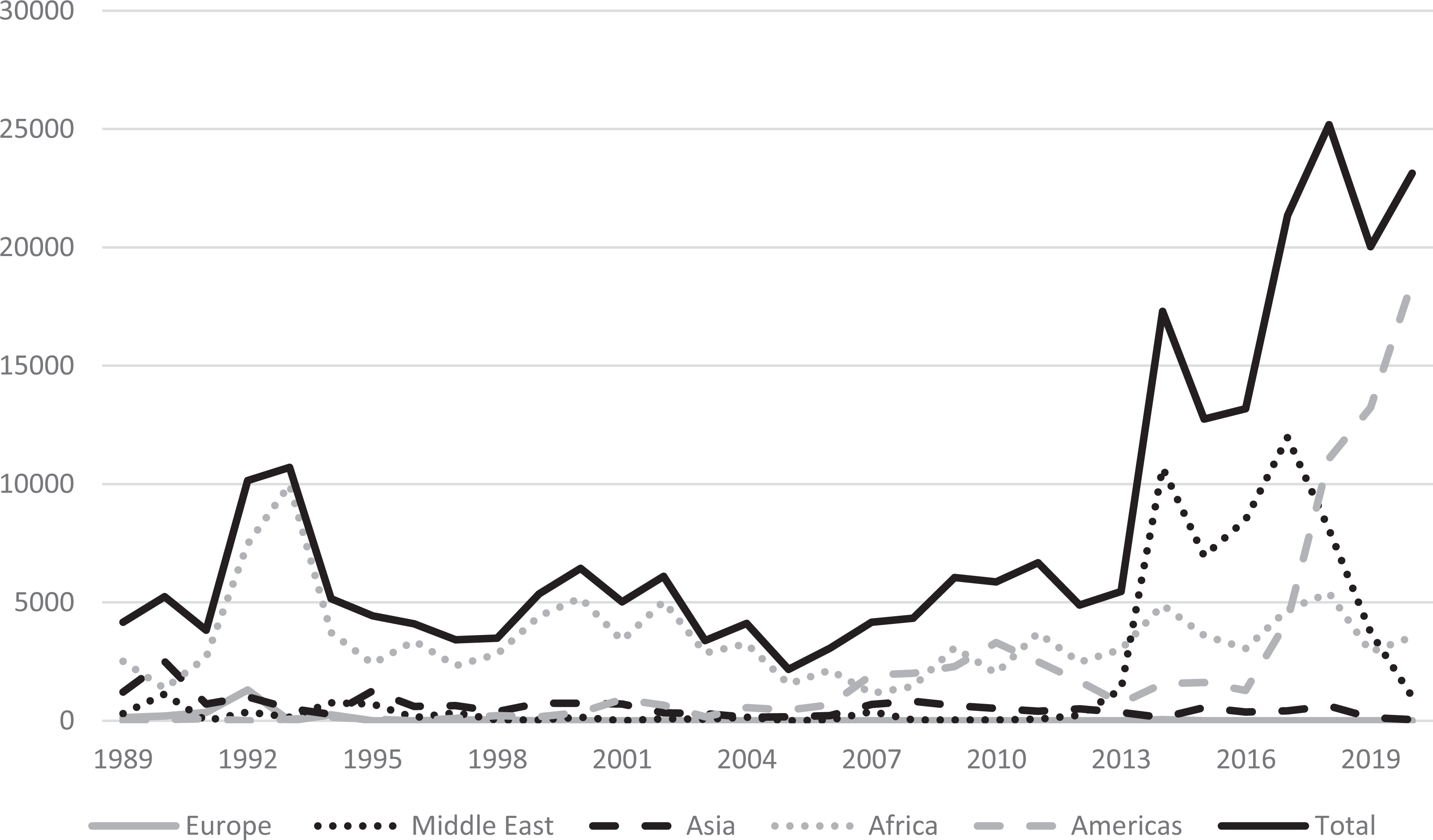
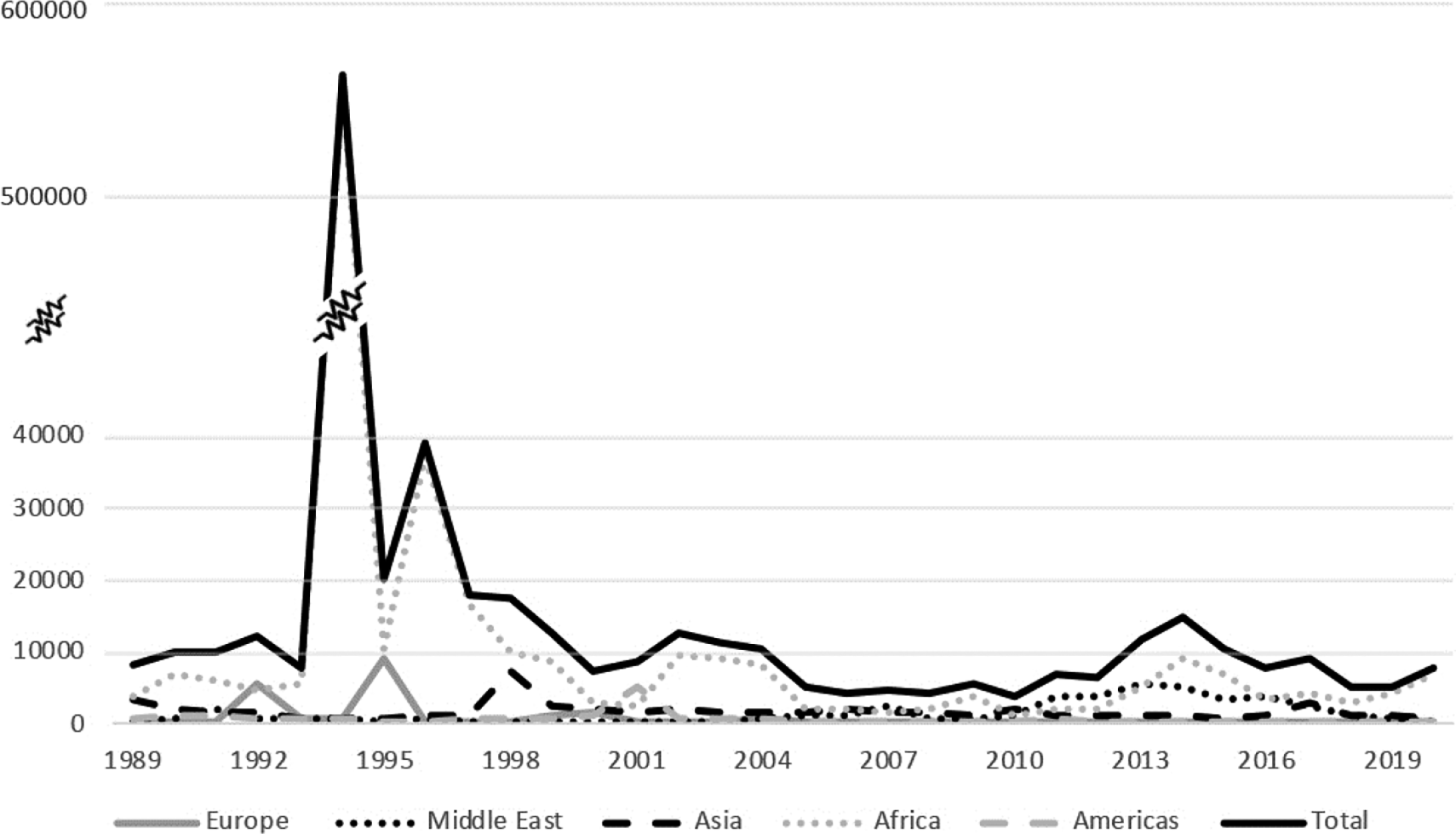
Just as in state-based violence, Africa is the main area of concern and the region that is currently driving the trend. Of the almost 7,700 intentional killings of civilians documented in 2020, nearly 7,000 occurred in Africa. Africa has not dominated one-sided violence so completely since the 1990s.
This recent trend can be partly explained by the continuation of the regional shift of IS from the Middle East to Africa, as 2020 witnessed large-scale killings of Fatalities in state-based conflict, 2011–20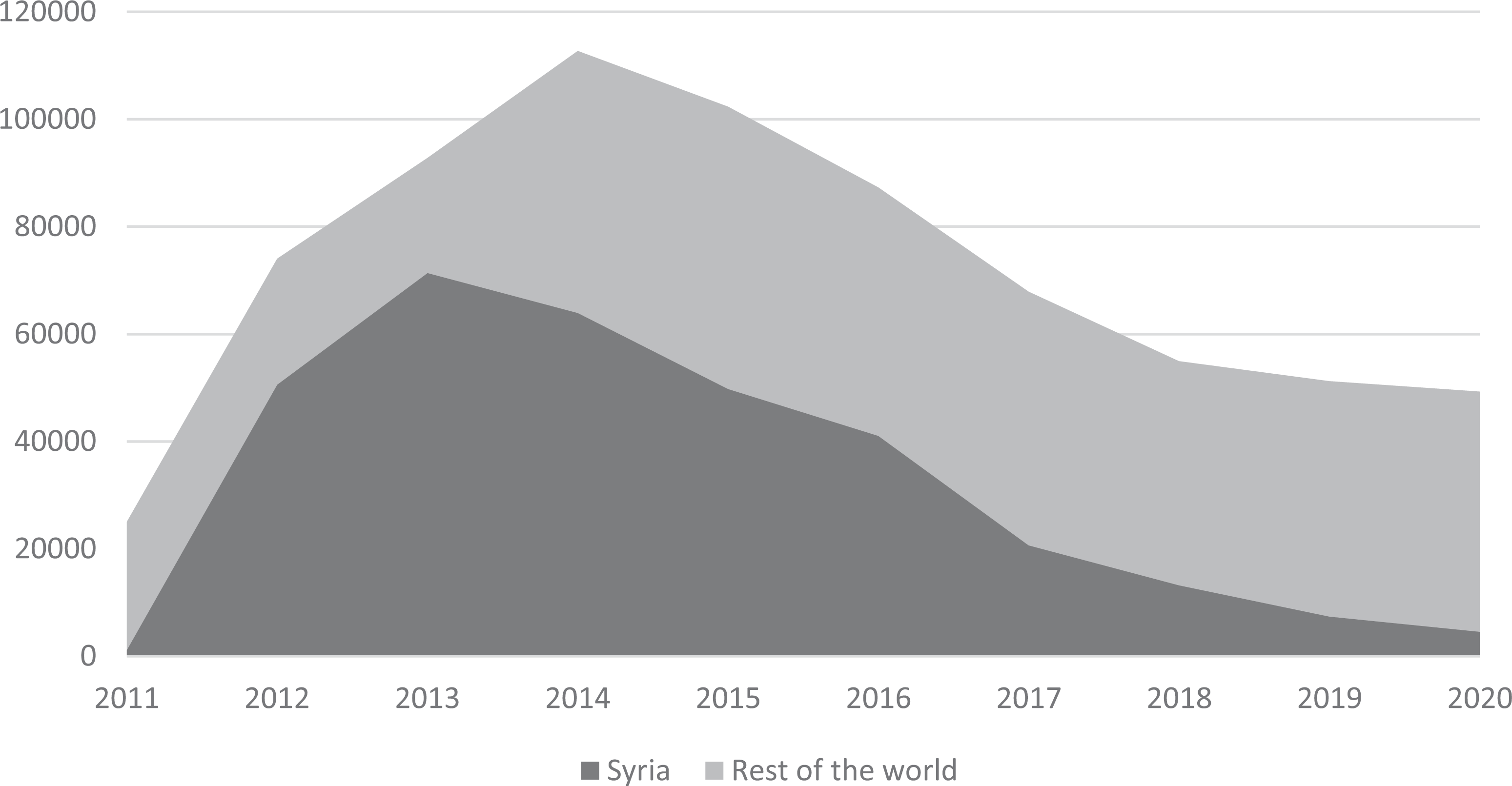
In Africa, as well as on the global scene, IS was the actor killing most civilians in one-sided violence. The group was responsible for at least 2,400 deaths in 2020, an increase of almost 1,000 fatalities, or 59%, since 2019. Almost 2,200 of these were killed by IS in Africa. However, UCDP recorded IS killings on four different continents, and in 19 different countries in 2020. The group is unique in its transnational spread and global reach, having been registered in one-sided violence in all five regions of the world in recent years.
The largest escalation in one-sided violence, however, came from government actors. Compared to 2019, one-sided killings by government forces surged from just under 900 to over 3,000, an increase of 244%. The escalating conflict in Tigray between the government of Ethiopia and TPLF led to several massacres against civilians carried out by Ethiopian troops and, to an even higher extent, by Eritrean troops on Ethiopian soil. Although information is scarce, human rights organizations have documented several large-scale massacres of civilians in the Tigray area since the outbreak of the war in November 2020. One-sided killings often followed clashes between the government and TPLF, as Ethiopian and Eritrean troops retaliated by summarily executing civilians, particularly boys and young men (Bader, 2020; HRW, 2021). Several of the massacres took place in, or in connection to, churches and places of worship. 16 A particularly bloody event occurred in late November, when Eritrean forces killed at least 750 civilians in the town of Axum over a 24-hour period. 17
Conflicts in Syria, 2011–20
In the past decade, the multiple conflicts in Syria have driven many of the trends in organized violence. As illustrated in Figure 6, Syria has dominated the trend of fatalities in the world since the start of the uprising in 2011, being largely responsible for the global increase in state-based fatalities 2012–14. In 2013, the conflicts in Syria were responsible for over three-quarters of all recorded state-based fatalities, with the proportion thereafter dropping year-by-year. It remained the country with the most fatalities in state-based violence until 2018, when a combination of the winding down of the Syrian conflicts and the escalating violence in Afghanistan made Afghanistan surpass Syria. The three deadliest state-based dyad-years recorded by the UCDP globally are all part of the dyad ‘Government of Syria versus Syrian insurgents’. Since 2016, the state-based conflicts in Syria have seen a massive decline in fatalities, from over 41,000 fatalities that year to just over 4,500 in 2020.
Nevertheless, two wars involving the government of Syria were simultaneously ongoing in 2020, against the Syrian insurgents and IS. This highlights that despite the dramatic decline in violence in recent years, the war in Syria is not yet over. Much of the country is still under the control of non-state actors, and with most of these actors being backed either by Turkey or by the USA, a permanent solution is unlikely without broader geopolitical shifts. International tensions have regularly resulted in violence in Syria in recent years, including direct violence between foreign states. The interstate conflict between Iran and Israel, which has been active since 2018, has mainly been fought on Syrian territory and contributed to a broader conflagration in 2020 as the USA was drawn in to support Israel and counter Iranian influence. Several worrying trends have also been visible in Syria over the past year, with the government appearing to struggle to maintain control over the areas it has recaptured. IS appears to be regrouping and regaining momentum in the periphery of state control, and the government is struggling to contain renewed bouts of violence in Daraa.
Having recorded more than 392,000 fatalities in over 78,000 events in Syria since 2011, the intensity of the conflicts in Syria posed unique challenges for data collection and coding. The violence in Syria comprises just over 49% of the global total number of events since 2011, or 29% of all events recorded since 1989. Another challenge has been the exceptional fragmentation of the opposition, with some reports speaking of more than 1,000 armed groups fighting at the same time. This fragmentation has made it impossible to distinguish between different armed groups in the state-based conflict, due to the difficulty of attributing events to specific actors. As a result, the UCDP has coded all groups fighting in the conflict over government under the umbrella of ‘Syrian insurgents’. Groups fighting for distinct aims, such as IS, which fought to incorporate Syria into an Islamic State, were coded separately. In contrast, actors were coded as separate entities in the non-state violence category, although many small groups have only been included as part of broad coalitions of groups which often formed to fight together for specific short-term goals. These coalitions characterize both how non-state conflicts were fought in Syria, and the difficulties related to coding such a broad array of actors. The fragmentation of the opposition has likely contributed to the durability of the insurgency, as multiparty civil wars are more difficult to resolve through negotiated settlements (Cunningham, 2006).
Another unusual aspect of the Syrian conflict, which has likely contributed to its intensity, was the collapse of state authority in many areas. These areas ended up under the control of non-state actors, and constituted a base from which these actors were able to extract resources and manpower to fuel the conflict against the government. This has also shaped how parties use violence, with most of the conflict occurring along contested front lines. The conflict has thereby in many respects resembled a conventional war, rather than the more common counterinsurgencies that intrastate conflicts often are characterized by. Many areas of Syria were only periodically affected by direct fighting, though most areas have ended up close to the front lines at some point during the conflict. Many areas under the control of non-state actors also suffered tremendous damage from indiscriminate airstrikes behind the front lines, and communities on both sides of the front lines suffered under heavy shelling.
This type of warfare changes the risk experienced by civilians in a conflict setting, with fewer civilians being directly and deliberately targeted, but more suffering from indiscriminate and indirect violence. Non-state actors that govern territory often prefer to establish governing institutions that can win civilian support, rather than relying solely on the use of coercion through one-sided violence (Loyle, 2021). This is visible in the UCDP one-sided violence data from Syria. It shows that whereas civilian fatalities have remained high throughout the Syrian conflict, relatively few of these have been the result of direct and deliberate violence against civilians. Since the start of the conflict in 2011, one-sided violence in Syria has constituted less than 4% of all fatalities, whereas it constituted just under 9% of the global total in the same period. Instead, most civilian fatalities in Syria have been the result of indiscriminate shelling and airstrikes. With every neighborhood and town as a potential battlefield, urban areas have been among the most contested sites throughout the wars, and the indiscriminate use of heavy weaponry in these areas has greatly contributed to the high death toll and civilian suffering in Syria. Figure 7 shows that significant portions of the almost 109,000 civilian fatalities recorded in Syria have clustered in besieged urban areas such as Aleppo, Homs, and Damascus and its suburbs.
The peak of one-sided violence in Syria occurred early on in the conflict, in 2011–13, as the government brutally suppressed the Arab Spring protests and massacred suspected opposition sympathizers in recently recaptured areas. Since 2014, the trend in Geographical distribution of civilian fatalities in Syria, 2011–20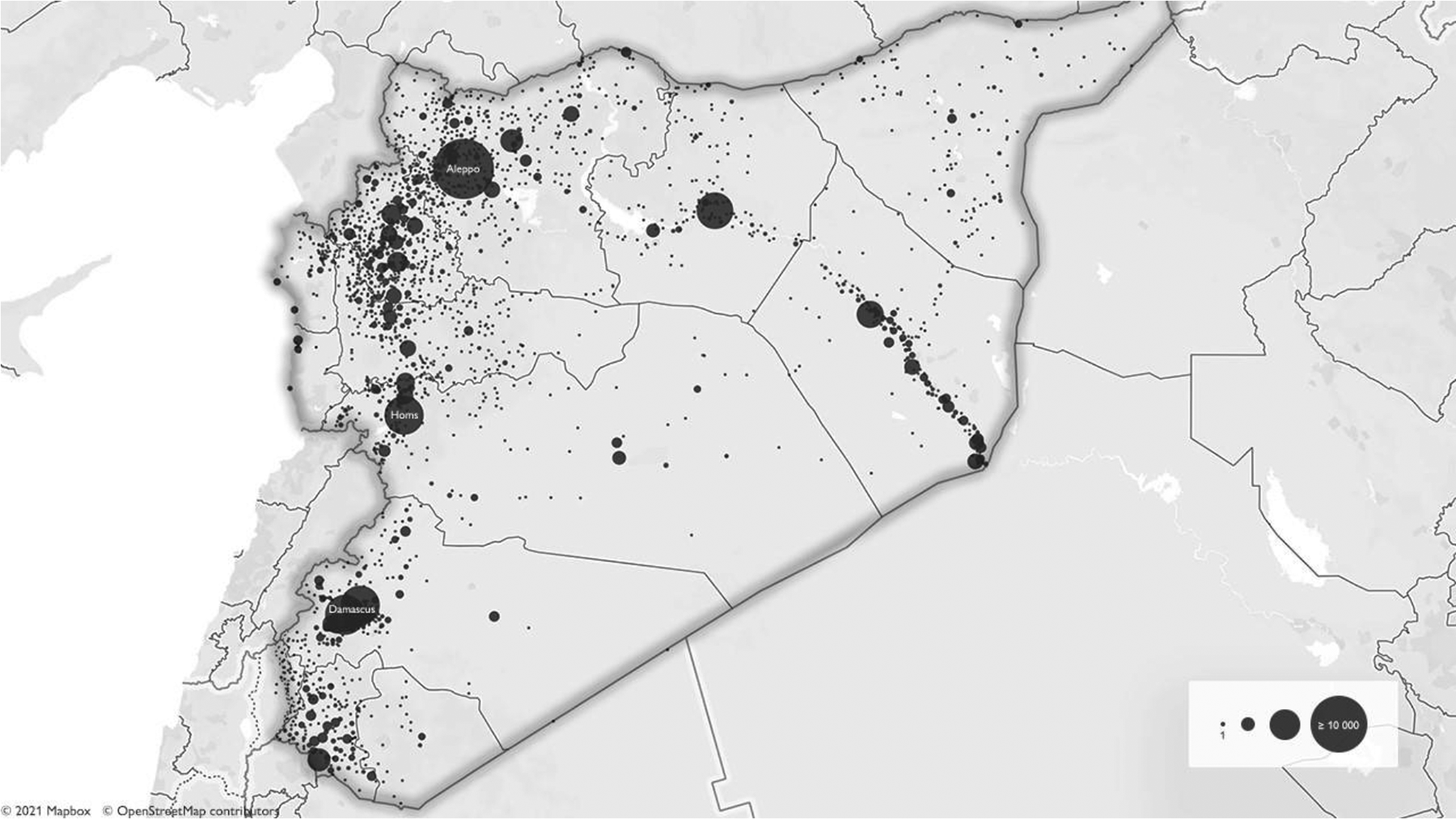
Syria has also driven the global trend in non-state fatalities. From 2014 to 2017, over half of the annual non-state fatalities in the world occurred in conflicts in Syria, with the vast majority of these involving IS. The various anti-IS coalitions of non-state actors that took shape in early 2014 began a prolonged battle against the group, which in Syria was largely fought by non-state actors but also rapidly attracted foreign state support. This external secondary warring support, most notable in the US support for PYD (Democratic Union Party) and SDF (Syrian Democratic Forces) against IS and Turkish support for the SNA (Syrian National Army) against IS and SDF, provided these non-state actors with far greater capabilities than would otherwise have been available to them, including the ability to call in airstrikes. This greatly intensified several of the non-state conflicts in Syria, contributing to the fact that many of the most deadly non-state conflict-years recorded by the UCDP occurred in Syria. Of the 53 non-state conflict-years to surpass 1,000 battle-related deaths since 1989, 11 have been fought in Syria since 2013. These include three of the five deadliest non-state conflict-years on record, all three between IS and SDF. As such, the collapse of IS in Syria has largely driven the decline in non-state violence in Syria, though a decline in the global trend was counteracted by the surge in non-state violence in Mexico since 2018.
Conclusion
The falling trend in fatalities stemming from organized violence in the world, observed for five consecutive years, ceased in 2020 and deaths in organized violence seem to have settled on a high plateau. The decrease in violence in Afghanistan and Syria was countered by escalating conflicts in Artsakh (Nagorno-Karabakh) and Tigray, and the call for a global ceasefire following the outbreak of the COVID-19 pandemic failed to produce any lasting results.
The conflicts in Syria have dominated the trends in organized violence in the 2010s, and IS remains one of the most important actors. In recent years, the group has shifted its focus from the Middle East to Africa, resulting in increasing levels of violence there. IS is far from defeated in Syria and Iraq, however, and fighting against the Syrian government again reached the intensity of war in 2020.
Supplemental Material
Supplemental Material, sj-pdf-1-jpr-10.1177_00223433211026126 - Organized violence 1989–2020, with a special emphasis on Syria
Supplemental Material, sj-pdf-1-jpr-10.1177_00223433211026126 for Organized violence 1989–2020, with a special emphasis on Syria by Therése Pettersson, Shawn Davies, Amber Deniz, Garoun Engström, Nanar Hawach, Stina Högbladh and Margareta Sollenberg Magnus Öberg in Journal of Peace Research
Footnotes
Replication data
The complete UCDP datasets updated to 2020, as well as older versions of the datasets, are found at http://ucdp.uu.se/downloads/. The figures in this article were created directly from the Excel sheets at the UCDP web page. Detailed descriptions of the individual cases are found in the UCDP Conflict Encyclopedia at www.ucdp.uu.se/. Replication data for this article can be found both at http://ucdp.uu.se/downloads/ and  .
.
Authors’ notes
The data for all three categories included in organized violence go back to 1989; for state-based armed conflict, they extend back to 1946.
The UCDP Georeferenced Events Dataset version 20.1 for the first time included preliminary events data for Syria. The data were significantly revised for version 21.1, and further revisions are expected in future versions.
Acknowledgements
Numerous colleagues in Uppsala have contributed to the data collection, notably Marie Allansson, Triveni Chand, Bruno Della Salla, Tania Estrada, Helena Grusell, Amanda Löfström, Gabrielle Lövquist, Anna Svedin, Lotta Themnér, Mert Can Yilmaz, and Herman Wieselgren. Intern Marta Pitino was also of great help. A special thanks to Lotta Themnér who provided helpful comments on earlier versions and to Mert Can Yilmaz for assistance with designing the figures. We also thank the editor and three anonymous reviewers for helpful comments.
Notes
Appendix 1. State-based armed conflicts active in 2020
This list includes all conflicts that exceeded the minimum threshold of 25 battle-related deaths in 2020 and fulfilled the other criteria for inclusion.1 The column ‘Year' shows the latest range of years in which the conflict has been active without interruption. The start year is found in parentheses in the Incompatibility column, which indicates when the armed conflict reached 25 battle-related deaths for the first time. If a conflict has been inactive for more than ten years or if there has been a complete change in the opposition side, the start year refers to the onset of the latest phase of the conflict. The column ‘Intensity in 2020’ displays the aggregated number of battle-related deaths. Thus, if more than one dyad is active in the conflict, the intensity column records their aggregated intensity. Three fatality estimates are given in the table: low, best and high.
Appendix 2. Non-state conflicts active in 2020
This list includes all non-state conflicts that exceeded the minimum threshold of 25 deaths in 2020 and fulfilled the other criteria for inclusion.1 The column ‘Start Year’ shows the first year when the non-state conflict caused at least 25 fatalities (since 1989). The column ‘Fatalities in 2020’ displays the number of people killed, in the low, best and high estimate.
Appendix 3. One-sided violence in 2020
This list includes all cases of one-sided violence that exceeded the minimum threshold of 25 fatalities in 2020 and fulfilled the other criteria for inclusion.1 The column ‘Start Year’ shows the first year when one-sided violence caused at least 25 fatalities (since 1989). The column ‘Fatalities in 2020’ displays the number of civilians killed, in the low, best, and high estimate.
References
Supplementary Material
Please find the following supplemental material available below.
For Open Access articles published under a Creative Commons License, all supplemental material carries the same license as the article it is associated with.
For non-Open Access articles published, all supplemental material carries a non-exclusive license, and permission requests for re-use of supplemental material or any part of supplemental material shall be sent directly to the copyright owner as specified in the copyright notice associated with the article.
