




Abstract
This article reports on trends in organized violence, building on new data by the Uppsala Conflict Data Program (UCDP). The falling trend in fatalities stemming from organized violence in the world, observed between 2014 and 2019, was decisively reversed in 2021 as fatalities increased significantly. UCDP registered more than 119,100 deaths in organized violence in 2021, a 46% increase from the previous year. The increase was largely driven by escalating conflicts in Afghanistan, Ethiopia, and Yemen. Fatalities increased in all three categories of organized violence, despite a decrease in the number of active state-based conflicts, as well as the number of actors carrying out one-sided violence against civilians. UCDP recorded 54 state-based conflicts in 2021, a decrease by two compared to the previous year. Five of the conflicts were active at the intensity of war, the lowest number of wars since 2010. Violence in 2021 was thus concentrated to fewer but bloodier conflicts. Unmanned aerial vehicles (UAVs), commonly known as drones, have become increasingly important features of modern conflicts, and the trend in their usage is discussed in the special feature section. UAV usage has since 2019 dispersed among a significant larger number of actors, even as the downscaling in the involvement of the United States in the war on terror has led to a decrease in drone-related fatalities.
Organized violence 1989–2021 1
The falling trend in fatalities stemming from organized violence globally, witnessed every year between the latest peak in 2014 up until 2019, was decisively reversed in 2021. UCDP registered just over 119,100 deaths in organized violence in 2021, a 46% increase from the 81,700 recorded the year before. In 2021, state-based conflicts resulted in nearly 84,000 battle-related deaths, non-state conflicts in over 25,000, and one-sided violence caused at least 10,000 fatalities. The level of violence approaches the latest peak in 2014–15, but is still below the levels recorded then.
2
Figure 1 shows that while the number of fatalities increased in all categories Fatalities in organized violence by type, 1989–2021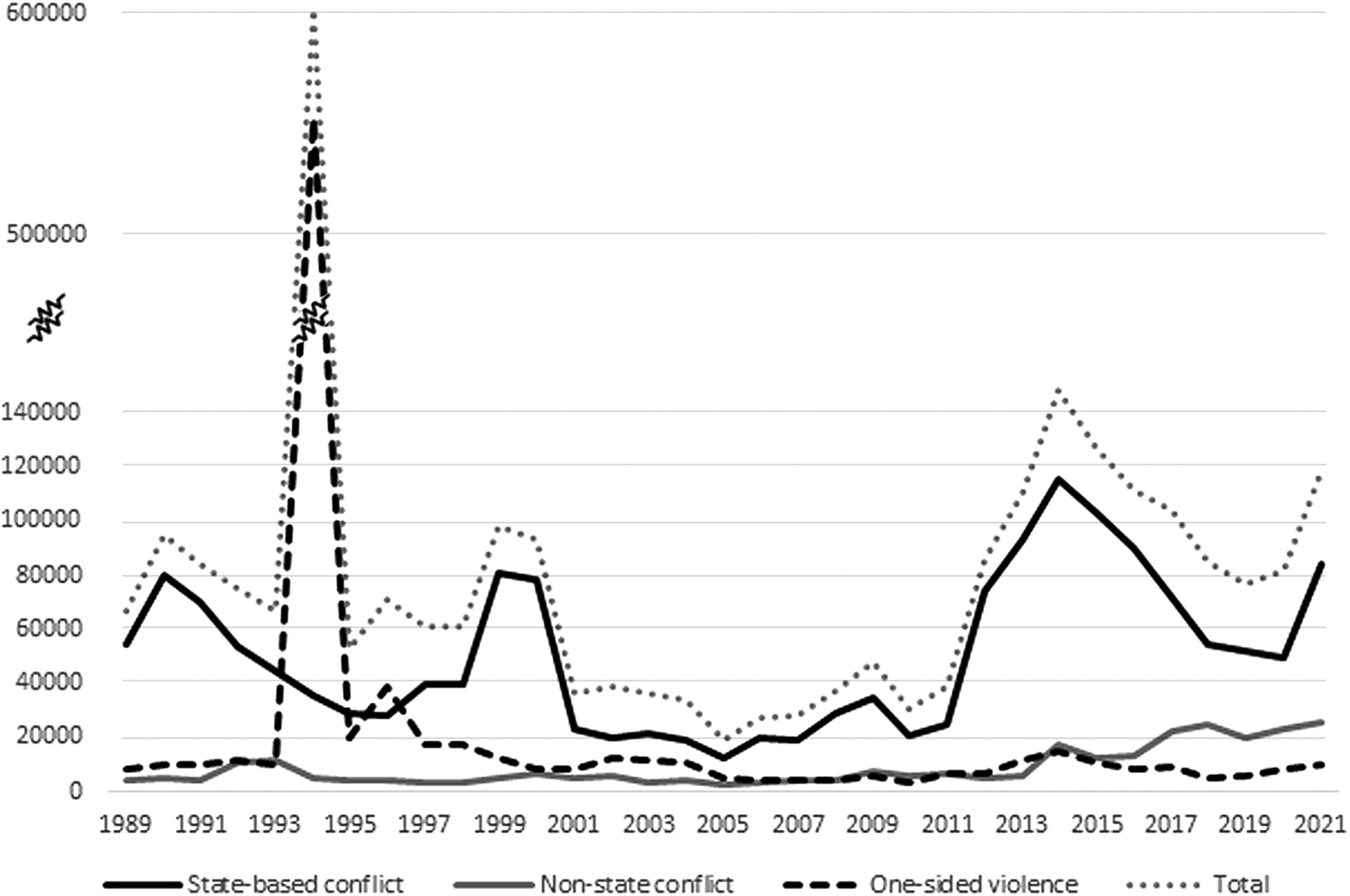
The upward trend in fatalities was mainly driven by escalating violence in three wars: those over government power in Afghanistan, Ethiopia, and Yemen. All three were active at the level of war in in 2020, meaning that they caused at least 1,000 battle-related deaths, but intensified dramatically in 2021 due to large-scale offensives.
Recent years have seen Africa overtake the Middle East in driving the trend in organized violence. Completely dominant in one-sided violence, and the location of almost half of all state-based armed conflicts in the world, Africa witnessed its bloodiest year since the Ethiopia–Eritrea war in 1999–2000. 3 Despite this, Asia was the worst hit region in 2021, with resurgent violence in Afghanistan outpacing any other area.
The first section of this article presents recent trends in three types of organized violence, focusing particularly on events in 2021. The second section focuses on the use of armed drones, highlighting how UCDP events data can be used to explore an influential feature of many conflicts in the 21st century. All three of the most active state-based conflicts mentioned above are areas where the use of UAVs has played an important role in how these conflicts have developed.
State-based armed conflict 1946–2021
UCDP documented a decrease in the number of state-based armed conflicts in 2021, after both 2019 and 2020 had set new record highs for active conflicts in the post-1946 period. 4 The decrease in 2021 was modest, however, from 56 state-based armed conflicts active in 2020, to 54 active in 2021. The number of state-based armed conflicts has remained at a historically high level since 2015, with 52–56 state-based armed conflicts recorded annually since then. This is high compared to the 31–39 annual conflicts recorded between 2000 and 2013.
In total, UCDP recorded nearly 84,000 battle-related deaths in state-based armed conflict in 2021, compared Fatalities in state-based conflicts by region, 1946–2021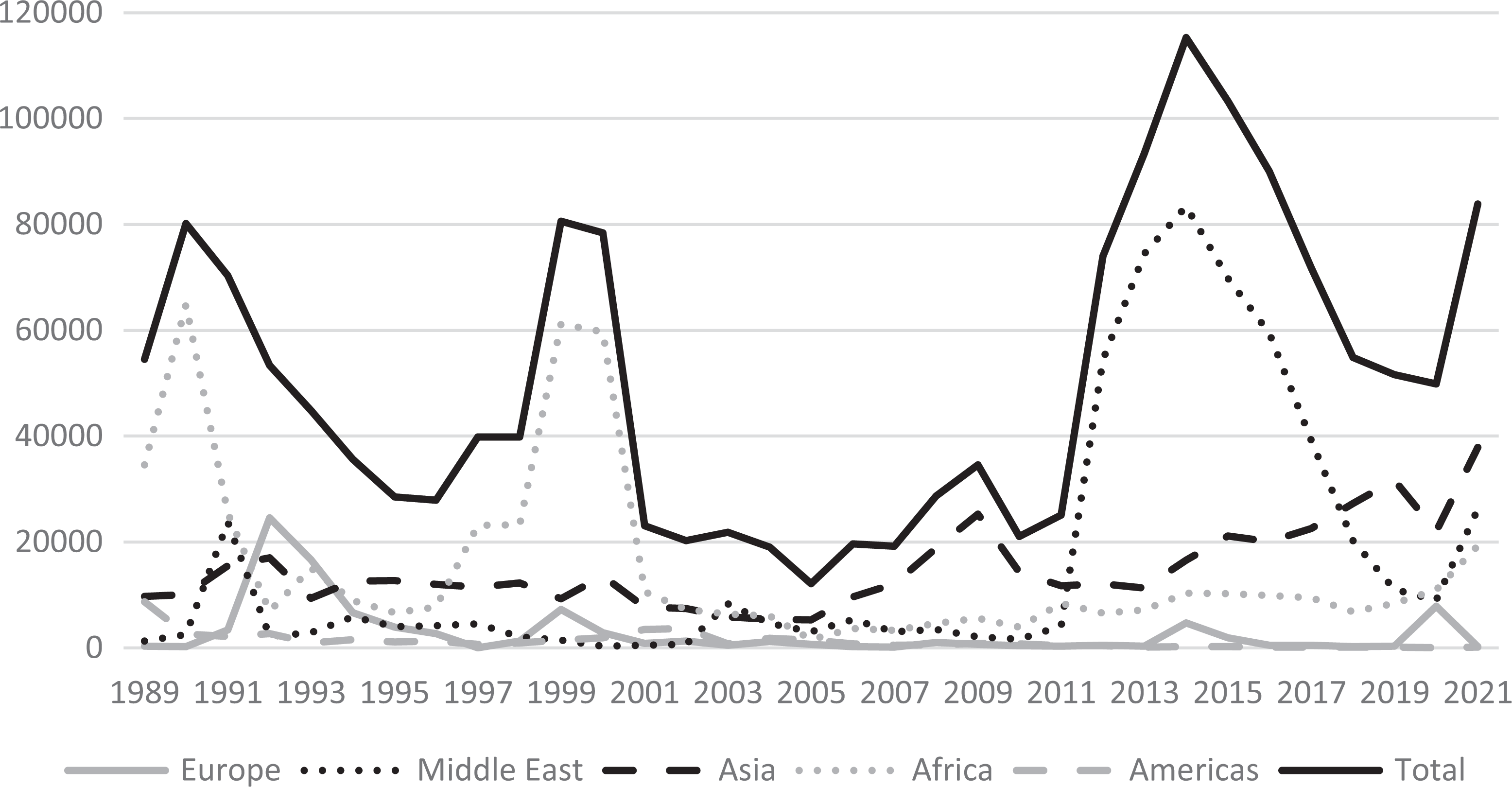
For the first time since the outbreak in 2011, none of the armed conflicts in Syria reached the intensity level of war in 2021. Both the conflict over government and the one against IS (Islamic State) remained active, but at a lower intensity. The war in Azerbaijan also de-escalated sharply, dropping well below the threshold of war, but remaining active due to intermittent clashes.
Three conflicts, those over government in Afghanistan, Ethiopia, and Yemen, have overwhelmingly driven the increase in fatalities in state-based conflicts in 2021. Afghanistan was the worst hit, but was also the only one of the conflicts to see one side achieve victory, as the Taliban overthrew the government. In both Ethiopia and Yemen, attempts were made to achieve a decisive military victory, only to result in very high costs in human lives and in significant military setbacks. Together, the escalation of these three conflicts caused an increase of almost 42,600 fatalities in 2021 compared to the previous year, and together made up 79% of all state-based fatalities. At the same time, the combined fatalities of all other state-based conflicts in the world decreased substantially during the year, from almost 26,000 in 2020 to just over 17,000 in 2021.
In Afghanistan, the agreement signed in February 2020 between the Taliban and USA provided for a complete withdrawal of foreign forces from Afghanistan in 2021, resulting in a lull in fighting in 2020. As the foreign forces withdrew, the Taliban gradually took control of the country, causing violence to escalate dramatically in 2021. On 15 August 2021, Taliban forces entered the capital Kabul and President Ghani resigned. Following the Taliban takeover, the Panjshir valley north of Kabul was the main pocket of resistance against the Taliban regime, and sporadic clashes continued.
In Yemen, fatality numbers had been relatively low during 2019 and 2020, compared to previous years, following the signing of a partial ceasefire for the major port city of Hudaydah in late 2018. In early 2021, Ansarallah, 6 seen as the government of Yemen in UCDP data due to its control of the Yemeni capital, launched a major offensive on the last northern stronghold of the internationally recognized government of Yemen under Abdrabbuh Mansur Hadi. The offensive made significant progress at an extremely high cost in human lives, although it failed to achieve the objective of capturing the city of Marib as Hadi’s international allies, primarily Saudi Arabia, stepped up airstrikes in response.
The conflict between the Ethiopian government, supported by Eritrea, and TPLF (Tigray People’s Liberation Front) escalated dramatically in 2021. Having been pushed out of Tigray’s urban centers, TPLF launched a guerilla campaign from the mountains. In the context of extensive one-sided violence carried out by both Ethiopian and Eritrean troops, TPLF gained increasing support from the population, and grew substantially in size. Starting in mid-June, TPLF launched a counter-offensive which was not halted until the end of November, only 200 km from the capital. December saw the group retreating towards Tigray following substantial deliveries of modern military equipment, including armed UAVs, to the government forces from its international partners.
Africa has been the continent with the highest number of state-based armed conflicts since 2015. The number steadily increased during 2018–20, largely due to the expansion of IS (Pettersson & Öberg, 2020). This trend was, however, reversed in 2021, with the number of conflicts decreasing from its all-time high of 30 in 2020, to 25 in 2021. Despite this decrease, fatalities increased by almost 76%, from 11,000 in 2020 to 19,300 in 2021. Almost the entirety of the increase can, however, be attributed to the escalated war in Ethiopia, and to a re-escalation of the conflict over government in the Central African Republic (CAR), albeit the latter contributed to a far lesser degree.
Seven state-based conflicts in Africa became inactive in 2021: the conflicts in Angola, Algeria, Libya, Rwanda, 7 and Tanzania, and two conflicts in DR Congo. 8 Simultaneously, however, two new conflicts broke out. The violence of JNIM (Group for the Support of Islam and Muslims), an al-Qaida linked jihadist movement that has been active in Mali since 2017 and in Burkina Faso since 2018, spread across the border into Niger, activating the conflict over government there for the first time since 2008. In another worrying development, the territorial conflict over Biafra in Nigeria became active for the first time since 1970.
The number of active conflicts in Asia increased from 13 in 2020 to 17 in 2021. This increase was mainly due to the rising levels of violence in Myanmar, where five conflicts which had not been active the year prior became active in 2021 following the military coup in February. 9
The number of interstate armed conflicts, where both warring parties are states, decreased from the unusually high number of three in 2020 to two in 2021. One of these was the conflict between Iran and Israel, which has been ongoing since 2018, and which has mainly consisted of Israeli airstrikes on Iranian targets in Syria. The second interstate conflict active in 2021 was the territorial conflict between Kyrgyzstan and Tajikistan, which was recorded as active for the first time in UCDP data in 2021. This indicates a worrying precedent for addressing territorial disputes through armed interstate conflict. It is the second year running in which a new or long latent border dispute between states has flared into an armed conflict, the other being the China–India conflict over the Aksai Chin and Arunachal Pradesh. This conflict became active in 2020 for the first time since 1967.
The year also witnessed an increasingly tense situation in Europe, due to Russia’s belligerent rhetoric and military buildup along the border with Ukraine in the lead-up to its invasion in February 2022, which started the first interstate conflict to reach the threshold of war since the US-led invasion of Iraq in 2003. Despite the increasingly threatening rhetoric from Russia, the intrastate conflict over the territory of Novorossiya in Ukraine against DPR (Donetsk People’s Republic) and LPR (Lugansk People’s Republic) saw no significant changes in the number of fatalities from the previous year, which was the calmest year on record since the start of the conflict. In total, just over 200 people died in the state-based conflict in 2021.
Except for recurring clashes between India and Pakistan, militarized interstate conflicts have been rare occurrences for the past 20 years. Interstate conflicts nevertheless appear to be increasing in frequency. The first decade of the 2000s saw eight active interstate conflict-years, whereas the second decade saw 14. The first two years of the 2020s has already had five active interstate conflict-years. The presence of interstate conflicts, with two state armies involved, is concerning as they carry the potential to be deadlier than intrastate conflicts. Instances of state armies fighting each other have also become increasingly common as a result of Number of state-based conflicts by type, 1946–2021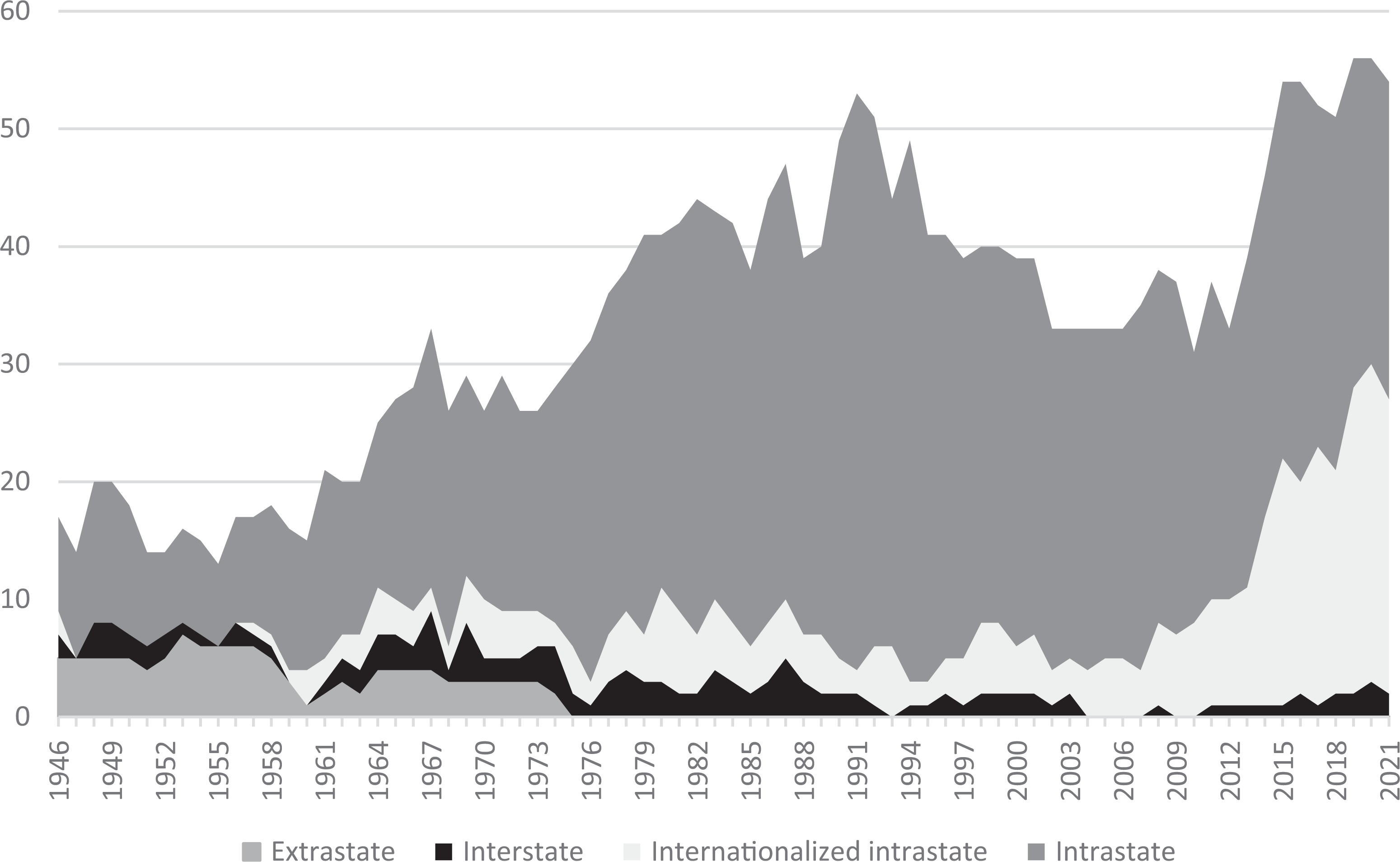
As seen in Figure 3, internationalized intrastate conflicts, where one or both parties to an intrastate conflict receive troop support from an external state, remained at historically high levels in 2021 at 25, despite a drop by two since the previous year. The first time UCDP recorded more than ten internationalized conflicts in a year was in 2014, and the prevalence of internationalized conflicts has continued to increase since. This trend has largely been driven by efforts by the United States and its European allies to combat transnational jihadist groups, most notably IS. In 2014, only one country, Iraq, was receiving secondary warring support to combat IS, but this had grown to six in 2015. In 2021, ten instances of secondary warring support were recorded in conflicts against IS, as well as seven more instances in which a government received troop support to combat other transnational jihadist groups. The prevalent use of UAVs as a form of secondary warring support highlights how the trend of increasingly internationalized intrastate conflicts has been enabled by using UAVs as a cheaper form of secondary warring support, discussed more in the final section of the paper.
Non-state conflicts 1989–2021
Both the number of non-state conflicts, and the number of fatalities incurred in them increased in 2021. UCDP registered 76 different non-state conflicts in 2021, which is an increase by three compared to 2020. 11 The number of non-state conflicts decreased in both Africa and the Middle East, but increased in the Americas. These conflicts resulted in over 25,200 fatalities in 2021, compared to 23,200 in 2020.
Non-state conflict remains at historically high levels, both in terms of fatalities and the number of conflicts, as has been the case for the past eight years. The increase eight years ago was largely due to the proliferation of Fatalities in non-state conflict by region, 1989–2021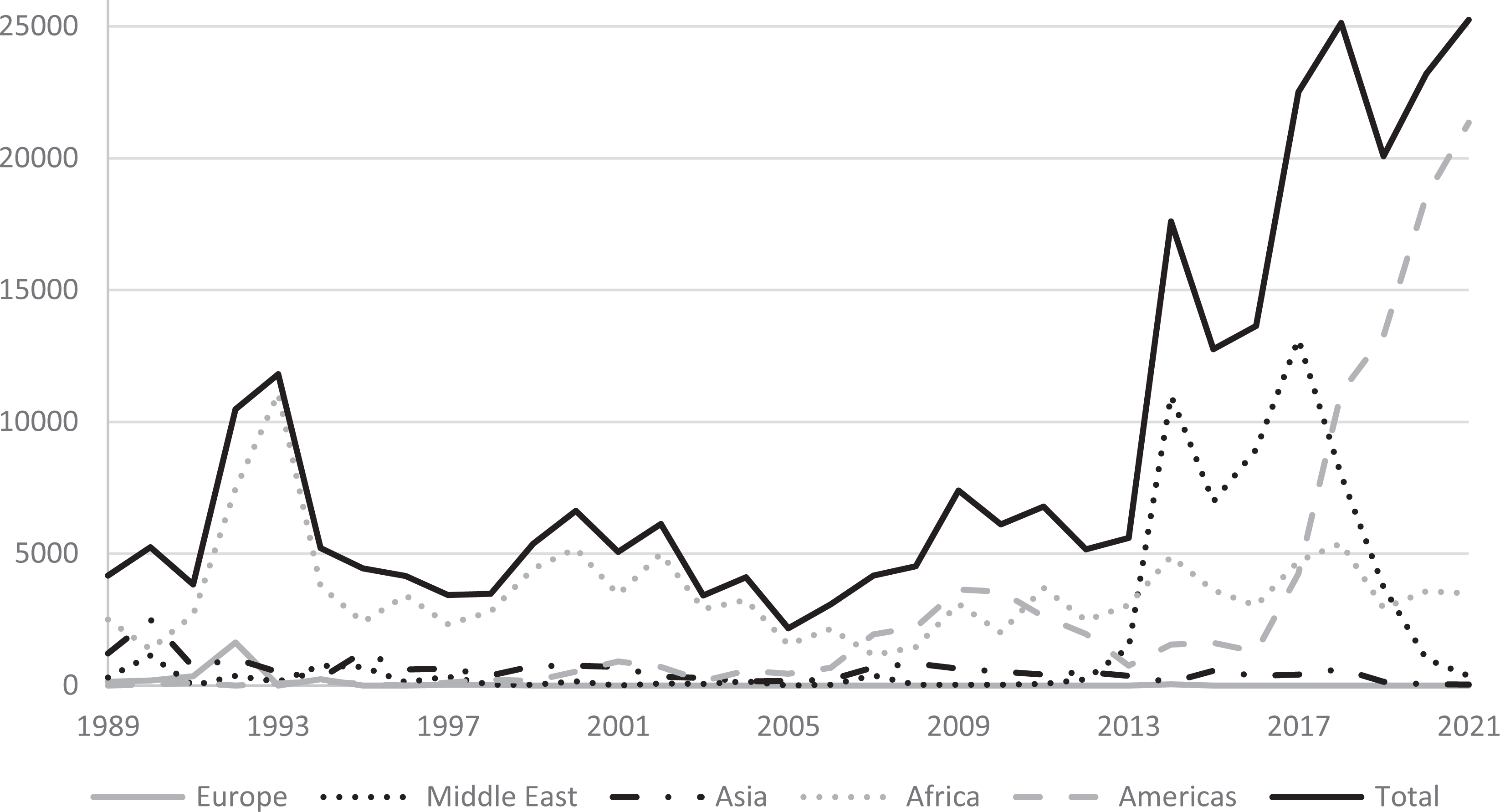
The trend in the Americas has been the reverse, with non-state violence beginning to escalate in 2017. Since then, we have recorded an increased number of conflicts resulting in more fatalities each year, making the Americas the hardest hit region in terms of non-state fatalities for the past four years. In 2016, there were eight active non-state conflicts in the Americas resulting in 1,300 deaths, whereas in 2021 this number had reached 30 conflicts and 21,300 fatalities, the highest number of conflicts and fatalities recorded in the region.
Mexico has been the most heavily affected country by far for several years, with 16 active conflicts and at least 18,700 fatalities in 2021. This signifies an increase of two new conflicts and over 2,000 fatalities compared to 2020, which was already the most violent year recorded by UCDP. In recent years, most of the fighting has involved the Jalisco Cartel New Generation, which emerged in 2010 as a splinter group from the Sinaloa Cartel, and has since grown into one of the most dominant organizations in Mexico. The Jalisco Cartel New Generation was involved in nine out of the 16 non-state conflicts in Mexico during 2021, and fighting involving the group accounted for 14,400 deaths, or about 77% of the total fatalities in non-state conflicts registered in Mexico.
One-sided violence 1989–2021
In 2021, UCDP recorded 40 actors carrying out one-sided violence. While this is a decrease by four since 2020, the number of actors in the past two years is at its highest level since the early 2000s. 12 In addition, the number of civilians killed in direct, targeted violence continued to rise in 2021. UCDP recorded 10,000 fatalities from one-sided violence during the year, compared to just over 8,500 in 2020. This is an increase by 16% and the highest number since 2015. Africa continued to dominate the trend of one-sided violence. In 2021, 82% of all fatalities from this type of violence occurred in Africa.
Figure 5 shows that most of the increase in one-sided violence came from government actors, as a few, very violent cases influenced the trend in 2021. In the escalating war in Ethiopia discussed above, all sides in the conflict also carried out large-scale one-sided violence and human rights abuses, including widespread sexual violence. In total, UCDP recorded almost 4,000 fatalities in civilian targeting in Ethiopia last year, of which Fatalities in one-sided violence, by type of actor, 1989–2021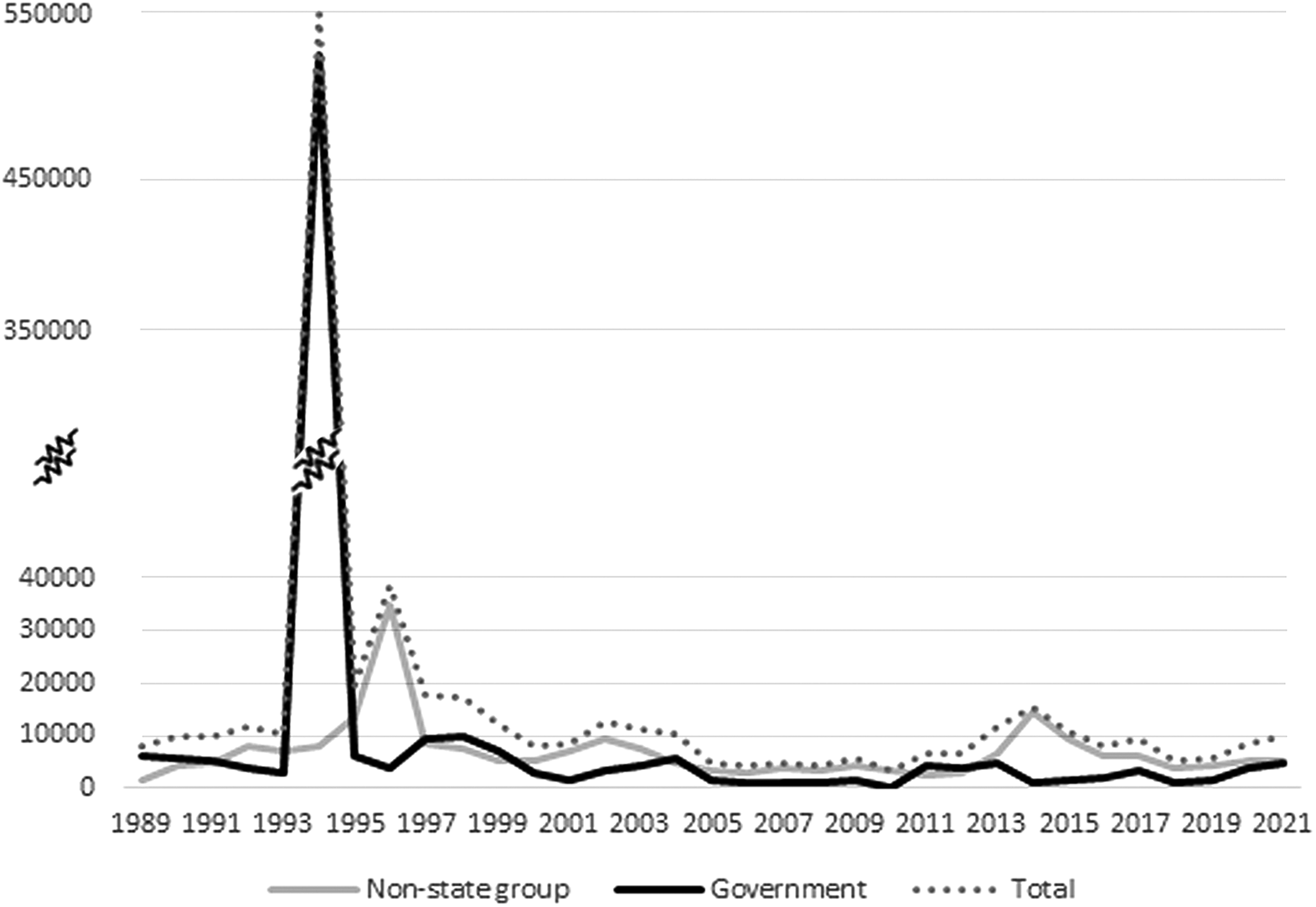
In Myanmar, the military under the leadership of General Min Aung Hlaing took power from the democratically elected ruling party in a coup d’état on 1 February 2021. The military takeover led to series of popular nonviolent protests throughout the country, demanding the reinstatement of the civilian regime. The military responded violently, killing at least 600 civilians in peaceful protests or in the extensive use of executions during the year, in addition to hundreds killed in violent protests. 13
Government actors are responsible for the recent increase in one-sided violence, but IS has been the actor with the highest number of one-sided killings in the world every year since 2015. In 2021, UCDP recorded just over 3,000 civilians targeted and killed by IS, in 15 different countries. The number of victims has doubled since 2019, and last year’s number is the highest since 2016. One-sided violence, such as targeted killings and suicide attacks, is a low-cost tactic, and experts have argued that as groups lose ground on the battlefield they may increasingly shift to such cheaper strategies (e.g. Winter, 2017). Most IS assaults took place in DR Congo, with government offensives against IS strongholds being followed by retaliatory killings of civilians (Ram, 2022).
Drones in armed conflict
UAVs, commonly known as drones, have come to play an increasingly prominent role in armed conflicts over the past two decades. UAVs have been around since the end of World War II, first being used as target drones and later during the Cold War being used mainly for reconnaissance, artillery spotting, and as decoys. In more recent times the technological sophistication and the ease of operating UAVs have increased dramatically, at the same time as the costs have decreased Drone-related fatalities in organized violence, 2001–21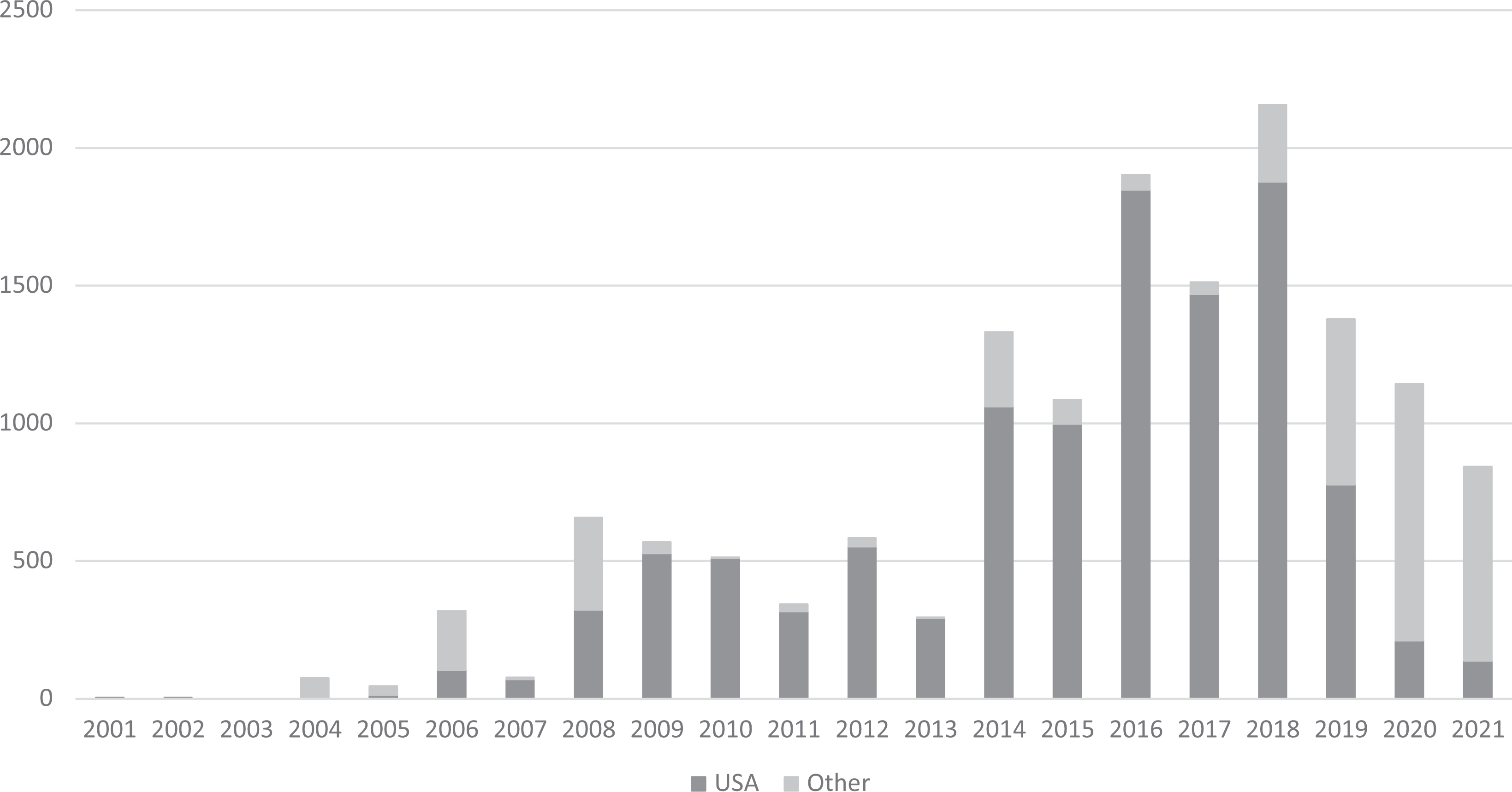
Armed drones in UCDP data
The first lethal drone strike recorded in the UCDP Georeferenced Events Dataset (GED) occurred in October 2001 in Afghanistan. 14 Since then, we identified 1,983 events in which armed drones were used to lethal effect, out of the 240,000 events included in GED. The usage of armed drones is likely higher, as manned airstrikes and UAVs are often lumped together in the reporting, not necessarily mentioning armed drones specifically. 15
Since 2001, warring parties used UAVs in lethal events in at least 46 different conflicts located in at least 26 different countries. Most of the strikes took place in Afghanistan, Pakistan, Yemen, Israel, and Syria. Warring parties in state-based conflicts dominate the trend, but armed drones have also been used in non-state conflicts, including as secondary warring support from the USA to groups such as SDF (Syrian Democratic Forces) in Syria, and Forces of Hadi in Yemen (the internationally recognized government). 16
GED events involving armed drones resulted in almost 15,000 fatalities, of which around 4,000 were civilians or victims of unknown identity. Most civilian casualties occurred in Afghanistan, Ethiopia, Israel, Syria, and Yemen.
Figure 6 shows that the USA dominates the picture, being involved in 1,466 of the 1,983 events and about 11,000 of the 15,000 fatalities. US involvement has declined over time, however, from being responsible for 88% of the fatalities from drone strikes in the first half of the 2010s, to around 16% in 2021. The downward overall trend in the number of battle-deaths since 2018, is driven by a reduction in the number of events with US involvement – reflecting a decline in US airstrikes in Afghanistan, Syria, and Iraq during this period.
At the same time, fatalities from non-US strikes more than doubled from 2018 to 2021. Figure 7 illustrates the geographical distribution of fatalities from UAV strikes, including French use of drones in Burkina Faso, Mali, and Niger, and Turkish use of drones in Libya and Syria.
17
Several primary parties also used drones in their conflicts; for example Azerbaijani use of drones in the Artsakh (Nagorno-Karabakh) conflict, the two rival governments in Libya using drones against each other, Ukraine striking DPR and LPR, and Israel targeting Palestinian groups in Gaza as well as Iranian forces in Syria.
18
Geographical distribution of drone-related fatalities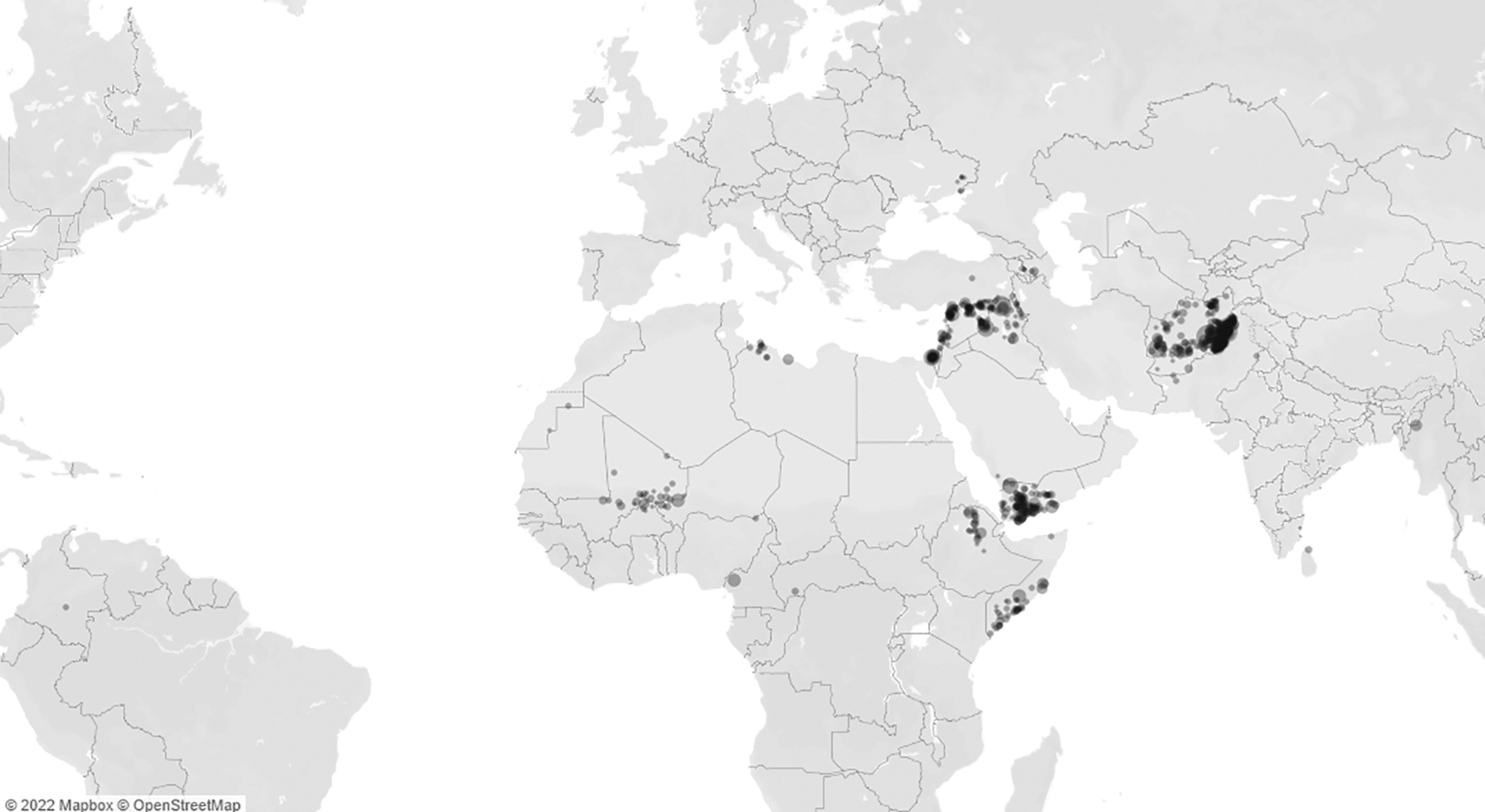
The use of armed UAVs for combat missions by both state actors and non-state actors has been argued to have important effects on conflict dynamics in several recent conflicts (see e.g. Gatoupolus, 2021; Evans & Flanagan, 2021; Waters, 2018). In addition, the use of unarmed UAVs for surveillance may also have significant effects on conflict dynamics, in particular on the ability to successfully organize and conduct insurgencies (cf. Gusterson, 2019, Evans & Flanagan, 2021). Modern military UAVs often have extensive loitering times, enabling them to fly over a target area for many hours. These extended loitering times combined with high resolution video live feeds give governments a powerful counterinsurgency tool, in principle allowing them to establish continuous surveillance of potential rebel staging areas.
The Ethiopian government’s ability to halt and then turn the tide of the TPLF advance on Addis Ababa in November 2021 has at least partially been credited to the government’s employment of UAV surveillance. The surveillance made TPLF positions and movements known to the government in real time, exposing them to government attacks. 20 The increased exposure led the TPLF to conclude that it was not possible for them to continue and therefore decided to retreat (Gatoupolus, 2021; Evans & Flanagan, 2021). To the extent that governments adopt and master the use of UAV surveillance, this might make conventional insurgencies and guerilla tactics significantly more difficult.
In the Azerbaijan: Artsakh conflict of 2020, Azerbaijan employed several types of Turkish and Israeli armed UAVs for intelligence gathering and to provide targeting information for artillery, missile and airstrikes, as well as to directly attack identified targets. 21 Analyses of the war suggest that UAVs played a significant role in the fighting by enabling Azerbaijan to strike at key targets deep into Armenian controlled territory, and also to take out Armenian air-defenses (see e.g. Shaikh & Rumbaugh, 2020; Kasapoglu, 2020). The Ansarallah government in Yemen is another actor which has used UAVs to strike at key targets far beyond the front lines. 22 Ansarallah have used armed drones on targets deep inside Saudi Arabia and United Arab Emirates, illustrating how drones can also be a weapon of the weak and pose a dilemma for actors defending against UAVs. An armed drone, especially a commercial off the shelf UAV modified to carry improvised explosive devices, can be purchased at a fraction of the cost of an advanced air-defense missile (Jones et al., 2021). These examples illustrate how governments and non-state actors alike can use drones to affect conflict dynamics across a range of different situations.
Conclusion
The number of fatalities in organized violence increased significantly in 2021, to the highest levels since 2015, reversing the decrease in violence observed every year between 2014 and 2019. The increase took place across all three categories of organized violence, though it was most marked in state-based violence, with Afghanistan, Ethiopia, and Yemen driving the trend. Africa continued to dominate the trend of one-sided violence, with violence largely escalating due to the behavior of the Ethiopian and Eritrean governments in Ethiopia’s Tigray region. For the fourth consecutive year, the Americas, in particular Mexico, dominated the trend in non-state violence, having replaced the Middle East as the worst hit region. The number of state-based conflicts, in particular the number of internationalized intrastate conflicts, remains at historically high levels at 54. The world has experienced a new peak in the number of conflicts after 2014, matched only by the early 1990s. Our special feature section showed that the UAV usage has dispersed amongst a larger number of actors, even as the downscaling in the involvement of the United States in the war on terror has led to a decrease in the number of incidents and fatalities involving UAVs.
Footnotes
Replication data
The complete UCDP datasets updated to 2021, as well as codebooks and older versions of the datasets, are found at http://ucdp.uu.se/downloads/. The figures in this article were created directly from the Excel sheets at the UCDP web page. Detailed descriptions of the individual cases are found in the UCDP Conflict Encyclopedia at www.ucdp.uu.se/. Replication data and the Online appendix for this article can be found both at http://ucdp.uu.se/downloads/ and at  .
.
Acknowledgements
Numerous colleagues in Uppsala have contributed to the data collection, notably, Hanna Berg, Triveni Chand, Bruno Della Salla, Amber Deniz, Garoun Engström, Tania Estrada, Helena Grusell, Victor Hasslöf, Nanar Hawach, Stina Högbladh, Amanda Löfström, Gabrielle Lövquist, Lotta Themnér, Mert Can Yilmaz, and Herman Wieselgren. Interns Ignacio González, Carl Vosloh, Francisco Urrutia, Alejandra Pineda, Roberta Santos, and Helena Ohlsson were also of great help. A special thanks to Margareta Sollenberg and Lotta Themnér who provided helpful comments on earlier versions and to Mert Can Yilmaz for assistance with designing the figures. We also thank the editor and four anonymous reviewers for helpful comments.