




Abstract
Sexual violence is a prevalent feature of war with severe physical, psychological, and social consequences for survivors. Yet we have a limited understanding of how survivors relate to their political environment after the conflict ends. We analyze individual-level survey data on postwar Sri Lanka to assess whether wartime sexual victimization relates to political activism. Connecting unobtrusive measures from a list experiment to individual survivors’ political action, we show that personal experience of sexual violence increases political participation. This effect is substantial in size, holds for institutionalized and non-institutionalized forms of political action, and is robust to unobserved confounding or sample selection bias. Causal mediation analyses suggest that survivors of wartime sexual violence mobilize politically through their involvement in civic networks. The findings stress the relevance of survivors’ agency and contribute to a better understanding of wartime sexual violence, the role of civil society in post-conflict politics, and of humanitarian policy.
Nadia Murad, a young Yazidi woman and recipient of the 2018 Nobel Peace Prize, shares a remarkable story. Abducted and forced into sexual slavery by ISIS in northern Iraq, she not only overcame a traditional cultural taboo by speaking up about her ordeal but also refused to be broken by it. Instead, she turned into a visible political activist dedicated to bringing justice to her people. Her story contrasts with conventional wisdom on the effects of wartime sexual violence, which often portrays survivors as silent, isolated, and passive.
Inspired by Murad’s story, we turn to a significant research puzzle in the study of violent conflict and politics. Do victims of wartime sexual violence remain politically passive or do they mobilize as a consequence of their experience? Answering this question has valuable theoretical and practical implications, because political action is a powerful means for coping with trauma, addressing grievances, and, ultimately, shaping the future of post-conflict societies. It is also important because sexual violence is a common feature of war, one which has been documented in armed conflicts around the globe (e.g. Wood, 2006; Butler, Gluch & Mitchell, 2007; Leiby, 2009; Cohen, 2013b; Cohen & Nordås, 2014).
Research on wartime sexual violence has made tremendous progress over the last years, greatly contributing to our understanding of its underlying causes, explanations, and dynamics within civil wars (Baaz & Stern, 2009; Cohen, 2013a; Agerberg & Kreft, 2020). A recent stream of literature studies the effects of sexual violence on rebel group fragmentation (Nagel & Doctor, 2020), the mobilization and demands of civilians (Kreft, 2019; Agerberg & Kreft, 2020), the prospects for conflict resolution (Chu & Braithwaite, 2018), and on incentives for international intervention (Kreutz & Cardenas, 2017; Johansson & Hultman, 2019). However, except for Koos (2018), little knowledge exists on the micro-level consequences of wartime sexual violence after the war ends (Nordås & Cohen, 2021). Our article contributes to the closing of this research gap.
We present a systematic micro-level study of the effects of wartime sexual violence on the political behavior of individual survivors. Studying the political effects of wartime sexual violence is a formidable task due to the need to protect the identity and integrity of survivors and the well-known problem of underreporting (Nordås & Cohen, 2021). Many victims remain silent about their experiences, especially in traditional contexts with rigid cultural norms concerning sexuality and gender roles (Krug et al., 2002) or in dangerous (post)conflict situations where perpetrators hold political power and victims fear further reprisals for speaking out (Leiby, 2009; Davies & True, 2015).
We protect the identity and integrity of individual survivors and tackle the problem of underreporting using a list experiment embedded in a survey on social cohesion and political participation in post-conflict Sri Lanka. This method is designed to bring to light sensitive issues fraught with problems of social desirability, shame, or fear of repression by providing participants the possibility to self-report their experience in an anonymized and indirect manner (Blair & Imai, 2012; Glynn, 2013). Traunmüller, Kijewski & Freitag (2019) have pioneered the use of the list experiment in establishing prevalence rates and risk factors of wartime sexual violence. In this study, we innovate by harnessing new statistical methodology (Imai, Park & Greene, 2015) to use unobtrusive measures of wartime sexual violence as predictors of individual survivors’ political participation.
Our results show that, counter to common belief, survivors of wartime sexual violence are neither socially isolated nor politically passive. On the contrary, personal experience of sexual assault during war is significantly related to higher levels of political participation. This effect is substantial in size and holds for institutionalized and non-institutionalized forms of political action, ranging from active campaign work to participation in public demonstrations. Careful sensitivity analyses suggest that the effect is causal, and unlikely to be harmed by violations of the ‘no liars’ assumption 1 or sample selection bias – further bolstering our findings.
To understand why sexual victimization leads to political activism, we derive an explanation from work on the legacies of violent conflict. According to this evolving literature, the civic consequences of exposure to violence are driven by structural changes within social networks (Wood, 2008; Campbell, 2013; Koos, 2018). Building on this argument, we develop a two-part explanation where experience of sexual violence at first incentivizes compensatory social engagement (Koos, 2018). Subsequently, survivors are mobilized for political action by their social networks. We operationalize this two-step theoretical mechanism from social compensation to political mobilization using causal mediation analysis. Ruling out alternative explanations based on changes in preferences and post-traumatic growth, our evidence indeed suggests a knock-on effect where survivors of sexual violence are politically mobilized through their involvement in social networks or civic associations.
This article makes several valuable contributions to our understanding of wartime sexual violence and post-conflict societies. We help shift the focus away from perpetrators toward survivors instead. While existing work has stressed the incentives, strategies, and practices of those engaging in sexual violence (Baaz & Stern, 2009; Cohen, 2013a; Wood, 2014), we turn to the agency of those victimized (Touquet & Schulz, 2020). All else being equal, survivors of wartime sexual violence are active members of post-conflict society and make themselves heard through their political activism. This complements studies on how victims respond to sexual violence during war (Kreft, 2019) and qualifies previous scholarly accounts, which cast victims as socially isolated and politically passive (Diken & Laustsen, 2005; Buss, 2009).
We also add a new perspective to the study of civil society and violent conflict. Previous research has stressed the importance of dense interethnic networks of civic engagement for the containment and prevention of violent conflict (Varshney, 2001, 2003). Our findings demonstrate how civic networks structure post-conflict politics and therefore also matter once the violence has come to an end. More generally, this study has wider implications for humanitarian efforts and policy in post-conflict societies. In underscoring the central role of civil society, it shows that – next to economic recovery and the (re)building of institutions – strengthening civic networks and associations is a crucial step on the path toward recovery from violence.
The legacies of wartime sexual violence
Research on how wartime experiences influence the social and political behaviour of individual citizens has produced a set of provocative insights (e.g. Bellows & Miguel, 2009; Blattman, 2009; Gilligan, Pasquale & Samii, 2014). A meta-analysis of 16 studies finds strong support for the notion that exposure to conflict increases civic participation (Bauer et al., 2016). However, less is known about the consequences of wartime sexual violence. Leading scholars stress that it is both theoretically and empirically distinct from other forms of political violence (Wood, 2009; Cohen, 2013a). In addition to enduring physical consequences (i.e. sexually transmitted diseases, unwanted pregnancies, infertility), survivors carry with them deep psychological scars of trauma, humiliation, and shame (Cohen, 2013a; Kreft, 2019; Touquet & Schulz, 2020). As such, experiencing wartime sexual violence is likely to have profound effects on survivors’ civic and political behaviour.
Since victims of wartime sexual violence are threatened with stigmatization and exclusion, it is widely believed that they remain socially isolated and politically passive after the war ends (Clark, 2017; Koos, 2017). A rich qualitative literature points to the role of gender norms and stigma in limiting social integration (Clark, 2017; Touquet & Schulz, 2020). Nonetheless, the empirical basis for this claim has limitations. Studies are commonly based on a small number of interviews (Koos, 2018) or rely on selective accounts lacking representativeness due to the problem of underreporting (Cohen & Green, 2012). In addition, it is theoretically questionable whether victims remain socially and politically quiescent after the conflict ends, doing little to address their grievances (Edström & Dolan, 2019).
In an important first systematic study of the social consequences of wartime sexual violence, Koos (2018) qualifies this notion. He finds that households whose members were raped during the war in Sierra Leone engage in more prosocial behavior. This may be explained as compensatory behaviour aiming to ‘reduce stigma and avert social exclusion’ (Koos, 2018: 204). Annan et al. (2011) similarly find that women abducted by the LRA in Uganda who returned home were resilient and reintegrated socially into their communities.
Next to its social consequences, the experience of wartime sexual violence is likely to alter other types of individual behaviour including political activism. Postwar political activities can help survivors articulate their grievances and bring about political change. We argue that survivors’ social participation may not only ensure inclusion and support from the local community (Putnam, 1993; Koos, 2018), but also serve as a mobilizing platform for political activism. Below, we develop an argument on the political consequences of wartime sexual violence in post-conflict societies, offering a different, yet complementary view to previous research.
Explaining survivors’ political action
Political action aims at influencing public opinion, political outcomes, and government policy at large (Dahl, 1971; Verba & Nie, 1972). In postwar contexts, political activism can shape politics by supporting, campaigning for, or promoting effective policies to protect victim rights (Agerberg & Kreft, 2020). Survivors’ political activism may also help overcome the cultural stigma associated with such violence through public-awareness events that inform civil society on how to support and relate to victims (Edström & Dolan, 2019). 2
Individual participation in political activities has its challenges, however. According to the paradox of political participation, an individual’s involvement has a negligible effect on generating desired political outcomes (Downs, 1957; Green & Shapiro, 1994). This is likely to be exacerbated in post-conflict contexts, where nonviolent channels to deal with political disputes, competition, and dissent are still to settle (Gates et al., 2012; Hartzell & Hoddie, 2015). Due to fears of negative repercussions and the risk of small returns, citizens in general, and survivors in particular, may not become politically active.
In the absence of individual incentives to get involved, social networks play a central role in mobilizing political action (e.g. Zuckerman, 2005; Campbell, 2013). 3 Communal groups and civic organizations foster political participation by reducing dilemmas of collective action and facilitating cooperation among members (Putnam, 1993). They provide individuals with the necessary skills, resources, and information for effective political action, increasing the likelihood that they will be recruited and mobilized (Verba, Schlozman & Brady, 1995; Campbell, 2013).
Civic networks have proven to be a significant coping mechanism in post-conflict societies, especially for citizens directly affected by wartime sexual violence (Wood, 2008; Annan et al., 2011; Koos, 2018). Kreft (2019) shows that in response to the threat of sexual violence, women in Colombia mobilized and formed links to nongovernmental organizations. Social networks are also created because survivors have incentives to offset their traumatic war experience via increased social participation (Gilligan, Pasquale & Samii, 2014; Koos, 2018). Yet, besides the immediate role of social integration and the provision of social support, civic networks may also have important side effects for survivors’ political action. Taken together, this suggests a theoretical mechanism where social networks act as mediators of wartime sexual violence and have an important knock-on effect by encouraging survivors’ political participation.
To test this expectation, we turn to a systematic analysis of individual political participation in post-conflict Sri Lanka. In line with our argument, we follow a two-step empirical strategy. We first study survivors’ political action using unobtrusive measures from a list experiment that protects their identity and alleviates the problem of underreporting. In a second step, we conduct a causal mediation analysis to assess whether the mobilizing effect of wartime sexual violence is indeed due to social networks. Next, we give a concise background on wartime sexual violence in the Sri Lankan case.
Wartime sexual violence in Sri Lanka
In May 2009, the Sri Lankan government claimed victory in the 26 years-long civil war with the separatist group known as the Liberation Tigers of Tamil Eelam (LTTE). Leaving approximately 100,000 dead, the war had a significant impact on Sri Lankan society (Glatz, 2014). Postwar reports indicate that large segments of the population were systematically subjected to wartime sexual violence (HRW, 2013; UN, 2015). The use of sexual violence during the conflict was highly asymmetric (Wood, 2006, 2009), with almost no reports documenting such acts by the LTTE (UN, 2015). In contrast, reports suggest the systematic use of sexual violence by government forces, particularly in the last years of the war (AI, 2002; Wood, 2009; UN, 2015). Sexual violence occurred against ethnic Tamils and Tamil-speaking Muslims suspected to be LTTE members or collaborators, in detention or during flight from conflict zones (Peel et al., 2000; Wood, 2006; ITJ, 2015). The occurrence was so widespread that Human Rights Watch (2013: 36) concluded that ‘there appears to be no category of Tamil who, once taken into custody, is immune from rape and other sexual violence’.
The government being the predominant perpetrator of wartime sexual violence further exacerbates the need to protect the integrity of survivors and the notorious problem of underreporting (Krug et al., 2002; Leiby, 2009). Fear of social stigmatization and reprisal have kept both female and male rape victims silent (HRW, 2013), and the true extent of sexual violence during the war remains unknown (UN, 2011: 44). The government has also shown little interest in investigating its crimes or in cooperating with NGOs to provide support to victims. Existing reports on wartime sexual violence have relied on victims’ and witnesses’ testimonies, medical reports, Supreme Court rulings, and documents by investigative commissions (Peel et al., 2000; AI, 2002; UN, 2011). Some of these bodies faced government-access restrictions, being forced to investigate the matter undercover or from abroad (HRW, 2013; UN, 2015).
The case of Sri Lanka offers a unique opportunity to better understand the long-term political consequences of civil war sexual abuse for individual survivors. With the end of the conflict in 2009 and the slightly improved reconciliatory efforts following the election of President Sirisena in 2015 (Seoighe, 2017), we can assess whether, over time, sexual violence survivors have been politically active as a result of their ordeal. Post-conflict time is thus an important dimension. It provides citizens with an opportunity to resume their civic and political engagements and allows researchers to study the case ethically and responsibly (Cronin-Furman & Lake, 2018). The location of Sri Lanka in Asia also contributes to the broader research efforts to understand sexual violence, which have predominantly focused on countries in Africa (e.g. Koos, 2017; Touquet & Schulz, 2020).
Data and method
We rely on survey data on general topics of social cohesion and post-conflict political participation in Sri Lanka by Traunmüller, Kijewski & Freitag (2019). The survey took place in the first half of 2016, seven years after the civil war ended. It was carried out via face-to-face interviews in both the Sinhala and Tamil languages, across all 25 districts – including the areas at the centre of the conflict. 4 The selection of respondents followed a multistage, stratified random sample procedure. Tamils were oversampled to guarantee reliable estimates for this important ethnic minority group. 5 Overall, the survey contains 1,800 interviews. 6
Outcome variables: Political participation
To capture individual political participation in post-conflict Sri Lanka, we rely on a survey question which reads: ‘During the last twelve months, have you done any of the following?’ It was then followed by a list of 22 binary items, ranging from attending political rallies or contacting local government officials to participation in illegal protests.
We use two different measures for political participation. First, as is standard practice in political behavior research, we rely on a simple additive index. The scale ranges from 0 to 22, with a mean of 1.59 and standard deviation (SD) of 2.46. 7 Second, we subjected the 22 items of the political participation index to factor analysis to distinguish between types of political participation. The results in Table I show that three underlying factors best explain the variation in types of political participation: institutionalized, non-institutionalized and online – factors 1, 2 and 3, respectively. We use the standardized factor scores as individual outcome variables to get a better sense of the rationale behind the mobilizing effect of wartime sexual violence.
Explanatory variable: An unobtrusive measure of wartime sexual violence
Factor structure of political participation items
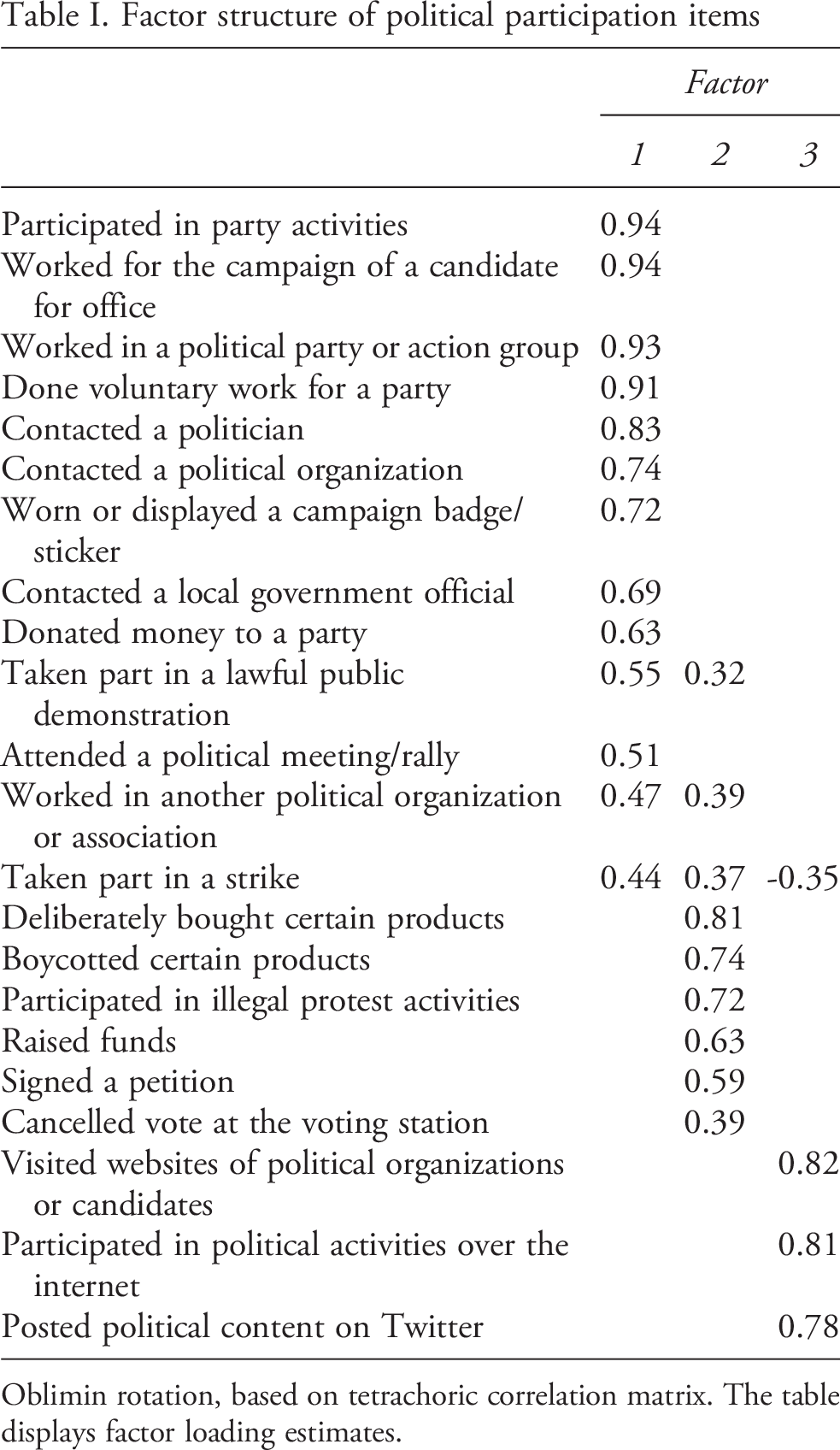
Oblimin rotation, based on tetrachoric correlation matrix. The table displays factor loading estimates.
The list experiment in the survey reads: ‘Now we would like to ask you some more questions about what happened during the war. Please refer to the following list and tell me how many of these experiences happened to you during the war. Please don’t tell me which specific statements you believe to be true, only how many.’ Respondents were randomly assigned to either treatment or control group. Both groups were then presented a list of answers and asked to identify the number of statements (not which ones) applied to them (Blair & Imai, 2012; Glynn, 2013; Blair, Imai & Lyall, 2014). While the control group only received three items, 8 the treatment group additionally received the sensitive item ‘I was personally sexually assaulted.’ 9
We draw inferences on the sensitive item by comparing responses between treatment and control group. Randomization ensures that treatment and control units are the same in all observable and unobservable characteristics. Any difference in response is therefore attributed to the presence of the sensitive item. In addition to randomization, the analysis of list experiments rests on two key assumptions (Blair & Imai, 2012). First, we assume that participants respond truthfully to the sensitive item. Unfortunately, this ‘no liars’ assumption cannot be directly tested, but we assess the sensitivity of our results to its violation further below. Second, we have to assume that the presence of the sensitive item does not affect the answers to the remaining control items. In our case, a statistical test of this ‘no design effect’ assumption fails to reject the null for the list experiments, and thus supports the assumption. 10
The treatment group affirmed an average of
Controls
The survey included additional information on key respondent characteristics such as gender, age, education, ethnic identity, and home region. Item non-response was not an issue for any of these variables. The sample is 58.9% female, with a mean age of 42.6 years (SD: 14.7). Some 26.6% have obtained A-levels or a higher education degree. The ethnic breakdown in the sample is 51.2% Sinhalese, 28.0% Sri Lankan Tamil, 11.2% Indian Tamil, and 9.6% Muslim Moor. A comparison of the sample to the official 2012 Housing and Population Census of Sri Lanka reveals that it provides a good representation of the Sri Lankan population (Traunmüller, Kijewski & Freitag, 2019).
We include provincial-level fixed effects in our model to account for any stable regional factor, like past conflict intensity or ethnic composition, that may confound the findings. 13 We further control for pretreatment variables related to the conflict that might have affected both the experience of wartime sexual violence and level of political participation. Respondents were asked whether they or a family member assisted an armed group during the war (4.6%), were displaced (29.2%), or experienced any other traumatic conflict-related incidents (29.6%).
Importantly, we control for prewar political involvement and civic engagement to preclude the possibility that highly politically active people are more likely to be victimized during the war – as would be expected if state security forces targeted LTTE members and collaborators. Some 4.9% of respondents reported that before the conflict they ‘often’ or ‘always’ discussed politics at home, 14 and 2.3% stated they were active in an NGO. These prewar behaviours were asked together with the module on war experiences, and therefore many respondents did not answer questions about their prewar political involvement (32.7%) or civic engagement (31.6%). However, given the importance of these controls for making causal claims about the effect of wartime sexual violence on political participation, we decide to accept the shortfall in observations in subsequent analyses. We address concerns resulting from sample selectivity further below.
Statistical analysis
We follow a two-step strategy to assess whether and how survivors of wartime sexual violence may be politically mobilized. First, we study individual survivors’ political actions. Second, we use causal mediation analyses to assess whether the mobilizing effect of wartime violence may be due to a change in social networks.
Before we turn to this, we address key methodological challenges derived from indirectly observing individual experiences of wartime sexual violence. While the list experiment allows us to protect the integrity of the interviewee and elicit responses to the sensitive item, it poses the methodological challenge of relating the unobtrusively measured and indirectly inferred experience of sexual violence to individual political behavior, while controlling for potential confounding factors. To this end, we rely on recently developed statistical techniques that incorporate the answers to list experiments in regression analyses (Blair & Imai, 2012). Specifically, we include the predicted (latent) experience of sexual violence as an explanatory variable in regression models for political participation. We achieve this with a multivariate modelling strategy that simultaneously models the response to the sensitive list item, the control list items, and the outcome of interest (Imai, Park & Greene, 2015).
To provide some intuition on how the sensitive item outcome is predicted, note that while we cannot observe an individual’s sensitive outcome, the joint distribution,
A statistical estimator can then model the joint distribution by factoring into two submodels
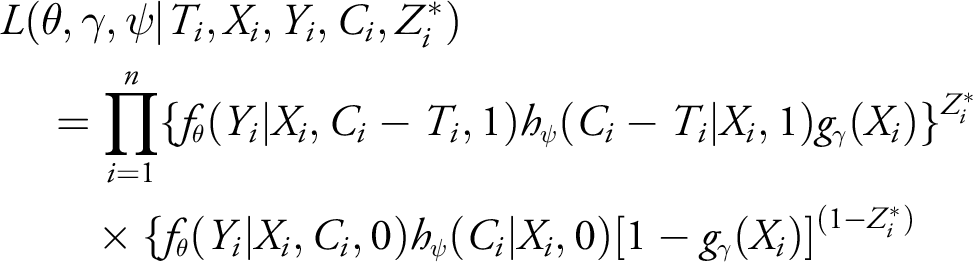
where
Results
Political consequences of wartime sexual violence
Figure 1 presents our main results. Personal experience of wartime sexual violence is strongly and significantly related to heightened political participation in postwar Sri Lanka. On average, survivors of sexual violence report around five additional types of political action to nonvictims (
Since sexual violence during the conflict mostly targeted suspected LTTE members or collaborators, it is highly plausible to assume that victims and nonvictims already differed in their prewar political activism. For instance, more politically active individuals might have been more likely to assist an armed organization representing their ethnic group, and thus more likely to experience victimization during the conflict (cf. Cohen, 2013a). Indeed, while in the submodel we do not find that prewar political involvement predicts victimization, prewar NGO activity is related to a higher risk of experiencing wartime sexual violence (
Regarding other individual-level control variables, we find that females and older respondents participate less in postwar politics. Those who were displaced during the conflict also tend to be less politically involved. Interestingly, and counter to previous studies on the legacies of war (e.g. Bauer et al., 2016), we find no mobilizing effects of other war-related experiences, such as having assisted a military group or undergoing other traumatic experiences including personal injury or witnessing violence or killings of others. Finally, levels of education are not related to increased political participation and there are no notable ethnic differences determining political activity.
For a meaningful interpretation of the impact of wartime sexual violence on postwar political participation, however, we need to address important challenges to inference that our list experiment faces. This refers to the assumptions of ‘no liars’ and ‘no unobserved confounders’ as well as concerns with sample selection bias. The effect of wartime sexual violence on political participation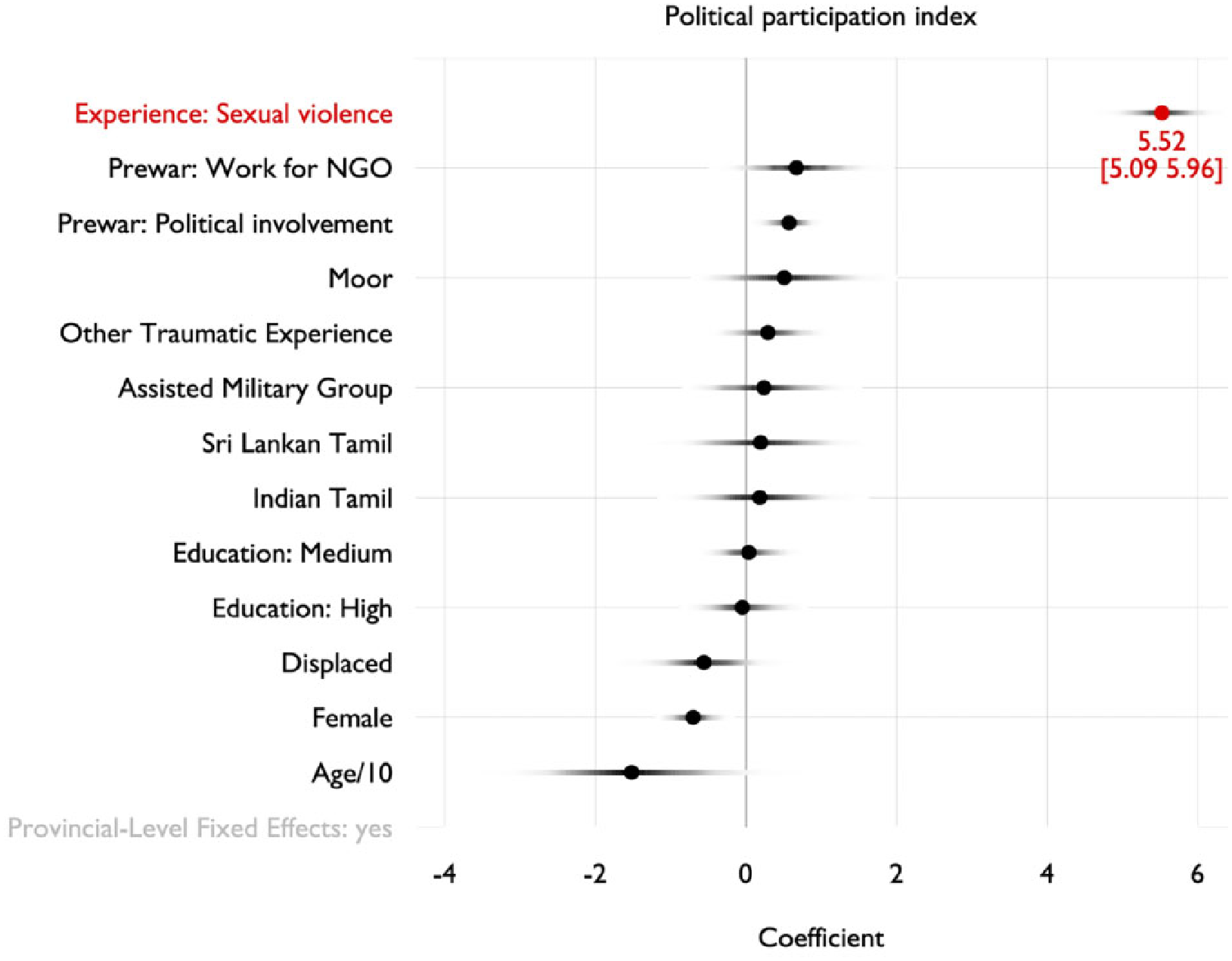
Sensitivity to violation of the ‘no liars’ assumption
The results of the list experiment build on the crucial assumption that participants respond truthfully to the sensitive item on wartime sexual violence. While this ‘no liars’ assumption cannot be directly tested, we can assess the sensitivity of our results to its potential violation. Specifically, we can accommodate the possibility of ‘floor effects’ in answers to the list experiment (Blair & Imai, 2012). A floor effect occurs when respondents whose truthful answer would only affirm the sensitive item, report instead that none apply. This may happen if the baseline items have low prevalence, which is the case in our list experiment as indicated by the low average number of affirmed list items. Intuitively, such an effect should lead to an underestimate of the true proportion of victims of wartime sexual violence and affect our results.
To assess the robustness of our results to the violation of the ‘no liars’ assumption, we conduct a simulation-based sensitivity analysis. First, we calculate the expected proportion of liars following Blair & Imai (2012). We thus estimate two intercept-only MLE models, with and without floor effects.
17
We then take the difference in the prevalence estimates between the two models, giving us a share of ‘potential liars’ of 21.0–12.3 = 8.7% (i.e. respondents who could be potential victims but still ‘lied’ about their experience because of floor effects). Second, we incorporate this share in the outcome model of political participation. To do this, we randomly declare respondents as ‘liars’ by drawing from a Bernoulli distribution of zeros and ones with ‘success’ probability
Finally, for all S simulations we estimate the effect of wartime sexual violence on political participation using the same specification as in the main result. Variation in Assessing sensitivity to the ‘no liars’ assumption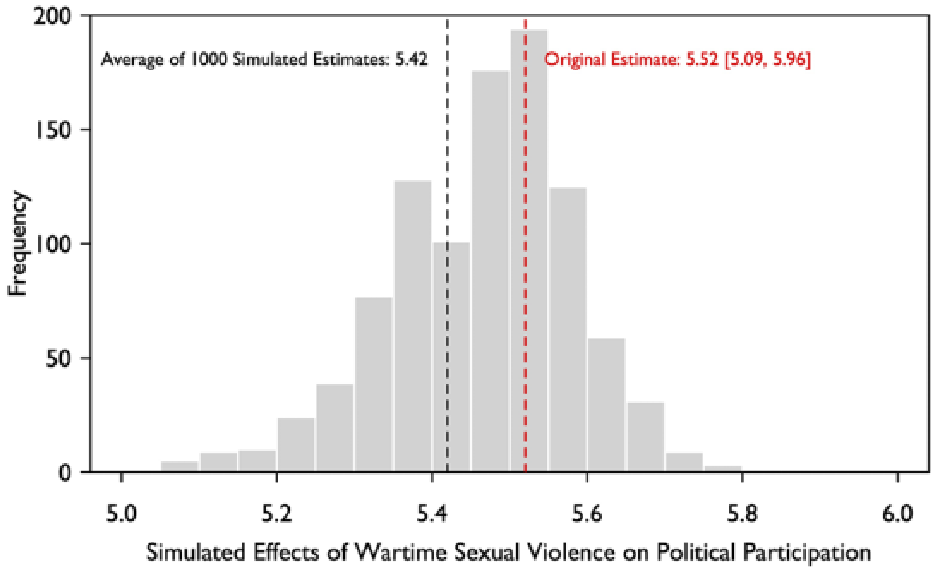
Sensitivity to unobserved confounding
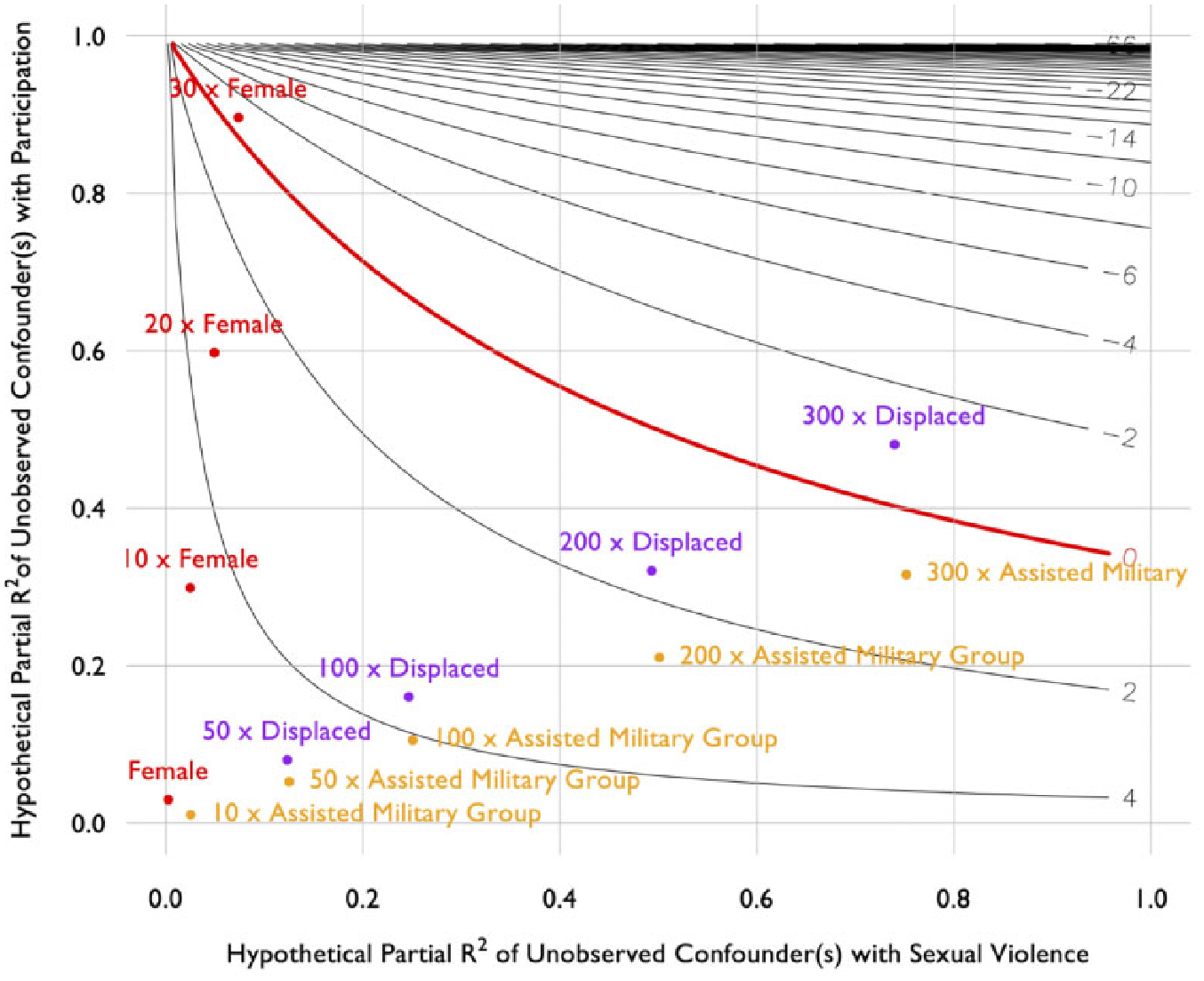
Our list experiment uses randomization to deal with the problem of sensitivity bias, but it is not designed for causal inference. Thus, our causal interpretation of the effect of wartime sexual violence on postwar political participation rests on the assumption of no unobserved confounding. Given the observational nature of our data and the purposeful use of sexual violence by Sri Lankan state security forces, this assumption is almost certainly wrong. 18 However, this does not necessarily invalidate our inference. We present here a sensitivity analysis to assess the robustness of our results to this violation and we ask what such a hypothetical unobserved confounder, U, must look like to call our result into question. 19
An omitted confounder, U, that could jeopardize our causal claim must be related to both wartime sexual violence,
Figure 3 visualizes the net adjusted causal effect of this potential bias,
Sensitivity to sample selection
In our main model specification, we control for prewar measures of political involvement and civic engagement to establish credible causal effects. However, this came with the cost of ignoring almost one-third of the sample that refused to answer the survey module on prewar experiences, raising concerns about sample selectivity. Still, it could be the case that those who refused to answer were more likely to have experienced sexual assault or were motivated not to respond because their prewar involvement was of a certain type.
To test whether sample selectivity plagues our effect estimates of wartime sexual violence, we estimated two additional model specifications. The first model was run on the restricted sample who provided answers to their prewar behavior but without the two prewar control variables. Comparing this to our original model tells us how the prewar controls affect our estimate for the effect of wartime sexual violence. The second model uses the full sample and by necessity does not include the prewar controls. Comparing this second model to the first thus tells us something about the potential influence of sample selectivity. 21
Assessing sensitivity to unobserved confounding
We report the results of these models in the Online appendix Table A.5.3. We find that omitting prewar variables from the model changes our original effect estimate very little:
Survivors’ type of political participation
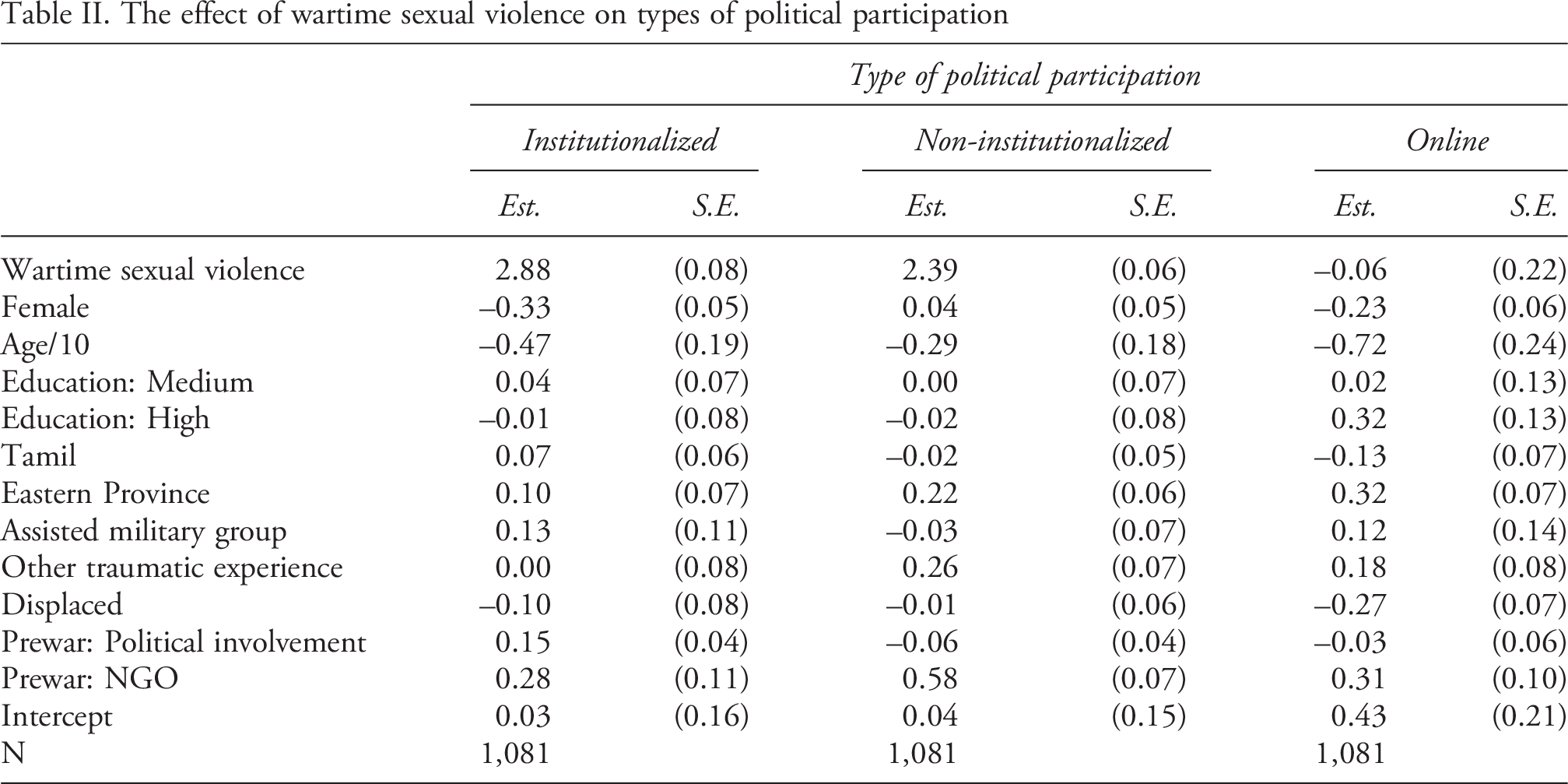
With improved confidence in our inferential capacity, we can now get a better sense of the rationale behind the mobilizing effect of wartime sexual violence. We use the resulting standardized factor scores from Table I as outcome variables and estimate a separate model for each type of political activity: institutionalized, non-institutionalized, and online. We rely again on sensitive item predictor models with a linear outcome equation and show the results in Table II. 22
We find that experiencing wartime sexual violence boosts both institutionalized participation in political parties or campaigns and non-institutionalized boycotts and protest activities. The effect sizes are large, with an increase in institutionalized participation by
As before, the mobilizing effect of experiencing wartime sexual violence holds while controlling for prewar political involvement and NGO engagement. Whereas prewar political involvement is only related to increased participation through institutionalized channels such as political party and campaign work, prewar engagement in an NGO is positively related to all types of post-conflict political participation. 23
The effect of wartime sexual violence on types of political participation
Testing the mechanism
The second part of our empirical strategy evaluates whether social networks connect experiences of wartime sexual violence to subsequent political participation. Using causal mediation analysis, we decompose the effect of sexual violence on political participation into two parts: a mediated (or indirect) effect that runs via a hypothesized mechanism, and a direct effect that captures all possible remaining influences on political behavior.
We are interested in the average causal mediation effect (ACME), meaning how individuals are politically mobilized compared to how they would be mobilized if we changed their social networks, while holding their actual experience of wartime sexual violence constant. We also look at the average natural direct effect (ANDE), which – in contrast to the ACME – quantifies how the political participation of those who experienced wartime sexual violence compares to that of those who did not, while holding constant their social networks (cf. Imai et al., 2011). 24
We use two model equations to estimate the ACME and ANDE. First, we assess whether the experience of wartime sexual violence leads to a change in social networks. These models are of the same form as in the previous section, with the notable exception that social networks serve as outcome variables. In a second step, we model respondents’ political participation – including all variables as before. These equations include social networks as predictors of political participation.
Based on the estimates from the two model equations, we employ the algorithm proposed by Imai et al. (2011) to calculate the ACME and ANDE. We first predict social networks under the two conditions of experience or no experience of wartime sexual violence – keeping all other variables at their empirical values. We then insert these predictions into the outcome formulas for the political participation scores, again setting the treatment variable to its two conditions and the remaining covariates at their empirical values. Inferential uncertainty from the first to the second equation and the resulting 95% confidence intervals for the ACME and ANDE are obtained by running 10,000 simulations.
Social networks as mediators
To evaluate whether the political consequences of wartime sexual violence are due to mobilization within social networks, we rely on a simple social participation index. The question reads: ‘Now I am going to read off a list of voluntary organizations. For each organization, could you tell me whether you are an active member, a passive member, or not a member of that type of organization?’ Respondents could choose from a list of ten different types of organization. To avoid tautological relations we removed ‘political parties’ and ‘other organizations’ and added all remaining active memberships into an Social networks mediate the effect of sexual violence on political participation
The causal mediation analysis reported in Online appendix Table A.6.1 shows that on the first stage survivors of wartime sexual violence have higher levels of social networks, engaging in around 2.7 [2.5, 2.9] additional types of social organization compared to non-victims. Importantly, on the second stage this active social participation is significantly related to political participation (
Alternative mediators
Existing research on the civic legacy of conflict suggests an alternative explanation to social networks. Specifically, exposure to violence may induce political action through a change in survivors’ social preferences (Bauer et al., 2016). While empirical evidence is still limited and refers to other forms of political violence, there are three versions of this argument that may explain how experiences of wartime sexual violence impact political participation. They all share the notion that past violent experience leads to a change toward an intrinsic motivation to serve the public good. We outline these versions and highlight their implications for victims of sexual violence.
A first version of this argument posits that experiences of wartime violence induce an increase in social identification and in-group favoritism. This change in social preferences motivates the desire to improve the welfare of one’s own in-group, possibly at the expense of out-groups (Tajfel & Turner, 1979; Bauer et al., 2016). Political participation motivated by in-group favoritism may be particularly pronounced in societies divided along ethnic lines (Tilly, 2003). According to this view, survivors of wartime sexual violence are willing to incur the potential costs of political participation because they believe that their actions will benefit their in-group in the postwar era.
A second version focuses on altruistic social preferences, where exposure to violence results in an inclination to improve general welfare post-conflict (e.g. Fowler & Kam, 2007; Bauer et al., 2016). Gilligan, Pasquale & Samii (2014), for instance, show that prosocial behavior within communities exposed to civil war in Nepal is driven by a sense of shared experience and collective coping. Per this explanation, survivors of wartime sexual violence are likely to become politically active because their actions will provide benefits to everyone – regardless of their group affiliations – and contribute to overall reconciliation and peace.
A final explanation refers to the psychological reaction to wartime violence known as post-traumatic growth (Tedeschi, Park & Calhoun, 1998). This denotes the positive change that occurs because of having grappled with a highly challenging life crisis (Tedeschi & Calhoun, 2004). Changes in social preferences related to post-traumatic growth include an improved sense of self, strengthened and warmer social relationships, and a shift in priorities. Post-traumatic growth is documented in studies of former refugees and displaced persons (Powell et al., 2003), war veterans (Elder & Clipp, 1989), and youth exposed to terror incidents (Laufer & Solomon, 2006). In so far as victims of wartime sexual violence experience post-traumatic growth, this change in general outlook can perhaps account for their active participation in post-conflict politics.
We evaluate whether social preferences connect experiences of wartime sexual violence to subsequent political participation, relying again on causal mediation analysis (see Online appendix A.6). Counter to the prevalent notion in the literature on conflict exposure (Bauer et al., 2016), we find little evidence that changes in social preferences drive survivors’ subsequent political participation. These results further reinforce the relevant role of social networks as significant structural factors to overcome individual wartime traumatic experiences (Wood, 2008).
Conclusion
We started this article with an intriguing research puzzle: Is survivor of wartime sexual violence, political activist, and Nobel Peace Prize laureate Nadia Murad an example or an exception? Our results on the political consequences of wartime sexual violence suggest that she may well be both: an exception in her willingness to break her silence and an example in her political activism. Making use of a list experiment to protect the integrity of the respondents and to circumvent the difficult problem of underreporting, our study on the political action of survivors of wartime sexual violence presents three main findings.
First, and counter to common belief, victims of wartime sexual violence are generally neither socially isolated nor politically passive after the conflict ends. Our results demonstrate that those who have personally experienced such violence constitute a politically highly mobilized group. Alongside its substantial size, sensitivity analyses give us every reason to believe that this effect is causal. To the best of our knowledge, this is the first systematic evidence on the political consequences of wartime sexual violence. Our results thus shed light on one of the key legacies of this pernicious and difficult-to-study form of violence. While our findings are restricted to post-conflict Sri Lanka, they nevertheless emanate from a particularly hard case. Because survivors are highly politically active even under these unfavorable conditions, we expect the effect to generalize to more favorable settings too. Since sexual violence is a common feature of war (Cohen & Nordås, 2014), our study also contributes to a better understanding of the political prospects of post-conflict societies.
Second, we show that survivors engage in a wide range of political activities – especially those that are cost intensive in terms of time and resources. The forms of political participation that they choose range from institutionalized activities like political party work or campaigning to more alternative forms of political activism including protests and boycotts. However, we find no effect on online political participation or electoral turnout. Our study thus complements and extends existing findings on the social consequences of wartime sexual violence, and supports the notion that survivors engage in compensatory social behavior in the post-conflict period (Koos, 2018; Edström & Dolan, 2019). We show that individual survivors not only seek to ensure social inclusion within and support from their communities, but also aim to address grievances and shape political outcomes in a variety of ways. In this sense, political participation is an important coping strategy.
Finally, survivors of sexual violence are primarily mobilized through their involvement in social and civic organizations. This suggests that compensatory social participation may have important knock-on effects for postwar political action. Regarding alternative causal mechanisms connecting wartime sexual violence to political involvement, we find little evidence for the relevance of a change in social preferences or of post-traumatic growth. These findings are particularly important given the strong focus on social preferences and the emphasis on psychological arguments in the existing literature on conflict exposure (Wood, 2008; Blattman, 2009; Bauer et al., 2016).
Our results also have valuable implications for policy. They may guide humanitarian efforts to support survivors of wartime sexual violence. Instead of treating victims as passive, dependent, and unable, it is important to recognize that survivors possess agency and are certainly very capable of voicing and addressing their grievances. Of course, this does not mean that they can do it alone or that their intrinsic motivation is sufficient for effective political action to ensue. To become politically active, survivors of wartime sexual violence rely on local community networks, civic organizations, and NGOs for resources, information, and recruitment. Promoting the civic inclusion of survivors can in turn increase the likelihood that perpetrators will be brought to justice. Further, truth and reconciliation mechanisms will be more effective in healing trauma and in providing a solid ground for peace and human rights. In the final reckoning, this underscores the critical importance of policies targeted at strengthening civil society in post-conflict settings.
We envision three avenues for future research on the consequences of wartime sexual violence. It is important to assess the political consequences of this pernicious form of violence beyond Sri Lanka, including cases of varying conflict duration, violence intensities, and victims and perpetrators constellations. We also believe there is much to be gained from studying different political outcomes, ranging from policy adaptation to polarization. Finally, we encourage other methodological approaches to complement the list experiment presented here, including (but not limited to) endorsement and randomized response experiments. This will further improve our understanding of the impact of this form of wartime violence.
Footnotes
Replication data
The dataset, codebook, and do-files for the empirical analysis in this article, as well as the Online appendix, can be found at https://www.prio.org/jpr/datasets/ and at  .
.
Acknowledgements
We are grateful to Markus Freitag, Adam Scharpf and Felix Haaß for their valuable comments and support. We would also like to thank Espen Geelmuyden Rød and members of the Uppsala Department of Peace and Conflict Research for their feedback during the 2019 Speaker Series as well as discussants and participants at ECPR 2018 and EPSA 2019. We also thank the two anonymous reviewers and the JPR Editors for their valuable comments.
Funding
The Sri Lanka survey on social cohesion and post-conflict participation was funded by Markus Freitag, University of Berne.