



Abstract
It is often assumed that the ideological dominance of neoliberalism has profoundly altered job security and long-term employment relationships. Such claims of a more unstable and insecure jobs market in the twenty-first century are the focus of this paper. Using Labour Force Survey data employment stability in the private sector over more than 20 years in Ireland is examined. As a liberal market economy, Ireland represents a fitting context in which to examine this issue given that it is one of the world's most globalised economies and among the most severely affected by the global financial crisis. Assertions of a more unstable and insecure labour market are not in the main supported by our findings. Reasons suggested for the persistence of a stable employment regime are the continued strategic institutional role of trade unions in influencing regulation, and the interest of employers in retaining skilled employees. However, the emergence of the challenging economic conditions since the pandemic may challenge trade union capacity and employer support for such stability.
Introduction
Using data from the national, quarterly, Labour Force Survey, we examine trends and characteristics of employment stability from 1998 to 2021 in the private sector of the Irish labour market. Ireland represents a particularly apt case to re-examine this issue given that it is ranked among the top five most economically globalised nations (Gunnigle et al., 2019) and is thus considered an exemplar of a core element of neo-liberalism, namely, to eliminate all restrictions on transnational movements of goods, capital and people (Harmes, 2012). The Irish labour market is argued to be one of the most deregulated among OECD countries (Jordan et al., 2021). Furthermore, the Irish economy was one of those most severely affected by financial crisis in 2007, providing a suitable context to examine long-term effects on employment stability of a deep recession that prompted increased liberalisation of sectoral regulations on workers’ terms and conditions, and catalysed a growth in atypical employment (Jordan et al., 2021; Murphy et al., 2019). Weak employment protection legislation it is argued allowed for the emergence of bogus self-employment and enabled the state to develop active labour market policies legitimated exploitative practices in the public, private and voluntary sectors (Murphy 2015; Wickham and Bobek, 2016). However, OECD data did not reveal marked increases in contractual precarity in Ireland (Prosser, 2016).
Job security stresses the absence of fear of employment loss and differs from employment stability which makes no distinction between voluntary and involuntary job separation (Brochu, 2013; Dasgupta 2001). Employment stability is taken as a proxy measure for employment security (Wilczynska et al., 2014). The terms employment stability and tenure are used interchangeably here to refer to the length of time employed individuals have spent with their present employer. This paper focuses on trends in employment stability for employees in the private sector from 1998 to 2021, examining variation across a number of characteristics such as gender, occupation, industrial sector, age and type of employment. Secure employment is positively correlated with the ability to accumulate assets, in particular home ownership (Wiens-Tuers, 2004). We, therefore, also explore the link between stable employment and home ownership levels, which is currently a critical concern in the Irish economy as an indicator of inclusion of adults and families in Irish society is ownership of a house. Employment and home ownership therefore remain a central part of overall well-being for workers and their families around which the institutions of state welfare are organised (Norris, 2016). The paper is structured as follows. We begin with an overview of the literature on precarious employment, outlining the arguments which point towards declining job security. We then outline our hypothesis and methods for testing these claims and present a summary of our findings before concluding with a discussion of employment stability in Ireland and the implications of these findings for workers.
Precarious work and employment stability in a neo-liberal era
Early capitalist labour markets were essentially unregulated or ‘structure-less’ exchange nexuses typified by state support for employer prerogatives, hostility to organized labour, weak or non-existent security of employment, an absence of workplace rules and predominantly transitory, impersonal employer/employee relations (Carpenter and Jefferys, 2000; Fox, 1974). The deregulation debate associated with the shift to neo-liberal policies and prescriptions in the 1980s as the dominant orthodoxy advocated a labour market of free agents, where individuals bargained for their own terms of employment, and where the longer-term commitment of firms to workers or of workers to firms was replaced by a short-term contractual relationship which left both partners free, at least theoretically to change partners at will (McCrone et al., 1989). In terms of employment stability, this would lead to shorter periods of employment duration with one employer and increased employment termination as workers rotate between different employers. Workforce levels would be adjusted in response to the volatility of economic cycles. As a consequence, it was predicted that numerical flexibility would increase, and employment tenure would decrease dramatically (Auer and Cazes, 2003).
One of the defining features of precarious jobs is the relative tenuous nature of the relationship between the employee and employer. This relationship is likely to be short-term and transitory, reminiscent of the employment relationship common in nineteenth-century capitalism (Quinlan, 2012). The term ‘precarious’ captures the job and income insecurity characteristic of work arrangements including casual, fixed-term contract or temporary, own-account self-employed subcontractors, teleworkers and home-based workers (Quinlan, 2012).
Employment stability is a commonly used indicator in studies that focus on job security and permanence for workers in the labour market. In capitalist market systems, a worker's position or situation in the labour market is a crucial determinant of their life chances (Kim et al., 2018). Life chances refer to an individual's odds of sharing in the cultural and economic goods that exist in any given society (Giddens and Giddens, 1973: 130–131). Research indicates the importance of job security in influencing several work-related outcomes. For instance, job security is an important determinant of employee physical and mental health (Burke, 1991; Fullerton, et al., 2020); employee turnover (Arnold and Feldman, 1982); employee retention (Ashford et al., 1989; Iverson and Roy, 1994); job satisfaction (Ashford et al., 1989; Burke, 1991; organisational commitment (Ashford et al., 1989; Iverson, 1996) and employee performance (James, 2012). In early welfare states social rights predominantly derived from formal employment relations and protection from market forces was primarily achieved through the establishment of a standard employment relationship (Fudge, 2017). The standard employment relationship (SER) can be characterised as a ‘socially protected, dependent, full-time job, the basic conditions of which (working time, pay, social transfers) are regulated to a by collective agreements or by labour and/or social security law became firmly institutionalised after the Second World War’(Fudge, 2017: 377). However, a resurgence of economic liberalism since the 1980s, it is argued has undermined the prevalence of secure and permanent employment associated with traditional employment patterns and has been replaced with a polarised and segmented labour market consisting of ‘lousy’ and ‘lovely’ jobs, and the ‘hollowing out’ of mid-level, stable, good quality jobs (Doogan, 2004). Other factors suggested to explain the shift from the traditional or standard employment relationship from the mid 1980's to 2000's 1 are an emphasis on corporate downsizing and a departure from the implicit contract of long-term commitment between employers and the promotion of an ideology of employee self-reliance based on the idea that workers should no longer count on employers for job security (McKinley et al., 1998; Stone, 2004, 2013). Employee self-reliance attempted to wean employees away from the notion of secure employment by emphasising positive associations with employment instability such as upward mobility and personal fulfilment (Hall, 2002; Hollister and Smith, 2014). Thompson (2003: 365) argues that there is ‘little indication that employers are living up to expectations of return investment’ as employees are increasingly expected to assume responsibility for career development, while employers make less investment in training and skill development, in part because of fear that such investment will be lost through redundancy or exit.
A countervailing logic to the economic efficiency advantages claimed for flexible and deregulated labour markets with short periods of employment tenure maintains that such transient relationships can be inefficient with high transaction costs for employers (Picot and Wenger, 1988). Transaction cost theory posits that in many exchanges it is more efficient for employers to bind workers to the firm due to the unique employee skills and knowledge which are specific to the firm and are imperfectly transferable across employers (Williamson 1985). In a significant range of occupations and workplaces workers often possess skills that are difficult to replicate at least in the short term. Indeed, continuous and stable periods of employment are characteristic of many firms and sectors of the economy (Auer et al., 2005). A significant body of evidence suggests that perceived job insecurity and temporary or short-term job tenure contribute to decreased employee commitment, trust, performance, product innovation and have adverse effects on productivity (Balz and Schuller, 2021).
Segmentation and precariousness in the labour market
Empirically the rate of change in employment stability has received considerable empirical attention. In Britain, a review of job tenure and employment stability from 1975–1992 revealed a decrease of about 10% in employment stability over the period (Burgess and Rees, 1996). While significant, the findings did not support the view that changes in this period in the labour market had heralded the end of ‘jobs for life’. Another study found that around half of all lifetime job changes occurred in the first 10 years of employment and that separation hazards were higher for more recent cohorts, implying an increase in job instability (Booth et al., 1999). More recently, research using the UK Labour Force Survey found that aggregate average tenure remained relatively stable even through the neoliberal period (Choonara, 2019). In 2015, employees had an average tenure of 16 years, roughly the same as it was in 1975 (Choonara, 2019). However, long tenure has declined markedly among older men; this trend may have spurred popular perceptions that long-term employment is less common than in the past (Molloy et al., 2020). Thus, despite the hegemony of neo-liberalism and attendant policies in recent decades, we predict little change in aggregate employment stability (hypothesis 1). Paradoxically this stability may coexist with increasingly precarious type employment for workers in specific categories such as the young, part-time and low-skill workers.
A resurgence in neoliberalism it is claimed has undermined the principles of labour market inclusion forged through collective bargaining (Grimshaw et al., 2017: 2). Influences such as the marginalisation of organised labour, cuts to welfare entitlements, the marketisation of public services, the weakening of employment rights, and privatisation of responsibility for family and care provision are proposed to have altered the nature of labour markets and created a diversity of employment arrangements (Grimshaw et al., 2017). In this scenario the secure and permanent employment associated with traditional employment patterns has, it is argued, been undermined and replaced with a polarised and segmented labour market consisting of both decent jobs and precarious type non-standard work (Doogan, 2004). Precarious type work generally refers to work characterized by uncertainty and insecurity, low income, and limited social benefits and statutory entitlements (Arnold and Bongiovi, 2013) taking various forms including temporary, undeclared, self-employment and part-time work. While insecurity of employment is a perennial reality of work there are claims that the incidence of non-standard precarious type work is on the increase (Kalleberg, 2018). According to Holman (2013) Ireland had the fourth highest proportion of ‘insecure jobs’ out of 27 countries, albeit based on a relatively small sample. After the global financial crash in 2008 atypical work appears to have increased including the prevalence of transient zero hours type contracts (Kelly and Barrett, 2017; O'Sullivan et al., 2015, 2020, 2021). For those under 30 years of age there is some evidence that the incidence of temporary contracts has grown significantly, and that precarious work was an increasing concern for older workers (Léime et al., 2017; Nugent, 2018). Thus, even if job tenure has remained relatively stable over time it may be the case that non-standard working arrangements have increased since the beginning of the twenty-first century (hypothesis 2). This can extend to working on temporary contracts and irregular hours outside of the basic 8 h day such as regularly working shift work and weekends. In particular, this may be the case for vulnerable groups in the labour market such as younger workers, women in part-time work and low-skilled workers. Men and women appear to have had divergent experiences of employment tenure in the US and UK with declines for men and increases for women (Choonara, 2019; Hollister and Smith, 2014). Such findings however contrast with claims that women are more at risk of precarious work because of their care responsibilities and with Frederiksen's (2008) findings that women's employment stability is relatively low because they are more likely to move from a job and into unemployment or out of the labour force, than to make job-to-job transitions. Much of the increase in female labour market participation has been in the low-skill jobs in the secondary labour market (Turner et al., 2020). Women are classed as being more at risk of precarious work because of their care responsibilities and it seems employers make a value association between unpaid work performed in the home by women and similar work performed in the waged economy (Grimshaw et al., 2017). A substantial proportion of the women who work part-time jobs are more likely to be confined to secondary labour markets in low pay low-status jobs with few promotional opportunities and limited employment security). Part-time and shorter working hours it has been argued are associated with greater employment instability while full-time workers are more valuable to organisations and more likely to experience longer employment tenure (Akerlof, 1976). Evidence from Kauhanen and Nätti (2015) suggest that most part-time workers’ experiences of job quality and job security are weaker than full-time workers. Thus we predict that employment tenure for workers in atypical type work and part-time jobs (mainly women) is likely to have declined in recent decades (hypothesis 3).
Campbell and Price (2016) illustrate the need to differentiate between the concepts of precarious work and precarious workers as these are not necessarily symbiotic. During the late 2000's the rate of youth unemployment in many countries increased due to the global financial crisis with medium and long-term negative effects on young workers entering the labour market (Stypińska and Nikander, 2018; von Wachter, 2020a, 2020b). The adoption of the labour market reforms in Europe to reduce youth unemployment deregulated labour protection and incentivized the use of temporary contracts (Gebel and Giesecke, 2016; Murphy and Simms, 2017). From the 2007 to 2012, the age cohort born in the 1980's and later was almost twice as likely to be unemployed compared to the general population (Choudhry et al., 2012). Government sponsored policies and programs to activate the unemployed, were used by the Irish governments to address unemployed young workers’ integration into the labour market through firm work experience or internships (Murphy and Simms, 2017). Thus, we predict that employment tenure for younger workers is likely to have declined in recent decades (hypothesis 4).
Additional factors that are likely to affect levels of employment tenure are education, union membership and in the Irish context home ownership. Education is strongly related to the types of jobs individuals attain, unemployment risk as well as individual's personal perceived sense of employability (Bernstrøm et al., 2018; Drange et al., 2018; OECD, 2016). Cairo and Cajner (2018) found that workers in the US with higher levels of education had lower and less volatile separation rates in employment than less educated peers, thus achieving greater employment stability. Increased investment in training and formal education appeared to reduce incentives to separate, particularly for employers (Cairo and Cajner, 2018). Similar findings showed a positive correlation between educational attainment, occupational level and job stability in Canada across the 1990s and 2000s (Brochu, 2013). Thus we expect that those with higher educational attainment and higher occupational levels will have higher mean tenure years with their present employer compared to those with lower educational and occupational levels (hypothesis 5).
Workers in trade unions have been found to have greater employment stability than non-union workers (Freeman and Medoff, 1984). Through collective bargaining and the provision of employee voice mechanisms unions promote greater job security and more stable conditions for employees, thus contributing to longer tenure (Berglund and Furåker, 2016). Employees in unionised workplaces are more likely to voice concerns about workplace issues and less likely to exit the organisation thus contributing to longer tenure within unionised firms (Mumford and Smith, 2004). We, therefore, expect that union membership will be associated with longer tenure and greater employment stability than non-membership (Hypothesis 6).
Home ownership in Ireland peaked in 1991, when 79% of Irish people were homeowners (Stone, 1994). Norris (2016) argues that home ownership was the defining social policy goal of successive Irish governments. However, by 2019 home ownership declined to 68%, slightly less than the EU average Stone (1994). A smaller proportion of the younger workers now achieve home ownership as it requires considerable and stable financial resources in order to sustain a bank mortgage (Bobek et al., 2021; Byrne, 2020). For most workers house ownership entails having a relative high wage and job security. Thus, it may be the case that ownership incentivises owners to seek and remain in stable employment. A study of fourteen European countries covering the period 1994–2001 also found that homeownership reduced job mobility and the probability of becoming unemployed or economically inactive (De Graaff and Leuvensteijn, 2013). Regardless of the direction of causality between employment stability and ownership we predict that homeowners will have longer job tenures (Hypothesis 7).
The Irish context
An unusual feature of Ireland's liberal economy was the existence of national social partnership between trade unions, employers and government from 1987 to 2008 resulting in beneficial outcomes in terms of real wages, profits, and a substantial increase in employment (D'Art and Turner, 2003). In 2008, social partnership collapsed, though public sector pay and conditions continued to be primarily negotiated through centralised agreements between unions and government (O'Sullivan et al., 2020, 2021). However, private sector bargaining has been severely curtailed, due in no small part to the restrictive nature of collective employment law and union recognition arrangements (Murphy and Turner, 2020). Within the context of the EU, Ireland's approach to employment policy has been described as ‘light touch’ where regulation and oversight of workplaces is concerned (Hickland and Dundon 2016; Murphy, 2017). While some elements of individual employment protection have been strengthened through European directives, legislation pertaining to collective protections have declined for many workers since the dilution of the Joint Labour Committee (JLC) system which protected workers in low pay sectors (Turner and O'Sullivan, 2013). In sectors such as hospitality a variant of zero-hours work dubbed ‘if and when’ work became increasingly common where the employer is under no obligation to offer work nor is the workers required to accept work, thus providing a high level of flexibility for employers as workers may or may not be called for work as demand fluctuates (O'Sullivan et al., 2015).
Employment tenure is also affected by changes in the economic cycle as well as broader policy. The Irish economy underwent a remarkable period of growth during the 1990's that lasted until 2007. During the early 2000's Ireland had one of the highest growth rates in the Organisation for Economic Co-operation and Development. The global financial crisis in 2007 was followed in Ireland by a deep recession and one of the largest budgetary adjustments among the world's advanced economies (Whelan, 2013: 10). In high growth periods employment tenure is likely to decline as the number of job vacancies increases and those in employment seek more rewarding jobs in higher-level occupations. Alternatively, in economic slumps workers are more likely to hang on to their jobs and less likely to move thus increasing aggregate employment stability. Generally, the turnover of workers referred to as the ‘churning rate’ shifts upwards in booms (Bachmann, et al., 2017). In Ireland, the share of job churn has grown steadily throughout the economic recovery, particularly after 2012 (Staunton and Lydon, 2018). Overall, temporary employment increased from 9.5% in 2007 to 11% in 2011 but has since returned to pre-crisis levels (10%) in 2018 (DPER, 2019). Research indicates that the recession significantly altered the industrial relations climate at workplace level, easing the ability of management to drive changes in working conditions (Roche, 2011). Consequently, we control for the effect of economic cycles in multivariate analysis using the annual unemployment rate.
Data and methods
The analysis here draws on the raw data provided by the Central Statistics Office based on two largescale surveys. The analysis here draws on the raw data provided by the Central Statistics Office based on the National Quarterly National Survey (QNHS) a large-scale, nationwide survey of households in Ireland run quarterly every year since 1998. While the Labour Force Survey (LFS) replaced the QNHS from Q3 2017 it is essentially similar in the items measured as the QNHS. The LFS is designed to produce quarterly labour force estimates that include the official measure of employment and unemployment in the state (ILO classification). The raw data is weighted to reflect the overall population. Employers and the self-employed are omitted and only employees are included in the analysis of trends. Overall employees account for most people at work increasing from 82.2% in 1998 to 86% of the labour force in 2019. The self-employed category is extremely heterogeneous, taking into account a broad range of activity spanning genuine activity as a sole-trader or employer of others but also including a range of freelancing, subcontracting, and indeed ‘dependent’ contractor forms of work in the so-called ‘gig economy’ (Henley, 2021). Excluding the self-employed obviously omits many workers exposed to the gig economy and insecurity. However, the self-employed declined from 12.1% to 9.8% of the labour force between 1998 and 2019. In addition, we confine our study to workers in the private sector since public sector employment is in the main characterised by secure employment. International research has shown that employment stability in the US declined for private-sector workers but increased for public-sector workers (Hollister, 2011). Moreover, the conditions of public sector employment are not dictated by the exigencies of the free market. Consequently, predominantly public areas of Public Administration, Health and Education are omitted from our analysis.
The dependent measure of employment stability is measured by the number of years (tenure) a respondent has been employed by their present employer (captured in the LFS as ‘Year in which person started working for this employer’). The independent measures include demographic variables (gender, age, education and home ownership) and workplace factors comprised of occupational level, union membership and atypical work. Atypical work 2 is constructed from a number of measures. Atypical hours comprise 3 discrete items whether a respondent regularly works shift work, Saturdays or Sundays. A respondent who indicates working any one of these is then included as a worker who regularly works atypical hours. In addition, we use two other separate measures whether a respondent is engaged in full or part-time work and if their contract is permanent or temporary.
The CSO categorises jobs hierarchically using the UK standard occupational classification into nine broad occupational groupings. For reasons of parsimony, the nine occupational groups are aggregated into three main groups in our analysis: (1) Higher professional level occupations (composed of managers, professional occupations and associate professional jobs). (2) Middle level occupations (composed of administrative/routine white collar jobs and craft and technically skilled occupations). (3) Lower-level occupations includes (i) personal and protective services (ii) sales (iii) plant and machine operatives (iv) other (usually manual jobs). Union membership, gender and home ownership are dichotomous measures while educational level is grouped into high (short-cycle tertiary plus third-level education); middle (upper secondary plus post-secondary non-tertiary) and low levels (no education to lower secondary).
Results
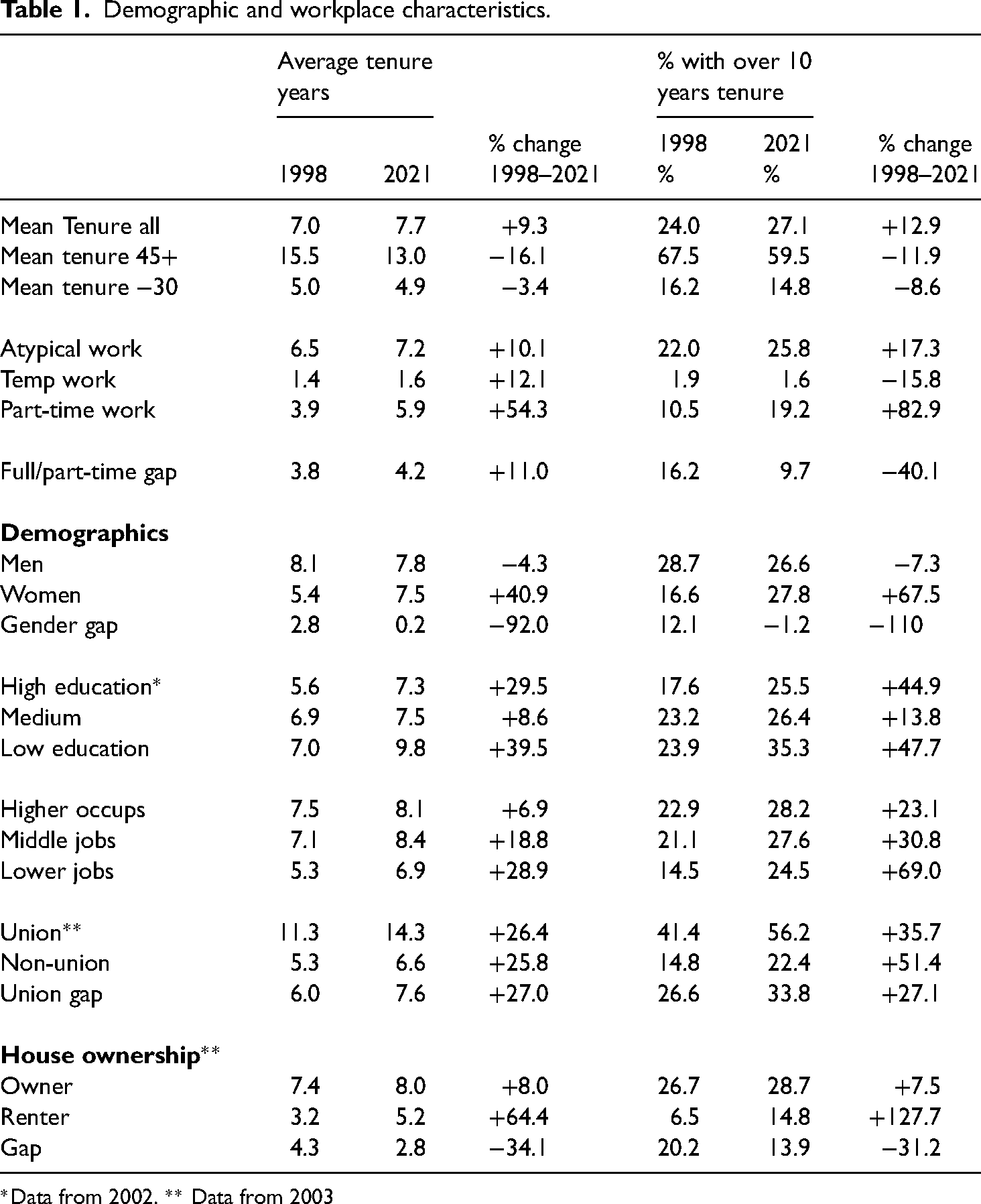
Between 1998 and 2021, the mean aggregate tenure years of all employees in the private sector of the economy increased by 9% from 7 to 7.7 years (Table 1). As Figure 1 indicates the effects of the financial crisis are evident in the dramatic growth in unemployment between 2007 and 2012. Yet employment tenure remained relatively stable during these years and the proportion with over 10 years tenure increased by 13%. Decline in mean tenure levels occurred in employees 45 and over from a mean of 15 to 13 years between 1998 and 2021 (Table 1). In addition, the proportion of employees with more than 10 years tenure declined by 10% indicating partial support for the premise that there has been a decline in the tenure of employment for older workers. Nevertheless, the overall increase in mean tenure levels provides no support for the argument that the dominance of the neo-liberal era has led to a long-term decline in aggregate employment stability and confirms hypothesis 1 which predicted little change in employment stability.
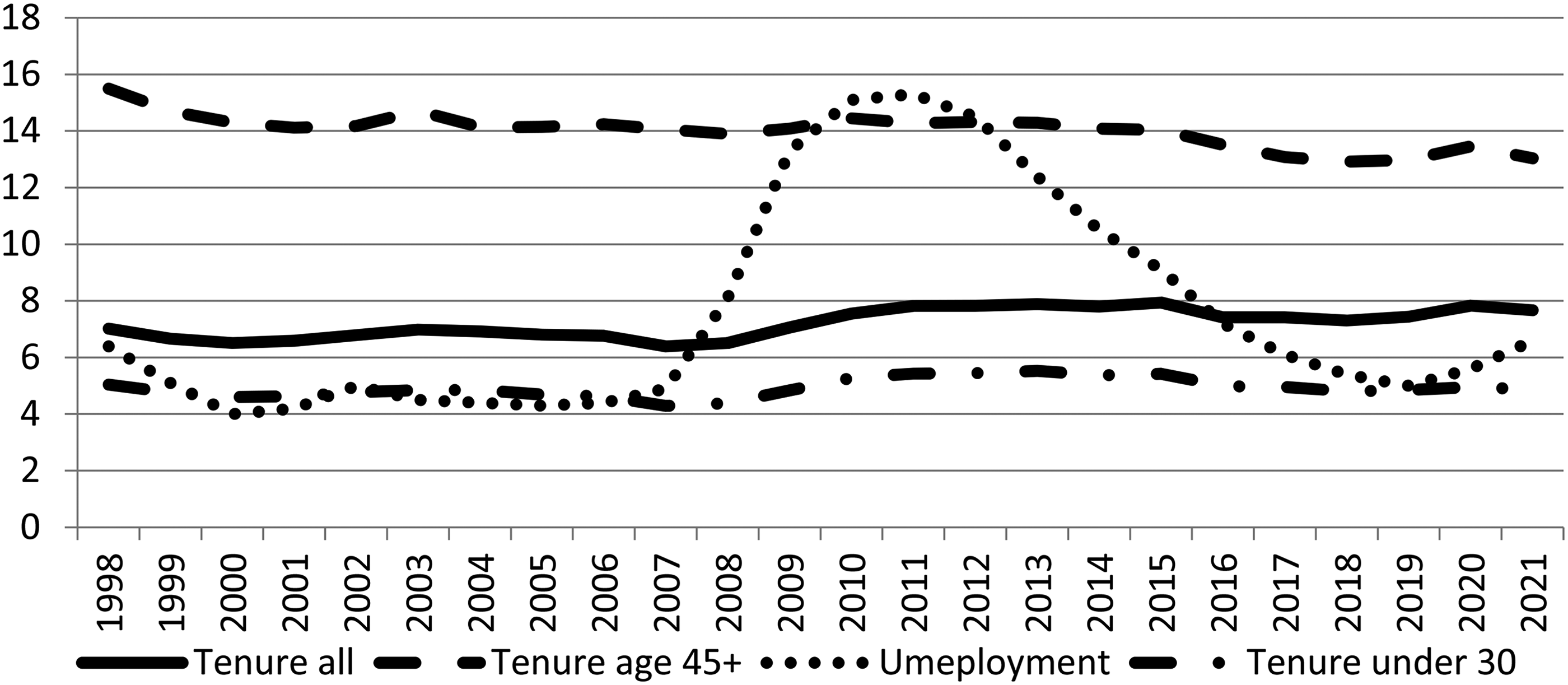
Average tenure and unemployment 1998–2021.
Demographic and workplace characteristics.
*Data from 2002. ** Data from 2003
Work patterns appear to have been strongly affected by the financial crisis in 2007 with increases, particularly in atypical and part-time work but only modest changes in the incidence of temporary work (Figure 2). Atypical work as measured by the proportion of employees regularly working shifts and weekends increased from 19% of all employees in 2001 to over 40% in 2018 before declining to 33% in 2020. Part-time work rose from 17% in 1998 to a high of 25% in 2013 declining to just under 20% in 2021. These trends broadly support hypothesis 2 that that non-standard type work arrangements have increased since the beginning of the twenty-first century. Yet the crucial issue is whether those with atypical work patterns have experienced increased employment instability over time. As Figure 3 demonstrates the tenure levels of employees in atypical and part-time work increased over the past twenty years while the tenure levels of temporary workers remained stable. In the case of atypical and part-time employment the proportion of employees with over 10 years tenure increased between 1998 and 2021 (Table 1). As predicted full-time workers have greater mean levels of tenure and a higher proportion with over 10 years tenure in both 1998 and 2021 compared with part-timers. However, the gap between full and part-time workers has decreased significantly by 53% in mean tenure in this period and by nearly 50% in the proportion with over 10 years tenure indicating a significant improvement in the tenure of part-time workers.
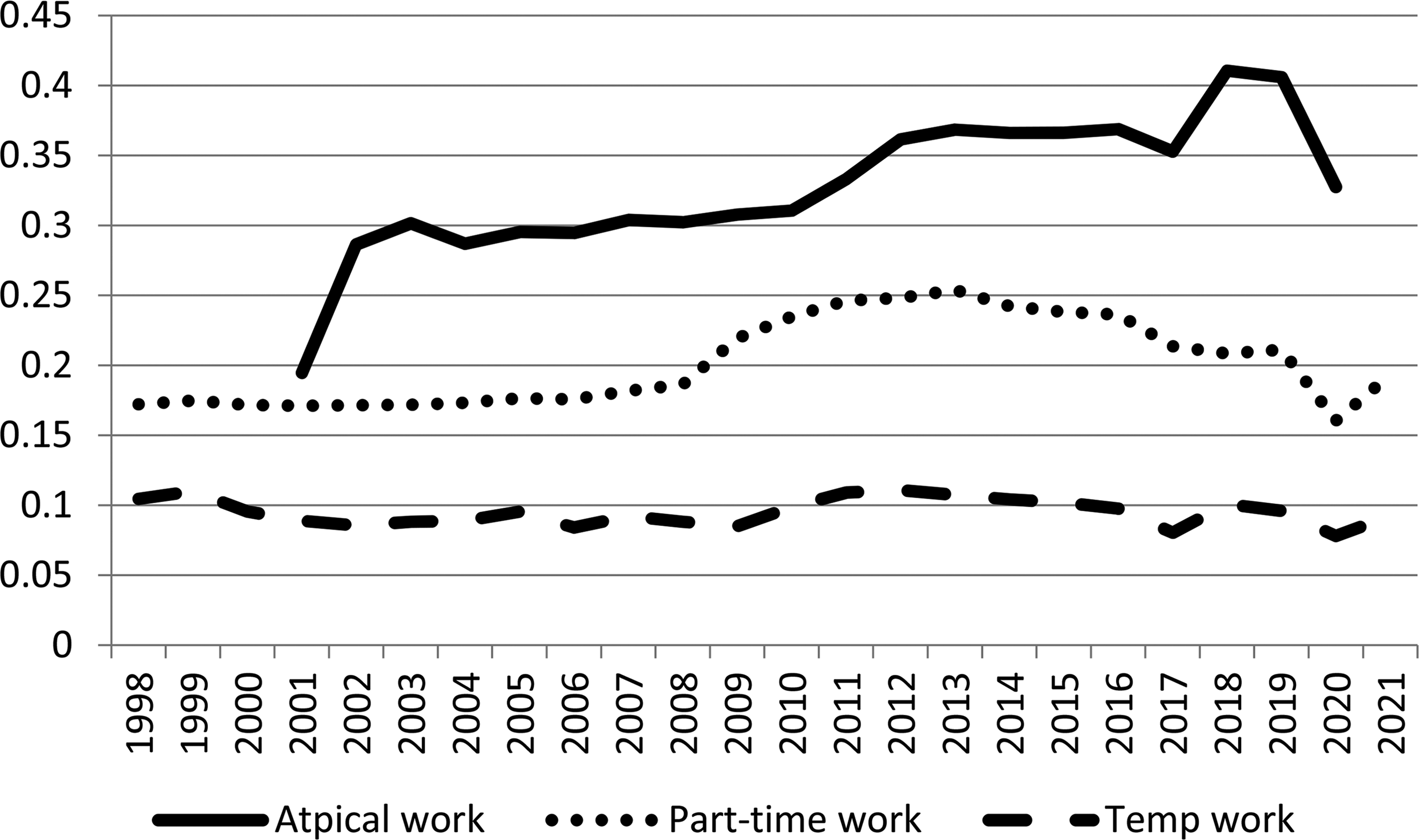
Work pattern trends 1998–2021.
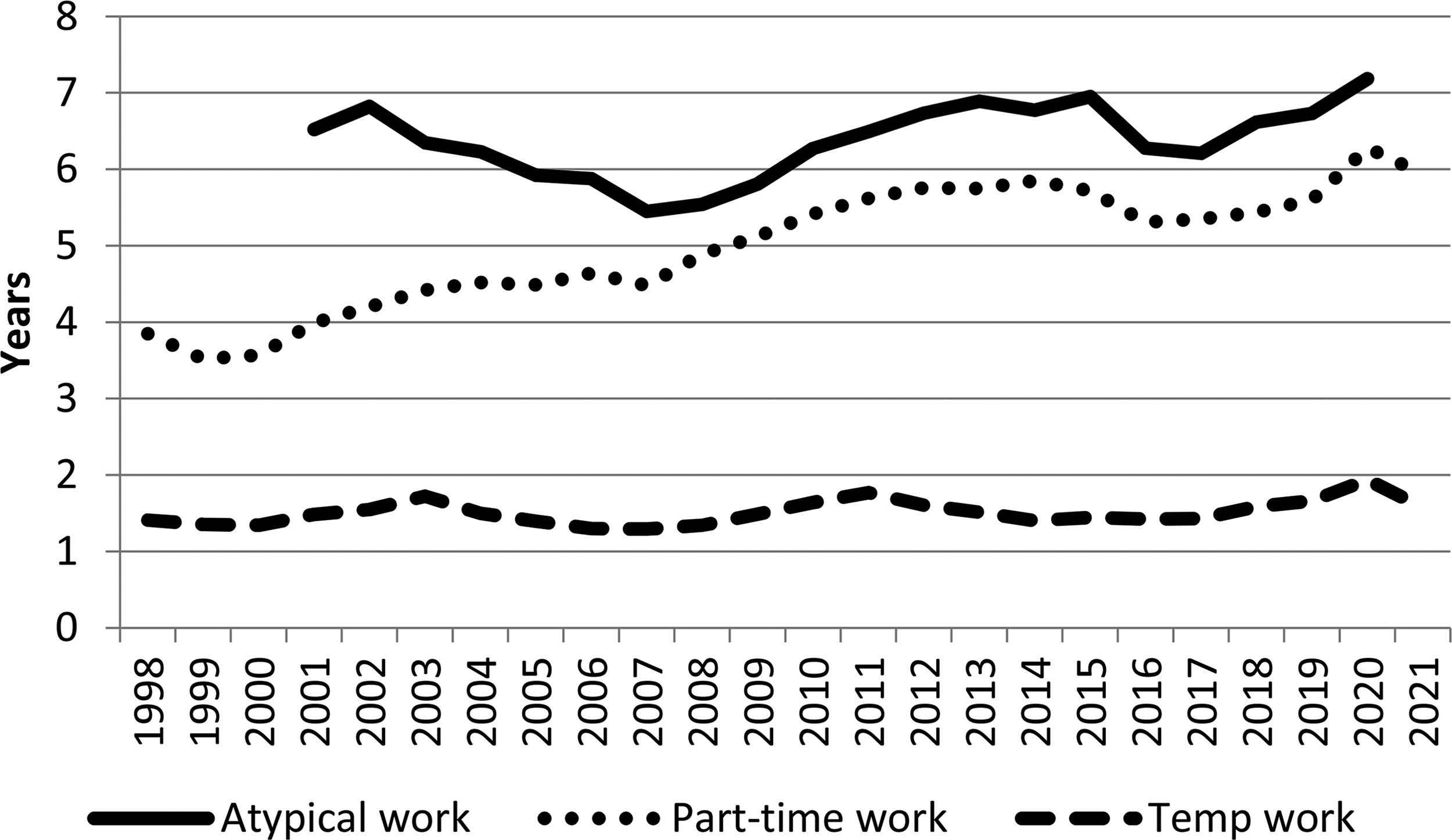
Work pattern trends 1998–2021.
Thus there is no evidence to support hypothesis 3 that employment tenure for workers in atypical type work and part-time jobs is likely to have declined in recent decades. Indeed the tenure gap between women (who account for over 75% of part-time workers) and men in the private sector declined significantly from 2.8 in 1998 to 0.2 years in 2021 and in the latter year the proportion of women with over 10 years tenure exceeded that of men (Table 1).
Tenure levels for workers under 30 years of age have remained relatively stable between 1998 and 2021 though the proportion with over 10 years tenure declined by 9% (Table 1). However, the latter decline is likely a result of the increasing age when young people enter the labour market similar to the UK (Kirchner et al., 2015). As Figure 4 shows the proportion of workers under 30 with tenure levels of 2 or less years declined from 40 to 36% over time. Working atypical hours increased substantially among the under 30s and to a lesser extent the incidence of part-time employment. However, these latter trends have not led to less stable employment for the under 30s and provide no support for hypothesis 4 that employment tenure for younger workers is likely to have declined in recent decades.
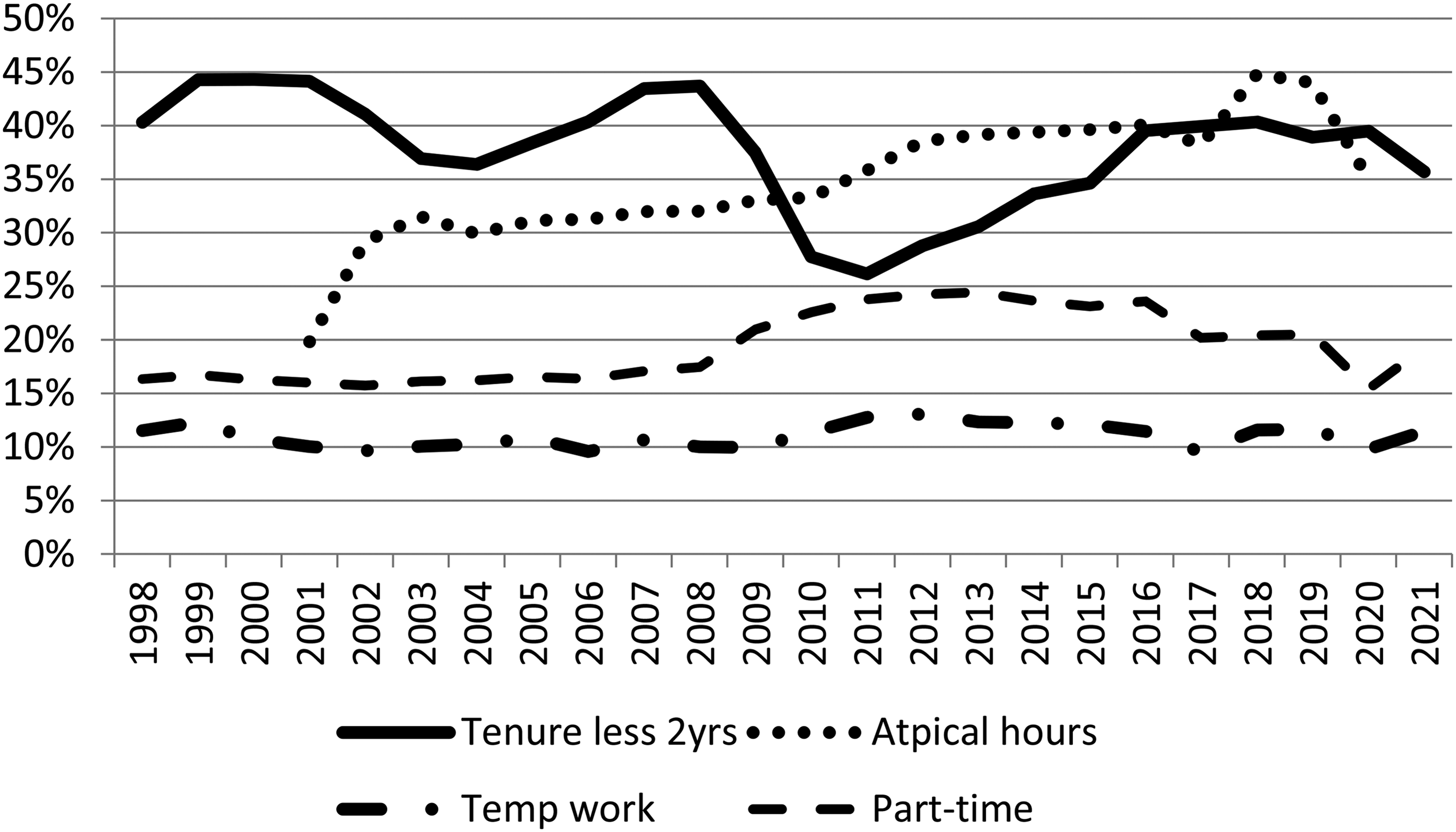
Tenure and work patterns of the under 30 age group.
Workers with lower levels of education report higher mean tenure levels than those with medium or high levels of education in both 1998 and 2021 and this group experienced the largest increase in mean tenure levels in this period (Table 1). This trend may in part reflect the increasingly higher levels of education among younger workers over this period which would tend to lower the mean tenure level. Thus the predicted relationship between education level and tenure levels is not supported here. While higher occupations have greater mean tenure than workers in lower-level jobs, the difference declined between 1998 and 2021 as mean tenure of the latter increased by almost 30% compared to an increase of 7% for the former. A comparable pattern is evident in regard to the proportion with more than 10 years tenure with lower level jobs experiencing the largest increase of just 70% between 1998 and 2021. By 2021 the proportion of workers with over 10 years tenure across the three occupational groups had reached relatively similar levels. These results provide only partial support for hypothesis 5 that higher occupational level will be associated with longer mean levels of employment tenure.
Trade union members have more than twice the mean tenure levels of non-union employees. While the mean tenure levels of non-union employees increased by 26% between 1998 and 2021 the gap between union and non-union employees grew by 10%. Although the proportion of non-union employees with over 10 years tenure increased by 48%, the gap between both increased by 27% (Table 1). These results confirm hypothesis 6 that union membership is associated with greater levels of employment tenure.
Home owners have significantly higher mean tenure levels compared to renters with the gap increasing between 1998 and 2021, though this difference decreased by 34% over the period. The proportion of owners with over 10 years tenure compared to renters declined between 2003 and 2021 but was still twice that of renters in 2021 This provides substantial support for hypothesis 7 that home owners have higher levels of employment tenure.
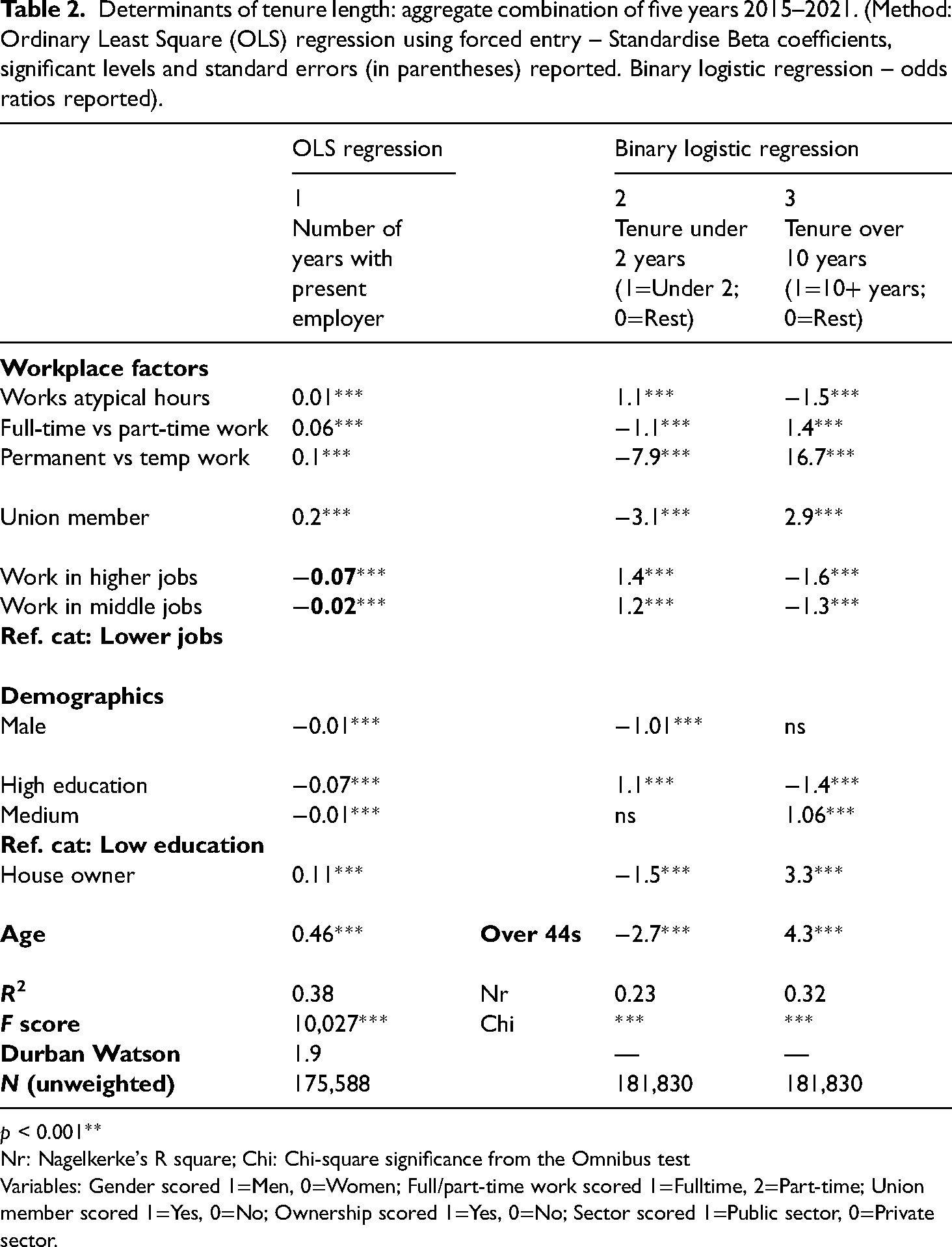
In Table 2 multivariate analysis is used to test the robustness of our descriptives and to compare the relative impact of the various independent measures on the length of workers tenure for the combined years from 2007 to 2021 3 . In equation 1 using ordinary least square regression and controlling for education, occupation and particularly age, there is actually a slight and significant positive relationship between working atypical hours and tenure levels. However, being in full-time work and permanent employment is positively associated with higher tenure levels. Males compared to females are associated with marginally slightly lower tenure levels. Measures with the strongest association with tenure levels are predictably age (standardised beta = 0.46), followed by union membership (0.2) and home ownership (0.11). Both higher occupational levels and higher educational levels are negatively associated with tenure levels compared to those in lower jobs and education providing no support for hypothesis 5. In the former case, this may be related to effects of union membership as nearly 50% of union members are in lower level jobs, while in the latter case education levels are highest in the younger cohort.
Determinants of tenure length: aggregate combination of five years 2015–2021. (Method: Ordinary Least Square (OLS) regression using forced entry – Standardise Beta coefficients, significant levels and standard errors (in parentheses) reported. Binary logistic regression – odds ratios reported).
p < 0.001**
Nr: Nagelkerke's R square; Chi: Chi-square significance from the Omnibus test
Variables: Gender scored 1=Men, 0=Women; Full/part-time work scored 1=Fulltime, 2=Part-time; Union member scored 1=Yes, 0=No; Ownership scored 1=Yes, 0=No; Sector scored 1=Public sector, 0=Private sector.
In equations 2 and 3, binary logistic regression is used to assess the effect of work patterns, union membership, occupation, education, age and ownership levels on the likelihood of having a tenure level under two years and over 10 years. The overall models were statistically significant based on the Chi-square omnibus test and explain 23% and 32% of the variation in tenure levels (Nagelkerke R2) and correctly predicted 81% and 77% of the cases, respectively, in both equations. Working atypical hours and part-time work are associated with having 2 or less years’ tenure but though statistically significant have relatively low odds ratios. Paradoxically it appears that compared to lower level jobs, workers in higher and middle level jobs are more likely to be associated with having 2 or less years’ tenure, though again the odds ratios are low. Crucially the likelihood of having 2 or less years’ tenure is most strongly associated with being a temporary employee (8 times more likely than a permanent employee), not being a union member (three times more likely) and under 45 years of age (2.7 times more likely). Similarly, the likelihood of having tenure over 10 years is strongly associated with being a permanent employee (17 times more likely), being over 44 years of age (4.3 times), a homeowner (3.3 times) and a union member (2.9 times). Having a level of tenure over 10 years is more weakly and negatively associated with working atypical hours and part-time work (1.5 and 1.4 lower times respectively) and with working in higher and middle levels jobs compared to lower level jobs. Higher education also reduces the likelihood by 1.4 times of having over 10 years tenure compared to lower levels of education. The results in Table 2 provide considerable support for the descriptive results controlling for age which logically has an overwhelming influence on workers tenure levels as it generally indicates length of time engaged in employment in the labour market. Age aside, the measures with the strongest association based on the standardised Beta coefficient with tenure levels and the proportion of workers with under 2 years and over 10 years tenure are having permanent rather than temporary work, trade union membership and home ownership.
Conclusion
In this paper, we have added to the literature on employment stability, demonstrating that contrary to commonly established beliefs, employment has not grown significantly more unstable in what is a highly globalised economy. It is often assumed that the ideological dominance of the neo-liberal perspective in recent decades has profoundly altered the standard employment relationship associated with relative job security and long-term employer/employee relationships. Yet claims of a more unstable and insecure jobs market in the twenty-first century are not in the main supported by the evidence of job tenure in the Irish labour market. Indeed there was a slight increase in the mean tenure level of all employees between 1998 and 2019. However, a decline in tenure levels of the over 45s in this period may signal increasing difficulties for this cohort in remaining in stable employment. The findings do not allow us to identify if separation was involuntary or voluntary. The findings do however suggest further support for calls made to provide more flexible options such as job sharing and early retirement for older workers (Léime et al., 2017).
A key factor undermining the standard employment relationship suggested by commentators is the increasing incidence of tenuous precarious type work that acts to undermine mid-level, stable, good quality jobs (Goos and Manning, 2007). Indeed, our data shows an increase in the number of workers who regularly work atypical hours and in the incidence of part-time working but relative stability in the proportion of workers on temporary contracts between 1998 and 2021. However, the mean tenure levels actually increased for workers in atypical type work and part-time jobs in this period. Indeed, the tenure gap between women and men in the private sector declined significantly and by 2021 the proportion of women with over 10 years tenure exceeded that of men. Thus, the evidence in our results based on these measures in the main does not support the claim that precarious type work is undermining the extent of employment stability. Although higher level occupations were associated with higher tenure levels and 10 years of service the difference between high and low level occupations declined substantially between 1998 and 2021. Declining tenure in higher occupations and increasing tenure in lower occupations may suggest displacement is occurring within the labour market or that upward mobility from lower occupations to higher occupations is becoming more difficult to achieve. Union membership is associated with higher mean tenure levels and the gap between union and non-union employees increased from 1998 to 2021. Certainly, union membership levels explain some of the increase in the tenure levels of women. Despite an overall fall in union density among employees in the period union membership among women declined by 19% compared to a decline of 42% for men. Aside from age, the measures with the strongest statistical association with tenure levels and the proportion of workers with under 2 years and over 10 years tenure were having permanent rather than temporary work, trade union membership and house ownership. House ownership is clearly causally ambiguous in its influence on tenure levels compared to union membership. It may be the case that job security and lack of permanent employment have less of a role to play in the decline in home ownership since the proportion of renters with tenure over 10 years increased between 1998 and 2021. This suggests that the barrier to home ownership as Arundel and Doling (2017) suggest is more a factor of pay levels, house prices and access to credit than employment stability and job security.
Overall the data from the Labour Force Survey indicate that employment tenure in the Irish labour market has remained stable in the first two decades of the twenty-first century despite a consistent decline in union density levels. This appears to be a remarkable outcome in an era dominated by a neo-liberal ideology and policy agenda. Several factors can be suggested that act to sustain this regime of stable employment. Firstly, it is generally in the self-interest of workers to have steady and reliable employment. A core strategic role of trade unions is the protection of permanent contracts for their members in order to safeguard their organisational interests and function as one of the organisations capable of influencing labour market institutions that act to reduce mobility and thus prolonging tenure (Davidsson and Emmenegger, 2013). In an era of general union decline the institutional role of unions to influence state policy in the labour market becomes all the more important in determining future job security regulations. This role reflects the preferences of its members and plausibly the interest of workers generally for stable and secure employment. In areas where collective bargaining is weak such as retail and hospitality, Irish trade unions have been strong in advocating for legislative provisions to address marginal employment resulting in the Employment (Miscellaneous Provisions) Act 2018 which introduced new provisions to protect employees from the overuse of casual contracts (Murphy et al., 2019).
Secondly, the long-term employment of employees is often in the interests of employers for a number of reasons including skill retention, the reduction of training and recruitment costs and business continuity (Boxall et al., 2003). Theoretically, these factors indicate the countervailing tendencies in the labour market that prevent or oppose the emergence of flexible and transient relationships between workers and employers deemed to be integral to an efficient neo-liberal functioning set of economic exchanges (Rubery et al., 2016). These countervailing tendencies it can be argued are likely to emerge inevitably from either institutional pressures or employer requirements for a stable work force due to transactional costs issues of unique asset specificity and opportunism. At the same time, employers seek flexibility to dispense with peripheral workers to their core business and retain those considered essential (Houseman, 2001; Wood, 2016). Yet Labour Force Survey figures indicate that pressures to retain workers are likely to have intensified between 1998 and 2021 due to the substantial increase of over 40% in the numbers employed in the private sector in Ireland.
Thirdly in an era of diminished labour movements, only the state can mitigate some of the risks posed by liberalisation. In times of economic turbulence, the state's response has been to impose austerity policies legitimised to some degree through state-sponsored social pacts (Regan 2012). Thus, paradoxically, an interventionist state has been the hallmark of the neoliberal era. The more prominent role of the state follows from the stickiness of institutions and the role that states can play in compensating workers for the consequences of liberalisation. For example, despite the demise of a long period of social partnership type agreements between unions, employers and government in the aftermath of the financial shock in 2008 a legacy of continuity can be detected with the emergence in the private sector of pattern bargaining reflecting a ‘strong degree of continuity in wage coordination’ where unions synchronised their wage demands across different employers and sectors (Roche and Gormley, 2020: 482). Finally, no political party has fully endorsed the neoliberal project in Ireland in all spheres. The two main parties that have dominated coalition governments since 1998 are classed as a centre party Fianna Fail and right of centre party Fine Gael (Gallagher and Weeks, 2010; Smith, 2008). Both these parties support the legitimacy of the trade union movement to represent workers and espouse relatively firm commitments to welfare policies that ameliorate economic hardships which have been supported through expanded social security and universal benefits (Daly and Yeates, 2003). In the recessionary period, no attempts were made to delegitimise trade unions or fundamentally roll back labour institutions and protective employment legislation (Roche et al., 2013), indicating as McLaughlin and Wright (2018) assert, the pragmatic approach underpinning the Irish industrial relations system. Our evidence here indicates continuity in the employment tenure levels of workers in the private sector rather than a move to flexible and short-term economic exchanges espoused by neoliberalism. This lends further support to Choonara's (2020) assertion that capital is not interested simply in engendering precarity, but rather it is also concerned with the retention and reproduction of labour power, leading to contradictory imperatives in the labour market.
Footnotes
Declaration of conflicting interests
The author(s) declared no potential conflicts of interest with respect to the research, authorship, and/or publication of this article.
Funding
The author(s) received no financial support for the research, authorship, and/or publication of this article.
