




Abstract
The literature on flexibilization documents the decline of the standard employment relationships, resulting in greater job insecurity. Consequently, the stability of career trajectories is expected to have decreased. However, existing studies in many countries pose a significant challenge: the available evidence shows no clear downward trend and possibly even an increase in job stability since the 1970s, as measured by trends in job tenure duration or job separations. This article highlights important limitations of such studies and provides novel evidence on the transformation of career trajectories. It is the first to provide evidence of a decrease in average job tenure duration for men in Canada and a decrease in five-year and 10-year retention rates over the four decades between 1976 and 2015, adjusting for sociodemographic shifts unrelated to flexibilization. We also find that average job tenure has increased for women, while their long-term job retention rates declined.
Keywords
Introduction
The study of careers in sociology focuses on how labour market institutions and organizations shape the patterns of job mobility experienced by workers over their life course, as well as the impact of those mobility experiences on status attainment (Sørensen, 1975; Spilerman, 1977). The early literature often studies mobility within the boundaries of firms through structured job ladders and internal labour markets (ILMs) (DiPrete, 1987; Rosenfeld, 1992) as well as voluntary mobility in occupational careers (Sørensen, 1975).
In more recent decades, important social and economic transformations provided a new structural context in which to study careers. The Fordist production regime in Anglo-Saxon countries relied on mass production in large, bureaucratic organizations that offered the opportunity of a stable career marked by upward mobility. That model was challenged by key transformations such as international trade, financialization and technological change. These transformations pushed many firms to revisit the social contract that underpinned the worker–firm relationship, conducting waves of layoffs and externalization, and structuring employment relationships around market-based arrangements (Cappelli, 1999; Kalleberg, 2009). These shifts occurred in parallel with deregulation and labour market reforms weakening job security legislations (Emmenegger, 2014).
Consequently, the focus of research at the end of the 1980s shifted towards inter-firm mobility and job loss as key career processes. Specifically, a large amount of research in the US, the UK and Canada, which we label the ‘flexibilization literature’, documents changing firm practices towards greater numerical flexibility and the adoption of market-based practices for human resources management (HRM) weakening the worker–firm relationship in response to structural transformations of the economy (Cappelli, 2001; Pfeffer and Baron, 1988; Vosko et al., 2009).
By the end of the first decade of the 2000s, an accumulation of evidence on organizational practices gave rise to the widely held view that today’s labour market is marked by pervasive job insecurity and precariousness (Kalleberg, 2009), and by the emergence of new career models, most notably the boundaryless career model, that encourage voluntary inter-firm mobility (Arthur and Rousseau, 1996). Based on this, the flexibilization literature suggests that we should expect to observe an increase in job instability (voluntary and involuntary mobility between employers) throughout the careers of workers.
In reaction, a mostly data-driven body of research emerged with the aim of empirically testing this prediction by documenting trends in job stability and mobility; that is, changes over time in job tenure duration (the length of ongoing or completed job spells) or in the probability of job mobility (job separation or its inverse, retention) (see reviews in Hollister, 2011; Neumark, 2000). However, despite the large number of studies investigating this issue since the 1990s, the existing evidence on time trends in job stability is in fact quite mixed. Across the various contributions, many find no evidence of an overall increase in job instability in various OECD countries (Burgess and Rees, 1998; Doogan, 2001; Heisz, 2005; Hyatt and Spletzer, 2016; Molloy et al., 2016; Neumark et al., 1999; Rodrigues and Guest, 2010).
In other words, there appears to be a persistent disconnect between theoretical statements and predictions on the transformation of career and job mobility patterns drawn from the flexibilization literature, and statistical evidence to support these predictions from the job stability literature. The lack of clear evidence of rising job instability has led scholars to propose new theories that seek to explain how the changes in work and careers described in the flexibilization literature could occur without affecting (and even increasing) job stability: increased mobility across non-firm boundaries (Rodrigues and Guest, 2010; Rodrigues et al., 2016), or a decline in business dynamism leading to lower hiring and separation rates (Brochu, 2013; Hyatt and Spletzer, 2016; Molloy et al., 2016).
In this article, we contribute to the literature by arguing that while these attempts at explaining the lack of evidence of a decrease in job stability are insightful, the empirical findings that they leverage from the job stability literature are flawed when applied to the analysis of changing career patterns. More specifically, the design and interpretation of many studies of job stability trends do not distinguish between changes attributable to flexibilization from trends in job stability driven by other important transformations occurring over the same period. Indeed, various sociodemographic shifts likely to influence job stability trends are not closely related to the flexibilization of the worker–firm relationship, such as population aging and women’s increased labour force attachment.
Our core contribution is to show that accounting for such confounding factors reveals adjusted estimates of job stability trends consistent with the flexibilization literature. We produce these estimates based on two complementary measures of job stability: average job tenure duration and the job retention rate.
In brief, this article is the first to provide evidence of a significant decrease in job stability among men in Canada between 1976 and 2015, including among some of the groups of workers that benefited from greater job security and job stability levels in the 1970s (older, longer-tenured and public sector workers). Adjusted average job tenure duration and retention rates both decreased substantially. Meanwhile, we find that women have accumulated longer job tenures while also experiencing slightly more frequent job separations, suggesting shorter non-employment spells and faster re-employment after separations but not necessarily increased job stability.
Overall, we provide clear evidence in support of the expectations from the flexibilization literature, addressing the challenges posed by empirical research on job stability trends. Our study, therefore, resolves the apparent impasse placed in front of the flexibilization literature, allowing work in this area to proceed forward rather than diverting thinking in directions thought to be necessary to accommodate this blockade. Our results also help in developing a more detailed portrait of career trajectories among different groups and at different life course stages in post-Fordist economies that contribute to the sociological literature on careers and mobility.
Review of the literature
We use the term flexibilization literature to refer to a range of studies that have documented different dimensions of the transformation of employment relationships and careers. This literature might be divided into two streams of work, both stemming from a focus on the same set of structural changes expected to introduce greater job instability. A first stream is mostly concerned with the emergence of job insecurity and precarious work as a result of employers seeking greater numerical and functional flexibility (Kalleberg, 2009; Vosko, 2006). A second stream of research theorizes and documents the rise of a new career model viewing inter-firm mobility as a viable career strategy – the boundaryless career model (Arthur and Rousseau, 1996). At the foundation of the boundaryless career model is an emphasis on worker self-reliance, responsibilization for their own employability and the intrinsic value of worker agency, also emphasized in a broader literature on career ideologies (Barley and Kunda, 2004; Cappelli, 1999). This model is in contrast to the traditional model of organizational careers where workers would spend their professional life within a single firm and orient their career towards the goals of the organization.
In the section that follows, we review the literature on the structural transformations that underpin the flexibilization of work as well as the range of and interconnections between the two streams of flexibilization research. We then provide a brief overview of the empirical research on job stability trends. Finally, we discuss key confounding factors that affect job stability trends that, we argue, require more systematic recognition and treatment.
The shift towards flexible employment practices
Over the 1970s and the 1980s, advanced capitalist economies suffered macroeconomic shocks that pushed governments to seek greater flexibility in wages and employment (DiPrete et al., 2006). In liberal market economies (LMEs) such as the US, the UK and Canada, characterized by industrial relations decentralized at the firm level and weak employment protection legislation, neoliberal reforms allowing greater flexibility in wage setting and hiring-and-firing were obtained through an adversarial confrontation with trade unions (Emmenegger, 2014).
In Canada, like in other LMEs over the last four decades, union membership rates declined in the private sector (Eidlin, 2015) and among male adults (from 42% in 1981 to 26% in 2018 – remaining relatively stable for women) (Morissette, 2018). Legislated standards related to working time and paid leave were also deregulated over the 1980s and 1990s across Canadian provinces (Thomas, 2009). This increased the overall level of flexibility available to employers in hiring-and-firing, wage setting and working time arrangements.
In parallel, HRM practices shifted, with many firms providing lower levels of job security and stability to their employees. Research from the 1980s started to document how firms in LMEs using Fordist mass production systems felt strong competitive pressures from international trade, and commentators recommended that firms flexibilize production and shorten their product cycles in response to those pressures (Piore and Sabel, 1984). The 1990s then saw researchers focusing on how the resulting increased pace of technological change made investments in training riskier. In Fordist firms with strong internal labour markets, employers invested in the skill development of their workers and ensured a return on investment in training by limiting turnover through seniority-based pay, job security and a paternalistic system of welfare capitalism (Jacoby, 1999) in a way that fostered loyalty and organizational commitment (Kalleberg and Mastekaasa, 1994). Faster technological change, however, leads to more frequent and less predictable changes in skill needs, making it harder for employers to recoup the cost of training (DiPrete et al., 2002; Pfeffer and Baron, 1988). This shift is associated with a withdrawal of employers from employee training and skill development, the marketization of skills and the responsibilization of employees for their employability (Barley and Kunda, 2004; Cappelli, 1999). In conjunction with the emergence of a shareholder-value paradigm associated with waves of downsizing (Jung, 2015), these shifts are seen as evidence of employers’ growing reluctance to offer job security guarantees (implicit or explicit) in research conducted in the 1980s and 1990s.
In this context, the Canadian literature documents that employers did achieve greater flexibility (and bargaining power) by using non-standard employment contracts (temporary contracts, temporary help agency workers, etc.) (Bartkiw, 2015; Vosko et al., 2009) and misclassified self-employment (Cranford et al., 2005), which translate into greater job insecurity for workers (Vosko, 2006). In the public sector, outsourcing to private sector contractors with low levels of job security was used as a cost-cutting strategy in a context of restriction of public expenditures (Stecy-Hildebrandt et al., 2019; Stinson, 2010).
Non-standard employment contracts appear to be rarely voluntarily chosen (Zeytinoglu et al., 2009), except perhaps among high-skill contractors with greater market power (Barley and Kunda, 2004). Similarly, job separations following a layoff are generally involuntary among workers employed under either a standard or non-standard contract. However, the withdrawal of employers from skill development and the associated shift away from retention efforts through seniority-based pay and job ladders may also lead to voluntary quits because of a realignment in career and mobility incentives (Cappelli, 2001), as hinted by the boundaryless careers theory (Arthur and Rousseau, 1996). When organizations provide limited opportunities to move upwardly within the ILMs of (large) firms, the importance of mobility between firms and employers for career progression grows just as the opportunity to do so increases. Indeed, as firms across a broad range of sectors provide lower levels of job security, they also increasingly fill positions by hiring externally (Bidwell and Mollick, 2015). Thus, the transformations in policies, HRM practices and career models described here lead one to expect greater job instability resulting from an increase in both voluntary and involuntary job separations.
Finally, research on flexibilization and new career models often focuses on employment in certain sectors where freelance or gig work is predominant, such as tech (Barley and Kunda, 2004; Osnowitz, 2010), the media and creative industries (Chafe and Kaida, 2019; Fraser and Gold, 2001), and in recent years, the platform economy (Sutherland et al., 2019). These case studies are important to understand how flexible employment practices are implemented across organizational contexts. Nevertheless, the influence of precarious work and boundaryless career models is felt across a broad range of labour market segments including white-collar and managerial workers where standard employment contracts are still widespread (Cappelli, 1999; Potter, 2020).
Puzzling job stability trends
The existing evidence on broad trends in job stability, however, often appears inconsistent with, or even contradictory to, the expectations derived from the literature on the flexibilization of employment practices reviewed in the previous section. Early studies of job stability trends in Canada find an increase in short-tenure jobs in Canada between 1976 and about 1990 (Heisz, 1996) and a decrease in the retention rate over that period (Heisz, 2005). However, evidence based on trends in the retention rates over the 1990s shows that job stability increased over that period (Heisz, 2005), a trend that persisted well into the 2000s (Brochu, 2013). In addition, studies based on longitudinal data show a decrease in quits (Picot et al., 2001) and in layoffs (Bernard and Galarneau, 2010; Morissette et al., 2013) from the early 1990s to 2007.
Likewise, studies in the US and the UK conducted in the 1990s find only limited evidence of a decrease in job stability, and argued that the changes were not large enough or too concentrated to specific subgroups (older, longer-tenured men, for example), or unfold over a period of time too short to warrant a conclusion in support of the job instability hypothesis (Burgess and Rees, 1998; Farber, 1995; Neumark et al., 1999). 1
In response to these findings, some scholars have attempted to formulate theories explaining how flexibilization could occur without an increase in job instability. For instance, one study, finding an increase in the share of long-term jobs in the UK, argues that job insecurity may be better conceptualized as the consequence of retrenchments in social protection that make the consequences of job losses worse, even if job losses have not necessarily become more frequent (Doogan, 2001). A second set of studies calls for taking into consideration multiple co-existing boundaries (Rodrigues and Guest, 2010), and argues that boundaryless careers may have emerged even with low inter-firm mobility because other types of boundaries that structure careers may be crossed more frequently by workers (Rodrigues et al., 2016).
Challenging these interpretations, Hollister and Smith (2014) delve into differences in job stability trends by gender. They find an increase in the length of job tenure durations among women masking a decrease in job stability among men over the 1990s and early 2000s, with the patterns for women diverging strongly by marital and parental status. Married mothers drive the increase in job stability for women while single women experienced declines in job tenure similar to men. These results represented distinct gender-specific trends with distinct potential causes, which happen to cancel each other out, creating a ‘masked instability’ pattern. Gender-specific trends are also found, although not as directly addressed, in a few related studies in the US and UK (Farber, 2010; Gregg and Wadsworth, 2002).
While the masked instability theory may capture the impact of increased labour force attachment among mothers after childbirth, it is not consistent with the literature on the gendered nature of precarious work that also emerged since the 2000s. In fact, several studies show that women are disproportionately impacted by flexibilization (Branch and Hanley, 2018; Vosko et al., 2009), in which case we may instead expect a trend towards greater job instability among women, not the opposite. In addition, the ‘masked instability’ trend is clearly visible when using job tenure duration as a measure of job stability, but it is less obvious in studies focusing on the probability of job separation (Brochu, 2013; Hollister, 2012; Stewart, 2002). For these reasons, it remains unclear why studies of LMEs show women accumulating longer tenure today than in the 1970s or 1980s.
Declining business dynamism and job stability
In contrast with studies of masked instability, several studies published since 2010 present evidence of a recent decrease in job mobility and increase in job stability, putting into question whether rising job insecurity as described by the flexibilization literature has occurred at all (Brochu, 2013). This literature focuses on the negative economic impact of a decrease in business dynamism (measured as the rate of firm and job creation and destruction) and entrepreneurship, especially since 2000, and examines job mobility data as secondary evidence of this trend. Molloy et al. (2016) present data on trends in labour market fluidity in the US between 1975 and 2015 and find a decrease in the probability of various types of labour market transitions (thus increasing job stability) concentrated in the post-2008 context. Other US studies argue that the decrease in fluidity and job separations is driven by a shift away from younger (and smaller) firms (Decker et al., 2014) and a decrease in churning or worker reallocation that is not driven by changes in the composition of the industry or size of firms in the US economy (Davis and Haltiwanger, 2014). Finally, Hyatt and Spletzer (2016) find an increase in the share of jobs with tenure durations of five or more years between 2000 and 2013 in the US. Similarly, Brochu (2013) concluded from his analysis of job separation rates that the Canadian labour market is undergoing a ‘Great Moderation’, with no sign of an impact of precarious work on the stability of jobs since 1976. These explanations lead to an understanding of how the worker–firm relationship and careers have transformed over the last 40 years that competes with the flexibilization literature.
To address this, we argue that claims of increased job stability are misleading because they focus on aggregate levels of job stability interpreted as an indicator of business dynamism, likely to be driven in part by labour market performance and by labour force composition. In this article, we are instead interested in the job stability of workers with otherwise constant characteristics held at different points in time over the last four decades. We aim to present results indicating whether groups of workers who held stable jobs in the 1970s have experienced a decrease in the stability of their career trajectories with the growth of flexible employment practices and precarious work.
Competing trends affecting job stability
To test the hypothesis presented above, we deploy methods that allow us to account for changes influencing job stability but that are unlikely to be directly related to the historical adoption of flexible employment practices by employers. Similarly, we isolate subgroup trends that may be driven by secular transformations other than flexibilization. We expect that we will find a net decrease in job stability in Canada after accounting for these factors.
First, women’s growing labour force attachment in Canada and other LMEs, especially around childbirth, is expected to increase job stability for women. Women’s employment participation has increased in Canada over the last four decades (Figure 1). Importantly, the introduction of statutory job-protected maternity leave entitlements are associated with a higher share of mothers returning to their previous employer after childbirth in Canada and the UK (Baker and Milligan, 2008; Gregg et al., 2007). Accordingly, we hypothesize that recent studies presenting aggregate trends without separating men and women failed to detect a decrease in job stability associated with flexibilization among men because of a masked instability effect driven by the greater job stability experienced by mothers associated with other labour market transformations.
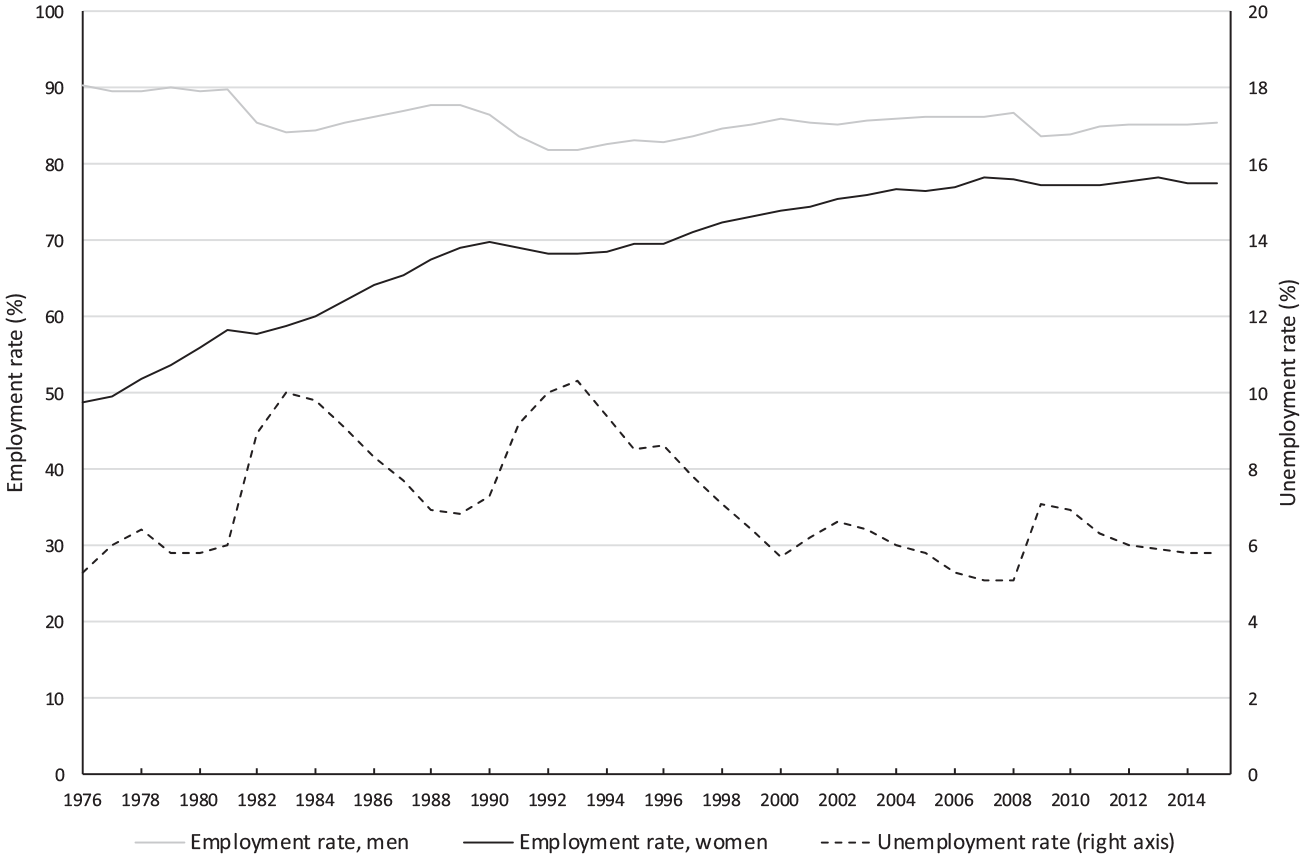
Canadian Labour Force Statistics, 25–54 years old population, 1976–2015.
Second, business cycles have been shown to affect job stability outcomes. Job separations are procyclical, meaning that they are inversely correlated with unemployment (Nakamura et al., 2019). In other words, job stability is greater in periods of recession. This possibly counterintuitive pattern is due to the decreased probability of hires, 2 quits and employer-to-employer transitions during recessions (procyclical), which dwarf the increase in layoffs (countercyclical) that also occur during a recession.
The business dynamism studies have in common that they do not adjust for business cycle fluctuations when drawing conclusions about trends in job stability (or labour market fluidity), an important omission likely to lead to inaccurate interpretations regarding the potential effect of flexibilization on job stability, especially if data cover a relatively short time period including a recession. In the US, Hyatt and Spletzer (2016) show that a decrease in hiring during the most recent recessions largely drives the increase in the share of jobs with long tenure between 2000 and 2013. The decrease in job-to-job transitions observed by Molloy et al. (2016) is also concentrated around the two most recent recessions. Similarly, Canada experienced important fluctuations in the unemployment rate, as shown in Figure 1, likely driving the increase in the retention rate observed over the 1990s by Heisz (2005) and the decrease in job-to-job transitions following the 2007 recession (Kostyshyna and Luu, 2019).
Finally, a long-standing literature shows that younger workers in their early careers are more likely to change jobs (Topel and Ward, 1992). Accordingly, population aging (a decrease in the share of young workers in the labour force) means an over-representation of a less mobile demographic. Net of this compositional change, job stability decreased in several countries (Bachmann and Felder, 2018; Farber, 2010; Gregg and Wadsworth, 2002). Relatedly, the lower probability of job separation among highly educated workers (Bernhardt et al., 1999) is likely to have the same compositional effect.
Figure 2A shows the aging of the Canadian workforce, and Figure 2B shows an increase in the share of the population with a university education. Thus, the puzzling conclusions from the Canadian and US studies discussed above may be due to the absence of adjustments for sociodemographic composition, reflecting the focus of the business dynamism literature on gross labour flows. 3 Indeed, some studies of business dynamism have identified large age and education composition effects, but then did not separate trends by gender (Hyatt and Spletzer, 2016; Molloy et al., 2016). Other studies have failed to account for such shifts altogether because business dynamism research often uses data that include little or no information about the composition of the workforce (Davis and Haltiwanger, 2014; Decker et al., 2014; Morissette et al., 2013). 4
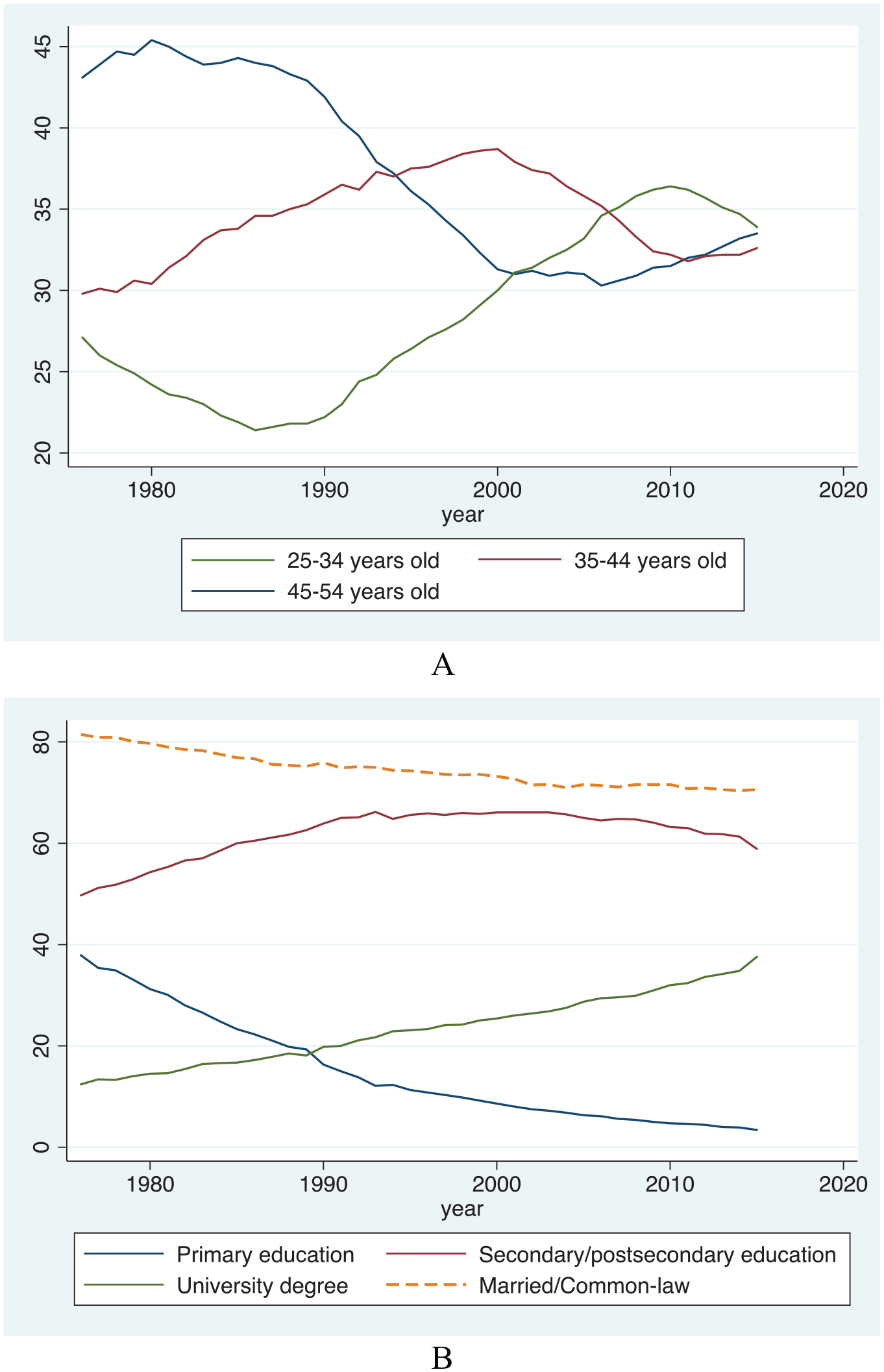
Distribution of sociodemographic characteristics, workers aged 25–54 years old, 1976–2015:
Because of these limitations, we hypothesize that recent studies arguing that labour market dynamism has decreased may lead to the inaccurate conclusion that the transformations reported in the flexibilization literature have not translated into a transformation of career trajectories and a decrease in job stability as experienced by workers.
Note that our data do not include direct measures of flexibilization nor firm-creation rates, and the aim of this article is not to test for their direct effects. Rather, our analytical approach aims to account for the main factors influencing trends in job stability but unlikely to be associated with a transformation of employer and career practices documented in the flexibilization literature.
Data and methods
The Canadian Labour Force Survey (LFS) is a cross-sectional survey with monthly samples of around 100,000. The job tenure variable, which allows us to measure job stability, reports the number of months an employee has worked continuously for their current employer. This question has been part of the LFS every month with the same wording since 1976, making it one of the most reliable measures of job stability trends available in any OECD country. Our analytical sample pools all monthly samples and includes prime-age workers between 25 and 54 years old. This age restriction limits the impact of transitions in and out of schooling and to retirement. See the online Appendix for details on data.
We use the job tenure variable to develop two measures of job stability. Elapsed job tenure duration measures how many years respondents have worked for their current employer, summarized across individuals as average job tenure. Retention rates measure the proportion of people remaining in their jobs after a certain period, allowing us to assess the stability of currently ongoing jobs. Separation rates are simply the inverse of the retention rate, the proportion no longer in the same job.
Job tenure has the advantage of capturing the impact of previous job interruptions (workers with low tenure have either changed employers or exited joblessness spells), while the retention rate provides information on the stability of ongoing jobs over a subsequent time interval. Accordingly, while a number of studies argue that job tenure duration does not adequately measure the stability of currently ongoing jobs and that the retention rate should be preferred (Hall, 1982; Neumark et al., 1999), we argue that one measure is unlikely to provide a more accurate portrait of the trend than the other (see online Appendix A3 for a more detailed discussion). We systematically present results based on both measures. In addition, our study innovates by considering five-year and 10-year retention rates, which allows us to capture cumulative effects of small changes in one-year retention rates over long durations.
Results for average job tenure duration use a regression approach presented in detail in the online Appendix. Job tenure is regressed on a set of year dummy variables, with 1976 as the reference value. A positive coefficient for a given year signals an increase in average job tenure compared with 1976, while a negative coefficient signals a decrease. Interactions between gender and year allow us to estimate separate trends by gender. We then add two types of control variables to the model: the monthly provincial unemployment rate to control for the impact of economic cycles, and age, education and marital status to account for sociodemographic composition effects. If some years have a higher unemployment rate or a higher proportion of respondents with sociodemographic characteristics associated with long average job tenure duration, controlling for these factors will result in coefficients for the year dummy variables that are lower than in the unadjusted model.
Retention rates estimate the share of workers employed on a given year who still held their job five or ten years later. The retention rates are estimated using aggregated data from each LFS cross-section, following the estimation methods described in online Appendix section A2. Composition adjustments for age and education can be computed for time trends in the retention rate using a reweighting method, following Brochu (2013). The adjustment creates counterfactual retention rates allowing group-specific retention to change over time while keeping the distribution of sociodemographic characteristics in the sample constant at baseline levels. In essence, this method calculates trends in the aggregate retention rate that would have occurred without changes in the composition of the population (see online Appendix A2). One limitation of this version of the retention rate is that it is not based on a regression approach that allows one to easily control for business cycles. On the other hand, it allows us to compute long-term retention rates without longitudinal data that are otherwise unavailable to Canadian researchers.
Results
Trends in average job tenure duration
Figure 3 shows regression-based decomposition results for average job tenure duration by gender. It plots coefficient estimates that show the increase or decrease in the average job tenure duration at time t compared with baseline (t = 1976). The unadjusted trend suggests that there was an increase in average tenure for men in the 1990s followed by a decrease starting in the mid-2000s, and an increase for women over the 1980s and 1990s. Large fluctuations in the unemployment rate (see Figure 1) accounted for the temporary increases of the 1980s and 1990s among men that correspond to two major recessions, as shown by comparing estimates in model 1 and model 2. The sociodemographic variables added in model 3 accounted for most of the increase in tenure over the 1990s for men (results not shown find age to be the main driving variable). In sum, after adjusting for business cycles and sociodemographic variables, we found a clear and sustained decrease in job tenure for men starting in 1990, with the total change about 1.5 years, strong evidence of a decrease in job stability.
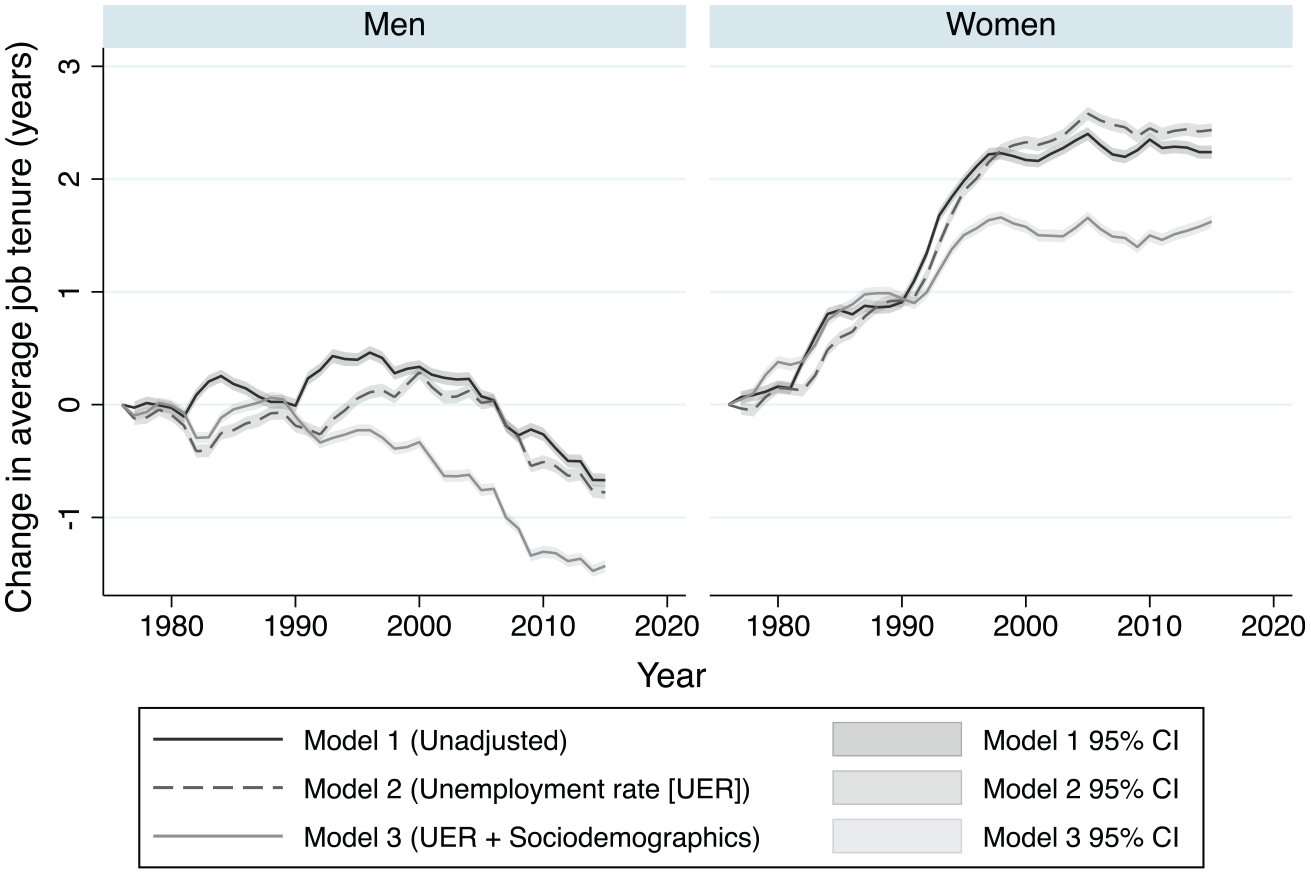
Change in average job tenure duration, 1976–2015.
For women, we found an increase in adjusted average job tenure duration of close to 2 years over the 1980s and 1990s. While the unemployment rate played little role in these trends (model 2), a substantial part of the rise after the mid-1990s was explained by the increasing age of employed women. Starting at the end of the 1990s, the trend remained stable in all models. Together, these findings suggest that Canada followed a masked instability scenario consistent with what was found in other LMEs, where an increase in job stability for women is likely to be driven by changes in labour market behaviour around childbirth and changing norms around mothers’ employment (Hollister and Smith, 2014). Such trends were distinct from changes in employer practices towards greater flexibilization and should not be seen as contradictory evidence. As an additional source of supportive evidence, we estimated trends separately based on whether respondents have ever been married or not and found that married, separated, divorced and widowed women are driving the trend, with single women exhibiting a downward trend similar to men (Figure A11 in the online Appendix).
Trends in retention rates
Canadian research has limited itself to estimating trends in one-year retention rates (whether a worker still works for the same employer one year later) (Brochu, 2013; Heisz, 2005). One-year retention rates may not be the most appropriate because they are particularly sensitive to short-term economic fluctuations. In addition, a small decrease in the one-year retention rates may translate into much larger changes in the probability of keeping one’s job over a longer duration because of exposure to a sustained higher risk of separation (see online Appendix section A3). Following this intuition, we calculated five-year and 10-year retention rates.
We calculated the trends using one-year retention rates in the online Appendix figures A9 and A10. They resulted in noisier results, confirming the importance of using longer-term retention rates. 5 They were also consistent with the existing literature showing an increase in the retention rate among new hires in the 1990s (those with less than one year of tenure in year one) (Brochu, 2013). 6 We took this idea further by examining individuals who had initial tenures of five or more years, a group experiencing higher job security and higher long-term retention rates than workers with shorter initial tenures in the 1980s (Hall, 1982).
Results reported in Figure 4 show change over time in the five-year retention rate (Figure 5 shows the same for the 10-year retention rates), adjusted for the age and education composition of workers (see the online Appendix for the unadjusted results), but not unemployment rates. The lines represent the share of workers employed at time 1 (the year plotted on the x-axis) who were still employed five years later. Conversely, the area above the line represents the share of workers who experienced a job separation. The results showed that the retention rate decreased among men overall (black line), reaching a level about 5 percentage points lower by the mid-2000s. The impact of not being able to adjust retention rates for economic cycles was visible in the results, with short-term increases in retention in the early 1980s and 1990s that correspond with recessions during these periods (see Figure 1). Relatively similar but weaker declines were observed among women, discussed further in the following section. 7 The overall decrease in retention rates held across all initial tenure categories except for new hires, who experienced an increase in five-year retention rates starting in the late 1980s. The decrease in the 10-year retention rates (Figure 5) was larger than the five-year retention rates both in terms of points difference and percentage change.
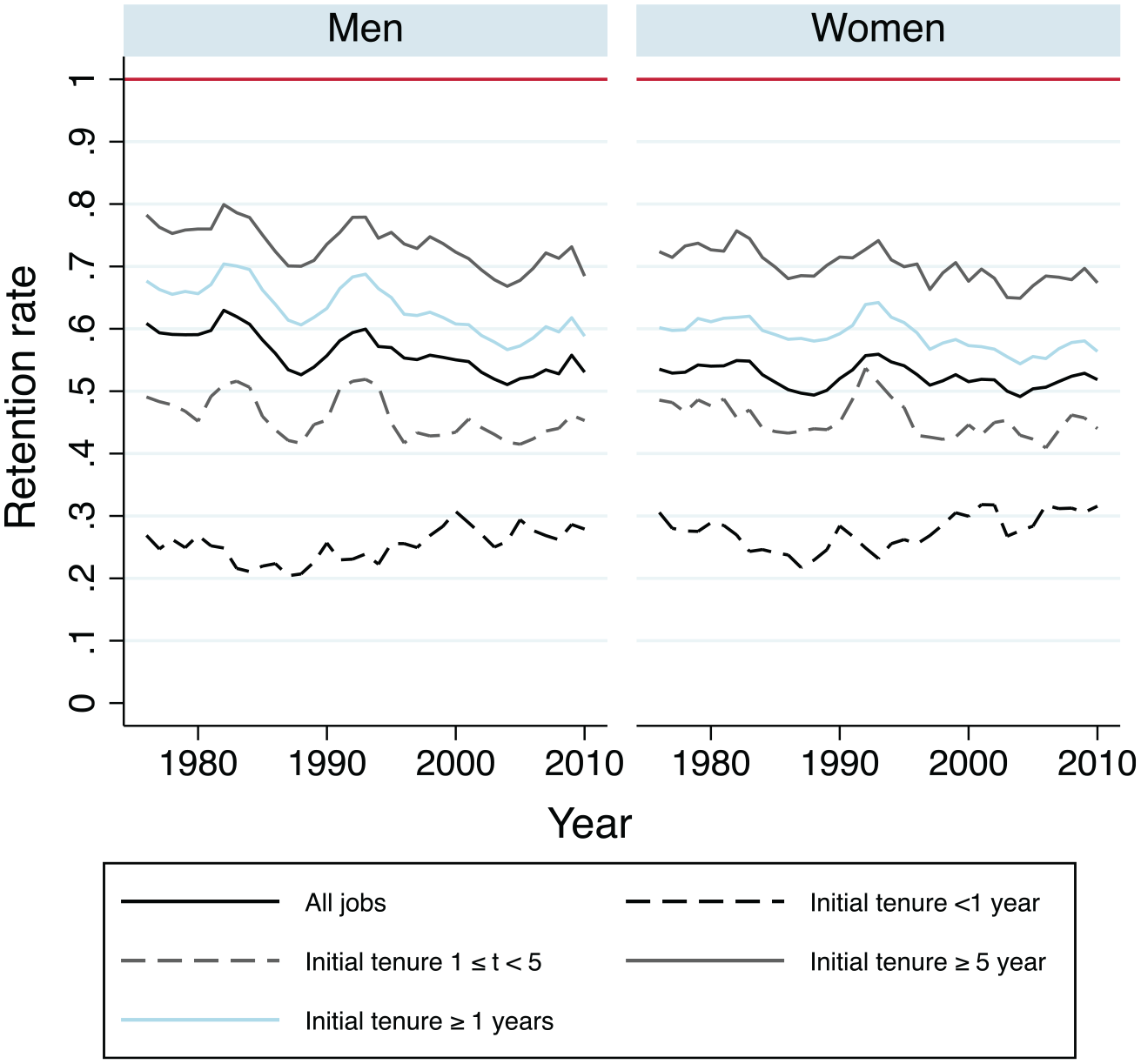
Five-year retention rates by initial job tenure duration adjusted for age and education, 1976–2015.
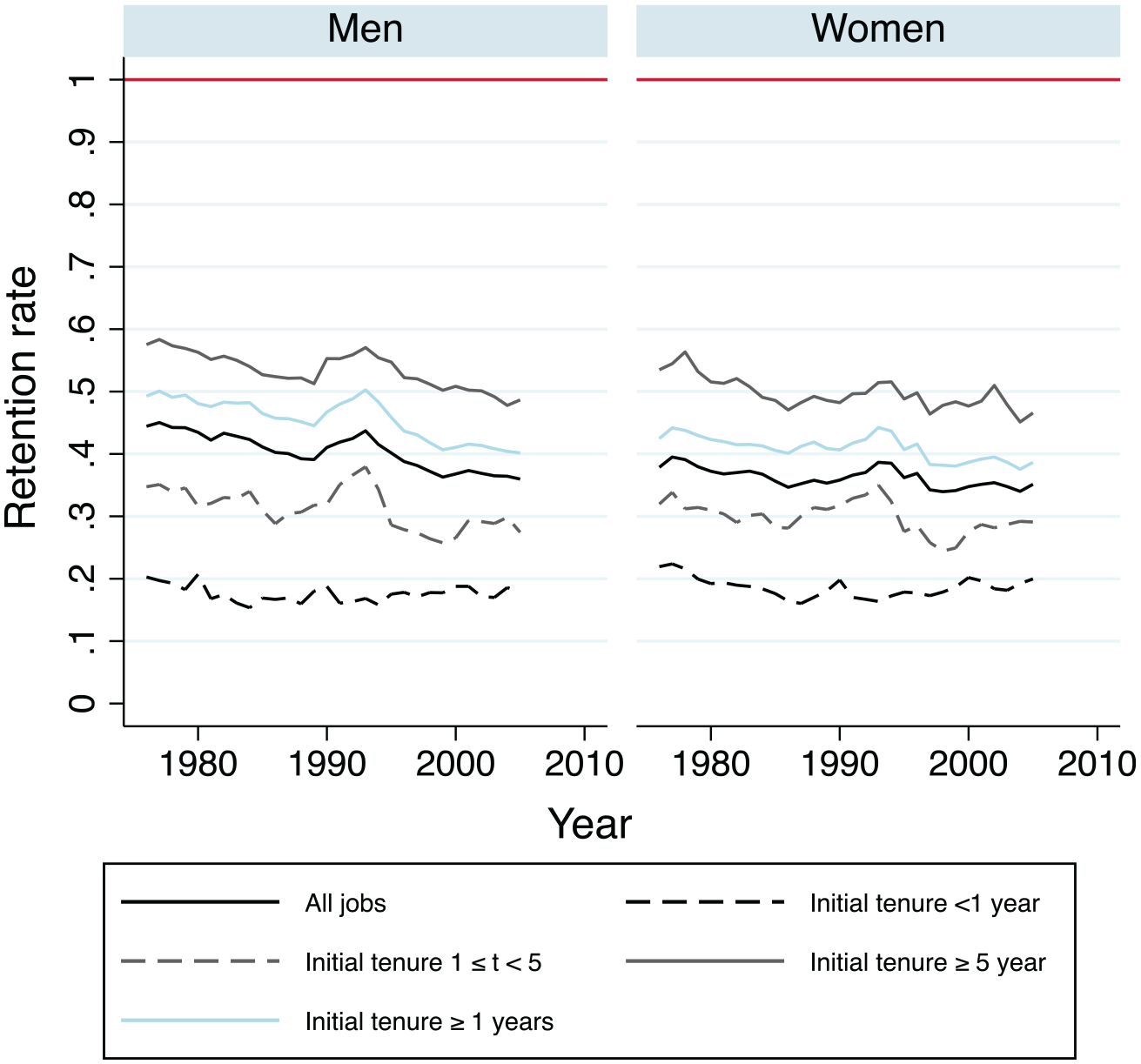
Ten-year retention rates by initial job tenure duration adjusted for age and education, 1976–2015.
Trends by age group
We sought to better understand the nature of the results reported above by considering age differences in trends. Young workers are more likely to experience instability, lack seniority-based protections and have accumulated less firm-specific human capital (which makes job mobility less costly). A decrease in job stability concentrated among younger workers might indicate that employers are targeting flexibilization measures on more vulnerable or expendable workers, or that younger workers are embracing boundaryless career strategies involving high mobility. On the other hand, a decrease concentrated among older workers would suggest a restructuring of the standard employment relationship among the workers who benefited the most from Fordist labour market arrangements that provided job security to more experienced workers.
We produced results separately for workers aged 25–39 and 40–54 years. First, the regression results reported in Figure 6 showed declines in average job tenure for both younger and older men after 1990. The size of the estimates was larger for older than younger men, which can be explained by the fact that younger men started from a baseline average much closer to zero years of tenure, meaning that there was little room for a decrease. Among women, the increase in average tenure was predominantly driven by older workers. This trend is consistent with the masked instability hypothesis expecting women to achieve longer job tenures in ages after childbirth in the absence of prolonged employment interruptions following childbirth. 8
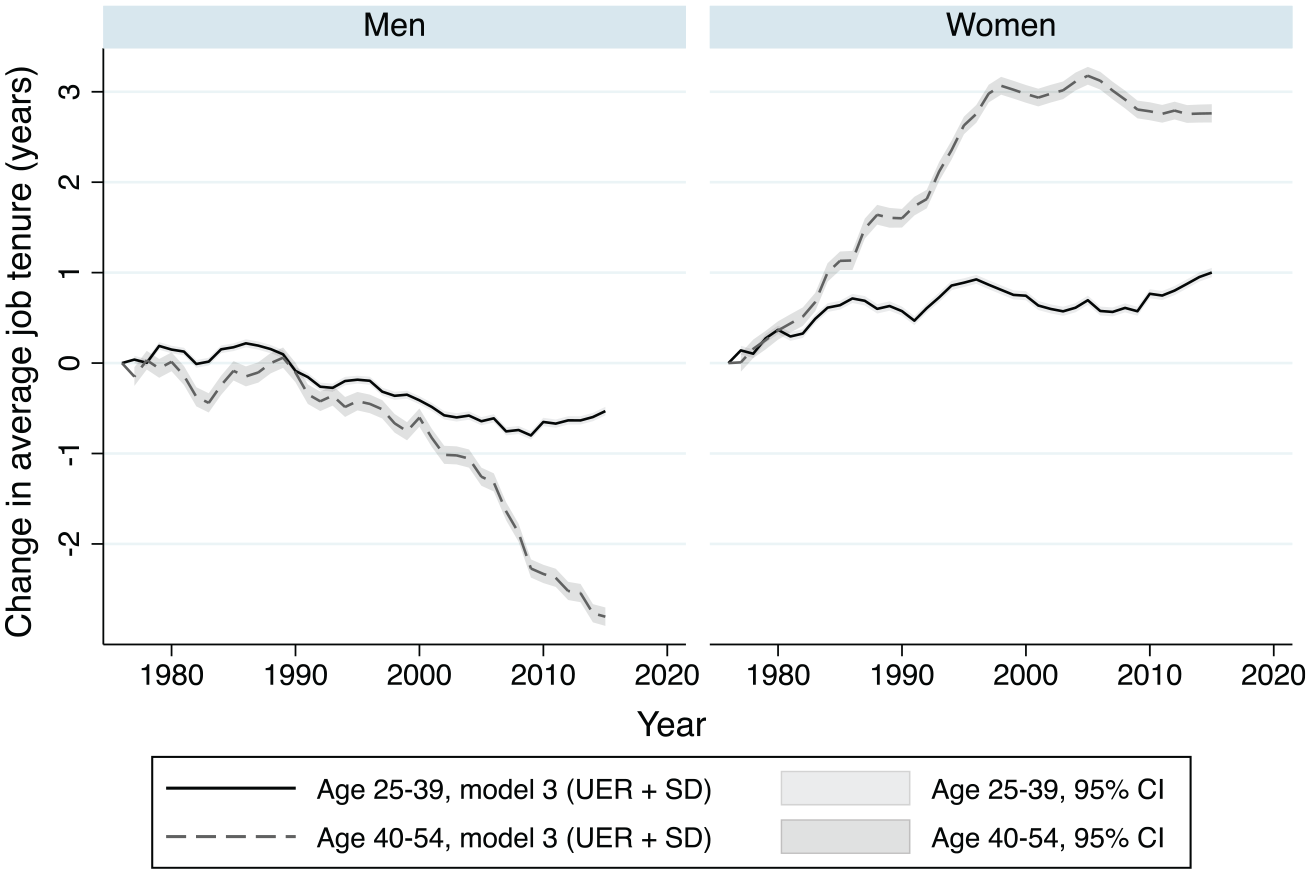
Change in average job tenure duration by age group, adjusted for unemployment and sociodemographic characteristics, 1976–2015.
Figure 7 presents the retention rate results by age, showing that younger men experienced a larger decrease in five-year retention rates than older men in terms of points difference and percentage change, both overall and by initial tenure group (except for new hires). 9 This may appear to contradict regression results using average job tenure duration. However, an increase in separations among young workers limits opportunities to accumulate seniority later in life, likely translating into a smaller share of workers entering their mid-career at 40 years old with long tenures. This highlights how job tenure and retention rates represent complementary, interrelated sources of evidence.
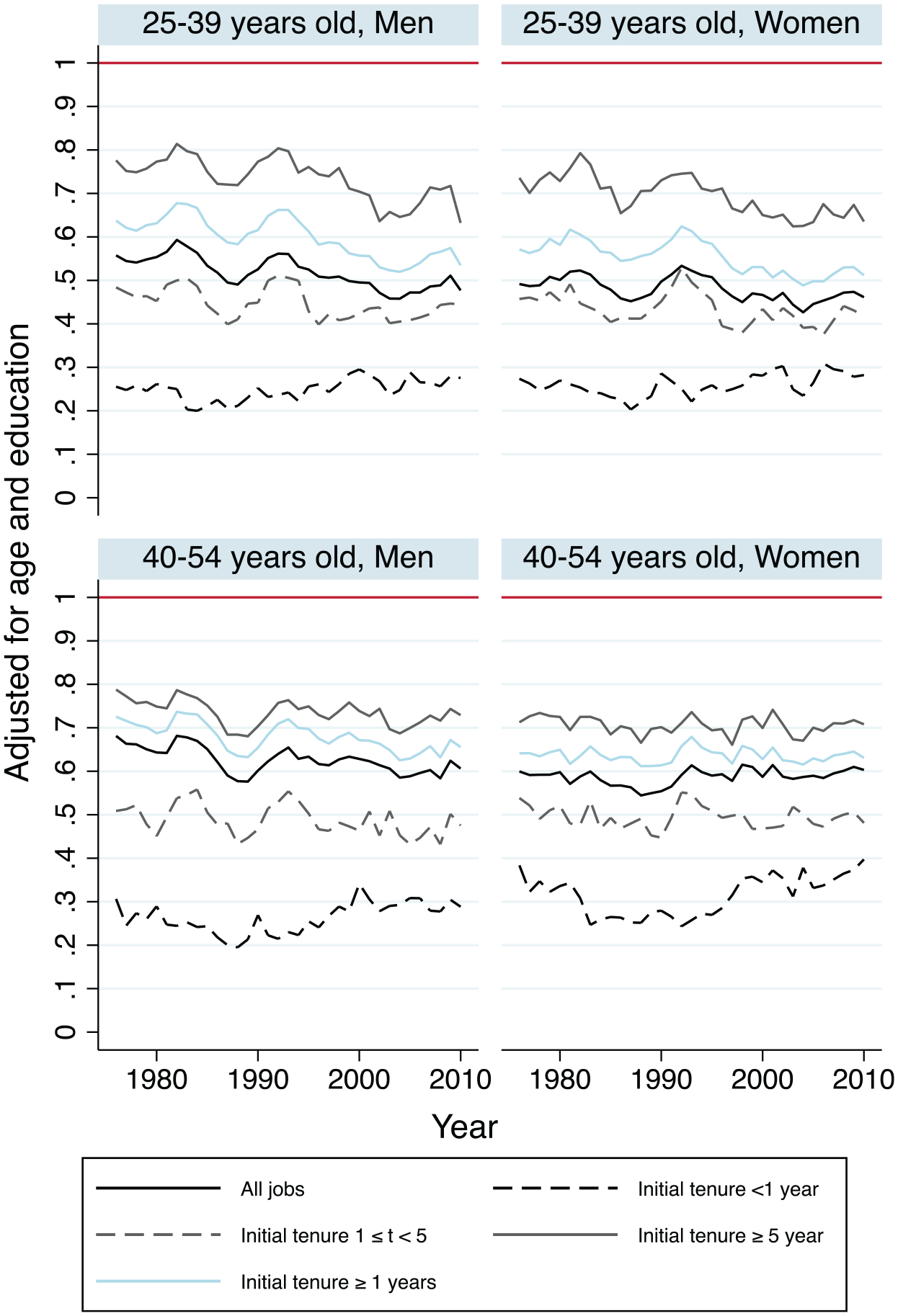
Five-year retention rates by age group, adjusted for age and education, 1976–2015.
Figure 7 also shows that there was an important decrease in five-year retention rates among young women (except new hires) and little change over the whole period among women aged 40 years old or more. This lack of a clear increase in adjusted retention rates for women of both age groups initially appeared puzzling when compared with the strong increases in average job tenure. However, we found that younger women and men alike experienced decreasing job stability, while at older ages, women experienced fewer career interruptions due to childbirth over the past decades. This resulted in an increase in average job tenure for women because tenure is more sensitive to the effects of past work interruptions than forward-looking retention rates. In other words, our findings likely reflect the effects of women taking fewer and shorter periods out of the labour force rather than a greater stability of ongoing jobs.
Public and private sector trends
In this final subsection, we report trends separately for public and private sector workers. As shown in Figure 8, we found that private sector workers are driving the steady decline in average job tenure over the study period, with a downward trend starting as early as 1980. Likewise, five-year retention rates for private sector men mirrored the overall trend, with a decrease in job stability as of the 2000s compared with the baseline (Figure 9).
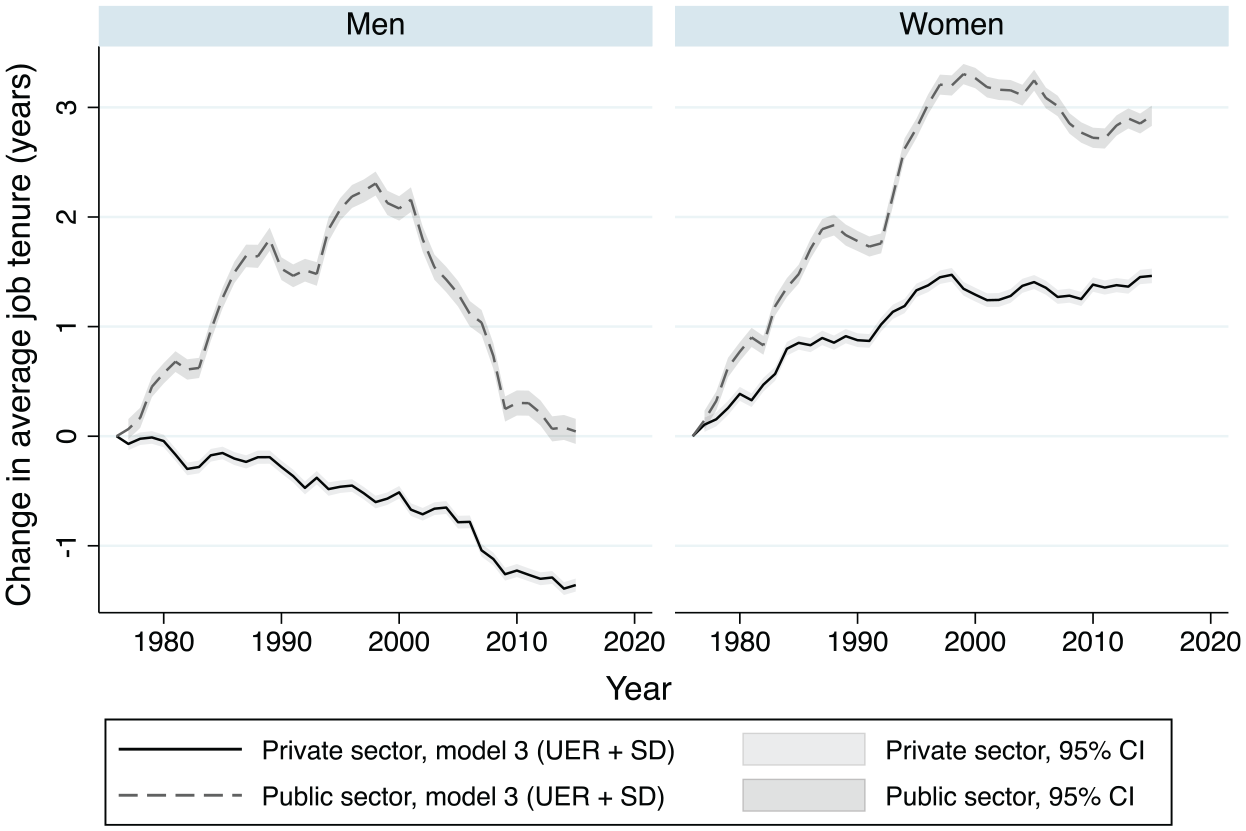
Change in average job tenure duration by sector of employment, adjusted for unemployment and sociodemographic characteristics, 1976–2015.
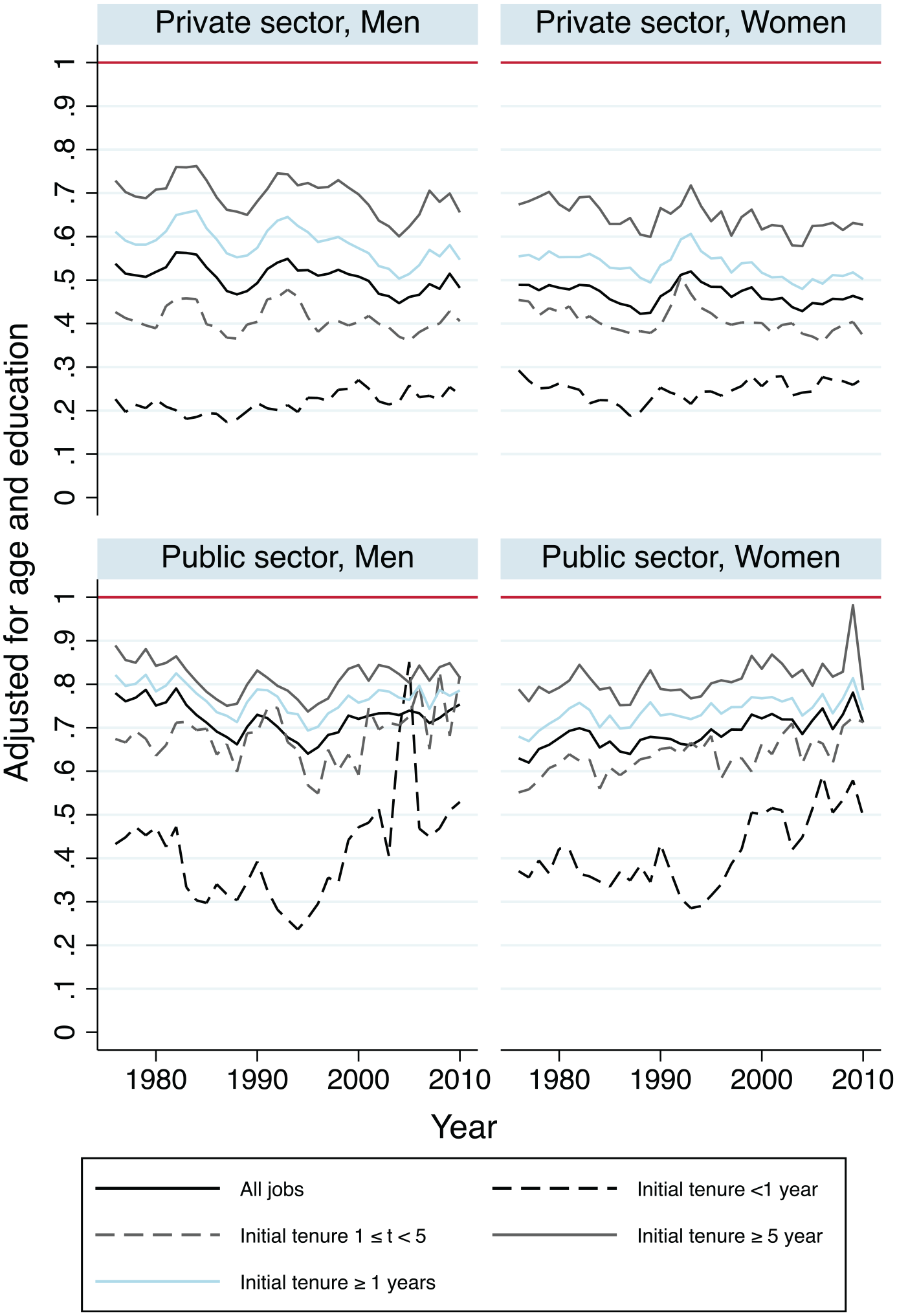
Five-year retention rates by sector of employment, adjusted for age and education, 1976–2015.
Meanwhile, adjusted average job tenure duration for public sector men followed a U-shaped trend, increasing by two years between 1976 and the late 1990s before falling back to baseline over the 2000s. The initial strong increase may be the result of public sector restructuring that occurred during this period having an effect similar to the one explained previously of recessions increasing average job tenure. This restructuring resulted in a large decrease in public sector employment between 1976 and 1998 (see Figure A12 in the online Appendix). This reduction likely led to fewer new hires populating the bottom of the tenure distribution. The decrease in average job tenure that occurred after 1998, meanwhile, is possibly due to the growth in the share of temporary employment contracts in the Canadian public sector during this period (Stecy-Hildebrandt et al., 2019).
Relatedly, we found a reversed U-shaped trend in five-year retention rates for public sector men (Figure 9): a decrease in the retention rate concentrated in the 1980s for all initial tenure groups, and a stabilization a few points below baseline since 2000. We conclude that public sector restructuring involved both a decrease in hiring, as shown by the increase in tenure, and a decrease in the retention rate (increase in separations) that unfolded over the 1976–1995 period approximately. Nevertheless, the public sector appears to still provide opportunities for stable careers, in line with other work finding persisting pockets of lifetime jobs in increasingly unstable labour markets (St-Denis, 2021).
The results for women highlighted another aspect of public–private sector difference. Private sector women experienced a decrease in five-year retention rates similar to the trend for men. Meanwhile, public sector women experienced an increase in their five-year retention rate over the whole period. This piece of evidence suggested that mother-friendly employer policies, such as those that prevail in some parts of the public sector, may have contributed to the increase in job stability among women.
Conclusion
This article addresses the apparent contradiction in the literature between, on the one hand, evidence of an increase in precarious work, job insecurity and boundaryless careers documented in the flexibilization literature and, on the other, seemingly little evidence of change in job stability. To do so, we adopt a research design including examining two different measures of instability simultaneously, estimating retention rates over a longer period and for different levels of initial tenure, and, most importantly, implementing techniques to account for sociodemographic shifts and economic fluctuations that are not directly related to flexibilization but likely to influence job stability measures over 1976–2015.
This approach allows us to resolve the apparent contradictions in previous research, with results supporting our expectations in three ways. First, consistent with the flexibilization literature (Cappelli, 1999; Kalleberg, 2009), we find a clear decrease in job stability for Canadian men starting in the 1980s. Second, the increase in job tenure for women in Canada over the last four decades is consistent with a masked instability explanation (Hollister, 2011; Hollister and Smith, 2014). Together, these two pieces of evidence highlight that studies of the impacts of flexibilization on job stability should integrate existing insights on gendered masked instability patterns, and should systematically adjust for changes in sociodemographic composition and for economic fluctuations.
Third, our results do not support the idea that a slowdown in business dynamism and entrepreneurship is leading to greater job stability in workers’ careers. Our results do not necessarily contradict the idea of a slowdown in business dynamism at the country level. Rather, they highlight important differences in the perspectives of the flexibilization and business dynamism literatures: the first one is concerned with changing career patterns, while the second focuses on trends at the level of aggregate firm creation and labour market fluidity (adjustments for sociodemographic composition and economic fluctuations may be less appropriate in that case).
At the same time, our findings require the articulation of new explanations, with the gender findings being of special importance. While the masked instability perspective suggests that women have experienced increased job stability, as evidenced by an increase in average tenure (Hollister and Smith, 2014), the literature on the gendered nature of precarious work argues that women, being more impacted by precarious work, are facing greater job insecurity (Vosko, 2006; Vosko et al., 2009), which should translate in a greater risk of job loss. Our findings help bridge the gap between those two apparently contradictory claims. In fact, we show that the increase in tenure among women does not appear to be associated with a higher rate of job retention (lower rate of job loss or voluntary mobility). Rather, the trend in the retention rate has remained stable and even decreased for younger and private sector women since 1976. We interpret this as evidence that the career trajectories of women involve fewer prolonged exits from employment (which would prevent tenure accumulation), consistent with findings on the impact of maternity leaves on employment interruptions among new mothers (Baker and Milligan, 2008; Gregg et al., 2007). This is important to the extent that it leads us to view job sequences not just as relating to the crossing of firm boundaries, but also as events that involve crossing the boundary between labour force participation and non-participation.
Similarly, the increase in retention rates we observe among new hires is not completely consistent with the flexibilization literature, which emphasizes the job insecurity characterizing temporary or other forms of non-standard employment arrangements (Vosko, 2006). Such workers are likely over-represented among those with short job tenure duration, and we would expect growing job instability among this group as a result. One alternative explanation is that as the retention rate for longer-tenured workers decreases, it may be that the composition of new hires has changed. Rather than new entrants or workers still in the job-shopping stage of their careers (Topel and Ward, 1992), they may increasingly be workers leaving medium- or long-tenured jobs and looking for a certain level of job stability in their new job, or workers at all stages of their career using employer changes as a strategy for career progression similar to the one described in studies of the boundaryless career model (Arthur and Rousseau, 1996). In sum, departure from the job-shopping logic historically underpinning inter-firm mobility may explain why new hires are less likely to leave a job within the first year despite increased job insecurity.
Finally, our study focuses on Canada, building upon and exploring in more detail similar findings in other LMEs such as the US and the UK. The comparative literature suggests that both the nature of flexibilization as well as patterns of women’s labour force attachment will differ in countries with different institutional settings and labour market reform pathways (Cazes and Tonin, 2010). For example, we may expect job stability trends to be impacted by insider-outsider polarization dynamics in neo-corporatist countries such as Germany (Emmenegger, 2014). At the same time, our article provides insights applicable to a wide range of national contexts. First, a focus on gendered dynamics is important for the analysis of job stability trends in countries with any type of family policies. Second, accounting for sociodemographic shifts and economic fluctuations is likely to be important across OECD countries to the extent that population aging and economic events such as the Great Recession have impacted most countries (although with different consequences depending on institutions).
More broadly, our study provides evidence supporting the flexibilization literature, but these findings then bring into focus the contrasting views of this flexibilization. While research on precarious work and on boundaryless careers both depict the transformation of organizational practices as resulting in greater job instability, they direct our attention to different ways in which the importance of organizations weakened. Contributions focusing on precarious work (Kalleberg, 2009; Vosko, 2006) and downsizing (Jung, 2015) emphasize the decreased job security provided by firms and the related increase in the risk of job loss. Meanwhile, the boundaryless careers literature tends to be more concerned with the emergence of voluntary inter-firm mobility as a career progression logic (Arthur and Rousseau, 1996; Defillippi and Arthur, 1996; Rodrigues et al., 2016). Empirical studies of the Canadian labour market find an aggregate decrease in the probability of layoffs since the 1980s (Bernard and Galarneau, 2010; Morissette et al., 2013), also seen in the US (Davis, 2008; Farber, 2010), but do not systematically account for the sociodemographic shifts we have found to influence the aggregate trends in our study. This evidence nevertheless suggests that increasing job instability might have been driven by an increase in employee-initiated separations. Further research examining trends in the different types of job separations might shed light on this question. 10 However, these two streams of the flexibilization literature may not be as opposed to each other as might initially be expected. Specifically, the withdrawal of employers from providing training and seniority-based job ladders might manifest itself through diminished opportunities for upward mobility within a firm, less incentive for employees to show loyalty and less effort by employers towards retention (Cappelli, 1999; Valletta, 1999), leading to greater numbers of voluntary exits in search of external mobility opportunities. At the same time, focusing on the reason for job separations would allow a better understanding of the trend for Canadian women, for whom a decrease in the probability to exit work for inactivity following childbirth might be masked by an increase in the probability of other separations (Hollister, 2012; Stewart, 2002).
Such a perspective suggests that we should view job instability not only in static terms, as a dimension of job quality, 11 but also as a component of the status attainment process in a career or life course perspective. This is more closely in line with the way seminal contributions to the sociological study of careers view job instability (Sørensen, 1975; Spilerman, 1977). While the early literature on job shifts and sequences pays special attention to the types of boundaries that structure worker mobility, it predominantly focuses on voluntary shifts between occupations and industries as a possible source of upward socioeconomic mobility over the life course (Rosenfeld, 1992; Sørensen, 1975; Spilerman, 1977). In contrast, it tends to pay little to no attention to firms and organizational boundaries as well as to job insecurity (but see Stinchcombe, 1979), a limitation also found in more recent studies (Manzoni et al., 2014; Witteveen and Westerman, 2022). Meanwhile, others call explicitly for paying attention to non-firm boundaries over organizational boundaries (Inkson et al., 2012; Rodrigues et al., 2016), a perspective sometimes directly motivated with references to studies finding a lack of trends in job stability such as those we have discussed earlier in our article. Because our article provides evidence that the boundaries of firms and organizations are increasingly crossed, we argue that these boundaries should receive sustained attention when studying career trajectories and job sequences.
In the next decade, it remains to be seen whether the trends observed in this article will become exacerbated, stabilize, or reverse. On the one hand, the potential expansion of gig work and the platform economy may lead an increasing share of workers to hold unstable and insecure jobs (Sutherland et al., 2019). In addition, the size of job losses in Canada from February to June 2020 (Lemieux et al., 2020), as well as the spike in quits observed over different stages of the COVID-19 pandemic, suggest that flexible employment practices and boundaryless career strategies are core features of contemporary economies. On the other, a growing literature points to the rise of employer practices that aim to restrict worker mobility in the era of boundaryless careers (though without necessarily offering greater job security). Non-compete covenants prohibiting certain within-industry job changes is the most studied of such practices and its use is associated with significantly lower job mobility and longer job tenure durations (Starr et al., 2019; Stone, 2006). Thus, the nature of careers and the social contract underpinning the employment relationship continue to shift and be renegotiated.
Supplemental Material
sj-pdf-1-wes-10.1177_09500170221146916 – Supplemental material for Are All the Stable Jobs Gone? The Transformation of the Worker–Firm Relationship and Trends in Job Tenure Duration and Separations in Canada, 1976–2015
Supplemental material, sj-pdf-1-wes-10.1177_09500170221146916 for Are All the Stable Jobs Gone? The Transformation of the Worker–Firm Relationship and Trends in Job Tenure Duration and Separations in Canada, 1976–2015 by Xavier St-Denis and Matissa Hollister in Work, Employment and Society
Footnotes
Acknowledgements
The authors wish to thank Axel van den Berg, Shelley Clark, Lisa Cohen, Barry Eidlin, Wayne Lewchuk, René Morissette, Michael Smith, and Leah Vosko for useful feedback on earlier versions of this paper. Any errors remain the responsibility of the authors.
Funding
The author(s) disclosed receipt of the following financial support for the research, authorship, and/or publication of this article: This project was supported by the Russell Sage Foundation (G-5585).
Supplemental material
The supplemental material is available online with the article.
Notes
References
Supplementary Material
Please find the following supplemental material available below.
For Open Access articles published under a Creative Commons License, all supplemental material carries the same license as the article it is associated with.
For non-Open Access articles published, all supplemental material carries a non-exclusive license, and permission requests for re-use of supplemental material or any part of supplemental material shall be sent directly to the copyright owner as specified in the copyright notice associated with the article.
