



Abstract
The article Employment stability and decent work published in the Journal of Industrial Relations by Murphy and Turner presents evidence forming the basis of a claim that job instability has not increased in Ireland between 1998 and 2021. This contrasts with a rich literature in industrial relations and the sociology of work and organizations, which documents the fundamental transformation of employment relationships since the 1990s toward greater insecurity. In this response paper, I question the empirical foundations of Murphy and Turner's claims. Analyzing the same data set used in their study, I provide clear evidence that an increase in job instability consistent with the precarious work literature has been hiding in plain sight. I also engage with their efforts at theorizing the nature of the recent transformation of employment relationships in Ireland specifically, and in Liberal Market Economies more broadly. In doing so, I suggest research avenues that go beyond a polarized debate in whether or not job instability has increased in order to contribute to a more complex understanding of contemporary changes in career trajectories.
Introduction
In a recent article published in the Journal of Industrial Relations, Murphy and Turner (2023) formulate an empirical criticism of the “end-of-work” narrative. Analyzing trends in average job tenure duration and in the prevalence of non-standard employment contracts, they claim to find no evidence of an overall increase in job instability and insecurity in Ireland between 1998 and 2021. In doing so, they build on previous research on Liberal Market Economies (LMEs) such as the USA, Canada, and the UK, published since the 1990s. In fact, numerous studies following this perspective, which can be called a “skeptical” perspective in the job stability literature, tend to observe limited change in LMEs in aggregate indicators of job stability, such as average job tenure duration or the retention rate (Auer and Cazes, 2000; Brochu, 2013; Burgess and Rees, 1998; Doogan, 2001; Hyatt and Spletzer, 2016; Molloy et al., 2016; Neumark et al., 1999; Rodrigues and Guest, 2010).
Specifically, Murphy and Turner adopt a skeptical perspective in claiming that the rise of flexible employment practices, non-standard work, and neoliberal labor market reforms has not translated into an increase in job instability and insecurity. As with most of the skeptical literature on job stability trends, Murphy and Turner's conclusions will be surprising to many scholars of precarious employment, whose work highlights increased vulnerability to layoffs and more frequent use of temporary and insecure employment contracts (Cappelli, 1992, 2001; Jung, 2015; Kalleberg, 2009; Osterman, 2000; Stone, 2004; Vosko, 2006). Likewise, their findings contrast with research expecting to see the emergence of boundaryless career models characterized by high rates of (voluntary) inter-firm mobility (Arthur and Rousseau, 1996; Bidwell and Briscoe, 2010; Cappelli, 1999; Hall, 2002; Inkson et al., 2012; Tsui et al., 1997).
Given those tensions in the empirical literature on career trajectories and employment insecurity, a great strength of Murphy and Turner's paper is the significant efforts spent developing credible and theory-driven explanations for why neoliberalism and flexible employment practices may not have translated into an increase in job instability. In doing so, they provide a relatively coherent argument as to why their observation of no overall increase in job instability may not be so surprising:
A polarized labor market with a growing share of non-standard workers may have generated perceptions of job instability beyond the most impacted groups although unions have protected core workers from job instability. This is an especially plausible argument given the existence of national-level concertation between the government and trade unions in the form of a social pact starting in the 1980s (Culpepper and Regan, 2014). Other industrial relations systems with sectoral- or national-level coordination are associated with the persistence of various social protections among labor market insiders, including job security (Emmenegger, 2014; Thelen, 2014). Employers have an interest in the retention of skilled employees, possibly countervailing the influence of flexible work dynamics and neoliberalism. This challenge has also been identified in other segments of the industrial relations literature highlighting employer practices aimed at reducing worker turnover (Stone, 2004). State-sponsored social pacts in Ireland have been engineered to compensate for the impacts of market-oriented labor market reforms. This argument may be linked with those on the resiliency of welfare states in times of fiscal austerity (Pierson, 2001).
In this response paper, I argue that while the authors’ theorization and hypotheses development efforts focus on employer practices and features of Irish industrial relations and social policies, they do not pay the same level of attention to other societal shifts that may influence job stability trends. This omission undermines the operationalization of their hypothesis testing and the interpretations that stem from it. Specifically, Murphy and Turner's study assumes that if neoliberalism translated into greater job insecurity and precarious employment, then it would directly translate into a decrease in aggregate indicators of job stability such as average job tenure duration.
In contrast, I demonstrate that this posture is misguided. Similar to a large portion of skeptical literature, it fails to account for confounding societal trends. Indeed, several sociodemographic shifts unrelated to neoliberalism and flexible work also influence trends in job tenure duration. Not accounting for these shifts have led the authors to miss clear evidence that most categories of workers are experiencing a significant increase in the level of instability of their careers in Ireland since 1998.
In the sections that follow, I show that evidence of the influence of neoliberalism and flexible employment practices on job instability has in fact been hiding in plain sight. First, I provide an overview of the main sociodemographic shifts that are likely to mask the increase in job instability in Ireland over the first two decades of the 21st-century. Second, I report estimates that stand as clear evidence of a net increase in job instability over that period, that is, an increase in the instability of jobs held by workers if the age structure of the population had not shifted between 1998 and 2021. I conclude with a discussion of lessons learned from a growing segment of the job stability literature that should convince researchers to steer clear of the skeptical perspective on job instability trends (Farber, 2010; Gregg and Wadsworth, 2002; Hollister and Smith, 2014; St-Denis and Hollister, 2023a, 2023b). I suggest avenues for future research that go beyond the polarized and simplistic debate on whether job instability has increased or not.
Accounting for sociodemographic shifts as a crucial step in testing the neoliberalism hypothesis
Population aging as a confounding trend
A consistent finding in existing research has emerged: changes in the age composition of the population, and more specifically population aging, are driving various job stability indicators upwards at the aggregate level (Brochu, 2013; Cazes and Tonin, 2010; Farber, 2010; Hyatt and Spletzer, 2016; Molloy et al., 2016; St-Denis and Hollister, 2023a). Studies not accounting for population aging often find little to no change in job stability. This is explained by the fact that the population of most Organisation for Economic Cooperation and Development (OECD) countries is aging, and older workers tend to have longer job tenure durations and lower risks of separation on average. In other words, an increase in the share of older workers in the workforce will mechanically translate into greater job stability even if workers of all age groups separately experience a decrease in job stability.
Based on an inspection of demographic trends in Ireland, I am expecting to find such a composition effect of population aging. In fact, Figure 1 shows that over the 1998–2021 period, 20–29-year-old workers went from representing close to 40% of all employees to around 20%, while the share of workers between 40 and 59 years old almost doubled. I expect to find a decrease in job stability within each age group over time, and a substantial decrease in aggregate job stability when adjusting trends for age. This age adjustment is important when aiming to test for the possible impacts of neoliberalism on job stability because the effect of population aging may mask the effect of rising job insecurity and precarious work, and of the emergence of new career attitudes emphasizing worker self-reliance. Failing to account for this possible confounding factor is likely at the source of the unintuitive conclusions reached by Murphy and Turner.
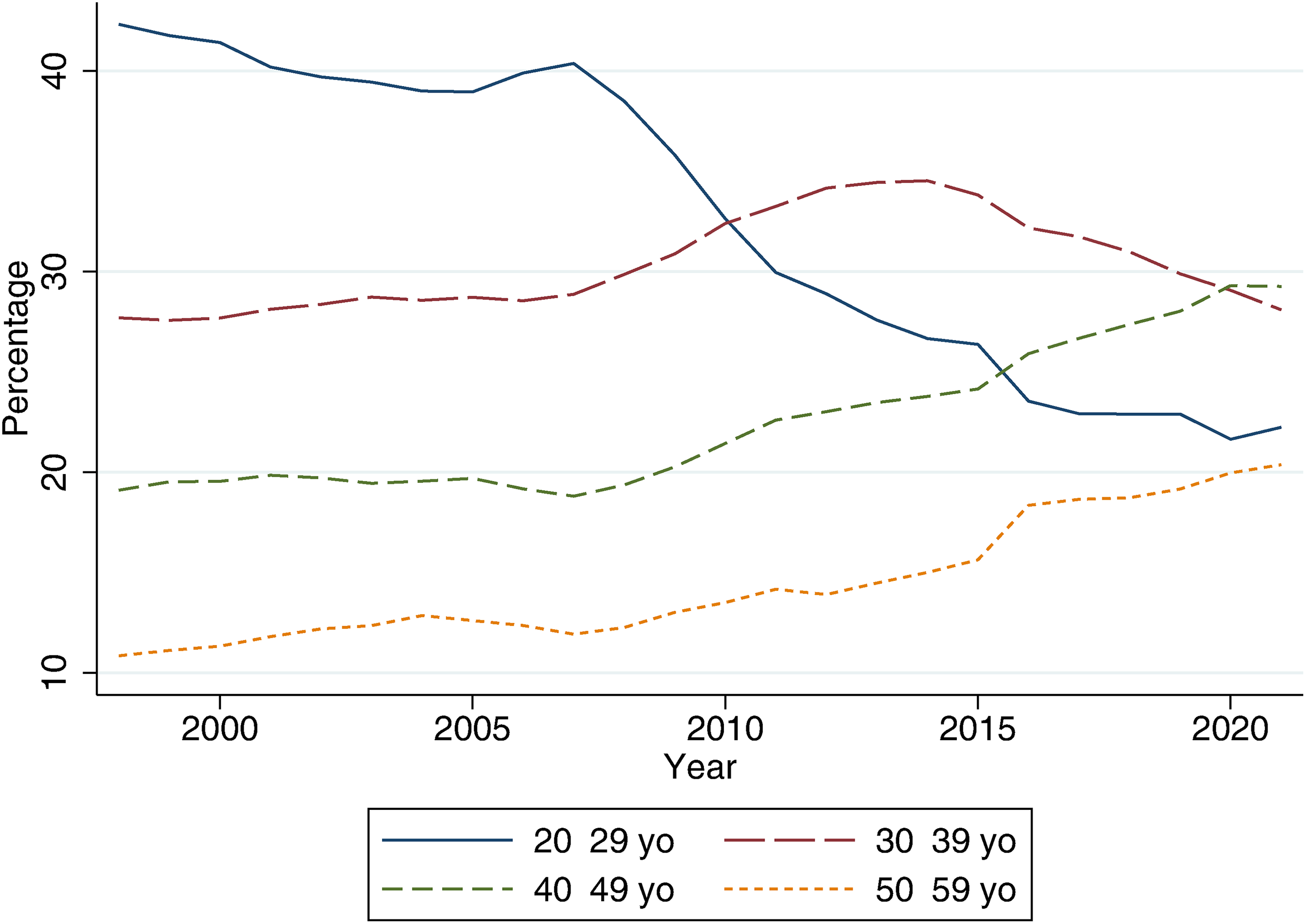
Age distribution of private sector employees in Ireland, 1998–2021.
In the next section of this paper, I explore the influence of population aging on aggregate trends in job tenure duration using regression analysis. As a first step however, I report descriptive statistics capturing changes in average job tenure duration by 10-year age groups. In line with Murphy and Turner, I restrict the analysis to employees in the private sector. In addition to trends in average job tenure duration, I report percentage change in average tenure to account for the fact that older age groups have longer job tenures, meaning that a decrease in 1 year of average job tenure duration, for example, will be more meaningful for younger than older workers. Percentage changes allow for more direct comparisons between age groups.
In Figure 2, I find clear evidence of a decrease in average job tenure duration among all age groups. The four age groups saw a decrease in average job tenure duration over time, with larger decreases in absolute values found among 30–39 and 40–49-year-old workers (around 2 years in each case). With the exception of younger workers, the decrease concentrated in the 1998–2008 pre-recessionary period. In terms of percentage changes, estimates range from 10% among 50–59-year-old workers to 25% among 20–29 and 30–39-year-old workers. Reading those results in conjunction with those from Figure 1 on shifts in the Irish age structure indicates that Irish workers experienced a decrease in job instability that is hidden at the aggregate level by an age composition effect. To put it simply, these findings undermine the core empirical finding on which Murphy and Turner's claim is based of no increase in job instability in Ireland over the 1998–2021 period.
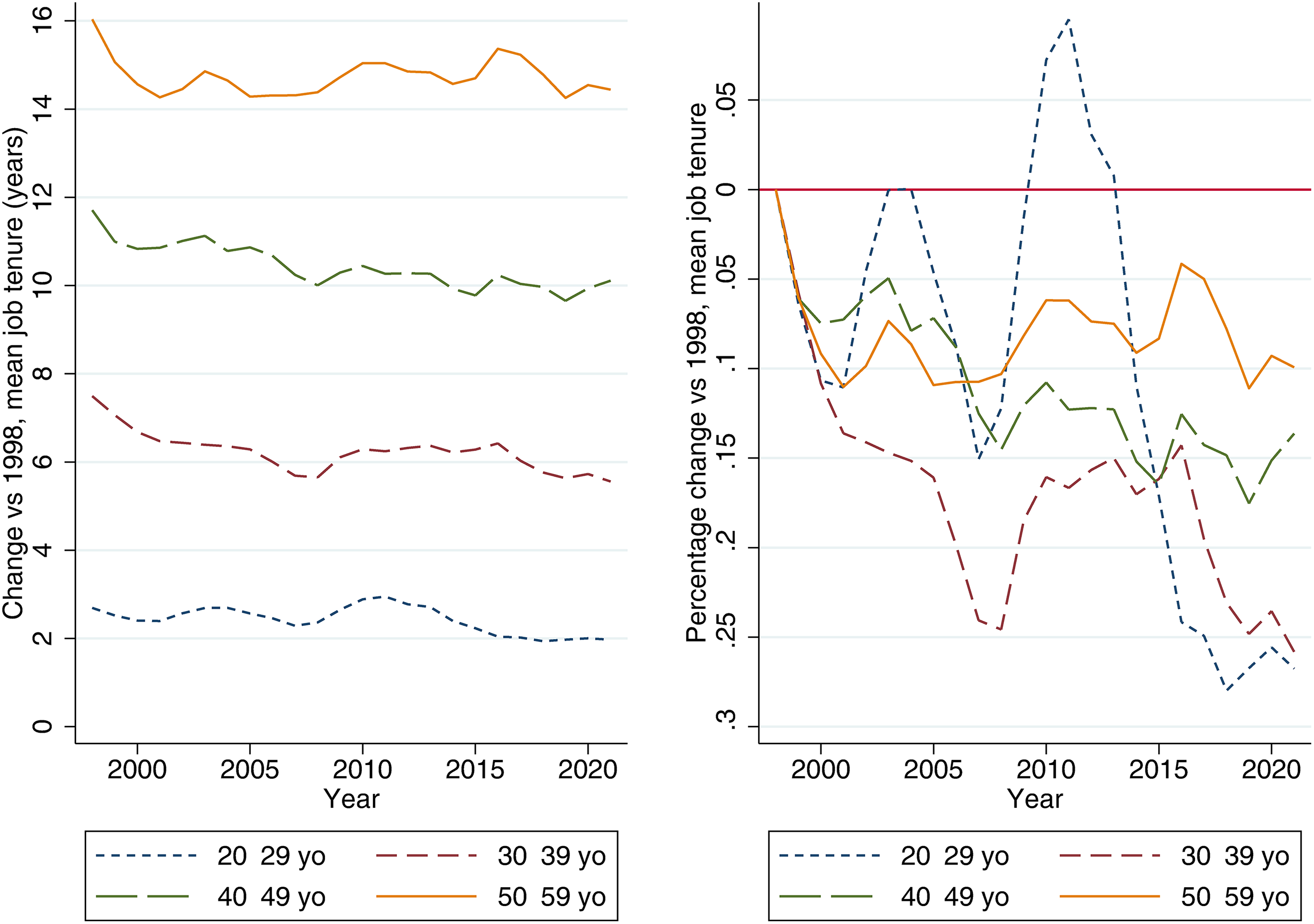
Change in average job tenure duration by age group, 1998–2021.
This first set of evidence encourages us to further question the conclusions of Murphy and Turner by probing the possible influence of other sociodemographic shifts on job tenure trends. Importantly, supplemental results in Appendix Figure A1 show no similarly broad increase in the share of workers in temporary or part-time employment. In fact, except for an increase in temporary and part-time work among 20–29-year-old workers after the Great Recession, I find no evidence of a marked increase in non-standard work in Ireland over the 1998–2022 period. Accordingly, employers may have been able to achieve their numerical flexibility needs without relying on non-standard work, a finding consistent with the comparative literature on the use of temporary work in OECD countries (Gebel and Giesecke, 2016; St-Denis and Hollister, 2023b), and with the fact that Ireland places among countries with the least restrictive legislation on protections against dismissals in the OECD alongside with the USA, the UK, and Canada (Venn, 2009). With only limited restrictions on the dismissal of permanent employees, employers are unlikely to resort to the use of temporary employment contracts.
Lastly, I note substantial fluctuations in job tenure duration among the youngest workers around recession years. This is unsurprising given the literature clearly establishing that job tenure duration increases in times of economic downturn (Bachmann and Felder, 2018; St-Denis and Hollister, 2023a). 1 This short-term fluctuation in our indicator of job stability should not be seen as evidence undermining the hypothesis of growing job instability.
Changes in women's employment participation masking increased instability
Beyond population aging, other important sociodemographic transformations may also mask a decrease in job instability in Ireland. The idea of societal shifts hiding a decrease in job stability has first been proposed by Hollister and Smith (2014) in their study of “masked instability” in the USA. They argue that rising job instability will be masked at the aggregate level by a change in norms and behaviors regarding the labor market participation of mothers. More specifically, mothers will be increasingly likely in recent decades to remain attached to the labor market rather than withdrawing into inactivity after childbirth. This can translate into increased job tenure durations for women, even as their risk of job separation increases (St-Denis and Hollister, 2023a). In Figure 3, I show that the share of women in employment increased in all age groups in Ireland over the 1998–2021 period, slowly converging toward men. The only exception is 20–29-year-old women, for whom I find high employment rates starting at the beginning of the observation period, but a decrease after the Great Recession in a pattern similar to 20–29-year-old men.
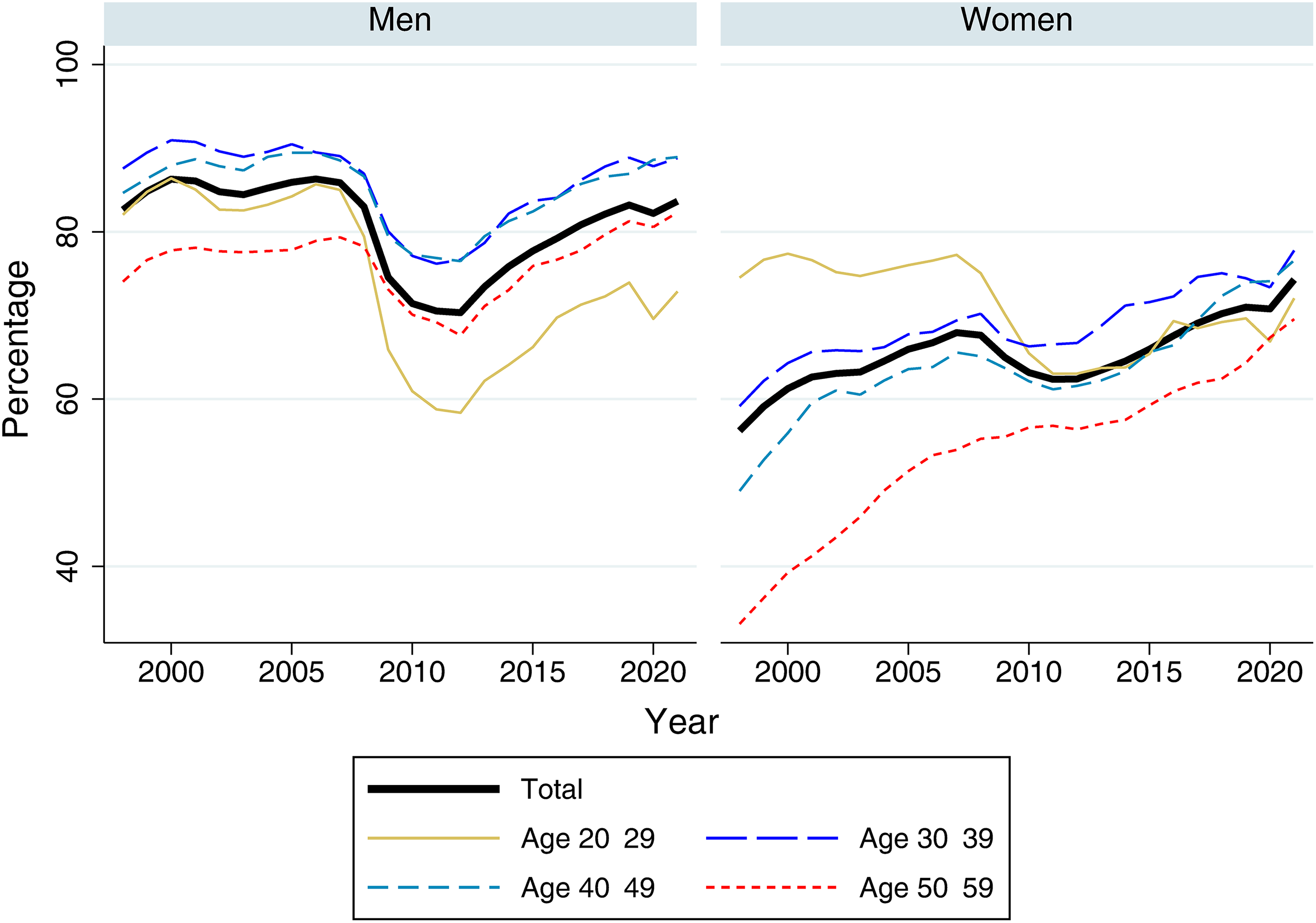
Change in the employment rate of men and women by age group, 1998–2021.
These basic descriptive results suggest that women in Ireland may have experienced a decrease in their rate of career interruption after childbirth and an increase in the stability of their career trajectories (for an example of this trend in the UK, see Gregg et al., 2007). This would be consistent with a “masked instability” scenario where mothers experiencing an increase in job stability for reasons unrelated to neoliberalism and employment flexibilization are hiding an increase in job instability for childless women and for men (Hollister and Smith, 2014). For that reason, I report regression results separately for men and women, in addition to implementing the age composition adjustments discussed above.
Revisiting estimates of trends in job stability in Ireland
In this section, I aim to isolate changes in job tenure duration over the 1998–2021 period that may be attributed to neoliberalism and flexibilization from components of change in job tenure duration driven by population aging or trends specific to certain sociodemographic dynamics distinct from neoliberalism and flexibilization. I argue that doing so provides a more reliable and systematic test of the main hypothesis proposed by Murphy and Turner (2023).
My analysis aims to replicate as closely as possible the sample inclusion criteria and variable recoding of Murphy and Turner. 2 I use the 1998–2021 Irish Labour Force Survey collected by the Central Statistics Office (Central Statistics Office, 2022) and obtained from the Irish Social Science Data Archive (ISSDA). My sample is restricted to 25–59-year-old workers because employment before that age is rarely career employment and more often performed part-time or on a seasonal basis by students. The upper age bound is set at 60 years old to avoid an influence of changing retirement patterns on the trend estimates. My results are not sensitive to the choice of age bound and are similar when focusing on 20–64-year-old workers. With the exception of the last figure, I exclude public sector workers to replicate Murphy and Turner's sample.
The compositional effect of population aging
In Figure 4, I report estimates of a regression of the natural log of job tenure duration on a series of year dummies. Each year dummy coefficient captures the percentage change in job tenure duration relative to the baseline year, 1998. In a first model, I report unadjusted results, that is, a regression without covariates. In a second model, I control for age. The resulting year dummy coefficients are adjusted coefficients capturing change in job tenure duration net of the compositional effect of age. In other words, estimates from model 2 show the size of the change in job tenure duration relative to baseline if the age distribution of employees had remained at 1998 levels. The difference between the model 1 and model 2 coefficients shows the share of the overall change attributed to the compositional effect of age. A detailed discussion of regression specifications is included in the Appendix.
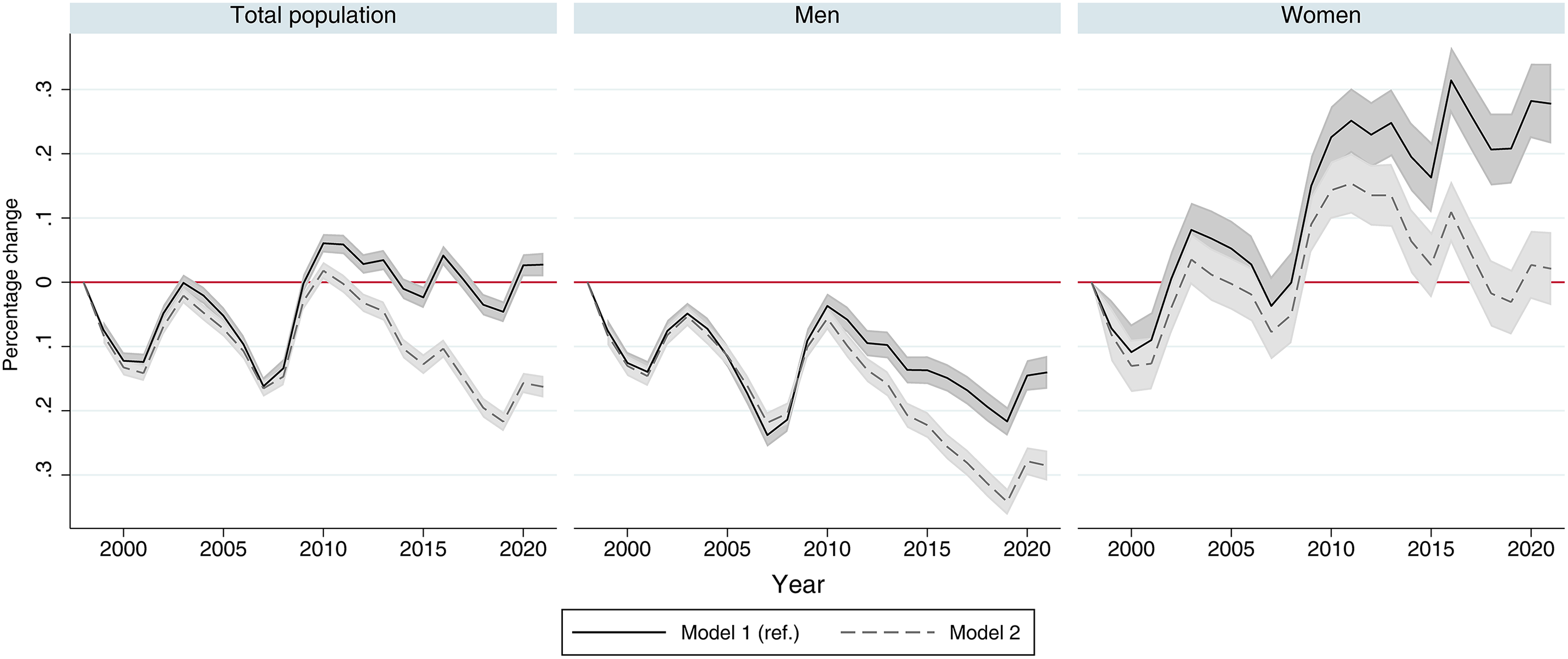
Regression estimates, percentage change in job tenure duration among private sector workers by gender, 1998–2021.
Unadjusted estimates show evidence of a decrease of up to 10% in the 1999–2008 period relative to the baseline year. That said, I observe similar job tenure duration levels in the years following the Great Recession than at baseline. Next, the results adjusted for age tell a different story. My results show clear evidence of a statistically significant decrease of 10–20% in job tenure duration in 2022 relative to the baseline year when adjusting for changes in the age composition of the workforce. The decrease in job stability is statistically significant across the whole 1999–2021 period but is most pronounced around 2005–2008 and after 2015. The composition effect of age is most visible after 2008, in line with the results from Figure 1 showing a substantial decrease in the share of young workers among Irish private sector employees after that date. In sum, the results from Figure 4 show a net decrease in job stability in Ireland from 1998 to 2021 in line with trends found in the USA, Canada, and the UK (other LMEs). This trend is masked by an age composition effect not taken into account by Murphy and Turner in the operationalization of their hypotheses.
Masked instability patterns in Ireland
I also disaggregate results by gender to address the “masked instability” hypothesis. I find decreases of more than 30% in the job tenure duration of men when adjusting for age, and 20% in the unadjusted model. This points at a substantial increase in job instability among men that is consistent with the neoliberalism hypothesis. For women, I find change in a different direction, in line with previous research on job stability in LMEs (Gregg and Wadsworth, 2002; Farber, 2010; Hollister and Smith, 2014; St-Denis and Hollister, 2023a, 2023b). More specifically, the unadjusted results point at an increase in average job tenure duration. However, this is also driven by a large age composition effect after 2008.
To test for the masked instability hypothesis more directly, I report the results of a regression model interacting the year dummy coefficients with the marital status variable. In doing so, I expect to obtain evidence helping us to determine whether the results for women are related to changes in the labor market attachment of mothers or whether there is a need for alternative explanations. 3 Note that in order to account for the compositional effect of age identified above, the reported output is from model 2 (age-adjusted coefficients).
The results of this analysis are reported in Appendix Figure A2. I find a decrease in job tenure duration for men of both marital statuses. For women, I find a small increase in job tenure duration concentrated among women who are or have been married. Never married women experienced a 20% decrease in average job tenure duration, similar to men. This is consistent with evidence reported in the masked instability literature (Hollister and Smith, 2014; St-Denis and Hollister, 2023a), and suggests that the trend for women is likely driven by changes in a mother's labor market attachment rather than by factors rooted in industrial relations, labor market institutions, or employer practices that negate the effects of growing job insecurity. In other words, my results do not undermine the claim that job instability has increased as a result of neoliberalism and flexibilization. Rather, it is evidence that other societal shifts occurring in parallel with neoliberalism and flexibilization have also influenced job instability trends among certain segments of the population. This appears to mask an otherwise clear shift in employment relationships toward greater job instability.
Differences between the private and public sector
Lastly, I report trends in job tenure duration in public sector industries. 4 Murphy and Turner justify their focus on the private sector by arguing that the public sector is sheltered from market forces. However, there is extensive evidence of the influence of neoliberalism in the public sector. This includes major restructuring of public administrations, especially in times of fiscal austerity (Beynon et al., 2002; Fuller, 2011; MacKenzie, 2000; Pupo and Noack, 2010; Stinson, 2010). Although not necessarily linked in a direct fashion with market-driven fluctuations in economic performance, the public sector has seen strong increases in job insecurity through the use of temporary work, outsourcing, and other practices. New career strategies (Arthur and Rousseau, 1996; Briscoe et al., 2012) are also likely to be adopted by public sector workers as norms regarding career models disseminate. This should translate in increased job instability.
In Figure 5, I find support for this perspective. The estimates show a decrease in job tenure duration in the public sector, concentrated among men. While there are some differences in the timing and magnitude of the changes relative to the private sector, the results are consistent with the idea that neoliberalism and flexibilization have contributed to an increase in job instability in Ireland across the labor market, including in segments of the public sector not directly exposed to market forces but potentially subject to austerity-driven public sector restructuring found across LMEs since the 1990s. In sum, the results for the public sector are additional evidence that increased job instability is felt by workers across the Irish labor market.
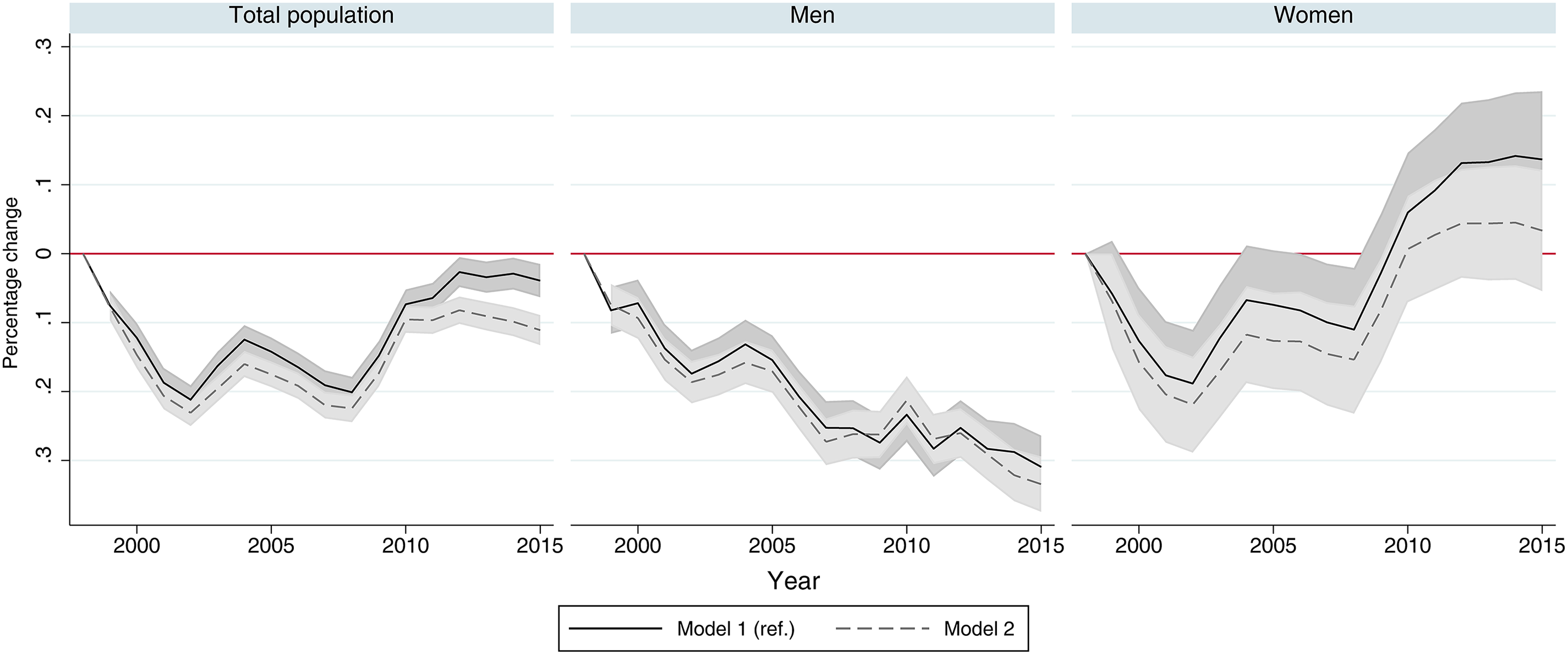
Regression estimates, percentage change in job tenure duration among public sector workers by gender, 1998–2021.
Discussion and conclusion
This paper provides a response to Murphy and Turner's (2023) recent article contending that job instability has not increased in Ireland over the last two decades. In my response, I aim to demonstrate that such arguments, at the core of a skeptical literature on job stability trends, should be abandoned. While Murphy and Turner's article succeeds in formulating relevant theories and hypotheses, I contend that their contribution is based on questionable methodological decisions that lead to misguided interpretations, as many other skeptical studies of job stability trends have done in the past. I argue that a more careful consideration of confounding factors and counteracting trends is crucial when analyzing changes over time in job instability.
At the empirical level, I show a clear decrease in job stability in Ireland between 1998 and 2021 among all age groups likely driven by neoliberal reforms and the increased use of flexible employment practices by firms. I also show that this trend has been masked by population aging, changing career patterns among mothers, and to a certain extent, the short-term impact of the Great Recession. At the theoretical level, failing to identify the increase in job instability hiding in plain sight leads to the evacuation from industrial relations theory of an important and perhaps fundamental shift in the nature of employment relationships and employer practices emerging across LMEs.
In fact, I find a net decrease in average job tenure duration among private sector workers of over 20% between 1998 and 2021 (above 30% for men alone). Admittedly, this is not consistent with the strawman claim that we are witnessing the “end-of-work.” However, it is very much consistent with rich empirical and theoretical contributions documenting a fundamental transformation of work arrangements and firm practices underpinning the stability and security of employment relationships since the 1990s across LMEs (Beynon et al., 2002; Cappelli, 1999; Kalleberg, 2009; Vosko, 2006). In fact, a decrease in age-adjusted average job tenure of over 20% is of a similar magnitude to other contemporary labor market transformations often considered as revolutionary. For example, the share of women with any employment increased from 55.9% in 1998 to 73.9% in 2021. This increase of 18 percentage points, or 32% ((73.9–55.9)/55.9), has been described as a “gender revolution” (England et al., 2020).
Acknowledging the fundamental change in the nature of employment relationships toward greater instability opens the door for new research avenues that have remained underexplored because of a lack of agreement among researchers on basic empirical trends. This includes asking which groups have been most negatively impacted by increases in job instability; whether layoffs, termination at the end of fixed-term contracts, voluntary inter-firm mobility, or other types of job separations are driving the increase in job instability; and how employers who need to provide training and skill development address employee retention challenge while maintaining a certain level of flexibility in their workforce. This last point is raised by Murphy and Turner in their article but is not operationalized empirically.
In sum, the debate on whether job stability has declined or not should be put to rest in light of clear evidence across LMEs that workers are indeed experiencing greater instability throughout their careers (Farber, 2010; Gregg and Wadsworth, 2002; Hollister and Smith, 2014; St-Denis and Hollister, 2023a, 2023b). This will allow scholars to develop a better understanding of the drivers of these trends and of emerging forms of inequalities that result from transformations of employment relationships over time.
Another important research avenue, which is integrated convincingly in Murphy and Turner's theorization, is an exploration of the relationship between changes in specific national industrial relations and labor market institutions on one hand and trends in job instability on the other. Ireland may represent an interesting case study of the impact of an unraveling of social dialogue and centralized collective bargaining on job instability trends. Studies of Coordinated Market Economies (CMEs) in Continental Europe tend to show a dualization pattern, with labor market insiders able to leverage their political influence to maintain in place the social protections they benefited from, including employment protection legislation (EPL) (Emmenegger, 2014; Thelen, 2014). This came at the expense of a growth in job insecurity in the form of more permissive laws on the use of temporary employment contracts among labor market outsiders in parallel with rigid EPL among labor market insiders on permanent employment contracts (Gebel and Giesecke, 2016). In Ireland, EPLs for permanent employees have historically been weak relative to most other Continental European countries but similar to other LMEs (Venn, 2009). The focus of national-level collective bargaining in Ireland appears to have been wage moderation and inflation reduction (Baccaro and Howell, 2011; Culpepper and Regan, 2014), with little to no mention of labor market reforms targeting (EPL) as an element central to social pact negotiations in the literature on Irish industrial relations.
For those reason, it is unclear that the outcome of national-level collective bargaining would translate into the same type of insider-outsider dynamic in terms of job security regulations than in the CMEs of Continental Europe. Trade unions are also much less involved in concertation with employers at the level of the firm (Colvin and Darbishire, 2013; Culpepper and Regan, 2014), which is another channel through which numerical flexibility is achieved without job insecurity and instability in core segments of the labor market of CMEs with more traditional corporatist industrial relations systems (Brenke et al., 2013). In fact, the weakening of the national-level social partnership between trade unions and the government starting in 2008 in Ireland appears to have happened in parallel with a broadly felt increase in job instability (without extensive use of temporary employment contracts outside of the youngest age group, as highlighted in Appendix Figure A1). In sum, Murphy and Turner's (2023) effort at theorizing the interaction between industrial relations institutions and job instability trends is especially welcomed in a literature sometimes characterized by overtly empirical papers that leave only limited place for broader discussions on the contexts in which trends are observed (but see St-Denis and Hollister, 2023b). However, my results provide a reason to revise their key theoretical argument on the potential persistence of job stability in Ireland.
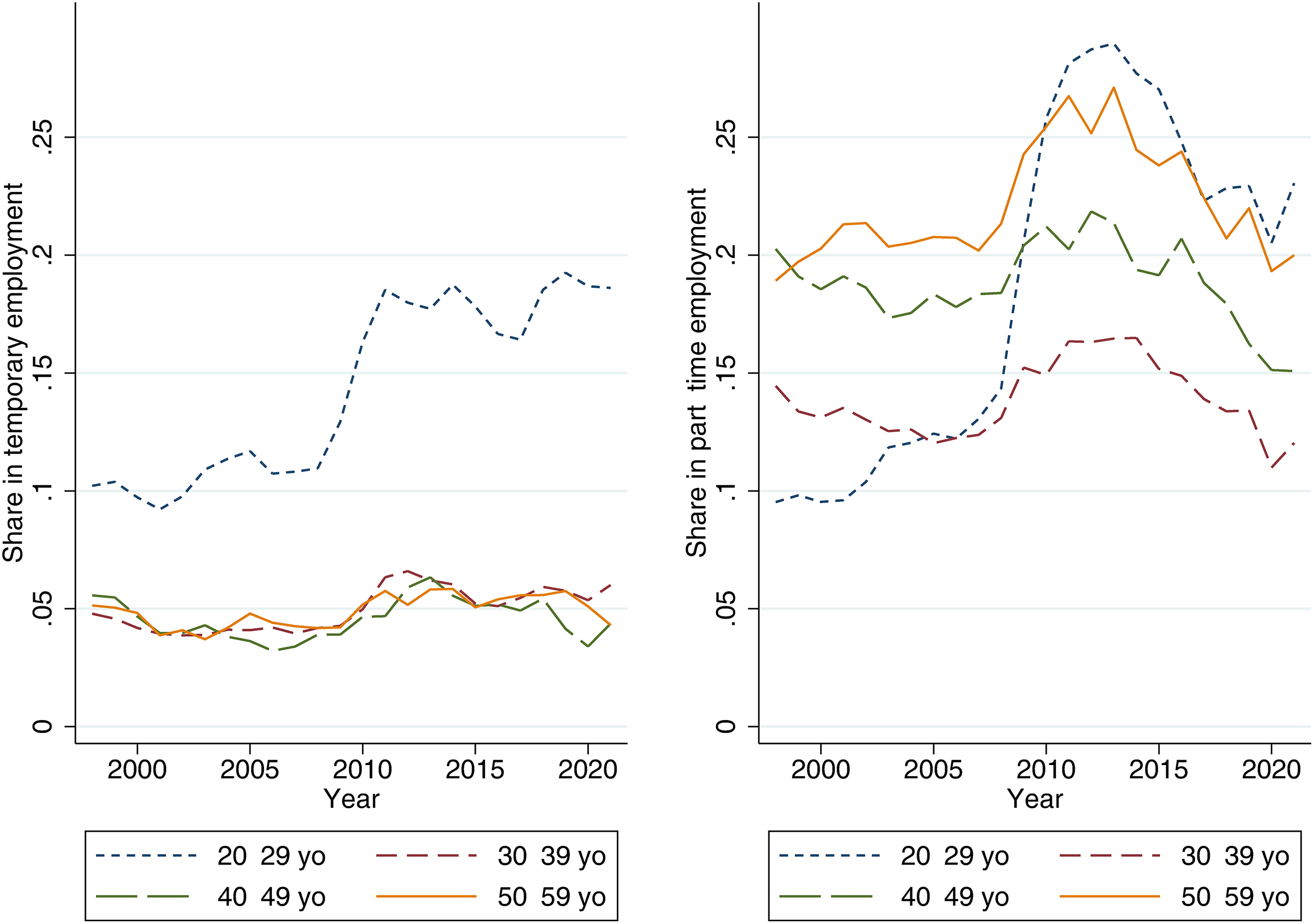
Share of temporary and part-time workers among private sector employees in Ireland, 1998–2021.
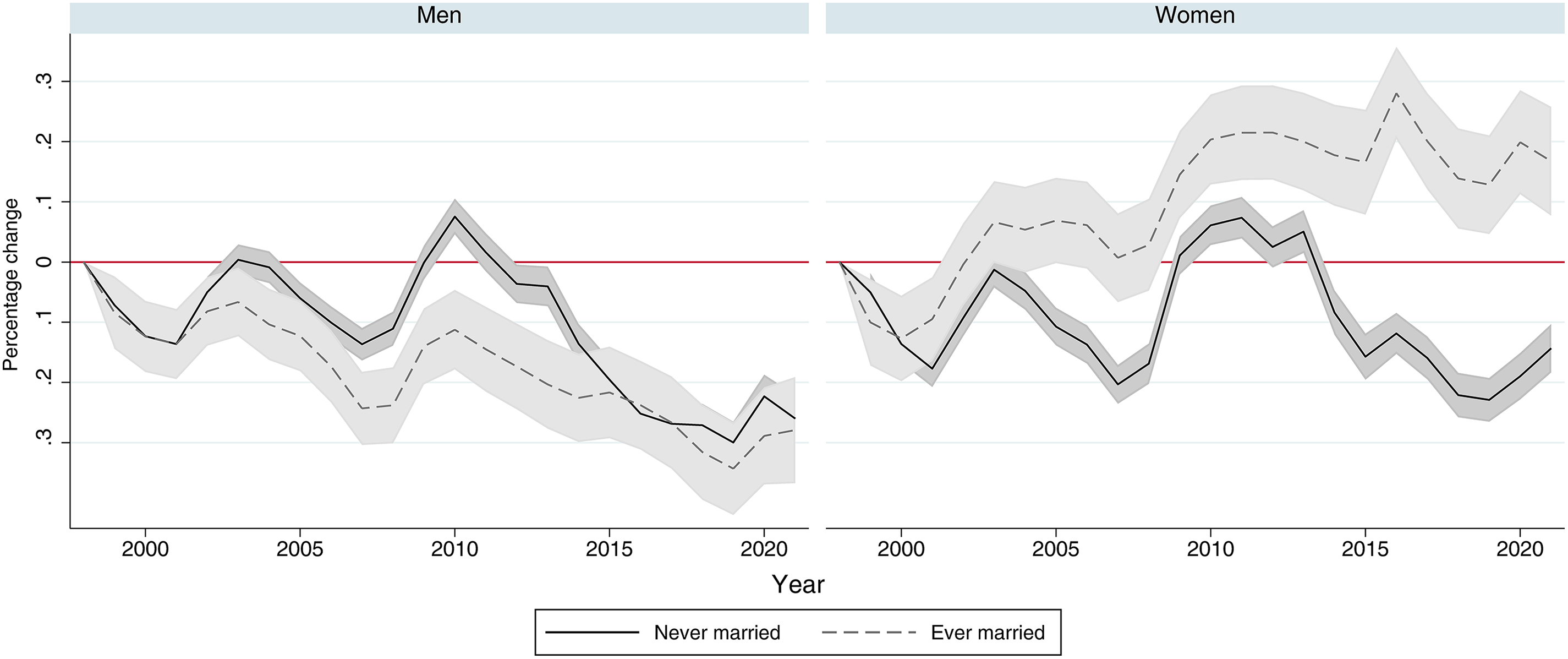
Regression estimates, percentage change in job tenure duration by marital status, 1998-2021.
Footnotes
Declaration of conflicting interests
The author declared no potential conflicts of interest with respect to the research, authorship, and/or publication of this article.
Funding
The author received no financial support for the research, authorship, and/or publication of this article.

Notes
Biographical note
Appendix
The regression estimates reported in Figures 4 and 5 and Appendix Figure A2 are based on models regressing the natural log of job tenure duration,