




Abstract
The United Nations highlighted the importance of promoting the rights of people with mental health conditions (MHC) to education, employment, and citizenship. One related initiative in Israel is the Garage pre-academic music and arts school for individuals with musical and artistic abilities coping with MHC. This process–outcome study examined whether and how the Garage contributes to participants’ creative self-concept, mental health, alleviates loneliness, and promotes postsecondary education and work integration. It also probed the participants’ initial expectations and the extent to which these were fulfilled. Using a single-group pretest–posttest design, quantitative data on the outcome variables were collected, along with mid-test data on process variables from the Garage students (N = 44). Supplementary qualitative data were collected at pretest on the students’ expectations. The results suggest a significant increase in creative personal identity and mental health, a decrease in loneliness, and promotion of postsecondary education and work integration. These findings were associated with persistent attendance, basic psychological needs satisfaction, and expectation fulfillment. A merged analysis indicated that the students’ qualitative expectations were generally congruent with the quantitative results. Overall, the findings show how the program corresponds to humanistic values, targets service users’ needs and rights, and promotes personal recovery and community integration.
Keywords
The human rights of people with mental health conditions (MHC) are still violated and abused in many countries, and urgent steps are needed to promote occupational and social justice (Patel et al., 2018). 1 This includes the development, implementation, and evaluation of novel services that meet people’s needs, provide new opportunities, and promote their mental health and human rights. Reports by the United Nations General Assembly (United Nations, 2017) and the World Health Organization (WHO, 2019a) also stress the importance of promoting the rights of people with MHC to education, employment, and citizenship. The overarching aim of this process–outcome study was to examine an innovative arts-based community rehabilitation program, the Garage pre-academic music and arts school, for people with musical or artistic abilities who are coping with MHC. This program was designed to impart and enhance artistic-professional skills as well as socioemotional abilities to foster personal identity development, and to facilitate the participants’ integration into postsecondary education 2 and work in the community (see details below).
Personal Recovery and Community Integration
Mental health rehabilitation policies worldwide have been influenced by the emergence of the recovery-oriented approach, which advocates for “person-centered” care and is strongly governed by the humanistic values of elevating freedom, creativity, holism, agency, self-determination, and hope (Davidson et al., 2009; Shahar, 2018; Shahar & Schiller, 2016). This approach focuses on improving quality of life, encouraging autonomy and choice, instilling meaning, and promoting community integration, while also acknowledging the person’s mental health challenges (Echezarraga et al., 2019; Jun & Choi, 2020; van Weeghel et al., 2019).
In Israel, the influences of the recovery-oriented approach are reflected in several changes in the attitudes of society and state policy toward the community integration of individuals with MHC. One of the key changes was the passing of the Rehabilitation of Psychiatrically Disabled Persons in the Community Act in 2000. This law enables people with MHC to be eligible for a “rehabilitation basket” that provides a set of community services to help maximize independence and quality of life (Ministry of Health, 2017). As a result, prolonged hospitalization and residence in closed institutions have shifted to community-dwelling programs (Roe et al., 2012).
Community integration refers to the opportunity to live in the community according to one’s individual abilities, as would any other person (Kaplan et al., 2012). The major goals of community integration are the acquisition of postsecondary education and work (Salzer & Baron, 2014), which are essential for social and occupational mobility, and to improve the quality of life and personal recovery of people with MHC (Hasson-Ohayon et al., 2016; Rinde-Tene et al., 2009). Employment provides a socially valued role, opportunities for achievement, enables social inclusion, and can contribute to self-esteem and personal identity (Blank et al., 2015). Educational attainment has been positively associated with higher salaries and employment status in people with MHC (Ellison et al., 2008). One way to promote education and work integration is to offer preparatory training in the community, such as the one examined in the current study, which considers service users’ personal needs and inclinations and helps them to progress toward their personal and professional goals (Harvey et al., 2013).
Arts, Creative Self-Concept, and Mental Health
There is growing evidence that engagement with artistic and creative processes can be beneficial to people with MHC. For example, various studies have indicated that music-based services promote service users’ personal recovery (Bibb & McFerran, 2018; Silverman, 2015; Solli et al., 2013), greater functioning, mental health (Gold et al., 2013; Silverman, 2020) and empowerment (Rolvsjord, 2010). Other studies have indicated that drama-based practices reduce stigma and foster socialization (Orkibi et al., 2014; Yotis et al., 2017), and that visual-art practices may improve self-confidence and provide hope for the future (Sapouna & Pamer, 2016). There is also promising evidence in the context of community arts-based settings with respect to its contribution to personal recovery, rehabilitation (Oren et al., 2019), well-being (Wilson & Sharpe, 2017) and the acquisition of creative capabilities and skills in people with MHC (Lawson et al., 2014).
Creativity is considered an important humanistic value as it is vital for personal growth and development (Acar et al., 2021; Shahar & Schiller, 2016). According to the standard bipartite definition, creativity is the ability to generate products and ideas that are both novel (i.e., original, unique) and useful (i.e., adaptive, effective, appropriate, aesthetically valued; Runco & Jaeger, 2012). Evidence suggests that daily creative activities are associated with positive emotions, purpose, meaning in life, and social connectedness (Conner et al., 2018). The relationship between creativity and MHC has long been controversial (Becker, 2001; Kaufman, 2014; Richards, 1981). Mixed results indicate a complex and nonlinear relationship that depends on various factors such as the type and/or severity of mental health symptoms (Abraham, 2014; Glazer, 2009; Holt, 2019; Stamatis & Weisman de Mamani, 2020; Xu et al., 2021). Nevertheless, as mentioned above, there is growing evidence that creative and artistic engagement may be beneficial for people with MHC.
Among other aspects, the current study examined participants’ creative self-concept, which is comprised of creative personal identity (CPI), and creative self-efficacy (CSE), two constructs that are fundamental to the Garage program described below. CPI refers to the role creativity plays in people’s identity and self-description, whereas CSE refers to people’s confidence in their ability to be creative (Karwowski, 2011, 2016). Research indicates that these creative self-concept constructs are associated with creative potential (an individual’s ability to create something that is both novel and useful) and achievement (an individual’s real-life creative contribution; Karwowski, 2016), mental health, and psychosocial growth (Orkibi, 2021; Orkibi & Ram-Vlasov, 2018).
The Garage Program
The Garage is a multidisciplinary pre-academic music and arts school for people with musical or artistic abilities who are also coping with MHC. Supported by the National Insurance Institute of Israel (NII) and the Ministry of Health, the program was founded in 2014 in Tel-Aviv by a nongovernmental organization composed of artists and musicians with an extensive background in the mental health field, some of whom cope with MHC. The Garage program aims to improve and impart artistic-professional skills as well as socioemotional abilities to foster personal identity development, to facilitate the participants’ integration into postsecondary education and employment, and to help them become contributing and working members of the community.
The program’s participants are young adults (aged 18+) with MHC, with at least a 40% disability (as defined by the medical committee of the NII) 3 and are thus eligible for the rehabilitation basket services provided by the Ministry of Health. The MHC cover diagnoses such as schizophrenia, bipolar affective disorder, major depressive disorder, and obsessive compulsive disorder. Some participants are recruited to the program by the Garage team whereas others are referred to it by the rehabilitation basket committee. The admission process includes a personal interview and assessment of the candidates’ artistic abilities in their chosen track of study: music, art and design, or media and writing. The program’s 1-year curriculum consists of professional courses that are taught by specialized artists, musicians, poets, and writers who are experienced in teaching, some of whom also cope with MHC. In the music track, the students learn various musical genres, composition, vocal production, performance, sound, and arrangement. In the art and design track, art history, visual communication, and graphic design are taught. Studies in the media and the writing track include dramatic and journalistic writing, expressive writing, and writing for the television, internet and film.
Consistent with the program’s aims, the arts studies and pedagogical content also includes emotional, social, and behavioral components such as facing an audience and handling criticism. The duration of the course is 10 months (aligned to the academic year, from October to July), 5 days a week, for a total of 25 hr per week. Over the course of the year, students acquire skills and prepare their portfolios of musical or media materials for admission to postsecondary education programs in the arts, design, and music, or to film and media schools. Family members, friends, and the general public are invited to attend lectures, exhibitions, performances, and events at the Garage locale or at other locations in the community, such as museums, clubs, or cultural venues (https://en.hagarageart.org/).
Possible Change Process Factors Despite the abovementioned benefits of artistic and creative engagement, there have been few studies, if any, which have examined the underlying change process factors of arts-based community programs and their association with outcomes. Therefore, one aim of the present study was to examine the processes and outcomes related to the Garage pre-academic music and arts program. For this purpose, three change process factors reasoned to be relevant to the Garage program were measured: basic psychological needs satisfaction, persistent attendance, and engagement. Basic Psychological Needs Theory is a central subtheory of Self-Determination Theory, a theory of motivation that deals with ways to further individuals’ natural or intrinsic tendencies and resources to foster personal development and behavioral self-regulation (Ryan & Deci, 2000, 2017). Basic psychological needs theory posits that the satisfaction of the interrelated needs for autonomy, relatedness, and competence is critical for well-being (Milyavskaya & Koestner, 2011), and for academic success in the context of education (Tian et al., 2014). Autonomy refers to the experience of volition and willingness, which leads to a sense of integrity. Relatedness denotes the experience of care, warmth, and bonding and is satisfied by connecting to and feeling significant to others. Competence involves the experience of mastery and effectiveness when the person capably engages in activities and experiences opportunities for using and extending skills and expertise (Ryan & Deci, 2017; Vansteenkiste et al., 2020).
Creative engagement and creative personal expression may foster the satisfaction of basic psychological needs by providing autonomy, where the artistic and creative processes originate from within (e.g., via free musical improvisation, free painting); relatedness, by feeling connected to others or a sense of belonging to a group (e.g., via playing together in musical ensembles, presenting artistic materials in a group); and competence, by effectively expressing capabilities (e.g., via musical performances, artistic exhibitions; Lassig, 2020; Paananen, 2022; Swindells et al., 2016). Recent studies indicate that the satisfaction of the three basic psychological needs is associated with creativity, personal development, and mental health (Dale, 2018; Nordin-Bates & Kuylser, 2021).
Persistent attendance is one of the core components of therapeutic change in psychotherapy (Deakin et al., 2012). Attendance rates have a significant economic and clinical impact (McIvor et al., 2004) and many mental health services aim to increase it (Oldham et al., 2012). Attendance is connected to positive treatment influences and it is often associated with engagement (Becker et al., 2015; Lindsey et al., 2014). This study explored engagement in terms of vigor, dedication, and absorption, which refer to engagement in actual activities (Schaufeli et al., 2006; Upadyaya & Salmela-Aro, 2013) and were reported to be reciprocally associated with wellbeing (Orkibi & Tuaf, 2017).
The Present Study
This study applied the process–outcome research approach (Crits-Christoph et al., 2013) that goes beyond questions of outcomes to questions of how or why a service leads to a change (Kazdin, 2009), which is a suitable method for the assessment of intervention processes and outcomes in the field of mental health (Hasson-Ohayon et al., 2016). Process–outcome research involves measuring process variables and examining their associations with outcome variables (Crits-Christoph et al., 2013; Hayes, 2017). Process variables are often labeled as change factors or therapeutic factors and are theorized to account for changes in outcomes (de Witte et al., 2021).
The overall aim of this study was to examine whether and how the Garage program contributes to participants’ creative self-concept, mental health, alleviates loneliness, and promotes integration into postsecondary education and work in the community. In addition, we explored the participants’ expectations preprogram and evaluated the extent of its fulfillment at the completion of the program. This examination was crucial given the scant research on expectations of people with MHC from treatment in general (Holding et al., 2016) or from community rehabilitation services in particular (McKenna, 2017; Parker et al., 2019). We postulated that
The participants will report adaptive change from pretest to posttest in the outcome variables (mental health, loneliness, and creative self-concepts).
The program will facilitate the integration of the participants into postsecondary education and work.
We also probed two questions:
What are the associations between the process variables (persistent attendance, level of engagement in the program, basic psychological needs satisfaction) and the outcome variables?
What are the participants’ expectations at the start of the program and to what extent does the program fulfill their expectations?
The present report focuses on the quantitative portion of a larger mixed-methods study of the Garage (Salomon-Gimmon et al., 2019).
Method
Participants
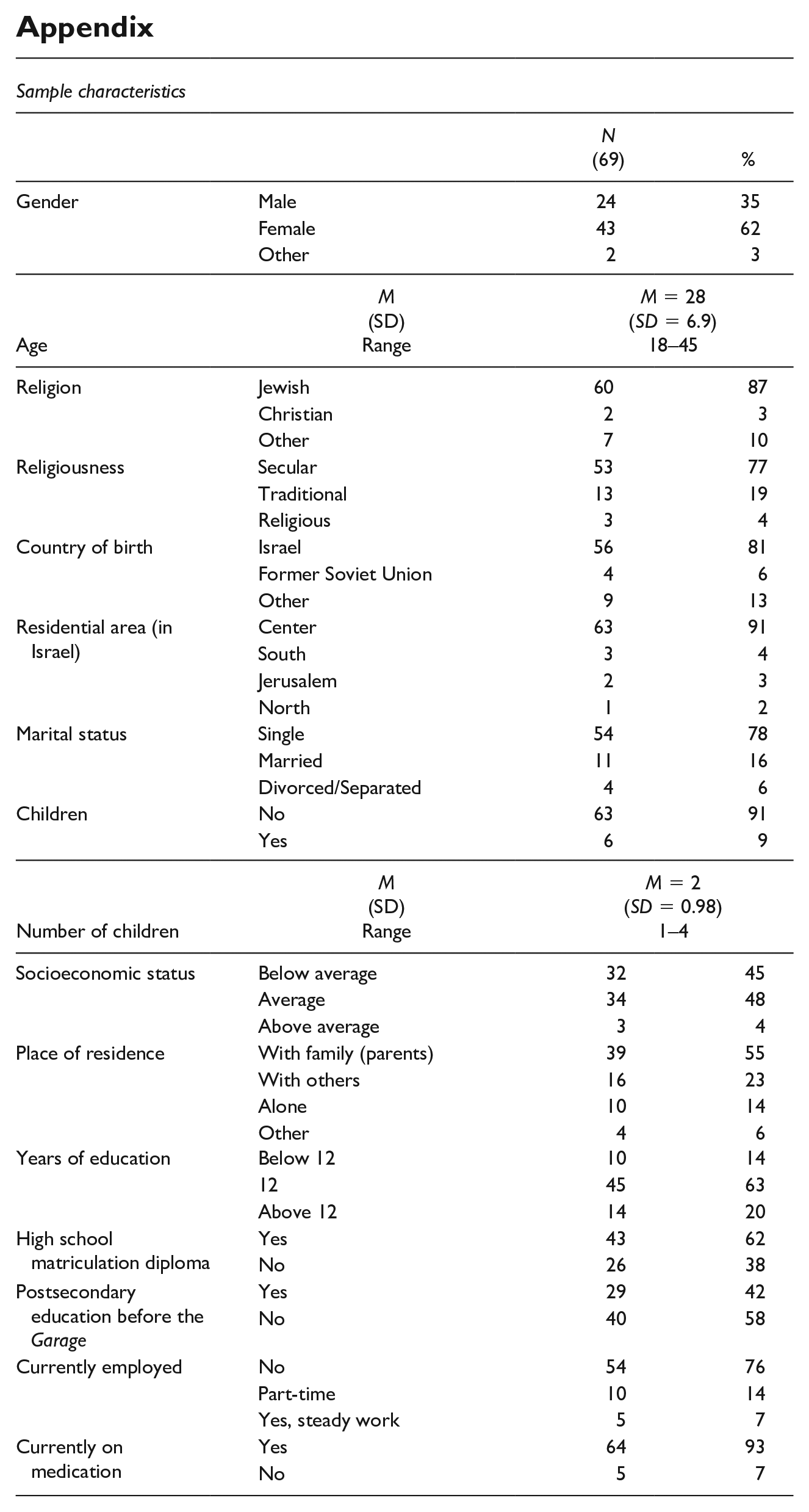
Participants from two academic cohorts at the Garage were recruited by the first author when they commenced the program. The first cohort started in October 2016 and the second in October 2017. As mentioned, each cohort lasted 10 months and comprised participants from the three study tracks. In each cohort, all the students were invited to participate and were provided with information about the study. The initial sample was composed of 69 participants (out of the 86 participants who started the program; hence, 80%), of whom 62% were females, aged 18 to 45 (M = 28, SD = 6.9) years. Most participants (78%) were single, 16% were married, and 6% were divorced or separated. Only 9% had children (M = 2, SD = 0.98, range = 1–4). Sixty-five percent had a high school matriculation diploma, and 38% did not. The majority of the sample lived in the center of Israel (91%), which is closer to the Garage location (Tel-Aviv). Other sociodemographic data collected at pretest from all 69 participants are presented in the appendix. In terms of attrition, at the middle of the academic year (mid-test), data were collected from 52 participants (17 dropouts) and at the end of the academic year (posttest) from 44 participants (8 additional dropouts) for whom we have full pre–post data (36% attrition in total).
Procedure
A single group pretest-posttest design was used for quantitative data collection due to the distinctive characteristics of the Garage participants, and the unavailability of a matched control group. The outcome variables were collected at the beginning and end of the program year (pre–posttest), whereas process variables were collected at the middle of the year (mid-test). These data were collected via Qualtrics software in a computer classroom in the program building. Supplementary qualitative data were collected at the beginning of the academic year (pretest) from students on their expectations from the program by an open-ended question in the abovementioned online questionnaire.
Students who agreed to participate in the study signed an informed consent form which clarified that participation was voluntary and that anonymity and confidentiality were guaranteed, as well as the right to discontinue participation at any time without penalty or loss of any benefits to which they were otherwise entitled. This form also included information about the data collection procedures. The Human Research Ethics Committee at the University approved this study (approval #357-16).
Outcome Measures 4
Mental Health Status
The 12-item version of the widely used General Health Questionnaire (GHQe) served as a self-report measure of the severity of psychological distress experienced by the participants with MHC (Goldberg & Williams, 1988) and as a general measure of psychological well-being (Furnham & Cheng, 2019; Lum et al., 2019). It consists of six positively worded items, and six negatively worded items with a reference to the previous month. Each item was rated on a scale ranging from 0 (never) to 3 (always). Positively worded items are recoded so that high scores represent worse health. The scale’s validity has been confirmed by significant correlations with various well-being and health measures, and it also has good internal consistency reliability (Cronbach’s α = .82–.86; Goldberg & Williams, 1988). Preliminary analysis on baseline data from the current sample yielded excellent internal consistency reliability for the Hebrew version of the GHQ (α = .93; masked for review). The GHQe was administered at the beginning and end of the program.
Loneliness
The brief Revised UCLA Loneliness Scale (Hughes et al., 2004) asks participants to rate three items: “How often do you feel you lack companionship?” “How often do you feel left out?” and “How often do you feel isolated from others?” Participants indicate whether they experienced each item in the previous month on a scale ranging from 0 (never) to 3 (always), where higher scores indicate greater loneliness. The scale was found to have acceptable internal reliability (Cronbach’s α = .79). Preliminary analysis of baseline data from the current sample yielded good internal consistency reliability for the Hebrew version of the scale (α = .81; masked for review). This scale was administered at the beginning and end of the program.
Creative Self-Concepts
A six-item scale measured CSE (e.g., “I trust my creative abilities”) and a five-item scale measured CPI (e.g., “I think I am a creative person”). CSE refers to the individual’s belief that he or she is able to be creative, and CPI refers to the role of creativity in one’s identity and self-description (Bandura, 1997; Beghetto, 2006; Gralewski & Karwowski, 2012; Karwowski, 2011). Exploratory and confirmatory factor analyses have suggested that the two subscales are correlated but measure distinct constructs. Validity has been confirmed by positive correlations with creative abilities and self-report originality, and the internal consistency reliability was .89 for CSE and .86 for CPI (Karwowski, 2012, 2014). For each subscale, participants rate items on a scale ranging from 1 (strongly disagree) to 5 (strongly agree), with a higher score reflecting high CSE and high CPI. Preliminary analysis on baseline data from the current sample yielded good internal consistency reliability for the Hebrew version of the CSE (α = .86) and for CPI (α = .81; masked for review). These scales were administered at the beginning and end of the program.
Integration Into Postsecondary Education and Work
The program management team provided the first author with numerical data on students’ integration into postsecondary education and work a year after they graduated from the program (scored yes or no).
Process Measures
Students’ Perceived Needs Satisfaction
The Basic Psychological Needs at School scale was developed based on Self-Determination Theory (Tian et al., 2014). This self-report scale is composed of 15 items, five for each subscale. For the present study, the phrase “at school” was replaced by “in the program”: for example, need for autonomy (e.g., “I am free to arrange my studies and extracurricular activities in the program”), need for relatedness (e.g., “I get along well with my teachers and classmates in the program”), and need for competence (e.g., “I have been recently able to learn interesting new skills in the program”). Participants rate items on a scale ranging from 1 (strongly disagree) to 5 (strongly agree). Previous results provide good support for the validity and reliability of the scale (Tian et al., 2014). Preliminary analysis on baseline data from the current sample yielded good internal consistency reliability for the Hebrew version of the scale: autonomy (α = .78), relatedness (α = .86), competence (α = .80), and total score (α = .91; masked for review). Higher scores represent greater perceived satisfaction of basic psychological needs in the Garage program. This scale was administered only in the middle of the program (mid-test).
Student Engagement
The short version of the Utrecht Work Engagement Scale is a nine-item self-report measure of absorption, vigor, and dedication at work (Schaufeli et al., 2006). The scale was slightly adjusted for the present study in that the words “at work” were replaced by the words “in the Garage program”: for example, “In the Garage program, I feel bursting with energy.” Students rated statements about their learning experiences on a 5-point scale ranging from 0 (never) to 4 (always, every day). The Cronbach’s alpha for the scale was between .85 and .92 in previous studies, and test–retest reliability was 64 and 73 in two different samples (see Schaufeli et al., 2006). Preliminary analysis on baseline data from the current sample yielded excellent internal consistency reliability for the Hebrew version of the scale (α = .94). As recommended by the scale developers, the total scale score was used as an overall measure of engagement. This scale was administered only in the middle of the program (mid-test).
Student Persistent Attendance
Weekly attendance data were collected on each student in the program (number of days out of 5 days a week) by the management team.
Student Expectations
To explore participants’ initial expectations, the participants were asked to complete an open-ended question in the online questionnaire at pretest (“What are your expectations from the Garage program?”). In addition, to explore whether participants’ expectations of the program were met, they were asked (posttest) to indicate the extent to which the Garage program met their expectations at the end of the school year. Participants rated the items on a 3-point scale: 1 (lower than expected), 2 (as expected) and 3 (higher than expected).
Data Analysis
In the first phase, normality tests were computed and correlations between sociodemographic variables and the outcome variables were also examined. In the second phase, within-subject differences between pretest and posttest were examined using a paired sample t-test or Wilcoxon signed-rank tests, according to normality. The effect size was calculated using the Gpower computer program (Faul et al., 2007). In the third phase, change scores (posttest minus pretest) were calculated for the outcome variables, except for integration in postsecondary education and work, which were reported only once. Then, the association between process variables and the change scores of the outcome variables was examined. In the fourth phase, expectation fulfillment scores were examined and their relationships with the process and outcome variables were analyzed. Finally, an exploratory follow-up analysis was conducted to examine whether fulfillment of expectations would mediate the association between process variables and integration into postsecondary education and work after graduation from the program. For this procedure, Hayes’ (2018) PROCESS macro (v3.4) for SPSS was used with model 4.
In addition, participants’ written responses on the pretest to the open-ended question about their expectations were analyzed qualitatively. This analysis represents a small qualitative portion of the abovementioned mixed methods study (Salomon-Gimmon et al., 2019), where the qualitative arm was based on the constructivist grounded theory approach (Charmaz, 2014). Participants’ responses to their expectations were coded to identify recurring, similar, and contrasting patterns. Inductive and abductive processes were employed to move from the specifics to more generic concepts, supported by the raw data (Charmaz, 2014). Constant comparison and code categorization were conducted within and across the different responses. Recurring expectations were identified and color-coded. The color-coded expectations were analyzed cyclically and then grouped to establish different expectation themes. Finally, nine themes were identified, representing a range of expectations. The frequency of each theme was calculated, and a graph was created for visual display. A merged analysis was conducted for the integration of expectations data.
Results
A preliminary analysis of the associations between sociodemographics and the outcome variables (pretest, posttest, change scores, integration into postsecondary education and work) yielded no significant differences that warranted control in further analyses.
Pretest–Posttest Differences
Differences between the beginning (pretest) and the end (posttest) of the program in the outcome variables were examined using a paired sample t-test for normally distributed variables (mental health and loneliness) and a Wilcoxon signed-rank test for variables that were not normally distributed (CPI, CSE). As shown in Table 1, all four measures improved in the expected direction. However, significant differences were only observed in three of these (mental health status, loneliness, and CPI). For CSE, no significant difference was found.
Differences in Outcome Measures at the Beginning and the End of the Program (N = 44).
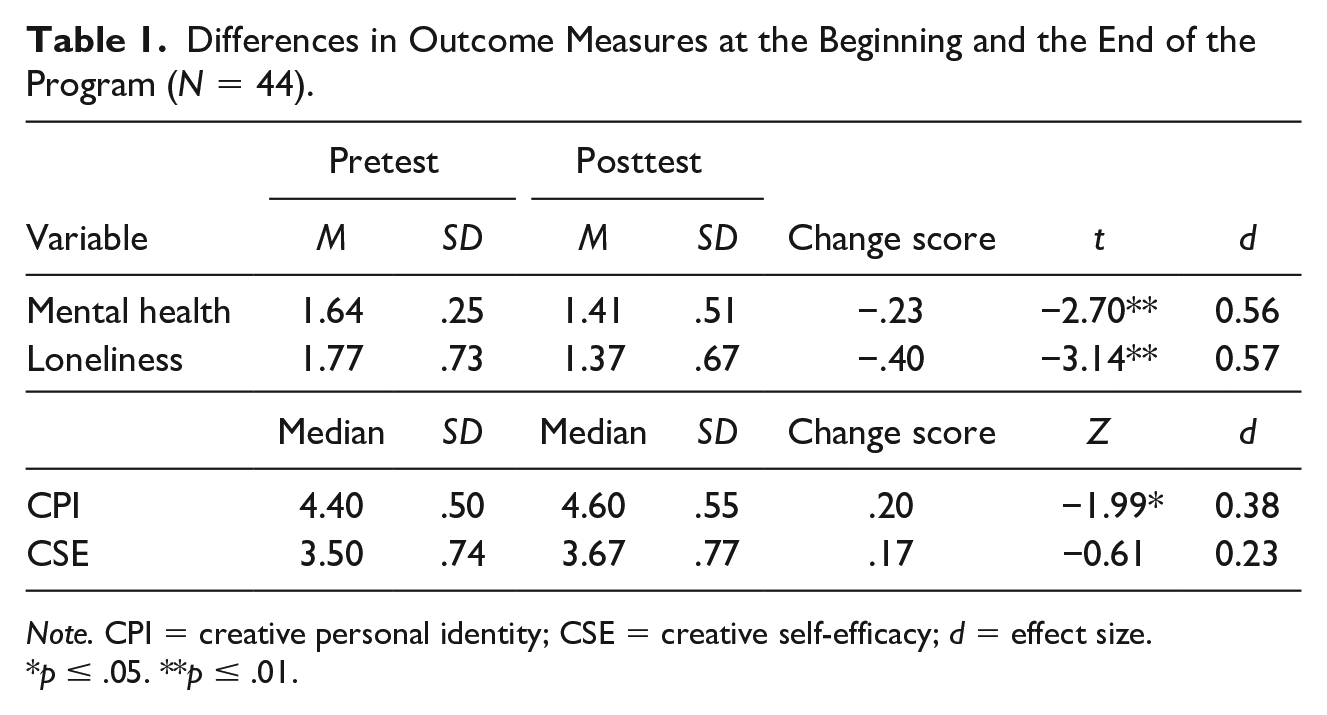
Note. CPI = creative personal identity; CSE = creative self-efficacy; d = effect size.
p ≤ .05. **p ≤ .01.
Integration Into Postsecondary Education and Work
Data on the participants’ integration into postsecondary education and work after their graduation from the Garage were obtained from the program management team for the 44 participants who completed the pretest and posttest data collection. Most of the participants integrated into postsecondary education (64%, n = 28) and/or the job market (55%, n = 24).
The Association Between Process and Outcome Variables
As presented in Table 2, a Spearman’s rho test indicated that persistent attendance throughout the program significantly and positively correlated with participants’ change in CPI. In addition, satisfaction of the basic psychological need for competence significantly and negatively correlated with change in mental health status, such that a greater sense of competence was associated with reports of lower levels of mental health distress. This correlation was also found between the total score for basic psychological needs satisfaction and mental health status.
Correlations Between Process and Outcome Variables.
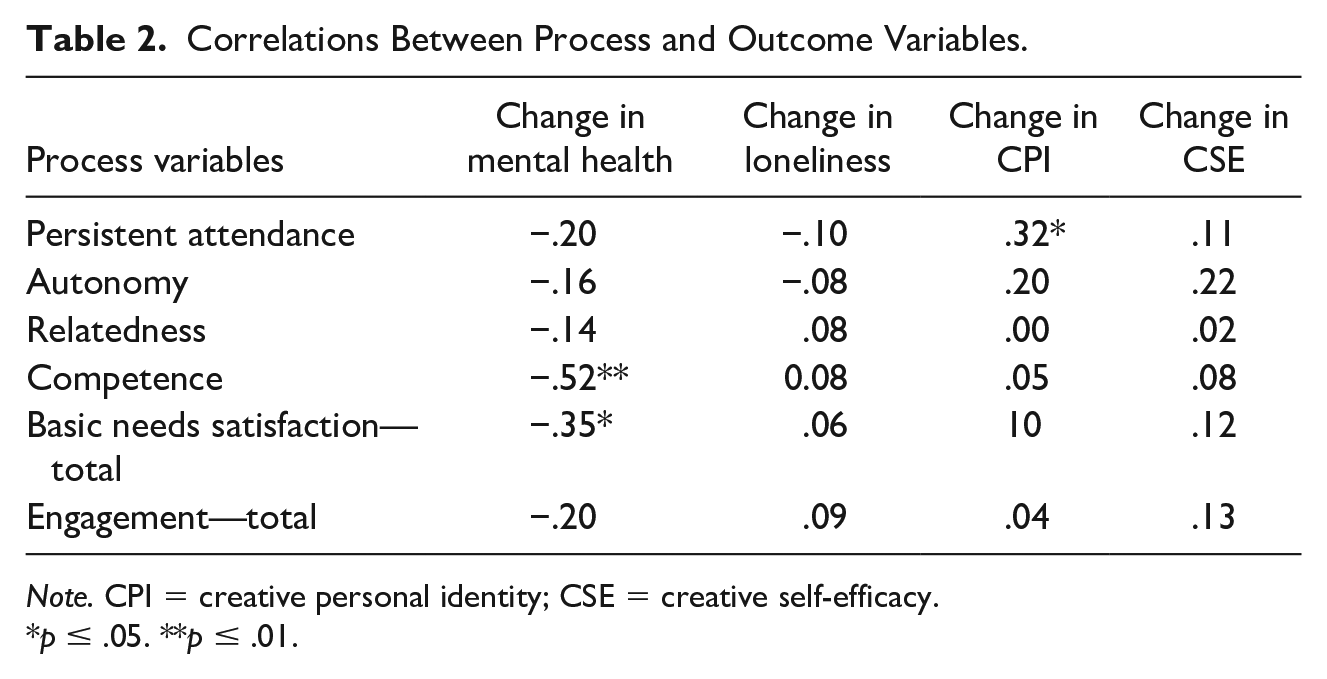
Note. CPI = creative personal identity; CSE = creative self-efficacy.
p ≤ .05. **p ≤ .01.
Regarding integration into postsecondary education and/or work after the program (a dichotomous variable), a Mann–Whitney test indicated that participants who were integrated into postsecondary education had higher persistent attendance scores in the program (Mdn = 133, n = 28) compared with those who were not integrated (Mdn = 126, n = 15); U = 128.5, p = .04, r = −.32. No significant differences were found for the other variables.
Participants’ Expectations
The qualitative analysis of participants’ responses to the open-ended question at the pretest data collection yielded nine main expectations. As can be seen in Figure 1, more than half of the participants (56%) expected to develop artistic and musical skills during the program. For instance, participants wrote that they expected to “improve musical capabilities” (music student, 2016–2017), “to gain experience in playing in ensembles and improve knowledge in sound and production” (music student, 2017–2018), “to learn additional artistic techniques and to improve creative skills” (art student, 2017–2018). A number of participants (28%) also expected that the program would prepare them for integration into postsecondary education institutions. For instance, participants wrote that they expected “to get prepared for postsecondary education in design, and to get the knowledge and capabilities that will enable this” (art student, 2016–2017), or “to get used to higher education curricula and to get social and academic preparation during the program as a stepping stone for postsecondary education” (music student, 2017–2018). The same number of participants (28%) also expected to integrate into the job market. In this context, participants’ responses included expectations such as “to work and get a job in the arts field and to earn money from it” (art student, 2017–2018) and “to develop to a stage so that I will be able to integrate into the job market, to be equipped to work as a musician” (music student, 2016–2017). A number of participants (28%) also expected that their participation in the Garage would foster their emotional rehabilitation and personal development. For instance, the participants expected “to develop as a human being” (art student 2016–2017), “to get practical and emotional tools that will help me overcome the barriers and difficulties of life and promote my mental rehabilitation” (music student 2017–2018), “to be more self-confident and to feel better” (music student, 2016–2017), and “to rehabilitate and recover through the arts” (art student 2017–2018).
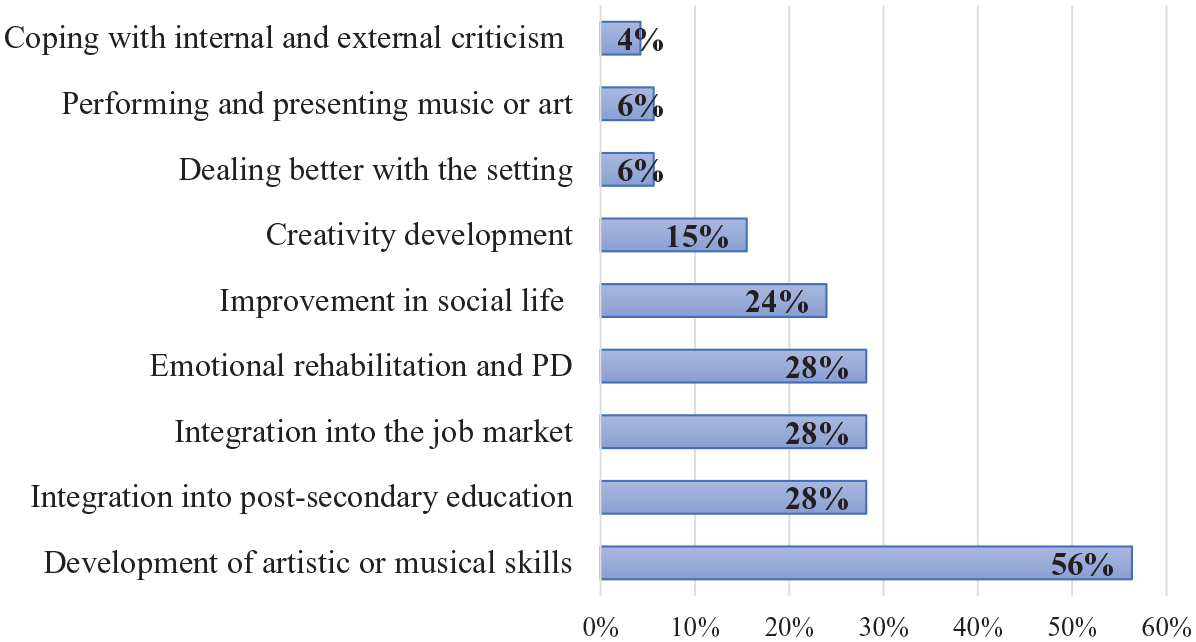
Frequency of Participants’ Preprogram Expectations.
At the end of the program year, participants rated the extent to which the program met their expectations. Many participants (43%) reported that the program exceeded their expectations, 39% reported that it met their expectations, and 18% reported it was lower than expected.
Linking Expectation Fulfillment to Process and Outcome
As presented in Table 3, a Spearman’s rho test indicated that all the process variables were significantly and positively correlated with the expectation fulfillment scores.
Correlations Between Expectation Fulfillment and Process Variables.
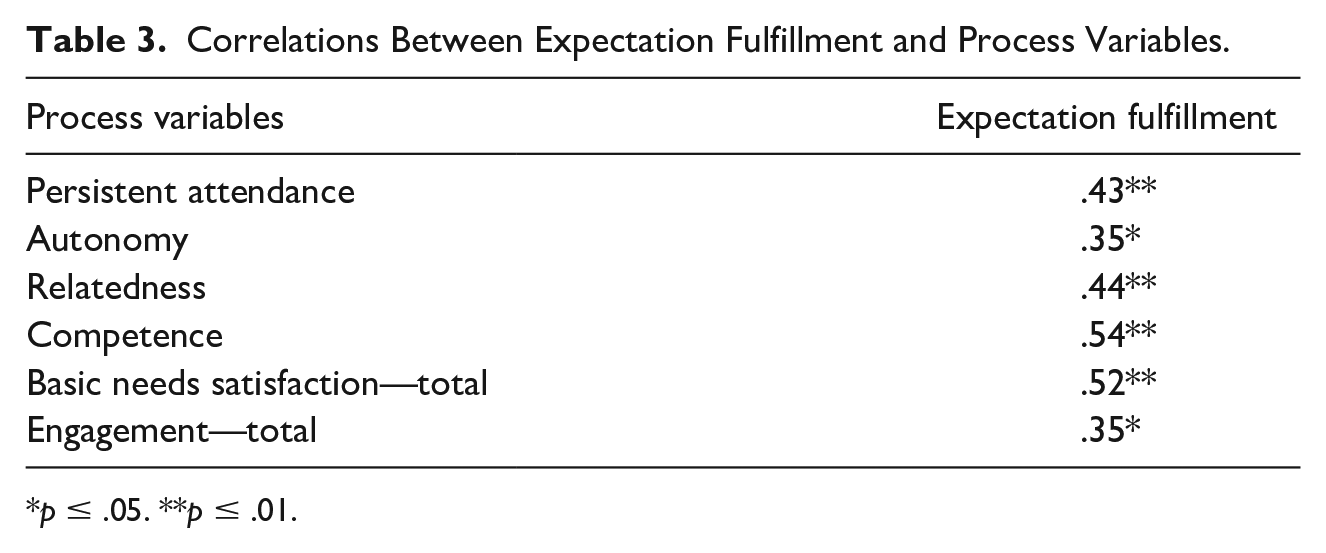
p ≤ .05. **p ≤ .01.
In addition, the expectation fulfillment scores were significantly and negatively correlated with change in loneliness (rs = −.34, p < .05, n = 44) and with change in mental health status (rs = −.50, p < .01, n = 44). A Mann–Whitney test indicated that participants who were integrated into postsecondary education had higher scores for expectation fulfillment (Mdn = 3, n = 28) than those who were not (Mdn = 2, n = 15), U = 145.5, p = .04, r = −.31. No significant differences were found between the other process variables and/or integration into postsecondary education or work.
Exploratory Mediation Analysis
As a follow-up analysis, we examined whether the fulfillment of expectations would mediate the association between the program’s process variables (total scale scores and persistent attendance) and student integration into postsecondary education and work. The basic psychological needs satisfaction (total score) was positively related to fulfillment of expectations (unstandardized B = 0.69, SE = .19, p < .001, 95% confidence interval [CI] = [0.30, 1.08]), which in turn was positively related to integration into postsecondary education (B = 1.27, SE = .58, p = .03, 95% CI = [0.140, 2.41). A bias-corrected bootstrap confidence interval for the indirect effect (B = 0.88), based on 5,000 bootstrap samples, was above zero (95% CI = [1.49, 2.01]). There was no evidence that basic needs satisfaction related to integration into postsecondary education independent of its effect on fulfillment of expectations, as there was no direct effect (B = −0.43, 43, SE = .77, p = .57). Therefore, fulfillment of expectations fully mediated the relationship between total basic psychological needs satisfaction and integration into postsecondary education. Fulfillment of expectations did not mediate the relationship between any other process variable or integration into either education or work.
Discussion
The overall purpose of this study was to examine whether and how the Garage pre-academic music and arts program contributes to participants’ creative self-concept, mental health, alleviates loneliness, and promotes integration into postsecondary education and work in the community. In addition, it aimed to understand the participants’ initial expectations from the program and the extent to which they were fulfilled.
The Contribution of the Garage
The findings indicated a significant improvement in participants’ mental health status and a reduction in their loneliness. These findings lend weight to the WHO’s recent scoping review that acknowledges the contribution of community arts-based programs to the mental health and well-being of people with MHC (WHO, 2019b). There is evidence that a safe social environment for meaningful interpersonal interactions and opportunities for active participation and engagement promote well-being and mitigate the loneliness of people with MHC (Lim et al., 2018; Mann et al., 2017; Stensæth, 2018; Wang et al., 2018).
The current findings suggest that the Garage program contributes to the participants’ well-being by facilitating their active engagement with music and art, and also endows them with socio-emotional abilities as a result of participation in the classes. For instance, the joint creative experiences throughout the Garage provide opportunities for interactions and interpersonal communication (e.g., preparing and exhibiting visual arts, media products, and writing materials, as well as playing and performing in musical ensembles in front of an audience). In addition, individual creative practices may foster various intrapersonal processes (e.g., writing lyrics to a song, composing music, improvising, singing, painting, photographing, and creating video-arts). The literature indicates that such inter- and intrapersonal processes of engagement with the creative arts, writing, and music may facilitate vitality in a way that promotes greater psychological well-being (Gold et al., 2013; Holmqvist et al., 2019; Silverman, 2020; Zarate, 2016), social engagement, and social inclusion (Saavedra et al., 2018; Sajnani et al., 2017; Stickley et al., 2018; Toma et al., 2014).
The findings also show that at the end of the program there was a significant improvement in the participants’ CPI. As mentioned, the aims of the Garage program include the development of creative identity, creative potential, and artistic skills. Thus, the improvement in the participants’ CPI was not only consistent with the program’s aims but also suggests that the Garage may cultivate the reconstruction of a personally meaningful identity. This identity may counterbalance the participants’ “ill identity” endorsed by “diagnosis,” which is considered an obstacle in the path toward personal growth and recovery of people with MHC (Chang & Bassman, 2019; Pavlo et al., 2018; Yanos et al., 2010). Specifically, qualitative studies have indicated that the construction of a creative, musical, or artistic identity contributes to the personal recovery of people with MHC (Brown & Kandirikirira, 2007; Hense & McFerran, 2017; Solli, 2015). This is also consistent with findings suggesting that artistic-creative engagement helps people with MHC develop and expand their own identities and narratives (Ørjasæter et al., 2017; Saavedra et al., 2018). According to the recovery model and the humanistic literature, the reconstruction of positive identity is vital for the process of recovery and personal growth (Bird et al., 2014; Davidson et al., 2009; Shahar & Schiller, 2016). The previously documented association of CPI with creative potential and achievement (Karwowski, 2016), as well as with independence and activity (Karwowski et al., 2013; Kaufman et al., 2010), hints that the improvement in the participants’ CPI may be linked to positive changes in other life domains that were not measured in this study. Thus, overall, the significant improvement in the participants’ CPI coincides with the program aims and may lead to additional benefits in the participants’ lives.
The findings also indicate that most of the Garage graduates integrated into postsecondary education and work. These findings are important, in light of evidence that education and work are highly consequential for the social inclusion, citizenship, and community integration of people with MHC (Blank et al., 2015; Salzer & Baron, 2014). In this sense, the findings underscore the importance of a rehabilitation service that assists individuals with MHC to overcome economic hardships, social isolation, and segregation (United Nations, 2017; WHO, 2019a) and combat unemployment or lack of education (Hakulinen et al., 2019). Moreover, the findings strengthen previous evidence indicating that the utilization of the arts plays a role in facilitating social mobility, employment, and breaking down barriers between those with and without MHC (Atanasova et al., 2017; Fancourt & Ali, 2019).
In sum, the findings suggest that the Garage program, with its focus on service-users’ strengths, skills, and artistic engagement, contributed to multiple domains in the participants’ lives, including well-being, creativity, as well as social, educational, and occupational integration. In so doing, it corresponds with humanistic values which emphasize the importance of holism, as human health cannot be understood on the basis of particular achievements alone, but rather as something greater than the sum of its parts (Bugental, 1964; Lysaker et al., 2020; Shahar & Schiller, 2016).
Process–Outcome Association
The process–outcome associations indicated that the greater sense of competence and overall satisfaction of basic psychological needs during the program was associated with a better mental health status at the end of the program. These findings are aligned with previous results showing that basic psychological needs satisfaction is positively associated with well-being (Orkibi & Ronen, 2017; Ryan & Deci, 2017; Shogren et al., 2015). In this sense, the findings are congruent with the broader framework of Self-Determination Theory (Ryan & Deci, 2000, 2017), which theorizes that the satisfaction of basic psychological needs, and specifically the need for competence, is vital for motivation, functioning, and good health (Milyavskaya & Koestner, 2011). More specifically, the need for competence comprises the experience of mastery and effectiveness, as individuals capably engage in activities and have opportunities to use and extend skills and expertise (Ryan & Deci, 2017; Vansteenkiste et al., 2020). Thus, because the Garage program aims to develop artistic skills, it is not surprising that the specific dimension of competence need satisfaction was significantly linked with the outcomes.
Thus, the Garage program, which involves both artistic and creative engagement, and focuses on the skills and strengths of the participants, appeared to satisfy the participants’ basic psychological needs and enhance their sense of competence in a way that contributed to their positive outcomes. This conclusion is supported by previous findings on the association of artistic engagement and strength-based approaches with self-esteem, personal recovery, educational attainment, and employment of people with MHC (Rolvsjord, 2010; Tse et al., 2016).
The Role of Persistent Attendance
The findings also stress the significance of persistent attendance on the CPI of the participants in the program. Namely, consistent attendance at the Garage, which involved prolonged and intensive contact with creative activities, enhanced the role of creativity in the participants’ identity and their self-perception as creative individuals. Persistent attendance in the program was also related to integration into postsecondary education. This implies that the more the students attended the courses and activities, the more likely they were to be integrated into postsecondary education, which is generally congruent with evidence indicating that persistent attendance is associated with positive treatment outcomes (Becker et al., 2015; Lindsey et al., 2014). More research is needed to better understand what can increase attendance rates in the context of mental health rehabilitation. However, some findings have suggested that providing meaningful services that facilitate motivation (Bryce et al., 2018), promote inclusion, address discrimination (Hack et al., 2020), and meet the needs and expectations of the service users may improve attendance rates (Kim et al., 2012).
Fulfillment of Expectations
Because the voices of people with MHC are often neglected in the development and delivery of rehabilitation services (Buck & Alexander, 2006; Gee et al., 2016), it is crucial to understand users’ expectations and monitor their fulfillment. The current findings clearly suggest that the Garage program met, and even exceeded, the preprogram expectations of most participants. This was indicated by the congruency between the preprogram qualitative expectations and the findings on the program’s outcomes and by the relatively high postprogram expectation fulfillment scores. It was further highlighted by the significant associations between the expectation fulfillment scores and positive changes in loneliness, mental health status, and integration into postsecondary education. Taken together, consistent with previous research (Holding et al., 2016; Padgett et al., 2008), these results reinforce the claim that meeting service users’ expectations positively impacts their psychosocial outcomes.
All the process variables were significantly and positively correlated with the participants’ expectation fulfillment scores, which indicates that the more the participants attended the program, were engaged in the classes and the creative activities, and felt the program met their basic psychological needs, the more they were likely to report that their expectations were fulfilled. The mediation results highlight the role of expectation fulfillment as a mediator that accounts for the relationship between process and outcome; specifically, between basic psychological needs satisfaction and integration into postsecondary education. Thus, this study makes a theoretical contribution by explaining how fulfillment of basic psychological needs may foster the integration of people with MHC into postsecondary education.
Study Limitations and Future Directions
The strengths of this study include the longitudinal data, multiple sources of data, and the unique characteristics of the sample. However, the relatively small sample size and the unavailability of a matched control group may potentially limit the generalizability of the data. Nevertheless, this article focused on the quantitative part of a larger mixed-methods study (masked for review) where data from in-depth qualitative descriptions suggested that the findings were applicable to other contexts. Future studies should involve larger program cohorts. Another possible limitation is that most of the data were collected by self-report measures. However, the fact that some of the variables (persistence attendance, postsecondary education integration, and work integration) were reported by the management team and not by the participants strengthens the validity of the findings. Another potential limitation is that the data on the graduates’ integration into postsecondary education and work were only collected a year after their graduation. Studies that monitor the graduates for a longer period of time could show whether more graduates are integrated into postsecondary education and work after a longer period. This type of follow-up study would indicate how many completed their post-Garage education and kept working in the community, thus shedding light on the program outcomes’ sustainability after its completion.
Another limitation has to do with the fact that this study only analyzed the data of participants who completed the Garage program. It was beyond the scope of this study to investigate important aspects related to the relatively high attrition rate and dropouts. Future studies would benefit from investigating the reasons and influences for the dropouts and also collecting data from participants who withdrew from the Garage, to better identify potential barriers or hindering factors. In this context, although most participants reported that the program met and even exceeded their expectations on the quantitative posttests, it might be valuable to investigate the specific reasons of those who reported that their expectations were less well met. Finally, in line with the nonlabeling approach of the Garage, as well as the ethical approval obtained for this study, this study did not focus on the specific diagnoses of the Garage participants. It would be useful to examine whether and how the Garage influences varied across the different types of MHC.
Conclusion
The engagement of people with MHC in mental health programs is a notable challenge worldwide (Dixon et al., 2016; O’Brien et al., 2009), partly because of the difficulties in meeting the specific expectations, needs, goals, and skills of each individual (Moran et al., 2016; Smith et al., 2013) and providing personally meaningful services (Green et al., 2014). Interventions are recovery-oriented when they facilitate personal choice and identity development and provide opportunities for social inclusion, the fulfillment of human rights, professional progress, and full citizenship in the community (Chester et al., 2016; van Weeghel et al., 2019). Recovery-oriented practices are governed by humanistic perspectives, which involve cultivating cultural conditions that promote creative living in accordance with valuing human nature, dignity, and social justice in the interest of personal development via self-determination (Bland & Swords, 2021; Maslow, 1971; Shahar, 2018). The findings here suggest that the Garage pre-academic music and arts school constitutes a meaningful recovery-oriented program that meets its participants’ expectations and needs, addresses humanistic values, contributes to their path toward recovery, and promotes their creative identity, social inclusion, and human rights for education and work.
Overall, the findings highlight that mental health professionals, program developers, funding bodies, and policymakers, as well as existing program operators, should prioritize the creation of environments and processes that meet participants’ expectations, their basic psychological needs, as well as support their persistent attendance. The findings point to various intra- and interpersonal benefits of musical and artistic engagement. Hence, they help confirm the potential value of implementing art-based components in other rehabilitation programs, and expand knowledge in the areas of music and arts-related mental health services.
To the best of our knowledge, the Garage pre-academic program is the only one of its kind in Israel and possibly abroad. Beyond the emotional and social benefits of daily artistic and creative engagement, the uniqueness of the Garage lies in its goal-oriented focus and pre-academic orientation, while equipping its participants with academic and practical tools for their future. The positive program outcomes, and their association with change-process factors, provide a scientific basis for developing and implementing similar programs in other locations and expanding it to different fields of learning. This may increase the accessibility of such a promising program to more individuals, from wider geographical and interest areas, and thus better promote occupational and social justice, as well as the human rights to education and work of people with MHC by supporting their creativity and full engagement with life.
Footnotes
Appendix
| Sample characteristics | |||
| N
|
% | ||
| Gender | Male | 24 | 35 |
| Female | 43 | 62 | |
| Other | 2 | 3 | |
| Age | M
|
M = 28 |
|
| Religion | Jewish | 60 | 87 |
| Christian | 2 | 3 | |
| Other | 7 | 10 | |
| Religiousness | Secular | 53 | 77 |
| Traditional | 13 | 19 | |
| Religious | 3 | 4 | |
| Country of birth | Israel | 56 | 81 |
| Former Soviet Union | 4 | 6 | |
| Other | 9 | 13 | |
| Residential area (in Israel) | Center | 63 | 91 |
| South | 3 | 4 | |
| Jerusalem | 2 | 3 | |
| North | 1 | 2 | |
| Marital status | Single | 54 | 78 |
| Married | 11 | 16 | |
| Divorced/Separated | 4 | 6 | |
| Children | No | 63 | 91 |
| Yes | 6 | 9 | |
| Number of children | M
|
M = 2 |
|
| Socioeconomic status | Below average | 32 | 45 |
| Average | 34 | 48 | |
| Above average | 3 | 4 | |
| Place of residence | With family (parents) | 39 | 55 |
| With others | 16 | 23 | |
| Alone | 10 | 14 | |
| Other | 4 | 6 | |
| Number of children | M
|
M = 2 |
|
| Years of education | Below 12 | 10 | 14 |
| 12 | 45 | 63 | |
| Above 12 | 14 | 20 | |
| High school matriculation diploma | Yes | 43 | 62 |
| No | 26 | 38 | |
| Postsecondary education before the Garage | Yes | 29 | 42 |
| No | 40 | 58 | |
| Currently employed | No | 54 | 76 |
| Part-time | 10 | 14 | |
| Yes, steady work | 5 | 7 | |
| Currently on medication | Yes | 64 | 93 |
| No | 5 | 7 | |
Declaration of Conflicting Interests
The author(s) declared no potential conflicts of interest with respect to the research, authorship, and/or publication of this article.
Funding
The author(s) disclosed receipt of the following financial support for the research, authorship, and/or publication of this article: This study was funded through a grant from the National Insurance Institute of Israel (Grant # 14846).
Ethical Approval
The Human Research Ethics Committee at the University approved this study (approval #357-16).
