




Abstract
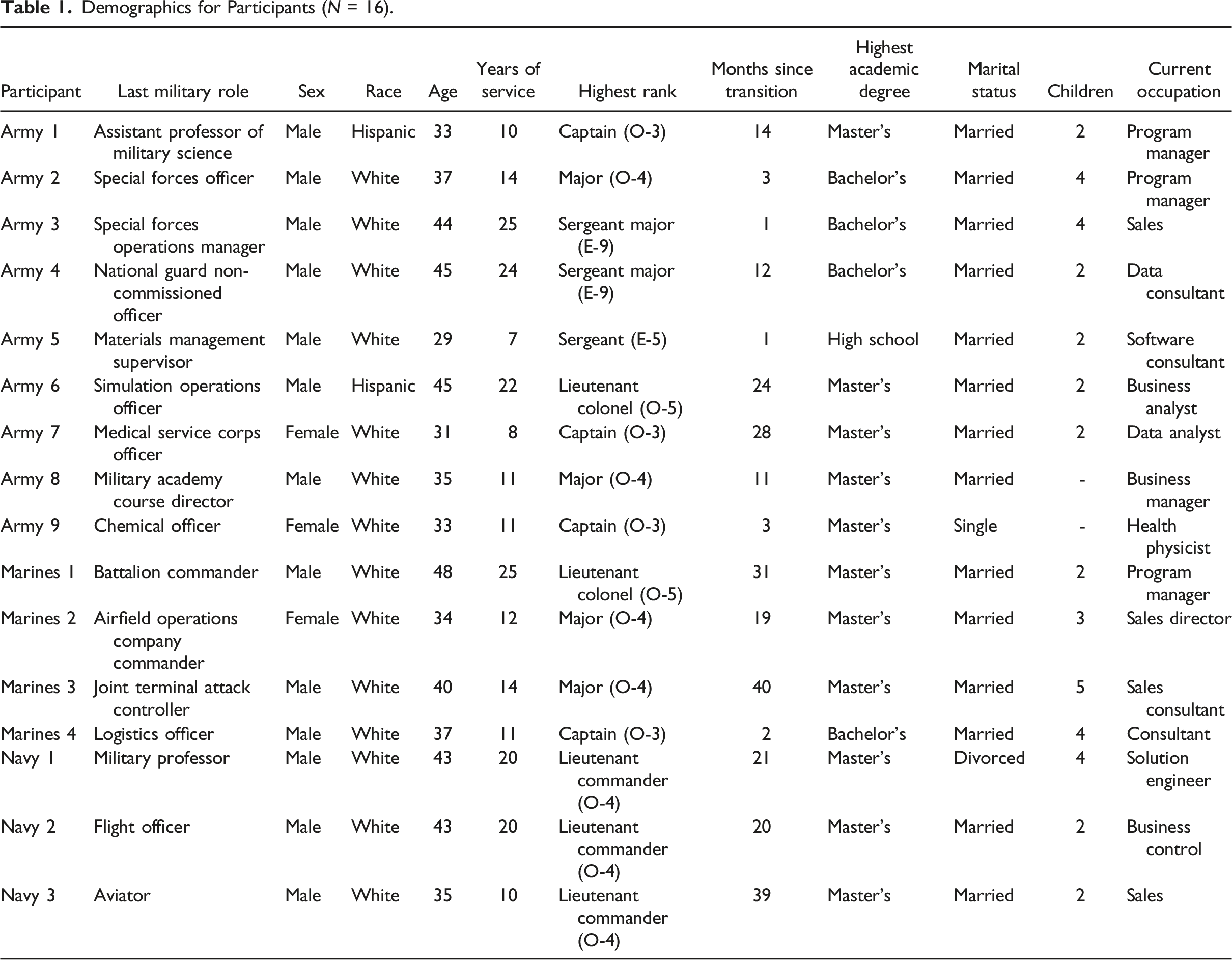
The purpose of the current qualitative research was to explore the role of veterans’ basic psychological needs during the military transition. Using purposive and snowball sampling, 16 veterans (n = 13 male, n = 3 female; Mage = 38.3, SDage = 5.8 years) of the United States military (n = 8 Army, n = 4 Marine Corps, n = 3 Navy) were recruited to participate in semi-structured interviews. Reflexive thematic analysis of the qualitative data revealed seven themes: (a) veterans experienced different levels of relatedness in the military community during their transition, (b) perceptions of choice and control had varying influences on veterans’ sense of autonomy during their transition, (c) veterans experienced a false sense of competence starting the transition, (d) figuring out how to transfer military experiences and skills to civilian jobs posed a meaningful challenge for veterans’ sense of competence throughout the application process, (e) multiple factors helped veterans regain their sense of competence during the job search, (f) veterans experienced difficulties adjusting to new civilian job environment, and (g) family played a major role in fostering veterans’ sense of autonomy during the transition. These findings offer multiple conceptual and practical implications, including the context-specificity of perceived competence and relatedness, challenge of skill transfer, and temporality of backup plans, that can be used to help service members’ transition more effectively.
According to the Department of Veterans Affairs (2018), over 200,000 members of the armed forces in the United States transition out of active duty every year. Unfortunately, for many of them, the journey to integrate into civilian life is characterized by significant challenges related to employment, finances, housing, marital/family relationships, as well as mental and/or physical health. In fact, across different studies, up to 70% of veterans in the United States reported experiencing meaningful difficulties in their transition to civilian life (Castro & Kintzle, 2017; Keeling et al., 2018; Sayer et al., 2015; Schafer et al., 2022; Taylor et al., 2011). Thus, it is not surprising that there is an extensive body of literature exploring these military transitions.
A review of this literature reveals that many scholars have primarily focused on the challenges and associated negative consequences of veterans with clinically diagnosed mental disorders, such as depression, PTSD (post-traumatic stress disorder), or substance abuse (e.g., Davis et al., 2018; Zivin et al., 2012). Although the serious and often debilitating nature of such disorders is beyond question and these investigations have undeniable importance, the sole emphasis on psychopathology does not allow for a holistic exploration of military transitions and creates an important gap in the present understanding of this experience. Specifically, with the primary research focus on veterans’ health—both in purpose and sampling—there is only limited empirical understanding of other transition stressors (e.g., finding new employment, finances, and social relationships) and, in particular, the mechanism(s) that allow service members to transition positively (Mobbs & Bonanno, 2018; Romaniuk & Kidd, 2018; Vogt et al., 2018). In fact, a search on the EBSCOhost meta-database using the terms military and transition reveals over 8,000 potentially relevant articles. Yet, according to one of the more recent systematic reviews of that literature by Romaniuk and Kidd (2018), only 18 of those studies were conducted without a focus on psychiatric or medical conditions; most of which explored reintegration following operational deployment and not the transition out of the military.
The limited number of studies that have been conducted without a primary emphasis on psychopathology to investigate other predictor variables are often focused primarily on personal (e.g., age, marital status, race, sex, and time since transition; Burkhart & Hogan, 2015; Krigbaum et al., 2020) and service-related factors (e.g., branch, rank, and years of service; McAllister et al., 2015; Naphan & Elliot, 2015). While these studies can provide helpful insight into predictors of successful transitions, most of these examined variables cannot be altered when service members prepare to leave the armed forces, thus limiting efforts to purposefully facilitate their experience. Recently, Shue et al. (2021) explored the challenges and needs of veterans in their military transition. They identified strategies, such as finding a new purpose, achieving career satisfaction, and establishing a new identity, that exceed the frequently investigated personal and service-related factors which can facilitate veterans’ transition by allowing them to establish themselves in the civilian world. However, despite the valuable contribution of these findings, Shue et al.’s (2021) results do not offer insight into the ways (i.e., mechanisms) that allow individuals to successfully accomplish or implement these strategies.
In summary, there is currently a good understanding of (mental health) challenges in the transition out of the military, but a lack of knowledge about ways to facilitate service members’ experiences (Mobbs & Bonanno, 2018; Vogt et al., 2018). This gap is particularly relevant with respect to veterans’ search for a new professional career because opposed to many other career terminations, most service members are not only required to find another occupation and rely on their success in that occupation to support themselves and their family, but have to do so with little-to-no experience looking for a job in the civilian sector (Castro & Kintzle, 2017; Krigbaum et al., 2020). As a result, the Department of Defense annually spends up to one billion dollars in unemployment benefits for veterans (Congressional Budget Office, 2017). Thus, there is a critical need to complement existing research with investigations of the mechanism(s) that allow service members to thrive as they pursue their post-military career.
Ryan and Deci’s (2017) self-determination theory appears to be a viable framework to explore, understand, and conceptualize this mechanism. When people face stressful situations their likelihood of experiencing positive cognitive, affective, and behavioral outcomes can be attributed to their ability to cope effectively. While successful coping can be affected by a variety of factors, Ntoumanis et al. (2009) argued that fully understanding “the coping process necessitates the examination of personal factors concerned with issues of volition, choice, and self-determination in goal striving, as well as the investigation of the role of socio-contextual features in supporting or undermining such goal undertakings” (p. 250). Due to its dialectic perspective, self-determination theory allows for an in-depth conceptual understanding of this dynamic person-environment relationship that shapes not only the overall coping process but military transitions. More importantly, self-determination theory clearly outlines the psychological nutrients that facilitate or hinder individuals’ ability to cope effectively which highlights both its conceptual and applied value. Specifically, Ryan and Deci (2017) propose the satisfaction of three inherent basic psychological needs of autonomy (a sense of control and value in one’s engagement), competence (a sense of effectiveness in performing tasks and meeting expectations), and relatedness (a sense of belonging with other people) to be a fundamental condition for human thriving, allowing people to function with a high level of physical and psychological energy. Accordingly, in their conceptual model of the coping process, Ntoumanis et al. (2009) suggested that individuals’ perceptions of the three basic psychological needs determines their ability to cope successfully with stressors. They argued that need fulfillment allows people to better manage the external and/or internal demands they are confronted with because it facilitates positive appraisal of perceived pressure and allows them to engage in more effective problem-focused coping strategies (i.e., attempts to actively solve issues rather than avoid them or merely manage associated emotional distress). This assumption is empirically supported by numerous studies in which a positive relationship has been found between need fulfillment and a multitude of optimal outcomes (e.g., motivation and performance; see Van den Broeck et al., 2016 for a meta-analysis). Overall, self-determination theory not only provides a viable theoretical framework to conceptualize applied issues surrounding the military transition but also empirically supported implications to affect change (Ryan & Deci, 2017).
Recently, Lechuga et al. (2021) utilized self-determination theory in their case study to explore veterans’ transition to college life at a single university and highlighted the role of the basic psychological needs in fostering individuals’ motivation in their new student role. Raabe et al. (2020) similarly employed a self-determination theory framework to better understand professional baseball players’ transition out of sport and concluded that “high levels of perceived autonomy, competence, and relatedness might act as a buffer between potential stressors in the transition process and athletes’ cognitive, emotional, and behavioral response” (p. 9). Thus, self-determination theory holds promise as a conceptual framework to explain the underlying mechanism that facilitates positive coping and it seems reasonable to assume that it would also be viable approach to more comprehensively understand successful military transitions. Accordingly, in line with Mobbs and Bonanno’s (2018) call to “move beyond [the] nearly exclusive focus on PTSD to consider the wider range of challenges, rewards, successes, and failures that transitioning Veterans might experience, as well as the factors that might moderate these experiences” (p. 138), the purpose of the current research was to qualitatively investigate the following research questions: 1. What were veterans’ perceptions of autonomy, competence, and relatedness regarding their post-military career prior to their transition out of active duty? 2. What factors satisfied and/or thwarted veterans’ perceptions of autonomy, competence, and relatedness regarding their post-military career prior to their transition out of active duty? 3. What were veterans’ perceptions of autonomy, competence, and relatedness during their transition to a new civilian career? 4. What factors satisfied and/or thwarted veterans’ perceptions of autonomy, competence, and relatedness during their transition to a new civilian career?
Method
Participants
Demographics for Participants (N = 16).
Procedure
Upon approval by the first author’s institutional review board, veterans who (a) were at least 18 years old, (b) had served in one of the branches of the United States military, (c) were on active duty for at least four years, and (d) had transitioned into civilian employment no more than four year ago were recruited for the current research. All data was collected via semi-structured interviews. Initially, a purposive sampling method was used in that the fourth author contacted 15 veterans who met the inclusion criteria to inform them of the purpose of this study and inquire about their willingness to participate; 13 individuals agreed to participate. Subsequently, a snowball technique was used to recruit additional participants. Specifically, veterans who had already participated were asked if they knew other veterans who met the inclusion criteria and may be interested in partaking in the research. Three additional individuals were contacted and informed of the purpose of the study; all agreed to participate. Preliminary analysis of the data from these 16 participants indicated that thematic saturation of the data had been reached and, therefore, no additional veterans were recruited. Prior to each interview, the first author—who conducted all interviews—obtained informed consent from veterans for their involvement in the research. All interviews were conducted on Zoom, audio recorded, and lasted between 65 and 121 minutes (M = 87.4 ± 15.9 minutes). Prior to data analysis, each interview was transcribed verbatim (resulting in over 350 pages of single-spaced transcripts) and the individual transcript was sent to the respective participant as a form of member reflection (Tracy, 2010); no modifications were requested.
The interview guide was developed based on an in-depth review of relevant literature (e.g., Lechuga et al., 2021; Ntoumanis et al., 2009) as well as utilizing protocols that have been used in previous research to explore perceptions of the three basic psychological needs in the military and sport (e.g., Raabe et al., 2020, 2021, 2022). Interview questions were structured into four sections. In the first section, the first author explored participants’ general experience and timeline of their transition as well as the main challenges they navigated in the process. Sections two, three, and four each focused on one specific basic psychological need. The first author initially explained the need of interest and provided participants with an opportunity to ask questions for further clarification. He then inquired about participants’ perceptions thereof prior to and during the actual transition. He also explored factors that influenced participants’ perceptions of the need. Throughout the interview, the first author used probes and follow-up questions to gain more in-depth information about veterans’ experiences. Prior to data collection, a pilot interview with one veteran from a sample of convenience was conducted to assess the effectiveness of the questions in investigating the constructs of interest. Based on this pilot, slight adjustments were made to enhance the clarity of the explanations of the basic psychological needs as well as some of the individual questions.
The current data was analyzed using inductive reflexive thematic analysis procedures by a research team that consisted of the first, second, and third author to enhance the trustworthiness of the findings through crystallization (i.e., considering multiple perspectives; Tracy, 2010). To allow for a rigorous, credible, and sincere analysis (Tracy, 2010), all procedures were conducted in line with the recommended six-step process by Braun and Clarke (2006). First, the three researchers individually read the interview transcripts multiple times to familiarize themselves with their content. Second, the researchers independently coded the data using an inductive approach to identify meaning units which represent “the most basic segment, or element, of the raw data or information that can be assessed in a meaningful way regarding the phenomenon” (Boyatzis, 1998, p. 63). Third, the researchers met multiple times to discuss their individually derived meaning units and to collaboratively organize them into lower-order themes. These sub-themes were then collapsed into higher-order themes based on how they were connected in representing the participants’ accounts. Fourth, the researchers independently reflected on these initial themes and sub-themes before reconvening to finalize the thematic structure. Fifth, all themes and sub-themes were labeled to accurately represent their meaning. Sixth, upon completion of the data analysis, the current manuscript was composed.
Prior to and throughout this analysis, the researchers monitored their backgrounds and biases related to the study to enhance the likelihood that findings are accurately grounded in the data instead of their values and assumptions (Tracy, 2010). The first and second author both hold a PhD in sport psychology. The third author is an undergraduate student in sport psychology. While the first and second authors have conducted research with and provided consulting services for military populations, none of the researchers have personal experience with the military transition or personal relationships with study participants. All researchers are intimately familiar with self-determination theory and have extensive experience analyzing qualitative data. They believed that veterans would experience an increase in their perceived autonomy during the transition because of their control over their subsequent career choices. In contrast, they expected that participants’ sense of competence may be limited due to the lack of experience with the civilian job market. Lastly, they thought that veterans would need to find ways to replace the comradery they had experienced in the military to satisfy their sense of relatedness.
Results
Using the previously outlined analytical procedures, seven themes were constructed.
Theme 1: Veterans Experienced Different Levels of Relatedness in the Military Community During Their Transition
Participants discussed the various interactions they had with other members of the military community about and throughout their transition. Some of these interactions were perceived positively, but others had more thwarting effects on veterans’ perceived relatedness.
Senior Leadership Thwarted Perceived Relatedness
While some participants shared extremely positive experiences with their superior officers, most individuals felt a lack of support from their senior leadership regarding the transition which thwarted their sense of relatedness. As Army 2 described, the decision to transition was often “met with a lot of gnashing of teeth and a lot of kind of toxic leadership, you know? A lot of people really got offended when I decided to leave active duty [which] is really disappointing.” Army 6 nicely summarized an overall experience that many participants shared: Once you make it publicly known that you intend to retire, you’re cast off onto the island of misfit toys… you basically become persona non grata… Unfortunately, that’s just the way it is… any of the jobs that no one else wants to do, like the crap jobs, it’s going to you… it’s unfortunate because, at that point, you’ve spent almost your entire adult life in service of something greater than yourself and, then, once you make it known that you’re going to retire, it’s almost like a switch, “How dare you put yourself over the military.”
It is, therefore, not surprising that when, as Army 7 stated and most other participants acknowledged, service members “make the mental decision to separate, you never verbally say a single thing because you don’t want to be treated a certain way… so basically you keep it to yourself” which made it difficult to experience relatedness in the process.
Varying Levels of Perceived Relatedness with Active Duty Service Members
Participants explained that their decision to transition out of the military was received with varying levels of support from their peers (i.e., other active duty service members). While only a few of them truly felt a sense of relatedness with all fellow service members, several shared Army 1’s sentiment that they felt supported by individuals they had developed a close relationship with prior to the transition “because they were invested in my success because they were my friends… They care, and they wanted me to be successful… [they] would always be a part of my life moving forward, friends that you make forever.” However, many participants experienced a noticeable decrease in their sense of relatedness. For example, Army 9 described “I was sort of shunned when people started to pick up.” She explained that this reaction did not come as a surprise to her “because the whole culture around getting out… it’s so frowned upon… why would you ever think about transitioning? Why wouldn’t you just stay in 20 years and get a pension?” Some participants, like Army 5, also expressed that it became “very hard to relate to anybody” on active duty for themselves because they “never transitioned, they’ve never gotten out of the Army, so how would they know anything that goes into it?” Similarly, Army 1 shared that it was “I don’t know if embarrassed is the right word? I didn’t like to talk about it, because everyone that I worked with was 16, 17, 18 years in it, they were doing it until they weren’t.” So he felt like he “was leaving the team. You know what I mean? Not because I was getting new orders to go somewhere else, because it was retiring, because I was going to join another team.”
Theme 2: Perceptions of Choice and Control Had Varying Influences on Veterans’ Sense of Autonomy During Their Transition
Participants’ sense of autonomy seemed to fluctuate during their transition, which appeared to be due to their contrasting perceptions of choice and control in the process.
Choices Satisfied Perceived Autonomy
All participants explained that they had many choices in their transition. For example, Army 3 stated that all decisions he made in the process were “all me, everything is me, 100%” which satisfied his need for autonomy. This increase in autonomy was magnified for participants as it meaningfully contrasted with their experience in the military. Navy 2 explained that prior to his transition “the military had control of my life for 25 years. They told me where I had to live, they told me commands I was going to be at… and now I have so much [choice], it’s freeing to know that I have autonomy.” Similarly, Army 8 described: Next month my wife and I are moving out to [city] and that was something that, obviously, I would not have been able to do in the military… now out of the military I’m going to have more autonomy in values of how I want to live, where I want to live, and what that lifestyle looks like, as opposed to having it be dictated to you by the Army.
Lack of Control Thwarted Perceived Autonomy
Although these choices fostered participants’ perceived autonomy, this sense of autonomy was simultaneously thwarted by a lack of perceived control in the transition. More specifically, veterans explained that they did not have any control over the outcome of many of their decision which, as Navy 3 stated, created a “fear of the unknown.” Army 1 shared that: I knew I was in control of what I did, but I was not in control of how people responded, and I learned that very quickly. I would send a job application, I would send a LinkedIn message… very, very, very, very rarely, probably never did anyone respond… every job I applied to, everywhere I was looking, I was certain hundreds of others were looking also… in the military things are plans to the minute, it's very prescriptive… to immediately shift into this world of just fluidity and a lack of it was challenging for me. I had a lot of problems with it and it showed up in different ways. I wasn't sleeping great you know, I was having nightmares, I was just irritable a lot of times because all of that that sense of control and the ability to see things coming was it was gone. It was hard.
Theme 3: Veterans Experienced a False Sense of Competence Starting the Transition
Participants generally reported feeling a strong sense of competence in their ability to obtain and succeed in a new civilian career when they first made the decision to transition out of the military. Veterans explained that this perceived competence stemmed from the success they had during their military career. For example, Army 8 shared that he initially felt: Highly confident… I was kind of riding a wave if you will of some good successes in the Army. I had been promoted early to major ahead of peers, which is kind of a big deal… my last assignment was teaching at [school], so I was kind of in a higher academia position. And you know, very much thought that recruiters would just be kind of banging out the door and [I had] this kind of world is your oyster mentality.
As a result, similar to most participants, Navy 2 mentioned that when he first started the transition process “I was probably overconfident from 20 years in the military. You know achieved 95% of everything I ever tried to do. Failure was very rare… And so I was like, ‘there’s nothing I can’t do.’ I mean I’ve done a million different jobs.” However, participants’ sense of competence quickly changed when, as Army 8 described, “you got rejection letter, rejection letter, and then you’re kind of trying to navigate the waters of the career… you feel like you’re just getting blasted left and right… definitely [lowers] the confidence level there.” Therefore, when reflecting on her transition, Marines 2 stated that “now that I look back on it, that person was an idiot. She was not competent at all. But I thought I was competent at the time.”
Theme 4: Figuring out How to Transfer Military Experiences and Skills to Civilian Jobs Posed a Meaningful Challenge for Veterans’ Sense of Competence Throughout the Application Process
Once participants started to apply for civilian jobs, they all perceived significant difficulties explaining to employers how the experiences and skills they had obtained in the military would help them in a civilian career. Navy 1 shared that “it’s monumentally hard for me to translate my military experience into anything remotely civilian that matters to anybody, especially considering I’ve never had a civilian job. I don’t know what they care about.” Marines 2 noted that “[company] doesn’t give a shit that I flew 1,400 flight hours and 400 in combat. They’re like, ‘Cool, how does that translate to me?’” As Army 6 explained this challenge thwarted participants’ sense of competence when they realized that they had a “super long list over here on what I can do [in the military]. And then, like really, really, really small list over here like what are my hard skills [that] employees are going to pay me for, what’s going to get me the interview or have my resume looked at.” Veterans shared there was a lack of resources to figure out viable career options that would allow them to utilize their military skills and experiences and not, as Marines 1 noted, be “pigeonholed to go in this security route.” Army 1 explained: I think the biggest challenge was you can go online, “Hey, I’m an infantry man, or field artillery man” and you type in this military code on some website and it says… “You can be a security guard, or you could be a police officer.” Okay, well, I don't want to do that.
Therefore, participants who wanted to explore careers outside of security or law enforcement felt a lack of competence in their ability to market themselves to civilian employers.
Theme 5: Multiple Factors Helped Veterans Regain their Sense of Competence during the Job Search
Although participants’ perceived competence decreased when they started applying for civilian jobs, several factors helped them regain a sense of competence during the process.
Networking
Participants discussed the importance of networking in helping them regain a sense of competence in their ability to find a job. As Navy 2 explained, talking with individuals at prospective companies initially helped to lift “that fog of war that better understanding what things actually mean and getting rid of some of those assumptions” he had about the transition. Similar to Army 6, participants came to the realization that instead of simply applying to jobs without any prior contact with a company, “networking is where all the good things come from, whatever the percentage, 80% of jobs come from.” For example, Army 8 had a “job opportunity, through a friend of a friend, kind of mutual network connected me to this [company] that I currently work for.” For many participants, networking also included connecting with other veterans who had already gone through the transition. For example, Navy 2 mentioned “reaching out to every single one of my peers who’d retired. ‘What do I do, what do I expect, what are the pitfalls, what can I learn from you?’ … they put me on the right path.” Navy 3 explained that: The biggest challenges were just the unknown… you would see all these roles, product manager, program manager, what's the difference? I don't know? Plus, do I just apply on their website? Well, no. If you talk to a vet they'll tell you to never apply on a website. Make sure you get a referral. Find someone on LinkedIn who works at the company and reach out to them.
Internship Programs
Participants acknowledged the importance of gaining practical experience prior to and during to the job search in helping them feel a sense of competence in the process. Individuals particularly stressed the value of internships because they did not find most of the military’s transition services helpful. Marines 3 stated “I got into TRS [Transition Readiness Seminar] and it was probably the stupidest thing I’ve ever gone through in my life, it was a colossal waste of time.” Several participants had completed the military’s SkillBridge program which was perceived as an extremely beneficial, competence-building experience. Navy 1 summarized: I took advantage of the SkillBridge program which is a program available to all separating and retired military service members, where they can apply for an internship or vocational training the last three to six months of their contract… they’ll actually go to the participating company and work for them… They won’t be paid because they’re still driving military pay but they’ll receive training and education.
In addition to the positive influence on his sense of competence, he noted that “while there’s no obligation for that company to hire the person, oftentimes they do because they’ve invested the time and effort, and if that person has done a good job, they will bring them aboard.”
Soft Skills
While participants initially struggled to translate their military experiences and skills to civilian employment, their perceived competence increased when they started focusing on soft skills they had rather than hard skills they lacked. For example, Army 3’s explained that once he figured out how he could utilize all the soft skills he had obtained in the military: It click[ed]. These [companies] aren’t doing anything I can’t do and that gave me the confidence to articulate “Hey, you’re selling to a customer. It's very similar to me when I've made this plan. I’ve refined this plan, and I have to pitch it to a US ambassador which I've done, or to a secretary of defense of another country.” All that stuff is transferable.
Similarly, Navy 3 noted: This is how I pitched myself in the interview at [company]. “I’ve learned three aircrafts which are highly technical.” I learned them very quickly and I was able to speak to it and evangelize it to other people with tremendous confidence, with tremendous ability, and with relatively quick speed. I looked the hiring manager right in the eye, “I don’t know what I’m going to need to know in this job, but I can guarantee you… I can learn it, and if I need to be able to communicate that to people I can do that quickly and effectively.”
Theme 6: Veterans Experienced Difficulties Adjusting to New Civilian Job Environment
Although almost all participants expressed their gratitude for how well they were welcomed by their new company, they discussed multiple challenges they experience as they were adapting to the new civilian work environment.
Challenges with Perceived Relatedness with New Colleagues
Many participants experienced a lack of relatedness with their new civilian colleagues. Veterans felt like it was a challenge to develop close relationships with new colleagues because as Army 2’s noted “relating to these civilians, no offense to civilians, but it’s a whole other animal.” For example, Army 1 was constantly worried if he was: Acting appropriately, you know? In the military, specifically my specific function and the people that I was around every day… you have a certain way that you talk and a certain way you interact and it’s very direct and it's very kind of alpha male-ish if you will. It’s not like that for me anymore [in my current job]. So I have to mind, I can't curse, I can’t use slang words, I can't do these certain things that I have for 10 years. It was not a big deal to drop an F-bomb, and no one thinks twice. Now, when I go to say something I had to stop and really think about what I'm trying to say or who I'm saying it to.
Army 2 described that he was confronted with many stereotypes: These days, a lot of folks think this guy must be all PTSD…. but I'm not some crazy nut job to run around here and frickin’ shoot the place up, you know? I think that’s what they all think, like gonna go postal, you know? And, they’re all a little intimidated and scared.
Many participants, such as Navy 2, felt like “I could relate to people, but they were having a hard time relating to me.” Veterans, like Marines 1, shared that they typically had different interests and “really felt like an odd man out…. and honestly I can’t for the life of me really pin that reasoning down, what exactly was missing... I just didn’t fit in.” Navy 2 also shared that: A lot of people when they hear you retired from the military, they know you’re getting retirement benefits, you’re getting all this other pay, and some jealousy issues came like, “I’ve been at this company for 20 years I'm not getting retirement checks.”
Challenges with Perceived Autonomy Adjusting to Company’s Philosophy and Composition
Many participants experienced a thwarting of their autonomy when they first started their civilian employment because they could not identify with the philosophy or composition of their new company. As Army 6 explained, many participants struggled “making that shift from no longer really serving a higher purpose… Because that’s kind of difficult to find in the corporate workplace. Because it’s business, business is to make more money… there’s not much nobility in that.” Similarly, Army 1 noted that “no one joins the military because I’m going to be a millionaire… People join the military because they believe in the cause and the purpose” and he did not perceive a similar sense of purpose in his new job. In addition, many participants felt like the work culture was different from what they were used to in the military. Army 9 explained: Everyone’s really slow and inefficient. Do you ever walk through Walmart and you need to get one thing out of the aisle and there's always the person that’s just standing there staring? Like get your thing and get out, so I can get my thing and get out of here. That's sort of like working with the civilians... I was just perplexed how inefficient everything was, how slow everything moved… For me probably the biggest challenge with the civilian transition is just moving at a different pace than everyone else.
Marines 2 shared that “the military is not just a profession, it’s a way of life… the way that you act, even the morals that you’re bound by are from a certain code.” Perhaps therefore, she continued to explain that “you can’t fully transition… You might physically be there, but your heart doesn’t transition.” Participants who struggled less with this lack of autonomy described intentionally seeking out employers that aligned closely with their values. Army 3 mentioned: That’s a really big aspect of what I'm looking for in a company, one that has the culture and kind of the values that make it a good company to work for… that actually does good stuff for the Community… you know, veterans get jobs or they plant trees… so I want to be aligned with that type of company that values their employees.
Challenges with Perceived Competence due to Imposter Syndrome
When participants first started working in their new companies, they often felt a lack of competence due to an absence of content knowledge and related expertise and inability to meet their own expectations. These experiences had a particularly meaningful influence on participants’ sense of competence after feeling extremely competent in their military career. Army 4 mentioned “I miss being a subject matter expert. That was tough because especially in my last couple roles as E-9 people came to me for the hard questions.” Army 4 shared that when he started his job “that’s when a lot more doubt crept in about my competencies of what the job would entail… I struggled with a little bit of that imposter syndrome, where it wasn’t even, ‘fake it till you make it,’ it was, ‘I don’t even know what to fake.’” Marines 4 described feeling: Technically incompetent. I still have a hard time explaining what I do because to some extent I don’t understand everything that I'm doing. Because to some extent I’m just kind of doing stuff… Because I’ve never done this, and I still, even a year and a half later, have a hard time understanding everything and how everybody fits together.
Thus, it was not uncommon for participants to feel like Army 8 put it “a fish out of water.” It is important to note that participants started to develop this sense of competence that was initially missing once they worked at the company for a while and gained more experience.
Theme 7: Family Played a Major Role in Fostering Veterans’ Sense of Autonomy During the Transition
Almost all participants described that one of the main reasons they ultimately decided to transition out of the military was the prospect of being able to prioritize their family more in a civilian career. This shift in priorities allowed them to experience a strong sense of autonomy in the transition. Similar to Army 2, participants explained that “being a green beret didn’t mean as much to me as being a father, husband, son, brother, and uncle.” The importance of being able to spend time with family and its influence on participants’ perceived autonomy was magnified by their prior experience in the military when they were often unable to be with family for a prolonged time. Navy 2 noted “I deployed 10 times… We did the math at one point. I think my son was 16 or 17 at that point, I had missed nine years of his life.” In addition, participants shared that the transition provided opportunities for other family members which enhanced their sense of value (i.e., autonomy) in the decision to leave the military. Army 4 described: My family had given everything for all those years… My wife [and I], we made that decision that my [military] career would go first. I mean she's had a great career, she’s a registered nurse… she’s had different opportunities throughout her career, but she’s taken some and had to stop doing them because of moves or just a hectic schedule of what I was doing… so I felt it was time to kind of give that to her.
Discussion
The findings of the current research helped to complement existing studies on this important experience in veterans’ life by extending empirical knowledge beyond psychopathological considerations and offer insight into the factors and mechanism(s) that allow service members to transition positively. Ryan and Deci (2017) previously concluded that “most people want to contribute; they want to experience competence in what they do, and many want to feel like a meaningful part of a collaborative organization” (p. 558). As such, work environments ideally provide individuals with opportunities to fulfill their three basic psychological needs which, in turn, can facilitate both their performance and well-being. However, Ryan and Deci (2017) also suggested that the often purely economic view of work (i.e., an exchange of labor for money) may prohibit individuals from such positive experiences and, instead, foster need-thwarting environments. For most service members finding civilian employment is not only a necessity but also a process they have to engage in with little-to-no prior experience (Krigbaum et al., 2020). Thus, it seems reasonable to suggest that efforts to support them in this endeavor are of essential importance and, in line with the current findings, the fulfillment of autonomy, competence, and relatedness provides a mechanism to help veterans transition to civilian employment more positively.
Conceptual Implications
Participants’ reported that after feeling a strong sense of competence before formally endeavoring on the process of leaving the armed forces, their fulfillment of this need decreased when they began the more tangible process of searching for new occupation and started to recognize the lack of transferability of their military experiences and skills to civilian jobs. This is not a novel finding as such a lack of perceived transferable skills has previously been highlighted in the military (e.g., Whelan & Feeney, 2019) as well as other contexts and general decreases in perceived competence are commonly reported during transitional phases (e.g., out of sport; Raabe et al., 2020). In addition, this finding is not conceptually surprising because individuals’ sense of competence is considered to be context-specific which means that individuals can perceive varying levels of competence in different life domains (Vallerand, 2000). Specifically, a strong sense of competence in the military does not automatically translate to similar feelings in the context of civilian employment. It is important to note that—in line with the assumptions of Vallerand (2000)—a perceived lack of competence in their job pursuit may lead to veterans seeking the satisfaction of this need in a different context which means they might continue to “dwell” on the high fulfillment associated with their military accomplishments or focus on non-transition-related pursuits (e.g., hobbies) in which they feel competent. While this change in focus may help to foster this need globally (Vallerand, 2000), it will likely distract from the transition process and, therefore, potentially has a negative impact on veterans’ ability to effectively search for new employment. That is, Deci and Ryan (2000) suggested that individuals with a strong sense of competence demonstrate better cognitive flexibility and “can better adapt to new challenges in changing contexts” (p. 252) which appears of essence when transitioning to a new career. Without the fulfillment of competence, people are “less likely to engage the domain-specific skills and capacities they inherited, to develop new potentialities for adaptive employment, or both. They would thus be ill prepared for new situations and demands” (Deci & Ryan, 2000, p. 252) which further highlights the importance of helping veterans feel competent with respect to the job search and future civilian employment.
While relatedness is often considered a more distal need (Deci & Ryan, 2000; Vallerand, 2000), the lack of perceived support from senior leadership and other military members in the transition can have an important negative effect in this process due to its role in value transmission. Specifically, people have a natural tendency to “transform socially sanctioned mores or requests into personally endorsed values and self-regulations” (Deci & Ryan, 2000, pp. 235-236). In other words, veterans may not be able to fully invest in their own transition and the importance of planning for it when they perceive the cultural norms in which they are immersed to oppose this process. Perhaps more importantly, when veterans perceive a potentially greater sense of relatedness when they deemphasize the transition, they are more likely to buy into this norm. Given the cultural “stigma” in the military surrounding the transition reported by veterans in the current as well as previous studies (e.g., Shue et al., 2021), it appears important to note that such post-career planning does not have to negatively affect service members’ performance while still in the military. In fact, Lavallee (2019) found that professional athletes, for example, who engage higher levels of post-career planning experience positive effects on team selection (i.e., availability for competition), team tenure (i.e., number of years at their current club), and career tenure (i.e., years competing in their sport overall). Thus, as often incorrectly assumed, the development of a backup plan predicted positive athletic success and, therefore, should be considered a complementary process for service members rather than a potential distraction.
One important consideration in this process is that “to develop a true sense of perceived competence, people’s actions must be perceived as self-organized or initiated; in other words, people must feel ownership of the activities at which they succeed” (Ryan & Deci, 2017, p. 95). The current findings indicate that while participants perceived an increase in choice during the transition which fostered their sense of autonomy, they also reported a lack of perceived control which simultaneously thwarted this basic psychological need. In this context, it is important to note that although scholars often primarily characterize autonomy as a sense of input, choice, and control in a person’s behavior, Ryan and Deci (2006) argued that this perspective is insufficient because people who have many options can potentially feel overwhelmed by the decision-making process and, therefore, not perceive any autonomy. In contrast, people who only have one available option and, consequently, no choice can still experience a strong sense of autonomy as long as they see value in that single option. In other words, for people to truly feel autonomous, they must perceive value in their behavior.
Practical Implications
When tasked with developing new competencies for a post-military career, veterans require the necessary energy to engage in this learning process which is reliant on a strong sense of competence to truly be free of internal constraints and not hold “back their interests or powers of orientation. They are not compartmentalized in their experience” (Ryan & Deci, 2017, p. 241). Given service members’ lack of experience searching and applying for non-military occupation (Krigbaum et al., 2020), it seems reasonable to assume that the satisfaction of competence would best be supported at the macro instead of the individual level. Career counselors who work for the military, other government agencies, or military-affiliated organizations (e.g., non-profits) as well as those with employers who are seeking to recruit transitioning military members need to develop avenues for veterans to more effectively identify ways to transfer their experience and skills. As highlighted in the current findings, for this process to be effective, mechanisms are needed that allow service members to better recognize career options that expand beyond the “linear” translation of military experiences and skills to similar defense-related professions, such as law enforcement and security. This conclusion is particularly relevant given the findings in previous research that such linear career planning is often associated with the highest levels of career decision self-efficacy among veterans (Gravely, 2012). Transferable skills exist in the military but, as indicated by participants in this study, service members often lack awareness. Career counselors—who are uniquely qualified to provide effective career interventions (Braun et al., 2003)—appear to be in an ideal position to support transitioning service members in this process by not only helping veterans identify experiences and skills that are relevant for the civilian job market but also teach them how to best market those strengths to potential employers. Similar to the present findings, transferable skills identified in previous research can most often be characterized as soft skills, such as teamwork, planning and organization, leadership, and motivation (Whelan & Feeney, 2019), which, therefore, warrant further emphasis in the support of military transitions.
Participants further recognized the value of networking and internship programs as factors that helped them regain a sense of competence, which provides two tangible measures that can be used to foster service members’ transition experience and complement considerations, such as finding a new purpose, achieving career satisfaction, and establishing a new identity (Shue et al., 2021) that have been suggested in previous research. As such, the present findings extend knowledge on factors that facilitate a positive transition beyond the primarily personal and service-related factors that cannot be altered when service members prepare to leave the armed forces. However, it is important to note that veterans in this study did not begin to recognize or focus on the value of networking and internship programs prior to the job search. This finding is not surprising as many models conceptualizing transitions suggest that individuals often do not begin to formulate such “retirement” plans before they fully immerse themselves in their transition (e.g., Torregrosa et al., 2004). That is, individuals frequently do not focus on a new career until their performance in their current endeavor begins to deteriorate (Torregrosa et al., 2004), which is likely not the case for service members who transition in their 20s, 30s, or 40s. Thus, the current results highlight the importance of veterans engaging in the formulation a post-military career plan and seeking relevant practical experience prior to them actually leaving the armed forces and ideally before they even begin to consider it an immediate reality. This temporal necessity of formulating the backup plan ideally years before the actual transition also highlights the potential “downfall” of the lack of perceived relatedness in the military community with respect to the decision to leave the armed forces. As a result, it appears beneficial to help veterans nurture other sources of relatedness to compensate for the potential frustration of this basic psychological need by senior military leaders.
Career counselors and other likeminded professionals are in a position to assist veterans in the development of this backup plan. These professionals can help veterans navigate the described opposition from military stakeholders by helping service members find an effective balance between preparing for the transition without sacrificing the quality of the end of their military career. In addition, career counselors can support veterans’ need fulfillment by helping them learn to emphasize the value of their decision (i.e., ability to focus on family) instead of the potential lack of control they have in the process. Current findings also highlight the benefits of helping them identify and seek employment with civilian companies that share similar values and purpose.
Limitations and Future Research
Although this study helped to address important gaps in the current understanding of military transitions, the present findings are exploratory in nature and additional future research is warranted to more comprehensively understand the role of basic psychological needs as a mechanism for effective military transitions. An important step in this continued effort would be a quantitative assessment of veterans’ perceptions of their basic psychological needs before, during, and after the military transition which would help to complement and potentially generalize the current findings with larger samples. Such quantitative research would also necessitate a careful psychometric examination of existing instruments (e.g., Basic Psychological Need Satisfaction and Frustration Scale; Van der Kaap-Deeder et al., 2020) to investigate whether they provide valid and reliable measurements of veterans’ perceptions of autonomy, competence, and relatedness prior to and/or during their transition to a new civilian career. Furthermore, the present findings are limited by the fact that the majority of the participants were White, male, married Commissioned Officers with a post-secondary degree. In addition, the sample did not include any veterans who had served in the Air Force, Coast Guard, or Space Force. Therefore, to provide a more holistic perspective of the role of the basic psychological needs in the military transition, it would be helpful to explore the experiences of individuals with more diverse demographic backgrounds and military careers.
Conclusion
The current study indicates the value of self-determination theory and, more specifically, the perceptions of individuals’ basic psychological needs as a framework to better understand the mechanism(s) that contribute to positive military transitions. As a result, stakeholders in both the military and among future employers who endeavor to support service members in this important transitional phase should invest in fostering these basic psychological needs among veterans to help them achieve success for themselves and their families.
Footnotes
Declaration of Conflicting Interests
The author(s) declared no potential conflicts of interest with respect to the research, authorship, and/or publication of this article.
Funding
The author(s) received no financial support for the research, authorship, and/or publication of this article.
