




Abstract
This study utilizes the Technology Acceptance Model by exploring the relationship between user acceptance attitude and actual usage behaviors of technological tools in telesupervision among supervisors in international societies. Specifically, the age of supervisors is examined to see whether it mediates the relationship between acceptance attitude and usage behavior. Survey data were collected from 194 supervisors in international societies using online Survey Monkey. The results indicated a significant relationship between user acceptance attitude and actual usage behaviors of technological tools in telesupervision. Implications of these findings for supervision training and further telesupervision development are discussed.
Introduction
The COVID-19 pandemic increased telesupervision in the social work and social service field, despite limited research about online supervision before the pandemic (Phillips et al., 2021). Frontline workers still need close telesupervision because they experience anxiety when working with high-risk clients (Hausman et al., 2021). The use of technologies in the supervision process becomes inevitable (Pink et al., 2022). Different technologies such as videoconferencing tools, messaging apps, and social media sites have been used to maintain supervision during the lockdown (Mishna et al., 2021).
Telesupervision is a good choice for both supervisors and supervisees to maintain supervision during pandemics (Tarlow et al., 2020). Supervisors and supervisees meet via email, social media platforms, or videoconferencing tools (Inman et al., 2009). Both synchronous and asynchronous methods can be used in telesupervision (Rousmaniere and Renfro-Michel, 2016). The synchronous method creates a collaborative and interactive environment between supervisors and supervisees (Jowallah, 2014). Supervisors consider which technological tools and strategies best fit each supervision context and foster better learning and support during the supervision process. For example, if supervisees feel more relaxed communicating through emails, the asynchronous method will be a good choice, which permits them to respond to the email messages at their own pace (Stebnicki and Glover, 2001). Therefore, both asynchronous methods such as email and the use of audio recordings or videotape and synchronous methods such as telephone, tablet, videoconferencing tools, and chat rooms, all these ways can make it possible for distance supervision to occur (Mishna et al., 2013). The difference between asynchronous methods and synchronous methods is the latter allows real-time interaction to occur between supervisor and supervisee (Reamer, 2013). Further, the various videoconferencing tools or the mobile social media such as WhatsApp allow face-to-face online video communication (Rashedul et al., 2010; Simpson, 2005).
Many supervisory activities conducted in in-person supervision can be undertaken in telesupervision, such as real-time case presentations, group discussions, or skills learning activities (Rousmaniere et al., 2016). In addition, telesupervision is also used in a dual supervision model exercised through cooperation between internal supervisor and external supervisor (Bradley and Hojer, 2009). Through the telesupervision method, an external supervisor can play the role of an educator and a consultant (Maidment and Beddoe, 2012). The development of a dual supervision can divide supervision’s educational and administrative functions (O’Donoghue, 2015).
Although the benefits of telesupervision have been acknowledged, there was still a reluctance to use telesupervision before the pandemic because in-person supervision is viewed as superior to telesupervision (Watters and Northey, 2020). The reasons for emphasizing in-person supervision include (a) relationship building between supervisee and supervisor is an important part in the supervision process and in-person supervision can facilitate the building of a trusting supervisor relationship (Hawkins and Shohet, 2012; Mo and Chan, 2021) and (b) in-person supervision can better create a safe environment for the supervisee to express their feelings and thoughts (Bernard and Goodyear, 2019). In addition, many supervisors and supervisees are afraid of the challenges in telesupervision, including the inability to use specific software, difficulties in reading nonverbal cues, confidentiality issues, and ethical supervision practice (Parkinson and Loue, 2015; Vaccaro and Lambie, 2007; Wright and Griffiths, 2010). Therefore, face-to-face supervision is a traditional practice of supervision.
Given the need to maintain supervision with supervisees, telesupervision has been used frequently by supervisors and supervisees during the pandemic (Phillips et al., 2021). Frontline workers can maintain close contact and frequent discussion with their supervisors through various technological tools and this helps reduce their job anxiety when facing complex tasks during the pandemic (Hausman et al., 2021). In a study conducted by Tarlow et al. (2020), the findings revealed that telesupervision during the pandemic instead of in-person supervision is workable and achieves supervision satisfaction as a result. In another study, conducted by Bernhard and Camins (2020), the results indicate that telesupervision offers supervisees new learning experiences and advantages to both supervisors and supervisees. For example, both parties can conduct supervision from home and the supervision schedule is more flexible than before.
Factors influencing the transition from in-person supervision to telesupervision include experiences with telesupervision before the pandemic, the ability to use different technological tools, and the readiness to incorporate telesupervision in daily supervision (Bernhard and Camins, 2020). Past studies often point to the obstacles to telesupervision, such as there being questions as to whether it can help foster a good supervisory relationship with supervisees, or what should be done during the telesupervision process with regard to the protection of confidentiality and data privacy, which are potentially major issues in adapting to telesupervision (Inman et al., 2009). Little is known about how to enhance the acceptance of telesupervision among supervisors. The dearth of information on acceptance of telesupervision and actual usage behavior among supervisors during the pandemic calls for further work in this area. Therefore, this study aims to answer two research questions: (a) ‘What is the relationship between supervisors’ acceptance of telesupervision and their actual use of the various technological tools?’ and (b) ‘What are the determinants of supervisors’ actual user behaviors in telesupervision?’
Literature review
Technological acceptance model
There is a need to explore a framework for explaining the acceptance of technologies in telesupervision among supervisors and supervisees. The Technological Acceptance Model (TAM), developed by Davis (1989), offers a framework for understanding the acceptance issues. TAM links up different factors influencing acceptance, such as users’ intentions, beliefs, and attitudes (Davis, 1989). TAM explains that the two determinants include perceived usefulness and ease of use, mainly affecting technology acceptance. Some examples include research on the WebCT learning system used by university students, a mobile payment system used by customers, and a multiplatform mobile application used by tourists (Arteaga Sánchez et al., 2013; Naranjo-Ávalos et al., 2021; Wong and Mo, 2019).
TAM has been used to explain acceptance attitude and acceptance behavior (Scherer et al., 2019). The theory of reasoned action explains human behavior is influenced by behavioral intention and related motivational factors (Fishbein and Ajzen, 2011). Based on the idea of reasoned action, the TAM further predicts user acceptance and behaviors. In the health sector, previous studies discovered that the fit between technology and the clinical health system would enhance users’ acceptance of technology and incorporate technologies in their work (Holden and Karsh, 2010). In social work and the social services sector, TAM is explored by examining donors’ acceptance of mobile text message donation and whether technology can facilitate international fundraising (Zheng, 2020). Another study examined the acceptance of gerontechnology by older adults who were recruited from community services centers for older citizens and the results indicate that digital knowledge, support from other people, and accessibility to digital tools are the facilitating conditions that directly influence acceptance and usage behaviors (Chen and Chan, 2014). Other than TAM, the TAM2 developed by Venkatesh and Davis (2000) further proposes other determinants such as job relevance, image, subjective norms, and output quality. In addition, the Unified Theory of Acceptance and Use of Technology (UTAUT) developed by Venkatesh et al. (2003) expanded the TAM2 to include more determinants like effort expectancy and performance expectancy. Moreover, the UTAUT proposes that predictors of user behavior are moderated by gender, age, the voluntariness of use, and experiences.
In viewing the supervision context in social services, social work, and clinical counseling, three determinants are chosen in this research study. There is a need to know whether perceived ease of use and usefulness, digital knowledge, and skills are important determinants affecting the acceptance attitude of telesupervision among supervisors. In addition, this study will explore whether predictors of user behavior are moderated by the supervisor’s age. It also seeks to identify a theoretical framework that can explain supervisor intentions to adopt technologies.
Perceived ease of use and perceived usefulness
Perceived usefulness is defined as ‘the degree to which a person believes that using a particular system would enhance his or her job performance’. In other words, the benefits of telesupervision can be considered as perceived usefulness, for example, allowing real-time interaction, facilitating the supervision process, enabling the sharing of documents and photos easily, and allowing the continuation of supervision when face-to-face supervision cannot be arranged (Bernard and Goodyear, 2019; Goodyear, 2014; Kanz, 2001; Reamer, 2013). The perceived usefulness of telesupervision also lies in the fact that a virtual space allows the building of supervisory relationships and facilitates the expression of feelings and thoughts among supervisees (Mo and Chan, 2021).
Perceived ease of use is defined as ‘the degree to which a person believes that using a particular system would be free of effort’ (Davis, 1989: 320). When considering which type of technological tools is easy to use in the telesupervision process, videoconferencing has become one of the most widely used tools in telesupervision (Hilty et al., 2017). Of all the available digital tools used in telesupervision, synchronous videoconferencing tools allow real-time interaction between supervisors and supervisees (Jowallah, 2014).
Digital knowledge and skills
Among all issues, digital knowledge and skills are the most critical areas for supervisors and supervisees (Andrew, 2012). An early definition of technology literacy or competency in the human services field is proposed by Reinoehl and Hanna (1989) as an ability to adopt or develop computer technology competently within human service delivery. Moreover, social workers are required to be proficient in the technological skills and perform competently in technological social work practice (National Association of Social Workers [NASW] and Association of Social Work Boards, 2005). Proficiency with technology is an important factor in determining the acceptance of telesupervision during the pandemic (Shklarski and Abrams, 2021). It is not easy for supervisors and supervisees to enjoy telesupervision if they are not accustomed to using various technological tools. Although technologies have been used in fieldwork supervision or interns’ supervision (Nelson et al., 2010; Panos, 2005), supervisors still have reservations about using technologies in daily supervision because they are not familiar with the operation of technologies (Mo, 2020). It requires digital skills and the innovative use of technology in telesupervision (Mo and Chan, 2021). In addition, the building of confidence in operating the videoconferencing software is important (Martin et al., 2018). Supervisors’ proficiency with technology is central to successful use of telesupervision (Mo and Chan, 2021).
Age of supervisor
Previous empirical studies discover that age is one of the important demographic variables influencing user acceptance of technology (Gallego and Bueno, 2010). Older adults are less likely to accept or have access to technologies in general (Niehaves and Plattfaut, 2014). Given that information and communication technology is developing rapidly, older adults have difficulties keeping up with the drastic changes in the digital world (Chen and Chan, 2011). In a study conducted by Broady et al. (2010), the results indicate that older adults have fewer experiences with using computers. They have higher anxiety and negative attitudes toward using computers than younger adults. Computer anxiety also influences acceptance and usage. In another study conducted by Jarvis et al. (2019), the results reveal that older adults have less intention to use communication technology such as mobile phones. In the educational sector, teachers’ age is negatively correlated with technology acceptance (Prensky, 2001). Younger teachers are more willing to use technology in teaching than older teachers because the latter struggle to learn the new digital skills and are reluctant to move to digital technology (O’Bannon and Thomas, 2014). Thus, the previous studies demonstrate a negative relationship between technology acceptance and age. This study will explore whether age has a significant negative influence on the acceptance attitude and actual usage behavior among supervisors in supervision.
Conceptual framework and hypothesis development
This study uses the TAM to investigate supervisors’ acceptance of different types of technological applications in telesupervision processes such as email, online chatroom, messaging tools, social media sites, and videoconferencing tools. Technology acceptance is defined as the accepting attitude about performing a behavior (Fishbein and Ajzen, 2011). Thus, technology acceptance in this study refers to an accepting attitude toward using technology in telesupervision. Actual usage behavior of the technological tools refers to the frequency of technological tools use and how often the various types of technological tools are used. Participants can respond to frequency response formats ranging from never to always by recalling relevant information from their memory (Brown, 2004).
Thus, the hypotheses are formulated as follows:
Hypothesis 1: Acceptance attitude is positively correlated with actual usage behaviors of the technological tools.
Hypothesis 2: Acceptance attitude is negatively correlated with their age.
Hypothesis 3: Actual usage behaviors of the technological tools are negatively correlated with supervisors’ age.
Hypothesis 4: Acceptance attitude differs by the age of supervisors.
Hypothesis 5: Actual usage behaviors of the technological tools differ by supervisors’ age.
Hypothesis 6: The supervisor’s age mediates the relationship between acceptance attitude and actual usage behaviors of the technological tools.
Method
A questionnaire was completed by a sample of 194 social workers from seven regions, namely, Africa, Asia and Pacific, Europe, Latin America and Caribbean, North America, the United Kingdom, Australia, and New Zealand. The questionnaire was administered in English, using Survey Monkey, and distributed through the international and national social work associations. The ethical approval for the study was granted by the Research and Ethics Committee of a higher education institute in Hong Kong. Different social workers’ associations were invited to support this study and helped distribute the questionnaire to their members. Associations that agreed to help this study include, for example, International Federation of Social Workers, Australian Association of Social Workers, British Association of Social Workers, Aotearoa New Zealand Association of Social Workers, and Australian Association of Social Workers.
Demographics
Respondents’ demographic data comprised gender, age, location of supervisors, and service type.
Measurement of acceptance attitude (including perceived ease of use, perceived usefulness, and digital knowledge and skills)
A self-designed scale measures the three determinants of user acceptance. Three questions measure perceived usefulness: sample question, ‘Online supervisory relationship can still be kept despite using different types of technological tools’. Three questions measure perceived ease of use: sample question, ‘I am comfortable using different types of technological tools’. Three questions measure digital knowledge and skills: sample question, ‘I have tried to conduct telesupervision through one or more technological tools before COVID-19’. Each question was measured on a 5-point Likert-type scale ranging from strongly disagree to strongly agree.
Measurement of actual usage behavior
A self-designed scale measures the actual usage behavior of various types of technological tools. Six questions measured usage behavior: sample questions, ‘Use videoconferencing tools in telesupervision during COVID 19’ and ‘Use social media sites in telesupervision during COVID 19’. Each question was measured on a 5-point Likert-type scale ranging from never to always.
Statistical analysis
Frequency statistics were used to analyze the participants’ demographic information. An exploratory factor analysis was used to test the factor structure of the measurement scale. A one-way analysis of variance (ANOVA) was used to test the relationship between the variables. Multiple regression was used to predict the value of an outcome variable based on the value of the predictor variables.
Results
Frequency analysis
One-hundred-and-ninety-four (n = 194) supervisors from Africa, Asia, and Pacific Europe, North America, the United Kingdom, Australia, and New Zealand participated in the study. They responded to an invitation issued by the social workers, association of the respective region. Regarding age, about 3.6 percent were between 20 and 30 years, 14.4 percent between 31 and 40, 22.7 percent between 41 and 50, 33 percent between 51 and 60, 26.3 percent were 61 years or above. Regarding location of the participants, supervisors were from Africa (2.6%), Asia and Pacific (28.9%), Europe (62.4%), North America (0.5%), the United Kingdom (3.6%), Australia, and New Zealand (2.1%). For social service areas, participants were in children’s services (11.9%), family services (9.8%), services for older adults (1%), rehabilitation services (6.7%), health services (24.7%), youth services (9.3%), community services (12.4%), multiple service areas (18%), and the social work education area (6.2%). Among the participants, 152 (78.4%) were females, 40 (20.6%) were males, and two (1%) were gender diverse.
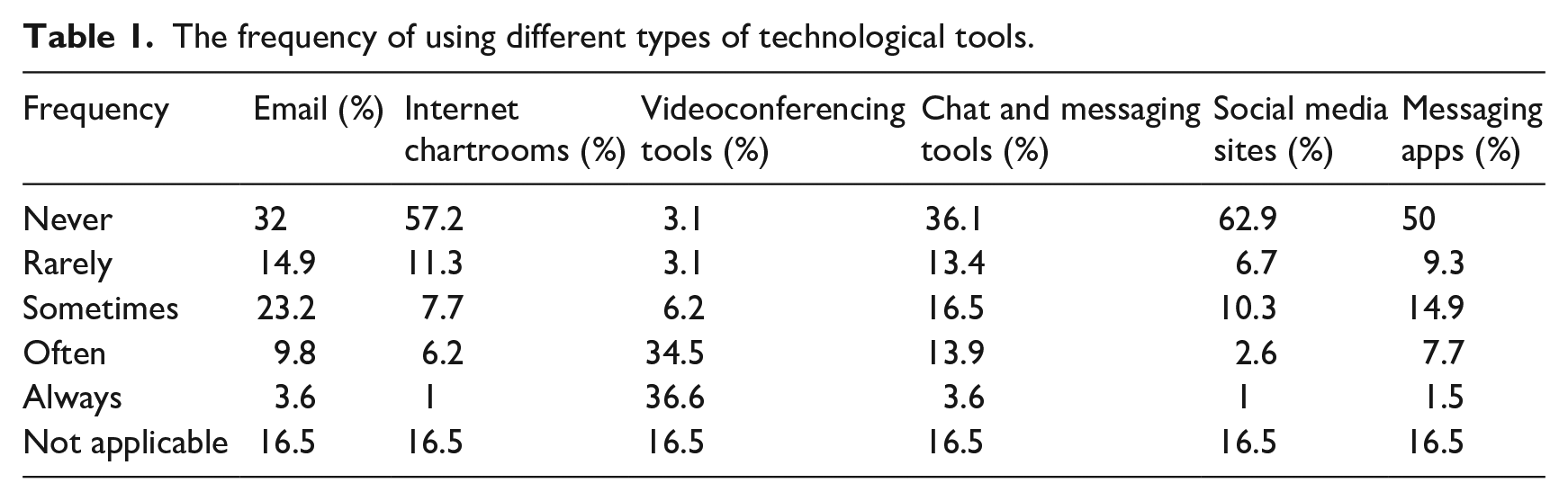
Table 1 shows the frequency of using different types of technological tools among supervisors. Videoconferencing tools such as Skype, Zoom, and Webinar were the most frequently used tools (71.1% from often to always). Social media sites were the least frequently used technological tools (69.6% from rarely to never).
The frequency of using different types of technological tools.
Exploratory factor analysis
Table 2 details the factor analysis of the acceptance of using technologies in telesupervision. The rotation method adopted Varimax with Kaiser Normalization. Principal component analysis revealed one component with eigenvalues greater than one that explained 71.58 percent of the total variance. Visual inspection of the scree plot showed that one component could be used. One factor label was used: ‘Acceptance attitude’ for factor 1. Kaiser–Meyer–Olkin’s measure of sampling adequacy was .947, indicating sufficient items for each factor. The probability associated with the Bartlett test was p < .001. All diagonals of the anti-image correlation matrix exceeded .5. Cronbach’s alpha was .944 for factor 1.
Exploratory factor analysis.
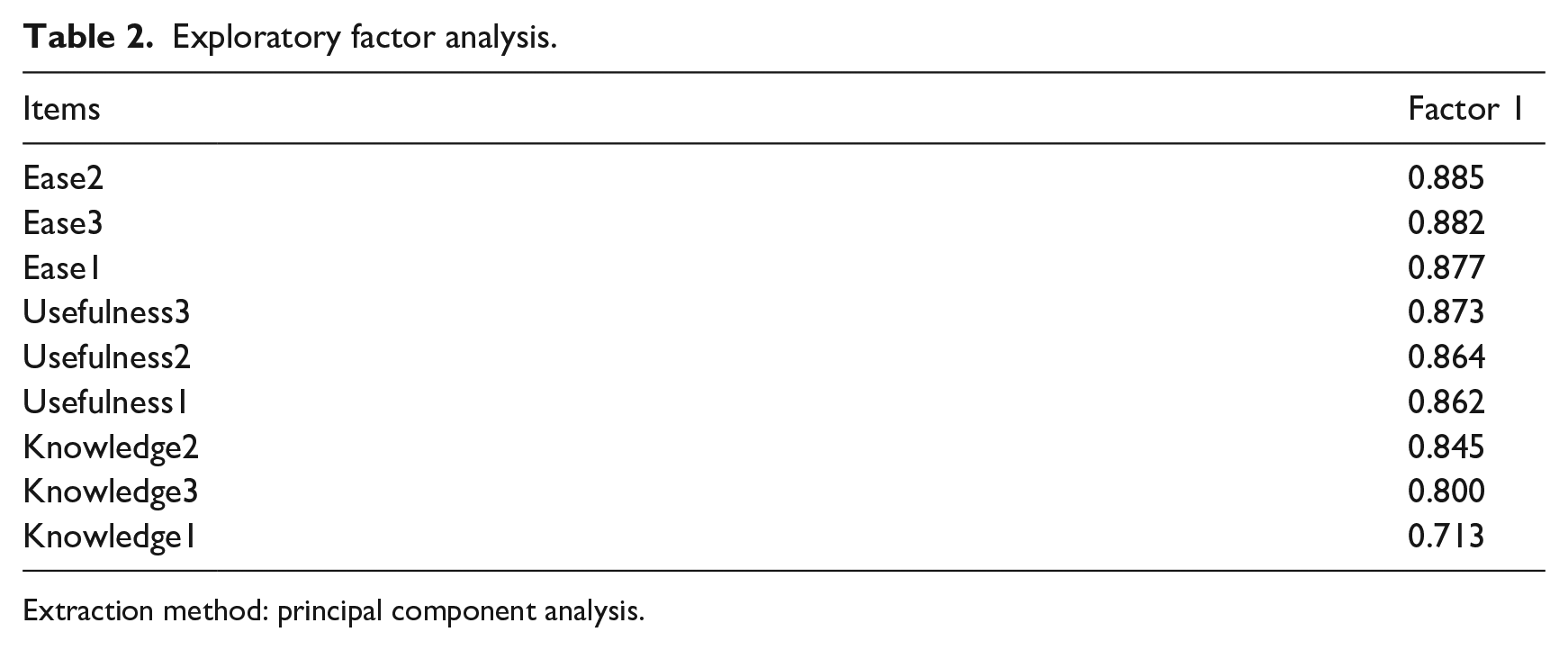
Extraction method: principal component analysis.
Correlation between the variables
Table 3 illustrates the Pearson correlation coefficient of the nine variables (acceptance attitude, actual usage behaviors, age of supervisors, email, Internet chatrooms, video conferencing tools, chat and messaging tools, social media sites, and messaging apps). All variables revealed statistically significant correlation and correlation among all items (R > .3). A high correlation existed between acceptance attitude and actual usage behaviors of the technological tools (R = .864). A medium negative correlation existed between (a) age and actual usage behaviors of the technological tools (R = −.356), and (b) age and acceptance attitude (R = −.343). Thus, the results indicated that hypothesis 1, that is, ‘Acceptance attitude is positively correlated with actual usage behaviors of the technological tools’, was supported. Furthermore, hypothesis 2, ‘Acceptance attitude is negatively correlated with their age’, and hypothesis 3, ‘Actual usage behaviors of the technological tools are negatively correlated with supervisors’ age’, were supported.
The Pearson correlation coefficient of variables.
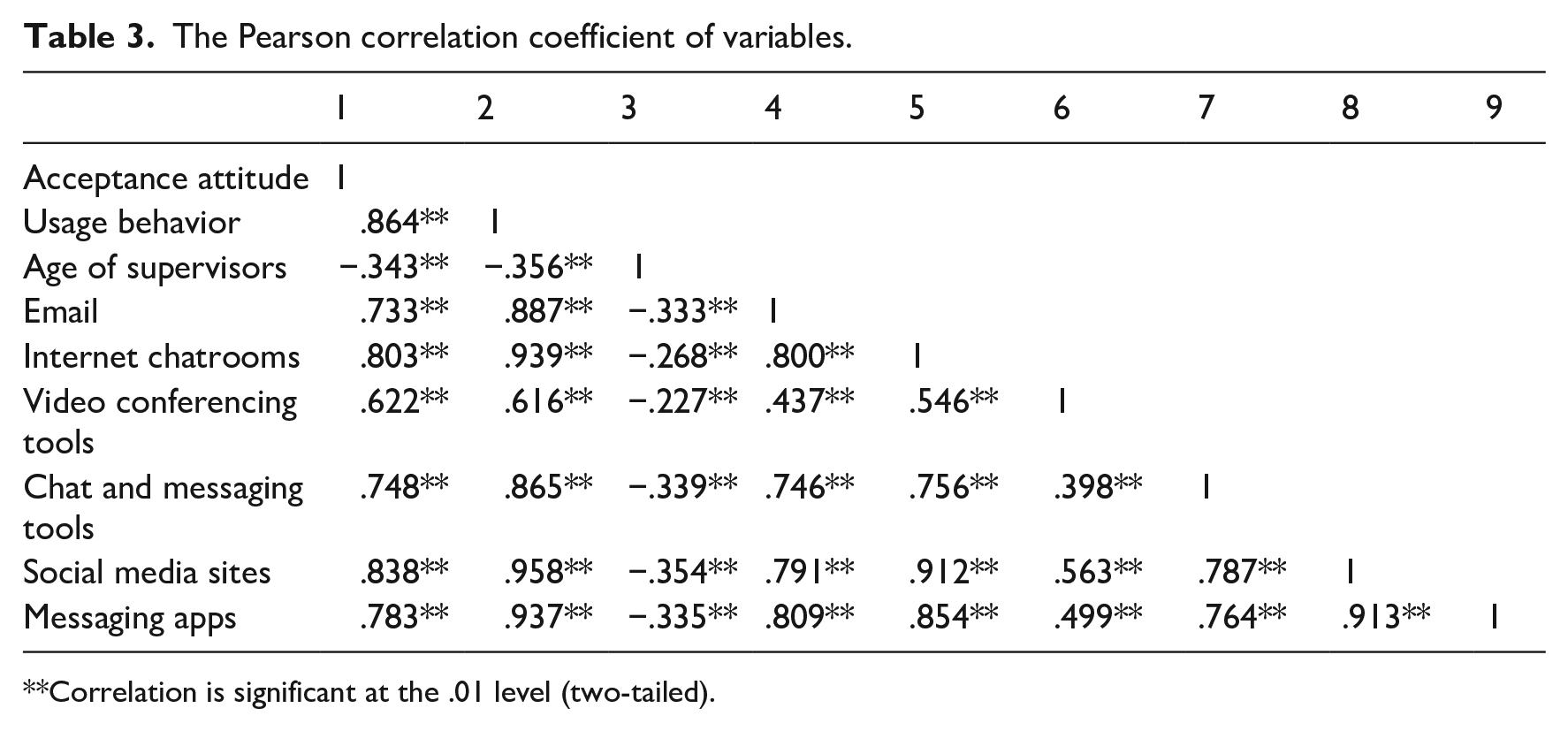
Correlation is significant at the .01 level (two-tailed).
A high positive correlation exists between acceptance attitude and different types of technologies, with R ranging from .622 to .803. A medium negative correlation exists between the age of supervisor and different types of technologies with R ranging from −.227 to −.354
Statistically significant differences between the means of groups
The results of the one-way between-subjects ANOVA to understand whether acceptance attitude differed by age indicated that ‘age of supervisors’ (F(4, 189) = 10.847, p = .000) had a significant effect (p < .05) on acceptance attitude. Thus, hypothesis 4, ‘Acceptance attitude differs by the age of supervisors’, was supported.
In addition, the results indicated that the ‘age of supervisors’ (F(4, 189) = 13.922, p = .000) had a significant effect (p < .05) on the actual usage behaviors of the technological tools. Thus, the results indicated that hypothesis 5, ‘Actual usage behaviors of the technological tools differ by supervisors’ age’, was supported.
Multiple linear regression
Table 4 presents the results of multiple linear regression analysis to predict the value of actual usage behaviors of the technological tools based on the value of acceptance attitude and age of supervisors. Actual usage behavior of the technological tools was the outcome variable, while the others were the predictor variables.
Multiple regression.
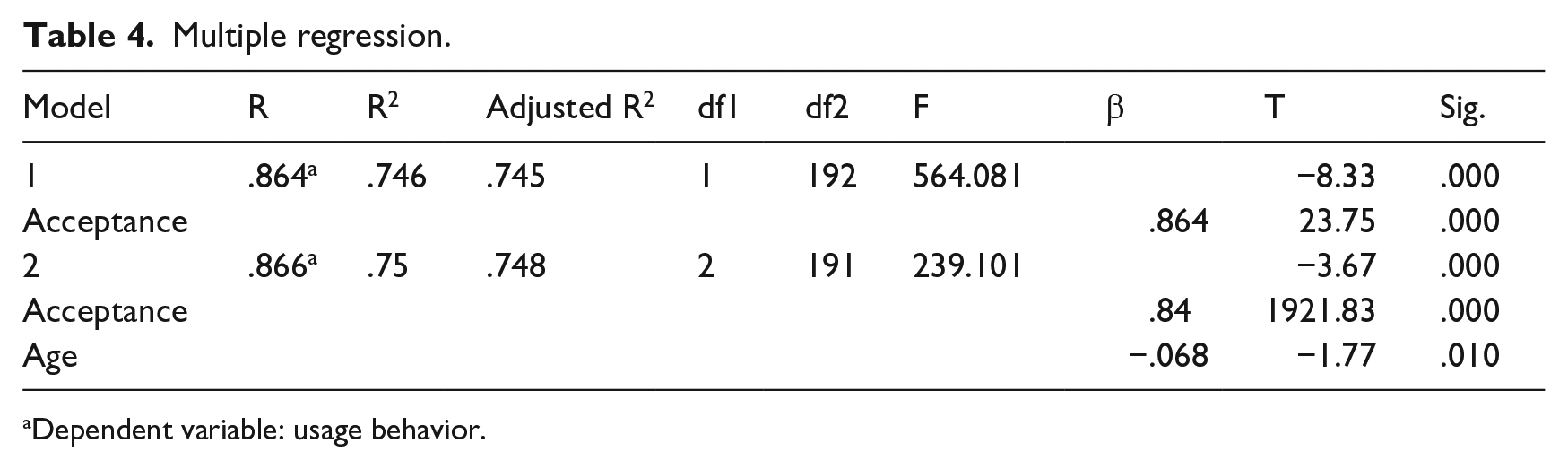
Dependent variable: usage behavior.
Model 1 consisted of one predictor variable, ‘acceptance attitude’. The variable was a statistically significant predictor (p < .05) of outcome variables (F(1,192) = 564.081, p < .001), with an R2 of .745, so the model explained 74.5 percent of the variation in actual usage behaviors of the technological tools.
Model 2 consisted of two predictor variables, ‘acceptance attitude’ and ‘age of supervisors’. The two variables were statistically significant predictors (p < .05) of outcome variables (F(2,191) = 239.101, p < .001), with an R2 of .748. Hence, the model explained 74.8 percent of the variation in actual usage behaviors of the technological tools.
Among the two models, the results indicated that supervisors’ acceptance attitudes and age were statistically significant predictors of the actual usage behaviors of the technological tools. But the results of moderation analysis showed that hypothesis 6, ‘Age of supervisor mediates the relationship between acceptance attitude and actual usage behaviors of the technological tools’, was not supported since the interaction effect between the age of supervisors and acceptance attitude was not significant: B = .041, SE = .021, t = .947, p = .947.
Discussion
This study’s main objective is to understand the relationship between the acceptance attitude among supervisors and their actual use of the technological tools. The Pearson correlation coefficient reveals that acceptance attitude has a statistically significant correlation with all types of technological tools, namely, email, online chatroom, messaging tools, social media sites, and videoconferencing tools. Thus, the results indicated that hypothesis 1, ‘Acceptance attitude is positively correlated with actual usage behaviors of the technological tools’, was supported.
Moreover, the Pearson correlation coefficient indicated that the age of supervisors is negatively correlated with acceptance attitude and negatively correlated with the actual usage behaviors of various technological tools. The results showed that hypothesis 2, ‘Acceptance attitude is negatively correlated with their age’, and hypothesis 3, ‘Actual usage behaviors of the technological tools are negatively correlated with supervisors’ age’, were supported.
The ANOVA test reveals a relationship between (a) age of supervisors and acceptance attitude and (b) age of supervisors and actual usage behaviors of technologies in telesupervision. The results indicate that younger supervisors have higher acceptance of using technologies and higher intention in the actual use of technologies than older supervisors. Thus, the results supported hypothesis 4, ‘Acceptance attitude differs by the age of supervisors’, and hypothesis 5, ‘Actual usage behaviors of the technological tools differed by supervisors’ age’.
Two models are tested in this study, comprising two predictor variables (acceptance attitude and age of supervisors) and one outcome variable (actual usage behaviors of technological tools). The results indicate that supervisors’ acceptance attitude and age are the two significant factors influencing the actual usage behaviors of technological tools in telesupervision. However, the age of supervisors was not a significant mediator in the relationship between acceptance attitude and the age of supervisors. Thus, the results indicated that hypothesis 6, ‘Supervisor’s age mediates the relationship between acceptance attitude and actual usage behaviors of the technological tools’, was not supported.
This study contributes to understanding the conditions of using technologies in telesupervision. It also contributes to increased understanding of the relationship between user acceptance, actual use, and age of the user. The results uncover the factors that influence the actual usage of various types of technological tools in telesupervision. The TAM has been applied to understand the acceptance attitude and behaviors in different sectors (Arteaga Sánchez et al., 2013; Naranjo-Ávalos et al., 2021; Wong and Mo, 2019). Based on TAM, this study extends understanding of supervisors’ acceptance attitude and explains their actual usage behavior in the social services sector. The research participants work in different service areas, including children’s services, family services, services for older people, rehabilitation services, health services, youth services, community services, and social work education. This study contributes to academic understanding by exploring the supervisors’ intentions to use various technological tools in different social service sectors.
In addition, the TAM is used as a powerful tool for predicting user behavior based on perceived usefulness, perceived ease of use, digital knowledge, and skills. As indicated by the findings, the research participants mainly use videoconferencing tools (71.1%) to maintain the telesupervision sessions with the supervisees. The videoconferencing tools allow them to have real-time interactions with the supervisees. Supervisors are using videoconferencing tools to satisfy their needs for providing quality telesupervision. In other words, videoconferencing tools can enhance perceived usefulness among supervisors. Perceive usefulness is the perception that using technology will improve individual performance or preferred outcome (Davis, 1989). This implies that perceived usefulness is very important when supervisors consider which type of technology to use in telesupervision.
Moreover, perceived ease of use is another essential factor influencing the supervisor’s intention and actual user behavior. The perceived ease of use represents a person’s perception that using technology is easy and free of effort (Davis, 1989). The frequency statistic table shows that using social media in telesupervision is very low. This implies that confidentiality and real-time interaction are more important than ease of use. It seems that the choice of technological tools in telesupervision is affected by many factors other than ease of use.
Implications
The findings imply a need to enhance information and technology training for supervisors. To facilitate the process of knowledge and skill development in using technology, increasing both the motivation and actual usage behavior requires favorable conditions. In line with the suggestion made by Phillips et al. (2021), there is a need to provide training in telesupervision as technological knowledge is one of the components of telesupervision competency. Competency means what a competent supervisor needs to know and how and when the knowledge is applied in the supervision process (Borders, 2014). Digital competence should be viewed as one of the important supervision competencies if telesupervision can be further developed. Education and training will increase self-efficacy and promote technology acceptance (Chen and Chan, 2014).
Although this study provides valuable information about supervisors’ acceptance of telesupervision that determined their actual usage behaviors for supervision purposes, future research is required to explore the factors which enhance acceptance attitude among supervisors. For example, future research exploring ways to increase ease of use or usefulness may enhance acceptance. In addition, environmental and cultural factors that affect acceptance attitudes can be investigated further. A technology-friendly environment such as offering suitable technological aids and support by social service organizations will enhance acceptance. Moreover, future research can be conducted to explore the acceptance attitude of supervisees and other determinants that affect the actual usage behavior of telesupervision.
Study limitations
The study has several limitations. First, supervisees’ attitudes toward technology also play a significant role in affecting the actual usage of telesupervision. One of the study’s limitations is that it only explores the supervisor’s attitude. Second, the study only includes perceived ease of use, perceived usefulness, and digital knowledge as the three determinants of acceptance attitude. As indicated by literature, other determinants, for example, effort expectancy, performance expectancy, subjective norms, job relevance, image, and output quality, can also affect acceptance attitude and behaviors (Venkatesh and Davis, 2000; Venkatesh et al., 2003). Future research can explore other determinants. Third, this study only explores the effects of age in mediating the relationship between acceptance attitude and actual user behavior. The results indicate that age is not a significant mediator. This study does not explore other potential mediators such as gender, work experience, or service areas. Further research can work on these mediators.
Conclusions
This study bridges the research gap by identifying the relationship between user acceptance attitude and actual usage behavior in telesupervision in international society. The results indicate a high correlation between acceptance attitude and actual usage behaviors. In addition, an acceptance attitude can predict the usage behaviors in telesupervision. Although age has been discovered in a previous study as a significant mediator between acceptance attitude and user behavior, the result is not supported here. The implication for the social work and clinical counseling field is that training in telesupervision should be enhanced to develop the digital competence of supervisors. Building confidence in using technologies may further develop the role of telesupervision in the supervision context.
Footnotes
Declaration of conflicting interests
The authors declared no potential conflicts of interest with respect to the research, authorship, and/or publication of this article.
Funding
The authors received no financial support for the research, authorship, and/or publication of this article.
