



Abstract
Objectives:
The quality of intimate partner relationships strongly influences men’s mental health, yet little research attention has been given to these relationships from a strengths-based critical masculinities perspective. Addressing this knowledge gap, this photovoice study provides insights into young men’s experiences of, and perspectives about, building intimate partner relationships.
Design:
Photovoice methodology.
Setting:
This study was conducted virtually over Zoom.
Method:
Working with 120 participant-produced photographs from 64 men who resided in 13 countries, who and ranged in age from 19 to 43 years (M = 29.5), the current photovoice study provides a thematic analysis.
Results:
Three themes were derived. The first of these, Balancing autonomy and coupledom, stressed men’s openness to making and communicating ongoing partnership adjustments. Predominately sharing identity and social connection examples, men spoke to the need to retain a degree of individual agency while meeting joint expectations within a relationship. The second theme, Building compatibility and mutuality, highlighted men’s congruence with their partner as the foundation for actively being together. Flowing from this, mutuality was idealised as jointly bringing about gender equality and gender equity to sustain a relationship through inevitable ups and downs. The third theme, Communicating intimacy, was best accomplished by men having regular discussions with partners to express their affections, and to understand and meet each other’s sexual and emotional needs. Central to nourishing intimacy was a closeness, often garnered by men’s intentional efforts to secure secluded couple-orientated experiences.
Conclusion:
The findings question stereotypes depicting men as inept in, or ambivalent about, their partnerships. Instead they offer insight into wide-ranging strength-based relational masculinities that enable young men to build intimate partner relationships.
Keywords
Men’s mental health and the quality of their intimate partner relationships are intricately connected (Evans et al., 2016). Reports consistently confirm that marriage and cohabitation provide protection for men’s mental health (Symoens and Bracke, 2015; Whitley, 2021), and these benefits are underscored by evidence indicating men’s high risk for mental illness following a break-up (Oliffe et al., 2022). Specifically, divorced men report higher levels of distress, depressive symptoms and lower self-esteem than those who are married (Symoens et al., 2014), while higher levels of major depression (Bulloch et al., 2017), suicidality and substance use during separation, and increased suicide risk following divorce are manifest in men compared to women (Evans et al., 2016). Although men’s mental health relationship benefits and break-up risks are well known, their lived experiences of building intimate partner relationships are under-researched, and conspicuously absent both in mainstream media and academic literature. Addressing this knowledge gap, this photovoice study offers important strength-based insights to guide content for upstream education programmes focused on bolstering men’s efforts for building intimate partner relationships.
Masculinities and men’s intimate partner relationships
Long-standing gender binaries differentiating women as collaborative and emotional, and men as self-reliant and stoic, have enlisted (and reified) an array of gender roles, identities and relational norms (Willitts et al., 2004). Specific to traditional heterosexual gender relations, women tend to manage the couple’s social connections amid men’s reliance on their partner for expressing and receiving support for their emotions (Scourfield and Evans, 2015). The unfortunate outcome of these gendered practices is that when intimate partnerships end, men’s social isolation and emotionality heightens their risk for substance use, depression, anxiety and suicidality (Oliffe et al., 2022). That said, some men also garner personal growth in the aftermath of a break-up, mobilising self-work to effectively transition and/or build better intimate partnerships in the future (Oliffe et al., 2023b).
Underscoring this growth potential and benefit, evidence indicates that the best mental health resides in men who have experienced two or more partnership rebuilds (Willitts et al., 2004). While relationship break-ups carry significant risks and some potential benefits, there are undeniable gains for upstream health education and strength-based services that can assist men to build better relationships in the first place. Breaking with the predominance of corrective and often-times mandated services for distressed and/or disrupted partnerships, there is a strong need for attention to be given to the development and delivery of upstream relationship services for men (Oliffe et al., 2022).
Emphasising the need for relationship coaching, the post Me Too era continues to rally changes for how men negotiate and navigate contemporary intimate partner relationships. Goodyear et al. (2023), for example, highlighted young men’s (18–30 years-old) recognition of alcohol use and sexual consent as risking autonomy-compromising relations. There is also evidence of young Canadian men’s (15–29 years-old) masculine values comprising openness, selflessness and well-being (Oliffe et al., 2019), amid reports that gender equality and gender equity are a growing feature of contemporary intimate partner relationships for 19- to 44-year-old men worldwide (Oliffe et al., 2023). Tempering these gains are claims that many Gen Z (born 1997–2012) teenage boys in the USA are dating less than previous generations (Cox et al., 2023), prompting an array of mainstream media remedies advising men about how to better negotiate digital dating cultures (Seidler, 2024). While such espoused problematics are perennially newsworthy, empirical evidence about men’s experiences of, and perspectives about, building intimate partner relationships offers important avenues for promoting men’s mental health. Notwithstanding the need to address domestic violence (DV), intimate partner violence (IPV), and other forms of physical, emotional and mental abuse (Oliffe et al., 2022), it seems especially critical to collect firsthand accounts as a means to convey the positive actions young men take to build their intimate relationships. To that end, the current photovoice study addressed the research question: How do men build intimate partner relationships?
Methods
Photovoice methodology (Wang and Burris, 1997) along with a social construction of masculinities framework (Connell, 2005) guided the current study. With its participatory action research tenets, photovoice was used to fore-front young men’s experiences of, and perspectives about, building intimate partner relationships. In line with Wang and Burris’ (1997) focus on empowering participants to narrate and share their community challenges and strengths through images, in the current study participants completed individual photovoice interviews as a means to expressing and positioning themselves in their photographs (Pain, 2012). Connell’s (2005) masculinities framework made available socially constructed gender roles, relations and identities to map men’s self-reported performativities within their intimate partner relationships. Integrating a plurality of complicit, marginalised, subordinate and protest masculinities, analyses of participant’s photographs and narratives were conceptually advanced and empirically presented as diversely influenced by dominant ideals of masculinity (Oliffe & Bottorff, 2022).
Data collection
Following University of British Columbia behavioural research ethics board approval (H22-00872), an e-flyer was distributed through various social media platforms to recruit participants worldwide to a large photovoice study which included 110 men and 714 photographs. Participants were asked to submit 5 to 10 photographs that illustrated their experiences of and perspectives about intimate partner relationships. Within the participants signed consent procedures, which were hosted in Qualtrics, men indicated if, and if so which, photographs could be used in exhibitions, presentations and publications. Eligibility for inclusion in the study included men who spoke and understood English, aged 19–43 years-old, with past or present experience of an intimate relationship, and capacity to access Zoom.
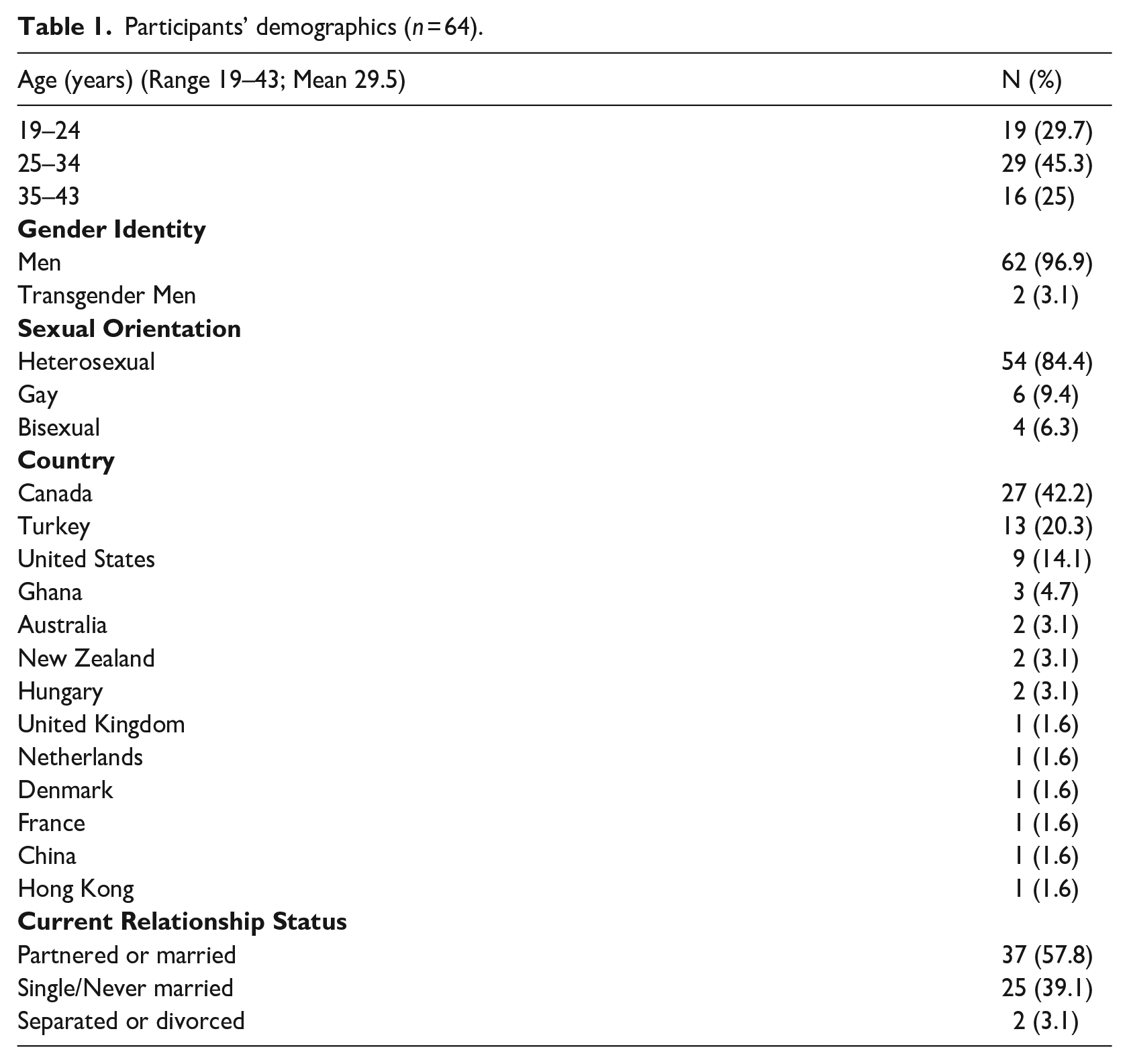
This article focuses on an analysis of 120 participant-produced photographs submitted and consented to be shared publicly by 64 participants aged 19 to 43 years (M = 29.5; SD = 6.8) (Table 1). The 120 participant-produced photographs feature in an online exhibition available here (https://menshealthresearch.ubc.ca/men-building-intimate-partner-relationships/), and the images and the corresponding captions were voted in by the research team and through participant focus group Zoom polls as best representing men’s equitable intimate partner relationships (Oliffe et al., 2024). In individual Zoom interviews lasting between 50 and 150 minutes (M = 85 minutes), the 64 participants captioned and narrated their photographs. Participants were encouraged to elaborate on their experiences and perspectives, making explicit linkages to their photographs. Loop prompts, such as ‘You mentioned the significance of the event featured in this photograph, please help me understand the short- and longer-term effects on your relationship’; and probe questions, such as ‘What are your relationship values [as] represented by this photographs?’ and ‘How did you share and/or build those values?’, were used to develop the men’s narratives. The emphasis during the interviews was on the photographs, and written summaries for all participant interviews including details about the content of the images and the narratives men attached to them.
Participants’ demographics (n = 64).
Data analyses
The 120 participant-produced photographs and captions data were analysed using Oliffe et al.’s (2008) preview, review and cross-photo comparison framework wherein each photograph and its corresponding narratives were linked and reread to decide upon and assign a single narrative excerpt to each image that reflected the participant’s primary message for the specific image.
Comparing each of the 120 photographs, the team (comprising six qualitative trained researchers) worked collaboratively to inclusively decide and assign the photographs and captions to five descriptive codes: (1) activities (n = 32); (2) communication (n = 19); (3) domesticities (n = 18); (4) intimacy (n = 23); and (5) values (n = 28). In reviewing the data assigned to each code, we also returned to the full participant interviews to further advance the analyses and build towards thematic findings.
Inductive and deductive analytics were employed incorporating reflexive processes and Connell’s (2005) masculinities framework was used to conceptually advance the analyses. The three lead authors (J.L.O., N.G., M.T.K.) independently analysed the coded data, discussing preliminary interpretations with a view to driving consensus for what prevailed thematically in and across the coded data as follows: Balancing autonomy and coupledom; Building compatibility and mutuality; and Communicating intimacy.
Reflecting the focus on the visual data, three illustrative photographs and captions are included in this article for each of the thematic findings.
Findings
Balancing autonomy and coupledom
Many men spoke to how individual agency and couple relations could co-exist, but also potentially collide, a situation that brought forth wide-ranging practices for balancing autonomy and coupledom. Connell and Messerschmidt (2005) suggest that autonomy is synonymous with highly prized masculine ideals of self-reliance and decisiveness, whereas coupledom and collaborative partnerships tend to align more fully with feminine norms for connection and emotionality. However. most participants in this study suggested that successfully balancing autonomy and coupledom needed to be a joint venture. Logan, a 42-year-old Canadian man, who had been with his partner for 10 years, narrated Photograph 1 titled Beyond the Trail. Featuring a lone figure (his partner) cutting a snowy backwoods trail, Logan positioned retaining some autonomy within the relationship as an important strength for men and women:
We got into snowshoeing . . . [this photo] reflects the strength that she [partner] has . . . There’s no trail here, we came into this area literally after a huge snowfall and what we’re walking through is waist high powder . . . There was this shared personal space, as well as separation.

Beyond the trail.
Evident in Logan’s account was a duality of togetherness in sharing an activity and place, while also retaining some independence for being there, and taking what they individually wanted (and needed) from the experience. Affirming his partner’s self-sufficiency for making her own way through the tranquilly (and potential danger) of the rich wilderness reflected Logan’s broader philosophies and strategies for building a successful partnership. He contrasted several past relationships, explaining that he and his current partner were actively navigating the balance for managing personal and couple time to avoid imposing their individual preferences on each other. Explaining that most men his age had been socialised to be autonomous, a viewpoint empirically supported by Elliott et al. (2022), Logan suggested that having to find their way through the balance without any markers had resulted in him feeling closer and more emotionally connected to his partner. Here, autonomy was cast as a mutual agreement and primary connecter and attachment for Logan and his partner.
Balancing autonomy and coupledom could nonetheless be challenging, especially as men’s intimate partnerships progressed to change their leisure time, domesticities and friendships. Comprising work for adapting to wide-ranging shifts within partnerships, men emphasised the need to be, and stay on team with their partner. Harper, a 32-year-old father living in Australia who had been with his partner for 3-years, explained that since having children, independent time had become the ‘prize at the top of the ladder’. He backgrounded how for this dual-career couple, work, parenting, household chores and family activities had threatened to erode their individual identities. To remedy this, Harper worked on domestic chores (e.g., cooking, cleaning, laundry) to make room for his and his partner’s personal time. While conceding some misses where Harper did not notice, or perhaps shortcut some chores, he spoke to their coupledom and parenting pressures, and the need to retain and jointly role-model their individual autonomy:
I’ve got very little free time and I’m acutely aware of it . . . I want to spend some of my time doing my own thing . . . we want our kids to grow up seeing their parents having lives.
Here, Harper spoke to how relational transitions (i.e., parenting and increased workloads for raising children) demanded a united front to forge some autonomy and self-identity, amid balancing everything else that needed to be done as partners and parents. As Robinson (2011) notes, autonomy, in the context of men’s relationship transitions, can prevail as a shared, jointly decided value and foundation for coupledom.
Balancing autonomy and coupledom could also garner personal growth whereby some men acknowledged the positive influence of their partner, suggesting that subtle changes had enhanced their lives rather than diminished their autonomy. Timothy, a 25-year-old Canadian man, explained that he did not like dogs when he moved in with his now ex-partner, who was the proud owner of two. Reflecting on how he grew to care for and fully appreciate the dogs, Timothy spoke to Photograph 2 titled, Adopting-Adapting:
I really came to love both of the dogs, because I knew that my ex really loved them. You know, they were living with us for that time that we lived together. And so, just an example of how you have to change sometimes – in small ways – to have a good relationship.

Adopting-adapting.
Despite the relationship having ended, Timothy proposed there was much to be learnt from, and taken forward from being open to the perspectives and practices of partners. Rather than threatening his autonomy, Timothy positioned his ability to adopt and adapt as decisive and value-adding to his growth and the partnership. Similarly, William, a 41-year-old Canadian vegetarian man said, ‘I’ve relaxed how I think about it [vegetarianism], for my family’ explaining his partner of 8 years ate meat, and how, after much discussion with her, he accepted that their two children could decide their diet. Within this context, William retained his autonomy for being vegetarian without imposing his preference as the paradigm to be adopted or a powerplay, in recognising independence as everyone’s right, ‘our children – they’ll make the decision on their own’.
For some men, failures for balancing autonomy and coupledom were central to their relationship break-ups, giving rise to retrospectives for strategising a better blend going forward. Murat, a 23-year-old man from Turkey, offered Photograph 3 titled Living Separate Lives, referencing what he had learnt from a 9-month relationship. Self-described as a ‘pleaser’ in the partnership, Murat asserted that he would not lose himself again in future relationships:
I am expecting to have separate lives also, like within a friend group, within the external activities, outside activities, inside activities, private times, personal times etc . . . and it’s really important for me because I have to be myself first . . . After that process, we can be together because we are also two separate people. And we could be within that relationship together.

Living separate lives.
Highlighting his future plans for balancing autonomy and coupledom, Murat cautioned about the potential for becoming socially isolated when an intimate partner and/or relationship took precedence over other connections. The clinking of glasses in the image symbolised a commitment to, and value for friendships, one that Murat had profoundly (and regrettably) lost in his previous relationship.
In sum, the photographs and narratives in the Balancing Autonomy and Coupledom theme illustrated both the complexities and criticalness of couples jointly working on retaining an individual identity, amid participating fully in their intimate relationship.
Building compatibility and mutuality
The theme, Building compatibility and mutuality, revealed contextually bound strategies demanding men’s ongoing attention, communication and adjustment. While attraction and interest were requisite for participants entering a partnership, compatibility was an unfolding, complex project spanning easements for being together through challenges for jointly managing issues that arose in and around men’s relationships. For many participants, including Agustin a 41-year-old Chilean man living in Canada, there was an emphasis on doing, with appraisals of compatibility centring on a mutuality for engaging shared activities. Narrating Photograph 4, A Sense of Adventure, Agustin detailed how he and his partner’s deliberate plans for actively being together had built (and sustained) their 8-year relationship:
For a healthy relationship a sense of adventure is always important, doing things together, going out together, like making sure you spend time together in a sense of doing something, not just like being in a room together.

A sense of adventure.
As Connell (2005) suggests, masculinities are performance-based, and permeating Agustin’s interview were details about relational events purposefully taken-up with the goal of nourishing the relationship. Symbolically, the image centred the sunlit casting of the couple’s merged shadows to demarcate their public affections and togetherness, wherein Agustin summated, ‘being out in the world together is important . . . we need to share some of our passions’.
While public activities featured as both processes for and products of compatibility, the domestic sphere was an important private testing ground for couples. Most prominently, men spoke to the dynamics of the relationship behind closed doors wherein the compatibility and mutuality for jointly working together hinged on participant’s knowing their partner, as well as their own behaviours. In essence, compatibility was indelibly linked to the couple’s mutuality for collaboratively addressing the inevitable challenges and transitions in their partnership. Altan, a 22-year-old Turkish man in a relationship for 5 years, spoke about the history and character of a building in Photograph 5, titled Withstanding Quakes, asserting that a couple’s resiliencies were key to the longevity of partnerships:
This building faced many earthquakes, storms, different political regimes, and many other things. But it’s still here . . . it’s similar to a relationship . . . you need to look around and what you have been through, and let’s say that we’ve been through all of this, and we’re going to be able to face the obstacles that we are going to face, and we’ll get over them.

Withstanding quakes.
Hardness and the strength to withstand and overcome challenges permeated Altan’s photograph and caption. Continuing with the metaphor, he cautioned that, ‘most people wouldn’t want to live here. They want to live in a nicer new home’. The point eloquently made by Altan was that a couple’s mutuality for doing the work of staying together was critical. Masculinities synonymous with confronting and combating vulnerabilities, as previously detailed by Oliffe (2023), were idealised here as joint projects, and critically important relationship capital. Key to this unity however were men having an innate belief in the value of their partner and knowing the couple’s interaction patterns, wherein diverse practices were respected and worked with.
David, a 30-year-old man living in the USA with his partner of 1 year, explained that building compatibility and mutuality was also (and perhaps especially) key to effectively dealing with relationship conflict:
‘We deal with disagreements . . . differently. I always like to talk about it and why I feel this way, and blah, blah, blah. And she’s like, takes 10 minutes, forgets it [and] comes back all new. I wish I could do that because that sounds great. But I can’t I just need to solve it, I can’t go to bed with anything on my mind like that. So, I think that’s been one of the sorts of pushes and pulls within our experiences’.
Recognising these relational differences in dealing with conflict, David highlighted the importance of both he and his partner wanting, and purposefully working towards understanding each other’s perspectives. Herein, gender equality and gender equity practices emerged as ongoing projects for building compatibility and mutuality. David spoke to the complexities of doing this work:
Equity is meeting people where they are, meeting the needs of that individual and vice versa and sort of creating this partnership truly, that does not necessarily mean 50:50 but could mean 70:30 in washing dishes and 70:30 the reverse way of earnings . . . the point being, I think . . . both people need to be committed to it, in order for that line of communication and understanding of where we’re headed is shared, because if one person thinks they’re being equitable, and doing all of these things that seem like, ‘I’m doing more than my fair share in x part of our relationship’, and don’t communicate that or get that reciprocated that’s going to . . . have a bit of tension within the relationship.
David’s quote emphasised the importance of both partners actively pursuing gender equity together, while cautioning men about quantifying gender equality, and internalising the results and potential resentments from those appraisals. Dialogue, as the remedy, needed to be regular and routine (rather than crisis and conflict driven) to avoid blame and criticism. Moreover, these exchanges were idealised as adaptive to the couple’s preferences, albeit, with some tensions emerging about contemporary discourses for gender equality and gender equity.
Gary, a 28-year-old American man spoke about his 2-year relationship, disclosing some uncertainties for the entanglements of traditional gender roles and contemporary relationalities in Photograph 6, titled, Bad Feminist:
When we were moving in, she [partner] had more of the artistic vision for how the apartment should come together. Whereas I was just like doing the labour of a lot of the moving and assembling . . . when things end up being split that way, I always feel a little guilty or like a ‘bad feminist’. But that was just what we were both better at . . . it just so happens to fit into the normal gender norms, as long as we’re both okay with that.
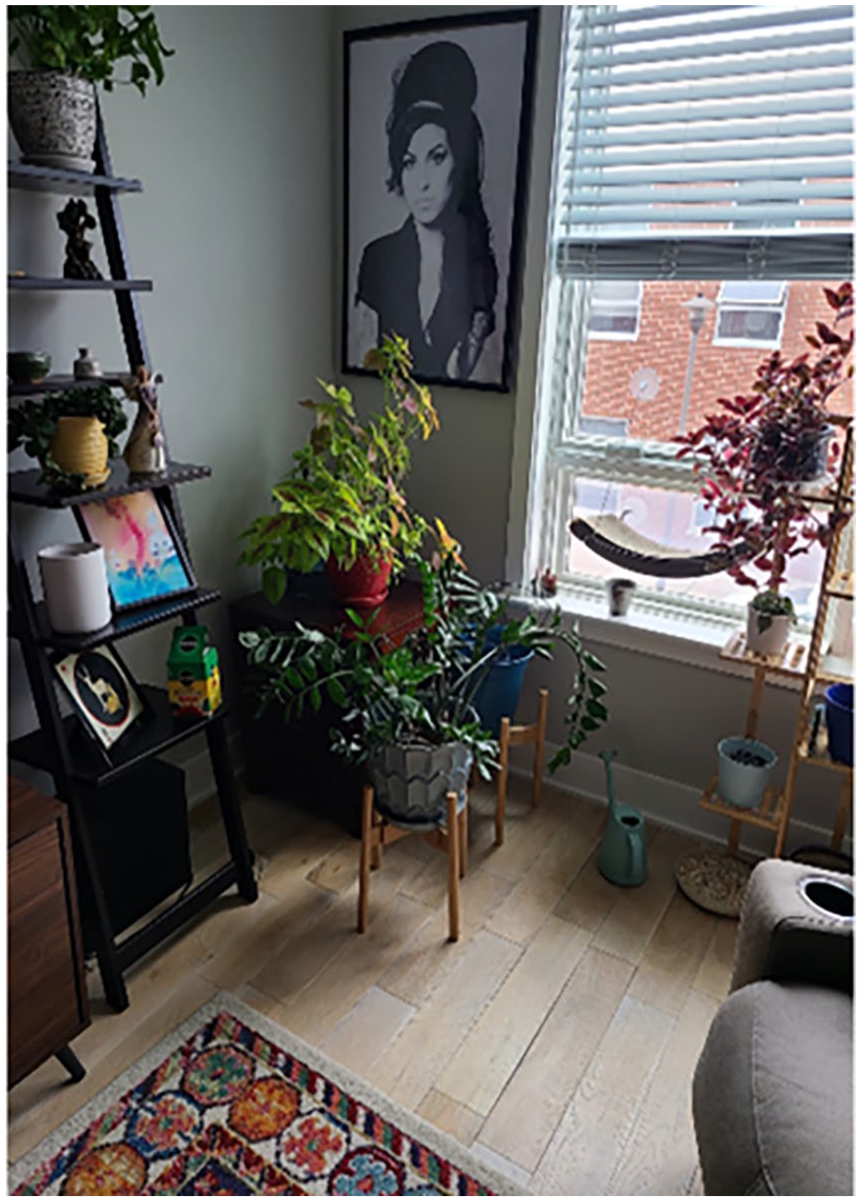
Bad feminist.
Evident here were efforts for custom-building gender equity in ways that selectively drew from diversely regarded gender norms and relations. The image privileged the inside of Gary’s shared apartment, offering a restricted view of the outside signalling a separation of their private practices from some discourses about contemporary gender relations.
In sum, the Building Compatibility and Mutuality theme revealed men’s bent for actively being with their partners, amid concerted efforts for operationalising mutually beneficial gender equality and gender equity practices.
Communicating intimacy
Communicating intimacy encompassed men’s wide-ranging strategies for securing and sustaining physical and emotional connectedness with their partner. Sexual intimacy differentiated most men’s relationships, although participants consistently offered alternate practices to masculine norms that prize sexual prowess. Rather, sexual intimacy was idealised as mutual connectedness, inclusive of physical and emotional belonging for both partners. Arthur, a 39-year-old Scottish man who had been married for 10 years, submitted Photograph 7 entitled Love in discussing the primacy, and shifting temporalities for communicating intimacy in his relationship:
Taking care of each other’s physical needs in a sexual sense, but [also] in the sense that you need to feel loved and cared for. I think feeling attractive to your partner is quite an important bonding . . . showing enough care, love and tenderness in a physical sense.
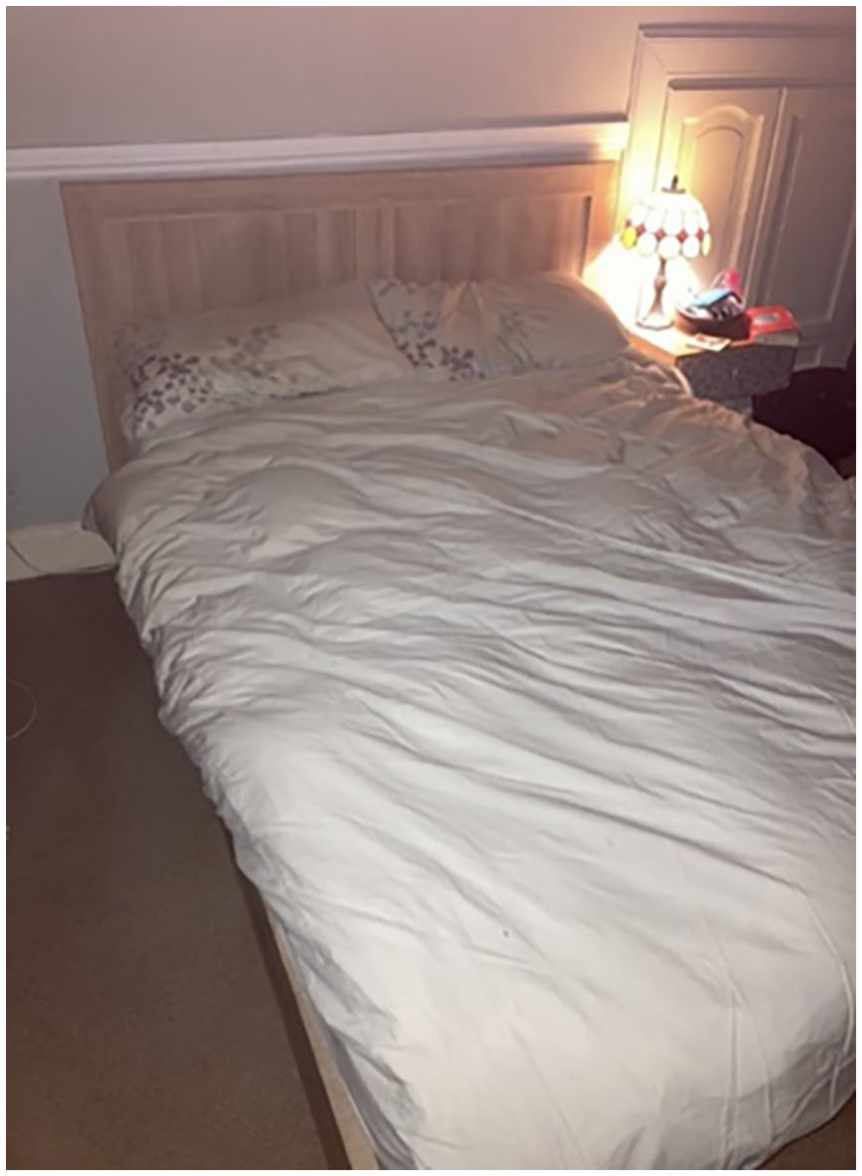
Love.
With the recoil, ‘it’s a wee bit soppy I suppose’, Arthur further narrated the photograph of their dimly lit bedroom as a uniquely private, warm and sanctified place and space. While speaking to the importance of providing and receiving pleasure, he explained how communicating intimacy had shifted with time, ‘we didn’t use to have a cup of tea in bed in the morning together and just have a cuddle’. Summing up this change as ‘less intense but more comfortable’, Arthur also spoke to an emotional closeness as a positive effect of ‘knowing each other over a long period of time’, a positionality which disrupts stereotypes synonymous with men wanting sex rather than intimacy.
Indeed, for many participants, communicating intimacy was expressed in ways akin to what Giddens (1991) named ontological security, wherein men drew a sense of continuity through being in a supportive and committed relationship. Illustrating this, Omar, a 25-year-old Turkish man who moved to the Netherlands with his wife of 2 years for work and a better life, submitted Photograph 8 entitled, Your Safe Place, sharing his view of intimacy as protective and unwavering:
This pathway is a place that shelters you from all of the outside unpleasantries. I feel like that’s one of the things that a relationship should provide . . . no matter what happens outside, it should be a safe space for you to go on with your life.

Your safe place.
The photograph captured a vibrant, thriving canopy covering an unfolding path that Omar was jointly navigating with his partner. Herein, he depicted an intimacy strong and secure, a shelter from life’s challenges. Connecting this to mental health benefits, Omar further explained communicating intimacy as an embodied state, ‘when I came home, as I went to bed, I just started feeling really happy because I was home . . . the fact that I feel at home is largely due to my wife’. Such emotional safety in intimate partnerships can strongly bond men and their partners, especially during challenging times. Tony, a 23-year-old single Chinese Canadian man, elaborated, ‘in a relationship, you have to trust the other person. If you fall or if . . . you’re in a bad spot, that your partner would be able to help you and pick you back up’.
Abandoning dominant masculinities that prescribe emotional restraint and guarded intimacy, as previously detailed by Hanlon (2012), many men expressed their intentionality for openly communicating intimacy. Oftentimes, connectedness was forged in the bedroom, as Muyang, a 23-year-old Asian Canadian confirmed, ‘we have our deepest conversations while lying in bed . . . discussing what our plans are for the next day’. Benjamin, a 28-year-old Canadian man in a 4-month relationship, submitted Photograph 9 titled, Consistent Check-ins, detailing high-level, specialised exchanges for keeping the relationship on track:
Often we’ll write a quick sticky note, I usually work early, to say ‘there’s some food, coffee, help yourself, have a great day’ . . . and she had left the sticky note in response when I got home from work . . . a quick reminder that she cares.

Consistent check-ins.
Threaded through Benjamin’s, and many other men’s narratives, was a willingness to take an active role and lead, amid preferences for reciprocity for both partner’s communicating intimacy, as expressing care, with the net effect of deepening affections. Although these exchanges tended to centre around the ordinary and everyday, ‘openly checking in’ to ‘verbalise feelings’, they bridged deeper discussions for Benjamin, inclusive of harnessing his comfortabilities for discussing challenging topics in the early stages of the relationship.
Caring was also conveyed through actions for promoting participants’ learning and speaking to what Chapman (2015) has framed as love languages. Spending quality time together was the most prominent form of caring action the men photographed. Encapsulated by Stefon, a 40-year-old African man in a 3-year relationship, the importance of ‘keeping things fun and memorable’, was contingent on blending often simple rituals with spontaneity in communicating intimacy. Frank, a 25-year-old Asian Canadian in a long-distance 8-year relationship, explained,
We go to a bakery, and I will pick first, and then she’ll go to the next bakery and pick, and then we both end up getting a mishmash of things . . . the fact that we’re able to turn something mundane, like buying breakfast, into this fun little date and adventure, and this excuse to walk around and explore the city was great.
These activities were valued in terms of communicating intimacy through time spent together at events ranging from lunch and dinner dates to vacations along with one-off special outings, the parts and sum of which built the couple’s cohesion through shared experiences and emotional bonding. Embracing the value of communicating intimacy, men’s agency in building intimacy offered a counterpoint to masculine stereotypes depicting men as distant and unemotional (see Carlson et al., 2020).
In summary, the Communicating Intimacy theme revealed many men’s alignments to caring masculinities (Elliott, 2016) wherein their relational gendered practices decidedly focused on tangibly contributing and being involved in building the partnership.
Discussion
The current study findings beckon considerations about how young men build contemporary intimate partner relationships. The importance of these insights, and their application to tailored upstream relationship resources, is underscored by post COVID-19 increases in divorce rates (Apriasari et al., 2021), and long-standing connections between relationship breakdowns and men’s depression, anxiety (Park and Yu, 2022) and suicide (Herbenick et al., 2022). Briefly discussed in what follows are some specificities for what might be usefully taken from each thematic finding to inform strength-based, asset-building intimate partner relationship resources for men.
Regarding the first theme, Balancing Autonomy and Coupledom, the issue of settling individual and relational aspects of intimate partnerships has been somewhat of an empirical blind spot. Yet, the ability of men to navigate and negotiate the me verses we spaces in partnerships and their inevitable transitions was consistently framed by participants as critically important to both partners and to the relationship. In terms of application, it might be especially helpful for young men to be coached to explicitly and routinely discuss the amount (and type) of me and we time each partner prefers and needs within the relationship, recognising that these conventions will inevitably shift over time, as previously suggested by Sharp et al. (2023). This is to avoid a prescribed (or static) autonomy-coupledom blend, and the possibility of pre-empting the relational implications of transitions including parenting. Rather, autonomy and coupledom should be taught as fluid, ongoing, but formally negotiated by individual couples based on their current relationship context. It is also key to note that autonomy and coupledom co-existed and operated in collaborative ways for many participants. This runs counter to Elliott et al.’s (2022) assertion that masculine autonomy necessarily marginalises women and femininity, although our finding might reflect contemporary partnerships as often dually career orientated, and/or the product of participants having selected partners who were highly independent to preserve their autonomy needs.
The second theme, Building Compatibility and Mutuality, brought into focus men’s gender equality and gender equity practices, albeit with characteristics regularly reflecting masculine ideals as foundational to the success of their relationships. Featured were activity-based connections decidedly operating outside domestic arenas, along with the prizing of resiliencies for working to overcome relationship problematics and vulnerabilities. Interestingly, these masculine practices (i.e. doing things, solving problems) were idealised as relational, in which the pleasures, monotonies and aches of intimate partnerships were jointly and equally taken-up (and on) by both partners. Ever-present also were men’s alignments to, along with some slippages between, gender equality and gender equity relations. Reflecting contemporary gender relations, amid strong commitments to equally, fairly and flexibly contributing to the partnership, there were challenges for men deciding (and evaluating) who did what, and how much. That many men self-evaluated their contributions using contemporary standards, as Oliffe et al. (2023a) have previously reported, suggests some gender equality and gender equity gains in young men’s intimate partner relationships. These tilts also come with the potential for scrutiny of a partner’s relationship work and contributions. In this context, it is paramount for health education practitioners to develop resources advising against operationalising gender equality as a hard count, amid providing directions for mobilising gender equity practices to responsively and reflexively respond to the shifting needs and contributions of each partner.
Findings relevant to the third theme, Communicating Intimacy, revealed the centrality of sexual closeness and familiarity for men differentiating their relationships, amid clear evidence that men’s desires for, and intentional cultivation of, emotional intimacy was highly protective of their mental health. Gender studies over the last decade (Horne and Johnson, 2019), especially COVID-19-related research (Petts and Carlson, 2023), have highlighted the cognitive labour and emotion work involved in building intimate partner relationships. This relational work has historically been positioned as being shouldered by women in heterosexual relationships as centred around organising and caring (Dean et al., 2022). With research consistently demonstrating the uneven division of labour as a catalyst for relationship distress and dissatisfaction (Waddell et al., 2021), men’s meaningful involvement in fostering intimacy offers an important avenue for gender equity. Specifically, highlighted in men communicating intimacy were estrangements from traditional masculine norms of dominance and emotional restraint, with the incorporation of positive emotions and caring. For many participants, rather than an abstract or preached relationship ideal, communicating intimacy inclusive of vulnerabilities and protections was framed as a strengths-based commitment to building the partnership. Furthermore, communicating intimacy was a dynamic state requiring continued efforts for knowing and expressing, and jointly working to meet both partner’s needs. From a men’s health education perspective, resources for norming communicating intimacy might helpfully include the three participant-produced photographs and captions featured in this theme as a means to affirming such everyday affections in men’s intimate partnerships.
Limitations
There are several study limitations that need mention. The cross-sectional research design eliminated opportunities to track changes to men’s relationships over time. The use of Zoom interviews also limited our sense of being present and fully connecting with participants in ways afforded by in-person photovoice methods. That said, future longitudinal work in single study locales might usefully test and advance the important insights provided by this study. Future work might also include couple-dyads and discourse analyses to further evaluate shifts and alignments to heteronormative masculinities discourse. Other study limitations relate to an absence of formally comparisons between participants’ backgrounds, cultural norms and/or geographies, shortfalls that might be addressed in future work by employing intersectionality to decipher and distil an array of social axes in building on the current study findings.
Conclusion
In conclusion, while the problematics of distressed and disrupted intimate partner relationships have featured strongly in contemporary discourse about men and masculinity, there is much to learn about young men’s practices for building intimate partner relationships. With this in mind, the current study findings open a much-needed empirical discussion focused on distilling and applying what works for young men as the bridge for designing upstream mental health education and promotion resources and strategies focused on building intimate partner relationships.
Footnotes
Acknowledgements
We thank Calvin C. Fernandez, Hooman Salavati and Matthew Sha for their assistance collecting and coding data for the current manuscript.
Declaration of conflicting interests
The author(s) declared no potential conflicts of interest with respect to the research, authorship and/or publication of this article.
Funding
The author(s) disclosed receipt of the following financial support for the research, authorship and/or publication of this article: this work was supported by the New Frontiers in Research Fund (Grant # F21-04676). J.L.O. was supported by a Tier 1 Canada Research Chair in Men’s Health Promotion. Office space provided to J.L.O. by the Wyatt Trust, Adelaide, South Australia.
