



Abstract
This systematic scoping review reports findings from 38 studies (2000–2022) that explored the approaches to differentiation that have been effectively used with high-ability students and the school-level supports that enabled their application. The review advances our understanding of current approaches and highlights future considerations for school-based pedagogies that aim for an inclusive education for all, including shared understandings of what effectiveness means and looks like in practice and how it can be determined or measured. The review identified 15 effective teaching approaches used with high-ability learners, showing that teachers draw upon an array of approaches when differentiating for high-ability students in both primary and secondary settings and across disciplines. However, the limited number of studies and predominance of data from one country suggest the need for further research across a broader range of contexts, including the important role of school leadership in supporting differentiated teacher practice. This need is made more pressing in contexts where differentiation continues to be primarily focused upon students working below expected level rather than including the highly able, and where the practice of differentiation continues to be misunderstood.
Introduction
Interest in nurturing children’s outstanding talents and abilities has had a long and enduring history that has moved through three distinct paradigms of education (Dai & Chen, 2013; Gallagher, 1994; Smith, 2021): those of (a) the gifted child, (b) talent development, and (c) needs-based differentiation. The needs-based differentiation paradigm, influenced by the inclusive education movement of the 1990s (Dai & Chen, 2013), pushed against selective access to gifted education to ensure that the talents of all high-ability students are nurtured including those with the potential to be high-performing and/or identified as gifted. This was a paradigmatic shift that reverberated across the globe, with various governments acknowledging that their high-potential students were not a homogeneous group but rather individuals who presented with a diverse range of socio-cultural backgrounds and learning needs (see, e.g., Bailey et al., 2012; Braggett & Moltzen, 2000; Riley & Bicknell, 2013; Ross, 1993). As such, there was a call for teachers to use different approaches in the classroom to account for student diversity and to maximize student learning (Cowley, 2018; McNamara & Moreton, 2016; Tomlinson, 2017) using multiple approaches that modify, adapt, and enrich the curriculum and instruction (Reis et al., 2010). Yet, despite this shift in thinking and evidence to show that high-ability students benefit from differentiation, teachers do not commonly or regularly engage in differentiation for their high-ability, high-performing, and/or gifted students (Ziernwald et al., 2022).
Research has shown that the specialized education of high performing students has often been provided via their withdrawal from their regular mixed-ability classrooms or attendance at enrichment programs during school vacation (Aldous et al., 2008; Aljughaiman & Ayoub, 2012; Assouline et al., 2013; Riley & Bicknell, 2013). However, the provision of separate programs can take the responsibility for teaching high-ability students away from classroom teachers, rather than supporting teachers to meet the needs and potentials of these students more effectively in their everyday learning environments (Adams-Byers et al., 2004). Furthermore, when there is low representation of diverse students in gifted or enrichment programs (Jarvis & Henderson, 2015) the dependency on withdrawal programs to meet the needs of high-ability students becomes even more problematic, running counter to a drive for an inclusive education for all children of high potential. Consequently, classroom teachers would benefit from support to further their knowledge of pedagogy and to improve their practice, without which there is risk that teachers may hold misconceptions of what it means to differentiate for their high-ability students (Chandra Handa, 2019) resulting in such students spending a high percentage of time in learning environments that do not adequately address their learning needs or potentials (Assouline et al., 2013).
Issues in addressing the needs of high-ability students can in part be attributed to a concurrent emphasis in school funding and programming that has shifted to “raising all students to the same level of minimum competency” (Ozturk & Debelak, 2008, p. 47). This is a troubling move that encourages a focus on grade-level, standardized content knowledge and outcomes that effectively puts a “ceiling” on student progress, most notably for high potential students (Oswald & de Villiers, 2013, p. 11). Some teachers fear that differentiating for high-ability students will take up time “at the expense of weaker children in the class” (Vreys et al., 2018, p. 16), holding the belief that they are morally obligated to prioritize students who are working below grade level (Reis et al., 2004). Others, holding the belief that high-ability students are independent learners will assign independent work without support (Smith, 2015). This has resulted in differentiation practices that accommodate students who are working below expected level (Brighton et al., 2007; Jarvis & Henderson, 2015; Szymanski & Shaff, 2013), assigning extra work or the role of helper to those who complete tasks quickly (Laine & Tirri, 2016) or adopting approaches that can be used whole class rather than targeted adaptations that effectively address the needs and potentials of individual students (Prast et al., 2015).
As such, this systematic scoping review (ScR) will explore the approaches to differentiation that have been effectively used with high-ability students according to empirical studies published between 2000 and 2022, and the school-level support, if any, that was in place. The supplementary focus on school-level support is one that acknowledges that teaching does not occur in a vacuum—that teacher and school-level effectiveness occurs when school leaders are agents who facilitate, not merely oversee or direct teacher practice (Tomlinson et al., 2008). It is the aim of this study to provide teachers, school leaders and researchers with a framework that can be used to evaluate (a) the breadth of teachers’/school leaders’ knowledge of how to differentiate the education of their high potential students, (b) the approaches that are most effective for their students contingent upon the diversity of their students and environments, and (c) the support mechanisms that facilitate their adoption.
Views on High-Ability, High-Performing, and Gifted Students
Traditional views of giftedness are shifting, with less emphasis placed upon performance alone, and greater emphasis placed upon the multifaceted, fluid, and contextualized nature of actual or potential giftedness, including its various discipline-specific and/or culturally dependent manifestations (Jarvis & Henderson, 2015; Worrell & Dixson, 2020). This includes the various socio-emotional factors that may influence a high-potential student’s behaviors such as perfectionism or fear of failure resulting in avoidance practices, seeking to hide their exceptionality and/or their disability to achieve peer acceptance, the impact of strained relationships with teachers, or a lack of self-esteem or self-confidence (Desmet et al., 2020; Hately & Townend, 2020). Consequently, there is growing recognition that the heterogeneous nature of high potential may result in a child not yet or never being identified as gifted due to a range of value-laden, culturally-informed (and/or exclusive) factors (Dai & Chen, 2013). As such, we included the terms high-ability, high-performing, and gifted in our title to capture the heterogeneity of high-potential. Moving forward, however, given that a high-ability or gifted child may not necessarily be high-performing; nor may a high-performing or high-ability child necessarily be identified as “gifted,” we will forthwith mostly use the term high-ability to refer to all students with potential for giftedness. Use of the term high-ability allows for an expansion of scope in the field of gifted education (Barbier et al., 2022) accounting for high-performing students (actual or emerging) whose exceptionality has been masked by a disability (Baldwin et al., 2015), their behaviors in the classroom (Desmet et al., 2020; Hately & Townend, 2020), teachers’ value-laden expectations (Dai & Chen, 2013), and/or a lack of access to resources or experiences due to low socio-economic-associated circumstances (Cavilla, 2014; Hamilton et al., 2018).
Defining Differentiation
In the field of education, differentiation has broadly been defined as an educators’ strategic use of different approaches that accommodate student diversity in ways that will maximize learning, providing students with multiple avenues and options for accessing, making sense of, and expressing their learning (Cowley, 2018; McNamara & Moreton, 2016; Tomlinson, 2017). Tomlinson (1995), Kaplan (1986), and Maker (1986) are often cited as noting that student diversity can be accommodated via making modifications to: (a) the content under study, (b) the process, (c) product, and/or (d) the learning environment. That is, by making use of different approaches and experiences that will positively influence “what students learn, how they learn. . . and how they demonstrate what they’ve learned” (Tomlinson, 1995, p. 8—emphasis in original) in ways that respond to students’ individual needs and potentials (Brigandi et al., 2019). Differentiation is not simply about ensuring that students are doing different things, however (Rakow, 2012). At times, there is a differing of the cognitive demands asked of students engaging with the same task (Kanevsky, 2011). Yet even this requires more than a generic low, medium, and high type of approach that ascribes all high-achieving children the same task (Brigandi et al., 2019). Take, for example, an oversubscription of collaborative tasks when some high-ability students gain much from such activities and others decidedly do not or only do so contingent upon the discipline and/or the nature of the activity (Kanevsky, 2011). Differentiation is at work when it is clear why a teacher has assigned a particular activity to a student, based on a range of assessments and considerations (Rakow, 2012; Reis et al., 2004).
In addition to teachers who do not commonly or regularly differentiate the education of their high-ability students (Ziernwald et al., 2022), issues will also arise when teachers evaluate their differentiated practice with a misguided understanding of what it means to differentiate. Due in part to insufficient background knowledge and professional learning on how to identify and teach high-ability students, including those from minority groups who have largely been under-represented (Jarvis & Henderson, 2015; Vreys et al., 2018), teachers may believe that they are differentiating the education of their high-ability students while harboring misconceptions about what it means to differentiate for this group (Chandra Handa, 2019). The term “differentiation” can often be used broadly, signaling the use of generalized approaches that would be suitable for any child with little consideration for whether certain approaches are more effective for particular students (Jarvis, 2018). For example, multiple exposures (to content and skills) has been identified as an evidence-based High Impact Teaching Strategy (Department of Education and Training, 2020), yet high-ability students have been found to have faster processing speeds and working memories (Aubry et al., 2021), suggesting that this strategy may at times be unnecessary for high-ability students.
At the same time, when a high-ability related approach is used broadly across the whole class with little consideration for how the approach may be modified for particular groups of children (e.g., whole-class approaches to the teaching of critical and higher order thinking), research has found that there is a greater increase in content knowledge for other students than for those identified as being of high-ability (Blumen-Pardo, 2002; Little et al., 2007). This generalized use of the term is reflected in Australian policy with official Teaching Standards that expect teachers to “differentiate teaching to meet the specific learning needs of students across the full range of abilities” (Australian Institute for Teaching and School Leadership, 2018, p. 11) with no specific reference to gifted education and discretion on how to differentiate teaching left up to individual teachers (Jolly & Robins, 2021). Lacking strong terms of reference and lacking appropriate training in how to differentiate for high-ability students, however, teachers will not differentiate in a meaningful way (Dixon et al., 2014) or may use approaches that positively affect some students in the class, but not necessarily those of high ability (Connor et al., 2011).
Effective Approaches Versus Best Practice: A Problematization
Why seek to identify effective approaches rather than best practice? The troubling logic of “best practice” in education resides in the promises it purports to deliver. This logic is framed predominantly around the belief that education and learning are both knowable via reducing their complexity so that simple practical measures can be taken to enhance achievement. There is a technical element to this emphasis, offering the one and only clear path to learning, generally centered on the basics of curriculum and assessment, reinforced by a governing framework of achievement indicators and teacher professional standards. The implication here is that there “. . .is a presumed linear, causal relationship between teacher performance and student achievement” (Gale & Parker, 2017, p. 524) that disregards contextual influence/s (Skourdoumbis & Gale, 2013). At the heart of “best practice” logic is a distinctive universalizing aspect where a set of accepted behaviors or actions can be moved between places. This implies that there is a set of “detailed instructions or guidance for carrying out a procedure, applying a treatment, conducting an activity, or establishing a desired scenario” (Osburn et al., 2011, p. 215).
There should be a distinction made here between the notion of “best practice” and teaching practices, which befit and recognize classroom adjustments for social, linguistic, cultural, and other student needs. The latter encapsulates the notion of “effective teaching practices” and approaches that contain a responsive element involving teacher decision-making around the oftentimes messy and unpredictable nature of classroom contexts. Effective teaching approaches in this regard are about tuning into the diverse needs of students, particularly those of high ability who come from different and diverse backgrounds, cultures, and life experiences, each with their own unique set of motivations, interests, skills, abilities, language proficiencies, and so on. It is about building strong student-teacher relationships and focusing:
not only on instructional supports in distinct content areas but also on the social and behavioral needs of students, including engaging in positive interactions with students, developing students’ self-regulatory and self-management behaviors, and creating an environment conducive to learning (Blazar & Archer, 2020, p. 297; see also Pianta & Hamre, 2009).
Defining Effective Teaching
Although the research literature on “effective” teaching documents the various definitions of the concept often by characterizing, then classifying and grouping it into discrete categories and dimensions (Klein, 2012; Tavakoli & Baniasad-Azad, 2017), ultimately, it is about catering to the (a) scholastic and (b) personal and social development needs of students. Effective teaching is then about how classroom teachers use their pedagogical knowledge to have a direct and positive impact on student learning (Clinton et al., 2018). Therefore, rather than seeking to identify the best way (i.e., the best practice) to maximize the learning of high-ability students, this study sought to identify the range of effective approaches that have had a positive impact on high-ability learners across a range of contexts.
The Current Study
This study was motivated by a need to create a catalog of (a) effective differentiation practices—a list of different approaches and experiences that have been used with a diverse range of high-ability students to maximize learning—and (b) the school-level supports that were in place (if any) to facilitate their effective application. This review responds to issues identified in past systematic reviews that found that (a) high-ability students require interventions that are more personalized and accommodating of the heterogeneous characteristics of this group (García-Martínez et al., 2021) and (b) that some of the barriers to achieving this end include a lack of teacher knowledge, school-level support, limited pedagogical repertoire or misconceptions on how to differentiate for high-ability students (Ziernwald et al., 2022); findings that have also been noted by Chandra Handa (2019) and Barbier et al. (2022). This study aimed to address these issues by seeking to identify and describe a range of evidence-informed (a) effective approaches and (b) support activities that teachers and school leaders can use as a framework to evaluate their practices and/or trial in their own situated contexts. We did not seek to evaluate which approaches or support activities were more effective than others, but rather to provide a list of the range of approaches and activities that were found. This method was adopted with the understanding that high-ability students and the environments in which they live are highly diverse and that effectiveness, therefore, will be contingent upon a range of contextualized factors.
The studies we draw from include classroom observations, student assessments, interviews, questionnaires, surveys, autoethnographies, and teacher and student logs. In the context of this study, therefore, we define “effective” as any beneficial outcome to students’ learning experiences, whether measured or perceived, including those related to students’ socio-emotional needs. We also included twice-exceptional students in our ScR (i.e., “high-potential, talented students with learning and attention disabilities as well as social impairments”; Reis et al., 2014, p. 226) — a participant group that was not included in Ziernwald et al. (2022). This was a purposeful decision, given the latest shift in gifted education toward an inclusive, needs-based differentiation paradigm (Dai & Chen, 2013).
Method
The method used for this study was a ScR given that ScRs can be used to examine the “range (variety), and nature (characteristics) of the evidence on a topic” to aid in planning for future research (Tricco et al., 2018, p. 467). They differ from systematic reviews or meta-analyses in that they allow for a broader, more complex exploration of a topic that moves beyond a narrow focus on statistically measurable effectiveness. They differ from a literature review in that they follow a set of guidelines that make the process more systematic, transparent, and reproducible. This method was the most suited to our aim in that it allowed us to identify the range of effective approaches that teachers of high-ability students have used when differentiating, according to student assessment outcomes and/or teacher, principal, student, or parent perceptions. The method used for this ScR followed the process outlined in the Preferred Reporting Items for Systematic Reviews and Meta-Analyses (PRISMA) Extension for Scoping Reviews (Tricco et al., 2018, p. 471), described in detail below. We used the Covidence electronic platform during the sourcing and screening process as it has been found to be one of the most efficient and accurate methods for identifying duplicate references when conducting systematic reviews (McKeown & Mir, 2021).
Sourcing and Screening Publications
During Stage 1, the ERIC and Education Source EBSCOhost databases were used to search for English-language empirical studies from 2000 to 2022 using the search terms listed in Table 1. This timespan captures the paradigmatic shift toward needs-based differentiation in gifted education as outlined in Dai and Chen (2013). Primary education included Grades 1 to 6 (and in some countries the Foundation/first year of primary/elementary schooling). Secondary education included Grades 7 to 12. Some middle schools ran across both sectors (e.g., Grades 5–7). Preschool and higher education contexts were excluded given our focus on compulsory schooling. The initial search across both engines returned a total of 108,674 results. These results were then filtered using “AND/OR” Boolean limiters to ensure that publications referred to at least one search term from each of the three themes listed in Table 1. Duplicates were also removed. This resulted in a total of 104 publications at the conclusion of Stage 1, with the final database search occurring in August 2022.
Search Terms.
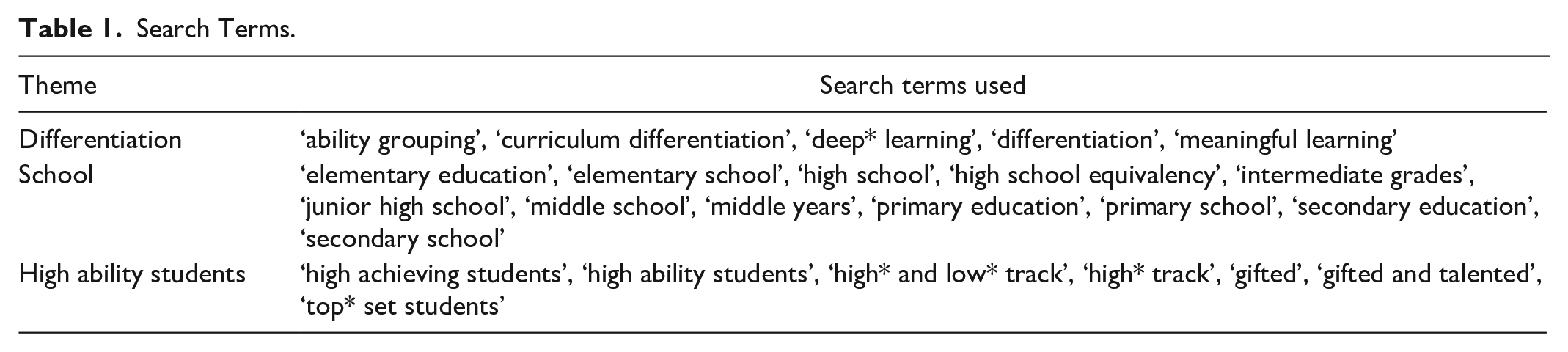
During Stage 2, all three authors and a research assistant used the Covidence program to each independently process all 104 publications sourced during Stage 1, each selecting yes, no, or maybe based upon title, keywords, and abstract. The four researchers discussed the outcomes as a group and any disagreements on study selections were resolved by consensus. Inclusion criteria necessitated that the publications relate to at least one category from each of the three themes listed in Table 1: (a) differentiation practices that have been found to be effective; (b) in a school context, (c) with high-ability learners. Publications that focused exclusively on only one teaching approach or did not identify the specific approach teachers used were excluded. The purpose for this exclusion was due to the aims of the study that sought to explore the different approaches (plural) that a teacher may use to accommodate the diverse needs and potentials of their high-ability students to maximize student learning. Gilson et al. (2014) is an example of a study that was excluded at this stage, given that the study exclusively focused on the use of follow-up questions. Endepohls-Ulpe (2017) is another that was excluded given that it explored teachers’ attitudes toward differentiation but did not specify the approaches that were used. Articles that stated that teachers’ differentiation practices were ineffective were also excluded (e.g., Faber et al., 2018). At the conclusion of Stage 2, 54 publications remained.
During Stage 3, the three authors each screened the remaining 54 articles in full, discussed the outcomes as a group and resolved disagreements on study selection by consensus. Articles were excluded if (a) they did not definitively meet all three criteria from Stage 2 (e.g., Abu et al., 2017 found that teachers did not believe in or use differentiated practices for high-ability learners), and/or (b) they were not based on empirical research (e.g., literature reviews). At the end of this process, 20 publications remained.
All three authors reviewed and discussed the reference lists of the 54 articles from Stage 3 to identify which additional publications may have been missed during Stage 1. A total of 101 additional sources were identified and screened by all three authors using this snowballing approach, repeating the processes for Stages 2 and 3. Once screened, an additional 18 sources were included for analysis.
At the conclusion of the screening process, 38 publications remained and were thematically analyzed. The final 38 publications are a collection of classroom observations (n = 13); teacher interviews (n = 13); student assessments (n = 12); teacher autoethnographies, planning documents, or logs (n = 10); teacher opinion forms, questionnaires, or surveys (n = 8); student forms, questionnaires, or surveys (n = 7); student interviews (n = 7); student logs or work samples (n = 5); principal interviews (n = 3); parent questionnaires, interviews, or surveys (n = 3); principal surveys (n = 1); and school surveys (n = 1), with many of the studies using multiple methods of data collection.
See Figure 1 for an overview of the selection, screening and coding process used.
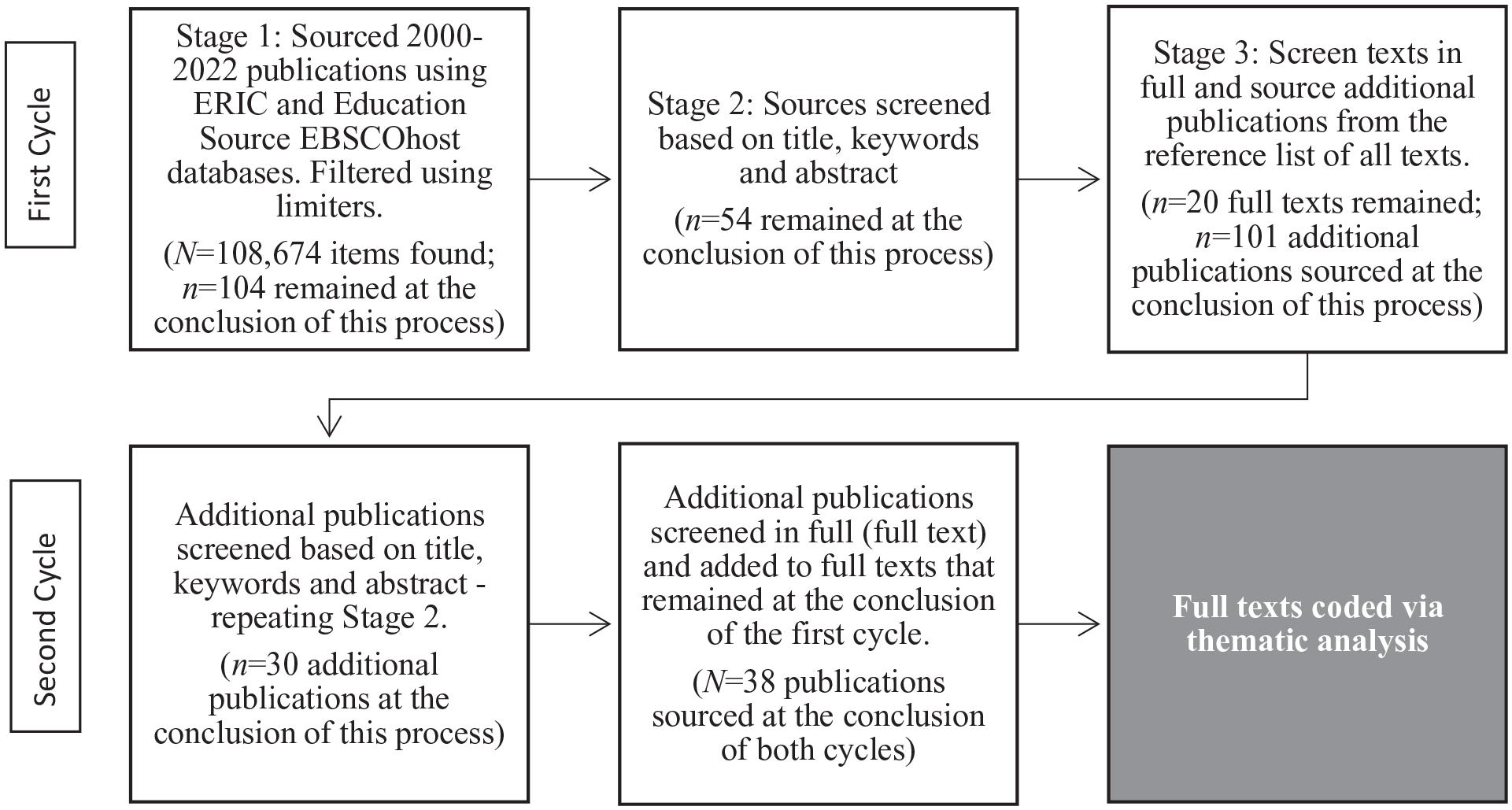
Selection, Screening, and Coding Process.
Thematic Analysis
This study made use of thematic analysis (TA) to identify, analyze, and “interrogate patterns” in the full texts, and ensure that the meaning that was associated with words, sentences, and phrases were included in the naming of categories (Clarke & Braun, 2017, p. 297)—in this instance, the teaching approaches that were effectively used with high-ability students in primary or secondary school contexts, and school-level support-activities. In keeping with Clarke and Braun (2017), we identified, synthesized, and have presented the “key. . .features of the data” (p. 297), that is the teaching approaches and school-level support activities we identified as opposed to summarizing all of the data’s content. The three authors regularly met to compare, discuss, and reach agreement on the thematic categories, which was charted and continuously updated via Excel spreadsheets in an iterative process.
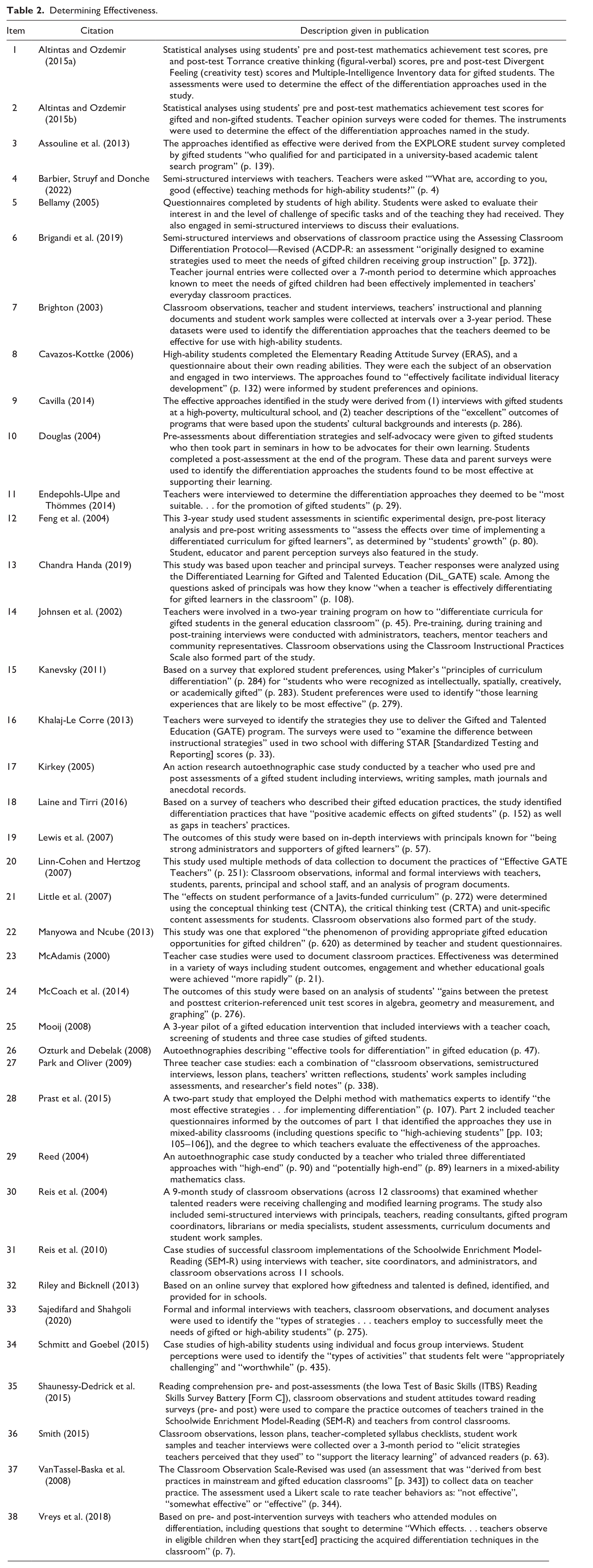
The data extraction and charting exercise also identified: (a) the participant group/s, (b) school category (i.e., primary, secondary or both), (c) country in which the study took place, (d) the discipline area the students were studying, and (e) how effectiveness was determined. The charting process revealed that effectiveness was determined in a variety of ways across the studies. These included student assessment outcomes, classroom observations, and teacher/student/principal or parent perceptions (see Table 2).
Determining Effectiveness.
Findings
Our ScR resulted in the identification of 15 approaches that educators have used to differentiate their teaching with high-ability students and 11 school-level support activities or foci. We present each below in order of frequency, with a description of how the approaches and support activities were presented across the 38 studies. The studies spanned 13 countries, the majority of which were based in the United States (n = 23), see Appendix. Other countries included Australia (n = 2), Belgium (n = 2), Canada (n = 2), England (n = 1), Finland (n = 1), Germany (n = 1), Iran (n = 1), Netherlands (n = 2), New Zealand (n = 1), Singapore (n = 1), Turkey (n = 2), and Zimbabwe (n = 1). The subjects featured in the studies included English/Language Arts (n = 6), Foreign Languages (n = 1), Mathematics (n = 7), Science (n = 1), and Social Studies (n = 1), though the majority of the studies had a multi-disciplinary focus (n = 22). Sixteen studies were exclusively conducted in primary school settings, 10 were conducted in secondary schools. Both sectors (i.e., primary and secondary schools) were reported upon within the same investigation in 12 studies.
Effective Teaching Approaches
Fifteen teaching approaches were identified across the 38 studies. That is, 15 different ways that teachers sought to maximize the learning of their high-ability students. During analysis, the research team noted the need to distinguish between an activity and an approach. Activities could be used to serve different purposes or aims, whereas approaches were used to serve particular aims or purposes. To this end we found that some activities or tasks, such as tiered activities, were used across approaches but for different purposes. We also noted that the approaches operated much like a menu. Each approach could be used on its own, but it could also be integrated with others to maximize the learning of individuals, depending on the needs, potential, and readiness of the student and the objectives of the learning experience. For example, a teacher may use their knowledge of a child’s interests to set tasks that will motivate and engage the student. If a student has adequate self-management skills, a teacher may provide a list of tasks and allow the student to make their own choice. Alternatively, if a student’s self-management skills are not as developed, the teacher may discuss the possible choices with the child, supporting them in making reasoned choices.
These approaches, in order of frequency, included: (a) challenge and higher-order thinking; (b) catering for interests; (c) open-ended, problem-based inquiry; (d) resourcing that goes beyond; (e) inviting choice; (f) homogeneous collaboration; (g) multiple pathways; (h) mixed-ability collaboration and peer teaching; (i) acceleration; (j) dialogue with teachers; (k) compacting; (l) supporting self-management; (m) inviting creativity; (n) inter-disciplinary or cross-curricular foci; and (o) role models and mentors.
Challenge and higher-order thinking was the most frequently used teaching approach (n = 26). This approach allowed high-ability students to explore a topic with greater depth and/or breadth than their other classmates. This included questioning techniques that invited higher-order thinking, including those listed in Bloom’s Taxonomy (Smith, 2015), or tiered tasks that focused on the same key skills and understandings as other students in the class but allowed high-ability students to engage at a deeper level of complexity (McAdamis, 2000).
Catering for interests was mentioned in 25 studies. When using this approach, teachers designed tasks that tapped into or attracted students’ interests, including projects and curricula that empowered and supported students’ heritage (Cavilla, 2014). Some teachers sought to entertain their students as a way of engaging interest and motivation (Brighton, 2003). Others based learning on authentic contexts that students can relate to or be intrigued by (e.g., Johnsen et al., 2002; Kanevsky, 2011).
Open-ended, problem-based inquiry was mentioned in 23 studies. This approach allowed for different solutions and different paths of inquiry, including allowing students to test or prove hypotheses (Reed, 2004). This also involved the exploration of challenging, “real-world problems” such as child obesity, health care issues, or global warming (Ozturk & Debelak, 2008, p. 48).
Resourcing that goes “beyond” was noted in 22 studies. This approach was used to provide high-ability students with additional or specialized resources. This included in-class resourcing such as access to a range of texts or more complex texts, computer programs such as PowerPoint or programming applications, or discipline-based websites such as math websites to offer practice with a skill not yet sufficiently mastered. Other technological tools included GPS systems that tracked the night sky (Brigandi et al., 2019) and computer software used to support research and investigation (Cavilla, 2014). Beyond the classroom, resources included competitions, community or special libraries (Ozturk & Debelak, 2008), community-based arts and sports programs (Riley & Bicknell, 2013), fieldtrips, and access to industry experts or cultural elders.
Allowing for choice was mentioned in 21 studies. This approach was evident when a teacher allowed for some degree of student choice regarding what, with whom, and/or how a topic was investigated and/or how learning was shared. This approach was listed as a separate category to “catering for interest” in recognition that some instances of catering for student interest did not allow for student choice (Barbier et al., 2022). This category included allowing students to progress at their own pace by moving through tasks quickly or taking time to “dig in” (Kanevsky, 2011, p. 292), or to choose the product format. For example, allowing students to share their immigration project via a dramatization, art, or PowerPoint presentation that incorporated photographs and graphic timelines (Brigandi et al., 2019). This approach ranged from allowing students full autonomy to choose “what, how, and with whom they were studying” (Douglas, 2004, p. 227), to various levels of negotiation including the creation of learning contracts (McAdamis, 2000).
Homogeneous collaboration was referenced across 21 studies. This teaching approach was used to purposefully group like-ability or like-minded peers so they could work together to complete their tasks, such as “book discussion groups” used in Reading (Reis et al., 2004, p. 326).
Multiple pathways (n = 20) was an approach that provided students with multiple ways of accessing and producing learning content. Multimodal and multi-sensory (Smith, 2015) approaches included accessing or producing information in various written, visual, performance-based, or oral forms (Park & Oliver, 2009). Examples included demonstrations or simulations (Park & Oliver, 2009; Reed, 2004), project presentations (Altintas & Ozdemir, 2015b; Reed, 2004) or exhibits (Ozturk & Debelak, 2008), use of diagrams, graphs, or manipulatives (Linn-Cohen & Hertzog, 2007), drama or performance (Bellamy, 2005; Ozturk & Debelak, 2008; Park & Oliver, 2009), audio-visual advertisements, news articles, posters, or pamphlets (Kirkey, 2005), and game-based learning, such as the creation or playing of board games (Barbier et al., 2022; Reis et al., 2010), or game programming (Barbier et al., 2022). Multiple learning styles were also catered for via projects that took into account students’ self-assessments/Multiple Intelligence Inventories or learning styles (Altintas & Ozdemir, 2015b; Linn-Cohen & Hertzog, 2007; Prast et al., 2015).
Mixed-ability collaboration and peer teaching or heterogeneous groupings and pairings featured across 20 studies—this approach invited students to work on the same task with friends or peers of varying skill sets. This approach, at times, was used to provide opportunities for more-able peers to teach and support their less-abled peers.
Acceleration was mentioned in 20 studies. This approach provided opportunities for students to progress through the school curriculum at a more rapid pace or at younger ages than a typically developing peer (Steenbergen-Hu et al., 2016) and included the exploration of more advanced, complex, or abstract concepts. Although Steenbergen-Hu et al. (2016) have found that acceleration can take many forms including early entrance into school, grade skipping, and credits via assessments, within the everyday classroom and in the context of differentiation acceleration was often presented in the form of a tiered assignment or tasks based on the same or a similar topic as other classmates or by providing students with “material that is above their current grade level” (Reis et al., 2004, p. 319).
Dialogue with the teacher, whether one-on-one or in groups, was mentioned in 14 studies. Examples of this included one-on-one conferencing or tutoring (Reis et al., 2010; Smith, 2015), group debate (Reed, 2004), or Socratic dialogue (Barbier et al., 2022; Brigandi et al., 2019) where the teacher asks questions and allows students to share their knowledge and thinking. It also included self-advocacy and avenues by which high-ability students could ask for accommodations or help if needed, whether due to issues related to the student’s twice-exceptionality or otherwise (Douglas, 2004).
Compacting was mentioned in 12 studies. This approach was evident when teachers eliminated content from a student’s program or allowed students to “skip” a task they had already mastered. While this approach may be used to accelerate learning (Steenbergen-Hu et al., 2016) we have listed it as a separate approach in acknowledgment that it was also used to eliminate mastered content from a student’s program “to create time for lessons of depth and complexity” (Linn-Cohen & Hertzog, 2007, p. 245) and enrichment (Prast et al., 2015). Tiered activities, activities that vary the content, process, or product that students are expected to engage with to ensure appropriate levels of challenge (Richards & Omdal, 2007) were at times used for compacting purposes to allow students to engage with a topic using “different levels of initial knowledge and skills” (McCoach et al., 2014, p. 275).
Supporting self-management featured across 12 studies. The purpose here was to challenge and enable students to manage their own learning processes responsibly to ensure high-ability students held high expectations of themselves while also recognizing their limitations (e.g., addressing the issue of perfectionism). Examples included presenting students with assessment rubrics so they could successfully plan their projects, methods, and presentations (Altintas & Ozdemir, 2015b; Linn-Cohen & Hertzog, 2007), and/or having students engage in self-assessments and evaluations using rubrics or other evaluation tools (Brigandi et al., 2019; Linn-Cohen & Hertzog, 2007), including tools for identifying preferred learning approaches (Douglas, 2004) and the setting of goals (Smith, 2015).
Inviting creativity from high-ability students was mentioned in 12 of the studies, as teachers sought to foster imaginative expression and innovative thinking. Opportunities for creativity took the form of brainstorming exercises where students were encouraged to share ideas on a topic from multiple perspectives or shared reactions to art and literature (e.g., Linn-Cohen & Hertzog, 2007). Students were also provided with opportunities to design and create and to experiment with different forms of expression.
Inter-disciplinary or cross-curricular foci were evident in 10 of the studies, as teachers facilitated opportunities for students to immerse themselves in integrated learning experiences. This included units of study or projects that explored a topic from different perspectives and across discipline areas, including engineering, science, immigration, analogies, scale, or geometric shapes (e.g., Brigandi et al., 2019; Linn-Cohen & Hertzog, 2007).
Role models and mentors were mentioned in nine studies. Although access to experts in the field can provide students with access to information and resources that go beyond the classroom, they can also serve the purpose of providing access to mentors or role models when there are opportunities to shadow professionals, to work with and interact with mentors or guest speakers. In the nine studies, students were able to “observe and model the behavior and attitudes of their mentors” (Manyowa & Ncube, 2013, p. 627), such as “real-world historians, mathematicians, or writers” (Ozturk & Debelak, 2008, p. 48).
School-Level Support Activities
Twelve studies among the 38 referred to school-level activities and foci that support high-ability education (see Table 3), though here too some activities were enacted in concert with others to achieve the most effective results. The most often cited support was the provision of professional development for school staff (n = 9). This was offered in a variety of forms, including whole-school or team workshops, action research, professional readings, discussion with experts, teacher training, or the appointing of mentors or coaches. Teacher agency or professional autonomy was referenced in four studies, where teachers had the freedom to trial new strategies and resources and were empowered to make their own judgments and decisions based upon sound engagement in professional learning on high-ability education. However, it was also noted in three of the studies that staff needed to be sufficiently resourced to allow this to happen.
School-Level Activities and Foci That Support the Education of High-Ability Students.
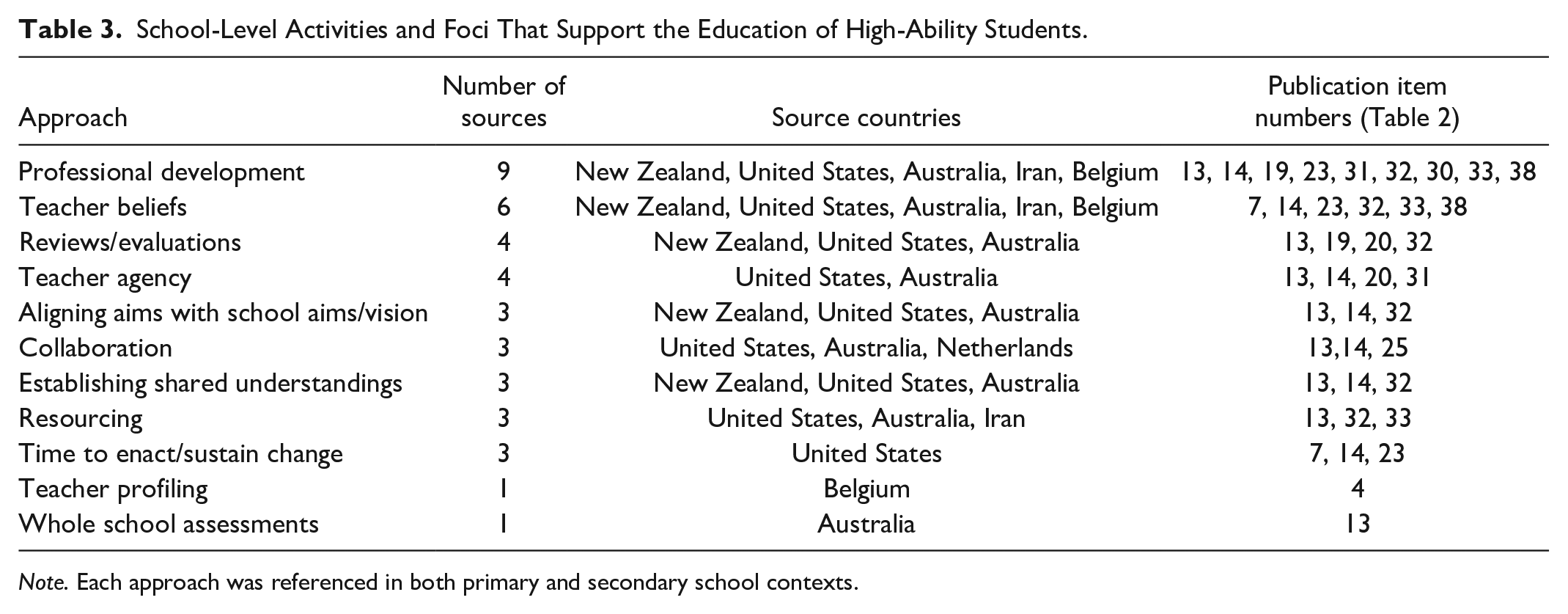
Note. Each approach was referenced in both primary and secondary school contexts.
Six of the studies found that the adoption of new approaches can be challenging, heavily contingent upon teachers’ beliefs that rely on “preconceived understandings. . . about the nature of teaching and learning” (Brighton, 2003, pp. 200–201); a challenge that can be unearthed via teacher profiling activities (n = 1). This challenge was at times addressed via collaboration or communities of practice (n = 3) so that teachers could challenge others or have their own beliefs challenged in supportive environments where they felt free to trial new approaches together without fear of failure (Johnsen et al., 2002). The establishment of such communities also allowed for the establishing of shared understandings of how to identify and teach high-ability students (n = 3). However, three of the studies found that sustained change in teacher attitude and practices took time, such as the community of American schools that took 4 years to see change in the teaching approaches used with their high-ability learners (McAdamis, 2000). Additional support measures revealed that teachers needed to see a clear link between the school’s aims and vision and classroom practice (n = 3) where a truly inclusive education clearly includes high-ability learners with regular whole-school and teacher-based reviews (n = 4) and assessments (n = 1) to monitor when particular changes or a lack of change is achieving less than desirable outcomes for high-ability learners.
Discussion
The outcomes of this study identified 15 modifications to content, process, product, and/or the learning contexts and environment (Kaplan, 1986; Maker, 1986; Tomlinson, 1995) that were found to be effective across 38 studies (see Figure 2). These outcomes provide a useful basis on which future research and classroom trials can be enacted while also highlighting that much more research is needed in this space.
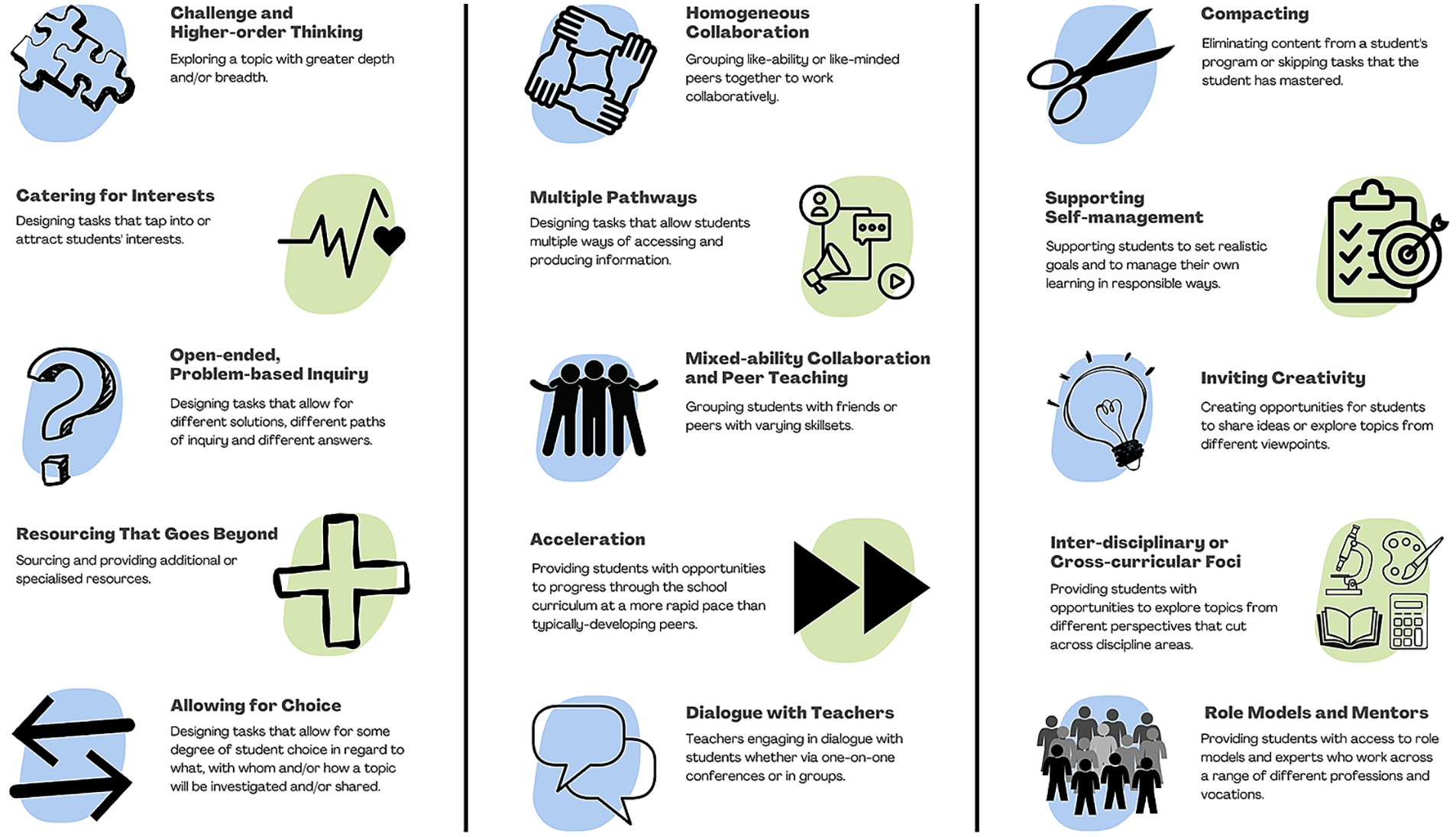
Approaches and Experiences Used With High-Ability Students to Maximize Learning.
A Menu to Support Purposeful Decision-Making
Providing students with opportunities for challenge and higher-order thinking was the most often cited approach, however, this is not to say that it will always be the most appropriate or effective approach to use with each high-ability student on all occasions. Teachers may have often chosen this approach due to the understanding that differentiation is typically about ensuring that all learners are appropriately challenged in the classroom (Tomlinson, 2017). Yet, an equally key element of differentiation is that the learning environment must also be “engaging” (Tomlinson, 2017, p. 6)—a consideration that was evident at times when teachers favored engagement over, or in-tandem with, challenge, for a variety of reasons. This may be due to a student’s predilection to be disengaged from their learning, their need to see the purpose of engaging in the task (e.g., via access to role models or authentic real-world inquiry), a need to focus on their socio-emotional development by engaging with peers of mixed-abilities to develop empathy (Park & Oliver, 2009), or for their own wellbeing via an occasional change of pace (Schmitt & Goebel, 2015).
It was also noted that acceleration—the act of progressing students through the school curriculum at a more rapid pace or at younger ages than a typically developing peer (Steenbergen-Hu et al., 2016)—was not listed with as much frequency as challenge or high-order thinking or other approaches such as catering for interest. This is a curious finding when one considers that high-ability students often have faster processing speeds than their typically developing peers (Aubry et al., 2021), which would allow them to progress through the curriculum at a faster pace. The fact that acceleration was not the most frequently mentioned approach may in part be due to a lack of knowledge or misconceptions as to the benefits or shortfalls of acceleration (Yildiz, 2021) pointing to a need for teacher professional development in this area. Concurrently, this may be interpreted as evidence of the shift from the gifted-child paradigm of old (Dai & Chen, 2013) toward an acknowledgment that depending on the content and student, depth and breadth via student interest projects or inquiry will at times be more appropriate than acceleration (Borland, 2005; Park & Oliver, 2009).
The majority of studies were based in the United States (n = 23), however, and while the findings from this ScR provide insight into effective approaches to differentiation that can be used with high-achieving students they must be perused with the understanding that they are heavily informed by the American context. Furthermore, given the diverse characteristics of high-ability students, all readers including those from the United States should simply view this list as a menu of possible approaches teachers may choose to trial in their contexts wholly dependent on the needs and potentials of their student cohort.
School-Level Support
Although teacher practice is central to the implementation of differentiation in the classroom, successful and sustained implementation is contingent upon leaders who encourage, embrace, and lead differentiation for high-ability learners at a whole school level (Roberts & Inman, 2006; Tomlinson & Allan, 2000). What is more, effective and sustained change necessitates the coordinated use of a range of school-wide support activities and foci (Johnsen et al., 2002) as shown via the range of school-level support activities and foci identified in this study. A key support activity was that key stakeholder groups, including leadership, classroom teachers, and administrators, have a shared understanding of differentiation and of effective practices for supporting differentiated learning and teaching for high-ability learners, a finding supported by Tomlinson et al. (2008), with leadership ensuring buy-in for significant change using a whole school approach. However, while this ScR identified a range of school-level supports that are used to support teachers’ adoption of differentiated practices, it was critical to note that roughly only a third of the studies (n = 12) made mention of such supports.
The embedding of pedagogical change such as differentiation practices requires that leaders “move from lip service to service” (Tomlinson et al., 2008), becoming agents who enact, not merely direct, change. In concert with championing and investing in a differentiated approach, the role of a leader is to empower teachers to explore and evaluate their own and colleagues’ definitions of differentiation and teaching practices. School leaders can empower their teachers: (a) by providing teachers a balance of whole-school assessment tools for measuring and evaluating the effectiveness of their teaching; (b) supporting the establishment of communities of practice; and (c) allowing a level of teacher autonomy to make decisions and enact change that will work best for their students. This will in turn result in all stakeholders feeling respected for their varying abilities and what they have to offer within a community of practice that strives for collective development (Tomlinson et al., 2008).
In one of the studies explored in this ScR, however, issues arose when there was a disconnect between school leader’s and classroom teachers’ pedagogical knowledge (Chandra Handa, 2019) when school leaders had oversight over teaching with limited expertise in the area of differentiation for high-ability students. This may be due to a variety of reasons such as holding the belief that differentiation is unnecessary for the “highly able” and that those working below the expected level “need it more” (Sajedifard & Shahgoli, 2020, p. 281). This points to a need for professional development for both classroom teachers and school leaders in the area of high-ability education.
A Need for Professional Development
Teacher efficacy in differentiation, particularly in the context of catering for high-ability learners, is intricately linked to professional development. As teachers continually engage with professional development, their confidence in tailoring their teaching and learning programs for highly able learners increases (Henderson & Jarvis, 2016; Kronborg & Plunkett, 2013). Confidence in differentiating for high-ability learners can be further supported by the feedback and insights that peers and school leadership provide to teachers as they embed their newly acquired strategies. This iterative process within professional development not only bolsters individual teacher efficacy but also collectively elevates the school’s capacity to meet the needs of high-ability learners through differentiated instruction at a whole-school level.
A way to ensure that professional development is targeted and useful was revealed via the study conducted by Barbier et al. (2022) who found a “teacher profiling” exercise to be useful in determining how likely teachers would be to differentiate their practices for high-ability students. Although results varied, they found that teachers with a limited frame of reference in understanding the varied characteristics of high-ability students “were most likely to have a less extensive repertoire of educational practices” (Barbier et al., 2022, p. 10). This points to a need to adopt a two-pronged approach to the provision of professional learning in high-ability education. That is, in addition to a focus on differentiated practice, professional development requires that school communities develop a rich understanding of the varied manifestations and characteristics of high-ability students and adopt a whole-school approach to identify high-ability students via descriptive profiles and the use of a range of assessments (Chandra Handa, 2019; Johnsen et al., 2002; Riley & Bicknell, 2013). This underscores the value of specific interventions in the form of professional development for differentiated instruction (see van Geel et al., 2022) as teachers reluctant to implement differentiated instruction often report a lack of professional learning opportunities (see Whitley et al., 2019). This is especially the case in building capacity to implement flexible instructional and assessment practices that cater to student differences, the latter a key element in effective teaching.
A Communal Measure of Effectiveness
The 15 approaches identified via this ScR provide a useful list of approaches that can be used to maximize the learning of high-ability students. However, one of the main findings that was derived from this study occurred when screening publications. It was at this stage, when populating Table 2, that it soon became apparent that there was wide variance in how the effectiveness of an approach was determined across publications. Methods that were used included student assessments, teacher/parent/student perception surveys, interviews or questionnaires, or various tools for recording and analyzing classroom observations. In addition to a variance in methods, there was also variance in how effectiveness was evaluated when using similar tools such as student assessments. This ranged from determining whether students showed “growth” (Feng et al., 2004, p. 80), to making comparisons between groups or documenting whether students were achieving educational goals “more rapidly” (McAdamis, 2000, p. 21). This has highlighted a great need in the field of gifted education to create a shared language and communal measure of effectiveness to aid in fully maximizing the learning of high-ability students.
Limitations
Given that this was a ScR rather than a systematic review or meta-analysis, the study did not assess for bias or report on studies’ effect measures. The study also allowed for the inclusion of small sample sizes and was limited to the publications sourced using ERIC and Education Source EBSCOhost databases and the snowballing process outlined in the method. The fact that the majority of the studies hailed from the United States is an additional limitation. A broader and more expansive use of search terms may also have resulted in the identification of more approaches than those identified in this article. The broad focus of this ScR forestalled us from exploring why teachers elected to use the approaches that they did and not others. It may be that they had a limited repertoire of approaches to draw from, that certain approaches were easier to implement, or they had support to adopt certain approaches but not others. This too would be a valuable area of future research.
Conclusion
Although there is recognition that high-ability students are diverse and require a needs-based differentiated education, many teachers continue to lack knowledge, hold misconceptions, or have a limited pedagogical repertoire that would allow them to do so (Barbier et al., 2022; Chandra Handa, 2019). This ScR documents a range of approaches that have been found to be effective with high-ability students in the contexts in which they were employed in both primary and secondary settings and across disciplines. However, while these findings show that teachers do indeed modify their content, processes, products, and/or their learning environments as advised by experts in differentiation for the last 30 years (Kaplan, 1986; Maker, 1986; Tomlinson, 1995), most of these findings were based upon the American context with more studies conducted in the primary school sector than in secondary. Furthermore, the study sourced only 38 studies from 2000 to 2022 and only 12 with a focus on school-level support and leadership. This too points to a dearth of research that allows for a rich understanding of how high-ability students’ diverse needs and potentials may be supported in the differentiated classroom.
Although we await further research this article provides some insight into approaches that can be adopted by teachers when differentiating for high-ability students with the added appreciation that school-level support is central to this work. Future research exploring how school leaders work with their teachers to investigate teacher beliefs and/or identify which approaches teachers may be resistant to changing and why (Brighton, 2003) may provide further insight moving forward. For example, surveying teachers to assess the workload associated with various teaching approaches (whether actual or assumed) may uncover the approaches that teachers are less likely to adopt (or adopt with less frequency) with their high-ability learners (Endepohls-Ulpe & Thömmes, 2014). Within schools, educators may also choose to engage in regular program evaluations given that such evaluations have been found to be rare or irregular at best (Jarvis & Henderson, 2015) or they may invite high-ability students to self-assess and create descriptive profiles of their own learning needs and potentials with teachers affording students voice in their own education (Douglas, 2004).
This ScR has also highlighted a need to expand the scope of empirical research in this space to gain a richer, multifaceted appreciation for the contextualized needs and potentials of high-ability students—across a variety of settings—to determine the contextualizing factors that may make some approaches more effective than others depending on a child’s characteristics, their school environment, or other factors. The fact that they may be effective for the highly able does not preclude them from being effective for all, and this may be an avenue for future research that may be pursued, especially in light of the fact that some of the barriers to differentiating for high-ability students is a lack of teacher time and resourcing. When coupled with the finding that many teachers continue to direct their differentiation practices toward students who are working below expected level rather than their high-ability students (Assouline et al., 2013; Brighton et al., 2007; Jarvis & Henderson, 2015; Reis et al., 2004; Smith, 2015; Szymanski & Shaff, 2013; Vreys et al., 2018), or lack a rich appreciation for what “differentiation” means for high-ability students (Chandra Handa, 2019), this highlights that long-held calls for an inclusive education for all continue unresolved in the field of education.
We propose that arriving at a communal understanding of what effectiveness means and looks like in practice would be a useful step forward. Although a conclusive means of determining or measuring effectiveness proved elusive, this ScR has moved the field closer to achieving such an outcome. This has been achieved through providing an entry point to measurement of effectiveness via the range of tools and measures detailed in Table 2—a comprehensive overview of the means that have been used to determine effectiveness over a 20-year period. This mapping will be useful in generating discussions at classroom, school, and community-levels of inquiry—to aid in arriving at shared understandings of what is meant by, and how to evaluate, the effectiveness of the approaches that teachers have used with their high-ability students. Taken together with the 15 approaches listed in the findings, it is the aim of this paper that this mapping will inspire school communities to explore and adopt effective approaches that are evidence-based, contextually applied, and routinely evaluated to maximize the learning of their high-ability students.
Footnotes
Appendix
Differentiation Approaches Used With High-Ability Students.
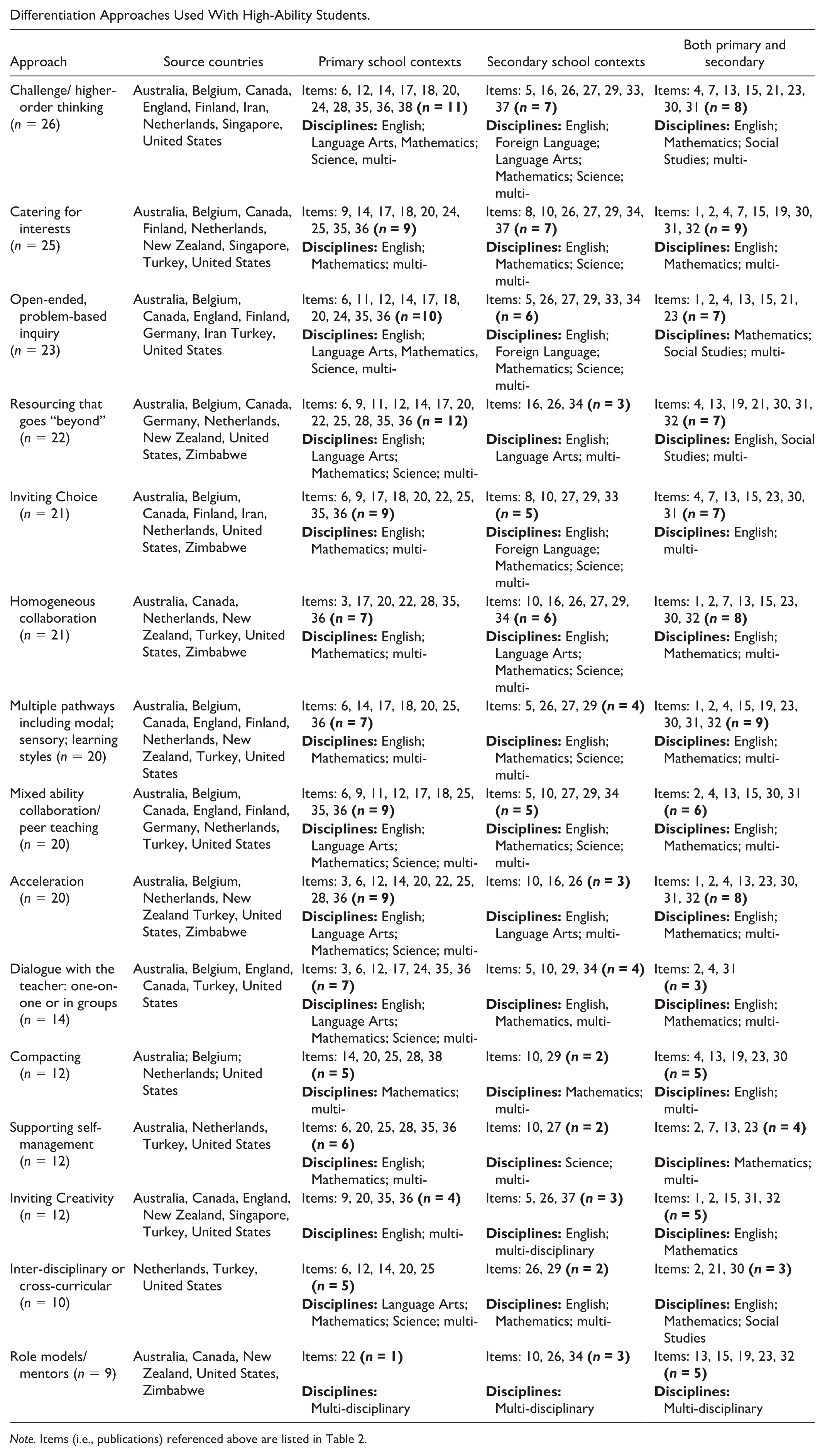
| Approach | Source countries | Primary school contexts | Secondary school contexts | Both primary and secondary |
|---|---|---|---|---|
| Challenge/ higher-order thinking (n = 26) |
Australia, Belgium, Canada, England, Finland, Iran, Netherlands, Singapore, United States | Items: 6, 12, 14, 17, 18, 20, 24, 28, 35, 36, 38 |
Items: 5, 16, 26, 27, 29, 33, 37 |
Items: 4, 7, 13, 15, 21, 23, 30, 31 |
| Catering for interests (n = 25) |
Australia, Belgium, Canada, Finland, Netherlands, New Zealand, Singapore, Turkey, United States | Items: 9, 14, 17, 18, 20, 24, 25, 35, 36 |
Items: 8, 10, 26, 27, 29, 34, 37 |
Items: 1, 2, 4, 7, 15, 19, 30, 31, 32 |
| Open-ended, problem-based inquiry (n = 23) |
Australia, Belgium, Canada, England, Finland, Germany, Iran Turkey, United States | Items: 6, 11, 12, 14, 17, 18, 20, 24, 35, 36 |
Items: 5, 26, 27, 29, 33, 34 |
Items: 1, 2, 4, 13, 15, 21, 23 |
| Resourcing that goes “beyond” (n = 22) | Australia, Belgium, Canada, Germany, Netherlands, New Zealand, United States, Zimbabwe | Items: 6, 9, 11, 12, 14, 17, 20, 22, 25, 28, 35, 36 |
Items: 16, 26, 34 |
Items: 4, 13, 19, 21, 30, 31, 32 |
| Inviting Choice (n = 21) | Australia, Belgium, Canada, Finland, Iran, Netherlands, United States, Zimbabwe | Items: 6, 9, 17, 18, 20, 22, 25, 35, 36 |
Items: 8, 10, 27, 29, 33 |
Items: 4, 7, 13, 15, 23, 30, 31 |
| Homogeneous collaboration (n = 21) | Australia, Canada, Netherlands, New Zealand, Turkey, United States, Zimbabwe | Items: 3, 17, 20, 22, 28, 35, 36 |
Items: 10, 16, 26, 27, 29, 34 |
Items: 1, 2, 7, 13, 15, 23, 30, 32 |
| Multiple pathways including modal; sensory; learning styles (n = 20) | Australia, Belgium, Canada, England, Finland, Netherlands, New Zealand, Turkey, United States | Items: 6, 14, 17, 18, 20, 25, 36 |
Items: 5, 26, 27, 29 |
Items: 1, 2, 4, 15, 19, 23, 30, 31, 32 |
| Mixed ability collaboration/peer teaching (n = 20) | Australia, Belgium, Canada, England, Finland, Germany, Netherlands, Turkey, United States | Items: 6, 9, 11, 12, 17, 18, 25, 35, 36 |
Items: 5, 10, 27, 29, 34 |
Items: 2, 4, 13, 15, 30, 31 |
| Acceleration (n = 20) | Australia, Belgium, Netherlands, New Zealand Turkey, United States, Zimbabwe | Items: 3, 6, 12, 14, 20, 22, 25, 28, 36 |
Items: 10, 16, 26 |
Items: 1, 2, 4, 13, 23, 30, 31, 32 |
| Dialogue with the teacher: one-on-one or in groups (n = 14) | Australia, Belgium, England, Canada, Turkey, United States | Items: 3, 6, 12, 17, 24, 35, 36 |
Items: 5, 10, 29, 34 |
Items: 2, 4, 31 |
| Compacting (n = 12) | Australia; Belgium; Netherlands; United States | Items: 14, 20, 25, 28, 38 |
Items: 10, 29 |
Items: 4, 13, 19, 23, 30 |
| Supporting self-management (n = 12) | Australia, Netherlands, Turkey, United States | Items: 6, 20, 25, 28, 35, 36 |
Items: 10, 27 |
Items: 2, 7, 13, 23 |
| Inviting Creativity (n = 12) | Australia, Canada, England, New Zealand, Singapore, Turkey, United States | Items: 9, 20, 35, 36 |
Items: 5, 26, 37 |
Items: 1, 2, 15, 31, 32 |
| Inter-disciplinary or cross-curricular (n = 10) | Netherlands, Turkey, United States | Items: 6, 12, 14, 20, 25 |
Items: 26, 29 |
Items: 2, 21, 30 |
| Role models/ mentors (n = 9) | Australia, Canada, New Zealand, United States, Zimbabwe | Items: 22 |
Items: 10, 26, 34 |
Items: 13, 15, 19, 23, 32 |
Note. Items (i.e., publications) referenced above are listed in Table 2.
Acknowledgements
The authors thank Caroline Mahoney for her contributions to the sourcing and screening process.
Declaration of Conflicting Interests
The author(s) declared no potential conflicts of interest with respect to the research, authorship, and/or publication of this article.
Funding
The author(s) received no financial support for the research, authorship, and/or publication of this article.
Open Science Disclosure Statement
The data analyzed in this study are not available for purposes of reproducing the results. The code or protocol used to generate the findings reported in the article is not available for purposes of reproducing the results or replicating the study. The newly created, unique materials used to conduct the research are not available for the purposes of reproducing the results or replicating the procedure.
